We’ve lived through the hottest 12 months since record-keeping began. It’s not just me saying this. It’s likely the hottest it’s been in 125,000 years according to scientists quoted by the Washington Post.
It is not a risky thing to say that our planet will pass the tipping point of climate change. With the increased average temperature of Earth passing 1.5 degrees Celsius (2.7 degrees Fahrenheit) above pre-industrial norms, entire ecosystems could be irreversibly damaged or destroyed by global warming. Things won’t be like we know them now. According to the Post article, “nearly 3 in 4 people experienced more than a month’s worth of heat so extreme, it would have been unusual in the past, but became at least three times more likely because of human-caused climate change.”
It seems very warm here in Big Grove. That’s because it is.
This year’s drought has been a humdinger. Crop reports indicate it hasn’t been as bad as 2012 based on corn and soybean yields, yet unless we get rain soon, farmers will be facing a dry spring again. On my daily walks along the lake shore, the culvert that drain the lake watershed still doesn’t have anything in it except cracking chunks of soil like those in the photo above.
The only thing I know is no one person will be the solution to preventing as much irreversible damage as we can. It is too late for that. We can’t get agreement that children should not be slaughtered in Israel or Gaza, for Pete’s sake. There is necessary work to be done here.
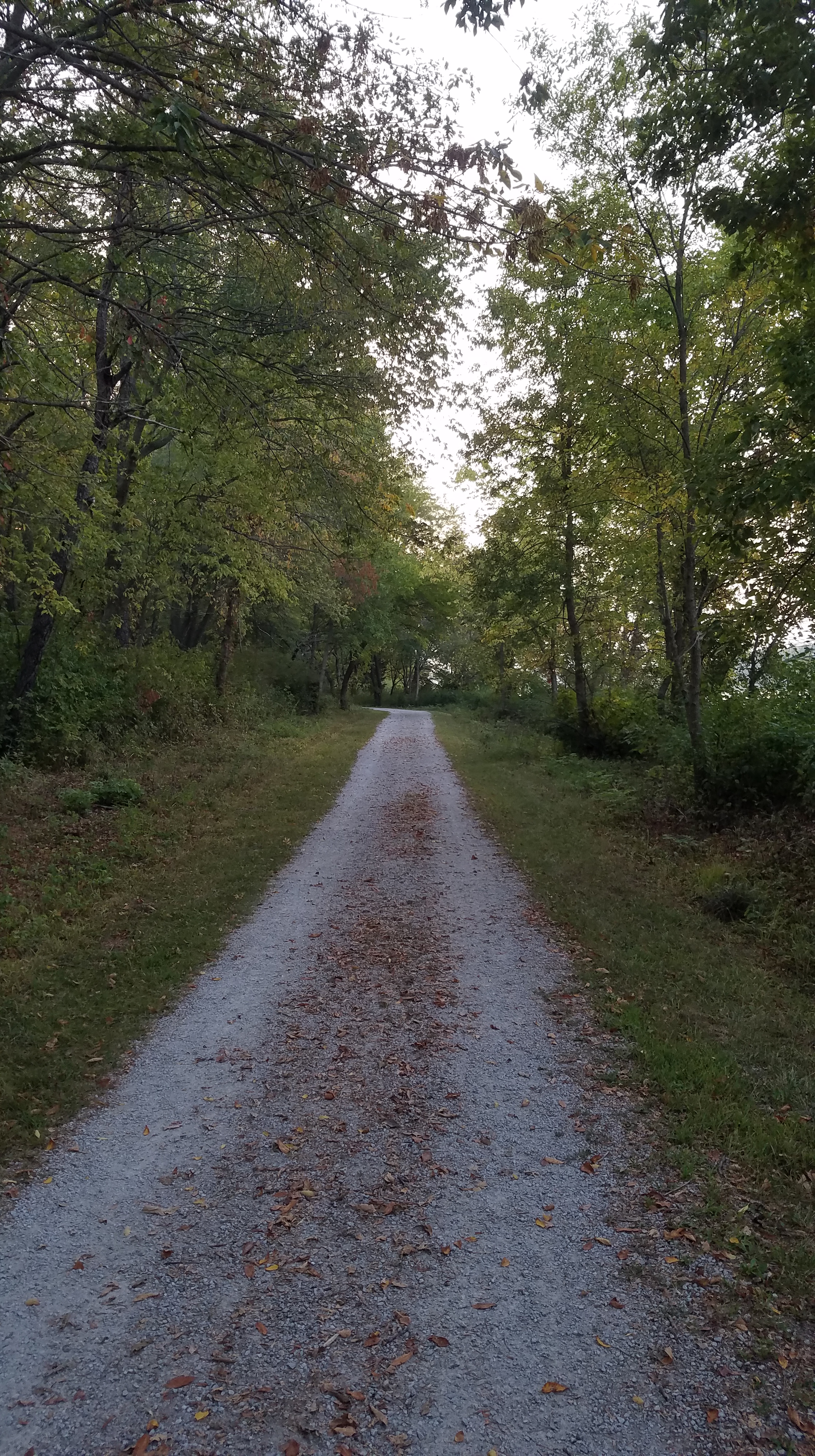
Trail walking on the state park trail on Oct. 30, 2023.
Content creator is an upcoming profession that employs many according to a Washington Post article titled, “Millions work as content creators. In official records, they barely exist.” Authors Drew Harwell and Taylor Lorenz assert, “Millions have ditched traditional career paths to work as online creators and content-makers, using their computers and phones to amass followers and build businesses whose influence now rivals the biggest names in entertainment, news and politics.” Goldman Sachs forecasts this sector of the economy could generate half a trillion dollars annually by 2027. It is a thing!
Not so fast! I don’t see many financially stable folk living on revenues generated from content they create for a website, streaming service, substack, or podcast. Roughly 12 percent of participants in a recent survey of content creators indicated annual earnings of more that $50,000, according to Harwell and Lorenz. 46 percent said they made less than $1,000. It may be true some are earning a living as content creators, and some earn a lot, but rivaling the biggest names in entertainment, news and politics? Please.
Cutting the cord from a single employer job and venturing on our own is possible. I did it more than once in 55 years in the workforce. To me, breaking loose is mostly about developing a sustainable lifestyle without working a “big job.” It is individualistic and empowering. It relies on others much differently from working for a large company. It will drain your personal bank accounts more quickly than you can log into Twitch. It is something of a dream.
When I retired from a transportation and logistics career I started a small consulting firm with me as the only employee. The idea was to take contracts to do work in the peace and justice movement that would help pay bills and become a platform for bigger, better things. To supplement my income, I took any kind of transactional work, including newspaper freelancing, farm work, jobs through a temporary service, and others. While I had the organization, I found it nearly impossible to have enough jobs in the pipeline to stay busy and generate needed income. In the end, I retired on my Social Security pension with Medicare as my health coverage and do my content creation on that financial platform.
A piece of advice I gave someone pursuing a content creator career was to get 10 years in with a company or companies that paid/withheld Social Security taxes. With a potential worklife of 50+ years, spending ten of them in a company that participates in Social Security seems very doable without infringing on creativity. I also said they should wait until full retirement age before filing to collect benefits so as to maximize the monthly pension payment. The response was predictable: “Is Social Security even going to be around?” Who knows if Social Security will change from it’s current process? There is not enough money to pay full benefits after 2033 without Congress changing something. Medicare begins to run out of money in 2031. So many people rely on these programs, it’s hard not to image the Congress doing something to secure them for the future.
At our core we seek a way of living that meets our needs. While we don’t seek to join a cult, we do have an impulse to gravitate toward support groups that are not necessarily just family. Utopian movements of the 19th Century were communal in nature. (The Library of Congress lists some). I think of Brook Farm, the Shaker Community, Rappites (a.k.a. The Harmony Society), and the Amana Colonies when I think of utopian communities. They followed the impulse to break away from broader American culture and join together to better meet common needs. Longer term they were all unsustainable, yet people seek this form of community today in different ways.
My experiences with the millennial generation revealed a different kind of pursuit of being part of a community. Large group activities were commonplace when millennials were in their 20s. They persisted through the years. While members found what today seems like traditional jobs with a commute, workplace, payroll, and benefits, they bonded together in a way that had a separate trajectory from a single person-single job career. It was antithetical to the rugged individualism of myth and legend, especially after 1981. With good employment being harder to find, it is no wonder people cut loose and become individualistic entrepreneurs in the context of a larger group. Being a content creator can be attractive in a society that has comparatively few outlets for creative impulses. Like my small consulting firm, content creator is an umbrella organization to do many different things.
Being a content creator is viable for some. The challenge is to develop enough income streams so as to have a financial base to pay quotidian bills like rent, groceries, transportation and utilities. The temptation is to take a big job to accomplish this. At the same time, if done well, a big job demands a full share of one’s daily energy. I wrote about this in my unpublished autobiography.
We had a discussion with a friend of hers about how she had to give up her artwork after taking a job at John Deere. She was tired after work, raising a child, and found little time or desire to make art. I knew if I took a full time job, I might find myself in the same situation.
An Iowa Life, unpublished manuscript by Paul Deaton
I found myself in this situation several times, notably when in 1984 I began my career in transportation and logistics. Being creative and managing creative content that generates income are both difficult when working as an exempt employee in a management position. One makes a choice to live this way. I’m not sure being an effective content creator is possible in this type of work environment.
I think of the 46 percent of content creators who in the survey earned less than $1,000 per year. It is impossible for an American to live on this amount of money without significant support from others and other institutions. Some books have been written explaining how to do this. Yet what seems evident is turning the dream of freedom from economic needs to pursuit of content creation in a transactional society is possible only with more boilerplate opportunities to earn income than there are. Finding and developing such a community is the necessary first step many content creators stumble into. Recognizing it up front would save time and provide a better path to success.
What I’m describing is utopian, although not the way the 19th Century utopian movements were. Maybe a better descriptor is “communal.” Whatever one calls it, it is a dream until proven viable and sustainable in a transactional society. If it were easy, we’d all be content creators.
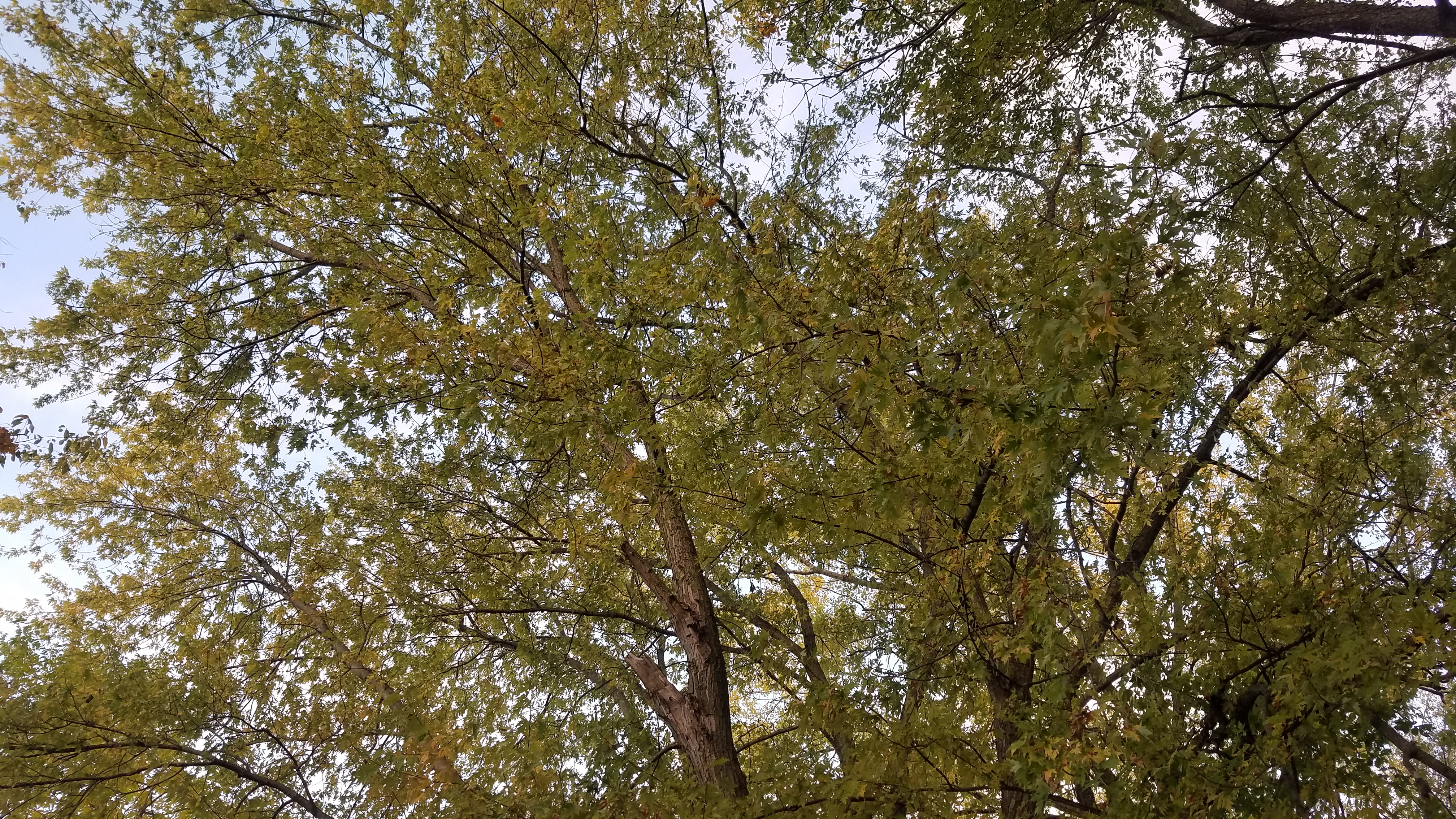
There is a frost warning tonight and that means one more garden gleaning before sundown. I expect to get kale, parsley, and maybe some tomatoes. I also expect this will be a hard frost, unlike previous nights that turned deciduous trees into paintbrushes full of color. Evolving what used to be cooking into a kitchen garden has been engaging and fulfilling. It changed — in a substantial way — how I cook meals with what grows on our property.
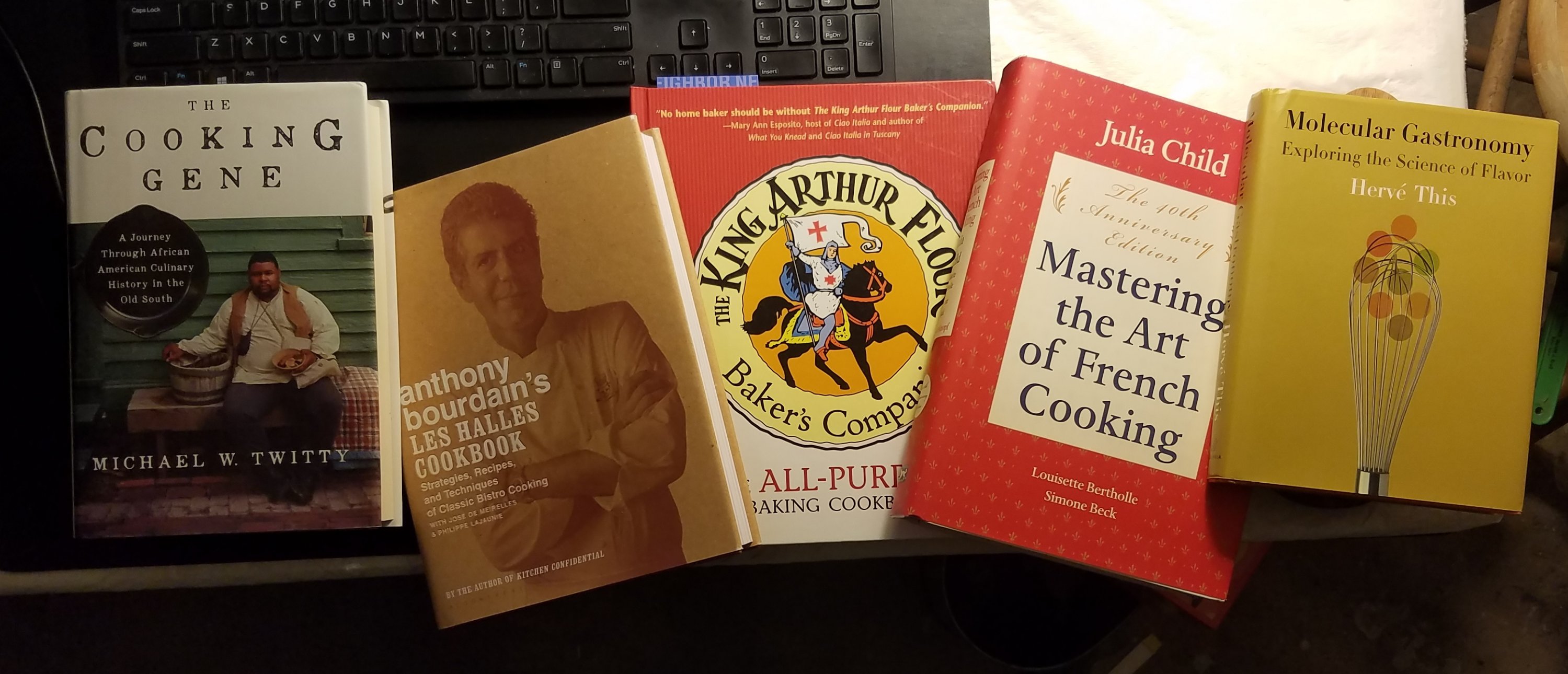
I have been a collector of cookbooks yet no more. These days I cook for weeks without opening one or consulting a recipe. When I make something sensational it is often unlikely the dish can be repeated. The reasons are many, whether it be living in the moment, freshness of ingredients, temperature and distribution of cooking heat, or how seasonings blend together. We bought a new range in May. It cooks differently from the previous one and continues to take time to understand settings, temperatures, and uses of the five cook top burners and oven.
A couple of posts ago I wrote about cooking grits and posted the photo on social media. People replied with variations I could make to improve the recipe. Thing is, the bowl of grits is rooted in ingredients already in my pantry and refrigerator. It is also rooted in my cooking process, which in this moment was to stand over the pot stirring constantly. The boiling liquid I used was half made by me vegetable broth and half two percent cow’s milk. I used Cabot’s extra sharp cheddar cheese I keep as a staple in the refrigerator. This particular bowl of grits was also rooted in that moment of creation and it seems unlikely I will get the same results the next time I make it.
Canned salmon was a big deal back when we had five digits in our private (as compared to party line) telephone numbers. In our 1950s and ’60s household, salmon patties were a once in a while treat on Fridays when we fasted from eating meat. The school I attended published a cookbook that lists multiple dishes to be made with this innovation found in the canned goods aisle at large grocery stores. Then, large grocery stores were also an innovation. Salmon salad, moist salmon loaf, salmon and vegetables in a dish, salmon custard, salmon in rice nests, salmon loaf, and other recipes were listed on the pages of the Holy Family School P.T.A. Cook Book. These days there is an abundance of fresh salmon available so the idea of using canned salmon is outdated. In 2010, when I was in Montana visiting friends, we went to the store and bought salmon steaks for a family meal. The meal was memorable. Canned salmon was revolutionary, as are the modern industrial salmon fisheries and farms. As a mostly ovo-lacto vegetarian, salmon wouldn’t be a part of any meal we prepared at home today.
People I know use recipes as a jump point in meal preparation. They search the internet, use a single purpose recipe application, or look through magazines and cookbooks to find something for dinner. They then modify the recipe to match personal preferences or ingredients on hand. I think most home cooks follow one of these methods.
I use internet searches when I have an abundance from the garden. For example, I recently searched garlic, tomatillos and chili peppers and came up with several ideas about how to preserve them as a condiment until the next crop is available. My home made apple cider vinegar is used as a preservative, making the dish ultra local. There are currently about a dozen jars of chili sauce in the refrigerator and pantry, no two of which are the same. It keeps things interesting while also using the harvest.
Another spontaneous aspect of cooking is using “my recipes,” meaning personally developed dishes, the recipe for which resides in memory or is written down in a notebook, 3 x 5 index card, or in the margins of cook books. We all have dishes like this. In our case, they form the framework of a weekly menu. Stir fried tofu with vegetables and rice is a complicated undertaking and we do that every week or two. Big batches of home made soup and chili stored in quart jars in the refrigerator are go-to meals when we don’t feel like cooking. Tacos are another mainstay. We use uncooked flour tortillas from the wholesale store and on hand ingredients from the garden and pantry for filling. The ingredients follow the seasons year-around with fresh tomatoes when they are available and frozen greens in winter. When we cook like this, there are few reasons to consult with a cookbook or recipe unless we’re understanding how to cook a new dish.
Morning has turned to afternoon and I haven’t been to the garden yet. I’d better get going. Thanks for reading.
The election is three weeks away and it will be anti-climactic in Big Grove Township. There are two candidates for two open school board seats and that’s it. The incumbents are competent people and they earned my support this election. We haven’t decided when and where we will vote, yet in all likelihood it will be at our regular polling place on election day.
Our household is following the news and we’re looking for some positive light. It has been in short supply. It seems the Middle East War will expand beyond Hamas and Israel despite President Joe Biden’s competent management of American support for Israel and the Palestinian people. Expansion of the conflict is not certain, yet there are so many players and so many years of hostilities and conflict, dodging a broader war seems impossible. It is not a good, short-term sign that Israelis are turning against Prime Minister Benjamin Netanyahu’s right wing divisiveness at this moment.
In the U.S. House of Representatives, Republicans have yet to elect a speaker after removing Kevin McCarthy on Oct. 5. We have until Nov. 17 to pass a budget or the government will face another cliff and need to pass a second continuing resolution. I’m okay with the Republican plan to pass individual spending bills instead of an omnibus or minibus bill. The clock is running out on their ability to do so and gain U.S. Senate agreement.
Iowa is literally turning into a sick place to live. Our leading causes of death (2021 data) are heart disease and cancer. Iowa is ranked 16th among the states in deaths from heart disease and 24th from cancer. Since 2021, data from the Iowa Cancer Registry indicates Iowa has the second highest incidence rate of cancer in the country. With harvest in full swing, particulate matter in the air is at high levels, afflicting people with respiratory diseases. A report released yesterday indicated Iowans’ incidence of COPD is higher than the national average. Rates of chronic lower respiratory diseases in Iowa are the fifth leading cause of death.
It is important to keep hope alive, despite the challenges of doing so.
While clearing brush in the front yard I picked up something that caused a rash. My arm is red and it itches. I happened to already have a clinic appointment this week so I asked them about the rash. They prescribed a cream, and messaged it to the pharmacy approved by my insurance company. It’s not the closest pharmacy to our house.
I like having a nearby pharmacy so anything health-related, not covered by insurance, I buy at the one in town if they have it. While there yesterday, I ran into a friend with whom I worked on the John Kerry for president campaign. As people do in a small town, we chatted outside the pharmacy for a while and talked about meeting for coffee next week.
When aging, chance meetings like this take on more meaning.
If I go to the wholesale club on a Monday morning, one of my fellow bloggers is usually there provisioning. When I walk on the trail, I encounter people from the neighborhood. When I visit the grocery store in the county seat I invariably see someone I know. With the isolation of aging comes a need to speak with other humans. I attempt to be brief and meaningful when I encounter someone in the wild.
Maintaining a single family dwelling is part of the reason for this. When Grandmother took a room at a women’s club in Davenport, it provided many socialization opportunities. When they later allowed men to reside there, some of the socialization was unwelcome. Decades of writing have formed my personality and I don’t mind being alone most of the time. Living alone frees me to explore what life presents where it leads… or not.
It took the coronavirus pandemic for me to realize that chance encounters happen and to recognize them as a thing. Now that I do, I relish each one as a way to reconnect with the broader society. I am becoming a master of polite conversation and embrace it. There is a life beyond the walls of a home and I need the connection to go on writing.
I don’t know when it will be, yet I look forward to my next chance encounter. I’m ready for it.
Lake Macbride drying around the edges on Sept. 17, 2023 due to an extended drought.
Contrary to what letters in this newspaper reported, the climate crisis remains. It is a crisis. It is peculiar to our time since the Industrial Revolution. Readers of the Gazette should know about it.
Media stories covering the impact of a changing climate continue to appear: Canadian wildfires, heated ocean temperatures off the Florida coast, abnormal melting sea ice, Hurricane Hilary in California, Maui wildfires, the Midwestern drought… you know the list. It is as if the Gazette was live blogging the end times with the Four Horsemen of the Apocalypse nearby.
Our community is at risk due to the changing climate. Our family conserves water from our public well on the Silurian Aquifer because it is faltering with increased usage. A deep and extended drought means surface waters have not been able to recharge the aquifer to meet demand. The water supply is not endless.
Society should do something to avoid the worst effects of climate change. Here’s the rub. People enjoy current life in society, and we don’t want to change, even when inconvenienced by extreme weather.
Environmental activism seems unlikely to solve the climate crisis. All the talk about climate change distracts us from the fundamental problem: the effect of unmitigated capitalist growth ravaging the resources and systems of the earth and its atmosphere.
Maybe we should forget about the climate crisis to focus on what matters more: conserving Earth’s resources for future generations. I’m on board.
Published on Sept. 21, 2023 in the Cedar Rapids Gazette.
The climate crisis remains with us. A series of news articles reported stresses on Earth to which climate change contributed or caused: Canadian wildfires, heated ocean temperatures off the coast of Florida, the failure of a generation of Emperor Penguin fledglings to survive because of melting sea ice, Hurricane Hilary in California, Maui wildfires, and others come across our news feeds like we are live blogging the end times. Climate change made each of these disasters worse. These stories are likely the tip of the iceberg.
I don’t need a news feed to know our community is at risk due to climate change. Our subdivision is conserving water on our public well because the Silurian Aquifer is faltering with increased usage. A deep and extended drought, combined with a lack of rainfall means surface waters have not been able to recharge the aquifer to keep up with water demand. I don’t mind conserving water. There is not an endless supply. It’s worse when generational expectations are not met.
Local environmental activists continue to remind us there is a climate crisis and the time for action to mitigate its worst effects is now. It will take all of us to address the climate crisis, especially our elected officials.
Here’s the rub. People enjoy our current life in society so much we don’t want to change it, even when inconvenienced by the impact of the climate crisis. Even when the inconvenience takes the form of the current extended drought and we don’t have access to the same amount of water coming from our faucet we did a few months ago.
In his 2017 book, Confessions of a Recovering Environmentalist and other Essays, Paul Kingsnorth captured this notion:
For most of my twenties, I had put a lot of my energy into environmental activism, because I thought that activism could save, or at least change the world. By 2008 I had stopped believing this. Now I felt that resistance was futile, at least on the grand, global scale on which I’d always assumed it would occur. I knew what was already up in the atmosphere and in the oceans, working its way through the mysterious connections of the living Earth, beginning to change everything. I saw that the momentum of the human machine — all its cogs and wheels, its production and consumption, the way it turned nature into money and called the process growth — was not going to be turned around now. Most people didn’t want it to be, they were enjoying it.
Confessions of a Recovering Environmentalist and other Essays, Paul Kingsnorth.
Kirkpatrick Sale lays bare the connection between climate and society in a recent issue of Counterpunch, “All the talk about ‘climate change’ directs the world’s attention away from what is the real central problem: the effect of unmitigated capitalist growth ravaging the resources and systems of the earth and its atmosphere.”
They both make a point.
I can’t recall how many times I heard Al Gore mention the pollution we dump into the atmosphere. “Every day we’re continuing to pump 162 million tons of global warming pollution, greenhouse gas emissions, into the atmosphere, as if the atmosphere was an open sewer,” Gore said everywhere during the last ten years. While some of this is caused naturally, most of it is a result of humans, that is, the unmitigated capitalist growth and exploitation of resources and systems Sale mentioned.
I joined the Climate Reality Project in August 2013 in Chicago. Gore’s training came at a time I needed it. I had just retired from my big job in 2009, and had seen the film, An Inconvenient Truth. I intended to work on climate change during my retirement years. Gore explained the impact of greenhouse gases on the atmosphere and oceans in clear, concise terms. The training was more than useful. There are now 50,000 trained climate activists like me. It may not be enough.
The issue mostly omitted during discussion of climate change is how it permeates everything in society. In Iowa there is no going back to the way the land and water was before the Black Hawk War in 1832. The environment has been completely re-worked to accommodate what is now conventional farming. We take what has become known as industrial agriculture for granted.
Are we living in the end times? I don’t know, and don’t believe we can know. What is known is there are solutions to the climate crisis if only we would apply them to the problem. This can be done without major disruption to our way of life.
If you are interested in a just and sustainable future that addresses the climate crisis, visit The Climate Reality Project at this website.
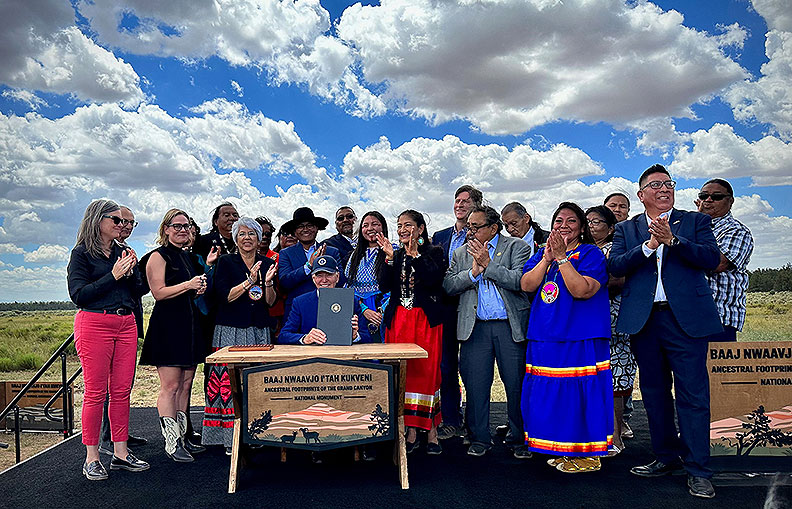
President Joe Biden at the signing ceremony for creation of Baaj Nwaavjo I’tah Kukveni national monument.
On Tuesday, Aug. 8, President Joe Biden created Baaj Nwaavjo I’tah Kukveni, a national monument encompassing almost a million acres surrounding the Grand Canyon. At the signing ceremony, Biden said,
America’s natural wonders are our nation’s heart and soul. That’s not hyperbole; that’s a fact. They unite us. They inspire us. A birthright we pass down from generation to generation.
In part, the three-state trip to Arizona, New Mexico and Utah was to promote the Inflation Reduction Act, a piece of necessary campaign work.
On August 16, 2022, President Biden signed the Inflation Reduction Act into law, marking the most significant action Congress has taken on clean energy and climate change in the nation’s history. With the stroke of his pen, the President redefined American leadership in confronting the existential threat of the climate crisis and set forth a new era of American innovation and ingenuity to lower consumer costs and drive the global clean energy economy forward.
We, as a society, must act to address the human causes of the climate crisis, and Joe Biden is doing the work.
The risk we have in establishing this national monument is another president with differing views could undo this work as Donald J. Trump did with Bears Ears National Monument in Utah, created by President Obama a year prior to Trump assuming office. Fact is there is no consensus about creating national monuments which in turn, steers the rudder toward partisanship. Biden’s lofty remarks on Aug. 8 sound universal, yet are not commonly enough believed for Baaj Nwaavjo I’tah Kukveni to endure when political seas shift.
There are characteristics of the new national monument that make them ripe to be overturned, at least in part. The first is grazing rights on public lands. According to the White House, “(The) monument designation protects these sacred places for cultural and spiritual uses, while respecting existing livestock grazing permits and preserving access for hunting and fishing.” It seems clear that won’t be good enough for ranchers and herders who rely on public lands to feed their livestock at low or no cost.
More significantly, the new national monument is home to some of the most easily accessible deposits of uranium in the country.
The Grand Canyon is too important to not protect. And yet there are hundreds of mining claims, and several active uranium mines in the proposed monument area that threaten to poison the landscape and destroy this sacred land. We know from firsthand experience the damage that can be caused by yellow dirt contaminating our water and poisoning our animals and our children. We are thankful to President Biden and the Grand Canyon Tribal Coalition for their efforts in pushing this initiative to protect our people from the adverse effects of uranium mining.
Navajo Nation President Nygren, Grand Canyon Tribal Coalition Celebrates Baaj Nwaavjo I’tah Kukveni – Ancestral Footprints of the Grand Canyon National Monument Designation Aug. 8, 2023
The hope among tribal leaders is the national monument designation is permanent. It is hard to believe that mining interests won’t exploit their political power to gain access to uranium deposits there. They have already begun framing arguments that uranium will be needed to power the displacement of fossil fuels in our energy grid. As I’ve written on several occasions, nuclear power is not the answer to addressing climate change.
We should celebrate the moment of creating this national monument. Local groups have been working on its designation for decades and we should stop, take a breath, and appreciate what determined, long-range political action can accomplish. We must also be vigilant of those who would undo Biden’s work.
When I retired the first time in July 2009, there was an office party with a sheet cake at the transportation and logistics company. The founder’s son telephoned me with well wishes. I wasn’t done working at age 57, yet knew where I worked for the previous 25 years would be seen only in the rear-view mirror. I never looked back.
When I retired for the second time, in April 2020 during the pandemic, I had little idea that would be it. Our household managed to avoid COVID-19 and my health was better than it had been for a long time, and still is. Funny how when you stop being with people, fewer upper respiratory diseases are contracted. Now that the coronavirus is normalized, I thought there would be something next. So far, most of my work has been centered around writing and home life. There has been no next and I need one.
With five COVID-19 vaccinations, I am as protected as a person can get. Recently, most friends who contract the virus don’t die from it unless there are complicating health factors. It seems a lot of people continue to test positive for COVID-19. The virus is our permanent companion and a reminder of our mortality.
I visit the doctor’s office more frequently, although that is partly because I have extra time available. I know there are benefits included with Medicare that have no co-pays. I press the clinic to deliver those services. Based on their current financial condition, they could use the revenues. The end result is my health seems closely monitored and I’m ready for what’s next.
So what am I waiting for? In part, for the second coming:
Turning and turning in the widening gyre
The falcon cannot hear the falconer;
Things fall apart; the center cannot hold;
Mere anarchy is loosed upon the world,
The blood-dimmed tide is loosed, and everywhere
The ceremony of innocence is drowned;
The best lack all conviction, while the worst
Are full of passionate intensity.
Of course, this is William Butler Yeats from The Second Coming. In a similar and more personal way, I wrote about things falling apart to the chair of the county Democratic Party after our last central committee meeting, “I haven’t found anyone to replace me on the central committee yet. There is almost no interest in doing extra things in politics or anything else. We, as a society, didn’t used to be this way.” While Yeats was writing about World War I, a lot of anarchy has been loosed in society in 2023. There is not a lot of visible conviction.
I’ll get through this patch of anarchy and find passionate intensity again, no doubt. I just wish I had realized earlier how fast everything would change.
International Physicians for the Prevention of Nuclear War. Photo Credit: Wikimedia Commons
International Physicians for the Prevention of Nuclear War issued the following press release on Aug. 2, 2023.
Medical Journals Issue Urgent Call for Elimination of Nuclear Weapons
More than 100 medical journals, including the Lancet, the British Medical Journal, the New England Journal of Medicine, and the JAMA have issued a joint call for urgent steps to decrease the growing danger of nuclear war and to move rapidly to the elimination of nuclear weapons. At a time of expanded fighting in Ukraine and increased tensions in Korea, leaders of the global health community underscore that any use of nuclear weapons would be catastrophic for humanity.
The unprecedented call to action comes in the form of an editorial co-authored by the editors of 11 of the leading medical and health journals, the World Association of Medical Editors and leaders of the International Physicians for the Prevention of Nuclear War (IPPNW). The editorial is being released this week in conjunction with the start of the UN Nuclear Non-Proliferation Treaty (NPT) Preparatory Committee Meeting and the 78th anniversary of the bombing of Hiroshima.
“The danger is great and growing,” the editorial warns. “The nuclear armed states must eliminate their nuclear arsenals before they eliminate us.”
Citing the special responsibility of the health community, the editorial urges “health professional associations to inform their members worldwide about the threat to human survival and to join with the IPPNW to support efforts to reduce the near-term risks of nuclear war.”
It calls on the nuclear armed states, and those allied with them to take three immediate steps: “first, adopt a no first use policy; second, take their nuclear weapons off hair-trigger alert; and, third, urge all states involved in current conflicts to pledge publicly and unequivocally that they will not use nuclear weapons in these conflicts.”
The editorial also urges them to, “work for a definitive end to the nuclear threat by supporting the urgent commencement of negotiations among the nuclear-armed states for a verifiable, timebound agreement to eliminate their nuclear weapons in accordance with commitments in the NPT, opening the way for all nations to join the Treaty on the Prohibition of Nuclear Weapons.”
“This is an extraordinary development,” said Chris Zielinski of the World Association of Medical Editors. “Normally medical journals go to great lengths to ensure that the material they publish has not appeared in any other medical journals. That all of these leading journals have agreed to publish the same editorial underlines the extreme urgency of the current nuclear crisis and the need for prompt action to address this existential threat.”
“The medical community needs to warn the general public of the enormity of the threat we face,” explained Dr. Arun Mitra, one of the authors of the editorial. “It is an integral part of our responsibility as health professionals.”
“We have to support the efforts of civil society organizations like the International Campaign to Abolish Nuclear Weapons and the Back from the Brink campaign in the United States,” added Dr. Ira Helfand, another co-author.





 Journey Home
You must be logged in to post a comment.