Categories
Living in Society

Trip to the County Seat

Photo by Edmond Dantu00e8s on Pexels.com

I’m from the government and I’m here to help. Now that I on-boarded with the county auditor to be a poll worker, I can truthfully say that. Ronald Reagan made a joke about those nine words, yet voting is no laughing matter.

On-boarding consisted of driving to the county administration building, locating the appropriate area, entering data on their system, and providing my I-9 documents for photocopying. I completed a time sheet with ten minutes and 20 miles. Easy-peasy.

About eight of us used IBM Think Pads for data entry. IBM sold that business line in 2005 and the company that bought it soon discontinued the product. I’m glad to see our county government using technology to get every last penny from the investment. I had forgotten how to use the track pad, so needed help.

As is usually the case, I ran into people I know from politics. I maintain a friendly relationship with everyone I helped elect at the administration building.

I made two other stops while in the county seat.

On the way in, I stopped at the used book store to see if they had certain titles by John McPhee whose Draft No. 4 I just finished. They had a McPhee reader with parts of the essays I sought for five bucks. A while ago, I had asked them if they had a copy of Howard Zinn’s A People’s History of the United States. I gave my copy to our child and wanted a replacement. When they said they didn’t have it, I procured it elsewhere. On Friday, they had been unexpectedly holding a copy for me. I declined it in person, yet on the way home, reconsidered it. Surely I could find a home for it. I emailed I would buy it if they still had it.

The other stop was at the grocer. It is conveniently located on Highway One which leads to our home near the lake. It has long been a stop when I have something to do in the county seat. I like the wholesale club better, yet they don’t have the granularity of item selection a home cook needs to run a kitchen. This produce section is particularly loaded with organic fruit and vegetables, all in a single location with non-organic. Too, when I fill my cart, the total is usually less than $100. At the wholesale club it can be double or triple that with less items overall.

I won’t be lording my new government employee status over too many people. The small bit of income will easily find a home in our budget. In fact, even though the general election is not until November, the money is already spent.

Categories
Kitchen Garden

First Day in the Garden

Frost in the ground.

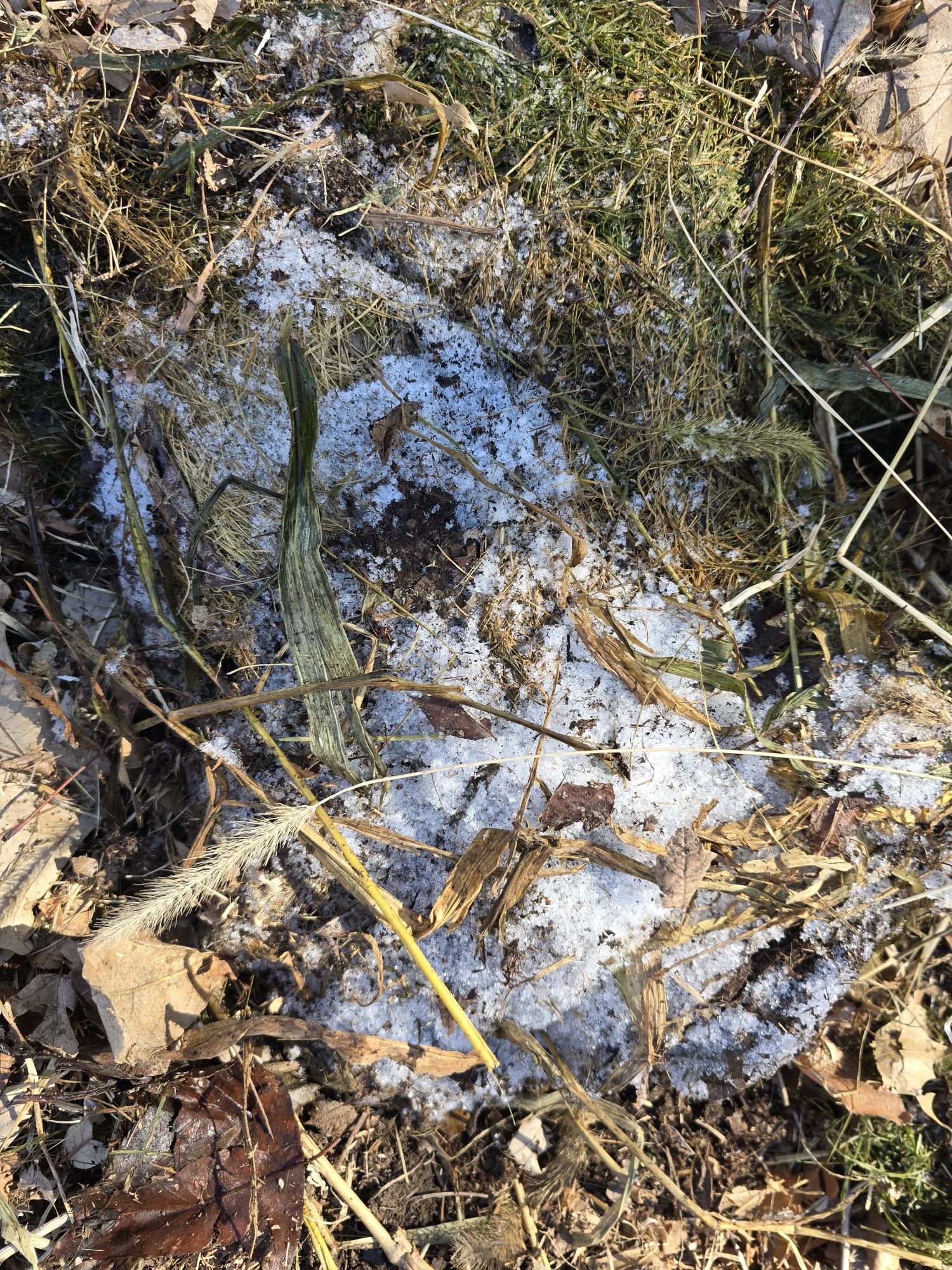
After struggling to get the fork into a pile of grass clippings, I gave up for the day. Everything was frozen solid, even after a few days with ambient temperatures well above freezing. Highs in the 40s and 50s are forecast the rest of the week. Maybe I will accomplish my goal of clearing one plot this week to use as temporary storage. Not that day, though.

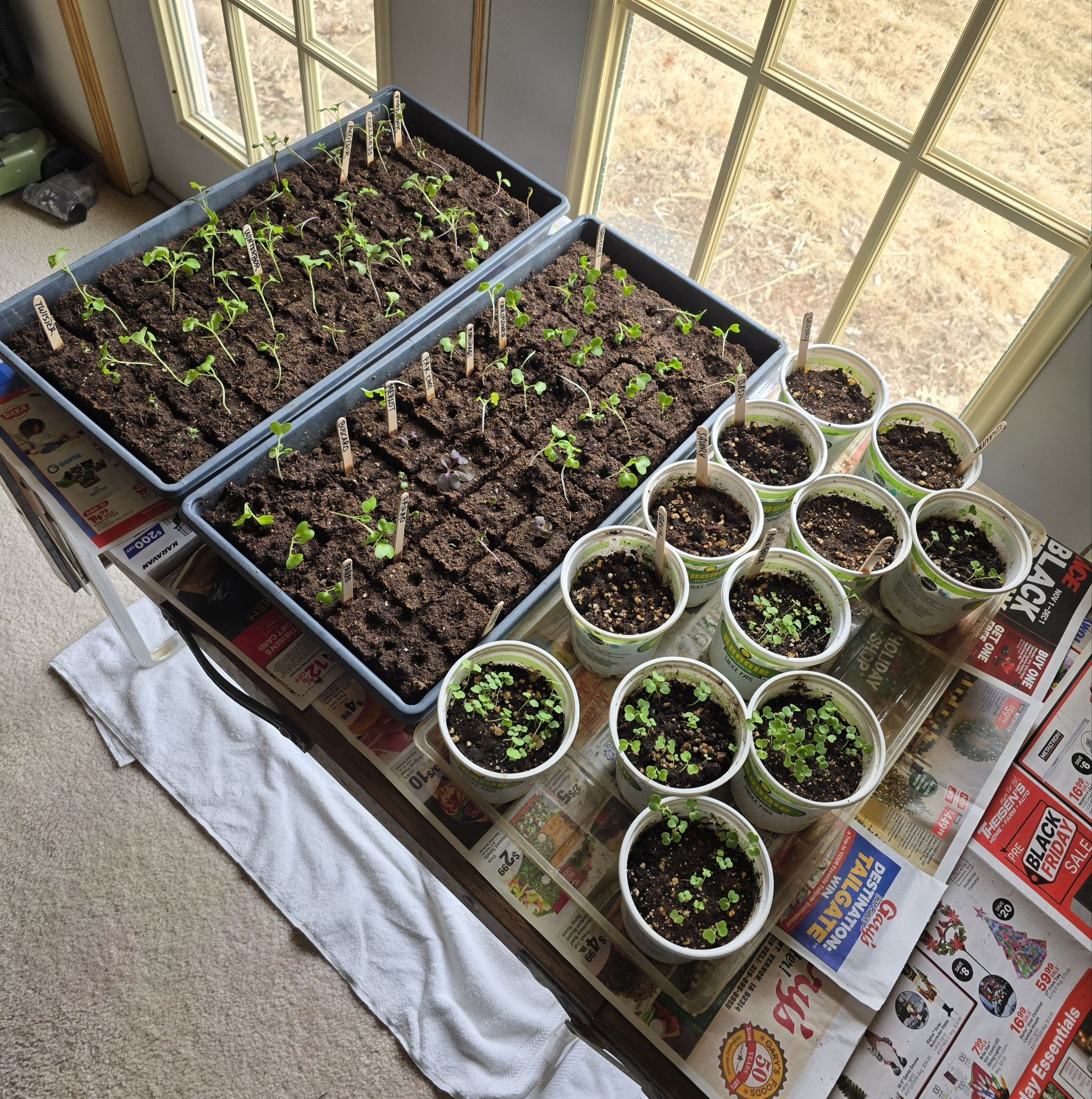
I am in the garden way early this year, so there is time for preseason work. I seeded the first indoor trays last Saturday and by Tuesday some of the varieties already had leaves. I hope they all germinate by this Saturday when I prepare the next tray of seedlings. Warming pad space is at a premium the next eight weeks.

When we moved to Big Grove Township there were scrub grasses and a lone mulberry tree on the vacant lot we purchased. The tree appeared to have been planted by a bird’s droppings while it perched on a surveyor’s re-bar marker. The ground had a high clay content which suggested the farmer who made his farm into a subdivision had removed the topsoil before selling plats.

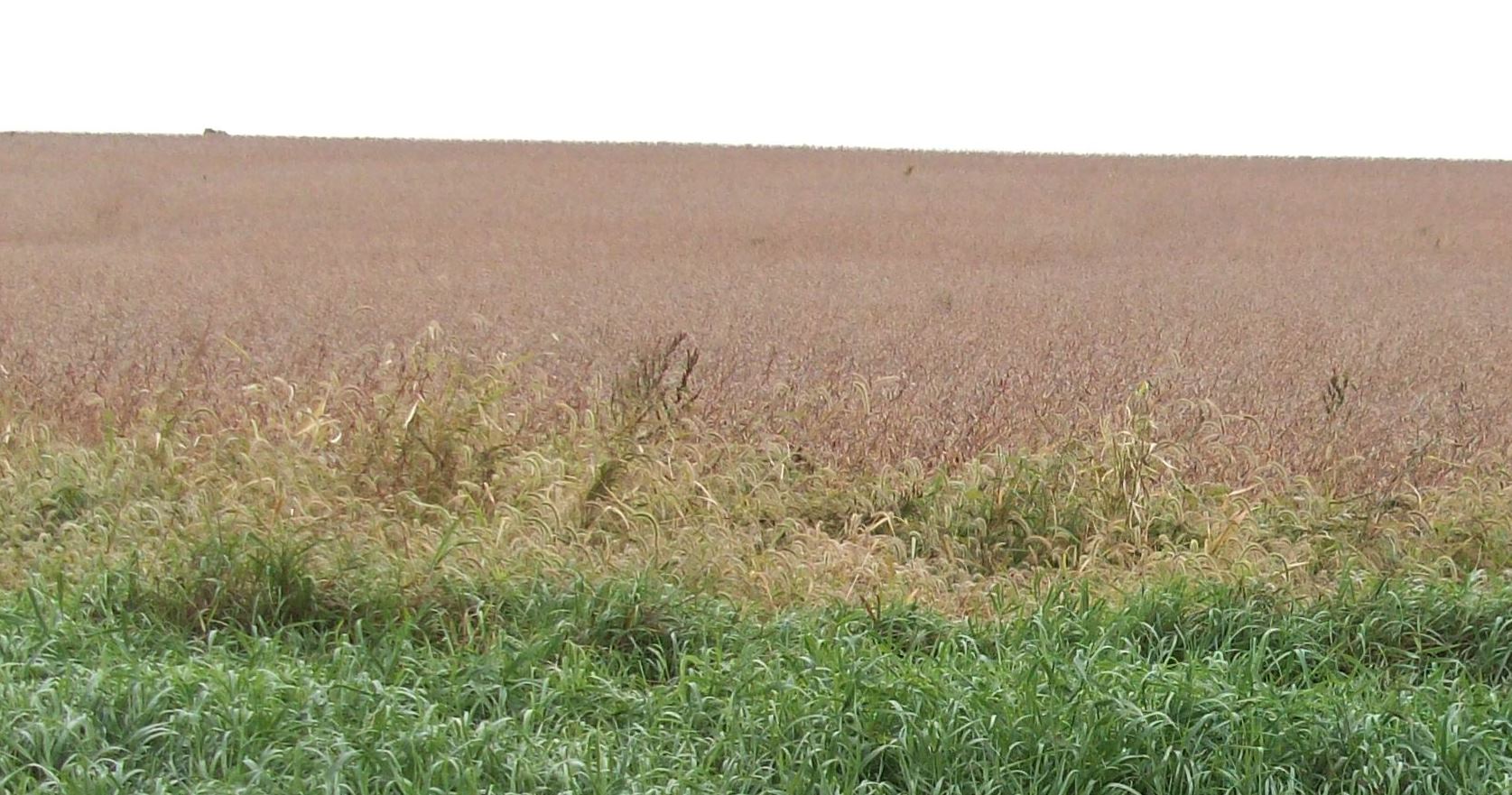
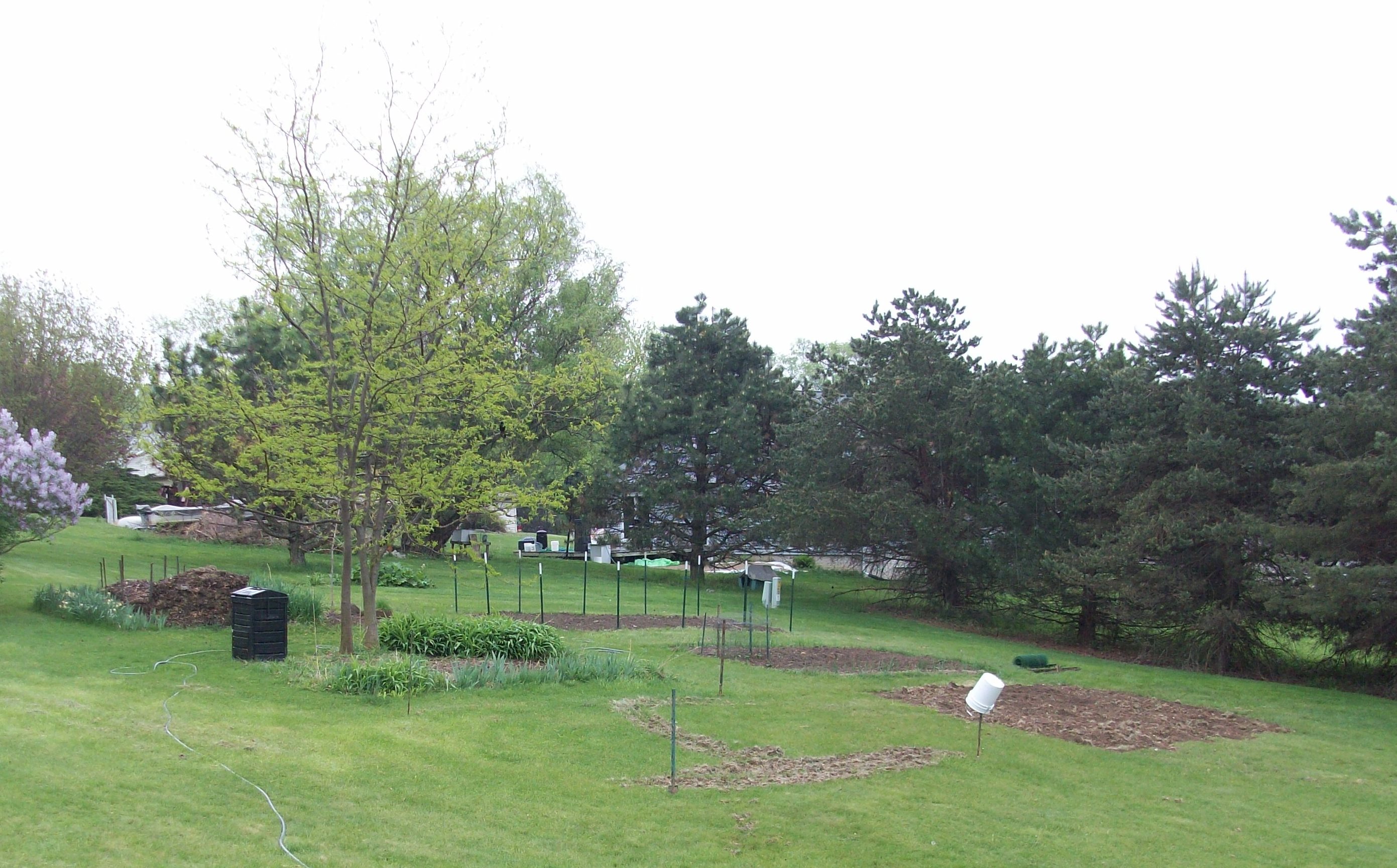
From that clay I built soil in a garden that now occupies one fourth of the 0.62 acres we own. When I started, the first plots were small with a large grass border around them. Today I can’t get the mower between the plots to cut foxtail grasses and other weeds that grow there. I got big after working on a vegetable farm for eight years, bringing home the skills and techniques I learned there. After years of expansion, it seems time to bring order to what I do. This is likely why I am outdoors in the garden the second week of February.

We did not set out to build habitat when we moved here. The decision to site the house closer to the north property line — as opposed to in the center — mattered more than I knew. Placement of the foundation determined what remained open, how wind would move, where trees should be planted. We were thinking of how to build additions when finances permitted. Now, a deer path runs the length of the lot on the south side of our home. When winds come from the west, there is a corridor on the north side where it sweeps through the fruit orchard, and into the back yard. Over the years wind has taken a toll on the many trees we planted here. We never built an addition, nor even a deck.

The abundance of wildlife remains mostly unseen. There have been birds of all kinds, opossums, foxes, and after many years of waiting for trees to grow, there are squirrels. There are too many deer, although by developing a path from their space in a nearby woods to an large apple orchard to the west, they mostly leave me alone.

As I contemplate today’s schedule I plan more time in the garden. Maybe the dead vegetation will have loosened enough to move it. Maybe not. In either case, there is plenty of time for preseason garden work.

Categories
Sustainability

When the Last Nuclear Limits Expire, Silence Is a Choice

B-61 Nuclear Bombs

For the first time in more than half a century, the world’s two largest nuclear powers are no longer bound by a treaty limiting their strategic arsenals. Last week, New START — the last remaining nuclear arms control treaty between the United States and Russia — expired.

What does that mean? It means that even countries long considered peaceful and stable, like Canada, are now openly debating whether to break with the post-war consensus and acquire nuclear weapons and delivery systems.

This outcome is no surprise. The arms control community sounded the alarm throughout last year. Their concerns are consistent and grounded: Russia and the United States possess roughly 80 percent of the world’s nuclear weapons, and without a binding arms control agreement, both nations are positioned for renewed competition in strategic forces. After the atomic bombings of Hiroshima and Nagasaki during World War II, the drive to reduce — and eventually eliminate — nuclear weapons was strong, producing decades of treaties and norms. Over time, that momentum weakened, leaving us where we are today.

U.S. Senator Chuck Grassley has long been skeptical of New START. In a recent email addressing the treaty’s expiration, he wrote, “I remain concerned about the effectiveness of the New START Treaty. I had reservations about the treaty when it was negotiated under President Obama and remain concerned today. From the beginning, the New START Treaty lacks the robust verification mechanisms that previous arms agreements imposed upon the Russian Federation, previously the Soviet Union.” His views reflect long-standing concerns about verification and enforcement.

While we do not agree on every point, Senator Grassley and I have maintained a dialogue on nuclear arms control going back to at least 2009. Where the senator could play a constructive role is in legitimizing concern about arms control beyond the small circle of activists who often take center stage, and into the offices where decisions about war, peace, and federal spending are actually made. I asked him directly to encourage the president to accept Russian President Vladimir Putin’s public proposal to extend New START for one year while a follow-on treaty was negotiated. Perhaps Senator Grassley’s influence is limited. Still, he takes arms control seriously, and that makes engagement worthwhile.

The financial consequences of abandoning arms control are also significant. According to the Congressional Budget Office, current U.S. government plans to operate, sustain, and modernize nuclear forces — and acquire new ones — would cost an estimated $946 billion between 2025 and 2034. The absence of a treaty increases pressure on nuclear states to expand or hedge their arsenals, even as both Russia and the United States pursue costly modernization programs. As nuclear budgets grow, they inevitably crowd out other national priorities.

A renewed arms race would not make us safer. The danger of unconstrained nuclear competition is not confined to Washington and Moscow. In a recent letter to the Toronto Globe and Mail, Dr. Tim Takaro of International Physicians for the Prevention of Nuclear War warned that even a limited nuclear war could leave billions dead and civilization in ruins. Deterrence, he argued, is not insurance — because failure is catastrophic. A world with more nuclear-armed states is not a safer one.

Senate Resolution 323 offers lawmakers a chance to state plainly whether they support renewed arms control or are willing to accept a future without limits. It calls on the United States to pursue new agreements with Russia and to reassert leadership in reducing nuclear risk.

When our collective resolve to pursue arms control wanes, silence itself becomes a choice. This moment calls not for resignation, but for engagement.

~ A version of this post appeared as a guest column in the Feb. 13, 2026 edition of the Cedar Rapids Gazette.

Categories
Home Life

In Mid-Winter

Before sunrise on the state park trail on Feb. 4, 2026.

It’s hard to believe half of winter is gone. Ambient temperature pushed toward freezing Wednesday afternoon, yet it didn’t quite make it. The lake remains frozen.

While I planned for it, political work on Sunday and Monday took a lot of energy. I’ve been recovering ever since. I finished the work by writing a personal note to each voter who attended caucus. The letter carrier just picked those up.

So today is a photo and a couple of paragraphs while I continue regaining energy. Life could be worse than that.

Categories
Living in Society

Sunrise at Month’s End

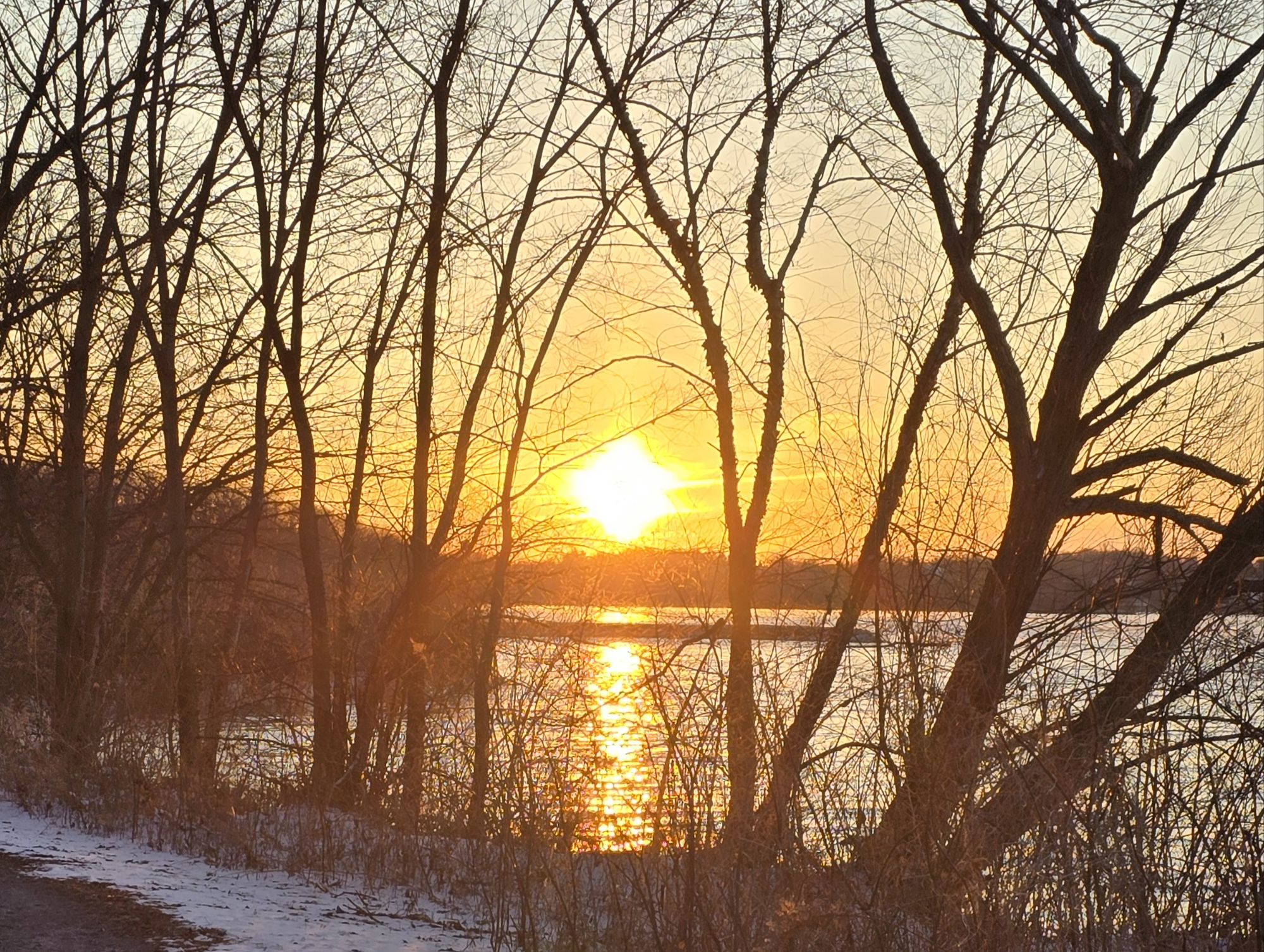
Sunrise over Lake Macbride on Jan. 30, 2026.

This January I’m thankful to have gotten back into the writing groove so quickly. I finished the first draft of my book and am a third finished with the first major edit. The narrative and language keeps getting stronger. If I did nothing else, that would be an accomplishment.

I managed to get outdoors for my 30-minute walk every day but one. In past years I struggled to get exercise during winter but I remedied that. Among other things I remedied was sleepless nights. After using artificial intelligence to generate some ideas, I developed my own process to fall asleep and stay asleep until it is time to get up. I’ve now been getting seven to eight hours of sleep each night.

Reading seven books this month was in line with my plans. February should be another good month, especially if it stays cold.

Friday I attended a visitation for a friend’s spouse. The older I get, the more I feel a sense of loss regardless of how long or how well I knew the deceased. Luckily several other people I knew were there and we were able to talk about more than a few common things. We could go on living.

The current schedule is to start the first garden seeds indoors on Feb. 7. The year is rushing toward us with unrelenting fury. A lot remains to be done before spring’s promise arrives.

Categories
Writing

Productive Winter

On the state park trail on Jan. 18, 2026.

On Sunday afternoons I take it easy. By that I mean there is flexibility in how I use the time between lunch and dinner. No pomodoros. No new projects. No major decisions. I relax and take it easy.

The rest of the weeks have been productive. I have been in the zone, moving forward with my writing and other projects. For a few Sunday hours, it is a peaceful life.

Categories
Environment

It’s Not Mating Season

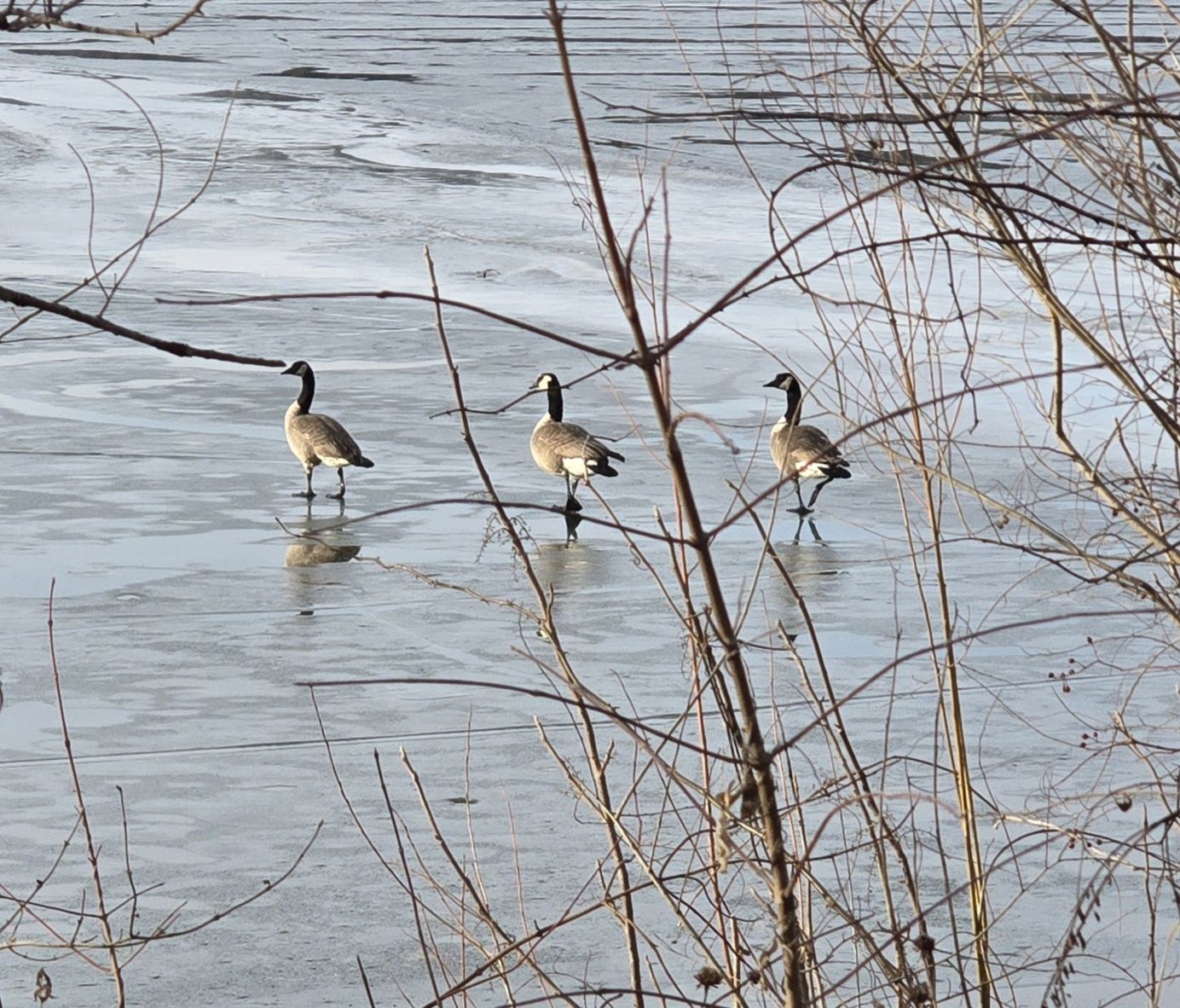
The sound of geese chatting and flapping their wings dominates the pre-dawn hour on the state park trail. Such vocalization and display on Jan. 15, can only mean one thing: the climate crisis has come home to roost.

There is the science of weather. La Niña is present but fading into a neutral state of the El Niño-Southern Oscillation. In other words, the weather is not doing much except what can be seen: ice melting, warmer ambient temperature pushing into the 50s, and lack of precipitation. So what’s up with these birds?

I know geese have strong bonds within mating pairs. They are particularly protective of their goslings. What I’m seeing now is not mating behavior, per se. It is a reaction to climate change in the form of over-wintering, early pairing displays, and vocal/aggressive behaviors. These behaviors are now normal near the lake where I take my daily walk, and in other parts of North America. The environment changed faster than their instincts evolved. What I observed in an earlier post is mostly pair-bond reinforcement and territory signaling, not actual breeding yet. I don’t need to be worrying about freezing little goslings in 3-4 weeks just yet.

Like with anything, my fellow early morning trail walkers noticed the noise and wondered what it was. I opined about it before really understanding the behavior. Geese will eventually adapt to changing climate. One might say they already are.

Categories
Sustainability

It Could be a Wonderful World

Along the state park trail pre-dawn.

I rarely find people who reflect my own thinking as closely as this post by Lawrence Wittner on the International Physicians for the Prevention of Nuclear War Peace and Health blog. We have the capacity to solve many of the world’s problems: poverty, hunger, human health and longevity, and fear for security. At the same time murderous rogue states led by Donald Trump, Vladimir Putin, Kim Jong Un and Benjamin Netanyahu are at work to negate these advancements. After the paragraph below, click on the link to read Wittner’s entire post.

There is a widening gap today between global possibilities and global realities. The possibilities are enormous, for―thanks to a variety of factors, ranging from increases in knowledge to advances in economic productivity―it’s finally feasible for all of humanity to lead decent and fulfilling lives.

It could be a wonderful world
Categories
Living in Society

Winter Reading 2025-2026

One use for my sorting tables: picking the next book to read.

The die is cast for 2026 winter reading. Books in this photo have been recently acquired and they, along with those already read match the number of books I read in January and February last year. I shut off acquisitions for now to focus on reading.

The first three books were The Lost Honor of Katharina Blum by Heinrich Böll, The Gastronomical Me by MFK Fisher, and The Marx Bros. Scrapbook by Groucho Marx and Richard J. Anobile. Currently The Ogallala Road: A Memoir of Love and Reckoning by Julene Bair is half finished by my bedside. The key to winter reading is to pick books that are both excellent and draw a person into the narrative. These four do both.

My standard is to read at least 25 pages per day. In my youth, the number was 50 yet over time I found 25 is sustainable. In winter it is easy to read more and I do. For example, Monday I was scheduled to work in the garage. When I arrived, it was too cold to work very long, so I went back to my book.

Reading takes about an hour per day, which is not a lot of time. Mostly, I read in bed in the morning before my morning regimen. However, I make sure to finish at least 25 pages whenever and wherever I read.

The Read Recently page on this blog lists books I read over the last number of years. If you are on Goodreads, find me there to follow me. Like any avid reader, I am always looking for what’s next.

Categories
Living in Society

Something Different

Trail Walking on Jan. 12, 2026.

These are tough times for a lot of people I know. Hang in there, folks! The weird weather is causing the ice to melt and maybe some good will come of it. If not, spring is coming.

“Nostalgia in reverse, the longing for yet another strange land, grew especially strong in spring.” —Vladimir Nabokov

This morning I consider my pancreas. Yes, the mixed-function organ that helps with digestion and regulates blood sugar levels. I am mostly interested because of its role in the latter. The pancreas is a key organ in managing diabetes, with which I was diagnosed in May 2019.

I asked my new acquaintance, for which I have not determined a name, artificial intelligence. (NB: The name HAL has been ruled out). “What are two or three dietary intakes a person can use to promote pancreas health. No more than three.” The machine was uncharacteristically brief, taking my request for brevity literally:

Here are three dietary intakes commonly associated with supporting pancreas health:

  1. High-fiber foods – vegetables, legumes, whole grains; help regulate blood sugar and reduce pancreatic workload.
  2. Healthy fats (especially omega-3s) – fatty fish, flaxseed, walnuts; may reduce inflammation.
  3. Adequate lean protein – fish, poultry, beans; supports tissue repair without excessive fat stress.

AI apparently did not get the word that according to our Secretary of Health and Human Services, the war on protein is over. Nary a cow or hog product on this list of dietary intakes. Perhaps there remains some science on the internet, the domain of artificial intelligence. Perhaps the secretary and his minions have just not gotten this far in their propaganda campaign. In a throwback to when these things mattered, the machine cautioned, “general wellness guidance, not medical advice.”

As a mostly ovo-lacto vegetarian, I find this a good list. I can figure out where dairy fits in, although I know I should control how much of that I eat. Four dozen chicken eggs per year does not seem like a lot. I consume about two gallons of nonfat fluid cow’s milk per week. Cheese consumption is on the radar screen. I am eating more cottage cheese and it is displacing some of the cheddar cheese. I smear some sour cream on tacos instead of cheddar or Mexican-style cheese, although I do that for the flavor and not the fat content, which is higher. I should and likely will switch sour cream for nonfat Greek yogurt on Taco Tuesdays.

Eating more fiber is always a challenge. I have been tracking that number on an app, and in the first 12 days of 2026 I hit or exceeded my goal every day but one. Fiber is also good for my colon, according to physicians.

Regarding healthy fats, I need some work. The first thing I will do is replace the peanuts and raw cashews I eat with almonds, both raw and roasted. I need, or think I need a salted snack each day. I use about one to two tablespoons of extra virgin olive oil each day, and that falls into the “healthy” category, although I use water or broth as a cooking medium where it makes sense. I’m not a big seed eater, yet we have ground flax meal on hand and I could, and hopefully will, add it to more things. Chia and hemp seeds are readily available at the wholesale club, so I may get a bag of each and experiment with them. With regard to nut butters, I use Jif peanut butter, full fat-style, and that is that. Moderation is the key with Jif.

I have been able to reduce my A1C with diet since my 2019 diagnosis. The number went a little crazy when I contracted COVID-19, yet since then, my practitioner said it is managed. The thing is, unless deterioration of the pancreas is caught early and treated through diet and exercise to lose weight, the damage is often irreversible.

I have not thought a lot about my pancreas. Now that I’m living in my eighth decade, it is time. We can either get older and die, or we can get older and wiser. I prefer the latter, hence the focus today on the pancreas.