
Never again should humans detonate atomic munitions. It is 90 seconds to midnight according to the Bulletin of the Atomic Scientists Doomsday Clock. Read what you can do to mitigate the dangers in our nuclear armed world by clicking here.

Never again should humans detonate atomic munitions. It is 90 seconds to midnight according to the Bulletin of the Atomic Scientists Doomsday Clock. Read what you can do to mitigate the dangers in our nuclear armed world by clicking here.

I had been mowing with my John Deere lawn tractor for about 15 minutes. Life was good as I prepared the yard to be more presentable when overnight guests arrived later in the day. I stopped, turned off the engine to move something, and when I returned to the driver’s seat the engine would not crank. After trouble shooting to see if I could resolve the issue, I called the repair shop and they picked it up that day. They said they would have it for three weeks, most likely, because of a backlog of work. I’ll have to hire someone to mow as the lawn will turn into a jungle of natural habitat if I don’t.
We brought the equipment home from my father-in-law’s estate before the turn of the millennium. When it breaks down, there is always a question of whether repair parts will be available. The company says, “Nothing runs like a Deere,” yet they no longer make or stock every part for every model going back to the company’s founding in 1868. Planned obsolescence has become part of their business strategy. If my tractor can’t be fixed because parts are not available, I’m not sure what I will do. There are several suitable models under a thousand dollars. I really don’t want to spend that kind of money to mow the lawn half a dozen times a year. There is a case to replace it now to avoid future price increases. I would rather have just finished mowing the lawn than deal with this now.
This personal experience feeds into the broader issue of Right to Repair. When we own something, like my John Deere tractor, we shouldn’t have to beg the dealership to have access to repair parts and fix it. I’m not that mechanical as a basic social skill so I rely on others for car, tractor, chainsaw, trimmer, home appliance, and other repairs. We are subjected to their rules, and one of those is availability of repair parts. I bought more than a few new appliances because repair parts were no longer manufactured or stocked. It’s a rook deal!
When I worked in transportation I became aware of increased technology used in mechanical devices, Class 8 vehicles particularly. This changed the landscape in multiple ways. Importantly, equipment developers sought technology to make things better or comply with new laws. It was one more component to include in an automobile or refrigerator that cost something, and when the initial sale was made, increased net margin for the seller and manufacturer. What is often forgotten is any new maintenance issue related to failure of electronic components. There are no work-arounds when a computer chip fails.
When my John Deere would not start, I quickly diagnosed the problem as an electrical failure. I’ve had the tractor long enough to recognized the layers of failure it demonstrates. When I was on the phone with the service writer they agreed. So now we wait.
We bought a quarter acre lot in 1993 because it was available. We liked the proximity to the state park hiking trail and the public school system. There was abundant room for a garden and an orchard. What we didn’t foresee then was the inability to get ahead financially enough to completely eliminate the lawn in favor of a giant garden. Such projects are the endeavor of youth, so I’ll be dealing with mowing for as long as we live here. We don’t plan to move. We’ll stay and deal with interactions from a variety of service technicians. I’d better maintain a friendly relationship with them. Life could be worse.

July is ending better than it started.
The June 27 debate between Donald Trump and Joe Biden launched weeks of political uncertainty. I did not watch the debate, yet its impact hit me and so many of my friends who are Democrats. We didn’t know what to expect.
On July 13 a shooter attempted to assassinate Trump. To a lay observer, it was clear whoever set up security for the Pennsylvania rally left gaps in security coverage the candidate should have had. Why would security leave a roof within line of sight of the speaker’s podium and within range of commonly available weapons unsecured? Secret Service Director Kimberly Cheatle resigned on July 23.
On July 17, Biden was diagnosed with COVID-19 while in Las Vegas. He returned to Delaware for isolation and treatment. He continued to execute his role as president through and after resolution of the illness on July 24 when he returned to the White House.
On Sunday, July 21, after noon, President Biden announced he would not accept the nomination of his party as president. While insiders knew this was coming, most of the nation was surprised. It brought closure to the post-debate period. Democrats quickly rallied around Vice President Kamala Harris who has already secured enough delegates to become the party’s nominee. In addition, she has done well in fundraising for her own campaign. People seem willing to engage in our politics again. As one commenter on Threads said of July 24, “I swear to god this entire day feels like Joe lit the Beacons of Gondor and Rohan freaking ANSWERED.”
The month has been exhausting, mostly because all of these things matter.
Personally, the High School Class Reunion was a big deal, and my spouse has been at their sister’s home helping out all month. With a couple of exceptions — Independence Day parades, a home owners association meeting, a political fund raiser, and the reunion — I have been pretty isolated. I need to spend more time with people right now.
I also need to work to make sure August is a better month.

This year thistles grew near the east side of the house. While planting the garden, I let them grow. Now came the time to remove them and start a brush pile.
After morning reading, writing, and cooking, I took an old sweatshirt from the closet and put it on. Over that I wore coveralls. Socks, garden shoes, a ball cap, and heavy leather gloves completed the ensemble. The idea was to prevent the thistles from puncturing my skin. For the most part that was accomplished. Ensemble is a pretty fancy word for my attire. We don’t do much stylin’ around here.
These jobs seldom take as long as I plan. The idea is to do them well and do them once. While I had the lopper out, I cut back low-hanging branches I’ve been dodging all year while mowing. I cut back a total of five trees. By the time I pile up all the brush, it will be a decent stack. After I add the brush stored in a fallow garden plot, and conditions are good, I’ll burn it. I put the brush pile over the stump of a locust tree, having heard the fire will remove the stump. We shall see.
The first tomatoes ripened. Orange cherry tomatoes as is usually the case. The garden is a bit of a mess yet it is producing like crazy. The refrigerator is at capacity and there is no shortage of ingredients to prepare a meal. This abundance is complicated by the fact my spouse has been helping her sister for three weeks. I’m doing my best to prepare meals without leftovers, although that is hard to do dining alone.
When J.D. Vance was selected as the Republican vice presidential candidate I pulled down my copy of Hillbilly Elegy and read it. It hasn’t been a priority until now. The ivy league lawyer who grew up in poverty has a story to tell, yet, he makes generalizations that don’t ring true. I’ve known more than a few people, mostly family or kin, who are poor and live in Appalachia. To a person, the word hillbilly was never used to describe themselves. From there the book went downhill as having any broader application than his personal life. Vance’s story is engaging, yet it seems written to support his conservative point of view. When I went to Goodreads to declare I finished the book, the software wouldn’t let me rate the book. I got a message that said,

Do you suppose people are dunking on Vance now that he is running for high office?
Each summer I make iced tea a couple of times. I heat up the water and brew three black tea bags in a teapot purchased for our child’s long ago school project. I buy the cheapest black tea available and it serves. I drink it over ice, no sugar. It is one of the pleasures of summer. On a Saturday afternoon, there is little else more satisfying to a septuagenarian pensioner.

One of the arguments that went under the radar this year was whether the Holocene era is over, giving way to the Anthropocene, the era of human dominance over the planet. For what it’s worth, the panel voted we are still in the Holocene, a period that began some 11,700 years ago with the end of the last ice age.
Few opponents of the Anthropocene proposal doubted the enormous impact that human influence, including climate change, is having on the planet. But some felt the proposed marker of the epoch—some 10 centimeters of mud from Canada’s Crawford Lake that captures the global surge in fossil fuel burning, fertilizer use, and atomic bomb fallout that began in the 1950s—isn’t definitive enough. (Science, March 5, 2024).
The Anthropocene Working Group (AWG) has not given up and will be working the next ten years until another vote is taken. In the Science article, author Paul Voosen indicated the AWG are news hounds. “‘The Anthropocene epoch was pushed through the media from the beginning—a publicity drive,’ says Stanley Finney, a stratigrapher at California State University Long Beach and head of the International Union of Geological Sciences, which would have had final approval of the proposal.”
What does this have to do with the price of tea in China? Expect climate deniers to be all over this news, saying humans don’t influence climate change. That would be hogwash. Luckily, there are people in Iowa doing something to mitigate the effects of human influences on the climate. People like the Iowa Environmental Council who announced this free webinar:
Communities near coal plants operated by Iowa’s power companies see higher rates of asthma, COPD, cancer, and other pollution-related diseases. A new report from the Iowa Environmental Council, written in partnership with the American Lung Association, Physicians for Social Responsibility, and the Winnebago Tribe of Nebraska’s Comprehensive Healthcare System, highlights how two coal-fired power plants outside of Sioux City affect the health of the region.
Join us Wednesday, July 24 for a lunch hour webinar about this new report examining the relationship between pollution from coal plants and lung disease in Woodbury County.
Coal in Siouxland Health Impacts – free webinar
Wednesday July 24
12:00 pm – 1:00 pm
Online (Register Here)The report finds that the two MidAmerican Energy coal plants have been associated with causing at least 1,400 premature deaths since 1999 and the region’s rates of asthma and lung cancer outpace statewide averages. Despite these impacts, MidAmerican Energy claims they will operate these plants for an additional 25 years.
Can’t make it for the live event? Register to attend and a recording will be made available to view later at your convenience. Contact us with any questions at iecmail@iaenvironment.org. We hope to see you there!
– Your friends at IEC

The Independence Day parade in Coralville is likely the last hurrah for many of us in the People’s Coalition for Social, Environmental and Political Responsibility. Our members are aging. Some of the 100 Grannies for a Livable Future died. The World War II members of our chapter of Veterans for Peace also passed. The number of Yahoo Drummers is diminished with two playing the rear guard of this year’s parade entry. This event is a big deal in the life of the county. I hope others replace us going forward.
My right hip began to bother me at some point in the parade. When I got home, I found my feet sore. I walked in two parades and drove a vehicle in a third, yet my parade walking days are over. I hope to recover from the aches and pains, yet I don’t want to exacerbate them either.

Beginning at the turn around from walking east to west, I got a bug in my brain that concerned me about shooters. For the rest of the parade I scanned the crowd with that in mind. There were none, and that was good. I couldn’t shake the irrational fear.
What impressed me most about the parade was the youth of those gathered. Children and parents alike seemed very young. It is time for some of us oldsters to step aside to make room for the young.


There’s a lot of chatter about the energy demands of artificial intelligence. As Iowa looks at inviting new data centers into the state, the usual suspects are dragging out the same old sawhorses to devise worn out solutions to meet this demand. One of the ideas floated was re-opening the Duane Arnold Energy Center near Palo, Iowa, owned by NextEra Energy. That would be a bad idea.
Erin Jordan of the Cedar Rapids Gazette reported, “John Ketchum, CEO of NextEra Energy, which has owned Duane Arnold since 2005, told Bloomberg on June 12 he had inquiries from potential data center customers interested in the 600 megawatts generated by the Iowa reactor. ‘I would consider it, if it could be done safely and on budget,’ Ketchum said.”
The stickler here is “on budget.” When has refurbishing a nuclear power plant been done, one closed down after being damaged in the August 10, 2020 derecho, and four years into de-commissioning? I suspect zero is the number. How does one budget for that? What if they run into something unexpected? Who pays? NextEra would likely seek to be indemnified from unexpected costs.
In 2010 I wrote, “On December 16, 2010, the United States Nuclear Regulatory Commission renewed the license for the Duane Arnold Energy Center in Palo, Iowa for an additional 20 years, extending the license to the year 2034.” The power plant would serve its normal term of 20 years, and the renewal followed a process to extend it by 20 more. How long can Duane Arnold’s life be extended? At some point, basic components, like concrete and rebar can show fatigue. Extending the life of Duane Arnold beyond 2034 would have been a dicey proposition. In fact, it was not viable and NextEra decided to shut it down early.
Iowa has been asleep at the wheel regarding nuclear power. During public hearings on the license extension, very few people made comments. I suspect people who engage about the value of nuclear power have their arguments. I would propose a completely different approach from letting companies like NextEra drive the locomotive toward supplying data center electricity.
In the first place, Bill Gates is supposed to be solving the problems that prevent society from moving forward with new nuclear power. He has a test site in Kemmerer, Wyoming using a small modular reactor, not old-style behemoths like Duane Arnold. Let Gates see if he can solve nuclear power’s problems and then do this thing right. That should play out before we look at re-opening Duane Arnold to run for less than a decade. I am skeptical Gates is actually doing much different, yet he invested time and resources to solve the problems.
Better yet, public utilities are supposed to be experts in providing electricity to users. Let them come up with their own solution beginning with a blank page. If a data center requires the electricity it takes to run a small city, let the utilities figure out how to do that. Will there be government money to pay for this boondoggle? I hope not and say let public utilities figure out how to finance it without government dollars.
I am weary of hearing about Duane Arnold. In my mind, the plant is shutting down, and that’s what they told the Gazette on the first approach for the recent article. Real solutions to our energy problems exist. More are being developed. It’s time we pursued the latest technology rather than hitching Duane Arnold up to the wagon for one more trip to market. We owe it to our future and our progeny to innovate. So we should.
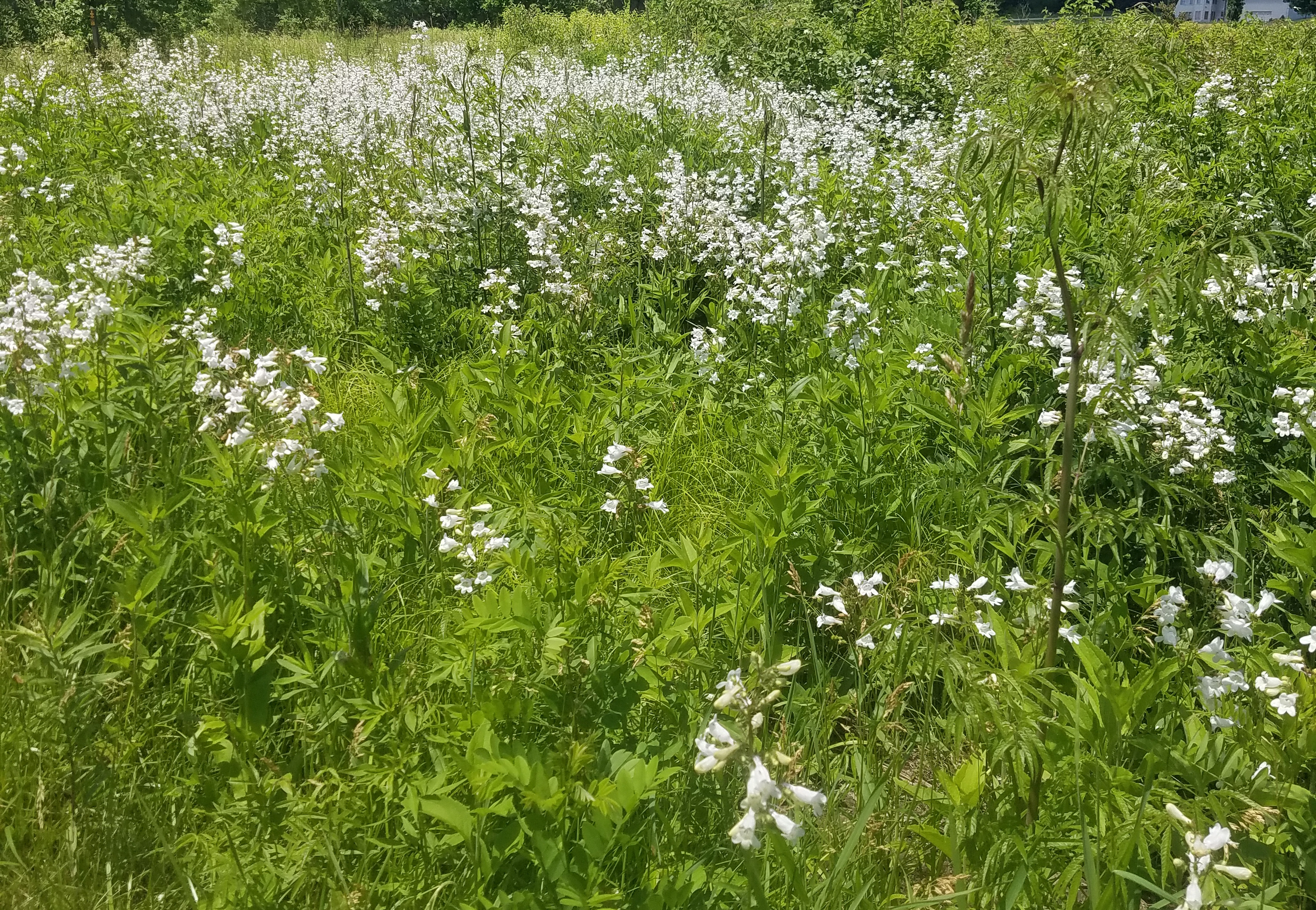
It’s time to take a break from writing. For a while, I must explore my daily life, my environs, and enjoy them. I may sit for spells in my chair, or out in the yard, and just breathe.
Thanks so much to everyone who reads my posts. It means a lot to have people return for visits, especially if we have not met. I receive fewer views here than when I wrote for newspapers, yet the positive side is I can visit your sites and see what you are writing and doing. That is a gift.
Enjoy the rest of June. Will I return in July? I’m not sure. I looked up my life expectancy on the Social Security web site. Based on that calculation, I have 14 more summers to enjoy. Beginning now, I plan to make the most of each one of them. That begins with long walks to feel the sun’s warmth on my skin and a summer breeze on my face: ambition enough for now.
Hope to see you again on the flip side.
UPDATE: I’ll be covering vacations and such in July at Blog for Iowa, I’ll cross post that writing here.

In the first place, it is difficult to recognize this gathering of large rocks in the photo as Stonehenge. Mostly, the significance of an act of vandalism may have been more prominent in the minds of two vandals than in anyone else. I get it. Summer was about to begin. That’s a big day for some. Just Stop Oil, the organization behind the vandalism, said their motivation was to demand the next UK government end extraction and burning of oil, gas and coal by 2030. Whatever. Apparently it took an oversized hair dryer to blow the powder paint from the rock surfaces without harming colonies of lichen that developed there. If people know about the incident, it’s been forgotten by now.
Having done my tour of duty on the Salisbury Plain, my memories are scant. I stayed at a youth hostel, and made visits to Salisbury, Bath and Stonehenge. Another traveler, who spent the previous few weeks wandering about the moorland of southwest England, invited me to accompany him. I declined. It sounded too much like Iowa, and a bit dreary. I bought a post card at the Stonehenge gift shop and worked my way from the chalky plateau to the chalk cliffs of Dover and then to Calais, where my journal of Salisbury and England was pinched with my backpack after crossing the channel in a hovercraft.
I never looked back on England, and don’t understand the fascination with Stonehenge at solstice. It is an old thing, shrouded in lost history. I’m more thankful the days start getting shorter, and planning for autumn can begin in earnest.
One surviving account of my visit to Stonehenge remains.
Very sunny here today near Stonehenge, and other ancient ruins. Stonehenge yesterday brought to attention the very tourist like notions of seeing something only to tell your friends about it when you get back. It may be that these days this is the notion you should have or at least most common, but it is also a notion of which I refuse to partake. It is only a very insensitive person who will go look and come back in one hour as the tour bus takes, but then there’s hours and barb wire fence to keep you from doing it any other way. Yet here too comes the notion that since there are so many books and pictures and articles about Stonehenge why even bother the few minutes to even see the thing.
On the way from the rocks to the return bus, the drivers were talking and one said to another, “It’s too bad it started to rain. It spoiled their trip.”
Here it seems that there is such a “holiday” preconception among these drivers (and all Britons as well) that it prevents them from seeing what is really, actually there: some rocks with barb wire about them with people crowded within these premises. At any rate, I was no different from the others when I paid my 65p and walked, took some photographs, and bought some postcards which I today mailed to the states.
Journals, Winston Churchill Gardens, Salisbury, England, 11:45 a.m. on Aug. 27, 1974
In the 5,000-year history of Stonehenge, Wednesday’s protest is less enduring than the lichen that over millennia colonized the massive stones. I don’t wish ill on the two vandals. I just hope they receive their just desserts. I’m sure the ancient druids could care less about this week’s events.

A characteristic of the state where I live is there is no ocean. That may be the dominant feature of the Hawkeye State. Sure, we have an immense drainage system that leads to the Gulf of Mexico, where we send farmland soil and chemicals at an astounding and deleterious rate. Want of an ocean changes how we grow up, learn, and live.
I grew up in a city near the Mississippi River with a population of 75,000 at the time of my birth. The Grant Wood farm scapes of note were nothing to me in my first two decades. Life consisted of family, church, school studies, commerce, and learning how to work. Farming, like that in Iowa, had little to do with it.
My great aunt Marie lived with her family on a local farm. I remember visiting them a couple of times for large family gatherings. It was a form of exoticism that made Aunt Marie approachable and harked back to when she was born on a Minnesota farm with her brother and many sisters. Farming as I knew it was a form of nostalgia. Aunt Marie was able to attend the wedding reception Mother hosted for us at her home, along with a couple of her sisters. It seemed at the time just something people did in a city.
The connection of the Mississippi River with the ocean was understood. In my early years I spend time by the river bank. I looked past the refuse of crumpled paper cups, abandoned fishing tackle, spent condoms, and such scattered on the shoreline. I looked across the one mile of water toward Rock Island. While Father’s family emigrated from Florida to Rock Island after World War II, that city seemed exotic, not unlike the way Aunt Marie’s farm did. I preferred the city where I was raised.
We took a childhood family trip to Florida and swam in the ocean. I tasted the water to see if it truly was salty and found it was. The ocean was an exotic place of its own. A place for special trips and limited, controlled experiences. This exoticism prevented understanding of much that was written about living near the ocean. It was as if a whole set of literary metaphors had been removed from the intellectual environment and was inaccessible to me. It made some verse and stories incomprehensible and there seemed to be no good alternative.
With high school friends I visited Assateague Island in the Atlantic Ocean. We were visiting classmates at Georgetown University in Washington, D.C. and wanted to escape the city. It wasn’t the city. I don’t know what it represented other than youthful ambition to connect with nature. Most of the memories I brought home from that trip have nothing to do with the ocean.
We live in Big Grove Township where most of the big groves of trees were cut down and made into lumber. From the time Black Hawk ceded land after the Black Hawk War, settlers ripped up the prairie for farmland at a rapid pace. Today there is very little public land in Iowa and comparatively few state parks. There is almost no remaining prairie, just bits and pieces here and there. Instead we have fence row to fence row corn and soybeans throughout the state. People refer to Iowa fields as an ocean of corn, yet the description falls flat when compared to an actual ocean. Instead, we are a sleepy place having nothing to do with any ocean. We are the worse for want of a nearby ocean.
We adjust to other metaphors while lacking an ocean. The trap has been to consider industrial farm scapes as something valuable, some kind of alternative. They don’t reflect who we are as a people. They reflect the wealth of land owners. In the long run of a life, who indeed cares about that?
John Haines poem, “Whatever is here is native” is pinned on a bulletin board in the garage. Haines found inspiration in the peaks of the Alaskan range he could see from the cabin he built himself, in the butterfly he held in his hands, in the moose he shot and butchered. He told of stones waiting for God to remember their names, according to his obituary. Such may be our life for want of an ocean. We must accept what is here as who we are.

 Journey Home
You must be logged in to post a comment.