Categories
Home Life Kitchen Garden

Trimming the Mulberry Tree

Tractorcade Hits Big Grove
Tractorcade Hits Big Grove Township

LAKE MACBRIDE— Reaching into the cooler, forearms covered with sawdust and sweat, I pulled out the last remaining bottle of chilled water. At 86 degrees and the air full of gnats, my mouth was dry.  I drank greedily— momentary coolness quenching my thirst.

The mulberry tree grew from a seed dropped long ago by a bird sitting on the rebar marker of the corner of our property. Because of the way it grew, three of us now own a part of that tree, although I have been its caretaker. In this tree I first saw Cedar Waxwings eating berries. Under it, the deer and rabbits graze on the fallen mulberries. While a volunteer, it has been a good tree and too long neglected.

A neighbor asked me to trim it because the branches were so low he couldn’t get under it with his riding mower. I thought to myself, “that’s my problem too.” Today it was pruned. It looks much better with all the low hanging and dead branches cut away. The mulberries are beginning to ripen, indicating the turn of the season to summer.

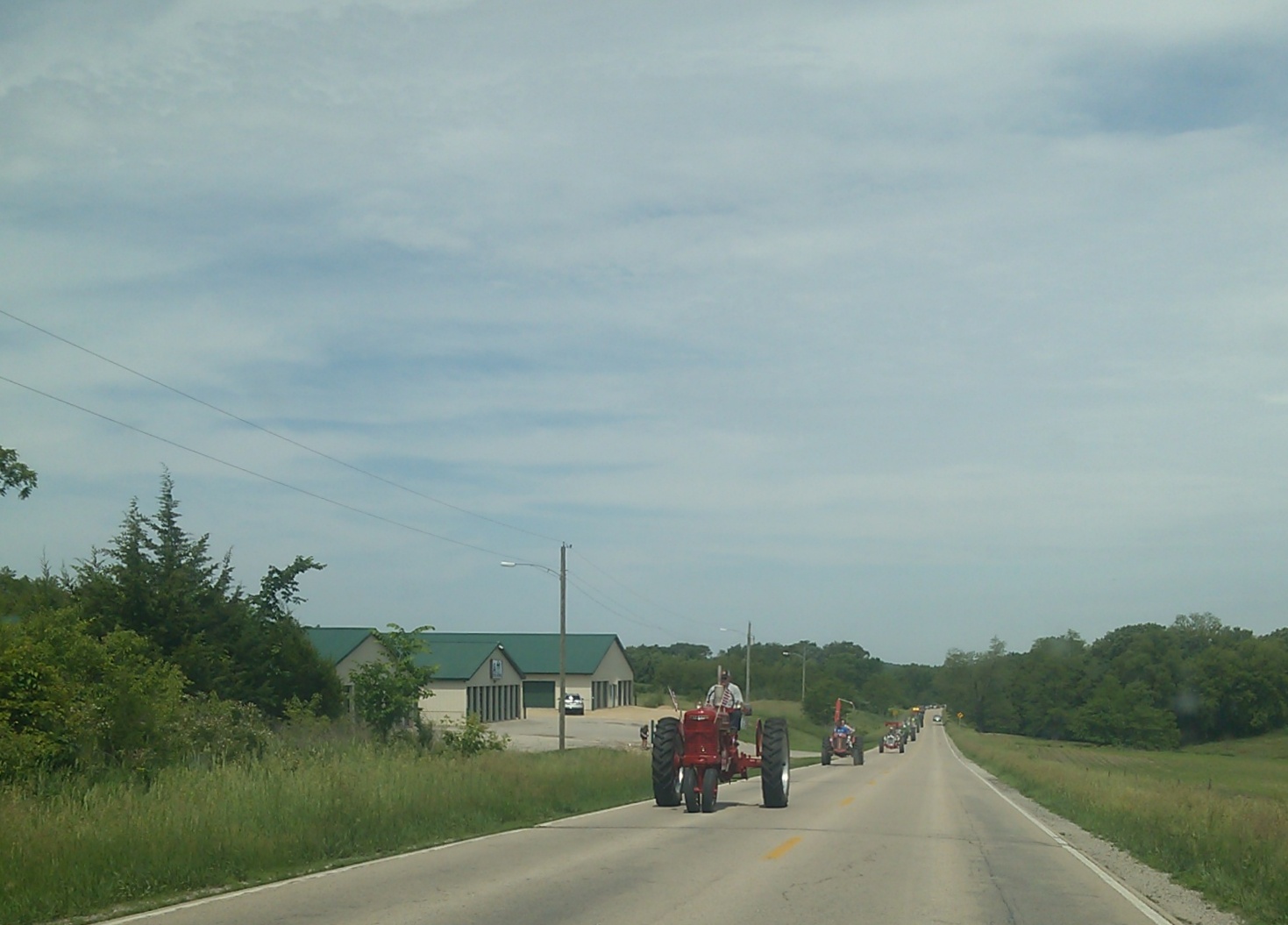
The Great Eastern Iowa Tractorcade is a thing here. Farmers from all over get together in Cedar Rapids and for four days, go on extended excursions in tractors of all kinds. Some of the equipment is older than I am and still working in fields. The caravan extended a long distance, and based on the errand I was running when I passed the tractorcade, it took more than an hour for them all to pass the lane to our home. It is a chance for families to do something fun to show off their farm pride. Children of farm parents take time off city jobs to participate.

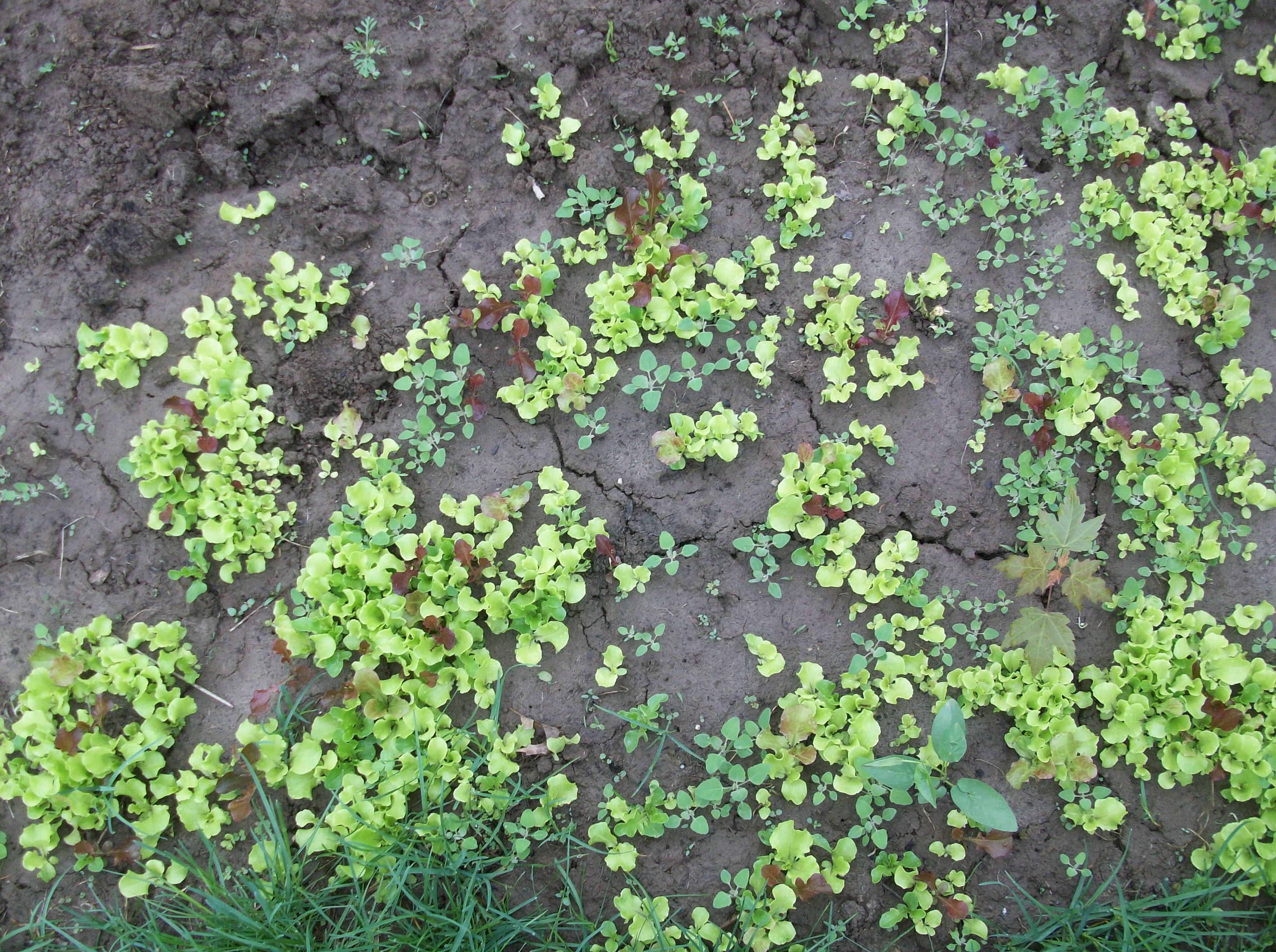
Row of Lettuce
Row of Lettuce

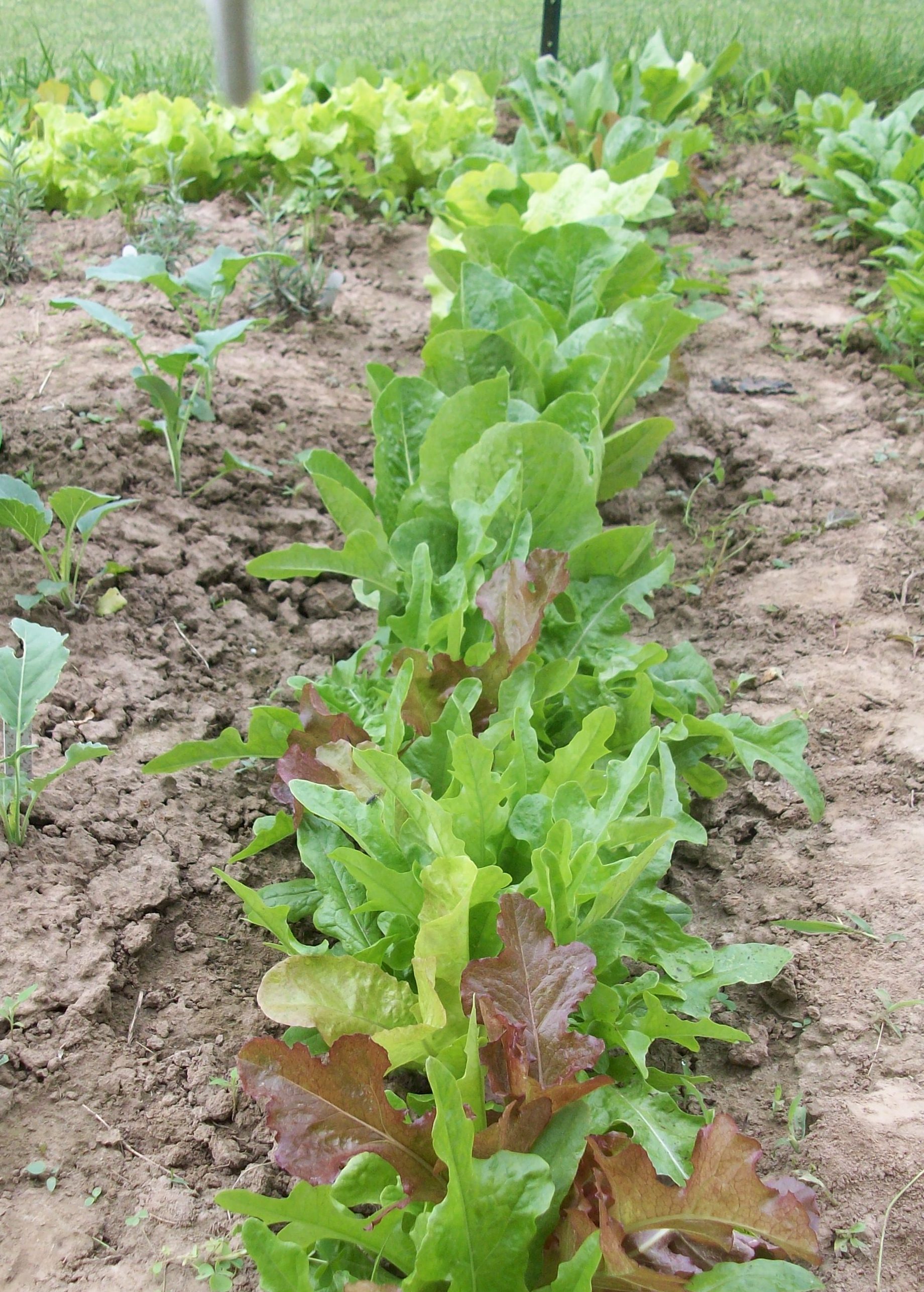
It’s the lettuce season and more in the local food arena. The lettuce in our garden looks better than I have ever grown it. The CSA has been providing four or more heads of lettuce per week, so between both sources there is enough to be generous with our friends.

The lettuce seeds I planted last week have sprouted, growing the next batch of seedlings to plant later in the month.

I picked the second cut of spinach from the first row of plants, washed and froze the leaves on a cookie sheet with a silicone mat. Once they were frozen, I bagged them for cooking later in the year. We usually make a spinach-rice casserole with frozen spinach leaves.

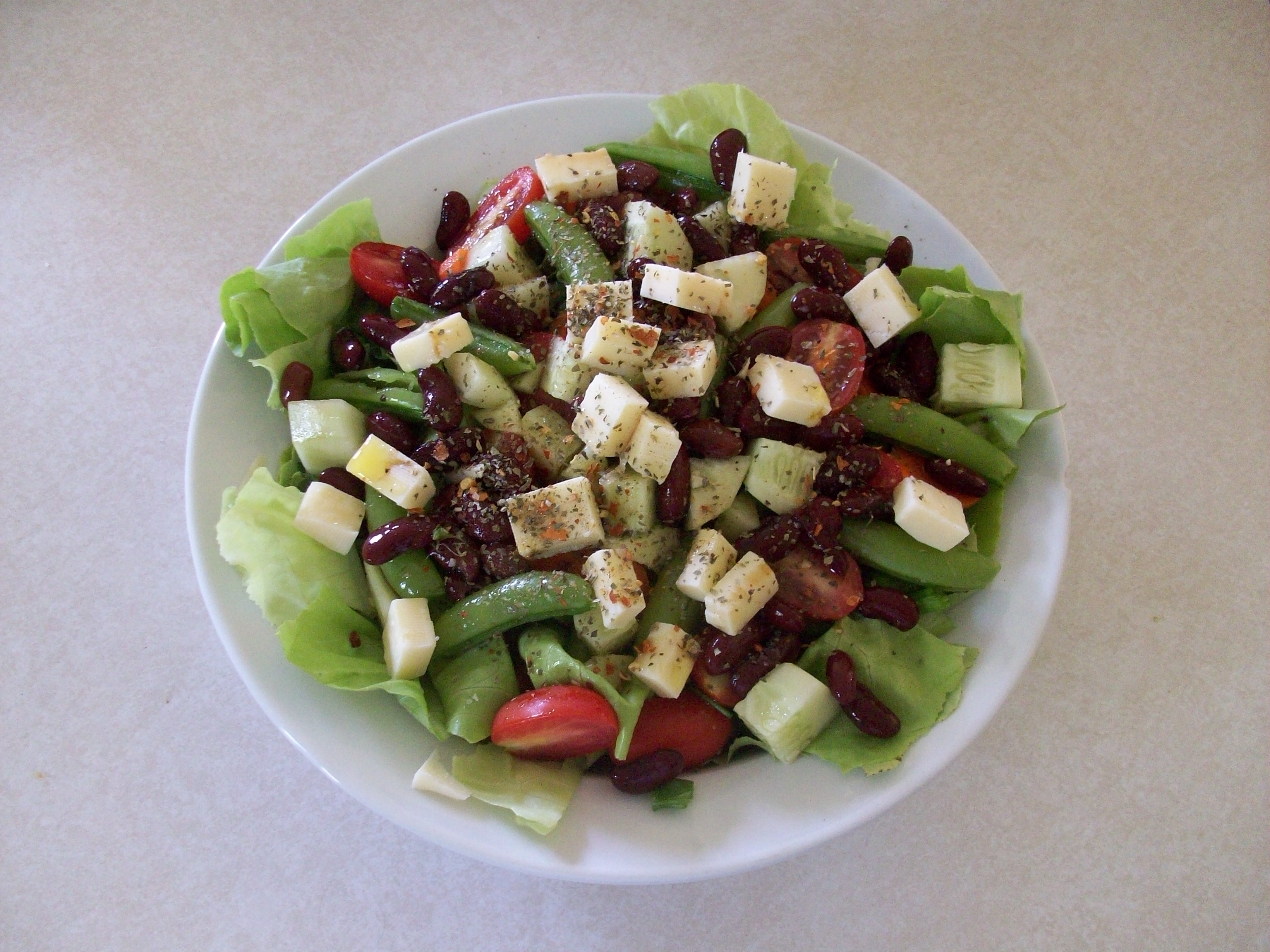
Each day is bringing plenty of work, and progress in getting the yard and garden in shape. After so many years of neglect, it needs it. At the end of a day, before an evening meeting, supper is a salad made with what’s on hand in the fridge. A simple spring life in Big Grove.

Dinner Salad
Dinner Salad

Categories
Kitchen Garden

Wednesday at the Farm

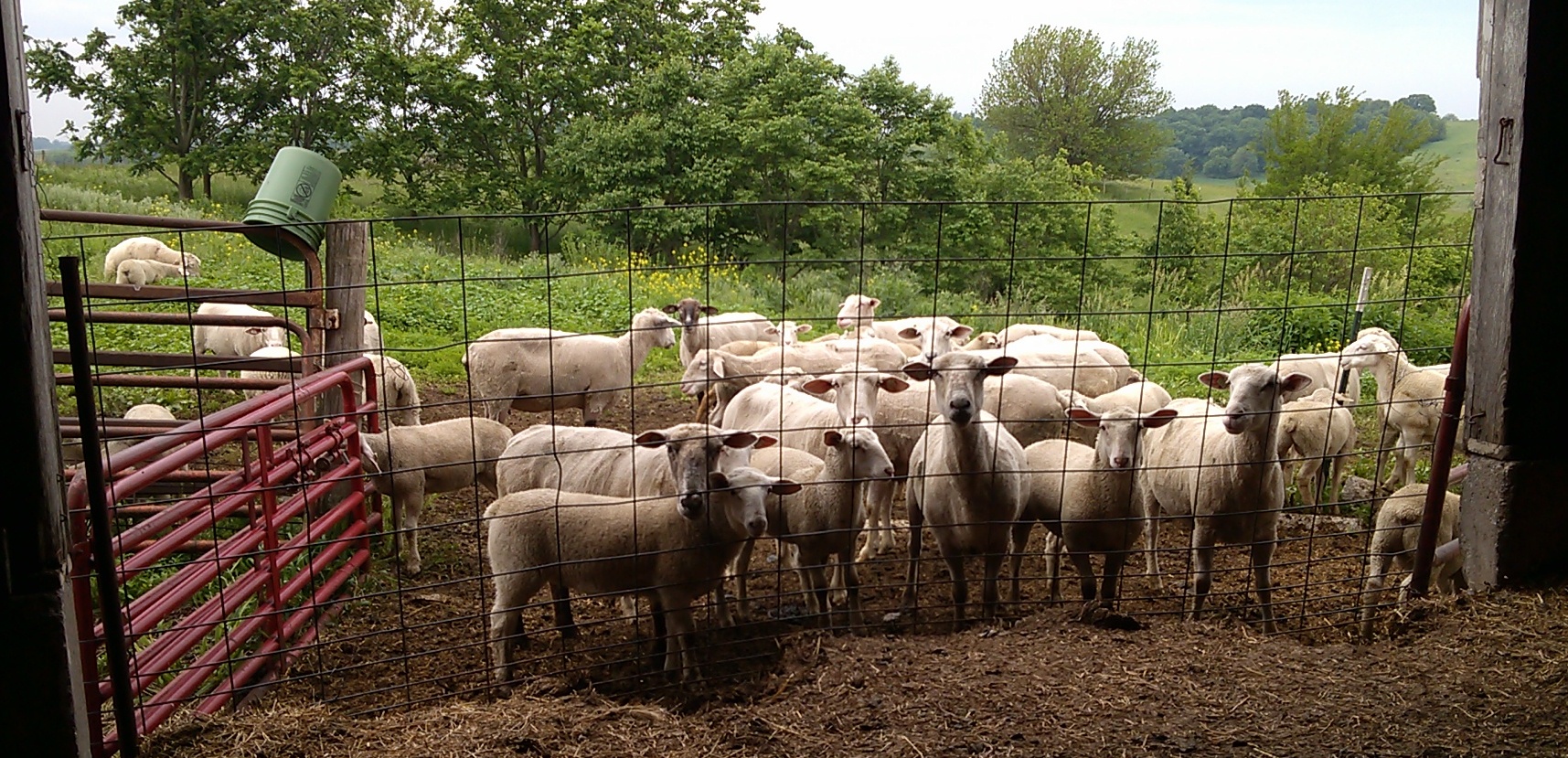
Sheep Looking into the Barn

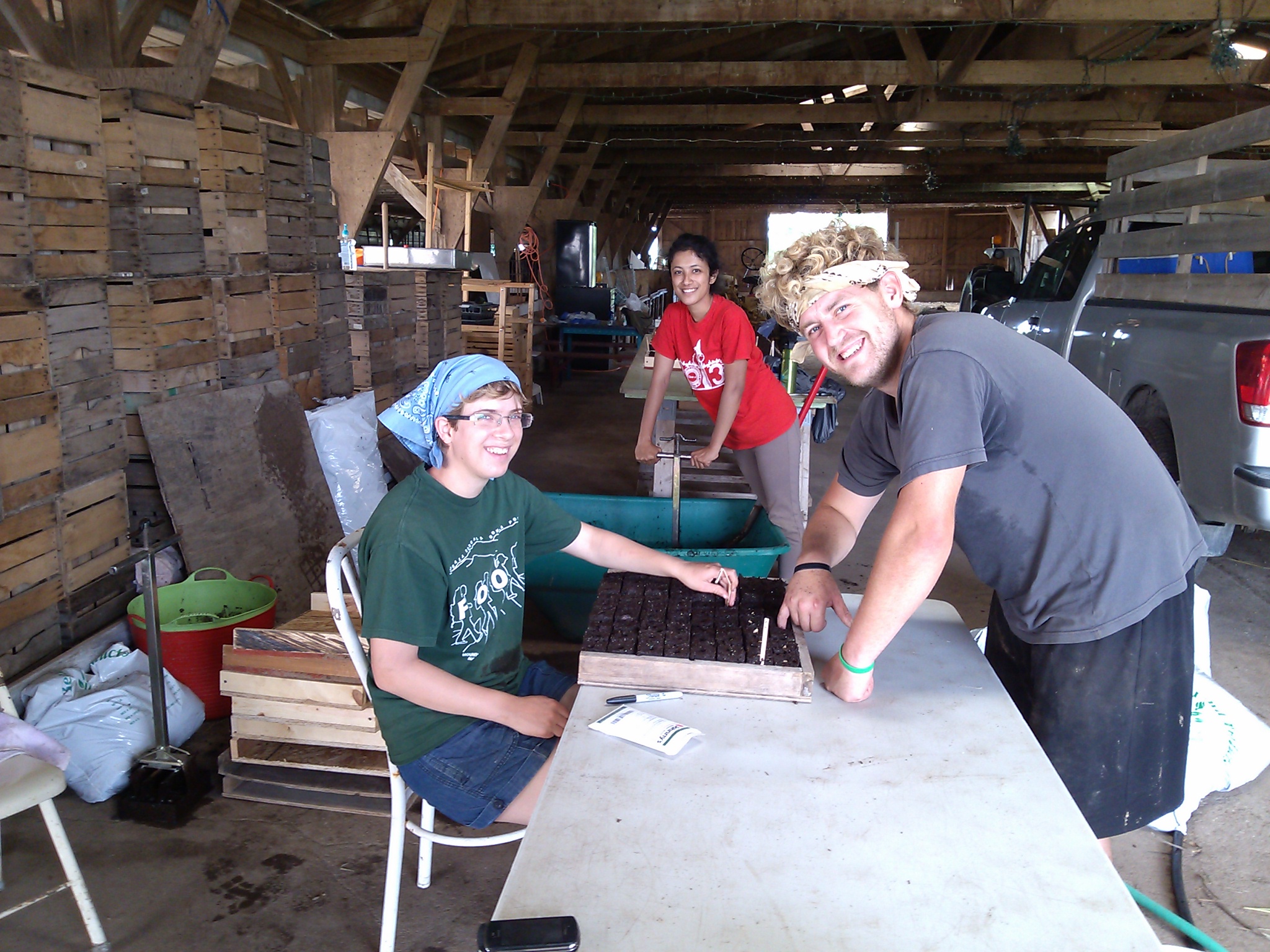
RURAL CEDAR TOWNSHIP— A student from Nepal greeted me at the work bench where four trays of soil blocks awaited transplanted eggplant seedlings. She was like so many college students, alert, intelligent, and possessed of the confidence of youth. She asked me a lot of questions: where I lived and about local culture. So many, I didn’t get a chance to ask her about Nepal and her reasons for coming to the United States. She had just finished laying down mulch in one field and planting rows of eggplant in another with a group of farm workers. She was ready to call it a day and go on to what’s next. One of many chance encounters that have made the last 15 weeks of farm work an enriching experience.

When my work moved from the  germination house (formerly known as the greenhouse), to the barn, the sheep and lambs became occasional neighbors. The gentle bleating combined with bird songs made a soothing background while I made soil blocks, planted lettuce and transplanted seedlings. The two dogs hung out with me, napping most of the time. The intermittent encounters with other farm workers, combined with interludes of solitude in the barn—it is life as good as it gets.

Last week I brought jars of home made apple butter for the crew. My apple trees are expected to bear fruit this year, so the old stock needs circulation. To a person they liked it, making me happy to contribute to their farm experience.

There are apple trees on the farm, and if things work out, I’ll make apple butter from the fruit in exchange for some of the apples. My part time work on the farm has become a bartering process that gains complexity as time goes on.

There is something deep in meaning about this work. To see plants grow from seeds to seedlings to rows and then harvest is a connection with life itself. As the Nepalese student asked questions, I felt connected in a way that is hard to describe. Part of a sustainable and hopefully endless cycle of life on earth.

Categories
Kitchen Garden

Ely Farmers Market and Garden Update

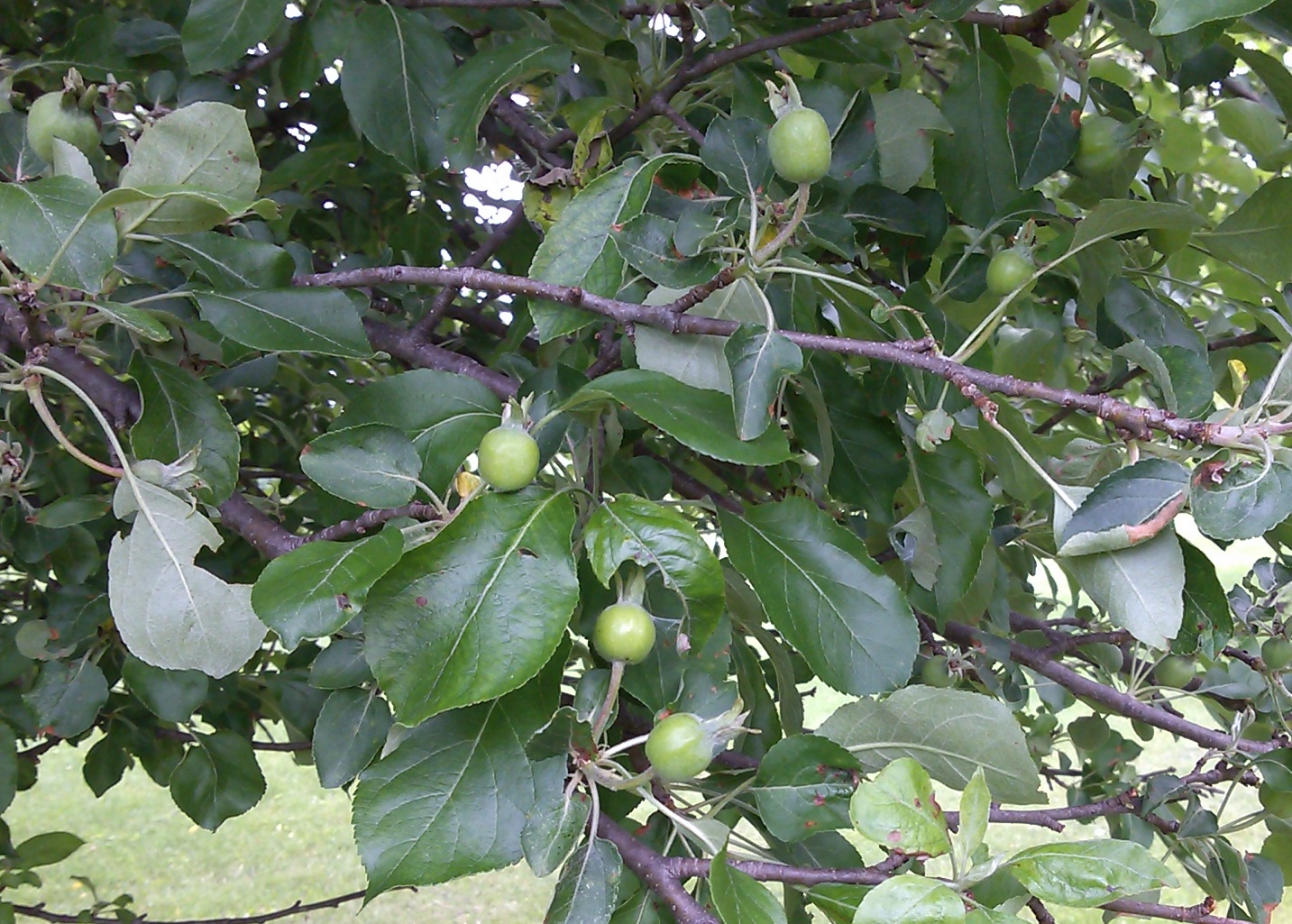
Apples
Apples

ELY— Two vendors braved threatening rain to set up tables at the Ely farmers market yesterday. I didn’t stop. Our refrigerator is full of leafy green vegetables from our garden and the CSA. This vegetable season will produce an abundance of variety and quantity. Already I have begun putting things up: freezing rhubarb and canning soup stock. We should support our local growers; however, there is a limit to how much one consumer can help. What’s needed is a movement supporting locally grown food. There wasn’t a lot of traffic at the market, indicating local movement in other directions.

It is still spring despite passing two unofficial starts of summer: Memorial Day weekend, and the release of children from school. What that means is the ravages of insects has not begun, and the leaves on the trees maintain their fresh wholeness. It won’t belong before the bugs begin to find the delicate food— there is a sliver of springtime to be enjoyed before summer starts.

I would make a list of all the garden produce and its progress, but that seems too Edmund Spenser or Walt Whitman. English majors take note that every list or inventory is not a good one, and how many times can a person write about the progress of apples in the garden and make it interesting? There is a big difference between spending time in the garden and writing about it, although one should really be an extension of the other. Suffice it to compromise by posting a photo of developing apples.

The pressing needs of the garden are to prepare another plot for planting and to weed, weed, weed. The first four plots are growing well, and number five has three bur oak tree saplings, the remains of the garlic and bulbs of iris to be removed. It will be a relatively big project to return that space to production. It was also the first one dug and planted when we moved to Big Grove almost 20 years ago. Did I mention the garden needs weeding?

Categories
Kitchen Garden

Garden Update

Spring Garden
Spring Garden

LAKE MACBRIDE— The house doors are open, creating a cross breeze that is very nice. This morning has been weeding the garden, and cleaning up the kitchen, neither of which jobs is close to finished. Time for an update on local food and the garden, beginning with the lawn.

With the abundant rains, the lawn had gotten lush and long. I spent three hours yesterday cutting and bagging the clippings on a third of the property, and now my tomatoes have their first layer of mulch to suppress weeds. Some say it is a bad idea to use grass clippings to mulch the garden because the seeds of weeds may be included. Others say the grass clippings should be left on the lawn for mulch. I am more concerned about suppressing the weeds in the garden. The rest of the spring grass clipping harvest is expected to take another four hours.

The tomatoes grown from seed and transplanted into the garden have taken. This year’s tomato plan means planting less in my plot, but because of my relationships with other growers, we should have more and diverse varieties. With the mulch being laid down, there is not much to do with tomatoes other than to watch them grow.

With our share from the CSA plus the greens from our garden, we are having salads daily, most times as a meal. The types of lettuce from each source are complementary, and there is plenty of produce to load each meal with veggie goodness. The key lesson I am learning this year is to keep planting lettuce and greens throughout the season. It will be a year of abundance.

We will have a bumper crop of oregano, and I am using the dehydrator to dry some of the herbage. A little goes a long way, so if I can store a small jar of dried oregano, it will last the winter.

Much more to write about, but there’s work to do.

Categories
Home Life Kitchen Garden

Sunday is Laundry Day

Old Sweatshirt
Old Sweatshirt

LAKE MACBRIDE— Yesterday’s wind died down to reveal almost perfect weather conditions today. A little cold— frost is evident on the leaves of thyme— but not the hard frost about which gardeners often fret. My April 30 assessment proved accurate: it is still time for planting.

While the yard is too wet for mowing, there is laundry to do, and a day to organize. Today will include the first cut of lawn— an abundant and sustainable source of mulch for the garden. It will take four hours to make the two cuts, bag and spread the grass clippings on garden plots. The five-gallon gasoline container was filled yesterday, so if the mower starts and the sun shines, we’re ready to go. The neighbors will appreciate the results.

Garlic Patch
Garlic Patch

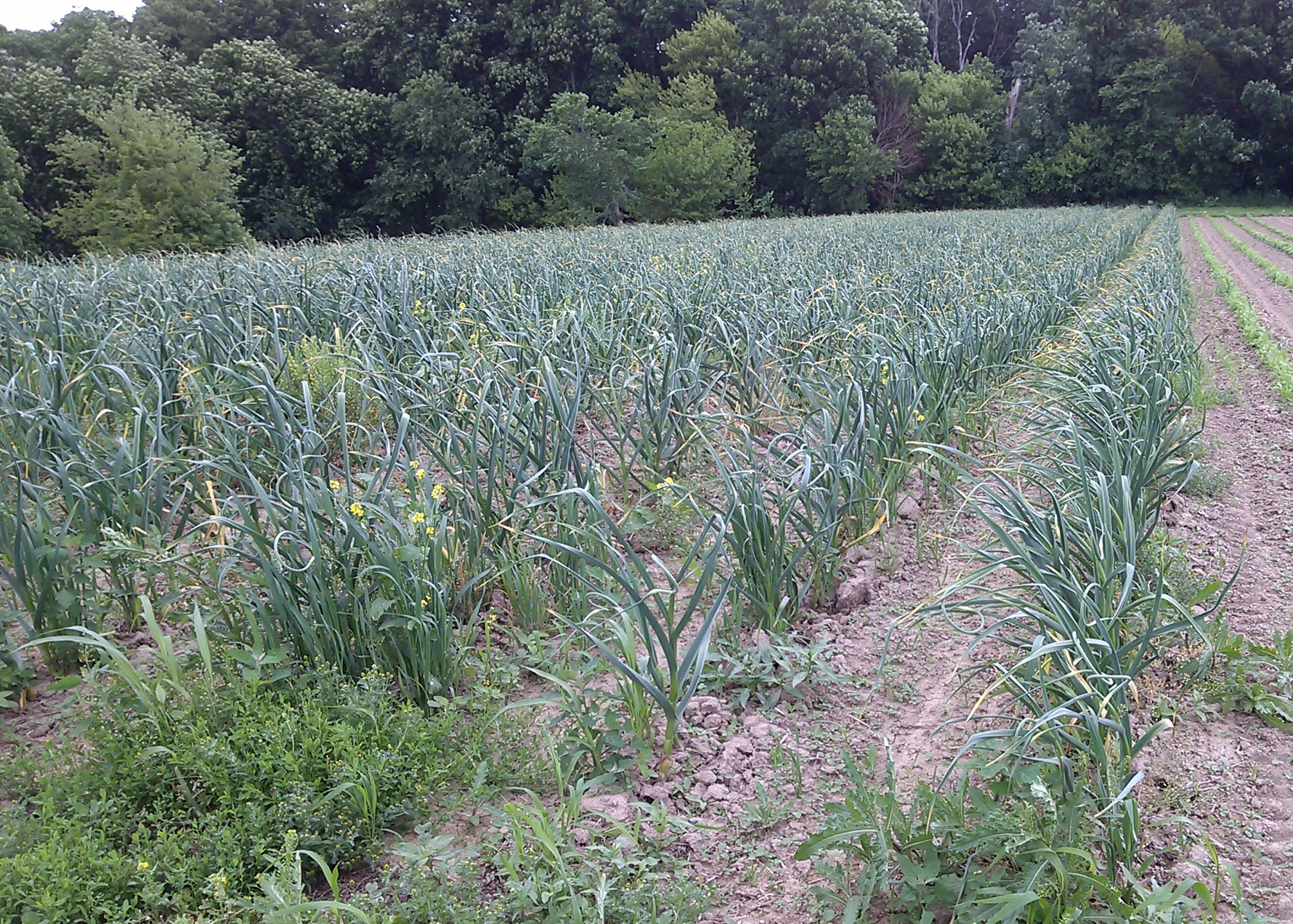
The other big task for today is digging and delivering spring garlic to the CSA for inclusion in tomorrow’s shares. I estimate two to three hours for the project. There is so much spring work to do, the balance of the day will be easily filled.

Before I finish my third cup of coffee and second breakfast, head down to remove the old sheet from the door to my study and put away the space heater for the season, I want to write about the sweatshirt in the photograph.

While making kits at the warehouse, it occurred to me the sweatshirt is as old as some of my cohorts who were born in the 1990s. It was a gift during a boondoggle of a trip to Aventura, Florida, where a group of corporate transportation equipment maintenance executives met to discuss braking systems. There were a number of these so-called “maintenance councils” sponsored by equipment manufacturers. While invited to join a many of them, one had to be selective. Brakes are important in trucks, so I went.

Turnberry Isle
Turnberry Isle

Last to arrive, my schedule prevented me from playing golf on the one of the resort’s courses that morning as other council members did. My plane landed at the Hollywood airport as dinner was being served and the taxi delivered me to the restaurant as speeches, mostly related to tenure on the council, began.

When describing the trip as a boondoggle, it means everything was included: air fare, luxury hotel accommodations, meals, greens fees for golfers and entertainment. There was even a budget for gifts like the sweatshirt, although corporate policy prevented me from accepting anything too extravagant. Corporate staff had our beds turned down, and reviewed our final hotel bills to ensure everything within reason was paid by the corporation.

During the event, golfing was available, but I’m no golfer. As an alternative, we toured the inland waterways, went deep sea fishing and experienced the constant fawning of sales staff, engineers and corporate interns present for the event. The company wanted the experience to be unforgettable as they held a council meeting to discuss brakes. In transportation, a brake failure through improper manufacturing or maintenance is a liability— and there are lawsuits.

While doing the laundry, I noticed the sweatshirt was frayed at the seams. It won’t last much longer. I donned it again to head downstairs, and then to the garage and garden. Not because of the memories, but because it was something to keep away the chill as the sun burns off the frost and new work begins.

We launder our memories as well as our clothing, in hope of something. Better experiences and memories, I suppose. Memories we make ourselves, away from the exigencies of corporate masters and lawsuits. Eventually old clothes will wear out. There will be something else to wear— something we produce ourselves, rather than the gift of a corporation looking out for their own interests. At least that is what one believes on laundry day.

Categories
Home Life Work Life

Saturday Miscellany

Lettuce Patch
Lettuce Patch

BIG GROVE TOWNSHIP— The editors are in Jamaica on vacation, so work at the newspaper was rearranged to finish the proof reading today and create tomorrow as my first day off paid work since Good Friday. The fill-in copy layout person wanted Mother’s Day off work, so I finished my part of producing the weekly newspaper before lunch.

I called Mother today and had a long chat. For the first time in a long while, she had listened to some of my advice and reported she took it. The two of us are not much for the Hallmark Holidays, but we have a special call each year on or before Mother’s Day. I am thankful to be able to hear her familiar, octogenarian voice letting me know what is going on in her life.

Otherwise, today has been a miscellany— some of which is worth recounting, the rest, not so much.

Censored on the Internet
Tweet Expunged

For the first time, one of my tweets on twitter was expunged. A person is not saying much, if from time to time, someone doesn’t react negatively to it. Don’t know why it is gone, but I suspect someone ratted me out to the twitter-gods on the Internet. It was likely over the use of a question mark rather than a period. The reason I have a copy is Iowa City Patch re-tweeted me, generating an email with the content.

Rand Paul gave a speech at an area fundraiser today, giving credence to the idea that his presence is to help Republicans organize for the first in the nation 2016 Iowa caucuses. Paul’s visit was intended, at least partly, to generate some interest among no preference and Democratic voters. From reading other accounts of the event, the Republican party faithful represented most of the attendees. Rand Paul ≠ Ron Paul, and there could be trouble for the Republican organizers trading on the Paul name. Trouble would be fine with me.

In our state representative’s weekly newsletter, he outlined the reason for his opposition to new nuclear power, especially in rural Wilton, where he lives. It is more than the NIMBY (not in my back yard) approach he mentioned at the Morse town hall meeting. He suggested, perhaps unintended, that the issue will be a live round during the second session of the 85th Iowa General Assembly.

Garrison Keillor’s “A Prairie Home Companion” plays on the kitchen radio Saturday nights beginning at 5 p.m. I have been listening off and on since graduate school. For a while, one of Keillor’s prominent sponsors has been Allianz, the German financial services company. The International Campaign to Abolish Nuclear Weapons (ICAN) pointed out that Allianz owns 4.45 percent of the shares of the top 20 producers of nuclear weapons. Allianz has investments in Alliant Techsystems, BAE Systems, Boeing, Lockheed Martin, Northrop Grumman,  General Dynamics, Honeywell International and others.

ICAN has called for divestment in these securities, and I have been pondering what to do since hearing. Long standing behavior is hard to change, especially when part of our lives is built around it. I have invested a lot in “A Prairie Home Companion.”

It is habit and memory that turns on the radio. Memory can’t be changed, but habits can. Familiar and comforting as ” A Prairie Home Companion” is, I’ll find something else to do while preparing our Saturday night meal. It is a disappointing development in a world full of wonder.

Categories
Kitchen Garden

Planting Rows Straight and Long

CSA PlantngRURAL CEDAR TOWNSHIP— There was a palpable air of activity at the farm this week as planting the fields began in earnest. Rows were cultivated, marked with string in straight lines, and one-by-one, seedlings were lined up in measured intervals and put in the ground. The rows were straight and long, a display of spring’s hope and promise.

My role was to make more soil blocks and plant cabbage and broccoli seeds. The trays in the greenhouse were all used up, so as soon as the planting crew finished one, I secured the empty and replanted it. The greenhouse has become a brief way station in the life of the farm.

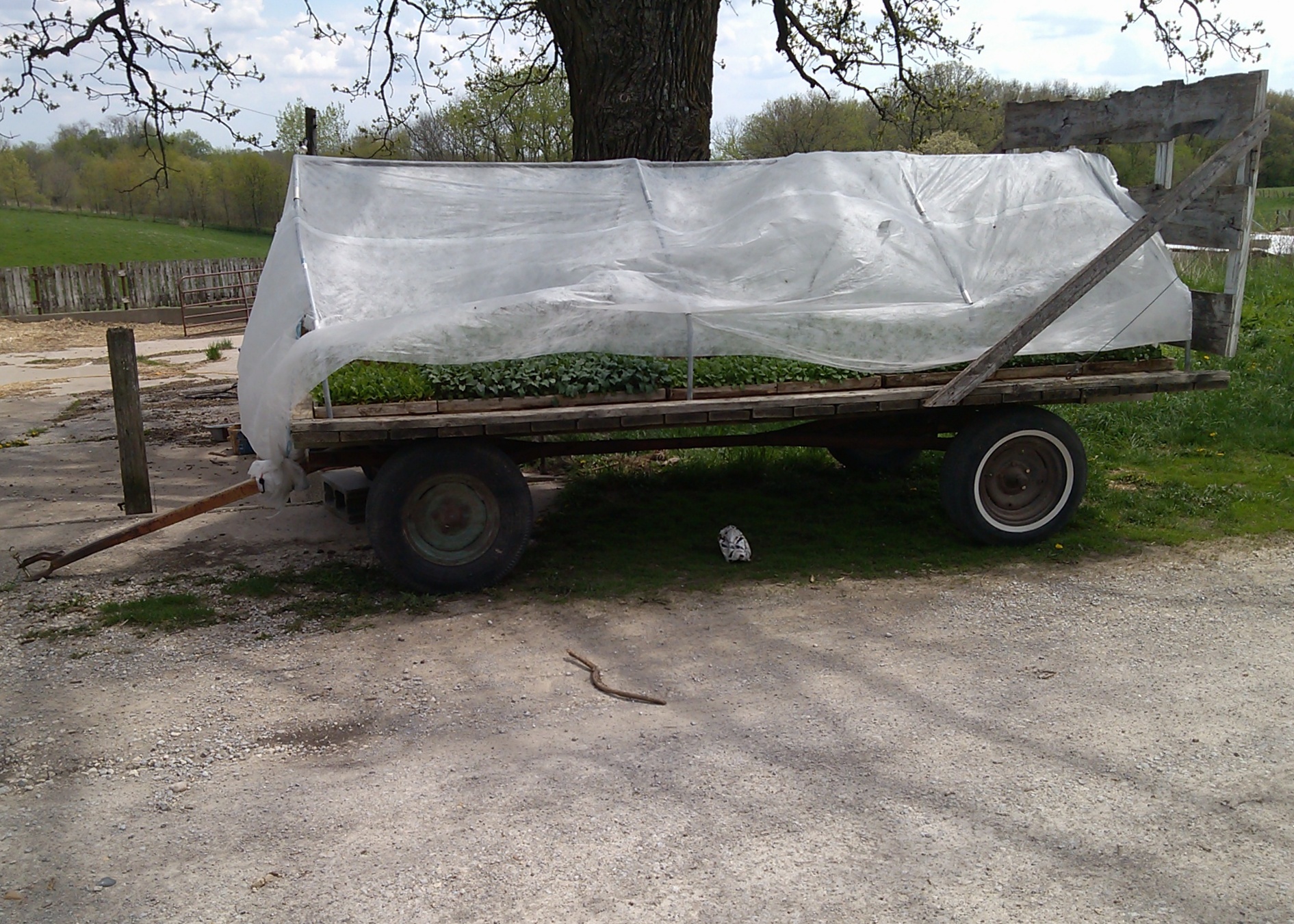
Seedlings Waiting Transport
Seedlings Ready for Transport

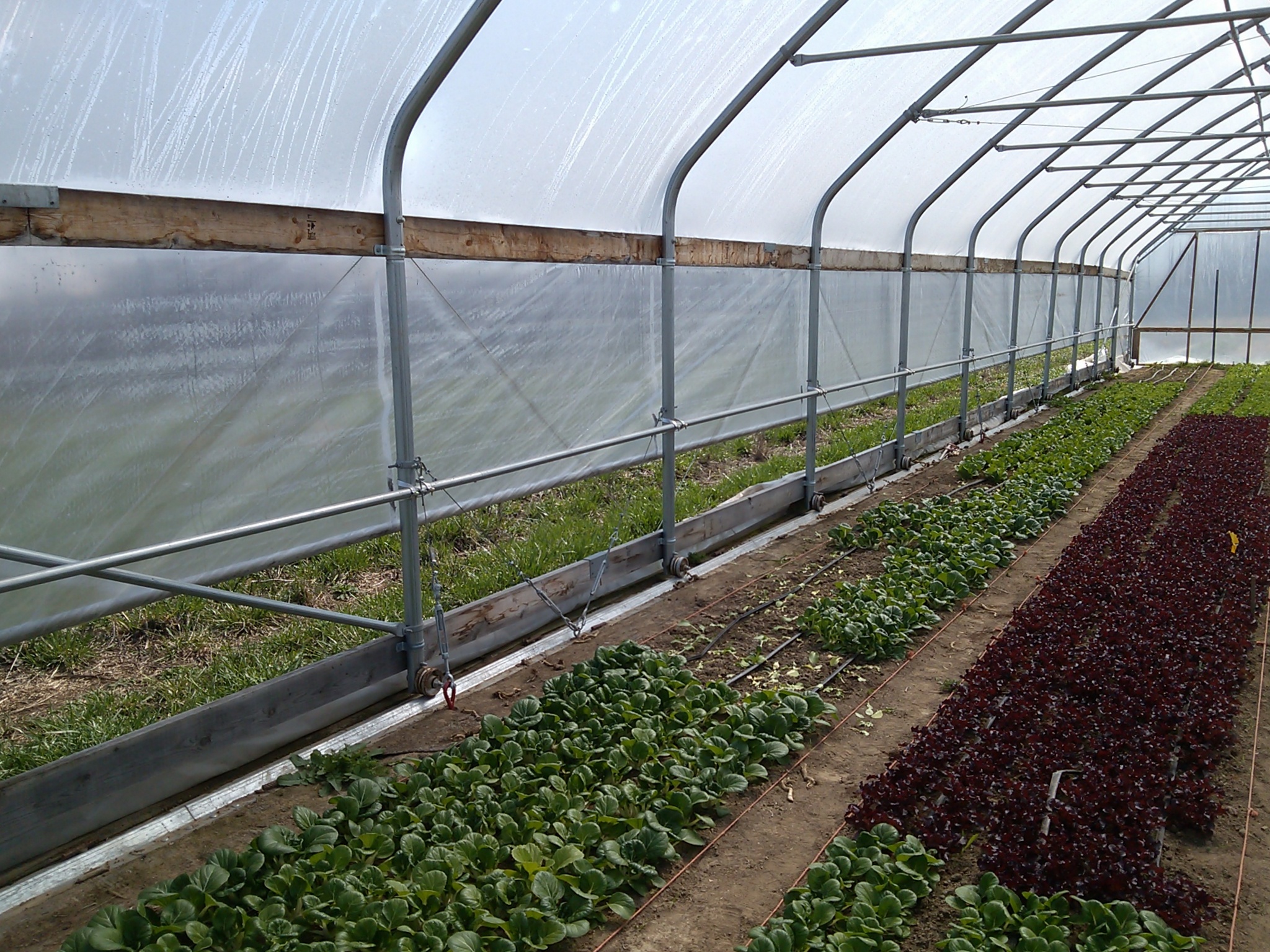
The CSA has begun distributing shares and this week included lettuce, Bok Choy and “grazing greens.” Because of the high tunnel, these varieties were available so soon after a wet, cold spring.

11 weeks into the work, I am beginning to feel a valued part of the farm operation. People work their whole careers in an office, or as a professional, and never feel that way. Caught up in tedious acts of drudgery— driving, shopping, waiting, social drama— feeling disconnected from the most important things in life. It is nearly impossible to feel that way when working on a farm. It give the phrase “will work for food” a new meaning. Finding meaning may be what life in society is about.

Categories
Kitchen Garden Writing

Working in the High Tunnel

In the High Tunnel
In the High Tunnel

RURAL CEDAR TOWNSHIP— We soil-blocked the rest of the seed trays in the greenhouse yesterday, and planting is well underway at the CSA. My weekly work sessions give me a snapshot of  what is a much broader amount of activity in local food production. The experience is paying dividends in understanding the cycle of growth to support the market.

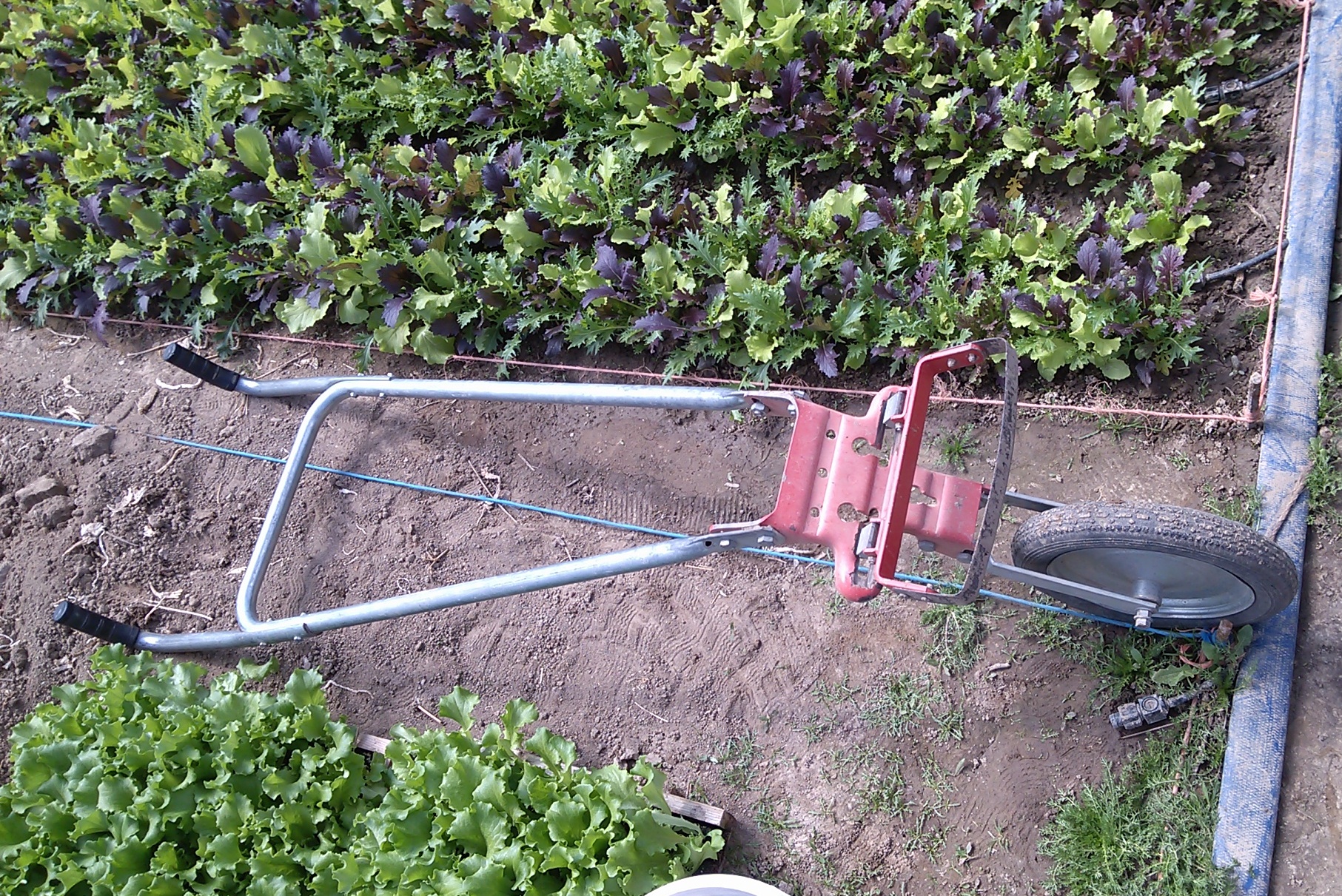
Used this to prepare the bed
Cultivator

For the first time, I worked in the high tunnel, preparing a bed for planting. High tunnels extend the growing season, producing vegetables for an early or late crop. They also serve to mitigate risk of cool temperatures, and of disease and pests. On a farm, margins mean everything, and high tunnels create an opportunity to increase them. They also create the ability for new customer offerings in the form of a spring or fall share.

My life is richer for working in a limited way on a CSA farm. It is a way of life that survives on the cusp of an agricultural landscape dominated by row crop agriculture. Like the high tunnel, the work is around the margins, and there are plenty of those for local food to be a vital force.

Categories
Kitchen Garden

Rainy Morning

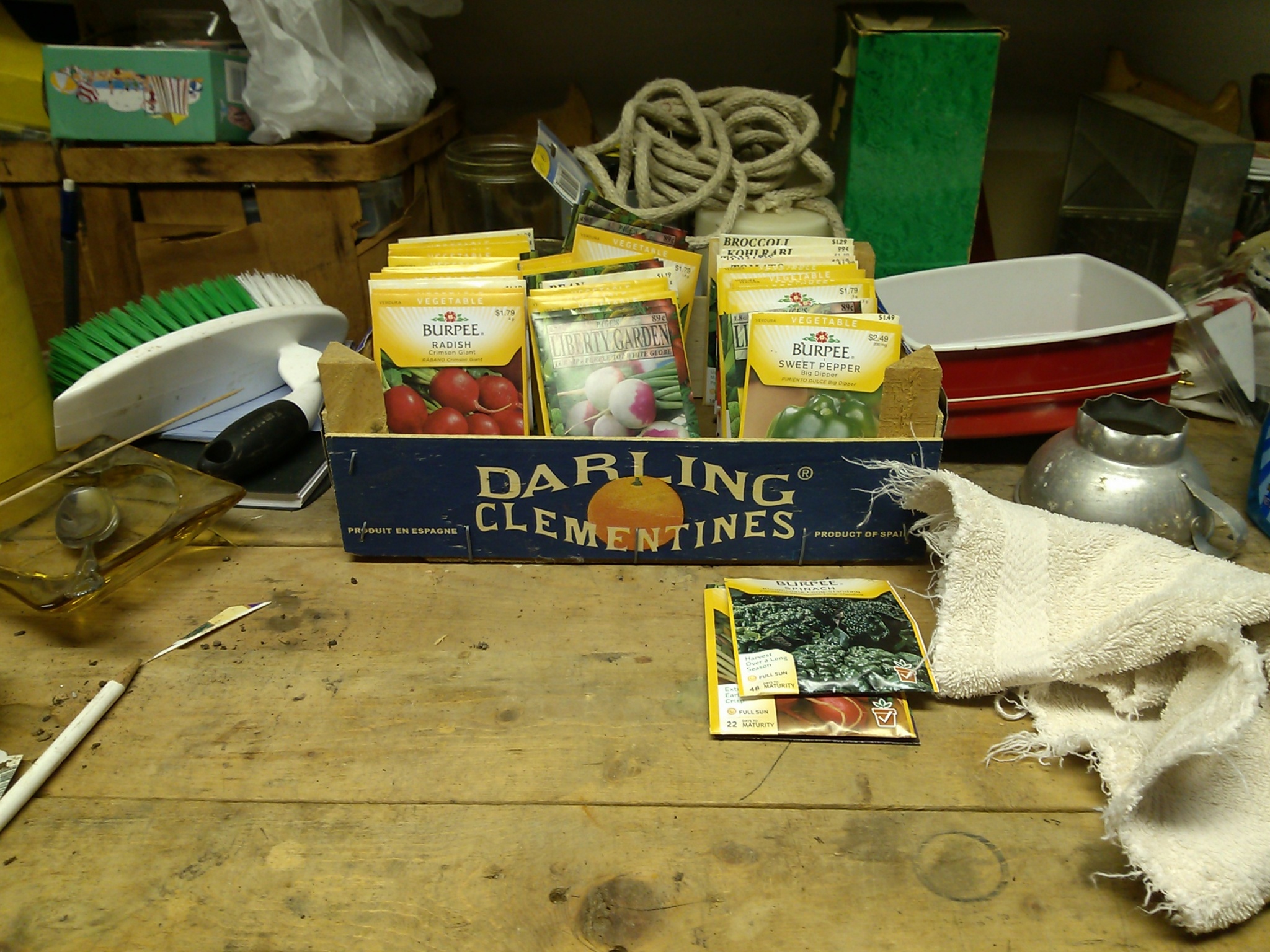
Work Bench
Work Bench

LAKE MACBRIDE— The forecast was rain and raining it is. The debate was whether to don my wax jacket and rubberized boots and venture out to clear last year’s tomato plot in the garden. It was not really a debate, but an internal dialogue balancing the need to get the garden ready for planting and the common sense notion that we should be in out of the rain. Not sure which side will dominate, but I’m leaning toward going outside. Actually I did go outside and explored the garden. It was showering small pellets of ice, not big enough to be hail, but not snow either. After checking yesterday’s work and the tomato patch, I headed back to the house.

Watering Station
Watering Station

I’m hauling the trays of seedlings to the garage, one at a time to water them. We use our bedroom window for exposure to sunlight, and am watering the trays from the bottom.  The soil has been continually moist, and the seedlings are growing. The idea seems to be working.

There is always work to support the garden, rain or no, although the continued cold and rainy weather feels like another setback. One feels this year’s garden is either going to be the greatest one ever, or a complete disaster, as long as the weather continues the way it has been.

Categories
Kitchen Garden

Garden Work

Three Rows Planted Today

LAKE MACBRIDE— Today was the first real work session in the garden and I cleaned up two of the plots, built my burn pile, evened out the ground near where the backhoe dug to fix the waterline leak last fall, and planted Cherry Belle Radishes, Bloomsdale Long Standing Spinach and Purple Top White Globe turnips. The arugula and lettuce seeds have sprouted and survived the gully washer of a rain a few days ago. There are chives ready to cut, and the garlic patch is growing well. Three types of bulb flowers are growing, and after they flower, will be transplanted somewhere else. That is, except for the daylilies, which will be dug and transplanted as soon as I get around to it: nothing can kill those things.

A neighbor messaged me on Facebook, and a group of us is planning to go in on a rototiller rental. I usually dig by hand, but am okay with community projects like this. Partly, it means three plots have to be turned by spade to get ready for the rototiller in two weeks.

Last week, an experienced gardener said we had missed the opportunity for spring turnips, but I don’t know. I planted a row today, and will likely do another in a week or so. She said if one misses spring turnips, the date is July 25 for turnip planting. I’ll reserve some seeds for then and attempt a double crop.

It feels good to work in the sun and soil in the morning.