When it comes to the Iowa caucus, there’s little use pondering what might have been.
Despite a winter storm that brought roughly six inches of snowfall, attendance at our precinct caucus was stronger than in previous years when the weather was perfect. In 2014 four of us attended the Big Grove precinct caucus. This year there were eight, including the precinct captains for the 2008 campaigns of Barack Obama, John Edwards and Hillary Clinton. What was different about this off-year caucus is people I had not seen much in public showed up and hung around talking long after the caucus adjourned, mostly because “we have to do something in November.” We shared a sense that we are stronger together.
WYSIWYG. The caucuses are an interface with the electorate as it is being created, long before most voters engage in primary or general election campaigns. What you see is what you get.
Five rural precinct caucuses convened together at 7 p.m. at the new middle school. We heard from surrogates for a few statewide and local candidates and collected money for the state and county party. We broke into precincts to elect delegates and alternate delegates to the county convention, solicit volunteers for the platform committee and committee on committees, and elect two members of the party central committee. We did all that, ratified our slate, and adjourned by 7:30 p.m. While my car warmed up in the parking lot I keyed in our results with my mobile device on an Iowa Democratic Party web site.
When I arrived home, Jacque remarked, “you’re home early.”
“I was in charge,” I replied.
The morning after I hope we can get past zero sum gain politics where when someone wins, someone loses. The conversation our caucus had after adjourning centered on health care and the treatment delivery system — a complex problem, a wicked problem.
Wicked problems are not engineering problems, they can’t be solved. What we can do is work together to find common ground and solutions that work.
I hesitate to assign deep meaning to what happened last night. It was a glimpse at what the future will be, still a rough draft, with much uncertainty. The story of this electorate is being written in real time. It will be written by us all.
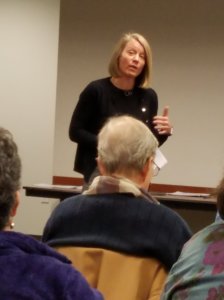
Jackie Norris spoke on behalf of her husband, Iowa gubernatorial candidate John Norris, last night at the Johnson County Democrats central committee meeting.
In terms of political star quality, Norris’ light was brighter than anyone else in the room. A long-time and well known political operative, she served as Michelle Obama’s first White House chief of staff.
Her connections with the group were deep, revisiting the 1984 presidential campaign of the Rev. Jesse Jackson and a host of others during her ten minute speech. I re-read our correspondence from 2008 for this post and was reminded how persistent, diligent and professional she was then and still is. I’ve often thought she should be running for governor instead of her husband.
There were more political speeches than usual at the last central committee meeting before the group is re-elected at Monday’s Iowa caucus.
Secretary of State candidate Deidre DeJear spoke. She seemed credible and was very well-spoken. Already I like her better than perennial candidate Jim Mowrer who announced for Secretary of State first. She seemed so fresh, and alive last night. Just what Democrats need going into the midterms.
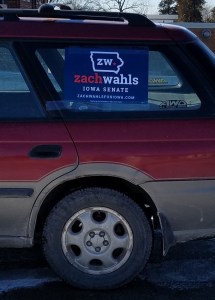
All three announced candidates for State Senate District 37 spoke to the group. Their names are Eric Dirth, Zach Wahls and Janice Weiner. As mentioned previously, I’m with Wahls, but Weiner gave the strongest speech in the room.
The question no one is asking about the Iowa Democratic gubernatorial race is will Fred Hubbell continue to donate to Iowa Democratic candidates if he loses the primary? In 2014, he was the largest single donor to Jack Hatch’s gubernatorial campaign at $75,000. During the last 16 years, he gave $550,885 to Democratic candidates, according the the campaign finance website Follow the Money. While I don’t hear people talking about this aspect of the Hubbell campaign, it’s an idea I’m putting out there. I suspect candidates are treading water on this. They want to win the primary but in a midterm cycle, general election campaign money will be more difficult to raise. Donors like Hubbell will be needed more than ever.
I continue to have laryngitis so I quarantined myself in the back of the room. By the end of the meeting, a number of people joined me in back. I guess that means politics is contagious.
2018 will be an amazing year for Democrats, win or lose. Even so, I’ve been slow to engage, that is, until Zach Wahls announced his campaign for State Senate District 37.
First I said no politics until after the June 5 primary. An aging, low-wage worker doesn’t have bandwidth for everything and I know both my limits and what politics can demand.
That didn’t last long. I volunteered to be temporary chair at our Feb. 5 precinct caucus.
However, the 2018 political campaign began for me at 8:54 a.m. Jan. 13 with this.
Zach Wahls had been in Tipton for a morning meet and greet at D’Alicias Cupcakery and Cafe. He held his first campaign event in the City of Solon that afternoon.
Wahls is running in the June 5 Democratic primary against Janice Weiner to replace retiring State Senator Bob Dvorsky in the general election. The filing period doesn’t start until February, so there could be other candidates for this open seat. No Republican has declared in the race.
Janice Weiner in Tipton, Jan. 13, 2018
I was in Tipton to speak at a gathering of Indivisible Iowa and Weiner spoke as well.
Weiner’s credentials are impressive, especially her work for the U.S. State Department and as a Stanford intern working on policy for then San Francisco Mayor Dianne Feinstein.
Her uphill climb to a primary win will be a lack of name recognition, and articulation of her views and credentials. Wahls’ challenges are different and unique.
If people know Zach Wahls, it is likely from the speech he gave in Des Moines in 2011. As of today it has more than 3.2 million views on YouTube and created an internet sensation. He must balance internet celebrity with grassroots campaigning among people who may not have heard of him. He had a great start in Solon.
Zach Wahls and Marcia Gaffney in Solon, Iowa, Jan. 13, 2018.
About 35 people, young and old, gathered at Solon’s old middle school on a winter Saturday to meet and hear Wahls. Political pal and city councilor Lauren Whitehead and I organized the multi-layered event. Attendees who came and went during a two-hour period included a small group of boy scouts, school-age children, long-time political activists, local business people, a labor leader, Democratic central committee members and the president of the Solon School Board, a registered Republican.
Wahls gave a brief speech regarding his personal history and three legislative priorities: healthcare, education and workers’ rights. He took questions as long as people asked them and impressed with his depth of knowledge about policy issues that mattered to attendees. Wahls has experience in public speaking since the viral video but seemed genuine and unrehearsed in answering questions about tax policy, education, Medicaid, mental health, labor, law enforcement, water quality and other topics. He hung around after the formal part of the gathering to speak individually and take photos. He even helped clean up the room.
The real Zach Wahls literally hit the streets on Saturday where I met him. As district voters get to know him there is a lot to like. He gained at least this supporter in the process.
For now we see through a glass, darkly; but then face to face: now I know in part; but then shall I know even as also I am known. ~ 1 Corinthians 13:12 (King James)
The story of Paul of Tarsus, his conversion and writings are essential to my world view. Paul stands equally with René Descartes in forming a view that isolation from what exists, then taking measured actions to engage, is what we humans can do to get along in society.
When I was a grader I discovered if you write people, they may write back. With that in mind, I wrote my State Representative at the beginning of the second half of the 87th Iowa General Assembly.
Bobby,
Good luck with the 2018 session.
As I have in the past, I’ll let you know my priorities as bills advance in the legislature.
Republicans have an opportunity to turn around the tax situation in the state. I believe the only chance for success is to review the entire income and expense process in a holistic manner and effect changes that balance the budget on both the revenue and expense sides. State law requires a balanced budget. Taking continuous budget cuts because the revenue side is out of whack is not sustainable.
The context of the new federal tax law is important, but the state should not presume tax cuts are needed. It means making administration more efficient, funding compliance efforts for existing laws, and reviewing every decision made regarding taxation since Governor Branstad was elected in 2010. Insufficient attention has been paid to whether his solutions worked or not, and Medicaid privatization stands out as something that clearly isn’t working for parties involved. Republicans have teed up a big opportunity this session. What kind of legislators will you be?
My hope is you will encourage members of your caucus to avoid partisan solutions and use your votes to make a difference for everyone in the district.
A group of farmer friends would like to attend an early listening post, so please keep me informed when and where they will be held. I favor the ones in Bennett, Lowden, Wilton and Durant since there is a better cross section of the district in attendance. We’d go anywhere in the district to hear you speak. :)
In a hopeful year, the U.S. Congress is back to work, on Jan. 8 the state legislature convenes the second half of the 87th Iowa General Assembly, and grassroots politics begins another cycle with the Feb. 5 annual Iowa caucuses.
Politics affects us all.
In a time when there is no time for us to get anything done, here are five easy things to improve our politics.
If you are free Feb. 5, attend your political party caucus, which begin at 7 p.m. Republicans and Democrats agree when to hold precinct caucuses and these meetings represent a chance to see what having an R or D next to your voter registration means.
Subscribe to elected officials’ newsletters. All of our federal and state representatives have a newsletter. If you don’t know who represents you, in the Solon area it’s currently U.S. Senators Chuck Grassley and Joni Ernst, U.S. Representative Dave Loebsack, State Senator Bob Dvorsky and State Representative Bobby Kaufmann.
Take time to learn about the gubernatorial candidates and vote in the June primary. Both major political parties have a primary election for governor.
Worry less about process and more about values. So many voters get tied in a knot about what governing bodies should and shouldn’t do before enacting laws or ordinances. The better question is what do our representatives stand for? Their values are clear in votes they have made.
Be civil when talking about politics with friends and neighbors. If you can’t, then change the topic to the weather. Most important is taking time to listen, followed by thinking before opening your mouth. It’s possible to hear people out with whom we disagree without discussions escalating into an argument.
Use these five ideas and I believe you will agree a better politics is possible.
~ Published in the Jan. 11, 2018 edition of the Solon Economist
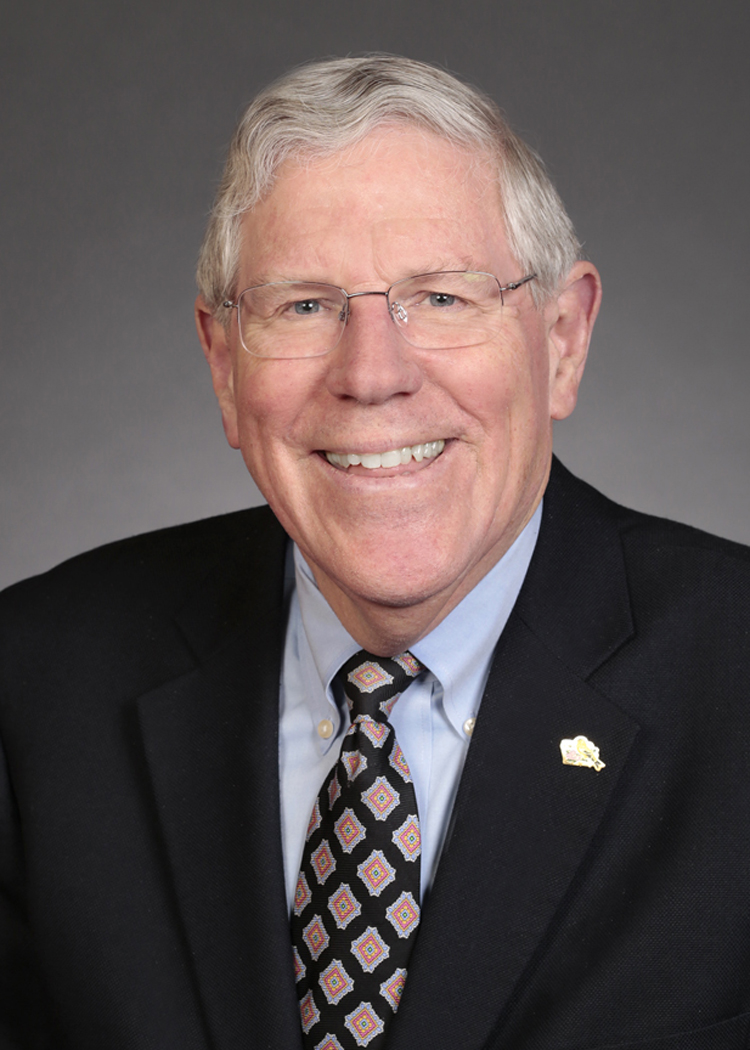
State Senator Robert Dvorsky Photo Credit – Iowa Legislature
State Senator Bob Dvorsky’s decision to retire at the end of his current term hits close to home for a lot of reasons.
He represented our family since we returned to Iowa in 1993. During the time since then he became a key player in Democratic politics and in the Iowa Legislature.
He did a lot for Iowans when Democrats held the majority in the Iowa Senate. He also worked to get things done regardless of which political party was in control.
With Bob Dvorsky in office, politics became personal in a way it hadn’t been before.
I began corresponding with him on issues shortly after he was elected to the Iowa Senate. My last letter from him, a response about the no wake issue on Lake Macbride, was dated April 25, 1996. A few years later I became politically active again and saw him everywhere, eliminating the need to write.
During the decades I’ve known him, I can’t recall a single time Bob didn’t seek me out for a brief conversation, whether at the capitol, at a political event, or at my workplace. He knew the owners of the company where I spent most of my transportation career, and after my retirement we encountered each other at the warehouse club where I worked part time. He was always positive and encouraging.
When people say all politics is local, I think of Bob Dvorsky. He’s been a friend and mentor who represented my interests in the legislature. I wish him well in the second half of the 87th Iowa General Assembly and ever after.
Special elections are interesting because they occur off-cycle by definition and are all about building a unique electorate from scratch. There were two notable special elections yesterday, in Iowa’s third Senate District to fill the vacancy created by the resignation of two-term senator Bill Anderson, and in Alabama to fill the vacancy created by appointment of four-term U.S. Senator Jeff Sessions as U.S. Attorney General.
Turnout is almost always lower in special elections and that creates unique opportunities for different results. A local example was the March 2013 special election to fill Sally Stutsman’s seat on the Johnson County Board of Supervisors after she was elected to the Iowa House of Representatives. Republican John Etheredge won against Johnson County Democratic Party Chair Terry Dahms in a surprise victory that made him the first Republican elected to the board since 1958. If you didn’t know, Johnson County is the most Democratic county in Iowa.
In the third Iowa Senate District, Democrat Todd Wendt faced off against Republican State Representative Jim Carlin. Unofficial results are Carlin won the election 54 percent to 46 percent for Wendt — a solid win. There are plenty of summaries of the race and I like the coverage by the Sioux City Journal’s reporters Brent Hayworth and Mason Dockter here.
The vote numbers tell the story of this deeply Republican senate district. During the 2014 general election 22,262 votes were cast in Senate District 3. Anderson ran unopposed and won with 17,176 votes. According to unofficial results, Carlin totaled 3,591 votes last night, and Wendt 2,988, for a total of 6,579 or 30 percent of the votes cast the last time the district was on the ballot. What that means is Wendt made a respectable showing in a district President Donald Trump won by 41 percentage points, defeating Hillary Clinton 68 percent to 27 percent in the 2016 general election. I hesitate to draw many conclusions from this or any special election. Wendt received a lot of help that would not have been possible in a general election, but in the end he didn’t prevail. Had the Democrat won last night, I believe he would have been sanded off in the woodshed of the 2018 general election the way John Etheredge was in Johnson County.
My experience with Alabama is limited.
In a carload of GIs let loose for the first time in weeks from Officer Candidate School at Fort Benning, Georgia, we headed to Phenix City, Alabama to get tattooed. I’d be sporting ink if the town hadn’t closed down early on a Saturday night for “moral reasons.” When I traveled to Fort Rucker to visit a friend from Germany I noted anti-pope scrawling on roadside telephone booths. I drove past the Auburn and Tuskegee campuses noting the contrasts between them. At Tuskegee students wore uniform-appearing white shirts, looking professional, whereas Auburn students made no impression but seemed to be vague, indistinguishable white protoplasm. I have relatives in Alabama who left the Catholic Faith to join an evangelical sect near Huntsville. We don’t talk any more.
Last night’s special election in Alabama had a lot of moving parts and that’s what made it interesting. Democrat Doug Jones won the election with 49.9 percent (671,151) of 1,344,406 votes cast compared to 48.4 percent (650,436) for Republican Roy Moore and 1.7 percent (22,819) for write-in candidates, according to the New York Times. If there were a one-half percent difference between Jones and Moore, Alabama law would trigger an automatic recount. There is a sea of internet ink about the race. I prefer the Washington Post piece by Sean Sullivan, David Weigel and Michael Scherer here.
My filter for Fox News is author Stephen King, who tweeted last night, “FOX news is sayi g ‘Doug Jones is already a lame duck.’” FOX News is wrong in the assertion Jones will be ineffective. With the U.S. Senate currently standing at 52-48 Republican to Democratic, Jones will make a difference beginning whenever Majority Leader McConnell decides to seat him. One suspects Jones will take his seat after the vote on the conference bill on tax reform.
There are some reasons to believe Jones could be sanded off in the woodshed of the 2020 general election when his term expires. Here are mine:
Higher turnout in a general election will favor the Republican.
Don’t expect Alabama Republicans to pick another flawed candidate like Moore in 2020. They may be backward compared to other states, but they are not stupid.
Jones was able to hire seasoned political consultant Joe Trippi for the special election because of nationwide focus on the race and the campaign donations it generated. Democrats will invest a lot of money and effort in 2020, but it will be spread across the nation.
Higher than expected turnout among black voters contributed to Jones’ win. There is backlash among black voters who found their best candidate in Jones but have adopted a wait and see attitude to determine whether or not he addresses key issues they face. Especially important is the Alabama black voter suppression effort on full display during this election.
Jones’ victory is a significant step toward Democratic control of the U.S. Senate after the 2018 election. It also had an electorate set in time, only partly related to general election electorates that consistently produced Republican Alabama senators. Democrats should be heartened by the results of Jones’ win, stay focused on the prize, and study his and Wendt’s electorates to learn how they produced the results they did.
This year a group of Ukrainians with temporary work visas joined us at the orchard.
They were hard-working and fun to be around.
Their contracted wage far exceeds the $185 per month they can earn in Ukraine from their trained profession as English teachers. The visa sets a specific hourly rate of pay and the host is required to provide round trip transportation to Iowa plus housing. They can stay for up to eight months at a time. The Ukrainians went home to their families after the season, although each of them plans to return in a couple of months to help prune apple trees.
Saturday I drove to the orchard to pick up apple cider and frozen cherries. While there, the octogenarian friend who referred me showed up. We talked with the owners long enough for my spouse to wonder where I was. We ran through the usual topics —the hickory nut harvest, Gold Rush apples, cooking projects, which books we were reading, activities of mutual friends — and told jokes, usually one at the expense of another. It was a great conversation among friends.
We live in the same political precinct and have common political interests. We discussed the surprising plan to move the U.S. Embassy from Tel Aviv to Jerusalem within a few years, and scuttlebutt about Democratic candidates considering a run to replace our state senator Bob Dvorsky when he retires at the end of 2018.
Multiple sources told me local internet personality Zach Wahls and former diplomat Janice Weiner are both kicking tires on a state senate run. I’ve not met either of them and it was news to my co-workers. While politically engaged, each of us has bigger fish to fry than politics.
The orchard sales barn will be open next weekend and that’s it for the year. I’ll need more cider… and conversation by then.
Everyone wants work that’s fairly paid. Once one accepts a work contract — agreeing to work for a wage — that usually ends discussion about compensation. We turn to our co-workers and the life we share in a place and time. If the job is any good we don’t talk about compensation, work hours, or much of anything but the idea of what we do and how to do it better. This has been the case most of my life in every job I’ve held.
At the home, farm and auto supply store we recognize it as lowly paid work, not just for hourly employees but for management. Yet we engage in work as a team and do our best to meet our goals. Employee turnover is high in retail and based on my experience compensation is not the driver. What matters more is it’s relatively easy to get retail work and if one keeps their nose clean and shows up, the employment and paycheck are predictable. A job easily secured is one easily left and that drives turnover. Our workplace is a stopping point for many people enroute to something else.
One of my colleagues was recruited from the sales floor to help check in freight during our busy season. We talk while working. Cognizant of his low wages, he said, “you get what you pay for,” indicating he would work harder if paid more. I’m not sure about that but didn’t tell him so. He is already a hard worker compared to others, and his income contributes to a household with his wife and two children. The job means something to him, but he’d leave it on short notice if a better one came along. We don’t talk much politics at work but he wears a stocking cap and coat with the word “Trump” screen-printed on them.
As my worklife winds down before taking “full retirement” next year, I value the people with whom I spend time. They are a diverse group and I hope to add something to our relationship before I go — remembering the past and living each moment to the fullest extent. These are stopping places, part of a long, personal journey that’s not over. As Robert Frost wrote in 1923, “I have miles to go before I sleep.”
The trouble for Iowa Democrats is a too long primary season fraught with internal competition. “Competition” is saying it politely.
On Dec. 2, U.S. Representative John Delaney (D-Maryland) began his fifth trip to the Hawkeye state as a 2020 Democratic presidential candidate. Delaney may be unrealistically early, but the presidential candidates are expected to help during the midterm elections next year, more than a year before the Iowa caucuses and two years before the general election.
There is an open race for governor after Terry Branstad resigned to become U.S. Ambassador to China. Republicans have two major candidates, and Democrats have seven. The primary election is June 5, 2018 and already Democrats are running television ads, sending mass mailings, and campaigning all around the state. Part of what’s good about early activity is it can activate people to pay attention to politics.
Whether early activity actually does activate people is an open question. The calls to knock doors and make phone calls for primary candidates in a supposed “ground game” six months out ring hollow in December. Democratic activists will use all the time given to pick and choose among people who are running and vote in the primary or caucus for their favorite presidential candidate. If, as in previous election cycles, the rest of the electorate lets political parties nominate candidates then choose among them a week or two before the election, the activation aspect of a long primary is rendered null. There is little to indicate 2018 or 2020 will be any different from the past.
What is my beef with current Democratic politics? Everything takes too freaking long.
In 2015 I had an email exchange with political operative and race horse owner Jerry Crawford. My issue was
The better question is what are Democrats doing to bring new people into the process? Prove me wrong, but they aren’t doing much except dusting off the same old sawhorses for the post-caucus campaign. Is anyone else tired of hearing the name Jerry Crawford?
Crawford unexpectedly responded, defending himself, “I got involved in politics as a teenager and one of the problems in Iowa is that at age 65 I am still younger than many activists.”
After a back and forth in which Crawford enumerated the ways he sought to bring new people into the Democratic Party, I wrote,
Democrats could use a better organizational strategy. The current one, which came into use beginning in 2004, alienates grassroots activists by being top-down, and not listening to what people in the community are saying. There is no evidence that changed with Hillary 2016. Democrats in a precinct, who seek to get active in politics, should be given more power to contact every voter living there, and not just ID people supporting our candidate, but invite them to join us in the struggle for social and political justice, which is bigger than any single candidate. We all have our dreams and that’s mine.
I don’t bear any political ill will toward Crawford. With Iowa Democratic Party Chair Troy Price’s recent comments, I feel somewhat vindicated:
“In Iowa,” Sioux City Journal reporter Brent Hayworth wrote, “Price said a lesson from the 2016 election was the so-called coordinated campaign, where candidates tap the state party for help, ‘has not been working, it has been too top down.’”
I wish the party under Andy McGuire had realized this before the 2016 election. If wishes were horses, Jerry Crawford’s jockeys would ride in a society where our current government favors capital over labor.
What is next?
I have grown to dislike the Iowa caucuses. The 2015-2016 fight between Hillary Clinton and Bernie Sanders went on far too long. There was never any serious doubt Clinton would be the Democratic nominee whether or not she won Iowa and Sanders supporters focused their energy on taking Clinton down rather than on winning the general election. This created a electorate where former Obama voters flipped to Donald Trump, not only in my Johnson County precinct, but in Democratic strongholds across the state. The long caucus battle, with a close result, and continuing acrimony contributed to the Republican victory in the general election. I understand giving up the early precinct caucus presidential preference activity would change Iowa politics. Borrowing a phrase from gubernatorial candidate Ross Wilburn, who didn’t mean it this way, “Let’s be Iowa” without the caucuses.
Thus far the seven Democratic gubernatorial candidate have played things mostly Iowa nice. While I’m not as active politically as I was in the 2004, 2006 and 2008 campaigns it seems clear the winner of the June primary for governor will be one of three candidates: Nate Boulton, Fred Hubbell or John Norris. Cathy Glasson and Andy McGuire are doing the work of a state-wide campaign but seem unlikely to prevail in the primary because of ties to old ways of campaigning: Glasson to the John Edwards caucus campaign in 2007, and McGuire to campaigns run during her tenure as Iowa Democratic Party chair. At this point, I don’t feel a pressing need to pick a gubernatorial candidate for the June primary but intend to see how things play out among them. That I feel a luxury of time is part of the problem with Iowa Democratic politics in 2017.
We don’t have time because what matters more in 2018 will be community organizing. That’s a much different approach to politics and Democrats abandoned it in favor of data analytics and targeted canvasses to win elections. What community organizing means is being active in our communities and getting things done with other people who live there.
What kinds of things? Water issues, sewer issues, economic development, budgeting, road use, public safety, planning and zoning, emergency services, school boards, cemetery maintenance, public health and other ultra local issues. The reason there is no time is the Iowa Democratic Party may develop policies to support values that impact these areas, however, local problems must be solved by local people who are willing to get involved beyond voicing an opinion. That means everyone regardless of voter registration. Once we work within our communities, we open a door of influence. While it may seem self-serving, it means influencing people to vote for our candidates. This is precisely what Republicans have been doing and it’s time Democrats got on the playing field.
My advice? Forget about the run up to the primary and work in your community to effect change with which people can agree. That may mean giving up the long road trips to attend political events and using the time to get to know our neighbors — all of them. It’ll take some wrangling to get this done, but I’m confident we can move onward in pursuit of a better politics and a better government. We have to.
Today is the first day of shotgun deer season. Until Dec. 17 Iowa shows its culture in tradition-laden, bloody and violent detail.
The deer population needs culling. The damage they do in nature and on farms goes mostly unnoticed by city dwellers. The closer one lives to the land, the more empathy there is with the deer hunt. My solution to deer over-population — re-introducing wolves — is not going to fly where cattle, hog and chicken producers and ranchers live.
Roughly a third of Americans say they or someone in their household owns a gun, according to PEW Research Center. Estimates vary but there is about one gun for every man, woman and child in the United States. Given that reality, hunting serves a purpose to promote education, safe gun ownership, and proper handling of firearms. Gun ownership rates have been in decline since the 1970s.
I encountered a herd of deer on my way back from the home, farm and auto supply store last night. I’m pretty sure they sense what is coming. Many of my colleagues at the store are deer hunters. In some cases, husband and wife hunt together and mount their trophies side by side in the living room. Last year’s Iowa deer harvest was reported by hunters as 101,397, a typical year.
Iowa’s hunting culture seems sane and a bit reassuring against last week’s tumultuous news cycle. Opening the Twitter app on my smart phone was like viewing a portal directly to hell. Reading this week’s news stories was like drinking from a fire hose that left me ragged and didn’t suppress the hellfire. I felt thirsty for more after each Twitter session.
Given that, what to write about?
Despite what’s been in the news ad nauseum (Republican Tax Bill, Flynn flipping in the Mueller probe; emoluments investigation; U.S. boycott of the Nobel Peace Prize award ceremony; Interior Department selling vast seams of coal from national monuments for $0.41 per ton; EPA discarding Obama era rules requiring mining companies to fund cleanup from hard rock mining) the story that stuck with me is related to how we can change all the junk we see. Elections still matter and the 2018 election matters a lot.
Brent Hayworth, reporter for the Sioux City Journal, wrote about a Nov. 30 meeting of 110 Democrats from South Dakota, Iowa and Nebraska held in Sioux City.
“Let’s do something and not just have lunch,” Linda Smoley, chairwoman of the Siouxland Progressive Women said. The group worked on strategy to turn out voters during the 2018 election.
Iowa Democratic Party Chair Troy Price attended the meeting.
“They said we would never win again, we could just go out to pasture,” Price said. “Democrats do what we always do — when we get knocked down, we get back up.”
This verbiage could have happened at any Democratic meeting after a tough election. Here’s what made the difference:
“In Iowa,” Hayworth wrote, “Price said a lesson from the 2016 election was the so-called coordinated campaign, where candidates tap the state party for help, ‘has not been working, it has been too top down.'”
This was a key learning experience for me during past campaigns. Price acknowledging it, and potentially doing something to change our political campaigns, validates the idea Iowa Democrats must and will find a new path forward to regain control of elected offices currently held by Republicans.
Good news during a hellish week. Better news than I expected.







 Journey Home
You must be logged in to post a comment.