Categories
Living in Society

Primary Election Day 2018

Kale

Today marks what I like best about politics — a brief pause followed by regrouping before the general election.

Primary election day has been cathartic and today will be no different. Where Democrats have failed is in mending fences after the primary to unite around our slate. There is never enough buy-in to what “our” means. A lot of us will do our best to support the party even if our candidates don’t win tonight.

For a moment there is brief caesura and a glimmer of hope the party can come together.

Democrats have been jockeying for position for over a year, seeking elected office for themselves and their preferred candidates from governor to county supervisor. Shortly after the polls close we’ll know most, if not all of our slate for November. There is suspense in waiting to see who will win the horse race, and half a dozen election returns watch parties have been organized by campaigns. I’d rather the county party held one watch party calling for unity but the bonds people make during a primary campaign are tough to break and manifest hegemony in the social arena. The county seat is a long distance from home in the dark of night.

If no gubernatorial candidate wins 35 percent of votes cast, we’ll decide our nominee at the state convention June 16. I’ll be there. Based on social media it appears John Norris is gaining momentum in the governor’s race. However, he has a steep hill to climb to secure the ~ 52,000 votes needed to get 35 percent, let alone win. If voter turnout is more like 2014 than 2006, Norris doesn’t need as many votes but that’s a problem of another sort. Iowa Democrats attempt to use common sense when picking a candidate. Many of my friends and neighbors will settle on Fred Hubbell because there is a perception he alone has sufficient financial resources and can win the general election. Truth matters less than our commitment to hard work done as we close in on the final votes.

The following idea has been on my mind since Boulton dropped his gubernatorial campaign. Art Cullen of the Storm Lake Times put it into words last week: “Democrats should not be fooled into voting for what is predetermined.”

There is a lot of voting before Democrats settle on who we are. At 5 a.m. on election day I’m seeing a lot of Hubbell green. A record number of county voters cast early ballots this cycle: 54 percent more than in 2014, the last midterm election. The meaning of this statistic may come later.

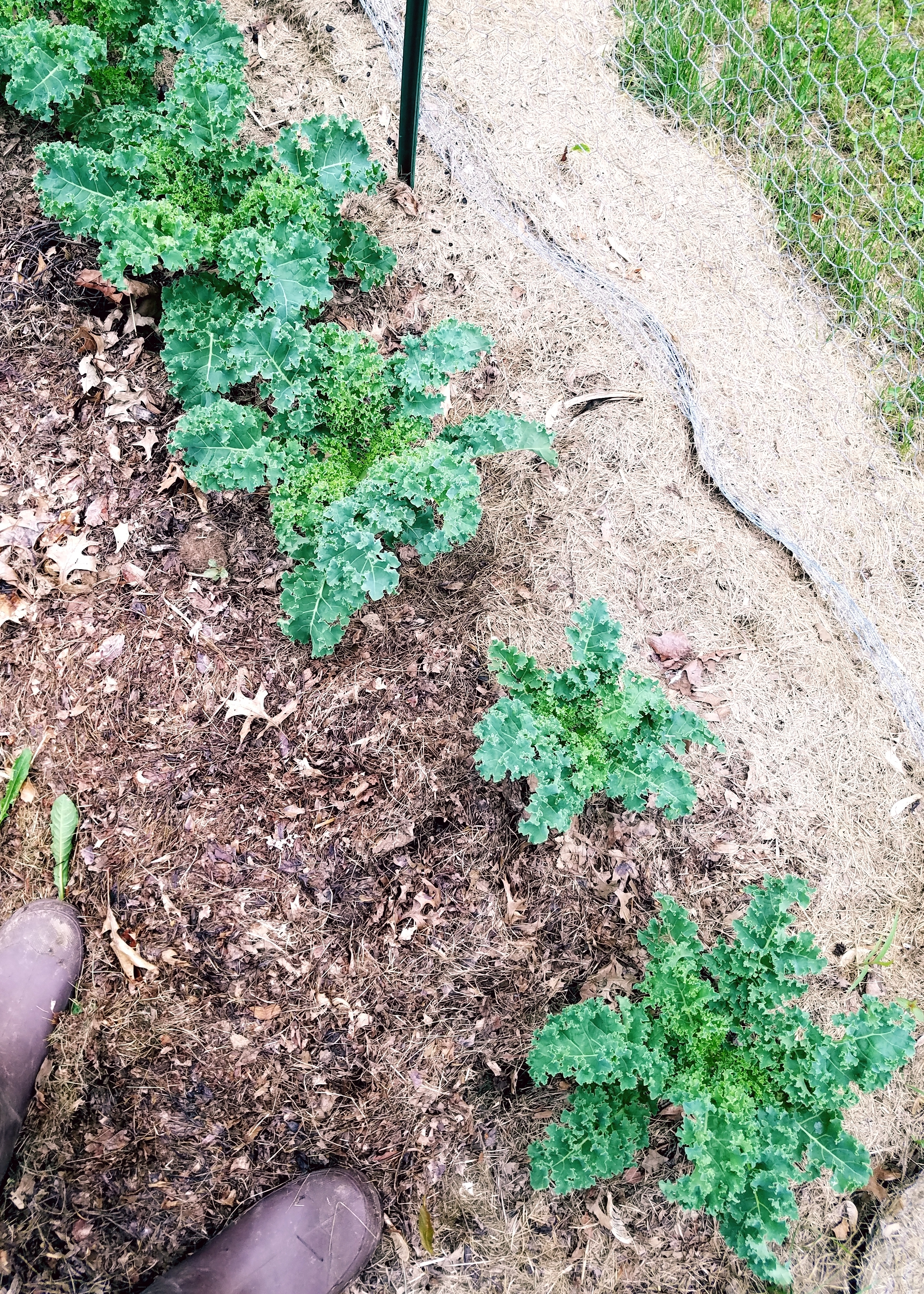
Our family waited until election day to cast our vote. When I hit publish on this article I’m picking kale to leave for library workers when we go to town. Politics may be endless cycles of campaigns but the efficacy of fresh kale in binding us together is under appreciated. When we’re talking kale, we’re not talking politics… and that’s okay.

Categories
Living in Society

Early Voting in Big Grove

Newport Precinct Polling Place, Nov. 3, 2010.

The idea of banking early votes among infrequent voters rose to prominence after the turn of the century.

I recall the tactic while working on the first Obama general election campaign. It served a useful purpose that combined data analysis, field organizing and canvassing to focus on maximizing voter turnout among potential Obama voters. The targets were not predictable voters — the ones who showed up reliably for every election — but registered voters whose voting record indicated a propensity to skip elections. The idea was to leave nothing to chance, get their votes cast for preferred candidates, and once banked move on to other campaign work. Both Democrats and Republicans employ this tactic today.

Individuals use early voting in a number of ways. For me it was a way to participate when my work schedule had me out of town on election day. I also voted early for convenience. For example, when I went to the county seat to pay my property tax bill, I stopped at the auditor’s office to cast my vote. Recent discussions about the shortened early voting period (from 40 to 29 days) have little to do with people like me. It is related to a curtailment of opportunities for campaigns to bank early votes — less time equals a more compressed campaign schedule.

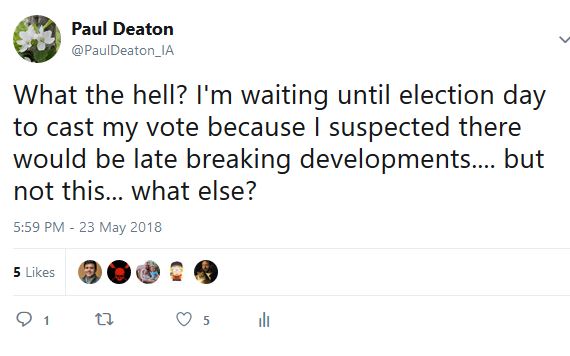
In a primary election like the current one, there are so many moving parts early voting seems less important. Something game-changing could and did happen after the beginning of early voting and before the election. This week’s events are a case in point.

On Wednesday, May 23, the Des Moines Register broke a story that three women accused gubernatorial candidate Nate Boulton of sexual misconduct. By Thursday, Boulton suspended his campaign and Iowa Senate Minority Leader Janet Peterson called for his resignation from the state senate. According to Iowa Secretary of State Paul Pate some 13,000 Democrats have already cast early ballots and there is no process to re-do those votes according to Iowa Code. Boulton voters who haven’t cast their ballots are likely to pick one of the remaining five candidates in reaction to the news.

While rumors about sexual misconduct were circulating around Boulton prior to this week, those whispers did not make their way into mainstream political discussion in Big Grove. It caught me by surprise:

Voters rarely base decisions on having “all the information” about a candidate. I recall the first time our daughter attended the Iowa caucus in 2004. She had not decided for whom to caucus when we arrived at the Middle School. She carried a copy of the Solon Economist with a candidate comparison to read at the event. After years of political canvassing, I believe more voters are like our daughter than not. Decisions are made late in the election cycle and I submit, even later in a primary. Why vote early if one doesn’t have enough information?

Well organized campaigns can be expected to use every aspect of voting law to maximize turnout for their candidates. There is a need for early voting to make elections accessible to more people but I’m not sure of what tactic it serves in the June 5 primary.

Here in Big Grove, as elsewhere in Iowa, we play according to rules established by others and use the tools of the trade to work on campaigns. If that means waiting until election day to vote, we will.

Categories
Living in Society

Inner Politics of Politics

Before the Poll Opens

I’m happy to participate in Iowa politics. At the same time, it is not the sine qua non of living in society.

Despite a long patriarchal lineage of political engagement, beginning in Virginia 100 years prior to the American Revolution, I don’t care for the gossipy, back-biting, outrage-invoking folderol modern politics has become in the age of FOX News.

I’d rather be working in our garden.

Two weeks before the June 5 primary election a couple of political things are worth noting.

With so many races that matter on the ballot, it is hard to focus energy. There’s the gubernatorial race with six Democratic candidates, secretary of state with two, state Senate District 37 with four, and county supervisor with three for two positions. It’s hard to pick a uniform, actionable slate because the support matrix differs so much among voters. Mine is Norris-DeJear-Wahls-Carberry-Rettig.

There is a lot of energy around female candidates, Heiden and Weiner particularly. That energy is positive for their campaigns. With it, each of them created a viable path to the nomination.

Let’s talk about that. Two people I respect, Jean Lloyd-Jones and Maggie Tinsman, created a non-partisan, issue-neutral organization dedicated to achieving political equity for women — 50-50 in 2020. In Johnson County there is a slate to help get there, including Janice Weiner for Senate District 37 and Pat Heiden for county supervisor. Both candidates are well organized and made themselves to be contenders. They are also well-qualified. Within the people who support them is a politically correct idea about electing women. The narrative goes something like what I heard when Weiner’s campaign door knocked our house. “Janice is a well-qualified candidate in a field of good candidates, who happens to be a woman.” We’ll find out after the primary whether that kind of campaign has legs. It might.

After the disastrous for Democrats 2016 Iowa caucuses and general election, a group called Our Revolution organized the shrapnel from the Bernie Sanders campaign in an attempt to avoid assimilation with the party. I don’t know if that’s good or bad, but the history of such groups includes eventual assimilation into Iowa politics whether organizers like it or not. Iowa political history is laden with the ghosts of past third party movements like the Liberal Republicans, the Greenback Movement, the Populist Movement and the familiar-sounding Progressive Movement.

The June 5 primary will test the mettle of Our Revolution which has endorsed Cathy Glasson for governor and Deidre DeJear for secretary of state. Recent polling by the Des Moines Register suggests Glasson hasn’t got the votes to win June 5. The impact the primary has on Our Revolution will be most notable in the Johnson County Supervisor race where Mike Carberry was a prominent spokesman for Bernie Sanders during the run up to the Iowa caucuses and is part of Our Revolution. I’m supporting Carberry, but if Heiden picks him off, the local efficacy of Our Revolution is sketchy at best.  I would argue such groups serve a limited long-term purpose.

Lastly, voters I know have been relatively quiet about the primary. I’m the only person in our subdivision with any political yard signs displayed. That may be because so many candidates are running and topics like gardening are more appealing than politics in neighborhood discussions. It may also be because of a lack of interest in the primary and disgust with politics more generally. The expectation among politically engaged folks I know is turnout will be good because of the disastrous Trump administration and 87th Iowa General Assembly. After the votes are counted, we’ll see how engaged Jane or Joe Democrat was. This close to the primary I don’t see any need to handicap the races.

First things first. I need to get the garden in, after which I can devote more time to politics.

Categories
Living in Society

Nuts! I’m Moving to Minnesota

Fishing Trip with Maciej Nadolski (seated with beard)

The political, social and economic environment in Iowa deteriorated substantially over the last few years. What I mean is the 87th Iowa General Assembly was a pisser. What’s a person to do?

First thought was to chuck it all and move near our daughter in Florida. Father attended Leon High School in Tallahassee, and I worked for several months in nearby Ochlocknee, Georgia. I became enamored of the Spanish moss hanging from trees lining Highway 319 as I drove back and forth to the Tallahassee airport. “You and mom wouldn’t like it here,” our daughter wisely said.

If the sunshine state is out, what about Minnesota? It’s not far away and we have family roots there. They also have Democratic U.S. Senators — what’s not to like about that?

Our family doesn’t know much about why great, great grandfather left the Pennsylvania coal mines and moved to Lincoln County, Minnesota in the last decades of the 19th Century. Maciej Nadolski bought land from the railroad and settled a couple miles west of Wilno where he would go to town, drink adult beverages, and sleep in the wagon as the horse took him home. He did so even after his spouse joined him from Poland.

Wilno was the creation of the Chicago and Northwestern Railroad, the Polish National Alliance and the Catholic Church, according to Wikipedia. It seemed a lot like Iowa. I visited Saint John Cantius Church (established 1883) after Grandmother died and met briefly with the parish priest. He mailed our grandmother’s baptismal record. I drove the route the horse took to the home place where the then current owners let me look around. People in Ivanhoe, the county seat, weren’t wealthy and a bit scrappier than in Iowa. I was related to a number of people I met — shirt tail relatives were everywhere.

A few stories about farm life survived through family oral history. We know farming did not work out for the large Nadolski family. After 20 years in Lincoln County, they moved north near Argyle and tried it again. After ten years in Argyle, most of the family moved near LaSalle, Illinois.

Other parts of Minnesota might not be so bad. Grandmother worked as a maid in Minneapolis when she was young. We don’t like city life so much, but there are small rural cities like the one we live near today. Why not Minnesota?

I’ll tell you why. I was born in Iowa and this is my state. If the political, social and economic climate is not to my liking, I’d better damn well get busy and work to fix it. Thing is, my values are not that different from the values of most people I know. This creates an opportunity for change.

If my first reaction to the 87th Iowa General Assembly was “Nuts! I’m moving to Minnesota,” it is natural to revert to who we are in crisis. Now that we’re home, it’s time to get up from the wagon, sleep off the booze, and get busy building the environment in which we want to live. It can be done, it should be, and we’re up to the task.

Categories
Kitchen Garden Living in Society

Farmers Talk Land Use

Ready to Exit Stage Left if Proceedings get Dull

The room was packed for the Johnson County Board of Supervisors public hearing on the County’s comprehensive plan. Current and would-be farmers were present and spoke about their profession. The hearing took two and a half hours.

Supervisors have been working on the plan for two years and would like to finish it and move on to what matters more, the Unified Development Ordinance, which codifies how the plan will be implemented. Last night’s public hearing brought the county closer to closure, even if the subject of land use will continue to be debated well beyond my years of walking the earth.

The main points were the 40-acre rule for definition of a farm is an obstacle to beginning farmers, and there is a wide difference of opinion regarding the role of animal feeding operations in producing the beef, pork and chicken non-vegetarians love to eat.

The Frequently Asked Questions page of the plan website addressed the first issue, “Will the new Comprehensive plan change the 40-acre rule?” Short answer is no. While officials expressed a desire to accommodate smaller farms during the process of developing the comprehensive plan, one expects the 40-acre rule to remain intact. A farmer can make a living on less than ten acres, especially if they can benefit from the State Code’s agricultural exemption from county zoning regulations. The path is unclear to enable farmers to acquire smaller parcels that would be zoned as ag exempt. There may not be a path, except by supervisors establishing special criteria and deciding each parcel individually on its merits. That’s no way to go. Not only is it labor intensive the politics of the board can and will change over time. People have spoken on the issue. Now it’s time to see what supervisors do.

If people want meat and meat products, livestock will be raised to meet demand. The words “concentrated animal feeding operation” have become a lightening rod of tumult about livestock production. Many do eat meat and few non-farmers want to live next to a livestock production facility. In any case, the State of Iowa maintains preemption over concentrated animal feeding operations. Under Republican control of government, preemption is here to stay. I doubt that would change under Democratic governance. People like their pulled pork, fried chicken, hamburgers and steaks, and it has to come from somewhere. Environmentally it would be better for humans to source protein from plants. If you believe they will over the near term, stand on your head.

The highlight of the hearing was a grader and son of a farmer who read an essay titled, My Barn. “I see my cows Jake and Nick coming up to me because they’re excited for me to rub their noses,” he said. “They feel as soft as a teddy bear.” The hearing engaged several livestock farmers. The ones who raised cattle and hogs took issue with persecution of their trade and the appellation “CAFO.” They said treatment of animals was humane on their farms.

There was insider baseball about the new map to accompany the comprehensive plan. My view is “whatever.” Let the supervisors decide based on best practices. There’s no going back to the way the land was before it was settled. It’s already been ruined by development and that happened in the 19th Century. The North Corridor Development Area has been designated as a buildable area in the plan in order to preserve county farmland. When one flies over it, it’s clear it has been settled from the outskirts of Iowa City and Coralville all the way to the county line. Everyone who has a strong opinion on the NCDA has an ox being gored. Speaker and naturalist Connie Mutel made the best case about how the new map was developed using “best practices.” Managing development in the county is like carrying water in a half empty leaking bucket.

Despite the serious nature of the presentations last night was fun. I got a chance to see friends and acquaintances in the context of working together to resolve issues of beginning farmers. That counts for something and in these turbulent times where would we be without that?

Categories
Living in Society

Clean Up Day and the Midterms

New Kale Plot

There is a better way to change our politics and it has nothing to do with wave elections.

“The 87th General Assembly of Iowa will be remembered as one that made life more difficult for many Iowans, made their work worth less, and guaranteed their freedoms only if they agreed with those in power,” Rep. Chris Hall (D-Sioux City) posted on social media.

A number of legislators took to social media after adjournment sine die yesterday afternoon. My favorite was from State Senator Joe Bolkcom.

“The nightmare of the 2018 legislative session has adjourned!” he posted. “Time for an election!”

Democrats should set aside the idea of a blue wave breaking against the State of Iowa to remedy what ails us about our politics. In a time of atmospheric global warming a blue wave may well be hard to differentiate from the warmer atmosphere driving increased frequency and intensity of hurricanes, typhoons and other extreme weather events responsible for damaging our only home. A real tsunami damages communities and so it has been with the Republican wave election of 2016. A Democratic wave election would present the same sorts of issues.

Electoral politics is less about Republicans and Democrats than it is about building a coalition of voters representing 50 percent plus one of the electorate. According to the Iowa Secretary of State, current active voter registrations are 1,960,006. Democratic registrations are 590,035 (30 percent), Republican registrations 638,565 (33 percent), and everyone else 731,406 (37 percent). No one political party has a majority.

The better question than how to activate Democrats to win the 2018 midterm elections in a blue wave is how do we take our politics to a place where communities can work toward solutions to common problems? If Democrats (or Republicans for that matter) can do that, we will bring people together and win the midterms, setting the stage for a long period of governance. It seems clear  from the last general assembly Republicans have no interest in that. It’s up to the rest of us.

Community organizing is the better way. While the Iowa Senate and House debated the tax bill I did things with neighbors where politics didn’t come into view. We trimmed trees, planted shrubbery and repaired a retaining wall in our common areas. Others took trash bags and walked community roads inspecting the roadway and policing up trash. (Roads are going to require work this year). While attendance was light the action of doing something together was appealing and accomplished something positive. Because I’m active in politics, I knew the voter registrations of everyone there, Republicans and Democrats.  It brought us together as a community.

In every community organization with which I have been associated, people of all political strips have been involved. Whether it is recruiting someone into the organization, maintaining a budget, working on a campaign or project, political party affiliation has not been as important as the willingness to lend a hand. We need more of that in our politics.

If Democratic values will prevail during the midterm elections registered Democratic voters can’t do it alone. It is a faulty assumption to make that because we believe we are right, others will go along with us. We require a foundational relationship with others in the electorate to advance our common goals, no different from the group of retirees mending the wall in our commons, or gardeners donating produce to the local food bank.

Why don’t we do more of that? Democrats particularly, and Republicans increasingly, are driven by the intensity and excitement of political campaigns. We want to win. It’s a zero sum gain and I don’t know about you, but I’m tired of losers in a society we all share.

A community has shared problems requiring work and our politics in recent years moved to break down our willingness to work on them together. It used to be as easy as falling off a log. Today no one’s there to catch us and we’ve been the worse for it.

Let’s forget about the blue wave and work toward community with neighbors to repair what ails us as a society. Republican elected officials have abdicated that role. It’s up to the rest of us to step up.

Categories
Kitchen Garden Living in Society

Hoping for Garden Time

My next shift at the home, farm and auto supply store is May 16. That schedule provides a solid block of time at home to work in the yard and garden.

If it rains, I’ll work inside. There is no shortage of work, although I’m not concerned with that now.

The 87th Iowa General Assembly has been a pisser.

When Republicans won control of the Iowa Senate during the 2016 general election everything changed. It wasn’t small changes. They had a vision of Iowa and executed their legislative agenda in support of it. They took a broadsword to almost everything that matters. They reduced taxes beyond belief and hobbled the state’s ability to generate sufficient revenue to balance the budget. Then, because of the revenue shortfall, they drastically cut services. In Iowa that means cutting education, health and human services, public safety, and governmental compliance. Tomorrow the legislature is expected to pass more tax cuts and a budget that as of this writing isn’t finalized.

The state sought to get more involved in people’s lives under Republican governance, seeking to control how counties manage the minimum wage, how residents protest, how communities work with the federal government, and managing reproductive rights under established law.

Almost none of this legislation during the last two sessions was bipartisan.

The legislative changes impact everyone, including our family. We are not better off for it now and the prospects for the future are dim. The Republican vision for Iowa is not widely shared, especially among the 30 percent of Iowa voters who register as Democrats.

That doesn’t mean we have given up, we haven’t. Participation in the four Iowa Democratic district conventions was the highest anyone can remember during a midterm election cycle. A number of groups rose in resistance to Republican governance immediately after the election. The Iowa Democratic Party fielded the largest number of house candidates this year in most people’s memory.

However, the obstacles to convincing Iowans that Republican governance leaves much to be desired are daunting. 800,983 Iowa voters, or 51 percent of the electorate, chose Donald Trump as president. The votes are there to flip the state Democratic if we can find them. When everyone is running for cover by registering no preference or retreating into small family networks, that is no small task.

Proverbs 16:29 informs us here, “A violent man enticeth his neighbour, and leadeth him into the way that is not good.” Republicans may have been successful in accomplishing much of their agenda in the 87th Iowa General Assembly. We don’t plan to let them get away with it for long.

Categories
Living in Society

From a Dizzy Place

State Capitol

I woke up dizzy on Tuesday and it delayed the start of my day for about six hours. By that I mean I didn’t get going until ten o’clock and had limited activity outside the house.

I feel better today, but sleep was broken around midnight by following the Iowa House debate on Senate File 359, “a bill for an act prohibiting certain actions regarding fetal body parts and providing penalties.”

Rep. Mary Mascher of Iowa City objected to the bill’s title after the final vote, saying it wasn’t the bill they debated. Nonetheless it passed with 51 votes after wheeling and dealing among Republicans and was immediately messaged to the Iowa Senate. Changes to the bill are reflected in S-5288. The play-by-play with role call votes on amendments and final passage is here.

What’s confusing to a lay person reading the day after House Journal is news coverage framed this debate as on the “fetal heart beat” bill which restricts abortion once a heart beat is detected in a fetus. There is much more to the bill than that.

Republican intent was to make the bill language just vague enough for the law to be challenged in the court system, hopefully taking the issue to the U.S. Supreme Court in an effort to overturn Roe vs. Wade. Whether that happened or will happen is foggy at best and beyond my pay grade.

My state representative is a “pro-life candidate” and voted for the bill. When we called him out on this position during the 2012 campaign our efforts did not move the needle in the final vote tally. At least it didn’t move it enough to win a majority of voters.

There is a lesson here about politics. The Republican Party of Iowa just passed the most extreme anti-abortion legislation in the country. There was no bipartisanship in the House vote. There was no middle ground. There was no moderate position here. Either a voter believes a woman has a right to choose an abortion in compliance with current law or they do not.

While I may have been dizzy yesterday I am not today. Last night’s vote, anticipated early in the session, brought clarity physical ailment can’t obscure. On this and many issues Democrats can run if they set aside hyperbole and focus on the fact this law was brought to us by Republicans. If we are able to do it we can flip the legislature and bring common sense and decency back to Iowa.

Categories
Living in Society

WYSIWYG – District Convention

For the first time in years, the four Iowa Democratic District Conventions had a full compliment of delegates in attendance during a midterm election cycle according to party chair Troy Price.
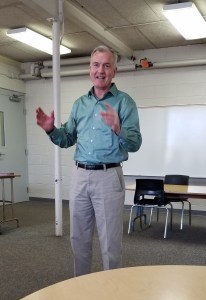
Several dozen alternate delegates were not needed in Fairfield where the second, Congressman Dave Loebsack’s district, met. The routine business of the convention carried on without incident.

During the next re-districting process, after the 2020 U.S. Census, Iowa is likely to retain four congressional seats. We expect few changes in district maps when the non-partisan commission meets to adjust them to match population.

What you see is what you get — WYSIWYG.

Monitors throughout the convention hall played a continuous loop of gubernatorial campaign commercials. I skipped lunch so I could stay awake during the afternoon. Mostly I sat next to or chatted with friends with whom I’ve worked on previous political campaigns, catching up on family, and talking Iowa politics. My cohort among delegates is seasoned political veterans. Mostly they wanted to take care of business and exit toward home as soon as voting was finished. More than half of delegates were attending a district convention for the first time.

To say there was excitement in the room would not be accurate. Delegates seemed duty-bound to elect good people to the state central committee and to various state convention planning committees. There was not much appetite for a platform discussion by the time I left after the raffle drawing. Speeches by candidates and their surrogates were okay but not inspiring. Gubernatorial candidate Fred Hubbell squandered his opportunity to address delegates with an uneven, desultory performance after lunch. A sign of the times — Democrats have to win in 2018 or remain out of power for a long, long time. Everyone present seemed to know it and is ready for a long slog toward victory.

Dave Loebsack gave a speech in which he called for party unity after the June 5 primary. He gave a shout out to organizations that rose up in the wake of the 2016 general election — to Flip-It and Indivisible specifically. While such groups are positive, they are not enough. The next step is Democratic unity, although Loebsack didn’t say that specifically. It’s obvious. Without it Democratic chances in November are diminished.

Groups like Flip-It, Indivisible, Our Revolution and others are like a bandage on a wounded body politic. They have not stopped hemorrhaging of party loyalty in the wake of the divisive run-up to the 2016 general election. Democrats can’t win this cycle by only pointing out flaws in Republican governance. What do we stand for? We have to get together on that and the convention moved the needle among activists present.

Both Troy Price and IDP executive director Kevin Geiken argued the party had listened during the aftermath of 2016 and would not be a top down organization this cycle. The state party would stand in support of a grassroots effort to elect Democrats, they both said. The party recruited a record number of legislative candidates and in my view is doing the right things to correct our course as we move toward 2020. They deserve credit for that.

A labor leader called a caucus of delegates who belonged to a union and about 50 attended. The last time Democrats held the governor’s office and both chambers of the legislature, union issues did not advance. Notably Governor Chet Culver vetoed the fair share legislation passed by the legislature, ostensibly because the two largest public sector unions couldn’t agree on percent of dues non-union employees in government jobs should pay. Unions divided support between Cathy Glasson and Nate Boulton this cycle. To win in November, and advance a labor agenda, they can’t afford a repeat of 2006. They too seem to know it.

I car pooled to the convention and rode with a different group on the way home. We talked politics, farming, family, and more politics. I couldn’t help but think of work waiting for me at home as we drove past houses, farms and fields. Political work has become more important in a time of Republican governance. We must take care of ourselves and part of that is participating in the broader society where we can. The district convention served as a vehicle for that.

Categories
Living in Society

John Norris for All Iowans

John Norris in Solon, Iowa March 17, 2018

I support John Norris as nominee for governor in the June 5 Democratic primary and hope others will too.

Norris has the breadth and depth of experience needed to guide the state through recovery from the governance of Terry Branstad and Kim Reynolds. He helped clean up after Branstad as chief of staff for Governor Tom Vilsack. He can do it again.

What needs cleaning up? Norris will balance the budget without mid-year corrections and gimmicks, fix privatization of Medicaid services, review and eliminate excessive tax credits for businesses, fix a failed mental health regionalization that left children behind, support public employee unions, and improve our air and water quality.

The 2018 general election will be less about issues and more about leadership. Because of his skills, qualifications and experience, John Norris is ready to lead all Iowans on his first day in office. Check him out at http://www.norrisforthepeople.com/home.

Not only was Norris the only gubernatorial candidate to hold an event in the City of Solon this cycle, his campaign strategy is to build a base of support for the general election in communities like ours in rural Iowa. Electing John Norris governor means gaining support in counties the last Democratic gubernatorial candidate couldn’t.

I hope Democrats will consider voting for John Norris, a fifth generation Iowan who spent his life fighting for family farmers and rural Iowans, and is ready to lead our state as governor.

~ Published in the May 3, 2018 edition of the Solon Economist