Categories
Reviews

Book Review: The Hidden History of American Democracy

Is democracy the default state of humanity? In The Hidden History of American Democracy: Rediscovering Humanity’s Ancient Way of Living, author Thom Hartmann presents the case that democracy is our default state, overcome only by the intrusion of dictators, popes, and kings using the power of great wealth, control of media, or the force of arms and technology. He explains where society has gone astray and what we can do to restore democracy.

The Hidden History of American Democracy is the ninth volume in Hartmann’s Hidden History series. Like its predecessors, it is accessible and easily readable, especially for readers immersed in the issues it covers. Hartmann creates a narrative grounded in historical documents yet seems fresh, and modern in its interpretation. The first two parts of the book dispel myths about democracy and the meaning of our constitution. The rest of the book frames the modern war on democracy and regulated capitalism; outlines a 21st Century democracy agenda; and presents a call to action.

The United States is not a Christian nation. Although Christianity was introduced in North America by European settlers in the 16th and 17th Centuries, and has experienced periodic revivals, it did not appear to take. The founders did not envision the newly formed country as Christian. They took precautions to avoid affiliation of the government with religion. Author of the Declaration of Independence and US Constitution Thomas Jefferson studied the Bible yet was decidedly not Christian. In fact, the US Constitution never explicitly mentions God or the divine. In this book, Hartmann creates a narrative about the founding using Jefferson’s own experiences with the Cherokee and other indigenous people, depicting American democracy’s indigenous and broadly based intellectual roots.

While the US Constitution isn’t strictly based on the Iroquois Confederacy, it does have some elements in common with it. The greater impact of Native Americans, however, was in helping to shape the thinking of Enlightenment thinkers from Spinoza to Locke to Montesquieu to Jefferson.

Thom Hartmann, The Hidden History of American Democracy.

Here in Iowa, people refer to the US Constitution as if they read it. What they say and appear to believe about it doesn’t match the text. Not only do citizens believe the United States was founded as a Christian nation, they superimpose misguided characteristics on the Constitution regarding gun ownership, the U.S. Supreme Court, the Electoral College, the branches of government and more. In part two of the book, Hartmann takes apart these cultural myths in an effort to return us to a basic democratic outlook from before some were led astray.

The high water mark for post World War II democracy may well have been the election of Ronald Reagan as president. 60 percent of middle class Americans lived “the American Dream” in 1980, according to Hartmann. So-called Reaganomics, or the rise of neoliberalism, brought de-regulation of capitalism, “which measurably set back the working and middle classes while also weakening our democracy,” Hartmann said. Both Republicans and Democrats espoused principles of neoliberalism, ending in an all-out war on democracy and regulated capitalism. It is hard to find fault with Hartmann’s analysis of this important issue.

The rest of the book outlines a 21st Century democracy agenda. In it, action steps such as making voting a right instead of a privilege, changing the relationship with the U.S. Supreme Court so there is a form of oversight or “regulation,” expand the U.S. Senate immediately by adding two new states (Washington, D.C. and Puerto Rico), providing health care for all, and more.

Thom Hartmann

Importantly, part of Hartmann’s agenda is for each of us to get involved in our democracy.

You may think your voice is but a faint whisper in the wilderness, but there are ways you can amplify it at no cost other than a bit of effort. Write letters to the editors of your local newspapers. Become active on social media. Volunteer with the dozens of great good-government groups and organizations devoted to saving our environment, our democracy, and our world.

Thom Hartmann, The Hidden History of American Democracy.

As we enter the 2024 general election cycle, many of us are seeking things we can do to make a difference. A good way to start is to read The Hidden History of American Democracy: Rediscovering Humanity’s Ancient Way of Living and share it with your friends.

The author interviewed Thom Hartmann about the book on July 10, 2023. Readers can hear the 31:25-minute interview by clicking here.

Thom Hartmann is a four-time winner of the Project Censored Award, a New York Times bestselling author, and America’s number one progressive talk show host. His show is syndicated on local for-profit and nonprofit stations and broadcasts nationwide and worldwide. It is also simulcast on television in nearly 60 million U.S. and Canadian homes.

To buy a copy of The Hidden History of American Democracy: Rediscovering Humanity’s Ancient Way of Living, click here. The book is available July 18, 2023.

Categories
Living in Society

Oldsters Congregate

Garden harvest on Friday, July 7, 2023. Broccoli and cauliflower are about done.

A group of local political activists got together at a restaurant on Thursday. What characterized us was our average age of about 70. We worked together on many campaigns and are apparently ready to work on another. In 2004, this was an asset. In 2023, it is a liability.

Where are younger political activists? They exist, I met some of them and worked with them. They don’t do politics the way we oldsters do. We would like to have had more young people at our meet up. Political activism is important for Millennials and Generation Z folks. Formal, in-person political meetings are less so.

I enjoyed spending time with long-time friends. I missed the ones who died, moved outside the district, and are present only in spirit. I’m not sure of what continued relevance our generation has in local politics. Who wants to hear from us as we age?

The big political news was on Wednesday when Governor Kim Reynolds called the Iowa legislature back to the state house on July 11 for a special session to address abortion.

“Iowans have elected representatives willing to stand up for the rights of the unborn and, in doing so, they have voted strongly in support of pro-life principles and against the arbitrary destruction of innocent, defenseless lives,” stated Governor Reynolds.  

Press Release from the Iowa Governor on July 5, 2023.

The governor had a specific bill in mind, the text of which was released on Friday. Voters across the state are preparing to stand for or against the governor on July 11 in Des Moines. The Interfaith Alliance of Iowa summarized my feelings about abortion legislation:

Iowa faith leaders are speaking out ahead of the special legislative session in support of reproductive freedom, including access to safe and legal abortion. The faith leaders will speak during a press conference to affirm their religious beliefs in support of reproductive rights. People of faith are not monolithic in their beliefs on abortion. Many people of faith believe in reproductive freedom for Iowa women and all people because of their faith.

Press Release from the Interfaith Alliance of Iowa, July 8, 2023.

Females in the oldster set of political activists who gathered on Thursday are past child-bearing years. Nonetheless, there are children and grand children to consider. They will be affected by changes in Iowa law regarding abortion. I hope Millennials and Generation Z voters are engaged and will contact their representatives. The oldsters already have.

Categories
Living in Society

Independence Day 2023

Along the state park trail.

Our local daily newspaper printed the entire Declaration of Independence in this morning’s edition. I didn’t read it again yet appreciate the gesture.

Even though “men” were “white men” in the document, and slaves, indigenous people, and women were not included in the lofty talk about “the separate and equal station to which the Laws of Nature and Nature’s God entitle them,” the document served to change the course of human events and resulted in the United States of America. It was a radical beginning, one whose promise has not been fulfilled by 2023, if it ever will be.

I am restless about it no more, as instead of turning in my bed while the sound of fireworks ignited near the lake last night, I slept straight through. I have come to terms with American’s many imperfections and focus on making my small corner of it more tolerant and diverse.

Our local food bank was closed for donations on the third, so I found another food bank that could take a large box of cucumbers and zucchini. I had planned to make and can pickles this year but our inventory from previous years is strong. I decided to eat from previously canned pickles for another year, and that created an excess of pickling cucumbers. As I drove across the lake to deliver them in North Liberty, the wakes of pleasure boats were evident on most parts of the surface. The Independence Day weekend was in its full bustle. The food bank appreciated the donation.

We found a water line break on the main entry road to our development. I spent Monday morning coordinating communication with members while the repair was effected. Partly, it is a thing for septuagenarian men to gather at construction events in the neighborhood to “watch.” Partly, as outgoing board president I wanted to make sure the well was turned off and back on in a way that minimized contamination of the water system. Things went well and I felt good about one of my last actions as board president.

We don’t celebrate Independence Day in our household. In the pantheon of annual holidays, it ranks second behind Memorial Day.

Based on what’s in the garden and refrigerator, we’ll be eating one of ten kinds of leafy green vegetables for dinner. That and other dishes as yet unknown. I’ll dig the first garlic plant to see where we are. It has to be close to harvest, so on my to-do list is preparing the garlic rack. Today’s to-do list is long.

Spring has turned to summer and with forecast ambient temperatures above 90 degrees today, I plan to spend the afternoon indoors. I will be cooking, reading, writing, and noting my independence from the tyranny of cultural traditions surrounding our nation’s birth.

As Robert Browning wrote, “God’s in his Heaven, all’s right with the world.” Or so we convince ourselves to believe when the holidays arrive.

Categories
Living in Society

Habitat for Change

Milkweed bug and Monarch caterpillar having breakfast in our yard.

It was a long process to create a habitat where Monarch butterflies would stop on their annual migration, lay eggs, and provide images like the one above in our garden. Both milkweed bugs and Monarch butterflies are creatures of a very specific set of conditions. Without those conditions, neither would exist as they do.

So it is with politicians. It turns out Democratic members of the Iowa Senate also require specific conditions to thrive, and removed Minority Leader Zach Wahls, and replaced him with the more experienced Senator Pam Jochum last week. All 16 Democratic senators voted for Jochum to replace Wahls. What happened? Senator Wahls explained in an email received on June 12:

By now, many of you have seen the news that last week, my Democratic colleagues in the Iowa Senate chose a new caucus Leader, Senator Pam Jochum. After serving as Leader the past two-and-a-half years, I know how critically important this job is, not just for Iowa Democrats, but for all Iowans. Her success is vital to the wellbeing and betterment of our state, and I will continue working hard everyday to serve my constituents, help Leader Jochum and the Iowa Senate Democrats, and elect more Democrats in Iowa.

I am no longer Leader because I made the difficult decision to fire two longtime senate staffers who did not share my vision for change while restructuring our staff. My Senate Democratic colleagues disagreed with my decision. There is always a resistance to change and new ideas, and I stand by the decision because Iowa Democrats desperately need a new direction and leaders who will chart that course.

I chose to run for the Iowa Senate in 2018 because our state was heading in the wrong direction and we needed change. Since 2014, we have all watched Iowa Republican politicians strengthen their iron grip on our state, and we have all seen the damage the Republican agenda has wrought on our families and communities. Governor Reynolds and extreme Republicans in the legislature are hellbent on taking away our personal freedoms, defunding our public schools, and hollowing out the middle class. Our rural communities continue to lose population. Our young people are leaving Iowa for better opportunities in more welcoming states. Our political system is not working for Iowans.

As long as I have the opportunity to serve in elected office, I will continue to push for change and to fix the broken system that is failing our state. Iowans deserve a strong and forward-looking Democratic Party that is ready and willing to embrace the change necessary to halt the advance of Republican extremism. We must put change and progress ahead of comfort and the status quo.

So many people are discouraged about the direction of our state and the losses our party has sustained over the past decade, and if you are one of them, I want to speak directly to you. While they want us to give in to cynicism, we must refuse to accept that Iowa is lost forever. Our fight for liberty, justice, and shared prosperity is difficult. Our success will require honest reflection, an immense amount of hard work, and a deep commitment to change. And while change is always hard — Iowans are counting on us, and failure is not an option.

I hope you will join me in continuing the fight for a better future for everyone who calls Iowa home.

Onward. ZW

Email from Senator Zach Wahls, June 12, 2023.

The money quote is, “We must put change and progress ahead of comfort and the status quo.”

Erin Murphy reported in the Tuesday Cedar Rapids Gazette that Mike Gronstal, formerly a lobbyist for the Iowa State Building and Construction Trades Council, lost his job because of his involvement in the Wahls matter. Gronstal was previously the Iowa Senate Majority Leader.

“The nature of Gronstal’s involvement in Senate Democrats’ leadership change was not detailed by the council or made public by Senate Democrats,” reported Murphy. “But the two longtime staffers who were fired had worked for Gronstal when he was majority leader.”

Senate Democrats may have said all they plan to about removing Wahls from leadership, yet the incident indicates an unwillingness to change that is disheartening for rank and file Democrats who haven’t given up hope in regaining a majority. I mean, the days of Mike Gronstal’s influence should have ended when he lost his re-election campaign in 2016. What are you telling us, Democrats?

Pam Jochum will make a fine minority leader, so that’s not the issue. Likewise, I can understand if the senators were upset by a staffing change that affects them all if it was unannounced or unexpected. There are ways to fire tenured people without a brouhaha. It seems unlikely we rank and file will ever know the full story. If that’s the ground floor for party rebuilding, then so be it.

I met with a group yesterday to talk about our new State Senate District. Our experienced and popular Democratic candidate lost his reelection bid in 2022. Some of the more connected people present for the meeting had ideas for a 2024 candidate. At this point, we don’t have one. The meeting itself was inconclusive about what we should do to defeat the Republicans who won in our Senate and House districts last cycle.

With a Republican trifecta since 2017, the majority party has used their power to make changes they want. I don’t believe they are close to being done. It has been clear Zach Wahls is competent since he was elected. What caused a majority of the Democratic Senate caucus to ouster him? We have a brief statement, yet we don’t have the whole story.

Butterflies, I understand. Politicians? Not as much. This thing is going to be a distraction for a while and I’m not talking about photographing caterpillars.

Categories
Living in Society

Unsettled in Big Grove

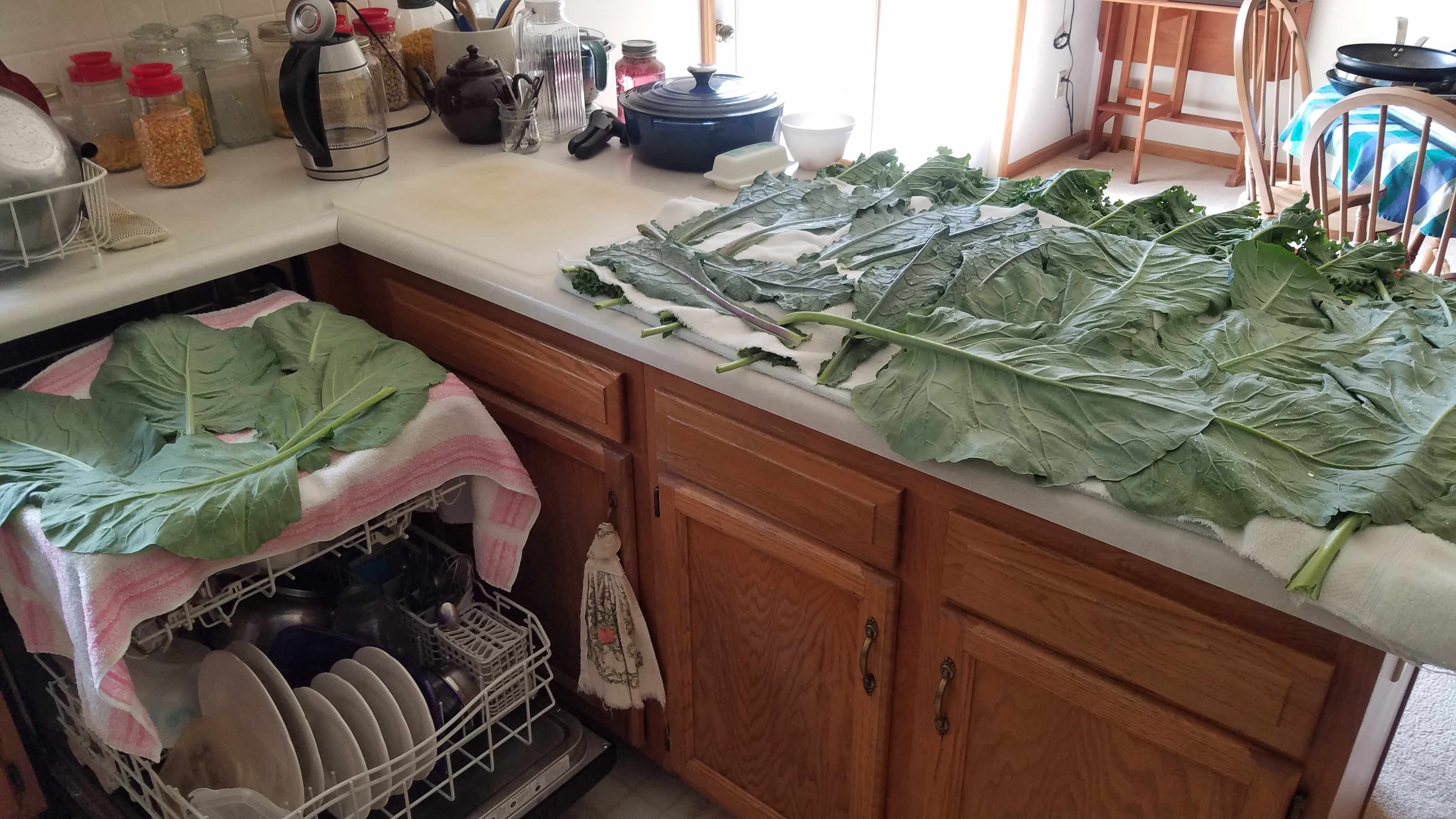
Collards and kale drying on the counter.

Like for many, news of the federal indictments handed down by a Florida grand jury in the stolen classified documents case involving the 45th president reached me at home. Republicans, with few exceptions, spoke with one voice, saying the Department of Justice had been weaponized to attack President Biden’s main competition in the 2024 presidential election. That’s not true, in fact it was the 45th president who attempted to weaponize DOJ when he was in office. Even the corrupt William Barr, attorney general at the time, wouldn’t go along with his president on his quest to punish his enemies. Biden? Don’t make me laugh.

Major news outlets like Gannett, The New York Times, FOX News, and others cultivate a cult of the ex-president. They do so because of the attention each inflammatory article, broadcast or post receives. Trump is bankable to news outlets so they nurture his presence. The diminished celebrity issued a vociferous denunciation of the indictments, as if the louder he spoke, the more authority his words carried. Major news outlets took the bait and gave him prominent coverage. The business of news can apparently be profitable only with bloated characters like Trump on stage.

Using a phrase learned from my basic training drill instructor, they are all pissing in the wind.

It’s the third paragraph of the indictment in United States of America v. Donald J. Trump and Waltine Nauta that bugs me. Here it is:

From military service, I am familiar with some of the intelligence collection methods mentioned. Compromising intelligence produced by covert operatives and agents could put their lives at risk, resulting in imprisonment or death. According to the indictment, Trump did that. What kind of person does that? A corrupt one with stolen, classified documents.

During my three years stationed as an infantry officer in West Germany I had access to classified materials. I remember getting a top secret clearance for a special project. My friends back in Iowa wrote letters saying they were contacted by investigators during the process. I got my clearance and participated in more than 25 military operations that used classified information. I didn’t retain a single document. When finished using classified documents, I returned them the the S-2, which is the battalion-level intelligence officer. It was important to follow the rules.

One of my buddies was fluent in German and Russian and spent time in East Berlin hanging out with Soviet forces stationed there. Most of his work was in bars and restaurants, and he filed information gleaned after each trip. It must have been pretty boring work. He told us about the volume of vodka Soviet troops drank and how it impacted their readiness. Even I collected intelligence from a French military unit in Brittany while I was stationed with them as an exchange officer. I filed my report with our S-2 and was done with it. In Cold War Europe troops seemed bored and drank alcohol and did drugs because of it. They were hardly ready for a major battle.

Native instinct tells me 45 won’t be convicted and if he is he won’t serve jail time. The rich seldom do. When I read the evidence presented in the indictment, I became unsettled. I understand why news outlets cover the story. What I can’t explain is why so many of my friends and neighbors voted for Trump in 2016 and would again if he were the Republican nominee for president in 2024.

One would think the indictment would teach us a lesson. Instead, a mythology of the corrupt has risen around Trump, accepting his illegal behavior, and impeding our ability to maintain a functioning democratic republic.

That is the bigger problem.

Categories
Living in Society

An Assembly

Stinocher Post #460 American Legion Color Guard on Memorial Day, 2023.

Members of our community gathered for events over the Memorial Day weekend. I did not know most of the people I encountered, yet felt a part of it. I did recognize most of the veterans in the American Legion color guard at Monday’s service.

We don’t neighbor the way we used to when I was coming up at the American Foursquare in Davenport. I remember getting to know everyone on our block, at least a little, when I was a grader. I had been inside most of the houses and apartments. It was hard to keep up with the several rentals, yet if someone owned their home, I knew who they were and a bit about their history. Geography was an important part of neighboring. It is less so today.

We gather in different ways in the 21st century. Our county Democratic party is trying to resuscitate the idea of “neighborhoods” in an effort to prepare for the 2024 and 2026 elections. Such geographical neighborhoods they describe don’t exist any more, especially in rural Iowa. In a place where automobile culture takes us to remote jobs and commercial enterprises, we are less rooted in the physical community. With increasing specialization of interests, there are fewer people who share them in our immediate locale. While rural folks may reflect the same humanity as anyone, the distance from population centers and their work, shopping, health care, and intellectual assets creates a divide unlikely to be breached.

By nature of our humanity we live in a place. How we socialize is unchained from restrictions of geography. That makes assumptions about how one canvasses and gets out the vote in a geography obsolete. That is, we need to invent a new way of locating and turning out voters. Thus far, if the string of Iowa Democratic losses is any indication, we’ve not proven to be much good at it.

Why do we gather in person? On Memorial Day, the reasons are clear, and each person has a role in a public ceremony. The difficulty I increasingly experience is separating from people by political party. The old methods of winning elections haven’t worked for a couple of cycles, and I’d rather spend time with people I know who don’t have the interest of Democrats. Age, status in life, volunteerism and others mean more than politics. The assumption that we associate only with people we resemble has not well served us. We need to let go of old ways and assemble under new, to be defined practices.

I don’t opine much about “society,” yet society will be better if we change our associations with others.

Categories
Living in Society

Culture of Open Inquiry

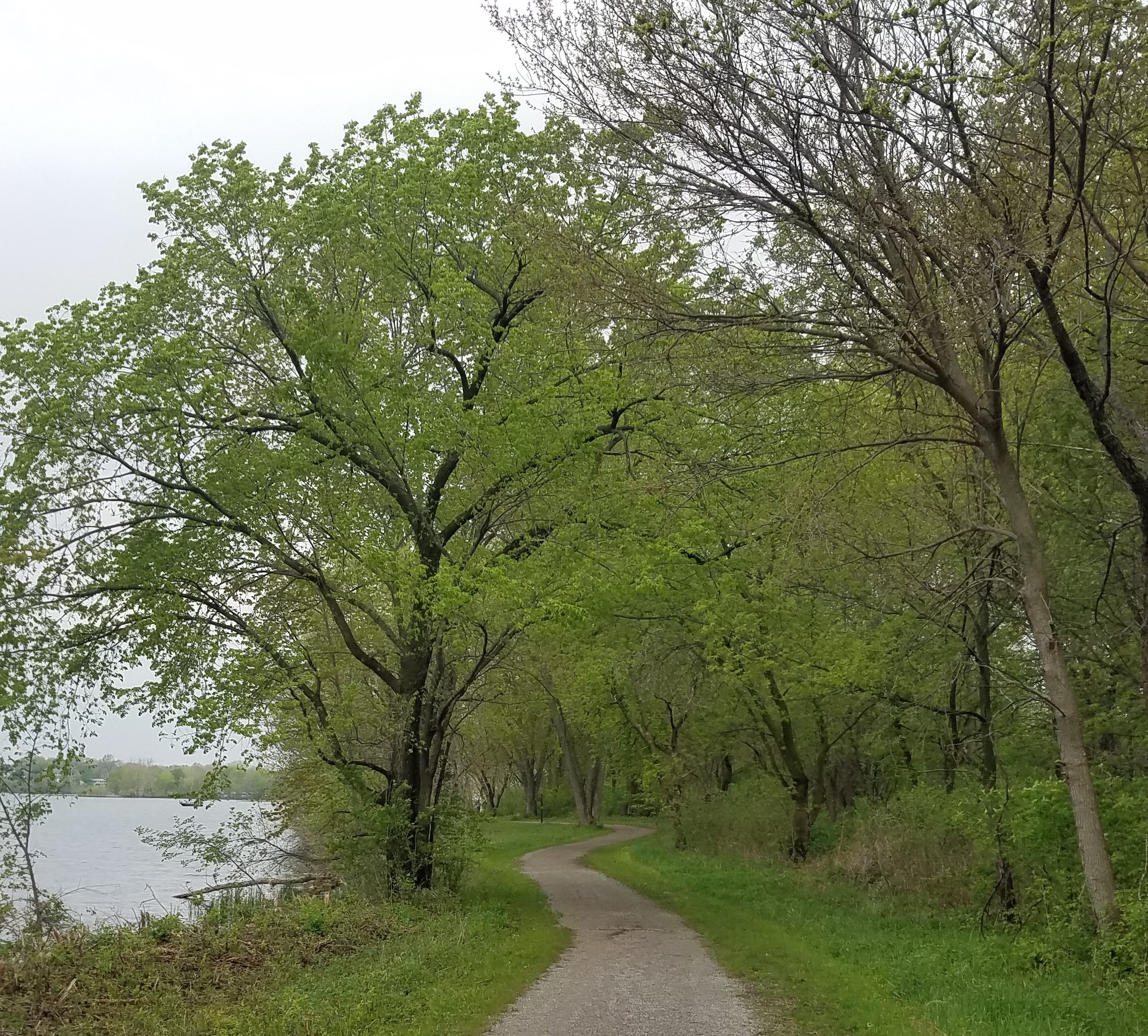
Green up on the Lake Macbride Trail.

In 1820 most countries started out on a relatively equal economic footing. Translation: People and regions were poor around the globe.

Author Jeffrey D. Sachs described this world:

Life expectancy was extremely low; children died in vast numbers in the now rich countries as well as the poor countries. Many waves of disease and epidemics, from the Black Death of Europe to smallpox and measles, regularly washed through society and killed mass numbers of people. Episodes of hunger and extreme weather and climate fluctuations sent societies crashing.

The End of Poverty: Economic Possibilities for Our Time, by Jeffrey D. Sachs.

What changed, according to Sachs, was the onset of the Industrial Revolution. Why did this happen in Britain before China, which had been the technological world leader for a millennium? In part, British society was relatively open after the decline of serfdom, its traditions of free speech and open debate contributed to the implementation of new ideas, and Britain became one of the leading centers of Europe’s scientific revolution. “With Britain’s political openness, speculative scientific thinking was given opportunity to thrive, and the scientific advances on the Continent stimulated an explosion of scientific discovery in England,” he wrote.

The impact of these conditions of intellectual inquiry is old news. Yet today’s Americans should take note as legislatures around the country restrict tenure among university professors, ban books, control school curriculum, regulate who can use which bathroom, and remove funding from projects that contribute to understanding of our most significant problems. Lawmakers are putting a damper on open inquiry. Dumbing down and censorship do not represent a path to create the explosion of new ideas and technological innovation needed to survive and thrive in the years ahead. Who could even have imagined this might become a concern?

The deliberate destruction of knowledge is not new. Libraries and archives have been attacked since ancient times. Today, public libraries fight for their very existence as they are censored, deprived of funding, and subject to pressure from political, religious and cultural forces. Open inquiry in this context is hobbled by real constraints.

The latest hobble here in Iowa is elimination of funding for an important water quality sensor program at the IIHR Hydroscience and Engineering center at the University of Iowa’s College of Engineering. Erin Jordan of the Cedar Rapids Gazette covered the story here. “Iowa deploys about 70 sensors each year on streams and rivers across the state that measure nitrate loads and concentration so observers can tell whether water treatment plant upgrades, wetland improvements and agricultural conservation practices are working to reduce pollution,” Jordan wrote.

“Defunding progress reporting and monitoring is not the direction we should be going in our approach to nutrient pollution in Iowa,” Alicia Vasto, water program director for the Iowa Environmental Council told the Gazette. “Iowa taxpayers deserve accountability for the funding that is being spent on nutrient reduction practices.”

Hypoxia in the Gulf of Mexico, caused by nutrient runoff in Midwestern farming operations, is a problem. Closing down open inquiry into solutions to the problem is exactly the wrong direction.

We Americans are better off today than we were before the Industrial Revolution. The lesson that should be taught in schools is open inquiry into the problems of our day is as important as any curriculum item. Regretfully, my opinion may be viewed as that of just another advocate. In today’s society, the powers that be don’t want the rest of us to do too much thinking. Therein is the problem.

Categories
Living in Society

From Society to Soup

Vegetable soup before cooking.

I’ve turned from society to soup. Not sure how I feel about that, yet the soup smells pretty darned good. The leafy green vegetables were harvested the same day, many of the vegetables were grown in the kitchen garden last season then preserved, and lentils and barley came direct from a super market. This soup made a fine dinner with five quarts leftover for the coming week and beyond.

As we age we spend more time alone. Children, if we have them, develop their own lives. In the Midwest, many of us work to age in place and the home becomes a quiet warehouse of memories and too much stuff no one needs or wants any more. To expect something different puts too much burden on our offspring. A key element of successful living after age seventy is learning to live well alone… and to let go of the possessions because you can’t take them with you.

After working a five-hour shift in the garden, I’m pretty tired for the rest of the day. Yesterday I came indoors for lunch and started the pot of soup. Most of the knife work was done before I put up the vegetables last year. All I had to do was peel potatoes and carrots, gather items from the freezer and pantry, and put everything in the pot with salt and a few bay leaves. It simmered all afternoon.

Loneliness is a normal part of aging. Because of connections formed over a lifetime, we live in a galaxy of friendship. From time-to-time we forget about our network, although we shouldn’t. When one makes so much soup, there is plenty to share.

Categories
Writing

April 2023 in Big Grove

Trail walking in Spring 2023.

The last few days of April have been marvelous. Rain subsided, ambient temperatures were mild with low humidity. It has been a spring month, as good as they get. No more close friends have died this month, so there has been psychological relief as well. We needed a breather.

Spinach planted in the ground on April 15 is up. Onions are doing well. Yesterday I planted cauliflower, cabbage and kale, and there are two more rows in that plot for broccoli, collards, and other leafy green vegetables.A mad garden rush will be happening in May with the target of getting the initial planting done by Memorial Day, which this year falls on May 29. Gardening is going well.

The Biden administration announced that it intends to end the presidential declaration of national emergency and the U.S. Department of Health and Human Services (HHS) public health emergency attributable to the COVID-19 pandemic on May 11, 2023. I was at a restaurant last night where a couple of people continued to wear a facial mask. With my full regime of COVID-19 vaccinations, I did not.

According to the Centers for Disease Control and Prevention, there have been 104,538,730 reported cases of COVID-19, 1,130,662 deaths attributed to it, and 55,743,629 doses of vaccine administered. There are currently 9,167 hospitalizations due to the coronavirus. It was, in no uncertain terms, a public health disaster. The scale of 1.1 million U.S. deaths is difficult to wrap one’s head around as we close in on the end.

The Iowa Legislature has taken up budget bills, which means we are close to the end of session. Thank goodness. There has been so much controversy over bills it had been like drinking from a fire hose trying to understand what is happening. Republicans won super majorities in 2022, and are exercising their power like never before. Democrats are hanging on, trying to get a message out. Democratic messaging has been like trying to light a candle in a derecho: word is not getting out beyond political junkies.

Our blogging group went to dinner Friday night at Royceann’s Soul Food Restaurant in the South District Market in Iowa City. The menu has a fixed number of daily items on it and diners can order a meat and two sides for $18. It is a bit tough for vegetarians to find something on the menu, and tougher for vegans. I ordered cabbage, cornbread, and macaroni and cheese. The preparations were distinct and tasty. I plan to return to try the collards with cornbread. I usually say I can cook better than what I find in restaurants, yet not this time.

Our furnace gave up the ghost this month. We have been discussing which new one to get and have made a decision. When an expensive item hits a household on a fixed income, it takes some wangling to determine how to pay for it. We have it figured out.

I have finished reading seven books in April. Check out what I’ve been reading on the Read Recently page by clicking on it at the top of this page. I got new glasses for the first time since 2019. It’s great to be able to see clearly again. Hope your April was as good as mine. Thanks for reading my post.

Categories
Living in Society

Trash Talk

Iowa State Capitol.

Republicans in the Iowa legislature are treating children like trash. It is part of their view of the role of children in society. It is not right.

Republicans embrace our forefathers, and seek to make Iowa and America great. They don’t want to hear alternative views of American history, like those presented in The 1619 Project created by Nikole Hannah-Jones of Waterloo. They also don’t want to go back to our founding in 16th Century Britain, although that’s where we seem to find ourselves today.

Today’s Republicans embrace the worst aspects of 16th Century colonization, including the idea of Richard Hakluyt that children of the poor be “brought up in labor and work” so they would not follow in their parents’ footsteps and become “idle rogues.” These Republicans are no different than the British elite who had never set foot in the Americas as they rounded up the poor, indigent, and criminal, as well as children, to send to North America and return riches made with the sweat of their brows.

When I woke at 3 a.m. this morning the Iowa Senate was deadlocked over Senate File 542, a bill to roll back protections for children against inappropriate types and amounts of labor. The bill was written by the governor and a small coterie of restaurant and retail establishment lobbyists seeking to resolve Iowa’s labor shortage. Deadlock was related to the spoken intent of the bill. Republicans didn’t want to say anything about their intent, so they refused to answer direct questions about the bill during debate. This is behavior unworthy of their oath of office.

I worked on the cleanup crew of a large slaughterhouse as an adult, and it’s no place for children regardless of the law. This is common sense.

Children are not something to be used up and thrown into the garbage. Yet that is the effect this legislation could have. Republicans frame this as learning the responsibility to work and saving a little money for higher education or other advancement of personal goals. I see it for what it is: a chance to indoctrinate children to do the bidding of the wealthiest among us and in doing so, give up part of their childhood.

No matter how you look at it, it is a raw deal for children when they are treated like expendable commodities. The Iowa House will debate this bill next.