Categories
Social Commentary

Spring Ends

New Pioneer Garden
New Pioneer Garden Toward Sunset

LAKE MACBRIDE— Spring ended at the New Pioneer Food Co-op in Coralville where we did periodic shopping for specialty items. A man with a microphone attached to his ear was speaking to a group of wine-sippers on the mezzanine. His words drifted over the bakery, frozen food cases and rows of brightly packaged dry goods, barely audible. A few patrons shopped with carts, and after a while I went outside to wait on a bench for fulfillment of the trip— a month or more of supplies that can’t be purchased elsewhere.

A fly got into the house yesterday, signifying the invasion of insects. There were broccoli beetles at the farm on Wednesday, and something is eating the cucumber leaves in our garden. The small white butterflies continue to lay their eggs near the broccoli and Brussels sprout plants. A dash of chemicals would kill the pests off, but I don’t use them in the garden. Today’s activities will include identification of the cucumber pest and research on organic remedies. Summer’s struggle may not reach epic proportions, but the cucumber problem kept me awake last night. The pest control part of gardening is less exciting than harvesting.

Some rain fell last night, but not much. The wet spot on the driveway will soon evaporate, leaving what is expected to be a hot, dry day. There is a 30 percent chance of rain mid-afternoon, so here’s hoping it does rain. We don’t want another drought, and any rain would save watering.

Aaron Copeland’s “Appalachian Spring” is playing over the radio waves, a version conducted by Leonard Bernstein. Somewhere there is a cassette tape of the piece. It is one of my favorites and I listen to a version of it most springs— n informal ritual. The radio has moved on to “Blue Danube” by Johann Strauss. It must be a morning of popular favorites on the classical station.

A pot of pasta sauce is simmering on the stove. It was made with yellow and red onions, salt, finely minced garlic scapes, fresh basil, a quart jar of tomato sauce from last year’s garden, and a can of prepared tomato paste. It will make a lunch, so I had better get busy working up an appetite. Spring is over, and the hot, long work of summer begun.
Categories
Writing

Consuming Local Food

Asparagus and Mushrooms

LAKE MACBRIDE— White butterflies have arrived to lay eggs in the cruciferous vegetable patch as spring enters its final days. Part of gardening is the notion that there is a world of deer, rabbits and rodents; caterpillars, beetles and aphids; microbes and bacteria; all ready to compete with us for food during the cycle that defines each year’s garden production.

Lettuce
Lettuce

A home cook who gardens is more acutely aware of this as a deer munches the top leaves of a pepper or green bean plant; as caterpillars make a home among broccoli and cabbage; or as potatoes considered from planting in early spring through growth and flowering are touched by Colorado potato beetles and the tuberous roots are eaten by rodents before we can dig them for the table. Application of chemicals is not an option in our garden, so more vulnerable crops like sweet corn and potatoes are leveraged from other growers, the bugs get picked off by hand, and complex webs of chicken wire and netting work to deter wildlife from access to garden plants— at least until after harvest time.

Broccoli
Broccoli

Gardening is a constant symbiosis that sustains a diverse and complex community of species in the context of an ever changing planet hurling itself into space. To say the future sustainability of local food systems rests in what home cooks do in their kitchens is putting a lot of pressure on a process that is far more complicated. Home kitchens are a part of the process, and human centered.

When considering a bigger picture, the assertion that home kitchens require a revolution to sustain local food is more a statement about marketing than anything else. What matters to sustainability of local food systems is how they fit into a broader context of a supply chain that includes grocery stores, pantries, gardens, farmers markets, CSAs, community food banks, government programs, neighbors and friends, and other sources of foodstuffs.

Bits and Pieces
Bits and Pieces

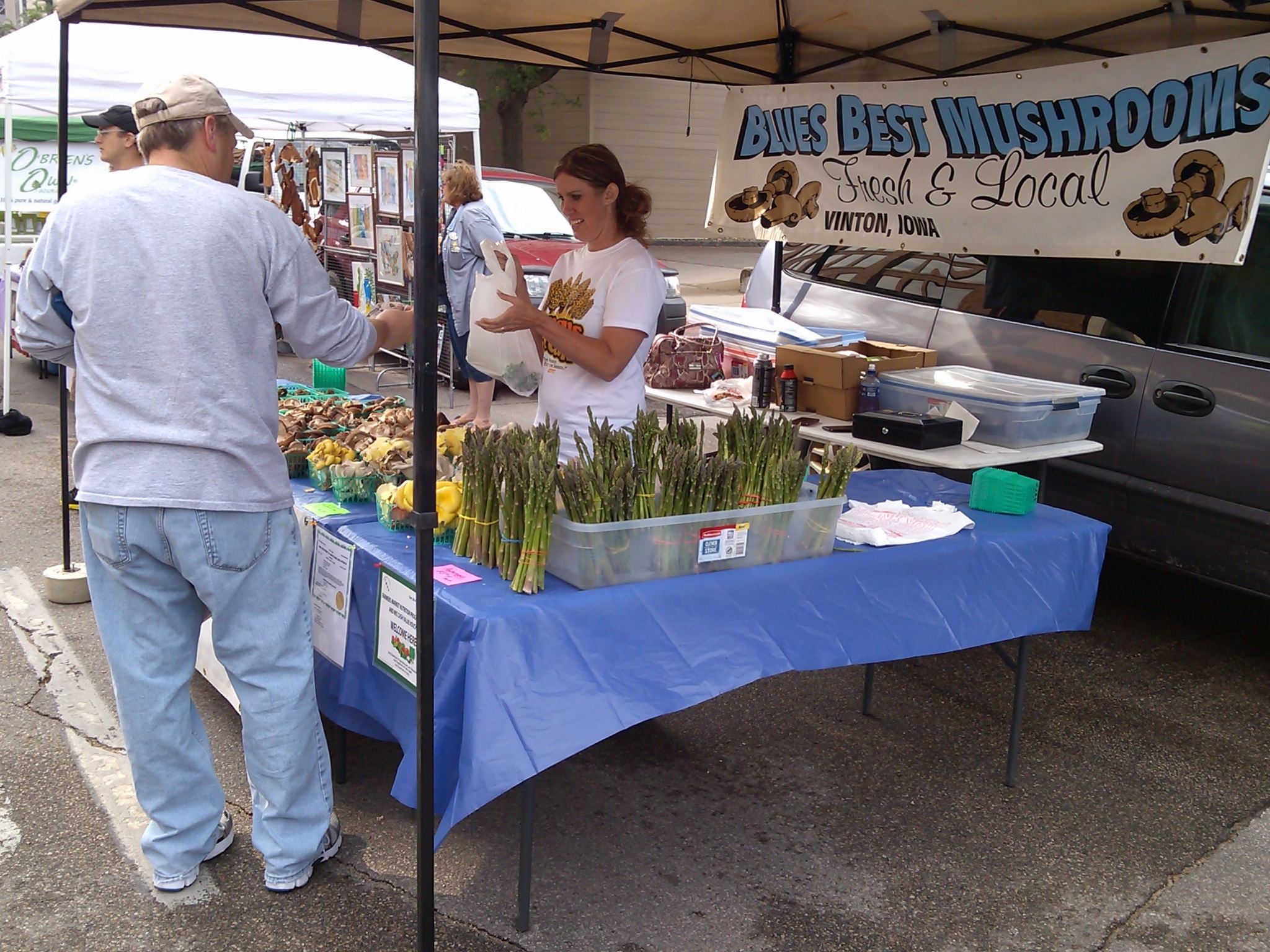
That said, farmers markets like the June 15 market in Cedar Rapids seem critical to sustaining a local food system. It is the behavior of a consumer society that attracts as many as 20,000 people to a Saturday market, and without consumers, there is no market for local produce.

One hopes that the cravings for sugar, salt and fat inculcated in us by industrial food processors get replaced with something better. However, changing how people behave regarding production and consumption of food is like piloting a large battleship in that changing course takes more than a few driving personalities asserting this or that needs to happen. Having a local food Saturday (or any day) in a home kitchen can work to correct a course currently fraught with obesity, chronic disease and ill health.

Supplies
Supplies

My recent local food Saturday is past and I look forward to the next. But before leaving it, there are some points  to be made about what it was and could be for others. By bearing witness to the efficacy of local food Saturday, perhaps readers will consider likewise. Like Scheherazade, I hope to keep you interested.

Categories
Kitchen Garden

June Lettuce Planting

Lettuce and Broccoli

LAKE MACBRIDE— According to a local organic farmer, “one of the most common mistakes home gardeners make is not planting sequentially.” What does that mean?

Certain crops, like lettuce, spinach and radishes, have a short planting to harvest cycle, and multiple crops can be planted during a season. That is, as soon as one row is harvested, another can be planted as long as the plants can tolerate weather as it get hotter and dryer.

What I learned at the farm this year is that lettuce produces the best crops when they are planted as individual seeds in a starter tray, then transferred to the garden as seedlings when the ground is ready. This accomplishes two things.

First, and this is really important, when planting lettuce, plant individual seeds, using a starter tray, or an old egg carton. Because lettuce seeds are so small, the temptation is to sow more than one together. By using a starter tray, and one seed per cell, if one cell fails to germinate, no problem when planting the seedlings in the rows in the soil. If the seed didn’t produce in the starter tray, there is no seedling to transplant. Planting single seeds ensures sufficient moisture and nutrients for each head of lettuce by avoiding over-crowding. It makes for larger leaves.

Second, by planting seeds in trays, the garden space can be more productive. A four week old seedling will take less time to mature once it is planted in the garden. If timed properly, a garden can be in lettuce most of the summer, into fall. For example, I have two and four week seedlings started in successive trays. They’ll be ready to plant when the current crop is harvested.

Avoid a common mistake, plant lettuce sequentially this June.

~ Written for Iowa City Patch

Categories
Kitchen Garden

Morning Vegetable Harvest

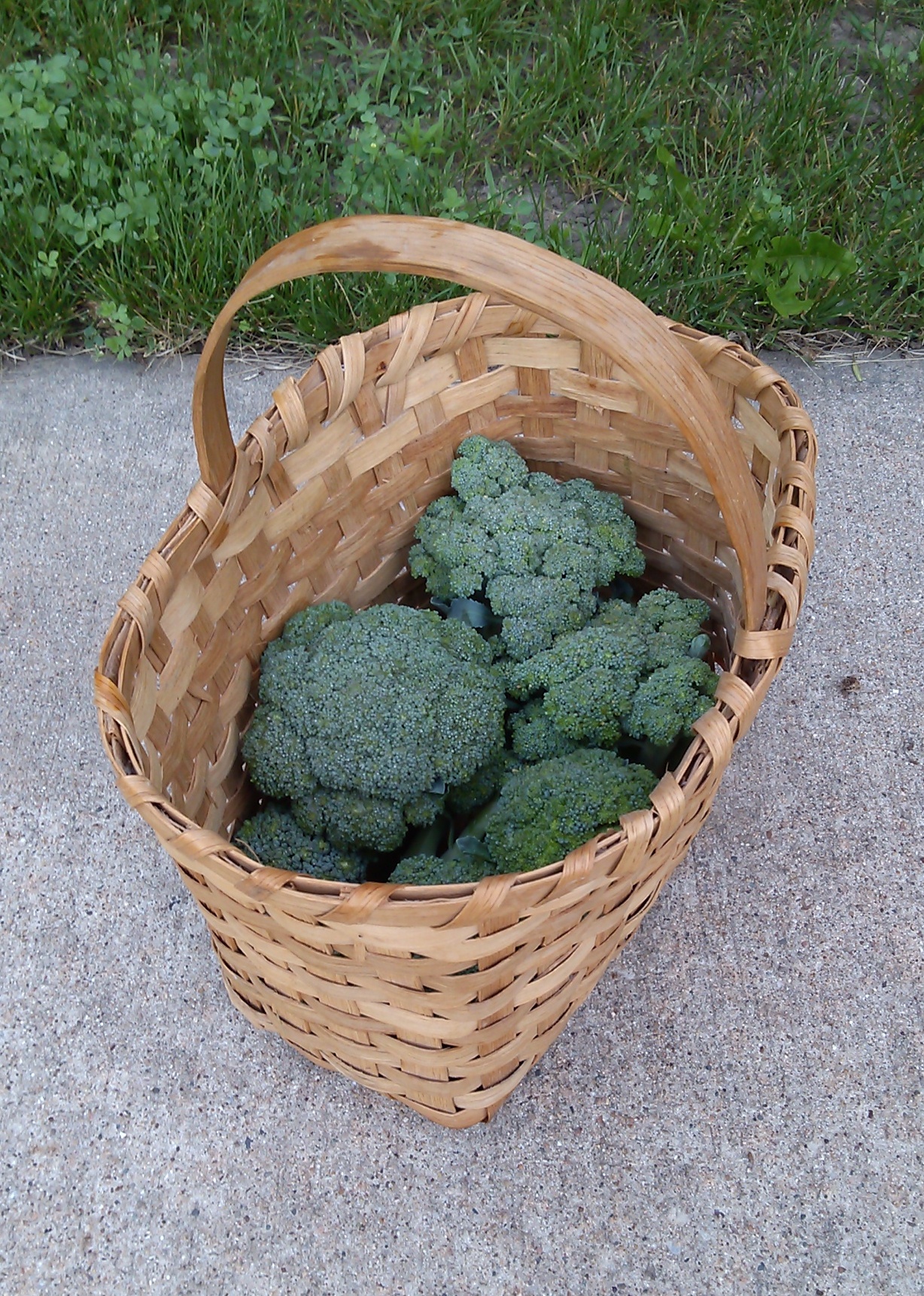
Fresh Broccoli
Fresh Broccoli
Freshly Picked Lettuce
Categories
Kitchen Garden

To Market, to Market

Seedlings
Seedlings

CEDAR RAPIDS— Saturday was my first trip to a farmers market this season. An abundant garden, combined with a share from our CSA, reduced demand for outside produce. Until now, the cucumbers, zucchini and squash for our salads have come from the grocery store. Greenhouse operators now have local ones available, and that is reason enough to switch to the market.

There are more reasons. Depending upon how busy the farmers were at the market, they were a source of information about how they grew produce. It is a form of community knowledge about weather, temperatures and techniques for gardeners and producers that is hard to match. Hearing stories about how the early season was wet and cold, and the impact on growing, either taught me something new or ratified my own experience. Communal knowledge is part of being a producer, even small scale ones like a home gardener.

The market served to address some deficiencies in my planning this year. Not enough radishes, turnips behind schedule because of delayed planting, and kohlrabi fizzled as seeds. The farmers market made up for most of this.

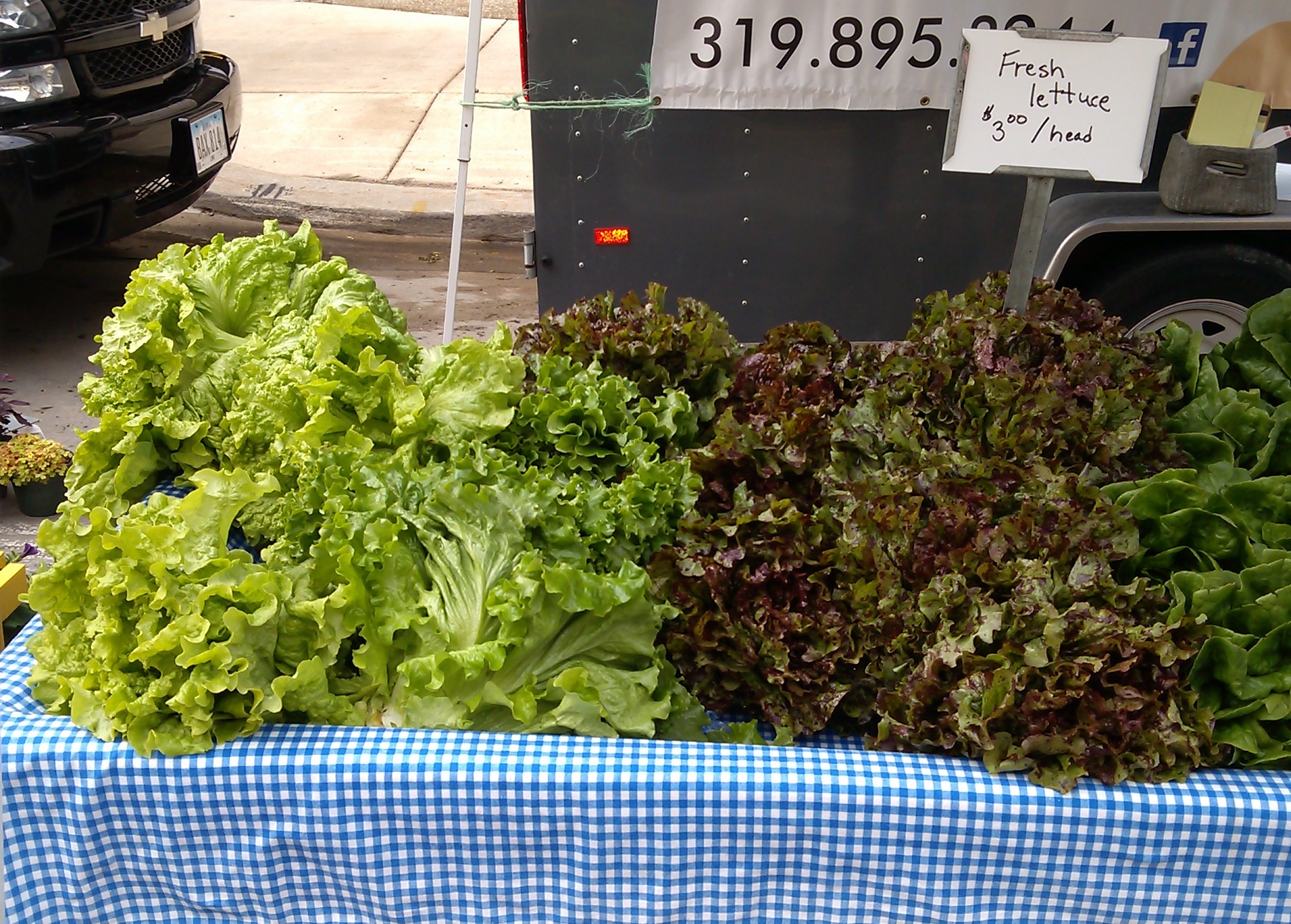
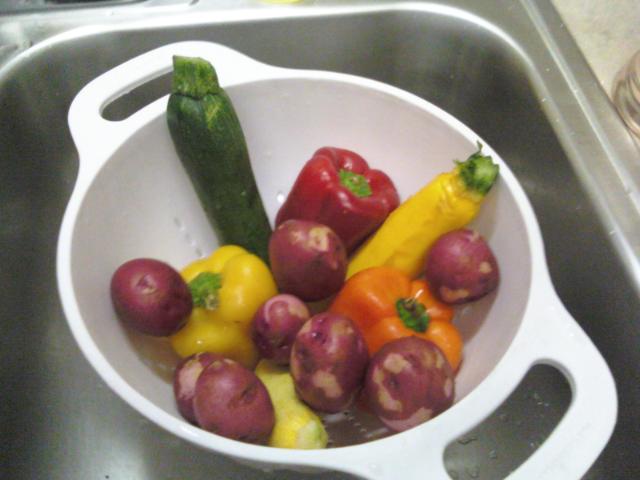
The leafy green vegetables all looked good at vendor stalls, but my garden has plenty. I bought some broccoli to allow mine to grow a few more days before harvesting. Cucumbers, zucchini and yellow squash looked much better than what is available at the grocery store— everything did. Here’s what I ended up purchasing.

Farmers Market Supplies
Farmers Market Purchases

Some of the produce was cheap, turnips with greens for $0.50 each, cucumbers for a dollar. At $3 a head, lettuce seemed pricey, but I bought a pound of local honey because the pricing point seemed right at $5. Maple syrup was too dear, and I didn’t stop at any of the prepared food stalls. I budgeted the $18 I had in my wallet for the shopping trip, and spent it all.

Musician
Musician

My approach was to consider what was priced right and how items would fit into the coming week’s meals. Honey for bread making; radishes, cucumber, zucchini and yellow squash for salads; the turnips to make soup; broccoli for dinner that night and kohlrabi for an experiment of cooking it with potatoes— getting ready for the generous supply from the CSA. I kept looking at the beautiful greens, but sensibly resisted the temptation to buy more— really, I did.

As many as 20,000 shoppers come to the Cedar Rapids market on a Saturday. It’s what makes the market. It is cheap entertainment for a family, and produce is fresh and tasty raw material for an afternoon of transforming it into dishes and meals. There is a lot to write about farmers markets, but, importantly, they are a key part of the current local food system. How to use the combination of a home garden, grocery store, farmers market and CSA will be the topic of my next post. It is the case for sustainability of a local food system, beginning in a home kitchen.

Categories
Writing

Local Food Saturday

June 15 Market in Cedar Rapids

CEDAR RAPIDS— If local food will gain market share from the industrial food supply chain, there must first be a fulcrum. A home kitchen may be that fulcrum— a place where our consumer society can pivot toward growing, buying and preparing more locally grown food.

The trouble is people spend so little time in the kitchen, and when they do, the industrial food processors have done a lot of the cooking for us. Whether it be a frozen pizza, bagged lettuce, peeled fresh garlic imported from China, green peppers and watermelons from Florida, strawberries from California, yogurt, breakfast cereal, canned soup, salted snacks, and increasingly, prepackaged, calorie-counted microwavable meals. The folks at the industrial food supply chain want us to cook less as it’s more for them.

Local Lettuce
Local Lettuce

In a previous post, I argued that a revolution should take place in home kitchens and that the relationship between home cooks and local food is essential to sustaining a local food system. That revolution may be as simple as going to the local farmers market on Saturday to buy what we don’t have in our gardens or pantry, then spending a part of an afternoon preparing and cooking a few meals for the week. It sounds too easy.

Farmer's Stand
Farmer’s Stand

I have been demonstrating food preparation and cooking for our daughter a long time, beginning at home. When she moved to Colorado after college, I would visit and cook a meal in her kitchen using what she had on hand. One time someone had given her a large box of Colorado peaches in season and I made a peach crisp for dessert. The only baking dish she had was a glass pie plate, and we had no recipe, but it was one of the memorable dishes there. On another trip she was preparing to move and I spent a day while she was at work cooking everything I could find and filling every container in the kitchen with leftovers. By the time I was done there were more than two dozen prepared meals ready for her to microwave or heat up.

Farmers Market Food
Farmers Market Food

Imagine my parental delight when she sent me this mobile phone photo of produce she bought at a farmers market. She is learning how to cook, and not every meal is drive through or a restaurant chain, something the parent of a millennial fears is only supplemented with sugary drinks and expensive coffees.

Market Sign
Market Sign

My point is few people are as busy as a millennial. If there is a process, like having a local food Saturday, an increased portion of local food can be added to our diet. After my work at the newspaper this morning, I took the idea for a test drive to Cedar Rapids and visited their periodic market which includes locally grown food and a host of arts, crafts, music and other products of home industry. During the next posts, I intend to write about my experience and how having a local food Saturday would work.

I believe local food Saturday can fit into the busiest of schedules and be cost effective. This addresses two of the most often heard objections people name when asked to consume more local food, “I don’t have time” and “local food is too expensive.” There may be a better way in local food Saturdays.

Categories
Kitchen Garden

A Shift at the Farm

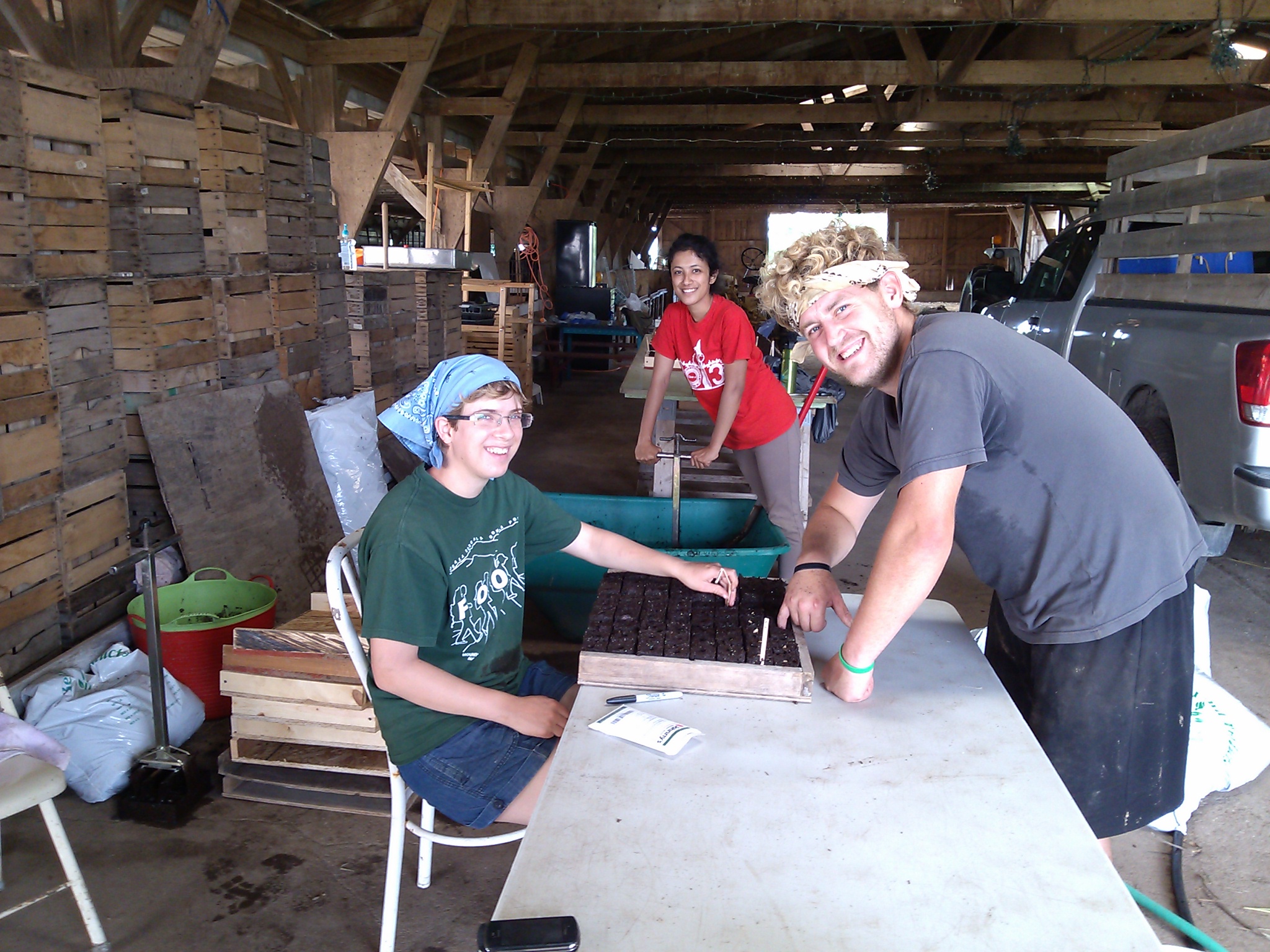
Working in the Barn
Soil Blocking and Seed Planting

RURAL CEDAR TOWNSHIP— A real concern about severe weather hangs over the farm. When there is a forecast of thunderstorms and gusts of high wind, we move cars, tractors, wagons with seedlings on them, and other equipment into the barns. The vegetables growing in the field stand on their own, and a crop failure for any reason would be disastrous. It’s too late to start over.

In a community supported agriculture (CSA) project, unlike with commodity producers, the risk of a crop failure is not only financial. Shareholders would have to find food elsewhere. When a person joins a CSA, the expectation is to share in good and bad outcomes. However, there is a practical aspect of crop failure in that people have to eat. Industrial food supply chains, against which CSAs compete, are diversified enough to provide food during hard times. The effect of a failure would be to erode some of a CSA’s hard earned loyalty of members. Yesterday’s storm passed without significant damage and concerns receded like the flood waters. Equipment came back out of the barn.

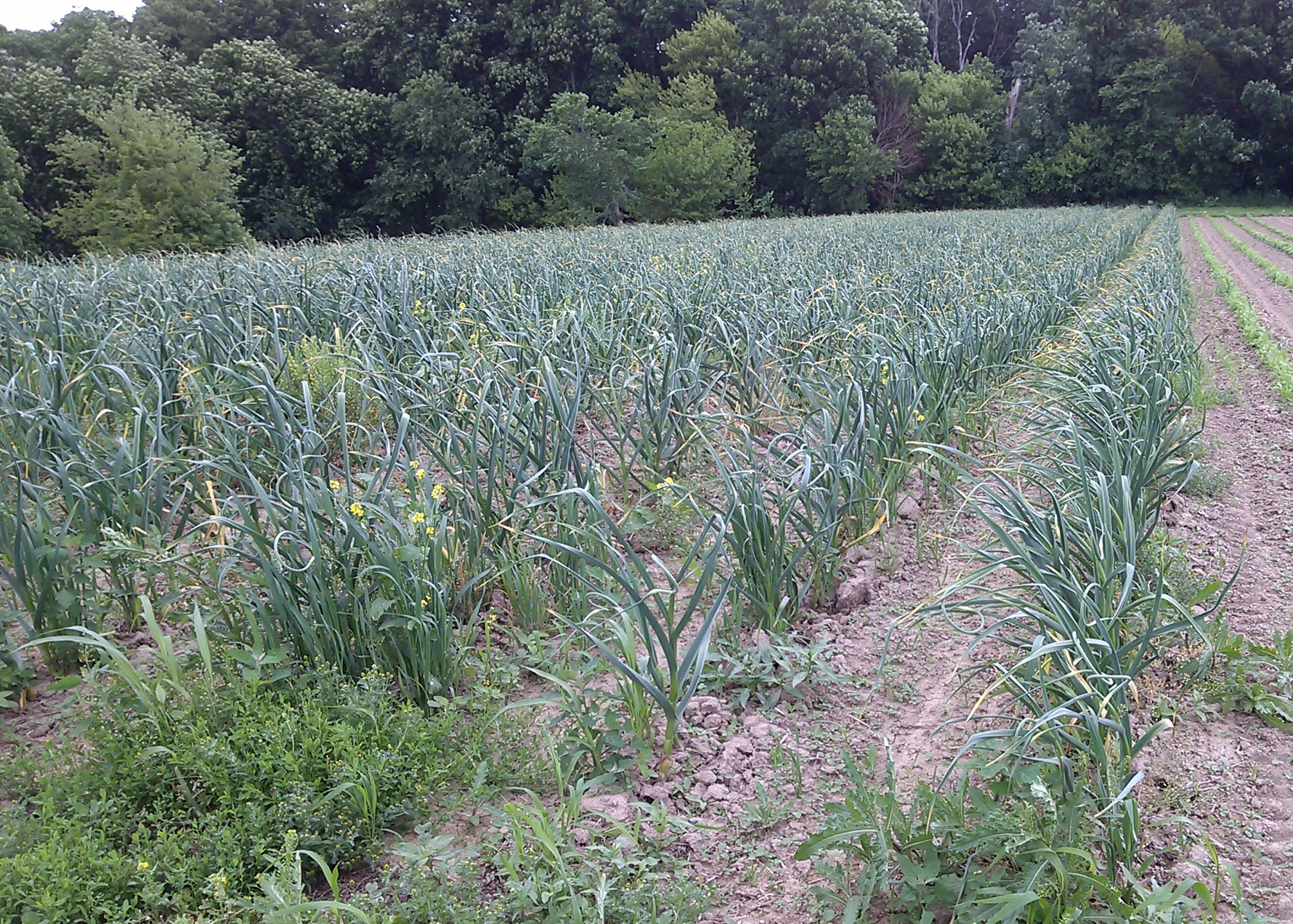
Field of Garlic
Field of Garlic

After my shift of soil blocking and planting, I walked among the fields to look at the progress. The scapes of garlic are forming, plenty of rhubarb remains, and the rainy spring has everything growing.

With some crops, a process of laying down irrigation lines and then plastic on top is used and was a learning experience. It makes sense to protect against drought in a farm business, and when customers have other options, irrigation can help ensure there is a harvest.

At home, I water my garden, but sparingly. Partly to conserve water, but also because the vegetables should produce on their own. Home gardening is more about living within the actuality of the season, rather than producing a fungible commodity. It’s not really about the vegetables, but a way of life.

That’s not to say I wouldn’t sell excess— I have. Having a harvest is important, but not critical. There is a part of us that wants to connect with the elements in a fundamental way. Gardening fulfills that desire. Knowing the face of the farmer and where food comes from is essential to maintaining sanity in a turbulent world. That there are risks is part of the paradigm.

Yesterday’s themes— risk, irrigation, coping with crop loss and customers— in the context of working on a CSA, served to instruct as another shift on the farm ended. The compensation for this work is not only in vegetables.

Categories
Kitchen Garden

Chance of Rain and Falafel

Lettuce
Lettuce

LAKE MACBRIDE— Watering the garden this morning was a no-brainer. It hasn’t rained for a couple of days and the ground was dry and crunchy yesterday. We may get some rain after lunch, a 60 percent chance of precipitation beginning at 3 p.m., but why not let the plants benefit from the moisture now? Probably should have watered after returning from Coralville last night.

Baked Falafel
Baked Falafel

One of the blogs I follow posted a recipe for baked falafel, so I tried a batch this morning. They recipe came out well, but raised the question of what kind of sauce. Improvising by mixing two teaspoons of mayonnaise with a teaspoon of branded Il Primo Giardiniera Spread from the ice box, falafel made a great second breakfast before heading out to the farm. Today’s recipe, already modified by adding some olive oil and a bit of water to bind the mixture, will be a starting point for perfecting this snack-type dish for regular use.

Full day’s work ahead, so better get to it.

Categories
Home Life Kitchen Garden

Trimming the Mulberry Tree

Tractorcade Hits Big Grove
Tractorcade Hits Big Grove Township

LAKE MACBRIDE— Reaching into the cooler, forearms covered with sawdust and sweat, I pulled out the last remaining bottle of chilled water. At 86 degrees and the air full of gnats, my mouth was dry.  I drank greedily— momentary coolness quenching my thirst.

The mulberry tree grew from a seed dropped long ago by a bird sitting on the rebar marker of the corner of our property. Because of the way it grew, three of us now own a part of that tree, although I have been its caretaker. In this tree I first saw Cedar Waxwings eating berries. Under it, the deer and rabbits graze on the fallen mulberries. While a volunteer, it has been a good tree and too long neglected.

A neighbor asked me to trim it because the branches were so low he couldn’t get under it with his riding mower. I thought to myself, “that’s my problem too.” Today it was pruned. It looks much better with all the low hanging and dead branches cut away. The mulberries are beginning to ripen, indicating the turn of the season to summer.

The Great Eastern Iowa Tractorcade is a thing here. Farmers from all over get together in Cedar Rapids and for four days, go on extended excursions in tractors of all kinds. Some of the equipment is older than I am and still working in fields. The caravan extended a long distance, and based on the errand I was running when I passed the tractorcade, it took more than an hour for them all to pass the lane to our home. It is a chance for families to do something fun to show off their farm pride. Children of farm parents take time off city jobs to participate.

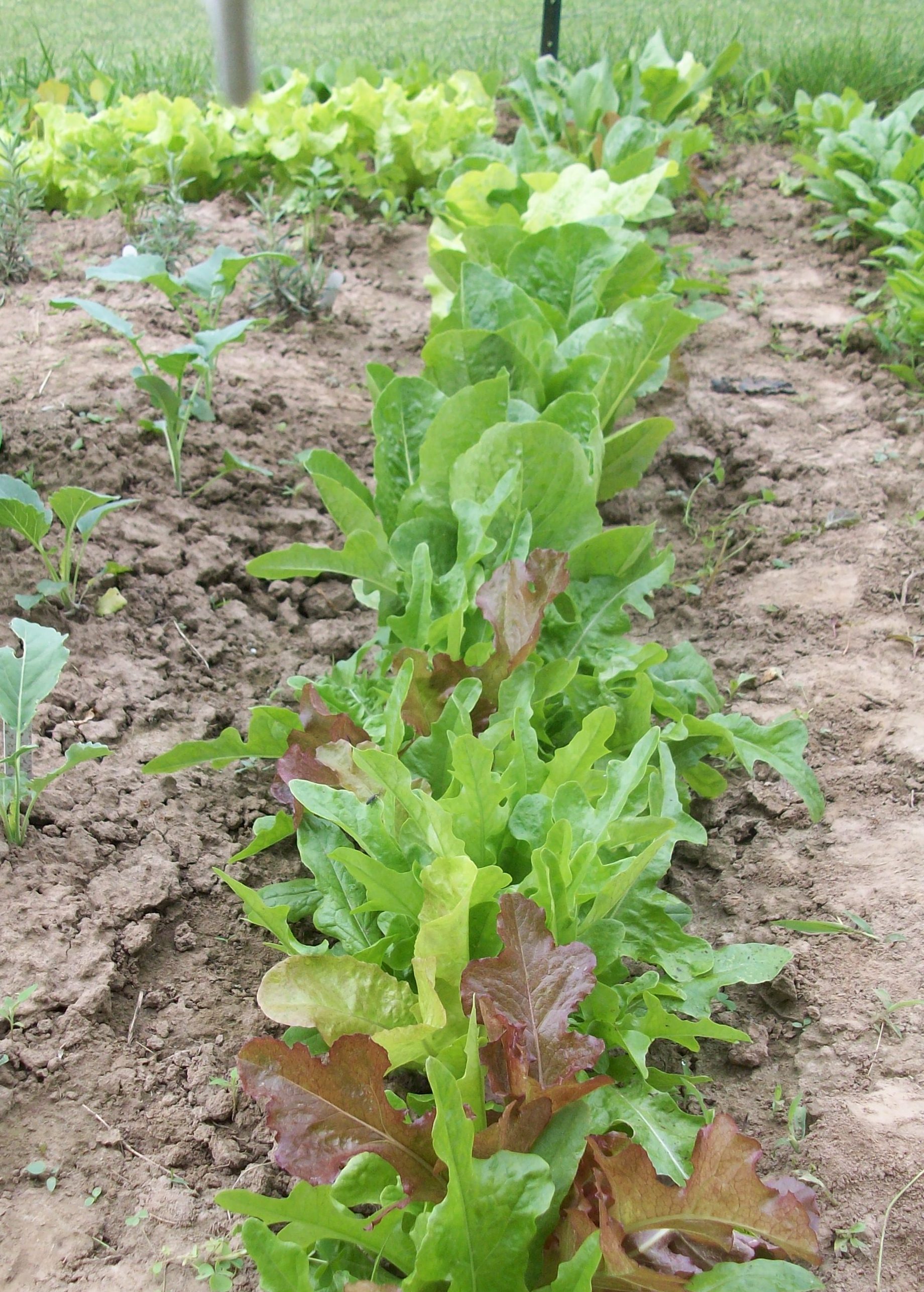
Row of Lettuce
Row of Lettuce

It’s the lettuce season and more in the local food arena. The lettuce in our garden looks better than I have ever grown it. The CSA has been providing four or more heads of lettuce per week, so between both sources there is enough to be generous with our friends.

The lettuce seeds I planted last week have sprouted, growing the next batch of seedlings to plant later in the month.

I picked the second cut of spinach from the first row of plants, washed and froze the leaves on a cookie sheet with a silicone mat. Once they were frozen, I bagged them for cooking later in the year. We usually make a spinach-rice casserole with frozen spinach leaves.

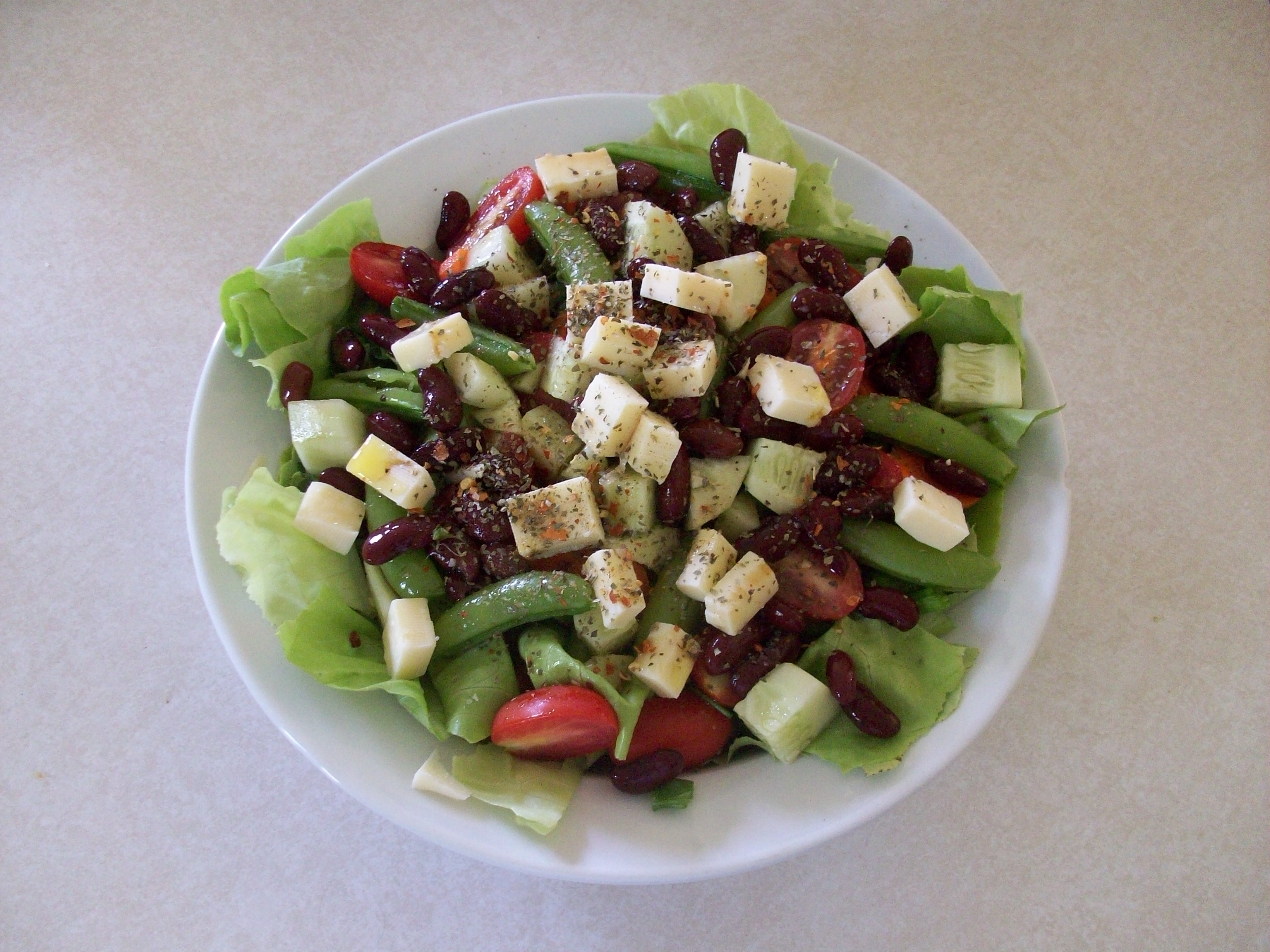
Each day is bringing plenty of work, and progress in getting the yard and garden in shape. After so many years of neglect, it needs it. At the end of a day, before an evening meeting, supper is a salad made with what’s on hand in the fridge. A simple spring life in Big Grove.

Dinner Salad
Dinner Salad

Categories
Home Life Kitchen Garden

Summer is Coming

Radishes
Radishes

LAKE MACBRIDE— The weather was perfect today: temperatures in the high sixties and low seventies; sunny, then partly cloudy; and not a trace of humidity. Days like these are the harbinger of summer.

The lawn looks like a lawn, neatly trimmed and the grass clippings collected for mulch. A good part of today was spent weeding and mulching the garden. Everything is beginning to look good.

Because of the abundance, we’ve eaten fresh salads almost every night for dinner the last two weeks— spring fare that never gets old.

A simple and tasty salad dressing is to put equal amounts of balsamic vinegar and first cold pressed extra virgin olive oil, and a teaspoon of Dijon mustard in a small Mason jar. Add a pinch of Kosher salt and pepper to taste and shake until emulsified. Adjust to taste by varying the amounts of the ingredients. If available, add finely chopped herbs like oregano, thyme or basil before mixing. Serve immediately and make only enough for the meal. A millennial might write “yummy,” and so do I.

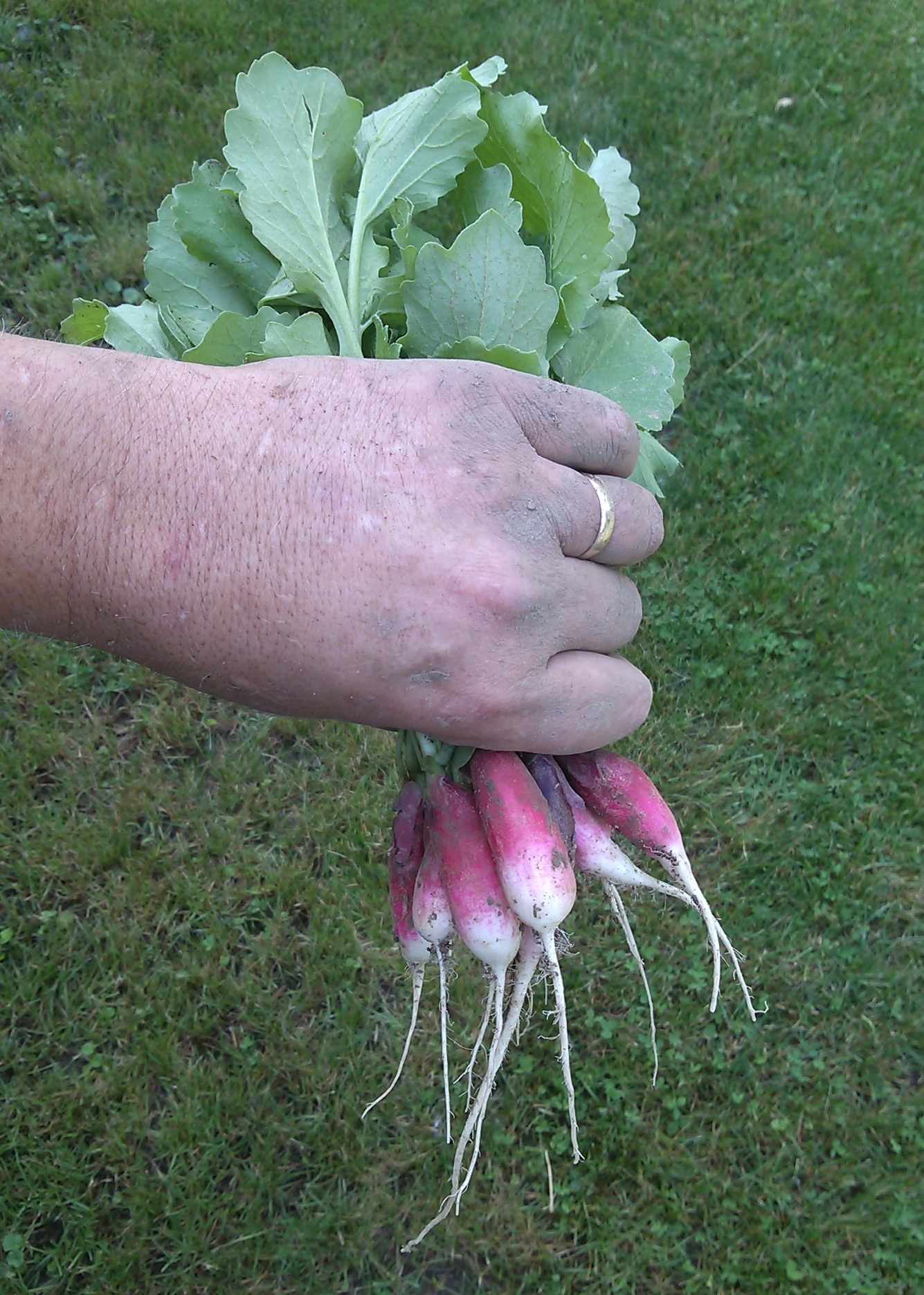
Today was the day to start reading “The Great Gatsby.” After the garden and yard work I set up a folding chair in the garage and upended a five gallon bucket to use as a table. From the refrigerator came a dozen spring onions and a handful of radishes. I poured a small dish of Kosher salt in which to dip them. From the cooler in the garage came a locally brewed beer. To the sound of birds in the lilac bushes and the engines of four wheelers in the neighborhood, I dove into the story of Nick, Daisy, Myrtle, Tom, Jordan and the rest of them. The dinner party at the Tom Buchanans took place two weeks before the longest day of the year, which is coincidentally what today is. It is a summer ritual in Big Grove to read Fitzgerald’s novel, almost since we lived here. At some point, I recognized it as an almost perfect novel of summer— an escape from the worries we found when propelled here so many years ago.

I’ll finish the book before the weekend is over, and get ready for summer.