LAKE MACBRIDE— Newspaper writing and club demonstrations have taken a toll on everything else as I developed a process to incorporate new work and income into this life. Winter is a good time for it.
Seven adult deer were browsing in our yard. With a full girth, they appeared healthy, but were seeking food where there was none. One rose on its rear legs to nibble a pine tree. Others browsed the stubble that is the winter garden. One was favoring its right rear leg, limping along. A herd of scavengers.
The refrigerator light came on as I opened the door. It illuminated heads of cabbage, a drawer full of root vegetables, organic carrots and celery from California, and leftover soup and apple cider. The end of fresh food is near.
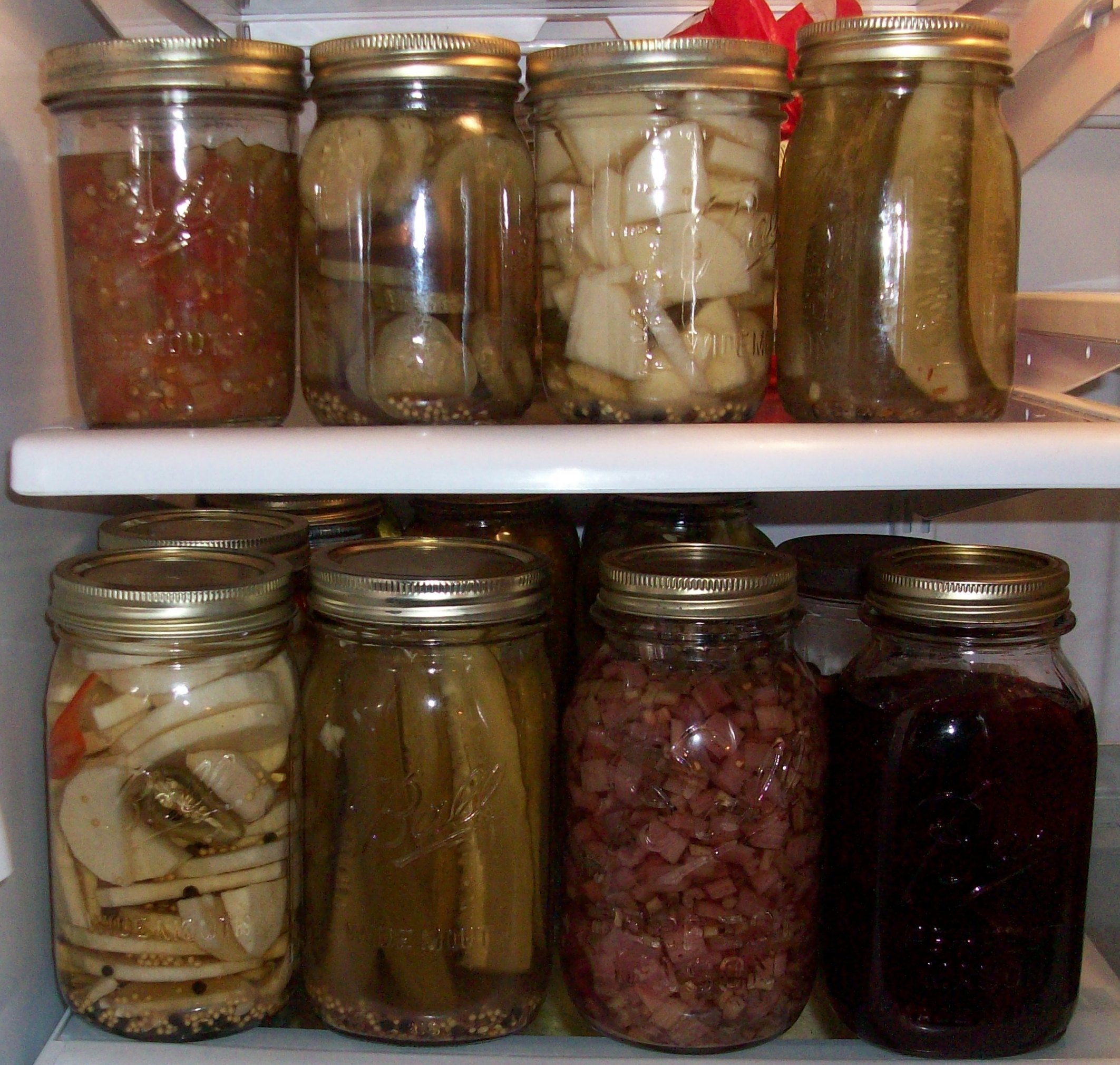
There are pickles. Beets, cucumbers, radishes, tomatoes, chard stems, sauerkraut… the makings of zakuski. All one needs is a bottle of vodka and friends stopping over. The former is more available than the latter, as in 21st century Iowa, unexpected guests are mostly youths seeking empty cans and bottles for their deposits, and strangers who want something. Such guests are seldom invited inside. Vodka acquired decades ago evaporates in unopened bottles.
It’s my weekend, with no paid work until Wednesday. It’s time to finish up winter work— taxes, garden planning, vehicle maintenance, house cleaning— and get ready for spring.
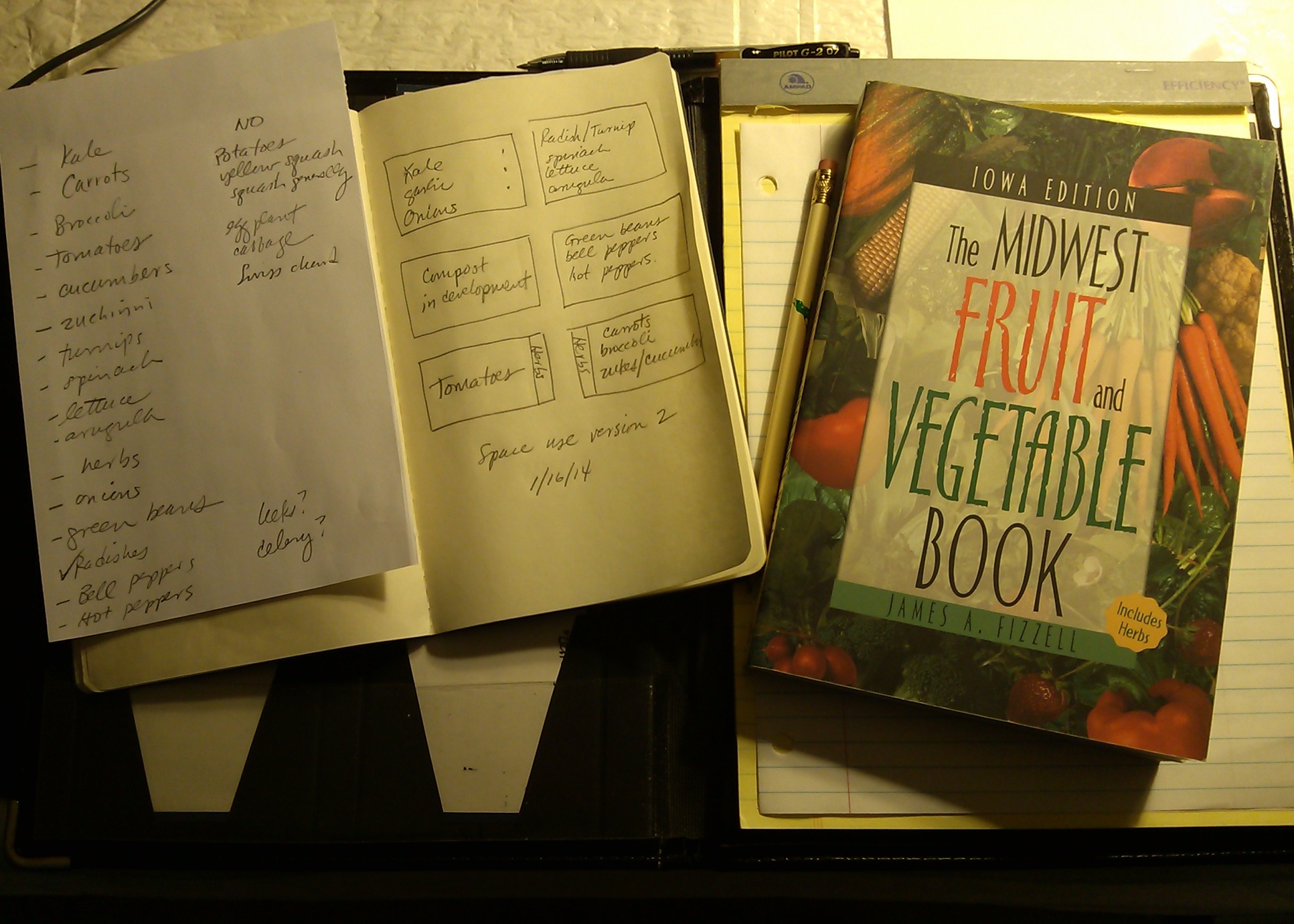
LAKE MACBRIDE— In January, the vision of the future is a weed-free and abundant garden. Beginning with a stack of blank pages, through several iterations, vegetables are considered and a plan is made. The change in 2014 is that I am ordering some of the seeds online from Johnny’s Selected Seeds, an employee-owned company used by some of the local growers. It’s time to get the order in and make a schedule for the work of soil preparation and planting.
In past years, some seed catalog companies took my order and money, then blew off sending me the seeds. Heck of a way to run a business, but that is what happened. After that, I bought seeds locally at the grocery store or the discount house. The varietal options are much better at Johnny’s, so I am going to give it a try. I am particularly interested in pelleted seeds which make some of them easier to plant. Fingers crossed.
The garden plan includes the idea that we are part of a local food system and bartering labor for food. I struck two deals similar to last year, to process farm seconds and share the results; and to exchange a fixed number of hours of labor for a share in a CSA. What this means is certain vegetables will be plentiful from the farms and my garden can contain less tomatoes, eggplant, garlic, onions and peppers. That frees up space to plant more carrots, broccoli, cucumbers and other vegetables of which we can’t get enough. We can experiment with new items, like I plan to do with celery and Daikon radishes. In a local food system, produce used in the kitchen comes from a network of suppliers, and my garden will be an example of how that will work. In some ways, being part of a local food system is the opposite of “growing your own food.” It is about community and shared labor more than about what’s in it for me.
The rest of the year’s planning will be about how to fund cash flow through our household. When I re-directed in 2009, it was unclear how things would shake out. Now I realize the importance of budgeting income and expenses, and am working to generate enough income to live, and add to our net worth. The year is off to a good start as I start a second part-time job next week. Outside the bartered positions, I have four paid gigs lined up in 2014. I would like more, and the prospects for finding them seem pretty good. What I don’t want is to rely upon a single job as the main source of financial income.
Being optimistic about life comes with the turf of home gardening. I am hopeful 2014 will be another good year in a garden situated in a turbulent world.
LAKE MACBRIDE— It’s hard to go wrong making soup. The dish is tolerant of variation, and is as diverse as can be. Soup is a pantry-based dish, good to use vegetables up, and has been the basis for meals since forever. It’s a never ending experiment in living. Here is how I made it today.
There were five components to this batch of soup: roots, soup base, canned soup, barley and frozen corn and peas.
I picked five different types of root vegetables from the refrigerator drawer and counter: hakurei and purple top turnips, rutabaga, kohlrabi and potato. The point was to use what was on hand. These roots were grown in my garden, and on three different farms, so I know them well. I peeled and diced them into small, uniformly sized pieces, then covered them with cold water in a Dutch oven, and cooked until tender. I poured the whole lot into a strainer placed inside a stainless steel bowl to separate the roots and save the cooking water. The roots went back into the Dutch oven, reserving the liquid.
Soup base is a form of local frugality. In our kitchen, I make and use a lot of vegetable stock. What I call soup base is the remains of vegetables after straining away the cooked stock. I process the cooked vegetables through a food mill and can the result in a water bath. Soup base adds both flavor and texture to soups, and helps thicken them. At this point, I added a quart to the roots.
A farmer friend had a lot of kale at the end of the 2012 season. She typically mows everything down and plants a cover crop, but called me the day before to ask if I wanted any kale. I took a bushel and made soup from the pantry and canned it. The quart jars can be eaten as-is, but lately I prefer to use them as an ingredient. I added a quart of vegetable soup to the pot.
After stirring the mixture, I added enough of the root cooking liquid to cover, along with a quarter cup of pearled barley.
The mixture simmered the better part of four hours— until it was soup. At the end, I added a cup each of frozen peas and cut corn.
The next step to making a meal is flexible. The old way was to lay a plank of thick, coarse bread in the bottom of a bowl and ladle soup on it. It could be topped with bits of browned meat for omnivores, or seitan or fried or baked tofu for vegetarians. Salt and pepper and you’re ready for a hearty winter meal made from local ingredients, one that stands up to the test of time.
LAKE MACBRIDE— Six pounds of tart cherries from Michigan were buried below frozen corn, eggplant and broccoli in the freezer drawer. The cherries were frozen in one bag, so I thawed them and separated and strained the liquid to use in a separate dish, and make coffee cake with part of them.
The recipe calls for one can of cherry pie filling, but substituting fresh frozen cherries takes only a bit of preparation. In a large pan, measure three cups of pitted cherries and place on medium heat. Add one half cup of honey, a tablespoon each of white flour and corn starch, and a scant teaspoon of cinnamon. I’m from Iowa, so I use corn starch, but other thickeners will work, including potato starch, arrowroot, or flour only. Stir gently until the mixture thickens completely and set aside to cool.
The batter is in two parts, the cake and topping.
Cake dough: Cream one stick of softened, unsalted butter with one cup of granulated sugar in a mixer. On low speed, add two cups of white flour and one teaspoon baking powder. Mix thoroughly and add 3/4 cup of milk. When the ingredients are thoroughly mixed, press the dough into a greased, spring form pan. I line my pan with parchment paper, but that is optional.
Topping: Cream one stick of softened, unsalted butter with one cup of granulated sugar in a mixer. On low speed, gradually add one cup of flour and mix until the dough turns into crumbs.
Pour the cooled cherry mixture on the dough in the pan and sprinkle on the topping.
Bake for 45 minutes in a 325 to 350 degree oven. Allow coffee cake to cool before serving, although it will be hard to wait. I reserve superlative descriptions for dishes like this when I say, “it is insanely good.”
SOLON— In this small town, people got to talking about the food supply chain when a cooler full of processed chickens fell off a truck destined for the local food bank. The chickens were rejected after the media publicity generated a call from a government agency saying the poultry could not be distributed to the needy. Someone else stepped up with substitute chickens to fill the gap, which can happen in our good hearted community.
That someone raised chickens for the food bank is pretty cool, but is not the whole story. The chickens were discarded because they were not USDA inspected and stamped at a small slaughter abattoir, not because they fell off the truck. As a culture, we are overly reliant on a government food inspection system that may play a role in our legal system, but does not make common sense. It is an example of how we have lost touch with where food comes from and what home cooks have to do to make sure they serve healthy, nutritious meals. The town will be talking about this incident for a while.
On Aug. 30, 1890, President Benjamin Harrison signed the first law requiring inspection of meat products. The law required that USDA, through the Bureau of Animal Industry, inspect salted pork and bacon intended for exportation. Exports of U.S. livestock, and meat products, had fallen under increasingly stringent restrictions by foreign countries. Producers urged the U.S. government to create an inspection program to enable them to compete in foreign markets. Over the years, inspections came to protect the giant agribusinesses and prevent entry, and run out of business, small scale operators like the slaughter abattoir mentioned.
With the rise of consumerism during the 20th Century, notably after Upton Sinclair published his exposé of Chicago slaughterhouses in 1905, meat inspections became de rigueur. President Theodore Roosevelt led passage of the Meat Inspection Act, and the Pure Food and Drug Act, after overcoming his initial dislike for Sinclair. While the slaughterhouses were undeniably gross, as Joel Salatin pointed out in his book, “Folks, This Ain’t Normal,” there is no substantial evidence of mass meat adulteration or related human sickness prior to Sinclair’s reports. For more information about the history of U.S. meat inspections, click here.
The consumer protection side of this issue gained public attention during a 1993 outbreak of e. coli bacteria in ground meat. Following the Al-Qaeda attacks of Sept. 11, 2001, food security came under the umbrella of homeland security concerns. The fear of pathogens in our food supply has become an obsession among some, and the Solon incident is evidence of how ridiculous things have become. What whit of difference would the USDA stamp have made on this batch of chickens? None whatsoever.
Arthur Schlesinger, in his book, “The Cycles of American History,” had me asking the rhetorical question, “what mood are you in?” It seems clear to me that the public purpose we once held our politicians and public figures to has given way to private interest… to the extent a farmer can’t raise chickens and give them to the needy in our society without some petty bourgeois official saying, “no, it’s against the rules, and my corporate masters have deemed them unsafe.” What a sad state of affairs this is, one that serves large corporations more than people who both have chickens and hunger, but prevents them from getting together.
LAKE MACBRIDE— The last three times I’ve been to the grocery store, the person in front of me in the checkout line has commented that some baking must be planned in our household. What they don’t know is because of my work on farms this year, flour, sugar, butter, dried fruit, chocolate chips, and other shelf-stable and dried goods are all I need to pick up. Going into 2014, the pantry and freezer are still pretty full of the season’s goodness, with a couple of months food on hand should disaster strike.
There are usually some luxuries on the conveyor belt leading to the cash register: a small jar of hazelnut spread mixed with chocolate and skim milk, cured Spanish olives stuffed with pimiento, a bag of caramel corn on special, or a box of snack crackers. Those items not withstanding, the majority of food we buy at the grocery store is raw material to supplement our pantry while cooking our own meals. As people have noticed, what we buy at a grocery store is evidence that we use appliances beside a microwave oven in our home kitchen.
People snoop at my purchases, but I don’t mind. I do the same, but don’t usually comment, having been raised differently. When people comment, I respond politely, giving out as little additional information as possible, saying something like, “the sugar was on sale for $0.25 per pound, so I thought I would pick up a bag.” Like it or not, checkout is a sociable time.
I have gotten to know some of the cashiers at the mega-mart, and they call me by name after the transaction. They must read it on the display screen after my debit card goes through. It is not a personal relationship, but familiarity after long years of my repeat business and their continued employment. It is not a bad thing, and as people smarter than me have said, the sweetest sound is that of our own name. It’s good salesmanship to call customers by their name.
Neighborliness may have been reduced to these brief commercial interludes in the grocery store. Where I live, seldom do I see my neighbors outside, and even less frequent is an in depth conversation about anything other than the weather. I speak with my friends via email, and in person at events, but that is conversation through association rather than neighborliness. A little more neighborliness would be welcome in our increasingly contentious society. Even if it is only in the checkout aisle.
SOLON— After proof reading the newspaper last night, it is hard to feel cheery this holiday season. The Area Agency on Aging has cut off funds to our congregate meals site, and the seniors found the proposed replacement meals to be a form of prepackaged pabulum. The administrators at the agency blamed the change on not enough participation and on the sequester.
A group of politicians and community folk put on a telethon that raised some $100,000 for the agency. That money was raised and will be spent outside our community. The Senior Advocates, a local 501 (c) 3 group, along with the Old Gold Dining site council, decided to do something else, and contracted with a local business to furnish meals during 2014. Where the money to pay for it will come from is an open question.
The county board of supervisors provided some money to cover the initial funding gap, but has expressed reluctance to fund a private business providing the meal service going forward. The city also provided some stop-gap money, but after going on a spending spree on Main Street, money is tight for them as well. Undaunted, community advocates will find the money somehow.
Our town has an active ministry of food. In addition to the countless soup suppers, pancake breakfasts, fish fries and church potlucks, the three churches formed a food bank. One of the churches hosts a free community meal on Thanksgiving and Christmas for anyone who comes. Bottom line is seniors will have an opportunity to eat without the federal program. The trouble is, taking care of seniors is only partly about food.
What is more important is that congregate meals are a way for people to break the isolation that so often comes with aging. It is a way for people to be motivated to get out of their pajamas, clean up and do something with others. I’m no expert, but people who are say that is an important part of making seniors feel a part of the community, and maintaining mental health.
The federal sequester isn’t real until we see how it impacts people we know. Our community needs haven’t changed, nor have the people who are trying to meet the special needs of senior citizens. One has to ask about the values of a country where we pay enormous subsidies to businesses, and forsake one of our most vulnerable populations. Our community is working to prevent any of our seniors from being left behind, so government, if you can’t help, please get out of the way.
There were two pictures of biscuits and gravy next to each other in my Facebook newsfeed Sunday morning. One from Salt Fork Kitchen and one from Big Grove Brewery, two new restaurants that opened this year in Solon. While I am not partial to the dish, one has to appreciate the fact that there is some competition for the Sunday brunch trade on Main Street. Not to leave them out, the American Legion serves the dish for breakfast as well.
In this simple offering is a sign of hope for revitalizing Main Street in our and many other small towns. While the shelf stable and highly processed foods available in most grocery stores serve a purpose in family meals, there is a trend toward using fresh ingredients and sourcing food locally. Whether we realize it or not, Solon is in the mainstream of this trend.
At last count, there were eight places to get something to eat on Main Street in Solon, counting the grocery store and the gas station. In addition, a number of local growers produce everything from spring radishes to fall squash. In our midst, without us really being aware of it, we have the necessary elements of a vibrant local food system.
In order to revitalize Main Street, people have to want to come there, and since these new eateries opened, I have noticed more vehicles filling the newly designed parking spaces downtown. That is a good thing. I don’t know, but the increased foot traffic has to be good for established businesses like the grocery store, the hardware store, the barber shop and others.
If we seek to become boosters of life in Solon, we should support our Main Street businesses, and with the recently improved local food scene, there is more reason to do so.
LAKE MACBRIDE— Biscuits and gravy is not a balanced meal, but it is very popular around the lake, and at the restaurants in town. Recently, a restaurant developed the dish to stave off its ultimate demise. Biscuits and gravy are popular, but not miraculous. The restaurant closed. Most local restaurants that serve breakfast offer the item on the menu, and people buy it.
While growing up, our mother prepared a variation on biscuits and gravy we called creamed hamburger on toast. Slices of toasted white bread were cut into small squares and placed on a plate. Ground beef was browned in a cast iron skillet, then removed, leaving the drippings. Using flour and milk, she made gravy with the fat in the pan, seasoned with salt and pepper. When the gravy thickened, she added back the meat, stirred and served the mixture on the toast. We didn’t have it often, but enjoyed it when we did. It was a tribute to my father’s southern heritage, and a somewhat exotic, inexpensive meal made with ingredients usually on hand.
Photo Credit Big Grove Brewery, Solon
In a vegetarian kitchen, there is no meat fat, so our gravies, if made at all, are done so with butter, using the familiar process. It serves. Biscuits are a quick bread, and easy to make, but at home the similar use has been to place a halved biscuit in the bottom of a large bowl and spoon a hearty vegetable soup or stew over it. This is a traditional serving method, one that stretches back in time for multiple millennia. It is much more common in our household than preparing gravy.
Our neighboring town is in a position to develop a vibrant Main Street with the recent interest in local food combined with a proliferation of eateries. While biscuits and gravy is far from haute cuisine, competitive offerings of the dish make a case that a local food scene is alive and growing. That can only be good for those of us who live nearby.
While locals enjoy biscuits and gravy, will outsiders, whose business is needed to supplement local purchases, make the trip for such items? It’s an open question. An answer lies in restaurants serving good food, something which the competition for business will hopefully provide for those who dine out on a Sunday drive, or during a motorcycle or bicycle rally.
One would like to support local businesses, but can only eat so much biscuits and gravy. Here’s hoping the word gets out about our growing food scene in town. In the meanwhile, for those who do most of their cooking at home, here’s a simple biscuit recipe that is easy and quite tasty.
Whole Wheat Biscuits
Ingredients:
2 cups whole wheat flour
4 teaspoons baking powder
1/2 teaspoon salt
4 tablespoons cold unsalted butter
1 cup milk
Preparation:
Preheat the oven to 450 degrees.
In a medium sized bowl, combine the flour, baking powder and salt, mixing thoroughly. Cut the butter into tiny bits and mix into the flour mixture until the texture is coarse. Pour in the milk and mix the dough until it comes together. Knead it 8 to 10 times and turn it out on a floured surface. Flatten the dough to 3/4 inch thickness and cut biscuits into single serving sizes. Bake at 450 degrees for 10 to 12 minutes or until lightly browned. Makes about eight servings.
LAKE MACBRIDE— As Thanksgiving leftovers linger in the refrigerator, diminishing bit by bit each day, we need to make something different, a new dish. With the abundance of potatoes at the end of the growing season, making a scalloped potato dish fits the bill instead of the usual mashed, boiled or fried. Serve it with a green vegetable and a protein, and it would make a comforting meal on a day that didn’t get above 15 degrees.
My first thought was to find a home neighborhood recipe in one of the cookbooks I collected from the church and hospital near where I grew up. No luck there. Apparently the church ladies didn’t cook gratin much. (There were no credits to men in the book). So off to the Internet and a review of the standard fare of websites returned after a search for “scalloped potatoes.” While there are many variations of potato dishes, I sought the simplest, with the fewest ingredients, and least prep time. Modified from the recipe to use items on hand, here is the dish.
Scalloped Potatoes
Ingredients: 1-1/2 cups milk (or heavy cream), 3 bay leaves, half teaspoon dried thyme, 2 garlic cloves run through a garlic press, half teaspoon freshly grated nutmeg, salt to taste, 2 pounds of potatoes peeled and cut into eighth inch slices, half cup Parmesan cheese, salt and pepper to taste.
Preheat the oven to 400 degrees.
In a saucepan, heat the milk or cream with the bay leaves, garlic, thyme, nutmeg and salt and pepper. Butter a casserole that will hold the potatoes. Pour the heated milk through a strainer into a large bowl with the slices potatoes. Sprinkle half the Parmesan cheese on top and mix gently to coat the sliced potatoes with milk and cheese.
Spoon part of the milk mixture into the bottom of the casserole and layer the potatoes so they are evenly positioned. Pour the rest of the liquid over the potatoes and sprinkle the remaining Parmesan cheese on top as a crust.
Cover the dish with aluminum foil and bake for 40 minutes. Remove from the oven and let cool for five to ten minutes and serve.
Note: If chives were in season, I’d finely slice them and sprinkle them between layers of potato.



 Journey Home
You must be logged in to post a comment.