Categories
Sustainability

Late Autumn

Sunlight on Lake Macbride, Dec. 4, 2020.

The period after the general election and before the next U.S. Congress is proving to be desultory. About the only positive thing coming out of these weeks is the president is fading from view as each day brings us closer to a Biden-Harris administration. I don’t want time to pass quickly yet I seek outlets besides national politics for my human energy. I also take a daily afternoon nap.

Garden planning has begun and the first shipment from a seed supplier arrived yesterday. I hope to expand the garden, more closely correlate the garden and the kitchen/pantry, and grow more vegetables for the food rescue operation. In the meanwhile we’re still cooking food put up last summer and fall.

I read the first 400 pages of Obama’s presidential memoir. His first book, Dreams from my Father remains his best written with A Promised Land ahead of The Audacity of Hope. He’s a young man so I expect there will be more writing after he finishes the second volume of memoirs. I also doubt he will be as prolific a writer as Jimmy Carter became in his post-presidency period. A Trump memoir? Stand on your head if you think he will personally write one. No doubt he will cash in on the opportunity by hiring a ghost writer to tell his story, his way, and put his name on it.

I read my journal from late 1974 and 1975. In it I recorded reading many books, two or three a week and sometimes more. Today reading a book is a bigger deal. I will finish 50 or so this year, which is more than most people read, yet much less than I once did. According to the Social Security Administration life expectancy calculator I can expect to live 16 more years. At an average of two books per month that’s 384 more to read, which doesn’t seem like many given everything that is available.

Part of next year’s plan will be incorporating more intent in the reading plan. Click here to view my recent reading.

I’m nowhere near assembling the planning threads for next year. There’s the garden, reading and writing. There is also our family’s wellness and home maintenance to consider. By the first of January I hope to weave something that is meaningful and fits well as we enter another year of the pandemic in 2021.

Time to get back to work.
Categories
Kitchen Garden

Butternut Squash and Pasta

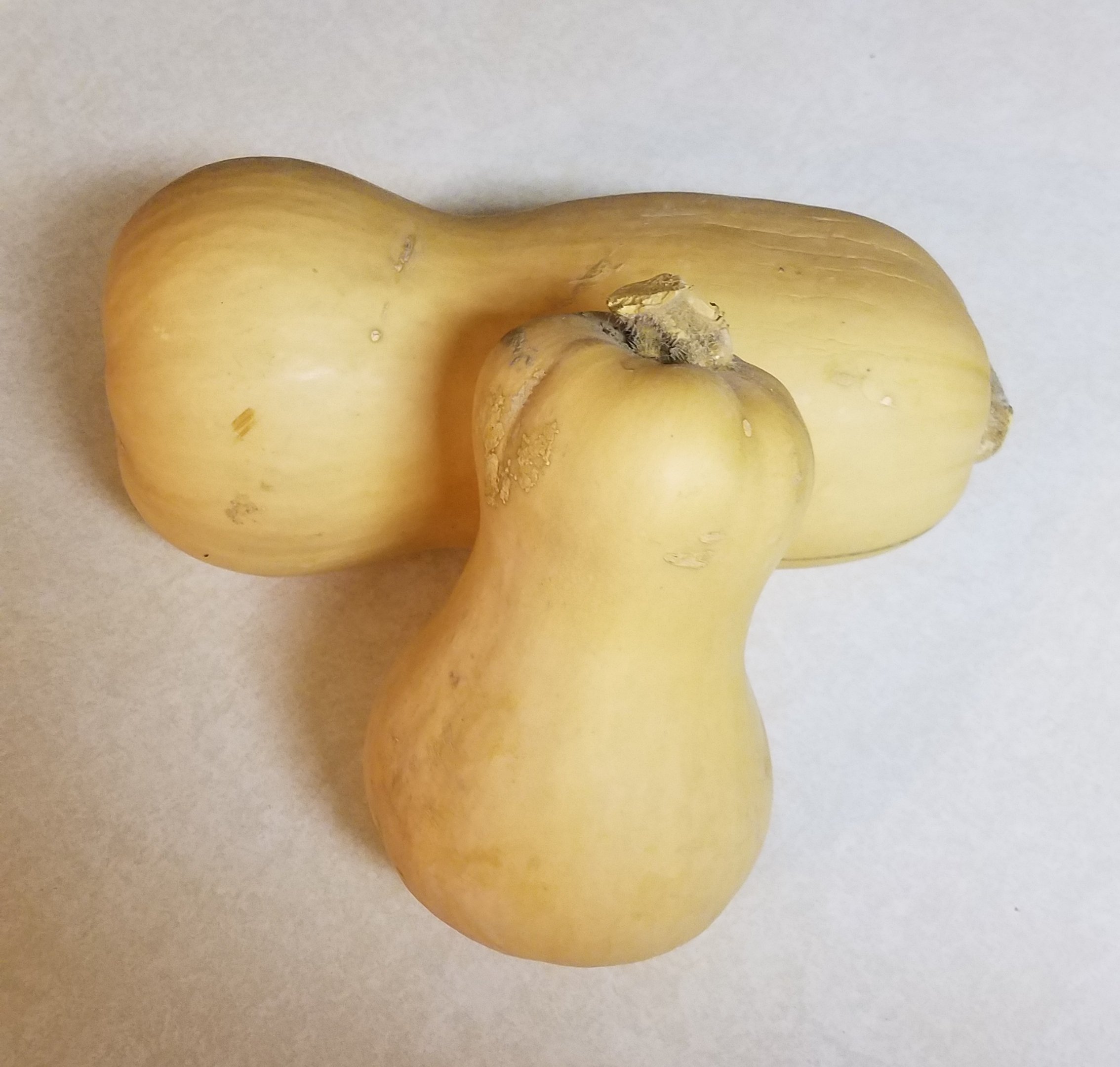
Butternut squash.

It is easy to grow butternut squash. By the end of the gardening season, our kitchen counter accumulates half dozen or more. They keep for a long time at room temperature, so no need to be in a hurry to eat them all.

Mostly we halve them, remove the seeds, and roast them to use the flesh as a side dish. We’ve been exploring new recipes that reduce the amount of dairy products and oils in our meals. Roasted squash fits right into the menu.

We found a way to make a main dish out of butternut squash and tried a new recipe last night. It is called “butternut squash mac and cheese with broccoli.” It tastes nothing like macaroni and cheese and there is no cheese in it. The name is pretty lame. However, we normally stock the ingredients in our kitchen, and I commonly use the required cooking techniques already. I believe we will try this again. Below is how I would prepare it next time.

Butternut Squash with Pasta and Broccoli

  • medium butternut squash (~1 to 1-1/4 pounds)
  • 1 cup diced onion
  • 4 cloves garlic, peeled and minced
  • 1 teaspoon dried thyme
  • 1 teaspoon dried basil
  • 1 cup unsweetened almond milk
  • 2 tablespoons nutritional yeast
  • 1 tablespoon apple cider vinegar
  • sea salt to taste
  • black pepper to taste
  • 8 ounces dried penne pasta
  • 3 cups small broccoli florets

Peel, seed, cube and steam the butternut squash until the flesh yields easily with a knife.

Cook the onion, garlic and seasonings in a saucepan with a quarter cup of broth or water. Keep adding broth to prevent the vegetables from sticking to the pan.

Start eight ounces of pasta in a large pan with plenty of water. Set the timer for five minutes before reaching al dente stage. May have to SWAG this.

Put the almond milk, vinegar, onion-garlic mixture, nutritional yeast, in a blender and stir briefly to incorporate. Add the squash and run at the puree setting until the big pieces are smoothed out. Because there was so much liquid and squash, I did this in two batches. Place the mixture in a large wok or saucepan.

When the timer goes off, add the broccoli to the pasta and cook together for the remaining five minutes. Drain the pasta-broccoli mixture and add it to the sauce pan with the squash mixture. Stir everything together over medium heat until it comes to temperature.

Makes four generous servings.

Tips: I cut the almond milk in half from the original recipe. The amount will require some tweaking. Use pasta made with chick peas or lentils to increase the amount of protein in the dish. I used frozen broccoli which had been parboiled before freezing. I’d try fresh if we had it. I’d also try Brussels sprouts instead of broccoli but cook them completely before adding to the final dish.

Categories
Kitchen Garden

Thanksgiving Pancakes

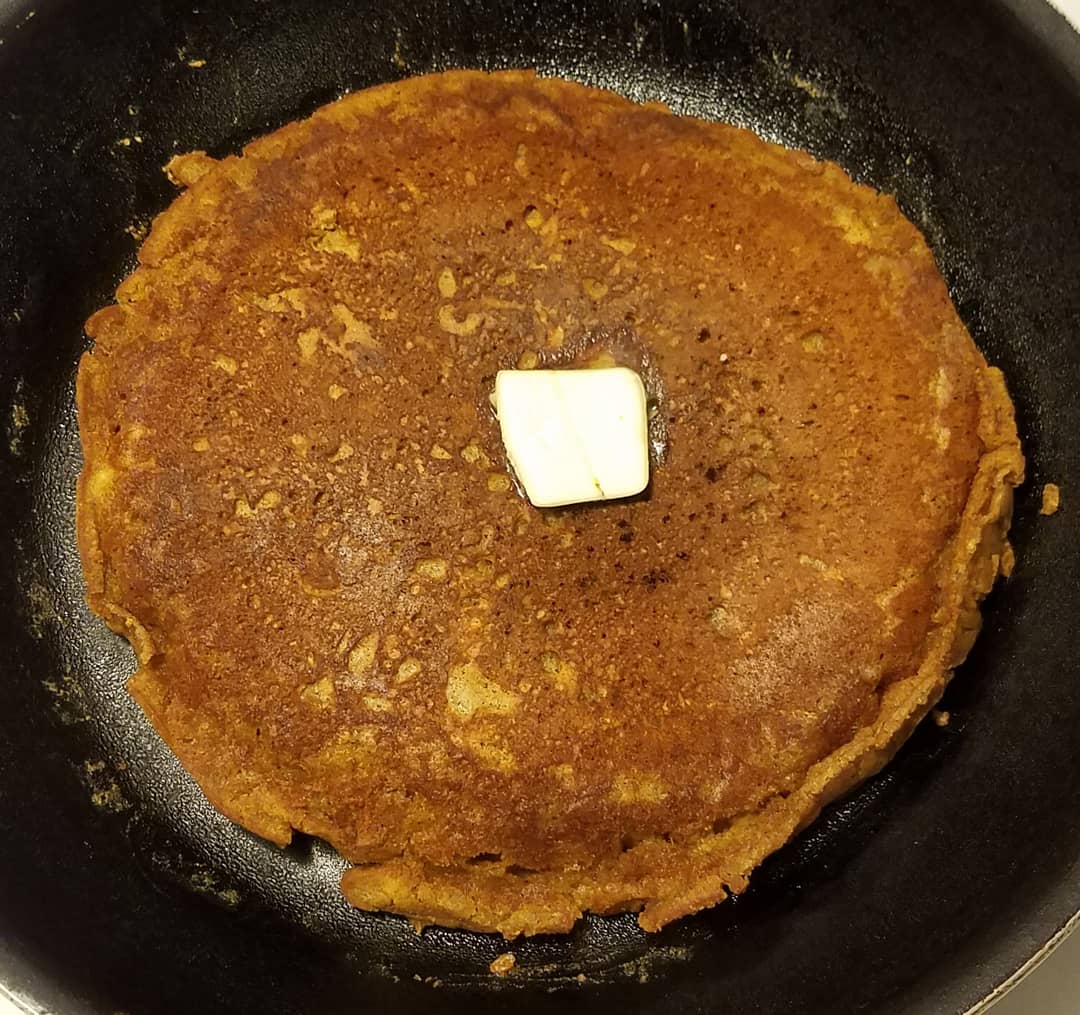
Pumpkin pancake.

What to do with leftover roasted pumpkin?

A plastic tub of roasted pumpkin rested on the top shelf of the ice box. A few days ago I made pumpkin bread with the rest of it and did not want another loaf. I made pumpkin pancakes instead.

With only my personal cooking knowledge, I knew I would puree the flesh along with milk and go from there. I researched ingredients and came up with this list:

  • 1-1/2 cups milk
  • 1 cup pumpkin puree
  • 1 egg
  • 2 tablespoons oil
  • 2 tablespoons apple cider vinegar
  • 2 cups all purpose flour
  • 3 tablespoons brown sugar
  • 2 teaspoons baking powder
  • 1 teaspoon baking soda
  • 1 teaspoon each ground allspice and cinnamon
  • 1/2 teaspoon ginger
  • 1/2 teaspoon salt

Measure the leftover pumpkin and place it in a mixing bowl. Add an equal amount of milk. Using a stick blender smooth everything to a consistent texture.

Incorporate the remaining ingredients and judge if the batter is moist enough. If not, add milk until it is. Incorporate but don’t beat the batter to death.

Spoon the batter on a heated, buttered skillet on high heat. Flip when the first side is done and let the other side finish.

Serve with a pat of butter and a favorite topping. I topped mine with apple aronia berry butter.

Categories
Kitchen Garden

A Veggie Burger

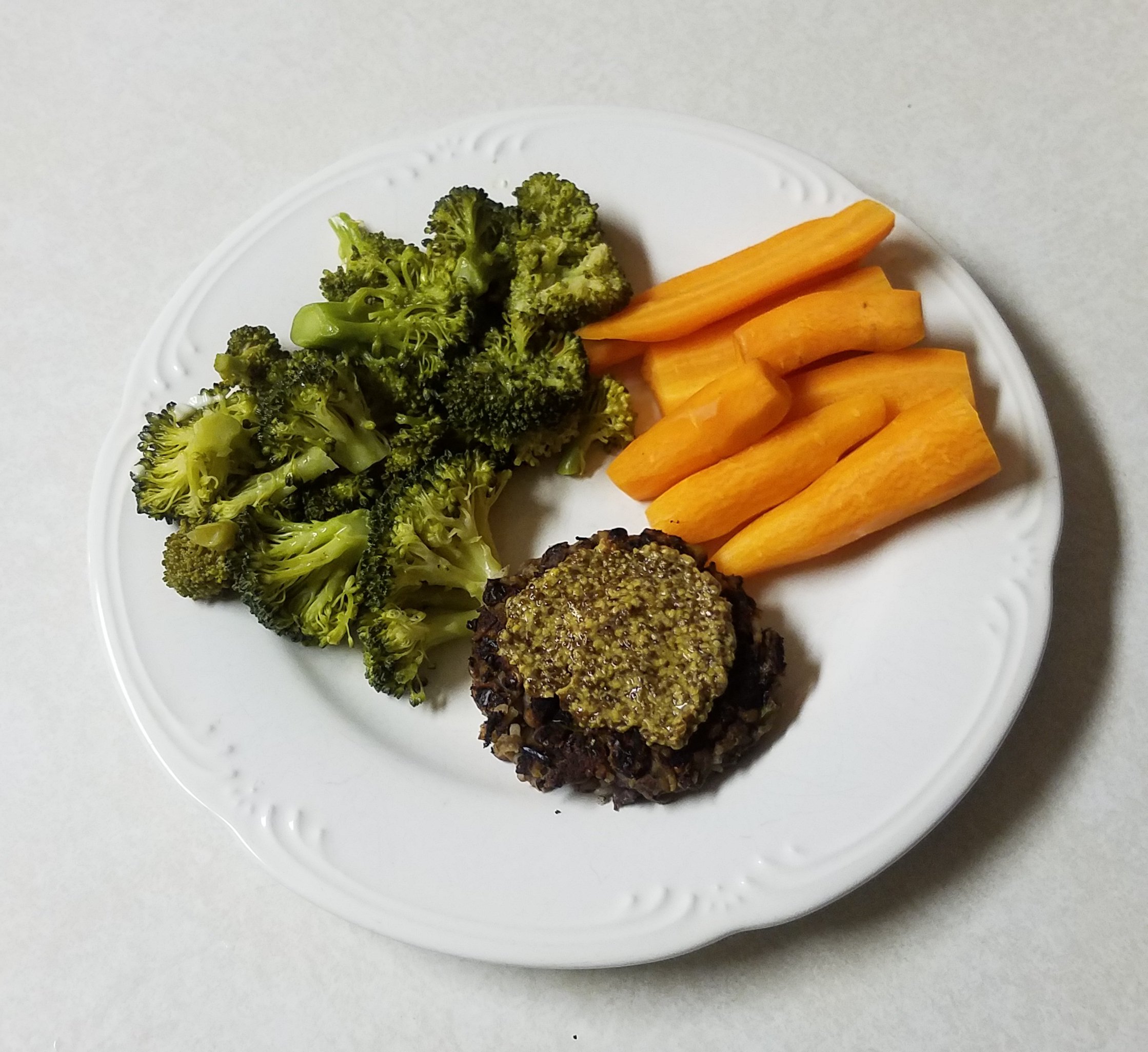
Veggie burger entree with two sides.

A burger along with a couple of sides and a beverage makes a meal. We’re vegetarian, considering vegan options, yet we don’t want to give up this traditional American fare.

Until now, it’s been a steady road to disappointment. This post deconstructs a home made burger. After eight years of trying, yesterday’s experiment reflects progress.

When Morningstar Farms began making soybean-based burgers and crumbles we were on board. They satisfied a desire for something to replace meat in recipes our mothers and grandmothers used to make. Things like hamburger patties, chili, meatloaf, taco filling and more. To gain control over what went into our food I began experimenting with home made veggie burgers beginning in 2012.

One of the first experiments was a recipe called “Morgan’s Veggie Patties” developed by celebrity chef Guy Fieri. It was a tasty burger.

The recipe seemed challenged. There were too many ingredients: 21 of them. Next, ours is not a pantry where one can find artichokes. We’d have to make a special purchase to include them. Using an egg as a binder is common, but if we want a vegan recipe, we need something else. Finally, the mixing process resulted in a burger that fell apart on the skillet. The directions to saute all raw vegetables in olive oil missed what I consider to be a basic cooking process of seasoning as one proceeds. The recipe called for mixing dry seasonings with the egg, and then adding the mixture to the beans and vegetables mixture then stirring everything together. I tried different ingredients but gave up on this burger very quickly.

Yesterday I reviewed some new recipes and came up with a new burger that held up well on the frying pan and tasted good.

  • Make a crock pot of lentils. I cooked mine in tomato juice.
  • Make a batch of basmati rice.
  • Drain and wash a 15-ounce can of organic black beans.
  • Line up the remaining ingredients on the counter: cumin and paprika to taste, salt and pepper, one medium onion, one medium bell pepper, one stalk of celery, and two cloves of minced garlic. Vegetables should be uniformly small dice.

Separate 1-1/2 cups of the lentils from the cooking liquid, reserving the liquid. Use the liquid as a cooking medium for the vegetables in lieu of cooking oil, a half cup or so. Use enough so all of the liquid does not evaporate.

Season the vegetables with the cumin and paprika plus salt and pepper to taste. My goal on the seasonings was to keep it simple. Cook on high heat until they are translucent and set aside.

Place the black beans in a large bowl. Using a potato masher smash them all until they become a uniform paste. It’s okay to leave some of them whole yet I’d be concerned it would negatively impact the burger’s ability to hold together when cooking.

Add the cooked vegetables, 1-1/2 cup each of cooked rice and drained lentils, and mix thoroughly. You’ll notice there is no binder. Depending on future iterations of this recipe I might use bread crumbs if the burger doesn’t hold together. In this case, the sticky rice and vegetable mixture held things together adequately.

One could cover the bowl and put it in the ice box to firm things up. I didn’t this time.

With an ice cream scoop, spoon the burgers onto a cookie sheet lined with parchment paper. It made nine burgers. Once the servings are scooped out, pat them down on top and finish forming them with a fork. The cookie sheet went into the freezer until the burgers were firm. After that I moved them into a zip top bag and stuck them back in the freezer.

To cook the burger, put a small pool of oil or a squirt of cooking spray on a frying pan and bring to medium high heat. Add the frozen burger. Do not touch the burger until the underside caramelizes. Gently flip it over with a spatula and cook until the second side is done. Serve immediately.

Taste and texture-wise, this simple recipe met expectations. If you have comments about how you make home made burgers, I’d love to hear about it in the comments. I’m not finished tweaking this preparation.

Categories
Kitchen Garden

Fall Gardening

Fennel, red onion and bell pepper pizza

The correct way to add ingredients to a pizza is to waterproof the dough with oil, cover with tomato sauce, and add a layer of cheese. Toppings, by their name, go on top, followed by an optional light dusting of grated Parmesan cheese.

I don’t follow this procedure, putting the cheese layer on top. That’s how I make a pizza and have for as long as I can remember, going back until high school.

Toppings on top worked well when I tried it, including recently. The habit never stuck.

Friday I disconnected the garden hose, drained it, rolled it up, and placed it indoors. The garden has Russian kale and collards. There are also a few stragglers in the rutabaga patch. Everything else has gone brown and is ready to prepare for winter. This year I’ll take the fences down, although I don’t always. It helps if I do as I’m that much further ahead in the spring.

There’s no news on the presidential election. Counting continues and Joe Biden and Kamala Harris’ race was called by Associated Press in states totaling 253 electoral votes. They are leading in four more, of which Arizona has also been called by AP. Any one of the others would put them over the top. As noted Random House copy editor Benjamin Dreyer said yesterday, “My God, the Great Vowel Shift happened faster than this.”

There was news in our congressional race. Due to a “human error” the election results that showed Mariannette Miller-Meeks ahead by 282 votes on election night were corrected and now show Rita Hart with a 162 vote lead. 393,751 votes were cast in this race so the margin has been small. It might change as additional mailed ballots could arrive by the Monday noon deadline. There is certain to be a recount, although in Iowa those typically move the results only incrementally. The big error was found during the normal auditing process, and I believe that was likely the only one. Elections officials are working diligently to follow the law. They know what is at stake.

Today is a me day so I’d better get after it. Once the results of the Nov. 3 election are certified in Iowa on Nov. 10 I’ll have more to say. Nov. 10 is also the day the U.S. Supreme Court hears oral arguments on the Republican lawsuit to overturn the Patient Protection and Affordable Care Act. Stay safe.

Categories
Writing

Cooking Memoir

Classic family breakfast

This image of a recent breakfast tells a story I’m the only one who hears.

Hashed brown potatoes, commercially prepared ketchup, two organic scrambled eggs, home made hot sauce, and a Gold Rush apple grown at a local orchard. Each part of this breakfast has its origins in the heart of my kitchen garden.

I watched my maternal grandmother make hashed browns many times and the way I do it is how she did. My earliest memories are from time in her small kitchen when she lived in a duplex where Mom, Dad and I occupied the other half. Cooking, growing, acquiring and preparing food ingredients would become a major part of my life, one that should be part of any memoir. Spending time with Grandmother during meal preparation has been influential and became part of who I am.

At the same time, Mother’s kitchen transitioned from meals cooked from many raw ingredients to ones that leveraged help from food processors. In the late 1950s and early 1960s we shopped at a corner grocery store. That gave way to a supermarket that sold many lines of products. Notable among these were bread baked at Wonder Bakery in town, and a Mexican food section where we could buy branded tortillas, sauces, spices and canned ingredients to make tacos and tostadas. Tomato ketchup was one kind of help.

Development of a recipe for tomato ketchup is attributed to Philadelphia scientist James Mease in 1812. The condiment became ubiquitous, including in our house. I have a few old cookbooks with recipes for tomato ketchup yet the idea of making our own wouldn’t stand the heat of August summer. Over the years, ingredients and process of commercial ketchup changed. Despite the use of high fructose corn syrup, we continue to use Heinz brand tomato ketchup on hashed browns. That’s what is in this photograph.

Scrambled eggs reflects many hours of watching cooking programs on television and YouTube. I sourced eggs from many places, although in recent years I buy organic eggs at the wholesale club or get them from local growers. Scrambling an egg is both easy and complicated. Very few times is the result inedible. Reaching culinary perfection has been beyond my reach with any consistency. Eggs are tolerant of erratic cooks. I continue to work to be better at it.

I recently wrote about hot sauce, something I learned to make from my platoon sergeant when we were stationed in West Germany. Over the years my recipe changed to include different kinds of hot peppers, tomatillos and occasional spices. What I used in this photo is similar to what I made in the 1970s when I discovered the condiment.

Finally, apple culture. Like many I came up on mostly Red Delicious apples. That’s one of the four varieties of trees in our current back yard. It was working at a u-pick orchard for seven years that taught me about apple culture. Even though I declined to return this year because of the coronavirus pandemic, I bought eight varieties for their different characteristics. That this breakfast was made in October is reflected by the presence of a Gold Rush apple which is among the last to ripen in Iowa.

How should I write about cooking in a memoir? Today that is an open question. Key cooking events will appear on any timeline I write as an outline for the book. It is unclear how information about cooking might be presented in the final product, whether in its own section or with stories dotting a beginning to end, chronological narrative.

It will be a part of my autobiography. Writing this post made me hungry.

Categories
Kitchen Garden

Harvest After A Hard Frost

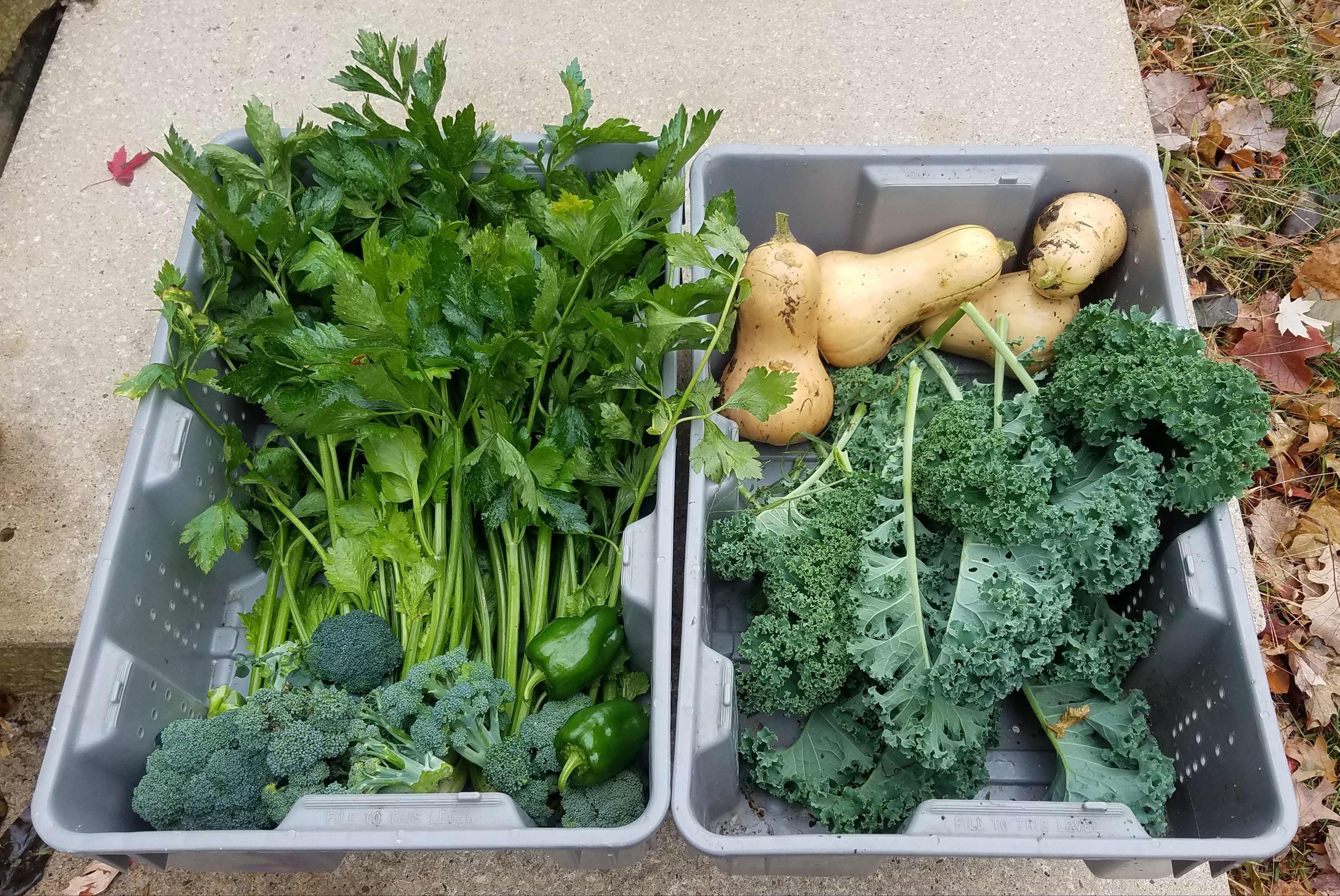
Broccoli, celery, bell peppers, butternut squash, and kale gleaned from the garden.

Pepper and tomato plants were bitten by a hard overnight frost so I gleaned the garden Wednesday morning. A lot was available, a lot remains. I hadn’t been in one of the plots since the Aug. 10 derecho.

When frost comes, kale and broccoli turn dark green and represent some of the best garden eating all year. I froze the kale I picked as there is plenty more. We’ll serve broccoli multiple times during the coming week.

I had forgotten squash vines volunteered in the celery patch and didn’t know what kind they were when they emerged. The four butternut squash I picked look healthy and should provide variety to our dinner plates. We have a new recipe to make pasta sauce with butternut squash so we’ll try that with one of them.

Now is an abundant time for gardeners. The refrigerator has been full, the counter has plenty of squash, onions and garlic on it. The dehydrator is full of red hot peppers. Bins are full of potatoes, onions and shallots downstairs. Two fall shares remain from my barter arrangement at the community supported agriculture project. While we’ll be isolated this Thanksgiving because of the pandemic there will be plenty of food available for our special dinner.

And then winter…

How winter goes will depend on the weather, which is expected to be warm again; on the results of the election, which we hope will favor sanity and competence; and on an ability to be productive on home-based projects new and old.

I’ve been active this election year with multiple political projects. As Nov. 3 approaches many activities enter their endgame. I’m looking toward what’s next and hope my work as a poll watcher on Election Day provides diversion as we all wait for the results of the Electoral College.

A pall fell across the land, a dark shadow from Republican governance. Disoriented, we don’t know if it’s caused by a setting sun or one that’s rising on a new day. Because of the large number of vote by mail ballots, the counting may not be finished election night, and could drag out for a couple of days as states with less financial resources deal with the unusual workload. The coronavirus pandemic has been hard on everyone, including election officials. There is no clear indication when the pandemic will end, or if it will. The election won’t resolve that near term.

For now, with a temperate climate we raise our own food to reduce the amount purchased at retail stores. Produce remains in the garden for gleaning and harvest will continue until the plots are stripped bare during the next warm spell. We’re counting on a warm spell.

Categories
Kitchen Garden

Temperate

Light and clouds. Oct. 13, 2020

2020 has been a good growing season in Iowa.

Temperatures seemed normal, rain adequate. When there were exceptions, dealing with them was easy and intuitive. Gardeners produced a great crop.

Meanwhile, the arctic is melting, the antarctic too. NOAA reported the third warmest September in the history of record-keeping. Drought and desertification plague many parts of the globe. Hurricanes and typhoons wreck havoc on lives. If the derecho effectively ended our garden production, damaged hundreds of thousands of acres of corn and bean fields, and destroyed half the tree canopy in nearby Cedar Rapids, well that’s a once in a lifetime kind of event… we hope.

A reckoning is coming for how we get our food. California’s Central Valley, which produced one fourth of the nation’s food suffers from drought with limited alternatives for securing water to grow crops. The Central Valley supplies 20 percent of the nation’s groundwater demand and is the second most pumped aquifer system in the U.S. These conditions for farming and food supply are not sustainable.

In March, soon after the governor signed the proclamation of disaster emergency, grocery stores began running out of food. Many people reacted by planting a garden or expanding the one they had. They joined community supported agriculture projects. Since then food supply chains worked to fill most of the shelves. Whether grocery retail sales will return to what they were is an open question. As the coronavirus pandemic continues, it is getting worse in Iowa, causing many to stay home when they can and develop alternatives to how and what they eat.

In Iowa we are blessed with a temperate climate. Converting from row crops to diversified agriculture should be done yet is not as easy as it sounds. Smaller farms require cheap labor to produce vegetables and livestock for niche markets. Mid-sized farms are constantly on the razor’s edge working to maintain profitable and diverse operations while avoiding the burden of large capital investments. Big farmers are stuck in a web of government subsidies, commodity markets, long term capital investments, and changing demand for food.

On March 13 I had lunch at a restaurant and a beer at a bar with my best friend. That was the last time I ate restaurant food or went to a bar. Cooking at home has become the norm, not just for me, but for many. That has an impact on food service companies that supply restaurants, and food processing companies that prepare food for distribution. We lost one of the anchor restaurants on our Main Street in town. There will be more business casualties unless people return to restaurant dining soon. With winter coming and the pandemic getting worse in Iowa, diners seem unlikely to return to restaurants until next spring or summer.

It comes back to Iowa’s temperate climate. It seems clear climate change is changing the way we live. As long as we have a temperate climate here we’ll survive.

In graduate school I interviewed people who survived the great depression. What they did then is what we have to do now: create a home industry that meets more of our needs and relies less on global supply chains that developed since World War II. Self-reliance should come easy for Americans as it was defined early in the history of the republic. What’s needed today is broad adaptation of a self-reliance approach to living.

The Centers for Disease Control and Prevention recommended everyone celebrate Thanksgiving virtually this year to prevent spread of the coronavirus. I suspect many Iowans will meet in person and contribute to spread of a disease that is out of control here. A temperate climate can’t help with that. What we can do is plant a garden, something our environment currently supports.

Categories
Kitchen Garden

Time to Plant Garlic

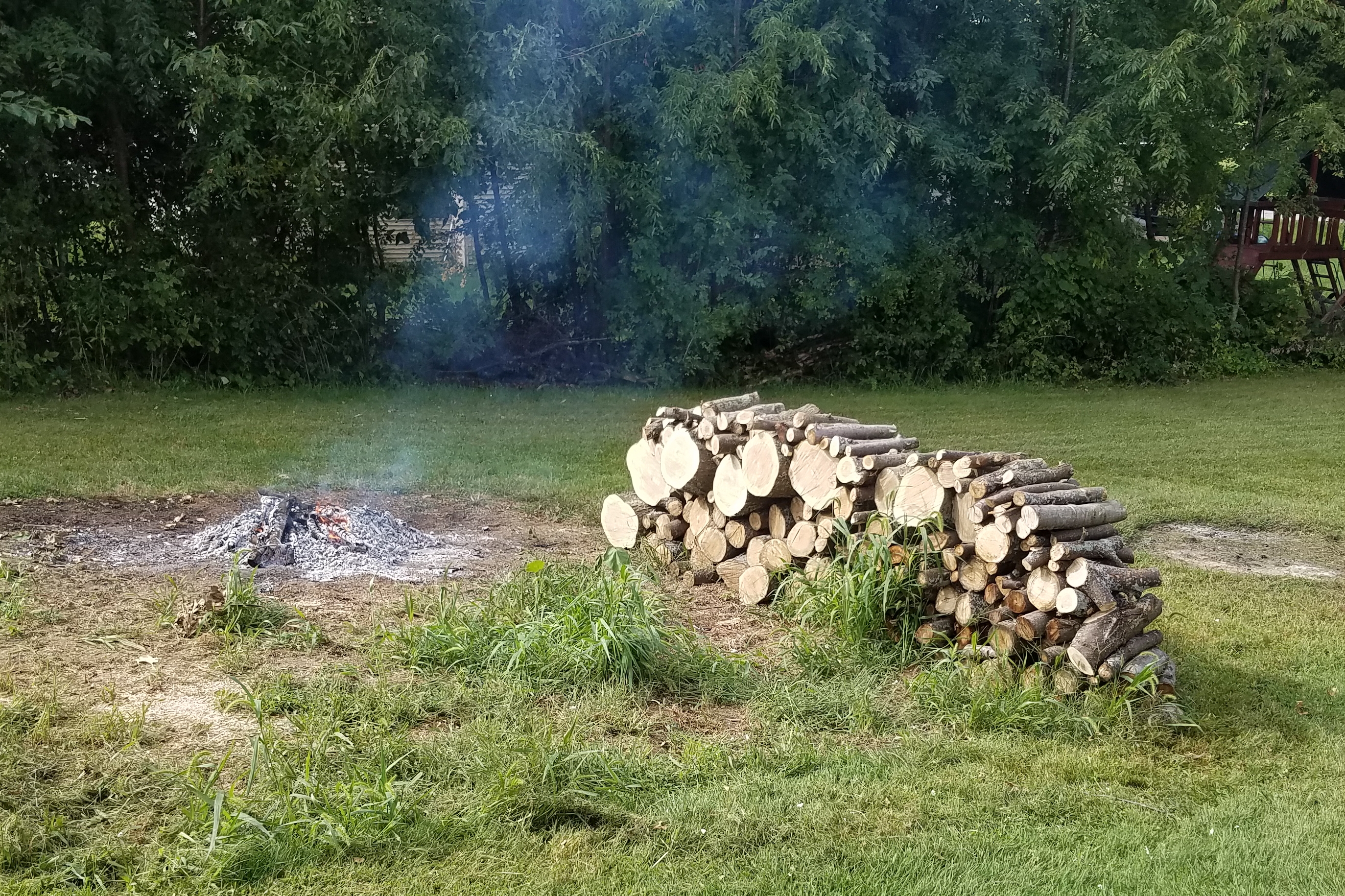
Burn pile, Sept. 19, 2020.

The sound of Spanish-speaking roofers found me tending a burn pile of limbs pruned from apple trees. It seems like the neighbors just built their house: it’s too soon for a replacement roof. The quality of craftsmanship isn’t what it used to be, I suppose. Maybe it was damaged during the Aug. 10 derecho. Roofers made a one-day job of the expansive surface overlooking the neighborhood and the lake beyond.

Embers remained by the time I went to bed. I raked them over large pieces of wood so they would have a chance for overnight consumption. It isn’t the last burn pile of the year although a necessary step toward disassembling the tomato patch. That’s where garlic seeds will go.

It is time to plant garlic.

This year’s crop was excellent. Healthy plants produced large cloves that are storing well. I’d like to repeat that. Part of me wants to be done with the garden yet until the first hard frost it will keep producing on the margins without much effort. This year’s kale may grow into November.

I picked the tomato patch for garlic because most of it has been covered with landscaping fabric and mulch all season. It will be easy to dig up and rototill. The lawn needs mowing and I’m saving that to use the clippings to mulch the garlic. If needed I will purchase straw bales to finish. Planting garlic is a two-day process here. Preparing the plot one day followed by planting and mulching the next. Once it’s done it doesn’t seem like much work for the reward next July.

Yesterday I delivered my completed ballot to the county auditor. With early voting comes a rush to election day. I scheduled a number of volunteer activities to help get out the vote, beginning with a rally in the metropolis with our congressional candidate tomorrow afternoon. The outcome of the election in Iowa is uncertain. Much work remains even if our federal candidates are holding their own in polling in this red turning purple state. It’s not over and we can’t relax now just because we cast our ballot.

I don’t know the future of our country yet I hope for the best. We’re doing the best we can to right the ship of state and set course for a better horizon. As society is increasingly and globally connected, new horizons resemble the previous one. Our work remains the same.

For now our climate in Iowa can still produce a decent crop of garlic and that’s where my attention is the next few days. In the background is the dull grind of the election. We’ll know the results soon.

Categories
Kitchen Garden

Guajillo Chili Sauce

Guajillo Chili Sauce

Evolution of a kitchen garden includes figuring out what to do with the harvest.

After a couple of years growing Guajillo chilies, the results of waiting for the fruit to turn red, then drying them in a way that resembles what’s commercially available from Mexico hasn’t worked out.

Instead, I’ve gone green.

After the first garden gleaning I washed and cut all of the Guajillo chilies into four or five segments. Next, into the Dutch oven with about three quarters of a cup of tap water. I brought the mixture to a boil then turned the heat down to simmer for about 15 minutes.

The lot went into the food processor in three batches. I added seven cloves of fresh garlic, a teaspoon of salt, and roughly half a cup of home made cider vinegar. After a rough chop to break down the chilies, I returned the mixture to the Dutch oven, brought it to a boil and then turned the heat down to simmer for 20 minutes or so. That is it.

The intent is to refrigerate the product in bottles and jars to use right away. My favorite uses for the sauce is in tacos and quesadillas, and as a universal condiment. The one liter bottle in the photo won’t last long.

If the harvest were bigger, the sauce could be processed in a water bath in pint jars for longer storage. I’m getting more comfortable with reducing the amount of canned goods in the pantry, though, and I like the fresher taste.

There was a time I would can, dry, freeze and preserve every bit of food the garden produced. The result was to throw the preserved items into the compost a few years later because we didn’t use them. Now I’m working on a process to give excess produce away either to the food rescue non-profit or to neighbors and friends who don’t garden. Part of a kitchen garden is living in the moment of what’s currently available.

I can’t imagine going to the store, buying the ingredients for this sauce and making it. The engaging part is the interaction between the kitchen and how the garden produces. The goal of a kitchen garden is to get away from consumerism and make things from what we have.

There are similar chili sauces available on the market. The one I made will serve and it’s a great way to use Guajillo chilies.