Categories
Writing

Cookbookery

Sorting Cookbooks

This photo represents about half my cookbook collection. None of these made the first cut represented by what is visible on bookshelves in my writing room. What the heck am I doing?

Going through them is not the same as sorting them. As I make and look through each pile, I have thoughts about how to use them. The categories are beginning to appear.

Mostly vegetarian

There about three dozen books devoted to vegetarianism or with mostly vegetarian recipes. I categorize myself as mostly ovo-lacto vegetarian and my spouse is vegan, so these are of particular interest. There are also books with instructions for how to prepare almost any vegetable imaginable. The best of these will be keepers and the others will be sold, donated or given away.

Culinary reference books

By this I mean books related to cooking yet are not comprised mostly of recipes. For example, Anthony Bourdain’s Kitchen Confidential is in this stack. So is Molecular Gastronomy: Exploring the Science of Flavor by Hervé This. Some of these will go into my main library as reading material. A few may go on the cookbook shelf to be built for the dining room.

Souvenirs and memorabilia

When I was in Texas, I bought a souvenir cookbook with recipes from Texans. When I was in Georgia, I got a similar volume written by Georgians. There is a book about cooking potatoes presented as a gift. I’m not sure how many of these memories remain important. Once I have a pile, I’ll have to go through them and decide.

Books of yearning

Some books, by their title or cover or introduction beg to be examined more closely. Eating Cuban by Beverly Cox and Martin Jacobs is one of them. The Greens Cook Book by Deborah Madison is another. I yearn to spend an afternoon with books like these to dream about culinary invention.

Community cookbooks by geography

The City of Solon near where I live makes a cottage industry of community cookbooks. There is one for the one-room school house and one for the PTA, along with several others. A new one gets published regularly. Our home cuisine is so different from these recipes, I’m not sure of their relevance to our kitchen garden. The most interesting cookbook is titled The Solon PTA Cook Book with “Favorite Bohemian and American recipes.” The advertisements all have two and three digit telephone numbers which were phased out by 1920. No one currently living would have submitted a recipe, so that opens it up for use in my writing. On the back page of the cookbook, readers are admonished, “Aw shucks Mom. Put that cook book away and bring the family up to Lowell’s Cafe for a delicious steak, chicken or fish dinner.” Lowell’s Cafe is now part of history.

Community cookbooks by broader geography

Community cookbooks that were published outside Iowa can be first to go. It seems unlikely I will write about Mont Clair, New Jersey, for example. The question is where do I draw the line? A community cookbook from Ely or Mechanicsville might be keep-able. Most of the ones I have from Cedar Rapids and Iowa City are likely not. If I was a part of a community that wrote a cookbook, like the American Trucking Association maintenance council, I may look through it before disposition.

Appliance cookbooks

When we buy major appliances like refrigerators, ranges, and countertop appliances there is often a cookbook inside it. I have a stack of these. I don’t plan to keep any of them. Too much to read in too little time.

We have company coming over the weekend, so whatever I get done needs finishing by tomorrow. As I go through them all, the last thing I feel like is cooking something. Good thing there are leftovers in the refrigerator.
Categories
Kitchen Garden

Do We Need Cookbooks?

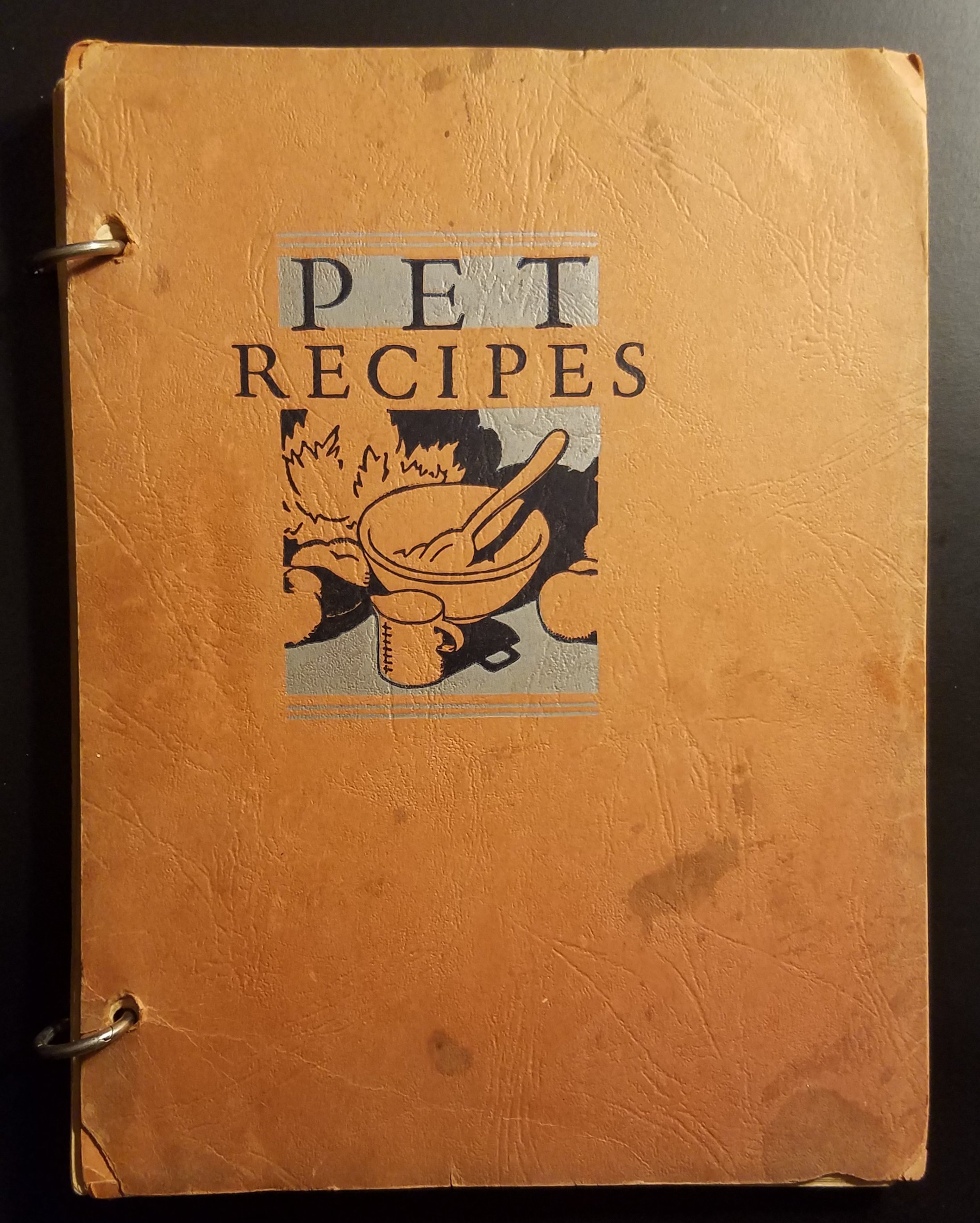
Not for recipes on how to prepare your pet dog or cat. It comes from the PET milk company.

Clearing space to put large format signs and maps piled on top of boxes of cookbooks was a start. I had the project of reducing the number of my cookbooks in mind for a while. It began with a question. How many cookbooks does a home cook need? Not as many as I currently have.

The end result will be a shelving unit in the dining area with the consolidated collection nearer to the kitchen. The goal is to review hundreds of cookbooks one last time, reduce them to as few as 20, and sell the rest at a garage sale, donate them to the library, or give them away. The project forces me to think about what cookbooks mean in my kitchen garden.

According to author Nichole Burke, “The kitchen garden is a small-scale version of the vegetable garden that enables you to experience the magic of growing and enjoying some of your own homegrown herbs, greens, and vegetables, but that gives you the convenience of requiring just a few minutes or hours of your time each week.”

My idea of a kitchen garden is different. I seek to incorporate what goes on in the kitchen more closely with the garden so they become one coherent whole. I began a couple of years ago and each season the two entities are closer to integration. As a result, more of what our household eats comes from the garden.

My garden is larger than what Burke suggests. In addition to patches gleaned for daily meals as she suggests, there are rows designed to grow and preserve vegetables for winter. Examples are peppers, tomatoes, garlic, onions and broccoli. Cookbooks are useful as a way to help determine which vegetables should be grown in larger quantities for preservation and storage.

The Inspired Vegetarian by Louise Pickford is a themed cookbook. The theme is eating vegetarian meals and it is designed to provide examples of a variety of vegetarian dishes for adoption in a home kitchen. It seems unlikely I would follow her recipes exactly, yet when she presents the idea of a vegetable cassoulet, for example, I know what that is and can take it as a starting point to create a version that fits into the world view and produce of my kitchen garden. The recipes may encourage me to grow different vegetables so I can prepare dishes we like.

Big decisions are easy. I’ll keep Joy of Cooking, Julia Child and company’s The Art of French Cooking, and Larousse Traditional French Cooking. There will be one or two “American” cookbooks even if there is not really an American cuisine outside fast food. The King Arthur Flour Baker’s Companion is essential, along with one or two other baking references. These alone would be enough for endless meals.

When on long-term work assignments in South Georgia, Pennsylvania, and Texas I spend idle hours watching Food Network. I expect to keep volumes by Anthony Bourdain, Mario Batali, Rick Bayless and Giada Di Laurentiis. Also in the mix will be Jeff Smith (The Frugal Gourmet), Ming Tsai, Martin Yan and José Andrés. Celebrity chef cookbooks have accessible recipes. I expect them to be a third of the final collection.

Another section of retained cookbooks will be those created by a community of which I was a part. My collection includes cookbooks from the hospital where I was born, the church where I was baptized, and other coherent groups to which I belonged as I proceeded through life. I read The Iowa Writers’ Workshop Cookbook edited by Connie Brothers over the weekend. It is an example of why certain communities shouldn’t produce a cookbook. I mean, some of the recipes seemed like outrageous inside jokes. I did enjoy seeking out authors with whom I interacted or saw at events in Iowa City in the cookbook. Most of the workshop mainstays provided recipes a person could actually use.

Another main use of cookbooks is in my writing. I intend to write about a trip I took to New Orleans. I read Lucy Hanley’s book New Orleans: Cookin’ in the Big Easy, which provides simple recipes of classic New Orleans dishes along with a list of local restaurants. The recipes and images evoked memories in a way that will be useful to my writing. While I spent only a few days there in 1981, the cookbook helps me remember. The same holds true for other regional or city-specific cookbooks.

With the rise of internet search engines, one questions whether cookbooks are needed at all. When I’m looking for ways to use radicchio, for example, it is easier to do an internet search than pore through a number of general purpose cookbooks searching for recipes. At the same time, there is something about having a book.

For now, I’ll be keeping some cookbooks.

Categories
Living in Society

Roof Inspection Day

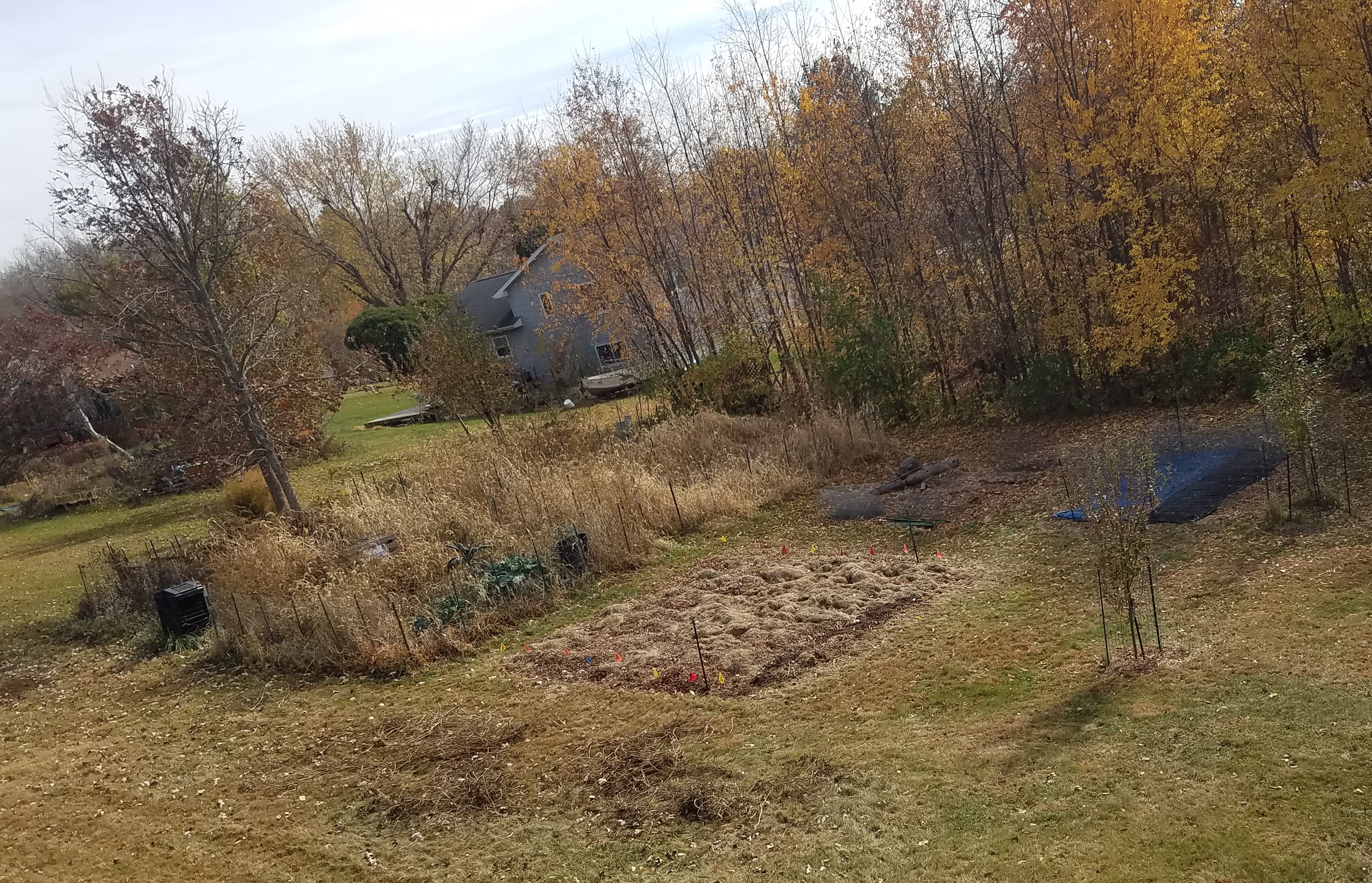
Garden on Oct. 27, 2022 from the roof of the house.

It was a perfect day for inspecting the roof and cleaning gutters. No wind and moderate temperatures, the whole job took less than 15 minutes. At age 70, I feel confident climbing the ladder to do this work. I’m not yet ready to pay someone a hundred bucks to do this 15-minute job. I don’t know how many more years I will continue.

I took a traditional photo of the garden.

Categories
Kitchen Garden

End of Apple Season

Gold Rush apples at Wilson’s Orchard and Farm Oct. 22, 2022.

On Saturday I made the last trip to the orchard this season. There were lots of Gold Rush on the trees and I picked 32 of them. The refrigerator bin is now full of apples, enough to last into 2023.

There are also a few Honeycrisp and Snow Sweet apples in the bin, yet Gold Rush is the main event for storage. They keep surprisingly well for fresh eating. As long as the orchard continues to operate, I needn’t plant my own trees.

It is noteworthy the fate of orchards isn’t always growing apples and other fruit. When we were married, well before Wilson’s Orchard and Farm was planted, we went to the Sand Road Orchard south of Iowa City. A family of Dutch immigrants operated it and featured Dutch chocolate as an added item for sale. The property was sold for development. It appears Wilson’s Orchard and Farm is sustainable. It is always an open question when development seeks to fill in all the blank spaces on the fringes of the county seat, and farming can be a dicey business.

We live in the present, and this year there are Gold Rush apples.

My spouse has been at her sister’s home for three days now. The main change is the quiet, which I don’t relish. My diet has turned to using more hot peppers along with the contents of the pantry, refrigerator and freezer.

I ground up most of the remaining hot peppers from the garden and froze them in a cupcake pan. The small portions are just right to use in dishes that call for hot peppers. I also froze the remaining fresh parsley in the cupcake pan, covered with water. A couple of these parsley cakes will go well in winter soups. There are two bags of Winterbor kale and with the warmer weather there may be another harvest. I have to use up the sweet bell peppers, yet there were so many of them this year, if a few go bad I’ll tolerate it. I struck the third garden patch yesterday. Four more to go.

Laundry is caught up, even the garage rags. Rain is forecast today. That may enable me to burn the brush pile tomorrow. For now, there is plenty to do before she returns home later this week.

Categories
Kitchen Garden

Garlic Planting 2022

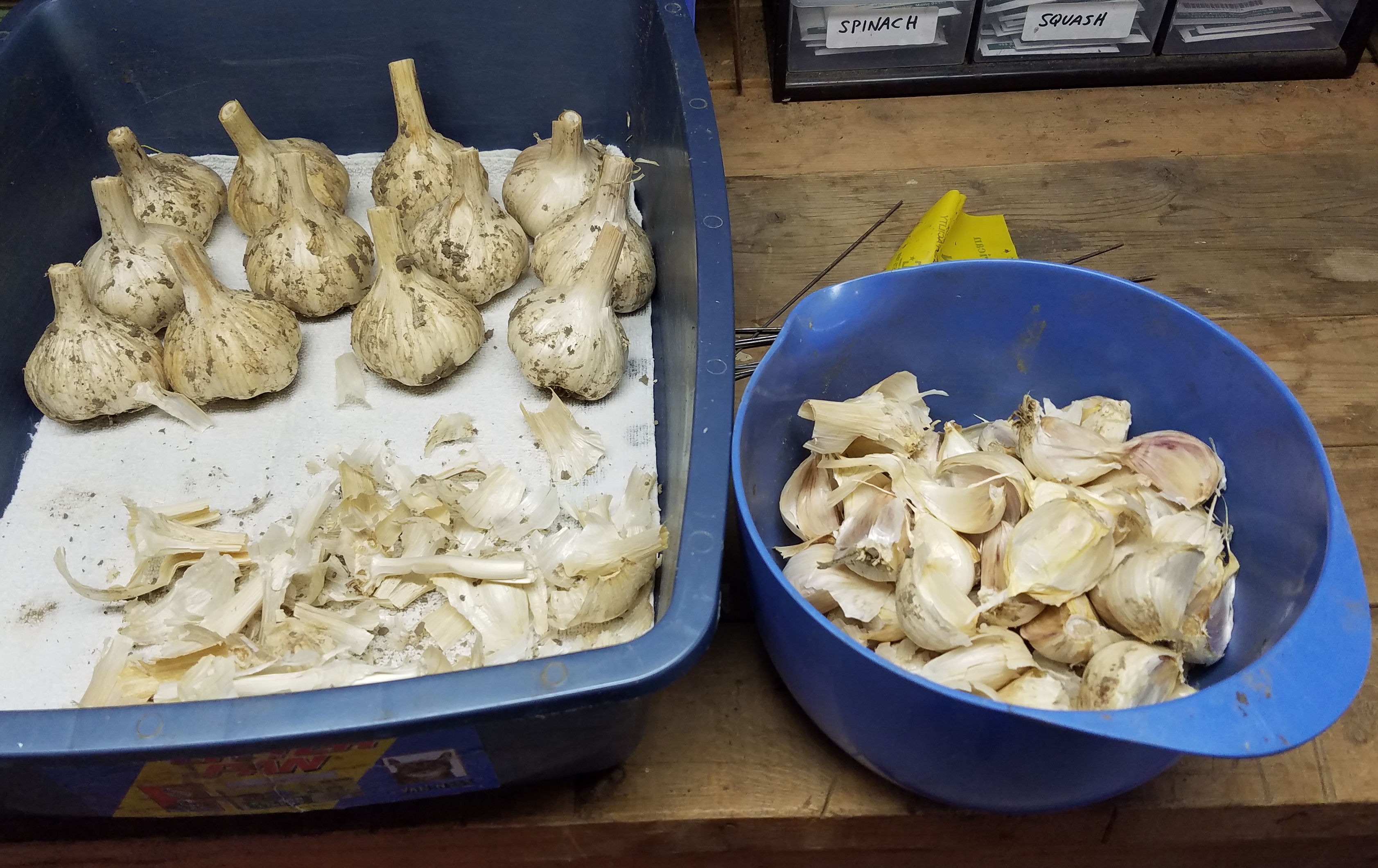
Breaking down the best heads of garlic for seed.

With ambient temperatures remaining warm there is plenty of time to get in a garlic crop. According to my long-time mentor, if a gardener misses autumn planting, it can be planted in the spring. Since I began planting my own garlic each October, I’ve had excellent crops. I watch the weather closely for a planting window beginning in mid-September.

I am taking my time this year, working three or four hours daily to strike the tomato patch, clear the ground cover, and dig up the soil. I have six shifts on six days thus far. Partly the extra time is because I’m aging. Mostly it’s because I enjoy gardening in the brilliant fall weather and don’t want it to end. It will be the last garden planting before winter.

I haven’t studied the history of garlic yet it is an amazing vegetable. The genetics of what I use came from a farm that developed it over more than 20 years. I watch for fungus and cull the best cloves for planting just as she did. 100 garlic plants will get me through the year and the seeds are ready to go into the ground.

Last night I made Guajillo chili sauce using the rest of the gleaned Guajillo chilies and smaller cloves of garlic culled from the seed selection process. I cut the chilies in three pieces, added a dozen cloves of garlic, a few tomatoes gleaned from the garden as I was clearing the tomato patch, salt, and enough tomato juice to cover the bottom of the pan. The mixture cooked down and I added home made apple cider vinegar to cover. Once the chilies were soft, I set them aside to cool on the counter while I made dinner. I blended them in my 40-year old Osterizer and used a funnel to remove the tough skin and seed. It made three pints, which, along with all the other chili sauce in the refrigerator, will last until next year.

Once garlic is planted and mulched, the rest of garden work is getting ready for winter. After that, it’s back to writing my autobiography.

Garden plot planned for garlic.
Categories
Kitchen Garden

Cook’s Journey

Soup Ingredients

After dinner I put a two-pound bag of Great Northern beans in a pot to soak. The next morning, I drained and rinsed them, and covered with water to soak some more. At noon there was one more rinse, then I covered the beans with canned vegetable broth and turned on the heat.

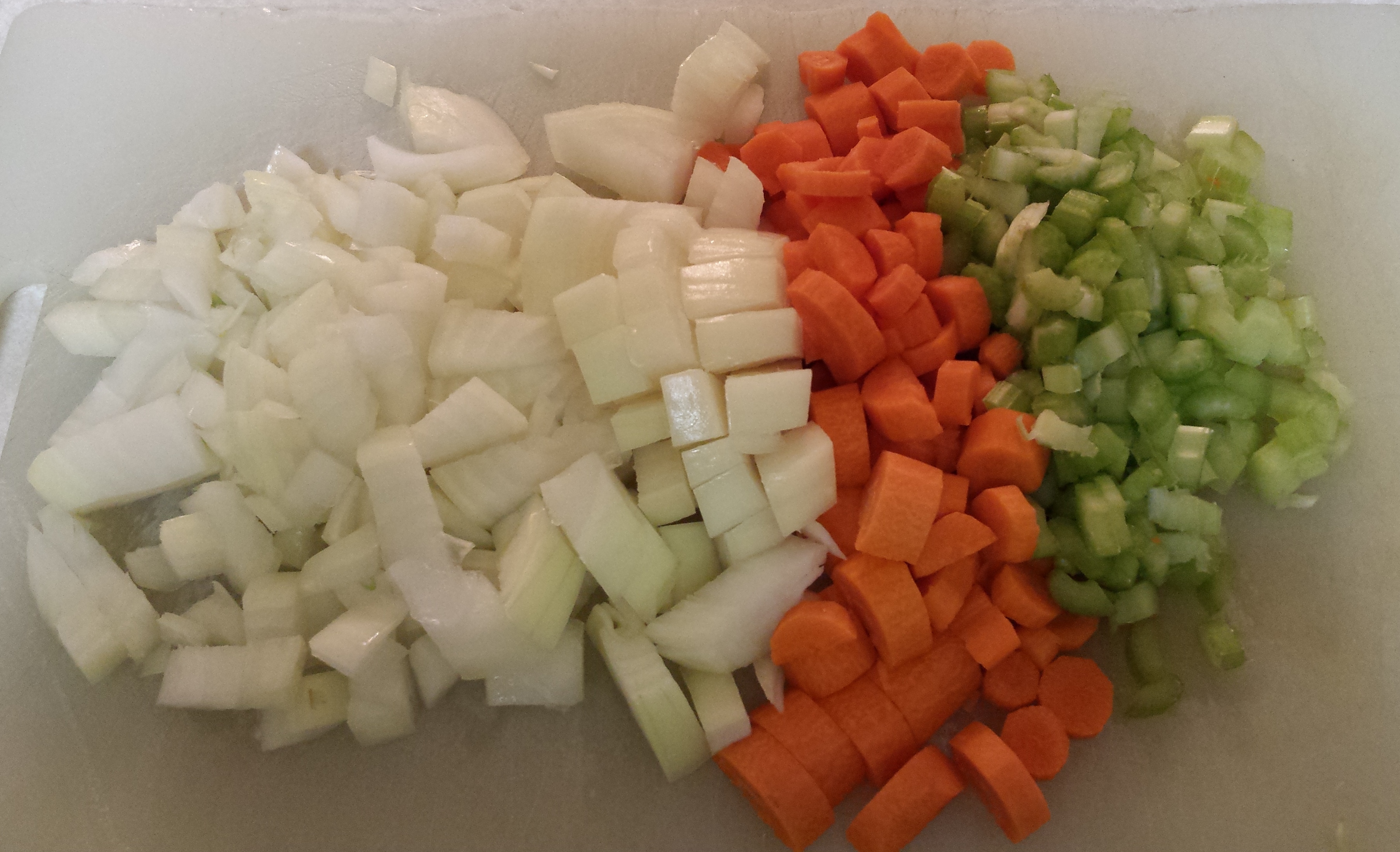
In a separate pan I placed one large, chopped onion, the rest of the fresh celery from the garden plus three stalks from the store, and five thinly sliced medium carrots. Adding six bay leaves and some salt, I covered the mixture with more vegetable broth and turned on the heat.

Once both pots were boiling, I turned the temperature down to simmer. When the beans were cooked through, I strained the mirepoix mixture, reserved the liquid, and added the cooked vegetables to the beans. The soup simmered until dinner time. It was delicious.

There is no recipe for this bean soup. The ingredients are timeless. The process harks back to the oldest times. Times when how to cook was embedded in oral tradition and mass-produced cook books and the internet did not exist.

I made this soup many times. This time it was an epiphany representing the direction ahead for my kitchen garden.

Categories
Writing

Gleaning Before the Frost

Hot peppers gleaned from the garden before frost.

I’m slowly striking the tomato patch where garlic will soon be planted. Each beautiful, fall day is of bright sun, cool temperatures, and the promise of winter. Time spent outdoors offers a chance to clear my thoughts and commune with our patch of life. Younger me would already have the garlic in. Today I am savoring time in the garden.

I gleaned vegetables yesterday and there was a hard frost last night. It yielded tomatoes and peppers. I picked a big bunch of parsley and left the kale, collards and chard out to weather the cold. It has been a great year for bell peppers and tomatoes, for most everything.

It is time to put wool blankets on the bed and get out sweatshirts and woolen socks. Yesterday I walked on the state park trail in a t-shirt yet that won’t continue long. I’m ready for winter and it is coming.

I finished my goal of reading 40 books this year. It’s time to return to my autobiography as soon as the garlic is in and the garden prepped for winter. I’m looking forward to picking up where I left off with new ideas about approach and how to cover topics already on the outline.

I just finished Jann Wenner’s memoir and OMG! I’m not a rich guy, so I can do better than inventory all the homes, aircraft, and celebrity friendships I have. (That would take less than a page). Reading Wenner convinced me to make my story shorter. I envision the first part, up to my leaving Davenport, as chronological history. After that I expect to depart chronology to write thematic sections. I do want to finish the book so I can move on to other projects. If I keep nose to the wheel, I may be able to get a draft out to my editors by Spring 2024. I saw my medical practitioner Thursday and based on our conversation, my health should hold steady until then.

In these pre-dawn hours I’m anxious to get outdoors. If all goes well, I’ll finish clearing the tomato patch so I can prep the soil and plant garlic in the next few days.

I’ll have a fresh tomato for breakfast… because I can.

Categories
Sustainability

A Vision For the Future of Iowa Food Systems

Wilson’s Orchard

I worked for seven seasons at what is now Wilson’s Orchard and Farm near Iowa City. At the time it was mostly an apple orchard with seasonal imports of cherries, peaches, raspberries, blueberries and blackberries from other farms.

During the coronavirus pandemic they expanded their offerings and yesterday announced they bought a 115-acre farm near Des Moines as a further expansion of what is proving to be a successful local food concept.

The grand opening of the Des Moines farm is spring 2023 with the strawberry season. Paul Rasch, owner and grand poobah of the farm described his first strawberry crop in Iowa City to me as “money.”

I don’t know if the proposed transition is possible, yet it may be our best hope to break the cycle of growing row crops in Iowa. Wilson’s Orchard and Farm is an idea whose time has come.

Here is the announcement video released this week that describes Paul’s vision of an Iowa food system transformed.

Categories
Kitchen Garden

2022 Garden Summary

Garden on May 31, 2021

The gardening season flashed by. The main issue this year was weeding: I didn’t keep up. Nonetheless the garden produced an abundance of vegetables and the integration of garden with kitchen and our local food bank yielded less wasted produce. Despite the failures, things are heading in a positive direction.

Suppression of weeds is done mostly by landscape fabric and grass clippings. I tried reusing landscape fabric from last year, yet it allowed too many weeds to penetrate the porous membrane. Likewise, my yard doesn’t produce enough grass clippings to mulch all the plants. This fall I plan to harvest enough grass clippings to over winter the garlic and then figure out what to do about next year.

Among the most successful crops were garlic, tomatoes, peppers, cucumbers, zucchini, broccoli, herbs, eggplant, leafy green vegetables, and potatoes. Almost everything I grew under row cover did well. Marginal crops were celery (which didn’t get as big as I like it), peas (not enough yield), and tomatillos (did not grow large enough). Failures were onions, cauliflower, and beets, which produced no crop at all.

This was an off year for apples, although I harvest some of each of four kinds. I need to do something different to grow pears that are shaped the way they should be. The pears are one of the sweetest things we eat all year. Even with their deformities they are satisfying.

There was a lot of learning, although my experiences get incorporated with others I’ve had and are hard to attribute to a single season. More than anything this year, I noticed the abundance of insect life. I saw many more species than in previous years. I don’t know if they have been there all along or are expanding into the environment provided by my overgrown weeds. In any case, there seemed to be more beneficial insects and less enemies and that’s a good thing.

The weeds attracted significant small bird life. They perch on the tomato supports and fencing to feed on weed seeds and insects. The birds are particularly welcome.

The garden is big enough to offer a varying landscape for wildlife. Deer no longer jump the fence to eat plants. Rabbits are staying away as there is plenty of clover and other food in the yard for them. The presence of rodents is minimal (planting potatoes in containers helped). Squirrels are busy harvesting acorns from the oak trees. In many respects, this is what I have been working toward.

It is time to begin deconstruction of the garden and store the stakes and fencing. Soon it will be time to order seeds for next year. I need a solid few days to consider what happened this year and improve on next. It is a cycle, one in which we enjoy being a part. The 2022 garden was a success.

Categories
Kitchen Garden

TikTok Cooking

Pasta with cherry tomatoes, feta cheese, garlic, basil, extra virgin olive oil, red chili flakes, salt and pepper inspired by social media posts on TikTok.

Between order by mail book clubs, online retailers, book stores, yard sales, and thrift stores, I acquired hundreds of cookbooks. With the rise of the internet I don’t need any of them.

The attraction of browsing hundreds of cookbooks may serve some writing project, but it is not how we live now. It’s not how we cook. What matters more is producing local food, with fresh and local ingredients as an expression of character and personality, rather than that of the scion of a family kitchen disconnected from here and now.

Cookbooks Galore by Paul Deaton, Aug. 5, 2013.

The brilliance of the TikTok cooking method is it reduces common dishes to a couple of minutes of video, freeing creative energy as we work in the kitchen. The recipe that produced the dish in the photo was not really a recipe but a technique of using available ingredients in the height of gardening season. The proof is TikTok pasta met expectations as a dish: in its flavors, as a way to use excess produce, and in its ease of preparation.

When my end of days arrives, I can’t take any cookbooks with me. With TikTok cooking, no worries. I can recycle my cookbooks now to others who might use them.

God’s in his heaven— All’s right with the world!