Mottled shadows of grasses against a piece of cloth.
I hung a piece of cloth over the lower level windows across from my writing table. As the sun rises, shadows dance on it: insects, long blades of grass, and lately, a hummingbird suspended in air as they are while searching for food. It feels I’m living in Plato’s allegory of the cave and I’m fine with that. It is a reminder the world in which we live is not a lie. I’m not chained in place. I’m free to go outdoors, see the hummingbird, and not be blinded by the sun.
I bought mini-blinds to put on that window, like the others in the lower level of the house, yet am glad I didn’t install them. There is a constant show on the window covering for dreaming. We humans need dreams.
The garden ground is too wet to work this morning. It seems unlikely to dry by noon. If the lawn dries sufficiently I’ll mow. There is plenty of indoors work to do if it doesn’t.
Our go-to, easy-to-prepare dinner is tacos. I made them last night, based on the recipe I wrote a few years ago. Instead of yellow onions, I used spring onions. Instead of garlic, I used garlic scapes. Instead of frozen kale, I used a mixture of fresh Pac Choi and collards from the garden. Such seasonal variations make tacos one of our favorite meals. They always taste a little different, in this case, fresher than normal. We prepare the dish often.
This week, Major League Baseball added the Negro League statistics to the record book. It changed some of the rankings. Josh Gibson beat Ty Cobb in highest career batting record. Gibson beat Babe Ruth, Ted Williams and Hugh Duffy in other categories as well. When I was a kid I didn’t have a baseball card of Josh Gibson and was not aware the Negro League existed. For me, Babe Ruth was it. Until this year, we found he wasn’t. Here’s a link to the Washington Post story.
We live in the only home we planned and built. When I arrived from Indiana in 1993, ahead of the rest of the family, our lot was a vacant remainder of Don Kasparek’s subdivision of his farm. There were two volunteer trees and tall grass.
A deal on another lot had fallen through, and there was an urgency to find a place to settle. This lot, with its proximity to Lake Macbride and a reasonable school system was to be it.
I remember sitting on the high wall after the contractor dug the lower level from the hillside, before the footings were in. A cool breeze blew in from the lake — the kind that still comes up from time to time.
We built a life here in Big Grove Township over more than 30 years.
Today is still a time of transition. The trajectory of life seems clearer and much work remains unfinished. Slow and steady wins the race, they say. Like this turtle, I hope to make it to the finish line of a better life.
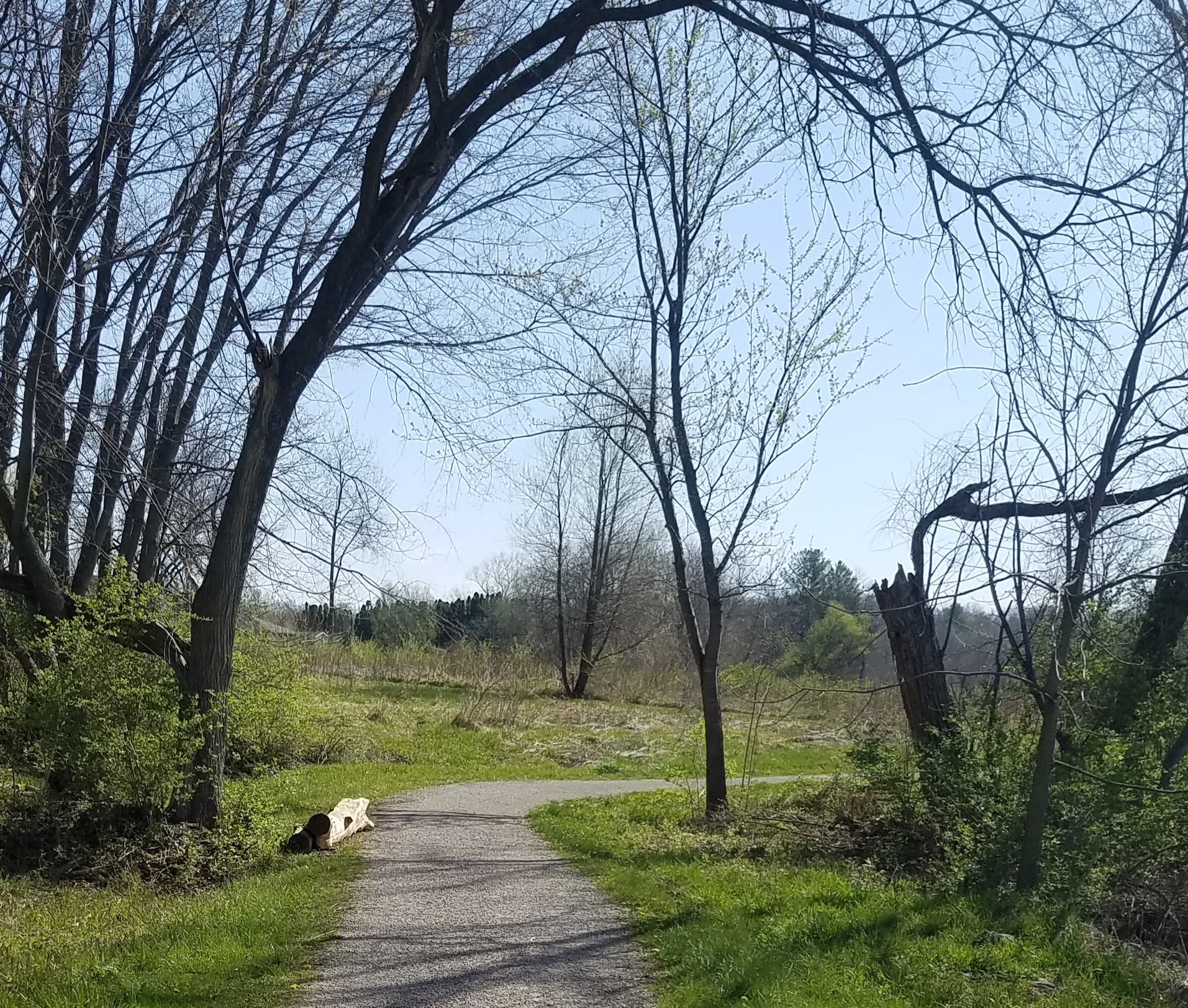
Trail walking between rain showers on May 9, 2024.
While walking past the boat docks between rain showers, a neighbor hailed me and asked, “Is the drought over?” I replied, “With the rain we’ve had in the last ten days, I hope so.” Because I was on the association board for so long, many know me by name, although I have to ask them theirs. I don’t mind asking.
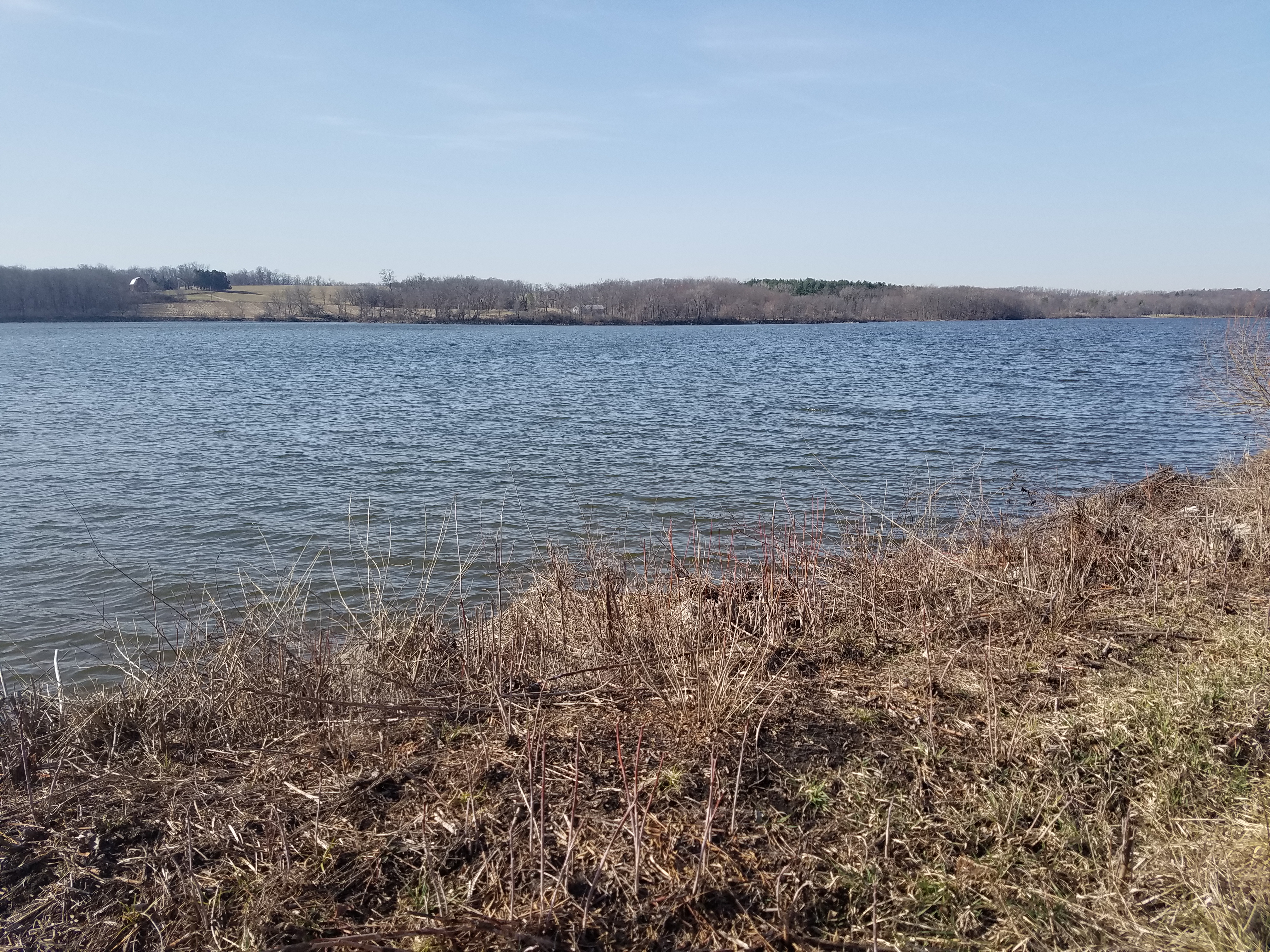
I took this photograph during my Thursday trail walk. I’ve been trying to take a decent photo of this barn for 30 years. This one isn’t it. I’ll try again.
I turned on my bird identification app and in 30 seconds, it identified eight different birds. Halfway into spring that seems about right. Fish continue to spawn near the foot bridge. Joggers, dog-walkers, bicyclists, and walkers were out on the trail in the couple hour period between morning rain and afternoon showers. I’m glad to have made it outdoors when I could.
While my vegan spouse has been away I’m fixing dinners she can’t eat. Tonight it is lasagna with home grown spring onions and ricotta cheese. I’ve been thinking about this dish for a week. It is baking while I write.
I counted seedlings in the portable greenhouse. There are 750. It seems like a lot, and if I had to buy them at the store it would be a substantial investment. I check on them multiple times a day.
My idea of a garden is to grow as much as I can for the kitchen and give the rest away. The food bank always needs donations. Neighbors welcome fresh vegetables in season. If the rain would let up, I could start transplanting more to the garden. Thursday was a bust day for gardening. Friday is looking better.
We should know when my spouse is returning home today. I hope it is soon.
A walk on the state park trail is respite from working at home. These days I take the auto off property once or twice each week. The rest of the time is spent working at home or walking on the trail. A person needs sunlight and bird songs for many reasons. It is as close as it gets to feeling a part of nature.
We need respite.
A high school student came to the door seeking cans and bottles to return for the deposit — a fund raising project for the school band. We don’t consume much that comes in containers that can be redeemed for a deposit. I went downstairs and found a case of empty ginger beer bottles and turned them over.
I also found a case of Mexican beer with 15 bottles left from last summer. On hot days, I’ll ice down one or two to drink when I work up a sweat. This is enough to last into June.
These April days are slipping through my hands and there seems to be little to do about it. The garden seedlings are too many for the available indoors space and I haven’t been able to muster energy to assemble the new, portable greenhouse. Been feeling a bit punk, and that’s not helping either.
I spent part of Thursday morning unraveling loose threads that inhabit family lore. Here is how that passage ended.
Family lore is William worked in Mine 74 and in the Cherry coal mine. Other family lore suggests he didn’t mine coal but had an office job from a young age.
Inconsistent and incomplete tales are part of a problem with family stories. It affects how an author writes a modern narrative. In a later chapter, I present two very different stories authored by Mother in the form of a letter and email about the day I was born. We must consider such stories and proceed based on conflicting information, even when both versions cannot be true.
My view at this writing is Grandfather’s declaration of being a miner on the 1910 and 1940 U.S. Census records, my personal experiences with him, explanations from family about how he came to have black lung disease by inhaling coal dust in the mines, and the government awarding Black Lung Benefits based on his health, confirm he worked in the mines. I proceed on that basis.
We tell stories about our lives and repeat them. They harden and become the stuff of legend within a family. Just as Mae told and retold the story of her aunt and the piano, Mother told and retold the story of Grandfather being a communist. By focusing on family lore, and hardened stories, we tend to reduce how much we know about parts of our lives we didn’t directly experience. Expanding the universe of knowledge about our lives is the goal of this book.
Despite feeling punk, behind in the garden, and lacking energy, it felt I got something done. The idea in this passage is to weave explanations about complex and conflicting stories in the autobiography, one in each chapter. It is an improvement in the narrative that is possible. The purpose is to give the reader a guidepost on how to interpret what I write as they read it. I’m not aware of anyone else who writes this way. Will see how it goes.
I will soon need to get outside again for brief respite.
During the first two minutes I had my Merlin bird identification software listening, it found: White-breasted Nuthatch, Northern Cardinal, American Robin, House Finch, House Sparrow, Red-winged Blackbird, Blue Jay, Chipping Sparrow, and Canada Goose. The usual suspects were awake and came out to greet me a few days after the storm.
The storm gathered all the ash tree seed pods from the roof and collected them in the gutter downspout. That caused rainwater to overflow into the window well, and then leak into the house. It was a mess to clean up. There was no real damage, although the gutter design needs a remake to position the downspout elsewhere. Adding that to the long to-do list. It will go high on the list.
Clean up after the flooding will take some effort. Luckily we have the needed tools: buckets, rags, wet/dry vacuum, mops and brooms. Now to get those cleaned up, dried and put away.
Despite recent rainfall, and refilling of the lake, the newspaper reported this morning we continue to be in drought conditions in Big Grove Township. It continues to be too cold to plant much in the garden, with last frost as much as a month away. However, it is time to shift gears to doing more garden prep beginning now.
Where to start? Probably at pushing the post button and getting on with it. Make it a great day readers!
And there I was… standing with feet spread wide apart on the roof with wind wildly blowing my hair. It was a strong wind, with gusts likely to topple me without a broad base of support. From that vantage, I looked down at the lake and beyond, finished my work, then descended the ladder to safety. Septuagenarian men aren’t supposed to be walking around on the roof.
Beforehand, I woke my spouse to say I was getting the ladder to climb on the roof. We had previously agreed I wouldn’t be doing that any more. This time, there was no choice: the gutters were clogged and rain was expected in the afternoon. I checked the gutters after winter and they looked clear. Obviously, something changed before the major storm on Tuesday.
I am confident in my abilities and had the gutters cleared in no time. I inspected the roof while I was up there. It is in good shape for a few more years. As I walked the ladder around the house and into the garage, I said to myself, “What is wrong with me?”
I could have hired someone to check the gutters this spring. All the same, there are dozens of household tasks in queue and the net effect of too many of them is to delay. That is, until reality hits home and we must act.
I don’t know if I’ll get up on the roof again. I will avoid it if I can. At the same time, I like being universal man overlooking my domain in strong wind. It is not rational, yet there it is.
Selfie taken with computer video camera on April 28, 2020, the day I retired from paid work.
When the World Health Organization declared COVID-19 a pandemic on March 11, 2020, I began pulling back from engagement in society. That process continued when I decided to retire from work at the home, farm and auto supply store on April 28 that year. Since then, I have distanced myself from almost everything and developed a new way of engaging in society.
I don’t spend as much time with people as I did. My conversational style shows it.
The main part of my days is spent at home with a weekly trip to the grocery store and a couple other shopping trips each month. The automobile is not getting many miles. If there is a reason, I will travel to the county seat, to my home town, or to Chicago or Des Moines to run errands or visit family and friends. That is about it.
The last activity I dropped was membership in the county Democratic Party central committee. I led the January 15 precinct caucus and will be attending the county convention on March 23. After that, I will become a worker bee in politics, not an organizer. I’m good with the change.
A majority of my time will be divided between working to maintain and fix up our home, writing, and sorting through the accumulation of too much stuff. So far, that keeps me busy.
This time at home as a writer is what I worked for all my life. If I am stepping back from society, I am stepping into a new life lived the way I want. As long as my health holds and we have money enough to live, I’ll be alright.
Since I made it this far, I’ll quote Douglas MacArthur, “Old soldiers never die, they just fade away.” Already, I can hardly see my shadow on a sunny day.
In one minute, my newly downloaded app, Merlin from Cornell University, identified the sounds of four birds: American Robin, Blue Jay, American Crow and Northern Cardinal. They are common birds in Big Grove Township yet the app is training me in how to listen for and identify bird life with which I’ve lived since we moved here. I stood on the front steps and turned it on. Briefly, it is fun.
Judging from my email traffic, yesterday was busy. I published the letter to the editor I wrote yesterday, worked on my class reunion, planned for the county convention, cleaned, and cooked. I made chili and cornbread for dinner.
My chili recipe is toned down for milder palates. Six ingredients: a diced large onion, three 15-ounce cans of organic kidney beans, three pints of tomato sauce (home canned or store bought), chili powder, cumin, and a bag of Morningstar Farm Recipe Crumbles. I usually make vegan cornbread to go with it. It isn’t like the cornbread Mother used to make but it is uniquely ours and tasty.
Overall it was a punk day, with a walk on the state park trail being the only outdoors activity. When I moved the mulch over the garlic earlier in the week, there was still frost on the ground underneath. We had a couple of days in a row where temperatures got up to 70 degrees. A few more and I will be able to dig in the garden.
We got much-needed rain this morning. Hope to get outdoors in between showers. Lots to do this cloudy day before we get into Spring.
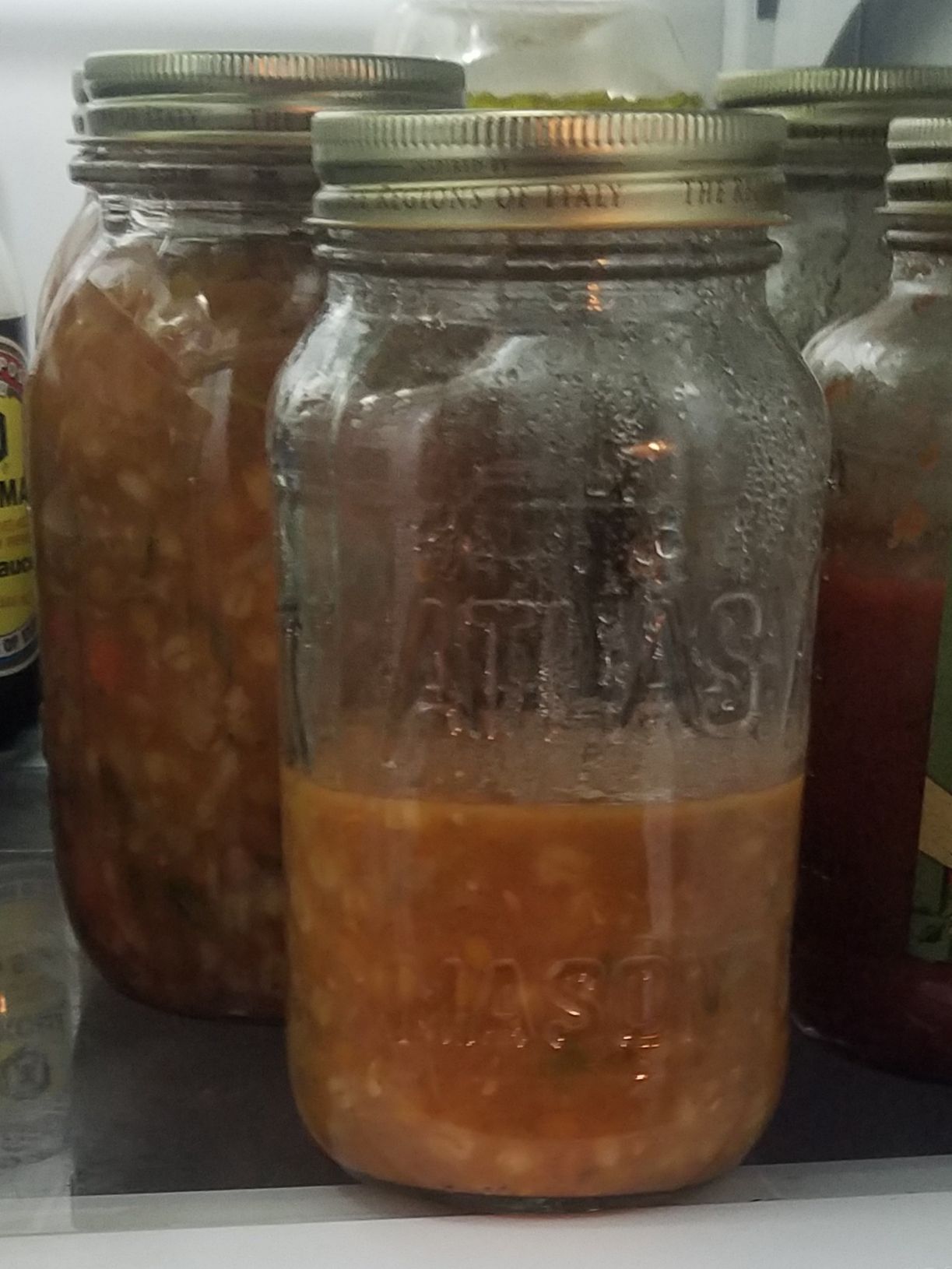
I made lentil soup for dinner last night. With a slice of bread, it made a satisfying meal. What distinguished this pot of soup from more generic vegetable soups I make was the restricted number of ingredients. Here’s how I made it.
I covered the bottom of the Dutch oven with tomato juice and brought it to temperature: enough juice to steam fry the vegetables. We use tomato juice instead of oil to reduce our consumption of cooking oil. My tomato juice is a byproduct of making tomato sauce from the garden.
Next came finely diced onions, carrots, and celery, the mainstays of any soup. I added three bay leaves and salted. Then I diced three medium potatoes and added them.
From the pantry I added one and a half cups of dried lentils and three quarters cup pearled barley. Cover with tomato juice and set to medium heat.
From the freezer I added two one-cup bags of shredded zucchini and two frozen disks of fresh parsley. By now, the lentils and barley were absorbing the liquid so I added tomato juice and one quart of water to cover. I used a total of three quarts of tomato juice and one quart of water.
Two or three cups of chopped, fresh leafy green vegetables from the garden. I had collards for this pot of soup, but kale, collards or others will serve. Frozen is fine also.
Once the pot boils, reduce the heat and let it simmer until the lentils, barley and potatoes are tender. This process yielded a meal for two people plus three and a half extra quarts of soup for leftovers.
It is the kind of meal regular folks like us appreciate.
By 1962 I owned a camera and used it to photograph our neighborhood. I walked north on Marquette Street and took snapshots of the Levetzow’s holiday display. They owned Model Dairy Company and at Christmas filled their whole yard with lighted Christmas decorations. On the southwest corner of their house was a large crèche. To its right was a lighted display of Santa, his sleigh, and reindeer. We viewed them as an affluent family, such affluence being on conspicuous display at the holidays. They had a kid-sized model of their dairy delivery van, although none of us local kids got to drive it.
I photographed the holiday display at the house across the street to the south. This was a rental through which families moved frequently. Eventually, a young Joe Whitty and his family moved there to work at the nearby Mercy Hospital bakery. He later opened his own chain of pizza and ice cream restaurants called Happy Joe’s.
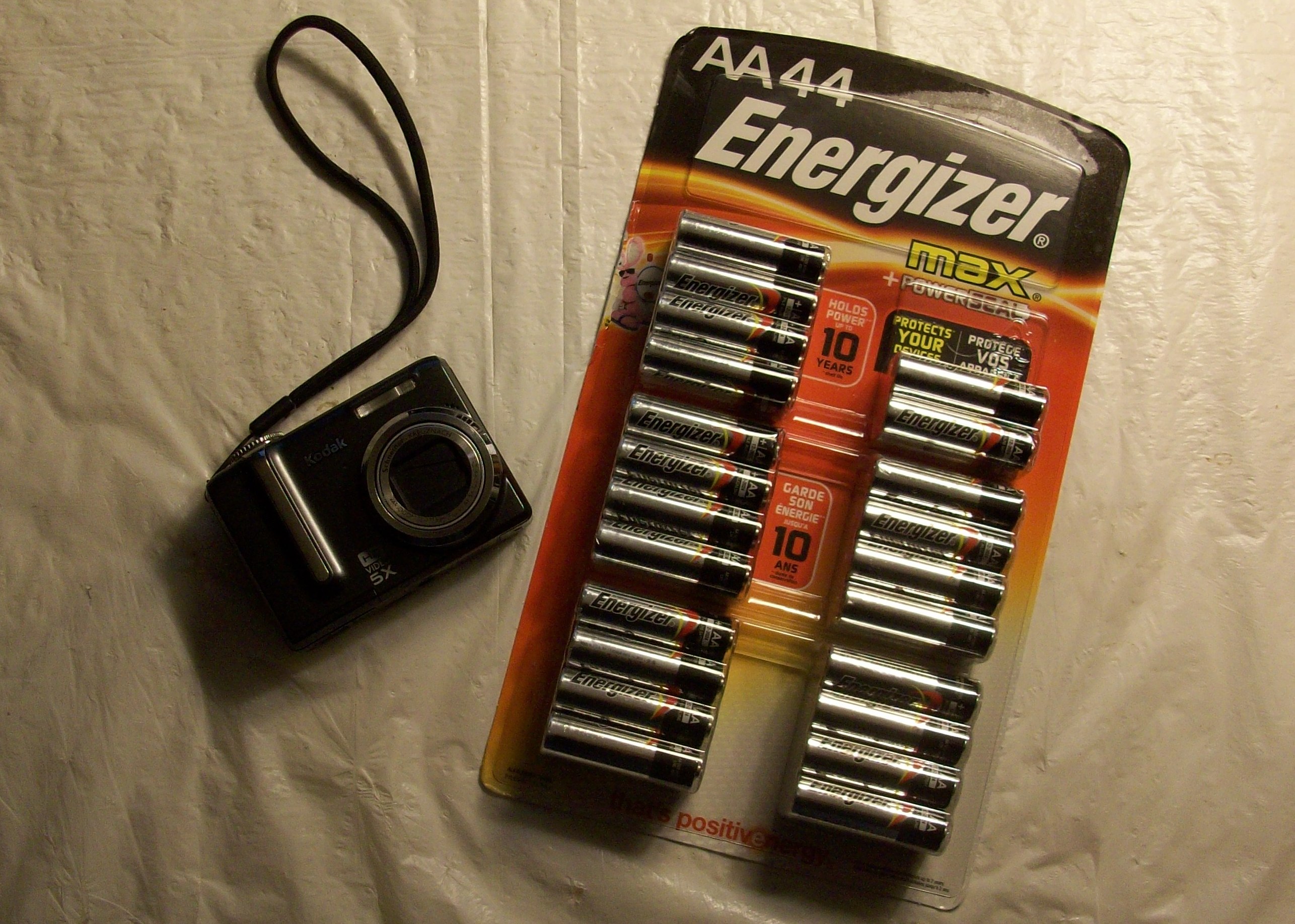
We posed for pictures with my film camera. I gave more thought to each frame than I do today because the results were not immediately available. There were only so many shots on a roll so I felt I had to get the framing right before exposing film. It was a process of experimentation and expense.
Having a camera was complicated because one needed film and never knew how photographs would come out when taking them. Developing film could take a while, depending upon when the entire roll would be exposed, and when one could get it to the drug store to be developed. Photographs were special. I possessed a sense they would have enduring value.
There is a photo of me in my altar boy cassock and surplus, one of us kids bowling, and many posed photos of all of us in the foyer. One favorite foyer photo is of Mother and Father dressed up in costumes to go out on New Year’s Eve in 1962. The following January I captured my sister’s birthday party during which we all danced the twist. Mother took some of those shots. My parents had just begun listening to long-playing records at home and had copies of popular LPs by twist artists like Chubby Checker and Fats Domino.
In 1963 I began buying color film. Pictures survived… of Easter, my sister’s first communion, a trip to the park, Father standing next to the wrecked 1959 Ford. Mostly they were posed photos signifying a special event.
Using a camera was an inexpensive way to have fun. Because the process took so long, it seemed more creative: requiring thought, editing, and an ability to understand the viewer and how it would relate to the finished exposure.
My grandmother was an influence in my photography. She purchased inexpensive cameras at the drug store and used them to record moments with the family. The desire to pose and capture a photo was something creative I didn’t understand at the time. We were plain folk and when we got dressed for church, or to attend an event, it was a big deal. Grandmother wanted to capture those moments on film. It’s a natural impulse that presents an interpretation of who we were. Of course, we always wanted to put the best foot forward in these constructed frames.
Because photography was a technology with numerous steps, and there was a cost of film and prints, I don’t have many photos from my earliest days. However, I have a lot by comparison. The ones that survive tell me who I was and inform our family culture. They are an important part of remembering who we were. From that early time I began thinking about how to narrate my life using a camera. There is a direct creative thread running from 1962 to the present and spun on my use of cameras.



 Journey Home
You must be logged in to post a comment.