Categories
Kitchen Garden

Pandemic Shopping Trip

Face masks in the medicine cabinet.

Securing a mask from the medicine cabinet in the garage, I went to the wholesale club to get groceries. We’re bunkering in at least until the coronavirus pandemic peaks which is estimated to be April 27.

I bought three bags of granola, two gallons of cow’s milk, fresh fruit and sundry other items. Toilet tissue was being rationed and I bought one pack.

Workers at the wholesale club recognized me with the mask. We had regular conversations as if I wasn’t wearing it. Other friends at the store, among whom I worked providing product samples to shoppers in 2014-2015, were all laid off on Sunday. As subcontractors, they were told they would have to reapply for their job if they re-start operations after the pandemic. I will miss talking to many of those who remained from my tenure.

What to do during a pandemic?

I downloaded questionnaires similar to what a physician might use to assess mental health and answered the questions. I’m pretty good on suicide and depression, although I have cause for anxiety. I’ll be alright.

The number of reported cases of COVID-19 in Iowa on April 7 was 102, the highest daily total thus far. It’s expected to get worse during the next two weeks so now that shopping is done we don’t have to leave our property. Yesterday the number of COVID-19 confirmed cases increased to more than 1,000 so recording where we are is useful to a future me.

Here is the Iowa state government COVID-19 data today:
The governor has not implemented a stay at home order and likely won’t unless the situation changes. She discussed Iowa’s plan for social distancing with Nebraska Governor Pete Ricketts and Dr. Anthony Fauci, an immunologist and member of the White House Coronavirus Task Force, this week:

I had good conversations with the governor of Nebraska and the governor of Iowa here. And it’s interesting that functionally, even though they have not given a strict stay-at-home — what they are doing is really functionally equivalent to that, Fauci said. I think there was a public response that they weren’t really doing anything at all. And they really are doing a very good job. Both of them. Those are the only two that I spoke to. But it was a really good conversation. I want to make sure people understand that just because they don’t have a very strict stay-at-home order, they have in place a lot of things that are totally compatible with what everyone else is doing.

Considering the scope of the pandemic, Iowa appears to be in reasonable shape. Here’s an analysis of key Iowa resources from healthdata.org:
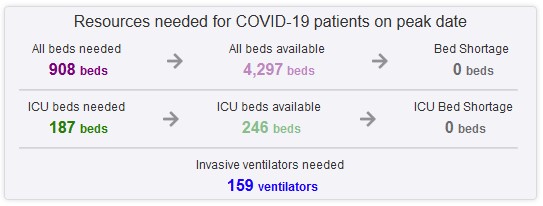
Staying home helps slow spread of the coronavirus. Our household is doing it’s part. I’m thinking of my laid off friends at the wholesale club and hoping they make it. Like them, we will all have to re-apply ourselves in the new paradigm after the pandemic runs the first wave of its course. COVID-19 will be a permanent fixture in society, even after a vaccine is developed. For now, we are provisioned and ready to make it through the next couple of weeks.
Categories
Kitchen Garden

Pandemic Gardening

Working at home during the pandemic.

After the first cases of COVID-19 were reported by the State Hygienic Lab on March 8 it took a while to understand the scope of the coronavirus.

The next day, Governor Kim Reynolds signed a proclamation of disaster emergency. Two days after that the World Health Organization declared the virus a pandemic.

The president set a 15-day federal stay at home order which has since been extended until the end of April. Tens of thousands of Americans could die from the virus. We’re all hoping the number is much less.

In Iowa six people died of COVID-19 as of this morning’s update on the Iowa coronavirus website. 183 people have confirmed cases of COVID-19 in our county and the six adjacent ones, or 43 percent of the Iowa total. While we don’t know precisely how the virus spread, it seems obvious reliance on a small number of employers (Collins Aerospace, University of Iowa, multiple food processors) resulted in local commutes that enabled it. During a press conference yesterday the governor noted, “the end is not in sight.”

Jacque hasn’t left the house since March 8, so I am the one with the most risk of contacting the virus. I studied how it is transmitted and have been careful to maintain social distancing and keep clean hands. When I’m out in public I avoid touching my face. Whenever I interacted with people I first ensured they made adequate precautions, then cleaned up when I arrived home.

At the home, farm and auto supply store the company cleans the store multiple times a day, although they don’t go to the extent the grocery store does in wiping down the conveyor belt at the cashier after each customer. According to an article in this morning’s Cedar Rapids Gazette, retail workers are most at risk because a. we are open for business, and b. a quarter of retail workers are age 55 and older and at more risk of contracting COVID-19.

Shopping trips? I don’t like shopping anyway so trips have been limited to the wholesale club, the grocery store, the gas station and to picking up soil mix to start and transplant seedlings at home. Because the cars are mostly parked we don’t use much gasoline. Each business I visited had a regimen to prevent spreading the coronavirus.

Outside I hear the laughter of children. I keep my distance. Occupied with writing, gardening and home life, the isolation from others is welcome even if the cause of it is not. I believe society will survive the pandemic. I also believe we will be changed by it. At least for a while, until we forget, and go on living as we have been for multiple millennia.

Categories
Home Life Kitchen Garden

Nostalgic Breakfast Tacos

Fresh Cilantro Tacos

There is a 25 percent chance of rain beginning at 9 a.m., according to the weather application. I pulled the cars out of the garage so that space can be used for other projects if the forecast proves to be true. Despite the coronavirus epidemic the waste hauler is working today so I put the trash and recycling bins at the end of the driveway.

I made a taco for breakfast this morning and one of my go-to recipes is easy.

Nostalgic Breakfast Taco

When Mother began cooking tacos at home it was revolutionary. We hadn’t had that at home until the 1960s. The change was partly due to the rise of mass-produced, Mexican-style options at the grocery store. It was also a result of her work at the grade school cafeteria where they made dishes different from what we grew up with. Cafeteria work broadened our home food repertory. While we don’t eat beef in our home now, commercial soybean crumbles create a texture and flavor that reminds me of those early days when she made tacos for the first times. Here’s how it went this morning.

Two frying pans go on high heat. In one cook a pre-made organic flour tortilla. In the other heat a scant tablespoon of extra virgin olive oil.

Dice half a medium-sized onion and part of a frozen bell pepper. They go into the hot oil. You’ll hear the sizzle. Stirring constantly, season with salt, dried cilantro and powdered chilies. Cook until the onions and peppers are soft. Stir in a clove or two of minced garlic and cook until a garlic aroma rises from the pan. Stir for a minute or so and add one half cup of commercial frozen soybean crumbles. Stir until thawed and set aside.

Place the cooked tortilla on a dinner plate and garnish from the bottom up: a layer of Mexican cheese to taste, pickled sliced jalapeno peppers, salsa or hot sauce to taste. Put the fry up on top of the garnishes and serve with a beverage of choice.

I look forward to when garden cilantro and tomatoes are available. Tacos are a way to explore your palate and discover who you are. For me it’s a chance to remember standing around the kitchen in that American foursquare home with family while reflecting on how our lives have changed. Even on a rainy day that is positive experience.

Categories
Kitchen Garden

Pandemic Provisioning

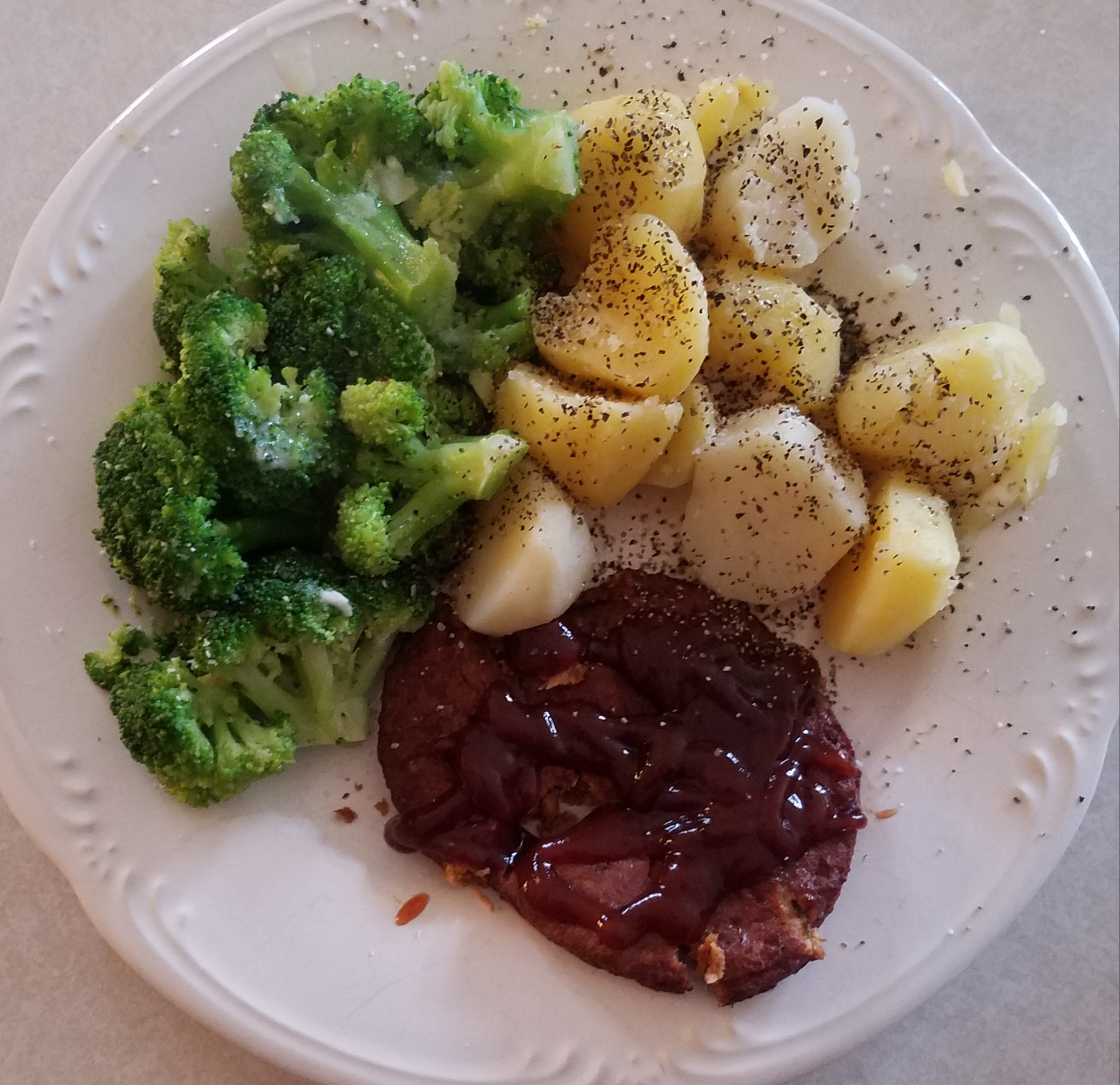
Dinner March 16, 2020.

A foundational aspect of our lives in Big Grove Township is reliance on others when it comes to food. We use the international supply chain which brings items closer to home so we can buy them at the grocery store.

At the same time, we spend 24 percent of our food dollars on products where we know the face of the farmer. That’s a lot more than most families and it results in a pantry full of staples like potatoes, onions, carrots, canned tomatoes, frozen vegetables, pickles and apple products.

Our regular habits prepare us for a month of quarantine without the coronavirus pandemic. We’d suffer for lack of milk and eggs, yet in a global society where millions go hungry each night, it’s more inconvenience than any kind of deprivation. We’ll get by.

The meal in the photo is our home food story. One third Farmer Kate’s potatoes, one third frozen organic broccoli from the wholesale club, and one third a commercial, mass produced soybean burger from the grocery store. The garden broccoli crop wasn’t so good last year and we’ve depleted the freezer of our own. That’s where the food supply chain comes in handy.

I don’t know if I’ll venture to work at the home, farm and auto supply store tomorrow. After the management team arrives later this morning I’ll phone in and see what protections they offer employees. I work in the warehouse and am isolated from most customer contact. All the same, retail is a people-contact job and there is more risk there than in staying home. If I choose to stay home, there will be no compensation.

I’d feel better about the isolation if it were warm enough to work in the yard. Yesterday morning patches of snow remained on the ground. It should melt today as ambient temperatures are expected in the mid-forties this afternoon. Instead of working outside, I read and wrote in the usual places. About 5 p.m. I started peeling potatoes and making dinner. It wasn’t much, but will sustain us as we ride out the coronavirus pandemic over the coming weeks.

Categories
Living in Society Social Commentary

Food Hoarders All

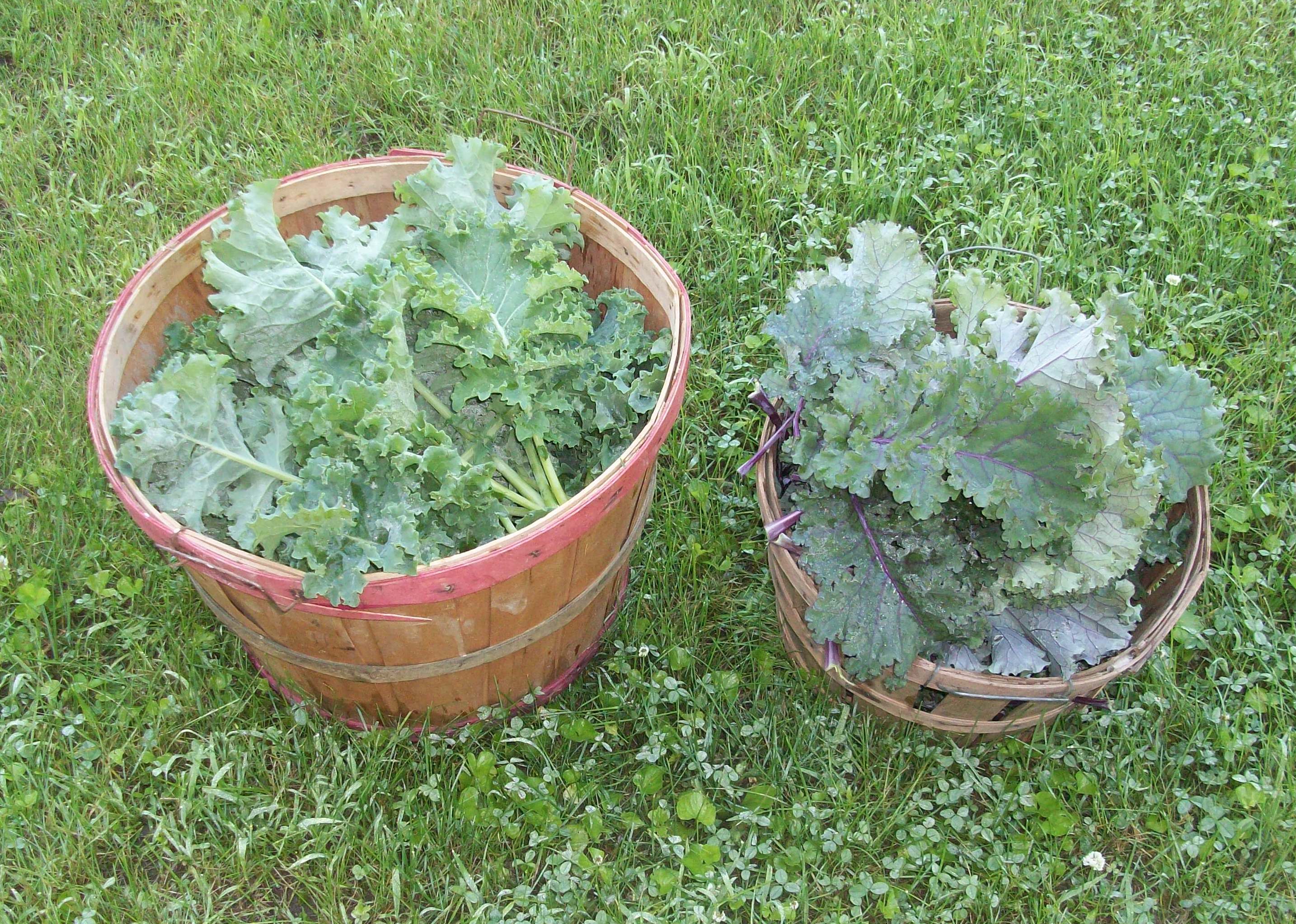
Morning Kale Harvest, June 2015

Because of the coronavirus, people are stocking up on food and sundries in case they are quarantined. Local retail business is up compared to last year. The wholesale club has been rationing specific items.

The retail outlet where I work twice a week has a large table in the employee break room where we pass the time talking, looking at our mobile devices or yesterday’s newspaper, and eating snacks and lunches. The consensus among this group of employed yet low-wage workers was we could survive a month or more of quarantine without stocking up. It’s how we do.

When my uncle died, Mother found a large number of one-pound boxes of dried pasta in his pantry. A person is in the store, it’s cheap, so why not pick up a package? Years of accumulation like that reflects a certain type of affluence. For those of us with a stable home life the amounts build up. A person has to work at it to use up the pantry and freezer. It’s a form of food security.

If we were quarantined and had no access to new food, the first thing to go would be dairy products. Fresh milk and eggs would be most missed, although cheese and butter would not make it a month. This discussion is hypothetical since there is an ability to receive home-delivery of most grocery items in our community. My next door neighbor owns the grocery store in town so I’m not worried about running out of food if quarantined.

We have plenty of fresh onions, canned tomatoes, dried basil and olive oil to make it through a month of pasta dishes. There is plenty of applesauce and pickles. We have enough apple butter to last more than a year. Kale? there is plenty in the freezer along with other frozen vegetables from the garden.

We’d test how far ten pounds of flour goes. We’d see if the yeast in the ice box is still active. If the yeast isn’t active, there would be biscuits and corn bread made with baking powder as leavening. There would be a big batch of soup made from celery, carrots, onions and potatoes. We have five cases of prepared beans, a large bag of garbanzo beans, and plenty of rice. The freezer has frozen raspberries, aronia berries and blueberries. We’d find out what we have.

As indicated above, this is theoretical as the community would support us on quarantine. As we settle into a weekend spent mostly at home we have no worries about food security. Sustaining our lives on the Iowa prairie is what we do.

Categories
Home Life

Saturday Errands

Turn-Style Department Store, Davenport, Iowa. Photo Credit – Davenport Iowa History Facebook Page

I yearn to live a normal life. I’m not the only one.

Raised in a community of a hundred thousand people, I found something new was always going on. I didn’t discover the half of it. My craving for discovery continued with our move to a rural community in 1993.

In the context of yearning and discovery I ran errands on Saturday.

I had a list. Citirizine from the pharmacy, organic celery from the supermarket, a cup of coffee from the coffee shop, writing supplies from the office supply store, furnace filters, canning jar lids, 4-ounce canning jars, and a big tub for soil mix from the home, farm and auto supply store… milk and eggs from the warehouse club so I wouldn’t have to shop there next Wednesday. I also got a much needed haircut before heading home across Coralville Lake.

Two things I had to do were pick up the keys to the meeting room for a Sunday political event, and post flyers about the Food Policy Council’s event next week on community bulletin boards in the grocery store, the library, the coffee shop, a restaurant, the home, farm and auto supply store, the gas station, and the pharmacy. These bulletin boards are ubiquitous, and are seen in the community. Not everyone has one but those who do know why they exist.

The trouble started at the food cooperative where my spouse has had an account since before we were married. They remodeled, and according to a cashier, “couldn’t find a place” for the community bulletin board which was now gone. Seriously? I get that the cooperative has changed since the days of bulgar wheat piled in burlap bags, ready for distribution. However, one hoped some sense of community would persist as the shelves filled with organic versions of processed food.

As long as I was there, I found the Tofurky brand Italian sausages I use when making red beans and rice.

Nearby I encountered “Beyond Burgers.” O.M.G. Two quarter pound “fresh” patties of the meat substitute cost $8.99. The ingredients? “pea protein isolate,” “methyl cellulose,” “bamboo cellulose,” and 19 others. I knew the product came from a lab, but Z.O.M.G. To make matters worse they were heavily packaged.

The packaging appeared to be foam and I looked it up. “Beyond Burger packaging is made up of almost five different types of substrates, including low density polyethylene, polypropylene, cardboard, paper, and wood products.” Not only is the packaging diversely made, how would a recycling company sort it if it even made it there?

Understood that a growing number of people don’t want to eat animals… but not like this.

I am mostly veg., that is, most of the time our diet is ovo-lacto-vegetarian. I’ll have the aforementioned Tofurky a couple of times a year to make a dish filled with memories of how I learned to cook. A staple in our household is Morningstar Farms soy-based burgers and recipe crumbles. At $1.25 each they are more affordable than Beyond Burger. They seem less processed, less engineered as well. We have fallen off the tofu bandwagon and carefully consider how we get our protein. The end game is I don’t see how highly engineered and processed food is an adequate replacement for beef cattle, hogs or chicken in our diet. Somewhere there is a middle ground and if red meat makes me feel queasy, I need to find something else to balance nutrition with a yearning for cooking the way Mom did. Beyond Burger is too special for that.

I don’t run errands that often any more. We get by on less. When I lived in Germany I had scant leisure time but when I was off duty I yearned to go shopping at the rail station, the post exchange, and across the Rhine River at the box stores in Wiesbaden. Today shopping trips like Saturday are a couple times a year thing. I wish it engendered less outrage. I don’t want to be that cranky old man of which one hears tell.

All the same, running errands is a way of engaging in society. I’m grateful for conversation with cashiers, sales associates and hairdressers because it breaks up the isolation of aging. I like getting away from society, yet have the same basic need to join with others… even if that means complaining about stuff that doesn’t make sense.

It’s all part of sustaining our lives in a turbulent world.

Categories
Home Life Living in Society Writing

Pivot From the Caucus

Palmer House Stable, Solon, Iowa, Feb. 8, 2020.

While the Iowa caucus news cycle lingers, I am already gone.

After a Saturday of political engagement — an interview with Michael Franken of Sioux City who is running for the Democratic nomination as U.S. Senator from Iowa, and a town hall meeting with my state representative Bobby Kaufmann — Michael Wines of the New York Times contacted me about my experience at the Big Grove precinct caucus. I told him the story… which is metastasizing.

The narrative is repeated so much I might resurrect a circus like Ringling Brothers and Barnum and Bailey to take it on the road. As locals know, circuses are an Iowa thing and four of the Ringling brothers were born in McGregor, Iowa. What more fitting outcome for the caucuses?

Nontheless I am pivoting away from politics. I’m in a position to do so because of great caucus turnout. I’m confident our four delegates to the county convention will show up. Two volunteers stepped up to participate as precinct representatives on the county central committee. Despite lingering interest in what we did, the news cycle will eventually move on. It’s time for me to go.

I unsubscribed from the county party weekly newsletter, thanking the public relations chair, and saying, “I have less need to stay abreast of what party insiders are doing.” There is life beyond politics.

Toward what will I pivot? Will a divot of politics follow?

Our big family news is on Feb. 5 we made the last payment on our daughter’s student loan. Including loan interest, our contributions, and her work study and scholarship, the cost of her four-year education was about $140,000. In the box of letters I sent Mom during college, I wrote my monthly bill at the University of Iowa was $50. Add in the scholarship I had and my college expense was about $6,800 for four years.

My freedom from politics will be used to become a better citizen. Monday I start a brief term on the county Food Policy Council. If that proves to be engaging, I’ll volunteer for a full, four-year term. I’m writing more for Blog for Iowa, have written up one interview, two more are done, and there may be more. I hope to have a better garden this year. I invested in an electric tiller, bought some rolls of mulching, and began planting onions on Friday. There are plenty more projects in the works. There are also the farm jobs, which have been reduced from three to two this season.

A group of us were sitting around a table in the break room at the home, farm and auto supply store on Wednesday. The discussion was about retirement as a couple of us have retired but continue to work because of the social engagement a job involves. Our store manager was there and he told me, “If I were you, I’d retire as soon as possible.” Depending on how the next couple of months go, I may take his advice and help on one of the federal election campaigns.

For now, I’m on to what’s next while sustaining ourselves in a repressive national political environment. Life will be better, at least I hope so.

Categories
Home Life

Winter Flight

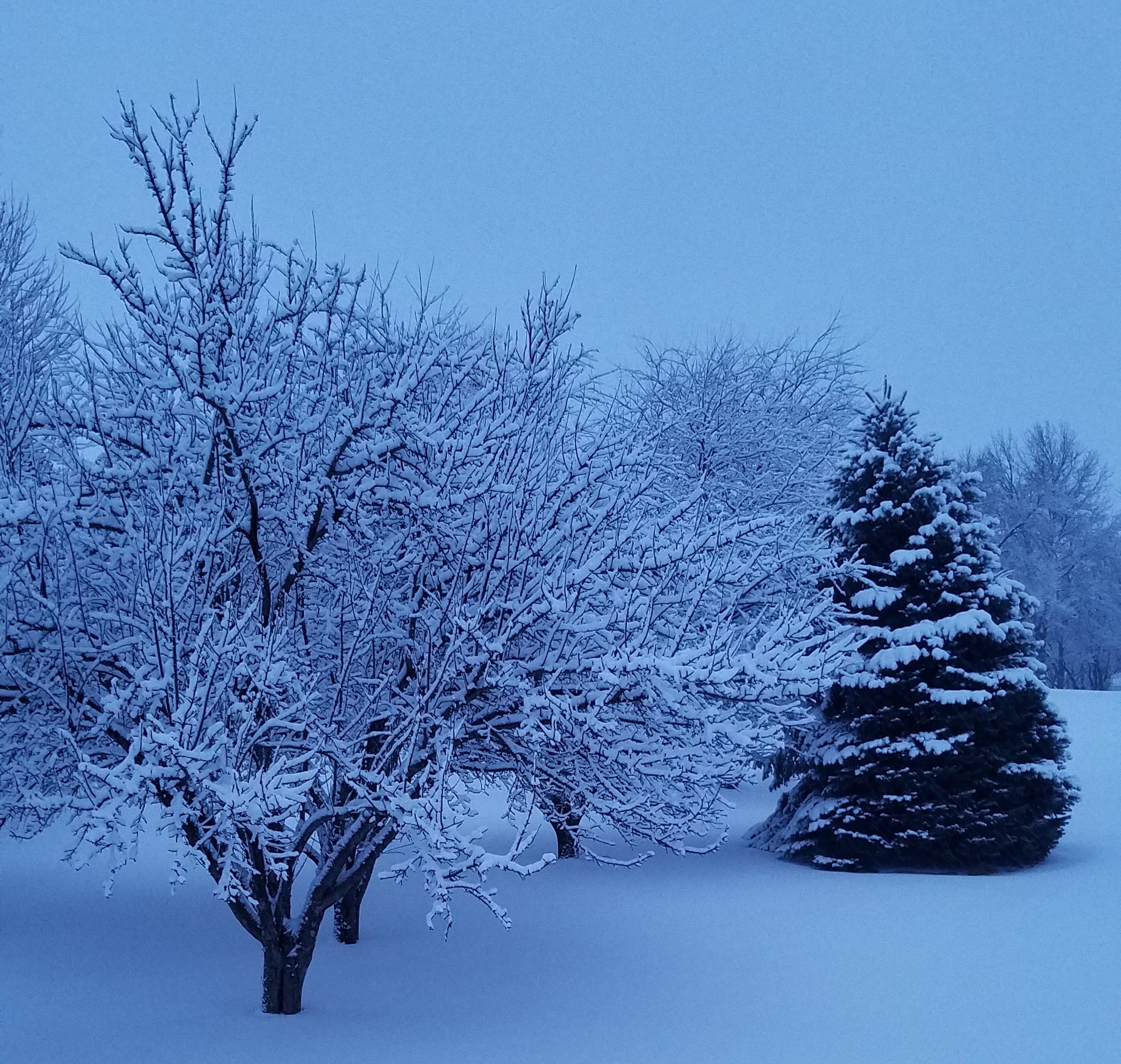
Winter snowfall Jan. 24, 2020

While I’m typing our daughter is driving to the airport where she will board an aircraft for a rare visit home. The flight is on-time despite Iowa’s winter weather.

Except to attend Mother’s funeral, she hasn’t been home since April 2016. We are looking forward to seeing her as phone calls, text messages and email are not enough.

I cleared the driveway to allow ingress and egress. If she wasn’t coming I may have left the snowfall for another day. Once she’s home, I’m not sure if anyone will leave the house for a while.

We are thankful for the Federal Aviation Administration and the work of the pilots and crew of the airline and airports. Thankful for safety on this winter flight.

Categories
Writing

Energy Matters

Snow-covered Driveway

Friday I ran errands before the winter storm hit. Errands means filling the automobile fuel tank with gasoline, buying a lottery ticket, and driving south on Highway One to the grocery store in the county seat to purchase organic celery, frozen lima beans and sundry other items not available locally.

The storm hit between noon and 1 p.m. depositing a fluffy, four-inch covering of snow on everything.

It wasn’t a blizzard as one could easily see into the distance through the small, falling snowflakes. The wind wasn’t blizzard-bad. It gave me a chance to try out the electric snow blower I bought at the home, farm and auto supply store on Dec. 12., a concession to aging.

Our rural electric cooperative buys electricity from CIPCO (Central Iowa Power Cooperative). Their electricity generation fuel mix is coal, nuclear, hydro, landfill gas, wind, solar, natural gas, and oil energy resources, according to their website. They haven’t updated the breakdown by fuel source since 2016 which showed 38.3 percent coal, 33.7 percent nuclear, 27.0 percent wind, solar, hydro and landfill gas, and 0.5 percent natural gas. I could say we have a nuclear powered snow blower… or not depending on how I feel on any given day. Yesterday I was thankful I didn’t have to shovel as the work went quickly.

We need energy to fuel a modern lifestyle and there is not a lot of control outside our personal habits. We use electric appliances and there is no reason to change back to natural gas, the most recent alternative. Our home heating is a forced air, natural gas central furnace supplemented by an electric blanket in one bedroom and a space heater in my writing room. We have no fireplace and burning wood isn’t a sustainable option. We use an on-demand, natural gas water heater which has served us well. I learned about on-demand water heaters while visiting a friend in Vienna, Austria in 1974.

We got rid of incandescent light bulbs long ago and do our best to turn off lights when not using a space. I occasionally forget the light is on in my writing room and leave it on overnight. We consolidate trips to major cities in our vehicles, combining work days with shopping and other errands. We spent an average of $3.65 per day for electricity and natural gas in 2019 and $2.55 per day on gasoline to operate my car. When we upgrade my 1997 Subaru there will be an opportunity to change to electric or get a more fuel efficient vehicle. Same for the other car in the house, a 2002 Subaru. As we age I can see owning only one automobile.

I still use gasoline to power yard equipment including our mowers and trimmer. I tried a Black and Decker electric trimmer but it wouldn’t hold a charge long enough to finish the whole yard, even with two batteries. When it broke after years of service I got a Stihl trimmer with my discount at the home, farm and auto supply store. I didn’t use a gallon of gasoline for the trimmer in 2019. I don’t like mowing the lawn unless it is to collect grass clippings to use as mulch. In 2019 I filled up my 5-gallon gas can twice: once at the beginning of the season and once in July. It’s still half-full. I expect to purchase a gasoline-powered rototiller for the garden. Like with the snow blower it is a concession to aging.

A snow day is a chance to bunker in and get caught up on desk work. I wish I could report I had. Instead I read, watched snow fall, and wondered about our collective future in an environment where the weather event was unremarkable, but its late arrival this winter is an unmistakable sign about our warming climate. I need to get to work today, as do we all.

Categories
Home Life Writing

Last Days of 2019

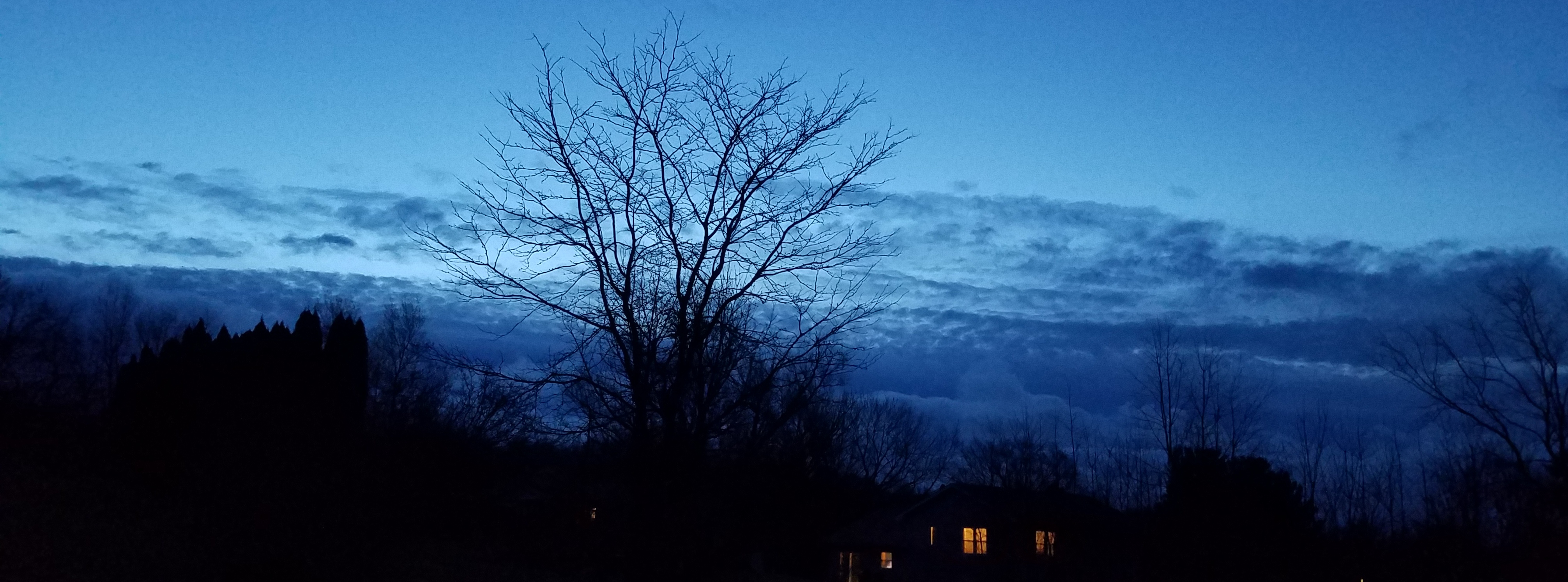
Front Moving East at Sunrise on Dec. 29, 2019

Snow flurried outside the dining room window for a while. I thought we might return to normal winter weather. The thought passed and snow stopped without accumulation.

We need a good streak of very cold days to prune the fruit trees. Last year it was difficult to find such a streak yet I’m hopeful this year. I’m not going to wait for ideal conditions. I’ll take what we get in our evolving climate.

This year’s reckoning with the past and planning for the future is taking more time and effort. It’s not because I did more. The process has been more organized and thoughtful than in recent years. I’m conscious of my age and weighing carefully which projects and activities will get my attention. At the end of it I want a definite plan with time lines. It’s a better process.

While our personal lives went okay in 2019, our participation in broader society was like the wafting odors from nearby feedlots. It was hard to stay separate from the international shit storm.

As Julian Borger pointed out in The Guardian, 2019 was the year U.S. foreign policy fell apart. “Donald Trump’s approach to the world is little more than a tangle of personal interests, narcissism and Twitter outbursts,” he wrote. That’s no way to run a country, even if a majority seeks to isolate American interests from the rest of global society. We can do better than this.

Steven Piersanti wrote on DCReport.org, “Under the bankrupter-in-chief, the national debt is skyrocketing while economic growth is lagging.” Trump is running the country just like he ran his failed businesses, according to Piersanti. “The country’s economic resources are being wasted and our economic health is endangered.”

“The next 12 months will determine whether the world is capable of controlling nuclear proliferation, arresting runaway climate change, and restoring faith in the United Nations,” Stewart Patrick wrote at World Politics Review. Those things matter to everyone and positive outcomes on any of them are dubious without American leadership. President Trump, ditcher of nuclear arms control agreements, critic of the need to address climate change, and bad-mouther of the United Nations does not appear to have an appetite or the capacity to lead at home or abroad. The prospects are bleak on these fronts and more until government changes hands.

It comes back to personal planning for next year. What amount of time will I devote to addressing these problems? The overarching motivation is to remove our current federal elected representatives from office and replace them with people who understand the importance of foreign policy.

At the same time, I can’t let politics be a single thing that absorbs all my time. Regardless of the Republican shit storm, we each need balance in our lives.

It’s taking a little longer to plan this year but the premise of it comes back to my tag line. How shall we best sustain our lives in a turbulent world?

A toast to 2019, an aspirin and vitamin for 2020, and off we go into an uncertain future with the potential for great things.