Categories
Environment

Holiday Giving With The NDAA

Photo Credit - Reuters
Photo Credit – Reuters

Congress put an unexpected gift under the Christmas tree the National Defense Authorization Act (NDAA) has become.

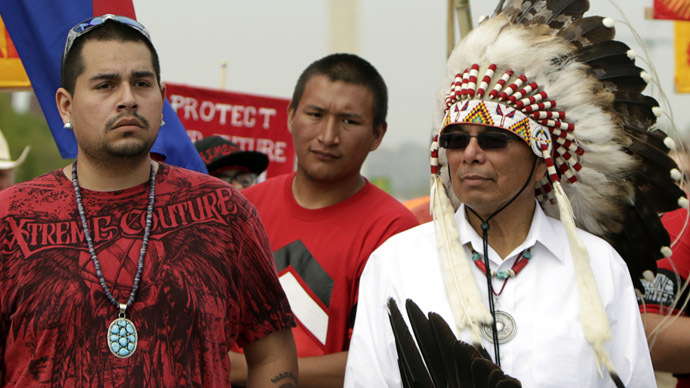
The U.S. is poised to give a foreign mining company 2,400 acres of national forest in Arizona that is cherished ancestral homeland to Apache natives. Details of the proposed land deal can be found here.

The giveaway of Apache burial, medicinal, and ceremonial grounds is currently within the bounds of Tonto National Forest. Resolution Copper, a subsidiary of the Australian-English mining company Rio Tinto and BHP Billiton, is to be the beneficiary of Congress’ largesse at the expense of Apache natives.

News of the land provision in the NDAA was kept under wraps until late Tuesday, when the bill was finally posted online. The land deal appears on page 1,105. The bill passed the U.S. House on Thursday 300-119. The bill now goes to the U.S. Senate where it is expected to pass during the lame duck session.

The Resolution Copper website describes the deal as “developing an Arizona copper resource to benefit the world. Located near Superior, Arizona, the project hosts one of the world’s largest untapped copper resources.”

The Apache have a different view.

“Since time immemorial people have gone there. That’s part of our ancestral homeland,” Terry Rambler, chairman of the San Carlos Apache Tribe said, referring to the overall area in question. “We’ve had dancers in that area forever—sunrise dancers—and coming-of-age ceremonies for our young girls that become women. They’ll seal that off. They’ll seal us off from the acorn grounds, and the medicinal plants in the area, and our prayer areas.”

Rambler said whether Rio Tinto’s economic assertions are true or not, it may not matter.

“It seems like us Apaches and other Indians care more about what this type of action does to the environment and the effects it leaves behind for us, while others tend to think more about today and the promise of jobs, but not necessarily what our creator God gave to us,” he said.

This year Congress named the NDAA the “Carl Levin and Howard P. ‘Buck’ McKeon National Defense Authorization Act for Fiscal Year 2015” after the retiring Senate and House Armed Services Committee chairmen. Arizona Senator John McCain is said to have been instrumental in getting the mining deal added to the law.

“The Resolution Copper project has the potential to utterly transform these communities (near Superior, Arizona),” wrote McCain in an article in AZCentral. “At full capacity, the mine could create as many as 4,000 jobs and produce roughly 25 percent of our nation’s domestic copper supply. Arizona as a whole will likely benefit from tens of billions of dollars in increased economic activity over the lifespan of the mine.”

This is who we have become as a nation. Exploring for and producing every last resource on the globe, regardless of long standing and legitimate concerns, for the sake of jobs.

Where will the copper go? It will be traded on the world market. One of the buyers is expected to be the country with the biggest shopping cart. Today’s that’s China. Another indicator of the times in which we live.

The government favors the military, and since the NDAA is expected to pass each and every year, what better place to hang an ornament of interest to the richest corporations in the world? The goal is economic development, but at what cost? Politicians like John McCain don’t answer that question.

~ Written for Blog for Iowa

Categories
Work Life Writing

Meeting at the Cemetery

Rural Cemetery
Rural Cemetery

BIG GROVE TOWNSHIP— There was trouble last night at the cemetery, the first such trouble since I was elected township trustee.

It had to do with who could be buried in whose plot, and the trustee who coordinates plot sales and burials wanted to discuss the issue. The funeral is Friday, so no time for dalliance. We are meeting at 8:30 a.m.

Two years into my term, being a township trustee has provided a steady stream of learning about our community. There has been time to consider things, and almost no controversy—just repeated expression of wills about what should get done and how. Any conflicts that surfaced were quickly resolved.

I’m confident we will figure this one out.

Yesterday it was shown that Mary Landrieu did have 59 votes to proceed on Keystone XL, and that’s all she had. The bill overriding the executive process on evaluation and approval of the project now goes into the dustbin of the 113th Congress. It likely will be back next congress.

I spent part of the last two days transcribing testimony to the Environmental Protection Agency (EPA) on reduction of greenhouse gas emissions, carbon dioxide particularly.

“I began my career as a summer intern at EPA 42 years ago under what has euphemistically become known as Russell House One,” Dianne Dillon Ridgely said. “I was a 19-year old kid. And what is most dramatic is much of what we addressed that summer—in terms of air pollution, in terms of the public’s engagement on power production—are exactly the same things, particularly in terms of coal, that we are still addressing and fighting 42 years later, and to me that is really a sad commentary.”

Ridgley is a 42-year veteran of governmental action (or inaction) on clean air and clean water, having been appointed by Presidents Clinton, Bush 41 and Bush 43 to international delegations to address environmental issues. We’re still addressing them. There is hope the EPA’s actions won’t be blocked by the 114th Congress, something the presumed Senate Majority Leader Mitch McConnell indicated is high on his to-do list. Time will tell, but I believe we are on the right side of history regardless of what the Congress does.

My last workday at the local paper was Sunday. It will feel a little weird to be able to focus on my writing on the weekends instead of proof reading the paper. The bucket of part time paid jobs is down to three, and one of those is finished the second week in December. When the number surged to eight last summer, it was too much to juggle. Having found a bottom, the goal for next year is to keep what remains, and use it as a base. In addition, I will seek paid writing jobs and temporary positions and opportunities that can add a few C-notes to the treasury each month. What remains is that I work to support my ability to write.

Hope against hope, I want to get out in the yard and mulch the leaves, and shorten the grass. For that to happen, the snow needs to melt, the yard dry out, and half a day of warmer temperatures roll in. In these days of crazy weather, that is possible, however improbable. That’s where this Wednesday finds me.

Categories
Environment

Keystone XL — Bright Shiny Object

Dave Loebsack
Dave Loebsack Voted for Keystone XL

LAKE MACBRIDE— Yesterday the U.S. House of Representatives passed a bill directing the federal government to move forward on the Keystone XL pipeline on a 252-161 vote. It was less than the number of votes needed to override a presidential veto, but Barack Obama has been holding his cards close to the chest on Keystone. What he would do if a bill reached his desk is uncertain.

According to the New York Times, the U.S. Senate scheduled a vote on the bill for Tuesday, and Senator Mary Landrieu (D-LA) believes there are already 59 of 60 votes required to overcome a filibuster when the vote comes up. If the senate can get past a filibuster, the bill’s passage is assured, although getting 67 votes needed to override a presidential veto is less certain than it is in the the house. It’s all political theater.

Our Representative Dave Loebsack voted for the bill, reversing his last vote on Keystone XL. He sent social media atwitter with shock and disappointment framed in terms that appeared to help the authors vent frustration more than say anything coherent. I am disappointed with the vote, but what politician ever consistently voted my way?

I know a couple of things.

When people talk about “environmentalists” I no longer have a clue to whom they refer. Is a farmer who plants a buffer zone based on a government grant an environmentalist? Is a non-governmental organization’s local staff member—overly dependent upon funding sources—an environmentalist? Is a Washington lobbyist for a large NGO an environmentalist? What about members of the defense department working toward a lower carbon footprint for the military? What about my neighbors who protest building a subdivision near Lake Macbride? There aren’t real answers to these questions, and that’s the problem with vague references to “environmentalists.” There is no club to which they all belong, and fewer common denominators. The idea is actually a right wing talking point, and the frame “environmentalists” is used to demonize advocates for the U.S. Environmental Protection Agency, and against production of electricity using coal, natural gas and nuclear fuels. Keystone XL is not a common denominator among environmentalists.

The failure of environmentalists was targeting the pipeline at all, instead of the tar sands. The tar sands is a bigger problem because of humanity’s inexhaustible thirst for oil and natural gas. This is the same problem for the Bakken, West Texas and Eagle Ford formations. Because oil and gas are in demand, there is direct financial return, subsidized by our government, in exploiting these resources. The environmental communities have been unable to adequately articulate the unrecognized costs in terms of human health of these exploration, discovery and production operations—even if a small number of people are working on it. Successful efforts have taken a targeted, NIMBY approach, like the fight against frac sand mining in Allamakee County. By targeting Keystone XL, environmentalists set themselves up for failure. As a friend wrote me last night, “there are hundreds of pipelines in this country already—what’s one or two more?”

I also know unions favor building pipelines. Ken Sagar and Bill Gerhard laid out their position in a Dec. 11 opinion piece in the Des Moines Register. Only a cynic would say that Loebsack’s vote on Keystone XL was quid pro quo for union financial and canvassing support during the 2014 midterms. It is likely more complicated than that, but it had to have been a factor. Part of being Democratic is the fact that Democrats don’t always agree. Keystone XL and Iowa’s proposed Bakken Oil Pipeline are a prime examples of that. Loebsack’s framing of the explanation for his vote makes his sympathies for the union’s legislative priority clear.

“I was skeptical of side stepping the normal processes, but the jobs attached to building the Keystone Pipeline are too important and can no longer be tied to D.C. gridlock,” Loebsack said, according to Ed Tibbetts of the Quad-City Times.

What I also know is October 2014 was the hottest month recorded on the planet since record-keeping began, according to the Washington Post. Yes, you skeptics, the world’s temperatures may have been higher or much colder in some prehistoric era. But what matters more is our civilization, and the changes produced by the industrial revolution are at risk. The underpinnings of basic facts about our lives, when the first frost comes, the amount of rainfall in a region, how we produce electricity, how we sequester carbon in the land, water sourcing, and others are all being undone.

It will take more than one vote in one governmental body to address these broader challenges. What I know is that is unlikely to happen in my lifetime unless we stop focusing on bright and shiny objects like Keystone XL.

Categories
Environment

Outside

Garden Work Day
Garden Work Day

LAKE MACBRIDE— It is hard not to engage in the news from outside Big Grove Township. U.S. and partner states are bombing Syria, the United Nations is taking up the expiration of the Kyoto accord, and more than 100 world leaders will address security issues at the U.N. It has already been a busy week.

Today, the U.N. Climate Summit 2014 convenes on an optimistic note:

Climate change is not a far-off problem. It is happening now and is having very real consequences on people’s lives. Climate change is disrupting national economies, costing us dearly today and even more tomorrow.  But there is a growing recognition that affordable, scalable solutions are available now that will enable us all to leapfrog to cleaner, more resilient economies.

There is a sense that change is in the air. U.N. Secretary-General Ban Ki-moon has invited world leaders, from government, finance, business, and civil society to Climate Summit 2014 this 23 September to galvanize and catalyze climate action.  He has asked these leaders to bring bold announcements and actions to the Summit that will reduce emissions, strengthen climate resilience, and mobilize political will for a meaningful legal agreement in 2015. Climate Summit 2014 provides a unique opportunity for leaders to champion an ambitious vision, anchored in action that will enable a meaningful global agreement in 2015.

While many states recognize the validity of what Ban Ki-moon has said, in the U.S., a positive outcome in the form of a binding and meaningful legal agreement seems unlikely. Even if some of us are pessimistic about U.S. participation, it will be worth our attention today and in coming days, to see what the Climate Summit produces. It is noteworthy that President Obama will be trying to get a resolution on counterterrorism passed by the U.N. Security Council rather than making any bold announcements on mitigating the causes of global warming.

In the universe of a single life, there can be hope. So that’s how I will spend this day on earth. Believing that we can sustain our lives in peace despite so much evidence to the contrary.

Categories
Environment Kitchen Garden

Dry Weather Returns

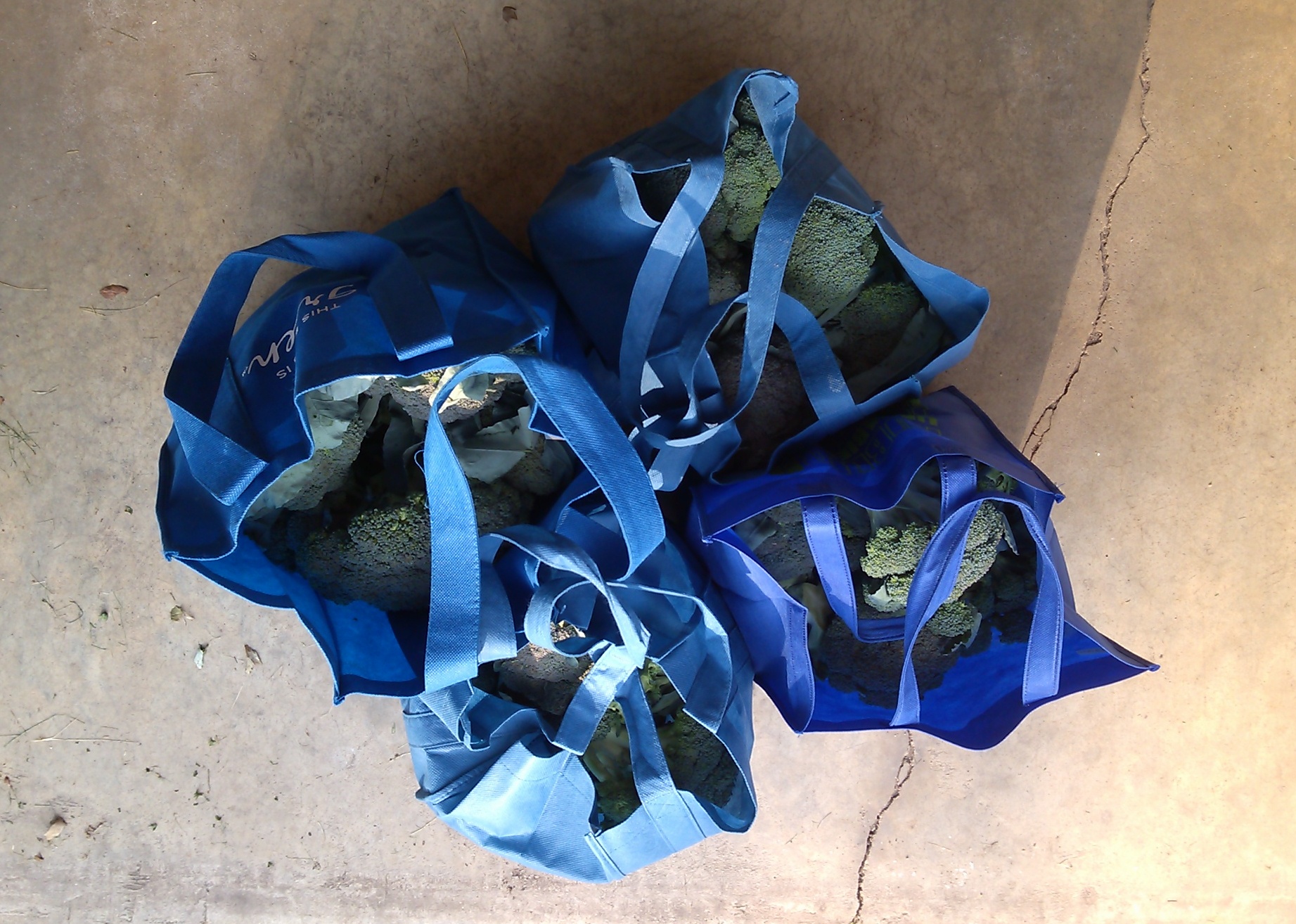
30 Pounds of Broccoli

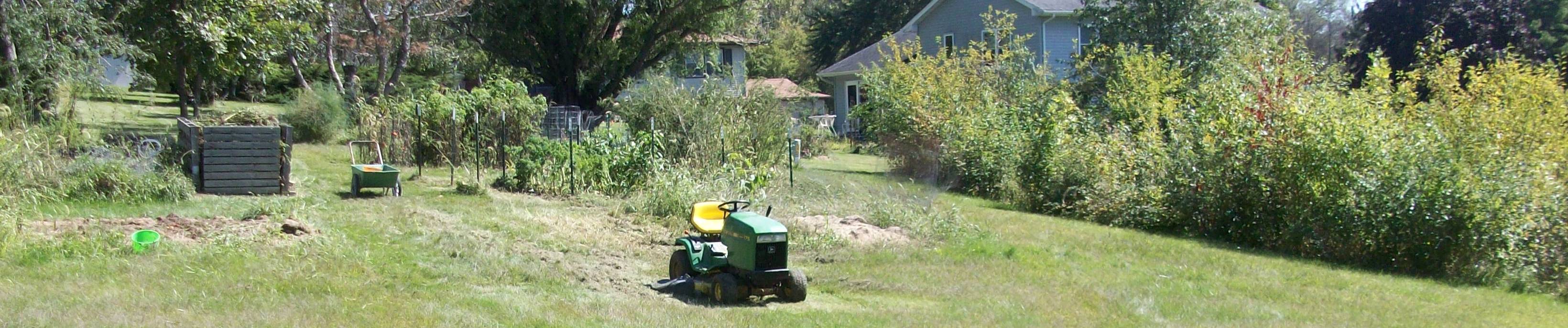
LAKE MACBRIDE— When the ditch in front of our house dried enough to run the lawn tractor through, it was a sign that dry conditions were returning to Big Grove. 140th Street remains flooded, but most of the other roads in the county are passable. After an exceptionally wet and pleasant spring and early summer, the hot, humid weather has returned and we need rain.

Forcing myself outside, away from kitchen work, I pulled weeds from very dry soil before the day got too hot. I watered the vegetables, hoping dew and rain later in the week will nourish them— will be watering again before nightfall.

Broccoli Closeup
Broccoli Closeup

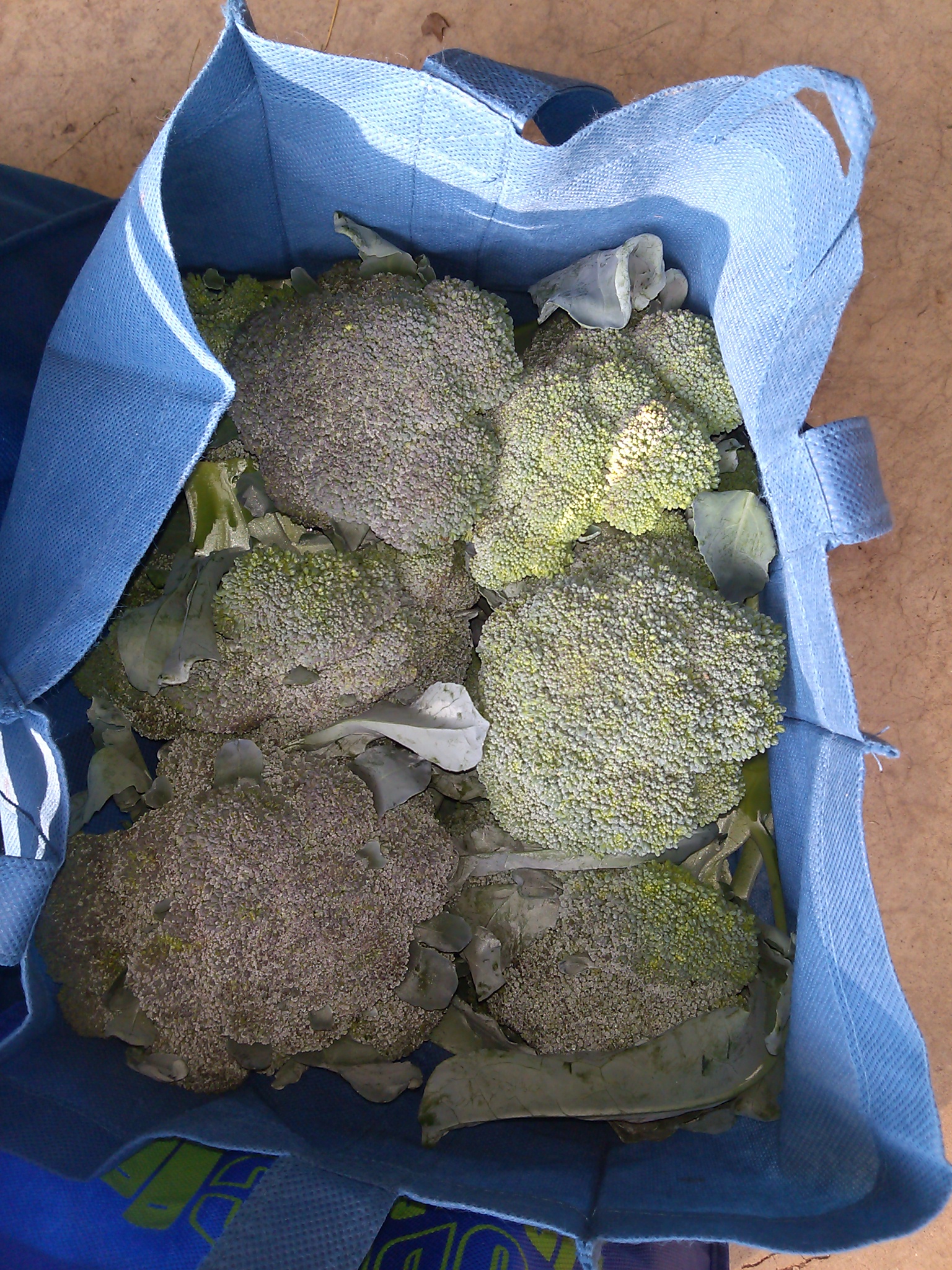
The last 24 hours has been what local food enthusiasts live for— securing broccoli for the winter, blanching and freezing it. It is work, with these outcomes: the best heads were kept fresh to cook later in the week; some of the best looking florets ever are processed and freezing; stems will be converted to soup, which then will be canned for later use; the freezer is getting a thorough cleaning of last year’s produce to make room, some of them going into the aforementioned soup; frozen rhubarb will be converted to sauce and canned; blueberries? Who knew?; and finally, vegetables that were frozen and are now coming in fresh will be composted.

Last night and today’s work is positive in so many ways.

That said, would it be better to buy frozen broccoli from the store during winter? When one lives close to the means of production, the answer is an emphatic no.

Categories
Environment

After the Storm

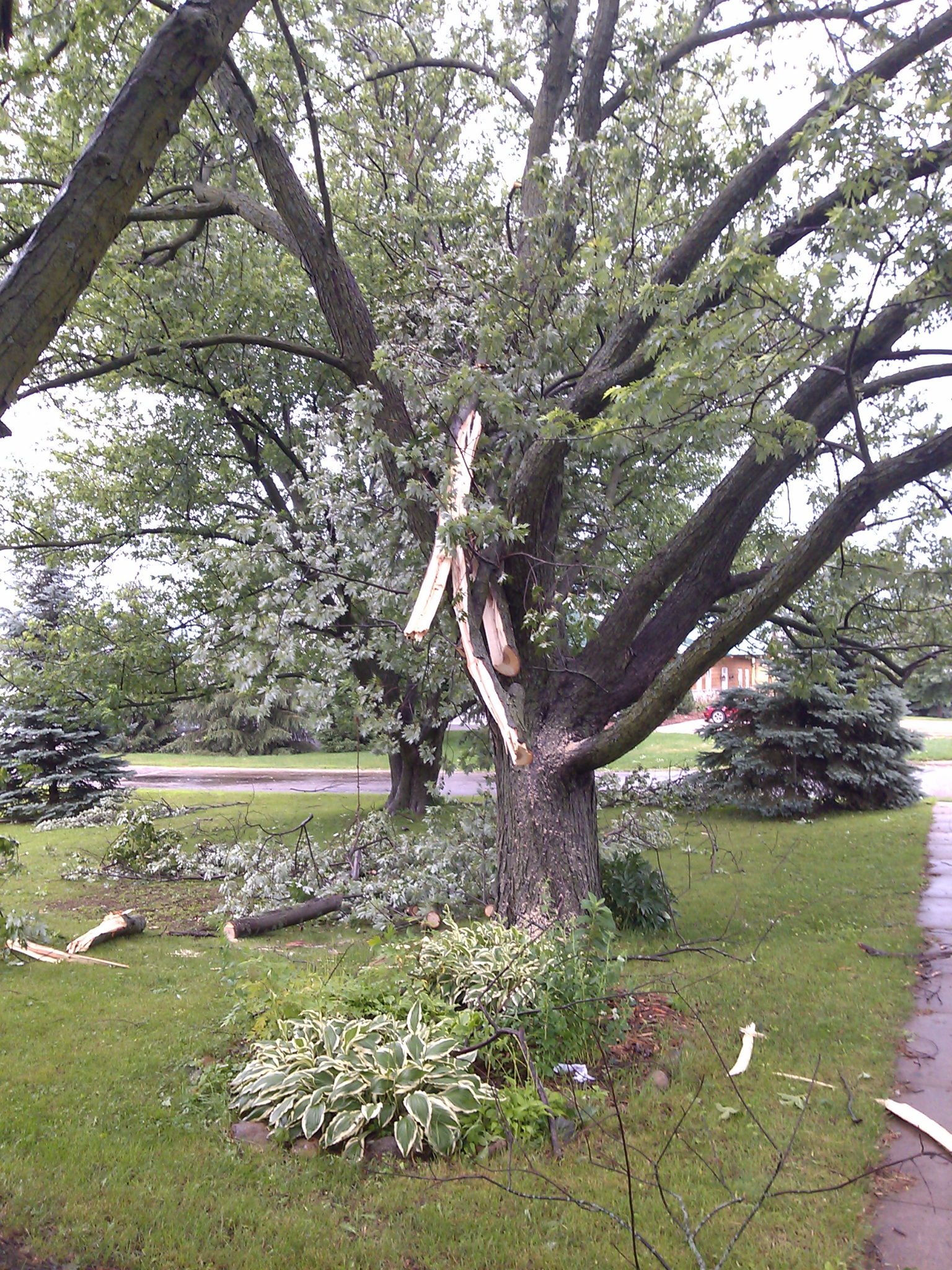
Storm Damaged Walnut Tree

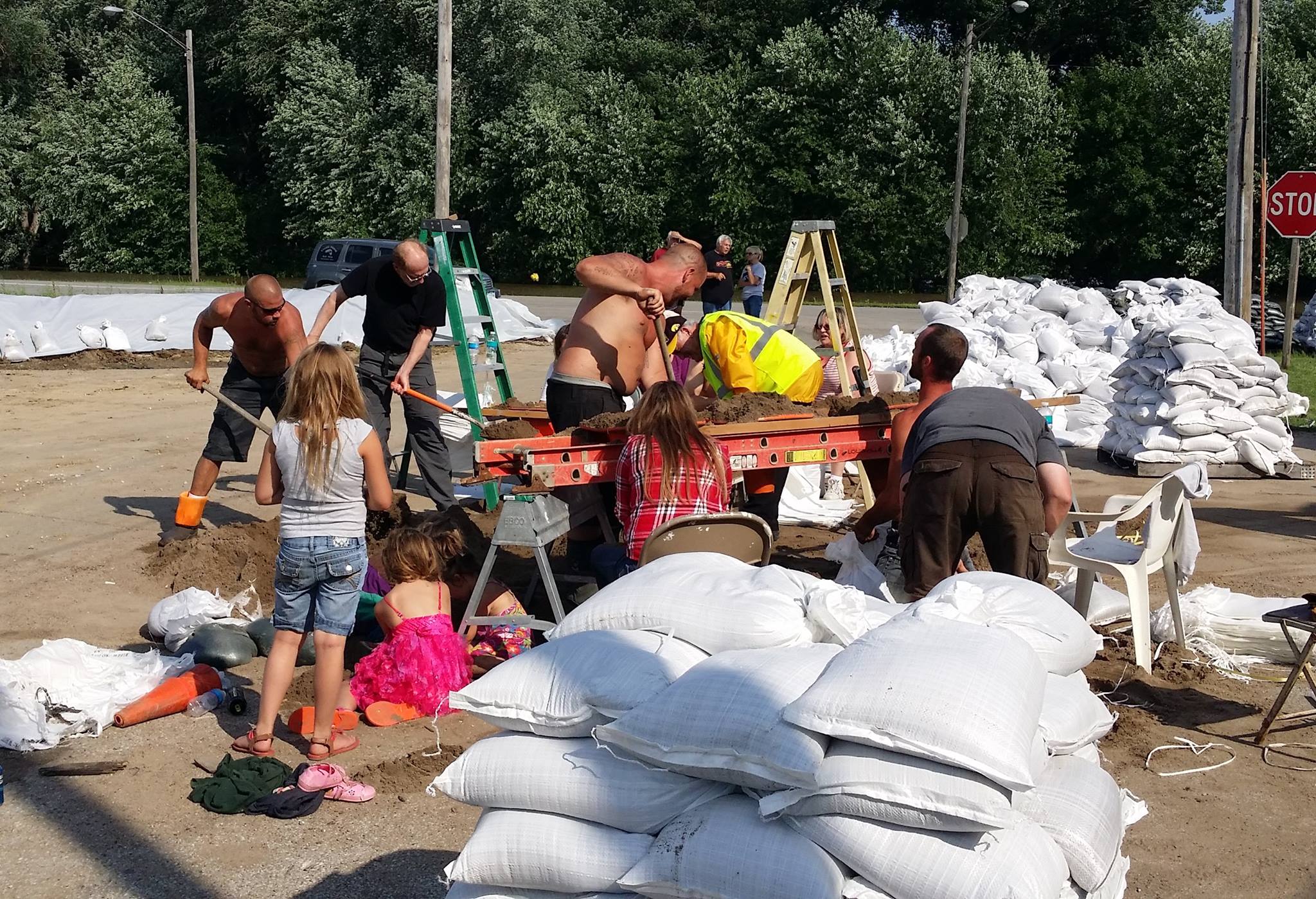
LAKE MACBRIDE— It’s June and Credit Island on the Mississippi River is expected to flood. Our U.S. Congressman was there yesterday to fill sandbags as part of an effort to prevent damage. Thing is, Credit Island has been flooding for as long as I can remember, and likely always will. People with businesses there should be used to it by now.

Part of the War of 1812 was fought on Credit Island, but I remember it more for the very flat golf course where my father, friends and I played from time to time. We would stop to hit a few balls into the river on the back nine.

Sandbagging on Credit Island

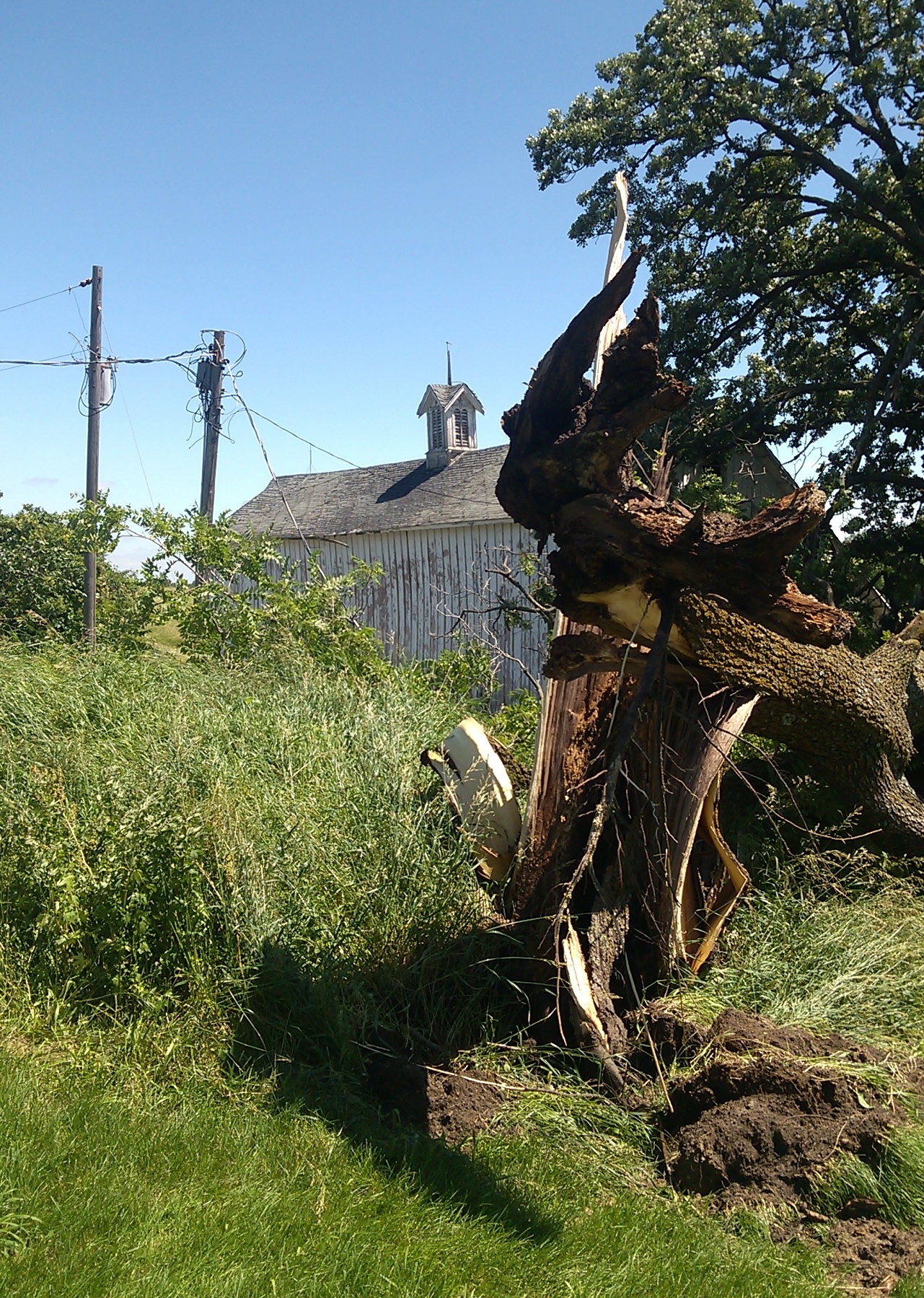
Our CSA had an old walnut tree knocked over by the storms. It rests on the electrical wire, waiting for the electric company to come turn off the juice so the tree can be chainsawed and removed from the main entryway.

The report isn’t published yet, but the state climatologist said yesterday that Iowa had its third highest June rainfall since record keeping began. What was bad about the recent storms was their intensity— made worse by our changing climate.

Locally there was not much damage. Last year’s extreme storms took out the weak trees and shrubs, so besides straightening a few tomato cages, there was little work to do in the yard. The rain is feeding a jungle that needs mowing soon.

Conditions look perfect for getting outside. Something one hopes to do soon.

Categories
Environment Writing

Dreaming of Zakuski

Storm Damaged Tree
Storm Damaged Tree

LAKE MACBRIDE— In a perfect world, friends would come over and we’d share vodka, zakuski and conversation for an evening.

Even though we have a bottle of Stolichnaya Vodka purchased in the 1980s in the basement (an inch or so has evaporated), and the fixings for a dozen or more little plates in the refrigerator and pantry, getting intoxicated by sweet, sour and savory hors d’oeuvres following shots of vodka is not going to happen.

Yet I imagine—damn you frontal lobe, your machinations and your dreams.

But there it is. In chilled small shot glasses, a dose of vodka followed by a homemade multigrain cracker spread with pesto.

An interlude of conversation while the next course is prepared.

A shot of vodka, and a small plate of beets and daikon radishes pickled with jalapeno peppers. More conversation.

A shot of vodka, and a tiny ceramic cup with rhubarb crisp. More conversation and a slight buzzing sensation.

A shot of vodka. A mixture of Kalamata olives, pickled chard stems and capers, served on small plates from the thrift store. And so it would go.

Except it’s not going to happen. The toll of vodka would be too much, though the conversation and releasing of inhibitions tempting. Who in today’s consumer society pays a visit to chat with zakuski? If our doorbell rings at all, it is a canvasser, not friends seeking to share tales of our lives on the Iowa prairie.

The world outside is of fallen trees and washed out ditches from last night’s extreme weather, part of a bleak day with multi-colored sky.

At a political event in town last night, about a fourth of the attendees cancelled due to the weather.

Trees were down all around the lake. Mill Creek rose up out of its banks.

“Our giant old walnut tree came down in the storm taking my farm’s main power line with it as well as my yard light pole,” came the report from our CSA. “The amazing thing is we still have power but until REC gets out here to shut off the power we have live wires on our driveway and the tree is blocking our road. Given the size of the tree I suspect it will take us several days to get the driveway cleared.”

Two trays of seedlings for the garden blew over, leaving work to salvage them this morning—the least of problems in a storm-wrecked world.

One dreams of zakuski, and lives in the material world with its fallen trees, blocked roads and disruptions, seldom stopping for the human possibilities dreams create.

It’s time to spread the pesto on plain toast and get on with the day.

Categories
Environment

Hegemony of Bad Ideas

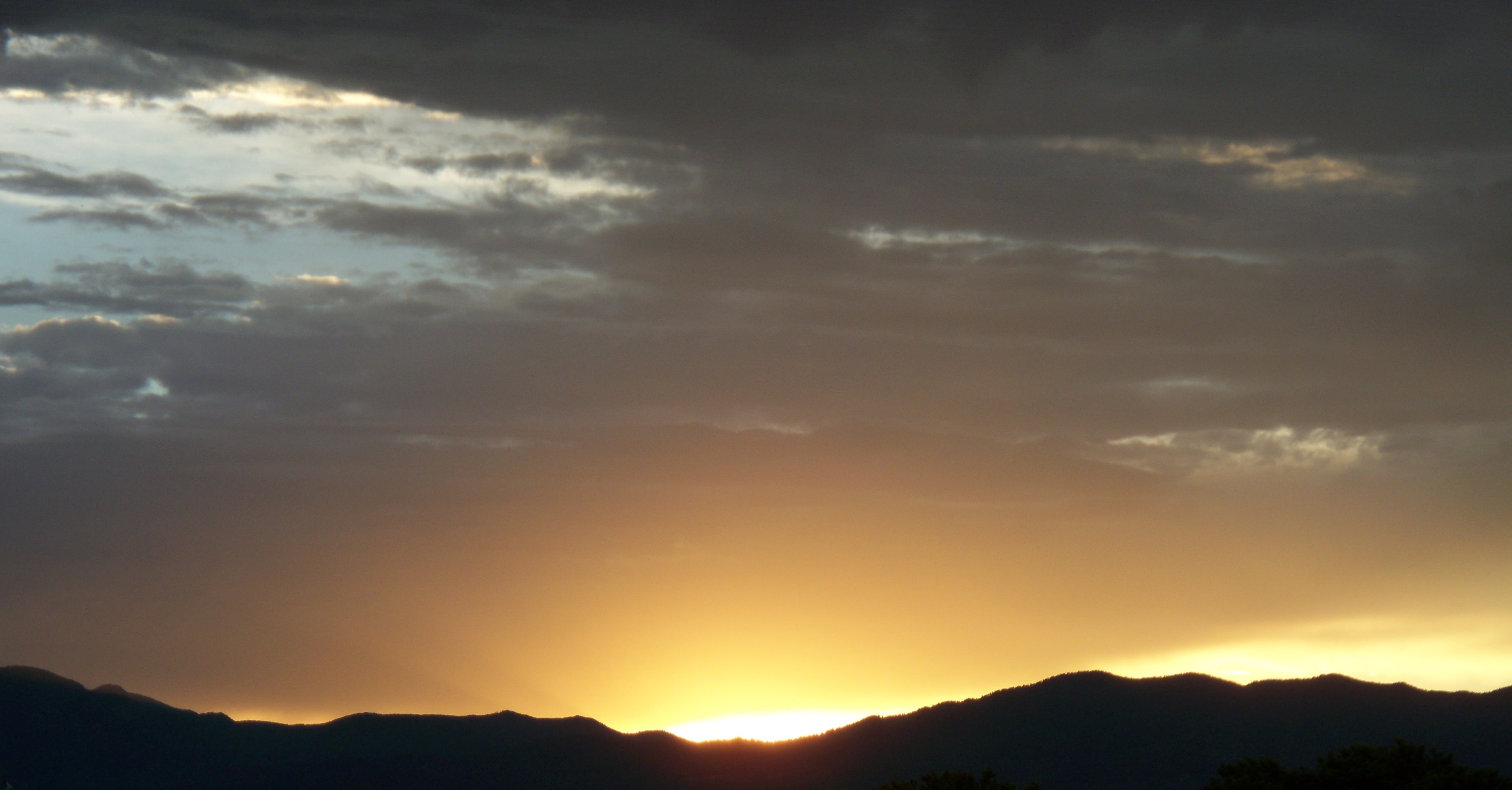
Sunset
Sunset in Colorado

LAKE MACBRIDE— Leadership on what matters most for our future will come from outside the United States. It’s not that Americans are bad people— for the most part, we aren’t. However, many of us have mistaken the advancement of bad ideas as the right ideas, and there is a difference.

The most recent example was last week’s vote on an amendment to the National Defense Authorization Act (NDAA). The NDAA is one of the few pieces of legislation that still works through the legislative process the way most of them did back when Congress did more legislative work. Rep. David McKinley (R-WV) offered an amendment which would “prevent the White House from sending funds to the U.S. Global Change Research Program National Climate Assessment, the Intergovernmental Panel on Climate Change’s Fifth Assessment Report, the United Nation’s Agenda 21 sustainable development plan, or the May 2013 Technical Update of the Social Cost of Carbon for Regulatory Impact Analysis Under Executive Order 12866.” McKinley questions the validity of climate science research generally, but, according to his website, also argued that reducing the use of coal wasn’t worth the harm it would do to the economy. The amendment passed the House, and is expected to advance to the Senate.

I understand coal country better than most mid-westerners. My family tree has long roots in Appalachia, predating the discovery of coal in Boone County, West Virginia by John Peter Salley in 1742. My career in transportation and logistics took me to Boone County and I learned about its dependence on coal. When the Coal Valley News announced our truck driving school, it was front page news, next to a story about United Mine Worker layoffs in the county seat.

Meeting with businesses, the governor’s office, the school board, local residents and others, I got to know the issues around coal. People didn’t like the mine owners and operators, but were dependent upon them. If life has changed from company-owned coal camps for most, coal camps still exist along with poverty and an extreme dependence on coal to extract a life. The question, “what are we supposed to do without coal?” resonates there if answers don’t.

There is no greater good in McKinley’s legislative work, and there is little point in arguing with climate deniers like him. The preponderance of evidence is that climate change is real, it is happening now, and its effects are causing harm. As the business community wakes up, we are increasingly able to place a dollar figure on the social and economic costs of global warming and related climate change. Economics will drive action to mitigate the causes of climate change, as making a profit remains paramount for businesses. Like it or not, West Virginia, part of mitigation of global warming means drastic reductions in the amount of coal used across the globe.

At the same time, bad ideas like McKinley’s have enough support to advance, making the U.S. Congress less relevant in addressing the most important issue of our time. That’s why I say leadership on climate change, as well as on nuclear abolition and other threats to life as we know it, will come from outside our country. For whatever reason, too many Americans embrace bad ideas to sustain the political will for positive change.

What I don’t get about West Virginia and coal country is that while there is a church in almost every neighborhood, another argument should resonate equally with self-serving economic interests, but doesn’t.

If God is the author of creation and wants humans to do anything, high on the list would be to care for creation. We have not upheld that responsibility even though it transcends politics. Instead, people like McKinley look to mammon for their inspiration, forsaking all of us in the process.

Belief in God is not the same usage as belief in climate change, because the efficacy of the harm done to humans by climate change will out regardless of what people believe or don’t believe. Like many concerned citizens I feel we must wake up to the threat to human health posed by climate change before it’s too late. If the U.S. won’t lead, then others will, because taking action won’t wait for U.S. politicians to get on board with the obvious.

Categories
Living in Society

Overnight Rain

Looking Out
Looking Out

LAKE MACBRIDE— The tomato seedlings weathered the afternoon sun and overnight rain, and each cage has at least one survivor from the transplanting. The next threat is bugs that chew on the young stems. I’m ready with extra seedlings should some be stricken.

The plot of spring vegetables looks nice after yesterday’s hoeing. Dark wet soil between bursts of green. The carrots did not germinate. It won’t be long before the radishes are ready to harvest. The ground is too wet to work in the garden this morning.

Mike Carberry, Diane Dunlap, Lisa Green-Douglas and Janelle Rettig
Mike Carberry, Diane Dunlap, Lisa Green-Douglass and Janelle Rettig

The local Sierra Club, Iowa City Climate Advocates, 100 Grannies for a Livable Future and my organization, Iowa Physicians for Social Responsibility, hosted a county supervisor forum at the Iowa City Public Library last night. Since we were a co-sponsor I felt obligated to attend.

Martha Norbeck moderated, and the way she crammed three or four questions into a single one gave the candidates license to answer how they would around the topics. I would have picked other questions, but was not in charge of that.

The forum went like this.

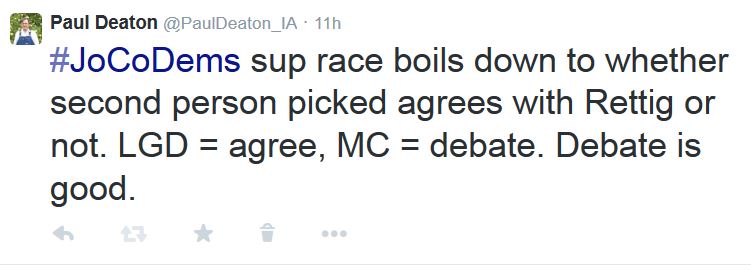
Tweet 001 Tweet 002 Tweet 003 Tweet 004 Tweet 005

I’m supporting Carberry and Rettig because I know them best, their strengths and weaknesses, and believe they will work to do well as supervisors. The other two would likely work hard if elected, but I don’t know them at all, and picking a candidate is far from being a logical process on a level playing field.

Only two weeks until the Democratic primary, which in Johnson County has been the election for local races. The lone Republican supervisor, John Etheredge, is expected to be sanded off in the Democratic wood shop that is this county’s general election. For the time being, I’m planning to vote at the polls, but get back to gardening as soon as the ground dries, and there is a break in my outside work schedule.

Categories
Environment Sustainability

Iowa Hosts Physicians for Social Responsibility

Student Physicians for Social Responsibility in Cedar Rapids
Student Physicians for Social Responsibility tour Kirkwood Community College

CEDAR RAPIDS– Iowa played host to the national organization Physicians for Social Responsibility (PSR) from May 6 through 10 at the Hotel at Kirkwood.

Iowa held center stage for meetings convened by national and international leaders of the 52 year old, Nobel peace prize winning organization. Thanks to the kind attention and assistance of the many expert hotel staff and the Kirkwood Community College affiliated training programs, this remarkable, first ever, national PSR gathering concluded a successful meeting on Saturday, May 10.

Those who attended the meetings work to address and reduce the humanitarian and health risks posed by the growing threat of nuclear weapons, the changing climate, and toxic environmental degradation. These first time visitors, initially quite skeptical about Iowa, were especially appreciative of its many unique offerings, both practical and recreational, available in and around the Kirkwood campus and the greater Cedar Rapids area.

The intractable challenges of our times were addressed in the meetings with U.S. Senate staff, Iowa elected officials, and online participants followed by experiences arranged by the Hotel at Kirkwood staff. Participants concerned about sustainability were able to visit and learn from the Kirkwood wind turbine and training center, the new Cedar Rapids LEED certified library with its green roof and inviting community center atmosphere, and the Kirkwood gardens and greenhouse. These tours, combined with the tasty, locally sourced and produced meals at the hotel, and an evening at the Cedar Valley Winery all served to showcase Iowa’s forward looking spirit and renew participants hopes for the future.

The troubled world presents us with so many new dangers and challenges. But the practical and creative talents of Iowans, especially those involved in Kirkwood’s uniquely integrated educational programs, services, entrepreneurship, and hotel partnership, manifest ample reasons for a positive outlook.

Board members, chapter leaders, staff and students from across the country join Iowa PSR in extending our deepest appreciation and gratitude to our hosts in Iowa. A special thanks to Tom Larkin of Senator Tom Harkin’s office, State Senator Rob Hogg of Cedar Rapids and State Representative Sally Stutsman of Johnson County. PSR leaders departed Iowa renewed by the gracious hospitality, insights and new sense of possibility gained by their experience.

~ Written for Blog for Iowa