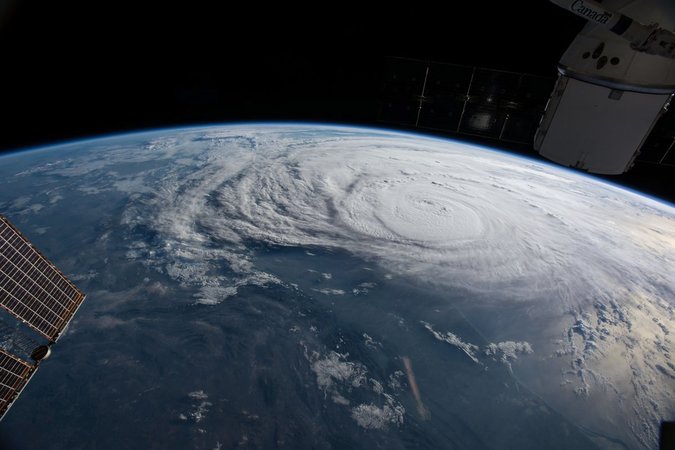
Hurricane Harvey from the International Space Station on Aug. 25, 2017. Photo Credit – NASA European Pressphoto Agency
Rain tapped the bedroom window this morning on the fringe of Hurricane Harvey.
It was a reminder of our connection to the oceans. They are absorbing heat from the atmosphere on a planet experiencing some of its warmest days in living memory. A warmer atmosphere holds more moisture and the result is intense storms like the Category 4 Hurricane Harvey.
In Iowa we adapt easily to hurricanes because of our distance from the coast. Needed rain benefits our gardens and farms. It recharges our surface aquifers. As the weather pattern moved over it seemed normal, not as devastating as it was when Harvey made landfall in Texas Friday afternoon.
Overcast skies and a slight rain depressed attendance at the orchard on Saturday. There were enough visitors to keep busy, especially in the afternoon when the sun came out. Sales seemed steady if light.
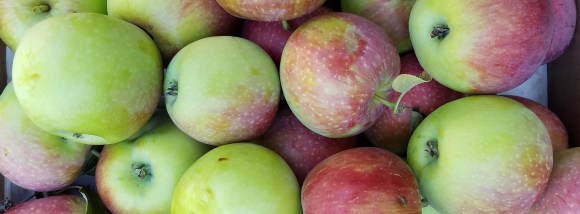
One of my favorite August apples is Red Gravenstein, a Danish cultivar. It was introduced to western North America in the early 19th century, according to Wikipedia, perhaps by Russian fur traders, who are said to have planted a tree at Fort Ross in 1811. Red Gravenstein is tart, juicy and crisp — great for eating out of hand.
The cider mill made the first press of apples for the sales barn. The gallon and half gallon jugs sold well. Over the years I’ve come to appreciate the changing flavor of our cider as we move through the apple harvest. I bought a gallon of cider and a dozen Red Gravenstein apples at the end of my shift.
I’ve been reading recipes for tomato catsup in old community cookbooks. After reviewing a dozen or so I went to the kitchen and created this sauce from the abundance of red bell peppers and tomatoes:
Red Pepper Sauce
Ingredients
Half dozen cored and seeded red bell peppers cut in quarters
Equal amount by weight of cored tomatoes one inch dice
One cup of malt vinegar
One teaspoon salt
One tablespoon refined sugar.
Process
Pour the vinegar into a saucepan and bring to a boil.
Add tomatoes and peppers.
Add sugar and salt.
Bring back to a boil and cook for 10-20 minutes until the vegetables are soft.
Strain the mixture. Retain the liquid to use as vinegar in salad dressings.
Run the vegetable mixture through a food mill and either serve immediately or bottle and refrigerate.
Recipe notes
To make a thicker sauce, either reduce it in the saucepan or add tomato paste.
I used malt vinegar because it was on hand. Absent malt vinegar I’d use homemade apple cider vinegar.
Between planning, planting and weeding a garden, and fall’s frosty end, lies a time to harvest, cook and preserve the results. So it is with our lives.
As humans we possess a unique ability to envision a future: one where we need supper and know we will need food later. We produce in abundance, fearing we won’t have enough. With modern food supply chains producing readily available foodstuffs in the United States this isn’t rational. In this sense, a gardener is an archetypal human living a life on urges, needs and wants we don’t fully understand.
Saturday Harvest in High Summer
The culture that produces a kitchen garden is complex, involving not just the gardener and soil, but seed producers, greenhouse operators, equipment manufacturers, chicken manure composters, potential future diners and others. A gardener is deeply engaged in human society. Much of our garden time seems solitary but isn’t. Animals wander nearby and we view the results when they eat garden plants and produce we’d hoped to harvest later. There is a daily drama of birds which are abundant in Big Grove. There is also a vast and little understood society of insects, some of which are annoying, a few deadly, and without others, the garden could not exist. A gardener embraces the complexity of life’s culture.
A gardener is not only a gardener nor does he or she seek to be. Each is just one iteration of humanity engaged in a broad society and we Americans are a peculiar bunch. We work hard, long hours whether it is at home or in a workplace and leave little time for enjoyment of the fruits of labor. Sometimes, like this weekend when I am between work at farms, we get time to ourselves to enjoy life lived how best we know. My story of Saturday is in four parts.
Predawn
My day begins around 4 a.m. and if I’m lucky, I got six or seven hours of sleep. I slept well Friday into Saturday waking only briefly to put in a load of laundry around 2 a.m. The routine was basic. Do stretching exercises, make coffee, say hello to spouse, go downstairs, and turn on the desktop computer to see what’s going on in the world. That’s not to say I didn’t already know. I use my mobile device in bed before turning on the light. Usually something new has happened since retiring the night before.
I wrote a series of tweets to better understand my memory of the Patient Protection and Affordable Care Act as it pertains to the false accusation it is a job killer. I recall local businessmen who said after the law went into effect they were in a position to add jobs but didn’t want to do so because they would have to provide health insurance per the ACA mandate. The assertion is the mandate killed these jobs and that idea got blown up into hyperbole of unprecedented proportions. Re-circulation of this idea is ongoing and rarely fact checked any more.
Businesses of a certain size should provide a health insurance benefit to employees or risk the possibility of being unable to recruit qualified staff. By defining the size at which to mandate health insurance, the law changed the business structure. In highly competitive local markets for landscapers, concrete workers, framers, heavy equipment operators and the like, employers faced a changed landscape. Operating on tight budgets, rather than embrace quality of life for employees they resisted change. The core problem lies in that the K-12 education system does a really poor job of preparing students to enter business. People carve out a niche, generate revenues and go out of business if they don’t properly manage risks or aren’t adequately capitalized. Small-scale operators I know are not educated in things we took for granted when I managed the profit and loss of a $12 million annual revenue transportation and logistics operation as part of a billion dollar corporation. The problem is not the ACA, or teachers. It is our education system doesn’t provide an adequate path for people to be successful owning and operating a business.
Pickle Fermentation
Outside
If there was no rain I water the garden shortly after sunrise. Without thinking it turned into weeding, then harvest and before I knew it the time was 11 a.m. The garden looks more like a weedy mess but inside there is abundance.
Before going outside I started soup to take for lunch at the home, farm and auto supply store, and mixed the brine for a batch of dill pickles.
I picked a box of kale for the library then went plot-to plot to collect what was ready. There were broccoli florets, leeks, onions and fairy tale eggplant in one. Jalapeno peppers, a bell pepper and cucumbers in the next. More broccoli and celery near the locust tree. Four kinds of tomatoes in the tomato patch. Basil is ready but I left it in the garden until I’m ready to make pesto.
Apples are sweet enough to eat out of hand, but not sweet enough to juice and ferment into apple cider vinegar. I picked the ripest for a batch of apple sauce. There are a lot of apples this year because of almost perfect pollination during spring. It should be a long apple season starting now.
I collected the harvest in a crate and placed it on the kitchen floor. There was another two hours of work cleaning the produce but that could wait.
Soup for Next Week’s Work Lunches
Short Trip
I try not to leave our property on weekends unless for work. Ours remains a car culture and we don’t have disposable income for shopping if we thought we had it before. Saturday I went to HyVee to pick up canned goods, pantry staples, organic bananas and Morningstar Farms frozen products we use. Organic celery is permanently on the shopping list although we have a lot of celery ripening in the garden. I picked three heads that morning so bought none at HyVee.
On the eight mile trip to town I noticed two sweet corn stands on Highway One.
One is the farm where we get most of our sweet corn, Rebal’s Sweetcorn. Supply was uncertain from their Saturday post:
It was tough picking this morning; we had to really search for the corn in this patch… we’ve got corn today, but it’s not a full load, so if you want it, try to get out here early. And, because of having to search to find the better ears, we might just let this one go and wait for the next. We’ve got 4 blocks (patches) coming up that look beautiful!!! The question is when they’ll be on… we’re checking them every day, so I’ll keep posting
They had plenty as I passed Southbound.
Lindsey Boerjan runs a seasonal road-side stand further south and was featuring sweetcorn and melons. I wrote an article about women farmers in the Sept. 22, 2015 Iowa City Press Citizen:
Lindsey Boerjan is a fifth-generation farmer living on the family-owned century farm where she grew up. She moved back in 2011 and farms alongside her aunt, uncle, husband and daughter, who run a beef cow and calf operation. To supplement income from beef sales, Boerjan raises chickens and operates a small community-supported agriculture project.
The CSA didn’t make it, although the road-side stand likely does better. I decided to stick with Rebal’s on my return trip.
A musician played for free will donations outside the entrance to HyVee. He seemed too young and inexperienced to be playing Folsom Prison Blues, although he was very musical.
Dinner Salad
Cooking
On arrival home I put away the groceries and started cleaning the morning harvest.
Leek stalks make a great vegetable broth base so I got out the large stainless steel pot. I added the leek leaves, broccoli stalks, a turnip — greens and root, kale and onion tops. I don’t usually salt vegetable broth and this time I didn’t add bay leaves. It cam out dark and flavorful — two and a half gallons.
Part of summer cooking is going through the ice box and making sure old stuff is used first. We have a broccoli abundance and need to do something soon with the gallon bags of florets. The freezer is almost full, so freezing more is not a good option.
I found some lettuce and decided to make a small salad and pizza for dinner. The salad is a work of art with two kinds of lettuce, kohlrabi, two kinds of tomatoes, cucumber, grated daikon radish, bell pepper, pickled jalapeno pepper, sugar snap peas and other items either from the farm or grown in our garden. Ironically I forgot to put some small broccoli florets on the salad.
I also made applesauce, salsa with tomato, garlic, jalapeno peppers and onion, and a cucumber salad of diced cucumbers dressed with home fermented apple cider vinegar, salt and pepper.
Our pizza process is to buy pizza blanks from the warehouse club and add toppings at home. Making our own pizza dough is no real work, but the convenience of a pre-made cheese pizza for $2.50 presents value. I added Kalamata olives and a diced red onion from the farm, then topped with Parmesan cheese. 15 minutes in a 425 degree oven plus a minute under the broiler and done.
This Morning
Everything on my list didn’t get done Saturday. I’m processing the vegetable broth in a water bath this morning and figuring out how to pack a summer’s worth of yard projects into today’s glorious summer weather. That is, I wrote stuff on my white board. Once I move outside into humanity and culture, I will likely forget about the plans and do what comes naturally.
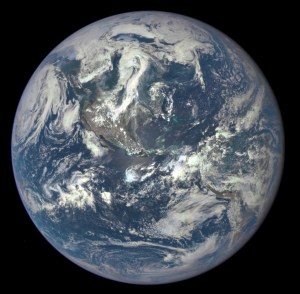
Image of Earth 7-6-15 from DSCOVR (Deep Space Climate Observatory)
A recent article at Nuclear News reminds us the world is on the cusp of an energy revolution.
“The cost of renewables like solar and cell batteries for electric vehicles are making the carbon-based economy obsolete, with the turning point only a few years away,” author Christina MacPherson wrote.
The age of centralized, command-and-control, extraction-resource-based energy sources (oil, gas, coal and nuclear) will not end because we run out of petroleum, natural gas, coal, or uranium,” Stanford University professor Tony Seba recently said. “It will end because these energy sources, the business models they employ, and the products that sustain them will be disrupted by superior technologies, product architectures and business models. Compelling new technologies such as solar, wind, electric vehicles, and autonomous (self-driving) cars will disrupt and sweep away the energy industry as we know it.
When we consider the use of coal in Iowa, there are many of us who remember the coal trucks plying the streets and alleys of our childhood, dropping loads of the black stuff down chutes leading to a basement coal bin and then to our gravity furnaces. Through the winter, people shoveled coal into burning embers to heat their homes. Coal ash was shoveled out and in the spring, it was tilled it into gardens and spread on fields. Coal ash was also sent to dumps. On the farm, coal was purchased with seeds, feed and grain. It was part of a background to life that did not consider the potential harm to human health we now know it represents.
Those born in the 1950s and before have living memory of how natural gas replaced coal for home heating. The conversion was driven by much lower natural gas cost compared to coal. Similarly, lower costs of renewables will drive the move away from fossil fuels. We are almost at that point, as MacPherson indicated, and the business community is recognizing the reality by investing in renewables.
A recent article by Eva Zlotnicka for Morgan Stanley reiterates this point.
Economics and improving technologies, not regulation, are the driving forces behind many of the sustainability trends in global markets today. Our energy commodities team’s fundamental analysis of power-generation economics shows that longer-term coal can’t compete with natural gas or renewables, even on an unsubsidized basis. In a recent report, the team cut its 2017 coal-burn forecast by around 4%, and now sees only a modest year-over-year improvement, with most of those gains lost by 2018, due to ongoing competition from natural gas and renewables.
The 45th president made much of reviving the coal industry during his election campaign. The trouble for him is the market is heading a direction that not even he and his fossil fuel friends can stop. He can roll back all the regulations he likes and the market will continue to drive the switch to renewable energy.
Many of us were disappointed when President Trump announced his decision to exit the Paris Climate Agreement. It was all hat no cattle.
There is almost no disagreement in the scientific community that fossil fuel use contributes significantly to planetary warming and related climate change. However, that’s not the point. What gave rise to the Industrial Revolution continues to work, and as renewable energy costs decline and become cheaper than the cost of fossil fuels and nuclear, bankers, manufacturers, and service industries will convert because it makes business sense to do so.
Add the public health, environmental, business and economic value of renewables together and a scenario where energy companies may start divesting themselves of coal and oil operations emerges.
How will the U.S. exit the Paris agreement? 45 didn’t say. Will his administration follow the four-year exit process outlined in the agreement, or will he remove the United States from the U.N. Framework Convention on Climate Change (UNFCCC), exiting in about a year? If the drivers of transformation in our energy system are economic, what whit of difference does his decision make?
The agreement posed no financial risk to the United States, according to Morgan Stanley. It seems doubtful other nations will follow the United States out of the agreement, although some may. The pursuit of the goals in the Paris Agreement by remaining countries, combined with the efforts of U.S. states and cities acting on their own, offer the best chance to reduce carbon pollution in the atmosphere.
Nonetheless, an energy revolution is going on and at this point little politicians do seems able to stop it.
It’s a scary article with frightful truths circulating on social media.
Half truths according to Michael E. Mann, director of Earth System Science Center at Penn State. Mann wrote onFacebook:
Since this New York Magazine article (“The Uninhabitable Earth”) is getting so much play this morning, I figured I should comment on it, especially as I was interviewed by the author (though not quoted or mentioned).
I have to say that I am not a fan of this sort of doomist framing. It is important to be up front about the risks of unmitigated climate change, and I frequently criticize those who understate the risks. But there is also a danger in overstating the science in a way that presents the problem as unsolvable, and feeds a sense of doom, inevitability and hopelessness.
The article argues that climate change will render the Earth uninhabitable by the end of this century. Extraordinary claims require extraordinary evidence. The article fails to produce it.
If we are clicking on New York Magazine for our information about the threats of climate change then now, more than ever, it’s clear mental health care is needed in whatever healthcare bill Congress passes this year.
Taking action on climate (or anything else) based on fear would be as scary as Wallace-Wells’ article.
On Sunday, Al Gore was in the news about his climate work.
“Those who feel despair should be of good cheer as the Bible says,” Gore told Lee Cowan of CBS News. “Have faith, have hope. We are going to win this.”
The need to act on climate is all around us according to Gore.
“It’s no longer just the virtually unanimous scientific community telling us we’ve got to change,” he said. “Now Mother Nature has entered the debate. Every night now on the television news is like a nature hike through the Book of Revelation. People who don’t want to use the phrase ‘global warming’ or ‘climate crisis’ are saying, ‘Wait a minute. Something’s going on here that’s not right.'”
Gore is right. Don’t despair. Act on climate.
If you don’t know what to do, The Climate Reality Project provides an action kit to get you started. Click here to find it.
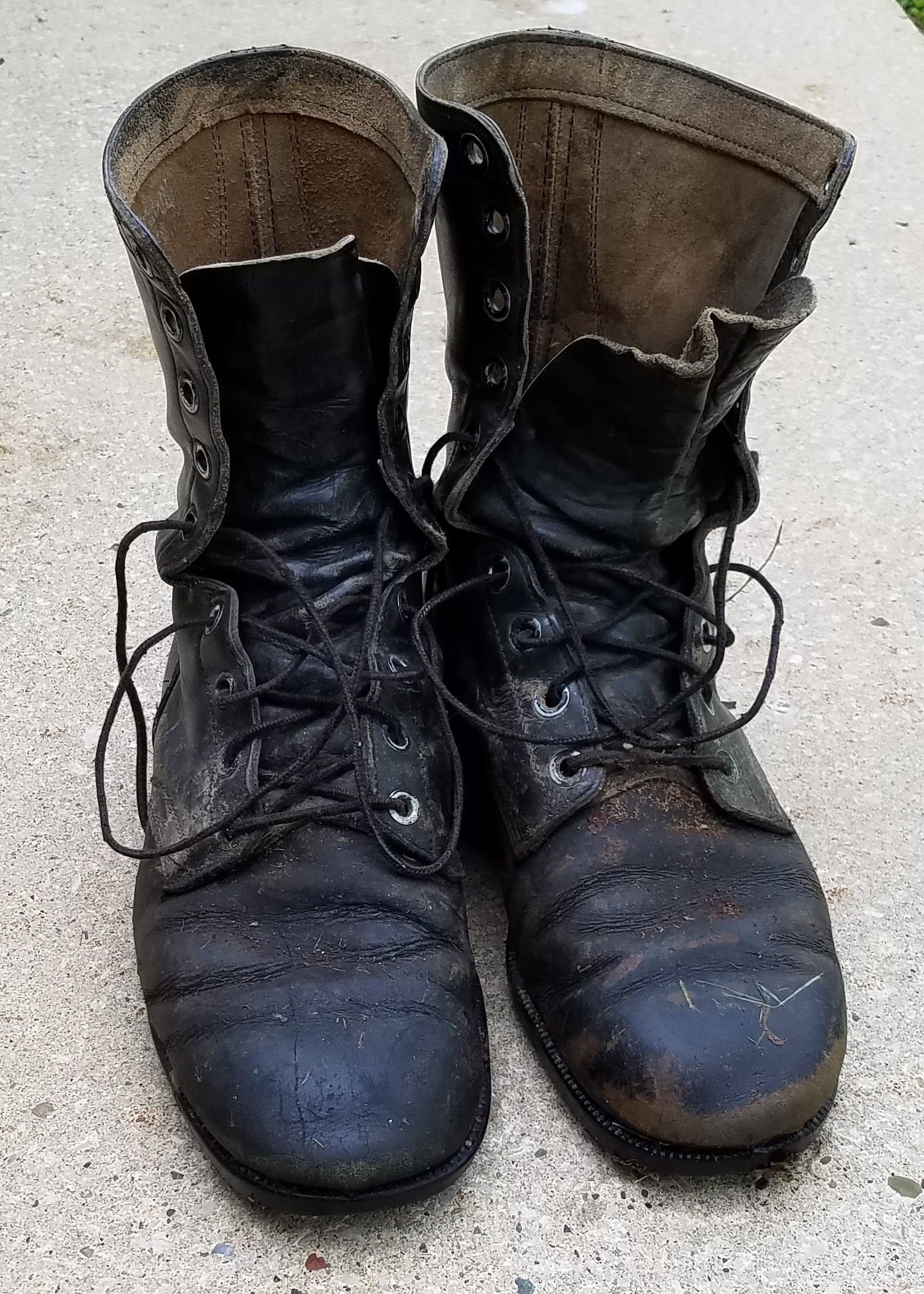
The debate was whether or not Army boots acquired in the 1970s should be retired.
I don’t think so.
I placed a set of inserts inside and they are as comfortable for walking as any of the expensive sneakers I bought to lighten the load of working on concrete floors all day at the home, farm and auto supply store.
At 40 years old they have a lot of life left in them. I have two pair.
They may make a fashion statement but I don’t wear them out in public very often so who knows? I plan to wear them in my garden and at the farms this weekend.
It has been impossible to get much done after a shift at the home, farm and auto supply store. With busy days combined with hot afternoons, I’ve had little energy left at 6 p.m.. Saturday has become the pivotal day in my garden life. With dry conditions, it will be again this weekend.
Main crops remaining to be planted are beans, cucumbers and peppers. Once that’s finished I can transfer to maintenance mode and focus on other aspects of yard maintenance. I have to get it finished though.
Other than non-stop work, this week has been uneventful. I may get across the finish line of spring planting before spring actually ends.
We survived U.S. failure to ratify the Kyoto Protocol to limit greenhouse gas emissions and will survive if Republicans drag us out of the Paris Agreement after the 2020 general election, as was announced June 1 in Washington, D.C.
Make no mistake: it is a disappointment that Republicans plan to exit the agreement.
Outside the symbolism for their political party — which I can only characterize as a finger-involved and not-safe-for-work gesture to the rest of the world — the engine driving greenhouse gas reductions is picking up velocity and will not be stopped by any one person or group.
The United States is not the only country on Earth. 194 countries remain in the agreement as the U.S. joins Syria and Nicaragua as the only states outside it. China, India and the European Union have said they will step up to fill the leadership void the U.S. created by its announcement.
Here’s the bottom line: even without the federal government involved, cities, states, businesses, colleges, and citizens across the US are driving a shift to clean energy and bringing down emissions. Just like the Paris Agreement intended.
With Republicans stepping back, it’s up to the rest of us to step up in a big way and keep this momentum going if we want to protect our environment.
Earth is our only home. Consumerism, irresponsible development, environmental degradation and global warming have negatively impacted where we live.
Our work goes on. The Republican decision to exit the Paris Agreement is not the end of the world. Not even close.
~ Published in the June 8, 2017 edition of the Solon Economist
The green up arrived as summer approaches and society wakes up in the season.
Trees leafed out and pasture grasses presented something new and hopeful.
Yesterday we drove south of Iowa City on Highway One. Despite a landscape ravaged by 19th century settlement and 20th century expansion, pleasant scenery appeared in every ditch and around each corner — spring at its best.
That said, the best of spring will yield to summer heat and industry.
Early spring has been a success. Our garden is two-thirds planted and already we have an abundance of greens and radishes. Fruit tree pollination went well. Apples and pears are about a half inch in diameter. I mowed the lawn, producing enough grass clippings to mulch the kale patch. Potato plants have grown almost three feet high. Our garden is producing well.
Spring Vegetable Broth
Because of barter agreements with farmers spring brought enough lettuce to make a salad every night, enough cooking greens to put up 15 quarts of vegetable broth, and rhubarb sauce for garnishment. Labor turned into food in a practical way.
Memorial Day weekend was a time for reflection and homelife. Our yard is alive. A domesticated cat attempted to catch birds. A deer lay in the grass by the broccoli patch leaving a pile of excrement as evidence of its presence. One of the two squirrels was hit by a vehicle on the road in front of our house. I found a new type of bug dining on spinach leaves. There is more action in nature just beyond my consciousness. I played my role as a human — bringing culture in the form of a fence to protect the summer squash I planted. I hung a flag above the garage door and honored our war dead.
The cycle of life is being disrupted by global warming. How climate will change in my lifetime is to be revealed. We’ll work to adapt if possible. Even so, for one long moment, the green up was evident.
I took it in, comforted by its arrival and wondering if it is sustainable.
While in Europe, Pope Francis and the G7 leaders bent President Trump’s ears about climate change.
The Pope presented a copy of Laudato Sí: On Care For Our Common Home, his encyclical on consumerism, irresponsible development, environmental degradation and global warming to the U.S. president. He told Pope Francis he would read it.
Reports indicate the six other G7 leaders presented arguments for the United States to stay in the 2015 Paris Agreement on mitigating the effects of climate change. Trump would not commit to doing so by the time he boarded Air Force One for the trip home.
“The entire discussion about climate was very difficult, if not to say very dissatisfying,” German Chancellor Angela Merkel said. “There are no indications whether the United States will stay in the Paris Agreement or not.”
That Trump failed to be part of the G7 consensus on climate may or may not be a sign of his intent. One never can tell with this president.
“I will make my final decision on the Paris Accord next week!” Trump tweeted.
That Trump was willing to listen to his European peers and the Pope indicates he may have an open mind about the accord. However, late yesterday, Jonathan Swan and Amy Harder of Axios reported, “President Trump has privately told multiple people, including EPA Administrator Scott Pruitt, that he plans to leave the Paris agreement on climate change.”
Despite the advocacy workshop for exiting the agreement EPA has become, the result of the president’s decision-making process may be more complicated than making a simple announcement.
Exiting the Paris Agreement would take at least four years. The agreement does not permit states to exit until three years after entry into force (Nov. 4, 2019). It would then take at least a year to finish the process. In that time, Trump could change his mind.
If Trump decides to exit, he would be “willfully, nonchalantly vacating leadership of the world,” former U.S. ambassador to the United Nations Samantha Power said. Another country will step in to fill the leadership vacuum, presumably China with the world’s second largest economy.
A bone of contention with Pruitt and advocates in the hydrocarbon business is the existence of the Clean Power Plan first published by the EPA in the Federal Register Oct. 23, 2015. On March 28, President Trump signed an executive order mandating EPA review the plan. Unraveling the Clean Power Plan is not as simple as signing an executive order. Whether or not the U.S. exits the Paris Agreement, the regulation may stand.
It is significant the first nation Trump visited in his presidency was Saudi Arabia. Saudi Arabia has almost one-fifth of the world’s proven oil reserves and ranks as the largest producer and exporter of oil in the world. Despite concerns about human rights and the treatment of women in the kingdom, Trump seemed elated about the arms deal he made during his visit. His rhetoric isolating Iran may be no more complicated than wanting to take their oil. Iran ranks fourth in proven oil reserves behind Venezuela, Saudi Arabia and Canada.
That 195 states could enter the Paris Agreement was remarkable. Whether it will hold if the U.S. exits is uncertain. Regardless of politics the science on global warming has been identified since the 19th century.
On the morning after the 45th President’s first foreign trip the direction of his administration on climate change is obvious. Government climate change web sites and regulations are officially “under review” in multiple agencies. At the same time the hydrocarbon business is moving to roll back regulations that seek to reduce carbon emissions. The idea of leaving fossil fuels in the ground is not embraced in this White House.
“I think there is a better than 50/50 chance that the Trump administration will stay in the Paris agreement,” Nobel Prize winner Al Gore said. “I think odds are they will stay in.”
It’s been a struggle to get a grip on the presidency of Donald Trump. There’s nothing he’s done to give us hope.
Just give me a handle — anything to grasp onto as normal! Nothing.
Like many who care about the environment, nuclear abolition, and the commons, there seems little hope of advancing a positive agenda during the first term of the 45th president. What some settle on is giving up on 45 doing anything positive, resisting his degradation of our previous work, and working toward the 2020 presidential election and a Democratic president. In other words, create a political climate more receptive to our initiatives.
“I think we have to use the coming four years to create an understanding in the general public and amongst (sic) the security community that we need a fundamental change in nuclear weapons policy,” Ira Helfand, co-president of International Physicians for the Prevention of Nuclear War, wrote yesterday in an email. “Our goal should be that the new administration that takes office in January 2021 is fully committed to this change in policy, and staffed with people who share this vision.”
I respect Helfand’s sense of urgency to use the time we have to accomplish something. At the same time we can’t afford to shelve our priorities until the political climate is more likely to support them. What’s right is right and our work on the environment, nuclear abolition, and the commons must continue even if the odds are against us. There may never be a political climate receptive to the change we seek.
It’s time to turn the page on our reactions to Trump and do what’s right. For me that means joining together with others to work on preserving an environment where humanity can live out its next era in dignity and relative peace. That’s something to grasp onto.
If the evolution of homo sapiens is to eventually become extinct, there is little we can do about that. Whether it is the return of the Imam Mahdi before the end of the world, or the second coming of Christ, we can’t place all our hopes on a life after this one. We live here and now and must act to mitigate the damage we humans have wrought on the planet.
Earth is our only home and we must make the best of what we inherited.
All around us Spring is regenerating the biosphere as it has done for millennia. To be a part of that, especially with others, can only bring us good. Even if the political climate runs against our common sense, hope remains.
This spring we must re-dedicate ourselves to that hope.
Rain began mid-morning and is expected to continue until sunset.
Let it rain.
It’s an opportunity to work on inside chores before spring planting.
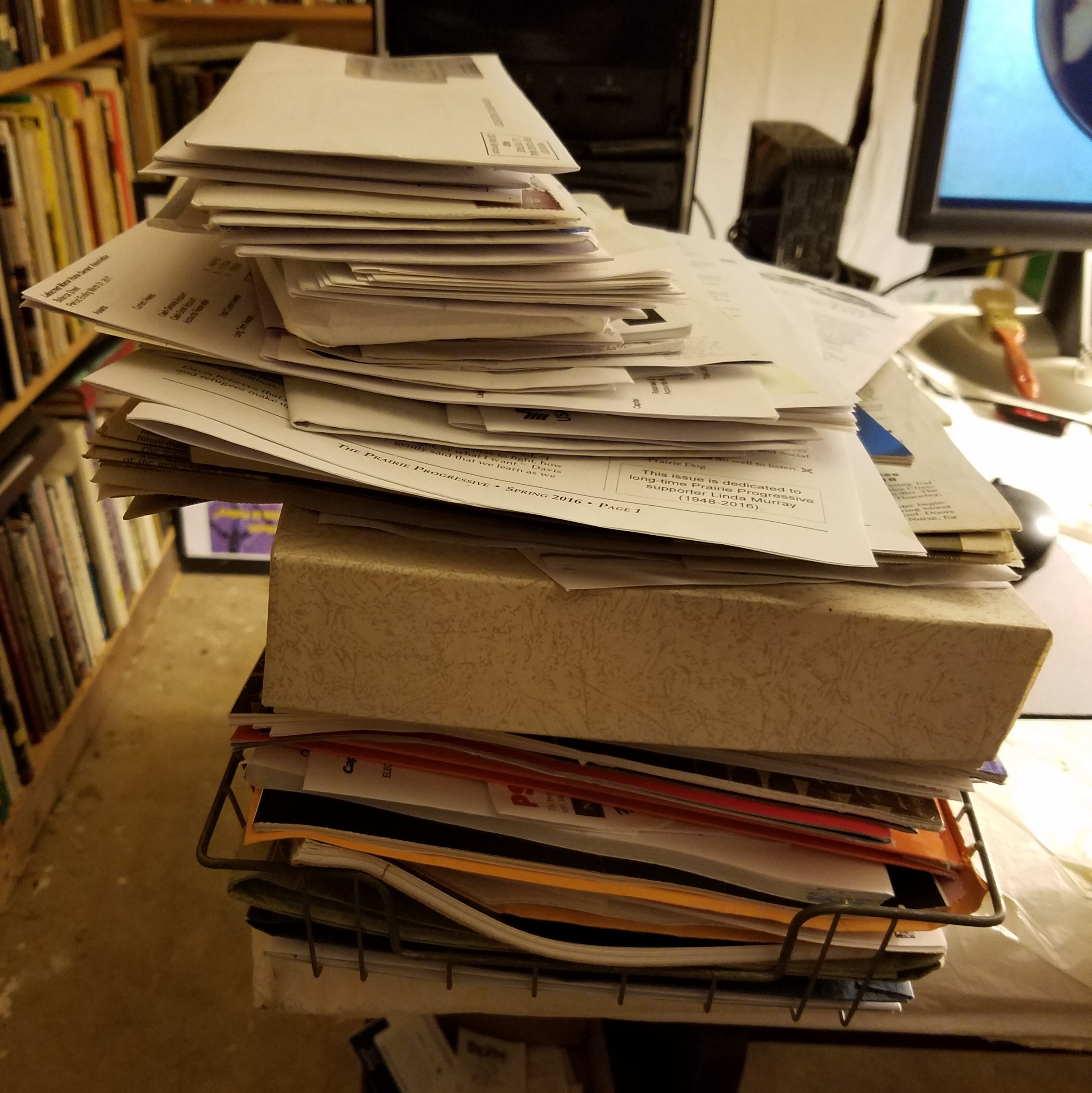
I’ll tackle a long-neglected inbox and use produce in the ice box and freezer to make soup. There’s plenty to do in the jumble the garage has become since winter — moving the lawn tractor toward the door, organizing the planting tools and cleaning shovels, rakes and bins for the season. I’m antsy about getting the garden planted — I accept it won’t be this weekend.
A few friends are participating in the People’s Climate March today. CNN and the Washington Post covered the District of Columbia march. There are several marches in Iowa and elsewhere. The key challenge for participants and other climate activists is determining what to do in a society where the importance of action to mitigate the causes of climate change garners slight interest.
“Surveys show that only about one in five adults in the United States is alarmed about climate change,” Jill Hopke wrote in The Conversation. “This means that if climate activists want this march to have a lasting impact, they need to think carefully about how to reach beyond their base.”
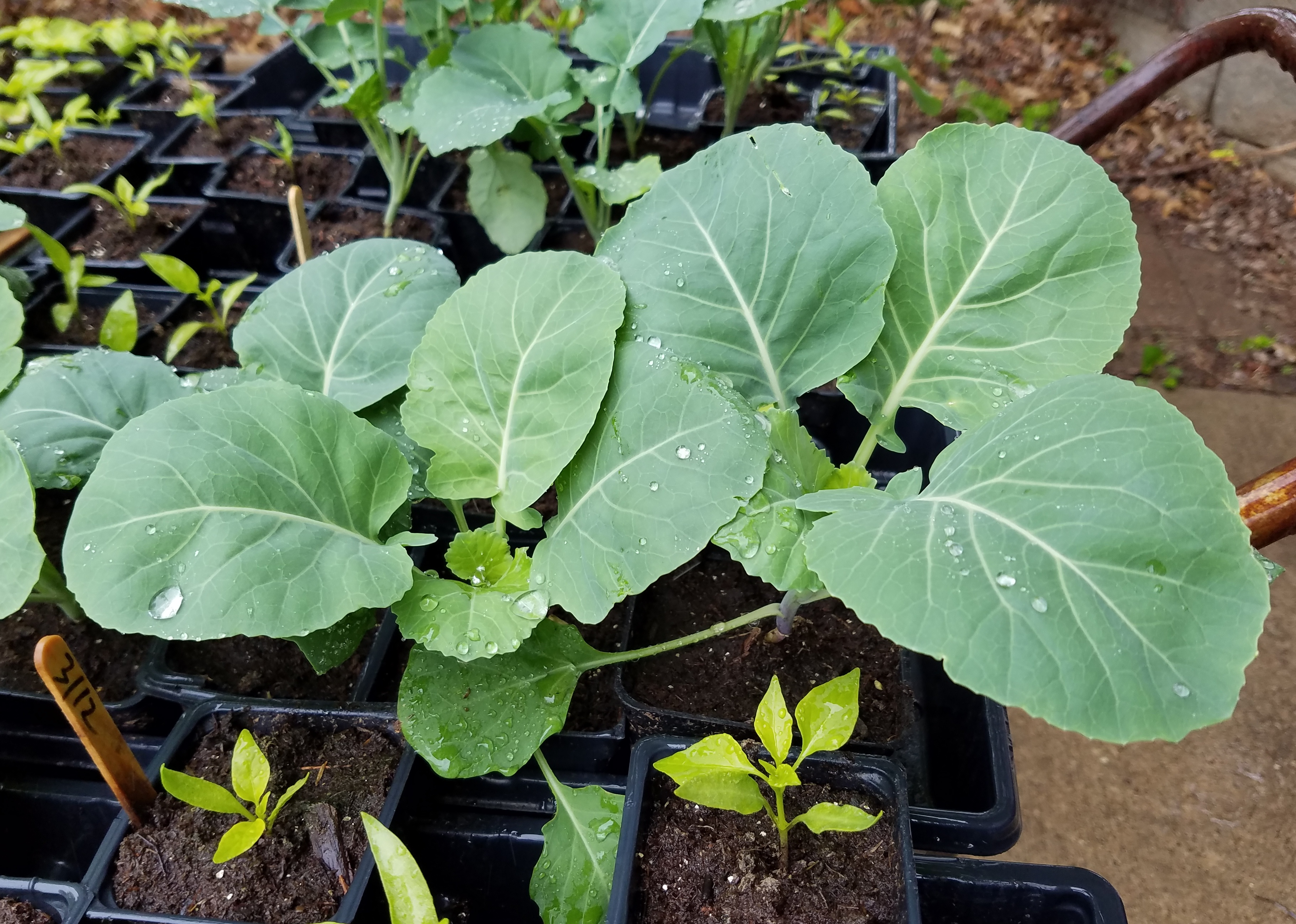
Collard Seedlings in the Rain
The unanswered question is how shall people outside the activist community be recruited to take climate action and by whom?
There are no good answers and no reason for climate activists to lead the effort. However, we can’t give up if we value society’s future.
The main issue is the increase in atmospheric greenhouse gases since the beginning of the Industrial Revolution. The good news is there are renewable sources of energy for transportation, manufacturing and electricity. How will society make climate change action ubiquitous with a majority of the world population?
Mass demonstrations can play a role in an effort to raise awareness about climate change. So can articles written by journalists, scientists, bloggers and organizations. At a minimum we can each strive to live with as light an environmental footprint as possible. We can explain to our friends, family and neighbors. Everyone has the potential to do something.
Today’s cool weather and gentle rain is a reminder.
“Staying out of the cold and warm inside? So are we,” Richard Fischer of Bernard wrote this afternoon via email. “Due to the weather we’re moving the event over to Convivium Urban Farmstead and Coffee shop, 2811 Jackson St., Dubuque.”
We must consider our lives in the built environment and let it rain. Have faith in today’s potential and adjust, knowing as long as rain comes and sustains our gardens and farms we too will be sustained.
There is much we can do when it rains. We can act on climate before it’s too late.




 Journey Home
You must be logged in to post a comment.