Categories
Living in Society

Laundering Face Masks-Again

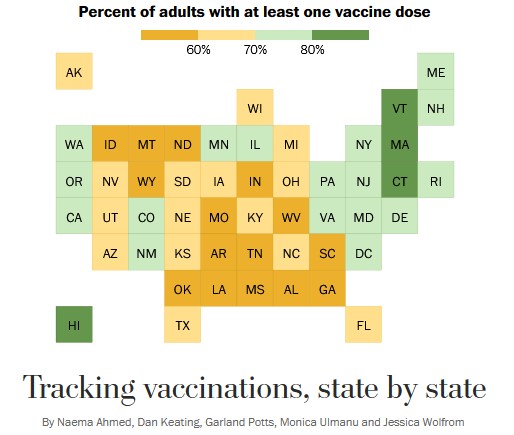
Washington Post Screenshot, July 21, 2021.

Laundering home sewn face masks is back on the to-do list. It looks like we’ll need them.

On Monday I wrote we are not really taming the coronavirus in Iowa or in the United States as a whole. Too many unvaccinated residents are in social situations without protection. The unvaccinated make up the vast majority of hospitalizations for COVID-19. If you missed it, click here to read the post.

To my point about children returning to school this fall, also on Monday, the American Academy of Pediatrics recommended universal masking in schools for everyone older than age two.

While that recommendation was churning in the vessel, both political commentator Sean Hannity of FOX News and U.S. Senate Minority Leader Mitch McConnell made strong public statements that people need to get the COVID-19 vaccine in their arms. McConnell was particularly direct, with a “get vaccinated or else” statement. Here is the clip:

What gives? Are we at a turning point in addressing vaccine hesitancy? We know Hannity and McConnell are not sincerely concerned about those who died or are afflicted with COVID-19. Was it Monday morning’s 750-point drop in the Dow Jones Industrial Average? Did they have a come to Jesus meeting… with Jesus? I’m sure I don’t know, other than it is self serving. Maybe they are worried too many of their anti-vaxx constituents will die of COVID-19, yielding the political fight to Democrats.

My cynicism about conservatives’ motivation aside, the increase in number of COVID-19 cases is alarming. While the majority of COVID-19 hospitalizations are among the unvaccinated, there have been prominent people who, while fully vaccinated, have contracted a new variant of COVID-19. On the one hand we have to go on living. On the other, there are unknown risks to be addressed.

The upshot is get vaccinated if you aren’t.

If you are vaccinated, the CDC recommends you comply with federal, state, local, tribal, or territorial laws, rules, and regulations regarding protection from the coronavirus, including local business and workplace guidance. If a merchant requires you to wear a mask on their property, just do so or walk away. Seek to get along in society knowing the pandemic brought out the worst among some people. Seek safer activities if you are in doubt, the CDC made a handy list.

And launder those reusable masks. Don’t be afraid to wear them in public. A mask won’t kill you but the coronavirus might.

Editor’s note: Sean Hannity spent time on his Thursday radio program back tracking on his encouragement to the unvaccinated to get vaccinated.

~ Written for Blog for Iowa

Categories
Living in Society

Summer Community Parades are Back Despite the Pandemic

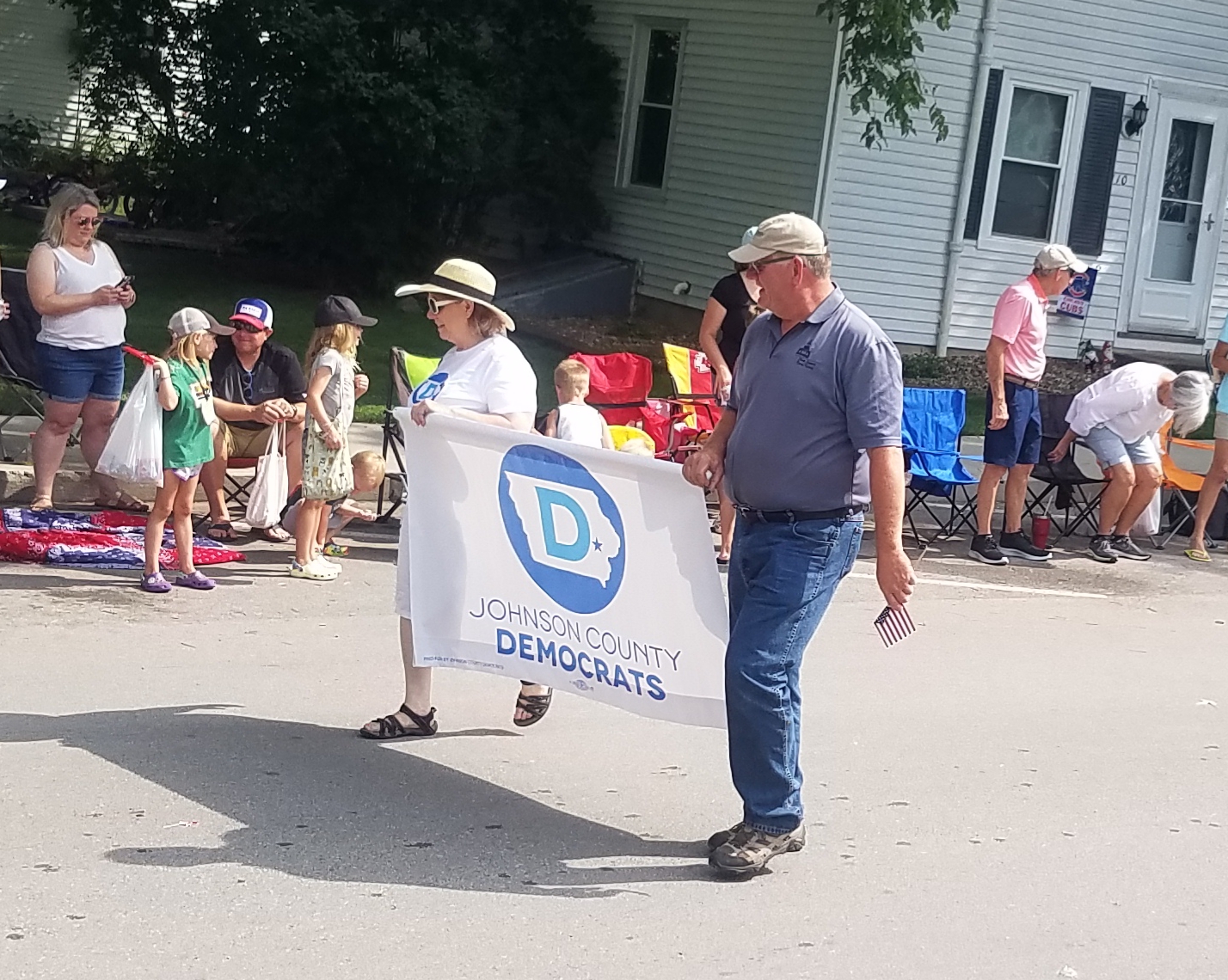
State Senator Kevin Kinney and County Supervisor Lisa Green-Douglass at the Solon Beef Days parade in Solon, Iowa on July 17, 2021.

Most people along the parade route reacted positively to the Johnson County Democrats entry in the Solon Beef Days Parade on July 17. All over the state, parades have re-emerged as a social activity after missing last summer because of the coronavirus pandemic. While the parade was a positive event reflecting community values and attitudes, it’s clear the pandemic is not over as vaccinations lag behind what is needed.

Nationally, 161 million people are fully vaccinated against COVID-19, representing 48.5 percent of the population. We are about the same percentage in Iowa with a million and a half people, or 49.0 percent of the population, fully vaccinated. The daily rate of vaccination has slowed considerably during parade season.

On Friday, Nick Coltrain of the Des Moines Register reported the majority of hospitalizations for COVID-19 are among people who are not vaccinated:

Almost all of the people hospitalized with COVID-19 since the spring have been unvaccinated against the disease, spokespeople for three of Iowa’s largest health care systems said.

At the University of Iowa Hospitals and Clinics, upward of 90% of patients admitted due to COVID-related illness since April have been unvaccinated, spokesperson Laura Shoemaker told the Des Moines Register. About 95% of patients hospitalized at UnityPoint facilities since March 2021 were not fully vaccinated, spokesperson Macinzie McFarland said. And at MercyOne’s Des Moines hospitals, 97% of patients hospitalized for COVID-19 were not vaccinated, spokesperson Clara Johnson said in an email.

The COVID-19 vaccine has been widely available to anyone 16 and older since April 5.

Iowa City Press Citizen, July 16, 2021

It was fun giving small American flags to children lining the parade route on Saturday. We live for such moments of small joys and happiness. However, the potential for disaster looms in the fall when children are required to return to in-person instruction at schools around the state.

We know the way to avert disaster is to get a higher percentage of the population vaccinated. Yet there is not an approved vaccine for children under age 12, and poor vaccination rates among school-aged children who are eligible. With the combination of low vaccine rates, a resurgence of COVID-19 cases, and a population that clings irrationally to the idea that the COVID-19 vaccine is in some way dangerous or not needed, trouble is fermenting in Iowa.

While enjoying parade season, I hope our actual experience in the fall proves me wrong about new, school-based COVID-19 outbreaks. We have the information to do what is right. Yet as raconteur, philosopher and satirist Ron White said, “You can’t fix stupid.” That’s where we are with half Iowa’s population.

~ Written for Blog for Iowa

Categories
Living in Society

Masking in the United States

Baggage Handlers at Orlando International Airport, June 27, 2021.

I recently flew to Florida to help someone move to the Midwest, my first non-local trip since the World Health Organization declared COVID-19 a global pandemic on March 11, 2020. We convoyed from central Florida to Chicago, following major interstate highways all the way. Evidence that the coronavirus pandemic had resulted in the deaths of more than 600,000 people–the most of any nation on Earth–was scant.

The airline enforced a mask policy both in the terminals and on board the aircraft. Hotels where we stayed had well-publicized policy that masks were required indoors and social distancing was necessary. None of the hotels enforced the policies for guests. Compliance was infrequent among staff. All of the other workers we encountered–at truck rental facilities, convenience stores, and restaurants–wore no masks at all. The restaurant delivery drivers all donned masks as they approached us to deliver a meal. Their business is predicated on no-contact delivery during a pandemic, so that was expected. In a Walmart in Indiana about two-thirds of the employees wore masks. The business community seems more interested in avoiding liability while catching up on lost revenue than in preventing spread of the coronavirus.

As far as regular, non-working humans go, few wore masks. In Florida (outside the airport), Georgia, Tennessee and Kentucky I saw zero humans with a mask. That changed when we arrived at our destination in a Chicago suburb.

After the maskless trip from the South, I was pleasantly surprised by the neighborhood where people wore masks indoors and out. I asked one person why they wore a mask outside. They said they were vaccinated and the mask was to prevent contracting variants of the coronavirus that are currently thriving. Made sense to me.

I walked across the street to a local grocery store in which most people were masked, including all the employees. Disposable masks were available for $0.99 at the checkout counter. Not required for customers, yet available.

From the beginning of the trip I asked masked people if I should don mine in their company and the answer was a unanimous no. A couple of masked workers in a local Chicago bakery explained it best. They said I didn’t need to don my mask in their store. Customers would be inside for a short duration, however, they wore a mask because they would spend all day at the counter. This, too, made sense.

While settling into the new apartment a neighbor knocked on the door to introduce themselves. They wore a mask and of course we didn’t at home. I asked them if we should put ours on and revealed we both had been vaccinated. It turned out they had as well. We all went maskless for the rest of the encounter.

If there is a mask policy in the United States, it is either unknown most places I went, or unenforced. Masking is something we Americans do only when required, and not always then.

At this point in pandemic progress, people not vaccinated continue to be at high risk of COVID-19. There is a news story circulating about a woman who avoided getting vaccinated because of side effects people mentioned. She contracted COVID-19, was on a ventilator for a month, then died. Her two children lost their mother. Vaccinated people have not been getting sick with COVID-19 very much.

During our drive I noticed the crappy condition of the interstate highways: countless potholes and not enough construction crews. Whether it is infrastructure, healthcare, or masking during a pandemic, Americans don’t do it well. My advice is get vaccinated if you haven’t been, and wear a mask when indoors in a public place. It may not be socially acceptable among your cohort, although it may save your life.

~ Written for Blog for Iowa.

Categories
Writing

Resting in Lake Alfred

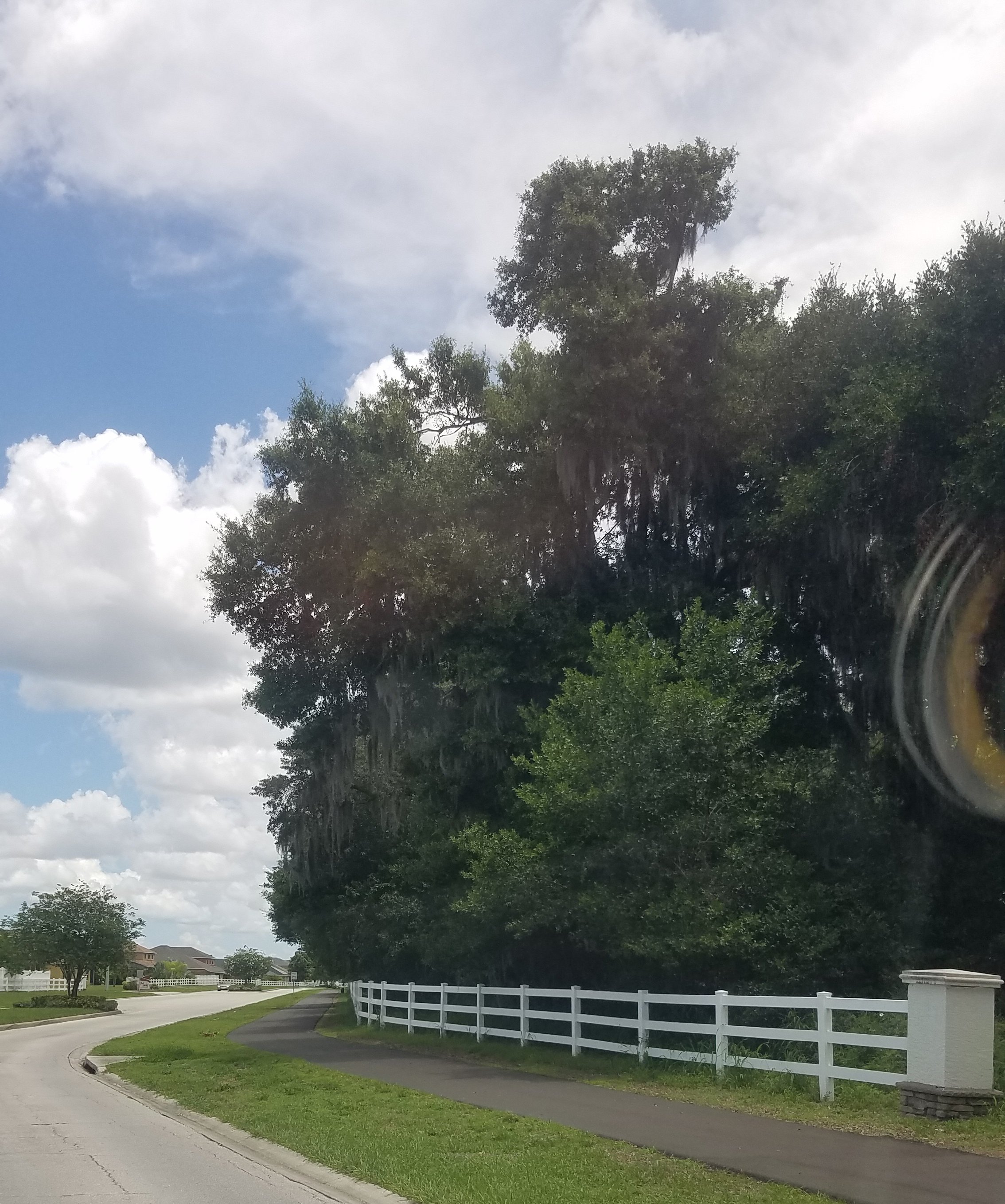
Trees with Spanish moss

It’s been a hectic 36 hours. We have the U-Haul truck loaded and ready for our 1,180-mile trip beginning tomorrow. We all took naps this afternoon now that this part of the work is finished.

There were a lot more swords (props and the kind used in LARPing) than I thought there would be.

I like visiting Florida. You can’t hardly see the Spanish moss in the picture, yet I remember it in live oak trees on a family auto trip to Tallahassee when I was eight or so. Father graduated from Leon High School there. Spanish moss is everywhere in Central Florida. It is a seminal memory.

Now that our child is leaving the Sunshine State, it’s hard to imagine returning.

We’ve been busy with logistics yet I had time to engage in dialogue with locals: the convenience store cashier and the U-Haul staff. I’ve been cooped up in the house during the pandemic for so long, I forget what it means to be among people. I could talk with locals for more time than we have.

We didn’t say much. There’s a lot I could say when I return to Big Grove. Right now were resting in Lake Alfred and looking forward to tomorrow.

One thing though about tomorrow. I left all my rainbow t-shirts for Pride month at home because I been through Georgia before.

Categories
Environment

Dry Spring In Iowa

It is abnormally dry in our part of Iowa. Just as we are needing rain, we are not getting it. A home gardener can irrigate new trees, fruits and vegetables, but the massive scale required to hydrate Iowa’s main commodity crops and livestock is not available. Creating the infrastructure to pump water from ancient aquifers is doable, yet an unsustainable practice. It seems like we are heading into a drought. (The map is from the state climatology website which provides data about precipitation, temperature and other aspects of the climate).

Iowans are familiar with drought. In the 2012 drought corn yield per harvested acre was 123.1 bushels compared to the average of the seven following years at 170.4 bushels. The drought decreased corn production by 27.8 percent according to USDA numbers.

There is a relatively finite amount of water on Earth which cycles through the atmosphere, on land, and in the oceans. Some of it rests in deep underground aquifers where it has been since prehistoric times. An increasingly warm climate impacts how water cycles and it is getting hotter. “Earth’s global average surface temperature in 2020 tied with 2016 as the warmest year on record,” according to an analysis by NASA. The oceans are getting warmer too.

Rising air and water temperatures and changes in precipitation are intensifying droughts, increasing heavy downpours, reducing snowpack, and causing declines in surface water quality, with varying impacts across regions. Future warming will add to the stress on water supplies and adversely impact the availability of water in parts of the United States.

Fourth National Climate Assessment.

The problem goes beyond Iowa. The Hoover Dam, located on the Colorado River near the Nevada-Arizona border, is suffering the consequences of drought. Lake Mead, the artificial lake created by the dam, is at a lower water level than was when it was built. The water shortage will impact 25 million people including in the cities of Los Angeles, San Diego, Phoenix, Tucson and Las Vegas.

Farmers are abandoning crops, Nevada is banning the watering of about one-third of the lawn in the Las Vegas area, and the governor of Utah is literally asking people to pray for rain.

Firefighters are facing worsening conditions this summer — after nearly 10,000 fires in California alone during the last wildfire season burned 4.2 million acres (1.7 million hectares), an area nearly as large as Kuwait.

Reuters, June 10, 2021

Water in California’s Lake Oroville will fall so low this summer that its hydroelectric power plant may be forced to shut down for the first time.

We must do something more than pray for rain. It begins with recognition.

The Lakota phrase “Mní wičhóni” (“Water is life”) was the protest anthem from Standing Rock heard around the world, but it also has a spiritual meaning rooted in Indigenous world views. For Native Americans, water does not only sustain life, it is sacred.

Bioneers.org

Action to prevent drought must include acknowledging that climate change is real, something Senators Chuck Grassley and Joni Ernst have both done. The next step is addressing the climate crisis through policy and legislation and that’s been the rub. The climate crisis is more complicated than any single policy or law.

Peter Rolnick of Citizen’s Climate Lobby wrote a guest opinion in the Cedar Rapids Gazette on June 15, 2021. He commended the Iowa senators and Rep. Cindy Axne for supporting the bipartisan Growing Climate Solutions Act. If passed, the law would engage farmers in storing more carbon in our soil instead of emitting it into the air in the form of carbon dioxide or methane. The relationship to drought is clear. A molecule of CO2 or methane sequestered in the ground is one that does not get into the atmosphere and increase warming. Even the American Farm Bureau is in favor of this bill, which on its own raises red flags. One bill is not enough.

We need much more in the way of policy and legislation. The Biden administration’s approach of embedding work on climate change in each of the executive branch departments is important. It is up to each of us to encourage those in government to work toward viable climate solutions. There are personal actions we can take to reduce our carbon footprint, yet the most effective action is in the government arena. If constituents don’t remind members of our governing bodies to act on the climate crisis, they seem likely to forget.

We’ll know it when we hit the drought this year. News media has been forthright in reporting it because so many Iowa livelihoods depend upon the weather. When will we wake up to take action to address what is causing the drought? Not soon enough.

Categories
Living in Society

Living with the Coronavirus

Sunrise in Big Grove Township, June 2, 2021.

On Tuesday the number of U.S. deaths due to COVID-19 surpassed 600,000. If the pace of COVID-19-related deaths in Iowa continues as it is today, it will continue to be one of the leading causes of death in the state. While the Biden administration’s plan to address the coronavirus pandemic is showing positive results, there is a steady grind of cases and deaths that won’t go away.

COVID-19 vaccine is available at no cost everywhere, mostly on a walk-in basis at pharmacies and medical clinics. There is no vaccine for young children yet, but there will be. About half of Iowans have been vaccinated and the goal is to reach 70 percent of the population. Vaccine hesitancy is a thing here. It will be difficult to get enough people vaccinated. The consequence of failure to vaccinate enough is the virus will continue to spread among unprotected people, and variants of the virus can be propagated, potentially requiring a booster shot to defend against them.

While trail-walking yesterday I met a neighbor I’ve known since we moved here. He pulled his recumbent bicycle to the side of the trail and we chatted for a bit. When you’ve known someone going on thirty years there is a lot to discuss. We are both glad the pandemic restrictions on social interaction have begun to ease. It has been a heck of a year, we agreed.

My personal work docket is filling again, although life is not like it was before the coronavirus pandemic. There are new priorities. Things we used to do without much consideration are called into question. The world shifted and the feeling is palpable. Combined with abnormally dry weather conditions and looming drought, the feeling is unpleasant.

Life goes on. The garden is full of blooms — tomatoes, zucchini, squash, peppers, beans and tomatillos. There are insects, yet I fret about whether pollination will occur in time. I’m doing what I can to encourage bees by letting the clover in the lawn grow, letting mustard and arugula plants to go to flower, and advising the bees there are great blooms just yards way. Well that last may be a bit crazy, but that’s where we are.

The good news is the apple bloom set resulted in almost perfect spacing of the fruit, the best I’ve seen in years. It looks to be a great crop. The mulberry tree is full of ripe fruit sweeter than I remember. There is hope nature will do its work for another season.

I don’t know the meaning of the coronavirus pandemic going forward. It is a shared experience many of us won’t forget. Like so many new things involving humans, we’ll just have to live with it and hope we do better when the next contagious disease outbreak occurs. Those of us that have worked in public health expect another outbreak.

For now, we go on living with the coronavirus.

Categories
Kitchen Garden Living in Society

Supporting the Food Bank

Garden signage is new this season.

I reached out to a long-time friend who manages the community food bank to ask if they would like some of my excess garden produce.

“We would be most grateful for your fresh produce!” they emailed.

I put a recurring event on my calendar to deliver something every Monday morning beginning June 7 through the end of season. I look forward to seeing her in person on Monday, for the first time since an event during the Elizabeth Warren campaign before the Iowa Caucus.

The goal of a kitchen garden is to match garden production with what a cook can use in the kitchen. Gardeners put a lot of promise in the ground and not all of it comes to fruition. When it does, though, it is time to share the bounty. What better way to do it than donate food to people who need the help of a community food bank?

I participated in a call this week where a group of white Iowans, most with grey hair like mine, were working on a political advocacy project regarding the climate crisis. Halfway through the call, I realized there was no discussion of economic justice, that the people most impacted by the climate crisis are low income, black, indigenous, and people of color. I raised the issue and was surprised by the response. The suggestion was the impact of the climate crisis on low income individuals was mostly in countries other than the United States. OMG! We have a long way to go. The moral is if we don’t raise the issue of economic justice, and its companion, climate justice, it won’t be addressed, even among climate activists.

Thursday was almost perfect, maybe a little hot with low humidity. It was the kind of day I remember from childhood, one without need of air conditioning, where the outdoors was a great place to spend purposeful time. As an aging gardener, I get most of my work done in the morning before it gets hot and humid. Even so, during peak temperatures in the high 80s, it wasn’t so bad.

In driving us to stay home more, the coronavirus pandemic provided a new perspective on daily life. We notice things that our busy lives hid from view. Things like the food bank, climate justice, and the condition of garden plants. That is a good thing.

Categories
Living in Society

Beginning a Summer

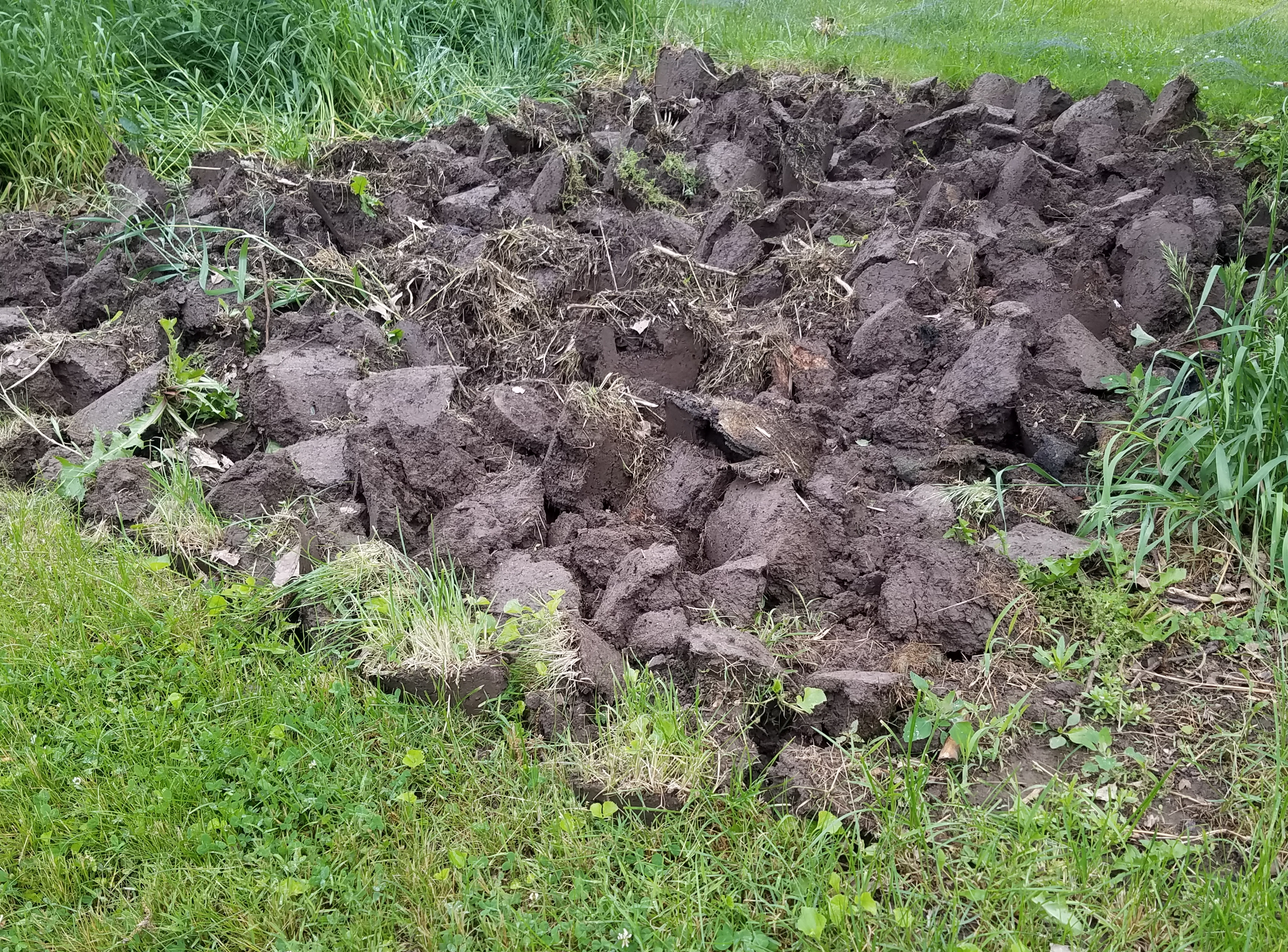
Plot #7 drying on May 28, 2021.

167.7 million Americans have been vaccinated against the coronavirus. That’s 50.5 percent of the total population, according to this morning’s Washington Post. Society is loosening a bit, although when I went shopping last week, most people were wearing face masks in the store.

My sister-in-law came for a visit on Friday, the first time the two sisters spent time together, in person, since the pandemic began. A return to doing certain things has a trajectory of its own. People feel comfortable being together without a significant risk of dying or getting sick. COVID-19 may be lurking in the background, but being vaccinated, we feel okay forgetting about it for a while.

This summer will be a time of re-making how our small family lives. The Memorial Day weekend traditionally, unofficially, kicks off summer, so this post is some thoughts about what is next.

During the coronavirus pandemic we paid off our debt and improved retained earnings on our balance sheet by 12 percent. The pension structure we planned, with Social Security and Medicare at its core, will serve us well for the next 10-13 years. If the Congress does not address the projected shortfall after 2034, our pensions could be reduced. Developing a plan to deal with this possibility is in the mix of priorities, yet not high on the list.

I have little desire to be a wage earner again. I do seek some supplemental income aligned with my interests. No hurry here as we are getting along for the time being.

We’ve been blessed with reasonably good health. Improved diet and daily exercise are both important. So are regular visits to the doctor.

The pandemic changed our transportation needs. Our 1997 and 2002 automobiles need upgrading to a single, newer one with appropriate range to meet our lifestyle. The move will likely be to an electric vehicle, a new one. The question of hauling stuff like bales of straw, garden supplies and home improvement materials remains to be addressed.

This blog changed into something else during the pandemic. I welcome whatever changes are needed to make it relevant going forward. My morning habits have become ingrained. It’s hard to imagine starting each day differently from the way developed during the last 15 months.

Big projects. It became clear that I can work on only one big project at a time, whether it is right-sizing number of possessions, writing, gardening, preparing the house for our aging, or whatever. An air traffic controller can land only one plane at a time and so it is for us. This brings clarity and focus.

Finally, having an active, healthy mind is important. Some things we can’t control, yet a life of engagement in society can maximize use of our critical thinking capabilities… as long as we don’t begin tuning into FOX News. Reading the newspaper and linked articles on Twitter is part of this. Engaging in politics, social justice, and the climate crisis is another. It goes without saying that being supportive of our small family is also important to mental health.

There’s a clear path to finishing the initial garden planting today. My garden work is one of the few things that hasn’t changed because of the pandemic. Let’s hope that remains so going forward.

Categories
Living in Society

Wildflowers

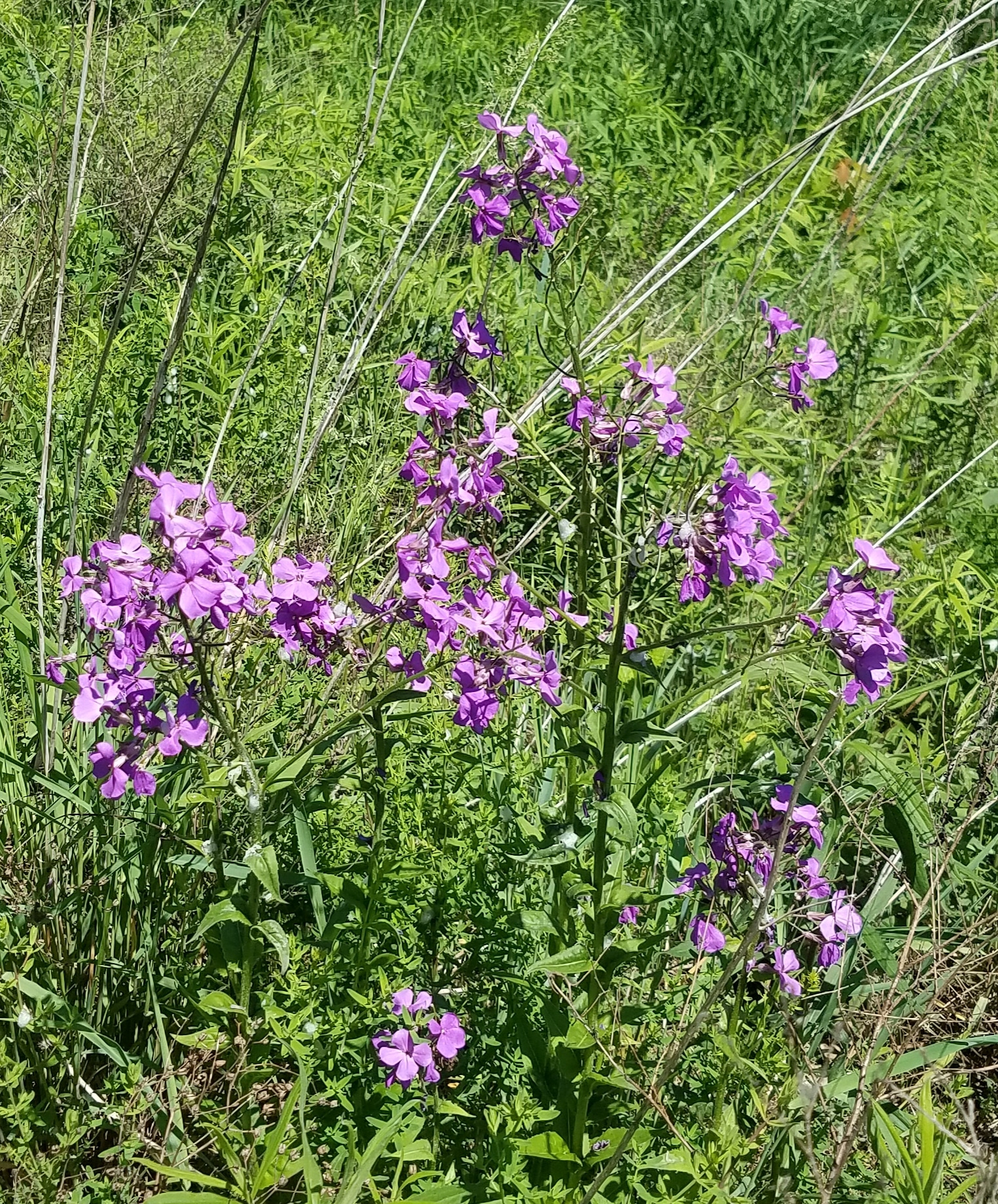
Wildflowers on the Lake Macbride State Park trail, May 26, 2021.

Fourteen months after the World Health Organization declared COVID-19 a global pandemic, it was time to get the newer car serviced. For the most part, the 2002 Subaru sat in the garage or driveway during the pandemic. Wednesday I drove it to town, dropped it at the shop, and walked home along the Lake Macbride State Park trail. It was a near perfect day for a long walk, with clear skies and ambient temperatures in the mid 70s.

Rain is today’s forecast, as it has been for the last two weeks. We haven’t gotten much rain, only enough to retard gardening progress. It looks like drought will be more Iowa’s problem this growing season, although there has been enough moisture here.

In an effort to stop taking a post-operative opioid pain killer, I skipped a dose yesterday afternoon. I’ll likely skip another dose at 11 a.m. today and if the pain is subsiding, switch back to Ibuprofen (or nothing) before bedtime. It was useful to have access to a strong pain killer.

I’ve been mostly out of the garden since I put the tomatoes in and need to finish up initial planting with Guajillo chilies, eggplant, cucumbers, squash, pumpkins, cantaloupes, and acorn squash in plot seven. I also need to weed… a lot.

I’ve been reading Mark Bittman’s new book Animal, Vegetable, Junk: A History of Food from Sustainable to Suicidal. It presents a broad history of food in society, focusing on the detrimental aspects of agriculture. I’m reading the chapter on branding — the rise of Chiquita, Campbell’s, Heinz, Kraft and others. In my autobiography there is a section about the rise of grocery stores and branded prepared foods, so Bittman provides a great background for that work just when I need it. The current average rating on Goodreads is 3.88 which seems about right. I can’t say there is much new to me in the book yet he does part of my research for me.

At 9 a.m. this morning there is a 100% chance of rain, according to my weather application. As soon as the sun rises at 5:36 a.m., I plan to grab my spade and turn over as much of plot seven as I can before it starts. After being waylaid for a week, I’m ready to get back to the garden.

Categories
Kitchen Garden

Forward

Water bath canning.

The first batch of vegetable broth is canned and stored. I am well on the way to meeting a 24 quart budget.

Two different batches went into this water bath canning session. The colors were different because of different greens used. I thought of marking them in vintages as is done with wine, yet that may be a step too far. It’s only broth.

My garden is producing enough leafy green vegetables that the challenge will be using them up. I’m ready to go on my own after the last farm share on Monday. I appreciate the spring CSA share as a bridge between winter and my garden becoming established. Their high tunnels make it possible. I could likely do without it but that would mean changing behavior of nine years — it would be too much coming out of the pandemic.

I strained my shoulder and was waylaid for a couple of days. Luckily it rained so I didn’t feel I was losing garden productivity. I treated with rest and Ibuprofen and the injury does not seem permanent. Can’t say it’s as good as new, because at age 69, who would believe it?

Since the World Health Organization declared the global pandemic on March 11 last year I gained three pounds. I feel healthier than I have in years, although am cognizant of age’s fragility which produces strains and minor aches and pains. I’m doing okay and hesitate to add the dreaded phrase, “for my age.”

Friday afternoon I made black tea with lemon balm. It was surprisingly refreshing. I buy the cheapest bagged tea leaves at the grocer and they make the best iced tea. I use the ones without strings. The lemon balm came with the farm share and I added it to three tea bags in our Brown Betty before pouring the water. It made a scant two quarts.

With nine days left until Memorial Day, finishing initial garden planting is within reach. I started some winter squash in trays yesterday and the rest of what I start indoors from seed will be for succession planting. I’m already on the third round of lettuce and spinach, second of broccoli and cauliflower. With the isolation created by the coronavirus pandemic, it is expected to be a great gardening year.