Categories
Kitchen Garden

Too Many Falafel

Veggie Burgers
Veggie Burgers

Hope of spring arrived with warm ambient temperatures last weekend. It prompted me to clean the garage, roll up the garden fencing left out after making the burn pile, consider locations to plant Belgian lettuce, and inspect the compost piles and bins.

It won’t be long before gardening begins. It has begun.

In the meanwhile, we continue to cook and eat the stores from gardens and shopping trips past.

A jar of dried chick peas had been sitting on the counter.

I hydrated and boiled them, making enough to fill two plastic tubs — normally that many would last a couple of months. The idea was to use them up.

First I baked falafel. It was a lot of food with the second tub of chick peas leftover. Breakfast has been four or five falafel ever since, making a different sauce for each small batch. There were too many falafel.

Next came veggie burgers. I used chick peas, black beans, oatmeal and a mixture of cooked garlic, onion and bell pepper. Seasoned with parsley, celery salt and herbs from the pantry, with an egg as a binder, there were three extra patties which I froze for future use.

I also made a big batch of flavored iced tea. Using tea bags found in a canning jar in the cupboard, I put four in a teapot and poured boiling water over them to steep. In the back of the ice box I found a quart jar of simple syrup and a bottle of organic lemon juice.

On the bottom of three-cup canning jars I measured a quarter cup each of lemon juice and simple syrup. I poured hot tea on top, screwed on the lid and put them in the ice box. The cost was much lower than the Arnold Palmer – Arizona Iced Tea brand iced tea – lemonade drinks sold in convenience stores everywhere. It tasted much better too.

This weekend was of rest, reading, cooking and a bit of garage and garden work. Brief respite before returning to the farm next Sunday for my first session of soil blocking. Homelife in a busy life that generates too little income but rewards our labor in other ways.

Categories
Home Life Kitchen Garden Writing

On Our Own Into 2016

Garage Sign
Garage Sign

“Publishers are not accountable to the laws of heaven and earth in any country and regardless of my opinion, editors and publishers will print what they will.”

I wrote this in a letter to the editor of the Quad City Times in 1980 reacting to a popular feature section called Soundoff.

“(It is) little more than a vanity press for many of the writers,” I wrote. “It gets pictures, letters and opinions into print as a final goal; shouldn’t there be more to public voicing of opinion than that?”

This is more applicable today than it was three and a half decades ago.

What I learned in graduate school is the same statement can be applied to almost everything written in public. Reflecting on the Times experiment to make their pages more open to comments and retain readership, chaos reigned. What has changed since then is the emphasis on viewpoint in media — corporate, social or self published — which has been formalized. It’s not all good.

As I turn to the hard yet fun work of writing this year, I plan to journal my experiences in the food system here. Four years from full retirement, there are bills to pay and a life to live. I may pick other topics from time to time. I need to make the best use of every moment.

I’m writing off line as much as I can. While I don’t like to work for free as long as there is less cash than budget, I may occasionally post about those creative endeavors.

Thanks for reading this blog. Check out the tag cloud for your interests. I hope readers will be back often.

Categories
Writing

A Diet of Food

Kale Salad
Kale Salad

Sixty nine percent of adults age 20 and older were overweight during the period 2011 – 2012, according to the Centers for Disease Control. We hear constantly from medical professionals, dietitians, mass media, politicians, friends and family: to do something about being overweight — and we should — moderate our caloric intake and move.

Despite such commonplaces, something is amiss. It goes beyond notions of eating a “proper diet” and exercising, and most of us don’t really understand what’s right and what’s wrong. Many don’t even learn what is required to live well in the contemporary food culture.

As people move to urban areas — disconnected from how food is grown, processed and marketed — another layer is added to our food system. It includes dining out more often, claims and assertions in mass media about food and food products, and the reduction of daily life to a restricted set of patterns involving less exercise, more processed and prepared foods, and an abundance of food everywhere — unlike in many other places in the world.

Fixing the obesity problem requires more skill than eating and drinking until satiated. What guidance exists among food writers, health professionals and scientists comes under fire from almost every direction.

In the end, we must each make decisions about a personal cuisine or diet. Where will food be sourced? How much cooking will I do at home? How much should I rely on the convenience of an ingredient-based industrial food supply chain? How do I determine the difference between food that tastes good and food that is good for us? There are no easy answers and as time passes we make decisions and live our lives as best we can — making decisions by default.

The film In Defense of Food aired on public television Dec. 30, 2015. In it, author and food writer Michael Pollan takes nutritionism to task.

“Nutritionism is an alleged paradigm that assumes that it is the scientifically identified nutrients in foods that determine the value of individual food stuffs in the diet. In other words, it is the idea that the nutritional value of a food is the sum of all its individual nutrients, vitamins, and other components,” according to Wikipedia.

Pollan’s message in the film is we should “Eat food. Not too much. Mostly plants,” and pay less attention to nutritionism. While he has his critics, this seven word statement is as good as any other guidance I’ve heard as help for developing a family cuisine.

Pollan encourages people to eat meat, which is a bone of contention in urban circles, especially among vegans, vegetarians and environmentalists. He neither embraces nor rejects genetically modified organisms in the film, perhaps recognizing that the anti-GMO movement is more marketing than science. If one has been reading Pollan, his affection for bread is well known.

I follow Pollan and a few other food writers. What matters more is the choices made in our kitchen: how will we process the abundance of garden and farm? What cooking oil should we use? Should we buy lettuce at the grocer during winter? Should we eschew making big batches of food in favor of making enough at a time for a single meal? The questions can be endless, each decision of some importance.

For our family, getting started with local food has been an answer to these questions and more. It is easy to know the face of the farmer when it is visible in the bathroom mirror each day. As the circle of food producers and processors expands beyond our lot lines, it gets more complicated, but not impossible.

What’s needed most is to turn off outside influence from time to time and do what seems right. There is nothing to be afraid of. Food itself will help us find a better diet, especially when combined with the complex understanding of the world that comes with being human. Instead of trying to understand food culture, we may be better off to just go on living and take what comes. Going forward, that’s what I plan to do. That is, in addition to moderating caloric intake and moving.

Categories
Kitchen Garden

Frost Forecast and Harvest Soup

Canning Soup and Jalapeno Peppers
Canning Jars of Soup and Jalapeno Peppers

The garden season officially ended today with gleaning that filled eight crates with tomatoes, apples, celery, Swiss chard, kale and hot and bell peppers.

I delivered a second 200-pound load of apples to the CSA for shareholders and the food pantry. While there, I picked up some potatoes, garlic, lettuce, a large squash, sweet potatoes and some onions.

With a hard frost expected early Saturday morning, I made a harvest soup with vegetables. Five quarts of it are processing in a water bath as I type.

Times like this, a list of ingredients suffices. Not as a recipe, but as a record of what went into the soup.

Fresh and canned tomato juice
Onions
Carrot
Celery
Potatoes
Kale
Swiss chard
Large winter squash cut into cubes
Bay leaves
Sea Salt
Orange lentils
Dried red beans
Pearl barley
Prepared organic vegetable broth

The draft toward winter is inescapable. Snow will soon be flying and subzero temperatures not far behind — and the comforting warmth of harvest soup.

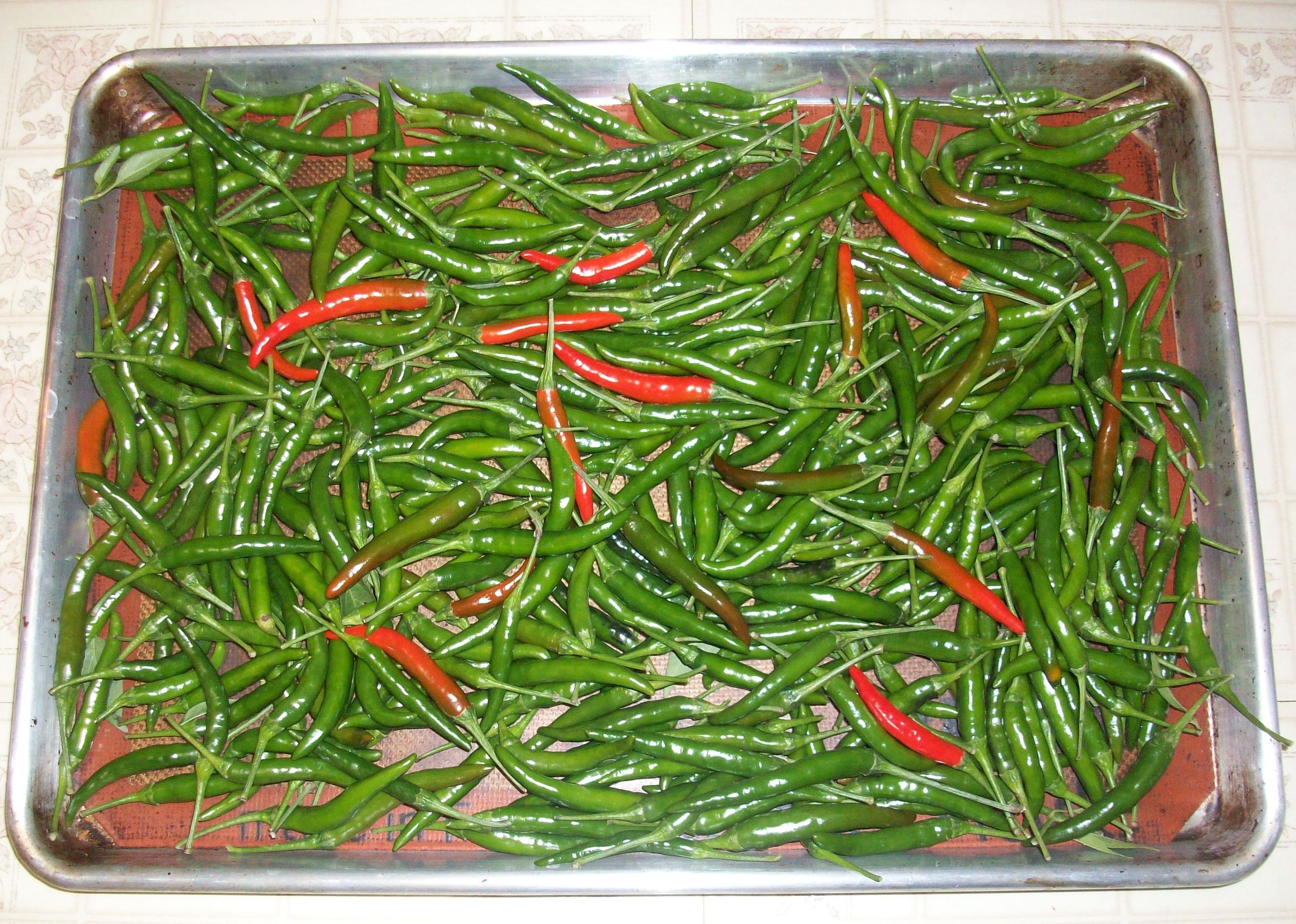
Bangkok Peppers
Bangkok Peppers
Categories
Home Life Kitchen Garden

Walk in the Garden

Fall Colors
Fall Colors

The garden and trees turn to fall colors all at once — right now, as I write.

First frost can’t be far away, maybe next week. Leaves and grasses turn without freezing temperatures. The landscape assumes a warm brilliance.

Apple Harvest
Apple Harvest

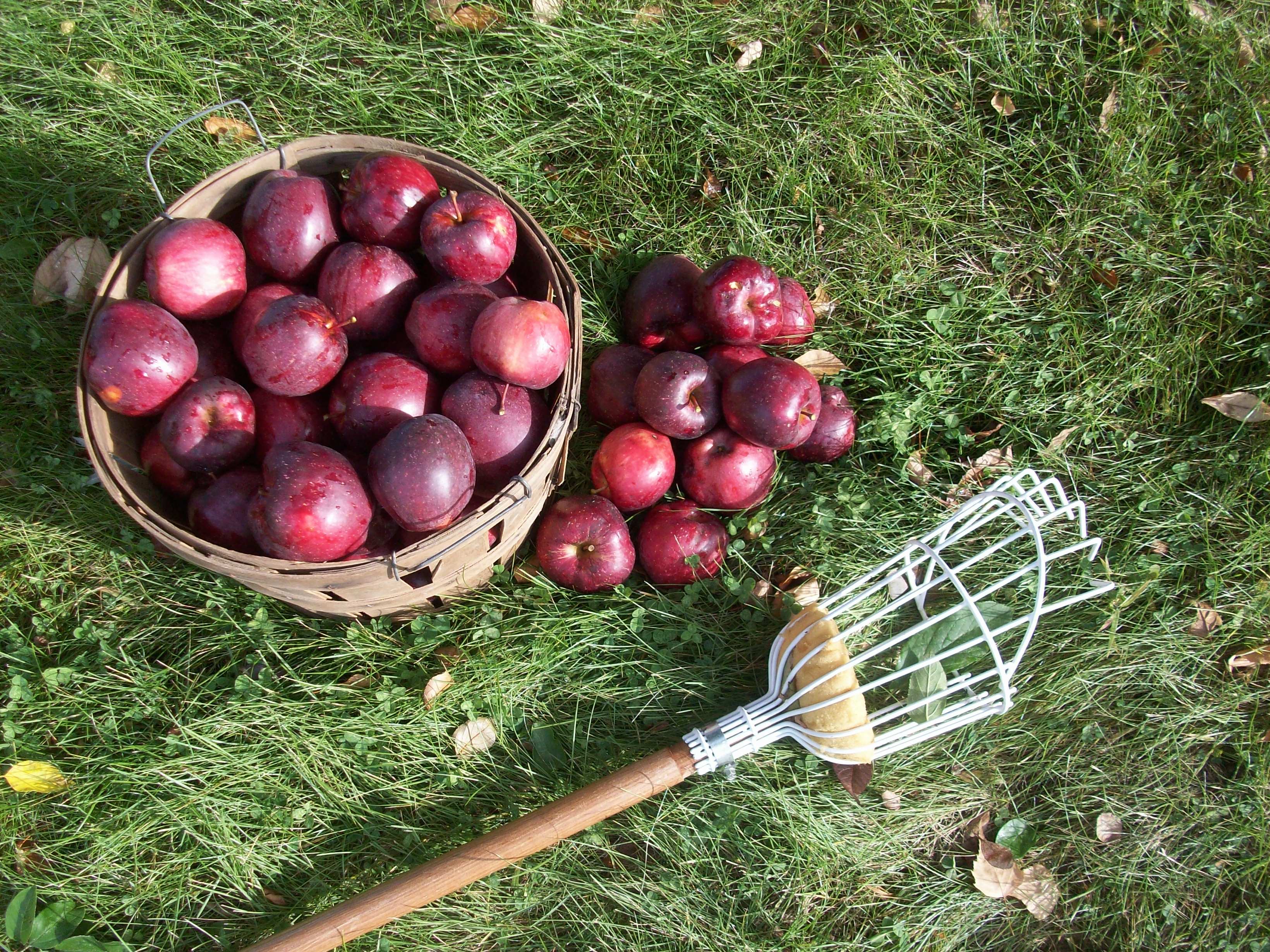
I picked more than 200 pounds of apples Wednesday and donated them to Local Harvest CSA. Enough for shareholders to bake a pie or crisp, or even eat! The apple variety is Red Delicious.

The trees have never been sprayed, and grow as near organic as possible. Fruit sometimes develop black spotting which can be washed off easily. They are delicious in more ways than one.

I walked the garden, filling a bucket with bell peppers, Swiss chard, scarlet kale, celery, a few tomatoes, basil and oregano — what was available. Most of it became soup for dinner.

Beginning with a cup of tomato juice in the Dutch oven. I steamed a diced large onion, sliced chard stems, fine ribbons of kale and chard leaves, celery, turnips and carrots. Except the onion, all were grown in our garden. Once the vegetables softened I added savory, bay leaves, sea salt, dried orange lentils, barley and a can of prepared organic kidney beans. Tomato juice to cover. The pot boiled and I turned it down to simmer. While soup was on, I cooked a cup of organic rice. Plating was a scoop of rice in the middle of the bowl with soup ladled around it.

The next day I water bath processed two quarts of soup, along with three pints of apple butter and a quart of apple sauce. Because of the backlog of apple sauce and apple butter in the pantry, I’m making a limited amount, just to have this year’s vintage when previous jars are used up. There’s more than enough soup for winter into spring.

The tine of my apple peeler cracked, rendering it useless. I drove to the orchard to buy a new one, but in conversation with the chief apple officer, it turns out they had plenty of spare parts. He gave me a used replacement part which fit perfectly and put me back in business.

Cider, New and Apple Vinegar

We got to talking about apple cider vinegar.

This conversation began in 2012 with another friend, who also works at the orchard. He gave me some mother of vinegar which originated with his family in the 19th century. It’s still alive. The orchard used it to start a line of bottled apple cider vinegar to sell in the sales barn.

Today’s discussion was about whether or not to use brewer’s yeast. Jack, the source of the mother, has a large plastic container to which he occasionally adds new juice, but never any yeast. We decided that the yeast must have come from other sources, and therefore no new need be added. Since it works, and in a home kitchen we expect there to be variation in the level of acetic acid, I decided to forego using yeast for the time being.

Yeast is basically everywhere. As anyone who made sough dough from scratch knows, it needn’t necessarily be purchased from a store. Jack’s mother likely has yeast in it, although I rarely see bubbles forming after adding new apple juice. It makes vinegar and that’s the hope.

Fall’s progress is one of the best times of the year. Squirrels scour oak trees for every last acorn. Birds roost on tomato cages where vines still produce.

It takes a walk in the garden to remind us of Earth’s potential, providing soup for dinner and apples for the sweet and sour of life.

Categories
Kitchen Garden

Fall Cookery – Preserving Local Food

Hay Bale
Hay Bale

I connected with Local Harvest CSA last week. The farm looked great.

Iowa Secretary of Agriculture Bill Northey stopped there with my state representative, Bobby Kaufmann. I spent a couple of hours chatting and collecting information for an article that appeared Saturday in the Iowa City Press Citizen.

The next day Susan provided three crates of bell pepper seconds to eat and preserve. The freezer and vegetable drawer are now full. The good news is there weren’t many clinkers among them.

Our garden kept me busy this summer, producing more than enough for our kitchen and some to give some away. Tomatoes, kale and hot peppers are in abundance. The rest of the Red Delicious apples will soon be harvested. I spent most of Monday in the kitchen preserving food.

The kitchen day began with picking a bucket of tomatoes and jalapeno peppers in the garden.

Cutting the bad spots from the tomatoes, I cooked them and made sauce using an old timey tomato juicer with a wooden cone. The byproduct was 1-1/2 quarts of juice which is chilling in the ice box, ready for soup.

Coring and cutting bell peppers into slabs for the freezer is straightforward. I freeze them on a cookie sheet, then bag them for storage. That way they don’t freeze together. Two bags left from last year were in good shape so I added six more — a full year’s supply.

A bag of roasted red peppers and one of jalapenos was left in the freezer from last year. After thawing, I cut the jalapenos in half and put both into the Dutch oven. Adding bits and pieces of pepper leftover from the freezing operation, once tender, the lot went into the food processor until the mixture reached the consistency of relish. I put the result into half-pint jars and processed in a water bath.

I make some applesauce each year even though there is plenty in the pantry. The labor produced two quarts which wait in the ice box until more jars are ready to process in the water bath.

The remainder of the first crate of Red Delicious apples was juiced. I spent half an hour managing vinegar, bottling what was finished from the two-quart jar started in the spring and adding new juice to the mother. There are three finished quarts in the pantry. I may never buy apple cider vinegar again.

When the sun set, the implements of preservation were scattered on the counter — clean and drying. Yesterday I used my hand tomato juicer, a sieve, an apple peeler, an electric juicer, the food processor, a turkey baster, the granite ware water-bath canner, and the usual lot of bowls, jars, lids and rings. Knowing what to do makes it easier with each passing year.

There is a sense that these days of harvest cookery can’t go on forever. Suffice it I’ll keep living them for as long as possible, trying to learn from every season.

Categories
Home Life

Late Fall Reflections

Sliced Tomato, Salt, Pepper and Feta Cheese

Leaves are beginning to fall from the Green Ash trees. Those on the two early apple trees have been down more than a week. The garden is producing and likely will until the hard frost comes in mid-October.

This time, more than any in the year, is for work at home.

Today’s to-do list includes harvesting tomatoes and peppers, canning, and cooking gumbo. I prepared a lunch of sliced tomato, salt, pepper and feta cheese using blemished fruit. It’s a simple and satisfying repast.

For so many years, work was elsewhere. While downsizing I found a three-ring binder with papers from expense reports dated 1992. I was managing trucking terminals in Schererville and Richmond, Indiana, and starting recruiting operations in West Virginia, Georgia, Pennsylvania and Missouri. I would wake up on an airplane unsure of where I was, or where I was going. It was a busy time and there was little left for family. They were days of intangible hope for a future that included success. I don’t know what that means any more.

President Obama stopped at the Iowa State Library in Des Moines yesterday. The stop wasn’t on his formal agenda, but while there he submitted to an interview by Marilynne Robinson, the Pulitzer prize-winning author who lives in Johnson County. Obama reads Robinson and listed Gilead as one of his favorite books. It is pretty neat that one of our own has this kind of relationship with the president. Obama quoted from the book in his eulogy for the Rev. Clementa C. Pinckney in Charleston last July.

I’ve been trying to read Gilead without success. Starting it three times over the last three weeks, I don’t get it. Maybe eventually I will. It’s one of the must read books produced by an author affiliated with the Iowa Writer’s Workshop, where many less acclaimed books than Robinson’s have been produced. Maybe the time is not right. Maybe the president’s visit will encourage me to give it another try.

It’s two months to the 21st Conference of the Parties, or COP 21, in a suburb of Paris. Iowa environmental groups are wrangling for a unifying Iowa event just prior to the first day of the conference, Nov. 30. It seems a bit late to be planning as leaves fall, the harvest comes in, and we turn our attention to the work necessary to sustain ourselves. It’s important the parties reach an enforceable agreement. It won’t be the end of the world if they don’t. Or maybe it will.

Categories
Kitchen Garden

Taking A Break – Cooking

Rough Cut Tomato, Peppers and Onion

Thursday yielded six jars of hot sauce made from jalapeno peppers, onion, garlic and tomato, plus seven quarts of apple-rhubarb sauce. In addition, I made a quesadilla with finely diced jalapeno pepper and thinly sliced tomato, reheated a bowl of home made soup and had a bit of homemade tapioca for dessert.

The day was mostly about staying home and processing garden produce. There was a side benefit of clearing a little space in the refrigerator, as all but one jar of hot sauce was processed in a water bath. The lids sealed so the jars are ready for storage.

I hardly made a dent in the produce.

The Amish Paste, Rose, Brandywine and Beefsteak tomatoes are flavorful and abundant. Other varieties are producing as well.

The cooking hardly made a dent in the abundance.

It was the last day of my three-day holiday. Today I return to the warehouse for a final shift before changing to seasonal orchard work tomorrow. I hope to have more to say about my 18 months at the warehouse next week.

Now that the holiday is over, it’s time to generate income and figure out what’s next. I spent time preparing a studio for creative work by increasing the table space to work on things. I booked a couple of speaking engagement in October and need to prepare for those. There is never an idle moment on the prairie.

But we need to eat.

Categories
Kitchen Garden

Stand In The Kitchen

Scarlet Kale
Scarlet Kale

The word “cooking” was on the calendar this afternoon. I went into the kitchen at the appointed time and stood there.

After a while I turned the radio to National Public Radio news, and stood there.

I stood there and let the quiet of a placid summer afternoon sink in.

Filling a wide-mouth Mason jar with ice, I drew filtered water from the icebox and drank.

I refilled the jar.

The green beans had gone bad, so into the compost. A moldy squash was removed to the compost bucket.

There were too many cucumbers, so the small ones were made into sweet pickles (I hope).

When I selected Brandywine tomato seeds last winter I had no idea the fruit would be so good. A dozen were lined up on the counter in the order of ripeness. I took the biggest one and made two slices from it. I diced one more that was injured from growing between wires on the tomato cage and piled it on top. With salt, pepper and feta cheese, it made two meals by itself.

I cleaned and picked over a crate of kale and found a couple of green worms on the leaves. The predators have arrived. Removing my guests, I tore the leaves and filled up the salad spinner. The kale dried on the counter.

I stood there a while longer, but now I knew. The other dish would be a kale stir fry.

Slicing half an onion, seven cloves of garlic, and a yellow squash, I sauteed them in extra virgin olive oil until tender. Then I piled on the kale and stirred gently. First it turned bright green, then it wilted. It cooked down to two servings, which was just right.

The meal was satisfying, and unexpected. Which is what happens if one would but stand in the kitchen and live.

Categories
Writing

Taking Local Out Of Local Food

Kale Salad
Kale Salad

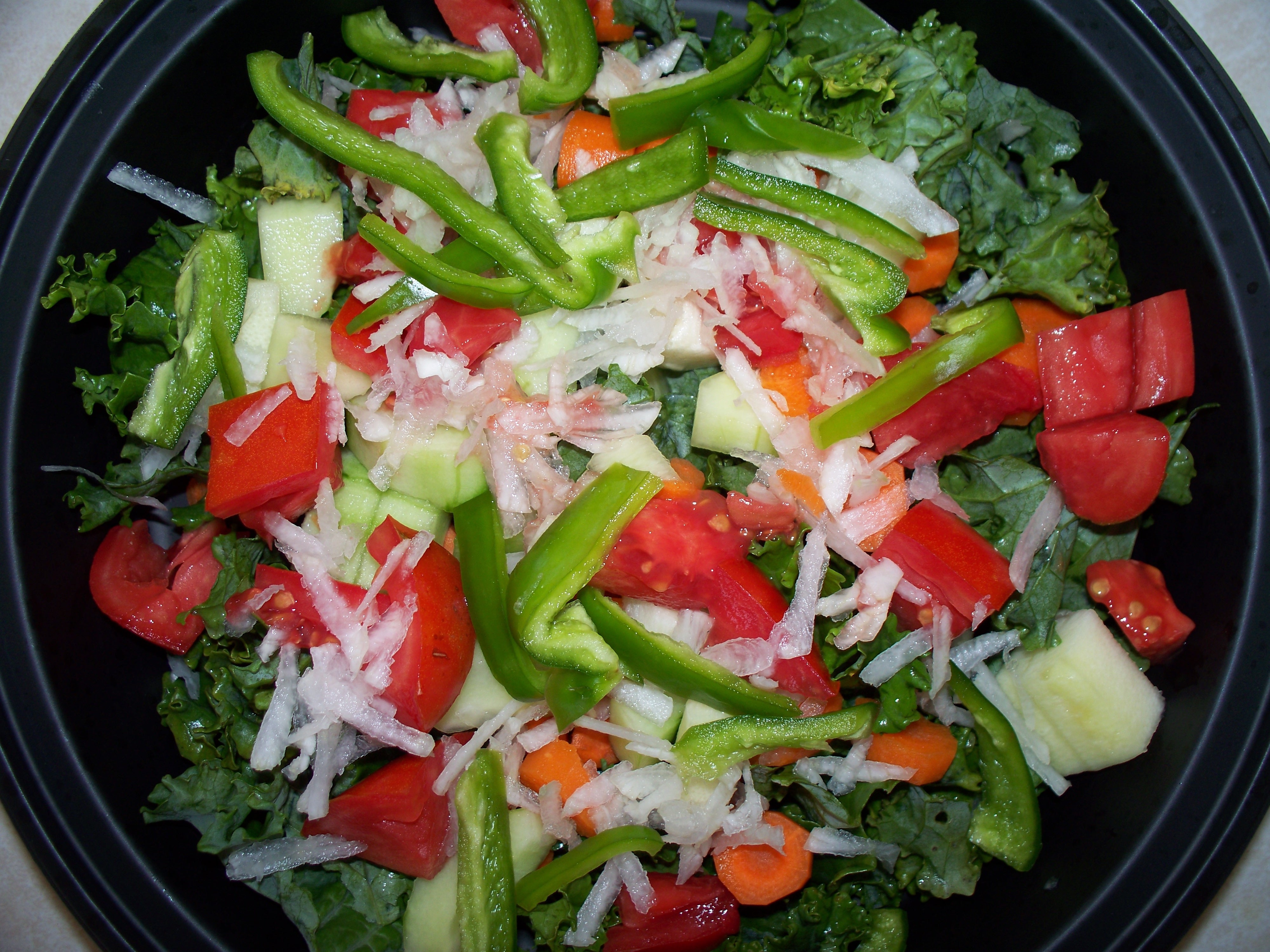
Ingredients for this kale salad were grown within 100 feet of our kitchen. It is as local as food gets.

We enjoy garden produce in high summer — when nature’s bounty yields so much food we either preserve or give it away. Any more our household gives away more than it preserves because the pantry is well stocked with previous years’ harvests.

Friends and family talk about the “local food movement.” In Iowa it is being assimilated into lifestyles that gladly incorporate ingredients from all over the globe. This assimilation has taken the local out of local food.

From an intellectual standpoint, it wouldn’t be hard to replace food grown in China, Mexico, California and Florida with crops grown here in Iowa. The number of acres required is surprisingly small. For example, local farmer Paul Rasch once estimated it would take about 110 acres to keep a county of 160,000 people in apples all year. The political will to encourage home-grown solutions in the food supply chain doesn’t currently exist. Until it does, rational, local solutions to food supply remain in the ether of unrealized ideas.

A vendor at the Iowa City Farmers Market was recently suspended for violating a rule that produce sold there must be grown by the vendor. Just walk the market and ask booth workers from where they hail. Often he/she is an employee or contractor working for a farm seeking coverage around many Eastern Iowa farmers markets. Too often they are anything but local growers. What’s been lost in this commercialization of local food is the face of the farmer.

Knowing where one’s food comes from is a basic tenant of the local foods movement. I enjoy working with local growers on a small acreage to produce food for families. At the same time, I seldom purchase a box of cereal from the supermarket even though I’ve seen the grain trucks queue up to unload at the cereal mills in Cedar Rapids.

For example, my garden doesn’t produce enough garlic for the year. I’d rather buy a supplemental bag of peeled garlic cloves produced at Christopher Ranch in Gilroy, Calif. than cloves lacking discernible origin at a farmers market. I know how Christopher Ranch produces their garlic. Absent the face of the farmer, there is value in understanding food origins, and that means some percentage of a household’s food supply will not be local.

There is a lot of marketing hype around “organic,” “GMO-free,” and “gluten free” foods, and this has to be impacting the customer base of local food producers. If consumers feel they can get a reasonably priced, “healthy option” at the supermarket, why make an extra trip to the farmers market, except for the occasional special experience? Why wouldn’t one pick up a bag of Earthbound Farms organic carrots when local growers can never produce enough to meet demand? At the same time, marketing hype is just what the name suggests.

Food security and sustainability are complicated. Before the local foods movement came into its own, it already is being assimilated faster than one can say snap peas. From a consumer standpoint the local came out of local foods some time ago, and it may not be back.