Categories
Environment Kitchen Garden

Gardening the Climate Crisis

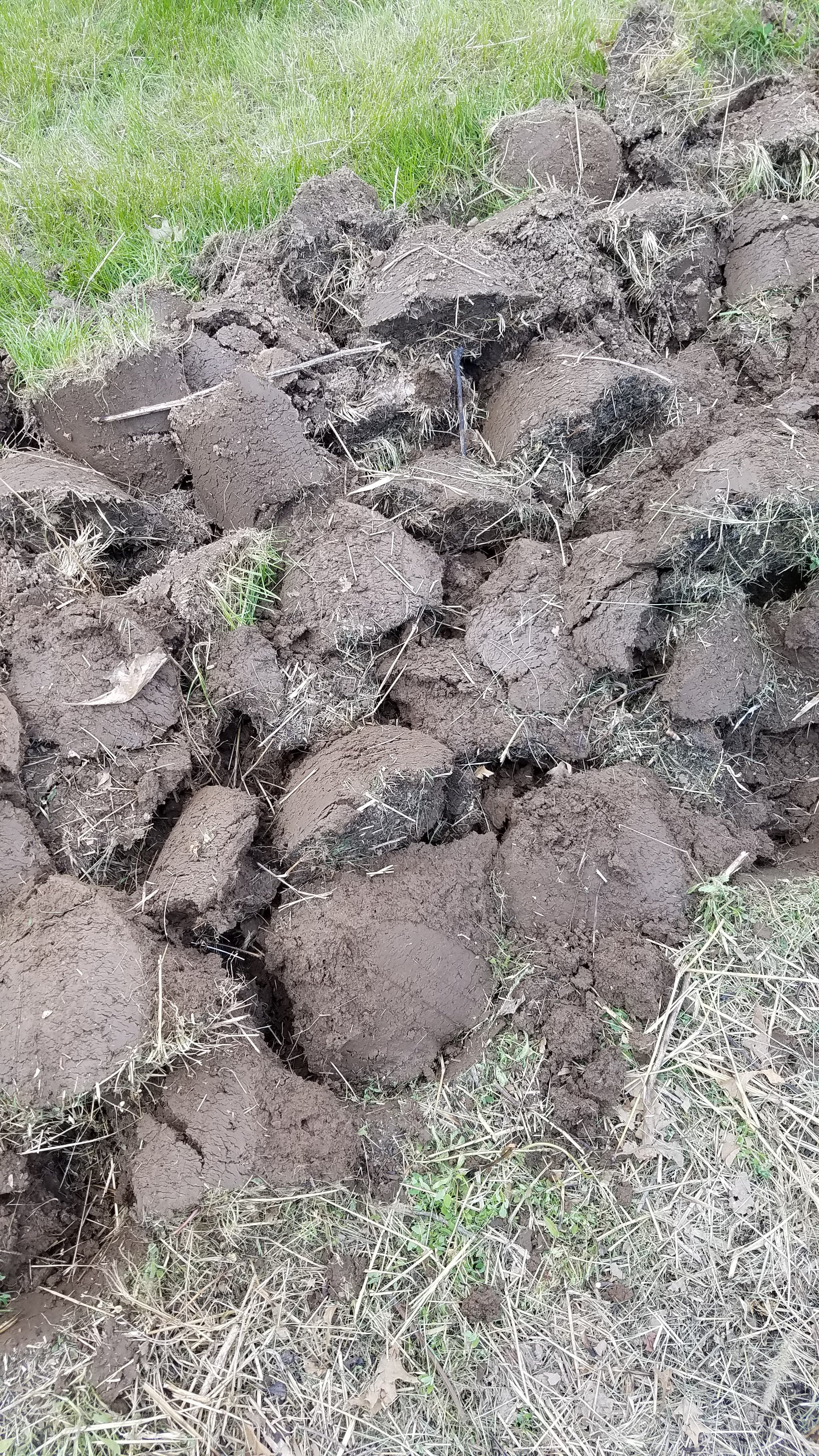
Garden Soil Turned over with a Spade

Gardening is one of the most popular activities on the planet. Whether one lives in an apartment, in a single-family home, or on a farm, local food and flower production can be satisfying on multiple levels. A garden can be a source of nourishment, beauty, exercise, learning, and personal satisfaction.  Gardening helps us to be sociable because almost everyone grows something or appreciates those who do.

Gardening is also a way of mitigating the effects of the climate crisis.

The Climate Reality Project posted a list of things gardeners can do to act on climate. They are easy to incorporate into a garden’s daily work. Here’s my take on their list.

Reduce or eliminate synthetic fertilizers

A few years ago I began using composted chicken manure to supplement compost from my bins. The resulting vegetables were dramatically better. This is the kind of fertilizer my local food farmer friends use and it is acceptable for certified organic crop production.

We don’t ask a lot of questions about where the chicken manure originates, and maybe we should, but Iowa ranks first in the United States for egg production with 57.5 million laying hens according to the Iowa Poultry Association. With an 18.2:1 chicken to human ratio, chicken manure is an abundant resource.

There are plenty of reasons to be wary of synthetic fertilizers, according to the Climate Reality Project. Chemical runoff from haphazardly applied fertilizer can drain into streams and lakes, making its way to our water supplies. They can disrupt naturally occurring soil ecosystems, and are a temporary solution to a long-term solvable problem.

When it comes to the climate crisis, fertilizer manufacturing is the issue.

“Four to six tons of carbon are typically emitted into the atmosphere per ton of nitrogen manufactured,” according to Dr. David Wolfe, professor of plant and soil ecology in the School of Integrative Plant Science at Cornell University.

Gardeners should be more conservative about nitrogen use in the garden. Using composted chicken manure to improve soil nitrogen levels can produce great results and avoid the greenhouse gas emissions of synthetic fertilizers.

Plant Trees and other perennials

When we built our home in 1993 there were two volunteer trees on our lot, a mulberry which remains in the northeast corner, and another that died and was replaced with a blue spruce grown from a seven inch seedling. In all I planted 17 of 18 trees here, of which 15 remain. We also have three patches of mature lilac bushes.

Atmospheric CO2 Levels

The benefit of planting trees is they remove carbon dioxide from the atmosphere and store it. Because of their long life and size, they store more carbon than other plants. Scientific data shows the impact of trees on our atmosphere. The NOAA Earth System Research Laboratory at Mauna Loa, Hawaii measures carbon dioxide levels in the atmosphere. Last Saturday, the level of atmospheric CO2 rose to 415.25 parts per million, higher than it has been since humans evolved. Click on the chart of monthly CO2 levels and you can see the impact of deciduous trees. While the overall level continues to rise, as the world greens up in spring, CO2 levels predictably, consistently fall. When leaves fall from the trees, CO2 levels rise again. The thing about planting trees is do it once and the focus can turn to other things.

Trees offer cool shade in the summer and protection from winter winds, so a well-placed tree can reduce emissions and energy bills associated with heating and cooling a home. Fruit trees provide an added bonus for gardeners.

Reduce water use

Science explains that the warmer temperatures associated with the climate crisis increase the rate of water evaporation into the atmosphere, drying out some areas and then falling as excess precipitation in others. This can lead to a cycle of water misuse in ever-drier areas, and plant diseases in regions where average annual precipitation is on the rise. In Iowa we have seen all of that, with the record drought of 2012, and severe flooding that got within 100 yards of our home in 2008.

Lawn and garden watering is estimated to account for 30 percent of all residential water use in the U.S., according to the EPA, and that number “can be much higher in drier parts of the country and in more water-intensive landscapes.” And as much as 50 percent of it is lost to evaporation, wind, or runoff. Water conservation is everyone’s business. I’m not sure why anyone would water a lawn, except maybe a golf course. I don’t play golf. It is better to let a lawn survive in varying temperatures and moisture levels. Thus far in Iowa that’s been possible.

I don’t use an irrigation system or sprinkler in my garden. To ensure adequate moisture to sustain plants in seven plots, I use grass clippings as mulch. Often there are not enough clippings so I’ve been experimenting with plastic sheeting for peppers, cucumbers and broccoli. I have successfully re-used the plastic for multiple years. I use a garden hose to water at the base of the plants and do so sparingly.

“Less frequent, deep watering also encourages deeper root growth to areas where the soil stays moist longer,” according to the Cornell Cooperative Extension. “If supplemental water is determined to be necessary at a specific time and location, be sure to use no more than is needed and minimize your use of potable water.”

Focus on soil health

I have gardened non-stop since we moved into a rented duplex after our 1982 marriage. I have gotten better at gardening, but the biggest improvements came after we ceased being renters and bought our own homes, first in Lake County, Indiana, and then in Johnson County, Iowa. Owning our home enabled me to better consider soil health and long-term investing in it.

When we moved here the living layer of top soil had been removed and sold by the developer, leaving a hard, heavy surface devoid of earthworms and other visible life forms. Gardening, by its nature, must address soil health because if there is no life in the soil, fruit and vegetables won’t grow as well. This is the lesson of row crop agriculture where the best soil has eroded and what remains is supplemented with synthetic fertilizers and other inputs to create an artificial environment for plant growth and pest control.

The story of climate change’s impact on soil health is mostly about changing precipitation patterns, according to the Climate Reality Project.

Extreme downpours can lead to runoff and erosion, stripping healthy soil of key nutrients needed to sustain agriculture. On the other end of the spectrum, frequent droughts can kill off the vital living soil ecosystems necessary to grow healthy crops – and of course, plants can’t grow without water either.

What a gardener wants is soil rich in microorganisms that will sustain plant life through drought and heavy rains. After years of work composting and working our garden plots we can see plenty of earthworms. They are the most visible aspect of a rich miniature biome that sequesters carbon and stores water to make irrigation less needed. Healthy soil helps a garden survive short-term drought and heavy rains by sustaining moisture in the ground near plant roots.

Not many gardeners I know use cover crops, but that is an option to increase soil health. Like most, I add compost in the spring before tillage until the bins are empty.

Reduce tillage

Over the years my relationship with gasoline powered tillers has been inconsistent. A low- or no-till approach to gardening can plays a big role in building the soil organic matter. The reason is simple, when you rototill the ground, you break up the soil ecosystem.

“At its most basic, no-till gardening is the practice of growing produce without disturbing the soil through tillage or plowing,” according to the Climate Reality Project. “In addition to locking up more carbon in the soil, this approach dramatically cuts back on fossil-fuel use in gardening. After all, gasoline-powered garden tools are emitters of CO2.”

The best way to say it is I’m in transition regarding tillage. I have always turned over all the soil in a plot with a spade. What varied over time was whether or not I used a tiller. Sometimes a rented or borrowed a large rototiller to do everything at once, sometimes I used a smaller sized tiller inherited from our father-in-law’s estate, and now I break up the soil with a hoe and rake. I’ve been changing my way of thinking.

Last year I made a tomato plot but instead of turning the entire plot over and breaking the clods of soil down with a hoe and rake, I made two-foot lanes for the tomatoes. The production was excellent. Not tilling the entire plot leaves some of the soil structure in place and in the long term, that’s better for soil health.

This is an ongoing experiment, but the obvious conclusion is less tillage is better.

Opt for hand tools

My main garden tools are shovels, a hoe, rakes, a post driver, and a bucket of hand tools. Eliminating use of a rototiller was an important step in reducing emissions and using the spade, hoe and garden rake to break up the soil provides exercise. I also plant crops in four waves: early (kale, broccoli, peas, carrots, beets, radishes), succession planting (spinach, onions, leeks, herbs, beans and celery), tomatoes, and late (cucumbers, zucchini, squash, eggplant and peppers). Spreading planting over weeks helps make the physical labor of using hand tools more tolerable.

With a large garden and yard it proved difficult to make the battery-powered trimmer work: I kept running out of charge. When it broke, I got a new gasoline-powered trimmer. I also use my gasoline-powered mower and a chain saw. I used less than five gallons of gasoline between the lawn mower, chain saw and trimmer this year. Not perfect, but consistent with a practice to reduce the amount of garden emissions.

Part of my strategy of lawn maintenance is to avoid the use of chemicals completely and mow less often, maybe once every three or four weeks. The benefit of this practice is the lawn becomes a habitat for local flora and fauna. The downside is I don’t get enough grass clippings in a season for mulch. After years of the practice, the neighbors haven’t complained.

Conclusion

The climate crisis is real, it is now, and we have to do something about it. The lesson I learned from being a member of the Climate Reality Leadership Corps is there are many way to contribute to solutions in our daily lives. Among the things we do in a day, mitigating the effects of climate change must be one of them. We are all in this together and even a gardener can do something to help.

~ To learn more about the Climate Reality Project, visit climaterealityproject.org.
Categories
Living in Society Social Commentary Writing

Unexpected Monday

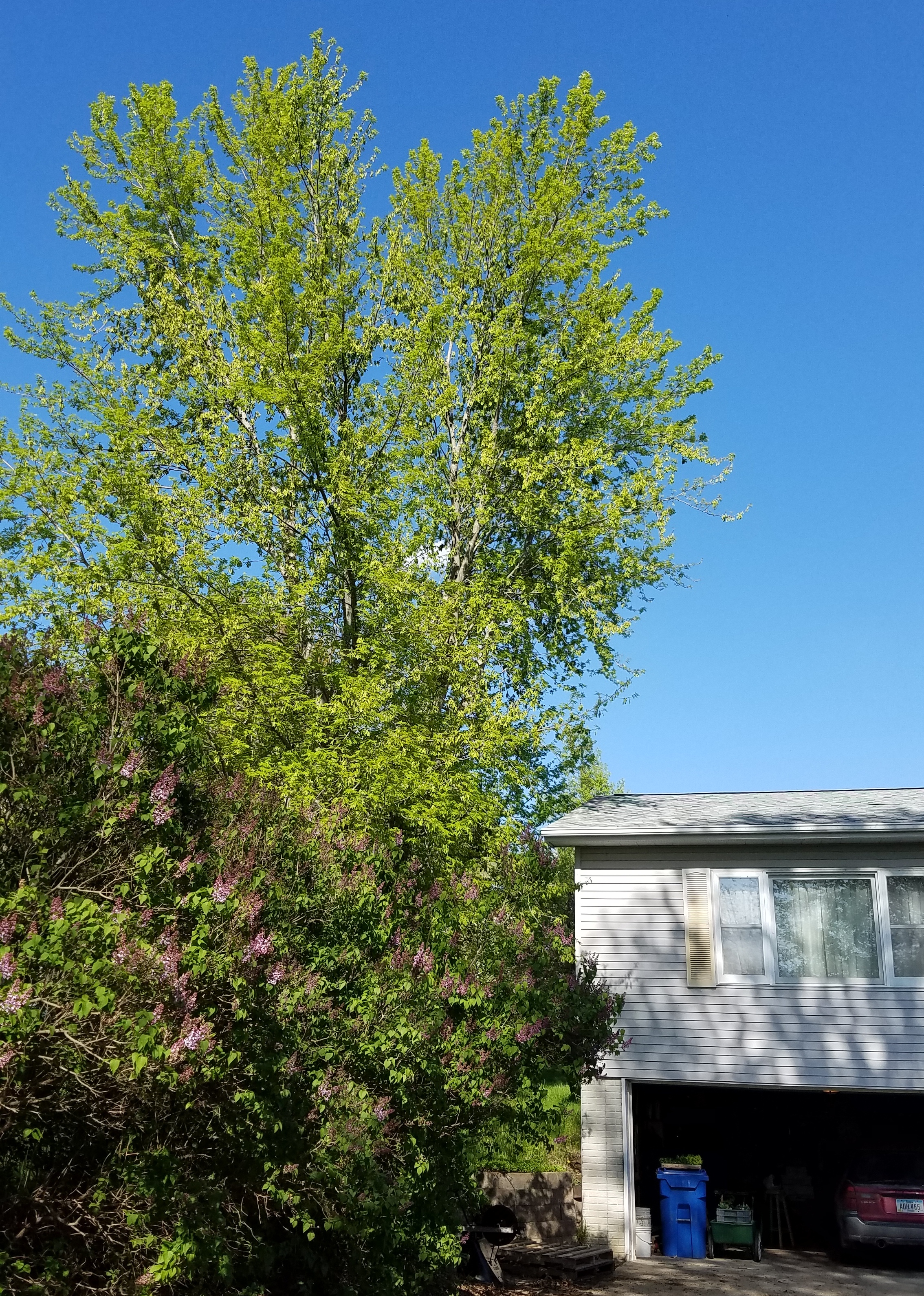
Maple Tree – Before

Monday didn’t happen as expected. There were three things involving arborists, health care and farming.

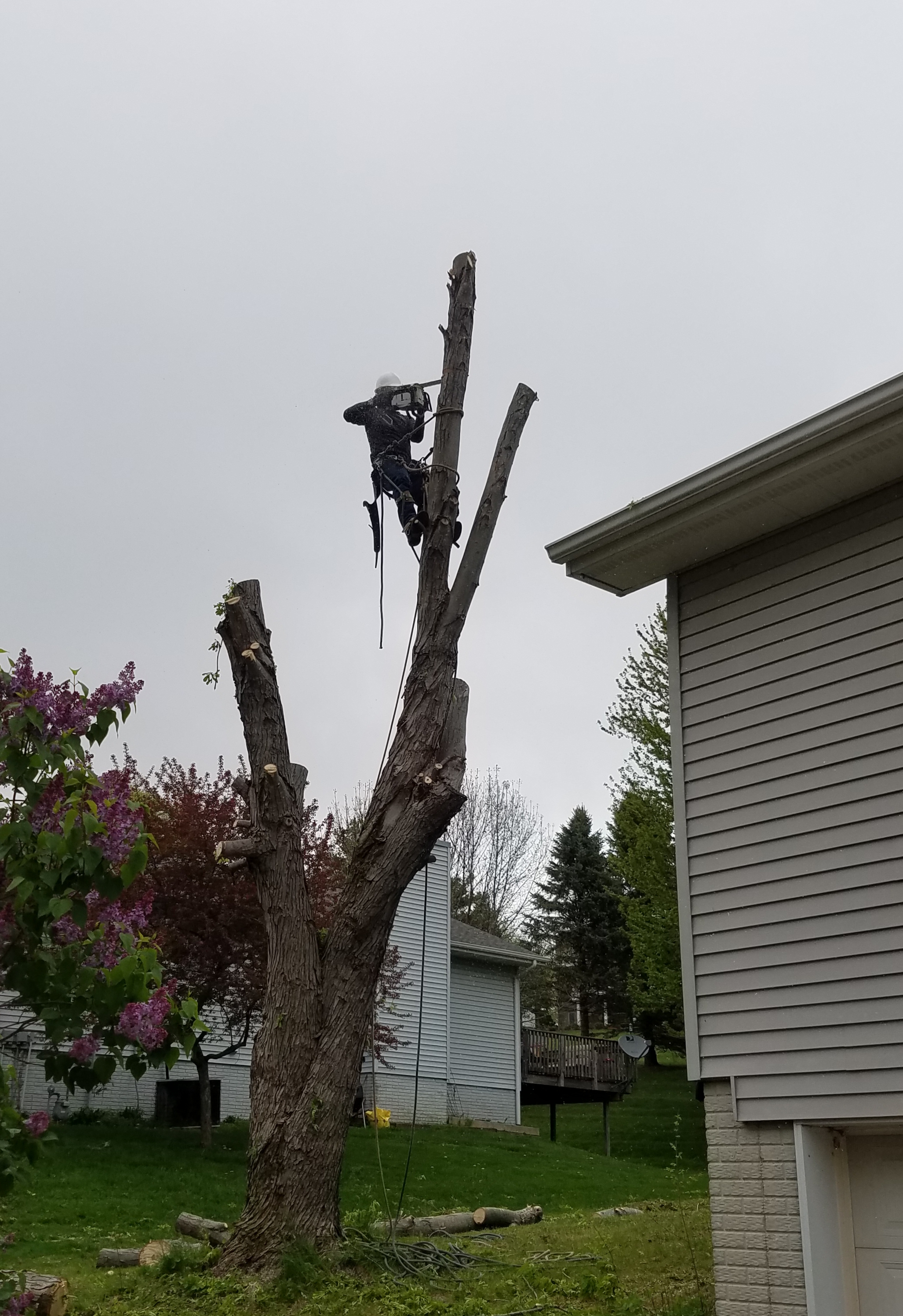
Without announcement, the arborist arrived to take down a maple tree I planted on the northwest corner of the house. Turns out I didn’t know what I was doing when planting the 12-inch, stick-sized sapling so close to the house in 1994.

Now fully grown, unusually strong winds already took out one of the main branches. We determined it would be less expensive to remove the tree than pay for a roof repair when limbs inevitably blew down on it.

It was a small way of mitigating the damage of the climate crisis.

The crew was four men with two pickup trucks to haul away brush and wood. The benefit of using an arborist instead of a tree service is the equipment is pickup trucks, ladders, and an array of Stihl brand chainsaws and old fashioned loppers. There is minimal soil compaction around the work site without heavy equipment and that’s important to a home owner.

Arborists at Work

The arborists took out the maple and trimmed the pin oak, finishing well before noon. Our next door neighbor engaged them for tree trimming and by the end of the day our corner of the neighborhood was looking good.

Monday’s main event was a trip to the local clinic to get checked out.

Last Friday someone called, saying I was overdue for a physical exam. They had an appointment the following business day, which in a small city is disconcerting. The hospital managing the clinic is already having financial difficulties. The fear is the clinic will close, making it neccessary to drive to the county seat for health care. I took the appointment.

We no longer have two physicians at our clinic as one was replaced with an ARNP or Advanced Registered Nurse Practitioner. I get that the United States is facing a physician shortage, and our ARNP fills a coverage gap. It makes sense to differentiate the skills being performed in a local clinic and find practitioners that closely match them.

I miss what I had for a very long time, a doctor with whom I established a relationship and could get to know in our community. I’m not saying it was great, or that we should go back. I miss it but am ready to move on, seeking an answer to the question how do people get treatment in a scenario in which part of every office visit is talking about how to pay for services?

Arborist at Work

I liked my ARNP. He explained something I hadn’t considered. He said I was scheduled for a physical exam and there would be a significant cost. I explained that’s what the Friday caller said I needed so I went with it. He changed the billing code and said, once a person reaches a certain age, the better course of action when seeking treatment is to come into the clinic for specific maladies, without getting a traditional physical exam. I have a history already, which when combined with age and lifestyle risks, along with my complaints, can determine a course of care without physical examinations as I’ve had previously. What their team did today was little different from what the last physician did, with the exception the prostate examination was delayed until the results of a panel of lab tests he ordered were known.

At 3:40 p.m. I drove to the farm to pick up our vegetable share of Bok Choy and Koji, Leaf Broccoli, Mixed Greens, Lettuce, Spring Garlic, and Garlic Chives. Each year I secure onion starts for our garden leftover once the farm has planted theirs. It was time. Usually I get a bundle or two of starts produced in Texas, but Monday was different. The farmers gave me two trays of locally grown starts still in soil blocks. It seemed a generous gift considering the work that produced them. I was thankful to have them.

A day that started with a headache from a 12-hour fast before my clinic appointment turned out for the better. I had a cup of coffee after the clinic and the day got progressively better. It was one more day of sustaining a life in a turbulent world.

Categories
Environment

Earth Day – 2019

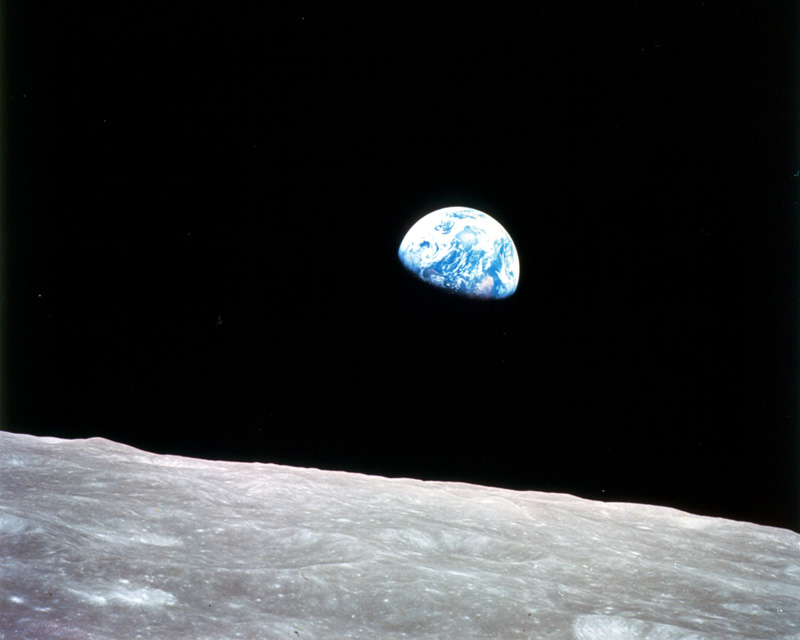
Earthrise by Bill Anders, Dec. 24, 1968

A thin haze dimmed reflected light from the moon. Thin enough to allow dots of starlight to penetrate the atmosphere and with moonlight illuminate the neighborhood.

The haze was just enough to know it was there.

I moved trays of kale, broccoli and parsley seedlings from the garage to a pallet near the driveway in the hazed light of a waxing gibbous moon.

Today is the 50th Earth Day.

Earth Day is less about a view of night’s starry presence than it is about seeing Earth as a whole. Few times in our history has a photo of Earth made such a difference in so many lives as Earthrise taken by astronaut Bill Anders. It sparked the movement that brought us Earth Day which continues to this day.

We humans have not been the best stewards of Earth since April 22, 1970.

Early Years

Vague notions of ascendancy were taught by our grade school teachers. In the seventh grade I was segregated from neighborhood friends to join a college-bound group of peers in a special classroom. I entered the National Honor Society in high school and when I graduated in 1970 had no clue what I wanted to be. I knew I was college bound, not because I wanted that, but because the nuns said I should be. That I finished college at all was miraculous. I felt a sense of relief as President Nixon appeared to heed a shared need to do something about the environment. When he created the Clean Air Act (1970), and then the Clean Water Act (1972) I felt Earth Day had done its job.

Military Service

When I left Iowa in 1976 for basic training at Fort Jackson, S.C. I had little idea of what being a military officer meant. I knew the Vietnam War was over and I wanted to serve as my father had. The context was a paternal grandfather went to prison for draft evasion during World War II. Given a choice, I would serve. Among other things, military service taught me the environmental cost of war.

The environment has long been a silent casualty of war and armed conflict. From the contamination of land and the destruction of forests to the plunder of natural resources and the collapse of management systems, the environmental consequences of war are often widespread and devastating. ~ Ban Ki-moon, UN secretary general

Oil consumption and related carbon emissions are significant contributing factors to degradation of our atmosphere. The use of depleted uranium in military ordnance, notably during the 1991 Gulf War, created a complex array of environmental problems including introduction of carcinogens into the environment. We destroyed Iraqi infrastructure, including water and sewer systems, and contaminated surrounding ecosystems. The use of defoliant Agent Orange in Vietnam created sickness among soldiers and decimated biodiversity in the country’s tropical rain forests. We should include potential use of nuclear weapons which studies have shown, in a limited nuclear war, could create a nuclear winter making 2 billion people food insecure.

Awareness of the military’s environmental problems is a lesson learned.

Worklife

I worked 25 years in the transportation business, including an 18-month stint with Amoco Oil Company in Chicago. What goes almost unnoticed as part of background noise in modern society is the amount of fossil fuels burned by trucking, railroad and ocean-going transport vehicles. When I was maintenance director for a large trucking firm, I spent $25 million per year purchasing diesel fuel for our vehicles. That doesn’t count fuel burned by our affiliate companies which used independent contractors who fueled their own semi-tractor trailers. The fundamental dynamic during this period was I needed a job to support our family and given what I perceived as a lack of opportunity after college and military service I took what I could find, staying there for most of my professional career. I traded the environment for financial security. My main concerns were job performance and getting ahead. The nuns in grade school didn’t adequately prepare me for this kind of worklife. Environmental issues were off the table.

Retirement

When I left transportation ten years ago the climate crisis became more real.

In 2013 I participated in The Climate Reality Project conference in Chicago, taught by former Vice President Al Gore. It made a difference to learn the science of climate change and in the following months I began presenting the information learned in public speaking, in letters and articles in the newspaper and in my daily life.

We entered a period of politicization of everything. Facts ceased to matter. Income inequality worsened and the U.S. government seemed owned by the richest people. The scientific facts about climate change became a political choice: do you or don’t you believe the science of climate change?

Climate change is real and is impacting our lives now. Even banks are seeing how it can impact their business. From an open letter from the Governor of Bank of England Mark Carney, Governor of Banque de France François Villeroy de Galhau and Chair of the Network for Greening the Financial Services Frank Elderson:

The catastrophic effects of climate change are already visible around the world. From blistering heatwaves in North America to typhoons in south-east Asia and droughts in Africa and Australia, no country or community is immune. These events damage infrastructure and private property, negatively affect health, decrease productivity and destroy wealth. And they are extremely costly: insured losses have risen five-fold in the past three decades. The enormous human and financial costs of climate change are having a devastating effect on our collective well being.

The authors call for an orderly transition to a low-carbon economy. “The stakes are undoubtedly high,” the authors wrote. “But the commitment of all actors in the financial system to act on these recommendations will help avoid a climate-driven ‘Minsky moment’ – the term we use to refer to a sudden collapse in asset prices.” In other words, the climate change bubble could burst.

The Future

Less than 24 hours remain in this 50th Earth Day, a brief moment in Earth history. Whatever humans do, the earth will be fine. It’s human life and society that’s at risk. My takeaway from 50 years of considering Anders’ image of Earth against a background of the immensity of space is the same as when I first saw it: we humans are all in this together. It is going to take more than Earth Day to bring political will to act on climate.

Categories
Environment

50th Earth Day Coming Up

1970 Earth Day Button

I looked in the recycling bin and there were only eight items in it. Thursday is our day to leave the bin at the end of our driveway and I’m going to wait until next week.

It’s not that we’re throwing more in the trash instead of recycling. The trash bin is completely empty, making the second week in a row it remains in the garage as the trash collector comes through the neighborhood.

We’ve learned to reduce the amount of stuff we use, recycle what is accepted, and reuse what can be. In part we do that because of my participation in the first Earth Day on April 22, 1970.

Do the math. The 50th Earth Day is Monday and the news is that few are aware or interested, based on my personal interactions with people and reading news coverage.

I’ll have more to say on Monday, but a couple things are clear.

In the long run, the Clean Air Act, the Clean Water Act and other environmental laws enacted since the famous Earthrise Photo have run their course. The U.S. Environmental Protection Agency did good work for a time, which included measurable environmental improvements, yet in today’s de-regulatory government their future effectiveness is being gutted in favor of business interests.

The regulatory environment created beginning with President Richard Nixon didn’t do the job. Climate scientists indicate society is in a position where if we don’t de-carbonize and fast, within the next decade or so, there will be dire consequences. The Earth will be fine, but the people on it will not.

We see the effects of global warming everywhere. Vegetable farmers discuss ways to produce a crop that accommodates extreme weather we face. While row-crop farmers know how to a get a crop in the field in record time, the nutritional quality of food they produce is less because of global warming. This is not to mention the flooding in Iowa where 56 counties have been declared a disaster by the governor. We’ve had our share of straight line winds, drought, excessive and heavy rainfall, and flooding during the time we’ve lived in Big Grove Township.

We had good intentions on the original Earth Day. 50 Years later, we need a better, smarter movement to reverse global warming. Even if we do create such a movement, we let the problem go on so long the ecosystem will continue to change in ways that seem totally new and not for the better. There is no going back to some halcyon time when all things were great.

I’m not depressed about our current situation, even if there is cause. Our only hope is to remain engaged, to engage in actions that reduce our carbon foot print and mitigate the effects of damage already being done. With help from friends, I continue to believe that is possible.

I am working toward that end.

Categories
Environment

Long Tail of Carbon Emissions

Flooded ATV Park, Johnson County, Iowa.

Earlier this century India and China decided to build fleets of coal-fired power plants as their citizenry entered a world most Americans and Europeans already knew for its modernity and comparative affluence. The two populous states required more electricity.

Carbon emissions from the new plants have come home to roost. According to the International Energy Agency,

Global energy consumption in 2018 increased at nearly twice the average rate of growth since 2010, driven by a robust global economy and higher heating and cooling needs in some parts of the world. Demand for all fuels increased, led by natural gas, even as solar and wind posted double digit growth. Higher electricity demand was responsible for over half of the growth in energy needs. Energy efficiency saw lacklustre improvement. As a result of higher energy consumption, CO2 emissions rose 1.7 percent last year and hit a new record.

China, the United States, and India together accounted for nearly 70 percent of the rise in energy demand, according to the report. Failure to reduce carbon emissions is a result of the lack of political will to adopt renewables as aggressively as their lower cost warrants.

Having lived through the India-China build-out of coal plants, I understand why and importantly that they are planning renewables and to some extent, natural gas and nuclear power, for new electricity generation. The writing is on the wall for coal’s hegemony according to Energy Innovation:

America has officially entered the “coal cost crossover” – where existing coal is increasingly more expensive than cleaner alternatives. Today, local wind and solar could replace approximately 74 percent of the U.S. coal fleet at an immediate savings to customers. By 2025, this number grows to 86 percent of the coal fleet.

While their analysis does not adequately consider stranded costs, it is doubtful India or China will abandon coal-fired power plants built since the turn of the century as they are comparatively new. That is, unless the climate crisis is adequately recognized by governments.

Any doubt climate change is real? The New York Times reported on the flooding in Hamburg, Iowa:

“I’m looking at global warming — I don’t need to see the graphs,” said Hamburg, Iowa’s mayor, Cathy Crain, referring to the role of climate change in increasing the frequency of extreme weather events. After two record-setting floods in a single decade, Ms. Crain said, “I’m living it and everybody else here is living it.”

We shouldn’t be shocked by the International Energy Agency report as rising emissions were planned by China, India and the United States a long time ago. There is a long tail on carbon emissions and government is largely responsible to turn the corner. The report highlights we are going the wrong direction.

How many more tragic incidents like the one in Hamburg are necessary before government acts on climate? More people are ready to act on climate now but we haven’t reached our politicians… yet.

Categories
Environment

Climate Change, Roundabouts and Retail Stores

Rural Johnson County – 140th Street NE west of Ely Road on March 23, 2019.

During a tour of my usual spots to observe flooding it doesn’t look as bad as it has.

In 2008, the flood waters came to within 100 yards of our home before receding. We are nowhere near that now.

Yesterday afternoon Governor Kim Reynolds issued a press release saying the president had approved a major disaster declaration for 56 Iowa counties. Hazard mitigation funding became available for the entire state.

What’s going on?

“Are we just rolling snake eyes over and over or is there something happening here?” Erin Murphy of Lee Enterprises asked on Iowa Press this weekend.

“We have 147 years of temperature and precipitation records for the state,” Iowa State Climatologist Justin Glison responded. “The trend shows us warming and with the warmer atmosphere, a warmer surface temperature, we’re able to hold more water vapor in the atmosphere. That gives us a higher probability of having more precipitation events. What we are seeing over the past thirty years is that the intensity of precipitation events is increasing… Yes, we are moving into a new type of precipitation regime.”

No mention of the words “climate change” and that’s okay. Glison’s message is what I have been saying the last six years, and part of what Al Gore said the two times I heard him present his slide show. The current flooding is climate change happening in plain view. It is time to do something to mitigate not only the damage caused by climate change but the changing climate itself.

What should we do about climate change? Embrace the truth about what this scientist said. Then develop the political will to change human activities that contribute to global warming in a way that makes sense and creates a resilient culture.

The rest of my day seemed anticlimactic. While crossing the Cedar River bridge on Highway One I decided to visit the Ace Hardware Store in Mount Vernon to see if they had a replacement part for the faucet handle in the bathroom.

I entered the roundabout at the intersection of U.S. Highway 30 and Route One. It is a bit confusing but I was able to decipher the signs related to which lane was correct for my trip. I like the roundabout for intellectual reasons, although most locals hate it.

Before the roundabout was completed in October 2013, the intersection was one of the five most dangerous in the state, based on frequency of accidents. In the years since the new roundabout opened, the frequency of accidents remained higher than expected. The intersection is currently exhibiting a crash frequency of 16.8 crashes per year according to a 2018 study. The expectation was there would be from six to eight crashes per year. To make a 60 percent reduction in accident frequency, the study recommends better driver education and improved signage near the roundabout. In other words, Iowa drivers are not finding navigation of the roundabout intuitive and it shows.

I arrived in Mount Vernon and parked across the street from the small hardware store. The future of small city retail was on display as I walked through the entrance. As an employee of a home, farm and auto supply store my radar was up to take in the sales process.

Two cashiers greeted me as I entered and asked if they could help. They directed me to the plumbing aisles which were easy to find in the small space. I walked past a popcorn machine that offered fresh, hot popcorn to eat while shopping. Eating and retail seem inseparable in the 21st Century. I declined to sample a bag. I quickly found a selection of faucet handles.

Using my handheld device, I had taken a photo of the old handle with a ruler held up to it from two angles. I sought an exact match. Within a couple minutes, a sales associate walked up and asked if he could help me find something. I said yes as I wasn’t finding what I wanted. He confirmed the display represented what was on hand and led me to a dual-monitor computer where he researched alternatives. The idea was if we could find the part, the associate would order it on the spot. We looked through four examples, both the Ace and manufacturer brands and couldn’t match the size.

In my experience, expanding product offerings from a retail store’s physical inventory is essential to survival in small cities and towns. It harkens back to the early days of the Sears catalogue. While there were no mobile or home computers back in the day, modern retail at its best emulates the idea there is a broad array of available products that with time can be delivered just about anywhere. The difference between my experience at Ace Hardware and a large on line retailer like Amazon.com is the personal attention I received from everyone I encountered at the store. That service is what satisfies our human need for personal interaction, and is likely to make us a repeat customer. In doing so, local retailers can learn and work toward sustainability.

What do climate change, roundabouts and retail stores have in common? I’m not sure, but that was my day in society.

Categories
Environment Home Life Writing

Starting Spring

Buckets of sand and salt near the garage door.

It felt good to be outdoors on Friday. The sky was clear and temperatures warmed enough to shed my coat. Green-up has begun.

We filed our income taxes with the Iowa Department of Revenue and the Internal Revenue Service. Earlier in the week I paid the second half of our annual county property taxes.

This morning I plan to walkabout our subdivision, inspect roads, and address concerns about water and sewer leaks. With the hard winter and significant ambient temperature swings, there is damage. Whatever needs fixing requires a plan and a budget. As a board member and trustee of our home owners association and sanitary sewer district I share responsibility for both.

We’ve done our part to support government services. Now spring can begin.

Outdoor work was sweeping up enough sand from the road in front of the house to refill sand buckets used last winter. I haven’t purchased sand in about five years. Because of the hard winter there was plenty available. A 50-pound bag of solar salt filled empty salt buckets.

I found the fan to blow air across the damp garage floor. It took about two hours for moisture to evaporate. Baby steps to start spring 2019.

Governor Kim Reynolds issued a disaster proclamation for Howard County Friday afternoon. The number of counties under disaster proclamations is now 53 (of 99), according to the press release. Current estimates of damage exceed $1.6 billion according to this morning’s Iowa City Press Citizen, although counties reported they have yet to fully assess damage within their jurisdictions. Governor Reynolds proclaimed nothing about what government would do to help mitigate the deleterious effects of climate change going forward.

My farmer friend from the home, farm and auto supply store reported the ground needs drying before getting into his fields. While the weather quickly became spring-like, the usual issues for row-crop farmers remain. My specialty crop friends also found the ground too wet to work. They are planting in their hoop houses which are traditional season-extenders.

Spring began Wednesday and is just getting started. We’re ready.

Categories
Environment

Flooding in Late Winter

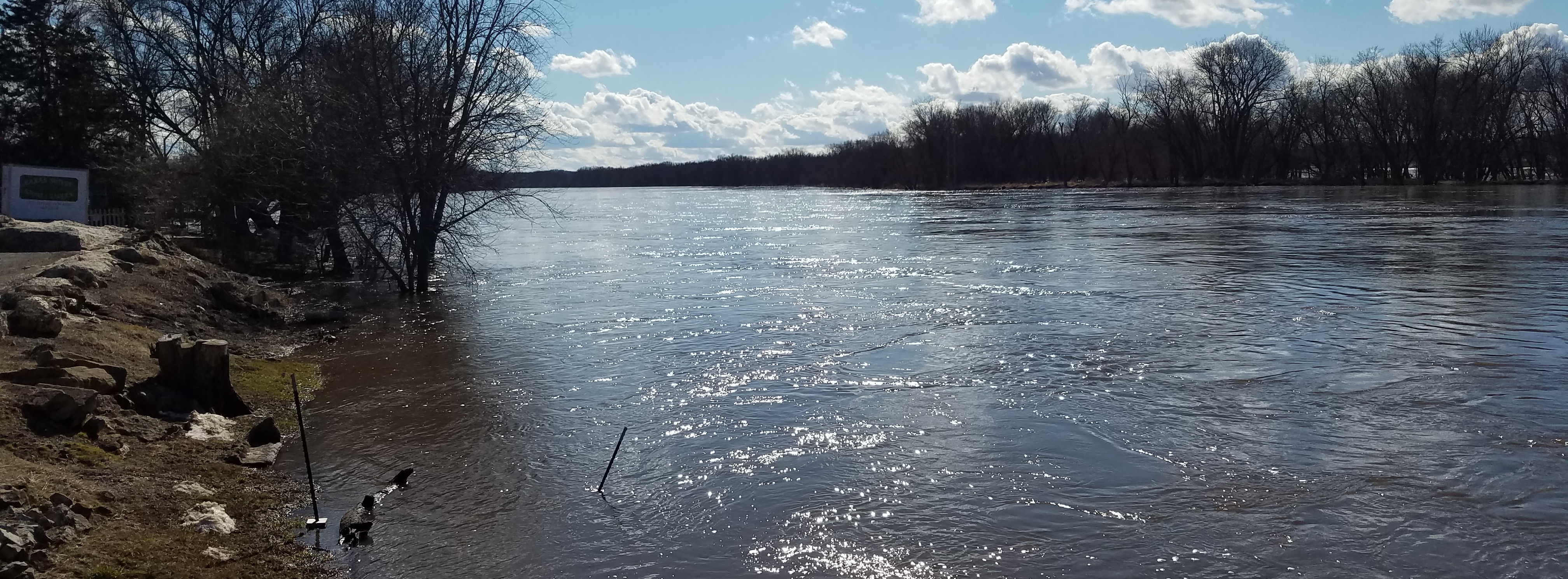
Cedar River on March 15, 2019

The amount of snow and ice melt in the Midwest is monumental.

Iowa Governor Kim Reynolds issued disaster proclamations for 41 counties because of flooding (Click on the map to see details).

News photographs show Offutt Air Force Base in Bellevue, Nebraska, home of the U.S. Strategic Command, is one third underwater with at least 30 buildings damaged.

Where did all the water come from?

Warmer atmosphere held more water vapor which was dumped on Iowa and surrounding states in the form of snow and rain during recent polar vortex events. Wild swings in temperature, sometimes as much as 70 degrees in less than 24 hours, combined with rain quickly melted the snow. Because of deep frost in the soil, there was nowhere for the water to go but downstream. Iowa is used to spring flooding, but not like this.

Climate change created conditions for this flooding, both by enabling a warmer atmosphere to hold more moisture, and through warming in the arctic, which destabilized the trade winds and made the polar vortex. It has been depressing to live through this winter. The damage we see on our small lot in rural Iowa is minuscule compared to the bigger picture.

Last week, Al Gore and the Climate Reality Project trained another 2,000 leaders in mitigating the effects of climate change. News media cover climate change now more than in recent years because viewers and readers experience its effects every day. Climate change is real, it is happening now and we hope it’s not too late to find the political will to do something about it.

The state is watching how our governor and other politicians react to this iteration of flooding.

Categories
Environment

Flooding at Mill Creek

Cedar River at Iowa Highway One Sept. 27, 2016 at 11:36 a.m.

Mill Creek swelled its banks swamping nearby farm fields. It looks like the nearby city sewer system was spared inundation… for now.

Snow melt is everywhere in the county. Inches of packed snow yielded to ambient temperatures in the 50s and continuous rain. After a frigid, snowy winter the ice and snow pack is melting all at once. Snow was here Sunday and now is mostly gone.

Winter’s damage is being revealed. Our driveway buckled with the big swings in temperature. In one event, ambient temperatures swung more than 70 degrees in a day. Ice melted, then refroze under the cement, buckling the slabs leading to the road. Yesterday’s rain diverted inside the garage because of a buckle, requiring clean up to prevent further damage. Whether the buckled driveway will settle back down as it has before is unknown. It’s never been this bad.

The scale of the melt in a short period of time is what has Mill Creek flooding. Farmers removing buffer strips to grow a few more rows near the creek will take topsoil and farm chemicals downstream. It was foolish to sacrifice topsoil for a few more bushels of corn or beans. Farmers who did this likely didn’t see it that way even though flooding is not new to the area. Topsoil can’t be easily replaced but chemicals can.

Is this about climate change?

“A historic March blizzard is taking shape across Colorado, Wyoming, Montana, Nebraska, South Dakota, and North Dakota,” according to the National Weather Service. “Between one and two feet of snow is expected in some locations with wind gusts as high as 80 MPH.”

It is called a “bomb cyclone.” With hurricane strength, it has been forming over the Rocky Mountains and Great Plains, creating blizzard conditions and stranding hundreds of motorists.

“During the first 10 days of March, the Colorado Avalanche Information Center recorded more than 500 avalanches statewide (a record number),” wrote Jonathan Romeo in the Durango Herald. “For the season, a total of eight people have been killed in avalanches.”

Issues abound. Icebergs and open water were found on Norton Sound near Nome, Alaska where the Ititarod Sled-Dog Race finished this week. It’s raining in Greenland when it shouldn’t be. Global oceans are at the highest heat content on record. The planet is warming, there is no doubt.

It won’t take long for water to recede into the banks of Mill Creek. When everything melts at once, immediate damage is exacerbated, the duration shortened.

My colleagues with The Climate Reality Project are meeting this week in Atlanta to train another group of leaders. As newcomers join thousands of others, let’s work to mitigate the effects of climate change on humans. March has been a month where the evidence of climate change has come to the forefront. March has run only half its course.

Categories
Environment

A Role for Tall Grass Prairie

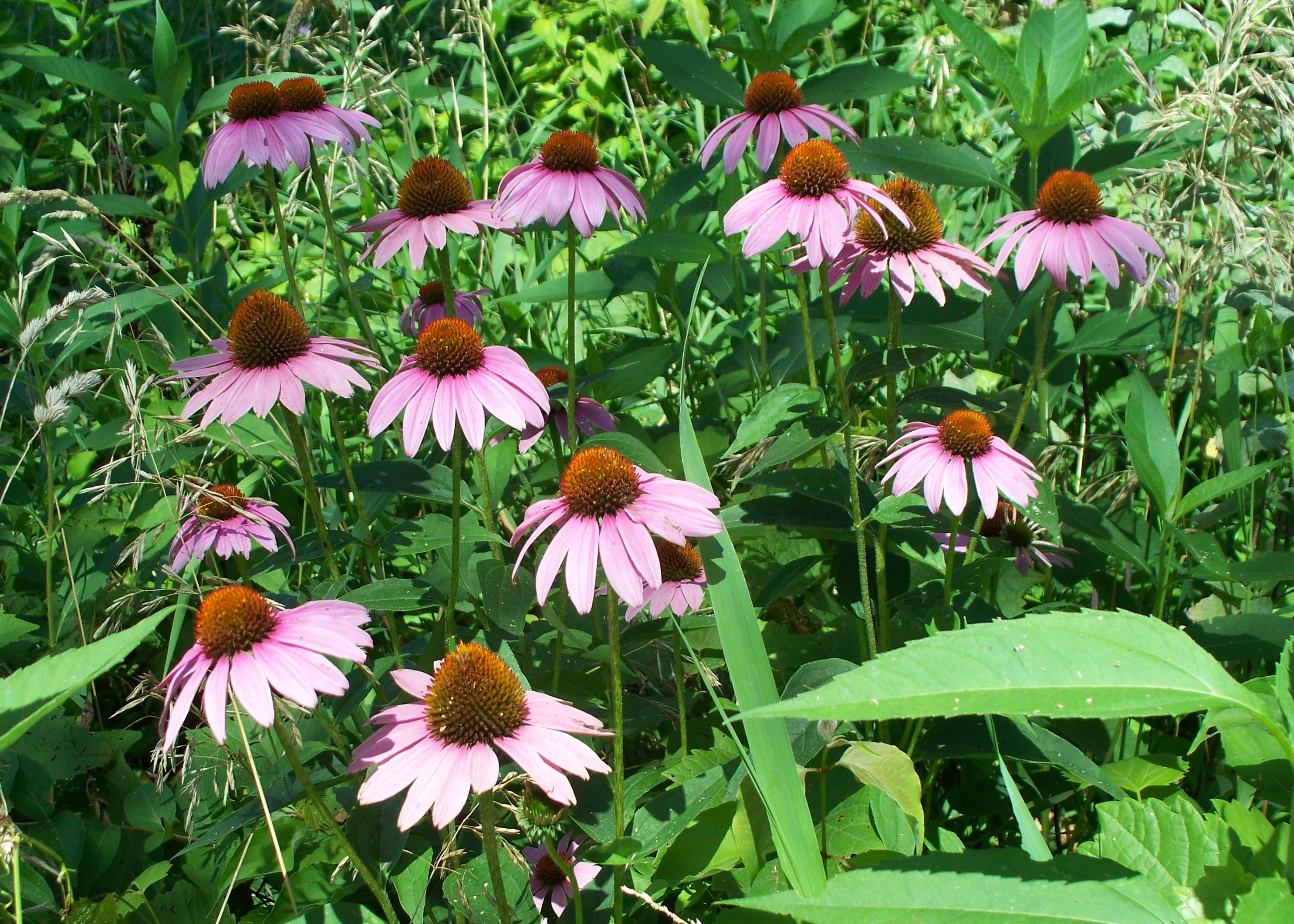
Wildflowers along Lake Macbride

Reading a book about tall grass prairie and savannas has me wondering why people bother preserving them.

Prairie used to cover more than 85 percent of Iowa land, according to the Neal Smith National Wildlife Refuge. Today less than one tenth of a percent of original tall grass prairie remains in the state.

In that context, the Iowa legislature considered a bill to prohibit setting aside new land for conservation with state money. After a popular outcry, the bill was suppressed last week before the first legislative funnel. There is substantial support among a diverse constituency for conserving prairie, savannas and woodlands. Such support drags political will along as best it can.

The Neal Smith National Wildlife Refuge is mostly replanted, which suggests human cultivation rather than a naturally occurring ecology. Which parcel is one of the many original prairie fragments at Neal Smith, and which a human tall grass garden? Presumably guides can point them out. There were no guides when tall grass prairie dominated Iowa landscape.

Either one participates in the culture of tall grass prairie or one doesn’t. It is a culture rather than nature. Throughout the state people and groups work to “restore the prairie” or “restore woodlands.” What does that even mean except as a style of gardening? Partly it means pulling garlic mustard plants and other invasive species during their early growth period. It means cutting down selected mature trees so saplings can survive to replace them. There is enough garlic mustard to make pesto for the whole state if such a delicacy were desired — all this cultivation is a lot of work. A lot of human work doesn’t seem natural.

The ecosystem that was our tall grass prairie relied upon burning the prairie to remove dead plant matter and stop the growth of trees that would shade plants growing close to the ground. Naturally occurring burns have been replaced with prescribed burns which are diligently considered and executed in a way that doesn’t catch whole neighborhood landscapes on fire. A local fire department has been summoned to put out a prescribed burn that got out of control more than a few times. Without burns a parcel of prairie or woodlands would cease to be what humans intended. I don’t know if a new and different ecosystem would be better or worse. If one is a believer in tall grass prairie, different is viewed negatively. Is that hubris?

We tend to forget the role vast herds of buffalo and other grazing animals played in the formation of tall grass prairie. Hooves kicking up dirt contributed to creation of the unique prairie biome. Animal grazing helped shorter plants gain access to sunlight and thrive. Animal droppings helped fertilize. Most of the land is fenced now with buffalo herds diminished and relegated to a form of domesticated hides, steaks, ground meat and sausages.

We are at the end of nature, Bill McKibben wrote in his 1989 book of the same name. There may be something to learn from remnants of tall grass prairie. There may be a human use for seeds from plants that survived and thrived on the prairie. If one is interested in the survival of tall grass prairie it is important to follow the work of people engaged in it. There is also a question.

How will we use our lives to mitigate the effects of global warming? Managing tall grass prairies is one check box on a long to-do list. My answer to “why bother” is that every bit of carbon sequestration has value and that’s what tall grass prairie accomplishes. My problem is under current land ownership policies and practices increasing the amount of tall grass prairie is not scalable quick enough.

I encourage people who seek to preserve parcels of prairie and woodlands to continue. If nothing else, it will improve our personal well-being and that is worth something in this turbulent world.