“Prairie is among the most altered and threatened ecosystems in the world,” Thomas Dean of Iowa City wrote in a new book he co-authored with Cindy Crosby of Glen Ellyn, Ill. “Care of the world is always essential, and care arises from conversation.”
Tallgrass Conversations: In Search of the Prairie Spirit was released April 22 by Ice Cube Press. It is a compilation of Crosby and Dean’s recent writing and photographs of tallgrass prairie in the Midwest. Organized in a series of 26 conversations, the book touches on many of the current issues pertaining to preservation and restoration of tallgrass prairie.
Prairie used to cover more than 85 percent of Iowa land, according to the Neal Smith National Wildlife Refuge. Today less than one tenth of a percent of original tallgrass prairie remains in the state.
“Remnant prairie functions in a way we can’t replicate through planting prairie,” Crosby wrote. “We can educate ourselves about what we are losing. We can care for what remains. We can continue to plant prairie, then research, paint, write about and ensure tallgrass prairie is a part of future conversations about development, agriculture, and conservation.”
If one participates in the experience of tallgrass prairie as Dean and Crosby encourage us to do, it is decidedly cultural. They provide a window into current tallgrass ecosystems and their modern discovery and management. The authors want more writers and artists, poets and photographers to document what’s left of tallgrass prairie and enter into a conversation about what it means and what can be learned. They want to be partners in that conversation and the book serves as an example of how to begin.
“We hope you’ll enjoy seeing the various ways we invite you to think about some of these words and images that showcase the prairie spirit,” Crosby wrote.
To learn more about Cindy Crosby’s work, visit her website, Tuesdays in the Tallgrass: Exploring exterior and interior landscapes through the tallgrass prairie at https://tuesdaysinthetallgrass.wordpress.com.
Thomas Dean is senior presidential writer/editor at the University of Iowa, where he also teaches interdisciplinary courses.
After reading Shortest Way Home: One Mayor’s Challenge and a Model for America’s Future I’m not sure South Bend, Indiana Mayor Pete Buttigieg should be the 46th U.S. president. I learned something different from his book.
My cohort, the baby boomer generation, should let go the reins of power, stop clutching our torches of freedom and snub them out.
As next generations take up leadership in our country — something that’s already going on, like it or not — we may fear younger citizens will become excessively tattooed vaping addicts. It’s not about us and that’s the hardest part of letting go.
The famous American torch speech was made Jan. 20, 1961 by John F. Kennedy.
We dare not forget today that we are the heirs of that first revolution. Let the word go forth from this time and place, to friend and foe alike, that the torch has been passed to a new generation of Americans–born in this century, tempered by war, disciplined by a hard and bitter peace, proud of our ancient heritage–and unwilling to witness or permit the slow undoing of those human rights to which this nation has always been committed, and to which we are committed today at home and around the world.
Mayor Pete is no Kennedy, even as he was a summer intern for Senator Ted Kennedy in Washington, D.C. while attending Harvard. If there is a torch, or a race at all, the relay broke down and the transition became anything but smooth or noble. America today seems less committed to the vision JFK elegantly espoused in his inaugural address. We are getting to the point in our history where young people don’t remember the politics of the late 1950s and 1960s.
Buttigieg’s book is well written, the narrative easily understandable. Shortest Way Home is a story to which almost anyone can relate. While reading I thought of Michelle Obama’s memoir Becoming. I wrote about Obama’s book,
What surprised me was the clarity with which Obama depicted a life on the South Side of Chicago and how it influenced her both while coming up and once she had means to be on her own. The first two sections of the book are by far the strongest. That’s partly because as First Lady events in the third part got plenty of previous play in the media creating a background noise that interfered somewhat with her meticulous and thoughtful narrative.
What makes Buttigieg’s book different is Iowans saw little public history of his work in South Bend, even those of us who spent time there before he came up. Unlike Michelle Obama, about whom we know a lot from her time as First Lady, what you see is what you get with Pete Buttigieg. I don’t doubt the veracity of the facts in his memoir. What worries me about picking him as our next president is there is nothing else there.
There are few things Americans can come together to support any more. We are increasingly on our own as regions, as communities, and as individuals, concerned with making our way as best we can. All the inter-generational torch-passing seems so 1960s.
My advice about Shortest Way Home is read it. Not because Buttigieg should be president but because he illuminates the example of South Bend and what’s possible in creating a more sustainable life in urban centers. If we are to build a new vision of what life here could be, stories of places like South Bend represent something positive. At the same time Buttigieg holds up a torch in his memoir, it is not bright enough to lead us out of the darkness of the post-Obama era by itself.
What surprised me was the clarity with which Obama depicted a life on the South Side of Chicago and how it influenced her both while coming up and once she had means to be on her own. The first two sections of the book are by far the strongest. That’s partly because as First Lady events in the third part had plenty of previous play in the media creating a background noise that interfered somewhat with her meticulous and thoughtful narrative.
She crafted a story almost anyone could relate to. Highly recommend you check this book out from the library and give it a read. Better yet, have your children read it, or read it with a group of friends.
Written before the 2018 Midterms and Bret Kavanaugh’s confirmation to the U.S. Supreme Court, Greg Sargent provides an outline of key issues to help Democrats as we prepare for the 2020 general election. He covers voter suppression, gerrymandering, the role of disinformation in our current politics, and refreshes our memory of the hardball constitutional politics played by Republican leadership in recent years. He frames up what Democrats can do about our politics that favors democracy and fair play in governance.
In a couple hundred pages Sargent brings together national issues that resonate on a local level. If a person were to read a single book about national politics, An Uncivil War should be the one.
A letter from our rural medical clinic reached me early this morning. I read every word it had to say.
I said, the letter reached me early this morning, I read every word it had to say.
Rural life ain’t nothing but the blues, how much longer can we live this way?
The physician I saw in April is moving his practice to Williamsburg — too far to drive for routine appointments. His replacement is an ARNP, which stands for advanced registered nurse practitioner. I read the definition but don’t understand what it means except we’re changing from two physicians to one… another nail in the coffin of rural health care.
We’re lucky to live close to the clinic’s hospital, and a large teaching hospital operates in the county seat. We won’t be deprived of care. I don’t look forward to changing physicians for the fourth time since leaving my transportation career.
I’ll try the new arrangement. What else is there to do?
This is the last weekend for soil blocking at the two CSA farms. After that, the farmers will make their own for the remaining fall share starts. I’m taking a break before returning to the orchard in August.
I finished reading The Shepherd’s Life: Modern Dispatches from an Ancient Landscape by James Rebanks before heading to the garden.
The shepherd went to Oxford, so it’s natural he would do something outside the normal range for a sheep herder. He’s been traveling and speaking to groups of farmers about his life in the Lake District of England. Last January in Ames, he spoke to members of Practical Farmers of Iowa at their annual convention. They made a YouTube of his speech. I haven’t viewed it yet.
What struck me about the book is the comparison with Iowa. Not necessarily what one might think.
On the one hand a well-settled place of William Wordsworth, Samuel Taylor Coleridge, Beatrix Potter and the Lake Poets. In front of us a landscape barely settled since the Black Hawk War of 1832. Any sense of ancient Iowa prairie is long gone and replaced with a grid of roads outlining row cropped fields and concentrated animal feeding operations. The long history of sheep herding in the Lake District served as a reminder most Iowa farmers are recent trespassers as agriculture and land use continue to evolve. There won’t always be soy and corn in what was once an ancient lake bed.
Rebanks informed my view of the annual cycle of sheep farmers. Now I know why some of my friends are so stressed during spring lambing. I’m sorry I missed the speech, and when spring farm work is done, I plan to spend the hour to watch it.
For the time being back to working on the garden to chase away these summertime blues.
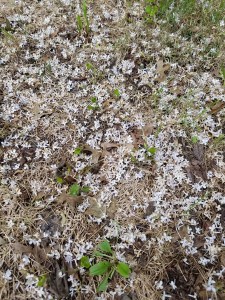
Flowers began to fall from lilac bushes. Air is fragrant with sweet smell.
It won’t last long. It is spring, which continues as it has for millennia, reminding us we are but a speck of dust in time by comparison.
It’s the last day before the end of my hiatus from the home, farm and auto supply store.
Two days a week isn’t much to work. When quitting time on the second day rolls around I feel I accomplished something but am not committed. That’s what I want.
I’m reading Natchez Burning by Greg Iles. Part of me likes it and part doesn’t. What I like is it was checked out from our digital library during recent rainfall and I’m reading it on my mobile device. It’s an easy read, a thriller. The story moves along and while I’m reading it’s easy to finish a chapter. What I don’t like is the obvious handles which are part of the narrative. Characters, settings, the former music store, iconography of popular culture — it all seems too easy a construct and such awareness while reading is a distraction. There are thousands of on line reviews of the book, so it’s easy to find people who agree with me. Many others liked the book. Because of the convenience and quick pace I’ll read on for now. If I don’t finish before the lending period is over, I’m not sure I will renew. Life’s long enough to try it, but too short to follow the novel to its conclusion through sheer determination.
Rain fell and it’s been good. Green up is here and the clean look of leaves and branches before insects get to work is inspiring. Time to weed the garden and harvest spinach and spring onions.
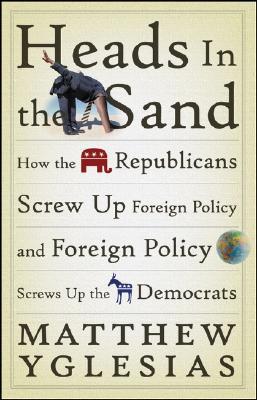
Yglesias’ book was a timely read in the context of the Trump administration’s forays into foreign policy, notably the April 13, 2018 bombing of Syrian chemical weapons capacity. Written before the Obama presidency, the lines of thought and policy started during the George W. Bush administration continue to the present. There is little evidence liberals received the author’s message or have done much to support a sustainable, bold foreign policiy. Rather they often co-opt neocon positions.
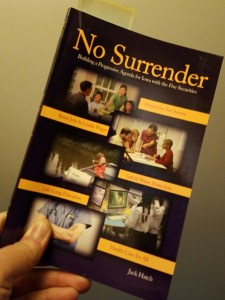
If interested in Iowa Democratic politics, read No Surrender: Building a Progressive Agenda for Iowa with the Five Securities by former state senator Jack Hatch. Read it now.
There are few long, contemporary narratives about the state of the Iowa Democratic Party. Hatch’s 2016 book recounts where we are, where we have been and where we could go.
The importance of the book is twofold.
It serves as a great way for political newcomers to get up to speed on Democratic politics. The results of the 2016 general election activated people around the state to become more involved in politics. No Surrender serves as a briefing book of major policy issues and how Democrats addressed them. Our approach stands in sharp contrast to Republicans, according to Hatch.
The author has standing to address flaws in Democratic approaches to elections and governance. A 22-year state legislator, chair of the White House Task Force of State Legislators for Health Care Reform, and 2014 gubernatorial candidate, Hatch tells the story of the rise of Democrats in 2006 and what we did while occupying the governor’s mansion and holding majorities in both chambers of the legislature. He also recounts how we fell. To be effective going forward, politically active Democrats need the sense of history No Surrender provides.
As with most contemporary political writing, there is a short shelf life to this book. Nonetheless, Hatch asserts Democratic values are more enduring: a progressive tax system, better jobs and livable wages, soil and water protection, life-long education, and health care for all.
Hatch lays out how a focus on policy could contribute to Democratic electoral wins and effective policy-making going forward. No Surrender provides a framework for policy-making much needed in these turbulent political times.
After a Saint Patrick’s Day meetup with friends in Iowa City I drove home, parked my car in the garage and haven’t moved it since.
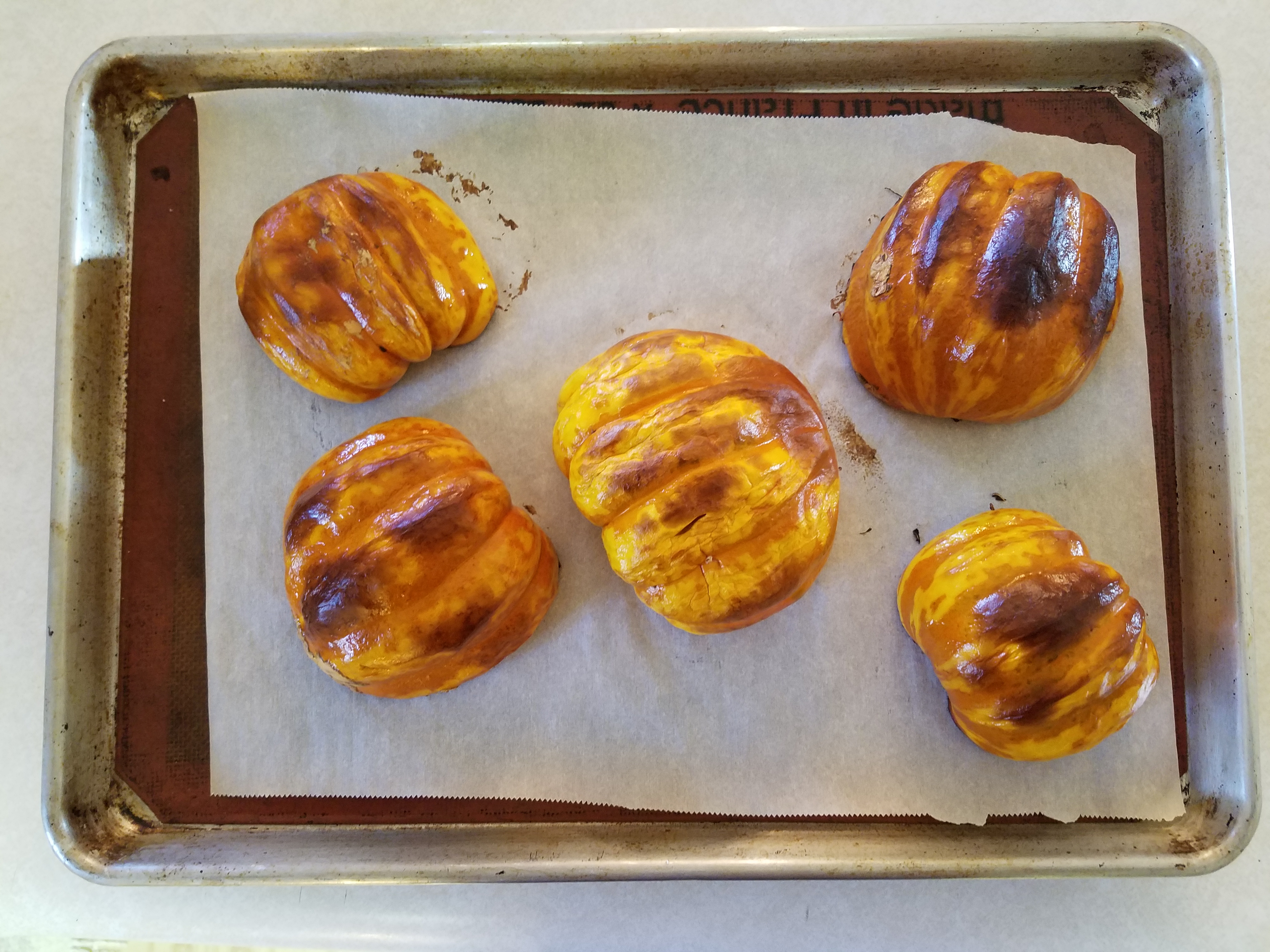
It was too cold for outside work on Saturday so I stayed in, did laundry, cleaned the bird feeder, wrote, read, and cooked dinner of bean soup, Carnival squash and applesauce cake.
The ambient temperature is expected to rise to almost 60 degrees, so I’m planning to work outside after a shift of soil blocking at a community supported agriculture farm.
I read Elizabeth Kolbert’s The Sixth Extinction: An Unnatural History in its entirety this weekend. Her combination of background information with personal stories of field trips is eminently readable. I can’t remember a day so absorbed in a book since leaving transportation. The main takeaway is how uncertain scientists are about changes in earth history over the long term and the consequences of our lifestyle.
Japanese Beetles
The broader meaning of words like “Anthropocene” is not settled, nor agreed. What I know after this immersion, and after reading Sapiens: A Brief History of Humankind by Yuval Noah Haran, I am ready to move forward with something other than narratives of how homo sapiens swarmed over the planet like Japanese beetles.
I buy more bird feed since working at the home, farm and auto supply store. Counting whole kernel corn, I have five different varieties in the garage. Each type attracts a different bird and we enjoy watching them through the French door off the dining area. Some days I feel like picking up a 20-pound bag on sale, and do. I went overboard with 50-pound bags of whole corn and millet, although sparrows seem to really like the millet. There is no science to my purchases.
Bartering is making this year’s garden planning a lot different. Part of the barter system is trading labor for a spring and fall share. Each side of the deal can be defined monetarily. I get a credit of $13 per hour for labor which is applied to retail price of the shares. I use greenhouse space and materials to germinate seeds and care for seedlings until planting in my garden. I will also acquire onion sets and seed garlic through the farms. Where there is a clear financial value, the barter system is simple and easy. This part of the exchange translates into things we can use in our garden or kitchen.
The exchange for specific produce is more complicated.
Canned Tomatoes
Tomatoes are a large part of summer. Last year I planted them in three different garden plots. This year I’ll decrease my plantings to what we’ll use fresh and rely on the farms for canning tomatoes. In 2013 the farmer provided crates of tomatoes which I canned. We split the canned goods 50-50 that year. That was a bit disadvantageous to me considering the amount of work. We haven’t finalized the split, but both farms I work on produce many more tomatoes than needed for their members. One farmer wants lots of canned tomatoes. Something can be worked out.
Bell peppers were a garden failure last year and for many previous years. I’m eliminating them completely. The farms produce bell peppers with a high frequency of imperfect fruit. I plan to trade labor for these seconds and get all of my bell peppers from them. In addition to fresh eating, I seed and freeze them to use throughout the year. We did a 50-50 split on these in 2013, however, this year I’m considering a straight trade of labor hours against a to be determined cost per crate.
There are a number of items we don’t use much in our kitchen but are abundant on the farms. I don’t plan to grow any kohlrabi or cabbage. Should be no problem getting what we need without occupying space in our garden. I’ll barter for some additional broccoli for freezing.
Likewise, I don’t plan to grow lettuce outside my small plot of Belgian lettuce. In between the spring and fall shares that’s coming from bartering.
Summer squash is abundant and available from the farms as are many kinds of greens: collards, chard and “braising greens.” I will grow my own kale and spinach, and everything else will be bartered from the farms.
Eggplant? If Johnny’s Selected Seeds proofs and sends Black Beauty seeds I’ll plant them along with Fairy Tale eggplant. The former can be sliced thick, baked and frozen. The latter are good for the kitchen while in season. There is always an abundance of eggplant at the farms.
Yesterday was the last winter Saturday of staying indoors. Going into the planting season it will also be my day off from the home, farm and auto supply store and the farms. Yesterday was a good day, made better by a feeling of accomplishment. As humans we sometimes need that.
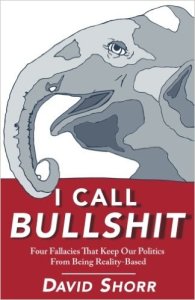
I was predisposed to like David Shorr’s latest book.
Shorr and I met in 2009 when I persuaded him to write an opinion piece for the Des Moines Register advocating for Senate ratification of the Comprehensive Nuclear Test Ban Treaty. He willingly did so with co-author Tom Tully. It ran Dec. 15, 2009, titled, The real peace prize: Ban nuclear testing.
I found his new book valuable to surviving the tumult created by the recent election of a Republican president with Republican majorities in the federal government and the Iowa statehouse. His explanation of why Republicans “have wandered off into substantive incoherence” is cogent. His description of four fallacies regarding job creation, healthcare, foreign policy and voter suppression helped turn social media buzzwords into nuggets of understanding. I particularly enjoyed his discussion of why President Donald Trump makes House Speaker Paul Ryan look like a moderate politician when he isn’t.
While readers may take issue with some of Shorr’s arguments, that’s really his point: we should be able to disagree and make social progress at the same time. Until our national and local politics returns to reasonably working together, this book will help us get by and make the case for reality-based politics again.
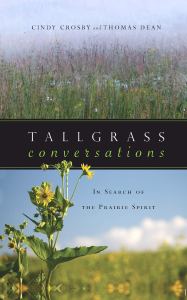 “Prairie is among the most altered and threatened ecosystems in the world,” Thomas Dean of Iowa City wrote in a new book he co-authored with Cindy Crosby of Glen Ellyn, Ill. “Care of the world is always essential, and care arises from conversation.”




 Journey Home
You must be logged in to post a comment.