Categories
Reviews

Book Review: The Hidden History of American Oligarchy

In The Hidden History of American Oligarchy: Reclaiming Our Democracy from the Ruling Class, Thom Hartmann recounts three periods of increased hegemony of oligarchs in American society. He posits that with the inauguration of Joe Biden as president on Jan. 20, 2021, we citizens have work to do to reclaim our democracy from the control of wealthy Americans.

The history of increased influence of wealth in the United States is becoming well known. Stories about it appear frequently in newsletters, on radio and television, and in books and other publications. In this book, Hartmann adds a needed layer of historical context to the discussion.

Readers may be familiar with the Powell Memo, Citizens United, the rise of dark money interests coordinated by Charles and David Koch, and the power they wielded to take control of our government, including the judicial, legislative and executive branches. Donald J. Trump’s presidency is a logical extension of these influences. We left democracy behind and become an oligarchy ruled of, by and for the rich, Hartmann said. The next step is tyranny if democratic values don’t return to dominance.

“The United States was born in a struggle against the oligarchs of the British aristocracy,” Hartmann wrote. “Ever since then the history of America has been one of dynamic tension between democracy and oligarchy. And much like the shock of the 1929 crash woke America up to glaring inequality and the ongoing theft of democracy by that generation’s oligarchs, the coronavirus pandemic of 2020 has laid bare how extensively oligarchs have looted our nation’s economic system, gutted governmental institutions, and stolen the wealth of the former middle class.”

Hartmann lays out his argument in plain, easy to understand terms and gets to the crux of it quoting former President Jimmy Carter, “So now we’ve just seen a complete subversion of our political system as a payoff to major contributors, who want and expect and sometimes get favors for themselves after the election is over…. The incumbents, Democrats and Republicans, look upon this unlimited money as a great benefit to themselves. Somebody who’s already in Congress has a lot more to sell to an avid contributor than somebody who’s just a challenger.”

More simply put, Al Gore said in his 2013 book, The Future: Six Drivers of Global Change, “American Democracy has been hacked.”

The book quickly works through the origins of oligarchy in America from the invention and wide use of the cotton gin, the rise of industrial robber barons, and the Reagan revolution. Hartmann’s focus is not only on reminding us of history.

In the final section Hartmann details a dozen ways to break the hegemony of the oligarchy. They include addressing media, taxing the rich, restoring election integrity, and rebuilding a progressive Democratic Party. While readers can’t do everything alone, the book serves as a roadmap for where progressives can go from here to combat the oligarchy.

Like Hartmann’s other Hidden History books, this one is a quick but important read for people who are engaged in progressive politics and seek a change from the power of moneyed interests and concentration of wealth among the richest Americans. The Hidden History of American Oligarchy is a must read. It will be released on Feb. 1, 2021.

~ First published on Blog for Iowa

Categories
Reviews

Fitzgerald and The Great Gatsby

F. Scott Fitzgerald, 1917. Public Domain Photograph

The copyright of The Great Gatsby expired yesterday and a flurry of news articles spammed the channels. If Gatsby is the great American novel, like the country, it is far from perfect.

It remains a good book to read at the onset of summer, as I did for many years. It takes a certain experience of what summer meant in Midwestern culture to appreciate the book. That culture of my youth faded years ago. I no longer read the book annually although I keep a copy where I can find it.

What impressed me most about F. Scott Fitzgerald was seeing an 8 by 10 photograph of him at Fort Leavenworth, Kansas during a reunion with fellow Army officers. Organizers of the event were attending the U.S. Army Command and General Staff College. The future author of The Great Gatsby was stationed at Leavenworth and the photo commemorated his stay. As we know, Fitzgerald was not a good soldier. He worried he would die in the world war without publishing anything. He later regretted not serving in combat. Such worries being part of what characterized his short life.

Upon reflection, it occurred to me Fitzgerald was not much different in his humanity. While I haven’t the drive or interest in being published he did, the army is a great equalizer and created a bond with him that was no abstraction.

I know The Great Gatsby well. Now that it’s in the public domain others are latching onto it, to revise or rewrite it. As someone suggested, there may be a Muppet version of the novel. The truth I increasingly face is whatever summer meant 50 years ago doesn’t exist any longer. There is no going back. This renders Fitzgerald’s fiction less relevant than it once may have been.

That people write about this copyright expiration with so many words is a sign that nothing like Fitzgerald exists in contemporary fiction. Writers are more like Gatsby himself not realizing what was important about the book is rooted in a time now gone. There is no green light at the end of the dock toward which to reach. It’s just us in the dark, craving something more than the commerce of society, yet not knowing what that might be.

I think I’ll read The Great Gatsby again this year and consider how to soldier on. Maybe I’ll learn something this time.

Categories
Reviews

Wildland Sentinel

Wildland Sentinel: Field Notes from an Iowa Conservation Officer

By Erika Billerbeck

Wildland Sentinel is a well-written account of Erika Billerbeck’s experiences as a conservation officer in the state park and wilderness refuge adjacent to where I live.

While I was well aware of the diversity of experiences in the area, the author provided a perspective I would not otherwise have had. Her descriptions of being a female conservation officer in a male dominated profession seem archetypal. She showed the other side of stories I read in the newspaper. She explained the other half of conversations I’ve had with friends and associates about what it means to go camping outside state park camp grounds.

Besides the excellent writing, the book is recommended as a primer of what the job of conservation officer entails. I look forward to seeing what else Billerbeck writes.

Categories
Reviews

Book Review: What Unites Us

What Unites Us: Reflections on Patriotism by Dan Rather and Elliot Kirschner.

Because of Dan Rather’s long tenure at CBS News he reported on events that were important in my life and formative of a national consciousness such as one existed in the late 20th and early 21st centuries. His reflections on patriotism are staples of a certain view of the United States, one that is rapidly fading from sight. Rather’s framing of patriotism had hegemony for a long span. Such dominance is coming to an end. The frame has been broken.

There is a certain comfort in reading these essays. It is a false comfort because the United States has changed. We’ve entered a realm where, as Rather writes, what used to be valued no longer is. He asserts his view of patriotism is enduring. I remain skeptical.

We are a more diverse country where societal norms have broken down, resulting in an individualist, short-sighted view of what’s important. It’s everyone for themselves, exploitation of the commons on steroids, and wanton disregard for science that could prevent degradation of the environment.

In the crazy year 2020 has been with the coronavirus pandemic, ill-conceived foreign affairs, climate catastrophe, social unrest, and lack of proper governance, we need hope and Rather provides that. Yet it is not the hope we need. Looking forward our needs are more basic: survival is everything and our future survival as dominant species on the planet is in doubt.

In the maelstrom that is contemporary affairs What Unites Us is a fine meditation, a reminder of what once was. Reflection is important and useful, yet only if it spurs us into action to take care of ourselves and then work together with others in an increasingly integrated global society to improve our lot.

Categories
Reviews

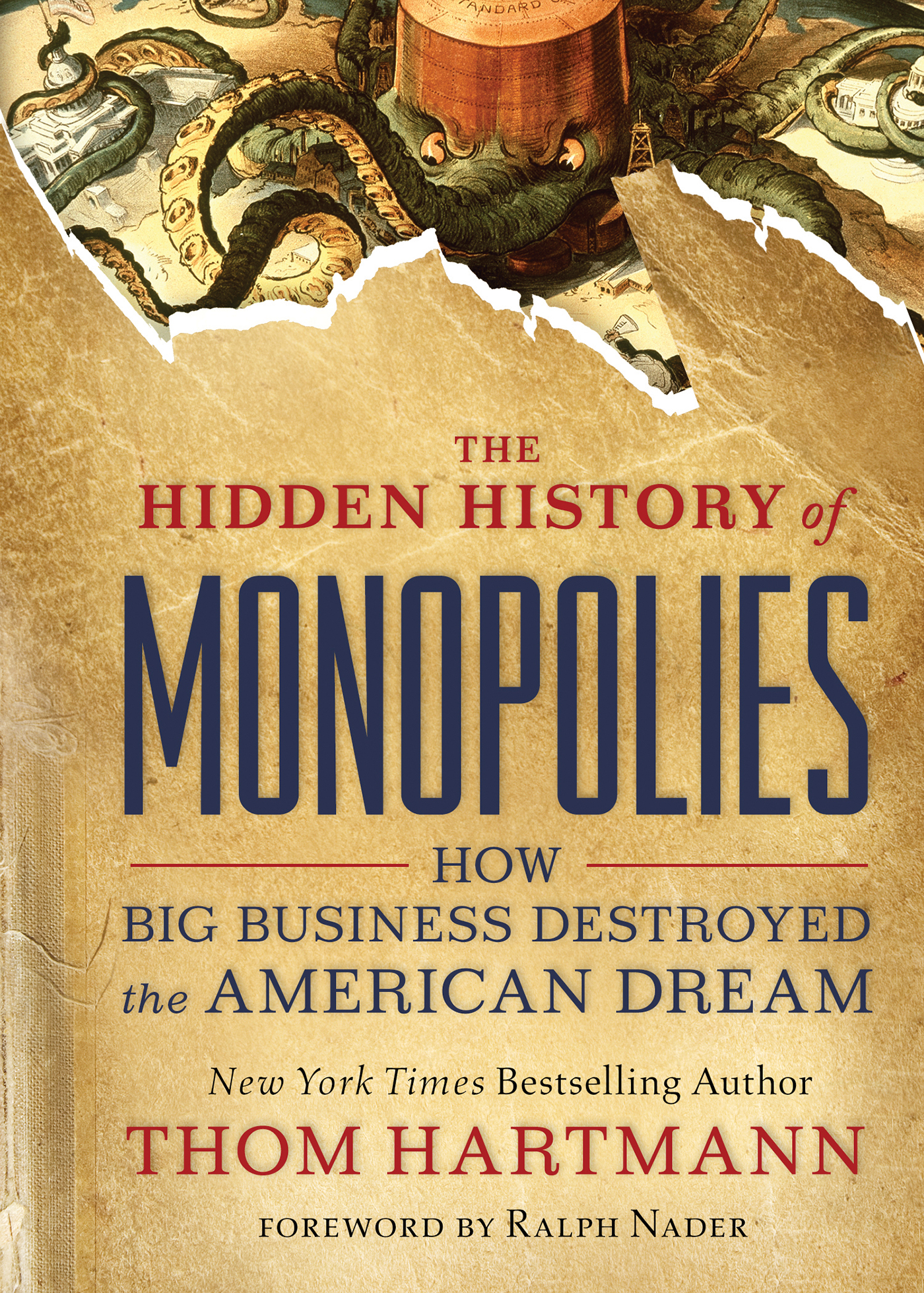
Book Review: The Hidden History of Monopolies

In The Hidden History of Monopolies: How Big Business Destroyed the American Dream, Thom Hartmann takes the reader from the founders’ fight against the monopoly of the British East India Company to the borking of the country by President Donald J. Trump.

Like his other Hidden History books, this one is a quick but important read for people who want or need to review the history and origins of today’s concerted, well-organized campaign by corporations to control commerce, government, and thereby our lives.

“Today, giant corporatism — the commercialization of just about everything at the expense of our civilization’s civic, spiritual, health, and safety values, and other conditions needed for the well-being of future generations confronting poverty, addressing planetary climate crises, and averting nuclear war — is crushing our democracy,” Ralph Nader wrote in the book’s forward. “It is corrupting our elections, and astonishingly enough, controlling the vast commons — public lands; public airwaves; vast pension and mutual funds; and industry-creating, government-funded research and development — owned by the American people.”

Thom Hartmann

We’ve heard the phrase “taxation without representation” as it pertains to the founding of the United States. Hartmann turns this around to what was really at stake: a monopoly on tea and other products sanctioned by the British government. It was concern with monopolies, the British East India Company specifically, not taxation that caused the Boston Tea Party. Founder Thomas Jefferson had monopolies on his mind even after the U.S. Constitution was ratified in 1789 according to Hartmann.

Nontheless, monopolistic practices grew during the 19th Century with the rise of industrialization. In his book The Robber Barons: The Classic Account of the Influential Capitalists Who Transformed America’s Future, Matthew Josephson described the rise of men like John D. Rockefeller, J. Pierpont Morgan, Cornelius Vanderbilt, Andrew Carnegie and others who pioneered vertical integration of companies, a form of monopoly. Their actions led to significant control over oil, railroads, steel making, coal mining, banking and other industries during the Gilded Age.

Beginning in 1887 with the Interstate Commerce Act, the U.S. Government began to regulate big business. It was followed by the Sherman Antitrust Act of 1890, and the Clayton Antitrust Act of 1914. If the founders opposed monopolies and they formed anyway, it was the role of government to regulate them. Hartmann well-describes this history.

It was president Ronald Reagan, under the guidance of Robert Bork and the Chicago School economists, who began de-fanging antitrust regulations.

Many of us are familiar with the July 1, 1987 nomination of Robert Bork to the U.S. Supreme Court and how Senator Ted Kennedy rose in the well of the U.S. Senate to oppose the nomination within 45 minutes of its being made. Previously, along with Milton Friedman, Bork pioneered the phrase, “consumer welfare.” It changed everything.

“In essence, (Bork) argued, it didn’t matter where a product was produced or sold, or by whom,” Hartmann wrote. “All that mattered was the price the consumer paid. As long as that price was low, all was good with the world.” The corollary was that business profitability was another measure of antitrust. Since Reagan the latter gained preeminence. This is referred to as the borking of America.

By the end of the book I became highly agitated and outraged that our government has become an instrument of corporations intent on shaking down the American people, giving any return on capital to a group of about 100 billionaires as Hartmann describes.

The Hidden History of Monopolies is written in classic Hartmann style and can be read over a weekend. If readers are concerned about banking abuses, dairy farmer bankruptcies, insulin price fixing, the cost of internet and telephone service, big agriculture, and more, Hartmann traces their roots to giant corporations and a systemic borking of America that deregulated business and freed corporations from constraints.

Highly recommend.

Don’t have time to read the book? Here’s a fifteen minute interview of Hartmann by David Pakman that covers some of it.

~ Written for and first published on Blog for Iowa.

Categories
Reviews

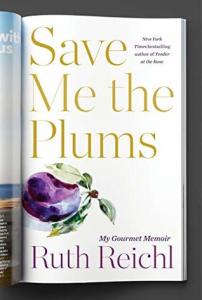
Book Review: Save Me the Plums

Save Me the Plums: My Gourmet Memoir by Ruth Reichl

I’d not heard of Ruth Reichl before a news reporter recommended this book. I had heard of Gourmet Magazine and have no memories of ever reading it.

I liked the book for these reasons:

It provides a window into the New York world of Condé Nast. As a Midwesterner New York seems exotic even though my brother in law lives there. It’s important to gain a broader understanding of the publishing world and to know something about it. Save Me the Plums provides that.

We all need some light summer reading to escape the sh*t storm our current politics, public health crisis, and climate crisis create in 2020. The food writing in Save Me the Plums is unlike anything I’ve read. While not sure of the attraction of something that tastes like sea foam, Reichl takes us into a world few of my cohort experience for themselves.

The book is well written and that makes a difference.

Recommend, especially if one is part of the broader American food movement. One wouldn’t want to be Ruth Reichl yet her story is interesting, different and valuable.

Categories
Kitchen Garden Reviews

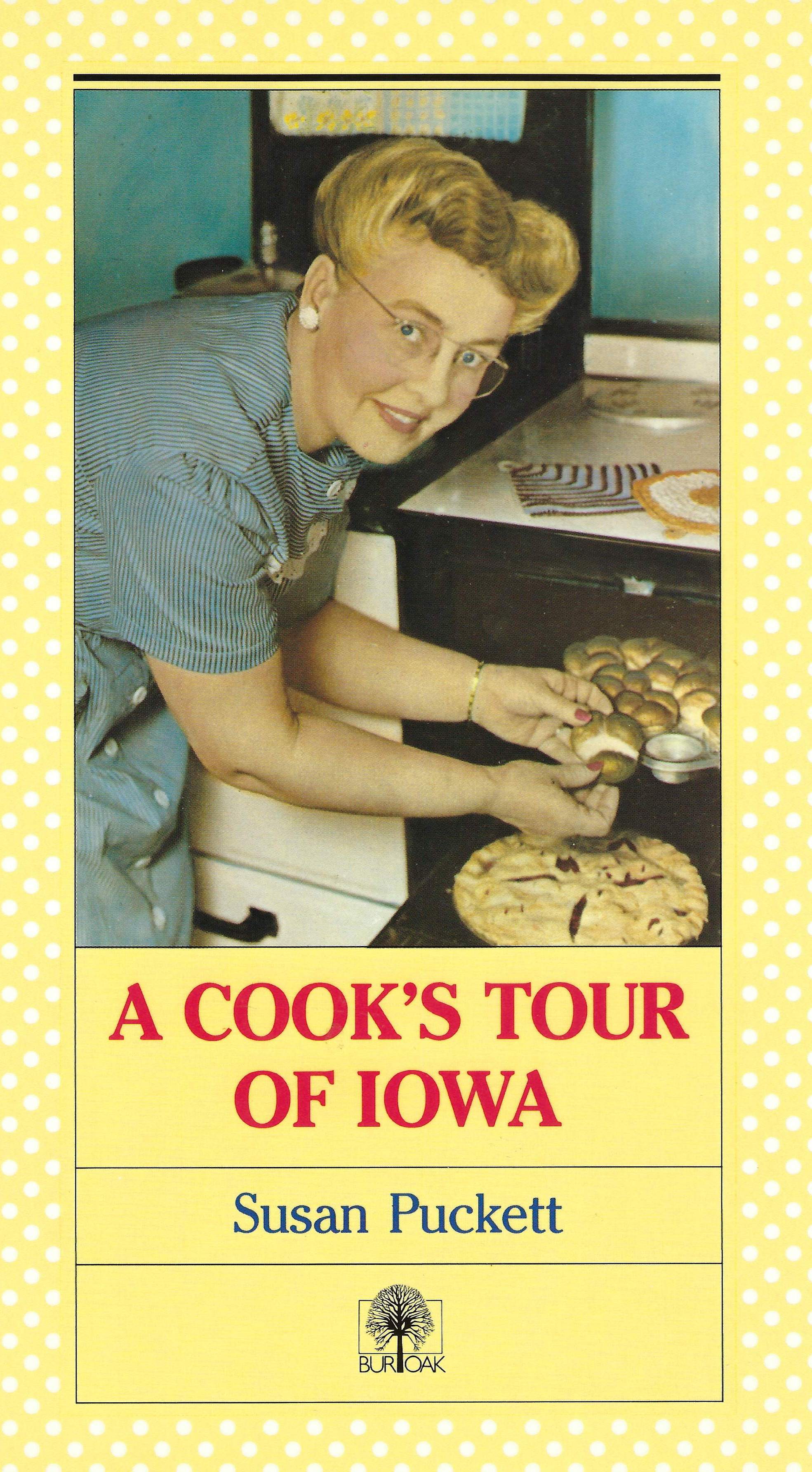
Book Review – A Cook’s Tour of Iowa

A Cook’s Tour of Iowa by Susan Puckett.

A Cook’s Tour of Iowa is a well-curated collection of culinary culture that represents a certain view of Iowa. It’s the picture Iowans can recognize. We also recognize many of the things mentioned as fading in cultural prominence.

As a resource for writing autobiography, the book conjures personal memories of Iowa things like the Grant Wood Art Festival, Maytag Blue Cheese, the African-American community in Buxton, Iowa, and many more. It is indispensable for that reason.

What is lacking is the diversity of what Iowa has become, even since 1988 when the first edition of A Cook’s Tour appeared. Our culture is also leaving behind things like VEISHA, Old Creamery Theater (no longer in Garrison, or Amana), and some of the festivals and events to which Puckett referred.

If we had an Iowa-themed dinner party, picnic or cookout, one might search the book’s contents for dishes to make for pure nostalgia. However, life in Iowa has become more than that.

I appreciate the work that went into A Cook’s Tour of Iowa. I may not open it often, but knowing it is there provides comfort as the food system changes along with the society that engendered it.

Categories
Reviews

Book Review: The Hidden History Of The Supreme Court

Thom Hartmann Photo Credit – Thom Hartmann Website

The Hidden History of the Supreme Court and the Betrayal of America by Thom Hartmann is a quick but important read for people who want to review the history of the Supreme Court.

At 168 pages, the book takes readers through the founders’ vision of the courts, the Powell Memo, the growing influence of fossil fuels companies on the court, judicial review, and the constitution’s preference for property rights over human rights. Hartmann also covers the court’s involvement in key American movements and issues, including labor, abolition, racism, abortion, environmentalism, and the rise of the TEA Party. The final section of the book offers solutions to “save the planet, democratize, and modernize the Supreme Court. It’s a page turner.

“But isn’t Hartmann preaching to the choir?” engaged readers might ask.

What’s important about this book is it exists at all.

Blog for Iowa, and others like it in Iowa and around the country, rose up in the years after the 2004 general election offering an alternative voice to right wing talk radio, evangelical Christianity, and a media landscape where the Fairness Doctrine no longer applied and cable news companies gained hegemony with partisan, conservative messages 24/7. In addition to progressive national and state-based blogs, radio and television personalities competed to gain a progressive audience. Thom Hartmann is one who survived and thrived. He is currently the number one progressive talk show host in the United States according to the about the author section of the book.

The purpose served by The Hidden History of the Supreme Court and the Betrayal of America is presenting a narrative of the key elements of the Supreme Court’s history to a progressive audience.

So often ideas about the Supreme Court are formed by snippets of information in various media about specific decisions, the judicial nominating process, and groups like the Federalist Society which lobby the government for appointment of certain types of judges. Increasingly social media is a key driver for informing our opinions, yet it presents an incomplete picture. It is not enough. What has been lacking is a more comprehensive look at the supreme court told in language that is easy to understand. Hartmann delivers that and more.

Here’s a clip of Thom Hartmann reading from his book. The Hidden History of the Supreme Court and the Betrayal of America is available from the publisher and most places where books are sold.

~ First published at Blog for Iowa

Categories
Living in Society Reviews Social Commentary Writing

Parade and Fragments

Sprayer in the Solon Beef Days Parade

A summer parade in Iowa is a chance to showcase lives for the entire community.

Farmers, restaurateurs, insurance agents, bankers, retailers, construction companies, government organizations and more cleanup their equipment and parade it through town handing out treats and small gifts along the route.

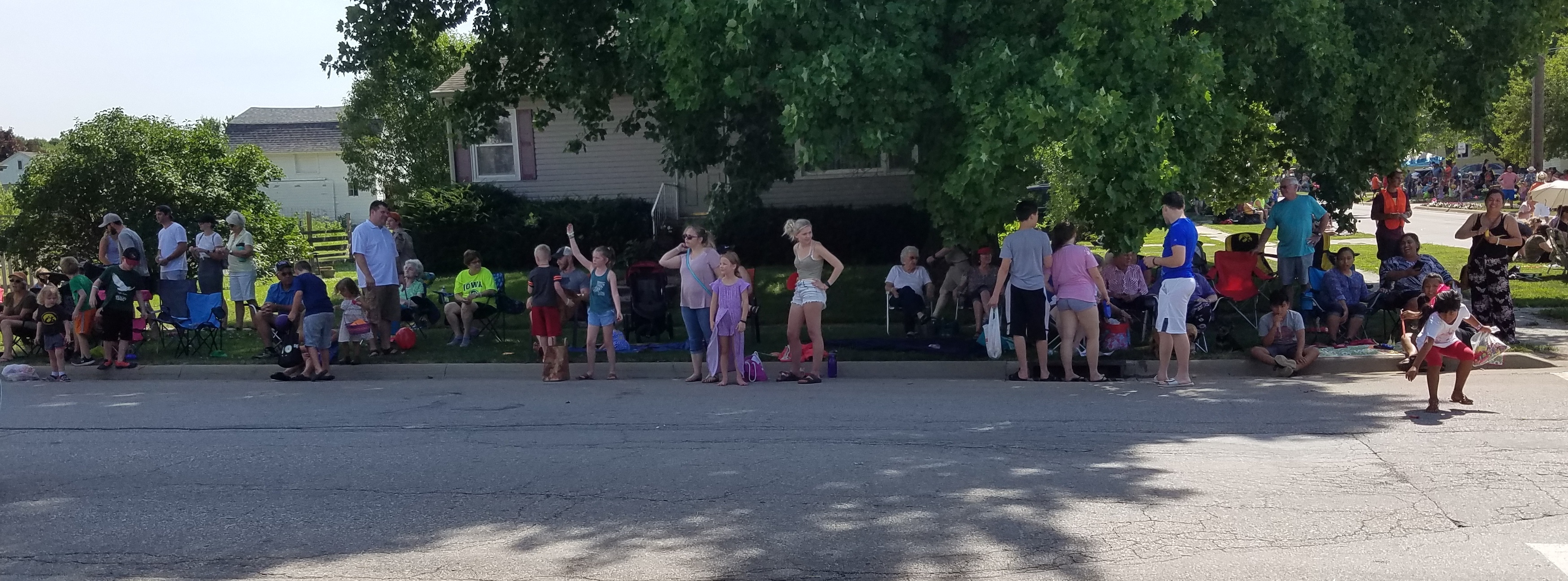
People line the street to watch, sitting on lawn chairs, standing under shade trees and chatting with friends on the sidewalk. It’s mostly for children yet adults get involved as well. Anyone can stand almost anything that marches by in the span of a couple of minutes.

Solon Beef Days Parade Watchers

I.

In 2013 our situation got dire. I had run out of money and held no job that paid enough. Not wanting to return to transportation, I took one low wage job after another to earn enough to get by. Most of the work involved standing on concrete floors, which precipitated a case of plantar fasciitis. Not only did my feet hurt, on a physician’s advice I gave up jogging after 37 years because of it. While the condition is resolved, it persisted until I left full-time work in 2018.

Expenses got delayed during this period, as did preventive health care. It wasn’t clear how tight money had been until I began taking Social Security benefits which brought relief.

II.

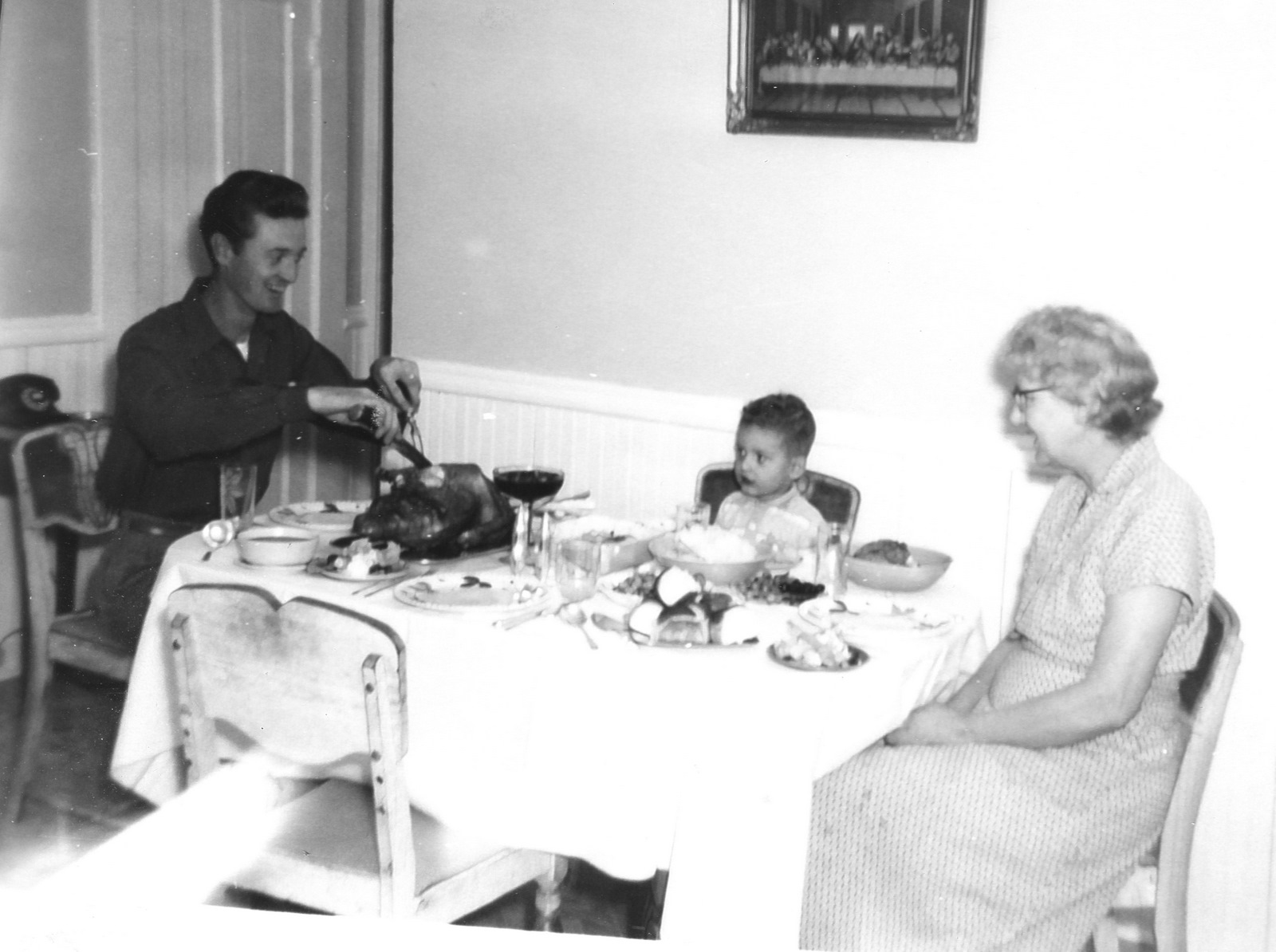
An Early Thanksgiving

The story begins with the proximity of relatives. Our maternal grandmother and grandfather made visits to our home. I never knew my paternal grandparents except in stories and photographs. As much as anything, my grandparent story is about my relationship with Grandmother from my earliest memories until she died Feb. 7, 1991.

We were lucky to have her with us for so long.

Grandmother had five children and 15 grandchildren. She spent more time with our family because of our proximity. She lived with us off and on during my early years, but eventually maintained her own apartment. In later life she lived at the Lend-A-Hand, a residence for women at the time, then moved to the Mississippi Hotel where she lived the last years of her life in an apartment until moving to the Kahl Home for a brief period. Grandmother had many sisters and a brother. We had a lot of relatives, or so it seemed.

III.

I read The Overstory by Richard Powers. It engaged in a way most fiction fails to do. The author must have spent an enormous amount of time researching trees, forests, and the culture around them. He wove them into a spellbinding narrative. I could go on gushing about the book, but just pick it up and read it. If you do, and are interested in the environment, I doubt there will be any regrets.

Categories
Kitchen Garden Reviews

Rainy Days and Smarshing it Up

Tray of spinach and lettuce seedlings ready to plant in the ground.

Early planting is done… then it rained.

The ground has been too wet for planting so Friday became a day for weeding and staking the sugar snap peas.

I moved seedlings from the garage to the dining room to protect them from wind and rain while I worked my usual shifts at the home, farm and auto supply store. They are back outside waiting for the ground to dry. There is a lot of gardening to do over the next four weeks.

While the grass dried I drove across Mehaffey Bridge to the BioVentures Center in the University of Iowa Research Park. A friend arranged an impromptu round table discussion of affordable housing centered around Ohio Senator Sherrod Brown’s trip to Iowa to support his wife Connie Schultz. Schultz interviewed author Sarah Smarsh at an Iowa City Public Library fund raiser in the county seat that evening.

The round table consisted of community leaders introducing themselves and discussing issues raised by the recent purchase of a mobile home park by a group of out of state investors. The new owners plan substantial rent increases which current residents can ill afford. My role was to listen and learn.

Sarah Smarsh is author of the memoir Heartland: Working Hard and Being Broke in the Richest Country on Earth. My brief review after reading it last year is as follows:

I was skeptical at first about the reach of this book about rural poverty, hard work, and economic injustice. Yet, I was drawn in to a world I knew existed but hadn’t been articulated in such words. Smarsh’s story resonates with how I was raised, and with much of what I see in rural Iowa today. It was a marvelous read.

Several of my farm friends attended the event. We gathered under the marquee of the Englert Theatre for a photograph. Those who read Heartland felt as I did, that it articulated something about modern life in the Midwest that had been missing. We also concurred that Smarsh had drawn a clear line between what she presented in the book and her personal life which was not up for public conversation. After discussing the book we told jokes and laughed (a lot) in the marquee light before finding our ways home.

Some political friends attended the fund raiser, including my state senator Zach Wahls and his biggest fan, Chloe Angyal. I complained to Wahls I couldn’t remove his bumper sticker from my aging Outback. “American made, baby,” he responded.

I met Angyal who is a contributing editor to MarieClaire.com. We discussed her arrival in the Hawkeye state where she is writing a series of dispatches (here and here) related to the first in the nation Iowa caucuses and the unprecedented number of women running for president. Originally from Australia, she relocated to Iowa from Manhattan. After surviving the polar vortex and one of our coldest winters in years, she said she likes it in Iowa.

I didn’t get the lawn mowed, which means another morning of waiting for grass to dry, followed by the long process of bagging it up then mulching the kale. The forecast is sunny and clear. Hopefully the rest of the apple blooms will open, followed by pollination. Fingers crossed. I’m ready for a solid day’s work in the garden after Friday night smarshing it up in the county seat.