Categories
Home Life Kitchen Garden

Making Soup and Applesauce

Potato Digger
Potato Digger

LAKE MACBRIDE— At the end of the season, before the last gleanings from the garden have turned to compost, home cooks prep and cook and preserve to make use of summer’s bounty.

Foraging in the refrigerator as if it were foreign turf, forgetful of how the mix of cut onions, diverse greens and leftovers arrived, the best is culled for a hearty fall soup. Kale and onions, Brussels sprouts and broccoli stalks, celery and carrot, a turnip, some potatoes, frozen sweet corn, and everything else suitable goes into a large, stainless steel stock pot.

Tomatoes are selected from the counter, their numbers diminishing without replenishment from the garden patch. Cutting away the soft and dark spots, they were cored and pulsed on low speed in the blender, skins and all. The red puree was poured all at once into the simmering ingredients. A handful of leftover farfalle, bay leaves, some dried red and black beans, and chervil were added. The pot simmered more than an hour on low heat. It was soup for dinner.

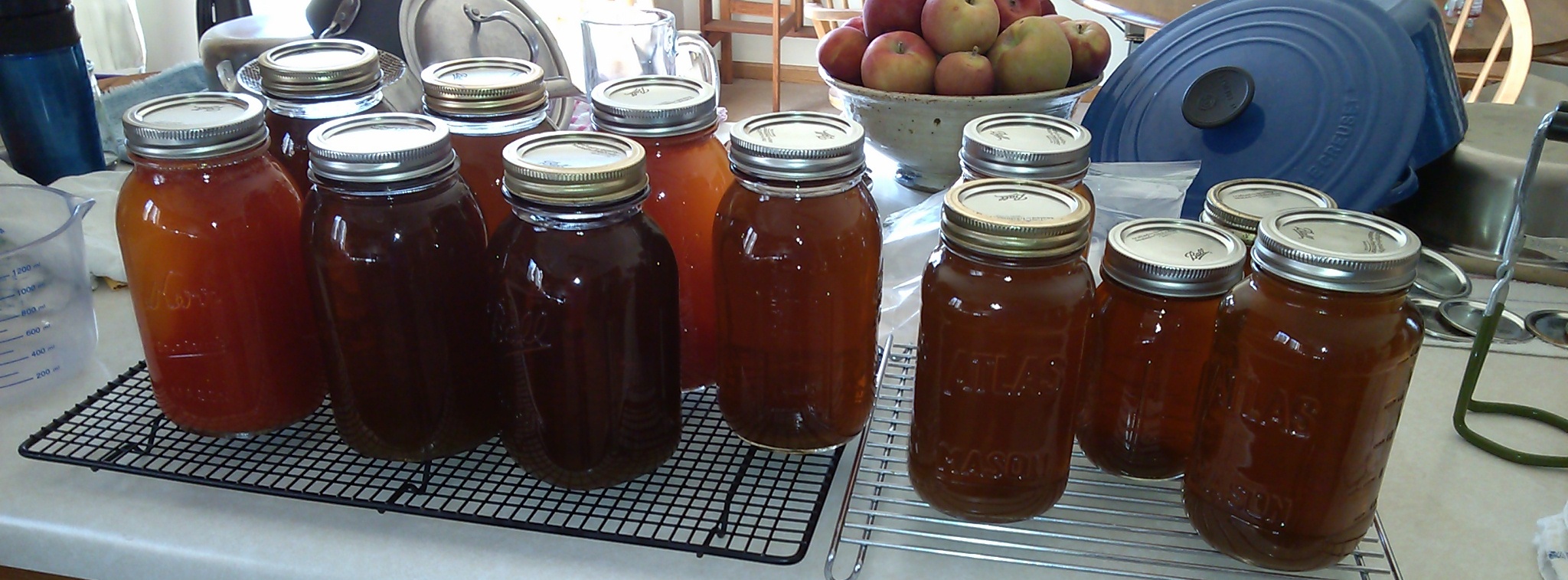
At 3:15 a.m. I brought the graniteware water bath canner from downstairs to the kitchen. Using the wire rack, four quarts and a pint of applesauce, plus the pepper puree made this weekend, were lowered into the pot which was then filled with warm tap water. Moving the heavy pot to the stove, I turned the heat on high to process the jars of summer goodness. Now breakfast.

While working in the local food system, one never knows when or where the next paying job will come along. I finished the season at the orchard yesterday, at one CSA the work is clearing the field, which won’t take too long, then there is the planting in the high tunnel and fall share help, which will end soon as well. There is the prospect of cutting firewood at another farm, but weather seems likely to intervene before long. It begs the question, what’s next?

While invited to return to the warehouse after the season, it doesn’t pay enough given the investment in health and well being required. It is a fallback position to pay some of our bills should no other opportunities present themselves. There are a lot of low wage jobs around town, but they present the same problem of occupying space without providing enough income. I’m confident something will materialize.

While there is fresh food, I’ll continue to eat well and stock the pantry for winter. Mostly, we eat to live, and there is still time to make deposits in the food pantry. Hopefully there will be enough reserves to see us through until spring.

Categories
Writing

Flesh Wouldn’t Yield

LAKE MACBRIDE— Friday morning the frost was thick. While walking the kitchen compost jar to the bin, the blades of grass crunched under my plastic shoes, leaving green footprints in the frosty lawn. After emptying the jar, I stopped by the vegetable plots, and as expected the tomatoes and peppers were bitten. Chard, collards, turnips and arugula looked like they might recover this time, but another milestone in a season of gardening has been passed.

Work called me to a farm where I was hired to help clear the field. The biggest part of the work so far has been deconstructing the tomato cages. Tomatoes are an important part of a CSA, so producing enough good looking ones is important. Some put in a lot of plants, hoping to glean the best for customers and offer bulk crates of seconds for those who may want them. Others cast the die in an amount that seems right based on prior experience. Tomatoes were a mixed bag around the county this year, and those who had a surplus of good ones sold them to others who didn’t. There were plenty of seconds for processing and my pantry .contains plenty of canned tomatoes.

When I arrived at the work site, we walked through the pepper patch. When I tried to take a bite from a perfect looking green bell pepper, the flesh wouldn’t yield. Frozen solid and ready to be plowed under. I thought, if the rest of the good peppers were harvested and placed in the freezer now, they could be preserved for later use. However, there was other work to do and once the day thawed, it would be too late. The exigencies of work life intervened with my frugal impulse.

The rest of the day we dug potatoes, harvested Brussels sprouts and polished green peppers picked before the frost. We also continued the tomato cage work, although a few hours remain to be finished. The focus was on getting the fall share out Monday, and there is an abundance of produce to be processed for delivery.

As winter arrives, and food thoughts turn to the pantry, I stopped at the orchard and bought a bushel of WineCrisp™ apples for their storage capabilities. When they are ripe, I’ll buy a bushel of GoldRush for the same reason. While it is kind of apple-geeky, you should know about the propagation work being done at Rutgers, Purdue and the University of Illinois in developing these apples without genetic engineering. Fit reading as we move indoors and settle in for a winter not far away.

Categories
Reviews

D & D Pizza and Cafe

D & D Pizza and Cafe

SOLON— Coming off the cold, windy fields at one farm, heading to another, I stopped in Solon for lunch. Monday being ruhetag (rest day) for restaurants, the selection was restricted. D & D Pizza and Cafe was open. I went in, favoring it over the gas stations, grocery store and bar.

The building is the second newest on Main Street, having been rebuilt after a fire during our town’s annual Solon Beef Days festival burned the former Breadeaux Pizza to the ground, killing one occupant. The restaurant is now managed by the person who owns the town’s grocery store. A bedroom community like ours needs a pizza outlet, and this one has survived.

When I entered, more than a dozen people were sitting in five groups. Most were construction workers coming off a job for lunch. Two construction workers were sitting on the same side of their table, eating and watching a flat panel television that was tuned to The Chew, which is a celebrity chef program on ABC. Mario Batali was explaining low country cuisine, and preparing a Huguenot Tart made of Blondie apples. The place was busy.

Merci
Merci

The decor is sports schedule posters tacked up on the walls, with beer advertisements that appeared to be provided by a local distributor. Perhaps in reference to the cafe part of the name, a trash receptacle had the French word “merci” on it, instead of the expected “thank you.” There is no table service, and the idea is to bus your own.

The all-you-care-to-eat buffet is the main luncheon feature. It had six kinds of thin crust pizza, bread sticks, chicken strips, and a salad bar with twelve items, and four dressings. The salad was fresh and appetizing. Soup of the day was chili, which fit with the colder weather. Beverages were fountain drinks along with bottled beer. The lunch buffet cost $7.41 including tax and a beverage. A soup and salad combo was available for a dollar less.

My dining experience was positive. The thin crust pizza was what one expects, the salad was made of fresh ingredients with an adequate selection, and the chicken strip I tried appeared to be made from actual chicken. Based on this lunch, I’d go back, or bring a friend for conversation. It is difficult to convey the idea of freshness, but this salad bar accomplished it.

D & D Pizza and Cafe fills a small town need, which is a place on Main Street for workers to go for lunch. It competes with Casey’s General Store for pizza, and with the nearby Solon Station, which has been offering a $5.50 burger basket at lunch time. Other Monday lunch competitors are Sam’s Main Street Market and RJZ Express which has takeout sandwiches. I’m not sure how much competition the restaurants located in strip malls south of town provide. My point is there is an active lunch marketplace, more than what meets the eye. Part of D & D Pizza and Cafe’s success is it recognized and caters to the lunch trade. While visiting Solon for the day, it is worth a try.

Categories
Writing

Last Days Before the Hard Frost

Moon Set
Moon Set

LAKE MACBRIDE— For two nights, I’ve covered the Swiss chard, arugula, parsley, collards, peppers and turnips with old bed sheets to protect them from a hard frost. The temperature hasn’t dipped down, so no damage. Not that we’ll eat a lot of this produce, but one more meal made with arugula, another soup stock of turnip greens, and one more dish made with flat leaf parsley would stretch the food budget and taste good as we go into winter. Snow is forecast for Tuesday, but I doubt it.

The work at the orchard will end soon. An abundance of apples remain, but most trees have been picked clean. The customer count reduces each weekend, and with it, so slowed my work until it was done yesterday. Except to drive tour groups on the John Deere tractor next Sunday morning, and to join my cohorts in the end of season staff potluck soon thereafter.

Work in our local food system has been a new connection to nature and agriculture. As if the world outside our compact geography slipped away and I’d gone native. It’s something I should have done long ago.

A trip to the county seat seems a long excursion. While a number of gatherings of friends there have been unattended, there are no regrets in staying local. There are new friends to be made in the environs of our life in Big Grove.

As the moon sets, and the day begins, much work lies ahead. The frost will come, and soon. In the meanwhile, the challenge is to make the most of each day’s diminishing sunlight— splitting time between intellectual work and the reality of temperate climate and the geography of local friends.

Categories
Environment Home Life

Storm Cleanup is Finished

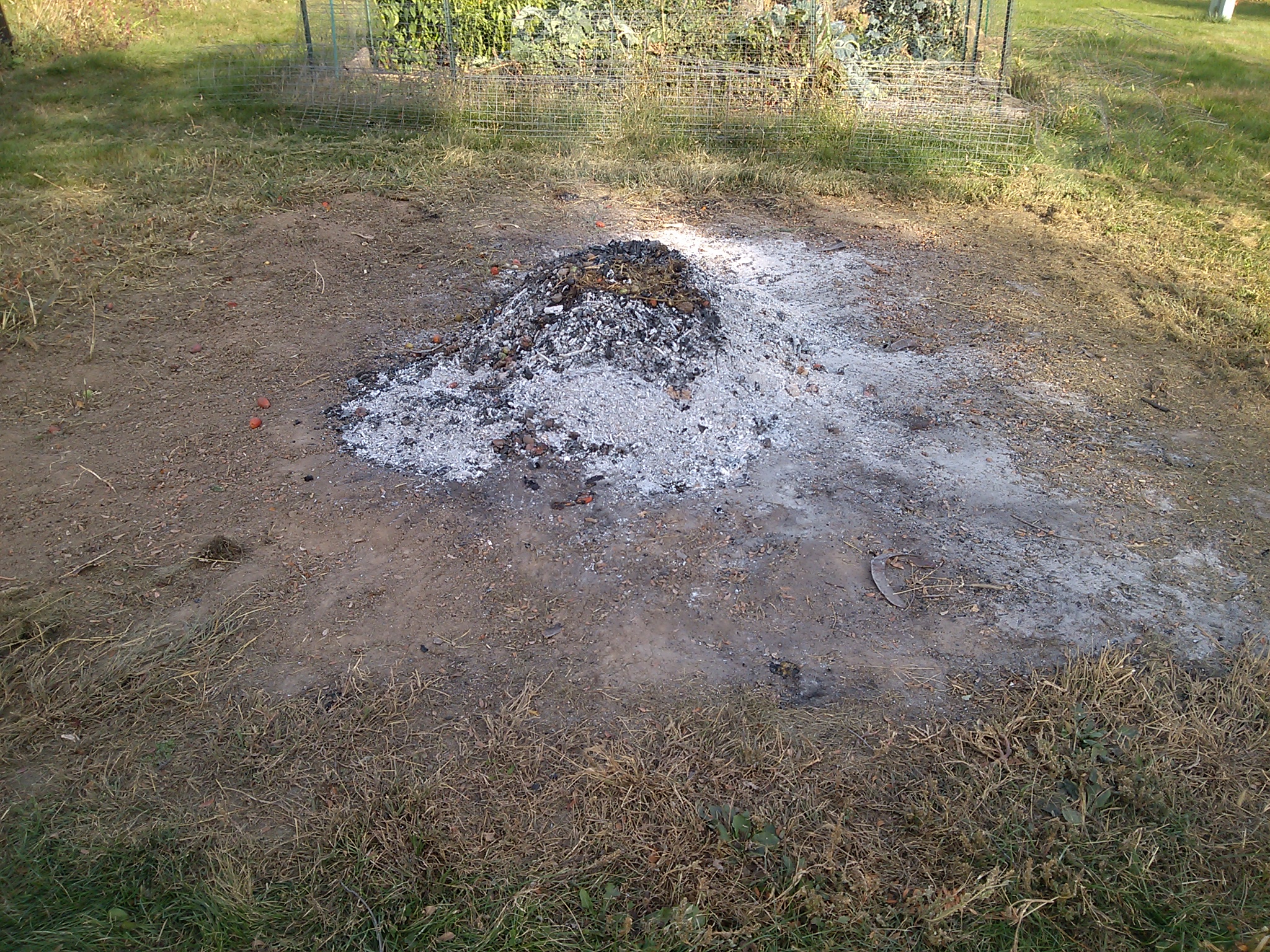
Ashes from the Brush Pile

LAKE MACBRIDE— Embers of the brush pile marked the final cleanup after the Sept. 19 storm. Uneven spots remain where the tree fell, but the lilac bushes retained a nice shape and appearance after trimming the damaged branches. Next order of business is to mow the lawn, which is still partly brown after the drought, and collect the grass clippings to use as mulch where the burn pile is now. It’s been two months since the lawn was mowed.

The season’s canning is mostly done, and I posted this to Facebook yesterday,

All the canning jars in the house have something in them, more than 30 dozen. Tomatoes, applesauce, hot peppers, soup stock, sauerkraut, dill pickles and hot pepper sauce. There is apple butter, pear butter, peach, raspberry and black raspberry preserves, and grape jelly. The freezer’s full too. Plenty of potatoes and onions. We will have the beginnings of plenty of winter meals. All was grown locally and organically. Think I’m done for this canning season.

Herbs are drying in trays in the dining room, and a lot of produce remains in the garden. The counters and bins in the house are full of tomatoes, winter squash, apples, onions and potatoes. By Monday we should have a hard frost which will end most of the growing season. The historical first hard frost is around Oct. 7, so the growing season extended by about two weeks this year. It’s not clear what weather history means any more, except to point out how different things are getting.

A farmer was talking about the weather last night, commenting that it has recently been extreme, with nothing in between. He was referring to the early snowstorm that killed an estimated 100,000 cattle in South Dakota earlier this week. What we want is a steady, soaking rain for about 48 hours to bring up the moisture level in the ground. It hasn’t happened, and we are left with heavy downpours, flooding and fires in the great plains and upper Midwest.

For some farmers, the soybeans are in. While they had the potential for a big crop, the average yield was about 40 bushels per acre. The pods formed but didn’t fill for want of rain. The corn crop is still coming in, so if it rains, nature could wait until the rest is in. The variation in yield is between 40 and 200 bushels per acre. There aren’t many places producing the high end of the range and average is coming in around 140. There is some hesitancy to say until it is all in, but yield will be better than last year during the record drought.

Everywhere in the farming community, people are concerned about the extreme weather. Weather is always a concern for farmers, but this is different. People seem worried like they haven’t been before. There has been no mention of climate change in these conversations, and I don’t bring it up. No need to assert my views when the connection between extreme weather and climate change will become obvious with the persistence of trouble, and the expansion of knowledge.

While our cleanup is finished, the extreme weather seems like it is only just beginning. We use the same language, developed over generations, to discuss farming. But there is a sense, a resonance of worry, unlike what has been present before. It will nag at people and hopefully result in action to mitigate the causes of climate change before it is too late.

Categories
Home Life

Autumn Days

Turnip Green Soup Stock and Tomato Juice
Turnip Greens Soup Stock and Tomato Juice

LAKE MACBRIDE— As cleanup from the Sept. 19 storm continues, the weather has been almost perfect for outdoors work. The plants in the yard have come alive, and the garden generated a burst of food (collards, Swiss chard, turnip greens, arugula, herbs, tomatoes and peppers) as the first frost approaches. Days like these are as good as it gets.

Roof Damage
Roof Damage

Slowly… systematically, evidence of the storm diminishes. Yesterday I cut up the locust tree and spread the branches in the back yard for easier final cutting. Today a construction worker comes to repair the corner of the house. All that’s left is to finish with the locust tree and replace one of the downspouts damaged during the storm. Then to glean the garden, mow the lawn, and collect the clippings for mulching the garden over winter.

What then?

Much as we relish our moments of sunshine in brilliant autumn days, there is work to do before the final curtain falls and we join the choir invisible.

Writing About Apples

My writing will continue. It has become subsistence, a part of me, like blood production in the marrow, a way to breathe life sustaining oxygen in an unsettling and turbulent world. It is not expected to contribute much financially.

Farm work and gardening, participation in our local food system will continue at a subsistence level. There is inadequate income to be generated in working for someone else, and farm work will always be lowly paid.

There is family life, but little role for that in the blogosphere. We depend on our families, and little more need be said here.

Mostly, life will be living as best we can during moments of brilliance and trouble. Like these days in early October, when worry seems far away, and life so abundant.

Categories
Work Life

Starry Morning

Apple Harvest
Apple Harvest

LAKE MACBRIDE— The sky was a dome of stars as the newspaper delivery truck made its way down the street. Outside to take the trash and recycling bins to the street for pickup, it was hard not to stop and gaze into the limitless space above. My clothing fit loosely from working low wage jobs this year, and the cool air found its way under the cotton knit and invigorated me, awakening possibilities. It lasted only a few moments, after which I grabbed an apple and ate it in Eve’s bower— forbidden fruit no more. The stuff of dreams and hope.

The remaining apples fall into five categories. A bowl of Cortland for apple crisp later today, a bushel of apples collected after the Sept. 19 storm blew them from the tree for apple sauce, a bin of the best apples for out of hand eating, and another bin of less perfect apples from the final pick, for a variety of purposes. A lot of the lesser Golden Delicious apples on the tree. They are available, but one suspects they will end up food for wild animals and insects, or as compost. The end of this year’s apple season is in view.

The plan for today is more chainsaw work in the yard. At least two more eight hour shifts will be required to finish cleaning up the fallen branches. A contractor is stopping by to estimate the roof repair from the Sept. 19 storm. The plan is to harvest the turnip greens and make soup stock, and finish gleaning the first garden patch, maybe the second. All of this is subsistence work, unpaid except that there is a buyer for the firewood I make, and food for our table.

As dawn begins to break, it’s time to leave the comforting glow of the computer screen and get to work. Just a few more keystrokes, and then off into the garden, seeking life, and redemption.

Categories
Social Commentary

Navigating Health Insurance Change

Wellmark PhotoLAKE MACBRIDE— As a self-employed writer and farm hand, having health insurance means buying an individual policy in the marketplace. The implementation of the Affordable Care Act’s (ACA) health insurance exchanges and initial open enrollment beginning Oct. 1 was a precipitating event for me and for others. There will be changes and some of them have little to do with the ACA.

There is a pent up demand in business to shed the cost of providing health insurance for employees, or to make it a fixed financial benefit. Already after Oct. 1, there is anecdotal evidence that small businesses are pulling the plug on group policies, and large businesses, like Mercy Medical Center in Cedar Rapids, are changing the rules for insurance benefits to exclude part time employees who are currently covered. If there is a way to stabilize or reduce the cost of having employees, businesses will find it, and the ACA appears to be providing the whipping post for moving forward to meet this long-standing want. Corporations and small businesses appreciate the opportunity this major cultural event represents. The days of employers providing health care to employees as a basic benefit are ending, if not over.

Wellmark Blue Cross and Blue Shield, Iowa’s largest health insurance provider, decided not to join the Iowa health insurance exchange during the first year. The expectation is the company will apply to be part of the exchange beginning Jan.1, 2015. In an interview with the Cedar Rapids Gazette last July, Wellmark CEO John Forsyth said, “the company was concerned about the lack of information available and the roll out of the exchange in Iowa.” Forsyth was skeptical of the federal government’s ability to implement the ACA smoothly. In addition to some website glitches in early October, some of the rule-making is incomplete. Wellmark’s decision is understandable from a business perspective, and the impact is that the network of health care providers available in the exchange during 2014 may be significantly reduced without Wellmark’s participation.

What’s a person with an individual health insurance policy to do? Wait. First, wait until December to look at joining the exchange on Jan. 1, 2014. Perhaps some of the details like provider coverage will be better identified to make the consequences of changing more understandable. Second, someone who has a grandfathered plan (no changes in policy since President Obama signed the ACA), may not want to change until there is more certainty about the outcome. The open enrollment period goes through March 2014 during the first year. Take advantage of that extra time. Third, resist the efforts of Wellmark and other providers to rush a decision to remain the same, or lock in rates. Whether or not the Iowa insurance exchange will offer lower rates for equal coverage is uncertain. No reason to make a decision until one gets enough facts about the rates and coverage, and compares apples to apples.

There were five insurance company sales representatives in a health care reform seminar last week, compared to yours truly as the only member present. Organizations who sell health insurance have a lot to lose with implementation of the ACA, and the move to a marketplace. These insurance agents answered all of my questions, and the information provided will help in making a decision about health insurance. Getting facts and working through them, as I did, is essential in navigating change in health insurance, and there is no hurry to make a bad decision.

Categories
Kitchen Garden

Thunderstorm Coffee Break

Storm Over the High Tunnel

RURAL CEDAR TOWNSHIP— A task list arrived via email from the farm at 8:17 a.m. It included work in the germination shed and the high tunnel. After arriving, and before getting very far, thunder and lightning began, and after a phone call to the owner, we decided to stop work in the structures until after the storm passed. It meant a coffee break in town.

I watched the cloud formations move in, and they threatened and thundered, and ultimately did not bring much rain. As soon as it begins to clear, I’ll head back to finish what was started. In the meanwhile, I made hot sauce, and an apple crisp from Cortland apples is baking in the oven.

Thunderstorm Rolling In

A Cortland apple is a cross between McIntosh and Ben Davis apples, introduced in Geneva, New York in 1902. When peeling and cutting the slices, the browning of oxidation doesn’t occur as quickly as with other varieties. They are popular with people of a certain age, and last week I stopped by and picked the rest of what was on the trees at the orchard. There is enough to test my theory that any apple can be made into apple crisp… more than once.

The western sky is beginning to clear. As soon as the apple crisp is out of the oven, it’s back to the high tunnel to plant more seedlings. Better have that coffee soon.

Thunderstorm
Thunderstorm
Categories
Kitchen Garden

Bushels of Apples

Golden and Red Delicious Apples

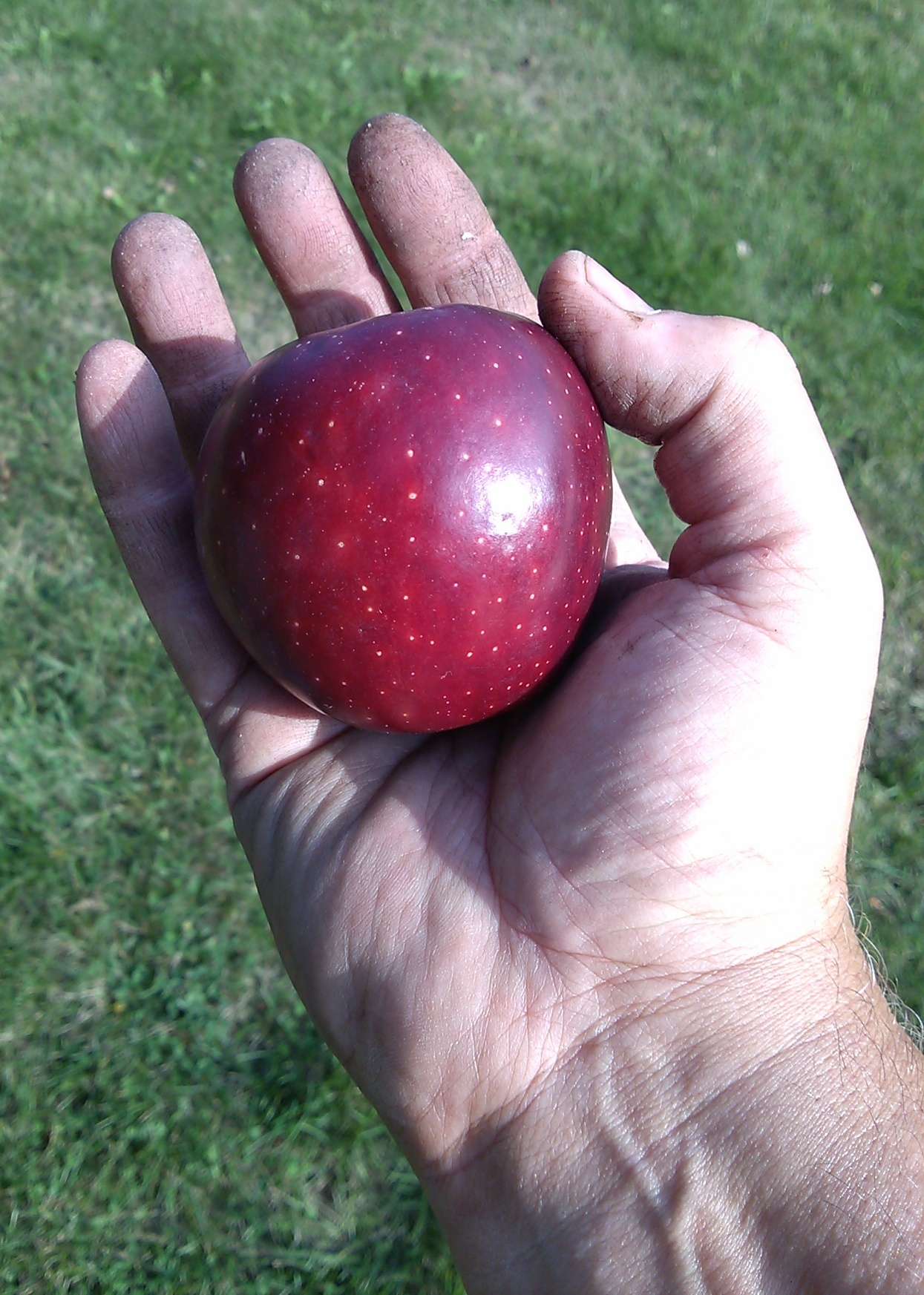
LAKE MACBRIDE— Two hours were spent outside eating apples from the tree… and picking them. Their ripeness was perfection, and as sweet as an apple could get, these seemed sweeter, especially the Golden Delicious.

With a two-year supply of condiments already in the cupboard— apple butter, pear butter, apple-pear butter, raspberry jam, grape jelly, wild black raspberry jam and others— the question is what to do with the three remaining bushels of apples. The answer is clear, eat them out of hand, bake them, and make applesauce.

Apple Harvest
Apple Harvest

My four trees produced more than 24 bushels of apples this season, the most I can recall. Growing conditions were almost ideal, and the fruit is mostly bug and fungus free. Having never sprayed these trees, they are as close to organic as can be.

As the season turns to winter, I’ll store some for as long as possible for apple crisp, and maybe an apple pie. To remind me of the brief dash of brilliance that was this summer’s apple crop.