This studio...
   is a place for creative endeavor
is only a studio...
      a place for solace
by my declaration...
      from this quiet place
that it is so.

     ~ Sept. 9, 1990
Categories
This studio...
is a place for creative endeavor
is only a studio...
a place for solace
by my declaration...
from this quiet place
that it is so.
~ Sept. 9, 1990
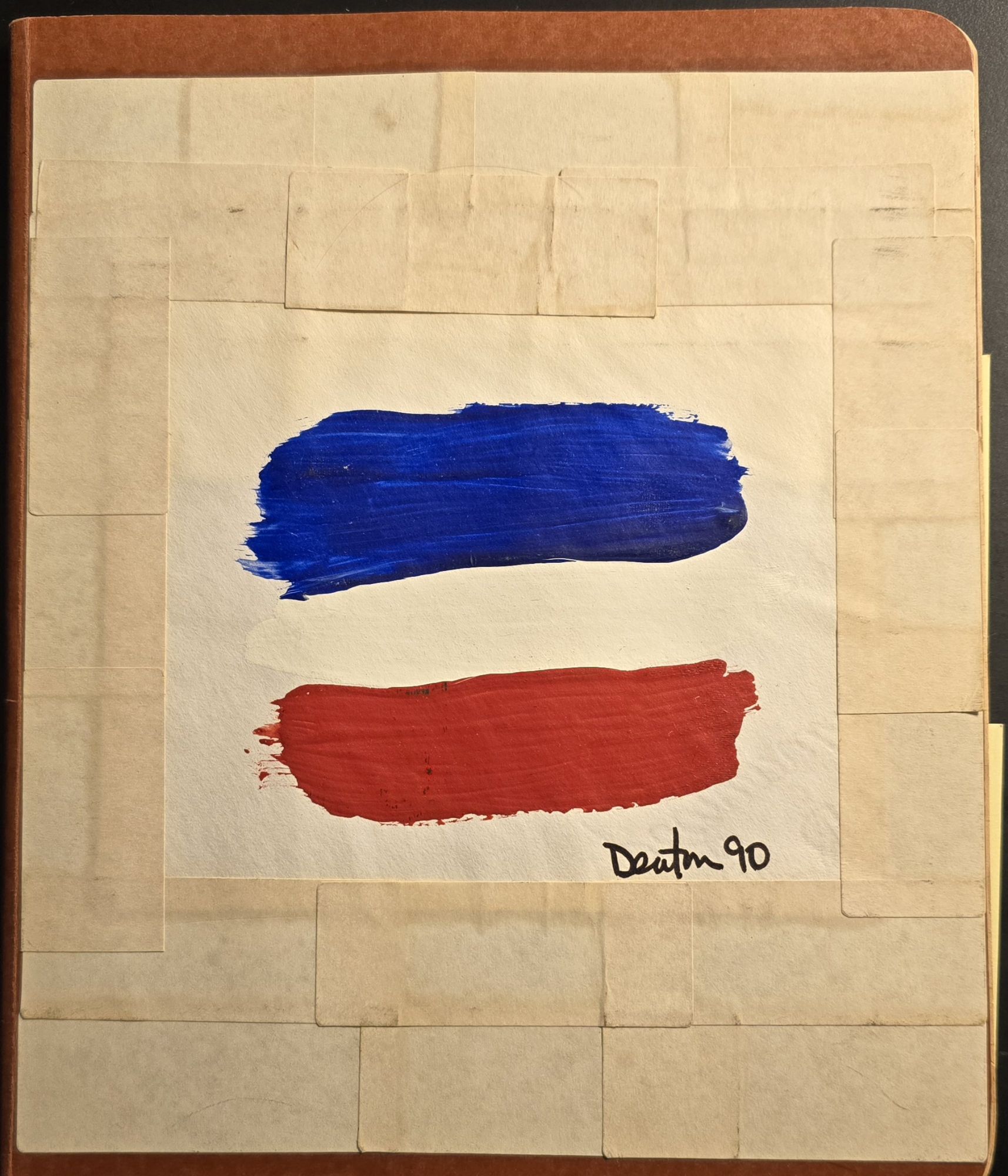
The home we bought in the Calumet region of Indiana was situated in a subdivision called Lincoln Gardens. Everything was about Lincoln, it seemed. We could hear traffic on the Lincoln Highway, U.S. Route 30, a few blocks from our home. My employer was Lincoln Sales and Service after the highway. We moved there in January 1988.
The first two years were a unique time in my life. I was hired by the trucking company in part because I had been an infantry officer in the U.S. Army. My first supervisor was a Marine who served in Vietnam who was looking for a certain type of “aggressive” individual. He hired me right away. The transfer to Indiana seemed like part of the deal. It was either go to Indiana or find a new job.
I was interested in providing for our young family, so I transferred to the Calumet. I was interested in being creative. As often as I could, I escaped into our detached garage and let my imagination flow. I wrote about this in a notebook filled with automatic writing:
The garage is my refuge in a time when my life is complex and difficult. The raw materials of lumber, papers, and cultural artifacts are everywhere, along with the tools to make them into my creations. Like this booklet. I find hours of distraction possible there. A clutter of colors, shapes, textures, and cultural objects. It is no wonder the trip to the garage took so long. I was engaged in other things there, distracted from the endeavor at hand. (Excerpt from an automatic writing piece, Sept. 9, 1990).
Our family has been able to build a long history together. They always supported my creative energy even if it caused me to withdraw from life from time to time.
If there was anything aggressive about my personality it was the drive to live a creative life on my terms. I was okay if there was an audience of one, resigned to it if that had to be. Yet during that period, I tried to create things with a broader circulation. When I wrote this piece, I had left the comfort of an Iowa trucking company and began work at the ninth largest corporation on the planet. It was as if I severed myself from every Iowa thing. It was go-time as a creative artist and writer.
Comes a time when we must trod the boards and perform the role in which we cast ourselves. For me, it is a role of my own creation in a theater of my own design. The individuality of the words spoken alienates most of the people who know me in other social settings. I write for the ages, not for today’s people. I would enjoy the financial success of a Michener, a Bellow, an Updike, but that may never come to pass.
Instead, from my outpost in Lake County, I produce works, texts to be sent out. Items created in the midst of many social forces. Items that, in some cases, are so idiosyncratic that they might have little worth beyond the borders of my property. But slowly, texts are created. Not many, not quickly, but they mount up, one-by-one. (Excerpt from an automatic writing piece, Sept. 15, 1990).
I have living memory of weekends in our Indiana garage. I hoped to create an art form that would combine all aspects of my creative energy and experience yet have broader appeal. I was hardly successful. Perhaps the best success came from setting aside creative endeavor and taking our child to go swimming on a Saturday afternoon.
I was privileged to be part of a close family, one willing to do things a bit differently than other people who lived in our region. A life based on my creative impulses moderated by the logic of my spouse and our child’s youthful innocence. That nurturing environment helped me to be who I am.

Someone shared a photo of the interior of a Korean grocery store in Niles, Illinois in a social media post. I had to visit the next time I was in the area, so this week, I did. The experience was a bit surreal.
For the first time in a long time, I entered a grocery store and left without buying anything. It was the H Mart in Niles, an Asian Grocer larger than the American grocer I frequent near home. They had aisles and aisles of foodstuffs with Korean lettering on the packages. Two of us walked from end to end to see what was on offer. It was a lot. It would be easy to drop $500 in one visit and not scratch the surface of what was available.
There was a food court near the entryway. It was well past the lunch hour when we arrived, and two hours until supper time. I would have thought someone would be eating, yet few were. Every person behind the counters was not doing anything, just standing or sitting, I suppose waiting for a customer. The store was almost empty of customers on a Wednesday afternoon.
At the other end of the store near the exit was a row of other kinds of merchants, such as the nail salon that stood out. In between were well-stocked, well-faced shelves. There were a couple of stockers, who each had a single box of a product to refill a shelf. This is unlike our grocer in that here, the stock person fills a large flatbed cart with dozens of items which are wheeled to the floor and parked while the entire aisle is re-stocked. Maybe it’s a cultural difference, although I’m struggling to figure out why.
There was a lot of seafood, reminding me that marine life everywhere on Earth is under pressure from over fishing. There were many kinds of pickled products, including kimchi and daikon radishes. I wouldn’t know how to choose one type of pickled product for a meal among so many options. There were small shelves of U.S. company products. Notable was a wide set of shelves of Spam products, actually multiple sets in different locations in the store.
South Koreans eat lots of Spam, according to National Public Radio. It is the second-largest consumer of Spam in the world, eating roughly half as much as the United States, which has six times as many residents. U.S. soldiers introduced Spam to Korea during the Korean War. Dishes such as Kimchi Spam Musubi, Bibimbap bowl with Spam, and others are considered to be delicacies. When my uncle was stationed in Persia during World War II he ate so much Spam in his rations he never ate it again after military service. To each their own, I suppose.
The reality of H Mart did not measure up to the internet posting. In person, it seemed a vast, well-stocked warehouse for people with a specific culinary interest. How does one decide which pancake mix to choose when there are so many? Maybe there are too many varieties. Inside H Mart it is a world of its own.
They even had boxes of Aunt Jemima pancake mix, with the iconic figure on the box, from before Pepsico took a step into the future of racial equality and removed her. Quaker Oats, a subsidiary of Pepsico, may have felt it was doing the right thing by removing the aunt’s image. In the bright neon lights of the store there was consumer comfort in seeing her image persist. Maybe they got the message about DEI and put Aunt Jemima back in her place.
I found the visit fun, the most fun I’ve had in a while. I don’t get out much. Since I didn’t buy anything, it was cheap fun. I don’t know if the internet ruined me for experiences like this. I would never have seen the inside of H Mart without that social media post. It is one more bit of reality incorporated into my online world view. I just need to develop a taste for kimchi and I’ll be set.
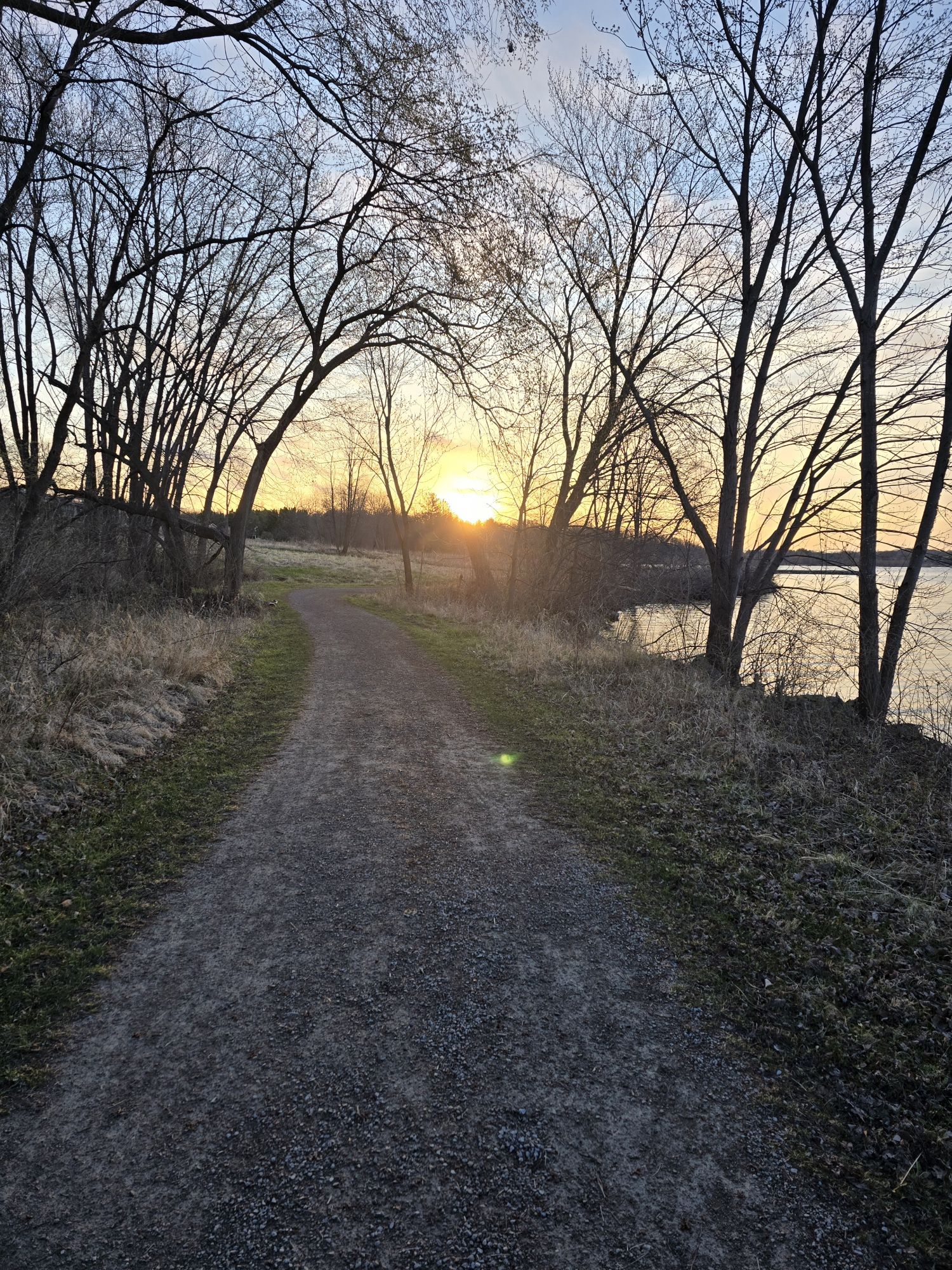
Large crop fields have been worked along many of the roads I traveled to Chicago this week. Ready or not, the season turned to spring. Next on my indoor planting schedule is tomatoes, followed by cucumbers and squash. I’m waiting for conditions outdoors to improve to tear down some of last year’s garden and prep the soil. It’s how I’ve learned to be a gardener.
I finished reading The Ministry of Time by Kaliane Bradley. I wrote a book review on the Goodreads social media platform:
The public library had this book and I heard about it from Barack Obama’s reading list. It was a fast-moving, engaging read. The 20k+ reviews already written on Goodreads are a trip and highly recommended. Here is a link to the page. Couple things to add:
Rated 5 stars because among dozens of fiction books read in the past several years, this one stands out with enduring quality. It is likeable because it is different.
Give it a go!
I’ve been away from my writing computer for two days. It’s time to get back to work on my memoir. Thanks for reading.
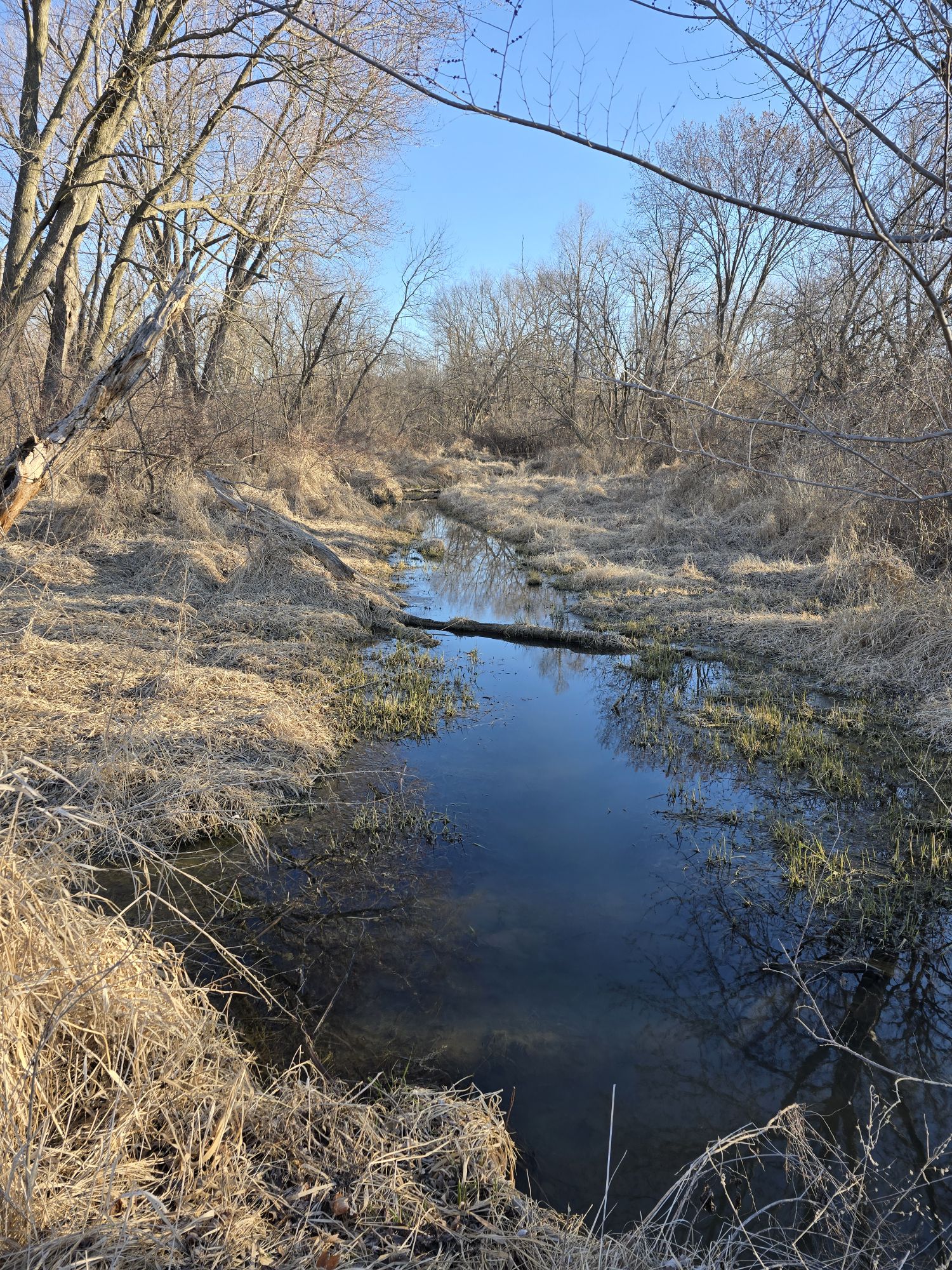
I plan to be out of office and away from writing computers for a couple of days. Here is a photo from a recent trail walk to keep you company.
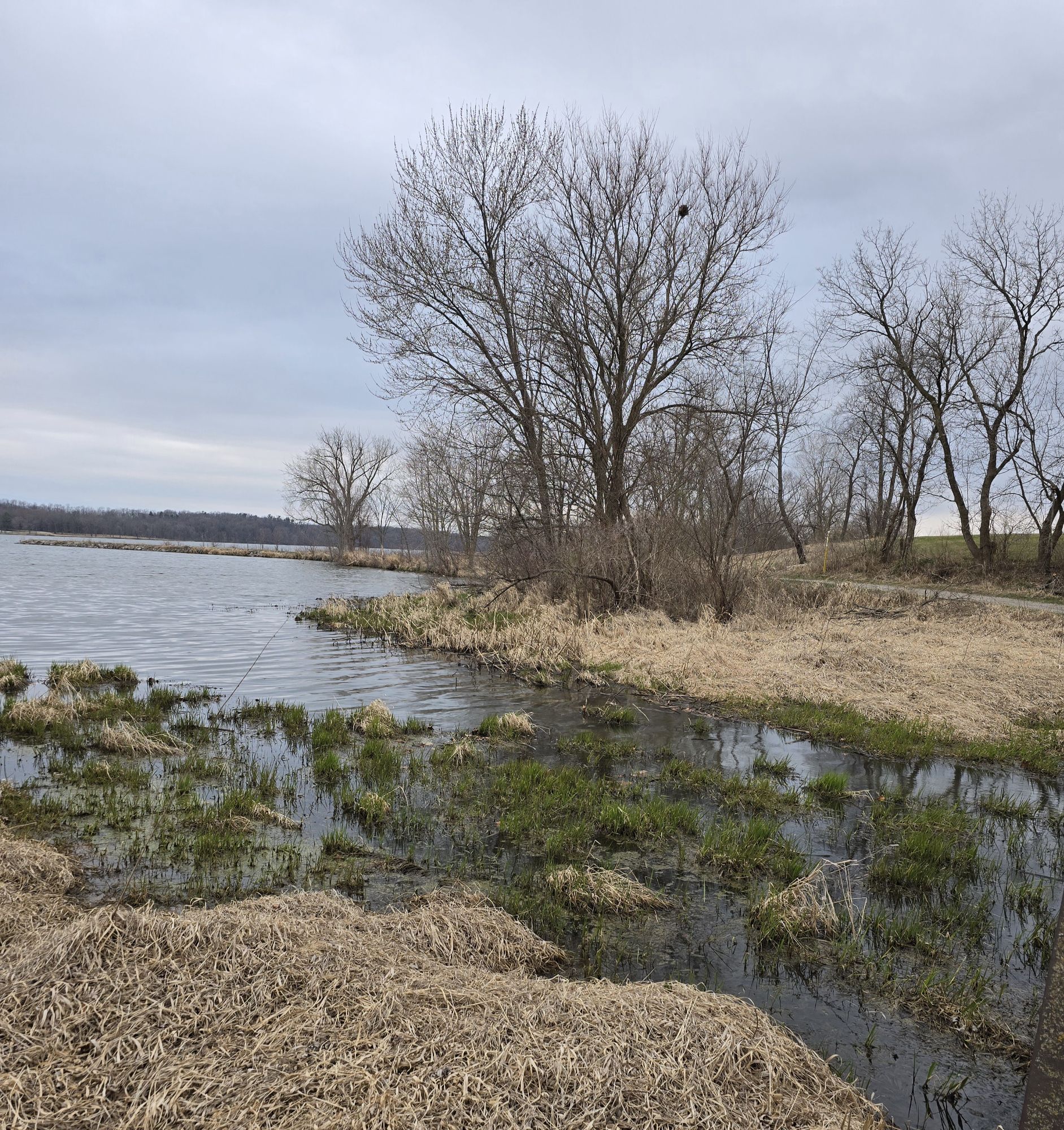
The ambient temperature is chilly as I write. Not freezing, not spring, just chilly. I yearn to be outside working in the yard and garden. I don’t yearn enough to bundle up and brave the cold and wind. At least I got the garlic in the ground on Saturday and it rained Sunday. I’ll take little victories when they come.
I’ve been spending what seems like a lot of time writing. Each day includes writing emails, social media posts on BlueSky, and at least one blog post. All of that writing is to prime the pump for work on my autobiography. I’m on the draft of Chapter 25 of a possible 50, so the draft is half finished. Time writing is valuable for the distraction it provides. Distraction from our politics, mostly.
On Monday, Paul Krugman posted this graphic:

His comment was about the impact of economic uncertainty on small businesses. It’s not good, he said. However, there are more kinds of uncertainty during the current administration that are equally uncertain.
Will Social Security continue to provide steady retirement income? Will my veteran friends continue to have health care through a viable Veterans Administration system? Will my public library be able to afford things like interlibrary loans, websites, and other services if federal funding goes away? Will research facilities be able to create needed vaccines during the next, inevitable pandemic? When I’m infirm enough to need a nursing home will Medicaid be available to help defray costs? Life today is one big truckload of uncertainties, hence my need to be distracted from it.
As society grows more uncertain, the tendency is to withdraw into what is most important in life: family, maintaining a home, eating sufficiently well to avoid problems, maintaining physical and mental health, and more. Such concerns during the Reagan administration rose and my reaction was to withdraw into what I will call the “Reagan bubble.” Focus on what is important and the heck with everything else. Needing a Reagan bubble complicates things in significant ways.
The tendency is to conserve resources. That means less spending on retail in person and online. It also means using funds to pay down debt. Can we get by with the vehicle we currently own for a few more years? Will the washer and dryer hold up without needing replaced? Conserving resources, multiplied by a society that feels the same way about uncertainty will have negative fallout for the consumer economy. While I’m not an economist, it will be felt across the economy, not just in the consumer sector.
Living in the Reagan bubble will be good for my writing, the same way the coronavirus pandemic was. Until I finish the second book, I need that. That raises another question, though. Where will things be when I do finish the book, hopefully by the end of the year? It’s a big unknown. Those of us who have been to this rodeo before during the Reagan years know what to do.

The constant news cycle is not good for us. Sunday is as good a day as any to take a break and focus on the real world all around us. It is also a day to post my favorite photo of the week.

Editor’s Note: This is a draft chapter from my memoir. I was assigned to the Schererville, Indiana trucking terminal of Lincoln Sales and Service for most of the time from 1987 until 1993.
On my first day of work, as I crested the railroad bridge just south of the Schererville terminal, I saw a car had driven under the trailer of one of our tractor-trailer rigs while it was making a left-hand turn onto Indianapolis Boulevard. I didn’t know it then, yet this would become the typical start of a day. During the time I worked there, about four of the six years we lived in the Calumet, there was always something happening. It was nearly impossible for a human to keep up. Thankfully, no one appeared to be hurt in this specific accident.
The Town of Schererville, Indiana is called the “crossroads of the nation.” Situated in Saint John’s Township in Lake County, it has been a crossroads since before becoming a state when Native American trails crisscrossed not far from the current location of the intersection of U.S. Highways 30 and 41. At one time, Standard Oil Company owned all four corners of that intersection. The Standard Oil Trust had lots of money and was buying desirable locations to sell automotive fuel and lubricants across the country. Locations along the Lincoln Highway, which ran coast to coast, were prime. Their corporate descendant, BP, still operates on the northeast corner which currently has a large gas station and convenience store. Our trucking terminal was about two miles north on Highway 41, which is also called Indianapolis Boulevard.
Because the company fuel island was close to the main roads traveled by our truckers, almost all our drivers stopped to get fuel, drop off payroll paperwork, use the restroom, check in with the company trainer, and if needed, get their equipment repaired or serviced. Our fuel island attendant J.J. knew Chicago like the back of his hand and gave directions to help out-of-state drivers find their customers using routes safe for an 18-wheeler in the city and its suburbs.
In 1987, Lincoln Sales and Service in Schererville was a full-service trucking terminal. During my two tours of duty there, we evolved into a driver recruiting station when the shop and fuel island were closed after a union organizing attempt, and training was moved to the corporate office in Cedar Rapids to provide a consistent, documented process when the U.S. Department of Transportation audited us. Driver payroll had already been centralized in nearby Griffith, Indiana. Our terminal staff shrank from more than 25 employees to half a dozen over the years. There was less traffic after the fuel island closed, yet it was busy enough for us to hire an outside security service. I was young and could keep up with the workload which often bled over into family time.
I described terminal operations in Chapter 18, yet I want to bring focus to the story of my work.
The many driver interviews I conducted were a story of dehumanization. Workers were laid off by companies that felt they had to be competitive, whatever that meant. It was a time of ubiquitous management consulting firms who restructured businesses to direct more revenue and earnings to owners, shareholders, and high-level managers. CRST followed this path eventually. It was busy at our terminal because most of the time I worked in uncharted territory in managing a recruiting operation with little guidance unless there was a lawsuit, workers compensation claim, or union activity.
In the crucible of manufacturing in transition, tens of thousands of workers in our area were trying to adjust. I was there listening to them and found one heck of a story. I hired some of them, doing what I could to ease their transition.
I officed in Schererville yet traveled a lot. By the end of my time there I was managing trucking terminals in Schererville and Richmond, Indiana, and starting recruiting operations in West Virginia, Georgia, Pennsylvania and Missouri. I would wake up on airplanes unsure of where I was, or where I was going.
I’m glad for the experience. I hated the experience. My life in the Calumet, and everywhere else I traveled, taught me about unionization and the consequences of change sparked by the Reagan Revolution in a way I believe gave me a unique perspective. They were days of hope for an intangible future that included success. In retrospect, I don’t know what that means. It was a busy time and there was little time and energy left for family.

The work I do
is not for me

so much as it is for

the friends I have come to know.

The collages
The poems
The journal entries
The performances

Not for me.

The nuns taught us.

All for the honor and glory of God.

It is a lesson

that stuck.

~ Labor Day, 1989, Lake County, Indiana
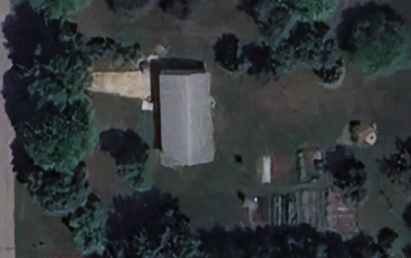
Editor’s Note: Our arrival in Big Grove Township was marked by the first in a series of extreme weather events: the 1993 flood. It was called a once in 500-years flood, yet we would soon find out flooding had become more common, including the next 500-year flood event in 2008. I plan to weave at least six extreme weather events into my memoir, beginning with this chapter on Big Grove Township.
Big Grove Township was established before Iowa Statehood. The first sawmill was built here in 1839 by Anthony Sells on Mill Creek. Put the big groves of trees together with the sawmill and you have us. The oak, walnut, hickory, ash, elm and cottonwood that once thrived among numerous pure springs were gone when we bought our lot here. What dominates is the culture we and others brought with us to an area where all trees indigenous to the Northwest once existed in abundance yet no longer do. There is something essentially American in that.
There is a subdivision named Mill Creek today, suggesting this history. Throughout the area, people refer to early settlers and builders of homes instead of the people who now own and live in those structures. The names Cerny, Beuter, Andrews and Brown persist, as does the more recent name of Don Kasparek upon whose former farm our home is situated.
On the vacant lot we purchased, there were scrub grasses and a lone mulberry tree. The tree appeared to have been planted by a bird’s droppings while it perched on a surveyor’s re-bar marker. The ground had a high clay content which suggested Kasparek had removed the topsoil before subdividing the plats. When he died in 2003, I recognized him in our association newsletter. We speak of him from time to time in the neighborhood, although not always in a positive way.
I looked at an old picture of a building on Main Street in Solon, the nearest city. In sepia tones, seven teams of horses and wagons are lined up in front of a building on the dirt street. We can make out the lettering on the shop windows: Cerny Bros Grocery, Cerny Bros Hardware, and Cerny Bros Feed. While the roads have been paved for many years, much of downtown and the surrounding area resonates with the area’s origins in history before automobiles.
We built our home during the record-breaking floods of 1993. Governor Terry Branstad described the extreme weather event as “the worst natural disaster in our state’s history.” The Des Moines Register published a commemorative book titled Iowa’s Lost Summer: The Flood of 1993. Extreme weather delayed construction of our home that summer, causing us to stay with relatives and in motels for about a month after we moved from our house in Indiana. We moved in during August 1993. I was used to severe flooding from growing up in Davenport where the 1965 Mississippi River flood broke records. I was not used to flooding, 1993-style.
I couldn’t help but believe who I was represented itself in any of local history. My culture was what I brought with me, rooted in coal mining, factory workers, farming, home making, and the rural cultures of Virginia, Minnesota and LaSalle County, Illinois. Our history as a family goes back on both sides to the Revolutionary War. My line in Virginia goes a hundred years prior to the revolution.
That my ancestor Thomas Jefferson Addington is a common ancestor to the Salyer girls of the Salyer-Lee Chapter 1417 of the United Daughters of the Confederacy stands in contrast to the story of Maciej Nadolski working in coal mines in Allegheny, Pennsylvania after the Civil War and then buying land from the railroad in Minnesota. What of my father’s birth in Glamorgan, Virginia? What of the suppression of Polish culture by the Russians after 1865 that led to a massive migration of Poles to North America? If I weren’t here, we wouldn’t speak much of these things in Big Grove Township. Perhaps with time we will.

 Journey Home
You must be logged in to post a comment.