Categories
Writing

Schererville Terminal

Welcome to Schererville. Photo Credit – Wikimedia Commons.

Editor’s Note: This is a draft chapter from my memoir. I was assigned to the Schererville, Indiana trucking terminal of Lincoln Sales and Service for most of the time from 1987 until 1993.

On my first day of work, as I crested the railroad bridge just south of the Schererville terminal, I saw a car had driven under the trailer of one of our tractor-trailer rigs while it was making a left-hand turn onto Indianapolis Boulevard. I didn’t know it then, yet this would become the typical start of a day. During the time I worked there, about four of the six years we lived in the Calumet, there was always something happening. It was nearly impossible for a human to keep up. Thankfully, no one appeared to be hurt in this specific accident.

The Town of Schererville, Indiana is called the “crossroads of the nation.” Situated in Saint John’s Township in Lake County, it has been a crossroads since before becoming a state when Native American trails crisscrossed not far from the current location of the intersection of U.S. Highways 30 and 41. At one time, Standard Oil Company owned all four corners of that intersection. The Standard Oil Trust had lots of money and was buying desirable locations to sell automotive fuel and lubricants across the country. Locations along the Lincoln Highway, which ran coast to coast, were prime. Their corporate descendant, BP, still operates on the northeast corner which currently has a large gas station and convenience store. Our trucking terminal was about two miles north on Highway 41, which is also called Indianapolis Boulevard.

Because the company fuel island was close to the main roads traveled by our truckers, almost all our drivers stopped to get fuel, drop off payroll paperwork, use the restroom, check in with the company trainer, and if needed, get their equipment repaired or serviced. Our fuel island attendant J.J. knew Chicago like the back of his hand and gave directions to help out-of-state drivers find their customers using routes safe for an 18-wheeler in the city and its suburbs.

In 1987, Lincoln Sales and Service in Schererville was a full-service trucking terminal. During my two tours of duty there, we evolved into a driver recruiting station when the shop and fuel island were closed after a union organizing attempt, and training was moved to the corporate office in Cedar Rapids to provide a consistent, documented process when the U.S. Department of Transportation audited us. Driver payroll had already been centralized in nearby Griffith, Indiana. Our terminal staff shrank from more than 25 employees to half a dozen over the years. There was less traffic after the fuel island closed, yet it was busy enough for us to hire an outside security service. I was young and could keep up with the workload which often bled over into family time.

I described terminal operations in Chapter 18, yet I want to bring focus to the story of my work.

The many driver interviews I conducted were a story of dehumanization. Workers were laid off by companies that felt they had to be competitive, whatever that meant. It was a time of ubiquitous management consulting firms who restructured businesses to direct more revenue and earnings to owners, shareholders, and high-level managers. CRST followed this path eventually. It was busy at our terminal because most of the time I worked in uncharted territory in managing a recruiting operation with little guidance unless there was a lawsuit, workers compensation claim, or union activity.

In the crucible of manufacturing in transition, tens of thousands of workers in our area were trying to adjust. I was there listening to them and found one heck of a story. I hired some of them, doing what I could to ease their transition.

I officed in Schererville yet traveled a lot. By the end of my time there I was managing trucking terminals in Schererville and Richmond, Indiana, and starting recruiting operations in West Virginia, Georgia, Pennsylvania and Missouri. I would wake up on airplanes unsure of where I was, or where I was going.

I’m glad for the experience. I hated the experience. My life in the Calumet, and everywhere else I traveled, taught me about unionization and the consequences of change sparked by the Reagan Revolution in a way I believe gave me a unique perspective. They were days of hope for an intangible future that included success. In retrospect, I don’t know what that means. It was a busy time and there was little time and energy left for family.

Categories
Writing

The Work I Do

Photo by Yury Kim on Pexels.com
The work I do
is not for me

so much as it is for

the friends I have come to know.

The collages
The poems
The journal entries
The performances

Not for me.

The nuns taught us.

All for the honor and glory of God.

It is a lesson

that stuck.

~ Labor Day, 1989, Lake County, Indiana
Categories
Sustainability

Big Grove Township Extreme Weather #1

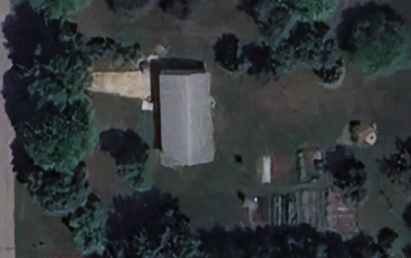
The home we built in 1993 from Google Earth.

Editor’s Note: Our arrival in Big Grove Township was marked by the first in a series of extreme weather events: the 1993 flood. It was called a once in 500-years flood, yet we would soon find out flooding had become more common, including the next 500-year flood event in 2008. I plan to weave at least six extreme weather events into my memoir, beginning with this chapter on Big Grove Township.

Big Grove Township was established before Iowa Statehood. The first sawmill was built here in 1839 by Anthony Sells on Mill Creek. Put the big groves of trees together with the sawmill and you have us. The oak, walnut, hickory, ash, elm and cottonwood that once thrived among numerous pure springs were gone when we bought our lot here. What dominates is the culture we and others brought with us to an area where all trees indigenous to the Northwest once existed in abundance yet no longer do. There is something essentially American in that.

There is a subdivision named Mill Creek today, suggesting this history. Throughout the area, people refer to early settlers and builders of homes instead of the people who now own and live in those structures. The names Cerny, Beuter, Andrews and Brown persist, as does the more recent name of Don Kasparek upon whose former farm our home is situated.

On the vacant lot we purchased, there were scrub grasses and a lone mulberry tree. The tree appeared to have been planted by a bird’s droppings while it perched on a surveyor’s re-bar marker. The ground had a high clay content which suggested Kasparek had removed the topsoil before subdividing the plats. When he died in 2003, I recognized him in our association newsletter. We speak of him from time to time in the neighborhood, although not always in a positive way.

I looked at an old picture of a building on Main Street in Solon, the nearest city. In sepia tones, seven teams of horses and wagons are lined up in front of a building on the dirt street. We can make out the lettering on the shop windows: Cerny Bros Grocery, Cerny Bros Hardware, and Cerny Bros Feed. While the roads have been paved for many years, much of downtown and the surrounding area resonates with the area’s origins in history before automobiles.

We built our home during the record-breaking floods of 1993. Governor Terry Branstad described the extreme weather event as “the worst natural disaster in our state’s history.” The Des Moines Register published a commemorative book titled Iowa’s Lost Summer: The Flood of 1993. Extreme weather delayed construction of our home that summer, causing us to stay with relatives and in motels for about a month after we moved from our house in Indiana. We moved in during August 1993. I was used to severe flooding from growing up in Davenport where the 1965 Mississippi River flood broke records. I was not used to flooding, 1993-style.

I couldn’t help but believe who I was represented itself in any of local history. My culture was what I brought with me, rooted in coal mining, factory workers, farming, home making, and the rural cultures of Virginia, Minnesota and LaSalle County, Illinois. Our history as a family goes back on both sides to the Revolutionary War. My line in Virginia goes a hundred years prior to the revolution.

That my ancestor Thomas Jefferson Addington is a common ancestor to the Salyer girls of the Salyer-Lee Chapter 1417 of the United Daughters of the Confederacy stands in contrast to the story of Maciej Nadolski working in coal mines in Allegheny, Pennsylvania after the Civil War and then buying land from the railroad in Minnesota. What of my father’s birth in Glamorgan, Virginia? What of the suppression of Polish culture by the Russians after 1865 that led to a massive migration of Poles to North America? If I weren’t here, we wouldn’t speak much of these things in Big Grove Township. Perhaps with time we will.

Categories
Writing

The Real Work Begins

Writing About Apples

Drafting Part II of my memoir is proceeding well. During the last ten years I did so much work writing bits and pieces that paragraphs now fall quickly into place. I have a solid draft of chapters 1-17, which is before we moved to Indiana. Because the time is so recent (1988), and because I wrote a lot while living through it, there are ample documents and memories available. Too many, really. I have choices to make. Sadly, the choice is what to leave out.

I wrote this description of where we lived last week:

The dominant geographic feature in the Calumet is Lake Michigan. I remember endless flocks of geese migrating above our house, noise of their honking entering through open windows continuously and for hours at a time. There was “lake effect” snow that piled up quickly during winter. Outside our house, it never really got dark because of the proximity of Chicago and Gary which indirectly illuminated our yard. The hum of traffic from nearby Highway 30 was a constant white noise, muffling the broader world.

I don’t remember much of what we ate in Indiana but my grandmother gave us money to buy a stove and refrigerator for the kitchen. We bought them at Sears, which was a short drive from our house. Grocery stores were not open on Sundays, so we had to plan. We got to know several family-style restaurants, many run by Greek immigrants, where we would get away from home for a dinner out. (Excerpt from a draft memoir, March 16, 2025).

The Calumet Region can be characterized by its proximity to Lake Michigan, and being the home of the largest concentration of steel mills, oil refineries, and chemical plants in the world during the 20th Century. I adapted the name to characterize my life as “living in the Calumet.” The havoc wrought by the Reagan Revolution resulted in many tens of thousands of unemployed industrial workers who were the raison d’être for our company to establish a driver recruiting operation there. During my six years working in the Calumet, I personally interviewed some 10,000 job seekers spread out across the states north of the Ohio River. A person learns a lot about American culture while doing that.

That’s the problem. I’m stuck with getting out a literary funnel to narrow the scope of my narrative. There are simply too many stories to tell.

My time in Indiana has a fixed beginning and end point which can be dealt with. Long time readers of this blog have likely heard some of these stories, like the post Flint and Reagan’s Wake which tells about my experience in Flint, Michigan in 1988. The balance a memoir writer must achieve is in the mixture of hardened memories and rediscovering our past lives through research. Including some of the hardened narratives is a must. They just can’t dominate the overall story.

Achieving this balance is the real work of autobiography. In my early years, the stories remaining are fewer and the inclination is to include them all because it was reasonable to do so. Not so when the main work of a life begins. The issue of my ideology, combined with specific experiences that stand out is not a given. We need to turn more pages to make sure we get the narrative to align with our intentions.

Categories
Writing

Not as Planned

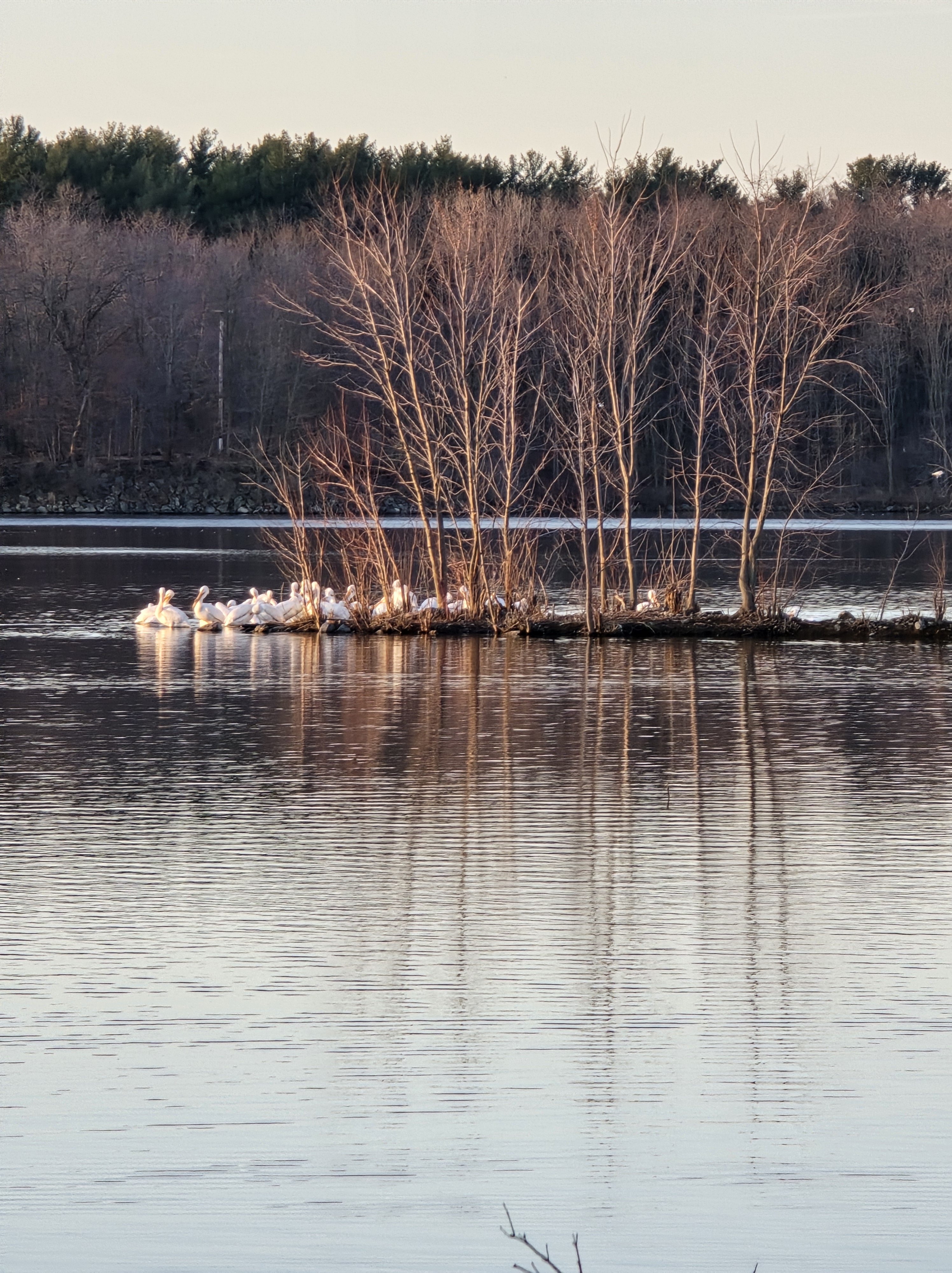
Pelican migration, late winter 2025.

Ambient temperatures were in the mid-40s yet it was the wind, gusting at 25 mph, that made garlic planting impossible. I rescheduled. The soil is right, but I didn’t want to fight the wind. This year’s garlic is an experiment. It is not going as planned.

This excerpt from my journal seems apropos for today.

So be it, a life of creating starts. Here a thermometer installed on the kitchen awning. Here some seeds planted, a corner raked. A book read, a lifelong process, never ending, of small acts, viewable only with an eye more omniscient than mine: as the nuns taught, “All for the honor and glory of God.”

To live a life: this is what is presented.

Like a pioneer, I step into the wilderness. Though others may have lived here before, my presence gives new life to the present. Not forgetting what my ancestors have created, I strike a new path, and though a crowd goes the main road, I’ll take the paths still traveled by deer and rabbits and birds.

I feel the number of people who live engaged in life is diminishing. Many seem to accept that society is a prioiri. What we do takes place in a context set by others. They do not realize that we are the set designers, as well as the authors of this drama. And drama only comes as we will.

We must make a sculpture of the clay of our lives. Something created in a manner that will yield beauty and worth to the observer. Whether that observer be society’s poor or rich art patrons, or God alone. It is critical the creation be made. We must attempt it. Though only God may be watching, in his eyes, our lives, small and made of clay, have purpose, and worth. But the charge is ours, each one to live a life. (Personal Journal, Cedar Rapids, Iowa, April 13, 1986).

Categories
Writing

Mining Memorabilia

Bankers boxes full of memorabilia.

Like many Midwestern homes, ours has become a cornucopia of stuff. I think about downsizing, and had better get on that or face an estate sale at the end of the line. For now, though, the accumulated memorabilia is the equivalent of a limestone quarry: the stuff of which to build my literary edifices.

Instead of disciplining myself to write a book of fiction in 1986, I continued to collect writings, journals, photographs, clippings, books, musical recordings, posters, and such until they would press hegemony into my 2025 writing space. One book into my autobiography, I am now mining this personal memorabilia to tell my story.

Let’s frame this with a passage from a letter I wrote to a friend:

I got a copy of F. Scott Fitzgerald On Writing from the Book of the Month Club. Though I had little good to say about Fitzgerald before now, there is much of what he says here I find pertinent. I recommend this book; much of it makes sense to me. He speaks of an attic of albums, files and clippings being the bank account of a writer, I look around my study and say, ‘Of course.’ This spring I hope to draw on my account and invest in creative endeavor. Appreciation will come close behind. (Personal Letters, Cedar Rapids, Iowa, April 6, 1986).

I’ve been back and forth with Fitzgerald, but he got this right. The part he missed is the role living memory plays in writing. Sometimes memorabilia can trigger living memory, and that is the point of keeping it. The trouble I’ve found is letting go of it, both literally and figuratively. The best use of attic findings is to allow them to be a springboard for new ideas or a germ of creativity. What writers do here isn’t coal mining. It’s more like panning for gold in California. If an artifact doesn’t present value, we should get rid of it.

Organizing personal memorabilia for use is not a straight forward task. Like anyone, my tendency has been to throw things in a box or folder and tuck them away wherever there is space. As a result, memorabilia is scattered all over the house in a semi-organized mess. The wall of boxes outside my writing space is intimidating and inadequately marked. Boxes are seven high and seven wide, or 49 of them. This doesn’t count the other two walls of boxes, or the trunks, desks, and stashes in the living room and bedroom closet. Since I am following a chronological narrative, it would be best to arrange everything by date order. That in itself would be a too-long task.

There is a lot of writing to be found in memorabilia. That raw material is the easiest to convert to new narratives. Sometimes I quote directly from the past with minimal editing. Sometime I take previous pieces and completely rewrite them while preserving the essence. Either way the presence in the original usually shines through its new use. That’s what a writer wants. By the time I finish book two I expect I won’t have touched half of the memorabilia. If the narrative is good, I’m okay with that.

Categories
Writing

Should I Substack?

Photo by Markus Spiske on Pexels.com

I put up three posts on Substack to see what they did. They got a lot more views than the same posts received on WordPress. Is there a future there? I don’t know.

The challenge I face, and many others like me, is to monetize my writing. I have one book done and privately published. I’m about a fourth of the way through a second. I need resources to revise the first book and publish it on major platforms as an eBook, audio book, and on-demand paper book. By the time I get that finished, I should be ready to repeat the process for the second book. Our pensions are presently sufficient to live, yet there is nothing extra for book publishing. I have to raise money to get my writing out there.

The model for Substack seems straightforward. Put your work up, and structure subscriptions so there is a free option, combined with tiered subscription plans that offer subscribers something extra. If I can develop a large following of paid subscribers, I might then afford publishing my two and any future books I might write. I could even publish the books on Substack as a premium benefit for paid subscribers. Details of that could be worked out.

The question is can I develop a following beyond my loyal readers? It’s an open question that’s partly answered by my other public writing… from which I receive plenty of feedback. If anything, my exodus from most social media platforms has increased the number of visitors to this website. But will they convert to Substack and pay?

WordPress offers a pay model, which I haven’t explored. I expect it was to keep up with the Jones’s at Substack. When comparing the two platforms, number of viewers trumps workable software every time. It is Substack or nothing, based on viewers, I think.

Maybe I am looking at monetization wrong. Perhaps I could figure out how much money I need for the two books and do a Go Fund Me campaign. That could work. It seems less complicated than an ongoing subscription project. I could also start streaming on Twitch or another platform that generates income. Whatever it is, I may have to add a fundraising hat to my closet to keep up.

I’d be curious to know reader reactions to this topic in the comments.

Categories
Writing

Back on the Trail

Trail walking on Feb. 25, 2025.

I’ve been back on the state park trail for about a week since the cold snap. The debate in the neighborhood is whether winter is over. The consensus seems to be winter is not finished. I maintain winter never really got started this season. The relatively warm temperatures, consistently, and year upon year, mean trouble for us all regardless of what the president does about the endangerment finding.

I have been reading the news and doing my best not to think about it. Very little is positive. Six weeks into the new administration and I feel strong, ready to upgrade my resistance. However, new shrapnel continues to fall from the sky. Better keep my powder dry a bit longer.

Yesterday I planted the second tray of seedlings: spinach, celery and arugula.The seeds were from 2022, so I’m not confident of the germination rate. I ordered new ones which should arrive next week. The spinach and arugula should show quickly whether or not they will germinate.

I have been working on my book daily for the last week. Mostly, the word count is going down as I edit a chapter about the period 1985 until 1987. There are some instances when a quote from my written journal or papers is appropriate. More often, I’m find such texts to be the basis for new writing. As I progress through the book, I believe I will use quotes as a starting point for a draft instead of using them as an actuality that nests in the narrative. This is especially true when I have new insights into what that 30-something man was thinking from a privileged viewpoint in 2025.

Today is the “buy nothing” day and I hope to keep my credit card in my wallet. If I can’t go a few days without buying anything other than emergency items, then what have I been doing the last 70+ years?

These daily blog posts are helpful in getting the writing fluids flowing. The next major change in my intellectual life will be when it is warm and dry enough to work in the garden and yard. Since I missed planting garlic in the fall, that will be the first crop to go into the ground: as soon as the ground dries enough to till the soil. Today we are not there yet.

These days have been the best part of winter. I intend to use them as I can until spring truly arrives.

Cup of black coffee on Feb. 27, 2025.
Categories
Writing

Harvest of Photos

Local Harvest CSA. Pepper harvest in 2015.

My farmer friends are lining up customers for the 2025 growing season. February is the time folks sign up for a community supported agriculture share and there is a limit to how many shares each farm can produce. I used to belong to a CSA yet no longer need one. My large garden usually produces enough good stuff to serve our family. I wish them a productive and profitable season. This photo is one taken after I harvested bell peppers to take home, process, and freeze.

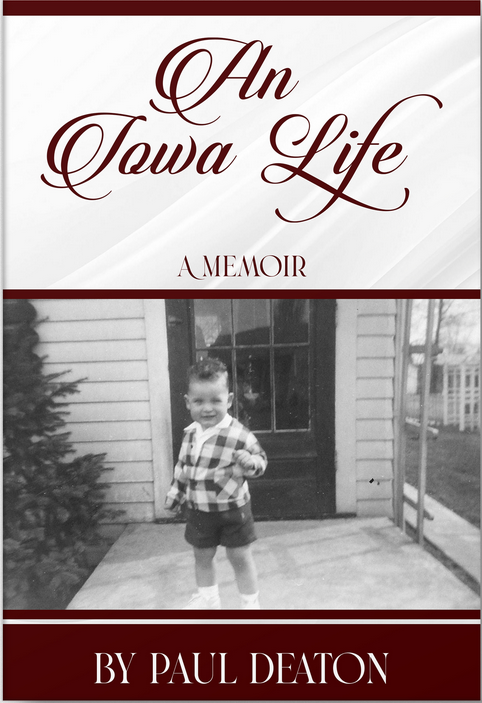
Part of writing an autobiography involves photographs and art work. The visual arts convey something much different from narrative text. In An Iowa Life: A Memoir, the first volume of my autobiography, I included a single photograph of me as a toddler. In volume two, I may include more than one, depending upon the expense. The book is not available to the public at present, but may be once early readers all provide feedback. Here is the cover with the photograph:

The way I used photographs in volume one was to describe something based on them, using my narrative to control the meaning. This is important because we don’t want to distract the reader from the energy of the narrative by introducing a photograph that can be interpreted in multiple ways. By describing photographs, instead of inserting them into the text, we can better guide readers.

Part two begins in 1981, a time when I took many film photographs. I keep the prints in boxes near my writing space, and in a few photo albums we made. I don’t know how to process them, yet at a minimum, I will get them out and look at them. There are a host of projects one could create with old photographs. A couple of days ago, I cleared access to the piles of boxes where the photographs rest.

I had a flip phone with a camera and took this photo of Senator Barack Obama on Sept. 17, 2006. The video of that year’s Harkin Steak Fry is here. It was one of the first digital photographs I took. The quality is not the best, yet it records the moment.

Obama at the Sept. 17, 2006 Harkin Steak Fry

Obama is in the rope line after he gave his keynote address. You can see Chet Culver and Tom Vilsack behind him. I shook his hand and was surprised at how genuine he was in our brief conversation. He had quite a handshake.

On May 3, 2008, I bought my first digital camera and took this photo after opening the box. Once I entered the realm of digital photography, the number of images exploded. Cameras in smart phones changed how I looked at photography. Now I take many exposures of a scene and then pick and edit the best one. There is no additional cost for multiple exposures and device memory seems unlimited.

My first photograph using a digital camera on May 3, 2008.

This has been a roundabout way of getting to the topic. In figuring out how to address photography in part two, I need to:

  • Find all available photographs in our house.
  • Look at them and set aside the ones I can use in the narrative.
  • Pick a small number for inclusion in the book.
  • While I look at them, I need another photo project in the works in which to use them. Posting on social media is one. Making specific albums, both paper and digital, is another. I might enlarge and frame a few of them. Each requires a significant investment of work.
  • Reviewing photographs should help make my picture-taking better. I hope to be cognizant and thoughtful in this process. I hope to be a better photographer.
  • My storage system has been good in that few have been damaged. Determine how to store them going forward.
  • I need to get rid of some of them. I don’t want to pass along photos that are meaningless to whoever inherits them.
  • I will read or reread a couple books about photography. In particular, The Photographer’s Eye by John Szarkowski, Photography and the American Scene by Robert Taft, Wisconsin Death Trip by Michael Lesy, On Photography by Susan Sontag, and others. If you know of a current book about photography, please drop a comment with the name and author.

At the beginning, this project is hopeful. It should be a fun year reviewing the images of my past and recalling the living memories behind them.

Categories
Living in Society

Making a Stand

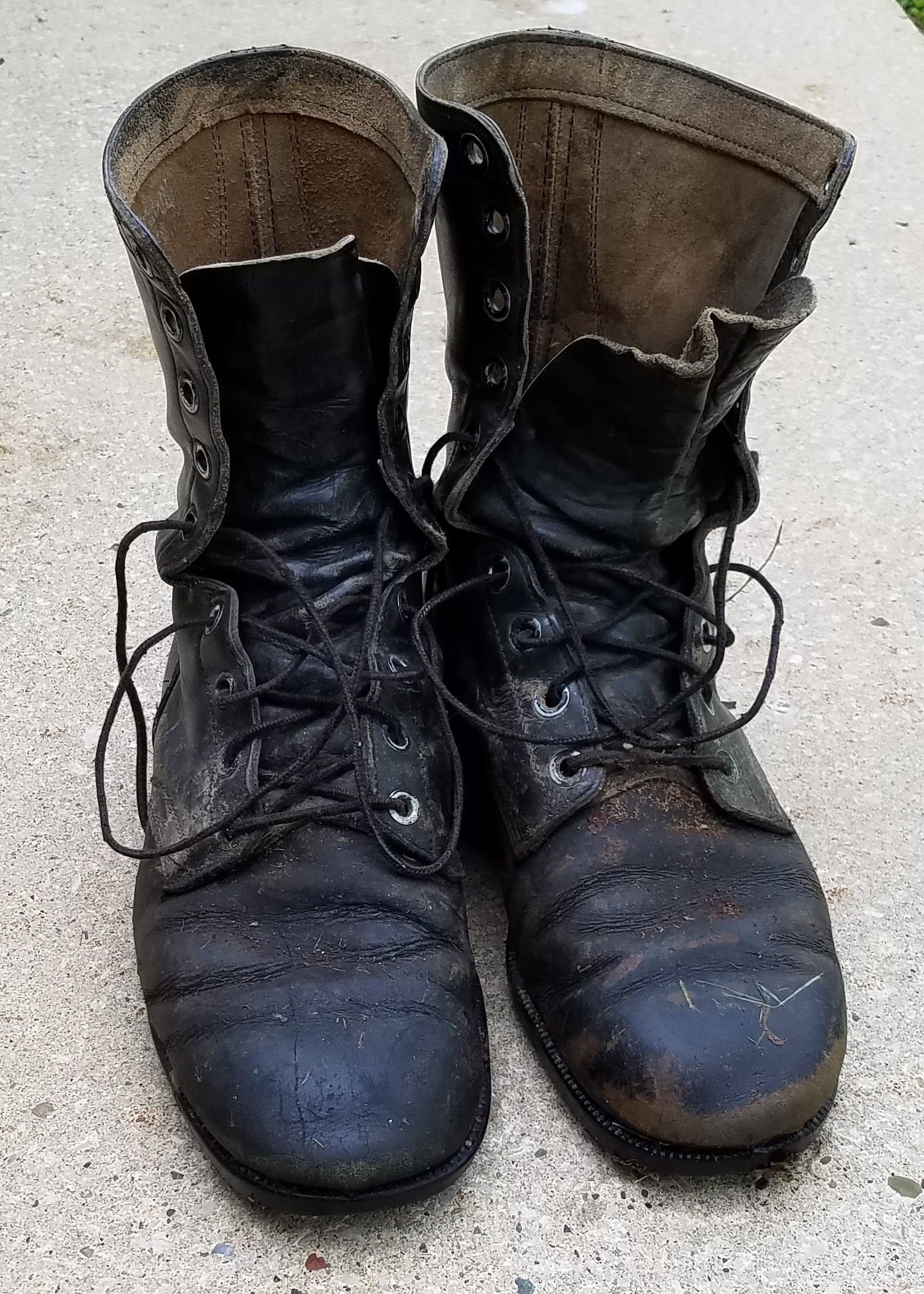
Government issued boots.

A recurring theme in my personal journals is the following:

We must all recognize our two feet standing squarely on the ground. (Personal Journal, Iowa City, Iowa, June 29, 1983).

What does that mean? Since I left home to attend university, my life has been one of self reliance. I intend to stand on my own for as long as I can.

Today, I’m thinking of friends whose life is impacted by the new administration and its unlawful cutting of government programs. I’ve been spared much of the current pain because I rely on government programs as little as possible. This round of cuts, the two main ones that support me, Social Security and Medicare, have been spared the knife. During a Feb. 4 telephone town hall, my Congresswoman Mariannette Miller-Meeks said, “(President Trump’s) instruction to us as well is that there are no cuts to Medicare or Social Security.” Check with me next year to see if that continues to be the case.

I received a government paycheck twice. When I served in the U.S. military and when I worked at the University of Iowa College of Dentistry.

My 1975 enlistment in the U.S. Army had everything to do with how screwed up the military was coming out of Vietnam. I asked myself, if regular people didn’t step up and fix the mess, who will? I stepped up and did what I could to make the military better. While my colleagues tried to convince me to stay in, I finished my enlistment, got out, and finished my graduate degree with money from the G.I. Bill.

When I took a job at the Dental School, I was seeking employment to support myself as a writer. The University of Iowa is by far the largest employer in Johnson County and my prior military service put me a step up in the point system they used to select candidates for jobs. I met my future spouse there and once we married, it was time for employment outside government work.

Among my friends and their families, many work for the government and are caught in the current, illegal federal funding slowdown and cuts. Some have invested heavily in the jobs they hold, with degrees, with tenure, and with a commitment to place. I empathize with them.

I’m glad I left my government jobs, and to be honest none that paid well enough to support a family was ever offered to me. It’s not like I was looking.

I’ll admit we need the government for things like utilities regulation, road and bridge building and maintenance, financial regulation, public water standards, research and development of new treatments for disease prevention and cures, and more. Self reliance goes only so far. I could get along without all these things, yet it would be a poorer world. We join together for enterprises bigger than ourselves. Abraham Lincoln once said, “The legitimate object of government is ‘to do for the people what needs to be done, but which they can not, by individual effort, do at all, or do so well, for themselves.'”

I paid taxes since 1968 and have been happy to do so. I served four years as an elected official to help provide emergency services for the community and maintain local cemeteries. I volunteered in our neighborhood to help provide a public water system and wastewater treatment. Now our government needs to make wealthy people pay their fair share of taxes. I don’t see many rich folks out here doing volunteer work. What’s fair for one is fair for all.

Although I have two feet standing squarely on the ground, I know it is good for society when we bend down and lend a helping hand to those who need it. Together we can find resilience. I hope we will.