Categories
Living in Society

Unsettled in Big Grove

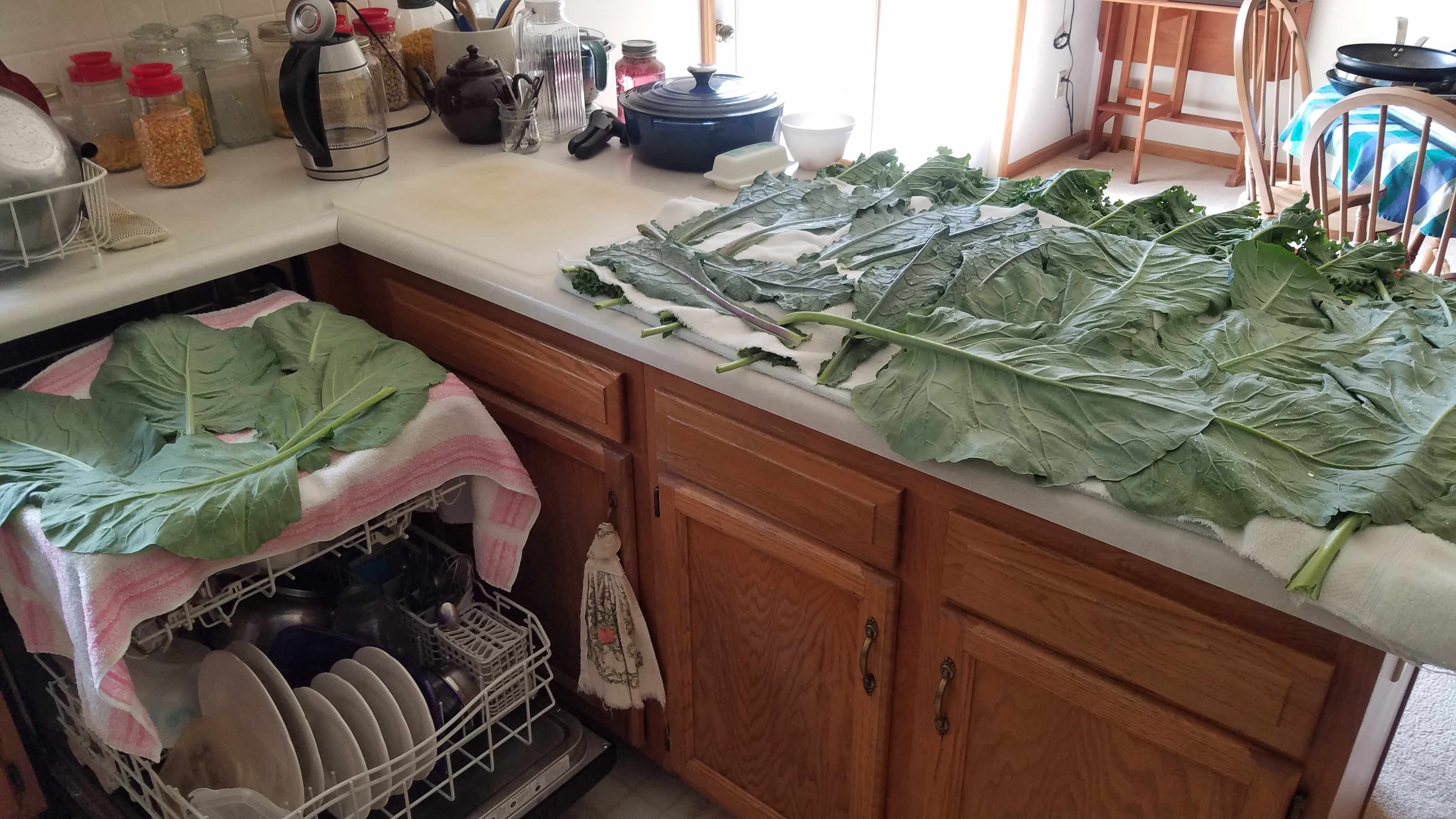
Collards and kale drying on the counter.

Like for many, news of the federal indictments handed down by a Florida grand jury in the stolen classified documents case involving the 45th president reached me at home. Republicans, with few exceptions, spoke with one voice, saying the Department of Justice had been weaponized to attack President Biden’s main competition in the 2024 presidential election. That’s not true, in fact it was the 45th president who attempted to weaponize DOJ when he was in office. Even the corrupt William Barr, attorney general at the time, wouldn’t go along with his president on his quest to punish his enemies. Biden? Don’t make me laugh.

Major news outlets like Gannett, The New York Times, FOX News, and others cultivate a cult of the ex-president. They do so because of the attention each inflammatory article, broadcast or post receives. Trump is bankable to news outlets so they nurture his presence. The diminished celebrity issued a vociferous denunciation of the indictments, as if the louder he spoke, the more authority his words carried. Major news outlets took the bait and gave him prominent coverage. The business of news can apparently be profitable only with bloated characters like Trump on stage.

Using a phrase learned from my basic training drill instructor, they are all pissing in the wind.

It’s the third paragraph of the indictment in United States of America v. Donald J. Trump and Waltine Nauta that bugs me. Here it is:

From military service, I am familiar with some of the intelligence collection methods mentioned. Compromising intelligence produced by covert operatives and agents could put their lives at risk, resulting in imprisonment or death. According to the indictment, Trump did that. What kind of person does that? A corrupt one with stolen, classified documents.

During my three years stationed as an infantry officer in West Germany I had access to classified materials. I remember getting a top secret clearance for a special project. My friends back in Iowa wrote letters saying they were contacted by investigators during the process. I got my clearance and participated in more than 25 military operations that used classified information. I didn’t retain a single document. When finished using classified documents, I returned them the the S-2, which is the battalion-level intelligence officer. It was important to follow the rules.

One of my buddies was fluent in German and Russian and spent time in East Berlin hanging out with Soviet forces stationed there. Most of his work was in bars and restaurants, and he filed information gleaned after each trip. It must have been pretty boring work. He told us about the volume of vodka Soviet troops drank and how it impacted their readiness. Even I collected intelligence from a French military unit in Brittany while I was stationed with them as an exchange officer. I filed my report with our S-2 and was done with it. In Cold War Europe troops seemed bored and drank alcohol and did drugs because of it. They were hardly ready for a major battle.

Native instinct tells me 45 won’t be convicted and if he is he won’t serve jail time. The rich seldom do. When I read the evidence presented in the indictment, I became unsettled. I understand why news outlets cover the story. What I can’t explain is why so many of my friends and neighbors voted for Trump in 2016 and would again if he were the Republican nominee for president in 2024.

One would think the indictment would teach us a lesson. Instead, a mythology of the corrupt has risen around Trump, accepting his illegal behavior, and impeding our ability to maintain a functioning democratic republic.

That is the bigger problem.

Categories
Writing

2023 Garden Is In

Cleaning radishes, herbs and kohlrabi.

In December I started seeds indoors, which led me to yesterday when I declared initial garden planting finished. There are some tasks remaining to be accomplished, when isn’t there in a home garden? The seven vegetable plots and six fruit trees are in production of food for our kitchen garden. There should be excess available to give to others, including donations to the local food bank. It took a lot more work to get this far this year.

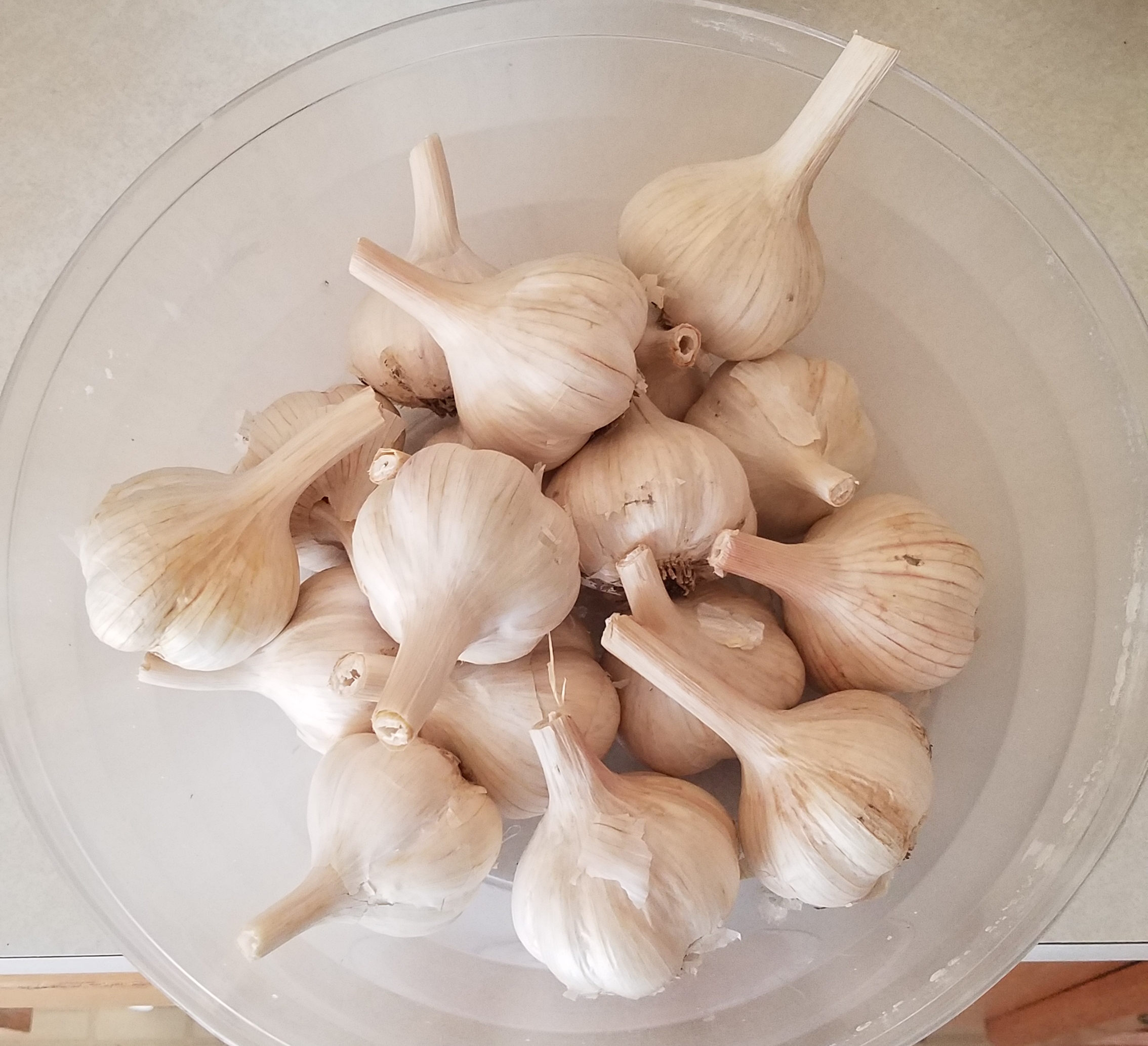
Garlic was planted Oct. 15, 2022 and it suffered some issues because of the mulch I used to cover it over winter. Despite some failures, there will be plenty for another year. The main task in the garlic patch before July harvest is weeding. I harvested most of the scapes this week. Next to the garlic is a covered row that produced early greens, radishes, and herbs. There are new seedlings of bok choy and lettuce varieties ready to go into rotation.

The next plot was potatoes in containers, onions, leeks, spinach, snow peas and sugar snap peas. There were plenty of spring onions as I thinned the starts to proper spacing. The main difference this year is being able to weed the onions. It looks like a fine crop of onions is in production, both for storage and eating now. I also stuck last year’s chives, some kohlrabi, two fennel plants, dill and cilantro on the side of the onions. Everything is growing well and there has been no sign of the Colorado potato beetle.

I eliminated the narrow path between the two largest plots and fenced them together with one entrance. Half of this space is the main tomato crop and the rest an assortment of tomatillos, okra, summer squash, zucchini, green beans, fennel, kohlrabi, celery, Brussels sprouts, bell peppers, cabbage, chard, kale, collards, onions I started from seed, and cucumbers. The greens in this plot were started later, so I haven’t harvested anything yet. There will be an abundance of cucumbers, squash, greens, and bell peppers if they produce.

There is a complete plot of cruciferous vegetables: five kinds of kale, collards, broccoli, cauliflower and three kinds of cabbage. Putting these together helps manage the white butterflies that lay eggs on the leaves to produce little green worms. If one doesn’t stay on top of pest control, the crop will suffer. Thus far all the harvested greens look good.

One of the plots is situated under two oak trees grown from acorns. The shade protects squash plants, and this year I picked a variety of pumpkin, butternut squash, and acorn squash. I used a no till method and left last year’s ground fabric in place. The seedlings are thriving. So far, so good.

The last garden plot has hot peppers, eggplant, fennel, tomatoes and celery. There is a bit of space where I plan to plant five seedlings of two varieties of sweet peppers. I don’t usually mix sweet and hot peppers in the same plot, but the space is just right. It appears the peppers will take and there will be an abundance. My main interests here are Guajillo chilies for prepared pepper sauce for cooking, thin red hot peppers for red pepper flakes, and jalapeno and Serrano for eating fresh. Since I am the only connoisseur of hot peppers in our household, there should be plenty.

The three apple trees planted soon after we moved here are bearing fruit this year. The Red Delicious tree particularly has been well-beaten by wind storms and is amazing in its survival. The pear tree is bearing, as is one of the new apple trees planted next to the garden. If there is a good crop, the pantry needs more applesauce, a dozen pints of apple butter, and replenishment of the apple cider vinegar jars.

We started some flowers, which need transplant into the space in front of our house. We are just learning about growing flowers. I successfully started a stevia plant for indoors. I’m not sure how much it will produce, yet we are looking forward to making our own sweetener after this year’s experiment.

The main benefit of declaring the garden planted is the ability to turn to other work, including writing for this blog. There is a period from now until the garlic comes in to organize the garage for some projects.

The garden is ready. Now all we need is rain, weeding and pest management. We feel lucky to have the space for a big garden.

Categories
Writing

District of Tall Buildings

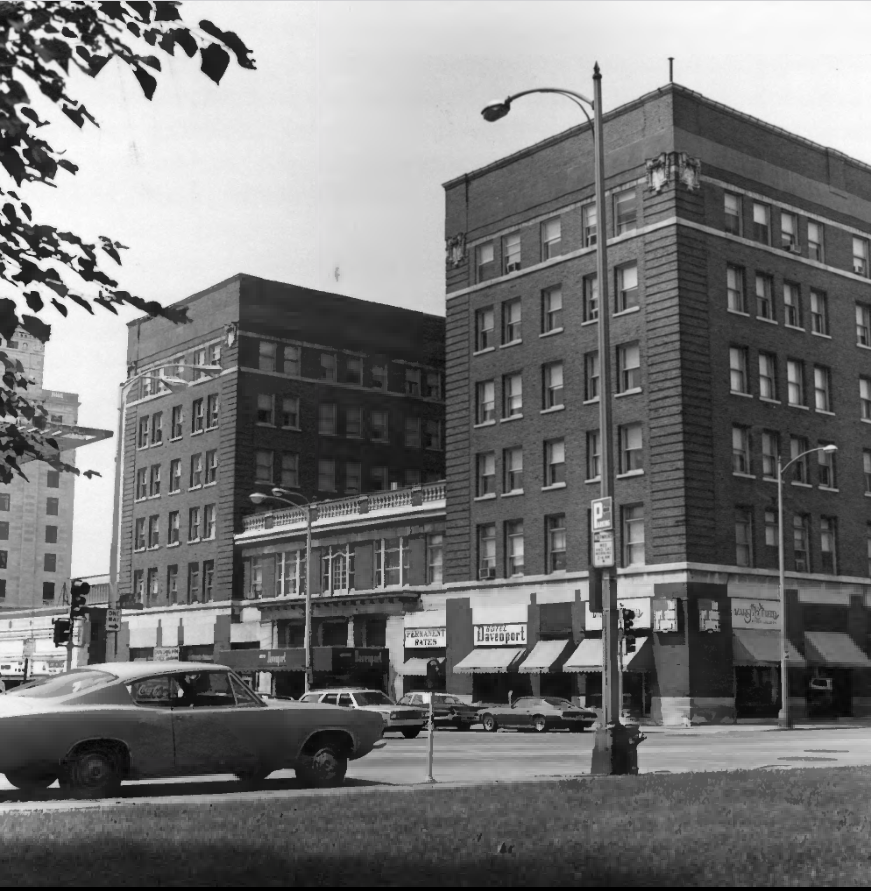
Davenport Hotel circa 1980. Photo Credit: National Park Service.

When a group of men gathered at the Rock Island home of George Davenport in 1835, they had a mind to purchase land and lay out a town on the Iowa side of the Mississippi River. With native tribes removed, something needed to be done with the land, or so they believed. By any measure, the enterprise was a commercial venture in a relatively optimal, if arbitrary location. Its lackluster beginnings would haunt the city until I was born more than a century later.

In Spring 1836, Major William Gordon surveyed the place that would become the City of Davenport. He and his business partners, including George Davenport and Antoine LeClaire, offered a sale of lots to a party from Saint Louis who had been transported by steam boat to participate in a two-day auction. Sales were much less than expected. The sellers did not have clear title to the lots at the time of the sale and that likely contributed to poor sales.

There was never a question Davenport would be settled by non-natives. As original forests were clear cut upstream, and rafts of logs floated to river towns on the Eastern border of Iowa, there was money to be made. The lumber business was profitable, yet not sustainable. It was one more instance of profiteering in the city’s history.

The lumber business gave rise to the railroads. When the Davenport Hotel was constructed in 1907 it was situated equidistant between the two major rail stations in the city. “Erection of the Davenport Hotel inaugurated a period of building that would bring Davenport’s central business district fully into the era of the ‘tall buildings,'” according to the National Park Service website. Other tall buildings were built around it, including The Dempsey Hotel (1913), The Blackhawk Hotel (1915), The Davenport Bank and Trust Company Building (1927), and The Mississippi Hotel (1931).

Temple and Burroughs Architects created the Davenport Hotel building in the Renaissance Revival style. The structure was an important feature of the city’s commercial center. Located in Antoine LeClaire’s first subdivision of Davenport, one couldn’t get more center city. As commercial needs changed in downtown, some of the tall buildings were converted to housing. My maternal grandmother lived in government-subsidized housing in the Mississippi Hotel for many years.

The May 28, 2023 collapse of part of the Davenport Hotel building should be a wake-up call for city governments everywhere. The response of the City of Davenport has been as lackluster as the city’s founding. What seems obvious today is these tall buildings are getting old and literally falling apart.

At least there is political hay to be made in this national story. Florida Governor Ron DeSantis just announced he will send a crew to Davenport to help in the recovery of the building collapse. Is it a coincidence he is also vying for position in the 2024 Iowa Republican caucuses?

There may be dollars to be made from old building stock. City staff needs to energize and make sure none of the other tall buildings in the commercial district collapses while developers pursue the almighty dollar. History has shown, they are likely to nod their heads toward developers and let the action play out as it did last month. What a sorry way to run a city.

Categories
Home Life

Rain Broke the Dry Spell

Two days after a full moon, in pre-dawn darkness, it was difficult to see it rained yesterday. It hadn’t rained long, just enough to get the ground wet and start water flowing toward the ditch. It was not enough to seal cracks in the ground caused by a lack of moisture. The ditch near the road has hardly been used for runoff this spring. I hope the dry spell is broken.

After a hiatus, today I return to writing. Garden plot seven remains to be planted yet the hard work of putting in a garden is almost done. Already an abundance of vegetables was harvested even if my favorite hot peppers wait in the greenhouse to be planted.

At the point I realized our yard couldn’t produce enough grass clippings and leaves for garden mulch, and began laying down weed barrier to hold moisture and suppress weeds, everything changed. It was helped along by relenting to the need for fertilizer (composted chicken and turkey manure) and some pesticides used by my organic farming friends. Not everything improves with aging, yet my garden was made better by experience.

May was a month of stuff breaking. We scrambled to cover the expense of new appliances: washer, dryer, range, furnace, and air conditioner. We previously replaced the refrigerator, water heater, water softener, and our 2002 automobile. The new technology is clearly better. I can’t get over how quickly batches of water-bath canning jars come to temperature and boil. Our clothes get cleaner as well. All of this took time in May. We are over the hump, fingers crossed.

The acquisition of Twitter by Elon Musk created turbulence in my social media space. The main change is I notice more trolls. I know to block them without question, yet it is an annoyance. I tried Mastodon, Post, and Spoutible and none of them fills the same need as Twitter. Mastodon was too complicated with their decentralized server model. Spoutible and Post have a lot of nice people, yet the depth of relationship is lacking and may become an issue. The other legacy social media accounts (Instagram, LinkedIn and Facebook) are doing what they do without issue.

There wasn’t a lot to write about in Iowa Politics this spring. Republicans in the legislature had super majorities and could and did pass what they wanted. The trouble for a political blog writer is getting a handle on the changes and creating an approach that makes sense while Democrats are in the minority. One would have thought logic and reason would be the path, yet no. Republicans now take legislative action based on tropes and whims from the great beyond. To use logic serves their misinformation purposes. Building a story board will require more effort than usual as we prepare for the 2024 and 2026 elections.

Lack of rain is concerning. The Midwestern garden relies upon a consistent amount of rainfall spaced at predictable intervals. As the atmosphere and our oceans warm, more moisture is stored in the atmosphere. Rainfall we were used to became the exception rather than something upon which gardeners can rely. It leaves us with the unpredictability of life. When the dry spell breaks, we can breathe easier, at least for a little while.

Categories
Living in Society

An Assembly

Stinocher Post #460 American Legion Color Guard on Memorial Day, 2023.

Members of our community gathered for events over the Memorial Day weekend. I did not know most of the people I encountered, yet felt a part of it. I did recognize most of the veterans in the American Legion color guard at Monday’s service.

We don’t neighbor the way we used to when I was coming up at the American Foursquare in Davenport. I remember getting to know everyone on our block, at least a little, when I was a grader. I had been inside most of the houses and apartments. It was hard to keep up with the several rentals, yet if someone owned their home, I knew who they were and a bit about their history. Geography was an important part of neighboring. It is less so today.

We gather in different ways in the 21st century. Our county Democratic party is trying to resuscitate the idea of “neighborhoods” in an effort to prepare for the 2024 and 2026 elections. Such geographical neighborhoods they describe don’t exist any more, especially in rural Iowa. In a place where automobile culture takes us to remote jobs and commercial enterprises, we are less rooted in the physical community. With increasing specialization of interests, there are fewer people who share them in our immediate locale. While rural folks may reflect the same humanity as anyone, the distance from population centers and their work, shopping, health care, and intellectual assets creates a divide unlikely to be breached.

By nature of our humanity we live in a place. How we socialize is unchained from restrictions of geography. That makes assumptions about how one canvasses and gets out the vote in a geography obsolete. That is, we need to invent a new way of locating and turning out voters. Thus far, if the string of Iowa Democratic losses is any indication, we’ve not proven to be much good at it.

Why do we gather in person? On Memorial Day, the reasons are clear, and each person has a role in a public ceremony. The difficulty I increasingly experience is separating from people by political party. The old methods of winning elections haven’t worked for a couple of cycles, and I’d rather spend time with people I know who don’t have the interest of Democrats. Age, status in life, volunteerism and others mean more than politics. The assumption that we associate only with people we resemble has not well served us. We need to let go of old ways and assemble under new, to be defined practices.

I don’t opine much about “society,” yet society will be better if we change our associations with others.

Categories
Environment

As Light Falls

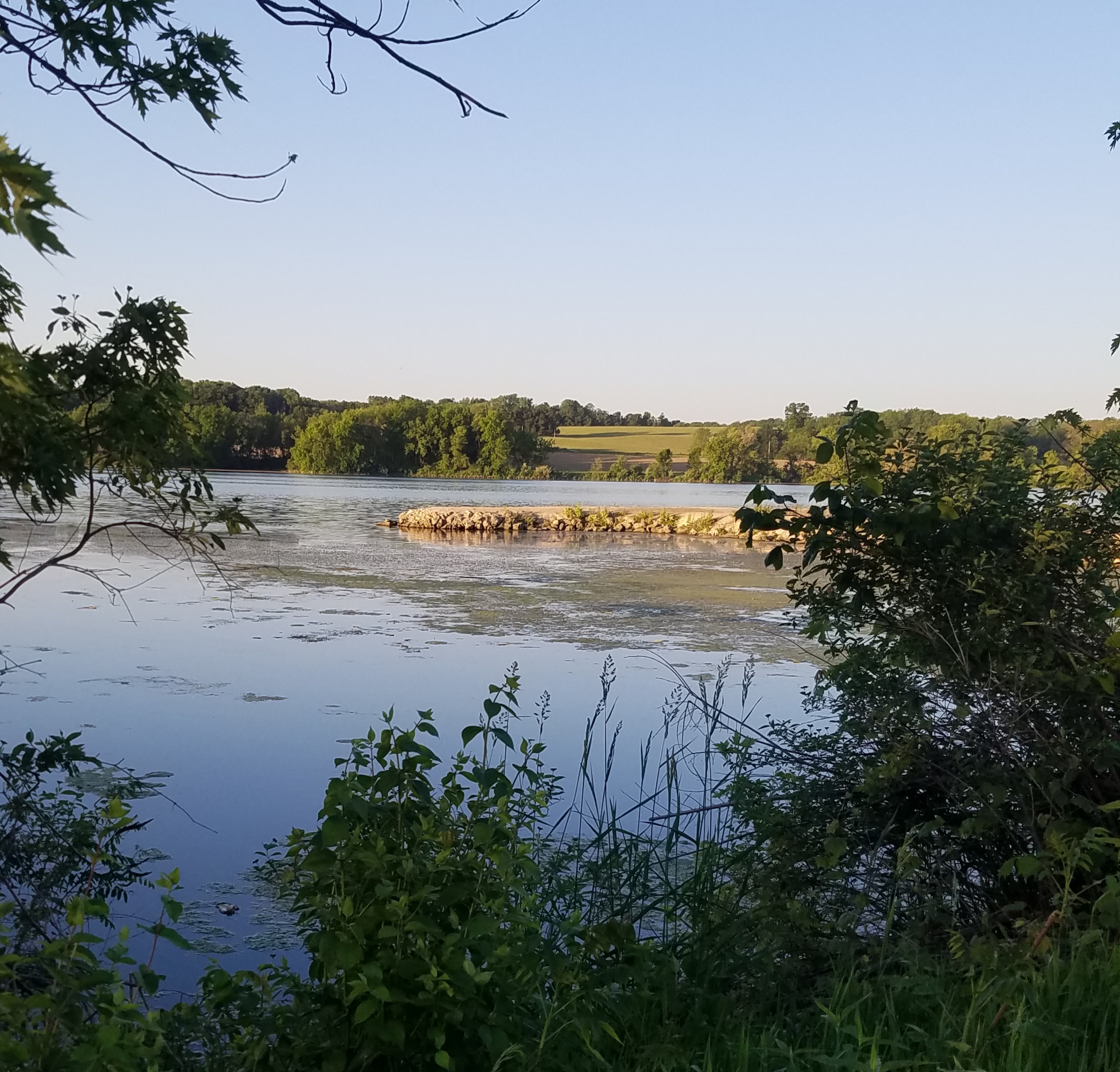
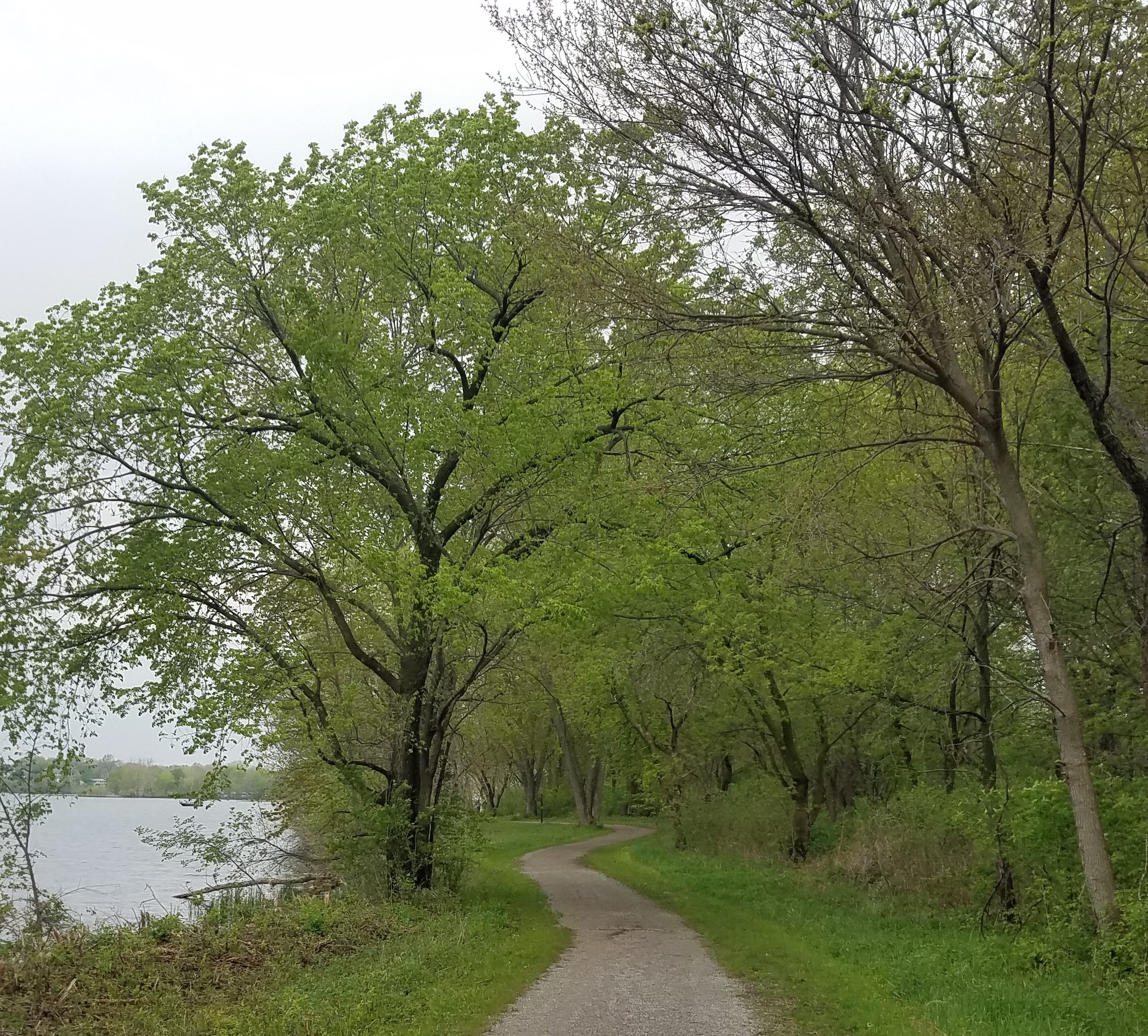
Lake Macbride from the North Shore Trail, May 27, 2023

Morning light illuminated this peninsula on Lake Macbride during my walk. One never knows how a multi-function mobile device will capture a photograph. I’m pleased with the results of this one.

The hard part is breaking away from preoccupations on a trail walk, to be aware of our surroundings enough to notice how light falls on the landscape. The results can be liberating. If the image comes out well, it’s a bonus. Increasingly, I seek the light on excursions off property.

Five of seven garden plots are planted, meaning I am running behind. Reasons have to do with weather, and with the pace at which I work. A five or six-hour shift with breaks every hour is what I can muster. Progress is steady, yet slow. Gardening is a tolerant activity and whatever one can do is better than the alternative. I do what I can.

Already there is a harvest. Leafy green vegetables, lettuce, spring onions, radishes, and herbs. I mixed fresh greens with last year’s frozen ones to make spring vegetable broth for canning. It is time to use up the freezer to make room for the new harvest. Spring broth is always best so I noted the month on the lids.

I forgot potatoes at the wholesale store so I drove to town on Saturday. My neighbor, who owns the grocery store, was there and he thanked me for the San Marzano tomato seedlings I gave him. I had extra. The grocery store wasn’t busy. Organized locals got their Memorial Day weekend shopping done by Friday. We had a good chat about tomatoes, gardening, and people in the community. The value of the trip was no small potatoes, although I got some of those, too.

My spouse is at her sister’s home for the week, so I’m on my own. As I age, I dislike being alone. While freedom to cook how I like is a perquisite of her absence, meal preparation takes only a small part of each day.

Today is the annual firefighters breakfast in town and I plan to open it up then move on to garden and yard tasks before the ambient temperature gets too hot. If all goes well, I’ll mulch tomatoes (which means mowing the lawn), build a brush pile, and trim around the foundation of the home to prepare the spot for the new air conditioner.

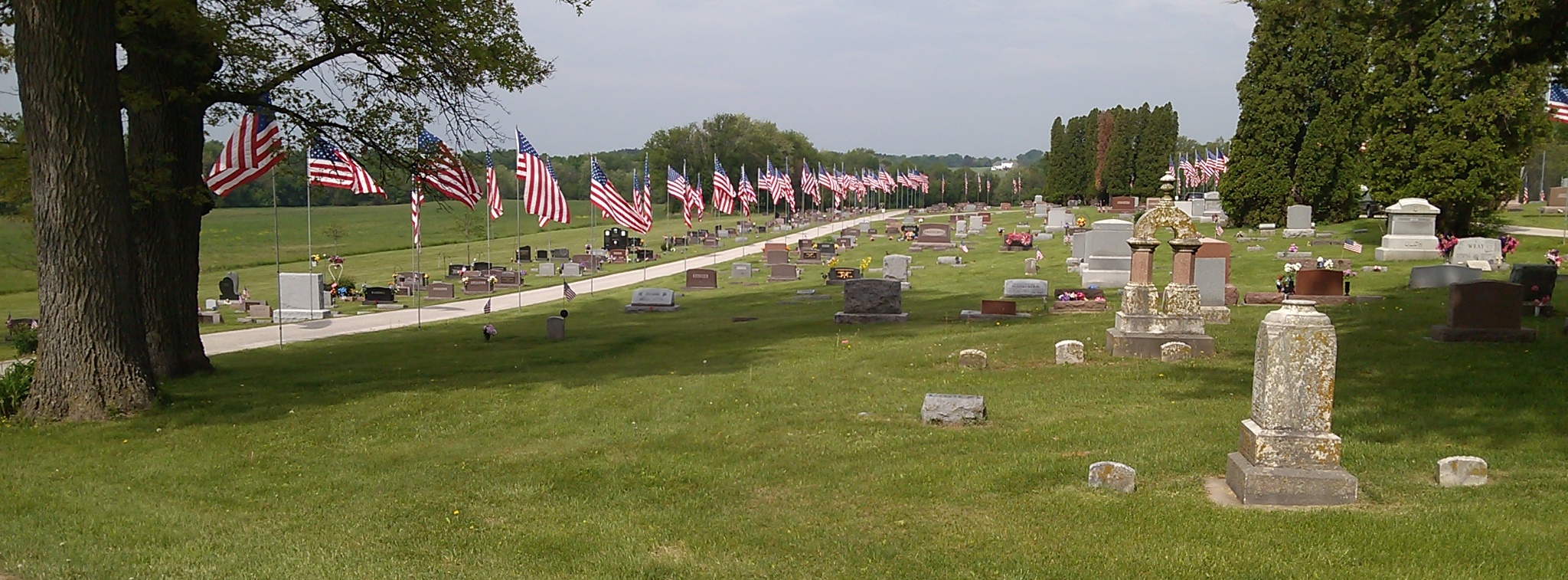
The flags are up at Oakland Cemetery, signifying local veterans who died. The Memorial Day service moved to the new veterans memorial in town. I’ll stop by the cemetery on my way to breakfast and see how light falls on the graves and flags. I know many of the names. I was active with many of them when they were living. That, too is part of aging in America.

Flags at Oakland Cemetery
Categories
Writing

Toward Future Dishes

Maytag Range delivered to our kitchen on May 22, 2023.

We replaced the Kenmore range purchased in 1988 with this new Maytag model. Technicians from the small appliance dealer did a good job delivering, installing, and explaining it. More than once they referred me to manuals dropped on the counter. Although it will take time to understand the features of the range, I will attempt to live up to the promise this technology offers. I expect to prepare many future dishes using the device. The inaugural meal was black beans and rice.

A future is not always assured. I took a spell while tending the covered row of herbs and vegetables, then made a retreat indoors. I have had two conversations about such episodes with my medical practitioner. He said if they were infrequent and do not persist, there was little to be done about them. Easy for him to say. Most days spells recede behind the proscenium arch where the curtain is down more than up on my aging frame. From time to time, spells appear as players to complicate life. We are in act one of what can be expected to be five. Here’s hoping I live to denouement and a final, dignified curtain call and bow.

This is the longest I have been away from posting since I can remember. My spouse will be spending a week with her sister who is moving from a rental to a house in July. There is a lot of packing to be done. While she’s gone, I hope to finish planting the garden, organize for summer, and begin regular writing again. I hope to be done with the intense rasher of friends who died this year. Appliances died in equal numbers, yet it is not the same.

I miss my friends, appliances not so much. Appliance transitions brought discussion with banks, business owners, sales folks, delivery drivers, and technicians. It is a way to go on living whereas my dead friends and family offer little engagement for the future except in memory. As we age, we do the best we can.

On the way home from the grocer I stopped for gasoline. After fueling, I pretended I was in Thomasville, Georgia again and bought a Yoo-hoo chocolate drink and lottery ticket at the gas station. Playing the long game, I bought a Powerball ticket instead of a scratch-off. If we can’t see a future beyond the now, then we will never live a long one. Validating the statistics of lotteries, my ticket was not a winner in Monday night’s drawing. At least we have the new range and the prospect of delicious meals.

Categories
Writing

Spring Break

Front rolling in.

I’ve taken to opening the garage door and watching storm fronts roll in. Probably, I’m carrying baggage from the Aug. 10, 2020 derecho.

Multiple reasons have me running behind, with a short time to get the garden in by Memorial Day. I’ll be taking a break from writing to focus on spring and all. One never knows how many more springs we’ll get. I intend to enjoy this one.

Take care dear readers. Hope to see you again soon. Hope you enjoy what remains of Spring!

Categories
Living in Society

Culture of Open Inquiry

Green up on the Lake Macbride Trail.

In 1820 most countries started out on a relatively equal economic footing. Translation: People and regions were poor around the globe.

Author Jeffrey D. Sachs described this world:

Life expectancy was extremely low; children died in vast numbers in the now rich countries as well as the poor countries. Many waves of disease and epidemics, from the Black Death of Europe to smallpox and measles, regularly washed through society and killed mass numbers of people. Episodes of hunger and extreme weather and climate fluctuations sent societies crashing.

The End of Poverty: Economic Possibilities for Our Time, by Jeffrey D. Sachs.

What changed, according to Sachs, was the onset of the Industrial Revolution. Why did this happen in Britain before China, which had been the technological world leader for a millennium? In part, British society was relatively open after the decline of serfdom, its traditions of free speech and open debate contributed to the implementation of new ideas, and Britain became one of the leading centers of Europe’s scientific revolution. “With Britain’s political openness, speculative scientific thinking was given opportunity to thrive, and the scientific advances on the Continent stimulated an explosion of scientific discovery in England,” he wrote.

The impact of these conditions of intellectual inquiry is old news. Yet today’s Americans should take note as legislatures around the country restrict tenure among university professors, ban books, control school curriculum, regulate who can use which bathroom, and remove funding from projects that contribute to understanding of our most significant problems. Lawmakers are putting a damper on open inquiry. Dumbing down and censorship do not represent a path to create the explosion of new ideas and technological innovation needed to survive and thrive in the years ahead. Who could even have imagined this might become a concern?

The deliberate destruction of knowledge is not new. Libraries and archives have been attacked since ancient times. Today, public libraries fight for their very existence as they are censored, deprived of funding, and subject to pressure from political, religious and cultural forces. Open inquiry in this context is hobbled by real constraints.

The latest hobble here in Iowa is elimination of funding for an important water quality sensor program at the IIHR Hydroscience and Engineering center at the University of Iowa’s College of Engineering. Erin Jordan of the Cedar Rapids Gazette covered the story here. “Iowa deploys about 70 sensors each year on streams and rivers across the state that measure nitrate loads and concentration so observers can tell whether water treatment plant upgrades, wetland improvements and agricultural conservation practices are working to reduce pollution,” Jordan wrote.

“Defunding progress reporting and monitoring is not the direction we should be going in our approach to nutrient pollution in Iowa,” Alicia Vasto, water program director for the Iowa Environmental Council told the Gazette. “Iowa taxpayers deserve accountability for the funding that is being spent on nutrient reduction practices.”

Hypoxia in the Gulf of Mexico, caused by nutrient runoff in Midwestern farming operations, is a problem. Closing down open inquiry into solutions to the problem is exactly the wrong direction.

We Americans are better off today than we were before the Industrial Revolution. The lesson that should be taught in schools is open inquiry into the problems of our day is as important as any curriculum item. Regretfully, my opinion may be viewed as that of just another advocate. In today’s society, the powers that be don’t want the rest of us to do too much thinking. Therein is the problem.

Categories
Living in Society

From Society to Soup

Vegetable soup before cooking.

I’ve turned from society to soup. Not sure how I feel about that, yet the soup smells pretty darned good. The leafy green vegetables were harvested the same day, many of the vegetables were grown in the kitchen garden last season then preserved, and lentils and barley came direct from a super market. This soup made a fine dinner with five quarts leftover for the coming week and beyond.

As we age we spend more time alone. Children, if we have them, develop their own lives. In the Midwest, many of us work to age in place and the home becomes a quiet warehouse of memories and too much stuff no one needs or wants any more. To expect something different puts too much burden on our offspring. A key element of successful living after age seventy is learning to live well alone… and to let go of the possessions because you can’t take them with you.

After working a five-hour shift in the garden, I’m pretty tired for the rest of the day. Yesterday I came indoors for lunch and started the pot of soup. Most of the knife work was done before I put up the vegetables last year. All I had to do was peel potatoes and carrots, gather items from the freezer and pantry, and put everything in the pot with salt and a few bay leaves. It simmered all afternoon.

Loneliness is a normal part of aging. Because of connections formed over a lifetime, we live in a galaxy of friendship. From time-to-time we forget about our network, although we shouldn’t. When one makes so much soup, there is plenty to share.