I won’t miss Joe Biden because he became the face of America during his presidency, leaving a positive, persisting imprint across our government.
Althea Cole (Jan. 19) and Mike Hayes (Jan. 26), have been saying in the Gazette they won’t miss President Biden. They ran him down with words and stomped him like he was a dust ball in their closet. You may not miss Joe Biden but you will miss his policies.
I’ll mention three.
The Broadband Equity, Access, and Deployment (BEAD), an Iowa program authorized by the Infrastructure Investment and Jobs Act of 2021 is bringing broadband to rural parts of the state where it had not been before. People I speak with say it is life-changing. Thank you, Joe Biden.
More than $200 million in National Institutes of Health funding comes into Iowa, supporting more than 2,500 jobs. Clinical trials and research are a part of so many of our lives. They include research into the prevention and treatment of cancer, which the governor highlighted in her condition of the state address. Biden supported this funding.
The Infrastructure Investment and Jobs Act is expected to send Iowa $3.9 billion in Federal highway formula funding for highways and bridges. We all use highways and bridges. Again, thank you, Joe Biden.
It’s a free country and people can say what they want. What I’ll say about Cole and Hayes is they are not being Iowa nice even though they should be.
~ Submitted as a letter to the editor of the Cedar Rapids Gazette
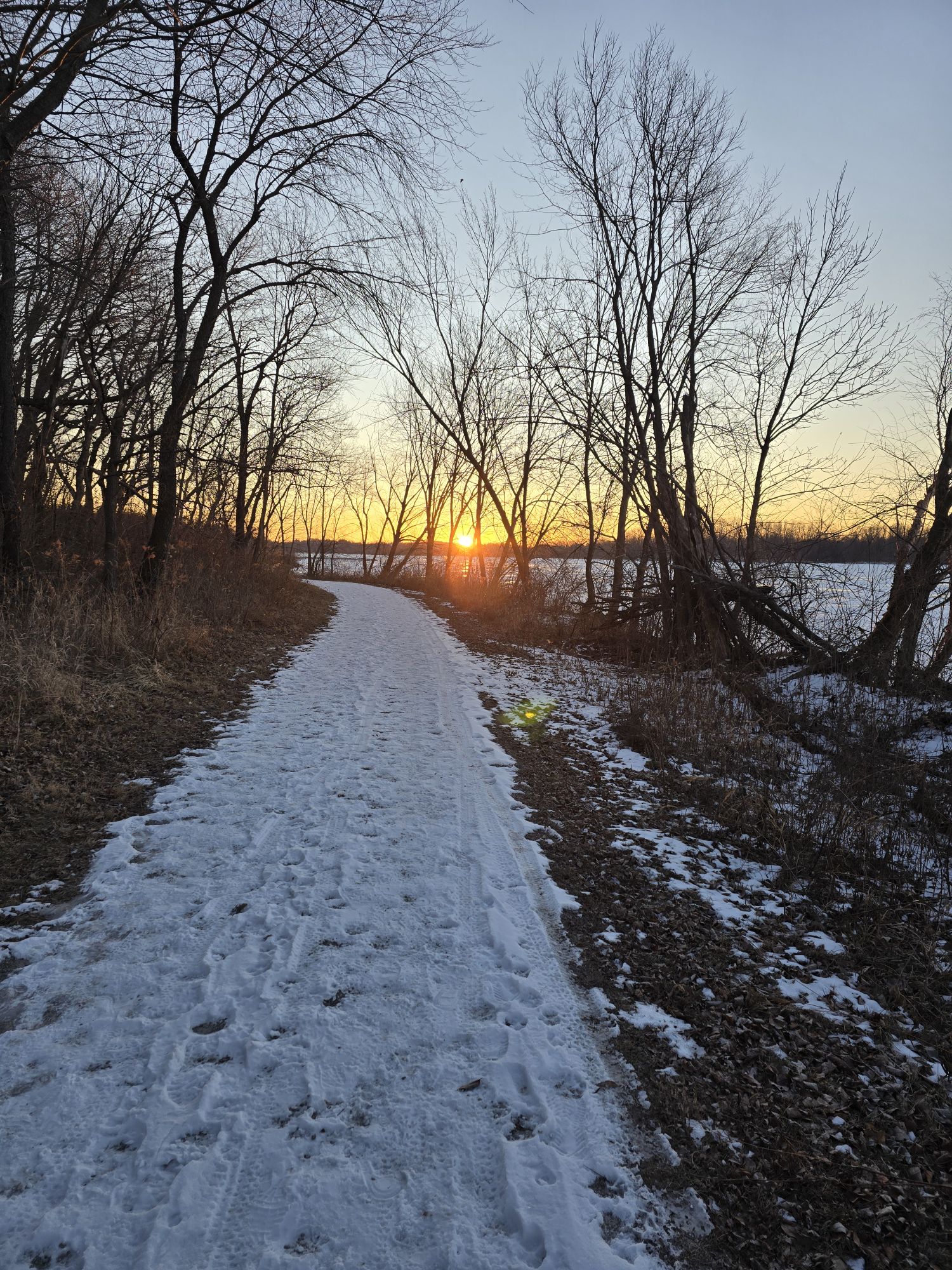
January and February are the best months to hunker down and write. I get outside almost every day to take a brisk walk along the state park trail. Some mornings the landscape looks like this. Then it’s back indoors and to work.
Today we’ll experience ambient temperatures in the 40s. I decided to run the buckets of compost out to the garden composter. They started to stink in the garage, so it was time to go. On January 28, it should not be this warm, but it is.
NextEra Energy Resources filed a request with the federal Nuclear Regulatory Commission to potentially restore the facility’s operating license as demand for electricity surges to power large data centers needed to handle the growth of artificial intelligence, the Cedar Rapids Gazette reported on Saturday. The plant was damaged during the 2020 derecho and has not been repaired. If the license were issued, management expects the nuclear power plant to be back on line sometime in 2028. My question about this is who pays? Except for those parts of the operation paid by the Department of Energy, all costs should be paid by the potential customers. We shouldn’t pretend bringing Duane Arnold back on line serves the public good.
The other question, and I believe it is the right one, relates to re-starting the Duane Arnold Nuclear Power plant because of the big electricity needs to power Artificial Intelligence. What people are not talking about is using new power plants to generate electricity for another energy hog, crypto-currency, to the detriment of our economy. Shouldn’t we be talking about that?
I’m losing confidence in our local media to cover this issue. For the most part, they seem to be writing stories based on industry generated information and not any specific facts.
Well, at least the compost is out in the bin ready to make a soil conditioner. That, I know I can put to good use.
Editor’s Note: This is a draft of the opening chapter of Part II of my memoir. Its purpose is to introduce some major themes in the narrative and stand alone as a story.It is also a work in progress. I removed the full names of people I know for this post.
After my post-master’s degree tour of racism in America, I stayed in Iowa City. The reasons were not complicated.
I had to decide whether to be in a relationship with someone, and Iowa City was a regional social hub offering a large pool of potential friends and mates. The rest of the state seemed a primitive agricultural landscape, desolate and barren of intellectual engagement. As a young Iowan possessing two degrees, and aspiration to do better than merely survive, of course I chose to live in Iowa City.
Iowa City seemed an excellent place for a writer. It offered a broad intellectual life, not to mention, was the home of multiple writers’ workshops and groups. I expected to find other writers of varied skills, along with what it took to support a writing community. Nowhere else in Iowa could I find that.
In the pre-internet days, relationships were in person or they were difficult. A long-distance relationship involved telephone calls, letters, and the occasional audio cassette. We made our life where we lived and it took a year for me to discover what was in Iowa City and what was possible. The year beginning in summer 1981, became my year of being a writer.
I knew how to live in Iowa City as a writer. Writers came and went at the shared house on Gilbert Court during my undergraduate studies. The pattern was simple. Find a place to live and write, find income and resources to pay bills, and then go on living with a view toward producing poetry or prose. It was no different when I finished graduate school.
When I moved out of JG’s basement, I found a small apartment with a kitchen in a divided single-family dwelling. My apartment search benefited from most students being out of town on summer break.
On a pre-rental tour, a tenant still lived there. I deduced she was a writer of some kind. “A writer’s workshop type,” I noted. She had photographs of writers on the walls, and many books by workshop alumni in a living room pier cabinet. My quick analysis of her book shelves was she displayed the kinds of books I avoided. My future landlady had had a run in with her and described her as “a little backward.” I didn’t care that much about the drama. I was ready to move in and get started with the next iteration of my life.
The second-floor apartment at 721 Market Street had six windows. It helped me feel more in touch with the world after living in a windowless basement. It literally gave me perspective on quotidian affairs on the street. I felt included with events going on around me in the vibrant county seat. I also felt power in the old part of the city. It took me two days to settle in.
If I had an idea about being an Iowa City writer, it was modeled on John Irving’s time there in the 1960s and ‘70s. He began his first book, Setting Free the Bears, as part of his Master of Fine Arts thesis at the University of Iowa Writer’s Workshop. His second book, The Water-Method Man, was set in Iowa City and contained settings one can easily recognize. I carried this model of Irving with me throughout my life. Eventually, John Irving displaced Joan Didion as my favorite writer, although that will be much later in this story. I read The World According to Garp while living on Market Street.
More than anything, I sought to define my writing life as unique in a society of sameness. I had no intention of applying to the Writer’s Workshop, carrying a bit of residual skepticism about it from my days living with Pat Dooley, Darrell Gray, Pat O’Donnell, and other Actualist writers and artists I met in 1973 and ‘74. Gray described his time at the workshop as a “two years of duty on the U.S.S. Prairie Schooner which houses the Famous Poets School, a singularly enigmatic vessel that always seems on the verge of ‘going somewhere.’” I sought to enable my native, if somewhat naive impulses and culture. I hoped to discover what that meant, yet not in the context of the writers’ workshop.
I had three main accomplishments during 1981. By describing myself as a “non-academic Americanist,” I hoped to distance myself from formal structures of creativity. If I didn’t produce much writing beyond my journal, I neither wanted to be pinned down by ideas of fiction, non-fiction, poetry, or other categories of writing. As I read an 1855 facsimile edition of Walt Whitman’s Leaves of Grass, I felt I could embrace Whitman, who wrote, “I too am not a bit tamed, I too am untranslatable, I sound my barbaric yawp over the roofs of the world.” I felt just below the roof line at the Market Street apartment because I was.
In furtherance of putting my recent life in the past, I culled writings from my archives and produced a self-published book Institutional Writings. It was intended to be about the bonds that connect us to our common humanity yet it was more than that. It represented work I had done in institutional settings and was also my departure from institutions to seek a new creative path. I printed and distributed about a dozen copies to friends and family.
Finally, after settling in and suffering what I described in my journal as depression, I pieced together a life and was filled with the desire to do things. Throughout this year, old and new friends were supportive of what I sought to do, even if none of us fully understood it.
From a logistics viewpoint, the pieces were coming together. What I realized now, and didn’t then, was I needed something to write about. That gap made it difficult to get words down on paper in the time with most of my future ahead of me.
I kept a journal that recorded movies I saw, books read, and people I encountered. I described parts of my search for paid work. That journal was the primary work-product of the period from May 1981 until July 1982.
It was my time to be a writer, especially after I moved to my own apartment. The need to pay bills to support my new lifestyle emerged as a dominant force. Work was available. The money I banked in the military would eventually run out, so I needed income to pay monthly bills. I had no idea of supporting myself beyond the next rent payment. I could live paycheck to paycheck indefinitely, working a job that would leave enough energy each day for writing. The chance of long-term employment with decent benefits had already begun to fade from American society as Ronald Reagan was inaugurated president that year.
I looked for work that would pay bills to stay in Johnson County. It was tough to find work after graduate school, mostly because I hadn’t looked for any job since I enlisted in the military in 1975. I made a conscious decision to stop moving from place to place, from activity to activity, and settle down. I began the job search with what I knew. Buying every local newspaper, I marked each job in the help wanted pages with an “X” after contacting the company. The work environment had changed from a decade previously when all a person had to do was make the rounds of major employers to find a good paying, union job. No more.
My application for work got extra points for consideration at the university because of my military service. That led to more job offers. In July 1981 I took a job as a clerk at the College of Dentistry because it was offered. At the University of Iowa there was a small retirement plan, no pension, and no health benefits. The income resolved my immediate needs.
About a month later, on Aug. 3, 1981, the Professional Air Traffic Controllers Organization (PATCO) went on strike. President Ronald Reagan ordered them back to work and on Aug. 5, he fired 11,345 workers who did not cross the picket line, breaking, and ultimately decertifying the union. While on a later business trip to Philadelphia, I met one of Reagan’s attorneys in the PATCO action. We discussed the strike and Reagan’s handling of these government employees. My understanding of the action was confirmed. It was political.
What started in 1981 with the PATCO strike continues, without apology, as part of Reagan’s legacy of breaking unions. The unintended and maybe less considered consequence of Reagan’s union policy was to make life harder for middle class workers like me.
Beginning that July, I had a year to see if I could be a writer.
During my young life, several residences stood out as hubs of personal creativity: my apartment on Mississippi Avenue in Davenport, my bachelor officer quarters in Mainz, Germany, and my apartment at Five Points in Davenport. The apartment on Market Street in Iowa City was my last stand in creative endeavor. The coming year would either make or break my effort to write a book. During that time, I acclimatized to living in Iowa City and did many things. Starting a book was not one of them.
One of JG’s friends was MAM, a nurse who was studying printmaking at the University of Iowa College of Art. She maintained an apartment not far from Market Street. During that year, I felt welcomed to stop by after a run or enroute somewhere else. She and her artist friends provided an ad hoc forum to discuss creative ideas. I got several ideas about how to live and be creative in Iowa City from her. While I wanted more than a creative dialogue with her, I accepted the relationship for what it was and moved forward. I repeated this familiar pattern with other female artists I had known.
MAM encouraged me to purchase a bicycle, which I did. I bought a Puch Cavalier, one of the last of their bicycles made in Austria. She would give me maps of places to ride, including a route south through Sharon Center. I rode a lot, and eventually rode a century organized by the Bicyclists of Iowa City. The two of us met at the finish line and had something to eat at the Sanctuary Pub afterward.
The Century was the first time I experienced glycogen burn-out. My legs were shaking so badly, I didn’t know what to do. I stopped and rested at the side of the road until the shaking abated. I slowly made my way, first walking, and then riding, to the next rest stop where I ate fresh fruit to replenish my glucose supply. I spent a lot of time on my bicycle, mostly riding by myself.
MAM also encouraged me to keep running, which I did… for long distances. I would run out Prairie du Chien Road to the Coralville Reservoir and back. There was only so much to do in my apartment, so exercise helped me be constructive and feel stronger. That summer I ran the Bix 7 in Davenport, a road race that attracted international participants during the Bix Beiderbecke jazz festival weekend. Some of my Iowa City artistic friends, including MAM, came along to make it a fun day.
When I began work at the Dental College, I met a new group of people. Occasionally we got together and did things like seeing the movies Return of the Secaucus 7 and Gallipoli. Because we got to know each other at work, social activities seemed to fit. Mostly, though, we had one-on-one relationships.
MC worked in the records department in the lower level of the Dental Science Building. She followed her husband from Ohio to Iowa where he worked on his graduate degree in art. During my breaks I would often hang out with her. Eventually I helped her make a Super 8 film called “One Hundred Years in Iowa City.” In addition to exposing film for the project, we had many meet ups and conversations about cinema as an art form. We took advantage of Iowa City’s vibrant film scene. Our friendship was valuable to my creative life.
I continued to play music with JP who I met in graduate school. JP and MP were from California. MP worked at the Cancer Registry while he finished his master’s degree. They expressed a self-defined idea of being Californians. He was a fan of Stan Rogers and played many of his songs. From time to time, he would play at the Mill Restaurant Open Mike. We often played together. He was more talented at guitar-playing and singing than I.
My high school friends and former college roommates DB and DC were constantly in each other’s orbits through letters, telephone calls, and in-person visits. Both of them visited me in Iowa City, and DC brought his spouse TC. We continued our practice of talking about creative matters then, and for many additional years. My military friend from Mainz, LP, sent me an audio cassette in which he admonished me to re-join the military. I did not. Apparently, I was complaining about a lack of female companionship to my high school friend GG. During a phone call, he passed along the advice to “just fall in love.” Communication with old friends was constant during my time on Market Street. I didn’t always take their advice.
There were plenty of significant events in Iowa City. I heard Toni Morrison read at Old Brick, Chaim Potok at the Iowa Memorial Union, and James Laughlin, founding publisher of New Directions, at the Lindquist Center. The Morisson event was notable for a bat circling above the author as she read. I noted the Potok lecture was almost identical to the one he gave in 1975 when I lived on Mississippi Avenue in Davenport. I wrote in my journal about a Laughlin event:
On James Laughlin: Tonight in deteriorating body the consciousness that went in and out of the lives of so many of the 20th Century’s “great” writers lectured on William Carlos Williams. Full of memories, reading poems from a text prepared by many, he spoke of his view of Williams. He read poems and almost came to tears. And this is what remains of those like Williams. The stories of a friend who has survived, to tell of poems and flowers and love, engaged in humanity. (Personal Journal, Iowa City, Iowa, April 22, 1982).
I saw one or two films each week that year. I had been deprived of most films while serving in the military. I wasn’t sure what they meant to me, other than another form of intellectual engagement in which to find nourishment. The New German Cinema was in vogue in Iowa City. I saw several films by Rainer Werner Fassbinder who died on June 10, 1982, of a drug overdose/suicide. His work had a lasting impact on me.
A writer must eat. My journal includes an early discussion of gardening and cooking. I lived within walking distance of the HyVee Grocery Store on North Dodge Street and John’s Grocery at Market and Linn Streets. I became more aware of buying ingredients for cooking. Among the dishes I described in my journal were soup, chili, souffle, and Sergeant Juan San Miguel’s hot sauce. I wrote about the importance of growing my own food as soon as I had sufficient resources to buy a house on a plot big enough for a vegetable garden. I enjoyed cooking.
In the kitchen – I’ve got a pot of bean soup cooking, a cultural heritage to be sure, a family tradition, a piece of ethnicity. I’ll enjoy cooking and eating that soup and really, this gives me a lot of satisfaction – cooking. But I have little desire to make a living or an income from my interest in cooking. It is a source of satisfaction, yet I like doing it here in the privacy of my kitchen, where I’m busy writing and thinking. (Personal Journal, Iowa City, Iowa Jan. 10, 1982).
Cooking was part of living a good life. I believed cooking and eating was not for mere nourishment. We created a meal of each repast, seeking to please our palate, and soothe our souls. Contentment with our diet is equated to soothing our souls. “Before we commence anything else, we must first of all get our kitchens in order,” I wrote.
“If I could but learn to cook chicken well, I believe my troubles would be over.” (Personal Journal, Iowa City, Iowa, March 21, 1982).
In May 1982 I went on an extended weekend getaway to Northeast Iowa. I stayed at the Guttenberg Inn and visited Galena, the Vinegar Hill Lead Mine, Harper’s Ferry, Gays Mills, Wisconsin, and other places. I remember a walk I took from the motel to town on May 13:
I walked down the hill to town, along the river and through town – I noticed people in their homes, shades up, in the kitchen, or watching television. How it distresses me to see those televisions going. I admit I like to watch certain T.V. shows, but the engagement of a Thursday night: Television – ugh! Here, as in so many other things, this national, institutionalized force captivates the people. They seem to have no will of their own.
In their tidy houses, with well-trimmed lawns, and groomed gardens, life goes on, but there is something missing here. (Personal Journal, Guttenberg, Iowa, May 13, 1982.)
The time alone in Northwest Iowa served me well. I had to make something better from my life.
On April 16, 1982, President Ronald Reagan issued a proclamation that designated Memorial Day, May 31, 1982, as a day of prayer for permanent peace. Beginning at 11 a.m. local time, Americans were to unite in prayer. I don’t recall participating in this event. That weekend I did write at length about being a writer when I returned to Iowa City.
Shall I go on writing? There are so many things in the world to be done, yet I go on writing.
I think a majority of people in my generation would “like to be a writer.” That is, they would like to deal with images. But a writer cannot deal solely with images. He must address the realities of his and all the people’s situation. The writer must be socialized into the culture of which he writes. As a member of a culture, a writer has a vested interest in his culture. He seeks the continuance and survival of the vital elements of his culture.
Too, he seeks change. Not only change that is the essence of a day’s spontaneity but change in terms of his conception of both the past and the present. Although a person can have misconceptions about the nature of the world, the meaning of the world, he is required to act based on this knowledge.
In every case, this is far less than a science of action. In fact, the notion of science we share is obsolete. There is science only insofar as we can all agree on what that is.
But shall I go on writing? Yes, at least in the pages of this journal. For it is one of the things that has sustained me for so long I cannot give it up yet. Nor shall I. Yes. I will go on writing. I’ll fill the pages of this and many another book like it. For this is the path I’ve chosen. (Personal Journal, Iowa City, Iowa, May 30, 1982.)
Though committed to writing, the journal posts ended abruptly after the July 11, 1982, entry. JC and I began dating and became more than work acquaintances.
January turned into a tough month for writing. The main concern is a lack of productivity in writing my autobiography. I’ve written in it on nine days this month for a gain of 1,814 words. Volume two stands at 64,739 words today and is quite rough. While thinking about memories and documents and how they might fit the narrative is part of my time usage, I need to get more words in the draft. Six days remain in January, so I may be able to do improve the editing and word count.
This makes my 23rd post on Journey Home this year. There is more to write about, and once I sit down and write a first paragraph, the rest flows pretty easily. Because of my long experience writing blog posts, this work comes easily and for now I expect to write regular posts. Viewership is up in January.
I expect to deactivate my Facebook, Instagram, and Threads accounts by the end of the month. I joined FB in 2008 to follow our child. They don’t use it any longer. I am of an age where I experience being alone as many elderly people do. Social media reinforces loneliness for me. I’d rather do things besides social media to address this. We’ll see if I actually pull the plug, yet at the end of the Meta Blackout, I’m not missing those platforms very much.
I continue to spend a lot of time writing carefully worded emails. I am a fan of Gmail because it stores every email written through that platform. For my autobiography, I am reviewing older emails, even before I joined Gmail in 2006, for potential content and history. Email is personal, so I expect there will be more of it when I pull the plug on Meta.
While it is not writing, telephone and video calls have become more important. There are more of them and they have a longer duration. Voice communication is becoming increasingly important.
While the weather continues to be wintry, I spend most time indoors. My reading and writing have increased even if I was discontented about progress on my autobiography. This is a winter of discontent, yet I feel a burning hope for better days… for days when I’m planning my next big writing project.
Conservatives are complaining the pace of cabinet confirmations is too slow, with only three confirmed as of this writing: Secretary of State, CIA Director and Defense Secretary. They whine that W. had seven confirmed on inauguration day and Obama had six. Maybe if they were better organized and had better nominees for these important positions the pace would pick up. Not holding my breath on the administration getting better organized. It is what it is and Republicans in government and without are just going to have to live with the goat screw they created.
On the sixth day of the Trump administration, the debris has not settled from his initial actions as president. He’s just getting started as policy explosions continue to go off. It is too early for an assessment. My wait and see attitude persisted through the distasteful destruction of systems we once viewed as normal. That is, we viewed them as normal seven days ago.
I’m not ready for hot takes from pundits and calls to action from people who favor a pet project or cause. At six days in, the action continues hot and heavy and none of us who favor a better society can afford to be distracted. This is exacerbated by the off the cuff speaking manner 47 uses intentionally. In Fletcher, N.C. on Friday he said that he was considering “getting rid of” the Federal Emergency Management Agency, offering the latest sign of how he is weighing sweeping changes to the nation’s central organization for responding to disasters, according to PBS. It is time to keep our powder dry while the president sorts out his ideas.
Some things stand out to me.
PEPFAR (The President’s Emergency Plan for AIDS Relief), one of the few successes of the George W. Bush administration, has been paused. The program is credited with saving more than 25 million lives.
Last night, 47 fired at least 15 Inspectors General, a violation of federal law, which requires Congress to receive 30 days’ notice of any intent to fire a Senate-confirmed inspector general. It is like the fox watching the hen house, only worse.
Confirmation of FOX television personality Pete Hegseth as Secretary of Defense is an affront to every active duty service person and to veterans. Is this the best leadership Republicans can offer?
The mass roundup and deportation of undocumented immigrants fumbled out of the gate. There are some actions, notably in New Jersey, but mass deportation it is not. Someone in the county seat sent around photos of a couple of ICE-marked vehicles at a local convenience store. An attorney in Des Moines reported ICE apprehending some clients. The administration could possibly ramp up from this week, yet for all the hubbub about it, not much is happening. It didn’t happen on Day One as predicted by Republicans.
The pauses at NIH, CDC and other public health-related agencies were unconscionable. In Iowa alone NIH spends $209 million, supporting 2,579 jobs at multiple locations. You can’t just “pause” science and expect useful results.
Looking forward to what week two will bring. I expect it will be more of the same distasteful, poorly conceived, and in some cases illegal activities. It doesn’t help that this was anticipated.
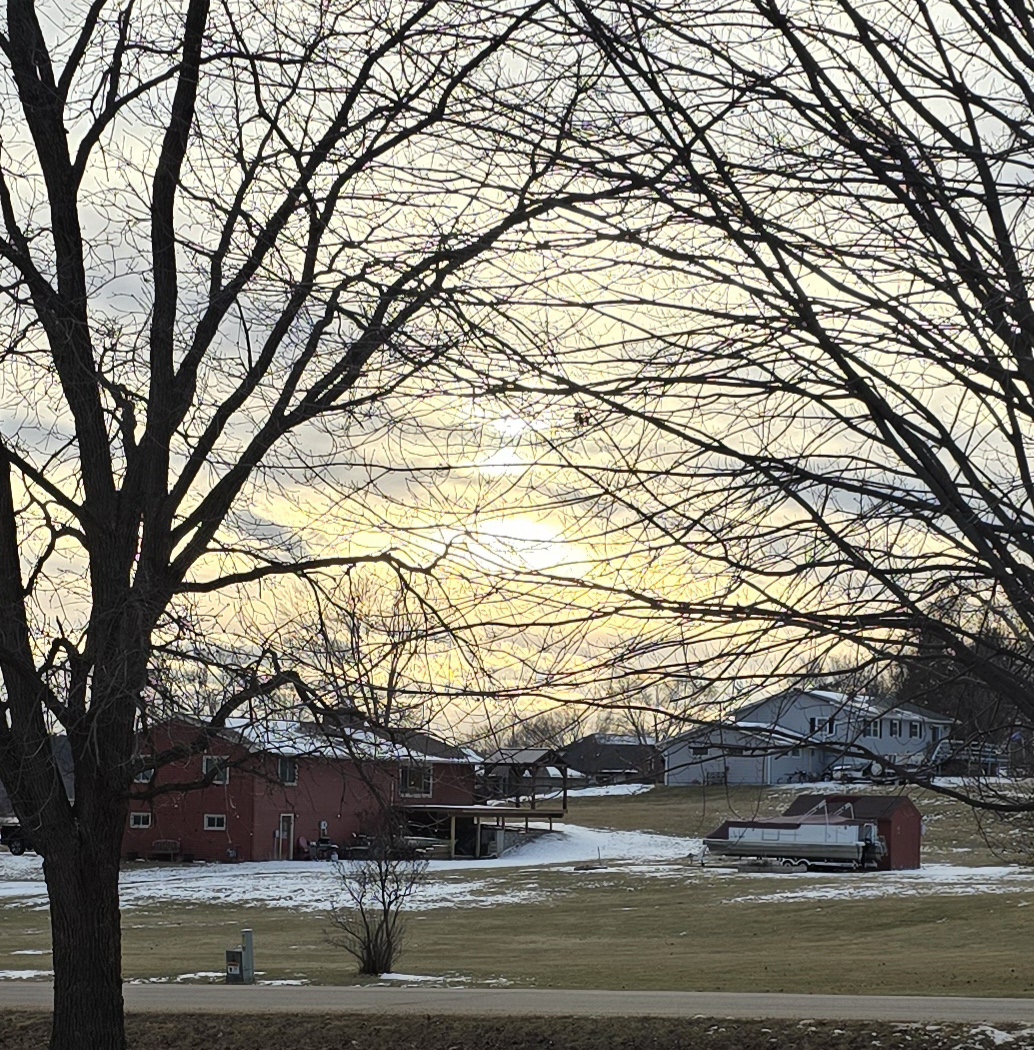
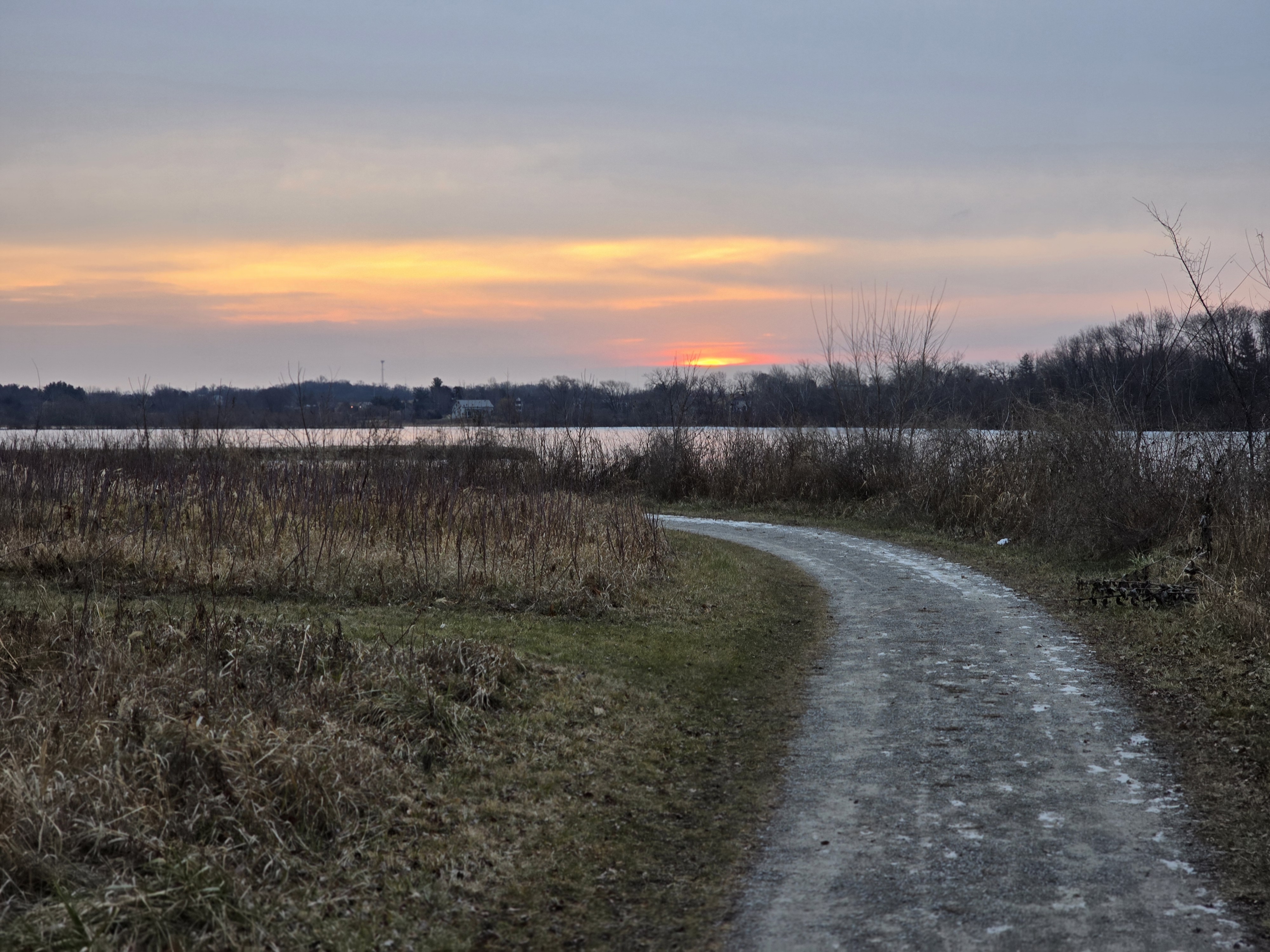
According to the sensor installed on the north side of the house, the ambient temperature was 13 degrees below zero Fahrenheit when I began writing this post. The sun is rising and it warmed up. We’re not at zero yet, although the high is forecast at 25 degrees. Today the weather is weird again.
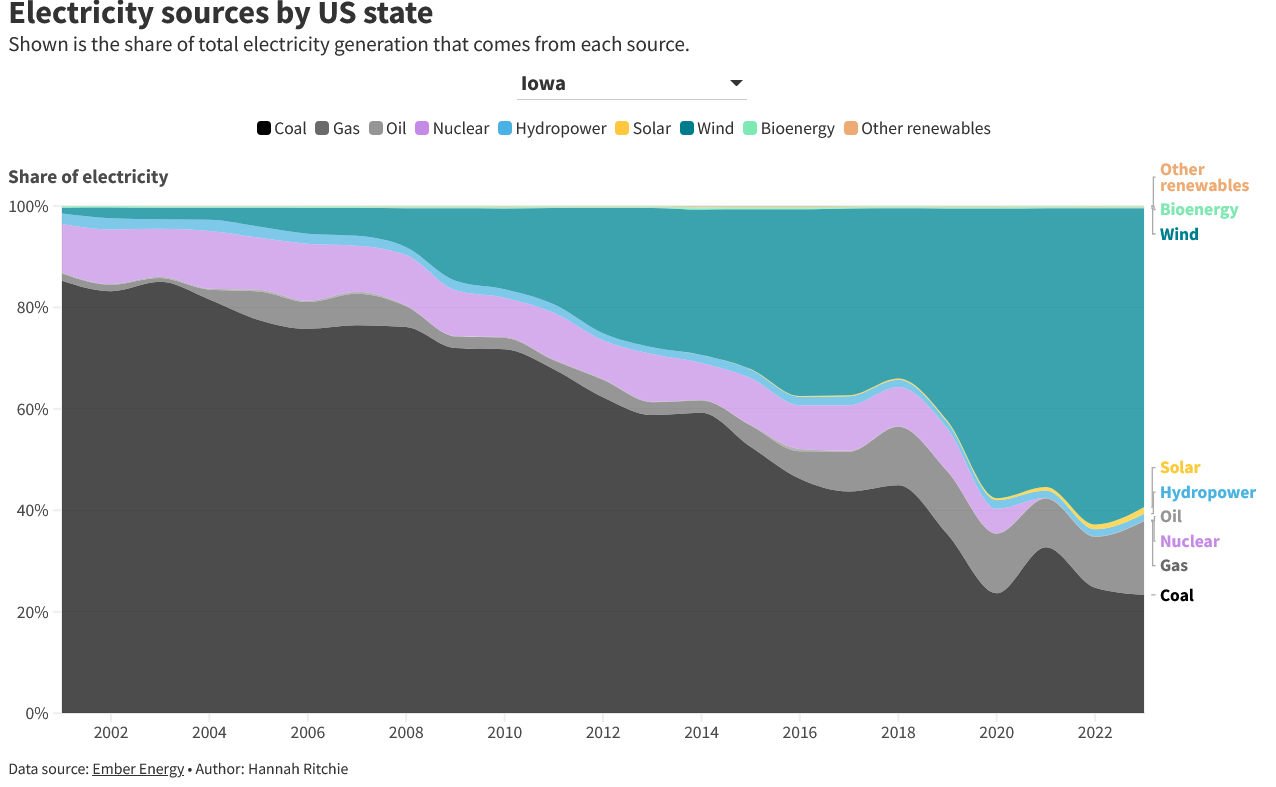
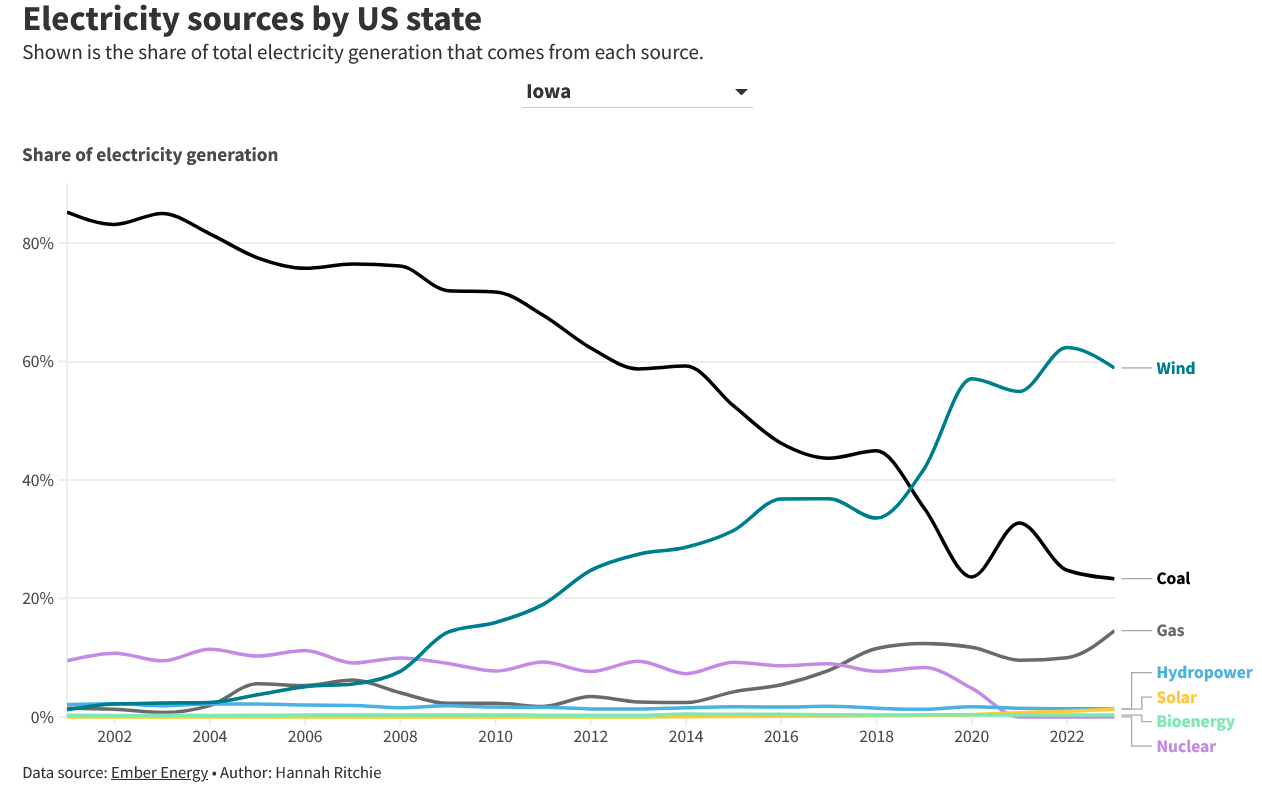
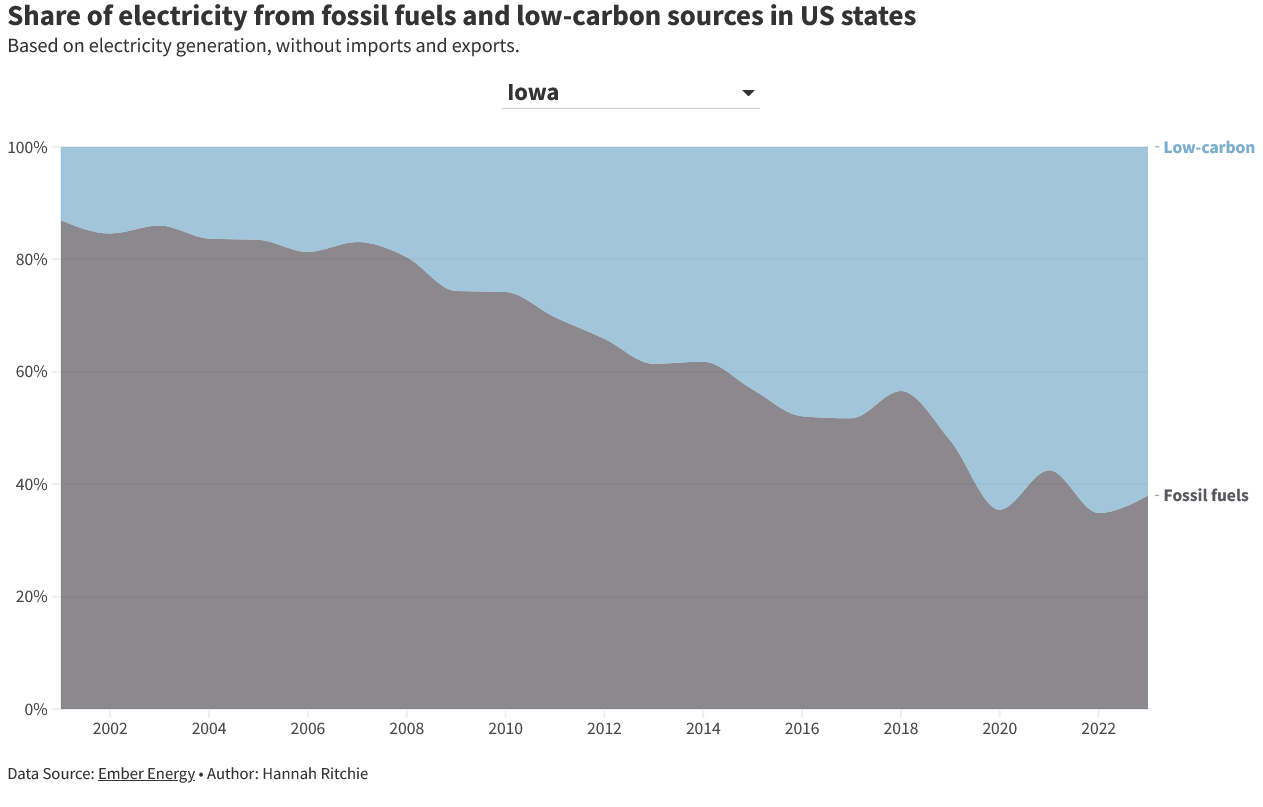
Iowa is a leader in wind energy and has plenty of room to improve our solar capacity. There are environmental issues with every form of electricity production, yet burning fossil fuels is our most immediate danger because of the role of carbon dioxide in enhancing the greenhouse effect. Despite today’s low temperatures, Iowa is simply too darn hot.
The trend on the following chart is the right one. As a state, we need to move more quickly.
It seems obvious to me that to get to zero fossil fuels used to generate electricity Iowa needs to install many more solar panels. There are issues with both wind and solar generated electricity.
The wind doesn’t always blow and the sun doesn’t always shine. They can be addressed. One of the key strategies to deal with intermittency, which is what this is called, is to improve the forecasting and planning of renewable power generation and demand. Another strategy is to invest in storage and integration solutions that can balance the supply and demand. A third strategy is to foster innovation and adaptation. This involves developing and deploying new technologies, designs, and practices that can enhance the performance, efficiency, and resilience of renewables. We need the will to solve these problems.
So the news about electricity generation in Iowa is positive. We just need more renewables and technological solutions to deal with intermittency so we can replace fossil fuels altogether. To a reasonable mind, this can be accomplished. Now we just need our regulatory and governmental authorities to get on board.
The secret to aging well is no secret: maintain an active lifestyle and improve our diets with nutrient-dense foods. Of course, that assumes there are no mitigating factors such as poverty, cardio-vascular disease, cancer, and lacking the proper function of at least some of our teeth. This post is a listicle of conversations I’ve had about nutrition and aging.
Seniors often don’t have enough money to go grocery shopping. Concurrently, they earn more money than the federal poverty level, so are not eligible for SNAP, the Seniors Farmers Market Nutritional Program, or the Commodity Supplemental Food Program.
Mobility can be a problem. Our culture assumes mobility either through mass transit, or by driving a personal vehicle. Many people age without being able to continue driving. Even if one can take the bus to the grocery store, carrying capacity for the return trip is limited. Grocers will deliver or have a service deliver. It adds what can be a substantial charge on top of the groceries.
Dining alone is not always fun. The absence of children, or a spouse being deceased or away, has us reverting to a primitive state of avoiding cooking or making simple meals that don’t have the best nutritional content.
There is increased production and use of leftovers. For example, a pan of lasagna can make six servings.
If we are not heating up leftovers, prepackaged meals can be tempting. They can be more expensive and often contain high levels of salt and additives with unpronounceable names.
Even with a full pantry a person doesn’t always cook. There is a possibility to open a can or packet of something and call it a meal.
Leaving home for exercise can be a challenge. If one lived in the same place for decades, the neighborhood may have changed, making it more risky. Likewise, one has to pay more attention when outdoors for things like cracks in the sidewalk, and high traffic areas.
Inclement weather can keep us indoors. I know when it was below zero all day Tuesday, I did not leave the house except to check the mailbox.
Aging means we may not have the stamina we once did. Some days it is a lot to muster the energy for a thirty-minute walk.
Our strength can be diminished. There is no need to go to a gym for strength training when dumb bells or stretchy bands can do. We also have to take it easier than we did a few decades ago: no more bench lifting.
Fear of falls is real. If we lose our balance while exercising at home, we could be injured, unable to get to a phone, and trapped.
That’s what I am hearing about aging well. If you like, leave a comment you heard about the challenges of good nutrition and exercise while aging.
The new president took the oath of office Monday and I tuned in for some of the ceremony. Minnesota U.S. Senator Amy Klobuchar gave an excellent speech. Not so much Mr. Trump. Several prominent people, including historians who would know, rated it the worst speech in the history of inaugural addresses. I turned it off and went trail walking just as he approached the podium. I hope Klobuchar is planning to run for president again.
We will all have to deal with the reality of the new administration. The day after the inauguration, it is hard to say what exactly that reality is. The president is trying his best to make us believe in an alternative reality. If we resist nothing else, we should resist that.
From the noise of yesterday came the quiet of today. Like many, I’m using this quiet to understand where I might help get the United States back on track. I expect it will be an inter-generational effort. So forget about resolving things with a blue wave election in 2026. It is time to reduce our screen time and get to work.
I’m participating in the Meta blackout that runs until this weekend. With each day I am becoming more confident I can deactivate my Facebook, Instagram and Threads accounts. I will see how that shakes out yet less screen time will hopefully equal more writing of my own.
I don’t have anything profound to say about this week’s events. There is no shortage of punditry making points of analysis. I know when to keep it short. Let’s have a cup of coffee on this new day. Cheers!
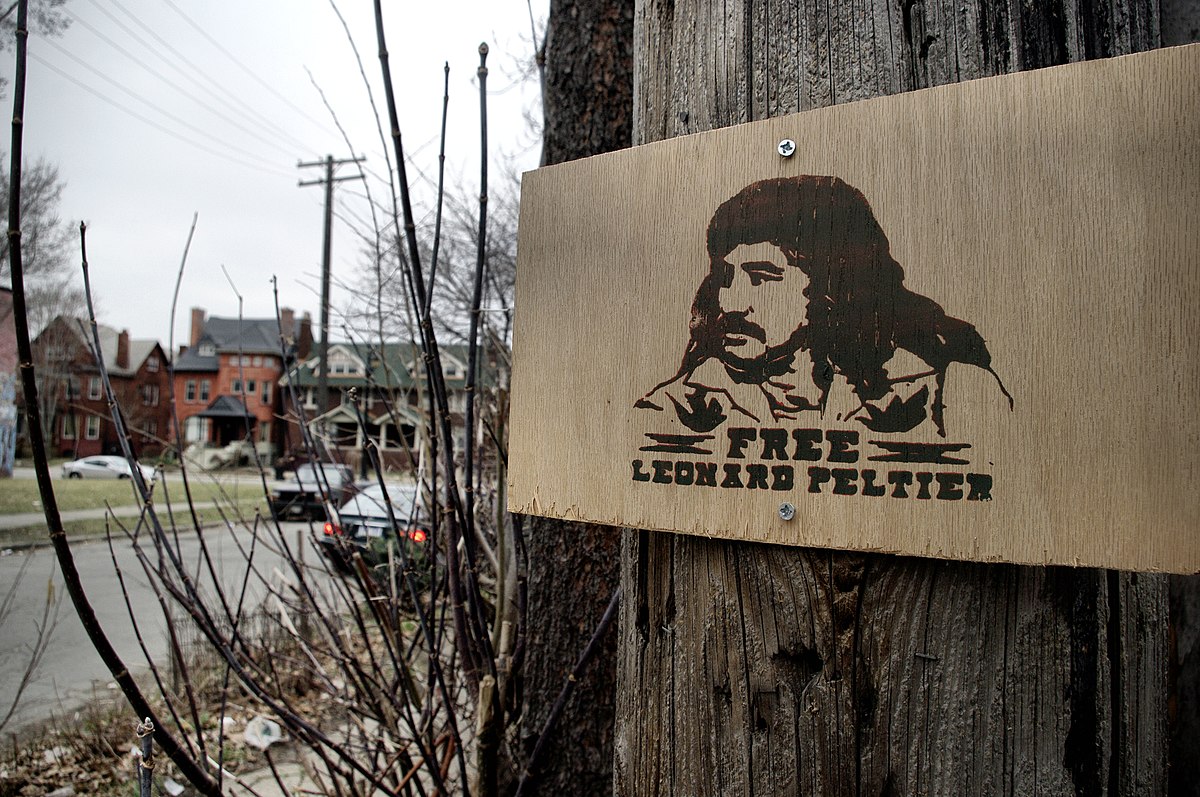
I looked at the thermometer and it was 8 degrees Fahrenheit outdoors. I put on my cap, scarf, and coat and left for a walk along the state park trail. It was a brisk walk in that I wanted to keep my heartbeat elevated. I was stunned by the news. Leonard Peltier is freed.
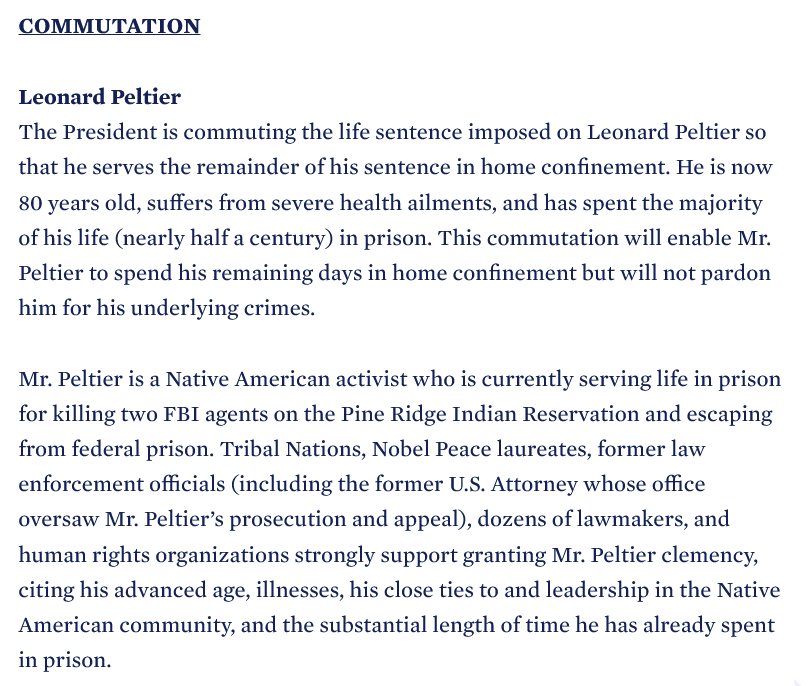
I got teary-eyed as I read the White House Press Release that in one of his final acts as president, Joe Biden commuted the life sentence of Leonard Peltier. This has been a long time coming. I have been in favor of freeing Peltier since I can remember, including in the 1970s when I served in the U.S. Army overseas when he was sentenced.
Hawaii Senator Brian Schatz had been posting on social media about granting clemency to Peltier since the election. I don’t know how Washington works, yet I believe his advocacy made the difference. It certainly wasn’t my message to the White House, the last of several I sent.
We will miss Joe Biden more than we know.
Since the Trump administration will immediately take down the Biden administration website, I screen-shot the text below. The archived website is expected to return, yet who knows when that will be?
Vice President Joe Biden, May 2010 in Cedar Rapids.
I didn’t campaign for Joe Biden when he came to Iowa to meet us in 1988, 2008, or 2020. I lived in Indiana in 1988 and found better choices the other two years in Iowa. He did poorly each cycle, barely registering on the scoreboard in 2020. That year he went on to be elected president and served faithfully and with dignity the four years ending today. As the Irish might say, Slán leat, Joe Biden. You served us well and we’ll be missing you as we cope with tomorrow.
If the Iowa Democratic caucuses said anything about U.S. presidential elections, it was never about us, it was about all of us. Joe Biden was a president for us all, and I’m thankful for that.
When I took this photo, Democrats had reached the high point in an arc that began after the turn to this century. We experienced grueling defeats in 2010. Barack Obama and Joe Biden swam against the Republican tide as Newt Gingrich and his allies tainted American politics, launching an enduring era of brutal partisan warfare. Let’s hope the next four years don’t make it worse.
What I admire about Biden is that after the death of his son Beau, he did not follow Obama into presidential politics. PBS reported in October 2015, “The vice president’s 46-year-old son, Beau, died of brain cancer in May, and Biden stated publicly over the summer that he did not know if he could emotionally commit himself to a run for office.” It was his turn to run, but family matters more to this son of Scranton, Pennsylvania, so he stepped back. He lived to regret that decision, yet he persisted over time and made us proud.







 Journey Home

You must be logged in to post a comment.