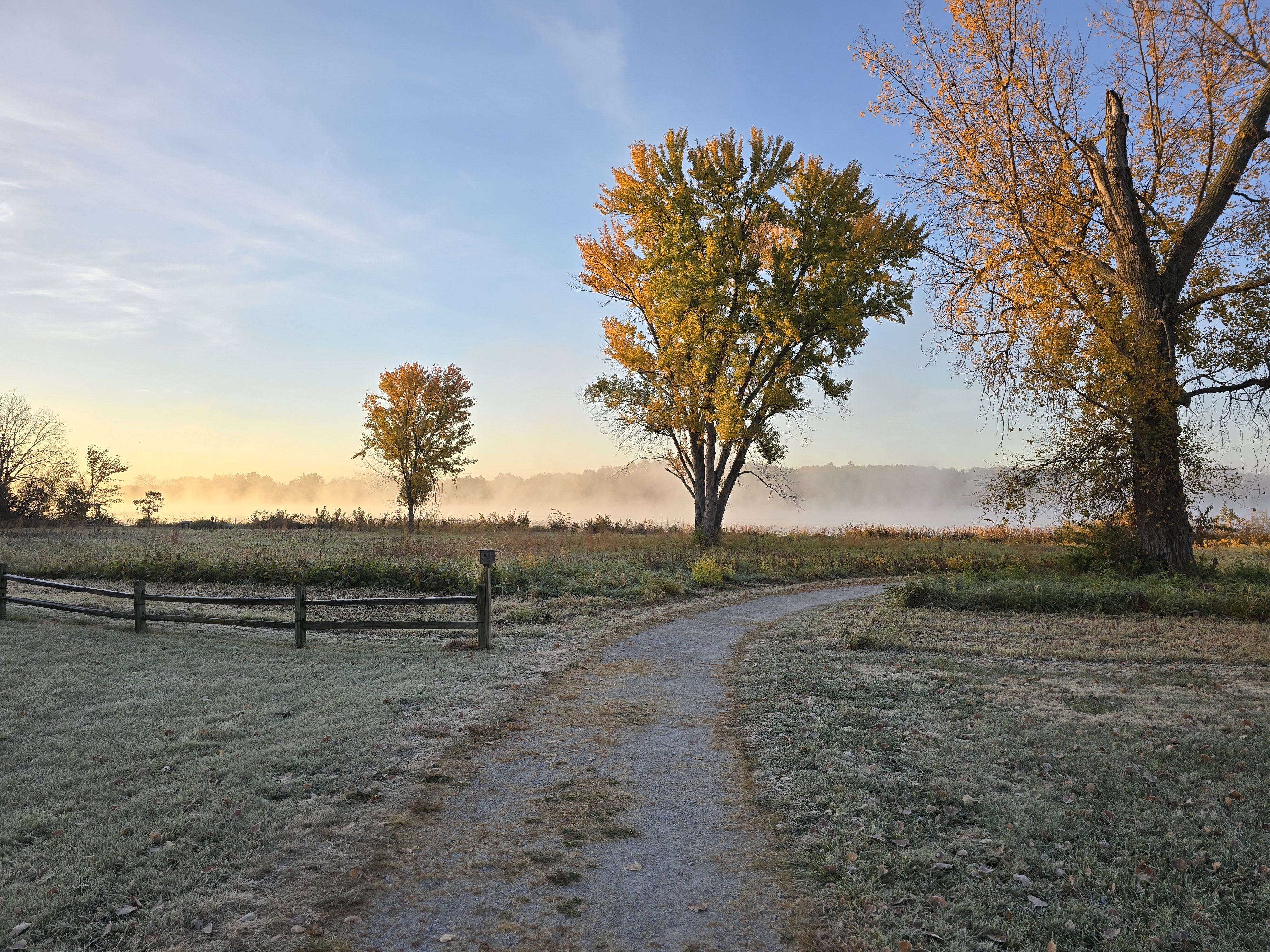
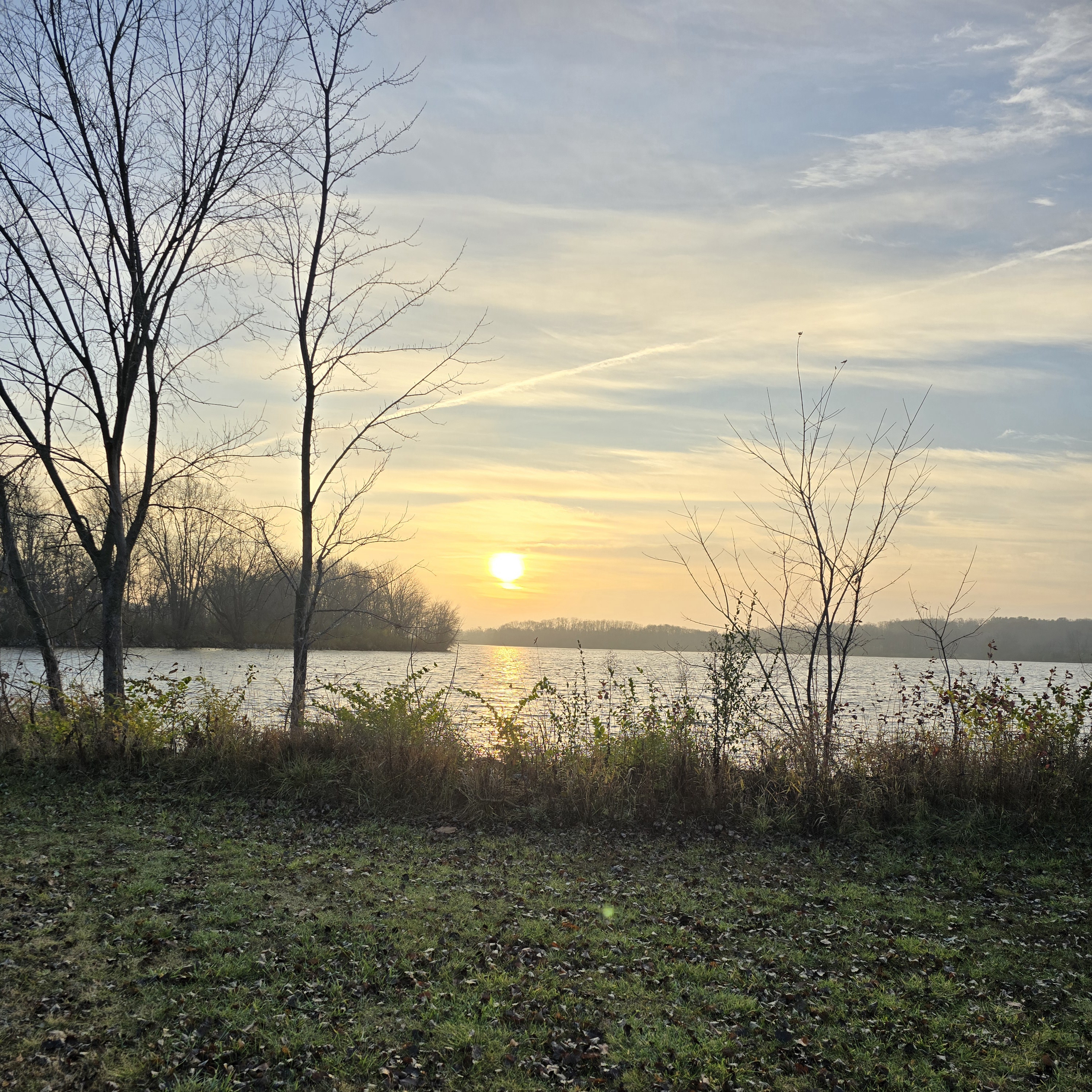
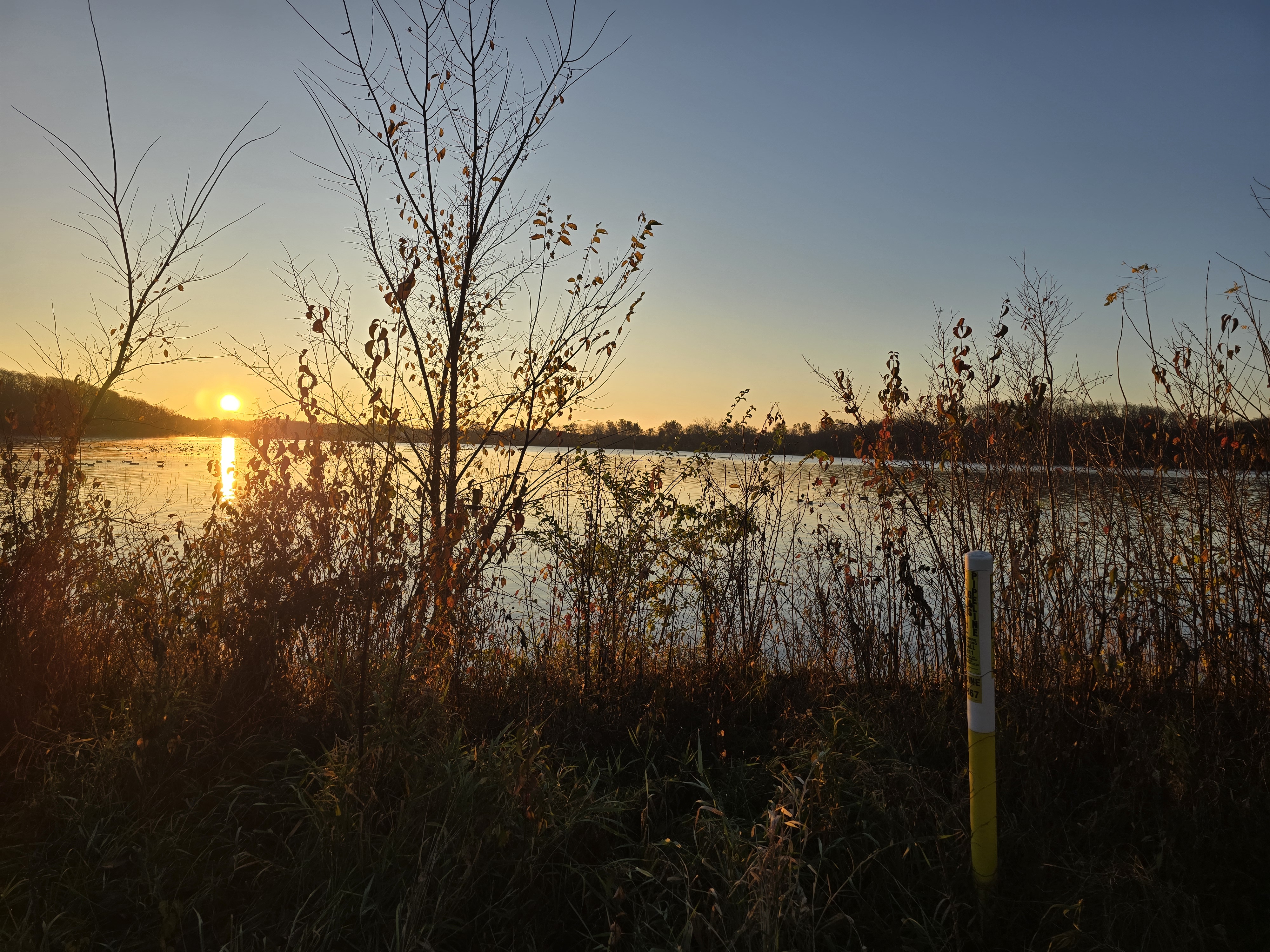
It never helps to drive for more than a few minutes on an Interstate Highway in Iowa. I focus on keeping the car in my lane with the radio off. If my mobile device rings, I let it go to voicemail. When I look through the windshield at the landscape, it feels bad. It has been so long since the prairie was ripped up that people forget it once existed.
“More than 80% of Iowa was once covered in tallgrass prairie,” according to the Story County Conservation Center. “But over time as land use changed (we built cities, roads, agriculture fields, etc.) this critical habitat has diminished: Today, less than 0.1% of the original prairie remains.”
Iowa now has an extraction economy and the landscape shows it, even when the fields are green in July and August.
The ambient temperature averaged around 40 degrees on my trip home from Des Moines. That’s too warm for mid-January yet these are not normal days. There is scant snow on the ground, a harbinger of more drought to come. These conditions recur and appear to be the new normal. Desolate, dry, and barren are words I never thought to use to describe my home state. They fit.
So what is next in this place?
I have to figure out how to get news. I get a squinchy feeling every time I say I subscribe to the Washington Post, yet I need a national newspaper and every one of them has issues. Better the devil I know.
The Cedar Rapids Gazette announced the next in a series of cost savings efforts. They are reducing the number of printings they do to three per week. The online daily edition will continue for now. I read that over coffee before starting each day.
The local weekly paper, the Solon Economist, has about 600 current subscribers. I have not been impressed with its work since being purchased by the Daily Iowan a year ago. Among things that are missing is getting the newspaper posted online in a timely manner. Between Dec. 26 and Jan. 9, they did not post any of three expected editions online on publication day, until after I emailed the editor and asked what is up. My subscription will continue as long as they are in business.
I don’t watch television and infrequently turn the kitchen radio on. They will not be a major news source.
The internet has lots of stuff on it. The exodus of many newspaper reporters from their newspapers to Substack is having an effect on news coverage. There are too many Substacks, and not enough time to read all of them. They lean toward opinion, rather than news.
As far as social media goes, I’m keeping Facebook, Instagram and Threads. For now, Threads is where you will find most of my text posts. I cut back followed accounts on Facebook and Instagram where I don’t know the human behind them in real life. I’m also on BlueSky which has been a good place to read news-like stuff, yet it is not appealing as a place to find community. I spend too much time on social media and am actively working to reduce that.
Email has been and continues to be the best source of news. We don’t talk much about the role of email, and maybe we should. I spend as much time on email as I do on any single social media account. The time spent there rewards me with news.
It occurred to me, somewhere between Colfax and Williamsburg that I can’t delay the decision about how to get news. This will be a busy year as long as I find good health and economic security. News is the lifeblood of an engaged citizen. We must be picky about which outlets we use.
The political season kicked off last night with Governor Kim Reynolds’ Condition of the State address to a joint session of the legislature. The press release with the speech arrived in my inbox at 8:27 p.m. and I read it right away. Reading it was more efficient than watching it. I will not rehash the whole thing. The press release is here.
The language in the written version seemed less shrill than in previous years when I heard her deliver the speech. Rep. J.D. Scholten posted the following on Threads last night.
This year’s Condition of the State speech was far less punch down politics and culture war crap, which is good. Energy, hands-free driving and cancer research are the three main things I heard that I’m excited to work on.
Cutting unemployment insurance is tone deaf with all of the layoffs happening in the last year in Iowa, especially with Tyson closing the plant in Perry and John Deere shipping jobs overseas.
Like for Scholten, there are things Reynolds mentioned I’d like to see advanced in a bipartisan manner, coupled with some skepticism.
Addressing mobile device use in our lives seems like a no brainer. If a person uses a telephone at all while driving, it should be hands free. This is a safety concern that falls in the main purpose of government regulation. Likewise, it seems bad that K-12 students spend over six hours per day on smart phones, according to the governor. It is hard to see any legitimate purpose for schoolers keeping their devices with them or turned on while in the classroom. I would think local control of this issue would be the way to go, with school boards setting policy based on factual information about their districts. The state tends to get heavy-handed when they assume control of what should be decided locally. It is an important enough issue to have this discussion.
Cancer sucks. The governor addressed the problem in her speech, “Every case of cancer is a tragedy. And I’m concerned by the data showing that these tragedies disproportionately affect Iowans. Our state has ranked second for new cancer cases two years running, and we’re one of just two states with rising rates.” Getting to the bottom of this statistic is important to the well being of Iowans. As I mentioned, cancer sucks. If we can determine a path to reduce the incidence among Iowans, we should follow it. Studying our high cancer rate is a good use of state resources.
The energy discussion, of keeping Iowa electricity prices low and having capacity and infrastructure to attract businesses to Iowa, is a good one to have. Coal and natural gas should be phased out as sources of energy used to generate electricity. The state should strive for a mix of energy sources. It does seem like the big money behind nuclear power got to the governor. Here is what she said:
For starters, we need to take a serious look at nuclear energy. Its potential is amazing, but the investment is big and the horizon is long. So we need to get started.
In the coming weeks, I’ll be putting together a task force that will make recommendations for how we can move forward. I’ll be bringing together experts to look at issues like permitting, which often takes too long. They’ll also look at workforce challenges, because recruiting nuclear engineers doesn’t happen overnight. And they’ll be talking with stakeholders around the state to make sure we have local buy-in.
I’ll also be proposing a bill and working with legislators to continue to promote an all- of-the-above energy portfolio that ensures the lights are on regardless of whether it’s hot, cold, windy, or cloudy.
As I’ve said repeatedly, using nuclear fission or fusion to generate electricity has substantial associated problems. These problems need to be resolved before we get too far down the path. Likewise, generating nuclear power in Iowa is not as simple as turning on the key at the Duane Arnold Energy Center. If the governor has in mind getting beyond vague platitudes about baseload power and carbon-free electricity, that would be good. At present, I find no logical reason to turn the Duane Arnold nuclear power plant back on. The development of small modular reactors and their wider use seems years away in the United States. I will suspend my skepticism to see if truth will out in the discussion of nuclear power proposed by Governor Reynolds.
While my skepticism of the governor is substantial. These are things that merit consideration by the government we have.
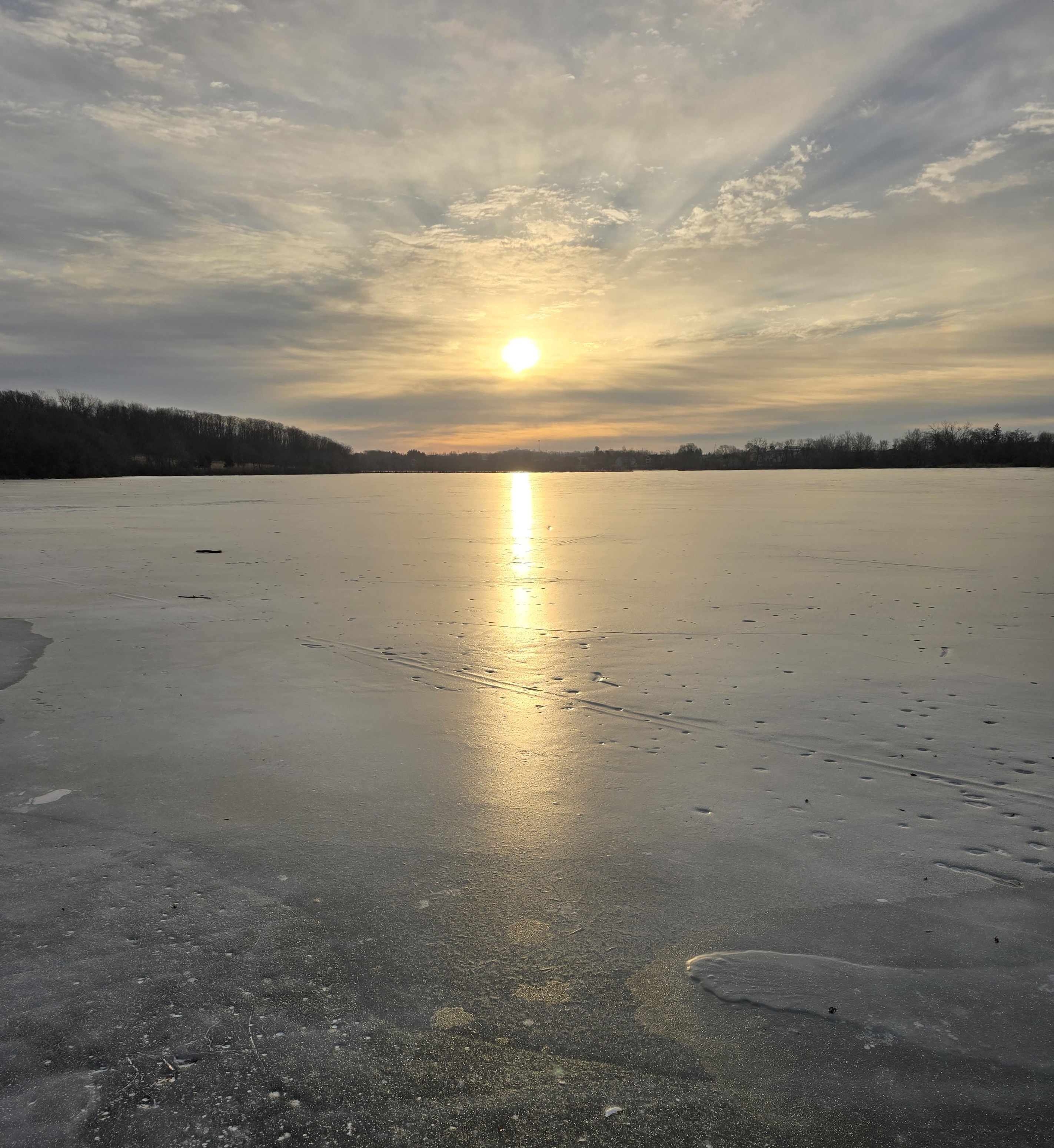
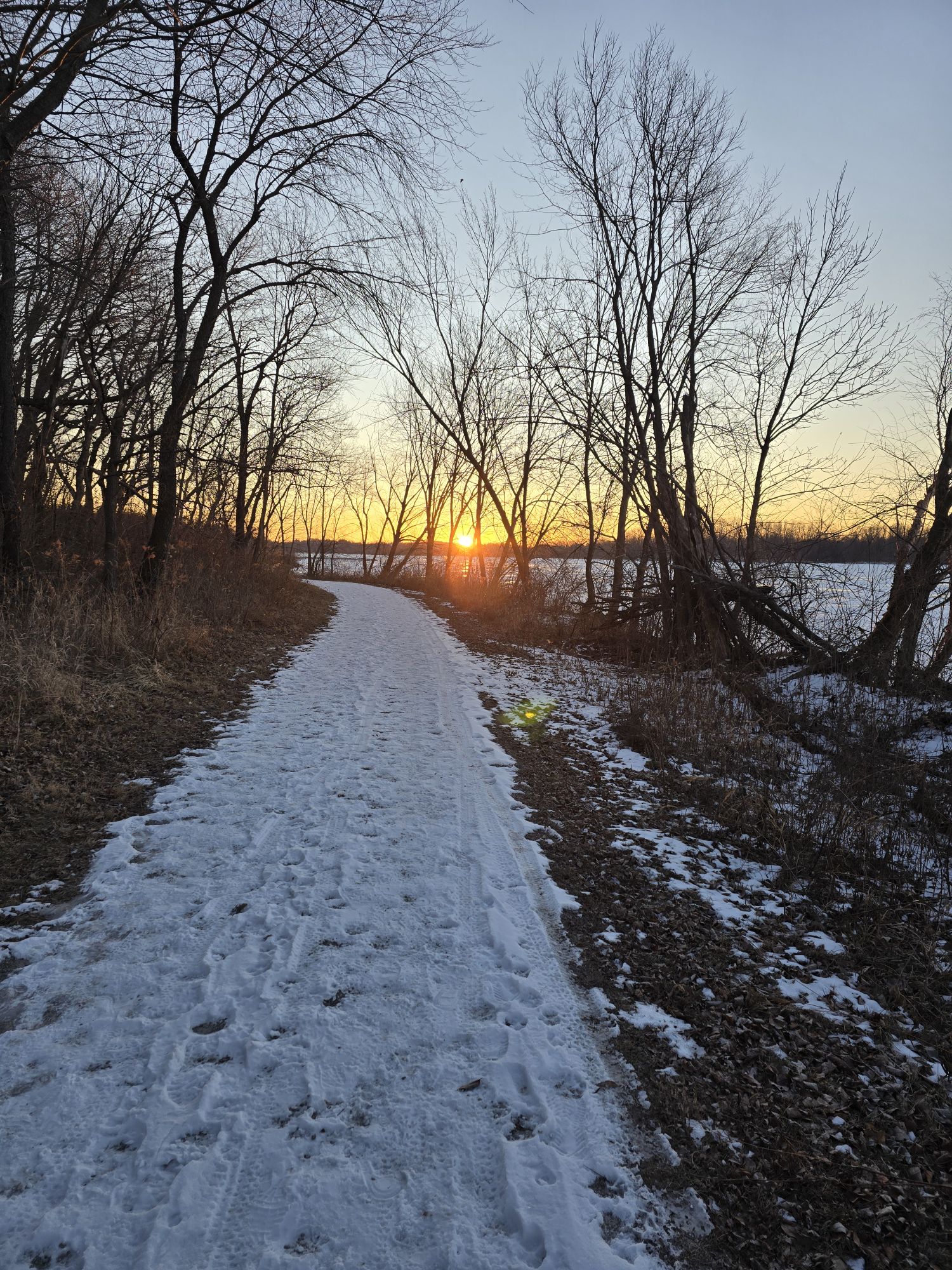
The trail began to melt on Sunday. Thanks to overnight temperatures in the single digits, the surface was frozen again on Monday: perfect for winter walking. A light breeze chilled my face, yet I persevered and encountered only two regular trail walkers while I was out for my fast-paced, 30-minute walk. It was chilly!
I dreamed last night I had to untangle the shoe laces of a pair of my army boots. I still have two pair (acquired in 1976) I use in the garden. The shoe laces were exceedingly long and well tangled. Unlike most dreams, this one persisted into waking. Its meaning is clear. I need to go through the stacks of notes, mail, and things to do on the dining room table and get organized for a rapidly approaching spring. What seemed different this time is my acceptance of the dream as reality. I got the shoelaces untangled just as I awoke. Indoor planting of garden starts is just a few weeks away.
I’ve been reading my hand-written journals from May 1981 until July 1982. It was a year I worked as a writer in what is now a UNESCO City of Literature. I wasn’t a particularly good fit for Iowa City, yet the rest of the state seemed a primitive agricultural landscape, desolate and barren of intellectual engagement. As a young Iowan with two degrees, and aspiration to do better than merely survive, of course I chose to live in Iowa City. Besides my journal I didn’t do much writing during that time.
I did write a lot in my journal, which fills three volumes. I wrote frequently about how to escape the “institutional” realms of writing that included the University of Iowa Writers Workshop and other formal programs. I wanted to be a writer, yet not like “those writers.” My reading turned to familiar places as I dealt with the urge to write.
I was enamored of Tom Wolfe because his writing came from a place of reality. He and several others were parents of the New Journalism, publicized in his 1973 book. He immersed himself in his subjects, spending months in the field gathering facts through research, interviews, and observation. I didn’t have a lot of role models outside institutions, but Wolfe was one.
Another role model was William Carlos Williams, the pediatrician/poet. Prompted by a talk given by Williams’ publisher James Laughlin, I wrote this in my journal the next day:
William Carlos Williams: I’m not exactly sure where in my world view to put him. I think his position as doctor/poet, his molding of those two professions into one homogeneous lifestyle is admirable. But, to the extent that they remained two separate elements in his life, his life was a failure.
I think his poetry, at least as much as I have read, is poetry for the learned… yet one more attempt to elevate himself from among the people among whom he worked. It served him as a diversion from being a doctor. Well there may be people who would argue that diversion is necessary, the diversionary aspect of any activity adds connotations of the Victorian era for me. While James Laughlin states that the elements of Williams’ life were inseparable, he, too, is immersed in that ideology. He, too, is suspect.
I think I have a lot to learn from Williams, his problems notwithstanding. He is full of energy. He is above all else animated — filled with life. This is an example to be taken to heart. To be weighed and brought into my own life. (Personal Journal, Iowa City, Iowa. April 23, 1982).
I thought I could quickly dispatch the requisite words for my autobiography from this period in a couple thousand words. The more I read the journals, and invoke living memory, it is clear that year was more formative in my life. I wrote about writing, gardening, cooking, exercise, and about the meaning of being alone without feeling lonely. I will read this writing from 44 years ago again before my autobiography is done.
94 cookbooks rest within arm’s reach of my writing table. Hundreds more are stored in boxes in the next room. What do you do with them once your cooking technique moves beyond recipes?
Last year I donated several hundred cookbooks to Goodwill. I bought each one for a reason. Those reasons became obsolete. As a result, there are more cookbooks for disposition among what remains. (I sorted this cookbook thing out previously).
Obsession with cookbook recipes is not what I’m getting at when I write, “A cook not a chef.” It is a cook’s job to prepare food and get it on the table. Increasingly, if I use a recipe at all, it is the springboard for making something recognizable and nutritious for dinner. A cook’s work does not rely on an understanding of flavor, technique, or any of the fancy stuff of being a chef. A cook is the quotidian day worker in our lives preparing simple fare for plain folks. I am a cook, not a chef.
What brought all this up? I need more bookshelf space where I write and cookbooks seem like they are taking too much of it. Maybe I could get rid of some of them. It is pretty hopeless, however. I went through the shelves and found Colorado Collage by the Junior League of Denver. I scanned through it and determined almost every recipe could be a springboard for some other dish, yet none of them fit into the wheel house of my cookery. I put the book in the passenger car seat and will drop it off at the public library either to be put in their stacks or sold at the annual used book sale. My review sums up the situation:
For a community cookbook, this has high production values. It would be a fun book to use when developing a new dish, but it’s use would be to modify their recipes to fit the culinary culture of the cook. This was not a good fit for me.
I wrote both of my U.S. Senators to urge them to keep the government operating until the Congress and the President can agree on a budget. They each responded to my message.
Both pointed out the continuing resolution to fund the government until March 14, 2025. Voting for that resolution was the purpose of me contacting them. I expect they both had already planned to vote for it when my email found its way into their offices.
“I think you will agree that our nation is facing a spending crisis directly caused by the absence of sound fiscal policy and rampant, uncontrolled spending sprees,” Ernst wrote in response. One assumes Republicans will remedy that issue now that they have the trifecta of the executive and both chambers of the U.S. Congress. Such assumptions are a stretch because when Trump visited Capitol Hill this week, tax cuts for the wealthy and associated spending were the main course. In retrospect, it has been Democratic administrations that pulled the reins on such spending. Time will tell if Ernst was sincere.
For Senator Grassley’s part, he said, “Unfortunately, the appropriations process in Congress is broken and it must be fixed. Out of control spending is saddling our kids and grandkids with unprecedented debt. But shutting down the government is a waste of money.” One assumes, as with Ernst, Grassley will work in the Congress to fix this. The U.S. House couldn’t pass the needed appropriations bills in the 118th Congress. The Republican majority is even slimmer in the 119th. To Grassley’s credit, his response provides a longer explanation of the appropriations process. I believe this was already written when my email reached his office, nonetheless, I am happy to have it.
My point is that we should take advantage of the available tools to contact our elected officials to advocate for things. I use the process sparingly because I don’t want to wear out my welcome. While this may seem like a form of Kabuki Theater, it is the process we have. Below are Senators Ernst and Grassley’s written responses to me.
Here is Senator Ernst’s full response:
Thank you for taking the time to contact me about the importance of keeping the government funded and open. It is important for me to hear from folks in Iowa on policy matters such as this.
As you may know, Congress recently passed a continuing resolution to fund the government through March 14, 2025. Like many Iowans, I am sick and tired of Washington’s dangerous habit of governing from one emergency to the next. Our federal government cannot continue lurching from one short-sighted, band-aid funding bill to another.
While I am pleased we were able to avoid a government shutdown, all of the appropriations bills were waiting to be voted on for several months. Senator Chuck Schumer (D-NY), who controlled the calendar in 2024, refused to bring those bills to the floor for a full Senate vote or allow senators an opportunity to offer their own input. Instead, he let the government come far too close to shutting down too many times.
You may be interested to know, I introduced the Shutdown Accountability Resolution to compel Congress to do its job. This effort would mandate the Senate remain in session and continue working in the event of another potential government shutdown. If enacted, my resolution would also authorize the tracking down, arresting, and escorting of Senators to the chamber if they refuse to show up and do their job.
I think you will agree that our nation is facing a spending crisis directly caused by the absence of sound fiscal policy and rampant, uncontrolled spending sprees. You may be interested to know, for the past decade, I have proudly presented a monthly Squeal Award to highlight an expense or program the federal government is wasting your tax dollars on. But I don’t just call out the waste, I offer a commonsense solution to end it. A full list of my Squeal Awards can be found here: https://www.ernst.senate.gov/public/index.cfm/make-em-squeal. Iowans elected me to cut Washington’s pork and make ’em squeal, and that’s exactly what I’m doing!
Please know that I will continue fighting to make Washington more accountable and fiscally responsible. Feel free to contact my office with any further information, as I always enjoy hearing from Iowans.
Joni K. Ernst, U.S. Senator
Here is Senator Grassley’s full response:
Thank you for contacting me with your support for keeping the government funded. As your senator, it is important for me to hear from you.
I appreciate hearing of your thoughts about the negotiations in Congress to fund government operations up to March 14, 2025. I value your perspective on this issue.
Unfortunately, the appropriations process in Congress is broken and it must be fixed. Out of control spending is saddling our kids and grandkids with unprecedented debt. But shutting down the government is a waste of money.
The U.S. House of Representatives considered three continuing resolutions (CRs) in December 2024. The first CR funded federal government operations, disaster relief programs, and needed extensions. However, opposition was raised to extraneous provisions that greatly increased the length of the bill and it was pulled from consideration. The extraneous provisions included: several bipartisan bills, reforms to the pharmacy benefit manager (PBM) industry, and reauthorizations of the Workforce Innovation and Opportunity Act and the Older Americans Act. A second, paired down CR that also suspended the debt limit for two years was opposed by a majority of the U.S. House of Representatives. The third CR, H.R.10545, did not include the debt limit suspension and also significantly limited the number of extra provisions on the bill. H.R.10545 passed the U.S. House of Representatives by a vote of 366 – 34.
On December 21, 2024, I joined a majority of my colleagues in the U.S. Senate in passing H.R. 10545, the American Relief Act, by a vote of 85 – 11. H.R.10545 temporarily continues funding federal government operations at current levels through March 14, 2025, with some additional funding provided for the Presidential Inauguration and several defense programs. It also provides $100 billion in emergency disaster-relief supplemental appropriations, and $10 billion in emergency economic assistance for farmers. My office worked closely with Senate appropriators to ensure funding also was made available for the needs we have in Iowa after our severe storms in early 2024.
The CR further provides funding for select health care programs, certain Medicare extenders, delays planned Medicaid DSH payment reductions, and extends certain public health programs and authorities. Finally, the CR extends the 2018 Farm Bill authorities and funding levels until September 30, 2025, and it extends authorities for other programs that were set to expire.
One of the most fundamental constitutional responsibilities afforded to Congress is the power of the purse, which grants Congress the authority to raise and spend revenue to operate the government and to carefully examine spending decisions. The federal budget is primarily funded through twelve annual appropriations bills. Emergency spending, such as for natural disasters, is handled on an as-needed basis.
The federal fiscal year begins on October 1 of each year. If appropriations bills are not signed into law by September 30, lawmakers and the president must agree on a temporary spending resolution, known as a continuing resolution, to keep the government open for business. If that fails, the unfunded parts of government shut down.
History has repeatedly shown that shutting down the government is bad policy and bad politics. It costs taxpayers money to shut down the government and even more to re-open it. A government shutdown reduces essential services for the American people, erodes the trust of the American people, and limits the ability of Congress to conduct oversight over federal government operations.
Government shutdowns don’t make for a great bargaining tool. Eventually, the heat gets so bad that Congress votes to reopen the government and the members who were pushing for certain policy changes usually don’t get what they want. Instead, Congress is in the same spot, but now is stuck with a last-minute omnibus bill or a long-term continuing resolution, neither of which allow Congress to carefully analyze spending and make necessary tough decisions. In short, shutdowns have always been a losing proposition for fiscal conservatives.
I believe Congress needs to stop governing from crisis to crisis, respect the appropriations process, and fulfill its constitutional responsibility to keep the government funded. For that reason, I am a cosponsor of the Prevent Government Shutdowns Act of 2023. This bill would permanently end government shutdowns by creating an automatic CR to keep the federal government open if budget negotiations are not finalized before key spending deadlines. The bill would prohibit Members of Congress, congressional staff, and Office of Management and Budget (OMB) officials from traveling outside of Washington, D.C. during the automatic CR. It would also prevent Congress from recessing or from considering legislation unrelated to appropriations bills for the first 30 days of an automatic CR and then would make exceptions for consideration of a Supreme Court Justice or Cabinet Secretary nomination or reauthorization legislation.
I value your perspective on the appropriations process as Congress begins working to finalize FY25 appropriations and looks to FY26 appropriations. I am committed to holding the line on unnecessary spending and looking for solutions to ensure the long-term financial health of the United States.
Writing space at Five Points in Davenport Iowa. 1980.
This excerpt from my personal journal was written on May 30, 1982.It reflects what I felt after a three day retreat in Northeast Iowa near Guttenberg, Harper’s Ferry, and Galena, Illinois.Most significant in this piece is the first instance of a decision to follow the path of short, written pieces like daily journal entries, and later, letters to the editor, newspaper articles, and blog posts in my writing. This decision was key to what I became as a writer. I couldn’t get rid of all the male pronouns without changing the meaning, yet I wrote it intending it to be gender neutral. It is lightly edited.
Shall I go on writing? There are so many things in the world to be done, yet I go on writing. I think a majority of people in my generation would “like to be a writer.” That is, they would like to deal with images. But a writer cannot deal solely with images. He must address the realities of his and all the people’s situation.
The writer must be socialized into the culture of which he writes. As a member of a culture, a writer has a vested interest in his culture. He seeks the continuance and survival of the vital elements of his culture.
Too, he seeks change. Not only change that is the essence of a day’s spontaneity but change in terms of his conception of both the past and the present. Although a person can have misconceptions about the nature of the world, the meaning of the world, he is required to act based on this knowledge.
In every case, this is far less than a science of action. In fact, the notion of science we share is obsolete. There is science only insofar as we can all agree on what that is.
But shall I go on writing? Yes, at least in the pages of this journal. For it is one of the things that has sustained me for so long I cannot give it up yet. Nor shall I. Yes. I will go on writing. I’ll fill the pages of this and many another book like it. For this is the path I’ve chosen. (Personal Journal, Iowa City, Iowa, May 30, 1982.)
The president-elect will be sworn into office on Jan. 20, and no one I know feels good about that: at least among those willing to discuss Trump’s second administration. I see some of the things he is doing and it augurs the death of democracy as we know it. To say I feel anxiety about the next four years is not wrong.
Senate Minority Leader Chuck Schumer reported via his Threads account the president-elect was on Capitol Hill yesterday :
Where will this money come from? No one has said, with no indication the deal for this theft from the public is finalized. There is not enough money in the Social Security Trust Fund ($2.908 trillion) to pay for what has been proposed. Social Security, Medicare and Medicaid are all on the chopping block to butcher and give rich people more government money. This characterizes what we expect from Trump 2.0.
The totality of legislative proposals remains to be seen as bills are introduced to the Congress. Which ones will pass is also unknown. Clearing the U.S. House of Representatives with its two-member majority is the narrows through which Republican priorities must squeeze. 12 days before the inauguration, there is no confidence the president who sees Iowa as a state of farmers will understand and address what’s important to most of us.
As George Carlin once said, “It’s a big club, and you ain’t in it.” While the augury is bad, we’ll just have to wait and see what actually happens in real time. I plan to be ringside.
On Jan. 22, 1977, two days after being sworn into office, President Jimmy Carter called on all Americans to turn down their thermostats to 65 degrees during the day and cooler at night. We were in an energy crisis and using less natural gas and electricity was part of his plan to deal with it. He wasn’t a popular president.
As I write this post, Carter’s remains are enroute to Washington D.C. with his funeral service scheduled at the National Cathedral on Thursday, Jan. 9. I did not care for Carter as president. I caucused for Ted Kennedy during the Iowa precinct caucuses in 1980. If I had known then what I know now about Ronald Reagan, I would have been firmly in Carter’s camp and supported his re-election. Hindsight is usually twenty-twenty.
Because Jimmy Carter had a long post-presidential life, there is a tendency to revise the history of his presidency. Part of that is normal analysis. Part is wishful thinking. While working on another project, yesterday I found my journal entry about Carter written on May 30, 1982. I stand by this assessment of his presidency as much as anything else I recently read. Here it is in its unedited entirety:
About native ability: Jimmy Carter is one who comes to mind. He was a Washington outsider and this, I believe, was the cause of his downfall. In a popular magazine I read an article about Rosalynn and him down in Plains, Georgia living a life of word processors, bicycling, and family memories. Jimmy Carter seems to me to be a president who relied on his native ability to see him through. He was judged, even by members of his party, as a failure, though. Native ability was not enough.
Carter was decent, honest, and hard-working, but his lack of understanding of the Washington scene in which he placed himself made it impossible for him to be successful. His successor scorns him, members of the Democratic Party only extend the minimum of traditional courtesy due an ex-president. Yes, native ability is not enough these days. Not enough for Jimmy Carter, not enough for me.
There is a lot to be said about native abilities. It’s what made America what it was in its early days through the 20th Century. People call Carter a lot of things, yet the one that seems more apt is the “next modern president.”
What Carter sought to do was ahead of the times and he suffered for it. If his initiatives — like harnessing sunlight for energy, personal responsibility, human rights, respect for individuals, and others — had endured, America would be a much different place. Instead he is unrecognized, yet woven into the warp and weft of a society that believes it can be better than it is. He took steps to do what he could to realize such a place, using his native talents and abilities.
As Robert Browning said, “…a man’s reach should exceed his grasp, Or what’s a heaven for?” It seems unlikely there will be another like Jimmy Carter. May he rest in peace.
In the spiritual struggle against the sin of liberalism the Republican majority’s sights turned to the regent institutions. This session, a new legislative committee will deal specifically with higher education policy. Leading the effort is Republican Rep. Taylor Collins from Mediapolis. He said to expect “significant reforms to Iowa’s higher education system,” according to the Cedar Rapids Gazette.
Framing his jihad as addressing the workforce shortage in Iowa, Collins is riding a national wave in opposition to diversity, equity, and inclusion programs in education. No worries on the part of administrations at the three major Iowa public universities. They are bowing down to the jihad in advance. The University of Iowa already announced closure of some offending programs, including the gender studies and American Studies programs in advance of the new DEI law going into effect in July. They discuss the possibility of forming a new umbrella school for these and other programs, although that seems uncertain as I write.
Rep. Taylor Collins seeks to refocus Iowa’s higher education system on producing students ready to fill high-need jobs in our state, Iowa House Speaker Pat Grassley said in a statement.
“In his first term, (Rep.) Collins led efforts to dismantle the DEI bureaucracies at the regent institutions and remove political bias from the university presidential selection process,” Grassley told the Cedar Rapids Gazette. “I’m eager to see the work he will continue to do as chair of this new committee. A comprehensive review of Iowa’s entire higher education system is long overdue.”
I am a graduate of the American Studies Program in 1981, although we were a loose consortium of interests rather than an official department. It was a way for me to get an interdisciplinary degree to further my liberal arts education. I had no interest in using the degree to get any job.
I paid very little for my undergraduate (1970-1974) and graduate (1980-1981) degrees from Iowa. Today, the cost of an undergraduate degree from Iowa is $29,219 per year or $116,876 if a student can finish in four years. Now we’re talking real money. I understand one expects something to go with that expenditure and related debt. But a job?
If the legislature’s aim is to turn the regent institutions into a fancied up community college program then count me out. If that’s the case, I’d go one step further and make a modest proposal. Keep key curricula and programs like education and sell off the big pieces for workforce development. Who better to manage the University of Iowa Hospitals and Clinics than a big insurance company like United Healthcare or Kaiser Permanente? Why not sell the agriculture programs to Cargill? Engineering? Maybe Apple, Halliburton, Microsoft, General Dynamics, Alphabet, Meta, or Amazon might buy them and integrate them into their other product offerings. Hell, there are so many potential buyers we could run the sale price on that one way up.
The truth is, Rep. Collins hasn’t said much about this or how Iowa survives as an economic base going forward. He is hacking away at DEI, and everything that means. Last year wasn’t good, and this year isn’t shaping up to be much better.
This will be one to watch and I expect to keep a ring side seat. The 2025 session of the Iowa Legislature begins Jan. 13.
You must be logged in to post a comment.