Hope of spring arrived with warm ambient temperatures last weekend. It prompted me to clean the garage, roll up the garden fencing left out after making the burn pile, consider locations to plant Belgian lettuce, and inspect the compost piles and bins.
It won’t be long before gardening begins. It has begun.
In the meanwhile, we continue to cook and eat the stores from gardens and shopping trips past.
A jar of dried chick peas had been sitting on the counter.
I hydrated and boiled them, making enough to fill two plastic tubs — normally that many would last a couple of months. The idea was to use them up.
First I baked falafel. It was a lot of food with the second tub of chick peas leftover. Breakfast has been four or five falafel ever since, making a different sauce for each small batch. There were too many falafel.
Next came veggie burgers. I used chick peas, black beans, oatmeal and a mixture of cooked garlic, onion and bell pepper. Seasoned with parsley, celery salt and herbs from the pantry, with an egg as a binder, there were three extra patties which I froze for future use.
I also made a big batch of flavored iced tea. Using tea bags found in a canning jar in the cupboard, I put four in a teapot and poured boiling water over them to steep. In the back of the ice box I found a quart jar of simple syrup and a bottle of organic lemon juice.
On the bottom of three-cup canning jars I measured a quarter cup each of lemon juice and simple syrup. I poured hot tea on top, screwed on the lid and put them in the ice box. The cost was much lower than the Arnold Palmer – Arizona Iced Tea brand iced tea – lemonade drinks sold in convenience stores everywhere. It tasted much better too.
This weekend was of rest, reading, cooking and a bit of garage and garden work. Brief respite before returning to the farm next Sunday for my first session of soil blocking. Homelife in a busy life that generates too little income but rewards our labor in other ways.
On Friday, Feb. 5, the benchmark crude palm-oil future contract traded on the Bursa Malaysia Derivatives exchange reached its highest level since May 2014, according to NASDAQ.
Traders were feeling bullish as warm, dry weather caused by El Niño in the region receded from the prime palm plantations in Sumatra, Borneo and other parts of Indonesia.
These palm oil producing regions are half a world away, yet they matter to Iowa more than one knows.
The use of palm oil for cooking is in direct competition with soybean oil, including Iowa-grown soybeans traded on international markets. In a recent interview, Iowa Secretary of Agriculture Bill Northey said one out of four rows of Iowa soybeans are bound for international sales.
“India, the world’s largest importer of cooking oils, will buy more soybean and sunflower oil this year (2015) than ever before as a global glut weakens prices and prompts buyers to switch from palm oil,” according to Bloomberg News.
Because of the decline in farm commodity prices, current trends may favor soybeans over palm, but at the expense of soybean farmers. There is a clear case to be made to avoid products like chocolate, ice cream, detergent, soap and cosmetics that contain palm oil and its derivatives as a way to support Iowa farmers.
What matters more is deforestation to expand the cultivation of palm trees. Using a slash and burn methodology to clear equatorial rain forest for palm plantations, the haze covering Indonesia was visible from space. While haze may be viewed as a temporary inconvenience, deforestation has a direct impact on the planet’s capacity to process atmospheric carbon dioxide. That’s not to mention the loss of habitat and biodiversity, as well as release of carbon stored in trees into the atmosphere.
From logging, agricultural production and other economic activities, deforestation adds more atmospheric CO2 than the sum total of cars and trucks on the world’s roads, according to Scientific American.
“The reason that logging is so bad for the climate is that when trees are felled they release the carbon they are storing into the atmosphere, where it mingles with greenhouse gases from other sources and contributes to global warming accordingly,” the article said. “The upshot is that we should be doing as much to prevent deforestation as we are to increase fuel efficiency and reduce automobile usage.”
Most corporate food conglomerates use or have used palm oil and its derivatives as an ingredient. What’s a person to do?
The first recourse in Iowa is the power of the purse. Avoid purchasing products with palm oil because it competes with Iowa-grown soybeans, and is a contributor to climate disruption. There is no such thing as sustainably grown palm oil.
Palm oil and its derivatives go under many names. A list of alternate names for palm oil can be found here along with a handy wallet sized printout.
Here is a list that discusses use of palm oil in various consumer products.
Explore the Rainforest Action Network web site, beginning with this link. There is a lot of information about the issue and actions you can take to address the most pressing aspects of deforestation.
While Indonesia may seem distant, what goes on there and in other equatorial palm plantations matters here in Iowa.
Driving out of Flint, Mich. on Bristol Road wasn’t in the plans.
I interviewed some 30 people, all but one male, for truck driving jobs at the Days Inn across from the GM plant. Tired and ready for sleep, I went to the van to get my overnight bag and found all four tires had been slashed.
In the parking lot with a driver I later hired, the tire service came and replaced them. Around 10:30 p.m. I decided to drive the four hours back home to Indiana. The drive seemed much longer as I fought sleep and considered the day’s events.
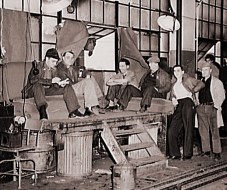
In his film Roger & Me, Flint native Michael Moore identified Nov. 6, 1986 as the date of the announcement that General Motors would start laying off thousands of workers to move jobs to Mexico. Eventually, Mexican labor would prove too expensive and GM moved some of those jobs to Southeast Asia and elsewhere where people would work on the cheap building cars and auto parts.
I made about a dozen recruiting trips to Flint in 1988. There was a lot of interest in our non-union jobs, a lot of anger, and few hires. As a trucking terminal manager in Northwest Indiana I interviewed countless people seeking work in Wisconsin, Illinois, Indiana, Ohio, Michigan, Pennsylvania, New York, Kentucky and many other states. I took a pencil to it, and found I had interviewed well over 10,000 people from 1987 until 1993. My life was forever changed by that experience as one applicant after another told me their stories of adjusting to devastation in the rust belt as the policies of President Ronald Reagan and his cronies eviscerated the middle class. We are still in the wake of his administration.
It was the end of an era as large-scale work sites like Buick City laid people off and eventually shuttered their plants. Flint is just one example of the hellhole the steel, auto, and other manufacturing towns became. Flint went from being an award-winning auto maker to being an EPA cleanup site. People still live there, but what was no longer exists.
Today we hear of the water crisis in Flint.
Nearly two years ago, the state decided to save money by switching Flint’s water supply from Lake Huron to the Flint River, a tributary that runs through town and is known to locals for its filth, according to CNN. Because of the corrosive nature of water in the river, iron oxidized discoloring tap water, and more importantly, lead began leaching from the pipes in the water system.
“Everything will be fine,” former Flint Mayor Dayne Walling said as he downed a glass of water.
It’s not fine. It won’t ever be fine.
Flint went to hell, literally, after GM began shedding jobs to cheap foreign labor. Violent crime rates rose, people left the city, and today 40 percent of the population lives below the poverty line. Employees dependent on union jobs had trouble coping when the jobs were gone, resulting in complex social and psychological problems. I experienced some of their anger that day in Flint and I won’t forget because it permanently changed me.
I get why Reagan is lionized for what he did to Flint and dozens of other manufacturing cities. The anger is still here. We are still in Reagan’s wake.
Lettuce and basil germinated in the tray planted last week, reminding me of why I garden.
It is a chance to witness life as cold sets in for one last spell. Soon winter will turn to spring. I can’t wait. For now, suffice it that the seedlings rise to face the sun through a bedroom window.
The emergence of hearty weeds among my seedlings was unexpected and easy to remedy. We all have weeds growing in our garden, even when it is planted a couple of months before last frost. I continue to pluck them out to make room for what I intended.
The death of Associate Supreme Court Justice Antonin Scalia yesterday was unexpected. It sparked conversations in social media, which for practical purposes includes formal news organizations. Scalia was quail hunting at an exclusive ranch in West Texas — a place where Mick Jagger and the Dixie Chicks have hung out. The event ramped up my understanding of opinions and attitudes regarding the meaning of Scalia’s legacy and the process of choosing a replacement.
By all accounts, Scalia’s was a brilliant if acerbic legal mind.
The Congress is in recess, so President Obama has the option to make a recess appointment. That would be the cleanest way to go, with the selected associate justice serving until the end of the next session. Why would Obama forego the possibility of a lifetime appointment? As he indicated in his remarks on Scalia’s passing, he won’t. However, I pulled a Scalia and began with the text of the Appointments Clause of the U.S. Constitution. There is no time limit on gaining the consent of the U.S. Senate. They have given their advice already: “leave the position open until the next president is sworn in.”
When a nominee is presented to and blocked by the Senate, and if the Supreme Court divides evenly by ideology, the situation would contain both good and bad. There is no guarantee justices will divide by ideology. If they do, the powder keg that is the Supreme Court docket this session would sustain lower court decisions. Winners would include labor (Friedrichs v. California Teachers Association) and losers would include the TEA Party (Evenwel v. Abbott; Harris v. Arizona Independent Redistricting), undocumented immigrants (US v. Texas) and women’s reproductive rights (Women’s Whole Health v. Hellerstedt; Zubik v. Burwell). It seems too early to say all of this will actually happen.
With Scalia deceased, three remaining Supreme Court justices will turn age 80 by the end of the next presidential term. The stakes in the 2016 presidential election could not be higher. Ronald Reagan’s Supreme Court nominee Anthony Kennedy was appointed in February of Reagan’s last year in office, so there is precedent for Obama. Precedent means little in the toxic political environment in which we live.
Life is never as simple as germinating seeds rising toward the sun on a Sunday morning. There will always be weeds in the garden, and so it is with yesterday’s news as Scalia was plucked out by God’s hand.
Starting a garden is not always easy, especially if one lives in a city.
The main thing is planting the first time and that can be a big step.
The good news is the potential to stumble is more related to attitude than anything else. There is hope. Here are a few bits to get started.
A gardening journey can begin with a trip to the public library to browse the stacks. A lot of gardening books have it all and my current favorites are The Iowa Edition of the Midwest Fruit and Vegetable Book by James A. Fizzell, and MiniFARMING: Self sufficiency on 1/4 acre by Brett L Markham. The former is a comprehensive look at crops that grow well in the Midwest. The latter presents aspects of the growing process with an eye toward sustainability. Because gardening is popular, libraries tend to have a wide selection of research materials and other resources. Remember. Gardening is engaging in a local food system and book learning is only part of it.
Gardening is about changing one’s relationship with the food as much as providing food for the table — process more than produce. A common mistake is inadequate attention to gardening’s social context. I’ve heard stories of people seeking solace in tilling the ground and nurturing plants from seeds to fruit and vegetables — a form of personal retreat. In most cases gardening involves others — family, fellow consumers, merchants, farmers and gardeners. Discussion of gardening issues and their resolution is endemic to the process and represents the broader context in which gardening occurs.
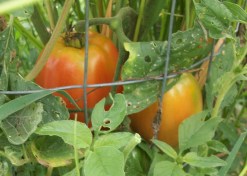
When people think of local food, most have sweet corn and tomatoes in mind. There is a lot more. A way to begin is to think about what fresh veggies and fruit to buy and which to grow. Because of the space it takes, I always buy sweet corn rather than grow it myself. The other way around with tomatoes and green beans. Squash takes a lot of space, and there are lots of great producers of it everywhere… another to buy. Bell peppers require a certain something I haven’t mastered, so I barter for mine, taking seconds from the farm. Why not buy local food when it is abundant, especially if you know the farmer and how the crops are grown?
If you have a small potential garden plot, I recommend picking 8-12 crops and focus on learning how to grow them well. Pick varieties to ripen throughout the season — spring greens and onions, a few herbs, cucumbers, tomatoes, green beans and kale are all easy to grow. The idea is to dip into the soil and experiment using available resources. Another part most people dislike is dealing with pests and predators. Use those books you checked out from the library and better yet, develop friendships with other gardeners and growers in your area — ask them questions, visit their farms. You’ll find gardening is one of the most popular activities and there is lots to talk about, especially when it comes to common problems.
With a positive attitude, there is little to lose in planting a garden. Once one turns the first spade of soil, there is a world worth experiencing in the microcosm of a back yard. Before long, you’ll be craving life in society to talk about your garden. It is about more than home grown fruit and vegetables.
Last night I attended a local food exhibition at Montgomery Hall on the Johnson County Fairgrounds, hosted by the county supervisors. Lots of people I know were there, including some mentioned in my last post.
It was an hour to catch up, caesura after the intense final week of working on turnout and planning for our Iowa Democratic caucus.
The caucuses produced a maelstrom of social media commentary in both parties. Because the Democratic caucus was a statistical tie, all kinds of claims are being made. My thoughts on this tempest in a teapot is it’s over and the state party has certified the results.
Since all of the people who led the more than 1,600 caucuses reported their delegate counts to the party, it would be easy to count them again and compare them with what candidate precinct captains reported to their respective campaigns. There’s no reason not to. In my case, I listened while our caucus chair phoned in his results and they match mine. The Sanders and O’Malley precinct captains were offered the same opportunity. At the same time, it was not a straw poll or election that can be audited. There was no voting even if some in the corporate media want to characterize it as such.
I am neutral about whether Iowa is first in the nation or not. There is plenty of good work to do outside politics if we aren’t. Nothing lasts forever, including Iowa’s first in the nation status.
George McGovern did Iowa a great service after the 1968 Democratic convention when he led the effort to revise a broken nominating process. Back then, presidential candidates were decided in smoke-filled rooms. How could we forget Chicago Mayor Richard Daily’s suppression of protesters outside the convention? That was the year Harold Hughes ran for president and I’ve discussed the convention with someone who was with Hughes in Chicago. The nominating process was controlled less by votes and more by aging white men behind the scenes. Eventual nominee Hubert Humphrey was the last of the old-style nominees, and McGovern’s work produced a superior process.
I don’t think the Iowa caucuses are broken, as some have asserted. Johnson County Supervisor Rod Sullivan suggested people don’t understand the process, and I agree. As a precinct leader for Hillary Clinton, I must have explained parts of the caucus math and delegate process to people in our corner a dozen times. They still didn’t get it. The tactics of caucuses require a bit of arcane preparation and execution, as I described previously. Most important to party building is getting the turnout and having the conversation.
The close result between Clinton and Sanders this cycle, combined with consistently great Democratic turnouts in 2008 and this year highlight a need for the Iowa Democratic Party to fix its outdated process. Caucus yes, but continue to make the process more accessible and less byzantine.
Party leaders should focus on party building. That means continuing to bring people into the Democratic party, a purpose the caucuses are serving well. It also means developing funding streams less reliant upon the presidential nominee and grounded in the people in Iowa. The latter is tough to do in this donor poor state, and tough to do with the rise of the paid political class of organizers, consultants, advertising agencies, data crunchers and logisticians wanting compensation.
Can volunteers drive the election of a president, federal offices and governor? I’m not sure if that is a nostalgic filter on life, taking the current reality out of focus, or a real possibility. In any case, I continue to believe the coordinated campaign, in which presidential resources come to Iowa to prop up the donor poor Democratic party should be blown up.
I know change is possible and needed. I also know I’m not the only one in the party that thinks so.
Local food may be what’s grown in a backyard garden, herb jar or patio pot. It may be heirloom livestock raised in grass paddocks, supplemented with carefully selected feed, and served in a local restaurant. It is definitely vegetables and fruit, increasingly available at farmers markets and roadside stands, from community supported agriculture operations, and even in chain supermarkets.
The local foods “movement,” is less coordinated than what media make it out to be. However, there is a consistent theme: it is small scale, farmers are interdependent, and the face of the farmer is visible in every apple, tomato and ear of sweet corn.
Many of us notice the increased availability of local choices when stocking our kitchens, a sign the food system is changing. After leaving a corporate job in 2009, I had a chance to work on half a dozen farms and gained a closer view of what local food farmers do. It is hard work made worthwhile by a network of cooperation among producers.
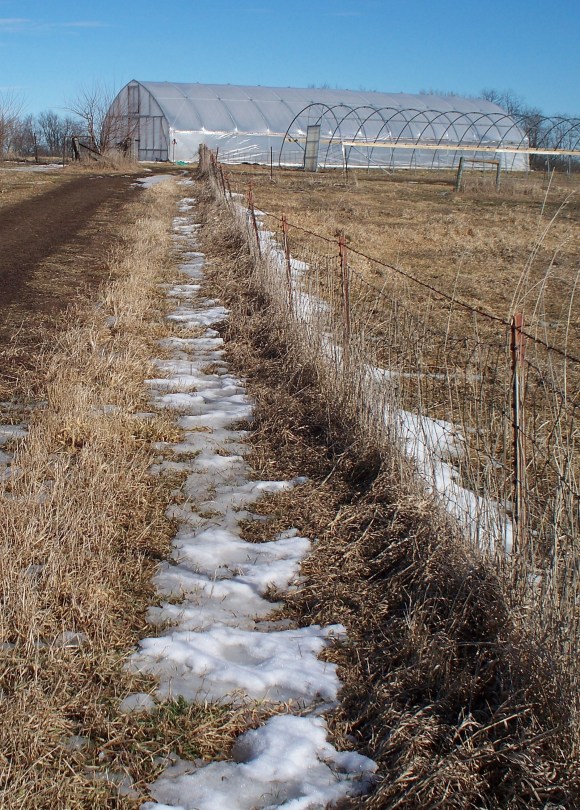
I met Susan Jutz, who operates Local Harvest CSA when two of her children were in 4-H with my daughter. Twenty years into the operation, Jutz has about seven acres in vegetables, pastures rented to local livestock producers, a large field in the Conservation Reserve Program, and a set of paddocks for her flock of ewes and spring lambs. Walking around the farm, you’ll find beehives, a greenhouse and a high tunnel, all adding to the economic structure of a farm using sustainable practices to produce shares for a medium-sized community supported agriculture project.
I began working at Local Harvest in March 2013 when I swapped labor for a share in the CSA. The work was physical, and I enjoyed it enough to return every spring since then. It was the beginning of understanding a local food network.
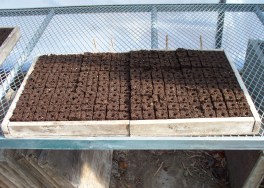
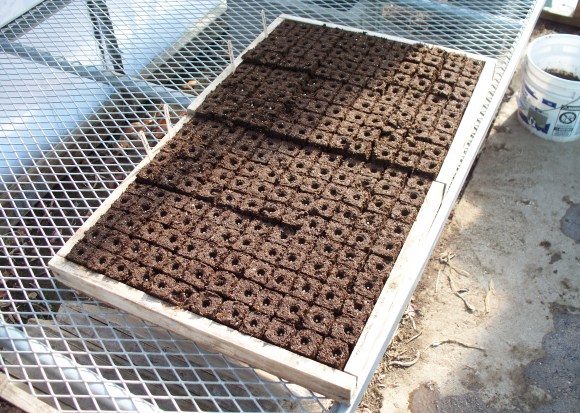
My first job was soil blocking in the greenhouse — making trays of small, square starter soil blocks where seeds are planted. In March, the ground is usually still frozen, yet I have to take off my coat and shirt in the warm workspace. The labor is physical, and a good opportunity to follow seeds turning to seedlings and then to crops with the season. Susan shared her greenhouse with other farmers with whom she cooperated to produce the contents of her member shares. Over time I worked on most of their farms.
One was Laura Krouse, owner/operator of Abbe Hills Farm near Mount Vernon, Iowa. Laura uses part of Susan’s greenhouse space in the spring and provides potatoes for Susan’s fall shares.
Because Krouse’s potato operation is large, she gains economies of scale. Using a tractor with a potato harvesting attachment, along with shared labor from other CSAs, and a large number of volunteers, she can harvest a field quickly. We harvested potatoes and washed them using a specialized root vegetable cleaner, bringing a load of potato-filled buckets back to Local Harvest for storage and distribution.
This is just one example of the cooperative ventures among farmers which include squash, eggs, carrots sweet corn and other vegetables for CSA shares.
While Susan and Laura have been operating for decades, since the local food movement got started in Iowa, the increased interest in local food is encouraging more farmers to enter the market.
I met Lindsay Boerjan who returned to her family’s century farm in Johnson County in 2011. To supplement family farm income, she used leftover material from a razed barn to construct raised planting beds. With manure from the cattle operation she runs with her husband and aunt and uncle, she planted the beds in vegetables for a CSA she began in 2015 with seven members. She hopes to grow her number of customers. Boerjan said she faced challenges as a female farmer.
“It’s predominantly an older male thing or career,” she said. “Should you want to make a career of it, it’s harder to wrestle in costs now the way they are.”
Boerjan is an example of a minimally financed operation, able to get started because she owns the land and is part of a larger farm operation. That Boerjan’s family owned the land and already farmed helped get her CSA going.
In January, Wilson’s Orchard in rural Iowa City announced it was entering the CSA market with a partnership with Bountiful Harvest Farm near Solon. Dick Schwab’s involvement in Bountiful Harvest is an example of a well-capitalized CSA start up. Schwab is a local entrepreneur who is involved in a variety of financial investments, including a timber business, an auto repair shop and more. He already hosted another CSA, Wild Woods Farm, on his acreage in rural Johnson County. He has experience, owns the land and equipment needed to operate a farm, and has a network of marketing contacts that include Wilson’s Orchard.
Knowing the face of the farmer has been part of the local food movement. Today, people want to know more about where and how food is produced. Getting to know a farmer was important at the beginning of the local foods movement in Iowa, and still resonates. At the local supermarket, buyers stock the produce aisle with locally produced items, along with a daily count of local food items on hand and a life-size photographic cutout of the farmers who produced them.
Driven in part by mass media, consumers are concerned about a wide range of food issues that include contamination with harmful bacteria; dietary concern about consumption of carbohydrates, fat and sugar; the way in which plant genetics are modified to improve them; and more. Partly in response to media campaigns, annual sales of organic food exceed $30 billion in the U.S. (USDA). The increase in organic market share from national advertising campaigns is significant. If you get to know your local food farmer, what you may find is they benefit from this marketing, but their customers come and stay with them because of a personal relationship with the farmer.
Whether you grow herbs on a kitchen window, belong to a CSA or garden a plot in the backyard, it is all part of a local food movement that is just getting started and depends on knowing the face of the farmer.
Iowa Democrats did their job at the Feb. 1 first in the nation political caucuses.
The field was winnowed from six candidates (Chafee, Clinton, Lessig, O’Malley, Sanders and Webb) to two (Clinton and Sanders), giving Hillary Clinton a narrow, historic victory.
Our precinct played a role, and not an insignificant one, in producing that victory.
Hillary Clinton was the first woman to win the Iowa caucus — another glass ceiling broken. The caucus results are close. How close? It’s a matter of a couple of delegates with all but one of the state’s 1,683 precincts reporting, according to the Iowa Democratic Party. It is unclear whether the Sanders campaign will request a recount, but I doubt it. There are bigger fish to fry.
Iowa also played a role in setting which issues would be front and center in the 2016 presidential election. Even the anti-billionaire money in politics candidate Bernie Sanders gave an unintended nod to billionaire Tom Steyer’s advocacy to put climate action on the front burner of the contest. While issues aren’t the same as the horse race, they matter and Iowa matters in defining them.
The caucuses will be analyzed in great detail in the next 48 hours, so I have only a couple of things to add.
I begin with the lesson learned while attending the Democracy for America training in elections: winning an election is getting 50 percent of the vote plus one. The DFA method puts what happened in our precinct into higher relief, as through planning and competent execution of the tactical plan, our team for Hillary turned out more voters than expected, and provided Martin O’Malley his only delegate from Johnson County, and one of the few he got in the state. By giving O’Malley a delegate, it was taken from the Bernie Sanders group, giving Clinton a 2-1 victory over Sanders in Big Grove precinct. In a tight race, that one delegate mattered.
Here are the numbers.
Big Grove turned out 165 voters this cycle. We turned out 92 people for Clinton, the same number Obama had in 2008. In 2008, there were 75 Clinton supporters, a tie with John Edwards, and Clinton won the second delegate that year with a coin toss. For perspective, we turned out 242 during the six-way race Obama won in 2008. Our turnout last night was 69.2 percent of 2008’s record. Clinton had 56 percent of people at the caucus last night compared to 38 percent for Obama in 2008.
At the first alignment I reported these numbers to the Clinton campaign:
This count would split the delegates two for Clinton and two for Sanders, with O’Malley not being viable. At the second alignment we sent our negotiating team to talk to O’Malley, with the Sanders representatives standing next to ours.
To get a third delegate we had one option. We needed to take people from Sanders and they were holding firm except for three people who moved to O’Malley. I did the analysis, ratified it with our team, and determined that by giving O’Malley 12 people their team would be viable and the delegate would come from Sanders.
I explained our proposal to the Clinton group and it was easy to get 12 volunteers to go to the O’Malley camp, since they understood the logic, if not the byzantine methodology. We executed the tactic, producing the following report to the Clinton campaign.
Standing next to my neighbor and caucus chair, he phoned in two delegates for Clinton, one for O’Malley and one for Sanders to the state party system. This was our fourth presidential caucus working together and we were the last to leave the Middle School.
I haven’t digested everything that happened last night, although I was proud of the effort team Hillary put forward in our precinct. We ended up door knocking our entire precinct on Sunday, and that last minute extra effort had to have made a difference in turnout and the final result.
From here, let the pundits, bloggers and news reporters tell their story. The 2016 Iowa caucuses are in the books, and it is up to the remaining 49 states to decide who our Democratic nominee will be.
Whoever that is, I’ll feel comfortable going back to this year’s caucus attendees to ask for help in the general election campaign. No unity party needed here.







 Journey Home
You must be logged in to post a comment.