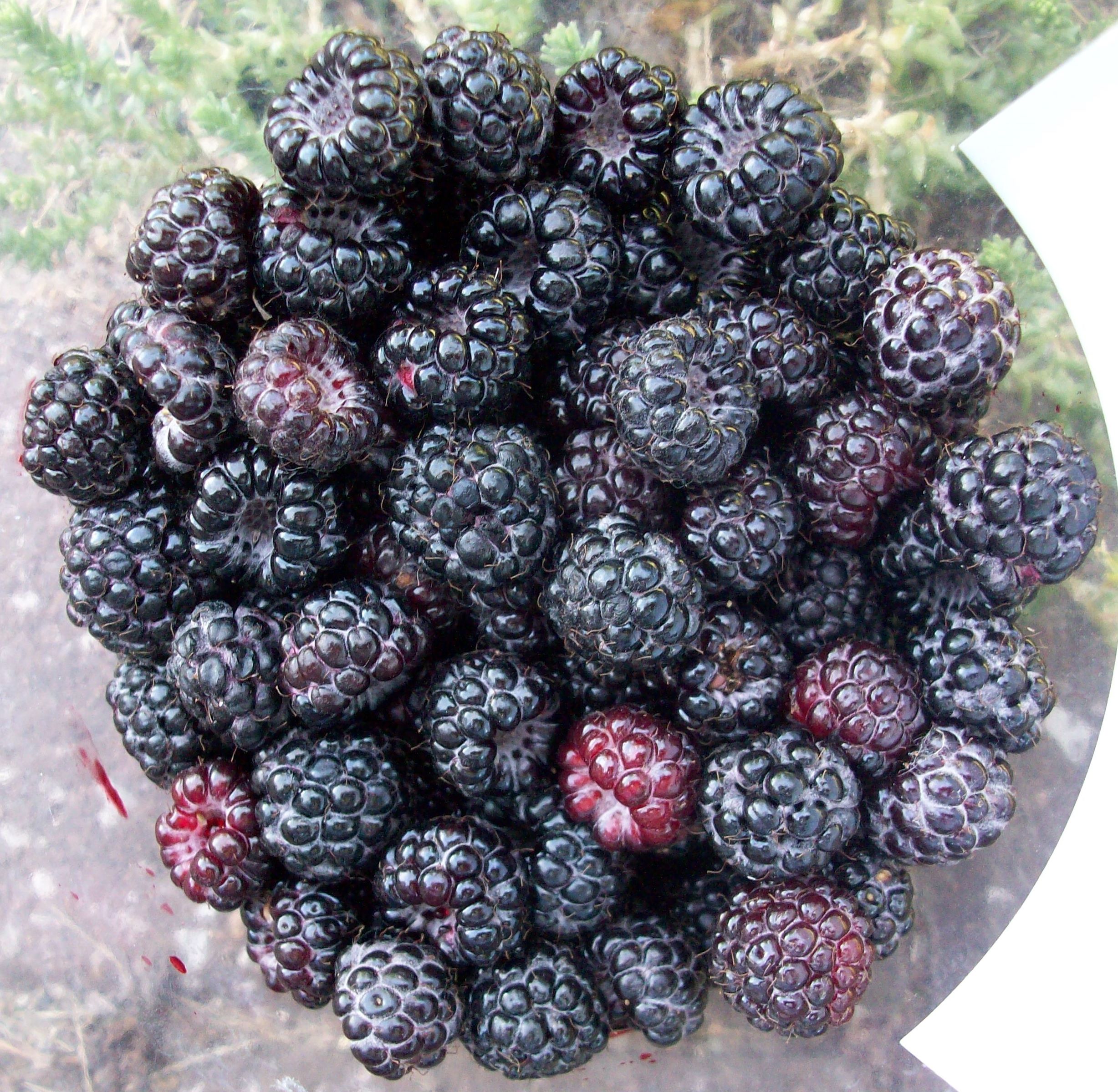
Wild Blackberries ripening around Independence Day.
On July 2, 1995, when our child was ten years old, the two of us rode our bikes to Solon on the state park trail. We read the newspaper and ate breakfast at the Country Café. On the way home we stopped to pick wild blackberries growing along the trail. I made blackberry jam with some of them. It was hard not to eat them all as we picked them.
We then rode to watch the Freedom Festival regatta by the public boat landing. The sky was clear blue with a few cumulus clouds. Sails billowed in a breeze imperceptible from the shore.
Summer days like that are a reminder life is always just beginning. We live in each moment yet look forward to every new day with the hope that positive things will take place. Chance plays a role, although we must be active agents in making our future the best it can be.
Morning of a new day, filled with potential for good.
The hubris of the United States is on clear display on a day like today, where late Saturday, we used so-called bunker buster bombs to attack the uranium enrichment capacity of Iran at three sites: Fordow, Natanz and Isfahan. The president said in an address Saturday night, “Iran’s key nuclear enrichment facilities have been completely and totally obliterated.” I’m calling bullshit. So are a lot of folks who know more than I do.
“It is impossible to know at this stage whether this operation accomplished its objectives,” ranking member of the House Intelligence Committee Jim Himes (D-Conn.), said in a statement.
Gen. Dan Caine, chairman of the Joint Chiefs of Staff, said in a news conference Sunday that the Fordow, Natanz and Isfahan nuclear facilities “sustained extremely severe damage” but it was too early to tell the scale of destruction, according to the Washington Post.
Dr. Ira Helfand addressed the question at the heart of this:
What if the United States attacks Fordow with a GBU-57 “bunker buster” bomb and the bomb does not take out the deeply buried site? Does the United States escalate up to the use of a nuclear weapon?
A 2005 report issued by Physicians for Social Responsibility examined the effects of an attack on the Iranian nuclear facility in Isfahan with a 1.2-megaton B-83 thermonuclear warhead, then under consideration for use in a Robust Earth Nuclear Penetrator (the “bunker buster”). The study used software known as the Hazard Prediction and Assessment Capability—developed by the Defense Threat Reduction Agency—to model nuclear weapons explosions’ effects. The study found that the attack could kill 3 million people—half of them from radiation sickness—and that the radioactive fallout would spread over a wide area of Iran, Afghanistan, and Pakistan.
The population near Fordow is much smaller than in Isfahan, but the death toll and radioactive contamination resulting from the use of a nuclear weapon there would still be catastrophic. (“Why Congress and the people should stop Trump from attacking Iran,” by Dr. Ira Helfand, Bulletin of the Atomic Scientists, June 19, 2025).
The American hubris to which I referred is our decades long failure to comply with Article VI of the Treaty on the Non-proliferation of Nuclear Weapons. Both we and Iran are parties to the treaty. The idea the U.S. could escalate this situation to include use of nuclear weapons would not be an option if we were in compliance with the treaty.
The irony of Saturday’s bombing is it may cause Iran to withdraw from the treaty and develop a nuclear program which includes nuclear weapons. This is something that according to people who read the intelligence before the bomb-dropping, was not previously on the table.
As Daryl Kimball of the Arms Control Association put it, “The U.S. military strikes on Iranian nuclear targets, including the deeply fortified, underground Fordow uranium enrichment complex, may temporarily set back Iran’s nuclear program, but in the long term, military action is likely to push Iran to determine nuclear weapons are necessary for deterrence and that Washington is not interested in diplomacy.”
My initial reaction to news of the bombing persists: “The bombing of Iran’s fuel enrichment sites was an illegal, useless act that makes the world less safe.”
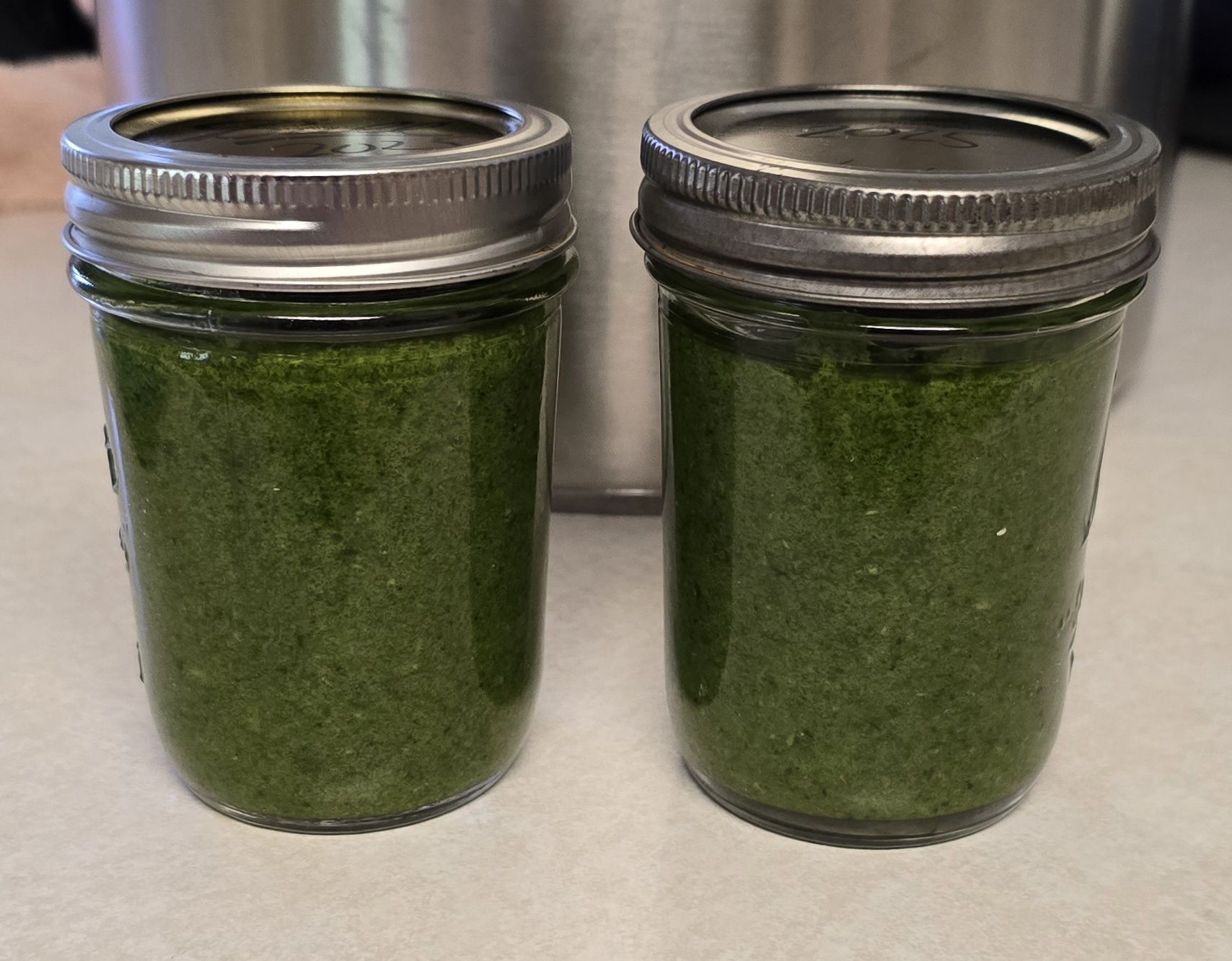
The first harvest of basil was huge this year. I used part of it to make this pesto-like spread for toast and with pasta. A purist would say it is wanting in pine nuts and Parmesan cheese and therefore not pesto. In my world, there are not a lot of purists. These two jars went in the freezer while I use up previous year’s jars of pesto for lack of a better name.
Fresh basil pairs nicely with last year’s garlic crop, which needs to be used up before garlic scapes appear this year. Garlic, basil, extra virgin olive oil, and a little salt is all this needs. This batch used two and a half large head of garlic, and four cups of chopped basil. The measurements are flexible.
I made a batch of vegetable broth and this pesto while the ambient temperature outdoors was in the low 90s. It was a fine Saturday afternoon to work in the kitchen.
Centennial Building of the State Historical Society of Iowa, Iowa City. Photo Credit – State Historical Society of Iowa website.
I probably won’t go to The State Historical Society of Iowa’s Centennial Building in Iowa City before it closes for good on June 30, 2026. In all my time in Johnson County, I’ve only ever been inside a couple of times. I remember purchasing some Iowa history books with their distinctive red covers. There are likely other good things there, like the archive of Emma Harvat, first female mayor of Iowa City. Even so, I found the building’s contents inaccessible, and a discouragement to research.
Everything is destined for the Des Moines Historical Society location, according to the Cedar Rapids Gazette. “It’s unclear how many records are kept at the Iowa City building,” Megan Woolard wrote in the article. I believe that. It was difficult to find a path to start research when I was last there. Maybe with the move, someone will go through everything and highlight some of the objects in a program or exhibition. Given the level of interest, combined with funding constraints, maybe not.
Our historical archives are a collection of society’s stuff. There is a view archives should be conserved. What is the best way to do that? Looks like the direction in Iowa is under one roof. That can be good or bad. Here’s hoping for the best outcome, in case we someday need access to this forgotten history.
Big Grove Township was established before Iowa Statehood. The first sawmill was built here in 1839 by Anthony Sells on Mill Creek. Put the big groves of trees together with the sawmill and you have us. The oak, walnut, hickory, ash, elm and cottonwood that once thrived among numerous pure springs were gone when we bought our lot here. What dominates is the culture we and others brought with us to an area where all trees indigenous to the Northwest once existed in abundance yet no longer do. There is something essentially American in that. We moved to Big Grove Township in August 1993.
There is a subdivision named Mill Creek today, suggesting this history. Throughout the area, people refer to early settlers and builders of homes instead of the people who now own those homes and live in them. The names Cerny, Beuter, Andrews and Brown persist, as does the more recent name of Don Kasparek upon whose former farm our home is situated.
On the vacant lot we purchased, there were scrub grasses and a lone mulberry tree. The tree appeared to have been planted by a bird’s droppings while it perched on a surveyor’s re-bar marker. The ground had a high clay content which suggested Kasparek had removed the topsoil before subdividing the plats. When he died in 2003, I recognized him in our association newsletter. We speak of him from time to time in the neighborhood, although not always in a positive way.
I looked at an old picture of a building on Main Street in Solon, the nearest city. In sepia tones, seven teams of horses and wagons are lined up in front of the building on the dirt street. We can make out the lettering on the shop windows: Cerny Bros Grocery, Cerny Bros Hardware, and Cerny Bros Feed. While the roads have been paved for many years, much of downtown and the surrounding area resonates with the area’s origins in history before automobiles.
We built our home during the record-breaking floods of 1993. Governor Terry Branstad described the extreme weather event as “the worst natural disaster in our state’s history.” At one point that summer, it rained 50 out of 55 days. The Des Moines Register published a commemorative book titled Iowa’s Lost Summer: The Flood of 1993. Extreme weather delayed construction of our home that summer, causing us to stay with relatives and in motels for about a month after we moved from our house in Indiana. We finally moved in, the same day technicians were hooking up electricity and cable television. I was used to severe flooding from growing up in Davenport where the 1965 Mississippi River flood broke records. I was not used to flooding, 1993-style.
I couldn’t believe who I was expressed itself in any of local history. My culture was what I brought with me, rooted in coal mining, factory workers, farming, home making, and the rural cultures of Virginia, Minnesota and Illinois. Our history as a family goes back on both Jacque and my families to the Revolutionary War. My line in Virginia goes a hundred years prior to the revolution. This seemed to have little relevance to local culture in Iowa.
That my ancestor Thomas Jefferson Addington is a common ancestor to the Salyer girls of the Salyer-Lee Chapter 1417 of the United Daughters of the Confederacy stands in contrast to the story of Maciej Nadolski working in coal mines in Allegheny, Pennsylvania after the Civil War and then buying land from the railroad in Minnesota. What of my father’s birth in Glamorgan, Virginia? What of the suppression of Polish culture by the Russians after 1865 that led to a massive migration of Poles to North America? If I weren’t here, we wouldn’t speak much of these things in Big Grove Township. Perhaps with time we will.
Dear Dennis,
The pioneer spirit! So much of popular culture lauds these people. Their hard work, and inquisitiveness have been amalgamated into a hagiographic portrait: the very founders of modern society. I take exception to this, rather, the importance and interest of the pioneers is over-emphasized. They struck new settlements in the wilderness, stayed 3-5 years, then sold out to move to Kentucky, then Indiana, then Iowa, then beyond. Restless, not enduring, their influence has been too much. I’d rather look at those who followed in their footsteps. Those who took the broken wilderness and made something of it, in many places the wilderness is, figuratively, still broken, transients residing there, waiting development. (Letter to Dennis Brunning, April 19, 1986).
If the 1980s was a time of our getting started, the 1990s were a time of work and supporting our family. We saved for our child’s college, and for our retirement. During the flood, we established ourselves. The time here was one of making a career and making time for family. We bought the home we could afford, and proceeded to fill it with boxes of stuff, many of which we do not now have a clue about what is inside. We are working on that as I write.
We took vacations, supported our child in high school activities, and took them to college. I worked for the income but took two long hiatus periods because of a nagging dissatisfaction. I had a retirement party and a cake in July 2009. We had been able to establish a financial foundation that, while not luxurious, was okay. All three of us were trying to make our way in a world that did not appear to care whether we succeeded or failed. I believed we were succeeding.
Iowa was one of the last areas settled by horse and wagons. If the United States is provincial when compared to the cultural centers of Europe, what then of us, twice removed from Europe? New York and Washington seem as removed as Paris and Bonn. So, culture in Iowa, even as we sit in Big Grove Township is not an indigenous thing. It is derivative, just as the language I write in is English. What I do, and experience from that point of view is indeed, as so many have said, provincial. But what about this? I cannot say because my life is based on study of western civilization. My view is it is no less pure, and beautiful and useful than the rigid cultures of Europe or the East Coast of the United States.
When I wrote journals, they were not the kind written by Samuel Pepys, or Henry Adams. They do follow journal forms as they came down. To say something new, and private: a creation in its own right. That’s what my writing was about. If it accomplishes nothing more than the calming of a Sunday afternoon, then it will have been of some use.
Creativity in Iowa often takes something of outside origin and incorporates it into a new creation, that is fed from the soil yet showing the genetic traces of the ancestor. This journal might be recognized as something it is not by an easterner or a European. Though nature has presented what it will, we must and will nurture nature’s presentation to our own new, creative intentions. I did not recognize this as we moved to Big Grove Township in 1993, yet that’s how things evolved.
By Aug. 6, I had begun journaling again:
I stopped keeping a journal some time ago. But now, in the basement of our unfinished house I take pen to paper and begin it anew. Here, in Johnson County, I hope for good things to take place.
I notice now… the ringing in my ears, the sounds of birds, and a car now and then driving in front of the house. It is a quiet place. There is much to do to make it a productive place. (Personal Journal, Big Grove Township, Aug. 6, 1993).
In late Spring 2025, while I’m digging in a garden plot or walking on the trail, my mind is consumed by how to pull everything in my autobiography together and bring the narrative to a close. Up to the time we moved back to Iowa, a chronological narrative seemed appropriate. Beginning here, in this place that was a vacant lot when we arrived, life got complex to an extent a time-based narrative doesn’t really capture those 32 years. There was no single narrative. And so it shall be in these closing chapters of this book.
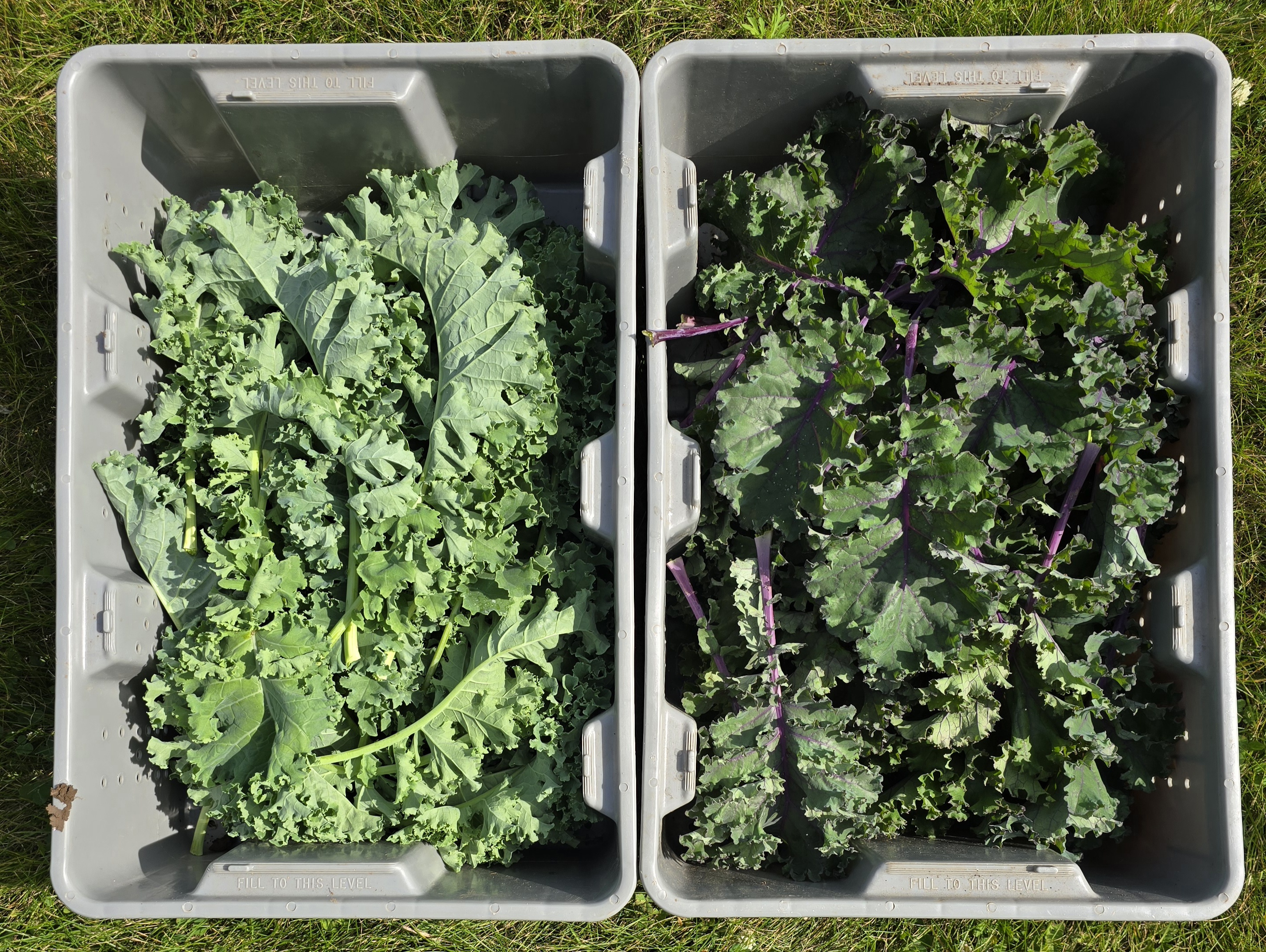
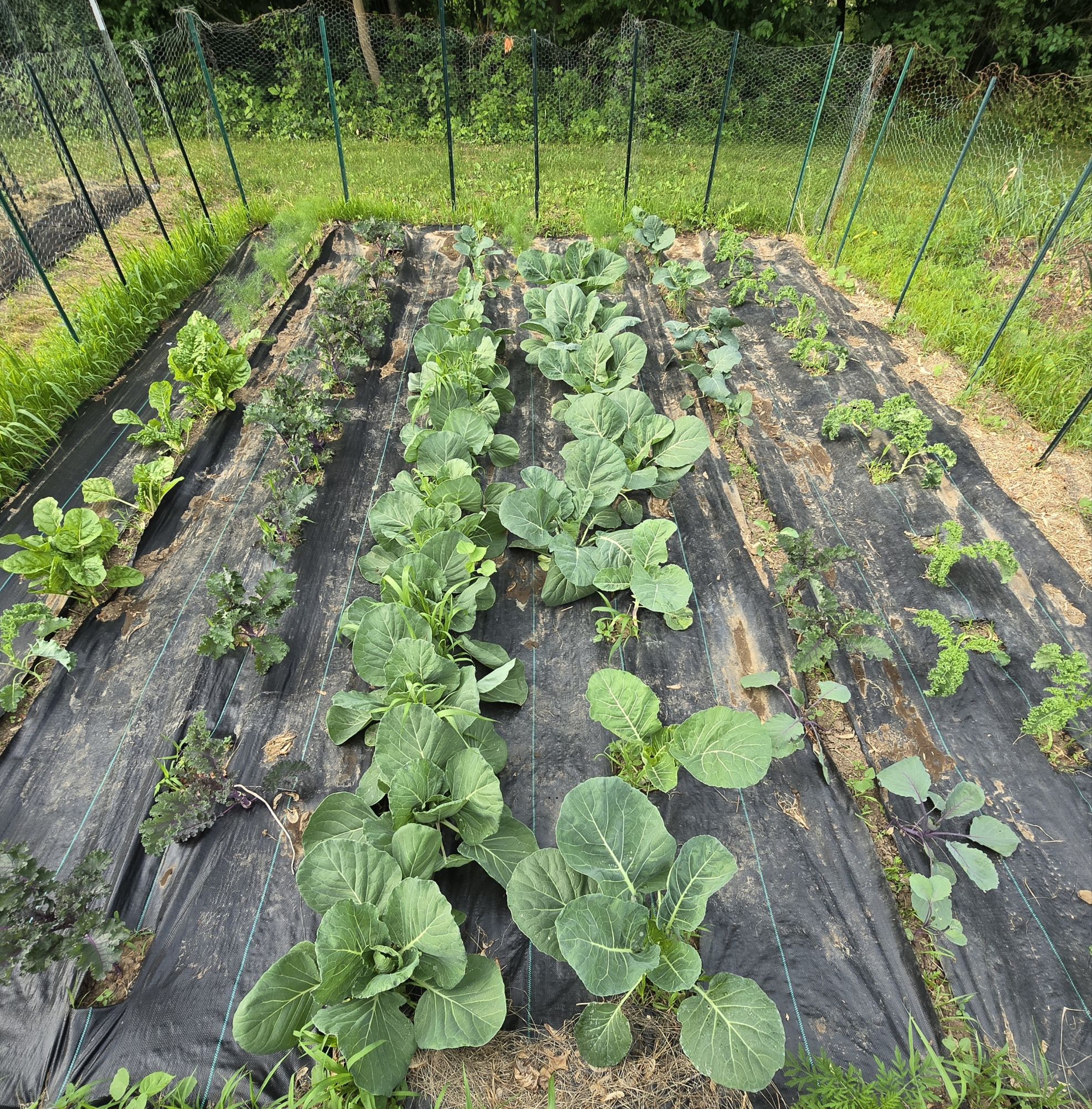
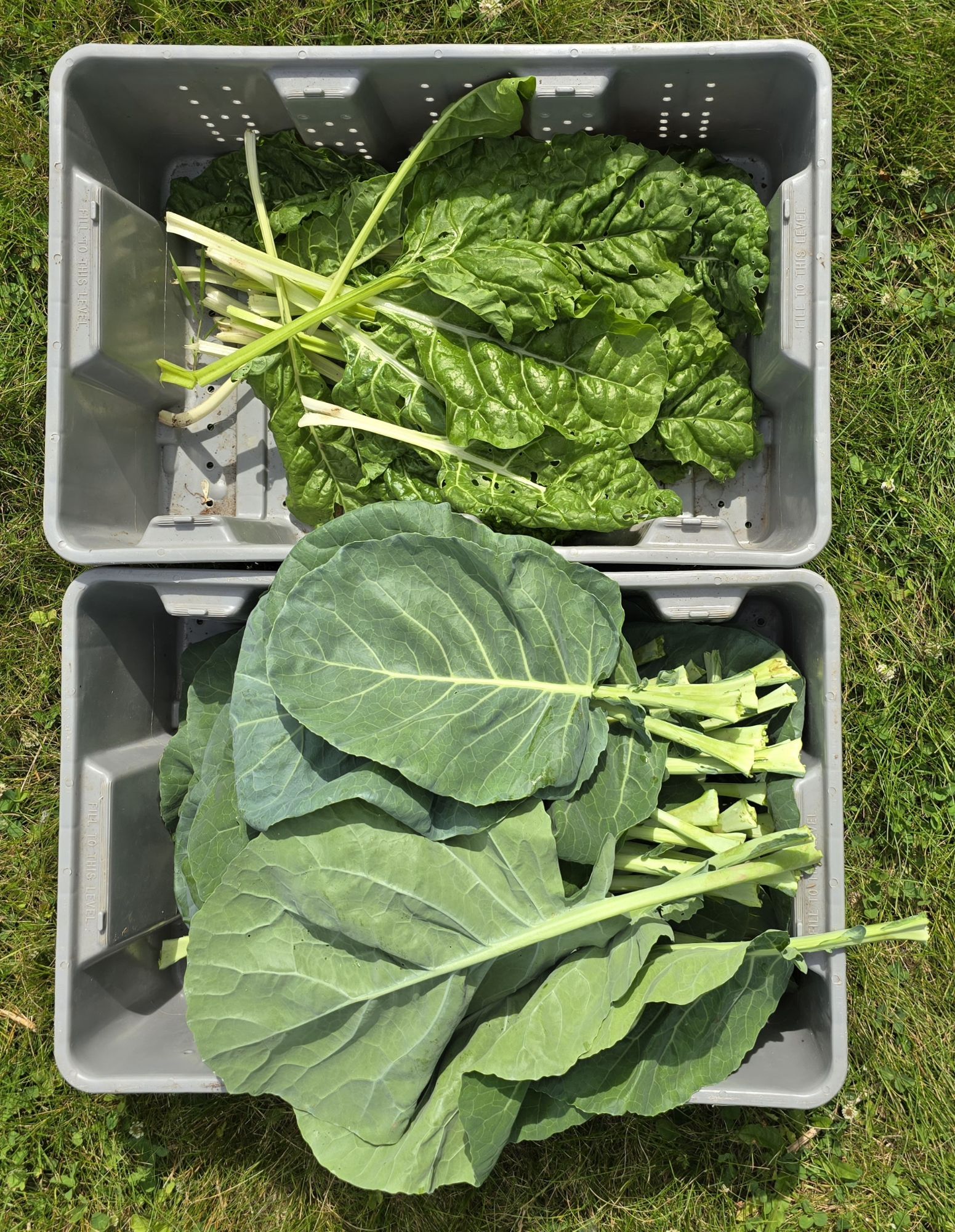
It’s been a good spring. The cruciferous vegetable patch has been coming along nicely. If it continues, there should be plenty of home grown kale and collards for the coming year until next year’s crop comes in. Hopefully everything else in that plot will mature for harvest.
Cruciferous vegetable plot.
I’ve been able to exercise daily with a brisk walk on the state park trail. I’m moderating what I eat using an app to track calories. I shed 15 pounds of weight this spring. I am eating better food in appropriate quantities. Between the exercise and change in eating habits, I feel better.
The trail goes on forever.
Today I plan to catch up on work around the house and make a trip to the wholesale club. Tomorrow I re-start summer writing. Here’s hoping for a memorable summer.
Don’t forget. Today is Juneteenth! Happy Juneteenth to all who celenrate. That should be every American.
Swiss chard and collards donated to the North Liberty Food Pantry.
After an overnight trip to Chicago to visit family and friends, I’m ready to begin summer writing. Ideas have been percolating all spring. It’s time to get them down and make something of them.
I enjoy the Chicago suburbs of Oak Park, Skokie, and Forest Park where I have been spending more time the last couple of years. It is remarkable how from the ground it looks exactly like you’d expect after seeing it countless times while taking off from and landing at O’Hare and Midway. I stayed with someone who lived his whole life in close proximity to where he was raised in Oak Park.
The main summer writing challenge is determining a schedule. I want to get into the garden early in the day to weed and harvest. I don’t want to spend all my energy there. I plan to shake up my daily outline and routines. The re-engineering process should be fun, and easy to accomplish by Friday.
Tuesday morning I took excess chard and collards to the food pantry. The receiver told me, “Those will go fast.” I always feel good when I donate produce I grew for food insecure people.
There are a lot of positives in the waning days of spring. If we can only take the time to recognize them.
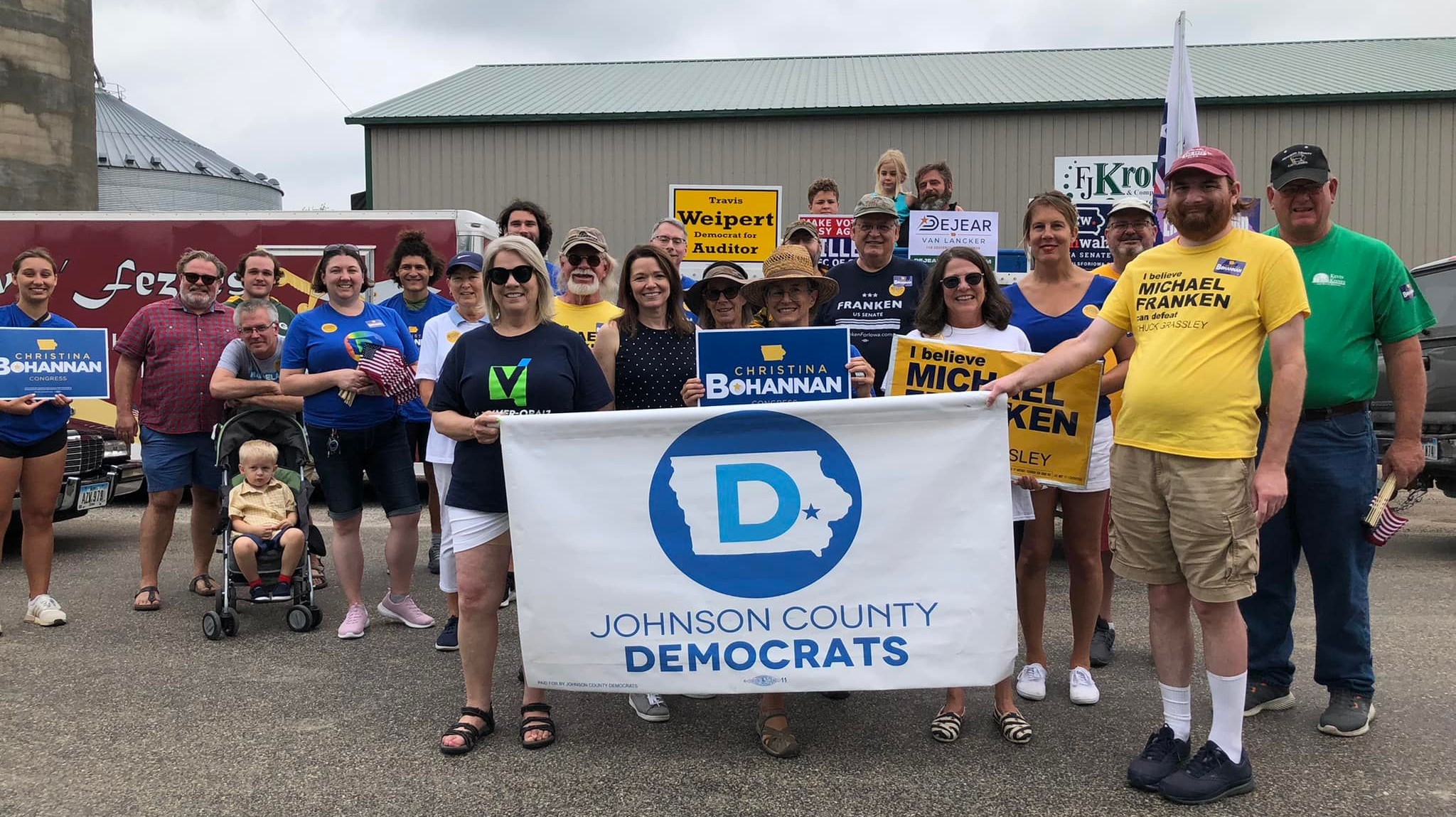
Johnson County Democrats at the 2022 Solon Beef Days parade.
On Monday, June 16, Christina Bohannan announced her third run to become the U.S. representative from Iowa’s First Congressional District. Let’s go!
Campaign 3.0 puts her way ahead in the primary race with two other Democrats. The fact she lost the 2024 general election by 799 votes is an indication she could win in 2026 regardless of which Republican advances from their primary.
The midterm election has been a challenge for Democratic voter turnout, yet in a time when opposition is growing to the Republicans in power, we might pull this one off. The recent No Kings rallies are an indication voters are increasingly engaged in our politics. I believe voters will turn out for Bohannan.
Here is the press release I received by email this morning:
Christina Bohannan announces campaign for Iowa’s First Congressional District
Bohannan: “It’s time someone put Iowa first”
Iowa City, IA – Today, Christina Bohannan announced her campaign for Iowa’s 1st Congressional District. Bohannan nearly defeated Mariannette Miller-Meeks in 2024 – and outworked, outraised, and outmatched her, outperforming the presidential margin more than any other Democratic challenger in a targeted race in the country. It was the most razor-thin margin of any Republican re-election of the 2024 cycle. This contest begins right where it ended – the biggest toss-up in the country.
Christina Bohannan said, “Mariannette Miller-Meeks has had three terms in Congress – three chances to do right by the people of Iowa. Instead, she has taken over $4 million from corporate special interests and done nothing but vote their way. And she has put partisan politics over Iowans again and again. From cutting Medicaid, to siding with DOGE’s devastating cuts to Social Security, to enabling unelected, unaccountable billionaires like Elon Musk – Miller-Meeks has forgotten about us. It’s time someone put Iowa first.”
Miller-Meeks must explain why she keeps putting Washington special interests first. In just the first six months of her current term, she has:
Cast the deciding vote for the extreme plan that will gut Medicaid and make health care unaffordable for more than 100,000 Iowans to pay for a massive tax giveaway to her billionaire donors;
Repeatedlyvoted for the cost-increasing tariffs that will force Iowa families to pay $4,400 more in higher costs per year while 700,000 Americans jobs are lost, and costs are increased for farmers, small businesses, and manufacturers;
Joined Elon Musk’s DOGE efforts to cut Social Security, veterans healthcare, education, and law enforcement resources as a proud member of the DOGE Caucus.
It’s time for Christina Bohannan.
Christina grew up in a mobile home, in a rural town of 700 people. When Christina was in high school, her dad got sick with emphysema, and his health insurance was cancelled, forcing her family to choose between paying for his medicine and paying for everything else. She worked her way through school by picking fruit, cleaning trailers, and waiting tables, becoming the first in her family to go to college. After working as an engineer and then teaching at the University of Iowa College of Law for two decades, she took on politics as usual and defeated a 20-year incumbent to represent District 85 in the Iowa House of Representatives. Now, Christina is running for Congress because she believes we need a government that works for the people, not political parties and Washington special interests.
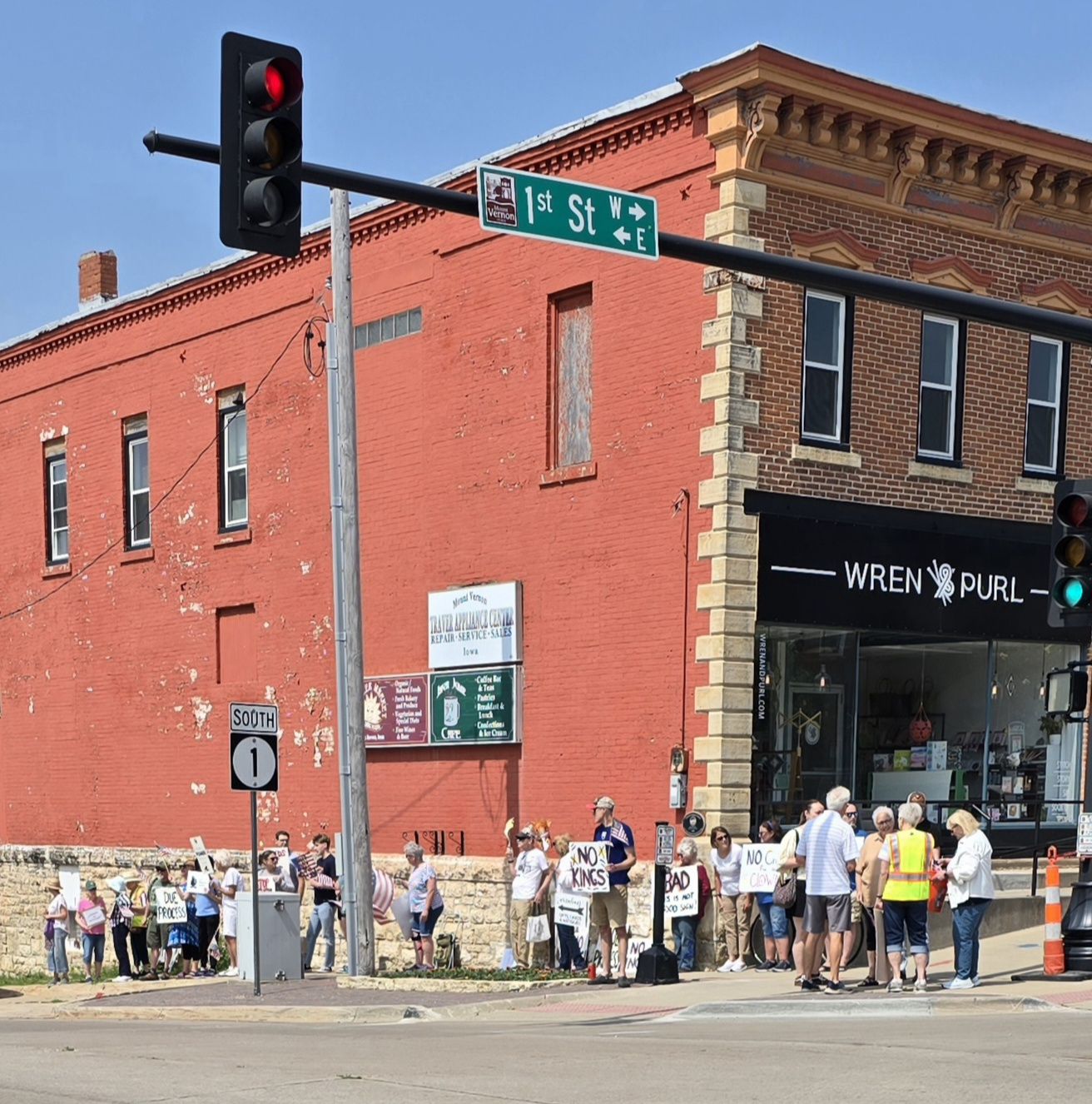
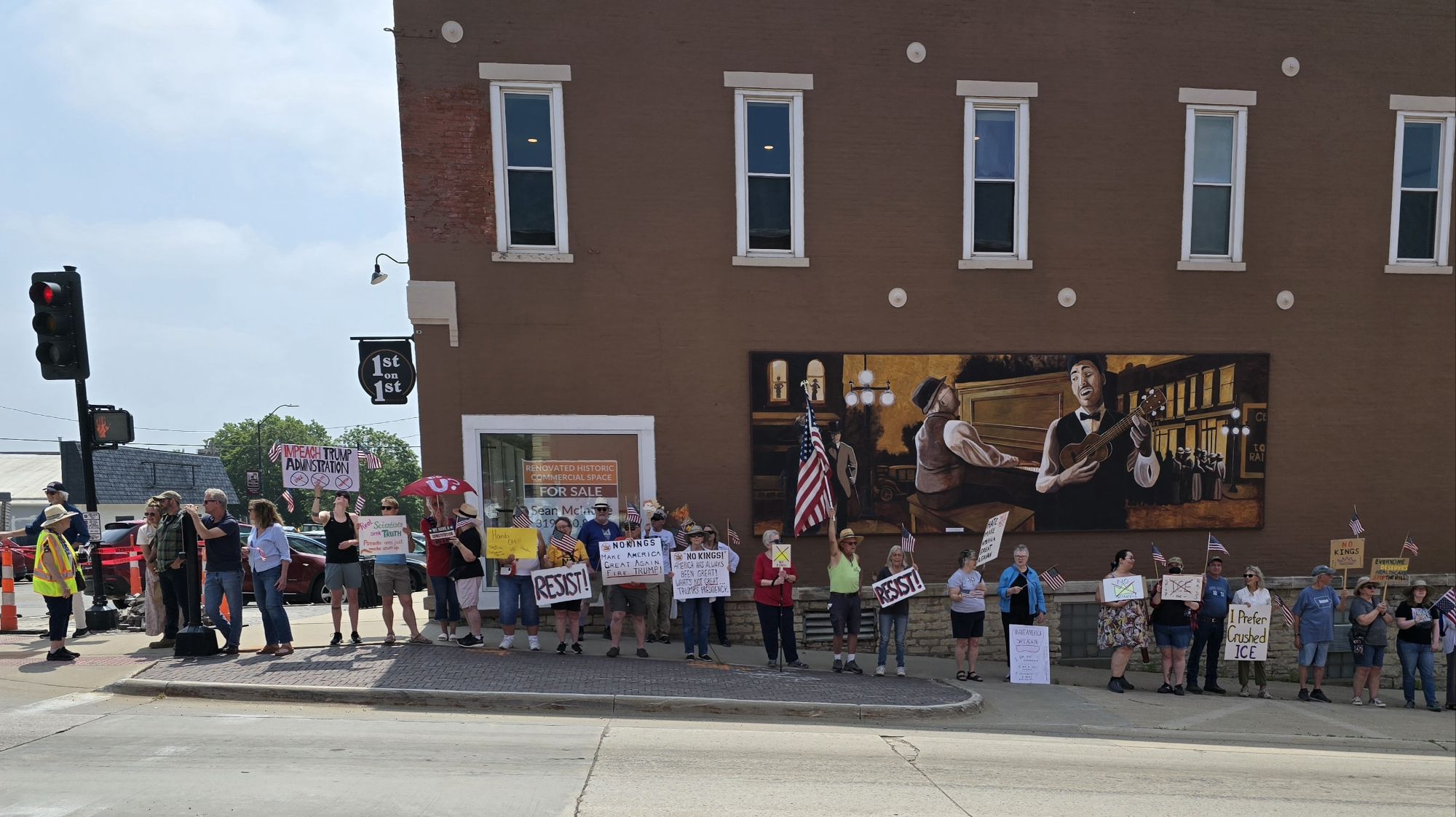
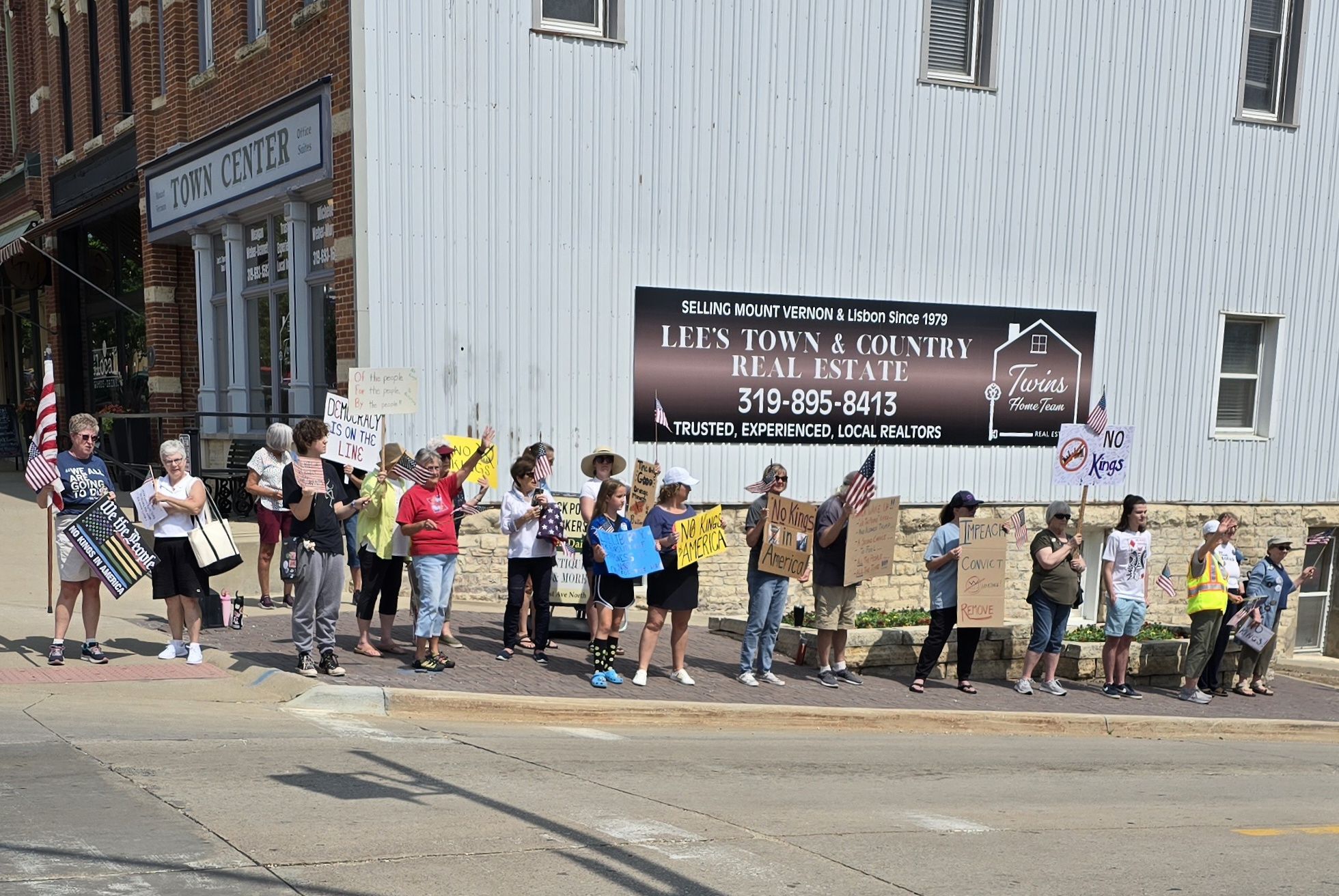
I counted more than 350 people lining Highway One near the intersection of First Street in Mount Vernon in support of the No Kings rallies taking place across the United States and in some foreign countries. The event was straight forward. People brought home made signs, held American flags, and waved at people in vehicles passing through the intersection. There were a lot of horns honked, waving back, and even a crank with a Trump 2024 sticker in his rear window who repeatedly drove through our demonstration. It was all good.
The crowd chanted, “Love, not hate, will make America great.”
The best part of the rally was it was just regular people coming together to say we won’t stand for the authoritarian direction our country is going. No speeches, just a simple, personalized statement about who we are.
Northeast Corner of Highway One and First Street.Southeast corner of Highway One and First Street.Southwest corner of Highway One and First Street.Northwest corner of Highway One and First Street.The crowd stretched for several blocks both North and South of First Street.Small group with home made signs.
There are five different No Kings Mass Protest rallies close to me on Saturday. I plan to attend one of them, likely the one in Mount Vernon. It’s close and I want to see who else I know in that community. It is 60 minutes, so, long enough to find value, and not so long as to find it tedious. I understand there are day jobs available in Washington D.C. on Saturday where a person can wear a red hat and fill a chair for the big military parade for $1,000 in cryptocurrency. I’m not sure there will be chairs where I’m going.
When I was a teenager, Father took the three kids to the Municipal Stadium to see an “All Star Wrestling Caged Match” with two professional wrestlers. I am researching this for a later post that will argue the world in which we find ourselves today — in our media bubbles — is such a construct. We miss a lot of nuance by focusing on the cage match and can do better. I hope to explain that.
That’s all for now. My posting schedule is dicey the next few days. Maybe it’s time to take the last days of spring away from the computer interface. It may be the refreshing break I need.










 Journey Home
You must be logged in to post a comment.