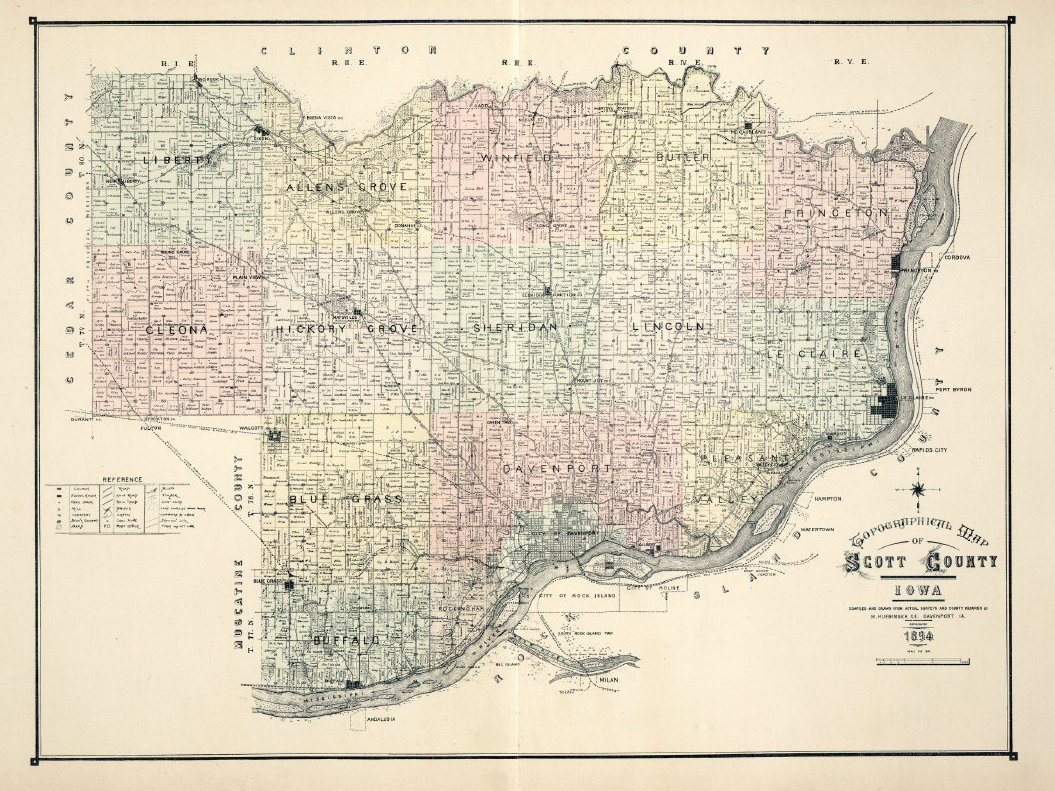
I’ve been in Davenport for just five days and already my mind is flooded with thoughts about projects to get involved with — many different activities. My mind is coming to be awake unlike it has been through the four years I have been in the Army. The potential for doing things is tremendous.
Northwest Davenport has changed during my absence. The Spudnut Shop is now a donut shop of a different name. Don’s Sport Shop now sells only bicycles. Northwest Drug Store closed its doors permanently and will be selling its goods within the week. Schlegel’s Rexall is now HAAG Drugstore, and Swan Drug Store sells more hospital hardware than anything.
Change is part of life and I guess it is to be expected. As you were — life is change. How it differs from the rocks.
It is about time to bring the writings in this journal to an end and begin filling the pages of a new book.
~ This is the second of a series of posts based upon writing in my journal.
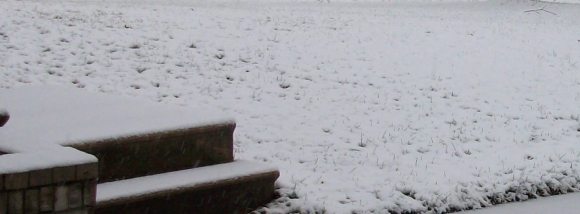
making a mottled, pre-dawn blanket of white and dark.
It won’t last long.
Stored heat in the driveway already melted some of it.
Snowfall portends winter and the end of autumn work.
We turn indoors to the somnolent beast within.
The 2016 general election was a pisser.
Almost no one outside my immediate family and friends talked in public about politics before the election. Now… colleagues and denizens of the county are unpleasant, gossipy and intolerant. Where did that turn in attitude originate?
It’s easy to blame presidential candidates, politicians and corporate media, and many do. It’s not that simple. Our discontent comes from the unsettling nature of life in the post Reagan era. The reality of it hits hard as social fabric, woven with progressive ideas, unravels.
Now is the winter of our discontent
Made glorious summer by this son of York;
And all the clouds that low’r’d upon our house
In the deep bosom of the ocean buried.
Now are our brows bound with victorious wreaths;
Our bruised arms hung up for monuments;
Our stern alarums chang’d to merry meetings,
Our dreadful marches to delightful measures.
Grim-visag’d war hath smooth’d his wrinkled front;
And now, — instead of mounting barbed steeds
To fright the souls of fearful adversaries, —
He capers nimbly in a lady’s chamber
To the lascivious pleasing of a lute.
~ Richard III, Act I, Scene I, A street in London
Right now the country could use a good Plantagenet-era revolt — like the one in 1381 — to check the excesses of the coming shit storm of governance. By all accounts, there is a growing will to resist and take action. We wait and watch as skies darken despite approaching dawn.
Inside a beast is awakened. Once groggy and listless, now restless and wondering whether Robartes’ vortex has begun to narrow.
“Iowa Democrats have a paucity of large donors. There just aren’t that many in the state. The chair plays a role in party fundraising, but the effort would be better served by delegating it to prominent Democrats on a volunteer basis. The idea some have proposed of requiring the chair to spend a percent of time fund raising belies the chair’s more important role in party building.”
The response was quick
@PaulDeaton_IA that’s been tried several times. Problem is the vols don’t follow through and it just puts the party farther behind.
What the heck is he talking about? The state party chair is traditionally responsible for fundraising.
It is time to break with tradition. The chair will always be responsible for the major activities of the state party headquarters, including fundraising. The question is how should his or her responsibilities be prioritized? In my view the chair will continue to have a daily call list for those donors where the chair’s involvement makes a difference. Most of the fundraising work would and should be done by others.
The main purpose is not to create a fundraising shortfall, but to get firm commitments from prominent Democrats who are also experienced fundraisers to help manage the financial need for income. That should enable the chair to work more on party building.
Who the heck is Paul Deaton and what does he know about fundraising?
My main experience in political fundraising was working with Dick Schwab in his campaign for state representative. Schwab had raised hundreds of thousands of dollars for numerous enterprises including non-profits and businesses. When it came to raising over $100,000 for his political campaign he already had the network in place to tap people for donations. He lost the election but it wasn’t for lack of money.
In the years after the election I was approached three times about raising money for other candidates in the district based on my experience with Schwab. What I told them is relevant to this post. “The donor list is a matter of public record, but Schwab had a relationship with most of the people who contributed to his campaign. Neither I nor likely you can replicate that.”
Would Schwab be one of those “prominent Democratic volunteers” I mentioned? I don’t know but he serves as an example.
The Iowa Democratic Party needs dozens of this kind of volunteer — that have a Rolodex and relationships — who are willing to commit to fundraising. Maybe they do one event per cycle. Maybe they work longer to hunt the elephant that will feed the whole village. Maybe they work in a decentralized group. Based on my experience, it is unreasonable to rely on the single Rolodex and relationships of a party chair for fundraising. Cold calling lists provided by others is no substitute for existing relationships. There is a need to broaden the fundraising base by recruiting the prominent Democrats who are willing to play.
What the heck is all this money for?
The main point of my original post was “our quadrennial coalition building relies less on political parties and more on the places we go every day: church, schools, work, daycare, the grocery store and in our neighboring yards, gardens and apartments.” The commitment needed to run this kind of campaign is much broader into the electorate and boils down to what kind of people will we be as Democrats and can we get to know and recruit people in our circle of influence to join us? How much money is needed for that? Not much.
An eye opener for me came during the 2008 general election. One of my neighbors had a list of everyone in the neighborhood. It was her job to canvass them all, along with others persuade those she could, and get all of the Democratic supporters to vote early or on election day. Toward election day, we discussed every name on the list and made sure they either had voted or were still with us. It is election work as it should be, as I am proposing be supported by the Iowa Democratic Party.
The main needs from the party headquarters to support such an operation are a strong communications team and a stronger information technologies team. If done right, this decentralized approach can come at a very reasonable price.
Hillary Clinton outspent Donald Trump in campaign expenditures $450 million to $239 million. This broke the unwritten rule that the campaign with the most money wins the election — the origin of which is often attributed to Bill Clinton. Clinton was outspending Trump on TV ads 7-1 and 5-1 some weeks. After 2016 one should question the efficacy of political TV advertising, and every expense incurred during the course of the campaign. That is, if we want to elect Democrats to public office.
The Iowa Democratic Party should be blown up and its structure re-engineered — from scratch.
There has been a lot of internet discussion about what’s next for the Iowa Democratic Party after three terrible election cycles. That is, terrible in terms of winning elections.
Here are my thoughts, most of which have been expressed previously.
Part of me says the Iowa Democrat Party has become irrelevant to most Iowans of voting age. According to the Iowa Secretary of State, 1,367,072 active voters (68 percent) were not registered as Democrats on Nov. 1.
Part of me says the Iowa Democratic Party is needed as a voice to counter Republican dominance in the legislature and governor’s office.
Part of me says the current Iowa Democratic Party should be completely blown up — new people, new office, new strategy, new tactics, new everything.
Part of me says I am getting too old to be investing much time in Democratic politics. I should let go and let the next generation take charge. I’m working on that.
The current generation doesn’t get to pick the next party leaders, nor do men and women in their twenties and thirties need a lecture from bloggers about what should or shouldn’t be next. They, and in turn we, will be fine.
I believe the strength of the Democratic party is it remains a big tent with people of all ages participating to some degree, if only by voting. We need to be less like a caravansary wandering in the desert and more like occupiers of the society Republicans have made on our historic turf. In that regard, age and experience in Democratic politics matters very little. What matters more is forgetting the anthropomorphism of “Democratic Party” and understanding our quadrennial coalition building relies less on political parties and more on the places we go every day: church, schools, work, daycare, the grocery store and in our neighboring yards, gardens and apartments.
What does that mean to the Iowa Democratic Party?
The time has come to compensate the party chair. Not a stipend. Not expense reimbursement. A salary with benefits.
Communications is the most important thing the party does and we need improvement. I subscribe to the news summary, read the press releases and listen to statements by the chair. While they have their high and low points, we are chasing the news rather than leading it. We need news people can use in places we go every day to talk about why we identify with the party. Party communications staff must spend some time figuring out what that means and making information easily available to party members.
Iowa Democrats have a paucity of large donors. There just aren’t that many in the state. The chair plays a role in party fundraising, but the effort would be better served by delegating it to prominent Democrats on a volunteer basis. The idea some have proposed of requiring the chair to spend a percent of time fund raising belies the chair’s more important role in party building.
The world won’t end if we ditch the caucuses. I see no reason to continue to collaborate with the Republicans in their party building. They are much better at using the caucuses toward this end, so why cede an advantage? I’d move the presidential preference vote to the June primary election and walk away from the notion that Iowa Democrats have any true influence. David Redlawsk disagrees with me, but I don’t spend any time in academia and almost all of my time in public with Trump voters drawn in as a result of Republican organizing during the caucus cycle. The Iowa caucus disadvantaged Democrats in 2016 and if it continues, it will get worse.
Data analysis is important to modern elections and some permanent staff is required to maintain it. Probably two or three people to make sure there is cross training if one gets recruited outside the party. What matters less is using voter history as the primary driver in targeted canvassing. In fact there is a case to be made targeted canvassing should be relegated to the dustbin of history. It is neighbors and friends who voted Republican this cycle. We need to get to know them better throughout the state and recruit them to vote for our candidates. The party can assist in this effort, but the importance of decentralizing the canvass and get out the vote effort cannot be overstated.
The party needs a bookkeeper and my preference would be to find a talented, bonded firm to perform that work on a contract basis.
So that’s it — four or five permanent staff, and the rest contracted out or drawn from volunteers willing to work on Democratic politics year-around.
While I appreciate the internet discussion hosted by bloggers in the state, most voters I know don’t read many blogs. To be successful in 2018 and beyond, our focus as Democrats must be on making sure we know what we stand for and then working within our community to create a climate of listening to divergent views, followed by accommodation where it is possible and persuasion that Democrats have something to offer.
Additional Comment Dec. 6, 2016:
I sincerely appreciate the platform (Bleeding Heartland, where I cross posted) to present my ideas about restructuring the Iowa Democratic Party. I have no hope or illusions that anyone outside the blogosphere will pay much attention to what I say here but there has been some internet chatter about my post.
This statement was curious:
“This post does not say how to ‘blow up the party and start over.'”
Let me make it clear.
Withdraw from participation in the first in the nation caucuses and move presidential preference to the June primary.
Reduce IDP staffing to 4-5 paid employees focusing on leadership, communications and information technology.
Get rid of the targeted canvass and GOTV process.
Decentralize control of the party to counties, hopefully reducing the Polk County influence.
Empower local Democrats with information that can be used in our daily lives.
Renew focus on party recruitment by local Democrats.
Sixty-somethings like me should find another way to contribute and step back so young leaders can build the party they want to see.
If that’s not blowing up the current structure, I don’t know what is.
Thanks again to DesMoinesDem for providing this platform.
Today is my first day on Medicare. It’s no time for rejoicing.
This category of mandatory spending by the federal government garners renewed attention with each new congress. With Republicans having majorities in the House of Representative and Senate, it will continue to be under attack from conservatives and wing nuts. There is little comfort having made it to the next milestone on the road to full retirement.
As with any health insurance, one hopes never to have to use it.
It saddens me to return to the Coolidge administration for guidance about the role of the press in contemporary times.
“The chief business of the American people is business,” President Calvin Coolidge said during a speech to the American Society of Newspaper Editors on Jan. 17, 1925.
“There does not seem to be cause for alarm in the dual relationship of the press to the public,” he said, speaking of the relationship between newspapers and their business interests. “Whereby it is on one side a purveyor of information and opinion and on the other side a purely business enterprise.”
Everyone who believes there is no cause for alarm about the role of the corporate media during the recent election stand on your head.
“I could not truly criticize the vast importance of the counting room,” Coolidge said. “But my ultimate faith I would place in the high idealism of the editorial room of the American newspaper.”
How many editorial rooms are there today? What the heck is an editorial room? Anyone?
Coolidge’s lack of criticism of the counting room, in this speech and throughout his administration, contributed to the stock market crash and the Great Depression.
“According to a Brookings Institution report in 1928, more than half of American families remained near or below the poverty level from 1923 to 1929,” Steven Oftinoski wrote in his biography of Calvin Coolidge. “Coolidge’s failure to put restraints on business and industry or to regulate the stock market certainly contributed to the 1929 market crash.”
“The administration took the narrow interest of business groups to be the national interests, and the result was catastrophe,” historian William Leuchtenberg wrote.
To say newspapers, and by extension the corporate media, are corrupt is to misunderstand the basic relationship between the press and business. They were just doing their job during the 2016 election, which in the post-Reagan society is to make money.
Ronald Reagan thought well of Coolidge.
“One of the rooms in the White House that benefited from Nancy’s good taste was the Oval Office, which got some new paint, a new floor, and new carpeting,” Ronald Reagan wrote in his autobiography An American Life. “I did my part by hanging up a picture of Calvin Coolidge in the Cabinet Room. I’d always thought of Coolidge as one of our most underrated presidents.”
What will President Donald Trump think?
Considering the birtherism he engendered and other criticisms laid on President Obama he seems likely re-decorate the Oval Office to purge evidence of his predecessor.
More important, he has pledged to lower tax rates and listen to business interests. Will trickle down tax policy work again as some claim it did during the Coolidge administration when he lowered taxes and paid down the country’s debt from World War I? I doubt it.
As my colleagues at the home, farm and auto supply store say, Trump hasn’t been president for one day yet. Nonetheless, the scent of Coolidge permeates his transition.
Will Trump be the next Coolidge with a little Reagan added?
I’m not holding my breath for the corporate media to report it, so I’d better just write it myself.
Who knows what President Trump’s impact on the environment will be?
To hold ground environmental advocates have claimed since the Nixon administration, we can’t ignore the renewed challenges presented by the mogul’s rise to power.
We don’t know what Trump will do, however, environmental advocates have been stroking against the current all along. The stakes are too high to give up now, nor will we.
We are stronger together so I plan to join with my colleagues at The Climate Reality Project for mutual support and direction. A perfectly timed kickoff is the 24 Hours of Reality webcast scheduled Dec. 5 and 6. I will tune in for at least part of it and encourage readers to do likewise.
Here’s what our chairman had to say after the election:
In every great struggle humanity has undertaken, the march towards progress has included both successes and setbacks. And the struggle to protect and save the Earth’s ecological system is no exception.
Today, I am as optimistic and resolved as ever that we will solve the climate crisis. Our collective efforts are dependent not on politics or ideology — or elections — but on our commitment to each other, to the health of our planet and to a sustainable future for all.
We must — and will — continue to find hope and joy in our work that will define humanity for generations.
Last night President-elect Trump said he wanted to be a president for all Americans. In that spirit, I hope that he will work with the overwhelming majority of us who believe that the climate crisis is the greatest threat we face as a nation.
I wish him well in these efforts and intend to do everything I can to work with him and his administration to ensure that our nation remains a leader in the global effort to meet this challenge. Moreover, there is reason to believe that it is not naive or Pollyannaish to hope for more than what we fear.
We have already made great strides to solve the climate crisis all around the world. The work that has been done by civil society, businesses, investors, and governments at all levels will continue to be driven by the fact that solutions to the climate crisis are not just vital to our planet, but are vital to our economy. The market forces driving the transition to a sustainable economy simply will not be slowed.
Less than a year ago, when the historic Paris Agreement was reached, we knew that our journey was only beginning. We knew this work would not be easy – indeed, more would be required. Now we know that our work must be redoubled.
Today, without regard to last night’s outcome, we must turn our focus to making the promises of the Paris Agreement a reality by embracing the forces that are already working to grow our economy and transform our energy future.
A sustainable future is in sight – but we cannot take it for granted. We must fight for the future we all believe in. Now, more than ever, our planet needs us – and I’m inspired by the knowledge that we’ll take the path forward together.
Al Gore
Founder and Chairman
The Climate Reality Project
Closer to home, I’ve long followed State Senator Rob Hogg who is an advocate for protecting the environment and a member of The Climate Reality Project. Recently elected minority leader in the Iowa Senate, Hogg offered this advice:
Continue to speak up with elected officials. A Doubting Thomas today can be a leader for climate action tomorrow. Remind Republicans of their successes including the Clean Air Act, the Montreal Protocol, and solar energy investment tax credits. Do not let them off the hook by ignoring them.
Midway through my seventh decade of life it is time to get more active. I am ready for what lies ahead and the road forward.
The last day of Thanksgiving weekend found me working in the yard.
Wearing old sneakers, overalls, a sweatshirt and a stocking cap, I tended the list gardeners carry around in memory.
Empty the water hose and bring it inside, fill the bird feeder, adjust the combination windows, take the compost out, inspect the garden.
There should be more kale and Swiss chard if temperatures stay warm.
It started to drizzle so I cut things short — there is always more to do. Rain is forecast in a couple of hours.
Before going inside I harvested some of the last Bangkok peppers. The frost killed the plants. Points of red on stalks with shriveled leaves. I’ll save the seeds for spring.
Saving seeds is where aging gardeners end up. It’s not a bad life. On the contrary, it is life, as good as it gets.
There is a lot to do between now and year’s end — a lot of errands to run.
Here’s hoping to sustain our lives. Midway through life’s seventh decade it seems less about me and more about what we’ll leave behind.
“What do vegetarians have for Thanksgiving dinner?” a colleague at the home, farm and auto supply store asked this week.
The unspoken assertion was it is difficult to imagine Thanksgiving without turkey as the main course.
He noted, being positive, we could still have pumpkin pie for dessert.
We could, but won’t this year.
Our kitchen has been vegetarian since we married. A vegetarian kitchen doesn’t mean we both do without meat. I occasionally consume a meat dish while visiting with friends or at political events.
In 34 years we’ve never stopped at the butcher nor bought anything from the grocery store meat counter. Not even the popular rotisserie chicken has entered our doorway, nor the even more popular pepperoni pizza. By design we eschew meat products at home and haven’t suffered nutritionally.
That’s not to say I don’t know how to cook a chicken. During a stay at our daughter’s apartment in Colorado, I raided her ice box and cooked soup from a rotisserie chicken carcass and roasted chicken breasts with rice and a vegetable for a dinner as the sun set over Pike’s Peak.
My maternal grandmother worked as a cook both as a live-in maid and in the rectory of the Catholic Church where I was baptized. In her later years, she showed me how to bone a chicken. Without practice, it seems doubtful I could do it again without help.
What will Thanksgiving 2016 look like in Big Grove?
This year the CSA where I work offered a vegetable box for $30. That, along with items already around the house, will be the centerpiece for menu planning. Cost wise, that will be our only expense as everything else is on hand. This year’s estimate of the cost of Thanksgiving dinner is $49.87 for ten people, according to the American Farm Bureau Federation, so we will be eating well, but for much less.
If we use all of the menu ideas we came up with it will take us five hours to cook the meal and five hours to eat it. Like anyone with an abundant table, we’ll have plenty of leftovers.
The menu is not final, however, here’s what it looks like the day before the holiday:
Beverages: Wilson’s Orchard apple cider, Martinelli’s Sparkling Cider, Belgian beer, filtered water and coffee.
Salad course: Lettuce salad with fresh vegetables, purple cabbage coleslaw.
Bread: Sage-cheddar biscuits.
Main course: Frittata with organic eggs, braising greens, onions, garlic and thyme.
Side dishes: Steamed broccoli, rice pilaf with collard and Swiss chard, Roasted Brussels sprouts, Roasted vegetables (potatoes, carrots, onions, bell peppers), and Butternut squash sweet potatoes.
Dessert: Apple crisp.
No matter how dark the night, there is plenty to be thankful for this year.
Let it begin with a Happy Thanksgiving.
After Action Report Nov. 26, 2016: The actual menu varied a little from the plan and I’ve annotated the changes by crossing off dishes not prepared and added those not listed in italics. I made the red cabbage coleslaw but forgot to serve it.
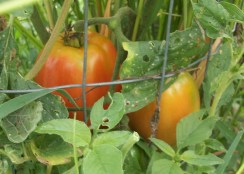
Garden plot six was five varieties of tomatoes — Italian, Amish Paste, Beefsteak, Rose and Kanner Hoell.
It was an abundant crop — about 200 pounds harvested — but most of the crop went bad on the vine due to an inability to spend time harvesting.
The culprit was a busy work schedule that included four jobs during the prime tomato month of August.
Heavy rain produced large sized fruit. When rain was imminent I hurried to harvest — preventing tomatoes from bursting. I didn’t always make it in time.
Lesson learned and applied this year was to give the plants space between them to breathe. So too it is with us. We need freedom from being cloistered to thrive.
Plans for this commodity plot are up in the air until I take a pencil to the 2017 garden plan. Wherever I plant tomatoes, I will give them even more room between plants. In 2016 this paid dividends that made up for my lack of care.



 Journey Home
You must be logged in to post a comment.