Categories
Living in Society

Holiday Travel 2022

Winter Travel

Word is in from the news media-meteorological information trust that a significant Midwestern winter storm is brewing for the days leading into Christmas. Our family is splitting up for the holidays and have travel plans. Because we are retired and flexible, we will comply with the media overlords and travel Wednesday. If I were still working outside home, I would travel when schedules permit. Military service instructed me life goes on regardless of weather conditions.

It snowed overnight yet only a dusting remains. A half hour with a broom will clear what the sky dropped. I’ll wait until sunrise to get that chore done. Otherwise, there is plenty of indoors work to accomplish today.

The last time I was alone on Christmas was after my arrival in Mainz, Germany. While I was being processed into our battalion they were on field maneuvers until the last days before the holiday. When they returned, everyone hurried to be with family and I was left alone. By then, I was 18 months into being a regular journal writer/diarist. I used the time alone for reflection:

Personal Journal
25 December 1975
Mainz, West Germany
Christmas

I have just spent the last few minutes waiting for water to come to a boil on the stove for tea. While waiting, I skipped through this journal, stopping every so often and reading random pages. It seems that what I have written at other times is sufficiently removed from me to permit my pursuit of authorship of literature. This is good.
The things I have read also pain me at times. The thought of a past once present now changed into memories.
As I sit today, Christmas, before my desk, I will not forget, I cannot forget myself when I am writing -- it soothes me by its connection with the past, direct, like looking through the space that I have traveled from the eternal point of view. Sehr gut.
I sit down, spreading ink on paper and what yields it? Ink on my small and ring fingers and a touch with the past.

I’m looking forward to Wednesday’s trip and getting off property for a couple of hours. In deference to the weather, I’ll stop to provision on the trip home. I won’t like being separated from everyone, but at least we have free video conferencing… and, of course, social media. When there is a small family, that’s how it goes some years. I’m okay with it once in a while. Wouldn’t want to make it a holiday tradition, though.
Categories
Living in Society

Microblogging into 2023

Author in 2013.

The Oct. 27 acquisition of Twitter by Elon Musk created turbulence on the platform. Whatever previous complaints I had about the social media network are nothing compared to the random circus of its present state. I plan to stay until the bitter end yet have taken my account private until things sort out. I learned how to delete my tweets without giving up my handle. For now, I remain.

What is Twitter? It is a microblogging site.

According to Wikipedia, “Microblogging is a form of social network that permits only short posts. They ‘allow users to exchange small elements of content such as short sentences, individual images, or video links,’ which may be the major reason for their popularity. These small messages are sometimes called micro posts.”

Musk’s disruption of the platform has many of us reevaluating how we use social media. In part, I expanded my network to add micro posts on Post.news and Mastodon. My go-to for first post has been on Post.news. This is in addition to Twitter, Instagram, Facebook and LinkedIn. Short form posting in social media has been a way to better understand online society. There is a relationship between online and in-person society.

My main interests in micro blog sites is learning to use language more concisely, reading news stories, and finding an audience for this blog. If Journey Home were to go dark, I would likely give up most of my social media presence. There are no plans to do that yet.

I seldom return to past micro blog posts. They are an example of living in the moment and over time, my stated opinions about cultural events change. When one works alone as much as I do, we need a social outlet. While imperfect, micro blog sites provide a venue and occasional good feedback on what I posted. It’s an ersatz experience, for sure. Some days it is hard to remember that.

Categories
Living in Society

Happy Holidays 2022!

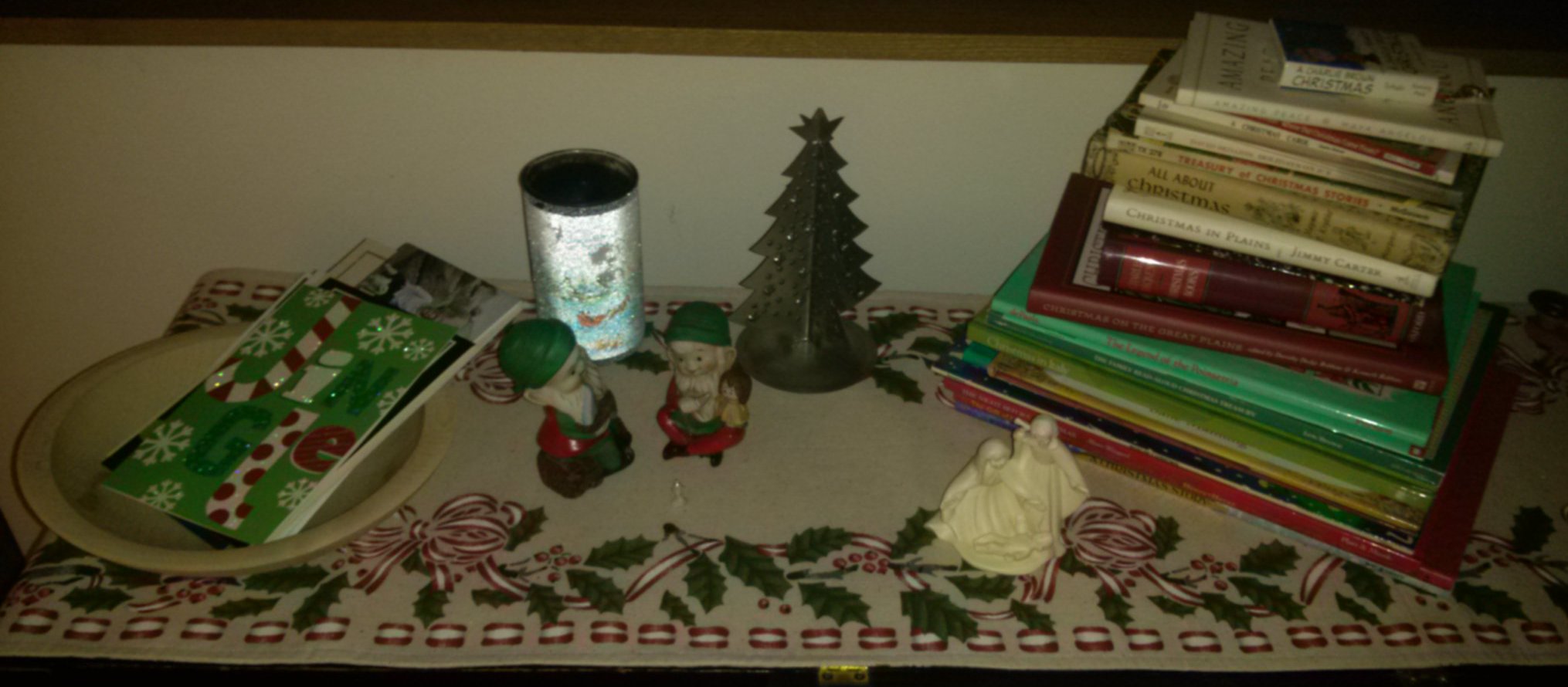
Christmas Display

As we enter the main holiday season, thank you for reading my posts on Journey Home. Writing them helps me more than you’ll know. As many recurring visits from readers as I see, I’m confident about providing value by publishing here. I plan to continue.

It’s time for me to hunker down with my books, papers, maps, music, and computers and make a go of winter writing again. It is time to start the onions and leeks in trays. It is time to write a budget with funds for writing supplies as needed. The pantry, refrigerator and freezer are stocked. While it may be cold outside, there’s plenty to keep a writer busy.

My new year’s wish is for readers to have the freedom to find and be their authentic selves. That’s not as easy as it may sound.

Happy Holidays, or as we said where I grew up, Merry Christmas and Happy New Year!

Categories
Living in Society

Winter Sets In

Polling place, Saint Mary’s Catholic Church, Nov. 8, 2022.

After the shellacking Iowa Democrats took in the midterms, I haven’t had much to say about politics. When the Rules and Bylaws Committee of the Democratic National Committee excluded Iowa as an early presidential preference state, it was just one more layer. I’m ready for what’s next.

I’m over all the politics and don’t have a seat at the table where Iowa Democrats will determine their future. I have extensive political experience rendered moot by the changes. It seems unlikely I will ever again engage as deeply in politics as I have. As we say by the lake, there are bigger fish to fry.

I’m focused on conserving resources, avoiding having to go back to work, and writing. It’s time to plant onions indoors, and place the second order of garden seeds. I look forward to spring.

I met Arnie Alpert from American Friends Service Committee, New Hampshire at a conference in Washington, D.C. Friday he wrote about the possibility of New Hampshire losing its first in the nation primary status. Alpert raised an important part of my argument against first in the nation caucuses in Iowa.

Another under-noted impact is that when the Primary comes to town, it sucks the oxygen out of other political dynamics. Grassroots groups lose their members to the campaigns for months on end. The few local political reporters who are left turn their attention from Main Street and the State House to the excitement of the national horse race. Reporters, activists, and other spectators watch it like the Kentucky Derby. And the substantive issues discussed by the candidates receive scant attention compared to who’s ahead and who’s behind.

InDepthNewHampshire.org, by Arnie Alpert, Dec. 15, 2022.

Iowa Democrats could do better without the millstone of the caucuses chained around our necks. Whether that will be the state party’s focus is an open question.

The sky spit snow yesterday, not enough to stick. The refuse hauler changed the pickup schedule from Friday to Thursday, creating an extra weekend day, or so it seems. In the final autumn days we know winter will soon set in. With a crazy climate we don’t know whether or not we’ll need the snow blower, or whether we will have another record low temperature that shakes the house foundation. What I know is winter will seem longer than it is.

Categories
Living in Society

Art in a Life

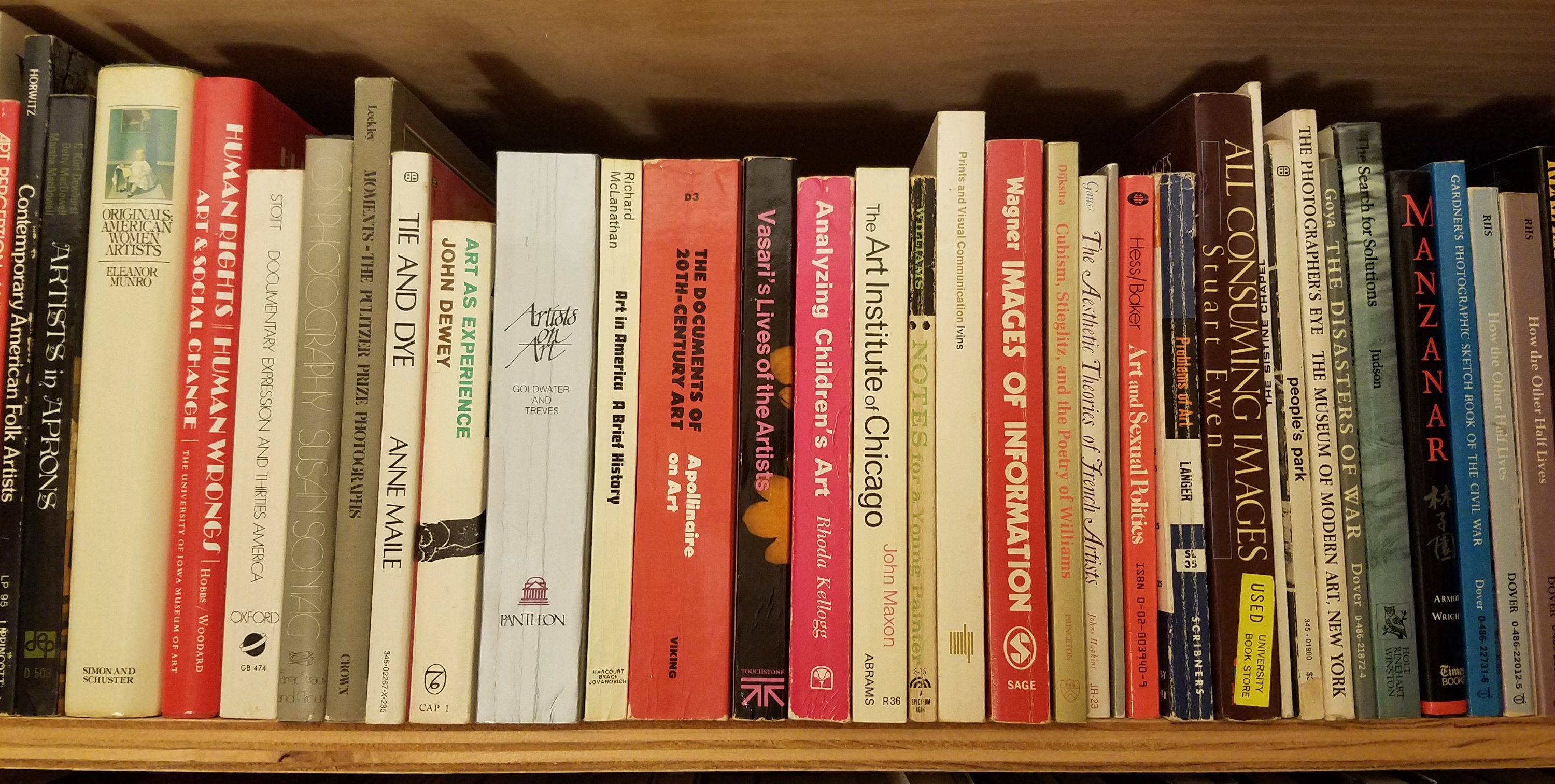
Art and art history books, Dec. 14, 2022.

Most Iowans don’t value art like that displayed at the University of Iowa. Increased public awareness of this attitude is part of the coarsening of Iowa culture in its current wave of neoliberalism. As a writer, how should art and art history be incorporated into my work? Should they be?

Debate in the Iowa Legislature after the 2008 Iowa River flood permanently damaged the University of Iowa Museum of Art was whether to sell Jackson Pollock’s Mural. Scott Raecker, Republican chairman of the House appropriations committee, introduced a bill requiring the university to sell the painting, then valued at $140 million. The ideas were the asset held no equivalent value for the university museum, and the money could be placed in a trust fund with the interest funding undergraduate scholarships. The bill was written about in news media, yet failed. When the new University of Iowa Stanley Museum of Art opened in August 2022, Mural had been restored and returned as a centerpiece of the permanent collection.

Arguably the three most famous paintings in the museum, Mural, Joan Miró’s A Drop of Dew Falling from the Wing of a Bird Awakens Rosalie Asleep in the Shade of a Cobweb and Max Beckmann’s Karneval were in the collection during my undergraduate years. I discussed and wrote about them in art history class. They made an impression on me, one that would follow until I had an opportunity to see Miró work in person at a French gallery in Saint Paul de Vence in 1979. Art occupies part of my life today.

I attended major retrospectives of work by Pablo Picasso, Georgia O’Keeffe, Andy Warhol, Edward Hopper and others. While traveling in Europe I visited major museums where the so-called great master paintings were in permanent collections. I spent a lot of time at the Musée de l’Orangerie in Paris where the Claude Monet exhibition captivated me. I experienced art in a way most Iowans have not. Revered artwork holds a place in my world view even if I not more generally where I live.

In Davenport after Father’s death I spent time with artists, both my age and older. I didn’t demonstrate any talent for drawing, painting, or other visual arts. At university I took a class in ceramics where I explored the medium and produced a few good pieces. Most of those were sold, given away, or have otherwise gone missing. I also tie-dyed fabric. Since graduation, I haven’t done either at all. I saw how much work went into being an artist, the level of financial reward, and doubted I could make that commitment.

Is there more than art in the background for my writing?

The immediate problem is I am running out of shelf space and some of my art and art history books will have to go. Some stack-trimming is in order. Major books containing reproductions of an artist’s work will stay. Some of the secondary and all tertiary analysis will go. The challenge is there are so many books to read and so little time. That I need to be writing, rather than studying, is a basic fact of life.

Beyond the space problem, finding a link between writing and the visual arts has been something for me to avoid. I don’t like artistic name-dropping (or any kind of name-dropping) in writing. There are few circumstances where a description of a work of art could play a role in a narrative. The use of works of art and artistic theory must lie in the creative process.

The challenge in art is process is often visible. For example, in 1974 I wrote about Beckmann’s Karneval, “The main actors are merely broad areas of paint bordered with heavy black lines, and what is more, the bodies do not correspond to the anatomy of the human body.” While such description helped me understand the work, in narratives there is little use for words that don’t get to some existential point directly. We seek bodies that do correspond to human bodies because the narrative may depend upon such understanding among readers to further the story.

The next time my long-time friend from Missouri visits, we’ll spend time at the Stanley Museum. I will put Vasari’s Lives of the Artists on my reading list. I will revisit Walter Benjamin, Susan Sontag, John Berger and Roland Barthes. These good intentions are designed to help me be a better writer. The next part of following through is harder.

Categories
Living in Society

Twitter Take Four

Moon Rising

Yesterday I deleted my second Twitter account, the one I used to view profiles of people who blocked me, or those I wanted to follow without being noticed. I won’t be needing that for the time being. The account was created in 2014.

The basic premise of this series of posts about the change in ownership at Twitter remains dominant. We don’t need authoritarian oligarchs controlling our lives any more than they already are. What’s different from when I began this series is with each passing day I increasingly practiced posting on other platforms: Facebook, Instagram, Post, and Mastodon. I should be able to reduce my reliance on Twitter without missing a beat.

A main interest in social media is publicizing my writing and the writing of friends. Twitter still serves that purpose even though I took my profile private again. I don’t post links to my writing on Instagram, yet whenever I post on Facebook, Twitter, LinkedIn or Post, I’m getting referrals. Such readership is appealing. I note Mastodon readers are not clicking through.

This week I reviewed each Twitter account I follow and half haven’t been active since the platform changed ownership. I unfollowed the accounts for now, we’ll see what happens. Whatever use I devise for Twitter, I’m not ready to pull the plug as long as I continue to get referrals to this website.

What has forever changed is political posting I’ve done on Twitter. The recent midterm elections were proof positive a curated Twitter account is useless in getting additional votes needed to stave off a conservative tornado. Honestly, I learned that years ago. I take this an a natural evolution of social media and not a significant problem to leave Twitter behind for politics. Writing I’ve done on this blog concerning the school board elections got significant views and circulation, far exceeding the number of people who voted in the election. If the message is right and no one else is covering something, the views will come with or without Twitter.

The next evolution of my Twitter usage is reducing accounts I follow to around 100, living off the follows gained over the last few years, and taking my profile private for now. If I want to post my latest writing, I do it on LinkedIn, Twitter, Mastodon and Post and look forward to the day when the latter two can be automated on this WordPress site. I pick special topics for Facebook, usually related to a small set of general interest subjects. What I know now is it’s the portfolio an how I use it that make social media relevant, not any specific platform.

People I know continue to use Twitter. Until I figure a way to relate with them on other platforms (or in person), I’ll stay active there, mindful the oligarch is always watching.

Categories
Writing

Memories of a Concentration Camp

Autumn at Lake Macbride

Editor’s Note: This is a post written in 2012. I am reposting because of the rise in authoritarianism and extreme right-wing politics. We should never forget the Holocaust.

In 1974 I visited the site of the former concentration camp near Dachau. In the museum space I saw film footage of bulldozers pushing piles of emaciated dead people into mass graves. That memory persists. There were artifacts from the camp, including clothing, footwear, and a host of morbid items, like candles made from people, and lamp shades made with human skin. The people who ran the camp were sick, as much for the idea of a pogrom as for all of the weird things they did as experiments on humans and their physical being.

Then, it was hard to believe the people of Dachau did not know what was going on within those walls. Perhaps the people of Dachau were more like us than we know. Today, I am prepared to believe some didn’t know about the camp the same way people in Big Grove don’t pay much attention to neighbors, except for pleasantries in the yard or on the street, and if one is doing something noxious that is detected by others. Despite all the paranoia about government taking peoples’ rights, we live and let live in American society, to a large extent.

At the same time, there is a type of intolerance that is wide-spread in Iowa, noticeable when talking to someone at their front door in neighborhoods around the state. It has nothing to do with membership in the National Socialist, or any political party.

The horror of the final solution surpasses anything else of which I am aware. In the ranking of gruesome, Rwanda’s genocide, seems equally brutal, and maybe it is because I have read recently about it. A person can occupy oneself with reading like this only so much.

Considering the fact of Dachau and the final solution, I don’t understand why anyone would characterize other Americans as member of the National Socialist Party. It is ridiculous to believe it, except for the case of a few fringe groups. The horror of the final solution is diminished each time we refer to it as a comparative to something much less evil. Such rhetoric diminishes us personally as well.

For me, visiting Dachau was enough to cure me of the use of this hyperbole.

Categories
Writing

Aging in America – Part VII

Books

It is getting easier to box up books to donate to the friends of the public library used book sale. I donated seven boxes so far and three more are ready to go. Creation of two large sorting tables has helped move library downsizing along.

The room I built for writing has bookcases on all four walls. For the first time in years I am dusting and rearranging them. I’m not sure there was any consistent method in how they were shelved.

A lot of space is taken with collections by author: Norman Mailer, Saul Bellow, John Irving, Joan Didion, Jane Smiley, Vance Bourjaily, David Rhodes, Ruth Suckow, James Baldwin, Hamlin Garland, Al Gore, William Faulkner, William Carlos Williams, William Styron, W.P. Kinsella, and others. There is a case to be made the collections by author belong in boxes. If I labelled the boxes, I could draw on the books when I need them, leaving shelf space open for my current research and interests.

I keep thematic collections: U.S. Presidents, Iowa City and Iowa writers, Iowa history, reference books, cookbooks, gardening books, art books, and poetry. One shelf is devoted to a printed copy of my blogs. Another has volumes on ancient history. I find myself asking the question, “which books are meaningful for life going forward?” Not as many as there are.

With retirement during the coronavirus pandemic, things changed to enable this sorting and downsizing. Our automobile remains in the garage most days. The weekly shopping trip has become a special event, for which I shower, shave and consider which clothes I might wear to the store. There is time to work on the project especially when weather is wintry.

Part of the great book sort is learning more about myself by remembering who I have been. A different me bought a copy of The Great Escape by Paul Brickhill at the corner drug store soon after seeing the then recently released film. I used money earned from my newspaper route in grade school. Today, I feel compelled to buy John Irving’s latest book, The Last Chairlift, in part for his Iowa City connections, in part for his discussions of the LGBTQ community, and in part to fill out my shelf of Irving novels. Sorting books juxtaposes all the different versions of me during the last 60 years. There are more than a few of them.

I am lucky to have lived to be seventy. Book sorting is teaching me to be more deliberate in life, to consider each element of life’s construct. I also realize there is not enough time left to read everything I want. If luck holds, I will read everything I need.

Categories
Living in Society

Reading While Aging

Books by Iowa-connected folks.

On the corner of my sorting table rest piles of recently read books. I am shocked at the level of retention from the experience. It is not as much as I want. Is there an issue with reading while aging, or not?

In an article titled, “Reading in Normally Aging Adults,” authors associated with the American Psychological Association present the following article abstract which describes the physiological and cognitive process. Sorry, it is a bit long, yet everything in it is important.

Skilled reading requires coordination of knowledge about language with a broad range of basic cognitive processes. While changes due to aging have been documented for many of those cognitive processes, the ability to read declines little during healthy aging. Aging is associated with slower reading, longer eye movements and more regressive eye movements, but the qualitative patterns of older adults’ eye movements in response to lexical characteristics (e.g., frequency) and sentence characteristics (e.g., word predictability) largely resemble those of younger adults. The age-related differences in reading behavior are due in part to older adults’ reduced visual abilities. In addition, they may result from compensatory strategies wherein older adults rely more on their intact semantic intelligence and less heavily on perceptual processing of text, or alternatively they may be a consequence of older adults being less adept at effectively coordinating word recognition with processes of oculomotor control. Some age-related declines are seen when reading comprehension and text memory are assessed at lower levels of representation for complex sentences. However, older adults perform as well or better than younger adults when higher-level meanings of a text are assessed. These high levels of performance reflect older adults’ ability to draw on crystalized semantic intelligence that provides well-organized structures in long-term memory of the patterns that tend to occur in natural language. (PsycInfo Database Record (c) 2022 APA, all rights reserved)

Reading in normally aging adults by Gordon, P. C., Lowder, M. W., & Hoedemaker, R. S. APA PsychNet.

My take away is that while my vision has somewhat deteriorated, mental capacity remains strong, and I can draw on information and experience gained in my past to better and more quickly understand what I am reading. According to other articles I read this morning, reading can maintain mental functioning, and stave off common mental illnesses among the elderly like Alzheimer’s disease.

The money quote is, “However, older adults perform as well or better than younger adults when higher-level meanings of a text are assessed.” In theory, these psychologists say, since I have visual acuity, I retain the potential to be as good a reader as anyone.

Why am I worried about the piles of books read yet little remembered?

The abstract points to a borderline area of reading: the interaction between read text and the stored intelligence in my brain. To what extent am I processing what I read in context of past reading experience, and to what extent am I taking in text to gain new experiences? My fear is it is the former. If we read, it should be to expand our knowledge and experience, not to intake words and sentences as a form of confirmation bias.

Because I curate a large home library, I plan to continue reading for as many months and years as possible. My daily reading goal is 25 pages from a book. For the most part, I exceed that amount depending upon how engaging the writing has been. Importantly, I want more than to check off the daily reading goal box on my to-do list. I want to gain knowledge and experience that will help me better cope with society. I want to read to become a better writer.

By year’s end I will have read almost 60 books. If the text is being assimilated into my existing cognitive capacity, there is nothing wrong with that. I take up each new book with hope it will reveal something about society, something specific in life, an answer to a question or something about myself. I also read to see how other authors write. As long as I take a few minutes to appreciate each book after finishing it, I am of an age where everything read becomes part of my world view.

Categories
Writing

Picking Public Photos

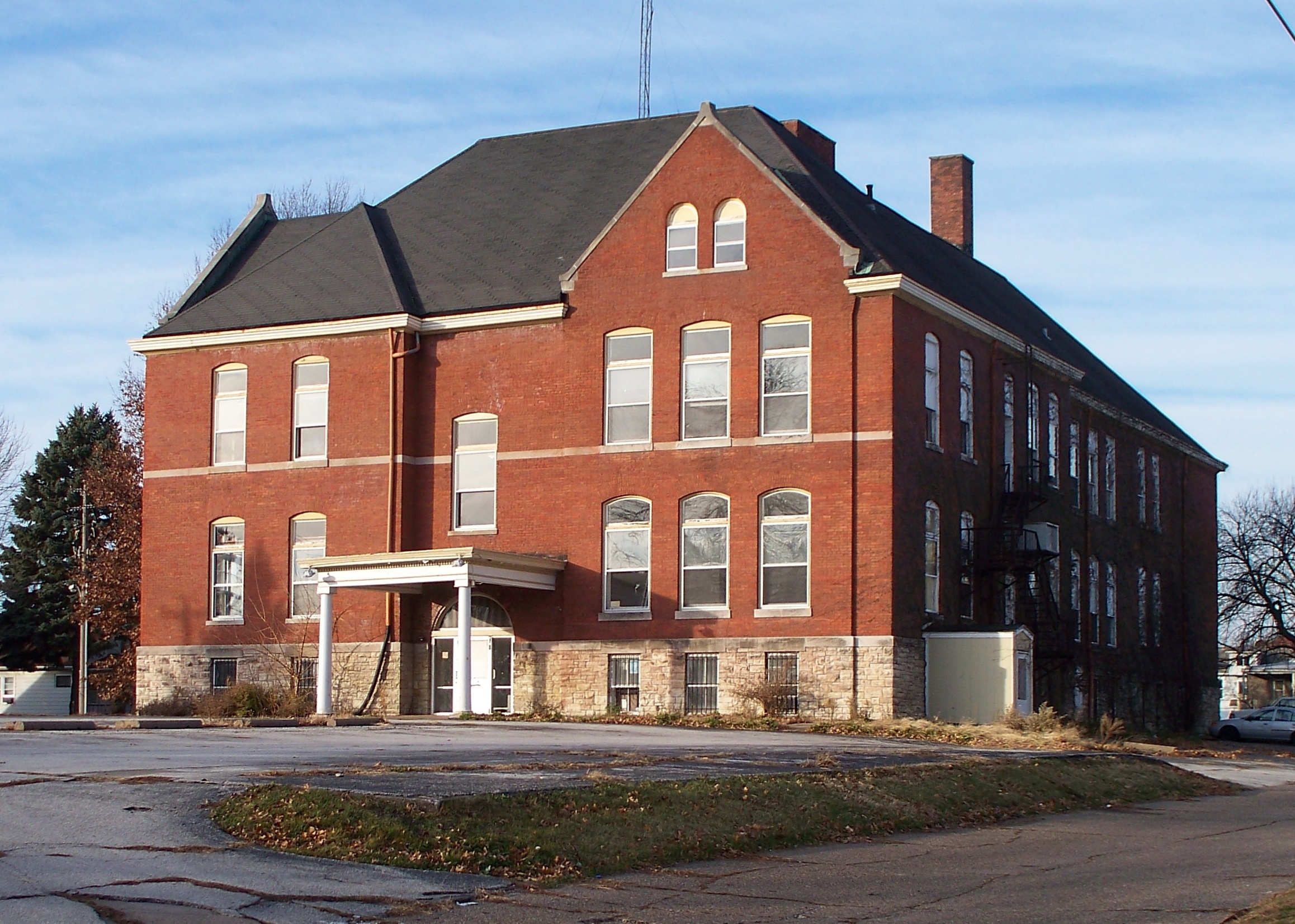
Jackson School building acquired by Holy Family Church for a first through eighth grade school in 1944. Photo by the author.

Yesterday I read a short book of photographs depicting a narrative of important events, people and things in the history of Davenport, Iowa. It covered a broad range of topics under the umbrella of the dominant white culture. It served its purpose, yet it wasn’t the best.

Davenport: Jewel of the Mississippi by David Collins, et. al., was published by Arcadia Publishing in 2000. It is one of a series of similar single-subject books made available at large, chain bookstores like Barnes and Noble, which may be where I bought it. Like many short books (128 pages) more is left out than included about the city.

The story is told in photo captions, so there is little detail. For example, there is a photo of Joe Whitty who founded Happy Joe’s Pizza and Ice Cream Parlor, which had hundreds of franchises in its best days. The caption doesn’t mention the name of his restaurant, relying on the reader’s knowledge to invoke that memory. If that’s all one knew about Joe Whitty, it would be fine. It makes a point in the narrative.

As with anything, personal memories are more important when writing autobiography. I remember when Joe Whitty and his family came to Davenport and rented a home two houses north of our family. He opened a bake shop at Mercy Hospital and became its dietary director, according to his obituary. I used to play with his eldest son, who assumed responsibility as president of the company for 39 years. I also know a franchisee who had multiple restaurants. There is a lot more to the story. Rather than reflect what the picture-book says is history, I should draw on my own experience in telling my story.

How does one use such a picture-book when writing autobiography?

If nothing else, reading the book created epiphanies about my life. The narrative is a certain kind of boosterism, highlighting things that may have been important to the authors. If I made a list of topics to cover from the book, they would be selected based on what memory I have of them. That could be useful.

For example, there are more photos of Bix Beiderbecke in the book than of any other person. He was born in Davenport and lived on Grande Avenue in early life. He became a world renown cornet player and died of pneumonia at age 28. In 1971, the Bix Beiderbecke Memorial Society was organized after a musical group from New Jersey came to see Beiderbecke’s birthplace and play music near his grave. Following that, the Davenport BixFest became an annual event in the band shell on the levee near the Mississippi River.

I have little interest in Bix boosterism. I attended the BixFest once or twice and ran multiple times in the Bix 7, which is a 7-mile foot race through Davenport that attracts some of the best runners in the world. Other connections include that the first thing I saw when emerging from the Paris Metro on the left bank in 1974 was a large poster of Beiderbecke. I also lived with one of my band mates on Walling Court near the Beiderbecke home. These stories, I believe, are more interesting than the broad cultural aspects of Bix commemoration. They are important to my autobiography.

Despite my dislike for the picture-book narrative, I plan to get a pad of Post-It Notes and annotate photos that prompt significant memories. I’ll pick a few people I knew — Rep. James Leach, Father James Conroy, and Mayor Kathryn Kirschbaum — and leave out more famous or special ones who had little connection to my life. There is no need to re-tell the story of Ronald Reagan living at the Vale Apartments and working at WOC Radio.

There are also plenty of important buildings among the photos. Places like the Lend-A-Hand Club, Sacred Heart Cathedral, and the Mississippi Hotel are all meaningful. I envision using them to evoke something in my narrative when needed.

I have two copies of the book, so I can write in the margins of the one used for research. I doubt I will. As curator of a several thousand book library, I resist writing in books. This project is more about me than the history the picture-book posits. I want to preserve the books in good condition as long as I own them.

It was a good day reading this book.