Categories
Writing

Six Years and Still Writing

Grain Silos
Grain Silos

LAKE MACBRIDE— Walking across Highway One to the mushroom park lot, the headache felt worse the closer I got to the car. After proof reading next week’s newspaper, driving home, and assessing the situation, things were bad enough to call off the rest of Saturday’s activities. It became a day comprised mostly of fighting off a painful headache— something I don’t usually have to do. The good news is this morning,  I feel re- and ready to renew year-end  activities. Being a sixty-something, I know not every day is as productive as one would like.

At this point my reader-o-meter is nagging that I had better get to the meat of this post to retain the few who stuck through that first, self-indulgent paragraph, if any. So here it is. Thanks for reading this blog.

When I started writing on a public blog during November 2007, it was a big step from sending an occasional letter to the editor of a local newspaper, to something that anyone with Internet access could see and, if I let them, could comment upon. With the exception of Iowa City Patch and Blog for Iowa, I’ve taken down my previous iterations of blogs and reduced them to bound paper on a shelf. So what’s up with that?

The persistence of blog writing is, and should be very brief. Some posts from the first years were better than others, but I’d just as well have posting be fresh, and of the moment. Downloading and printing old work is part of the process, and I don’t open those books very often. Not many care about yesterday’s news, let alone the musings of an isolate citizen of the plains. If there is a more persistent story, it would be better handled by word smithing at my desk, and spending the effort to get it published more permanently. Not much of what I have written or said is of high enough caliber for that.

Mostly, blog writing is a way of working ideas out. Taking something, and adding a bit of research, a bit of the opinions of others, a photo, and making something else. A snapshot of how we approached an issue, recipe, behavior or artifact in a given moment. Let’s face it, with tens of millions of blogs, there isn’t much original thinking going on, and the main purpose of blogging is to put reasonably articulate stuff out there to find like minded people and see what they have to say. Blogging is more about us.

So thanks for hanging with me. I plan to keep on writing next year, and I hope you will return.

Categories
Writing

Scalloped Potatoes

Scalloped Potatoes
Scalloped Potatoes

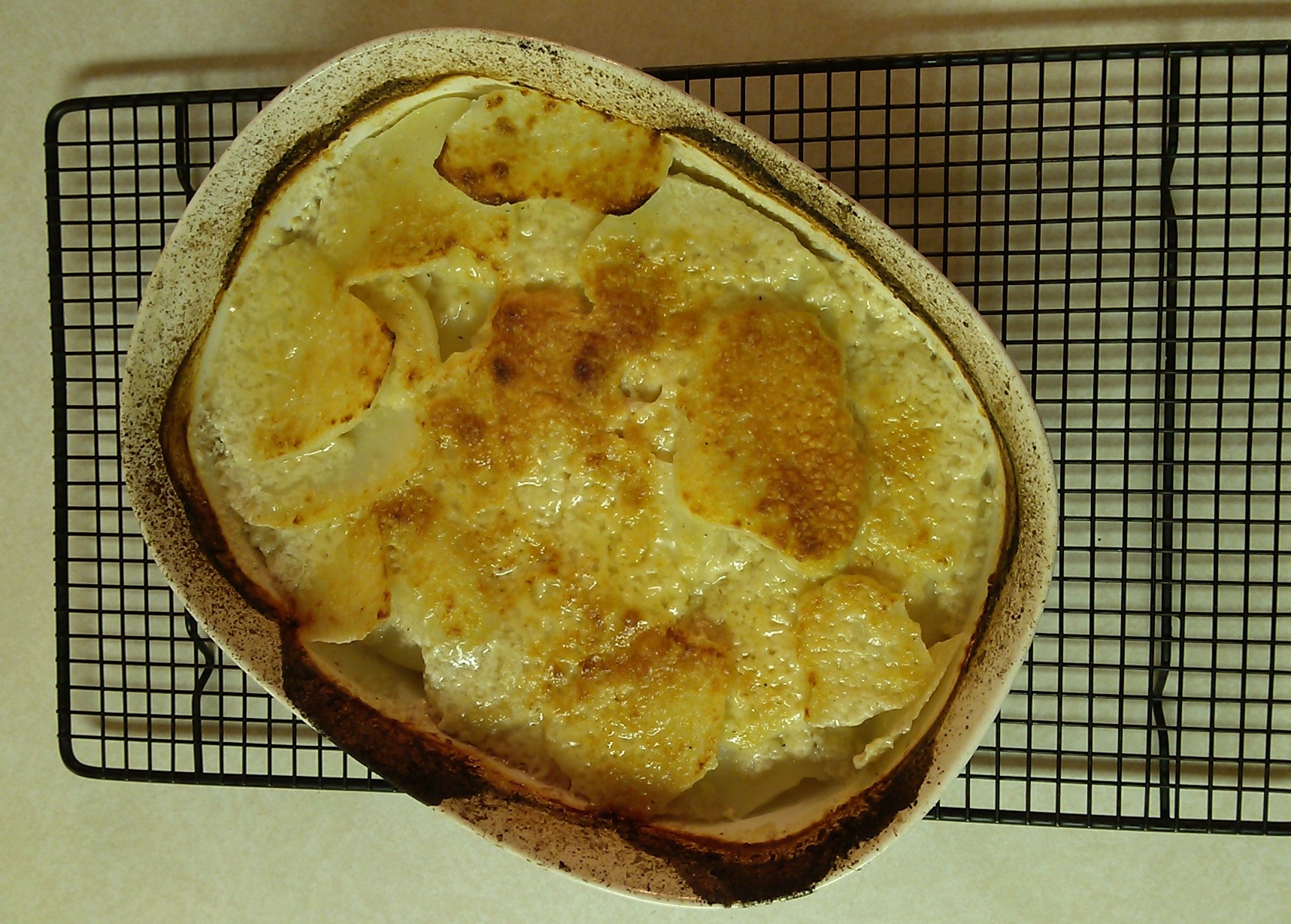
LAKE MACBRIDE— As Thanksgiving leftovers linger in the refrigerator, diminishing bit by bit each day, we need to make something different, a new dish. With the abundance of potatoes at the end of the growing season, making a scalloped potato dish fits the bill instead of the usual mashed, boiled or fried. Serve it with a green vegetable and a protein, and it would make a comforting meal on a day that didn’t get above 15 degrees.

My first thought was to find a home neighborhood recipe in one of the cookbooks I collected from the church and hospital near where I grew up. No luck there. Apparently the church ladies didn’t cook gratin much. (There were no credits to men in the book). So off to the Internet and a review of the standard fare of websites returned after a search for “scalloped potatoes.” While there are many variations of potato dishes, I sought the simplest, with the fewest ingredients, and least prep time. Modified from the recipe to use items on hand, here is the dish.

Scalloped Potatoes

Ingredients: 1-1/2 cups milk (or heavy cream), 3 bay leaves, half teaspoon dried thyme, 2 garlic cloves run through a garlic press, half teaspoon freshly grated nutmeg, salt to taste, 2 pounds of potatoes peeled and cut into eighth inch slices, half cup Parmesan cheese, salt and pepper to taste.

Preheat the oven to 400 degrees.

In a saucepan, heat the milk or cream with the bay leaves, garlic, thyme, nutmeg and salt and pepper. Butter a casserole that will hold the potatoes. Pour the heated milk through a strainer into a large bowl with the slices potatoes. Sprinkle half the Parmesan cheese on top and mix gently to coat the sliced potatoes with milk and cheese.

Spoon part of the milk mixture into the bottom of the casserole and layer the potatoes so they are evenly positioned. Pour the rest of the liquid over the potatoes and sprinkle the remaining Parmesan cheese on top as a crust.

Cover the dish with aluminum foil and bake for 40 minutes. Remove from the oven and let cool for five to ten minutes and serve.

Note: If chives were in season, I’d finely slice them and sprinkle them between layers of potato.

Categories
Writing

The Season is Over

Farm Landscape
Snowy Landscape

LAKE MACBRIDE— It was pitch dark when I arrived at the packing shed. Driving a 1970s-era Ford Econoline van, the previous three hours had been spent loading vegetables in it and another truck, and delivering them to CSA customers in nearby Iowa City and North Liberty. The wind was cold, but there have been worse, the customers were positive about the final fall share delivery, and the old vehicle served.

Supplementing starlight with my phone’s flashlight app, I found the light switch inside and turned it on to illuminate the area and unload and stack the empty crates and coolers and head home. The CSA season was over.

Proceeding cautiously on the icy gravel road, I made my way to the highway and turned south toward town. An email had reported the community well was broken, so I stopped at the grocery store and bought a gallon of water to use for cooking if needed. Resisting the temptation to purchase a frozen pizza for dinner, thoughts turned to what to make from food at home. The well had been repaired by the time I turned the kitchen faucet on. Dinner was a grilled cheese sandwich, a glass of cow’s milk and some oatmeal-raisin cookies from the store.

Instead of reflecting on the end of seasonal work, or depositing my paychecks, I went right to my queue of movies on Hulu. I started “Bob Dylan and the Band: Down in the Flood” and watched it straight through. I remember listening to copies of the bootlegged Dylan recordings at a friend’s home in high school. Downstairs is my copy of “Music from Big Pink,” purchased the day it arrived at the discount store in 1968. On the computer are tracks from the 2000 re-release of the album… I was enamored of the creative process of that music and that time, and still am. The film called up memories.

Memories are not about the past, but to help us live today… and tomorrow.  I retired around 10:15 p.m. wondering what to do with memories from a time of youth, hope and promise. By morning it was clear. There is nothing to do but go on living.

Thanksgiving and the following weeks have become a time to work on a plan for the coming year— true especially after leaving full-time paid work for a corporation. There is a sense of receding into the landscape— a seduction of the active mind. The season is over, but the living goes on.

While youth has flown like a murder of crows annoyed by a brown fox preening in the sunlight, hope drives us toward new seasons, the uncertainty of which is tempered by experience, and a succession of cold nights like last night. Yes, it’s time to go on living.

Categories
Writing

My Apple Life

Backyard Red Delicious Apples

LAKE MACBRIDE— 2013 has been the best year for local apples since I planted trees. Every tree bore fruit, and around the county, everyone with an apple tree had a good harvest if they wanted to pick them. Yesterday I bought half a bushel of Gold Rush apples from the orchard, the last maturing fruit of the season. Because I work at the orchard during the peak season, I got a discount.

Dolgo Crab Apples
Dolgo Crab Apples

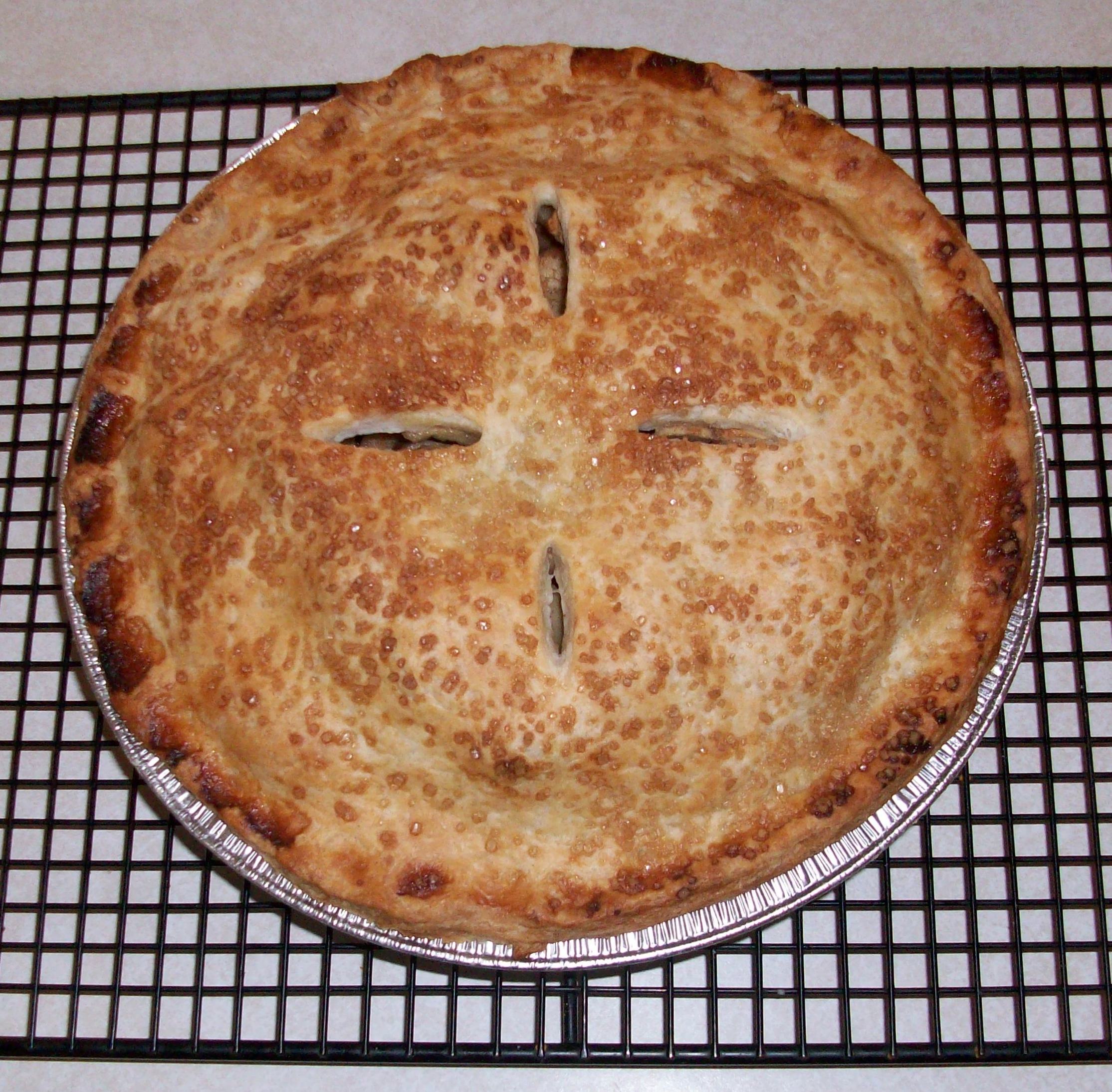
As winter approaches, the work has turned to making chunky applesauce a quart at a time with the ripest fruit. It’s delicious, if you know what I mean. The main uses for the bumper apple crop have been as follows:

Delicious Apples
Delicious Apples

Apple butter has become a staple for the last few years. I made a batch with the earliest apples, then a big batch of fallen apple butter from fruit knocked down by a storm. I also made apple butter from Dolgo Crab and Cortland apples purchased at the orchard. There was also a batch made from a mixture of 9 different varieties picked at the orchard. With what apple butter was leftover from last year, there is more than a two-year supply in the pantry.

Livestock Apples
Livestock Apples

The Sept. 19 storm brought a disappointing end to much of the large apple crop. In addition to apple butter, I made applesauce and apple crisp with fallen apples, and sent a lot of them with a friend who keeps livestock. She returned the favor with fresh eggs from their chicken house. A neighbor had borrowed a cider press and he and his children made about four gallons of apple cider from my fallen fruit. The fruit was all used, but it was a rush to get it done before they spoiled.

Apple Sauce
Apple Sauce

As summer turned to fall, I learned about longer keeping varieties, particularly the Winecrisp and Gold Rush apples. We don’t have the refrigeration capacity to keep them cool, but they are stacked in crates in the coolest part of the house and I’m hoping for crispy apples into winter. Since they are around, it’s likely they will all be eaten before going bad.

Thanksgiving Apple Pie

As December approaches, it will soon be time to prune. I took some photos of my Golden Delicious tree to the orchard where the chief apple officer gave me some pointers on how to salvage the tree. The expectation is that 2014 will be a bust year for home apples, but my four remaining trees have been little pruned, so I have some work to do.

My apple work will go on for a while, but it’s time for closure on a great season. Little by little, gaining an understanding of apples and apple culture has become a part of who I am. I am only just beginning to understand my apple life.

Categories
Writing

Into the City

Book Shelf
Book Shelf

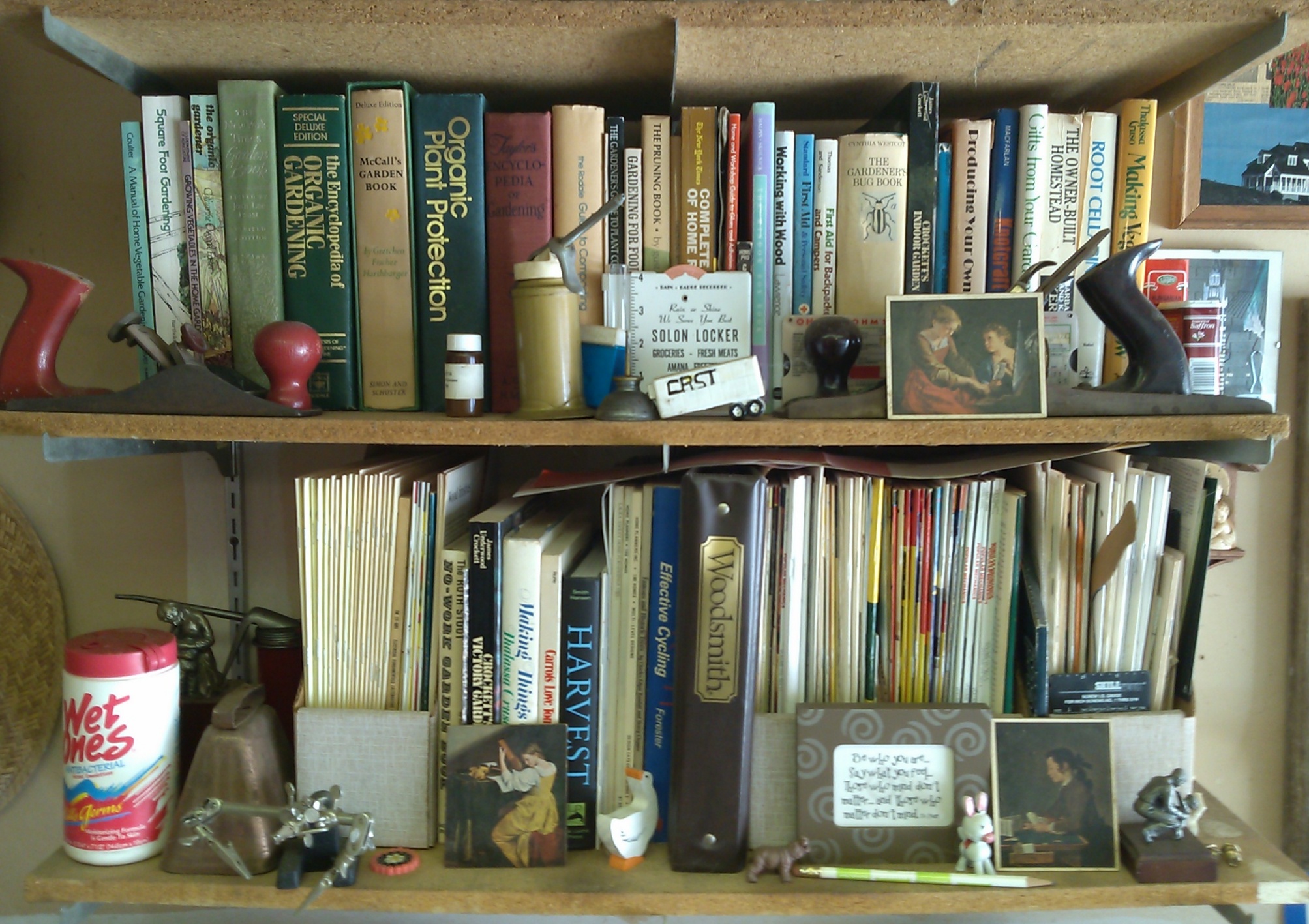
LAKE MACBRIDE— Having never been a fan of the UNESCO City of Literature designation for Iowa City, I can see why people like it. It gives the social mavens something to preen over. In telling the story of Iowa’s development into a cultural oasis among fields of row crops, mine is somewhat different than what I read and hear about from the source of brightly lit night skies to the south. The main benefit of what the late Darrell Gray described as the U.S.S. Prairie Schooner has been an increased ability to hear writers, authors and lecturers invited by the local literati to speak or read from their work. Last night it was Margaret Atwood.

I don’t know Atwood or her work at all, so it was easy to listen to her talk without prejudice.  Somewhere in a box, I have a copy of “The Handmaid’s Tale,” which someone posted on social media is “canonical.” First to admit my deficiencies, I looked up canonical and it means, “included in the list of sacred books officially accepted as genuine.” Genuine is good, and when I find my copy, I’ll give it a try.

What most engaged me was Atwood’s question and answer period. Between you, me and the Internet, I didn’t care much for some of the questions, especially if they revealed too much about the questioner. One teacher went on about a group of women students and their class. She had one of Atwood’s works on the syllabus, but it appeared she wasn’t very knowledgeable about it. An awkward moment that soon passed. While I’m complaining, in the row in front of me was a couple behaving like they were in Juliet’s boudoir, and one or both of them needed a shower to wash away an offensive body odor that reminded me of stints in the oil patch of West Texas. Get a room people and take a shower before coming out in public. My neighbor to the right made a comment about reading the Guardian on my handheld device while waiting for the event to start. Nonetheless, we live life’s diversity, and these things were not a real distraction, even if recalled here.

I perked up at the question about the e-book – paper book divide. Atwood said the market share of e-books had declined from 30 to 20 percent, and that e-readers were better suited for short works. That resonates. She also mentioned her “Three Reasons to Keep Paper Books,” which can be found here, and is worth a read.

Margaret Atwood was smart, witty and attentive to the audience. I was happy to immerse myself in the weird, smelly, nosy and boisterous literary scene in the city just to hear her speak.

Categories
Writing

Autobiography, Blogging and Canning

Apple Sauce 2013
Apple Sauce 2013

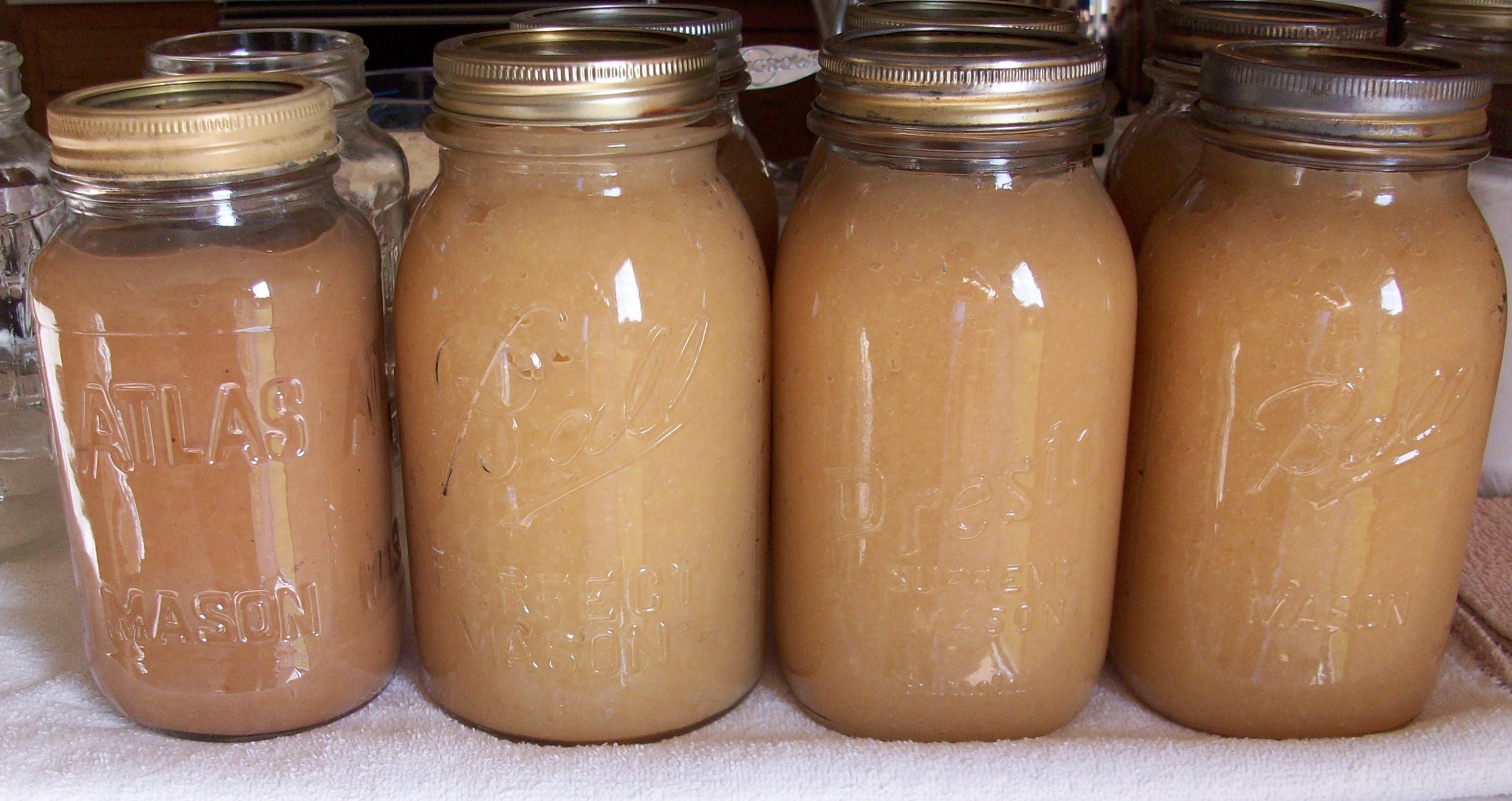
LAKE MACBRIDE— The afternoon was spent making applesauce with the last of the fallen apples from the Sept. 19 storm. They stored well, and six quart Mason jars and a pint are processing in the water bath canner. It’s local food more so than most: they fell about 30 feet from the kitchen window during the storm.

After experimenting with applesauce techniques, I cored, but did not peel the apples, cut each into about 16 pieces, steamed them in a bit or water until they released their own juice and begin to fall apart, and processed them through a food mill. I also made chunky-style apple sauce, using a potato masher before spooning it into a jar. No spices or sweeteners here. They can be added when serving, but this applesauce really needs no additives.

Is the story of my applesauce afternoon worth writing or reading? I don’t know about the latter, but the process of writing helps me understand life on the plains in a way that takes the rough, dull and lonely parts out, rendering it into a sweet pulp to serve to friends and family, and packaged to give as a gift. Seriously. Who wants to hear about the rough, dull and lonely parts of life anyway?

There is the actuality of the time spent and the image above. If that’s all there were in this post, an autobiography of a moment in time, it would not be worth reading. The hope is that by imagining a life, and writing it down, some value can be added, and if we are lucky, an epiphany reached.

According to WordPress, there are more than 72 million blogs on their site. Add in the other sites and there is a lot to read, many thoughtful, some hate-filled, and more than a person could ever consider. For the blogger, it is a way to write, an outlet for expression in a world where only a very small number of writers get read, and even less get paid. We need outlets.

There is a first draft quality to a blog post. A flawed freshness that can be like the life from which it is expressed. Sometimes it is sticky, syrupy sweet or messy, and that goes with the territory. We’re not the Scientific American or Harvard Business Review in the blogosphere. What we hope to be is an expression of the imagination. Taking the desultory moments of a modern life as the ingredients of something better, something universal. Bloggers mostly fail to reach the sublime, but once in a while, things come together.

So there it is, the ABCs of writing in autobiography, blogging and canning. Write about what one knows, do actually write on some platform, and think in terms of a finite product that is useful to someone, to nourish a body, but more importantly, one’s intellect and spirit. There are benefits, not the least of which can be jars of applesauce.

Categories
Writing

Technology in the Present

GUI Search
GUI Search

LAKE MACBRIDE— To support a couple of significant projects, more computing capacity is needed in our home on the lake. It seems unlikely any funds will be disbursed to support the projects. Rather, old computers and equipment will be located, resurrected and deployed in a way to create a couple of new work stations and bring focus to these new intentions. What does that mean?

Like many who have been on-line since the mid-1990s, we bought, sold, donated, gave away and recycled a significant number of computers. I lost count, but over the years, at least 20, with a number of them still in the house. At first, the trouble was finding a way to dispose of them without tossing them in the landfill. Some were given to a local political activist for potential use in campaigns. Too, for a while we donated old equipment to Goodwill, and now, they have a local specialty store called Reboot that will take old computer hardware and recycle it. In the case of those remaining at home, ample storage space and entropy have accumulated ten CPUs or so. There are plenty of working processors for new projects.

What are the projects? Two are most important. First, there is the persistent need of consultants to focus on business development. Determining how we will pay the bills and seek fulfillment at the same time requires a minimum number of distractions. For this, I chose an old laptop the battery charging function of which ceased to work and is too expensive to repair. It works fine while plugged into an electrical socket. Whatever work is not backed up may be at risk, but that can be addressed with good backup habits.

Secondly is a big writing project that requires a focus on words on a screen. For this project, no Internet access is needed or wanted. Regardless of the information available on the web, the craft of writing is done a word or phrase at a time, and distractions of any kind are unwelcome. For this work station, I picked a CPU returned from a family member with a monitor returned from another. The main challenge will be getting the same version of Microsoft Word installed on all three CPUs without feeling guilty about using the same license on more computers than the software package allows. There is also the issue of finding the disk, which eludes me at present and will eventually show up (I hope).

Operating systems? The desktop CPU has Windows XP, and the two laptops have Windows 7. XP is on the writing CPU, so that will take me into a different world when I boot up, and that may be okay. Regrettably, it has a 2002 version of Microsoft Word on it, and that’s too different from the 2007 version on the other two.

All of this is minor accommodation to a person who continues to recall the MS-DOS command prompts, and using computers before the introduction of the graphical user interface. One suspects people don’t even recall what is a GUI, but they have gotten much better.

Just about done with the setup, so now, let the working begin, he said hopefully.

Categories
Writing

Leaving Colorado

Tejon at Bijou
Tejon at Bijou

Writing on Tejon at Bijou (This post was first published on Feb. 3, 2012).

Unexpectedly delayed by the snowstorm, I have time on my hands. All of the big stuff at the apartment was hauled away or packed for the trip back to Big Grove. Near the door are the boxes we finished packing last night, waiting to load, hopefully tomorrow. There is time for writing.

I drove to the Arc Thrift Shop and made a donation of unwanted items found during the apartment cleaning. On the way back, I stopped at Starbucks at the intersection of Tejon and Bijou in downtown Colorado Springs. I ordered a grande brewed dark roast, sat at a table and connected to the free WiFi for a session. It is the table and chair that is lacking at the apartment, not the WiFi.

Of the places in Colorado Springs, the downtown area on Tejon is a favorite. Constantly strolling people make downtown seem alive and vibrant. The coffee shop is not busy, what with the snowstorm and all, so I don’t feel bad about renting a table for an hour or so at $2.09. Checking email, and other applications is actually nicer using a table and chair.

This may be the last trip to the Springs, but I have fond memories of visiting here over the last two years. It doesn’t feel like home, but I feel comfortable here. The mountain view is exhilarating. A constant reminder that humanity is but a brief blip on the radar screen of eternity. But there is something more.

I have been exposed to a different social environment. First in a neighborhood near Colorado College where the broad boulevard that is Cascade has large, old homes mixed in with college students and drug users. Next at the Knolls off Uintah where up-scale apartments housed what looked to be a transient but affluent population, based on the vehicle license plates. And finally in an apartment complex where working poor and lower middle class people try to make it. The observations and conversations could fill volumes, but what I heard in the parking lot a couple of nights ago says a lot, “Not ever in your life…don’t you think you are better than me.” Evidence that living life is about respect; giving it, wanting it and earning it.

Categories
Writing

Cleaning Onions

Trimming Onions
Cleaning Onions

LAKE MACBRIDE— Napping when the email arrived, an hour later I woke, read it and made it over to the farm at a quarter to noon to clean onions. It was solitary work removing the tops and roots, and sorting them into crates. It took five hours. While I worked, one person was at a meeting in town, two sorted and cleaned potatoes, and another sorted spaghetti squash. Silent, but communal work in support of our local food system. Around 1 p.m. everyone else had finished and was gone, leaving me with my thoughts and work.

One of the ironies of this year has been that while working a lot of hours in local food production, my time in the kitchen has been limited. I prepared a number of seasonal dishes, but there was little experimentation or cooking for pleasure. Most of the kitchen time was spent preserving food, rather than preparing meals, converting that part of our home to a temporary mini-factory.

Rendering fresh produce into a shelf-stable product is a vital part of summer abundance. This year there are some new items: dill pickles, sweet pepper sauce, and grape and raspberry jam. As fresh cooking turns to pantry cooking, the household is ready.

In the declining light of the barn, something enveloped me. It was as if the world had been shut out as my pile of onions leaves mounted. I returned briefly to youth, and the holiday time. When there were trips to the drug store to see what seasonal offerings were made. There were trips to used book stores, to secure a supply of winter reading material, even though there was plenty to read already in the house. An trip to the liquor store to buy some wine made of German Riesling grapes, or distilled French spirits: Armagnac, cognac and Calvados. The luxuries of plain living all.

When the onion cleaning was done, the sun was setting and I headed home along the gravel back roads littered with fall foliage and deer crossings. For dinner I cooked veggie burgers and served them on buns bought from the day old rack at $1.40 for eight. Condiments were ketchup and a slice of onion, sides of coleslaw and baked beans. Comfort food for a hearty meal.

What did my onion day dreams mean? It’s hard to say, but the actuality of that feeling took me back to a time of less worry, and living in each moment. A time when our potential seemed unlimited as we left home to see what the world had to offer. In some ways, that journey was never completed. Who knew it would end up in a quiet barn cleaning onions?

Categories
Writing

Flesh Wouldn’t Yield

LAKE MACBRIDE— Friday morning the frost was thick. While walking the kitchen compost jar to the bin, the blades of grass crunched under my plastic shoes, leaving green footprints in the frosty lawn. After emptying the jar, I stopped by the vegetable plots, and as expected the tomatoes and peppers were bitten. Chard, collards, turnips and arugula looked like they might recover this time, but another milestone in a season of gardening has been passed.

Work called me to a farm where I was hired to help clear the field. The biggest part of the work so far has been deconstructing the tomato cages. Tomatoes are an important part of a CSA, so producing enough good looking ones is important. Some put in a lot of plants, hoping to glean the best for customers and offer bulk crates of seconds for those who may want them. Others cast the die in an amount that seems right based on prior experience. Tomatoes were a mixed bag around the county this year, and those who had a surplus of good ones sold them to others who didn’t. There were plenty of seconds for processing and my pantry .contains plenty of canned tomatoes.

When I arrived at the work site, we walked through the pepper patch. When I tried to take a bite from a perfect looking green bell pepper, the flesh wouldn’t yield. Frozen solid and ready to be plowed under. I thought, if the rest of the good peppers were harvested and placed in the freezer now, they could be preserved for later use. However, there was other work to do and once the day thawed, it would be too late. The exigencies of work life intervened with my frugal impulse.

The rest of the day we dug potatoes, harvested Brussels sprouts and polished green peppers picked before the frost. We also continued the tomato cage work, although a few hours remain to be finished. The focus was on getting the fall share out Monday, and there is an abundance of produce to be processed for delivery.

As winter arrives, and food thoughts turn to the pantry, I stopped at the orchard and bought a bushel of WineCrisp™ apples for their storage capabilities. When they are ripe, I’ll buy a bushel of GoldRush for the same reason. While it is kind of apple-geeky, you should know about the propagation work being done at Rutgers, Purdue and the University of Illinois in developing these apples without genetic engineering. Fit reading as we move indoors and settle in for a winter not far away.