Despite issues with out current political and social environment, I must press toward completion of my book. Mine has been a life of delayed gratification, and in my eighth decade, I am running out of time to finish this work.
As I write, the administration announced repeal of the Endangerment Finding. Commentators are commenting about it, and I don’t have anything unique to say. Why wouldn’t we want to reduce and control pollutants entering the atmosphere? No one asked me.
This second book is going to be better written than the first. Maybe I am learning how to shut the world out and focus on craft. That is necessary not only in creative work, but in many aspects of our lives. While my writing space encompasses the entire world, at this stage of the work, close focus is critical. I can only consider one idea at a time, one sentence at a time, the way an air traffic controller lands airplanes. Hopefully the book will make a safe landing.
It was Bill Gates while at Microsoft who said when he had a major project, he stored relevant stuff away and didn’t look at it. Then, when it was time, he focused all attention on that task and saw it through to completion. The benefit of the approach was loose ends tended to get sorted out in the waiting period. While busy for a short duration, the process made less work in the end. This was my approach to preparing for my role as a site manager in the 2026 Democratic Precinct Caucuses. The caucus was last night and I began preparation the day before. It was plenty of time.
I’m no Bill Gates and in some ways, that’s a good thing. This technique can work well when properly applied. Especially in politics, it is difficult to distinguish the signal from the noise, and time and calmness can help clarify that.
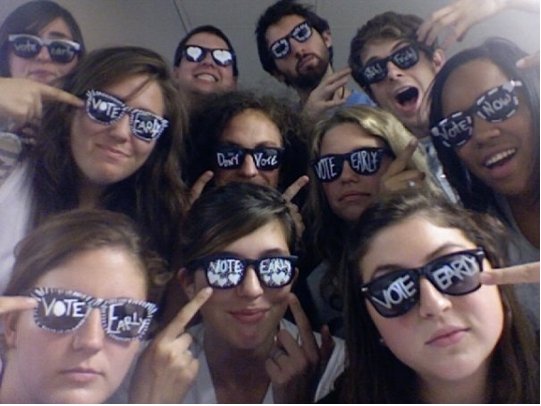
We had a good group of caucus volunteers. It made things go smoothly.
What characterized the 2008 presidential election for Democrats was the systematic use of nearly every procedural, legal, organizational, and technological lever within the electoral process to bring people to the polls that were previously infrequent voters. The Obama campaign innovated within the existing electoral system, integrating policy, organizational structure, data analytics, and ground tactics into one single, continuous outreach to voters. The results speak for themselves. Obama won — decisively.
I have living memory of that campaign, and it is worth examining how the underlying process has changed since then. In 2008, the focus was on persuading people to vote and vote for Obama and other Democrats. In the years since, a series of Republican-led changes in election law shifted the challenge away from persuasion and toward altering how voters participate in elections. These shifts in process are making a difference, particularly for the kinds of turnout strategies used by the Democratic campaign in 2008.
In Iowa, these changes took concrete form in the voting restrictions enacted by Republicans in 2021. The law signed by Governor Kim Reynolds redefined key elements of the electoral process in ways that made voting more difficult. I list the provisions of the law here in full because this post is intended as a reference. Taken together, these changes make campaigns like the one Obama ran in 2008 significantly harder to execute. The new laws must be followed, and campaign leaders have adjusted accordingly.
According to the Iowa State Association of County Auditors, the law required the following changes:
Voters must register to vote 15 days or more before the election to appear on the voter register on election day (formerly 11 days, and 10 days for general elections). Voters may still register to vote on election day, or when voting absentee in person, with both proof of identity andproof of residence.
A voter who has moved and has therefore been sent mail by the County Auditor to inquire of their proper address, andwho did not vote in the most recent general election (formerly the last two general elections), shall be marked inactive (unless they were not 18 years old at the time of the most recent general election). Registrations of inactive voters will not be cancelled until two more general elections pass with no voter activity.
Polls close at 8:00 pm for all elections (formerly 9:00 pm for primary and general elections).
When a registered voter is attesting to the identity and residency of a voter unable to present required forms of identification, the attesting voter must present his/her own required form of identification.
For a provisional ballot to be counted, the voter must either provide the necessary identification at the polling place before it closes at 8:00 pm, or provide it at the Auditor’s Office by noon on the following Monday. If the canvass by the Board of Supervisors will be held earlier than the following Monday (for cities with possible runoff elections), the identification must be provided before the canvass. (The post-election deadline was previously unclear.)
Employers must allow employees two consecutive hours to vote on election day, if they do not already have two consecutive hours off during the time the polls are open (formerly three hours).
The first day to submit an absentee ballot request form to your County Auditor is 70 days before an election (formerly 120 days).
The first day County Auditors may mail absentee ballots to voters is 20 days before an election (formerly 29 days).
The first day to vote absentee in person at the Auditor’s Office is 20 days before an election (formerly 29 days). (If you have requested a ballot by mail prior to this, your ballot will go out in the mail on this date.)
The first day to vote absentee in person at a satellite location is 20 days before the election (formerly 29 days), and satellite voting locations may only be established by a public petition with a minimum of 100 signatures (formerly County Auditors could establish satellite locations on their own motion). To learn how to request one, click here.
Absentee ballot requests for voting by mail must be received by 15 days before the election (formerly 11 days, and 10 days for general elections). Exception: If a voter is admitted to a health care facility, dementia-specific assisted living program, or hospital 14 or fewer days before the election, the voter may request an absentee ballot by telephone no later than 4 p.m. on election day.
Absentee ballots must be received by the county auditor by 8:00 pm on election day.(Previously, ballots were valid if postmarked before Election Day and received by the Monday following the election.) Postmarks or bar codes printed on ballot envelopes will no longer make a ballot received after election day valid, except in these cases:
Ballots from participants in the Safe at Home program received by the Secretary of State in time to be transmitted to the County Auditor by noon on the Monday following the election.
Ballots from uniformed and overseas citizens received by noon on the Monday following the election.
If an absentee ballot affidavit envelope is not signed by the voter, the County Auditor shall contact the voter, who may then:
Request a replacement ballot and return it by 8:00 pm on election day (changed from postmarked the day before the election or earlier).
Vote at the polls on election day.
Sign the affidavit in person at the county auditor’s office by 8:00 pm on election day (changed from 5:00 pm the day before the election).
Absentee ballot requests for voting by mail must be received by the County Auditor 15 days before the election (see exceptions above).
Must include the date the request is signed.
May not be sent to voters by County Auditors unless a voter requests one.
May not be sent to voters by the Secretary of State unless directed to do so by the state legislature in the event of a public health disaster declared by the governor.
May be sent to voters by candidates, political groups, and other private organizations, but no fields on the request form may be prefilled except for type and date of election.
The only people who may return a voted absentee ballot other than the voter are:
Someone living in the voter’s household
An immediate family member
The two special precinct election officials who deliver a ballot to the resident of a health care facility, dementia-specific assisted living program, or hospital
Voters unable to return a ballot due to blindness or other disability may use a “delivery agent” to deliver their ballots
Absentee ballots may be returned via designated ballot drop boxes (unless returned by a “delivery agent”), which if available must be located on the grounds of or within the building where the County Auditor conducts in-person absentee voting. (Auditors are not required to provide drop boxes.)
In the case of a voter unable to return a ballot due to blindness or other disability, the voter may ask a “delivery agent” to deliver their ballot. “Delivery agent” is defined as follows:
If a voter with a disability designates a delivery agent, the voter must complete and sign a designation form prescribed by the Secretary of State.
A delivery agent shall return no more than two absentee ballots per election.
The delivery agent shall fill out a receipt in a form prescribed by the Secretary of State and shall leave it with the voter.
The delivery agent shall collect the voter’s designation form at the same time as collecting the ballot, and shall deliver the ballot and designation form to the County Auditor at the same time. The delivery agent must:
Deliver the ballot in person to the County Auditor, not by mail or drop box.
Provide to the County Auditor the same identification as a voter at the polls.
Provide the following on a form prescribed by the Secretary of State:
Full legal name
Residential address
Phone number
Email address, if applicable
Sign a statement (prescribed in the law) certifying under penalty of perjury that the delivery agent has complied with the law.
The following was sent to U.S. Senators Chuck Grassley and Joni Ernst, and to U.S. Rep. Mariannette Miller-Meeks.
I watched the videos of the deaths of Renee Good and Alex Pretti. Major news media verified what I saw are real footage that depicts the killing of two U.S. Citizens who were no threat to federal agents. Good and Pretti were exercising their constitutional rights when federal agents killed them.
This can’t go on.
As our U.S. Senator I expect you to do something to prevent additional killings like this. I don’t presume to tell you how to go about that. The measure of whether you succeed will be the de-escalation of tension in states where federal agents have landed to address the administration’s concerns about immigration, including Minnesota and Maine.
As a U.S. Army veteran I am appalled by the apparent lack of training and control of these federal agents. Now is the time to put your experience in politics to work and do something most everyone can agree is the right thing to de-escalate these tensions.
Thank you for your service and for reading my note.
Should they respond, I will post the response below.
On Thursday, Feb. 5, Senator Joni Ernst emailed the following response to my letter. It is posted in its entirety.
Dear Mr. Deaton,
Thank you for contacting me about federal immigration enforcement. It is important for me to hear from folks in Iowa on matters like this.
No doubt Americans have firm disagreements on immigration, but it is essential for all of us, regardless of our political beliefs, to remain united behind a shared desire for the best future of our country. While I support Americans’ right to protest peacefully, no disagreement justifies violence.
Department of Homeland Security (DHS) data show Immigration and Customs Enforcement (ICE) law enforcement officers have faced a dramatic rise in violent incidents and threats while carrying out their duties over the past year. Reported figures include a 3,200 percent increase in vehicle-ramming incidents, an 8,000 percent increase in death threats, and a 1,300 percent increase in assaults against officers.
These alarming trends underscore the critical importance of enforcing existing laws intended to secure the border and preserve the integrity of our immigration system. During prior administrations, ICE encountered fewer violent confrontations, in part due to many apprehensions occurring within the controlled environment of local jails after criminal aliens had been detained by local authorities, enabling safer ICE transfers. In the last several years, however, cities including Portland, Oregon, and Minneapolis, Minnesota, have adopted “sanctuary policies” directing local law enforcement to disregard ICE detainer requests and decline arrests involving individuals otherwise eligible for removal. Sanctuary policies have complicated federal enforcement efforts and, according to DHS data, coincide with a sharp rise in threats and attacks targeting immigration officers.
As you know, federal immigration officers in Minneapolis, Minnesota, fatally shot Renee Good and Alex Pretti. While the U.S. Senate lacks jurisdiction over any pending investigations involving the actions of individual ICE or U.S. Customs and Border Protection (CBP) personnel, please know I appreciate you taking the time to share your perspective. The Federal Bureau of Investigation (FBI) is currently leading the investigation into the fatal shooting of Alex Pretti.
Following these incidents, White House Border Czar Tom Homan reaffirmed the administration will keep immigration enforcement efforts targeted, prioritizing public safety and national security threats in our communities. In Minnesota, federal officials have been working with state and local partners to improve coordination, strengthening the safety and efficiency of immigration operations for law enforcement officers, community interactions, and detainees.
I recognize folks have strong feelings about these incidents, and I understand the emotions these tragedies evoke, as any loss of American life carries immense grief for families and communities. As a member of the Homeland Security and Governmental Affairs Committee, I have the opportunity to engage with my colleagues on these topics. On February 12, the committee will hold a public hearing with leadership from U.S. Citizenship and Immigration Services, CBP, and ICE. This hearing is available at https://www.hsgac.senate.gov/hearings/ .
Should legislation on related issues come up for a vote, I will keep your thoughts in mind. I also welcome any additional insights or concerns you may have, as I always enjoy hearing from Iowans.
Sincerely,
Joni K. Ernst United States Senator
On Tuesday, Feb. 24, Senator Chuck Grassley emailed the following response to my letter. It is posted in its entirety.
Dear Paul:
Thank you for taking the time to contact me. As your senator, it is important that I hear from you. I know from your correspondence this is an issue you care deeply about.
I appreciate hearing of your concerns regarding U.S. Immigration and Customs Enforcement’s (ICE) presence in Minneapolis, Minnesota. I understand that there are ongoing investigations concerning the recent shootings in Minneapolis. We ought to let the investigation play out before making any judgments. Let me be clear, one death is too many and I will be watching the investigation closely.
Additionally, I was encouraged to hear that President Trump and Governor Walz spoke by phone as well as Mayor Frey. I sincerely hope Minnesota and federal law enforcement can reach an understanding so our federal immigration laws can be enforced safely.
Law enforcement continues to face a record number of threats in the course of their duties. When any incidents occur, potential misconduct is investigated; such is the case for the incident you referenced. I want to be clear though that our officers should never be threatened or harmed while enforcing our laws.
To that end, I believe there is a clear difference between the conduct protected by the First Amendment and unlawful obstruction.
I am continuing to monitor ICE’s operations and appreciate you sharing your comments.
Thank you again for taking the time to contact me.
Following is an excerpt from my autobiography in progress. This passage was written to transition from our first year of marriage into what would come next. I reprised the self I exhibited at university to come up with this at the time.
I embarked on contemplation like during my undergraduate years when I would wander the campus considering Cartesian philosophy, unaware of the real world in which I walked. From this came my ideas about consumerism, professionalism, and the courage to live a moral life.
Consumerism was part of the American condition in the 1980s. It still is. I felt we ceased concerning ourselves with production of goods and values to spend more time consuming and planning for consumption. When we took paying work to earn money, we wrote off that invested time as a necessary precursor to the consumptive act. We sacrificed for work, and in the process, alienated ourselves from the main trajectory of our hope and dreams. This was unfortunate for my writing. I concluded, there is a wealth of experience around us. The time we spend doing something is worthwhile. The knowledge we gain from our experience comes at a high price…for we give our unique life for it. We should cherish our memories, and use the gift of life wisely, for there is only one for us. Being a consumer was not what I had in mind.
This is important because delayed gratification was necessary for a career. Paraphrasing Thoreau, by seeming necessity we were employed. Looking back, in 1983 we made a decision, and that led us to a different question: “What’s in it for me?” In part, this is necessary for a family to get started. In the end, I came to reject this question in favor of others. I felt we could have gone on working for the University of Iowa and built a life based on that. We were called to do more than just live a life in Iowa City.
The interweaving of the job and the experience of the job was also important. It suggests a perspective on work we can own. By accepting and nurturing this reality, I set a wedge between our family and my job. To some extent, this wedge later kept me from full acceptance in the social network of transportation’s elite. To the same extent, I was the better for it. It was a subtle, but important aspect of our decision-making.
Many themes from my journal carried through until today. I wrote about the “professionalism of modern life,” drawing a distinction between a person’s moral life and the profession they chose. I explored this in the following passage. I used the word “woman” yet have always considered the ideas relevant to everyone. Perhaps I was influenced by the first female supervisors I had had since beginning paid work in high school.
In Going Home I hope to address some of the aspects of the women’s movement that seem pertinent to Davenport. The specific issue I feel most competent to address is the way women I know have used professionalism as a vehicle for personal liberation. They have taken jobs as librarians, bankers, real estate agents, doctors, and dentists as a form of self-maturation, a way of establishing themselves in the world. This professionalization of modern life is one of the most pernicious forces I see present in the world. Not because women are the ones who are becoming professionals, but because the life of a professional is taking the place that was left by the exit of religion. The modern person looks at life as a moment in the sun, a time in which we fill the days with activities.
Creating a profession can fill a life with activities that remove us from our hopes and dreams. I called it pernicious because of how a professional lives within a society of friends. There are networks of people and within the context of the network, their lives are defined. To a degree we all do this, but it is no substitute for living a moral life. More than many another life, it can be dictated by things that lie outside the individual. The professional can commiserate with his peers, saying, “oh, I have been through that experience,” and that might be the end of it. The professional has a way of looking at the world provided, and the tendency is to look no further for a perspective. Like so many other things in modern life, this is self-alienation: a degradation of personal experience.
I viewed professionalism with the behaviors and artifacts around it as having the potential to be a hollow shell. The danger was that if a person had no moral compass guiding them along life’s path, the results personally and for society would be detrimental. At the same time, professionalism was another way of subduing our native culture.
We accept certain behavior in the context of working as a professional that we may not accept at home. Professionalism enabled people to concern themselves with “my career” instead of with the greater society. In retrospect, I did not see the society this represents coming. Given the veneer of professionalism, something would fill the empty middle.
During the time I was preparing to write Going Home, I spent considerable time researching the idea of living a moral life. As humans, we must have one. While I did not write that book, its research helped establish who I would be as we entered the second year of our marriage.
On Sunday afternoons I take it easy. By that I mean there is flexibility in how I use the time between lunch and dinner. No pomodoros. No new projects. No major decisions. I relax and take it easy.
The rest of the weeks have been productive. I have been in the zone, moving forward with my writing and other projects. For a few Sunday hours, it is a peaceful life.
In 1986, I wrote a friend, “A writer without agriculture is a mere ornament brought out in the cold darkness of winter’s holiday, then put away at the epiphany of his humanity.” It seemed fortuitous to find this as Tuesday was the Feast of the Epiphany, between finishing the first draft of my current book on Monday, and turning toward editing it on Wednesday.
I am consumed with passion to finish this work and make it as good as I can. I am also five weeks from planting the first indoor garden seedlings. For me, the relationship between writing and gardening is essential. I want to finish this edit just as garden planting begins.
In private documents I am calling this the “Great Edit,” a beginning-to-end reading which includes minor text editing yet holds off on major edits until I read the book in its entirety. I have read the chapters so many times in writing them, my tendency is to skip over them and thus accept them. That’s not what is needed. I must also resist the urge to make, as Grace Paley suggested in her book title, Enormous Changes at the Last Minute, until the first read is done. I finished about a third of the text during the last 24 hours.
Some of the text suffers from “cut and paste-itis.” Much of it was pulled from my journals and letters and pasted without editing. The idea was I would get back to the work. That time is now.
The short version of the book is as follows: After completing an extended childhood and education (Book I), a person chooses the path of a writer, only to encounter societal pressure to postpone gratification in that metier. Along the way, family life, social engagement, cooking and gardening, and a career take precedence — until 2010, when the world finally turns toward his aspirations. He confronts the unknowns of the same social order in which he began, even as it comes apart. Words written must now be crafted to conform to these overarching themes.
I could never get to this point without writing the book. By that I mean the writing changed how I looked at my life. It is clearer now what all the struggles I experienced since 1981 meant. If I didn’t write another word, the journey would have been worth it for that outcome.
There will be editing and additional words, though. Also publication in some form, hopefully as a conventional book to match the one already published. Figuring that out is work for later.
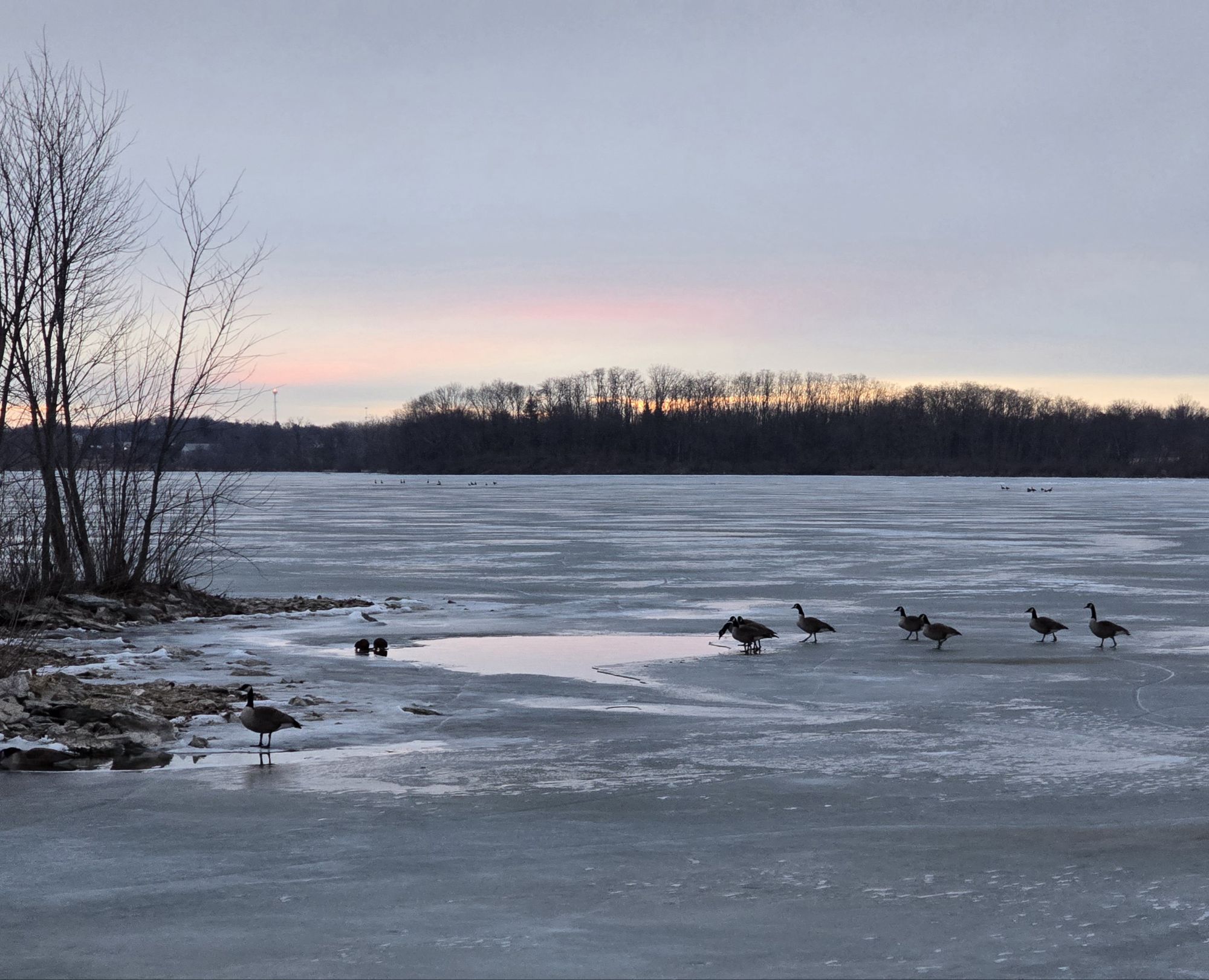
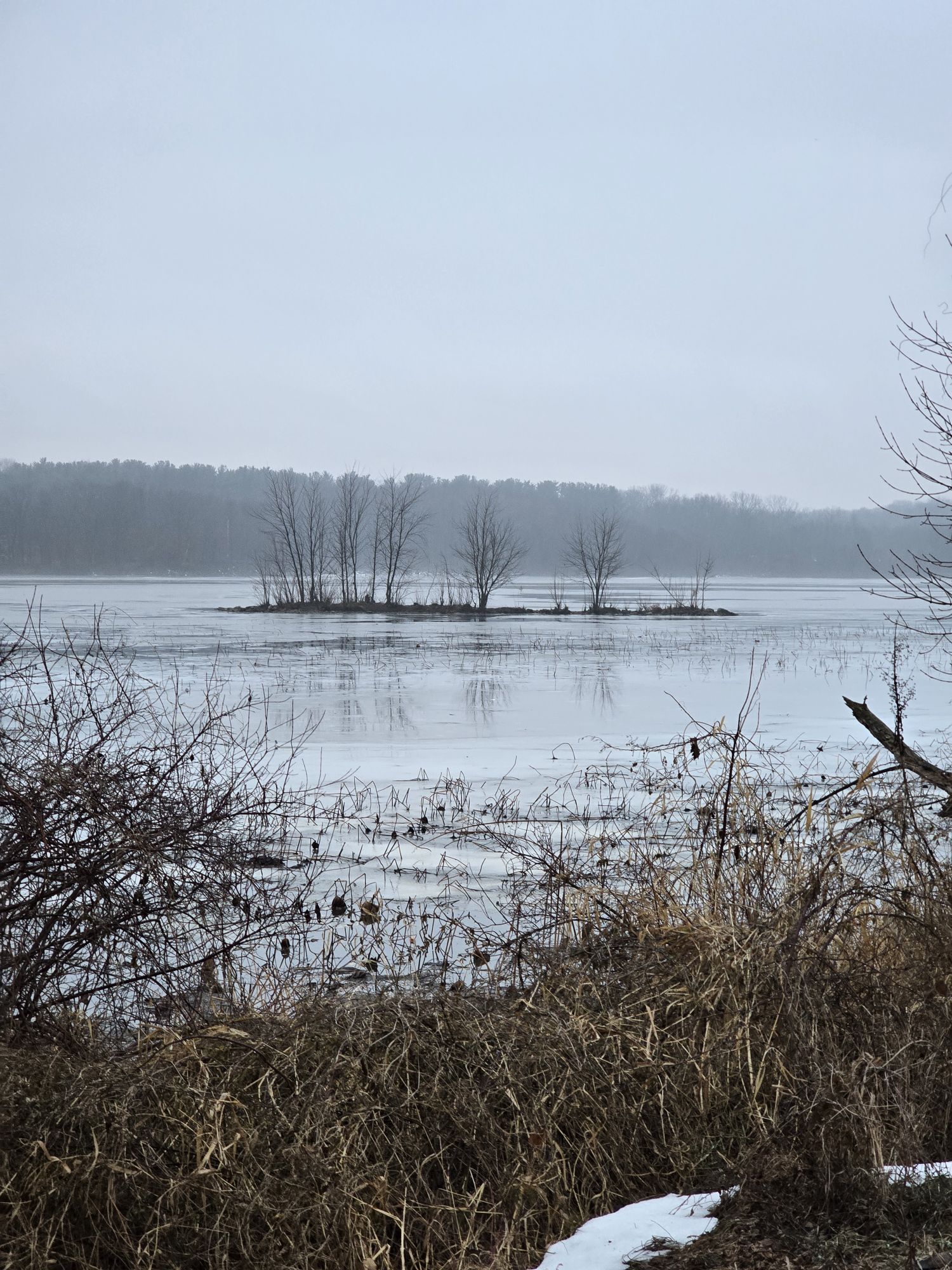
Ambient temperatures in the 40s have been melting snow and ice, leaving a dead landscape. No spring hope. No winter cover. Except for the lake, it’s just dead. It’s a good time to turn indoors to my writing.
I have three chapters remaining to draft in part two of my autobiography. In the story, I just concluded leaving paid work during the coronavirus pandemic. If the pandemic did one thing right, it made a clean break between the workplace and me, forcing me to live on a fixed income. The final chapters write quickly because they are so recent. Today I created three of them, and next I write about the coronavirus pandemic plus two other chapters with working titles of “Beginning of the end,” and “New beginnings.” It shouldn’t take long to finish the first draft. Then begins the process of going through the whole book for the first major rewrite. I expect there will be three or four of those before I’m ready to publish.
After the book is ready for publication, I don’t know. I’ve been focusing on this work so long, I hadn’t given much thought about what’s next. I want to revise the first book to clean up a few things identified by friends during the post-publication period. I also must see if there is continuity without repetition. Next year I should be able to declare everything finished.
The biggest predictable issue in our lives is Social Security doing nothing to avoid running out of money beginning as early as late 2032. Benefits will be cut automatically by 24 percent across the board if nothing is done to prevent going over this cliff. If anything, Republicans in charge of the federal government are going the wrong way. The One Big Beautiful Bill Act, and the Social Security Fairness Act, accelerated Social Security insolvency alongside well-known demographic challenges to its structure. An answer to the question “How do I make up for this loss in benefits?” needs finding. Counting on the Congress to do something is not an answer.
What that says is I have to return to paid work. I have no regrets about how my working life proceeded and ended.
Physiologically I am changing. I know this because I adopted a new morning exercise regimen and my conditioning schedule is outpacing the ability of my soft tissues to recover and adapt. After a good couple of weeks on the new regimen, my shoulders started to hurt. This is self-diagnosed as inflammation, not a chronic problem. I believe I’m right about that. I have to take it easy for a while to let my body catch up with my ambition. Apparently I am no longer young.
In the meanwhile, it’s nose to the grindstone with the book. If I can finish the first draft this year, that leaves me plenty of time to publish a final text in the first half of 2026. That would clear the deck for returning to the workforce, something I am loathe to do, yet may needs do.
Calling this project done for now. I went through all remaining boxes in the two stacks and prepped two more boxes for the library used book sale. There are five empty boxes and a good amount of new stuff placed in old boxes. This was the first major sort of my books since they arrived in 1993 and I built the shelves. I’m satisfied I have a better idea of what is available, which was the point.
Notes:
I found the rest of my books related to slavery and African-American studies. The Autobiography of W.E.B. DuBois is important to the literary discussion of the United States. If a 21st Century canon was relevant or possible, he would be in it. I don’t expect to reread the book, yet it earned a place on the shelf. I studied Stanley Elkins’ book Slavery in graduate school. I would be curious to reread it, and also read the criticisms of it. Up from Slavery by Booker T. Washington moves from box to shelf as well. On my to-do list is rearranging my African-American studies books.
I had more than a hundred business books. It was a really complete set as my work at the transportation and logistics company ended in 2009. The only ones I am keeping are Dale Carnegie’s books, which include one owned by my father, and an autographed copy of Out of the Crisis by W. Edwards Deming. I picked Deming up for a buck at a used bookstore in Sweetwater, Texas during the rattlesnake roundup.
I intentionally left political books alone. I have all the presidential memoirs I know about, beginning with Truman. The next reading here is if Barack Obama ever finishes the second volume of his presidential memoir. I’m not a fan of Trump and to my knowledge, he hasn’t written a memoir from his first term. Like with Nixon, I’ll likely wait until he is dead before considering purchasing any memoir. I bought a copy of Mike Pence’s 2022 vice presidential memoir So Help Me God for a buck at the library used book sale. It is occupying the spot where Obama’s book will go when published. Pence seems to have tried to tell a normal story of that period. Will know more if I get around to reading it. Life is short. So many books with limited time.
As I approach a new year of writing, I feel refreshed by The Great Sort. I feel better aware of my stuff and know where to find things again. Highly recommend it if you have a wall of boxes hanging about your home.
For years, my books about North American indigenous culture were tucked away in a box. I decided I was wrong about them and with newly opened space because of The Great Sort, I put them on a shelf. These are in addition to the works by and about Black Hawk which I always kept out, and those of Hyemeyohsts Storm which I kept out, yet now boxed away. I wrote about Chuck Storm as we called him here. The next step is to incorporate this literature into a reading plan.
Of these books, the author that might best fit into a canon of American Literature (if such a thing existed or was possible) is N. Scott Momaday, whose House Made of Dawn won the Pulitzer Prize in 1969. There are others here that remain quite good. I read what I read of these beginning in 1970 while at university. I don’t know where this is going, yet they are out and available in a prominent space. I won’t miss seeing them daily and expect to read some of them.
I mentioned the Time magazine purge. I came across a dozen copies of Harpers Magazine dated 1938 and 1942. I bought them at either an auction or a yard sale for a buck. They used to be property of the Mount Carroll, Illinois public library, yet now find themselves in The Big Sort. There are familiar authors inside: John Dos Passos, E.B. White, Peter Drucker, Margaret Bourke-White, Glenway Wescott, Eudora Welty, T.S. Eliot, Franz Werfel, and probably others I should recognize. At the stop on my desk, enroute to the recycling bin, I notice how many pages of book advertisements there are. The December 1938 issue has 44 pages by most of the major publishers. That says something about the role Harpers played in popular culture. If that didn’t give it away, the advertisement for New York department store Hammacher Schlemmer did.
There are four mover’s boxes of vinyl records which I will attempt to sell locally. I asked our child about them and there was only a single record of interest: Beethoven’s Fidelio. The ones I will keep are a small, undetermined number. I will keep the Red Gallagher album because he autographed it for me and grew up a block away from our home. I spent a good part of my life listening to these hundreds of records. While I still have a turntable, I need a new amplifier and don’t want to spend the money. Probably should sell the turntable as well.
I’m writing on Christmas Day and noticed how many empty boxes there are. The purge of books and magazines is having the desired effect. There are more boxes than things on the sorting tables. At this point, I will find something to fill most of the boxes, although I am weeding out different styles of boxes because I need them for book shipments to the public library. While I just began The Big Sort, it feels like it has been going on for a much longer time. In a way, it has.







 Journey Home
You must be logged in to post a comment.