Categories
Environment Living in Society Sustainability

Politics in Desperate Times

Atherton Wetland. Ely, Iowa.

“January 20th, 2017 will be remembered as the day the people became the rulers of this nation again.”~ President Donald Trump inaugural address

It would be one thing if we had entered a new era of Jacksonian Democracy where the common man raised into prominence. Plain folk like me would apply common sense to problems with a focus on results.

When elites and moneyed interests control almost everything in our government, the way the aristocracy did in Andrew Jackson’s time, to invoke Jackson now as something positive is a cruel joke. Like Jackson, Trump exaggerated the size of the crowd at his inauguration and motivated mob scenes.

Under Republican hegemony I have less say than ever in government.

That said, there is a lot we can do. The perils of our times are obvious and beg solutions, beginning with electing people who more closely represent our values. During the next 14 days I’ll continue to contribute my part to electing such people. If anything, one effect of the Trump administration and Republican hegemony in Iowa has been to recognize and bolster my Democratic roots.

14 days will come and go quickly. What then? As I suggested in my recent letter to the editor, climate change and proliferation of nuclear weapons pose existential threats to society as we know it. We must embrace change and adapt as we can. We must also work to mitigate these threats for ourselves and future generations. There is a life’s work in that, especially as my personal bandwidth decreases with advancing age. The challenge is to make every effort meaningful, thoughtful and aimed at impactful targets.

I hope to elect more Democrats to the Iowa legislature and the U.S. Congress and in doing so gain a voice where what we’ve been saying has been muted in recent years. Even if we fail in this effort we must re-assert our voices. I’m optimistic things can get done.

Climate change is already negatively impacting agriculture, the mainstay of our state. If we seek to grow nutritious food in the corn belt there needs be a focus on soil health and water management. Today the focus is on yield and market prices and that tail is wagging the dog. Something has to give over the near term. Farmers’ attitudes toward cover crops, buffers, and soil and water management must be encouraged by government to change. Sending our topsoil to Louisiana and the Gulf of Mexico at a rate exceeding the land’s ability to regenerate it is unsustainable and farmers know it. It is made worse by precipitation patterns that combine heavy rainfalls, long periods of drought, and warmer, more humid nights. The impact of climate change on agriculture is significant and can no longer be denied.

A primary role of our federal government is national defense. With or without nuclear weapons, the United States remains the most powerful nation on Earth. It is a simple question begging an answer: why impose the risks of nuclear weapons on society if they are no longer needed for national defense?

The nuclear non-proliferation movement has ebbed and flowed during my lifetime. Whenever there is a broadly organized plan of action to do something about the Trump administration’s change to nuclear proliferation policy, I’m ready to join. Right now, there’s too few of us in Iowa and no fulcrum for action. I continue to follow groups like the Arms Control Association, Council for a Livable World, Friends Committee on National Legislation and Physicians for Social Responsibility in Washington, D.C. to stay informed.

While I am hopeful of positive advances mitigating these two threats, my optimism is tempered with realism gained through a few successes and many failed attempts to move the needle on them since the 1970s. Today is no time to give up.

Categories
Environment

A Reckoning Came

Hot Peppers from the Garden, Oct. 12, 2018.

Even if we knew our ecosystem was close to the tipping point of global warming and its consequences, it is hard to be ready for the recent Washington Post headline, “The world has just over a decade to get climate change under control, U.N. scientists say.”

The Intergovernmental Panel on Climate Change published its latest report a week ago. 10-14 years remain to address global warming and climate disruption to which it contributes, according to the authors. If our global society doesn’t address it, scientists find we will likely pass a tipping point toward climate breakdown from which there is no return.

Can we take adequate climate action in time?

“Even if it is technically possible, without aligning the technical, political and social aspects of feasibility, it is not going to happen,” said Glen Peters, research director of the Center for International Climate Research in Oslo. “To limit warming below 1.5 C, or 2 C for that matter, requires all countries and all sectors to act.”

I’m not hopeful society will react adequately.

Recycling programs are a case in point about society’s failures.

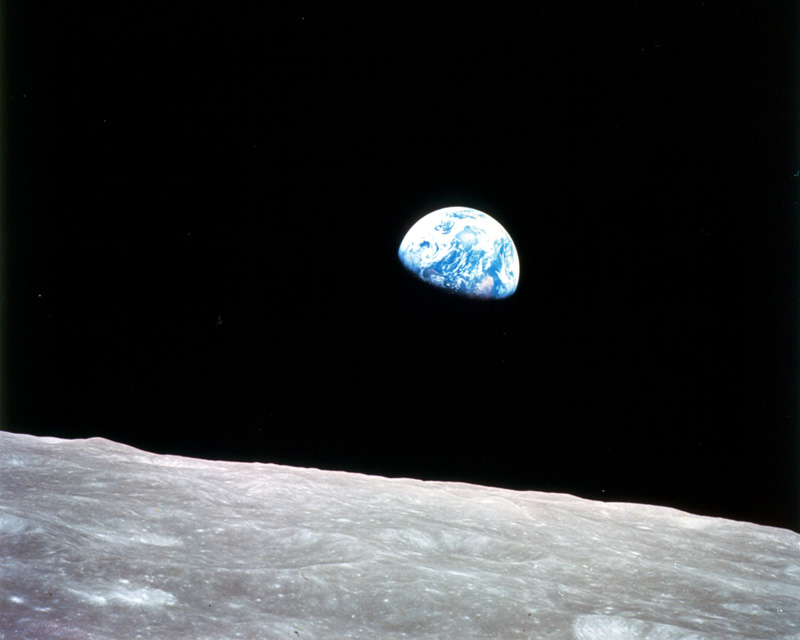
Driven by a desire to take volume out of waste streams, curbside recycling programs came up after the environmental awareness created by the Apollo moon flights and the widely circulated “Earthrise” and “Blue Marble” photographs. It just made sense to recycle materials like metal cans, cardboard, paper, glass and plastics that could be re-used. Along with that came a push by manufacturers to create containers that were recyclable. By any measure the programs were successful for a long time.

Time intervened and today, more and more communities are either scaling back or dropping their recycling programs. The reason? Contamination of waste, increased collection and processing costs, and lower sales prices for recycled material. Who is getting blamed? China. Here’s an explainer from a Pennsylvania television station:

The recycling markets, whether it’s paper, plastic, glass, or other items, are financially unstable now, local recycling coordinators said.

The cost of recycling, including collection and processing, is increasing, while the prices for recyclables sold is decreasing.

One reason, they said, is China. They control a huge portion of the world’s recycling markets and they now insist on taking recyclables that are not termed “contaminated,” meaning mixed with other materials. In fact, China is no longer accepting any recyclables from the United States.

Recycling is something individuals and families can get their arms around. To hear this story, Americans are no good at it. If we can’t do something as tangible as recycle plastics, cans and glass in a way to enable them to be recycled, how can we be expected to reduce vehicular fossil fuel emissions, use of lawn fertilizers, home heating oil and gas, and a host of other consumer products right in front of us? Take that to the next level and how are we to reduce greenhouse gas emissions in agriculture by changing our food choices to reduce consumption of meat, corn and soy found throughout grocery store aisles? What about the unseen manufacturing plants that use coal, oil and gas to create mundane products like cheap cat litter, toilet paper, hot dogs and home appliances?

What the IPCC is saying is time is short and we have a difficult task in front of us. It involves personal behavior which we have been no good at, and collective behavior that in the current political environment seems impossible.

An obvious precedent to these times is the extinction of Neanderthals after the rise of so-called “modern humans.” How they went extinct is not fully understood, but several theories have been advanced.

“Hypotheses on the fate of the Neanderthals include violence from encroaching anatomically modern humans, parasites and pathogens, competitive replacement, competitive exclusion, extinction by interbreeding with early modern human populations, and failure or inability to adapt to climate change,” according to Wikipedia. “It is unlikely that any one of these hypotheses is sufficient on its own; rather, multiple factors probably contributed to the demise of an already widely-dispersed population.”

Where do we go from here? The IPCC report is no surprise. It is a wake-up call for folks who haven’t engaged in mitigating the effects of global warming and climate disruption. At what point do we get enough people engaged? The day of reckoning has passed, now it’s up to us. We’ll see if we can become better at it.

Categories
Environment Sustainability

Stakes Have Gotten Higher

Image of Earth 7-6-15 from DSCOVR (Deep Space Climate Observatory)

Regardless of winners, there are only two issues that matter on Nov. 6: climate change and nuclear weapons. They represent the only existential threats to society as we know it.

Will Democrats or Republicans do a better job addressing climate change responsibly? I don’t know.

Stakes have gotten higher.

The Intergovernmental Panel on Climate Change issued an Oct. 6 report which said the impacts on humans of letting the planet warm by 1.5 degrees Celsius are bad. If it gets warmer they are worse.

The good news is there is time to address it. It will be hard.

“Limiting warming to 1.5 degrees Celsius is possible within the laws of chemistry and physics but doing so would require unprecedented changes,” said Jim Skea, Co-Chair of IPCC Working Group III.

Humanity does not have a good track record of making sensible change.

The IPCC indicated society has between 10-14 years to address global warming before it reaches a tipping point after which it becomes uncontrollable.

In other words, it will be incumbent upon elected officials to address humanity’s contributions to global warming regardless of party.

Please vote, and consider what candidates might do to address climate change as you do.

View the IPCC report here.

~ Published in the Oct. 18 edition of the Solon Economist

Categories
Environment

The Clean Power Plan is not Killing Coal

Coal Mine Demonstrators Going Down – 1950

We’ve known the 45th president seeks to eliminate regulations on the fossil fuel industry so it’s no surprise he announced his intention to modify the Clean Power Plan developed by President Obama’s Environmental Protection Agency.

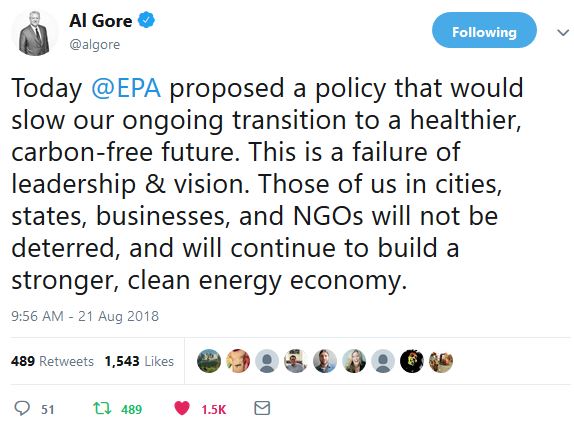
The plan was announced by the president in Charleston, West Virginia at a campaign-style rally on Aug. 21. Here’s what Al Gore, Chairman of the Climate Reality Project had to say.

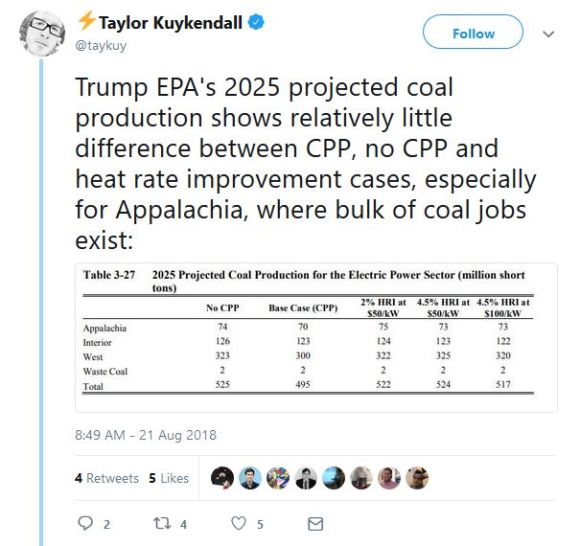
Whether or not the Clean Power Plan exists makes little difference to the future of coal-fired power plants according to Taylor Kuykendall.

Regardless of executive actions, the days of coal fired power plants are numbered. Electricity produced by wind, solar arrays and natural gas will push coal out of the picture because they are cheaper. This was true when home owners replaced coal furnaces in their homes with natural gas in the 1950s and 1960s. It’s true now. Not only that, there are public health issues with burning coal. It is market conditions that will reduce coal consumption in the United States.

One assignment during my transportation career was to start a school in Boone County, West Virginia to re-train coal miners to become truck drivers. We got a one year grant from the governor’s office to train 250 people. The day we announced it was front page news in the Coal Valley Times. Along side the article about us was one indicating another round of coal miner layoffs.

I recall standing in Democratic Governor Gaston Caperton’s office watching a train laden with coal making its way along the Kanawha River. We knew the coal industry was dying then, it’s dying now, and no amount of special interest pressure on our federal government will bring it back.

Clean coal is a dirty lie and despite efforts to prop the fuel up, government should let go of it and leave it in the ground. As Gore said, “we will not be deterred” from building a stronger, clean energy economy.

~ First posted on Blog for Iowa

Categories
Environment

Irony About Climate Change in New Orleans

Image of Earth 7-6-15 from DSCOVR (Deep Space Climate Observatory)

It is no surprise the Heartland Institute hosted a conference called “The America First Energy Conference” for climate change deniers on Aug. 7 in New Orleans.

Heartland is the libertarian think tank that teamed up with Philip Morris to deny the health impacts of tobacco use. Climate change denial is high on their priority list.

“The day-long conference reflected the political rise of global warming skeptics in Donald Trump’s America that is occurring despite mounting scientific evidence, including from U.S. government agencies,” Reuters correspondent Collin Eaton wrote, “that burning oil, coal, and natural gas is heating the planet and leading to drought, floods, wildfires, and more frequent powerful storms.”

“The leftist claims about sea level rise are overblown, overstated or frankly just wrong,” Heartland president and CEO Tim Huelskamp said in an interview with Reuters. Regarding the United Nations’ findings on climate change, he said it was “fake science” motivated by a desire for “power and control.”

An irony is the conference is being held in the American city most impacted by extreme weather made worse by climate change. New Orleans has not recovered and may never recover from the August 2005 Hurricane Katrina.

“One of the country’s largest credit rating agencies has put New Orleans and other coastal cities on notice: prepare for the effects of climate change or risk a hit on your credit score,” according to Tristan Baurick at the New Orleans Times-Picayune. When the risk analysis community says it, it must be real.

Climate change is real, it’s happening now, and human activity is a primary contributor to extreme weather events like New Orleans experienced.

The rise of a conference like this is attributable almost entirely to the rise in prominence of libertarian billionaires with a long range plans to re-make American society to their liking. They believe their liberties have been infringed upon by government regulations and the Trump administration has been removing barriers to the practice of unfettered capitalism. That’s not good for you, me, or the people of New Orleans.

It is shocking how much the Trump administration has deregulated government in less than two years. The fact the Environmental Protection Agency is deregulating asbestos, a known carcinogen banned in 55 countries, is a sign of how far they will go. The only check on such behavior is for Democrats to win a majority in at least one chamber of the next Congress during the 2018 midterm elections, or to vote Trump out in the 2020 general election. Much damage has already been done. Some of it can’t be reversed.

I met a nine-year-old from Saudi Arabia recently. He lives with his extended family on the Arabian Peninsula and has come to Iowa the last couple of years to visit his mother before school starts in September. We talked about the weather.

“It sure is hot,” I said.

“Yes, but I don’t believe it is climate change,” he replied.

“No, probably not,” I said. “It’s August in Iowa.”

It is one thing for children to learn the difference between weather and climate change. When adults in the room deny the science of climate change, it’s something else. It’s clear there were few adults at the conference in New Orleans.

~ First posted on Blog for Iowa

Categories
Environment Kitchen Garden

A Difficult And Strange Season Of Weather

Carmen Black at Sundog Farm

By Carmen Black

(Editor’s Note: Iowa Farmers deal with an existential reality that is the weather. Regardless of increasingly polarized discussions about climate change, weather affects real people in tangible ways. Carmen recently wrote this piece to members of her Community Supported Agriculture project Local Harvest.)

The weather has been consistently challenging from the late spring to immediately hot May, from lots of rain to this current dry spell. There hasn’t been a catastrophic weather event, but all these different difficult weather conditions create more work to keep everything growing well.

I’ve been thinking more about it as we’ve been observing its impacts while harvesting more of the summer crops. I’ve talked to many other farmers (including folks that grow other types of crops) about the challenges of this season, and anecdotally it seems like the conditions have been hard on many types of crops and livestock alike. One of things that has struck me about this year is that it hasn’t been just one way like really hot or really wet, but every month has brought a different extreme to contend with. It’s made me wonder if it’s all this erraticness that’s been stressful to the plants and animals rather than just the heat or just the late spring.

I was curious to find out if the weather has just felt difficult to us or if it really has been extreme in the grand scheme of things, so I did a little internet research for weather data. What I found was interesting, and did seem to affirm my feeling that this year really has been weird. This was the coldest April on record (since records began in 1895), and was on average 10 degrees colder than normal. It was also somehow both the 5th snowiest April and the 13th driest April, which seemed a little ironic. 2018 tied for the 6th warmest May with 1887, and the average temperature was about seven degrees warmer than normal. Des Moines had three consecutive daily record highs from May 26-28. I was surprised that in Cedar Rapids the daily record highs for the end of May were all held by 1931 or 1934, and then I realized that was the dust bowl! June was the 10th warmest and 10th wettest June on record. July seems to have been pretty average after all those top 20 finishes for the previous months, as it was the 54th coolest July and the 47th driest July on record. Which I think kind of puts the extremeness of the previous months in perspective. Kind of nice to have an average month finally.

Anyhow, my main takeaway is that this year really does seem to be remarkably erratic when you look at the numbers, and it makes sense that plants and animals would respond unpredictably to all of these changes in the weather. I feel both good that I wasn’t making up that the weather has been extreme in many different ways this season, and kind of bad that it really has been historically weird this year. The fact that it took the dust bowl to beat this year out for daily heat records in May felt kind of grim.

Some crops like onions seem to have really suffered from this weather. You may have noticed that they’ve been smaller than normal this year, and after getting most of onion harvest done last week I’m sorry to report that many of the longer season onions are even smaller. This was especially disappointing to me after such a bountiful onion harvest of really giant ones last summer, but I think makes sense considering what we were up against. We planted more than 3 weeks later than we did last year because it kept snowing, and then had to irrigate the onions (which we hardly ever have to do) because it was so dry. We struggled to keep the weeds under control in the onion field in June when it was so wet, and spent almost a week wallowing in the mud trying to hand weed. All in all I’m glad we have some onions to show for all of it, and have a few ideas of things to try in case this ever happens again.

I also have to say that some crops seem to have really thrived in this weather. We’ve never had such a good cucumber or spring carrot crop before, both of which are crops that we have historically struggled to produce large quantities of for several weeks in a row. The combination of having plenty of carrots and cucumbers has felt like a great accomplishment, and I hope that we’re able to replicate it in a better weather year as well!

~ Carmen Black farms in Cedar Township in Johnson County, Iowa.

Categories
Environment

On the Comeback Trail – Asbestos

Earthrise by Bill Anders, Dec. 24, 1968

The Environmental Protection Agency is not what it once was as the Trump administration finishes year two.

In addition to public renunciation of the words “climate change,” combined with promotion of fossil fuels which contribute to global warming, Trump’s minions are eating away at the foundation of protections the agency created since President Nixon formed it on Dec. 2, 1970. Like a swarm of termites, they follow an agenda crafted by conservative think tanks to deregulate what is perceived as infringement on the liberties of corporations to practice unfettered capitalism.

A national environmental movement influenced Nixon’s decision to create the EPA, and only a similar movement will stop the current administration from dismantling it. Thus far, nothing has proved egregious enough to precipitate a movement like the one that rose in the 1960s. Will the last straw be reintroducing asbestos into our consumer society?

You’ve got to be kidding me. Asbestos?

Asbestos may be coming back to your neighborhood, according to Aileen Kwun who posted an article about it on Fast Company July 31.

“Asbestos, a dangerous carcinogen outlawed in more than 55 countries, could make a comeback in the United States, under Trump’s Environmental Protection Agency,” Kwun wrote. “The EPA has even made it easier for companies to introduce new uses of asbestos-containing products in America — many of which could end up in common products in your home, as well as the materials used to build it.”

“Trump has been outward in his views on the asbestos industry,” she said. “His 1997 book Art of the Comeback explicitly stated that asbestos bans are a conspiracy ‘led by the mob, because it was often mob-related companies that would do the asbestos removal.’”

On June 1, the EPA enacted a Significant New Use Rule (SNUR) allowing the manufacture of new asbestos-containing products to be petitioned and approved by the federal government on a case-by-case basis, according to Kwun.

Ask a public health official and they will say EPA should continue to regulate asbestos as they have.

Asbestos? Making a comeback? Good grief! Read Kwun’s entire article here.

George Carlin famously said, “Environmentalists don’t give a shit about the planet, they don’t care about the planet… You know what they’re interested in? A clean place to live. Their own habitat. They’re worried that some day in the future they might be personally inconvenienced.”

There is little about the modern environmental movement and its reaction to changes at the EPA to prove Carlin wrong. In the meanwhile, termites continue to consume the regulatory foundation for a safe environment built up over decades.

~ First posted on Blog for Iowa

Categories
Sustainability

Helsinki and New START

B-61 Nuclear Bombs

I don’t know one person, acquaintance or public figure who thought the July 16 meeting between Donald Trump and Vladimir Putin in Helsinki went well.

The only people who found a ray of hope in the awkward encounter are those in the arms control community who pointed out some positives, not the least of which is an easing of tensions between the two nuclear powers evidenced in the meeting.

“It looks like Trump and Putin may have agreed in Helsinki to resume strategic stability talks.” Daryl Kimball, director of the Arms Control Association, posted on twitter. “One key issue: New START, which can be extended without complex negotiation, without further approval by Senate or Duma, and without Trump making unwise concessions.”

Such a move makes sense and would be an easy win for Trump. It may not be well received among Trump’s base supporters because, after all, the Obama administration negotiated New START. The 44th president called in his markers to get the U.S. Senate to ratify the treaty. Some of us felt he gave away too much with a complex offering of perquisites to Republican hawks led by Jon Kyl. Not the least of these was an expensive, unneeded modernization of the U.S. nuclear complex. The Trump crowd won’t like it, regardless of the efficacy of an extension, because of the association with President Barack Obama.

Republicans have expressed disappointment with Trump’s foreign policy, such as it exists. They may (publicly or privately) attempt to reign in the president. At some point the U.S. wants to address perceived Russian violations of the INF treaty negotiated between Presidents Ronald Reagan and Mikhail Gorbachev, signed in 1987. Russia has threatened to withdraw from the INF treaty for many years, according to the Bulletin of the Atomic Scientists.

As we look forward with trepidation to the next meeting between the two heads of state, the arms control community will be working to advance the causes of nuclear disarmament and abolition. It is something they do regardless which party has majorities in the Congress or who is president.

~ First posted on Blog for Iowa

Categories
Sustainability

Rise of Nuclear Power was a Bad Idea

In a broader perspective, the rise of nuclear power was a bad idea. It always required substantial government subsidies, and there is no solution for handling spent fuel rods and radioactive equipment. If there is a disaster like Fukushima Daiichi was in 2011, there is no recovery from it years later.

On Friday major news outlets reported Duane Arnold Energy Center near Palo will cease electricity production in late 2020. Duane Arnold, owned by NextEra Energy Resources, is Iowa’s only nuclear power generating station.

Alliant Energy, the utility’s only remaining customer, entered an agreement with NextEra to cease operations five years earlier than planned.

The declining cost of other forms of energy led to the decision, according to NextEra spokesperson Peter Robbins in a Radio Iowa article.

“You are just seeing continued pressure on all sources of energy — from renewables and from natural gas — and we are certainly seeing that in the market place in Iowa,” Robbins said.

NextEra plans to invest in existing and new renewables generation across Iowa before the end of 2020, according to the article. Alliant Energy said it will save customers nearly $300 million in the next 21 years by switching away from the use of the nuclear power.

Duane Arnold’s fate reflects the general decline in nuclear power in the United States. While some, like retired scientist James Hansen and former Energy Secretary Ernest Moniz, point to nuclear power as a potential way to reduce carbon dioxide emissions in electricity generation, it is just too expensive. Georgia Power remains the only company in the United States attempting to build new nuclear reactors. The construction at the Alvin W. Vogtle generating station near Augusta, Georgia has been plagued by delays and cost overruns endemic to the industry. The two plants may never be completed.

On June 1, President Trump directed Energy Secretary Rick Perry to take immediate steps to keep both coal and nuclear power plants running as a matter of national security. If the U.S. exits the nuclear power generation business there could be repercussions in ceding technological advancements to China and Russia. It could weaken existing nonproliferation standards if the U.S. discontinued its work as a supplier in the global nuclear marketplace. The flagship U.S. company for nuclear power technology is Westinghouse which filed for Chapter 11 bankruptcy March 29, 2017. Trump’s initiative isn’t going to help Duane Arnold stay operating as the marketplace is doing its work — there are no customers.

Duane Arnold employs about 540 employees, and because of the nature of nuclear power generation, about 300 will find continued employment during the lengthy decommissioning process. The federal government owns the spent fuel rods and there is no current, viable plan for off-site disposal. Storage time required for spent nuclear fuel rods is measured in multiple millennia. The plant’s license from the Nuclear Regulatory Commission had been extended until 2024.

The only successful application of nuclear has been in nuclear powered submarines and aircraft carriers where the question “what do you do with a nuclear submarine/aircraft carrier once its nuclear plant reaches the end of life?” has no good answers.

Renewable energy is Iowa’s future, it is the world’s future. Friday’s announcement was expected, as cost dictates how consumers source electricity. Nuclear power has never been cost-competitive. There will be disruption in workers’ lives and that’s unfortunate. However, the end had to come, and now that the announcement is made people can begin making plans.

~ First posted at Blog for Iowa

Categories
Environment Living in Society

Logic, Reason, Decency and Asbestos

Woman Writing Letter

Almost no one I know outside of politics is talking about the Nov. 6 election. That seems typical… and okay.

Most of us try to be organized. At least we pretend to be. We seek to live lives of logic, reason and decency. We’ll organize to figure out for whom to vote later, maybe around Thanksgiving.

Not so fast! It will be too late on Thanksgiving.

Here’s a head scratcher for logic fans from the Environmental Protection Agency. In our relentless pursuit to Make America Great Again, the administration wants to bring back asbestos. Yes that asbestos, the known carcinogen banned in 55 countries. It may soon be available again in consumer products near you.

Our president has a theory about asbestos regulation. In his 1997 book, Art of the Comeback, he explicitly said asbestos bans are a conspiracy “led by the mob, because it was often mob-related companies that would do the asbestos removal.” What kind of theory is that? It is a conspiracy theory.

Ask a public health professional or physician what they think about deregulating asbestos. While you’re at it, make your plan to vote on Nov. 6.

The logical choice would be to vote Democratic.

~ Published Aug. 9, 2018 in the Solon Economist