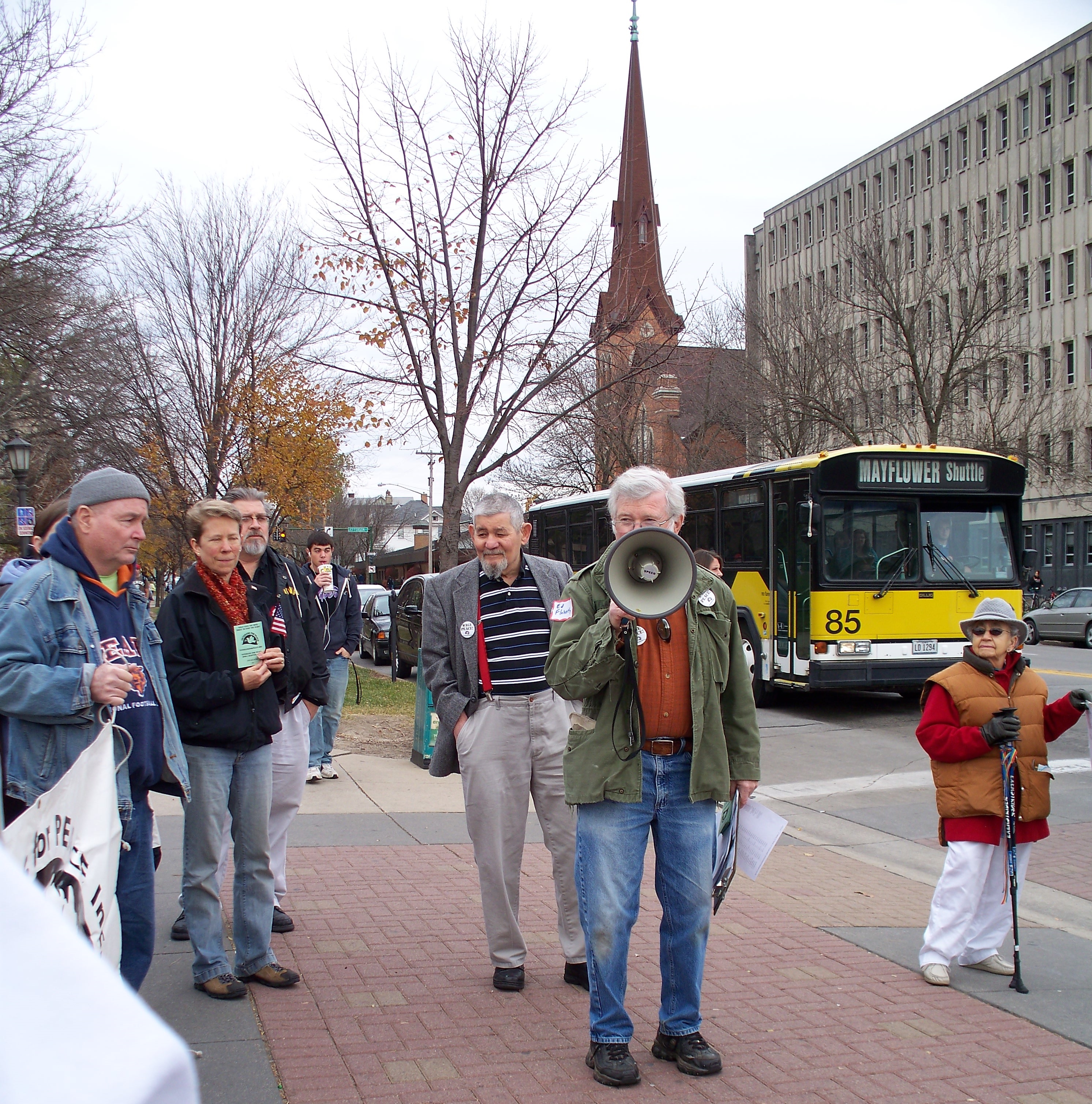
Ed said we should wage peace and call it Armistice Day instead of Veterans’ Day.
“Frustrated because the population is so easily convinced that war is patriotic,” said Tom.
Jacqueline spoke about being in the Women’s Army Corps and the Women’s Army Auxiliary Corps and said, “get in touch with our legislators.”
Sam said, “Contact our legislators and make it clear that we want out of Afghanistan.”
Alan was dismayed at our age and that “young people were absent.”
Conversation around the table at Hy-Vee’s free breakfast for all veterans centered on whether proof was required for the free meal for veterans at Applebees.
Tom said to his Facebook friends that are veterans, “Guys, thanks for serving. Have a great Veterans’ Day.”
Another Tom replied, “Thanks to us all the recognition we’re getting now is long over due. Thanks to all of us, regardless in the war zone or not we fought some type of war while serving and give praise to all men in uniform. God Bless and have a great day we all deserve it. S. looking sharp in that uniform Steve.”
A lot of us had our photos taken by the press and were interviewed.
Paul read the names of Afghanistan civilians who have been killed in the war.
Some didn’t speak, but just carried signs.
John asked for the e-mail address for Senators Grassley and Harkin to ask them to ratify the New START Treaty.
Bob talked about the potential Veterans’ National Recovery Center proposal for homeless veterans and asked for our help.
John said, “Peace is patriotic, and spread the word.”
James said, “Stop the wars.”
Faith said, “Have good success and I will help.”
Ralph said, “our list is our witness” and “we need gender balance on the board.”
“We need to get mad and have to be unhappy about the way the world is going,” said Dick.
Rose said we should “teach our children that peace is not a sissy thing.”
Bill said, “Let there be peace on earth, and let it begin with me.”
Martha said, “We didn’t pay attention in the Korean war. If we did, we would not have been at war again after.”
Ed said, “People didn’t love peace enough. Did not wage peace enough.”
Another Bill said “we should support active duty resisters.”
Karen said, “I agree with Bill.”
~ The author served in the U.S. Army from January 1976 until November 1979 with three years stationed in an infantry division near Mainz, Germany.
Republican U.S. presidents don’t like international climate agreements.
George W. Bush withdrew the United States from the Kyoto Protocol, a treaty we ratified, and yesterday Donald J. Trump notified the United Nations of our intent to withdraw from the global climate agreement signed in Paris when the mandatory one-year waiting period finishes the day after the 2020 general election.
The two Republicans said the agreements would hurt or restrict the U.S. economy.
If Democrats re-take the White House in 2020, there is a lesson to be learned from these agreements. A broader consensus is required for international agreements to be sustained over time. They can’t be subject to the vagaries of U.S. politics.
What then?
The answer is in engagement — in society, with friends and family, and with government. We can no longer survive alone in the context of these networks.
The sooner we realize it the more likely will we be to better implement solutions to the climate crisis. We can’t rely on government alone as its strengths wax and wane with political tides. We must use broader societal tides to our advantage, eroding recalcitrant shorelines when we can, and flowing back to the sea when we can’t.
From Act II, Scene 2 of Romeo and Juliet by William Shakespeare:
JULIET
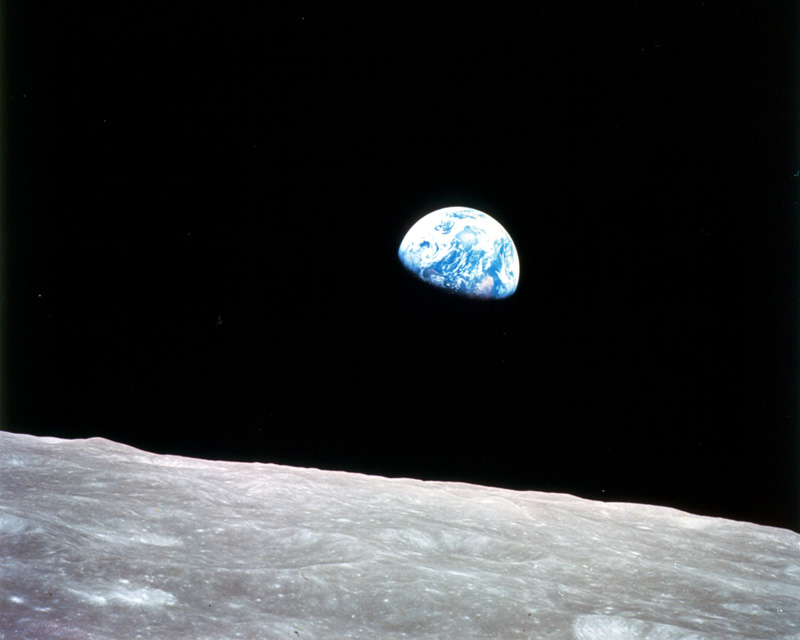
O, swear not by the moon, th’ inconstant moon,
That monthly changes in her circle orb,
Lest that thy love prove likewise variable.
ROMEO
What shall I swear by?
JULIET
Do not swear at all.
Or, if thou wilt, swear by thy gracious self,
Which is the god of my idolatry,
And I’ll believe thee.
ROMEO
If my heart’s dear love—
JULIET
Well, do not swear. Although I joy in thee,
I have no joy of this contract tonight.
It is too rash, too unadvised, too sudden,
Too like the lightning, which doth cease to be
Ere one can say “It lightens.” Sweet, good night.
This bud of love, by summer’s ripening breath,
May prove a beauteous flower when next we meet.
Good night, good night! As sweet repose and rest
Come to thy heart as that within my breast.
So it is, and so it should be. Now back to figuring next steps as Republicans ditch the work leading to near consensus on how to mitigate the effects of climate change.
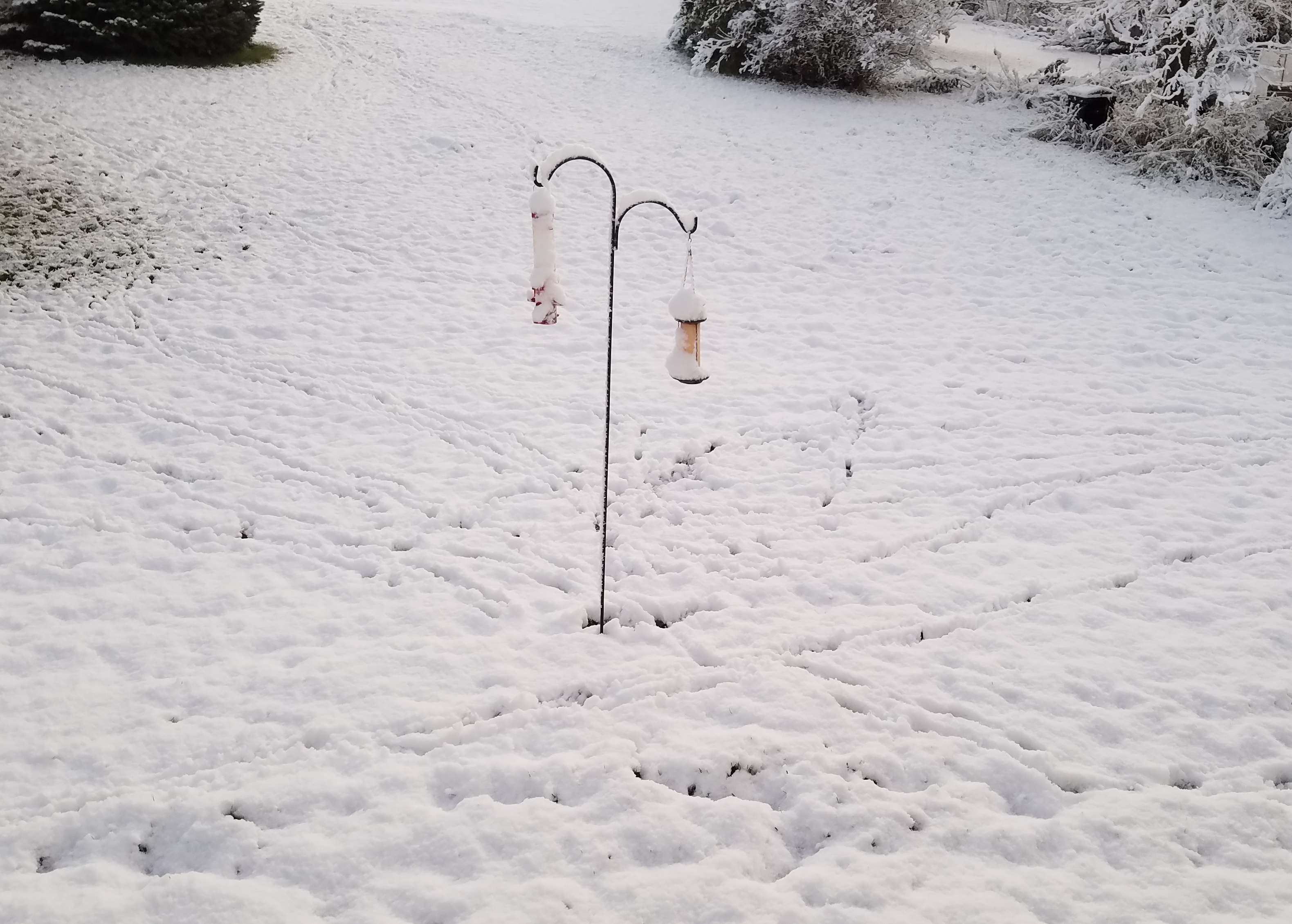
What should we make of Tuesday’s October snowfall? Not much, I guess.
It was another day in the neighborhood, where melting snow delayed yard and garden work, and a final mowing with grass clipping collection.
It’s unclear whether further mowing will occur.
Weather has me turning inward. A technician is schedule to inspect our furnace, a pack of 9-volt batteries is ready to install in smoke detectors, and I bought a new snow shovel to replace the aluminum one that proved too flimsy.
I’m also prioritizing November reading.
October has been a great month for this blog with the most monthly views since I began blogging in 2007.
It’s time to take a breather before the rush to year’s end. After today’s shift at the home, farm and auto supply store, that what I plan.
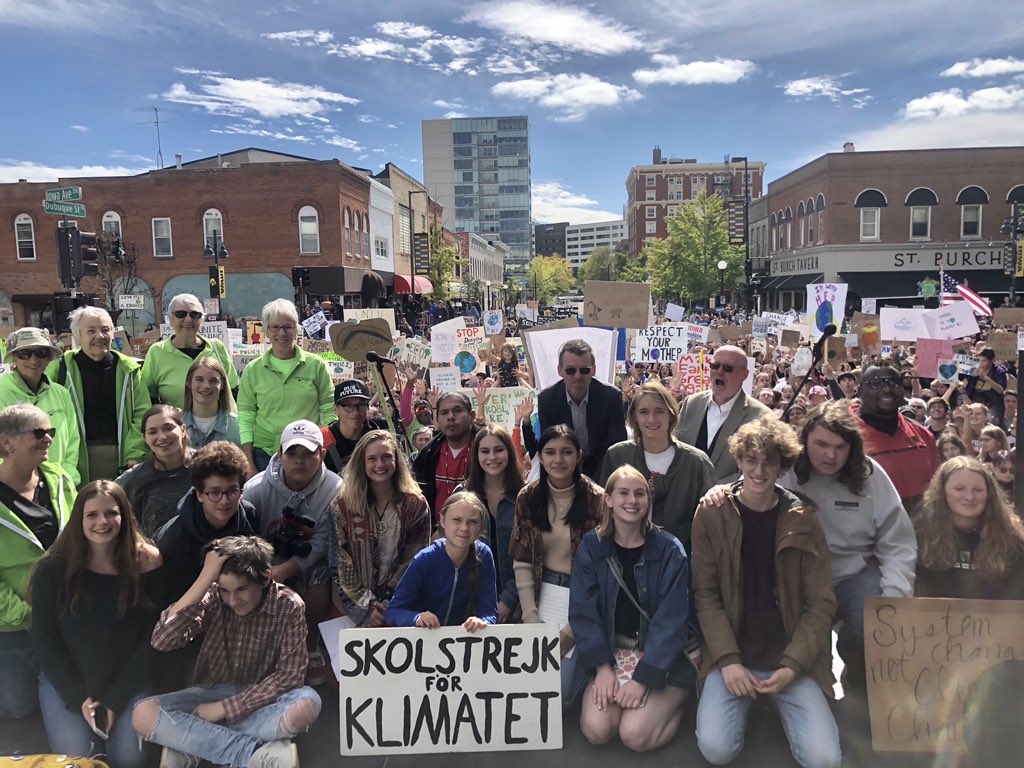
Greta Thunberg in Iowa City, Iowa Oct. 4, 2019. Photo Credit: Greta Thunberg Twitter feed.
Was yesterday’s gathering of a couple thousand people to support school strikers for climate action the equivalent of Evangelical Christian mega-churches?
Maybe.
Drawn to Iowa City by the arrival of 16 year-old Swedish environmental activist Greta Thunberg, people attended the event for a variety of reasons. Mostly they seemed interested in environmental action as well as in Thunberg and her celebrity. Such feelings fall at the intersection of an impulse to do something, political activism, and the real need to prevent human-caused climate change from getting worse.
By all accounts the event was positive, although I did not attend. I’ve been to mega-church revivals, one replete with Johnny Cash performing. It’s not who I am. Iowa City is the bastion of our state’s liberal elites, a group that includes many friends, but has proven ineffective in implementing the kinds of change needed to address our most significant shared environmental problems.
The presidential campaign of John Kerry, spouse of Teresa Heinz Kerry, scion of the Heinz ketchup family, gave rise to notions of liberal elites. Together the couple wrote a book titled This Moment on Earth: Today’s New Environmentalists and their Vision for the Future. While it was a New York Times bestseller, it did little to move the needle on climate action. It reinforced the idea that Kerry was of the East Coast liberal elite. Kerry’s campaign contributed to coalescence of a reactionary cult that eschewed all things liberal.
I don’t hear my liberal friends talking about this very much. In some ways, Kerry faded into the background in a male-dominated cultural environment that brought us Barack Obama, then Donald J. Trump.
R.F. Latta made a point on social media yesterday. “What liberals don’t understand about GOP reluctance to stand up to Trump is that conservatives fear the floodgates of culture change will burst open if they do and that will end of their way of life forever.” A similar sentiment is found in Lyz Lenz’ recent book God Land: A Story of Faith, Loss, and Renewal in Middle America in which she describes the male-dominated nature of white Evangelical churches. Rejection of Hillary Clinton as president was related to her female gender. Lenz wrote the 2016 election was an assertion of male power. Liberals must endeavor to understand the fears of conservative, evangelical Christians and others if we hope to avert the worst outcomes of the climate crisis.
Iowa City is home to Democrat Jean Lloyd-Jones, who along with Republican Maggie Tinsman, founded an organization called 50-50 in 2020, a “campaign school for women.” The organization has “a 10-year campaign with the goal of electing women to fill half the seats in the Iowa Legislature and half of Iowa’s Congressional delegation, and a woman Governor by 2020 – the 100th anniversary of women’s suffrage in this country.” The organization serves as an alternative to the churches of liberalism and conservatism. Jean and Maggie have kept the issue of moving women to a more prominent role in politics at the forefront of media attention. As Greta Thunberg’s visit to Iowa City fades into memory we need something similar for environmental issues.
We have some top drawer environmental activists in our area. I’m thinking of State Senators Rob Hogg and Joe Bolkcom, Mike Carberry, and members of the non-partisan 100 Grannies for a Livable Future. All of them would like nothing better than to bridge partisan divides to work on sustainable climate action. Without addressing conservative fears about liberalism, I don’t see how that can happen.
Yesterday’s climate strike was positive in many respects. The climate crisis will impact everyone so solutions must also include everyone. Otherwise, we could find ourselves kneeling at the altar of celebrity with nothing to show for it.
If August was a tough month, this summer has been one of the best in recent years.
Moderate local temperatures with reasonable relative humidity, rain enough to help the garden grow, and friends meeting the challenge of growing flowers and vegetables in a changing climate, all helped us feel comfortable.
July was notable for being the hottest month for the planet since record-keeping began, according to the U.S. government. Regional variation made Iowa tolerable, perhaps a harbinger of the impact of humans living on the planet continues its steady deterioration of our biome.
Despite favorable weather it was hard to get off the starting blocks in August on scores of projects needing attention.
It will soon be time to turn the page.
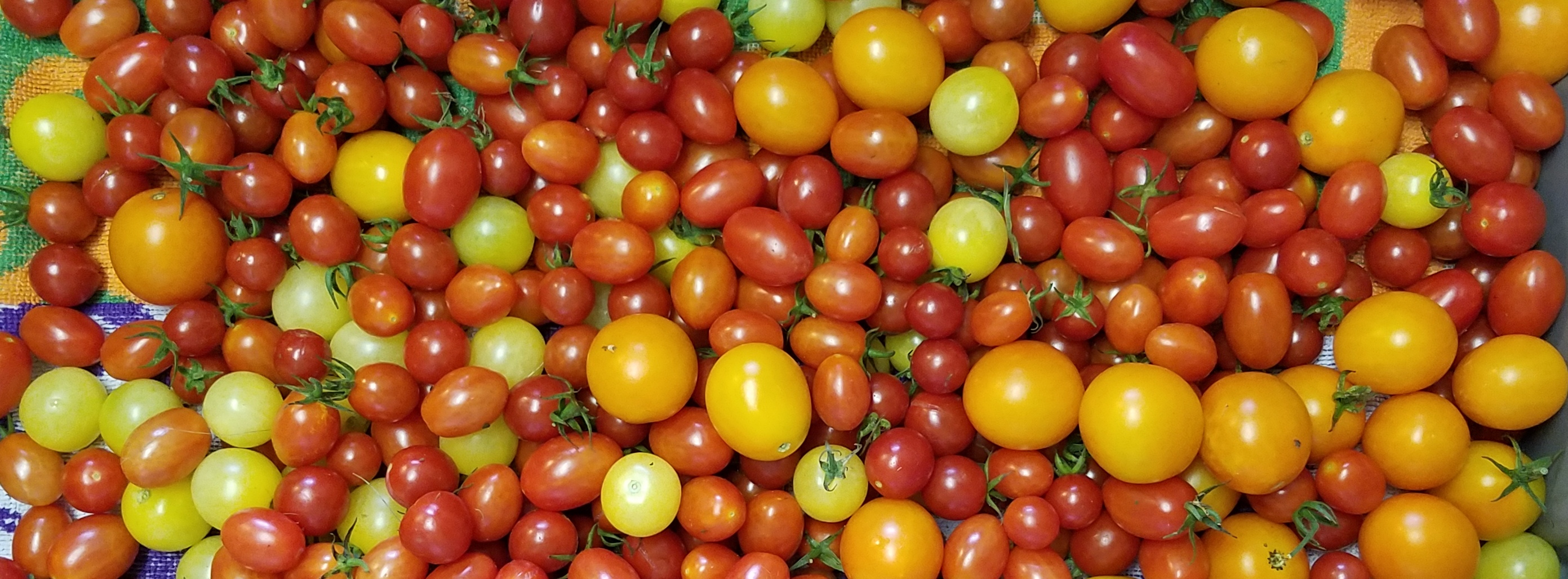
For the time being I’m eating cherry tomatoes and enjoying the last weeks of this glorious summer.
Friday will be the anniversary of one of the most sensational mass murders in United States history.
While the Aug. 9, 1945 atomic bombing of Nagasaki, Japan was far worse in terms of premeditation, number of human deaths, and physical destruction, I’m talking about the 50th anniversary of the murders of actress Sharon Tate and friends, followed the next night by the murders of Leno and Rosemary LaBianca.
I’d be willing to bet major news media coverage mentions the Tate-LaBianca murders and not Nagasaki. We’ll see grainy images of the late Charles Manson whose colleagues committed the crimes. Then the narrative will move on, perhaps to one of the president’s posts in social media, or some both-sider discussion of administration policy.
No one was prosecuted for the bombing of Nagasaki, even though it was the greater crime. Who will even remember Nagasaki other than nuclear abolition advocates and the few remaining people who were there?
Here is bomber co-pilot Fred Olivi’s account of his experience dropping the atomic bomb on Nagasaki:
Suddenly, the light of a thousand suns illuminated the cockpit. Even with my dark welder’s goggles, I winced and shut my eyes for a couple of seconds. I guessed we were about seven miles from “ground zero” and headed directly away from the target, yet the light blinded me for an instant. I had never experienced such an intense bluish light, maybe three or four times brighter than the sun shining above us.
I’ve never seen anything like it! Biggest explosion I’ve ever seen…This plume of smoke I’m seeing is hard to explain. A great white mass of flame is seething within the white mushroom shaped cloud. It has a pinkish, salmon color. The base is black and is breaking a little way down from the mushroom.
One would think the “light of a thousand suns” eclipses sensational coverage of a gruesome murder binge fifty years ago. We’ll see if major news outlets see it the same way on Friday.
President Ronald Reagan famously said, “trust but verify,” about the 1987 Intermediate-Range Nuclear Forces Treaty (INF), quoting a Russian proverb.
The Trump administration believes Russia can’t be trusted, was in violation of the treaty, and formally withdrew last week. The Russian Federation accused the United States of being in violation and declared it was open to dialogue to resolve differences. It’s over now.
A background article on the INF by Kingston Reif of the Arms Control Association is here. Reif explains what our country has been doing to prepare for exiting the treaty, including exploration of options regarding new intermediate-range missiles capable of delivering nuclear bombs.
We knew we were in for the worst regarding foreign policy when Donald Trump won the 2016 general election. Our knowledge didn’t help us through the appointment of John Bolton as National Security Advisor, described as a malign influence on U.S. arms control and international security objectives. With Trump we entered a new arms race.
Last year, President Trump told reporters he wanted to work with Russian President Vladimir Putin “to discuss the arms race, which is getting out of control,” according to Daryl G. Kimball, executive director of the Arms Control Association. This seems all talk. Trump may be the first president since John F. Kennedy to fail to conclude any form of agreement with Russia regarding nuclear weapons. Without treaties, the door is open to a new and dangerous arms race, Kimball said.
In a time of America first, the administration has little appetite for elimination of nuclear weapons and wants more of them. They seem likely to let the New START Treaty expire and in so doing would create an arms control regime with no legally binding, verifiable limits on the U.S. or Russian nuclear arsenals for the first time in nearly half a century. Both countries are required to eliminate nuclear weapons by Article VI of the Non-Proliferation Treaty signed by 188 nations, the Holy See and the State of Palestine.
Dr. Maureen McCue, coordinator of Iowa Physicians for Social Responsibility, emailed a group of Iowans favoring nuclear abolition and her colleagues around the country this disheartening report:
At our booth at the county fair we spoke to almost 3,000 individuals and found that of all the issues and concerns out there, concern about nuclear weapons their costs, and risks was just not on the minds of very many. On a list of seven concerns, it came in far to the bottom, dead last — even given the dangerous moves of this administration to increase spending on nuclear weapons updates and delivery systems… We live in dangerous times, but the opportunities to engage and educate a new generation are sorry lacking.
We must prevent what we cannot cure and eliminate nuclear weapons. The Trump administration seems intent on doing the opposite, opening the door to a new nuclear arms race. With every new nuclear weapon developed our likelihood of using them by intent or by accident increases. This is no kind of world to leave our children and grandchildren.
Aug. 6 is the 74th anniversary of the atomic bombing of Hiroshima, Japan. Who will notice what we should never forget?
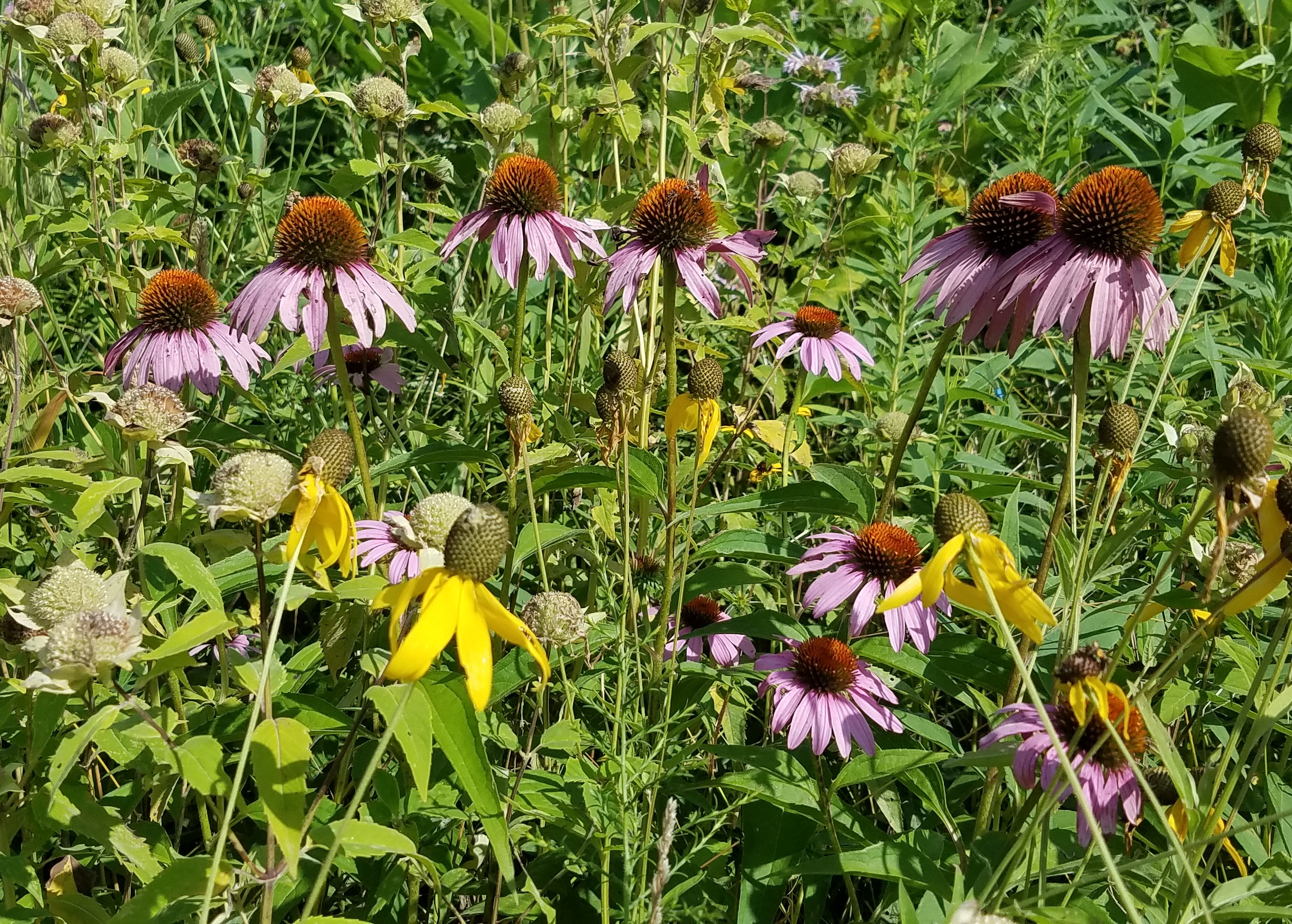
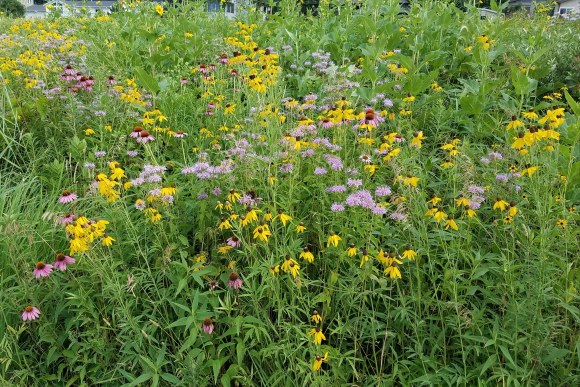
Is it wrong to collect seeds from a prairie restoration project for use in a home garden or another prairie restoration project?
I posed the question on social media. While the responses weren’t that many, they were a unanimous yes.
Not so fast!
“Stealing is stealing,” Cindy Crosby, author of The Tallgrass Prairie: An Introduction wrote.
A prairie manager I know was out for a stroll on his site when he came across a woman cutting buckets of blooms. Horrified, he said, “Lady, what are you doing?” She replied testily, “Well I tried to cut the flowers up by the visitors center for my party and they wouldn’t let me. So I came out here.”
Wildflowers will replenish themselves, right? Maybe and maybe not.
I asked our local state park ranger for his thoughts about harvesting seeds from prairie restoration areas. His response was speedy and made sense, “You are good to take seeds from the plants but just do not remove the plant itself and you will be ok.”
That’s good enough for me. I’ll be watching the patch of restored prairie for seed formation and try some of the varieties in our home garden.
Prairie used to cover more than 85 percent of Iowa land, according to the Neal Smith National Wildlife Refuge. Today less than one tenth of a percent of original tallgrass prairie remains in the state. A prairie restoration project, like the ones at Iowa state parks, is a work of human hands and culture.
People like Cindy Crosby have a personal investment in work they have done to restore prairie. Even if such restorations are anything but natural, and a constant struggle to keep invasive plants like garlic mustard at bay, they add cultural value in the form of habitat for plant and animal species and the narratives spun around them. We should tread lightly in their work, take what we need, and leave the rest.
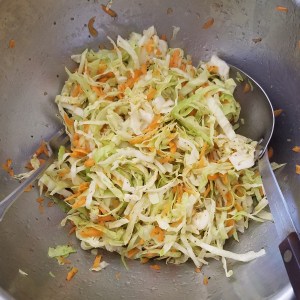
Mixing bowl with summer coleslaw made of local produce and my fermented apple cider vinegar.
Six weeks into summer 2019 we are over a hump, if not the halfway point.
I visited Paris in August 1974. It was hard to find a business open. Eschewing air conditioning we Americans find ubiquitous, Parisians fled the heat of August for the Mediterranean Coast and other breezy spots.
We could learn from that society.
My spouse visited her sister for the month of July. While she was gone I set the thermostat at 84 degrees compared to doing what we wanted in July 2018. The average monthly ambient temperature increased from 75 to 76 degrees Fahrenheit. Between running the air conditioner less and only one person active in the house, our electricity usage dropped by 37 percent in terms of kWh used. I appreciate the savings but I’d like her to return home more.
Summer in Big Grove Township has been reasonably nice with plenty of warm, sunny days, not enough rain, and an abundance from the garden. Friday the ditch had dried out enough I could mow the tall grass and get it looking more normal. The rabbit that lived there this year is likely frowning as rabbits do.
The yard grasses are in transition and need mowing, but not that much. I thought to do it yesterday and rolled up the garden hose near the house after watering in the morning. Not yet. Maybe today after my shift at the orchard. Maybe not as it is a low priority.
We planted our first garden in 1982 and grew or harvested something from our yard in the five places we lived since then. I’m getting better at it.
Cucumbers
We produced more cucumbers this year than we could eat and preserve. I determined a process using four varieties of seeds: two pickling, a Japanese-style cucumber and the utilitarian Marketmore. I made a gallon of fermented dill pickles as dill came in from my barter arrangement with Farmer Kate. The key to good pickles is the cucumber size. Once cucumbers get an inch in diameter they are too large for pickle making. Just don’t do it.
I made dishes of sliced cucumbers for potluck dinners, gave them away, and ate them as much as I could stand sliced raw, in mixed salads, and with lettuce greens when they were in season. There were plenty for sweet pickles but I overdid it last year and have more than a dozen leftover jars. I struck balance between the desire to use every bit of produce in the garden and how we eat them in season.
Tomatoes
As I posted a couple days ago, we are waiting for tomatoes. The cherries are coming in Jasper, Taxi, Matt’s Wild, Grape, White Cherry and Clementine. The White Cherry, Jasper and Matt’s Wild are surprisingly sweet and delicious. The single Early Girl and Black Krim plants produced fruit. I’ve had a couple Speckled Roma which I found to have tough skin.
This year as last, I planted the rows too close together. I crawled under the seven-foot indeterminate vines and inspected. A lot of good sized fruit waits to ripen under the foliage.
The plants have less blight this year than last. I don’t know why but two things are different. We had extremely cold weather last winter. Perhaps the cold killed some of it off. I also applied diatomaceous earth to the ground after tilling to keep down the crawling bugs that love tomatoes. Perhaps it had an effect on the blight. So far, so good and if all continues to go well, we will have plenty of tomatoes for fresh eating, canning and gifts to friends.
Green Beans
By now we’ve usually had green beans but there are hardly any on the plants. The foliage looks great. There are flowers. No beans. Other area gardeners are experiencing the same thing with a reduction in yield. I picked exactly two beans from a 15-foot row.
Apples
After nearly perfect pollination and fruit setting the invasion of Japanese beetles has the apple trees looking like dirty brown lace. I wait for the fruit’s background color to get right and have been tasting them every other day. The first of two varieties is getting close. Fingers crossed.
A friend sprayed his apple tree with Sevin to kill a Japanese Beetle infestation. The pesticide works although it contains carbaryl, a known carcinogen banned in some European countries. “Aren’t you worried about eating the fruit?” I asked. “Nah!” he said. I continue to refrain from using insecticides, which offer a temporary abatement to the detriment of the environment and apple eaters.
It’s a race to ripeness with popilla japonica. If bugs eat too many tree leaves, inadequate sugar is produced for fruit to ripen. If fruit gets ripe on the tree and they can penetrate the skin, they will mass on it and eat it. There appears to be enough green leaf left to absorb sunlight adequately to ripen the apples. I plan to pick them the minute I find them ripe and ferment the juice to make apple cider vinegar. The second variety, Red Delicious, is for eating out of hand, and everything else apple-related.
The Joni Mitchell song comes to mind, “Give me spots on my apples but leave me the birds and the bees.” In our garden there are plenty of apples and an abundance of birds and bees with whom I enjoy co-existing.
This week I met someone who works with trees for a local municipality while working a shift at the home, farm and auto supply store.
We discussed several topics, including dealing with Japanese Beetles, tree species that thrive in Iowa, and the Emerald Ash Borer. He favored the River Birch tree.
The city had inventoried every ash tree on public property and had a plan to replace them when they inevitably become infected with the insect.
I asked with what species would the city replace ash trees? He mentioned Chestnut and Black Tupelo (a.k.a. Black Gum). We discussed the blight that eradicated the immense population of Chestnut trees in the Eastern United States and how genetics had improved the tree to resist the disease. He also mentioned the Black Gum tree is attractive, with a nice head, and grows comparatively quickly. The conversation drifted off into how people plan trees on their property and the challenges of establishing them on property with a limited number of spots. I returned to the rest of my work.
Growing trees is a long-term commitment. When we built our home only one tree, a mulberry, lived on our lot. We now have 15 with room for more. I’m not sure I want a chestnut, but a Black Gum sounds like a possibility.

 Journey Home
You must be logged in to post a comment.