Categories
Work Life Writing

A First Effort

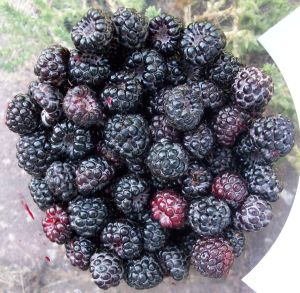
A Pint of Wild Blackberries

(Editor’s Note: This article was written July 3, 2009, shortly after my first retirement. It has been lightly edited to remove misspellings and grammatical errors I can’t bear to promulgate).

It begins by foraging for wild blackberries in Lake Macbride State Park.

Between a twenty five year career in transportation, and Independence Day 2009, gathering berries in the forest seemed a natural and appropriate way to mark my retirement at age 57. I knew that my work life would continue even if my employment for Iowa’s largest transportation firm was over. On this first day of what’s next, I hoped to wander the forest with my bag and gather what blackberries I may, an archetype of my life as an American salary man turned loose.

To say I lacked the commitment of a career in transportation misses the fact that I devoted much of my waking time and personal energy to being a successful transportation manager. At the same time, it was a bargain of time for money with what I now realize as little chance to get ahead. Transportation is not a traditional career as are medicine, the law, retailing, carpentry and plumbing. At the highest levels of transportation’s hierarchy executives are few in number and part of a clearly defined and relatively small social network. It was never my world, nor was there opportunity to make it my world, even if I was successful in delivering the business results my employers expected.

I figured this out late in the game, and it drove me to leave the business, not just recently, but in 1998 and 2003 as well. Finally, after a job as Director of Operations for CRST Logistics, Inc., my team achieved remarkable results, one last time, and I left the business.

Why did I sacrifice so much? I hoped to establish a home, meet the basic needs of our family, support our daughter’s start in life and leave time to enjoy ours. It was, among other things, for the ability to forage for wild blackberries.

And as the sun rises in the security of my partially finished study, I have concerns. I am most concerned that I will use the talents I have been given, the experiences I have had and the meager resources we have been able to accumulate, to contribute to life in society.

This means more than paying taxes and getting along with neighbors. It means considering life from my unique perspective and create an endeavor that brings peace and prosperity to a larger segment of society. The sacrifice we made resulted in a life that is economically better than many families. Our current life is a foundation upon which to build what is next. It has never been about the money or economic gain. It is about fulfilling life’s promise, and the moment I realized this and it sunk in, my so-called career in transportation was destined to end.

To start an autobiography at my age is not unusual. What is different is I want to cover the middle of life, beginning when I was married and age 32. There is another autobiography of the earlier period to be written. If I am lucky, I will get an opportunity to write that part as well.

I sense a pressing urgency to understand how I spent the middle years. If I hope to inform others of the perils of working for wages, this story should be told now, with certainty and the energy of a life lived for others. I want the story out so our daughter can benefit from it. This book will pull in parts of my whole life, but the focus will be living with a family, the meaning of labor, the consequences of delayed gratification and subservience, and the possibilities of living a life as a manager in a large company. It is a story I do not see others aware of or writing today.

My feeling about work is as old as the colonial days in Virginia. I suspect it is derived from the intellectual history passed down in my family through the generations. People indentured themselves to pay for their passage and get a start in the new world. They might indenture themselves for another contract period to pay for the passage of their family. It was a tough bargain and as many as half of the white emigrants are said to have come to the New World as indentured servants. I suspect my ancestors were among these people whose contracts were sold upon arrival in Virginia.

Henry David Thoreau wrote of the trade off we make in taking employment in Walden,

“…men labor under a mistake. The better part of the man is soon ploughed into the soil for compost. By a seeming fate, commonly called necessity, they are employed, as it says in an old book, laying up treasures which moth and rust will corrupt and thieves break through and steal. It is a fools life, as they will find when they get to the end of it, if not before.”

I am lucky to have figured this out while having a life expectancy of another quarter century. As I look through boxes of artifacts and papers I laid up before and during my working life, the papers are yellowing and dusty, diminished in importance. While I do not seek to be like Thoreau, I would learn from his writings.

I have worked for large and small businesses. I was in the military and worked for the University of Iowa. I worked brief periods of my time as an independent contractor. I belonged to a union, voted against unionization and managed union employees. I negotiated union contracts, the modern successor to the indentured servitude of the colonial days. I worked through 25 years in transportation to yield a nest egg insufficient to retire in the traditional meaning of that word. If I had stayed on, until age 65 or 68, I would not then have accumulated enough money upon which I could finish life, work free.

I seek to inform, not complain.

In a varied work life I gained experience in many facets of life, both in and outside my career. Reflections on a thousand meetings and experiences inform how lives devoted to labor can be improved. My hope and intention is that as I consider the detritus of a life in transportation my view will become more informed and I can help others, our daughter particularly, avoid the pitfalls of which Thoreau and others warn us.

On my last day of employment I had parked at a distance from the employee entrance, as usual. As I settled into my blue Chevrolet Colorado, I stopped to look at the building. I sat for a couple of minutes trying to remember entering for the first time.

A woman named Jean King took my application and gave me the Wonderlic test. There was a sign made from a 4 x 8 foot sheet of plywood that said “A Company on the Grow.” I worked most of my 25 years for CRST and saw it grow from a $60 million company to more than $820 million in revenue. I am pleased to have been a part of that.

The growth and success expanded the property, and while the main building was the entire company when I started in 1984, we acquired land from Wiley all the way to Edgewood Road along 16th Avenue. A grocery store was converted to CRST Van Expedited Headquarters and we built a training center for the asset divisions. There are major facilities in Birmingham, Alabama, Carlisle, Pennsylvania, Fontana, California and dozens of agent and sales offices dotted across the country.

What attracted me to the company was that it was owned by Herald Smith’s family and of a size where I could get to know everyone in the company. For most of my time there, I did. On my last day of work, Herald’s son, John called to wish me well.

These were things going through my mind as I sat in my pickup truck getting ready to go home. I started the engine and instead of driving to 16th Avenue to turn right and take Wiley to Edgewood, I exited the parking lot north and drove 12th Avenue east to Edgewood, seeking to have a different view of the drive home. I did not look into the rear view mirror.

Our life has been good by any standard. We have a roof over our head, clothes to wear and food to eat. There is plenty to occupy our time and we have hope that our daughter will experience success. We were able to send her to Cornell College in Mount Vernon and support her through her beginnings after college. I am not complaining about our quality of life, nor would I. We have had a good life, to a large degree because we have lived in the United States and in Iowa for most of our time.

Journal entry from July 2, 2009:

Lake MacBride. It is 20 minutes before I leave for the last day of work at CRST Logistics and I am ready for the change. There will be uncertainty but we have to have courage to get through each day’s challenges. I am not sure how much this means, but hope the new path leads to a brighter day.”

Post on Big Grove Garden July 3, 2009:

“Each year I walk to the state park and search for wild blackberries. They are typically ripe around Independence Day, and after walking to town and searching for them I gathered about a pint. The berries on the south side of the trail were more abundant and on the north, were almost finished. The variation in sunlight seems to matter, although not by much. From the looks of the plants, we are about a week into the season.

After a few years we learn how to look for the plants and some places there are a lot to be picked and others one or two. We build expectations based on remembrance of where the best spots were previously. To write these locations down is unthinkable as the knowledge resides within us, and we don’t want to reveal our best areas to others. This is a natural human behavior.

One of the best places in previous years is replaced with a natural gas substation. The town and the youth recreational complex adjacent to the elementary school continue to encroach upon the wild places. The odor of natural gas came from the pipes, reminding me of West Texas. It was disappointing to see the berry patch gone.

Once I had more than a pint, I looked at other things along the trail. The flowers are in bloom and abundant as home construction peeps into the once isolated trail.

I made it home and made oatmeal topped with a handful of the wild blackberries picked this morning.”

Perhaps the encroachment on the wild blackberries is evidence of the corruption and thievery of which Thoreau wrote.

E-mail to Mike Fouts, President of CRST Logistics, Inc. on July 5, 2009:

Mike:

Please let everyone know how much I appreciated the many goodbyes and best wishes last week.

The cards and gifts were more than a person should expect, and will be useful in my life in Big Grove and beyond. I wore the hat at the Coralville parade on Independence Day and young women wanted to hug me: surprising and happily accepted.

Two bits of news since Thursday are 1). My uncle sold his coffee shop last week, so that idea is out. 2). our daughter is talking about returning to Iowa in 2010, so it looks like we will be staying here for the present.

Thanks again for the thoughtfulness in celebrating my tenure with CRST Logistics. I found CRST Logistics to be, every day, without exception, a great place to work.

Best Regards, Paul
Paul Deaton
Solon, Iowa

I made wild blackberry jam with the day’s findings and we enjoyed it through the Christmas and New Year’s Holidays. What may have been on the periphery of our life became a main event. However, that is another story. Let’s dial back the clock to March of 1984 when we made the decisions that led me to a career in transportation.
Categories
Work Life Writing

A Place Built on Hope

First Day of Soil Blocking 2018 Photo Credit – Maja Black

As one makes one’s bed, so one finds it. ~ French Proverb ca. 1590

Today is my last day as a full-time employee at the home, farm and auto supply store. Reducing my schedule from five to two days a week should free time to work on other projects. At least that’s the hope.

We built a home in Big Grove and made it ours. I walked the lot lines before we broke ground and sat on the dirt high wall after the lower level was dug. We hooked up utilities, installed a door between the garage and residence, and moved in all on the same day in August 1993. No regrets.

Almost 25 years later our home needs updating and some maintenance. We’ve been spending our time living more than working here. Today’s transition will change that and I’m looking forward to it.

Fifty years ago I began working part time after high school at a department store. Despite how American business evolved since then, I made it across the finish line. I’m still here. We’re still here.

Now comes the downsizing, reducing and recycling — a frugality characterized by the fact we haven’t generated enough trash to set out our curb side receptacle in three weeks.

There will be industry as I’ve mentioned previously in these posts. However, one focal point is rebuilding stamina needed to work more hours each day. It’s not really retirement.

We never know what will happen to us. We make plans. We stay busy as best we are able. We contribute to a greater good if we can. We hope.

As I head through the door this morning I don’t know what today will bring. I’ll sleep tonight and wake up to a tomorrow that begins like so many others have.

Tonight I’ll sleep in a place built on hope.

Categories
Environment Work Life Writing

Green Up is Coming

1970s To-Do List

“Good navigators are always skeptical, not of the presences of things, but of what they see and understand. Good navigators are almost always lost.” ~Robert Finley

Green up has begun and everything seems ready to pop — even if it isn’t.

My usage of “green up” comes from the 1936 film The Trail of the Lonesome Pine,” in which June Tolliver said, “I ain’t marrying till green up,” delaying pending nuptials between her and cousin Dave Tolliver until after hog killing time. Waiting until green up is cause to delay not only weddings, but needed chores, engagement in society, and anything and everything until ambient temperatures warm and spring is in the air. It’s a lame excuse but we keep hoping it will work out after green up.

Demands on my time increased as tenure as a full-time employee at the home, farm and auto supply store draws to a close in seven days. If I’m lucky, and only partly as a result of planning, the most important things will fall into place. There’s also a lot not planned.

I hope to transform how to look at the world. Beginning March 18, my worklife will devote 56 hours each week to writing, food ecology and paid work. It’s a lot but I hope to increase that to 80 hours or more. Will determine if that’s possible in the process.

What I know is there’s much left to accomplish. That said, I don’t keep a bucket list. When young I meticulously kept a to-do list which helped my rise to a middle level of performance and productivity. The to-do list was always there, and rarely did I remove something without addressing it. I use no such device any more. I eschew lists. I abhor them. I can live my life without them and will.

What I hope is to continue to evaluate what and how I see in the world. It’s an imperfect process, one that requires attention and energy. Like green up it’s a path toward life’s potential. As June Tolliver found in the film, the unexpected can come into view. We must break the cycles of tradition and habit in order to see it.

Categories
Work Life Writing

12 Days But Who’s Counting

Asian Greens in Scrambled Eggs with Vermont Cheese and Pickled Bits and Pieces

After tangling with a schedule to reduce hours at the home, farm and auto supply store I concluded there were only three immutable weekly activities: writing (26 hours), paid work (16 hours), and farm work (12 hours).

Add an hour of prep time before work outside the home and these three activities fill 69 percent of available weekly hours. Everything else must fall in place behind these priorities. It is a rigid frame on which to hang everything else.

It’s already a 54-hour work week.

What’s missing is community organizing, the rest of food ecology, and home maintenance, all of which need to be squeezed into the remaining hours each week. Developing capacity to be more productive is part of this. It necessarily means doing better than using artificial stimulants or shoddy work in any activity area. It’s a plan.

Categories
Work Life Writing

A Stop En Route to the Finish

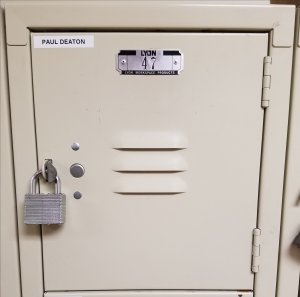
Work Locker

My supervisor at the home, farm and auto supply store unexpectedly called me to the office and offered a salary commensurate with the work I do.

“Commensurate with the work,” means closer to the average wages for the position as defined in the Bureau of Labor Statistics Occupational Outlook Handbook, which lists a job closely matching what I do.

He would convince me to either stay or continue working part time. I said I’d consider the offer and respond this week.

In every job I’ve held since leaving for military service, I’ve become a valued member of the team. In many cases, mostly when I worked for a large transportation and logistics company, I was replaced with two people after resigning. I understand the value of my work.

People have reasons for taking lowly paid work. This is especially true in my county, where there are numerous job opportunities for anyone willing to work. People take a low-wage job to generate income then move on to something better. We all have our reasons.

I took work at the home, farm and auto supply store and stayed because they offered a family health insurance plan to cover us until Medicare. Now that both of us are on Medicare, that reason was eclipsed by a desire to do other things. We have delayed gardening, talking, writing, reading, repairing and retooling our home for too long. That’s reason to retire March 16 while still young enough to accomplish some of that.

Opening the question whether to leave is also about security. Financial security partly, but physical health, being accepted in society, and the ability to live a life free from worry. The offer moved security to the front burner after simmering from the initial math of planning our retirement.

We are never completely secure. If a catastrophe happens in a life, people will invest everything they own to recover and return to a semblance of normal. Such normality is the endgame, especially in Iowa. Complete security does not appeal to people like me. I’m still a risk taker and know my limits.

I don’t know my answer and will mull it while soil-blocking at the farm. I did the math and the extra income would help pay down some of our debt. It is a bird in hand against the unknown of how could we generate extra funds in retirement. It would come with a cost I’m not sure is worth the price.

Today will be about figuring that out.

Categories
Living in Society Work Life

Taking Stock

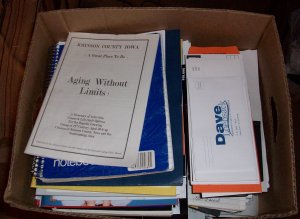
Box of Work

We’re prepping for our annual inventory at the home, farm and auto supply store.

That means counting and labeling everything in the warehouse, and getting every possible item to the sales floor where hired staff can count it and customers can find it to buy it.

Inventory occupies a big space in the life of a retail outlet.

So it is with everything at home while getting ready for full retirement in 36 days.

We benefited from building a new home in 1993 by having to do very few major repairs. We changed the roof once, repaired the garage door, and that’s it. We’ve cycled through major appliances — refrigerator, dishwasher, washer and dryer — but have had very little work on the structure itself. A lot of little things require attention now.

In a flurry of emails this week I confirmed four part-time, seasonal jobs this year. One is writing for Blog for Iowa this summer, and the others are farm-related. Combine home repairs, these four jobs, my community organizing work, and political work during the midterm election cycle and there will be plenty to keep me busy in 2018.

Last night I ran into my former state representative Ro Foege at the warehouse club. I automatically shook his hand then apologized for spreading germs from my recent illness.

“I just came from the capitol,” he said. “I was exposed to a lot worse up there.”

I have a different view of political engagement this year. Mainly I want to be a helper of younger people who are engaging in politics. That means volunteering where I can, encouraging people, and contributing in ways people ask.

The metaphor of WYSIWYG, taken from the advent of computer graphical user interface, is an apt model for what I’m doing. The operative function of building an electorate presumes nothing and is rooted in a belief the 2018 general election electorate is not pre-made. It is being formed as we proceed through time and events toward election day. We have to pay attention to what is happening in real time and modify our activities to create a successful process.

It began with this week’s off-year caucus and engages voters with our many primary candidates for statewide and local offices. I see four remaining milestones for building the electorate: the June 5 primary, summer parade season, the fall campaign beginning on Labor Day, and the final week before the election. If we work early and smart, we should know where we stand as election day approaches. We should not freak out, just do the work.

Tonight after a shift at the home, farm and auto supply store I plan to meet Iowa gubernatorial candidate John Norris at a house party in Coralville. He may be the one for whom I’ll vote in the primary. More importantly, I want to see who is turning out for Norris and ask one or two questions if there is an opportunity. It’s not about my single vote, but about understanding the process. It’s not about me or him but who we are as Democrats in a state Donald Trump won by more than nine points. It’s about taking stock of our lives and effecting change in our government.

As some caucus-goers said Monday night, “we have to do something in November.”

Categories
Home Life Work Life

Sleeping In, Waking Up, What Next?

Brian Bedford, left, as Lady Bracknell and Charlotte Parry as Cecily Cardew in “The Importance of Being Earnest,” a 2010 production at the American Airlines Theater. (Photo Credit: New York Times)

It’s 48 days until full retirement and I can’t wait to let loose from the lowly paid work that has sustained us for over two years.

Completely ceasing work is not now, nor will it ever be in the cards. Work is what keeps us bound to our common humanity. To stop is to give up on life.

I’m not giving up on anything except the job at the home, farm and auto supply store.

After two weeks duration, a viral infection is in decline. The best sign of it was sleeping through the night, waking up, then going back to sleep for another hour. Well rested, I ask what’s next?

A better question: will it be more of the same, or something new?

Our brains become wired to want more of the same, so there will be some of that: cooking, gardening, farm work, reading, and home improvements. The challenge will be to do new things, write from a new perspective, and work toward gaining a better understanding of society. To get started, I plan to take it easy for a week or so. After that I don’t know.

That’s a lie. I do know I’ll be picking a major writing project and celebrating spring by planting our garden. There’s a long to-do list around the house and yard. Before I get caught up in more of the same, I must take a moment and breathe spring’s sweet air.

It won’t be long.

Categories
Work Life

Five Jumps and a Good Mechanic

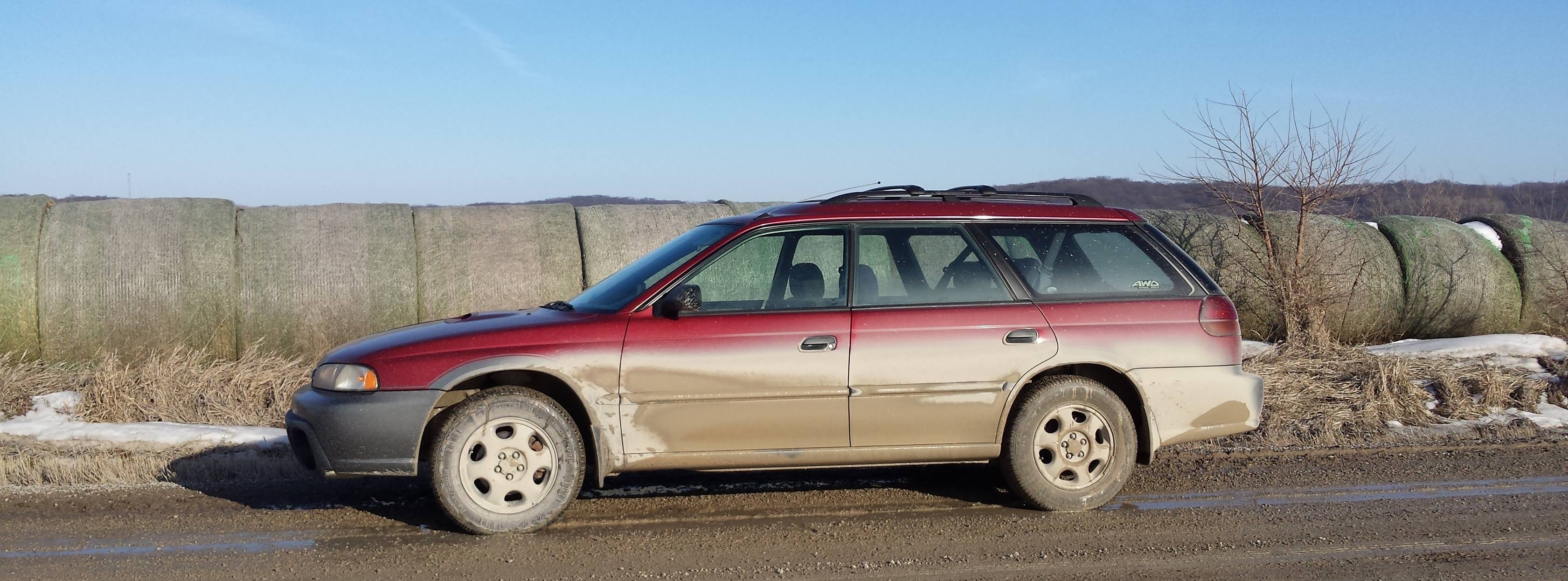
1997 Subaru

One of my work buddies is a mechanic and Vietnam veteran. He was a mechanic during the war although it’s his brother who now operates an auto shop in the county seat. He is active in the American Legion and has a reputation as a curmudgeon. I find myself pointing out I’m older than he is, although I defer to him because of his veteran status. He drives a vehicle similar to my 1997 Subaru.

Transportation is important when working for low wages. The idea of buying a new car — straight from the dealer — is a fantasy reserved for immediately after buying a winning lottery ticket or hitting it big on Bitcoin futures speculation. The chances of doing any of them are minuscule. When someone gets a new car it means nicer and newer than the previous one. My colleagues at the home, farm and auto supply store favor used cars that work and one or another of our collective vehicles is always acting up. We help each other with rides, loaner cars and jump starts without questioning it.

Essential to life with an old car is knowing a good mechanic, “good” being the hard part. Finding one means slogging through abundant folklore, experiences and stories of wrench turners to identify someone gifted at diagnosis with an approach that produces excellent results inexpensively. Being a good mechanic includes willingness to work on an old car, knowledge about the model, and doing what’s needed to keep it running and nothing more.

Acknowledging the importance of diagnosing automotive problems, three groups of mechanics took medical-sounding names for their automotive businesses in the small city near where I live. There’s an auto clinic, auto medics, and an ag clinic. Proper diagnoses are important and good mechanics are possessed of the knowledge, resources and skills to make them. I don’t normally use my curmudgeonly Vietnam veteran friend as my mechanic, even though he would likely work on my car for free.

A while back my Subaru began intermittently overheating. I took it to my mechanic and after several diagnostic attempts we figured a leaking head gasket caused the problem. We weren’t sure, but were sure enough to give it a try. If a dealer were to replace a head gasket in my car, the book calls for pulling the engine because of the configuration of the engine compartment. My mechanic saved me 10 hours labor by replacing the head gasket with the engine in the chassis. He understood ten hours labor made a big difference in our budget.

Recently the electrical system went on the fritz and I suspected the battery was going bad.

Troubleshooting began by asking people I know. My Vietnam veteran friend checked the battery and results of the computerized test he ran showed it to be okay. It wasn’t, but I took his word it was and tried charging the car each night in the garage. The issue did not resolve and repeated charging may have made the battery worse.

I called my regular mechanic, whose schedule was packed, and got an appointment for the following week. When my spouse was not working I used her car to get to work. When I used mine, it continued to lose a charge after four hours in the parking lot until it would not re-start immediately after parking it for the day. It was frustrating.

My colleagues at the home, farm and auto supply store stepped up with five jump starts during the period. On my second break I’d pore over the schedule to see whose shift ended the same time as mine and ask a co-worker for a jump. The first person I asked always jumped me: we all understand cars that have been in service for a while have issues. I was cautious about asking the same person more than once for fear of wearing out the welcome.

Car problems are an existential annoyance. They are also less important than maintaining relationships, including with family, co-workers and neighbors. We are stronger together and will need strength for the coming years. That and a good mechanic.

Categories
Living in Society Work Life

After the Season

Polish Carpentry Crew in Chicago

This year a group of Ukrainians with temporary work visas joined us at the orchard.

They were hard-working and fun to be around.

Their contracted wage far exceeds the $185 per month they can earn in Ukraine from their trained profession as English teachers. The visa sets a specific hourly rate of pay and the host is required to provide round trip transportation to Iowa plus housing. They can stay for up to eight months at a time. The Ukrainians went home to their families after the season, although each of them plans to return in a couple of months to help prune apple trees.

Saturday I drove to the orchard to pick up apple cider and frozen cherries. While there, the octogenarian friend who referred me showed up. We talked with the owners long enough for my spouse to wonder where I was. We ran through the usual topics —the hickory nut harvest, Gold Rush apples, cooking projects, which books we were reading, activities of mutual friends — and told jokes, usually one at the expense of another. It was a great conversation among friends.

We live in the same political precinct and have common political interests. We discussed the surprising plan to move the U.S. Embassy from Tel Aviv to Jerusalem within a few years, and scuttlebutt about Democratic candidates considering a run to replace our state senator Bob Dvorsky when he retires at the end of 2018.

Multiple sources told me local internet personality Zach Wahls and former diplomat Janice Weiner are both kicking tires on a state senate run. I’ve not met either of them and it was news to my co-workers. While politically engaged, each of us has bigger fish to fry than politics.

The orchard sales barn will be open next weekend and that’s it for the year. I’ll need more cider… and conversation by then.

Everyone wants work that’s fairly paid. Once one accepts a work contract — agreeing to work for a wage — that usually ends discussion about compensation. We turn to our co-workers and the life we share in a place and time. If the job is any good we don’t talk about compensation, work hours, or much of anything but the idea of what we do and how to do it better. This has been the case most of my life in every job I’ve held.

At the home, farm and auto supply store we recognize it as lowly paid work, not just for hourly employees but for management. Yet we engage in work as a team and do our best to meet our goals. Employee turnover is high in retail and based on my experience compensation is not the driver. What matters more is it’s relatively easy to get retail work and if one keeps their nose clean and shows up, the employment and paycheck are predictable. A job easily secured is one easily left and that drives turnover. Our workplace is a stopping point for many people enroute to something else.

One of my colleagues was recruited from the sales floor to help check in freight during our busy season. We talk while working. Cognizant of his low wages, he said, “you get what you pay for,” indicating he would work harder if paid more. I’m not sure about that but didn’t tell him so. He is already a hard worker compared to others, and his income contributes to a household with his wife and two children. The job means something to him, but he’d leave it on short notice if a better one came along. We don’t talk much politics at work but he wears a stocking cap and coat with the word “Trump” screen-printed on them.

As my worklife winds down before taking “full retirement” next year, I value the people with whom I spend time. They are a diverse group and I hope to add something to our relationship before I go — remembering the past and living each moment to the fullest extent. These are stopping places, part of a long, personal journey that’s not over. As Robert Frost wrote in 1923, “I have miles to go before I sleep.”

Categories
Work Life Writing

Back to Work

Barn Wood

The desultory nature of lowly paid work is a grind.

That’s what I found yesterday upon returning to the home, farm and auto supply store after a four-day vacation. By afternoon I was ready for a nap but instead scratched at the stacks of piled up work and made a day of it. I won’t run out of work there any time soon.

I had thought to secure provisions at the warehouse club after work but was tired, achy and my feet hurt. I skipped shopping and drove straight home.

Vacation consisted mostly of sleeping, reading, napping, cooking, writing and resting. I’ve been working almost every weekday and weekend since February when I started soil blocking at the farm. It all caught up with me. By Tuesday night I felt more human if not fully rested.

I left our property exactly three times: to meet with a neighbor about our relationship with Iowa Department of Natural Resources, to fill Jacque’s car with gasoline, and to pick up our share at the farm. Most of what I hoped to do while vacationing remains undone. I did manage a few things using the internet: applying for Social Security retirement benefits, ordering a couple of books for winter reading, and ordering parts to repair a burner on our aging electric range. It’s something.

I’m not complaining. We have it better than most who make it on less than a livable wage in the post Reagan society.

What matters more was the ability to author a few posts during this down time. Nothing profound — public journaling really — and that escape into the imagination made all the difference.