Categories
Living in Society Social Commentary Writing

Waking and the Imagination

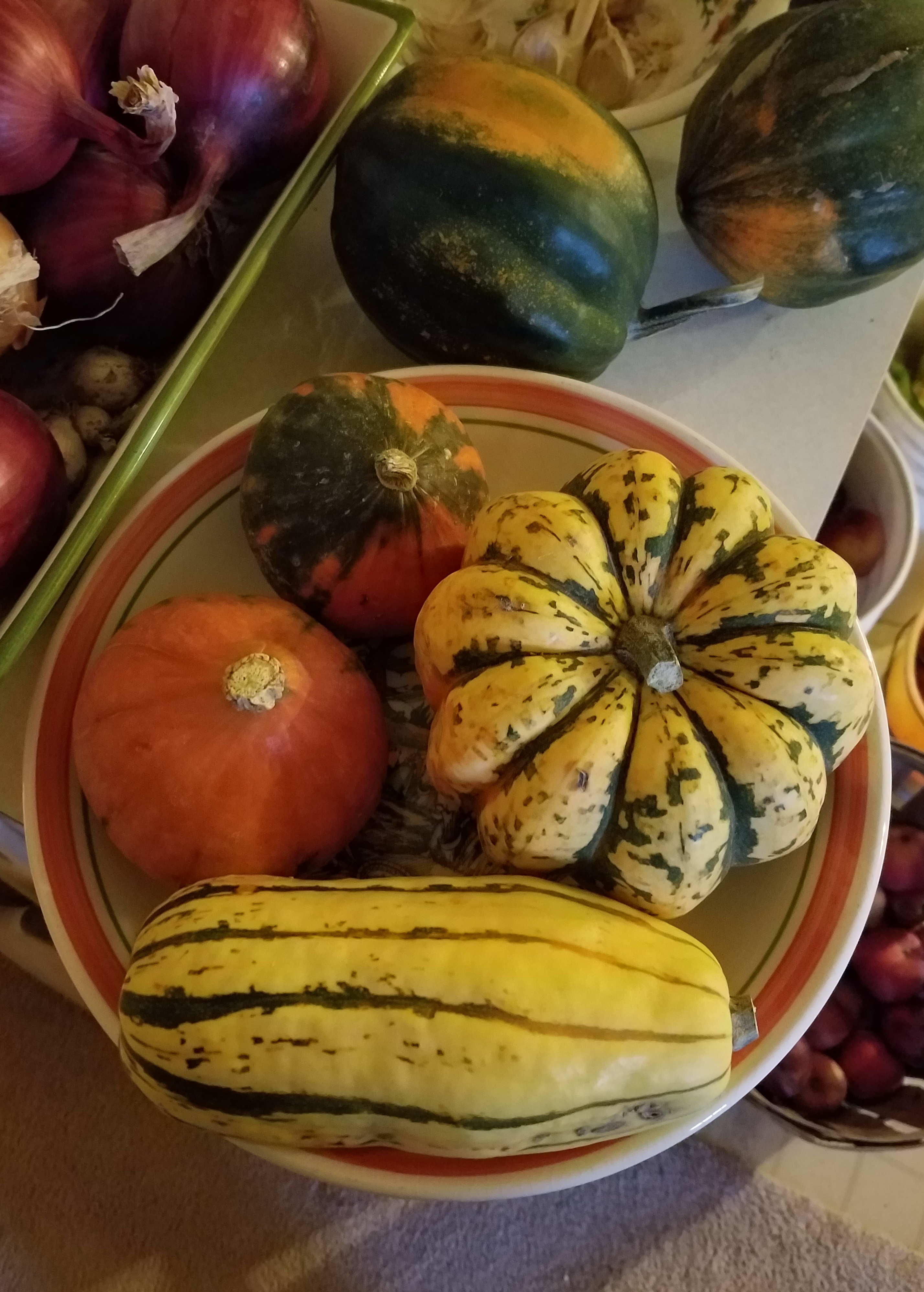
Curing Squash

I’m not a fan of human physiology. Given a Cartesian outlook toward life, I’d rather not think about or acknowledge my physicality even exists.

Yet there it is, influencing my daily affairs in ways I don’t comprehend. The physicality of others impacts everything I do in public and in private. My physicality — driving a lift truck, operating a bar code scanner, lifting bags of feed, sitting in meetings with other humans — impacts others as well as myself. For at least a moment, I should consider and endeavor to understand physiology.

Maybe in another life.

“I think, therefore I am” has been my beacon since I was a grader. I call it Cartesian now but its roots are in serving as an altar boy a few blocks from home in the Catholic Church and in the convent located on the upper floor of our elementary school. I’d come home from daily Mass and read what today is called juvenile literature printed on cheap paper and mailed from places of which I’d never heard. I became fixated on my own awareness and with the fact that other people, places and things existed and had impact on me. I felt separate from their reality, connected only by ink on paper, conversation, and radio and television. I became aware that in fact it was a reality.

The origins of a Cartesian outlook have roots further back in my hospitalization for a head injury at age three.

“What I learned through the injury and recovery in the hospital was that there is an infrastructure of knowledge and caring to support us when things happen,” I wrote in 2009. “This experience assured me that although we are vulnerable, we are not alone.”

Four physicians ago, when we first moved to Big Grove, my doctor laid me back on the examination table and rested his left hand on my naked belly and held it for a moment.

“This is not normal,” he said, referring to excess weight layered between my guts and skin. I agreed, respecting his training and experience in physiology, something about which I cared little. One would have thought it easy to improve my Body Mass Index given the intellectual provenance awareness can bring.

But no.

It has been especially hard to exercise since developing plantar fasciitis. Given my love of jogging, I tend to avoid thinking about exercise now, hoping gardening and the physicality of work at the home, farm and auto supply store compensates. I don’t know if it does and am reluctant to do the type of analysis I did with other life schemes.

If mine is a life of the imagination, that’s where I’d prefer to live. Yet reality beckons: in the form of news stories of horrible things happening to people the world over; in the work required to put a balanced meal on the table; or in staying awake during the 25 minute commute to the home, farm and auto supply store. Who wouldn’t want to live in the imagination? There is an unparalleled comfort there.

Whatever I am, physically or intellectually, I go on looking.

I look through a window where spiders persistently weave and reweave a web to catch insects drawn to the warmth and light of our home;
I look through eyeglasses the prescription of which needs an upgrade;
I look through the car windshield alert for the sudden appearance of deer during the rut;
I look through the fog of morning to see what each day brings;
I look for things I recognize more than for discovery and that’s regrettable.

After college I vowed to read every book in our Carnegie library. At the time that may have been possible. I didn’t get past the religion section of the Dewey Decimal System-organized stacks. I don’t read as much today as I did then.

Now the veil of Maya wears thin.

Everything I believed upon retirement from my transportation career has been called into question. I was hopeful the long, difficult work of electing a Democratic president was finished and that common sense would dominate public discourse. It turned out to be too much imagining as we were struck in the tuchus by the physicality of modern politics.

As if awakening from a dream, it will soon be time again to get dressed and find my running shoes. Not because my plantar fasciitis is in abeyance, but because the built in arch support will comfort my aging feet as I re-engage in society. I didn’t imagine I’d have to do that again in this life. It turns out I was wrong and Frederick Douglass was right:

It is in strict accordance with all philosophical, as well as experimental knowledge, that those who unite with tyrants to oppress the weak and helpless, will sooner or later find the groundwork of their own liberties giving way. The price of liberty is eternal vigilance.It can only be maintained by a sacred regard for the rights of all men.

I imagine it’s time to get back to work in the physical world.

Categories
Living in Society Social Commentary

It’s Not The Women, It’s The Men

Woman Writing Letter

Some of my friends and acquaintances are women who carry handguns.

I’m not worried about getting shot by my lunch partner. I also don’t feel more secure knowing she has a handgun in her purse. It used to be a bit jarring to see weapons unexpectedly in everyday places. Not any more. I’m confident in studies that show women are not the main problem with gun violence, it’s the men.

A common social behavior among men particularly, but with women also, is to assert their gun ownership into a conversation as a way of launching a comfortable jeremiad about why they own them, the positive features of gun ownership, and as a way of testing the waters in social relationships to identify where people stand. This is at the heart of what elected Trump, Ernst and others. Gun ownership and discussions about it are a way to sort people in society into “us” and “them” categories. It has consequences in the electorate, so it is important to discuss and understand.

In an Oct. 10 article in USA Today, Alia E. Dastagir wrote,

Data shows gun violence is disproportionately a male problem. Of the 91 mass shootings in which four or more victims died since 1982, only three were committed by women, according to a database from the liberal-leaning news outlet Mother Jones. Men also accounted for 86% of gun deaths in the United States, according to an analysis by the non-partisan non-profit Kaiser Family Foundation.

Men are more likely to own a gun — three times more, according to a 2017 survey from the Pew Research Center. This, despite marketing from gun manufacturers and groups such as the National Rifle Association to lure women.

Fast forward to Dastagir’s conclusion that to understand gun violence we must examine the cultural forces that equate being a man with violence.

Read her information-packed article here.

~ First published at Blog for Iowa on Oct. 18, 2017

Categories
Living in Society Social Commentary Work Life

Providers Turning to Protectors and Buying Guns

Working the Garden

Financial inequality is impacting society by making men protectors of what limited resources each family has.

I know few people who are increasing their wealth in the post-Reagan era. The rich get richer and the rest of us pay for it as dollars systematically, relentlessly find their way to the richest one percent of the population. Families struggle to get a share of societal wealth and if they do, feel privileged enough to say, “I’ve got mine.”

The struggle to provide for a family is getting harder with the transformation of American business to globalization, government efforts to eliminate regulations, and the current administration’s tampering with healthcare, defense, foreign policy, energy, education, immigration and more.

The impact of financial inequality on the role of men in society has been to make it more difficult for them to provide for their families. That said, I don’t know many families where a male is the sole provider. Women began moving to the paid work force in large numbers decades ago. The idea women wouldn’t seek paid work is a social legacy of male dominance. The male narrative lacks proper consideration for the value of work by women. That seems obvious in workplaces where women earn a fraction of a dollar men do for the same work, and also in homes where a male provides money and resources for the family and women work unpaid.

Men are challenged to be providers so their role shifted to being protectors of what they have. The rise in gun ownership in the United States is directly related to income inequality and the diminished role of men as providers. Let’s talk about that.

Some of my friends and acquaintances are women who carry handguns.

It’s no big deal. The banal and ubiquitous presence of guns is part of living in the United States.

I’m not worried about getting shot over lunch or at an event. I also don’t feel any more secure knowing she has a handgun in her purse. It used to be a bit jarring to see weapons unexpectedly in everyday places. Not any more. I’m confident in studies that show women are not the main problem with gun violence, it’s the men.

In an Oct. 10 article in USA Today, Alia E. Dastagir wrote,

Data shows gun violence is disproportionately a male problem. Of the 91 mass shootings in which four or more victims died since 1982, only three were committed by women, according to a database from the liberal-leaning news outlet Mother Jones. Men also accounted for 86% of gun deaths in the United States, according to an analysis by the non-partisan non-profit Kaiser Family Foundation.

Men are more likely to own a gun — three times more, according to a 2017 survey from the Pew Research Center. This, despite marketing from gun manufacturers and groups such as the National Rifle Association to lure women.

Fast forward to Dastagir’s conclusion that to understand gun violence we must examine the cultural forces that equate being a man with violence. Read her information-packed article here.

What is it to be a man? It’s no secret having a Y chromosome is less important than the culture in which boys are nurtured to adulthood. There remains a significant, lingering perception that procreation is part of being a man even though wombs are more important than sperm. Only primitives continue to believe having a large family is a sign of manhood. At the same time male sexual dominance often trumps a woman’s right to choose. We read news daily about sexual predators, soldiers raping villagers, and widespread sexual harassment. Even so, something more powerful than traditional views about the role of men in procreation is at work.

After my first year in college (1971) I went home for the summer. I met with a number of male friends from high school and we each had been able to apply for work at manufacturing plants in the Quad Cities and find a summer job. Some literally went from business to business until they found a job and everyone who wanted one got one. It was easy. That changed.

The jobs environment has gotten very scrappy in Iowa and well-paid jobs with benefits are difficult to find and secure. Such jobs exist, however, the rise of professional human resources consultants has businesses seeking employees who meet very specific “profiles.” Don’t meet the profile or offer something unique to the position? Applicants will politely be sent on their way. If an applicant is lucky enough to be hired, human resource consultants have structured pay and benefits to meet the company’s minimum needs more than the needs of employees. Under the guise of taking inefficiencies out of business operations well-paid jobs with benefits are hard to get for almost anyone. It is worse with large companies who have the capitalization and scale to hire human resources consulting firms.

The transformation from manufacturing jobs to service jobs has not gone well from the standpoint of men seeking work. Retail, lawn care, janitorial, restaurant, banking, accounting, health care, sales, and other low-skill level employment performs necessary work in the economy. Such jobs are far from adequately compensated. Our education system increasingly fails to prepare students for jobs in a service economy. I’m not talking about adding a STEM curriculum in K-12 classrooms, but simple things like how to make a decision to start a business, work for a service company, or get a government job. Provider males are increasingly on their own when it comes to crafting a career, if that’s even possible in the 21st Century. Most I know get by, just barely.

In a society of income inequality, limited resources, women’s rights, and unsatisfactory job options, men get stymied in traditional roles of procreation and providing. They turn to protecting what they have, and that often includes buying guns. It is a predictable reaction in a society with a legacy of male dominance with no outlet.

A focus on resolving gun violence in the United States without considering the changing role of men in society isn’t going anywhere.

Categories
Living in Society Social Commentary

‘I’ve got mine’ is not enough

Main Street in Solon

Our town has a bustling Main Street thanks to smart investments by the city council and willing businessmen and women.

Shops serve basic needs: hair styling, hardware, groceries, fuel and insurance. There are plenty of restaurants. The newspaper is located off Main Street at the only four-way traffic light in town. The library and medical clinic are down the hill. New construction is building capacity for shops and I hope the city welcomes entrepreneurs who give it a go.

Solon’s downtown seems idyllic: a place to forget about the rest of the world for a while. Many of us appreciate that aspect of living here.

At the same time, the Solon area also serves as a bedroom community for lives elsewhere.

During 24 years our family lived here I’ve worked in Cedar Rapids, Coralville, the Quad Cities, Iowa City and North Liberty. I’ve travelled to 40 of the 50 states and to Canada on business and on holiday. We bought our first home computer in 1996 when we connected to the World Wide Web. All of this is to say despite our idyllic setting we live in a much broader world.

There’s the rub. In the generally happy, peaceful and pleasant setting we’ve made for ourselves we bear some responsibility for what goes on elsewhere. We’ve got ours, but what about the rest of society? When we see the tumult and conflict in the United States and around the world it is not enough to say, “I’ve got mine.”

Protecting what we value in society falls on each of us whether it is public safety on our roads or doing something about the genocide in Myanmar. There is something to work on for each of us and Solon makes the perfect base camp for us to make a difference. We should make a difference.

~ Published Oct. 12, 2017 in the Solon Economist

Categories
Living in Society Social Commentary

Low Wage Grind

Gardener’s Breakfast

A co-worker asked if I needed to borrow another water bath canner to survive the season.

This year’s abundance of vegetables has been stunning. There is a lot to preserve including apples, pears, celery, peppers and a couple dozen pints of tomatoes.

I said no.

By the time I get home from a shift — either at the home, farm and auto supply store or the orchard — and start in the kitchen, I’ve found barely enough time to prep seven containers for a water bath batch. Although it seems like a second canner would increase production, the most time-consuming home canning work is done before turning on the stove. At best, we can only capture a part of seasonal abundance in jars. A second canner doesn’t resolve the issues created by low wage work and the time it absorbs in our days.

Canning Soup and Jalapeno Peppers

Being a low wage worker is an economic grind. One knows there will never be enough money to pay for what we need. Financial friction wears us down. Avoiding spending on anything not related to basic survival becomes a primary focus. This may seem negative, and it’s not all good. However, it’s a life with as much potential as any I’ve experienced. That’s not saying a lot for our society.

There is dignity in work whether it is paid or not. Each jar of applesauce put up contributes to our lives. In the twilight of a career as a wage worker life changes. Youthful ambition wears down. Unpaid work becomes more important to sustainability and displaces paid work in our days. There are expenses to be paid and they shift as full retirement approaches. Figuring out how to adjust and what to emphasize in a society wanting participation is challenging. Developing resilience under the weight of social responsibilities becomes key to sustainability.

After what for him is detailed consideration, our president chose perpetual war in Afghanistan as he announced last night. Dealing with constant negative information about the 45th president has become a grind as well. While Obama chose perpetual war, there were redeeming aspects of his presidency, including a sharing of important issues. There was a sense the country was heading is a positive direction, despite his many legislative setbacks. There is none of that with President Trump. We go deeper into the grinder.

A low wage worker withdraws into a small circle of family and friends. In so doing our circle of influence shrinks on its way to irrelevance. What remains is work: low wage jobs, fixing the toilet, cooking breakfast, cleaning the house, and tending the garden. Such activities fill our days and hinder our relevance in political life. At the same time, there is work in society that needs to be done.

To work on resilience, persistence and engagement is as important as anything we do. It sustains our lives in a turbulent world.

Categories
Living in Society Social Commentary

Connections to Virginia

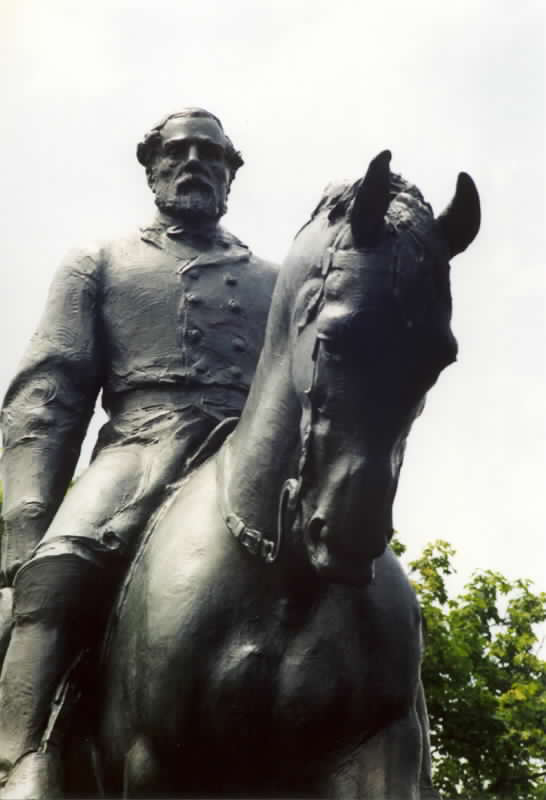
Statue of Robert E. Lee, Charlottesville, Virginia. Photo Credit – Leo Lentill, Wikimedia Commons

I was stationed at Robert E. Lee Barracks in Mainz-Gonsenheim, Germany during my military service as an infantry officer.

It seemed odd at first — that the American kaserne would be named for the commanding general of the Confederate Army of Northern Virginia — but it became background for what could be described as a politicized military presence in which drugs, domestic violence, alcoholism and prostitution — regardless of race or ethnicity — eclipsed such concerns. The post-Vietnam military was a pisser.

A descendant of Virginians, with family roots 100 years before the American Revolution, I came up learning a tolerance for the Confederacy as a way of seeking my own ethnicity. Over time I followed the advice of 1 Corinthians 13:11, King James version, “When I was a child, I spake as a child, I understood as a child, I thought as a child: but when I became a man, I put away childish things.” I now have no patience for those who would whitewash the peculiar institution that was part of antebellum Virginia.

My connections to the Old Dominion, now  Commonwealth, have been numerous. In light of this weekend’s violent confrontation in Charlottesville, one comes to mind.

I met and worked with Virginian Mike Signer who came to Iowa to work on the John Edwards presidential campaign before the 2008 Iowa caucus. Later I worked on his campaign for lieutenant governor, canvassing a Virginia call list from a restaurant on the Iowa City pedmall. He lost that election but went on to become mayor of Charlottesville, Virginia where a statue of Robert E. Lee is the center of controversy that precipitated violence and at least three deaths over the weekend. Here’s his statement on Friday’s events:

I have seen tonight the images of torches on the Grounds of the University of Virginia. When I think of torches, I want to think of the Statue of Liberty. When I think of candelight, I want to think of prayer vigils. Today, in 2017, we are instead seeing a cowardly parade of hatred, bigotry, racism, and intolerance march down the lawns of the architect of our Bill of Rights. Everyone has a right under the First Amendment to express their opinion peaceably, so here’s mine: not only as the Mayor of Charlottesville, but as a UVA faculty member and alumnus, I am beyond disgusted by this unsanctioned and despicable display of visual intimidation on a college campus.

Racism stained our country indelibly. It continues to define us, as evidenced in Charlottesville. There are no “sides” to this conflict just an emerging realization this is not about remembrances of who led the Confederate Army of Northern Virginia during the Civil War. It’s about paying attention to racism in society and taking steps to confront it in our daily lives. That is easier said than done. In Iowa there is plenty of this work to be done.

Categories
Living in Society Social Commentary

Summer Weekend

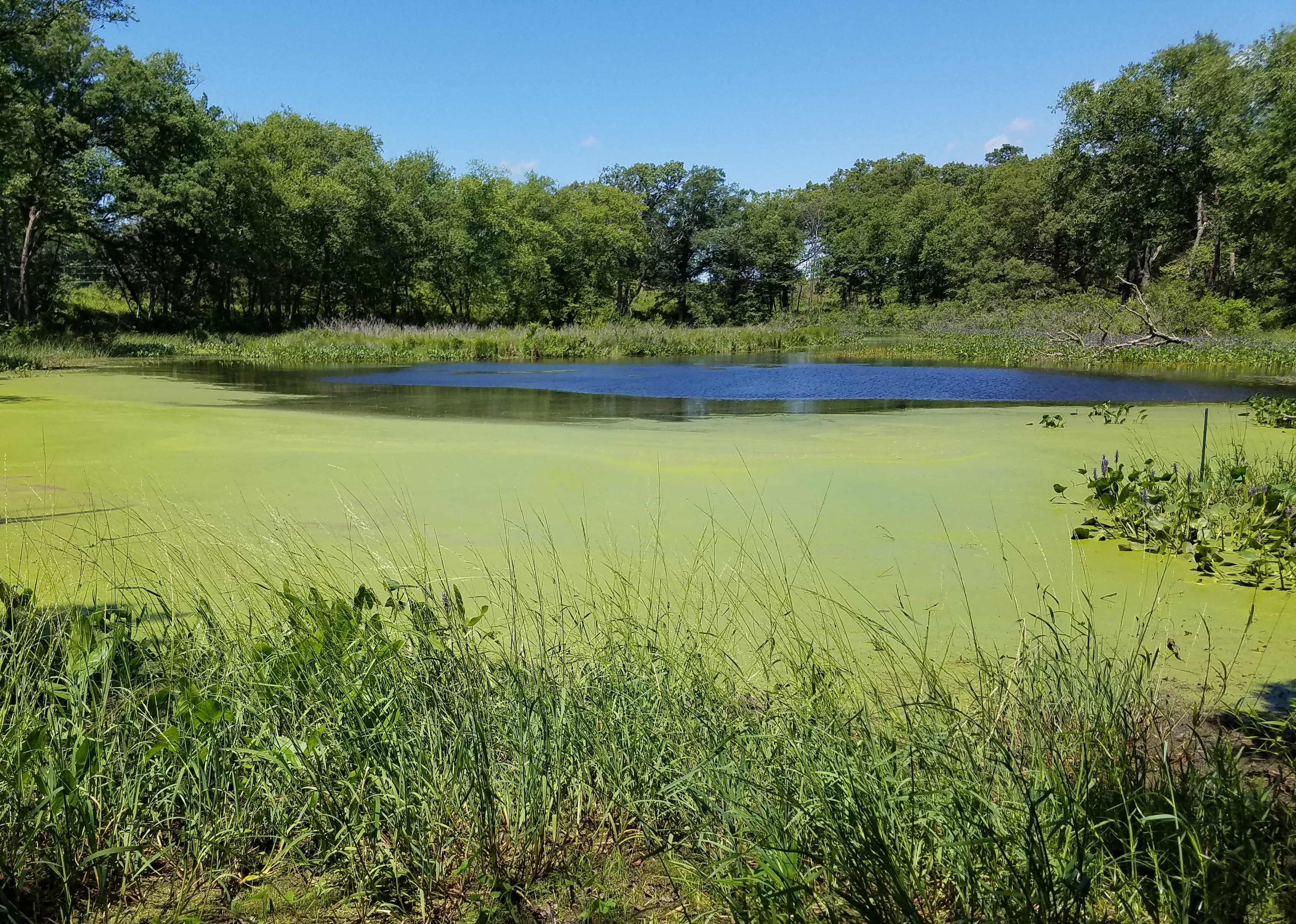
Ciha Fen, Johnson County, Iowa

Dan and I visited the Ciha Fen Preserve across the Cedar River in Johnson County on Saturday.

“The Ciha Fen Preserve is a sand prairie/savanna complex on a wind-deposited sand ridge,” according to mycountyparks.com. “It contains the Ciha Fen, which is one of the only two documented remaining nutrient-poor fens known in the state of Iowa.  It has numerous rare plant and animals species.”

Wild Flower

It was a chance to spend part of the afternoon together. We were the only visitors when we stopped by.

When the Catholic parish opened a new grade school, Dan and his siblings transferred in from public schools. Since then we’ve done a lot together.

After lunch at one of our local Mexican restaurants we returned to the house to work in the kitchen. I put six pints of vegetable broth on the stove to process; made a spice mix using using cayenne pepper, Serrano pepper, curry powder and cumin; and made a batch of homemade sweet chili sauce for tacos. We wished we lived closer together to spend more afternoons like this. I sent him home with two paper grocery bags of vegetables and small jars of the spice mix and chili sauce.

Mexican Flag Enchiladas

Before he left, we toured the garden. The limbs of apple trees are filled with fruit, bending under its weight. There is a lot of growing left in the season and I’ll have to prop branches up so they don’t break. Japanese beetles are in the apple trees eating leaves and procreating. There are more of them this year than last, but it’s not the worst infestation we’ve had.

It’s a turning point toward summer. Spring garden planting is finished, leaving weeds to be pulled and crops to be grown and harvested. It’s time to begin work on the rest of the yard. That will be my July: pruning lilacs, cutting dead limbs from trees, and addressing the planting area in front of the house. I’ll start today, but not before I put the spring tools away and park my car inside the garage again. After watering the garden this morning, that’s next on a long to-do list.

I’d better get after it.

Categories
Living in Society Social Commentary Writing

Defining Community

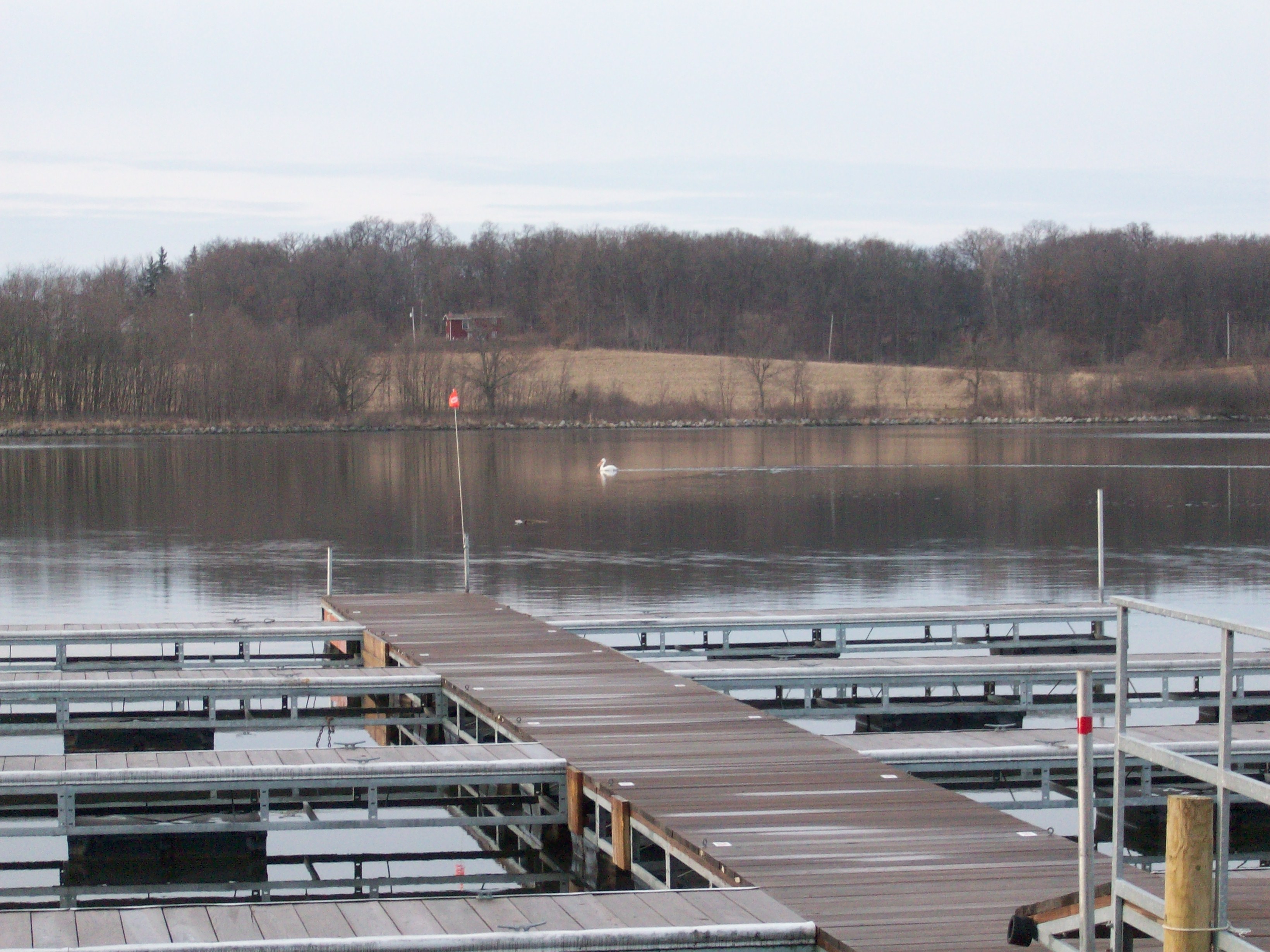
Pelican Swimming in Lake Macbride

Each of us defines community through our engagement in society.

Whether participation is passive, active, or in between, our lives and how we live them contribute in a meaningful way to how we live with others in a community.

Not everyone is a joiner. For some the focus is on the county seat, the state capitol, or the federal government. For some it is on school systems and the public library. For others it is the world of commerce — transportation, shopping, working a job. Many people just try to make it through each day with dignity. Community is broader than any one of these pursuits.

Misunderstanding our role in shaping a community and how we do and can contribute is a source of affliction in modern society. For me, the best remedy is getting involved at a local level. In consideration of that, I joined our home owners association board as a way to influence the place where we live. I wrote this note on the community Google group:

Association members:

Tonight at the regular monthly meeting of the Lake Crest Manor Home Owners Association Board of Directors I was appointed to the board and then elected as president to replace Bob Huber.

I appreciate the board’s confidence in electing me.

For those who don’t know Jacque and me, we moved here in August 1993 and raised our daughter who graduated from Solon High School in 2003. I “retired” in 2009 from CRST Logistics and currently work four different jobs in the community: at Theisen’s Supply in Coralville, at Local Harvest CSA, at Wild Woods Farm and at Wilson’s Orchard. Jacque works part time at the Solon Public Library.

I began serving on the board in 1994. My first tour of duty was ten years followed by a second tour from November 2009 until December 2013. I’m glad to be back for a third (I think). When we moved here we were told that everyone takes a turn on the board. While that turned out not to be true, I believe changing board members regularly is good for the health of our community. If you are interested in serving, there will be a position open at our next board meeting.

A couple of important things came out of tonight’s meeting.

Gene Lawson was elected treasurer to replace Rob Sprague who resigned effective May 1. Gene and Rob will be working together to make sure there is a smooth transition in our finances.

On Sunday, April 30, at 1 p.m. at the Solon Public Library, there will be a meeting about the boat docks. If you care about this issue it would be a good meeting to attend. The Iowa DNR made a proposal to change who is eligible for our dock spaces to include Lake Crest Manor Parts I and IV that are not part of our association. Note this is a proposal only. We will explain the proposal and get your feedback at the meeting. The board will get back to the DNR after the meeting saying that either 1). we accept it, 2). we reject it, or 3). we have a counter proposal. Since we lost our original grandfathered arrangement in 1998, the DNR has asserted more power in regulating our docks. This is a complicated issue so it’s best to attend the meeting if you are interested. Already there has been a lot of discussion about it by the board and in our community.

Tonight the board passed a motion to apply by May 1 to the Iowa DNR to add additional slips to our docks. I would point out a couple of things. 1). The DNR is open to adding dock space around Lake Macbride, so now is the time to secure that permission. 2). If we get approved for additional space we may or may not actually add it. There is some opposition in the association to the idea of adding dock space and those viewpoints should be considered. 3). The DNR approval of a request is not at the state park. Because of this, we may not get a response for this boating season. After a discussion the board decided to set a date certain for the application submission. I was the only board member to vote against the motion, with one abstaining.

I’m not planning to pepper you with constant emails. Just wanted to say hello to those in the Google group.

The best way to contact me about association business is via email. The response will be more timely than chasing phone mail messages, which is inevitable when dealing with a person holding four jobs.

Hope to see you at a board meeting soon.

Regards, Paul

Categories
Living in Society Social Commentary

Living in the United States

Hopewell Missionary Baptist Church, Greenville, Mississippi

All at once the United States is coming together and the convergence is upsetting.

While members of the white privileged class engaged in the seventh game of baseball’s World Series, a black church was burned in Greenville, Mississippi.

While members of Sioux tribes stand in opposition to the Dakota Access Pipeline crossing land theirs by treaty, white occupiers of the Malheur National Wildlife Refuge were acquitted of wrong doing by a jury in Oregon.

While supporters of the Republican presidential candidate chant “lock her up,” “build the wall,” and “drain the swamp,” the more sane among us work toward a world that can be sustained based on what we know about society and its role in the environment.

It is an America I have known well, one of hate, greed, ignorance, isolationism, violence and intolerance. It pits rich against poor, convincing many to believe they are weak and powerless in an electorate that produced a horror show of incompetence, graft, war-mongering and corruption among elected officials.

Votes matter — now more than ever.

We’ll see voter turnout in the general election together on Nov. 8. The forecast does not look pretty. Many people I meet feel the value of their vote has been diminished. What they don’t always realize is the loss of hope and positive outlook about our lives in society is intentionally manufactured. What’s happened in the post Ronald Reagan era has been a stunning undermining of the fabric of society including governmental institutions being hollowed out predictably and intentionally by the richest Americans to favor their interests.

Congressman John Lewis of Georgia’s fifth district recently posted, “I’ve marched, protested, been beaten and arrested–all for the right to vote. Friends of mine gave their lives. Honor their sacrifice. Vote.”

Voting matters, the powerful among us know it, and voter suppression during this election cycle has no precedents in the 50 years since the Voting Rights Act was signed into law by President Lyndon Johnson. It is the first election without the protections of the law.

When the Supreme Court of the United States struck down Section Four of the Voting Rights Act, Chief Justice Roberts wrote in the 5-4 decision,

“Our country has changed, and while any racial discrimination in voting is too much, Congress must ensure that the legislation it passes to remedy that problem speaks to current conditions.”

“There is no doubt that these improvements are in large part because of the Voting Rights Act,” he wrote. “The Act has proved immensely successful at redressing racial discrimination and integrating the voting process.”

Ask the 200 members of the Hopewell Missionary Baptist Church in Greenville, Mississippi how redressing racial discrimination is going.

We woke up Wednesday to the murders of two Des Moines police officers. A white suspect is believed to have killed two white police officers in premeditated murders. The murders are abhorrent.

“What happened yesterday was calculated murder of two law enforcement officers. Plain and simple, that’s the reality. If someone wants to argue that reality with me, my office is two doors down,” said a visibly frustrated Des Moines Police Chief Dana Wingert.

With due respect to Chief Wingert, we have courts to determine the guilt or innocence of the suspect. Relativism has no place in our justice system. Reality may be arguable, but truth and justice are not.

While fueling my car the morning of the murders, the attendant walked up, wanting to talk about the election.

I said, “have you heard about the murders in Des Moines?” He hadn’t. Despite the speed with which the internet can communicate aspects of our lives, our understanding of current events is uneven at best, deplorable at worst.

Late last night I received an email from a respected friend suggesting a letter to presidential candidate Jill Stein asking her to drop out of the race and support Hillary Clinton. It read, in part,

We have never met in person, but I am writing to urge you to please drop out of the Presidential race and give your vocal support to Hillary Clinton. I completely agree with your policies, and am frightened by many of Hillary’s plans, but  we simply cannot risk a Trump presidency, with his finger on the nuclear arsenal — he is insane.

What the hell?

Our country was founded on genocide, built on the backs of slave labor, then taken from us by the richest people in the world. In the 2016 general election we will reap what we sowed.

This dark time in history has few modern precedents. More than anything we cannot afford to relinquish the search for truth, meaning, sustainability and social justice. Not now. Not ever.

Categories
Living in Society Social Commentary

Can Hipsters Live With Congolese Cobalt?

Youth cleaning cobalt ore Photo Credit - Getty Images
Youth cleaning cobalt ore
Photo Credit – Getty Images

The lithium ion battery is becoming ubiquitous.

These rechargeable, portable batteries power our mobile phones, tablets, laptops and cars, providing longer battery life, low self-discharge, better recharge life and comparatively low weight.

Many of us take these benefits for granted, not thinking much beyond the brand of our phone, computer or car — other than the fact it is better with a lithium ion battery.

There are issues with cobalt, a key element in lithium ion batteries, mined and produced in the Democratic Republic of Congo.

According to the Washington Post,

The world’s soaring demand for cobalt is at times met by workers, including children, who labor in harsh and dangerous conditions. An estimated 100,000 cobalt miners in Congo use hand tools to dig hundreds of feet underground with little oversight and few safety measures, according to workers, government officials and evidence found by The Washington Post during visits to remote mines. Deaths and injuries are common. And the mining activity exposes local communities to levels of toxic metals that appear to be linked to ailments that include breathing problems and birth defects, health officials say.

“60 percent of the world’s cobalt originates in Congo — a chaotic country rife with corruption and a long history of foreign exploitation of its natural resources,” Todd Frankel of the Washington Post wrote. “A century ago, companies plundered Congo’s rubber sap and elephant tusks while the country was a Belgian colony. Today, more than five decades after Congo gained its independence, it is minerals that attract foreign companies.”

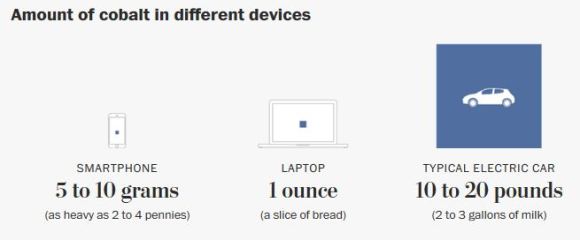
Image Credit - Washington Post
Image Credit – Washington Post

Cobalt is not covered under U.S. law regarding conflict minerals. When Congress passed the Dodd-Frank Act in 2010, it directed the U.S. Securities and Exchange Commission to draft rules for companies that use conflict minerals — tantalum, tin, gold and tungsten — when deemed “necessary to the functionality or production of a product.”

“Congress enacted (this section) of the Act because of concerns that the exploitation and trade of conflict minerals by armed groups is helping to finance conflict in the DRC region and is contributing to an emergency humanitarian crisis,” according to the SEC web site.

Some advocate inclusion of cobalt in Dodd-Frank rules.

Conditions among cobalt miners in the Congo are deplorable compared to hipsters who use phones in part produced by their hands. Can hipsters live with Congolese cobalt?

Our social responsibility regarding Congolese extraction and production of cobalt is unclear. Like much of the work that supports our global supply chain cobalt mining has been out of site and out of mind. There is no adequate, intuitive answer. Nonetheless, users of lithium ion batteries share responsibility for the conditions in Congo whether we are aware of them or not.

To learn more, read the entire Washington Post article, The Cobalt Pipeline: Tracing the path from deadly hand-dug mines in Congo to consumers phones and laptops, by Todd C. Frankel, Michael Robinson Chavez and Jorge Ribas.

~ Written for Blog for Iowa