Categories
Social Commentary

One Less Used Bookstore

Formerly Murphy-Brookfield Books

IOWA CITY— The number of used bookstores in the county is reduced by one. Murphy-Brookfield Books closed after 33 years in business, and its owners sold their historic stone building to the Haunted Bookshop. The deal is done and people and cats were in their new digs when I stopped by earlier this afternoon. Murphy-Brookfield Books went on-line.

I don’t like any of it… except maybe the cats.

I’ll start by saying that if I want to find something to read, there will be no problem. Our home library has enough reading material to last the rest of my life, and then some. Most of what I read is found here. Too, the public library provides on-line access to ebooks I can download to my phone for free if someone else doesn’t have them checked out. From time to time I browse the selection, and it is pretty good. If I can’t find what I want there, I go on-line and buy it from Amazon.com, eBay or one of the bookstores on the Internet. It isn’t for reading material that I frequent bookstores. I can get that at home.

Last year I stopped at the large chain bookseller at the mall. It had changed. It was as if they took everything I liked and removed or placed it out of sight. There was plenty of pulp fiction, and novels that looked like they all had been designed in the same advertising studio— similar titles, same sizes and an array of brilliant covers embossed with foil— lined up like so many treats in an old fashioned candy store. The caché of hanging out at a bookstore, reading and drinking coffee has faded. I’m no longer a fan of coffee bars and besides, who has time any more? I haven’t been back.

Browsing used books is like taking a vacation. I plan the trip for weeks, and upon arrival, one never knows what to expect. By chance, something catches the eye and comes off the table, down from the shelf, or out of a bin. If the price is right, the bound volume comes home.

Through Salvation Army stores, Goodwill and thrift stores, used book stores large and small, rummage and library sales, and estate auctions I have browsed since high school looking for something. In a box of discards I found a 19th Century edition of the collected works of James Fenimore Cooper— the pages turned yellow and brittle, too fragile to turn. At a thrift store in Sweetwater, Texas, for a dollar I bought an autographed copy of Iowan W. Edwards Deming’s “Out of the Crisis” while the rattlesnake roundup was going on. At the library used book sale I found Alexander Kern’s copy of Charles and Mary Beard’s “The Rise of American Civilization,” signed by Kern and dated Sept. 1932 inside the cover. That signature itself was a piece of local history. There is always something to connect to bits and pieces of my history or theirs.

So why don’t I like it? The people seem nice at the Haunted Bookshop. And after all, I was able to survive when the Epstein Brothers closed shop and their portable building was removed from Clinton Street. There is Prairie Lights on Dubuque Street. It was good enough for President Obama, so why not good enough for me?

I didn’t know Mark Brookfield at all… except that he was there most times I stopped by over three decades. I recognized him when I entered, and he was helpful without exception. Whether I was looking for something, or had a box of books to trade for store credit, each transaction went well. I was always happy when I left, and looked forward to the next visit. I doubt he knew me. Now he’s out of sight in the ether.

Maybe I just don’t like change— knowing another landmark off Market Street is gone. One less old haunt in a block where so much has happened in my life. Maybe it’s something else. The new place is packed with books, as if a massive shedding of the printed word was underway— more than just the university community ditching books before moving on. It may be something like that.

So one last time to consider the past, get used to the change, and then go on living with one less used bookstore in which to dig for memories. I won’t get over it. But maybe I will.

Categories
Social Commentary

The Ship Has Sailed

ForwardLAKE MACBRIDE— All the people waiting for the Patient Protection and Affordable Care Act to collapse under its own weight had better find something else to do. Almost four years in, there’s no way to hop in the DeLorean, go back in time and undo the good the law has already done.

Don’t get me wrong. I expect to hear more laments and entreaties about how wrong it was for President Obama to do it, and that government is taking over health care, yada, yada, yada. Please people. Get a grip. We went through all of these arguments during the Clinton administration. When the Republican idea of filibustering health care reform to death the way Bob Dole did died, so did the idea of repealing Obamacare. If Republicans gained control of the presidency and both chambers of the legislature, how would the repeal even work three years from now? Could they go back in time and undo the mammograms already provided, the colon screenings performed, or take away the happiness people who didn’t have health insurance experienced when they got it? I suppose one Back to the Future reference is sufficient: they won’t be able to go back in time, and some form of the law is here to stay.

The ship has sailed for Obamacare, and by that I mean we are in a period of waiting to know how it will work out. The website is working. The reforms set in place are working. The number of enrollments is increasing. What seems most important about new enrollments is answering the question, what kind of medical treatment will people require? Even though part of the new fee structure includes a premium for excess insurance to cover a bad claims experience, if everyone who comes into a plan needs expensive treatment, it will skew the costs. How will that work out? We won’t know until insurance companies review the data and actuarial experience and set 2015 rates. So we wait. For the close of open enrollment on March 31, and to see the claims experience during 2014.

Josh Mitchell of Talking Points Memo has written that as enrollments increase above ten million people (not a typo, read the article), so does conservative rage. Chill dudes. Greg Sargent of the Washington Post has suggested there are three stages of Obamacare acceptance. Get with the program.

What seems clear to me is that once people get health insurance two things will happen. First, life will return to a semblance of normal, and people will discover that having health insurance is far from a perfect situation. Conservatives will be quick to point this out, although we all know this experience is logical and predictable. Secondly, Obamacare will become the paradigm, generating new struggles to reduce government costs for Medicare, Medicaid, nutrition and other programs, while at the same time attempting to do right by the American people. We’re moving forward in the incredible storm and stress that is living in this country.

If you don’t like it, either move into a yurt, or contribute something positive to the discussion, one our country has been having since Harry Truman was president. A discussion that is likely to continue for the foreseeable future.

Categories
Social Commentary

Moving Forward with Obamacare

ForwardLate last Thursday the electronic payment to Coventry Health Care cleared our bank account, indicating we have new health insurance coverage effective Jan. 1, 2014, purchased on the exchange created by the Patient Protection and Affordable Care Act. With that action, our household budget changed from health insurance costs that were 38.0 percent of annual expenses to 9.8 percent. The budget decrease was due solely to the federal tax credit for which we qualified, as the new policy cost more than the current plan. As vice president Joe Biden said to president Obama when the bill was signed into law, “this is a big fucking deal.” It is bigger than just one household budget.

Iowa is a place where a large majority of people already had health insurance before the ACA became law. As of Dec. 11, only 757 individual Iowans had signed up for a plan on the new exchange. Iowa’s target for enrollments was only 6,970. Here’s what seems most noteworthy moving forward.

The fact that Iowa’s largest insurer, Wellmark Blue Cross and Blue Shield, decided to opt out of the exchange in 2014 was significant. Since the law was enacted, Wellmark has been bringing their individual policies into compliance, removing the lifetime limits, and increasing the amount of covered preventive care, and taking substantial rate increases as they did. In a brilliant public relations move, they attributed their 2014 rate increase solely to the requirements of the new health care law. (That rate increase was very low at 6.8 percent). For 2015, Wellmark is likely to enter the exchange, and take another significant rate increase, again blaming the ACA requirements.Why is that important?

As a large business with substantial financial reserves, Wellmark will have used the time between 2010 when the law was enacted until October 2014 when the next open enrollment period begins to study the law and its effects on their business and competition to make a smooth transition. But also to maximize market share and profits. Here’s how.

In a marketplace people can shop for things, but they also can compare prices and the value proposition. It’s consumer behavior 101. Prices include the cost of delivery for the service and a gross margin (the difference between the selling price and cost of delivery). Today, almost all of the 30 health plans for which I was eligible were significantly more expensive than my current Wellmark policy, with a lot of variation in coverage. Whatever changes Wellmark has to make to finish the compliance process and enter the market, they will be positioned to sell a similar or better insurance policy for a lower price without substantial changes in their gross margin. This will enable them to pick up increased market share.

What almost no one is talking or writing about is the November report from the White House that describes how the underlying expense of providing health care is coming down already, as a part of the reforms of the ACA. These three bullet points from the report tell the story.

  • Health care spending growth is the lowest on record.
  • Health care price inflation is at its lowest rate in 50 years.
  • Recent slow growth in health care spending has substantially
    improved the long-term Federal budget outlook (Medicare and Medicaid costs are coming down).

What does that mean for companies like Wellmark? Because of the new law and its impact upon underlying costs, they have a generational opportunity to make a bigger profit from their policy holders. This opportunity is made better by the ability to review their competitors’ pricing in the public health insurance marketplace. Wellmark will also benefit by watching what marketplace adjustments are made as the first year unfolds and how their competitors handle them. Thank goodness for the 80-20 rule that requires individual insurance policies to spend at least 80 percent of the premium dollars on health care. If I am missing something, please let me know by commenting on this post, but 2015 should be a very good year for Wellmark.

What about for the rest of us? Like always, I intend to stay away from the doctor as much as I can, taking an annual exam, and a colonoscopy that is covered by my new plan without any copay or expense on my part. (Fingers crossed on the outcome). Other than that, I’ll go on living with one less worry than I had before Obamacare came into reality.

~ Written for Blog for Iowa

Categories
Social Commentary

Federal Food Funding Sequestered

Senior Dining
Senior Dining

SOLON— After proof reading the newspaper last night, it is hard to feel cheery this holiday season. The Area Agency on Aging has cut off funds to our congregate meals site, and the seniors found the proposed replacement meals to be a form of prepackaged pabulum. The administrators at the agency blamed the change on not enough participation and on the sequester.

A group of politicians and community folk put on a telethon that raised some $100,000 for the agency. That money was raised and will be spent outside our community. The Senior Advocates, a local 501 (c) 3 group, along with the Old Gold Dining site council, decided to do something else, and contracted with a local business to furnish meals during 2014. Where the money to pay for it will come from is an open question.

The county board of supervisors provided some money to cover the initial funding gap, but has expressed reluctance to fund a private business providing the meal service going forward. The city also provided some stop-gap money, but after going on a spending spree on Main Street, money is tight for them as well. Undaunted, community advocates will find the money somehow.

Our town has an active ministry of food. In addition to the countless soup suppers, pancake breakfasts, fish fries and church potlucks, the three churches formed a food bank. One of the churches hosts a free community meal on Thanksgiving and Christmas for anyone who comes. Bottom line is seniors will have an opportunity to eat without the federal program. The trouble is, taking care of seniors is only partly about food.

What is more important is that congregate meals are a way for people to break the isolation that so often comes with aging. It is a way for people to be motivated to get out of their pajamas, clean up and do something with others. I’m no expert, but people who are say that is an important part of making seniors feel a part of the community, and maintaining mental health.

The federal sequester isn’t real until we see how it impacts people we know. Our community needs haven’t changed, nor have the people who are trying to meet the special needs of senior citizens. One has to ask about the values of a country where we pay enormous subsidies to businesses, and forsake one of our most vulnerable populations. Our community is working to prevent any of our seniors from being left behind, so government, if you can’t help, please get out of the way.

Categories
Social Commentary

Navigating Change in Health Insurance — Part 6

December Garden
December Garden

LAKE MACBRIDE— On Dec. 15, 2013 the person from the health insurance exchange with whom I spoke on Nov. 20 called back to say the website was fixed so that I could modify the income on our application. I deleted my old application, refiled, and we were qualified for a family policy on the exchange, with 30 different offerings to consider. We picked one, and are waiting for the payment to clear the bank to be assured that we are signed up. We canceled our current policy in anticipation of the new one. What changed? We can’t afford to turn down the tax credit which makes the policy affordable.

That is not to say the change was a perfect deal. The new policy cost is 28.5 percent more expensive than our current one would have been, and the coverage is less, with a higher deductible and maximum out of pocket. Without the government tax credit, we would have kept our current coverage for another year until Wellmark recalculated the cost of full compliance with the Affordable Care Act and raised their premium accordingly. Then we would participate in open enrollment to weigh our options.

In addition, the tax credit is based upon our projected income. If we generate more income than planned, we are required to report it, and that could trigger a change in our tax credit eligibility. Let’s say we are super successful and generate a lot of income in 2014. We will be stuck with a policy not as good as what we had, and paying more. Is it possible one of us could secure employment for a company with health insurance benefits? It is possible, but unlikely in the current low wage-no benefit job environment.

The saving grace is there is open enrollment each year in the health insurance exchange. I don’t like the idea of switching insurance companies every year, but at our age, we are filling the gap before Medicare kicks in at age 65. When one has lived as many years as we have, taking a one-year chance on a policy compliant with the Affordable Care Act is a controlled experiment in managing our health care costs, one with little downside if we pay attention to our income vis á vis the tax credit. The policy we picked includes our current doctors and health care providers, so operationally there is no change in care.

What bothers me about the situation is the benefit is more to the insurance providers than to citizens. We will pay more to an insurance company we would not normally have picked, with most of the money coming from the U.S. government.

This is the first time in my life outside the military to have participated in a government program, and I don’t like it. Why? It is a first step toward an inevitable dependency on government programs like Social Security and Medicare, and I have always tried to make my own way. When considering the points of entry I’ve had into the workplace— after military service, after graduate school, after a long career in transportation— there has never been an opportunity for a job that would have led to a different result. In the post-Reagan era the perquisites of working for a company have one-by-one been eliminated or diminished.

With the decision about health care made, this will be the last in the series of posts. It’s time to go on living, reminded again of how much we are on our own in a turbulent world. At least we have the quiet of winter and the solace it can provide to comfort us.

Categories
Social Commentary

Navigating Change in Health Insurance — Part 5

Obamacare Upheld
Obamacare Upheld

LAKE MACBRIDE— According to the Dec. 11, 2013 issue of the New York Times, “nearly 365,000 people picked a health insurance plan through state and federal exchanges established by the Affordable Care Act (ACA) through the end of November. While the pace of enrollment picked up last month, it is still a fraction of the 1.2 million target that the Obama administration had set for the first two months.” In Iowa, the target was 6,970 individuals enrolled with only 11 percent attainment (757 individuals). What’s going on?

In 2012, the American Community Survey,  found the number of uninsured people in Iowa was 254,275 uninsured, or 8.4 percent of our population. I’m not a statistician, but enrolling about 7,000 by Nov. 30 seems a reasonable target. Out of the whole, there are some, where household income exceeds $50,000 (91,073 uninsured), and non-citizens (28,901 uninsured), who would not be eligible. Nonetheless, enrolling only 757 individuals is an embarrassingly low number.

The enrollment period for coverage Jan. 1, 2014 was extended after the website trouble until Dec. 23, so some may have delayed to use this time. I submit, at its core, the problem is a cultural issue, rather than policy. Here are my thoughts:

People I know don’t understand health insurance is mandatory in 2014, and if they do, the perception is there is no reason to get it given the slight penalties.

Wellmark, the largest health insurance company in Iowa is not in the exchange, indicating that if one has insurance where the policy is grandfathered, it may be better to wait to change policies until Wellmark enters the exchange for the 2015 calendar year

The exchange requires some married couples to move from a joint policy to individual policies. That doesn’t seem right, and it was not explained well, if at all. Why change unless one understands this aspect of the ACA?

The folks at the exchange I spoke with were not prepared to deal with the idea that some people do not know how much income they will have in 2014, thus creating uncertainty about the amount of the tax credit, and how much will be paid out of pocket. Uncertainty for this and other reasons will be an obstacle to enrollment.

There have been success stories about people who have benefited from the Affordable Care Act, using expanded Medicaid and the insurance exchanges. On the ground level, the failure to attain targeted enrollments seems to be a failure on the part of government to recognize that enrolling in the exchange is not intuitive, and that people who may qualify for insurance may also need persuasion. This is particularly true given the all-out assault on the Affordable Care Act by some Iowans, including Rep. Steve King (R-Kiron).

Too, where is Organizing for Action? While enrolling people in the Affordable Care Act may not be their primary mission (Organizing for Action is the grassroots movement to pass legislation relating to the Obama administration’s agenda), failure to gain a better degree of compliance with the ACA will result in a policy failure for the administration, and hinder OFA’s progress going forward. OFA has a self interest in the success or failure of the ACA. Having missed identifying the need for persuasion, it seems doubtful anyone in the administration picked up the phone to call OFA.

With the deadline for Jan. 1 2014 coverage less than two weeks away, what’s a person to do?  For me, that means keeping the policy I have for another year, even if we qualify for a less expensive policy on the exchange. For the tens of thousands of Iowans who don’t have health insurance it remains to be seen. While the benefits of the ACA are pretty clear, even those who would be helped the most by the law are just not buying it.

Click on the links to read Part 1, Part 2, Part 3 and Part 4.

Categories
Social Commentary

Thanksgiving Work

Working the Garden
Working the Garden

LAKE MACBRIDE— It became clear the planned Thanksgiving dinner was not going to happen when the well outage persisted into its third hour. We live in a rural subdivision with a public water system managed by volunteers. They took prompt action when the water stopped around 12:15 p.m., but the contractor lives in Toddville, so it took an hour or so for him to arrive once contacted. After the second hour of no water flow, we decided the gallon jug plus a few on-hand containers of water were not enough to finish preparing the menu in yesterday’s post. We rescheduled the vegetarian feast for Saturday, and I made a pizza requiring only a cup of water for the dough. Life is change and adaptation.

The cause du jour this holiday weekend is retail and restaurant workers called in to work on Thursday so people could shop after Thanksgiving dinner. I don’t get it.

Having lost count of the number of holidays I have had to work, I know what it’s like to sacrifice family time for a job. Working holidays included the only Thanksgiving my mother spent with us since our wedding. Even so, it’s hard to share the sense of moral outrage others express about low wage workers having to work on Thanksgiving. And I plan to continue the off and on annual trek to Farm and Fleet with a friend from high school later today, Black Friday or no. But maybe I do get it.

There is a progressive movement to increase the minimum wage, and selected low wage Thanksgiving workers have been used as a prop by unions and progressive organizations to call attention to the issue.  It’s advocacy 101. To the extent low-wage workers support it, I’m with them. I’m not convinced the vast majority do.

There are complicated reasons why a person would accept a low paying job. It’s always partly about the money, and who couldn’t use more of that? But it’s also about social networking, a sense of self-esteem, and the systemic reliability of the paycheck. The latter is almost never discussed, but it is important.

There is a stark difference between working for a small business and a large corporation with an established compensation program, and adequate cash flow. When a person begins work with a large corporation, there is a detailed and consistent process for generating a paycheck, one that is usually well explained during orientation and training. There are hiccups, but over the long haul, having such a process benefits both the employer and the employee. Working for a small business is different, and given a choice, people often choose to accept low wages and work for a large corporation. What you see is what you get, less subject to personality and its inherent inconsistencies, both of which are often found in small businesses.

That said, U.S. workers have a right to organize and form a union. Why is it that so few (6.6 percent in 2012) private sector workers form a union? Why is it private sector unionization efforts so often fall flat? The simple fact is that for low wage workers, union organizers represent one more thing to deal with in an already complex cultural fabric. Because a union can’t make any promises, there is little reason to join an organizing effort unless one is already disposed to do so. Too, the potential fluidity of lowly paid work is such that rather than deal with the drama of a union organizing effort, a person can easily move on to another position. As I have written previously, unions must become more relevant to low wage workers to have a chance to organize them. This is something they have failed to do, at least in my experience.

As the sun has risen, there is work to do before taking off to meet up with my friend. He’s a union member so I’m sure we won’t cross any picket or protest lines today. We may buy something, but if we do, it will only be something we need. I’m thankful for the working life that put me in this position… and not only on Thanksgiving.

Categories
Social Commentary

Navigating Change in Health Insurance — Part 4

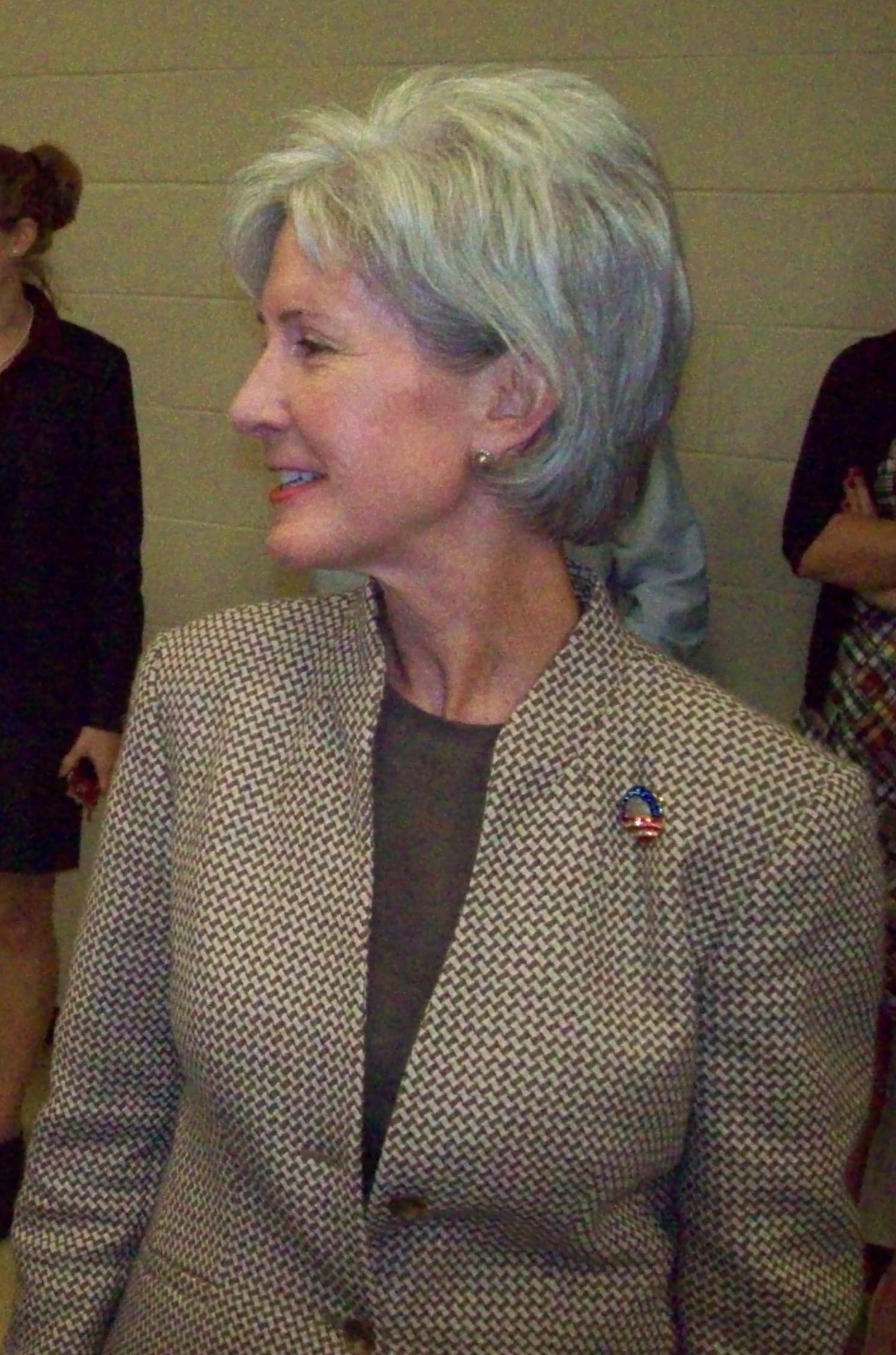
Kathleen Sebelius in Cedar Rapids (2008)
Kathleen Sebelius (2008)

LAKE MACBRIDE— The folks at the insurance exchange caught me in the barn yard, and we had a conversation about the challenges of not knowing what my 2014 income will be. The operator said, “we didn’t anticipate that people wouldn’t know how much they would earn in 2014.” She said they were working on the software to enable us to revise our application and someone would call me back when it was fixed. It has been a couple of weeks since that conversation, so we are in a holding pattern.

The impact of the Affordable Care Act (ACA) on most people I know is nil, mostly because they already have a health insurance policy that complies with the ACA. The requirement to get health insurance is vaguely understood, and there have been zero times someone has talked about the financial penalties for not having insurance. There has been no impetus for people to sign up for a policy any different from before the open enrollment period began Oct. 1.

There is a fee for not having health insurance, and it ranges from $95 or one percent of income up to the cost of buying a specific plan (whichever is higher) in 2014, up to $695 or 2.5 percent of income in 2016. People who pay a fee will also be required to pay the entire cost of their health care. What isn’t clear is how emergency rooms will deal with the group of patients who show up at their doors for treatment without insurance— something else people are not talking about.

What we know is the Dec. 15 deadline to change policies for Jan. 1 will be here soon, and action will be required. The easy decision would be to keep our current health insurance policy. That postpones things for a year, providing time for the bugs to work out of the system. It’s our default position.

When the exchange calls me back, I’ll re-do our application, which will finalize eligibility and costs, and enable us to make a decision to change or hold our policy for another year. Until then, we watch, learn and wait.

Click on the links to read Part 1, Part 2 and Part 3.

Categories
Social Commentary

United Nations Comes to Iowa

Jim Leach Remarks
Jim Leach Remarks

IOWA CITY— My World came to Iowa on Tuesday, Nov. 5. It is the United Nations survey to collect grassroots input to the post-2015 Millennium Development Goals (MDG), and one of only 11 U.S. consultations. One of the criticisms of the 2000 MDG process was the lack of grassroots input, and the survey and consultations are intended to address that deficiency post-2015. The goal is to get at least one million U.S. survey responses (if readers would like to participate online, click here).

I was asked to facilitate a small group discussion on access to clean water and sanitation, and was provided a copy of a nine-page handout on the subject.  At our table, we had eight people, including some students at the nearby University of Iowa and one person each from China and India, two countries where along with Bangladesh a majority of people in extreme poverty live.

We had an engaging conversation and took notes for submission in the final report to the United Nations. As University of Iowa law professor Jim Leach said, we should support the United Nations, “and take on those that don’t.” We did our part last night.

The publicity, organization and event itself seemed well executed. The attendees I knew had the experiences and credentials to add value to the discussion as the United Nations prepares its next set of millennium development goals. Still,  something was lacking. On the drive home, it occurred to me that what was missing was any substantial discussion of business concerns that impact global society so pervasively.

When Shuanghui International, China’s largest pork producer, bought Smithfield Foods, the largest U.S. pork producer, what were they after besides the pork? Because China is so polluted, they were after access to U.S. land and relatively clean water to meet their burgeoning demand for protein. In a free-market way, they would co-opt U.S. land and water rights to benefit China. Americans may not see it this way, but it is the same kind of free-market colonialism the Chinese are engaged with in Africa and South America. The implications for the millennium development goals seem clear.

While a focus on human rights and individual needs may be appropriate for the United Nations, the world has become an open shop where corporations ply their trades freely and collect their tithe, accruing it to the wealthiest people on the planet. The role of corporatism, and keeping it in check as human rights are addressed must be part of the formula for the U.N. I don’t see how that would be possible today.

A very vocal minority, whose members are pro-life, anti-U.N. and anti-taxes will stand as a roadblock to the U.S. governance it takes to keep corporations in check. Until now, the our country has been a beacon of hope for good governance, but the 113th U.S. Congress seems incompetent to pass any bill of significance, let alone one that will reign in corporations as they plunder our world.

As I drove north after the meeting, on a highway not much removed from when Dillon plowed his furrow in the 19th century Iowa wilderness, it seemed clear our civilization has not come as far as we might think. That has to change to make the progress needed to sustain our lives in a turbulent world.

Categories
Social Commentary

Navigating Change in Health Insurance — Part 3

Obamacare Upheld
Obamacare Upheld

LAKE MACBRIDE—Like many, I worked hard during the post-911 Bush administration to elect a Democratic president. Investing a lot of myself in politics through the 2004, 2006 and 2008 election cycles, I’m not ready to give up on President Barack Obama now. Not even close. Including this time of implementation of the Affordable Care Act (ACA), something that has already made my individual health insurance policy better.

There are open questions about the changes. As answers are found, in almost every case, the news has been good. For example, my doctor is in the exchange and the exchange policy costs look to be substantially lower that my current policy, with better coverage. Even so, some don’t think the reality of the Obamacare roll out is as good as it is. (ACA = Obamacare, in case you missed it).

Heritage Action, the political action wing of the conservative Heritage Foundation wants us to be scared of the ACA, asserting a basic falsehood about it. “Scarier than any Halloween costume or ghost story, millions of Americans are receiving letters in the mail from their insurance companies saying that their health insurance will be dropped or that their premiums will skyrocket,” Heritage Action wrote in an email the day before Halloween.

What they don’t say is that those being dropped from current  health insurance policies are being done so because the coverage does not meet the standards of the ACA, and the insurance company has chosen not to align the policy with the new law. This is about the insurance company providing cut rate coverage at too high a price, not anonymous health insurance policy holders who can’t see past their own nose.

By my read, it appears that policy holders, pretty uniformly, will get a better deal under the ACA. The impact of the ACA will be to level the playing field so that a health insurance policy has the basic provisions outlined by the new law, disallowing insurance companies from providing mediocre coverage.

Despite their noise, the naysayers provide no alternative to the ACA. What they must know is that as the actuality of the ACA is revealed, the more people will like it, rendering their scare tactics irrelevant. There is evidence insurance companies will like it too.

I was stunned by the rate increase we received from Wellmark Blue Cross and Blue Shield on our individual policy. At 6.8 percent it is the lowest annual rate increase we have had since first buying the policy in 2009. According to a notice from Wellmark, “the only increase to your premium will be an adjustment to account for the new federal fees and taxes required by the ACA.” What the insurance company is saying is that except for Obamacare, they didn’t need a rate increase this year. Can the reform measures really be that good for insurance companies?

There are still a lot of questions to answer about health insurance reform as the ACA rolls out. It is pretty clear that the president will take a hit in the polls over it, whether it is warranted or not. As I have written in my two previous posts, getting facts and working through them is essential, and there is no hurry to make a bad decision. So far, navigating the implementation of the ACA looks like clear sailing.