Categories
Living in Society

Afghanistan Forever

Paper cranes

~ I’ve been writing about Afghanistan for what seems like forever. Here are two posts, the first was written as the surge happened and our company participated in deployment of equipment to Afghanistan. The second reiterated how long the United States has been involved in Afghanistan. As the U.S. makes a hasty and long overdue exit, and the Taliban resumes control, one has to wonder about the human cost of U.S. engagement.

The War Machine Goes On
March 11, 2009

As I write this post, the military equipment moved from the depot to the coast continues its progress towards Afghanistan. There were hundreds of truckloads of vehicles and provisions moving out in a very large deployment over the past two weeks. We did not hear a lot about this in the mainstream media. If anything, this deployment would have gone on unnoticed, except for some of us in Big Grove.

For those of us who would rather see a world at peace combined with economic stability, we have been doubly disappointed. If the defense industry were to falter at this point, it would be another short circuit of an economy already on the fritz. The deployment to Afghanistan furthers the military spending, and while we agree that the influence of Osama Bin Laden and his followers should be neutralized, beyond that, it is difficult to see the importance of the Afghanistan-Pakistan issue.

So, as I drink morning coffee and turn down the heat to go into the office, I wonder how we can realize a sustainable peace in the world. With continued drought, famine, genocide and poverty, the global community is ripe for more conflict as populations move, oppressive regimes assert dominance and the United Stated assumes a larger role as “peace keeper” by these military deployments around the globe. In the words of John Lennon, “all we are saying is give peace a chance.”

An Iowan’s View of Afghanistan
December 11, 2009

When I hear people talking about the 8th anniversary of the invasion of Afghanistan I shake my head. We should be marking the 30th anniversary of our Afghanistan policy because we have been engaging in Afghanistan’s affairs since at least 1979, when the former Soviet Union invaded that country.
 
The Soviet invasion of Afghanistan combined with the ongoing Islamic Revolution in neighboring Iran, and the United States view of the importance of Middle East oil, complicated the presidency of Jimmy Carter. In his memoir, Keeping Faith, former President Jimmy Carter wrote about the threat of the Soviet invasion of Afghanistan, “A successful takeover of Afghanistan would give the Soviets a deep penetration between Iran and Pakistan, and pose a threat to the rich oil fields of the Persian Gulf area and to the critical waterways through which so much of the world’s energy supplies had to pass.” There were also American interests. UNOCAL, a US company, was seeking to build an oil pipeline from Turkmenistan to Pakistan through Afghanistan at that time. For President Carter these were vital US interests and he felt it critical to address the Soviet aggression. As many of us remember, Carter was in the middle of his campaign for a second term, and believed that campaigning actively was inappropriate. Among other things, he canceled his participation in a nationally televised debate in Des Moines, Iowa and initiated a US boycott of the 1980 Olympic Games in Moscow. Many of us remember President Carter as beleaguered by the challenges of Iran and Afghanistan.

In the end, President Carter forswore direct military action and implemented economic sanctions. The most notable sanction to Iowans may be the grain embargo of the former Soviet Union. His administration also decided to prop up what he called “Afghan freedom fighters.” According to Sonali Kolhatkar and James Ingalls in their book, Bleeding Afghanistan, the Afghan freedom fighters were “seven Islamist ‘Mujahideen’ or ‘jihadi’ groups based in the Afghan refugee camps in Pakistan.” These groups received monetary, military and logistical support from the United States and Saudi Arabia through a third party intermediary. This indicates indirect military action on the part of the United States interests during the Soviet aggression. According to Kolhatkar and Ingalls, U.S. military aid may have gone to a group called Makhtab al Khadimat, “a group that recruited and trained Muslim volunteers from Egypt, Algeria and other countries to fight in the Afghan war.”

Makhtab al Khadimat was founded in 1984 by the Saudi heir to a construction firm, Osama bin Laden. From the perspective of today, this all sounds too familiar, except that eight years ago, the United States intervened in Afghanistan militarily to remove a problem that it may have helped engender.

I hope the blood and treasure that we have invested in our engagement in Afghanistan serves as another reason the United States must get to energy independence. Our sons and daughters are fighting and dying in a country where our interest in oil blinded us to the values of Islamic extremists. As we were supporting the Mujahideen, and saying we could work with the Taliban, we failed to hear other voices in Afghanistan that called for an end to the Soviet occupation, but not a return to Islamic fundamentalism.

According to Zoya, a member of the Revolutionary Association of the Women of Afghanistan (RAWA), during a recent Iowa City appearance, little has changed since the Soviet withdrawal from Afghanistan in 1989. The United States continues to support Islamic extremists in the Karzai government. To the extent Afghanistan is about United States interests in oil, it is one more manifestation of our addiction to hydrocarbon fuels. We need the will to cure our addiction to hydrocarbon fuel.

I empathize with my friends who call for demonstrations over President Obama’s escalation of the troop levels in Afghanistan. I have participated in these demonstrations. At the same time, I have to ask, where were they during the first escalation earlier this year? Where were they in 1979?

What I know is that President Obama, more than any president in my memory, appears to have put together the elements of a comprehensive plan to resolve the issues related to war and our addiction to hydrocarbon fuels. If Obama can extract us from three decades of engagement in Afghanistan, he will have truly done something for peace in that region and for the world. Iowans should support President Obama on Afghanistan. He is doing the dirty work that his predecessors, beginning with Jimmy Carter, left behind.

Categories
Living in Society

One Car Family

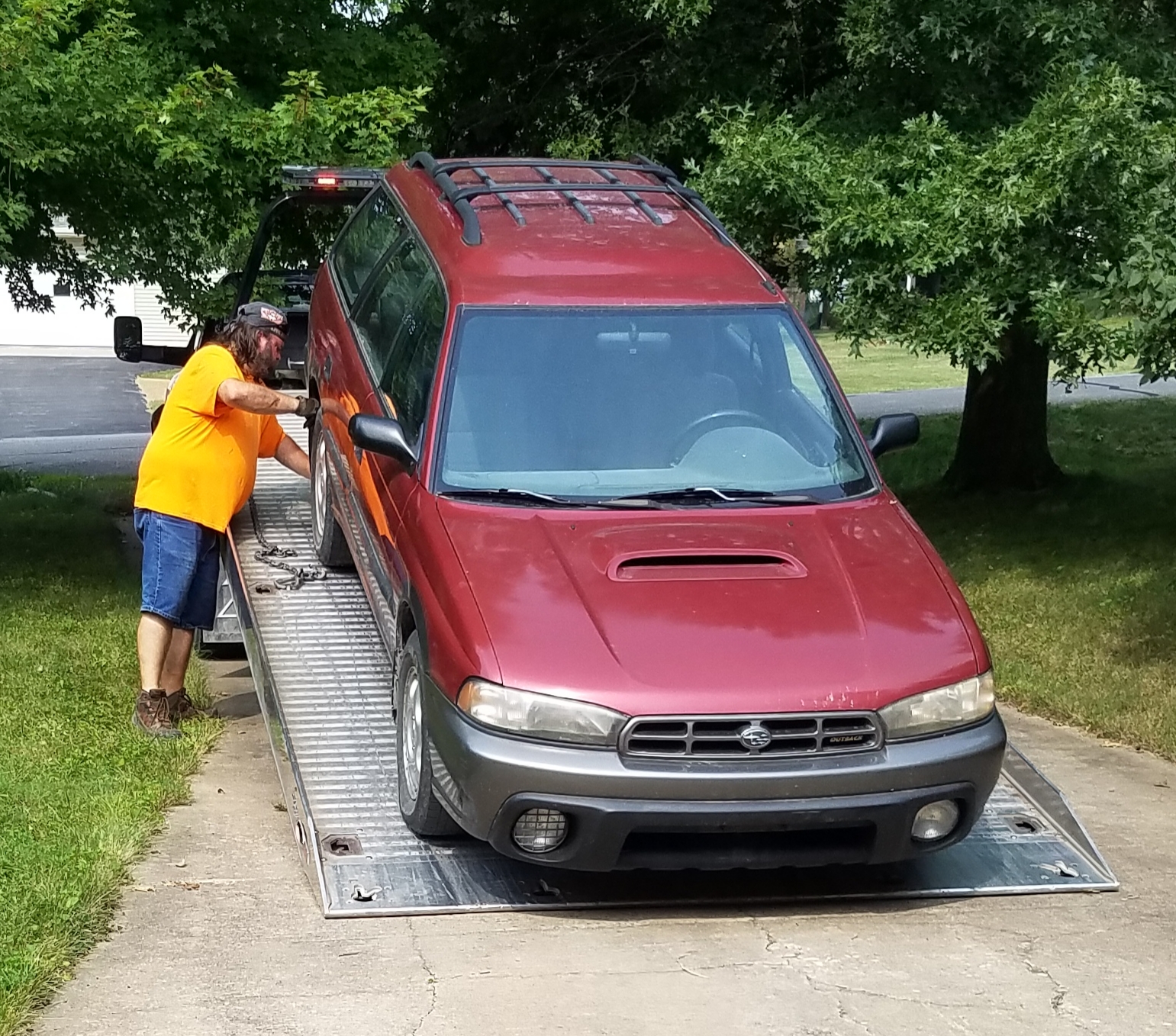
1997 Subaru Legacy Outback on the last day of ownership.

The coronavirus pandemic made a couple of things clear. I didn’t need to work outside home unless I wanted, and we didn’t need two vehicles.

I bought the used 1997 Subaru Legacy Outback in 2013 after I sold my pickup truck to our daughter. These Outbacks have a reputation as reliable and this one demonstrated the accuracy of the moniker. There were issues with the aging vehicle, the most serious of which was an overheating problem. It was repairable to the extent the car became what we call “a beater.” At 218,890 miles, those of us who drive a Subaru know at some point before 300,000 miles, the engine and transmission are going to go. After that the automobile becomes scrap because of a lack of repair parts availability.

The main use of our second car was getting me to work; hauling straw bales, soil mix and fertilizer for the garden; and basic transportation in and around Eastern Iowa. I delivered a few shares for the community supported agriculture project, worked on political campaigns, and generally supported household operations. The car was a work horse.

When it came to getting rid of it, the increased age of the vehicle had me worried about selling it to someone I know. The differential was acting up, the hatchback only sporadically opened, and… it was old. Someone else might want to drive a beater. I didn’t want the responsibility of being the previous owner.

I decided to donate the vehicle to Iowa Public Radio. I had been hearing the advertisements on the air for a while and they take old vehicles:

When you donate a vehicle to benefit Iowa Public Radio, you actually turn your car into the news and music you rely on and love. Donate your vehicle, and we’ll use the proceeds to support your favorite programs like Morning Edition and Talk of Iowa, plus the great variety of music you hear daily on IPR. This gift makes a difference at Iowa Public Radio.

Donating a car is fast, easy and secure. Iowa Public Radio accepts any vehicle – running or not – including cars, trucks, boats, RVs, motorcycles, and more. We work with our public radio colleagues at Charitable Adult Rides & Services (CARS) to ensure that your donation delivers the highest possible revenue to Iowa Public Radio and that your experience is convenient, efficient and even fun.

Iowa Public Radio website.

Public radio was a major part of my weekends for many years. I turned it on in the garage and took my solar powered radio with me out to the garden. I turned it on while preparing Saturday dinner in the kitchen. I recall Garrison Keillor’s “last show” on June 13, 1987. I set the cassette recorder to record the show then took our daughter for a walk. When we returned, the show had run over and I missed the last part. As we know, Keillor came back for a second version of the show. Like him or not, I was a fan.

Public radio doesn’t have the revenue to buy big shows like that any longer. The format is talk-oriented, and the string of Saturday music shows like Mountain Stage and A Prairie Home Companion were replaced by an aging guy and his eclectic record collection.

I feel good about donating the Subaru to Iowa Public Radio. It was the biggest financial donation I made to them. I took the last trip on Monday to deliver garden produce to the community food pantry. The vehicle reliably served its purpose, which is what a person wants from an automobile.

We are a one car family now.

Categories
Living in Society

Get to Work Congresswoman

Woman Writing Letter

Rep. Mariannette Miller-Meeks appears to be dodging constituents in the Second Congressional District.

According to her congressional website she has two constituent offices available: in the District of Columbia and in Ottumwa. That’s not enough. It’s time for the congresswoman to be more accessible by staffing offices where her constituents live.

Ottumwa is Iowa’s 20th ranked city by population. Also in the Second Congressional District are Davenport (third ranked), Iowa City (fifth), Bettendorf (15th), Clinton (18th), and Burlington (19th).

I understand a slow opening while the election was being contested. Yet she won and it’s time to provide more inclusive access. At a minimum she should open an office in the Quad-Cities which is the biggest population center in the district. She should also open one in Iowa City, home of the University of Iowa which is an economic engine for the region.

Miller-Meeks needs to get to work doing the business of Iowans. That is, unless she doesn’t care what constituents who don’t share her politics think.

~ First published in the Little Village on Aug. 10, 2021. After publication, the congresswoman’s website was updated with the location of a Davenport office.

Categories
Living in Society

Leaning into August

Final squash harvest July 30, 2021.

After covering at Blog for Iowa in July I’m ready to turn attention back to this space. July was a tough month in a pandemic that won’t go away. Whatever illusions of safety, comfort and autonomy we may have had are torn away by the ugliness modern society manifests these days. We need to get back to a kinder way of living, yet politics, the coronavirus pandemic, climate change, interpersonal rudeness, and economic uncertainty weigh heavily on us.

The extended drought is taking a toll. We need rain, not so much for the crops, but to lift our spirits. To let us know we’ll get through this spell. Yesterday was my first outdoors work shift since high temperatures arrived. It feels normal to work outside for several hours without also feeling like I’ll pass out. There was an air quality advisory because of smoke drift from the Western wildfires, yet temperatures in the 70s were welcome. I made a day of yard and garden work without obvious ill effect.

There are some bright spots. July began with helping our daughter relocate to the Chicago area. In August we plan a visit, something that was difficult when she lived in Florida. We can plan and work on things together again. I hope to bring tomatoes when we visit.

The garden has been the best, producing more food than ever before. My ongoing integration of the garden into the kitchen makes it a useful harvest, both feeding established meal plans and enabling culinary experimentation like this yellow tomato sauce pizza I made for dinner last night.

Yellow tomato pizza sauce reading for toppings.

We are also financially secure due largely to long-range planning and contributions to Social Security during more than 50 years in the workforce. Social Security has enough money to make it through 2034 at the present. I expect to lobby the Congress to fix it in the coming years.

Here’s to August! The time of high summer, sweet corn, tomatoes and vacations. I don’t know about readers, but I’m ready for it.

Categories
Living in Society

Doing The Right Thing

Iowa State Capitol

Governor Kim Reynolds has neither the bandwidth nor expertise to manage the coronavirus pandemic. I didn’t vote for her, yet that is cold comfort. As COVID-19 cases increase in Iowa, and in all 50 states, her latest statement is evidence of her mismanagement. Here it is verbatim.

Reynolds Statement on New COVID-19 Guidance from the Biden Administration

DES MOINES (July 27, 2021) – Governor Reynolds released the following statement following the Biden Administration issuing new COVID-19 guidance:

“The Biden Administration’s new COVID-19 guidance telling fully vaccinated Iowans to now wear masks is not only counterproductive to our vaccination efforts, but also not grounded in reality or common sense. I’m concerned that this guidance will be used as a vehicle to mandate masks in states and schools across the country, something I do not support.

“The vaccine remains our strongest tool to combat COVID-19, which is why we are going to continue to encourage everyone to get the vaccine.

“I am proud that we recently put new laws in place that will protect Iowans against unnecessary government mandates in our schools and local governments. As I have throughout this pandemic, I trust Iowans to do the right thing.”

Governor’s website, July 27, 2021

The kernel of truth is the third paragraph about the COVID-19 vaccines being our strongest tool to combat the virus. The rest is political bluster.

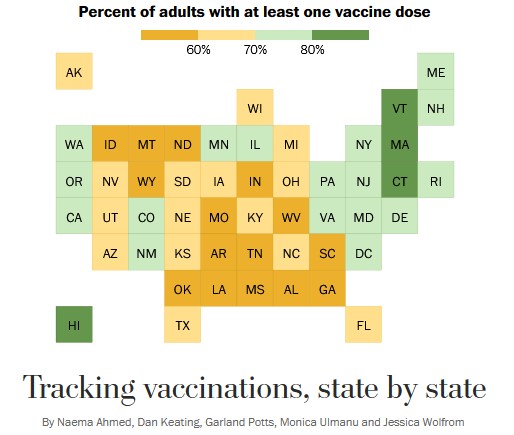
Iowa is a state where on Wednesday, less than half the population had been fully vaccinated against COVID-19. This statistic is from the Washington Post as the governor has decreased the visibility of state coronavirus statistics by reducing reporting frequency to once per week. Her decision to hide daily data begs for transparency.

The vaccine is widely available and free, so the distribution system created by the Biden administration is not the problem. The governor needs to act more aggressively in her encouragement of vaccination of the remaining half of Iowans. I propose she become a more public advocate of getting vaccinated. Her behavior has been to drop a press conference or written statement and remain otherwise silent.

Much has been made of the Iowa Board of Health missing a meeting because the governor has not appointed enough members for a quorum. While appointing a full board would be nice, helpful even, lack of a board of health is not the main issue. There is plenty of competent guidance about what the state should do. If the guidance doesn’t fit the governor’s framing, she’s not listening.

She closes by saying. “I trust Iowans to do the right thing.” It is a purposefully vague and meaningless statement subject to interpretation. This phrasing has become a political talking point. The way I interpret it is to listen to the Biden administration, do my best to comply with the new CDC guidance, and work hard to elect a new governor in 2022. Especially that last part.

~ Written for Blog for Iowa

Categories
Living in Society

What Work Will We Do?

Working the Garden

Conventional wisdom is there is a worker shortage in Iowa.

“Companies are really at a tipping point with respect to their workforce,” Iowa Business Council Executive Director Joe Murphy said in an interview with Perry Beeman of Iowa Capitol Dispatch. “They need people more than ever.”

The surge in demand for products and services in the second year of the coronavirus pandemic notwithstanding, there is no shortage of workers. It is a shortage of jobs people want to do.

My colleague Tony Lloyd put it this way: “Can we stop saying that ‘Companies can’t find workers’ and start saying ‘Many corporate work environments are toxic. Workers weren’t thriving before the pandemic. Now they realize that life is short.’ The way you spend your time is the way you spend your life.”

Anyone who worked on a farm knows how hard physical labor can be. Factory workers are well attuned to the toll repetitive tasks take on their bodies. Retail workers figure out ways to eek out a living on low wages. People who are self-employed–housekeepers, landscaping contractors, beauticians and barbers, child care professionals, crafters and creatives–often feel one step from the debt collector with slim chances of making it. We go on working partly because we want to, yet mostly because we need income in 21st Century society.

Labor unions of the post World War II era framed what worklife can be: a 40-hour work week with paid overtime, a safe work place, vacations and holidays, health insurance, sick leave, and other perquisites. About one-quarter of all U.S. workers belonged to a union in the mid-1950s, yet only 10.8% of U.S. workers were union members in 2020. The union membership rate of public-sector workers (34.8 percent) continued to be more than five times higher than the rate of private-sector workers (6.3 percent), according to the Bureau of Labor Statistics. While we are friends of organized labor, their model has not worked for the majority of Americans in the workforce.

Most small, family-run businesses I know seek to avoid hiring people unless they must. Everyone from the owner to the dish washer pitches in to help get required daily work done. Yet small businesses have been and continue to be acquired by larger ones, or are run out of business through market competition.

American business favors a structure where management expenses are minimized, and to do that, scale is important. The bookkeeper for a $1 million dollar a year operation may stay busy, yet the better use of such labor is said to be that same bookkeeper managing a portfolio of ten or twenty such operations. To do that businesses need scale. Scale well-serves the owners of business–the richest one percent among us–but that’s where trouble came in. It was noticed during the pandemic.

Scaling business to reduce overhead costs, and taking the individual decision-making aspect out of operating a small office or outlet within a large corporation is what created the “toxic work environments” to which Lloyd referred. If there is will to do something about it, I don’t see it in public. As we answer the question, “What work will we do?” our options are limited by the corporatization of the United States.

Wouldn’t it be great to work like this:

Oh, I get by with a little help from my friends
Mm, I get high with a little help from my friends
Mm, gonna try with a little help from my friends

Sony Music Publishing or Sir Paul McCartney, who knows.

Unfortunately, even something as simple as “getting by” gets complicated. How we spend our days is made more difficult by the corporatization of worklife and the increasing divide between the richest people and the rest of us. The question remains unanswered.

Categories
Living in Society

Miller-Meeks: Divisive Blabbermouth

Mariannette Miller-Meeks on the Iowa State Fair Political Soapbox on Aug. 13, 2010. Photo credit: Wikimedia Commons.

Mariannette Miller-Meeks ran a successful fourth campaign for congress and now represents Iowa’s Second Congressional District. People argue with that statement, saying they stopped counting the votes, yet it is accurate.

Her first three campaigns (2008, 2010 and 2014) were won consistently by Dave Loebsack, even in 2010 when Republicans began taking back control of the state. Loebsack won in 2010 with 51 percent of the vote to Miller-Meeks’ 46 percent.

Her several campaigns created many opportunities to hear her speak and ask questions over a 13-year period. She is a relatively known entity.

What is new and a bit unexpected, is she used her long awaited victory to become a blabbermouth. Today, my Google Alert finds Miller-Meeks saying something noteworthy to someone a couple of times a day. With her regular appearances on FOX News, she attempts to carve a peculiar narrative of her drawn-out election victory. I preferred it when our district’s member of Congress had less to say and wasn’t constantly spinning talking points.

During the time constituents were represented by Jim Leach and Dave Loebsack, we didn’t hear from them much. Our expectation was we wouldn’t hear from them unless it was important. We are used to our member of Congress being above the fray. Leach and Loebsack were the ones who evaluated data and legislation with their district foremost in mind. While Leach was definitely a Republican, he presented an image of bi-partisanship that won him many district fans. Miller-Meeks evaluates legislation based on her partisanship first and make no pretense about it.

Miller-Meeks’ no vote on the American Rescue Plan epitomizes her partisanship. No Republican in the Congress voted for the law. At the same time Iowans specifically benefited from features of the law. Although the congresswoman has been less vocal about the benefits, her staff is in a position to have to help Iowans with the programs. While voting no, she gains favorable attention by helping constituents.

It is more than she speaks excessively. Miller-Meeks is purposely divisive and the district has not seen this for decades. Jim Leach’s reputation was built on being the guy who could be persuaded to cross the aisle on legislation. Miller-Meeks votes against laws she recognizes will pass without her vote and enjoys the benefit of Democratic policy among voters. She is able to cynically say, “I voted against that bill” to her base, while her staff helps constituents secure benefits. Perhaps the correct descriptive term is Rep. Miller-Meeks is a “divisive blabbermouth.”

For the present, the congresswoman is who she is and as she speaks openly and often, constituents have a chance to get to know her. I doubt people are as tuned into her daily activity as we are at Blog for Iowa. Her frequent unexpected and divisive statements are money in the political bank for Democrats–a reserve that will be spent as Democrats identify a candidate and begin the 2022 Congressional campaign.

Let her go on talking. There will be a price to pay before her term is up.

~ Written for Blog for Iowa

Categories
Living in Society

Laundering Face Masks-Again

Washington Post Screenshot, July 21, 2021.

Laundering home sewn face masks is back on the to-do list. It looks like we’ll need them.

On Monday I wrote we are not really taming the coronavirus in Iowa or in the United States as a whole. Too many unvaccinated residents are in social situations without protection. The unvaccinated make up the vast majority of hospitalizations for COVID-19. If you missed it, click here to read the post.

To my point about children returning to school this fall, also on Monday, the American Academy of Pediatrics recommended universal masking in schools for everyone older than age two.

While that recommendation was churning in the vessel, both political commentator Sean Hannity of FOX News and U.S. Senate Minority Leader Mitch McConnell made strong public statements that people need to get the COVID-19 vaccine in their arms. McConnell was particularly direct, with a “get vaccinated or else” statement. Here is the clip:

What gives? Are we at a turning point in addressing vaccine hesitancy? We know Hannity and McConnell are not sincerely concerned about those who died or are afflicted with COVID-19. Was it Monday morning’s 750-point drop in the Dow Jones Industrial Average? Did they have a come to Jesus meeting… with Jesus? I’m sure I don’t know, other than it is self serving. Maybe they are worried too many of their anti-vaxx constituents will die of COVID-19, yielding the political fight to Democrats.

My cynicism about conservatives’ motivation aside, the increase in number of COVID-19 cases is alarming. While the majority of COVID-19 hospitalizations are among the unvaccinated, there have been prominent people who, while fully vaccinated, have contracted a new variant of COVID-19. On the one hand we have to go on living. On the other, there are unknown risks to be addressed.

The upshot is get vaccinated if you aren’t.

If you are vaccinated, the CDC recommends you comply with federal, state, local, tribal, or territorial laws, rules, and regulations regarding protection from the coronavirus, including local business and workplace guidance. If a merchant requires you to wear a mask on their property, just do so or walk away. Seek to get along in society knowing the pandemic brought out the worst among some people. Seek safer activities if you are in doubt, the CDC made a handy list.

And launder those reusable masks. Don’t be afraid to wear them in public. A mask won’t kill you but the coronavirus might.

Editor’s note: Sean Hannity spent time on his Thursday radio program back tracking on his encouragement to the unvaccinated to get vaccinated.

~ Written for Blog for Iowa

Categories
Living in Society

Iowa’s 2022 Campaigns Haven’t Truly Started

Small yet mighty turnout of Democrats at the July 17, 2021 Solon Beef Days parade in Johnson County.

The deputy chief of staff to Congresswoman Mariannette Miller-Meeks was recently bragging on Twitter, “When you got $1.17 million in the bank and no democrat opponent.” With it he posted an image of an apparently happy, but not smiling congresswoman.

Not so fast buckaroo! There will be opponents… and money.

If you’ve been following along, there are currently only two declared Democratic candidates for statewide office in Iowa: David Muhlbauer for U.S. Senate and Ras Smith for Governor. Others are kicking the tires on runs for congress, senate and governor, but until the districts are defined–hopefully in September–a lot is up in the air. For the time being Muhlbauer and Smith have the Democratic playing field to themselves. One hopes they are taking advantage of their early entry into the 2022 campaign.

If I were a Republican, I’d say the current districts, with a few tweaks to even out population growth, could serve. We became a Republican state with these districts. There is no evidence they want that or are planning anything but accepting the first map from the Legislative Services Agency. Republicans are also good at keeping secrets, so who knows? What they do shall be revealed.

To fill the absence of campaigns, I walk in parades where it makes sense, write letters to the editor and blog posts, and try to support the county party from a distance in my Republican pocket of Iowa’s most Democratic county. I donate a small, monthly amount to the Iowa Democratic Party and get no further than the state borders with my donations.

I could speculate about potential campaigns but what would be the point? After the drubbing we took in 2020, it seems best for Democrats to keep our powder dry until we know something. As we get through redistricting, and the rest of this post-pandemic summer, we’ll find out where we are heading. I’m okay with periodic gaps in the action.

This morning I opened my father’s King James Bible and found the well read passage from Romans 13:12, “The night is far spent, the day is at hand: let us therefore cast off the works of darkness, and let us put on the armor of light.” We’ll be casting off the tweets of Miller-Meeks’ staff. Democrats have to work smarter because, as Alexander Pope put it in the 18th Century, “Fools rush in where angels fear to tread.”

Democrats can’t afford to be fools in 2022.

~ Written for Blog for Iowa

Categories
Living in Society

Shrinking the Tax Gap

On July 14, I participated in an online briefing with former IRS Commissioners Fred Goldberg Jr. and Charles Rossotti on modernizing the IRS and shrinking the tax gap.

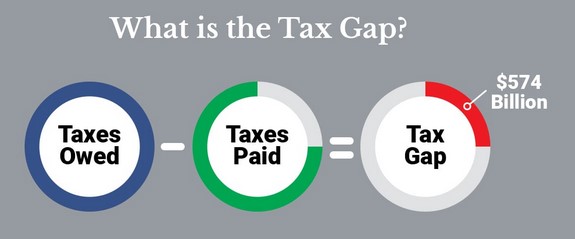
Goldberg was appointed as IRS Commissioner by President George H.W. Bush in 1989 and served three years. Rossotti was named IRS Commissioner in 1997 by President Bill Clinton. He served five years. Both former IRS commissioners are members of the group Shrink the Tax Gap, which states each year there is a tax gap of $574 billion in taxes that are owed to the IRS but not paid. Their position is simple and clear. Most people pay their taxes. Some people don’t, and that’s not fair.

In an article by James Q. Lynch, Congresswoman Ashley Hinson (IA-01), a member of the House Appropriations Committee, said of bills the committee was marking up, “I think that these bills disrespect taxpayers.”

What if we collected taxes due the IRS to help pay for them? Would that respect taxpayers?

Hinson supports expanding the child tax credit in the American Rescue Plan, but has concerns about the price tag of the bill that includes sending payments averaging $423 a month to about 35 million families with children. Hinson, like every Republican member of Congress, voted against the American Rescue Plan. When we are talking about price tags, the elephant in the room is the hundreds of billions of dollars in unpaid taxes created by the tax gap.

President Joe Biden proposed spending more money on the IRS so it could pursue tax deadbeats. We’re talking about people who have unpaid tax bills, not creating new taxes. Republican U.S. Senators want no part of this.

“What Republican senators object to here is training IRS investigators on people and corporations who are deliberately trying to cheat the system (not to mention the American people) and have the resources to do so,” wrote Kerry Eleveld at Daily Kos. “Instead, (they) would clearly rather just keep the IRS focused on smaller fish, who may have messed up some calculation on TurboTax, for instance. Why? Because the small fries aren’t delivering enough to GOP campaign coffers, that’s why.”

Paying taxes is so basic to being an American I believe most voters would support collecting taxes due. Yet that’s not how our government is evolving. The Republican minority seeks to retain control over the tax system to benefit the minority of wealthy Americans.

In Sunday news, Senator Rob Portman (R-OH) announced Biden’s plan to fund the IRS is officially off the table in the bipartisan infrastructure bill because he got “pushback” from fellow Republican lawmakers who dislike the idea of giving the IRS the tools it needs to collect taxes owed. Portman is a key negotiator for Republicans on this bill. It will be up to Democrats to pass this provision through reconciliation in the separate $3.5 Trillion infrastructure bill to which their caucus has agreed.

Do your job Congress. Shrink the tax gap.

For more information about Shrink the Tax Gap, click here.

~ Written for Blog for Iowa