Categories
Reviews

Book Review: The Hidden History of American Healthcare

In The Hidden History of American Healthcare: Why Sickness Bankrupts You and Makes Others Insanely Rich, author Thom Hartmann returns to familiar themes of greed, racism and oligarchic corruption. He applies them to a system of healthcare that profits the wealthy and provides marginal healthcare to Americans. A proponent of Medicare for all, Hartmann dives into what’s wrong with American for-profit healthcare and how changing it to a single payer system would be better for citizens.

Describing the overall theme of the series of Hidden History books, Hartmann lays out the challenge:

Americans must now prepare politically for 2024, and that starts by picking candidates and promoting policies that will beat oligarchy at both the presidential and congressional levels.

But most urgently, the entire country must laser-focus on stripping the oligarchic and fascistic elements that have crept into our republic since the Powell Memo, multiple Supreme Court interventions, and the Patriot Act with the war crimes and torture it has already facilitated.

Preface, The Hidden History of American Healthcare by Thom Hartmann

Anyone who bought health insurance through an employer or privately knows the issues with the American system: health insurance premiums are expensive and subject to high annual increases; there are co-pays that vary depending upon what type of coverage is purchased; preexisting conditions affect premium amount and can exclude people from some types of coverage; rather than visit a clinic close to home, an insured must visit medical professionals within the network of the insurance company or face higher costs. This system led to health care costs representing 24 percent of GDP. Countries like Taiwan have a healthcare cost of six percent of GDP, according to Hartmann.

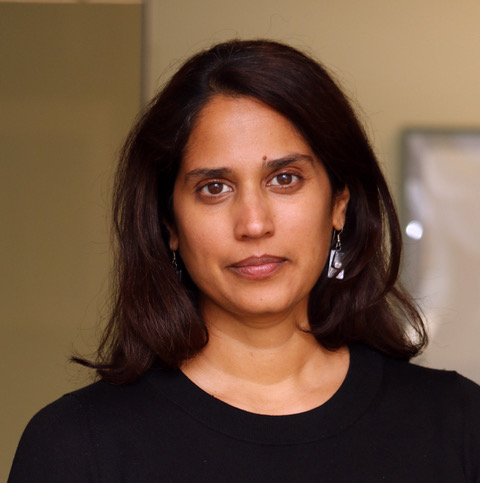
Thom Hartmann

There is a better, less expensive way of providing healthcare. The trouble is, Hartmann said, “(it) would cut off the hundred of millions of dollars that health care industry executives take home every month.”

Hartmann seeks to put healthcare into historical context. He recounts the first single-payer healthcare system in 1884 Germany. He takes us through the creation of Medicare from John F. Kennedy’s initial proposal to passage into law under LBJ, and through the Republican dissent over the program. Hartmann describes Republican efforts to privatize Medicare through what is called Medicare Advantage implemented by President George W. Bush. That section of the book alone makes it worth the reading.

Like previous books in the series, Hartmann’s book is readable and familiar. It is divided into four sections: How bad things are in America regarding healthcare; the origins of America’s sickness-for-profit system; the modern fight for a human right to healthcare; and saving lives with a real healthcare system. The last section proposes solutions to our healthcare system problems.

The Hidden History of Healthcare in America takes us through the history to make the critical point: “It is time for America to join every industrialized country in the world and make health a right, not a privilege.”

Because the subject of the book is so familiar, it renders a complicated process to bare essentials with concrete proposals for action to fix the healthcare system. I highly recommend the book, which is scheduled to be released Sept. 7, 2021.

~ Written for and first published at Blog for Iowa.
Categories
Reviews

Book Review: Equity

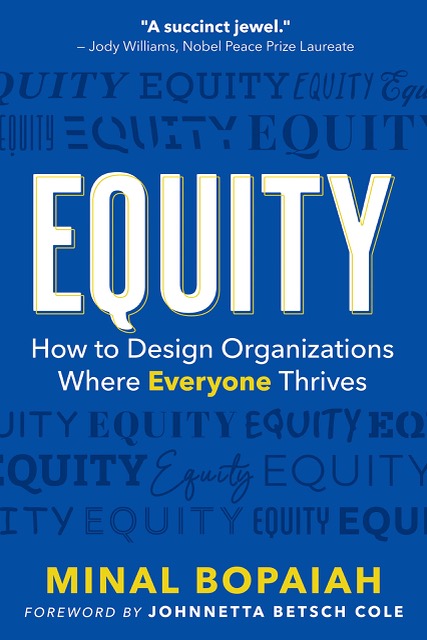
The challenge of creating work places that have inclusion, diversity, equity and accessibility is everywhere. In her new book, Equity: How to Design Organizations Where Everyone Thrives, Minal Bopaiah outlines how to turn lip-service about equity into a real world success story.

“Equality is when everyone has the same thing,” Bopaiah said. “Equity is when everyone has what they need to thrive and participate fully. Equity does not fault people for being different; it makes room for difference and then leverages it.”

The book covers a range of organizations, including for-profit companies and non-profit, non-governmental organizations. She has experience with both and leverages it to strip away buzzwords and conventions often used by management consultants. She reduces the narrative to easily understandable, succinct, and usable language.

Bopaiah introduces us to leaders who have overcome obstacles to equity and led transformative change: 

Minal Bopaiah
  • Managing partners at a consulting firm who learn to retell their story of success by crediting the system that supports them. 
  • News managers at National Public Radio who discover how they can create systemic support for diversifying sources on the air. 
  • A philanthropic foundation that collaborates with grantees to better communicate the importance of equity in healthcare to policy-makers. 
  • And creative professionals who have begun weaving inclusion, diversity, equity, and accessibility into the content they create, thereby transforming how customers and audiences view the world.

As a person who spent a career in business with a company experiencing dramatic growth, I found Bopaiah’s discussion of the myth of “rugged individualism” particularly engaging. She defines rugged individualism as “the belief that individuals are independent and unaffected by the system, time, or context in which they live and that their success is the sole result of their hard work and no other factors.”

One truth about organizations, businesses, and society more generally is the “system” can have a tremendous effect on dividing people and promoting more privileged members among them. As Bopaiah wrote regarding her Indian-American parents, the myth of rugged individualism can cast us “as characters in some kind of Horatio Alger tale in which the world is fair and everyone can succeed if they work hard enough.” Our systems favor the rich and privileged. Bopaiah’s concept of equity provides a way to address what can be a false narrative that suppresses an individual’s ability to participate in an organization equally with others.

Time spent reading Equity: How to Design Organizations Where Everyone Thrives will pay dividends in understanding how organizations in which we participate can be better through inclusion, diversity, equity and accessibility. It is a fast read and moves along quickly to key points of Bopaiah’s narrative. Highly recommended for its brevity and focus.

Equity: How to Design Organizations Where Everyone Thrives is scheduled for release on Sept. 7, 2021.

Don’t have time to read Equity? Here’s a brief video in which Bopaiah explains one of the basic concepts of the book, IDEA: Inclusion, Diversity, Equity and Accessibility.

Minal Bopaiah is the author of Equity: How to Design Organizations Where Everyone Thrives. She is the founder of Brevity & Wita strategy + design firm that combines human-centered design, behavior change science and the principles of inclusion, diversity, equity and accessibility to help organizations transform themselves and the world. Bopaiah has written for the Stanford Social Innovation Review and The Hill and has been a featured guest on numerous podcasts and shows. She has also been a keynote speaker for many conferences, inspiring thousands with her credible, authentic, and engaging talks. For more information, please visit https://theequitybook.com

Categories
Living in Society Writing

Postcards From Iowa #3

Text on the postcard: “Student, c. 1960. Photographer Unidentified.”

When young our capacity seems limitless. When I got my first library card in 1959 I believed I could read every book on the Bookmobile that stopped each week in our neighborhood. I looked forward to returning books I read and getting new ones. Outside of school, it was a highlight of the week.

Mother got me a subscription to My Weekly Ready, the arrival of which was another highlight. I bought a few children’s books at the local drug store. Keeping up with reading was easy with the energy of youth.

When I lived in Iowa City in my twenties, I started a project to read every book in the public library. It tested my limits. I started at the beginning of the Dewey Decimal system and didn’t make it out of the philosophy section.

I didn’t hear about the Horatio Alger story until I was in college, but that could have been my story, lifting myself up with diligence, honesty and altruism as I read and read and read, waiting for some happy circumstance to present itself and bring me the good things of life. We now know what I was feeling was the privilege of being white and middle class.

I look back to those days, with their libraries full of reading material, and consider my devotion to the act of reading. It was a solitary life and I was mostly okay with that.

What I didn’t realize, that would have helped me if I did, was to get anything significant done in society it takes a context that includes others. I was ready for a life of rugged individualism, in which through my own hard work I could pull myself up by my bootstraps and experience success. I didn’t understand how divisive that could be, pitting my own efforts against others to ensure personal success above all else. Live and learn.

Today I have piles of books I want to read just like the schoolboy on this postcard. However, my intent is different than it was in the 1950s and 1960s. I seek insight to take collective action on things like the climate crisis and more. I provide for my basic existence — food, shelter, clothing, transportation and healthcare — yet that serves only as a platform to do other things with a network of people.

Some days I wish to be that boy sitting next to a stack of books while reading. If I were, there would be things to tell him.

Categories
Living in Society

Buying Time

Rouge Vif D’Etampes Pumpkin.

On Tuesday, Aug. 24, 2021 I temporarily deactivated my Twitter and Instagram accounts. Instagram reported I was averaging an hour a day on the site. Twitter was likely two or three times that amount. There are plenty of other things on which to use this time.

As I approach my seventieth birthday I’ve been taking stock and focusing energy on things that matter. While I enjoy social media, a person has to set priorities. The energy formerly used on those platforms can now be devoted to writing and other forms of creative endeavor.

At some point, temporary deactivation will become permanent.

The change was almost immediate. I slept through the night. My blood pressure dropped overnight to within range. I felt like reading a book again. I feel like doing things instead of occupying time with computer screens. Change was unexpected, yet welcome.

I received a phone call from the Iowa Department of Natural Resources yesterday, informing me a recent special test they performed on our public water system indicated a high level of manganese, well above acceptable limits. I spent part of yesterday and will spend much of today determining what we should do to return the amount of manganese in our drinking water to safe levels. For the time being we issued a health advisory, which, this morning we will hand deliver to the 80 or so households that use our system. I went to town and bought ten gallons of bottled drinking water to use in the kitchen while we work through the process. It’s not how I was planning to spend my time.

In the county seat there is a controversy about an MRAP (Mine Resistant Ambush Protected) light tactical vehicle procured by the county sheriff from military surplus. Some call it militarization of the police and object to it being in the table of organization and equipment of the sheriff’s office. The sheriff, who inherited the MRAP from his predecessor, said he’s keeping it and it’s non-negotiable. Like many public debates, this one is off the rails. Critics have evaded the basic question of whether or not the sheriff has authority to operate such a vehicle in the county. There should likely be better guidelines on how to use the MRAP, but neither do we want to tie the hands of the sheriff who needs to be fluid when responding to a crime. The whole debate is a distraction from improving interaction between the sheriff’s office and citizens of the county.

Not sure what I’ll do with the new found time. Maybe I’ll take a nap and rest for what’s next.

Categories
Living in Society

Christina Bohannan for Iowa

Christina Bohannan announced she is running for U.S. Congress in Iowa’s Second District on Tuesday.

Here is her announcement.

Here is her launch video:

Bohannan is halfway through her first two-year term in the Iowa House of Representatives. She was elected as a Democrat from House District 85, one of the most liberal in Iowa.

Bohannan teaches at the University of Iowa College of Law: Torts, Copyright Law, Conflict of Laws and advanced seminars in intellectual property law, according to their website. Most of her current scholarship is in intellectual property law, the First Amendment, and competition law. Read her detailed curriculum vitae here.

She is the first to announce in a district that may be impacted by the mandatory, decennial, congressional redistricting.

If you would like to donate, go here.

Check out the Bohannan for Congress website here.

Categories
Living in Society Writing

Postcards from Iowa #2

Underwood Motel, Schererville, Indiana. Photo Credit: Latimer Studios, Aurora, Illinois.

Text on the postcard: “Underwood Motel, 1100 Lincoln Highway, Schererville, Indiana 46375. Heated Pool – Air Conditioned – Room Phones – Free TV – Honor Most Credit Cards – Located on U.S. #30 – Just West of U.S. #41 Near Calumet Expressway to Chicago Loop. Phone: 219-865-2451. Handwritten note: $19.80 per night.

When I transferred with work to manage a Schererville, Indiana trucking terminal for a company called Lincoln Sales and Service, I stayed at the Underwood Motel. It took a while to manage our move, maybe six to eight weeks. We ended up buying a house in nearby Merrillville, Indiana.

Our fuel attendant worked at the motel and that plus the low price is why I stayed there.

The six years we lived in Northwest Indiana were busy. It would change my view of work forever. The country was in transition from what it was post World War II, to what it is now. Due to the Reagan revolution, it was hard on workers. I lost track of how many potential drivers I interviewed during this time… more than ten thousand. Theirs was a story of dehumanization of workers laid off by companies that felt they had to to be “competitive,” whatever that meant. It was a time of ubiquitous management consulting firms who restructured businesses to direct more revenue and earnings to owners, share holders, and high-level managers. It was busy because most of the time I worked in uncharted territory with little guidance unless there was a lawsuit or workers compensation claim.

I’m glad for the experience. I hated the experience. In the crucible of manufacturing in transition, thousands of workers were trying to adjust. I was there to listen and heard one hella story. I hired some of them, doing what I could to ease the transition.

Categories
Living in Society

Push Toward Fall Begins

Tomatoes, apples, onions and potatoes waiting to be used.

Signs of summer’s end are everywhere.

We knew fall was arriving last week when someone published the school bus pickup and delivery times on our community Facebook page. K-12 schools start tomorrow in our district.

The Iowa legislature and governor expressed an interest in dictating how schools would approach the ongoing coronavirus pandemic. They issued a written dictum through the Iowa Department of Public Health. Click here to see it. My main takeaway is that everyone should wear a mask and get vaccinated if they can, although neither can be mandated by the local school board. IDPH has adjusted COVID-19 surveillance to follow the influenza model, focusing on outbreaks and vulnerable populations.

We’re ready for fall with four home test kits for COVID-19 resting on the stairs for potential use. We restricted activities outside home during the return of students at a nearby university and the surge in hospital admissions for COVID-19. If there’s one thing we learned during the pandemic it is isolating from others is a good way to prevent respiratory disease, including COVID-19.

Political campaigning takes a holiday during summer. With Iowa Democrats seeking to regain some of the ground lost in 2020, activity is percolating to our attention. There is a U.S. Senate primary coming, with four announced candidates. There is one for governor with two. Yet most political activity remains unseen as summer ends.

As of this writing, our congressional district has neither been adjusted after the U.S. Census, nor identified any candidate for congress. The Iowa Legislative Services Agency is working on a redistricting map after last week’s arrival of U.S. Census data, and a candidate for congress or two make preparations to announce their campaigns for the June 2022 Democratic primary election. There is plenty of time to engage in campaigns. Most voters are loathe to do it and the recent trend is to wait until the last possible moment to evaluate candidates and cast a vote.

The garden reached the high water mark and the rest of the season is finishing tomatoes, tomatillos and peppers; taking greens as needed in the kitchen; and working toward a couple more crops of lettuce. The season will end with Brussels sprouts and Red Delicious apples in late September or October.

The calendar says autumn begins on Sept. 22 yet we’ve already begun to make the turn. I’m thinking about where to plant garlic, how to deal with apples still on the trees, and how to engage in politics this cycle. Comme d’habitude, I’m taking some time for myself until the Labor Day weekend. It looks to be a busy fall.

Categories
Home Life

Friday is My Day

Carrot harvest.

We are bunkering in for another lock down. In Iowa, the governor doesn’t believe in mandatory lock downs and schools are opening without mandates to wear a face mask or to get vaccinated. It is a setup for disaster. I bought an extra 30-pack of toilet tissue at the wholesale club and am ready.

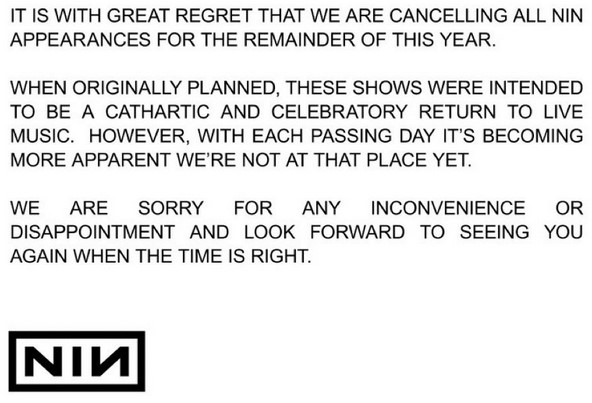
While I would not recognize their music, last night the band Nine Inch Nails summed up where American society is two months into Summer 2021:

We will come out of the coronavirus pandemic eventually, either walking upright or six feet under. Am hoping it’s the former.

My current project is structuring a week that makes sense to a retiree. The seven-day pattern is a bit arbitrary, yet it is what I’m used to, what cultural resonance that remains encourages. Friday is my day.

On Fridays I eschew shopping and leaving the property to focus on household activities. For example, on deck today is picking up fallen apples under the EarliBlaze trees, harvesting tomatoes, canning Roma tomatoes, making apple cider vinegar, wrapping up a book review for Blog for Iowa, and my usual morning routine with an added hour of reading. The end of the day usually begins with supper of a home made pizza and sometimes a beer.

If there are things to wrap up with my engagements with groups, I pay attention to them on Friday. If it can wait until Monday, it does. Friday represents a turning toward renewal over the following two days of the weekend.

I’m okay with where Fridays are landing. We have to maintain our sanity, and making Friday my day is a step in that direction.

Best wishes to my regular readers for a happy Friday!

Categories
Living in Society

Afghanistan Persists

War is Not Healthy

The headline in today’s Washington Post was “Afghanistan to be ruled under sharia law, Taliban commander confirms.” No surprises here. What did we expect if not that?

As the coronavirus surges in the county where I live, people have become more isolated. If we don’t stay on media constantly, we are checking it often and the news about Afghanistan is grim.

NBC News Chief Foreign Correspondent Richard Engel began yesterday on Twitter by tweeting, “At kabul airport, military side, more order than before. Evacuations picking up. Seeing more Afghan families being taken through. Planes taking off. Base well guarded.” That was reassuring news midst the media claims of “chaos” in the country. I am deeply skeptical about media claims.

Someone asserted, “the reason all these people are stuck in Afghanistan right now is because the visa program that was created to get them here was purposely shut down by Donald Trump and Stephen Miller.” Like most Americans, I don’t recall enough of the last administration to remember this. What I do remember is the national news media, for the most part, gave Trump a pass on any hard questioning. This is being resolved by President Biden saying he assumes responsibility for the mess. Exiting our long-standing war was never going to be easy. Four presidents made the problems we see, and all of them are culpable for where we are today.

I don’t want to write about Afghanistan, yet it is on everyone’s mind. There is no avoiding the conversations, so we have them. It is not what we want to be talking about, yet we are considering a lock down again, leaving home only to exercise nearby and to secure provisions. We are stuck talking about what dominates the national news media.

A few people in the public eye take some of the pressure from us. Heather Cox Richardson writes an almost daily newsletter which explains what’s going on in the news from a historian’s perspective. Justin King, who goes by Beau of the Fifth Column, reacts to the news on YouTube almost daily from the perspective of a “Southern journalist” and former military contractor. Octogenarian and former CBS news person Dan Rather publishes an almost daily newsletter in which he brings perspective to news events. None of these writers are perfect and I suppose each has their issues. The calm demeanor with which they put things in perspective, what they choose to get upset about, and what they publish goes a distance to bring perspective to a cyclone of news that is terrible more because the reporting is inept than because events in Afghanistan are concerning.

Afghanistan persists and it is difficult for Americans to get a grip on it. Partly this has to do with the bubble in which most of us live our lives. What seems clear is the news media plays an active role in creating a narrative about ending our war. Some of these narratives are not accurate. Many of them distort the view we get of what’s going on on the ground there. Some of them are plain false. It is difficult to understand the relevance of daily events. Not all daily events presented by the news media are relevant.

As Afghanistan turns again to sharia law it is assured Westerners will not like it. To the extent our culture penetrated Afghan society, it will create problems for local citizens with the Taliban in charge. What is our responsibility? Like it or not, we have to stop propping up values that are not shared by locals and as effectively as possible withdraw our military from the country. We also need to protect those who supported us over the last 20 years. From Iowa it appears President Joe Biden is doing that. It’s messy, yet we have to support him in this endeavor.

Categories
Living in Society

Inscrutable Afghanistan

Detail of White House photo of President Biden and Vice President Harris.

I want to understand the draw down of the U.S. military and diplomatic presence in Afghanistan. I want to be assured people who assisted U.S. personnel during the conflict get proper protection. I want to feel like the 2,448 deaths among U.S. soldiers and more than a trillion dollars were not wasted. As Mick Jagger and Keith Richards wrote, “You can’t always get what you want.”

There are no brilliant takes. The situation in Southeast Asia is too complex for that. What I present instead are my reactions to what I am seeing and hearing from my perch in Iowa.

My friend Ed left a voicemail to call him on Sunday. When I did the next day we talked for 15 minutes and agreed we had to support President Biden’s decision to end the war. After Ed, me, and eight others organized the Iowa Chapter of Veterans for Peace we protested our endless war in Afghanistan many times–in rallies, in letters to the newspapers, and by bringing speakers to Iowa to discuss this war and other U.S. military engagements around the world. Either one wants the war to end or one doesn’t. Either choice can get ugly.

I listened to President Biden’s speech Monday afternoon. It was a good speech that addressed the issues from the perspective of someone who knows U.S. foreign policy better than any president since George H.W. Bush. A couple of things stood out.

  • “Our only vital national interest in Afghanistan remains today what it has always been: preventing a terrorist attack on American homeland.”
  • “Our mission in Afghanistan was never supposed to have been nation building. It was never supposed to be creating a unified, centralized democracy.”
  • “I stand squarely behind my decision. After 20 years, I’ve learned the hard way that there was never a good time to withdraw U.S. forces.”
  • “I will not repeat the mistakes we’ve made in the past — the mistake of staying and fighting indefinitely in a conflict that is not in the national interest of the United States, of doubling down on a civil war in a foreign country, of attempting to remake a country through the endless military deployments of U.S. forces.”
  • “Our current military mission will be short in time, limited in scope, and focused in its objectives: Get our people and our allies to safety as quickly as possible.”

Biden’s speech is unlikely to convince the naysayers. There is no hope for them anyway.

Before the speech I received an email from U.S. Senator Joni Ernst. She “fervently disagreed” with the decision to withdraw from Afghanistan. Among things she said was this: “Women and girls who were just starting to enjoy their freedoms are again faced with oppression and subjugation by a ruthless Taliban regime.” What of that?

The concern is the Taliban will re-establish a caliphate which will repress Afghan citizens, forcing women into traditional roles. It is a legitimate concern. However, if Ernst valued the “freedoms” of women, she would support a woman’s right to choose right here in Iowa. Instead, in early 2020, she joined an amicus brief with 206 other members of congress calling on the U.S. Supreme Court to reconsider its decision in Roe vs. Wade. The hypocrisy of conservatives like Ernst is thick.

The way President Trump negotiated the draw down of U.S. Troops and equipment created an opportunity for the Taliban to resume control of the country. By releasing 5,000 Taliban prisoners, including key leaders, President Trump set the stage for the group to organize to retake the country. The negotiated ceasefire created an environment for the Taliban to approach members of the Afghan army to gain their support. In the end, the Taliban demonstrated competence by using what they were given by the Trump administration. While the international media drew a picture of chaos in Afghanistan, describing a “backlash” to U.S. execution of the withdrawal plan, the Taliban knew exactly what they were doing and effectively, mostly peacefully, ousted the U.S. backed government.

Where does this leave my desire to understand Afghanistan? Unsatisfied. I recall that throughout history others have had the same problem, going back to the Persian empire of Darius the Great. Seven months into his first term, President Joe Biden recognized the challenge of Afghanistan. With our mission there long accomplished, he did what three previous presidents would not. He initiated withdrawal of U.S. forces and, for now, closed the embassy. It was the right thing to do.