Categories
Home Life

A Regular Winter

Iowa Winter
Iowa Winter

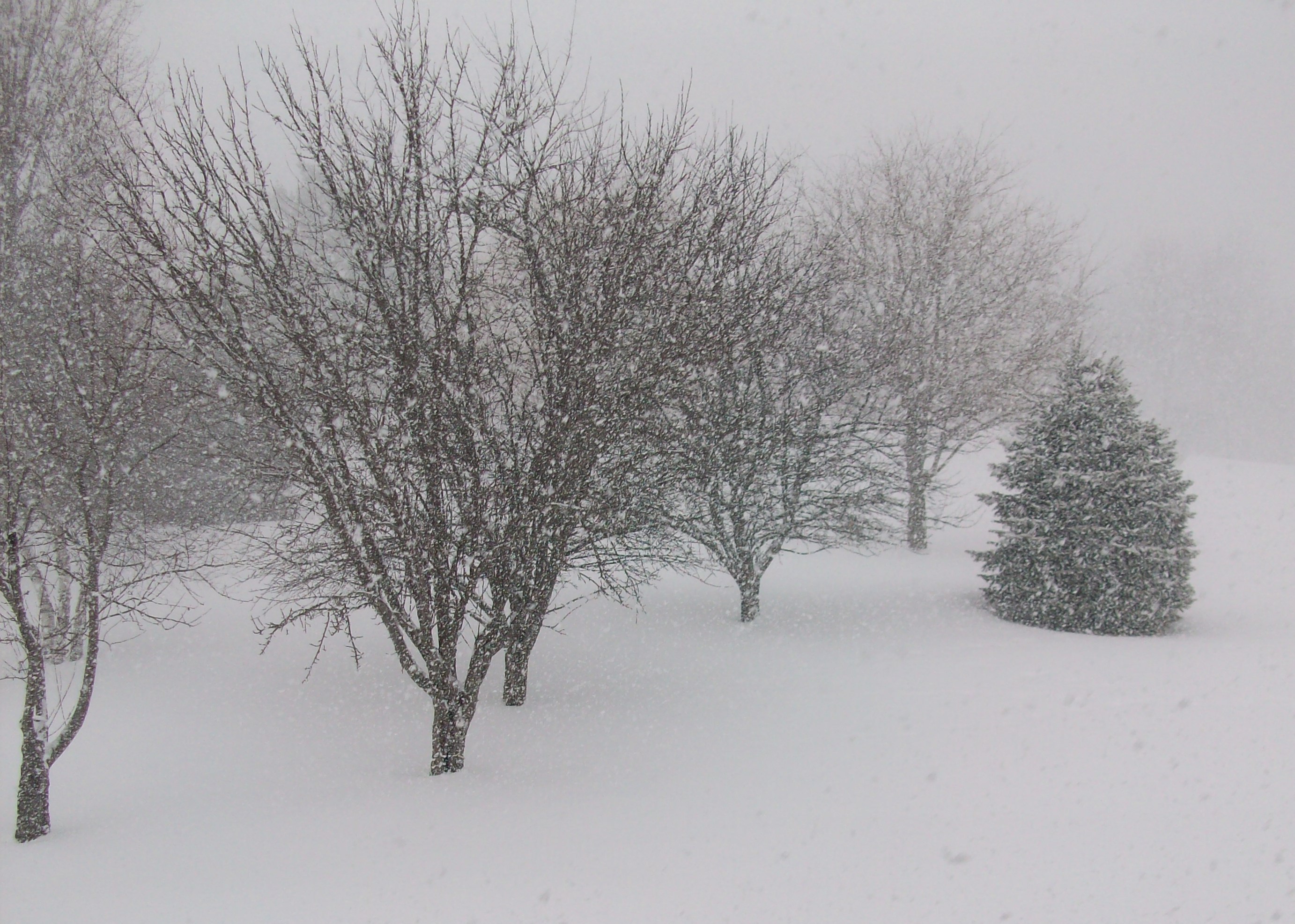
LAKE MACBRIDE— Iowa is having a regular winter. By that I mean the cold temperatures and snow resonate with winter memories from grade school. In the late 1950s and early 1960s, it was nothing to bundle up and walk to school in 20 below zero weather. It was accepted as another part of life in Iowa. Not so much any more.

With the advent of radio, television, the Internet and mobile phone mass messaging, information and opinions about the weather are easy to disseminate. Opinions, like a two hour school delay, or cancellation because of inclement weather, blast forth to citizens with a clear and present danger. Keep the kids safe, it’s too cold outside.

It’s hard to argue with taking precautions so children don’t get frostbitten toes and fingers. At the same time, I don’t believe my parents were any less concerned than today’s parents when they tied a scarf around my face so tightly that my neck got stiff, and sent me through the subzero weather for a several blocks walk to school. Something else has changed.

Tempted to insert comments about the nanny state that regulates behavior so as to mitigate liability should some child be hurt in the cold, that’s not where I’m going. School administrators have a job to do, and one hopes they are doing the best they can.

This cold weather is clear evidence of the effects of global warming, just as the weird winters of recent memory, early springs and droughts have been. Not going there either, although there’s a lot I could say.

On this 14 below zero morning, I’m remembering my college anthropology teacher June Helm, and her lectures about working with indigenous people in the Northwest Territories. How people lived in a climate we recognized, but seemed so different.

They made lives grounded in their environment, and what was available. It was something hard to emulate then, when we were used to availability of a wide variety of goods at the end of nascent global supply chains. Our lives seemed so abundant and protected compared to what we now call the First Nations Helm discussed. Their lives were spare, different, diverse, and resilient. That seems relevant.

The anthropology department at the University of Iowa was just getting started when I was in college. I was an undisciplined student who received a low grade. Nonetheless, I learned we needn’t distance ourselves from the shivering cold, but can embrace it. We can make a life in it. Importantly, if within a circle of family and friends, we are unaware of what others take for granted, and separate from mass culture, it’s okay to build on that.

This knowledge doesn’t make the cold less bitter. It does help one cope, and that is something brilliant on another cold night before sunrise in Iowa.

Categories
Home Life

Wintry Trip to Town

Snowfall in Big Grove

LAKE MACBRIDE— The sound of scraping entered the house and overpowered the muffling noise of the furnace fan. It will require work to get to town for a meeting. At least the snow plow did its part.

The driveway is snow-packed from the car tires, so whatever fell last night won’t be easy to remove. Work was planned for indoors this morning: to write a story for the newspaper. Snowfall is a happy coincidence that will break the quiet and be part of today’s process of fresh air, physical labor and writing. It’s as good as it gets.

Whatever funk descended upon me in December is gone. The new jobs, the promise of spring, and hope that a sound financial platform will enable better writing portend great things. Here’s hoping I’m equal to February’s promise.

Solon During a Snowstorm
Categories
Home Life

Another Winter Storm

Seeds Have Arrived
Seeds Have Arrived

LAKE MACBRIDE— People have been talking about the coming storm like they never experienced an Iowa winter. Yes, we should be safe… but what else? On wintery days, I drive Jacque in to work so she doesn’t have to broom the snow from her automobile after her shift. While back at home waiting, I’ll make a dinner to be heated up when she returns, and begin garden planning. There are about 50 kinds of seeds including 36 purchased this year to be plotted out on a chart, but first, dinner.

Pecos Pasta
Pecos Pasta

We make chili in big batches. To use some of the leftovers, we make a dish called Pecos Pasta. It is simple. Take a cup of dried elbow macaroni and prepare according to the instructions. Drain the noodles and pour back into the pot. Add one quart of leftover chili, one cup frozen cut corn, and heat until the mixed begins to boil. Turn the heat down to low simmer, and top the dish with shredded sharp cheddar cheese. Cover with a lid and heat thoroughly until the cheese melts.

I’ll drink a beer with Pecos Pasta when we have them, but last year’s case is long gone, so water will suffice (Note to self: put a quart of cider in the refrigerator). A quick and tasty meal that satisfies as the wind howls outside.

Only two dates are sacrosanct in our garden: March 2 and July 25. The former is when “Belgian lettuce” is planted, or as soon as the ground can be worked thereafter. The idea is to broadcast last year’s leftover lettuce seeds and see what germinates. I don’t know why it is called Belgian, except that’s what my maternal grandmother called it. The latter date is when to plant the fall crop of turnips. In our garden, turnip greens are a primary crop used to make soup stock by the gallon. Besides those dates and crops, everything else need looking up and planned. There is plenty of work to keep me busy until the end of her shift.

This morning I began working on our income taxes, and it looks like we sent in enough early payments last year to receive a small refund. I report all of our income and pay taxes on it— some don’t, but I do. As a self employed writer and farm worker, my business tax rate is 15.3 percent of 92.35 percent of income. For example, if I earn $1,000 dollars, the tax rate applies to $923.50 and amounts to $141.30, or 14.13 percent of the total.

The Internal Revenue Service began doing this to capture people who work like employees, but are considered to be independent contractors by the company from whom they are compensated. Seems to me they could be chasing some of those corporations who make the big bucks and pay no taxes instead of folks like us trying to get by. In the end, our overall federal tax rate, including the business tax, was 4.7 percent of total income, so not much to complain about here. It is well worth it to participate in our society.

Categories
Work Life

On Minimum Wage

At Sunset
At Sunset

LAKE MACBRIDE— The talk of raising the minimum wage to $10.10 per hour, as President Obama suggested in his state of the union address, is from another country. He means well, but at $10.10 per hour, a life is hardly sustainable, even with overtime. What would better serve low wage workers is lifting the entire economy, combined with reducing regulations that hinder the efforts of small scale entrepreneurs. Where I live, the future is not about wage rates as much as it is about putting together a life that may include a job or jobs, but is not dependent upon them. Sustainability will be about creating local answers to the question, how shall we live?

The current discussion about wages is not really about sustainability. It is about boosting income for lowly paid workers. There are arguments that posit a relationship between increasing the minimum wage and reducing poverty. If increasing the minimum wage is an anti-poverty program, then I’m all for it. Especially if we agree that the action would not address the overall struggle people have to exit working poor status. Unless our elected officials index any potential increase in minimum wages to a formula that tracks buying power, all that will have been accomplished by raising the minimum wage is to throw the working poor a bone for today’s soup pot.

When I was a child I asked my father if we were poor. He said being poor was an attitude, and he did not consider our family to be poor. As I wrote elsewhere, “I had a normal city childhood among people who never had much money, but had a well defined culture centered on family, work and church.” It’s the presumptions about how today’s culture is defined with regard to the minimum wage that drive me mad.

Robert Reich has written that wages should track the economy. He said, if people have money to buy things, the economy does better. Government plays a role in stimulating the economy by making monetary payments to individuals through social programs, giving them more money to spend. Yet, most people I know don’t look at living with the same macroeconomic view Reich espouses, and are not fans of consumerism. Everyone wants to be a global strategist, but few want to apply equal skill and energy to improving life on a more granular level.

The analysis local people use, one that starts spending the new money that an increase in minimum wages would generate on education, training and the like, is ridiculous. People who are working poor, or living from paycheck to paycheck, already know how they will spend any extra money that comes into a household budget. The annual five or six thousand dollars we are talking about, in many cases, has already been spent on loans, medical bills, using credit cards, and incurring other forms of debt that are part of how people make cash flow without adequate income. To say that a $2.85 per hour increase in minimum wages would enable the working poor to exit poverty and join the middle class reflects a basic lack of understanding of the situation.

Advocating for an increase in the minimum wage is okay for those who are financially established, but it is a middle class progressive perquisite. Where I have trouble with it is in differentiating myself from the rest of the people on the planet as someone who is better than anyone else. I don’t do everything I would in the community; I wish I could do more. I also believe someone has to be working on a granular level to find a sustainable, replicable answer to the question, how shall we live? There is not much pay in doing that.

Categories
Juke Box

Juke Box: Angie

Categories
Milestones

On Pete Seeger

LAKE MACBRIDE— Pete Seeger died on Jan. 27, 2014. He influenced my life, and so many others. Others have written obituaries, including the New York Times and Singout!

I’ll remember him for his song Abiyoyo, and so many others.

Categories
Living in Society

Tobacco Control in 2014

Gauloises CaporalLAKE MACBRIDE— When I was in the military, I bought my first and only packs of cigarettes. I tried a few puffs, and never had another. Tobacco control is a complicated issue that affects much of society, and has little to do with one person’s choices about tobacco use. It is one where tobacco control advocates need to stick together.

Tobacco products are readily available to anyone who wants them today, despite restrictions on sales to minors. Tobacco is a legal, addictive substance, the use of which is widely accepted. The disease treatment costs of tobacco use have been quantified, and tobacco use presents a tangible, persistent and preventable threat to public health.

Both of my parents smoked tobacco when I was a child, and until the Iowa Smoke Free Air Act was passed in 2008, the air in many public places contained tobacco smoke. We don’t hear as much about tobacco issues these days, despite the ubiquitous presence of tobacco products in retail stores. The legal struggle between tobacco companies and tobacco control advocacy groups has continued, but has largely gone silent.

In Iowa, the coalition of tobacco control advocates includes the American Cancer Society, American Heart Association, American Stroke Association, American Lung Association, the Iowa Tobacco Prevention Alliance (ITPA) and Clean Air For Everyone Iowa Citizen’s Action Network (CAFE Iowa CAN). I was previously a board member for the latter organization. The work of this coalition is focused on securing government funds for a comprehensive tobacco control program.

In a December 2013 letter to legislators, the group wrote,

Smoking cessation efforts are essential public health initiatives that both directly and indirectly impact our entire state.  Statewide programs that are funded through the Division of Tobacco Use Prevention and Control can help reduce the enormous financial toll attributed to tobacco related use, not to mention the 4,400 Iowans who die each year from usage. Annually, tobacco related disease costs Iowans nearly $3 billion, of which $301 million is billed to Medicaid. To substantially reduce this expenditure, the CDC recommends Iowa appropriate $36.7 million annually to properly implement a comprehensive tobacco control policy.  However, last year the division only received $5.3 million.

Governor Branstad’s budget proposal would reduce expenditures in the tobacco control program by $75,000, with reductions targeted to printed educational materials and social media funding. It is a small percentage of the total, and depending upon who the governor appoints to fill the vacant director of the Iowa Department of Public Health position, the proposed budget should have support. It is a modest budget compared to the CDC recommendation.

What is at issue during the remainder of the 85th Iowa General Assembly is regulation of e-cigarettes, which are currently unregulated. Tobacco control advocates want e-cigarettes regulated as a tobacco product, something the U.S. Food and Drug Administration (FDA) would like as well. The tobacco industry is working toward creating an environment where e-cigarettes are socially acceptable, are widely available, and can be used everywhere.  At the beginning of the legislative session, the issue was largely off the radar of legislators who were focused on the youth prevention aspect of this issue. Tobacco control advocates are expected to change that, and are trying to pass legislation they can support.

There are at least three bills pertaining to e-cigarettes written by the tobacco industry (companies like Altria and RJ Reynolds). In parentheses are the tobacco control advocates’ concerns with the legislation as written. The bills were all introduced by Democratic legislators:

HF 2034, which will define e-cigarettes as other tobacco products, regulating them like most other tobacco products. (In this bill, e-cigarettes are not rolled into the Iowa Smoke Free Air Act).
SF 2038, prohibits the sale of e-cigarettes to minors. (The bill doesn’t define e-cigarettes as other tobacco products).
SSB 3101, prohibits the sale of e-cigarettes to minors. (The bill doesn’t define e-cigarettes as other tobacco products).

Like with any legislation, the pro- and anti-tobacco control lobbyists will advocate with legislators to get favorable wording in any potential law. I have lived in Iowa long enough to know that the probable outcome of the legislative initiative may be for Iowa to wait until the FDA rules on e-cigarettes, then deal with the regulatory issues. I’m not hopeful the legislature will pass any of these three bills this session. Preventing the tobacco industry wording in them would be a victory of sorts for tobacco control advocates.

Categories
Work Life

Monday After the Storm

Snowfall
Snowfall

LAKE MACBRIDE— We had just made it home from dinner at a relative’s home when the wind picked up. We timed the visit so as to return before yesterday’s storm. When we got in, the windows rattled while a neighbor’s wind chimes clanged in the stiff breeze. Snow blew all night, covering our tire tracks leading to the garage. “Blizzard conditions, strong winds and life-threatening wind chill values (were) all possible in Iowa on Sunday,” according to the National Weather Service. This morning, the wind has died down, leaving temperatures below zero and the driveway to shovel.

Two new paying jobs are in the works. I am officially a newspaper correspondent. The publisher gave me a couple of story assignments on a trial basis. There is a school board meeting in the county seat tomorrow, and a city council meeting the following week. I’m to write a brief article about the events for publication in our local papers. Saturday morning I spent an hour training with one of the editors, talking about process and expectations. I’m looking forward to the challenges of a new form of writing. As she said Saturday, the pay is pocket change.

The other new job is as a shift supervisor at a warehouse club in Coralville. I will be part of a three-person management team for a company that does in-store product demonstrations. It has been a very social job, comprised of constant interaction with retail shoppers. I enjoyed that aspect of the work during my first week’s training. With the new work, about 85 percent of the year’s expenses are funded, which means the hunt for more paying work will continue.

Bison
Hunt for Revenue

Final news of the weekend is the seed packets arrived on Saturday. By my grandmother’s oral tradition, the time to plant “Belgian lettuce” is March 2, so there is plenty of time to write a plan for the garden. Last year, the ground was still frozen on March 2, and with the crazy weather we have been having during recent years, I won’t predict. As soon as the ground is workable, I’ll plant the remainder of last year’s lettuce seeds in a tribute to Grandmother.

Seeds Have Arrived
Seeds Have Arrived

I bought celery seeds, and am looking forward to the experiment in growing this vegetable. There are also a lot of carrot seeds, seven varieties of tomatoes, six varieties of peppers, and much more. I have worked a garden of some kind every year since our wedding. This year’s garden is expected to be another layer of refinement in a process that has developed steadily over more than 30 years. I’m looking forward to setting up the table near the south-facing window to start seeds indoors again. Simply put, there is hope on Monday, after the storm.

Categories
Home Life

‘Like’ the Bubonic Plague

Snow Tracks
Snow Tracks

LAKE MACBRIDE— An article in yesterday’s issue of The Telegraph began with the sentence, “Facebook will lose 80 per cent of users within three years before eventually dying out ‘like the bubonic plague,’ according to U.S. scientists.” I don’t know about that, but I posted a link to the article on my Facebook wall with the following comment:

I don’t know about FB dying out “like the bubonic plague,” but for me the newness is worn off, and there may be better platforms (electronic and otherwise) to more easily connect with people and ideas that matter. In March, I will have been on the social network for five years. I downloaded my archive and while I knew FB was collecting my data, I was stunned by how much info they have about me, especially info that doesn’t seem related to my FB activity. Why do you like it?

24 hours afterward, no one liked or commented on the post out of the 750 Facebook friends with whom I shared it. There is no evidence that anyone else even saw the post. Guess I’ll have to answer my own question.

The reason I joined Facebook was to follow our family and close friends. I registered my account on Thursday, March 20, 2008 at 6:44 p.m. CDT, according to the service. By then, our daughter had moved out of state, and along with my blogging, Facebook became a way to bridge the geographical distance.  The social media became much more.

I began connecting with real world friends on Facebook. During 2010, I created a Facebook group for our 40th high school class reunion, and a number of classmates joined the group and friended me on Facebook. As time went on, I started friending people I knew from other associations, and then people in those circles that I did not know. While there is a reason for each one of my Facebook friends, some I know well, some I have gotten to know, and some I don’t know except for the point of contact that brought us together. As I mentioned I am up to 750 friends as of this writing.

In general, I log in and update on Facebook about ten times a day, depending upon my schedule. I know this because of the detailed statistics Facebook keeps on my activity. Mostly, I like to see what’s circulating in my news feed. Most of it is trash, but some of it is interesting. I like what people I know post the best, and family photos are particularly engaging. It isn’t that much time, but there is something built into Facebook that speaks to our inner voice, “it’s time to do something more constructive with your time.”

With my fifth anniversary as a Facebooker coming up, what will this milestone represent? Not much. I expect I’ll keep the service, and cut back on some of my inactive friends. In the end, it’s primary uses remain: to keep up with family and personal friends, and to follow about half a dozen clusters of people with whom I have associations outside Facebook: The Climate Reality Project, people who live near me, my Veterans for Peace chapter, the peace and justice movement, and some others. It’s not my life. One could argue it isn’t even a life viewing the blue-toned screen.

In the end, some form of Facebook is expected to be around despite the prediction of it’s arc, because while it goes viral from time to time, a plague it isn’t.

Categories
Living in Society

Caucus Night in Big Grove

Off-Year Caucus
Off-Year Caucus

SOLON— If not careful, I will get sucked into partisan politics again. It’s physics. The general lack of interest in partisan politics, combined with party work needing to be done, creates a vacuum that sucks all willing volunteers into the chambers of events.

There is the Democratic county convention (March 8), the district convention (April 26) and the state convention (June 21), to organize and attend. In our precinct, there were seven caucus goers, and we elected one of two central committee members. We all know how much work is involved in being on the central committee, and for most of us, we have been there and done that, resulting in a position remained unfilled. I agreed to be on the committee on committees, mainly interested in the work of preparing for the county convention. All other committee slots went unfilled. Par for the course among experienced caucus goers in our rural part of the county.

A big part of the work at the caucus is signing the nominating petitions. There were more than 20 of them from federal, state-wide and local candidates. Bruce Braley is running to replace U.S. Senator Tom Harkin, Dave Loebsack is running for re-election to a fifth term in the U.S. Congress without a primary opponent, Jack Hatch was the only Democratic candidate for governor with nominating petitions, and it seemed that all of the state-wide offices had candidates. At the local level, county attorney Janet Lyness had a nominating petition for re-election, and four supervisor candidates had thrown their hats into the ring: Mike Carberry, Lisa Green-Douglas, Gerry Kuhl and incumbent Janelle Rettig.

David Johnson of West Branch, who is running for state representative in House District 73, spoke to the caucus cluster of five precincts. I spoke on behalf of supervisor candidate Mike Carberry. We were the only two speakers for candidates.

This year there were only three resolutions, so the most painful part of the caucuses went quickly. I made a motion to accept all resolutions. It was seconded, but during the discussion someone asked that they all be read. What was on our minds was support for the locked out CWA workers at South Slope Cooperative Communications in North Liberty, setting a minimum Social Security benefit of $1,000 per month, and bringing electronic cigarettes under the same regulatory umbrella as tobacco products. What little discussion there was was useful and brief. My motion passed.

Because of the caucuses, the Iowa legislature was not in session. I ran into both my state senator and state representative by chance in the district before arriving at the caucus. Naturally I covered an issue with each of them. Dump trucking more than one issue during a chance meeting diminishes chances of anything being heard, so I picked carefully. I had an email response from my state representative before I went to bed. They are both people committed to making Iowa a better place to live, and I enjoy working with them, even though I don’t always agree with them.

When I arrived home, a buddy called me and said he had been elected to the Republican party’s county central committee. His resolution to repeal the Patriot Act was accepted without discussion. He indicated the dynamic was the governor’s supporters were trying to limit the influence of the Ron Paul wing of the party, presumably to get out of the pickle they found themselves in during the 2012 cycle, and to prevent a challenge to lieutenant governor Kim Reynolds at their state convention. He offered to collaborate on shaking up both parties’ establishment, and I made a note.

After our conversation I made a post on twitter about the second district Republican congressional candidates, and eventually identified there may be three Republican primary candidates for the seat, state representative Mark Lofgren, third time candidate Mariannette Miller-Meeks, and Some Dude Matthew Waldren.

What I failed to mention is among the mostly grey-haired caucus goers are a lot of long time friends. Getting a chance to socialize with them was the best part of the evening.