Categories
Home Life

On Richard III and a Wintry Mix

410px-Royal_Arms_of_England_(1399-1603).svgIce covers my car— one of the risks of getting spring started in the garage. It looks like it hailed pellets the size of salt crystals, and they froze in place creating a bumpy armor on everything.

I’ll run the car engine for a while to melt enough for the drive to the warehouse.

It’s all good because the lettuce and radishes planted in the garden haven’t had moisture until now.

Richard III Cortege
Richard III Cortege

Yesterday began the procession of the remains of England’s King Richard III to his re-interment on Thursday in Leicester Cathedral. The story holds my attention like few others in the corporate media.

From the time his remains were found under a parking lot in 2012 until Leicester University packed them into a lead ossuary inside an oak coffin built by one of his descendents, the stories released provided one interesting bit after another of a part of history I knew only vaguely, and almost entirely through Shakespeare.

Shakespeare was in part an apologist for the Tudors who succeeded the last Plantagenet king. Leicester University’s DNA analysis and forensic study of the wounds incurred during the Battle of Bosworth Field revealed much about Richard, including identification of the blow that likely killed him—a sword or spike through the base of the skull that penetrated to the other side. While the video and photographs of scientists interacting with the old bones is pretty clinical, it told a new story of Richard unlike what we have come to believe—in my case from seeing performances of one of Shakespeare’s best plays multiple times. There are resonances in Shakespeare, but the emerging new story is more powerful.

There has already been a fight over the final resting place for Richard’s remains. The Plantagenet Alliance, a group formed by distant relatives, pressed to re-inter Richard III in York Minister. Even though a three-judge panel ruled in favor of Leicester Cathedral and said, “it was time for King Richard III to be given a dignified reburial, and finally laid to rest,” it seems unlikely we have hear the last dispute.

On Sunday, more than 35,000 people lined the route of the cortege, many in period clothing. There was a reenactment of the Battle of Bosworth Field. On Thursday, a statement from Queen Elizabeth will be read as part of the order of service, and Richard III will be laid to rest near where he died and, to many historians, brought the Middle Ages to an end.

Richard III Remains
Richard III Remains

There is a reality to history we often forget in our book-lined studies and very busy lives. The scribes, historians and writers who tell stories in our media have mostly good intentions, but are possessed of an inherent bias. They are in the business of writing.

“In a world where children are still not safe from starvation or bombs, should not the historian thrust himself and his writing in history, on behalf of goals in which he deeply believes?” asked Howard Zinn in his book The Politics of History. “Are we historians not humans first, and scholars because of that?”

This episode of discovery of Richard’s remains and their re-interment is very British. There is also a long back story that includes the search for Richard’s remains in Leicester. With their long line of kings and queens, a special interest arose, even if the monarchy becomes less relevant with each passing generation. Nonetheless, some shirttail relative of mine likely attended yesterday’s activities, although one wouldn’t know who it is by our very sketchy family tree going back to the Middle Ages.

We live here and now. Whatever intellectual curiosity was stimulated by these events, it is like the ice covering my car. A thick crust through which we must break and get on with our lives in society much closer than that famous death on Bosworth Field.
Categories
Home Life

Cusp of Spring

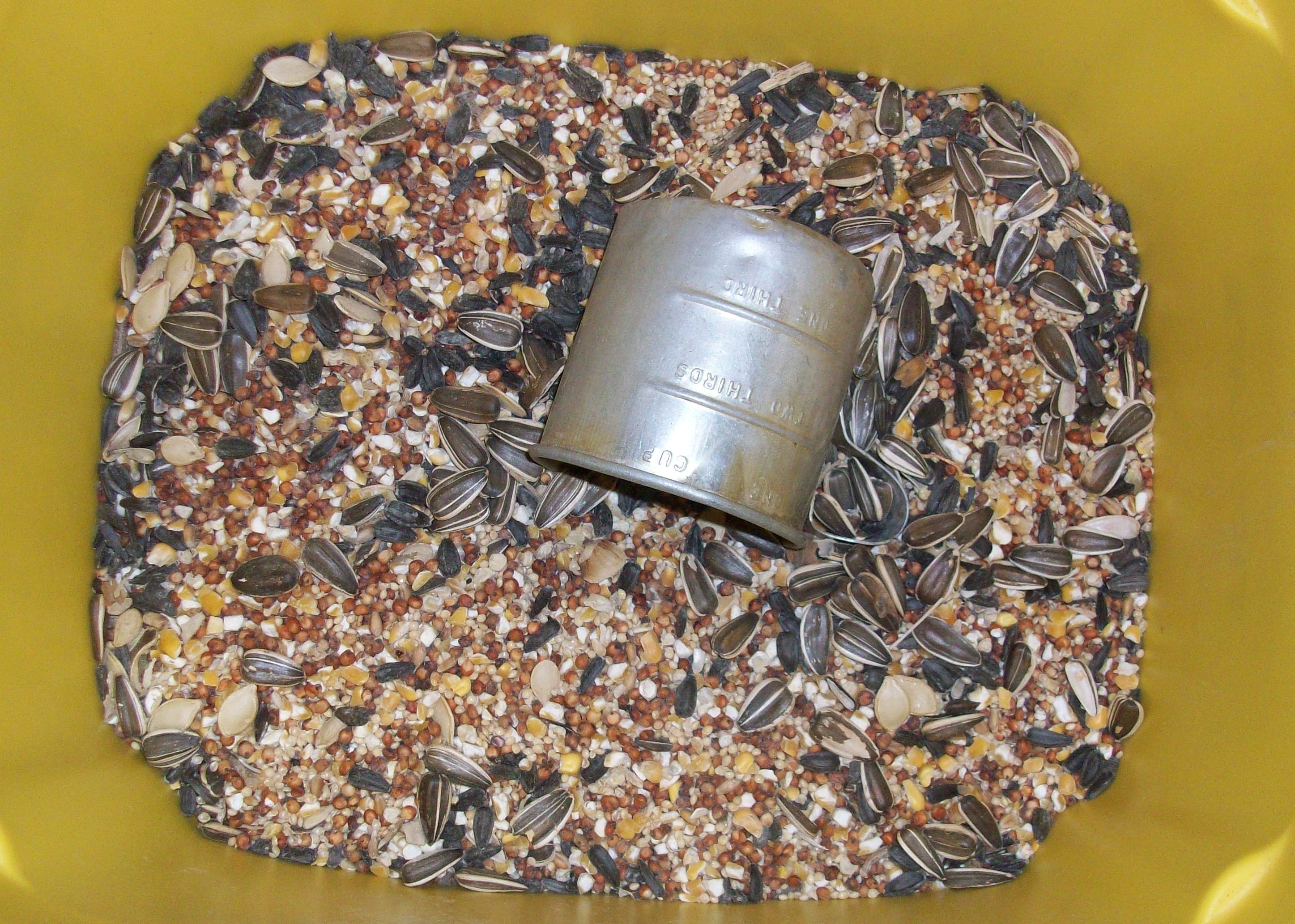
Bird Seed
Bird Seed

The garage retained enough heat to make predawn work tolerable. The ambient temperature is 31 degrees, climbing to around 45 by the time I leave for the warehouse. There is much to get done before starting the car.

Over winter tools get piled on the workbench instead of being put away. Perhaps it is too cold to be mucking about behind the table saw, wheelbarrow full of walnut firewood, and wagon full of junk. This morning everything is put away where it belongs, clearing a new space for new work.

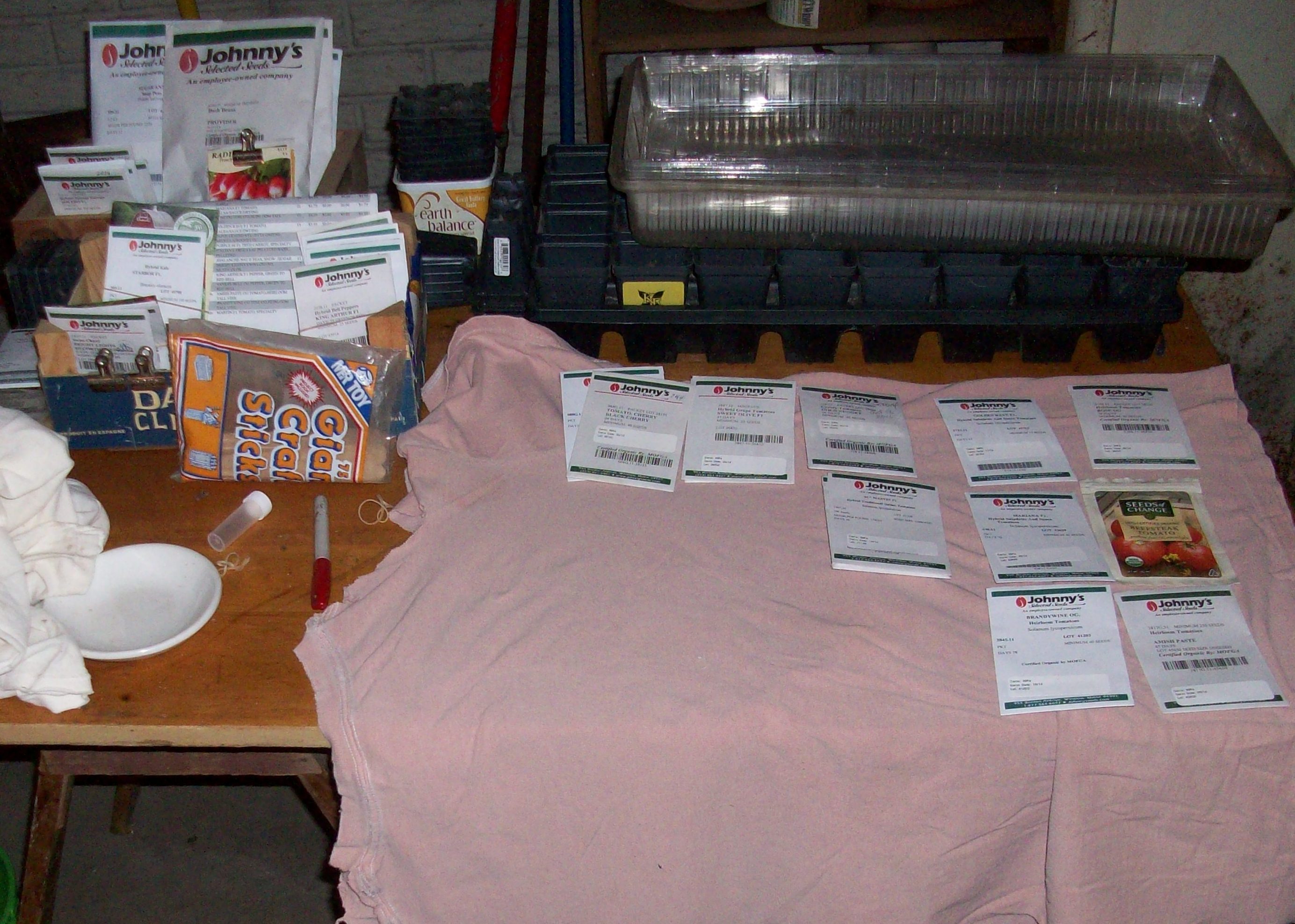
Tomato Seeds
Tomato Seeds

Yesterday was tedious work of trying to understand our health insurance plan. Phone calls to the hospital and insurance company yielded partial understanding at best—at least enough to understand how our doctors applied charges. It is distasteful work, but the specialists to whom I spoke were cordial and professional enough and I made progress. Would that I never had to go to a doctor, not even for routine checkups.

And today is a day of hope for making a difference in life. Now that the tools are put away, it’s time to get them out again and make something of this brief interval between sleep and departure.

Tools
Tools

Categories
Environment Living in Society

Monday Before Spring

Garage Wall
Garage Wall

Winter persists—mostly because of its recent vigor.

Half a dozen bald eagles stood on the ice at the Coralville Reservoir yesterday while I drove to work. Perhaps they were fishing a section of open water near the bridge. Perhaps they were waiting for spring to arrive before departing. They were still there on the drive home.

I planted the first seeds in trays last week: broccoli, basil and celery. I’ve been parking my car in the driveway leaving the garden workshop set up inside. It will be that way for a few weeks, although I hope to accomplish a lot during the work day planned for Friday.

It feels like elected officials, especially those from fossil fuel producing states, have crawled into the barn of my life over the winter.

Mitch McConnell (R-KY), a proponent of coal mining and use, is not new, but there’s more. Ted Cruz (R-TX) is now overseeing NASA and wants to focus more on space than on studying Earth. Perhaps he want to seek a Planet B where we can live after his ilk have thoroughly pillaged this one. James Inhofe (R-OK) heads up the Environment and Public Works Committee, and halted any possible action to mitigate the human causes of climate change. Sen. Tom Cotton’s (R-AR) letter to Iran meddles with negotiations that have been years in the making, involving substantial coalition building. The Senate Foreign Relations Committee under Bob Corker (R-TN) seeks to pass a law to force the administration’s hand in Iran. Corker did not sign the Cotton letter in hope of building a veto-proof bill in the senate.

Maybe we should invoke Saint Patrick to drive the snakes out.

The trouble is even a saint would be pressed to deal with this crowd.

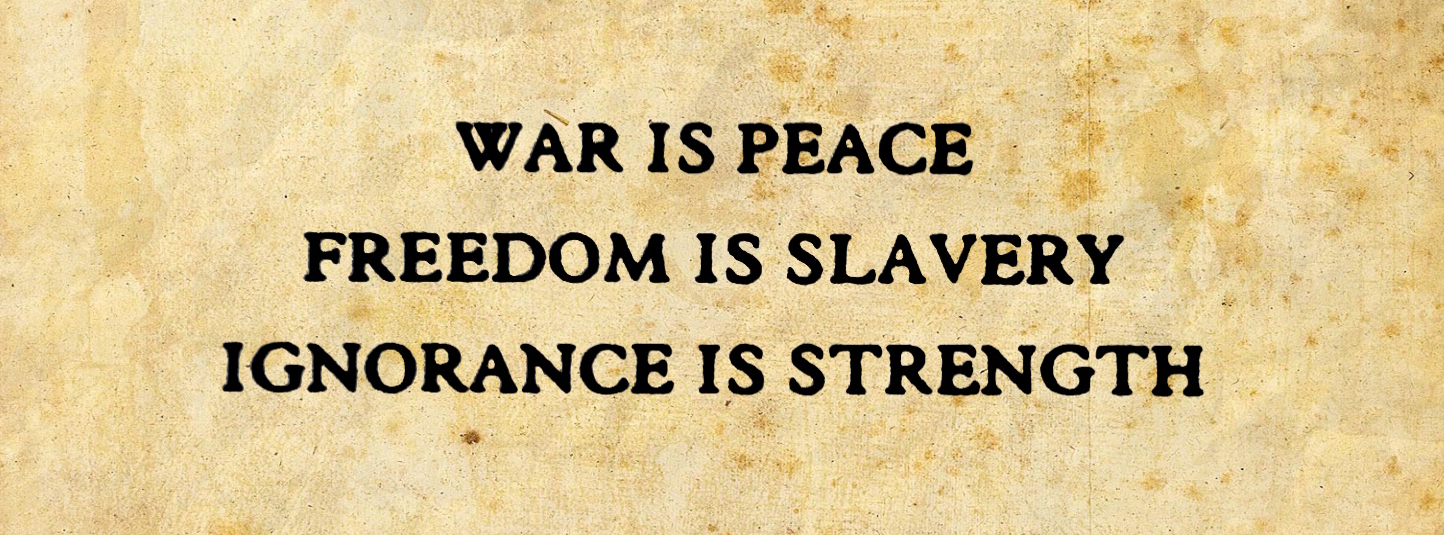
War is PeaceElections matter, and the public doesn’t really care unless it affects them personally. That’s one take that provides a bit of sanity, but only for a while.

It is like we are in a dream in which the meaning of everything is unhinged. “War is peace. Freedom is slavery. Ignorance is strength,” as George Orwell wrote in 1984. “In a time of universal deceit—telling the truth is a revolutionary act.”

We are not yet revolutionaries, although maybe we need to be.

Theodore Roosevelt said it well.

“No man can be a good citizen unless he has a wage more than sufficient to cover the bare cost of living and hours of labor short enough so that after his day’s work is done he will have time and energy to bear his share in the management of the community, to help in carrying the general load.”

The power in Washington and on Wall Street is everywhere endeavoring to suppress this basic American instinct.

We must resist as spring comes to Iowa.

Categories
Home Life

Bits and Pieces – Spring Edition

Accidental Photo
Accidental Photo

After filing eight stories for the newspaper this week, and a freelance job, I’m ready to work on the garden. Before I do, a few bits and pieces from Big Grove.

Breakfast this morning began with my new favorite—home blended yogurt. We buy a large tub of plain yogurt at the warehouse and I mix it in a stainless steel bowl with spoonfuls of homemade jam or apple butter, dried fruits and nuts. It’s a simple pleasure and a boost of protein.

I decided to read 1381 next, for those who follow this blog. Just closing the loop on that.

At a fund raiser for Ed Fallon, I secured some horse manure for the garden. A friend keeps horses fed organically raised hay and he has plenty. As soon as I get my schedule from the warehouse, I’m planning to take some big black tubs over to their farm in the western part of the county to fill them up.

Speaking of filling things up, I began my street sweeping project to collect sand in buckets to use next winter. The first was filled yesterday and I hope to finish the project today. Some of that sand has been spread on the driveway multiple years.

Finally, with the warmer weather, I hope to built this spring’s burn pile on a garden plot. There was some damage over the winter, and with what’s left from the fall, it should make a big pyre, returning some minerals to the soil.

Categories
Home Life

In Between Books

Bag of Used Books
Bag of Used Books

David Rhodes is one of my favorite fiction writers because he writes about my world, literally and figuratively. When he describes Highway 151 near Dubuque in Jewelweed, it resonates because I’ve been there. That kind of literary experience occurred in the three of his five books I’ve read.

It’s hardly a way of making a reading list, but when I seek respite in words, Rhodes is the go-to author. He’s only written five books, so I dole them out slowly, with only two more to go.

Reading any book-length work is a bigger commitment than it was when I vowed to read every book in the Iowa City Public Library. At that time, the library was located in the Carnegie building, and used the Dewey Decimal System. I started with zero and worked my way through a pittance of the collection before abandoning the project. I learned a lot about religion.

Last year I read twelve books and it is not enough. Nonetheless, even if I make it to two dozen books, each one makes a bigger impact. One has to choose carefully and that’s where I am today.

Among the choices are one of a dozen books given to me by friends. I owe it to each of them to read the volume sent, but am stalled.

I recently bought the Robert Gates and Leon Panetta memoirs, but that purchase was more for reference than actual reading. They gather dust and are not even on a shelf yet.

Most likely on my list is 1381: The Year of the Peasants’ Revolt by Juliet Barker. One of our more questionable ancestry links takes my family back to England and this seminal event. As I recall, the rebellion was squashed. If I seek to use the peasants’ revolt as a metaphor, I should know more about it, and reading 1381 is the plan.

Then there is the collection of books about Iowa, books written in Iowa and books written by residents of the area past and present. Too many for this lifetime, but I should begin chipping away at them.

Not sure which book will be next opened, I’ll relish today’s process of selecting one. Let’s hope I choose well.

Categories
Environment Living in Society

Train Wrecks and an Ag Summit

Galena Train Derailment

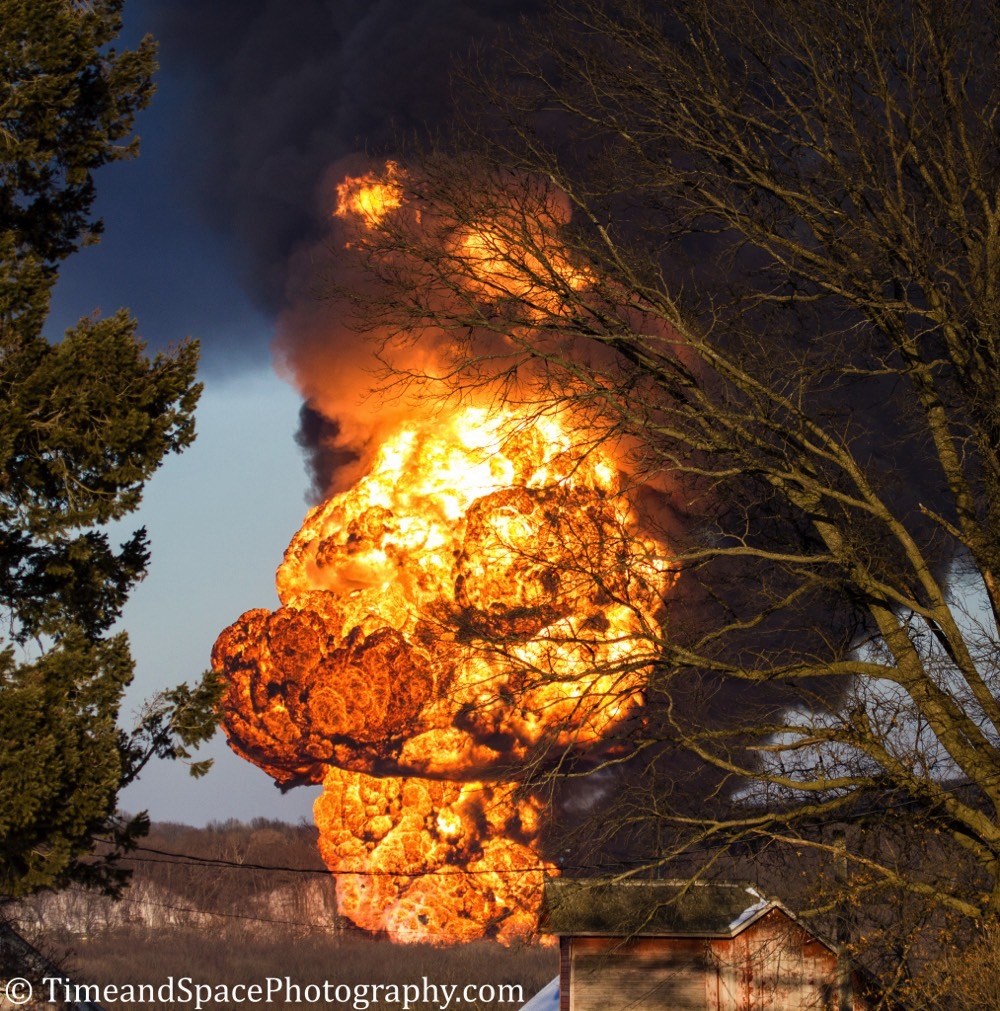
As punctuation to my article Why Bakken Oil is Dirty, last Thursday’s BNSF oil train derailment in a remote area near Galena, Ill. tells the story better than I could.

It is the third Bakken oil train derailment in the last three weeks according to National Public Radio.

Carrying light sweet crude to market from the Bakken field, the train derailed on tracks inaccessible to first responders, rupturing at least five tank cars of 21 that left the tracks, igniting a pyre that could be seen for miles. No one was injured and officials are investigating the causes. Because of the location, accessible only via a bicycle path, fire fighters decided to let the fire burn itself out. Remediation of the oil spill will be difficult because of the location, but no oil has made its way to the Mississippi River yet. As I write, the fire is still burning.

BNSF was quick to report the rail cars were a newer, safer model voluntarily designed to be less prone to rupture. Critics say it’s not good enough. Being a level headed Iowan, I’m willing to wait until the investigation is complete before condemning anyone but ourselves and our addiction to fossil fuels.

“In the coming days, we need to look at not just the safety of the rail cars, but the safety of what is being put into those cars,” U.S. Senator Dick Durbin told NPR. “There is mounting evidence that stricter standards are needed in the handling of Bakken crude which appears to be particularly volatile. We can’t wait. The safety of our communities depends on it.”

News coverage of the accident revealed that the State of North Dakota will require oil producers to remove excess natural gas from the crude oil before shipping it by rail to help reduce volatility, according to NPR. What exactly that means, and whether it will make a difference is uncertain. It confirms what I said in my last article about the volatile nature of the Bakken crude oil being shipped, and the role the refining process plays in its volatility.

Photo Credit: Quad City Times

While the Galena fire burned, Bruce Rastetter’s Des Moines Ag Summit proceeded on schedule, serving up Republican nostrums the way cattle in a CAFO are fed. All twittering eyes were on the summit, leaving a void among Democrats. Democrats don’t have anything similar to this, so it was a great way for Republicans to build party support. Disagreement and agreement with looney ideas is part of Republican party-building, and they are getting better at it with each election cycle.

Iowa Citizens for Community Improvement, who demonstrated at the Ag Summit and held their own event, are neither Democrats nor lefties, despite repeated corporate media attempts to characterize them that way. In my experience, they are issue-oriented individuals who band together to make points about life in Iowa, using visible, direct action tactics in their advocacy. The reason they receive media characterization at all is Democrats cede the space to Republicans on these presidential candidate cattle calls. There is nothing else for political reporters and bloggers to cover.

Rastetter contributed over $60,000 to the Branstad-Reynolds re-election, and $1.49 million to various candidates over the last 16 years according to FollowtheMoney.org. Who is the Democratic equivalent? Maybe Fred Hubbell, who gave $60,000 to the Hatch-Vernon campaign.

Hubbell may be well known to political insiders but most Democrats only know vaguely that he is an attorney, if they even know that. He would be no useful substitute to the hated, loved, and very public Rastetter.

Democrats had the Harkin Steak Fry as a comparable event, although last year’s was to have been the last. Maybe it will return, but that’s up to Harkin, not us.

For the first time in a long while, I didn’t hear that our county party was having an off-year caucus last week until after it had begun. I arrived home from work just as it was finishing. If a couple of people hadn’t been covering it on twitter, it would have passed unseen. That’s a train wreck of a different kind.

As we hope for spring, society begins to make more sense. For now, winter’s cold remains, and there’s plenty to keep us busy as we sustain our lives on the Iowa prairie.

Categories
Juke Box

Juke Box – Soul Sacrifice

Categories
Work Life

It’s Not About Minimum Wage

Garden After Snowfall

Two bits of news related to minimum wage emerged last week, and neither of them represents a solution for low wage workers.

The Iowa Legislature advanced Senate Study Bill 1151 from a subcommittee to increase the minimum wage to $8.75 per hour by July 2016, with a $0.75 increase July 1 and another $0.75 a year later. The bill is expected to be debated this week by the full Senate Labor and Business Relations Committee. Rod Boshart covered the story for the Cedar Rapids Gazette here. He indicated there is bipartisan support for increasing the minimum wage in both legislative chambers.

On Thursday, Doug McMillon, president and CEO, Walmart, announced a detailed plan to increase wages for its associates. Notably, current employees will receive at least $9 per hour beginning in April, with positions expected to pay at least $10 per hour beginning next year.

“Today, we’re announcing a package of changes in Walmart U.S. that will kick off a new approach to our jobs,” McMillon said in a letter to employees. “We’re pursuing comprehensive changes to our hiring, training, compensation, and scheduling programs, as well as to our store structure, and these changes will be sustainable over the long term.”

As Vauhini Vara pointed out in her Feb. 20 New Yorker article, “working at Walmart has long been a kind of proxy, in conversations about labor practices, for low-wage toil.”

“Such conversations have received more attention in the past couple of years, partly because they speak to a problem—stagnant wages—that has been acknowledged, even by conservative economists and policymakers, as a serious one,” Vara wrote. “When the recession ended, the unemployment rate began falling to pre-recession levels, and economists predicted that a tighter supply of workers would soon send wages up, too, as has historically happened. But, puzzlingly to some observers, that didn’t happen.”

Walmart, like any business, realizes the value of associates, and adjusted its pay and benefits when it had to.

While in Des Moines last week, I spotted Mike Owen and David Osterberg of the Iowa Policy Project at the capitol. They were working on the wage issue according to Owen.

The Iowa Policy Project is a nonprofit, nonpartisan organization founded in 2001 to produce research and analysis to engage Iowans in state policy decisions, according to their web site. One of their topics is minimum wage.

IPP noted the Iowa minimum wage increased to its current $7.25 level on Jan. 1, 2008 in a February position summary. They pointed out that while Iowa was once a leader in minimum wage, it is now a laggard.

$8.75 would be something, but it is not enough.

“Minimum wage doesn’t come close to supporting a family’s basic needs budget at Iowa’s current cost of living,” said the IPP report.

Walmart’s $10 per hour is better but doesn’t get families there either.

What’s missing from this discussion is that few minimum wage earners support a family alone. According to IPP, minimum wage earners contribute 46 percent of their family’s income on average. Which begs the question, how do low-wage earners get by?

We can’t be distracted by the two minimum wage rate developments.

Any low-wage earner today knows there are plenty of opportunities to earn $9 per hour or more if one can do the work. The minimum wage has not been the problem for a long time as companies pay more to attract a viable workforce. Walmart is a large employer and receives a lot of attention. My progressive friends and I debate whether Walmart is or isn’t the problem, and I land closer to Vara—they are a proxy for another argument.

That argument has to do with the changing nature of our society. We have become a place where fairness and equal treatment has given way to pursuit of financial success at any cost. It includes business models that drive out costs, human costs particularly. Our society, through our neglect, and perhaps intent, has led us to a very harsh place. I recall Thomas Merton:

“If I had a message to my contemporaries it is surely this: Be anything you like, be madmen, drunks and bastards of every shape and form, but at all costs avoid one thing: success… If you are too obsessed with success, you will forget to live.”

All this talk about minimum wage has made us forget something important. Work is not wasted whether it’s paid or not. We must go on living and wages have little to do with that.

~Written for Blog for Iowa

Categories
Environment Living in Society

Is Iowa Prepared for a Megadrought?

State Senator Joe Bolkcom (D-Iowa City)

State Senator Joe Bolkcom, member of the natural resources and environment committee, spoke last Tuesday at the capitol about environmental issues.

“Is there anything related to the environment you would like to see covered in greater detail?” I asked.

“There are some questions around megadroughts coming mid-century,” he said. “Have we dedicated enough attention and resources to protecting underground water systems?”

Bolkcom pointed to a number of concerns: recent defunding of the Department of Natural Resources underground water monitoring system; gaining an understanding of the water withdrawal rate for ethanol plant operations; a needed review of policy by the  Environmental Protection Commission; a review of DNR regulations pertaining to water permitting; the need for a geological survey of water resources, the Silurian and Jordan aquifers specifically; and the impact of water usage by data centers such as Google and Facebook. He had given the matter considerable thought.

“Should we have other thoughts about the Jordan and Silurian aquifers as we head toward 2050?” Bolkcom asked. “Today, once an industrial user secures a permit, they can withdraw as much water as they want.”

There were more questions than answers during my brief time with Bolkcom, but his thrust was that Iowa needs to do more to ensure resiliency during extended drought conditions.

It is difficult to forget the severe drought of 2012. Governor Branstad called a special meeting of agriculture groups in Mount Pleasant that July. (Read my coverage of that meeting here.) Climate change was completely absent from the discussion, even if farmers had to deal with its enhancement of drought conditions. To paraphrase the reaction, farmers planned to plow the crop under, capitalize the loss, and plant again the following year.

What if the drought extended more than a season or two? What if it lasted for decades? According to a study released this month that’s what we can expect.

“Droughts in the U.S. Southwest and Central Plains during the last half of this century could be drier and longer than drought conditions seen in those regions in the last 1,000 years,” according to a Feb. 12 press release issued in conjunction with a new study led by NASA scientists.

“Natural droughts like the 1930s Dust Bowl and the current drought in the Southwest have historically lasted maybe a decade or a little less,” said Ben Cook, climate scientist at NASA’s Goddard Institute for Space Studies and the Lamont-Doherty Earth Observatory at Columbia University in New York City, and lead author of the study. “What these results are saying is we’re going to get a drought similar to those events, but it is probably going to last at least 30 to 35 years.”

When Bolkcom referred to megadroughts, this is what he meant.

The potential exists for megadroughts more severe than any in recent history, according to the study published in Science Advances by Cook, Toby R. Ault and Jason E. Smerdon.

“Future drought risk will likely exceed even the driest centuries of the Medieval Climate Anomaly (1100–1300 CE),” the authors wrote. “The consistency of our results suggests an exceptionally high risk of a multidecadal megadrought occurring over the Central Plains and Southwest regions during the late 21st century, a level of aridity exceeding even the persistent megadroughts that characterized the Medieval era.”

Whether Bolkcom’s questions find answers is uncertain, however he is alone among legislators I spoke with in asking them. He was correct that members of the public haven’t engaged on something the legislature should be taking up during its 86th General Assembly.

~ Written for Blog for Iowa

Categories
Living in Society Social Commentary

Movies and Me

Poster_-_Gone_With_the_Wind_01In an unexpected development, Christmas in Connecticut and Frozen are the only two movies I viewed since January 2014. I have yet to view a motion picture in a theater or on a computer or television screen in 2015. That is so not me as I remember myself.

While YouTube videos make it to one of my screens, they are mostly bits of snark from the Internet, music clips, and an occasional segment of spoken word—footnotes to an argument or line of thinking.

Recent YouTube faves include Elvis Presley’s Return to Sender, Michael McIntyre’s standup bit on Condiments, and a clip from the Poster Central blog about Les Bell’s 1968 Jimi Hendrix Concert Poster. I digress.

One couldn’t help but notice that last night the Academy of Motion Picture Arts and Sciences presented their annual awards. I spent my evening with the computer off and the television dark, reading a book. Cultural residue from the event was everywhere this morning. Even if no one I knew made the least mention of the Academy Awards during the last week, there it was. (To prepare for this post I did read an article about Oscar picks in the newspaper).

I don’t watch very many movies these days when I used to take in three to five per week when in graduate school. What happened?

Movies have become indistinguishable from anything big business produces. Whether it is soap, paper products, electronic devices, vehicles, food, clothing, gasoline, whatever, Hollywood and the rest have been unable to escape the mechanized automation that generates “culture” and “products” for mass markets. Cognizant of that, why spend the time?

It may have seemed that wasn’t the case to a then young graduate student in the 1970s and 1980s. Since the 1929 winner Wings, return on investment has been a key Hollywood producer’s concern. One could argue that financial return has been part of the movies since W. K. L. Dickson first produced an Edison Kinetoscope Record of a Sneeze in 1894.

Frozen generated $1.280 billion as of last September, making it the highest grossing animated film of all time, and fifth highest overall. I watched it because I didn’t understand the constant references to it in the media. I felt I had to to keep up.

People with whom I spend my time just don’t talk about motion pictures—at all. The woodshop of society has sanded off the burr of cinematic interest. I don’t think that’s what Hollywood moguls had in mind when they built the gigantic economic engine Hollywood has become.

Over the years I collected VHS and DVD format movies and they sit on shelves and in boxes waiting for ultimate disposition. The ones I expect to watch have some personal connection. The movie my wife and I saw on our first outing; our stash of Christmas movies on VHS; perennial favorites Out of Africa, The Matrix and The Lord of the Rings trilogy; and movies related to my writing like The Power of Community.

Perhaps I grew out of movie watching. Maybe I learned the requisite lessons about Hollywood and moved on.

As with sporting events, movies have little attraction. In some ways I’d like to join others to view a film and discuss. Mostly, I’d rather films stand on their own without commentary, at the ready to view when there is utilitarian reason to do so. How boring of me.

People need useful work to provide meaning in their lives. Those involved with the movies aren’t that different even with their designer attire and well-catered parties on this special night.

As we search for truth and meaning there are better ways to experience life than by letting corporate entities tweak our intellect and emotions. Willing suspension of disbelief is a good thing. Helping us forget who we are and can be is the unforgivable part of cinema today.