Categories
Work Life

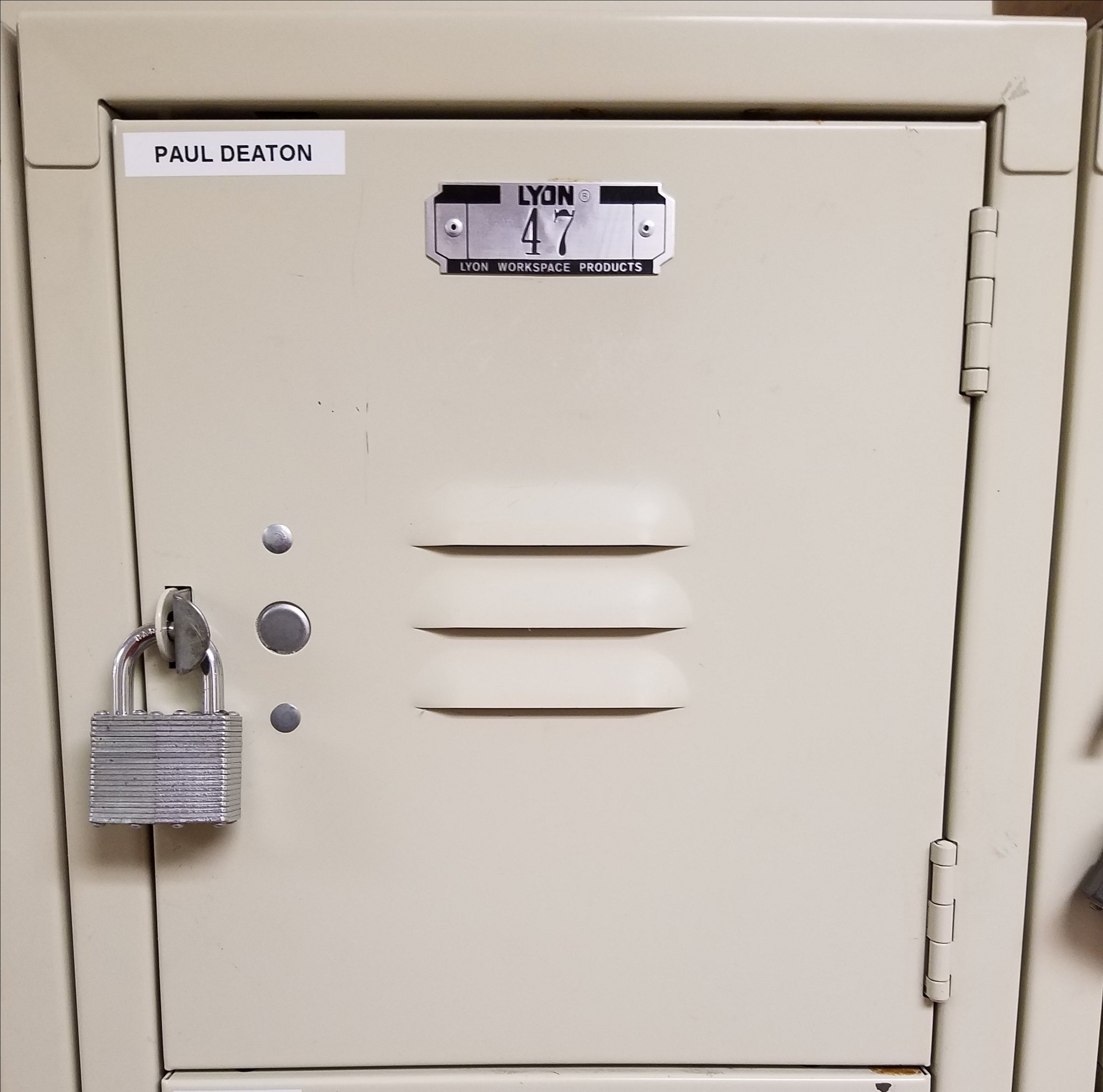
Work Locker

Work Locker

My mobile device lived in this locker for 3,960 hours since I began working at the home, farm and auto supply store.

Carrying our devices with us while at work is not allowed and that’s fine with me.

There is no need for a human to be constantly connected to social media, email and news, especially when engaged with people at a job site or other location in the real world. I don’t suffer from lack of connection.

What matters more is the security of my lunch until I eat it. Marauding teens and twenty-somethings have been known to pillage the shared ice box while hungry, eating anything found. The locker resolves that concern.

While I’m gone from work, the locker is home to a radio earpiece, ink pen, box cutter, name tag, padlock keys, tape measure, duster, hat, aspirin tablets and a few other work items. Those might disappear if the locker wasn’t locked.

It’s a flimsy locker and anyone who wanted to break into it easily could. Suffice it the padlock discourages people from looking inside. I’ve had no issues since I began working there about two years ago.

I won’t get the time spent at the home, farm and auto supply store back. I took the job to avoid taking loans for living expenses. I stayed because of the reasonably priced group health insurance plan. It fills the gap between failure to start a viable business after my transportation career and Social Security.

Time spent there is fit bookend to my part time high school job in retail. The company I work for now bought the building where I worked almost 50 years ago and opened a store. I hope to visit before long, before fading into the oblivion of an ultra local life writing, gardening and living from a perspective built on the shore of a man-made lake.

I won’t need a locker then.

Categories
Home Life

Fall Retreat

Curing Butternut Squash

Midst falling leaves, grasses turned brown, and apples dropping to the ground, I mowed for the first time in over a month. It may be the last cut before winter.

Monday I visited the vegetable farms where I work each spring and caught up with the farmers. Both farms want me to soil block next year. I plan to do it.

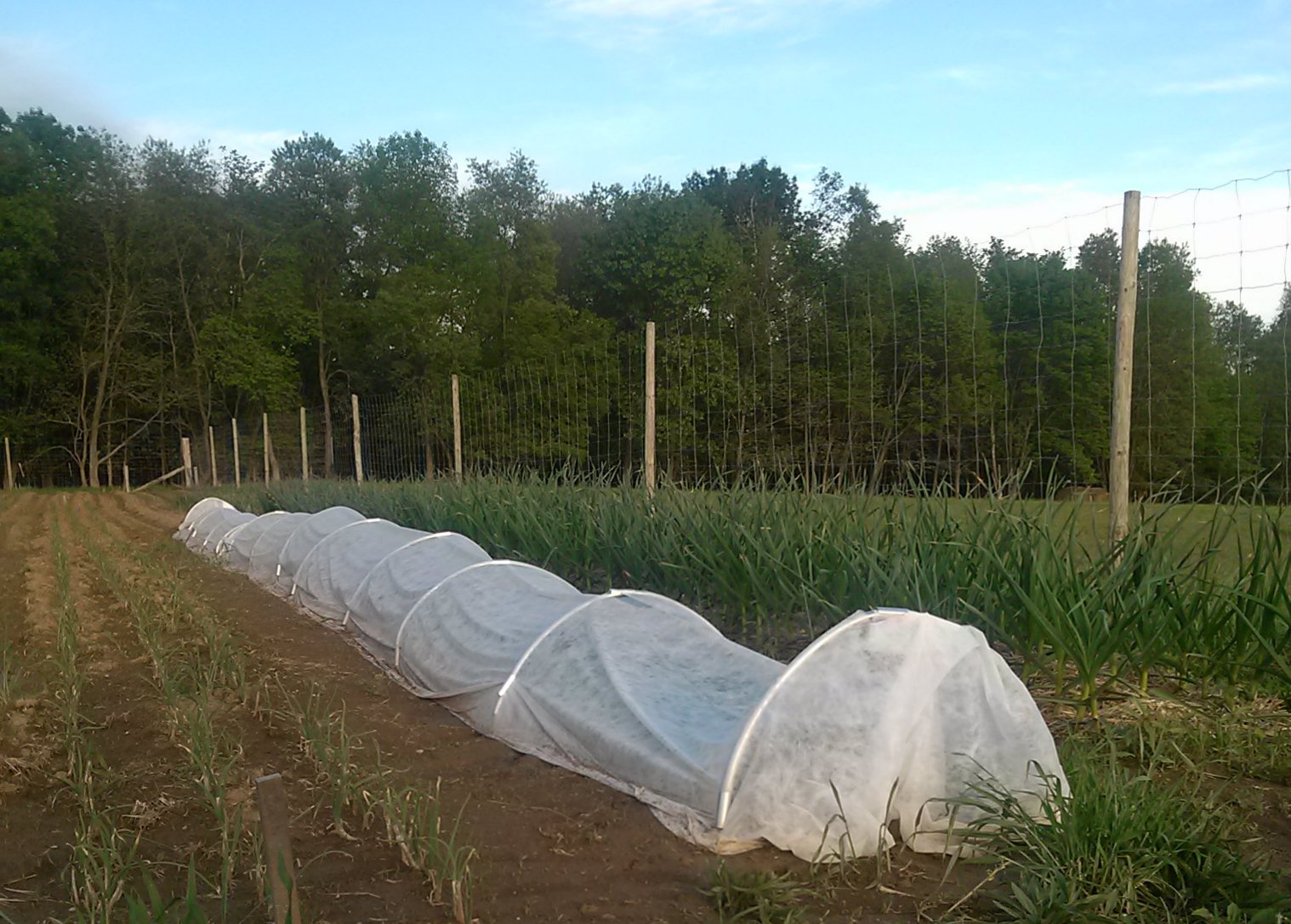
I picked up vegetables for which I bartered: a fall share at one farm, seed garlic, storage onions and potatoes at the other. We cooked a spaghetti squash for dinner and had sides of a burger patty and fresh green beans. I made pasta sauce with tomatoes, garlic, basil and onions. A jug of apple cider is in the ice box, but we didn’t open it just yet. It’s been hard to keep up with the abundance since the garden began producing and the summer vegetable share began. We could feed a larger family than we have.

Fund raising letters have begun to arrive via snail mail. If we had the cash, I’d contribute to each one of them: Practical Farmers of Iowa, Catholic Worker Houses in Iowa City and Des Moines, Veterans for Peace, Physicians for Social Responsibility, and others.

I called the snow removal contractor for our home owners association and the receptionist took a message. He’s out of town until Wednesday. She said they haven’t really started thinking about snow removal because they have been so busy. Isn’t that true for us all.

During the next six months I’ll be re-engineering our lives to live on our social security, transition our health insurance to Medicare, and slow down on work I do mostly for the paycheck. After a two-day retreat, I head back to jobs which have daily shifts until Nov. 3. I need focus so I get the transition right. That means something has to give.

With the current political and economic climate, most everyone I know seems to be in transition. Each week some new affront comes out of our federal government. The same would be true in Iowa if the legislature were in session. It’s a time to re-group and figure a strategy to deal with an aging frame, diminished income potential, and unwelcome changes in society.

My posts have slowed down. Although there is plenty to write about, life’s turbulence has increased making it more difficult. The existential threat to our way of life manifests itself more each day. We will survive the next steps if we take time to do them right. Writing in public may take a back seat to the tasks of living for a while.

Fall going into winter is a great time to do that.

Categories
Home Life Living in Society

Fall Work Session

Apple Harvest

Continuous daily work shifts since July 31 have taken their toll. It’s  been challenging to find time for mowing, cleaning, repairs and household chores. It’s also been hard to get enough sleep. And to write. I need time to take care of things.

Monday and Tuesday are job-free so I can prepare for winter. Yard maintenance is high on my to-do list as are catching up on community organizing and the apple harvest. I want to get organized for the next few days, but not too much. I plan to go with the flow of time for a while.

This week U.S. Senator Joni Ernst held a few town hall meetings in the state, including one in Iowa City. I’ve read every news article I could find about the event and I don’t see a political downside. Tough questions were asked of her, including some by people in my social network. Ernst gets credit for holding a public meeting in the liberal bastion simply because the senior Iowa senator has not for so long.

Iowa is a state that voted for Donald Trump by a 9.4 percent margin. In 2014, Ernst beat Democratic candidate Bruce Braley by a margin of 8.3 percent. The wide margin is significant. Ernst is enabled to point to it and say she represents Iowa when she votes for legislation many of us find reprehensible. I can’t think of many policy issues where I agree with Ernst, yet she won the election big. That she would hold a town hall meeting in the county that voted for Hillary Clinton and Bruce Braley only reinforces her status with the people who elected her. Ernst is not the senator Iowa City wanted in 2014 nor the one they want going forward. The lesson is Johnson County liberals don’t elect people statewide and Ernst knows it.

The topic of the day was the Graham Cassidy bill to repeal the Patient Protection and Affordable Care Act. Graham Cassidy was a loser from the git go. Reaction to the bill has been lopsidedly negative. With Senator John McCain (R-AZ) announcing he will vote no should it come up for a vote, it seems dead in the water.

Graham Cassidy dominated news media attention obscuring some important health care issues.

The Affordable Care Act is barely affordable, even with the federal insurance premium subsidies. If a person gets sick, the co-pays and deductibles are high enough to disrupt the financial life of those who qualify for participation in the ACA Marketplace. The total monthly premium for health insurance under the law is much higher than anyone can afford. It is also more expensive than the cost of Medicare. If the government were about saving money, those eligible for coverage under the ACA should be enrolled immediately in Medicare.

Health care sucked under the ACA. I had coverage through the Marketplace for two years and experienced something new. My doctor raised the issue of Essential Health Services during my annual appointment, saying what he could and could not do. Rather than listen to my questions as his predecessors in the small, rural clinic did for 20 years, he injected politics into my appointment. He was afraid to give me treatment either because of the ACA or because of instructions from his employer. I did not return to see him and he has since left the clinic.

Health care in Iowa has been bad on many fronts. The mental health consolidation was incomplete at best, failing to include a program for disabled children. Outsourcing Medicaid to private companies has been a costly disaster that delays patient treatment and provider compensation. Despite one of the best healthcare organizations in the country it is difficult to get needed care in this state.

The idea that Medicaid would be block granted to states, as proposed in Graham Cassidy, is one more in a thousand cuts to Iowans. The lesson is Senate Republicans don’t have a clue how to make health care meaningful, cost effective and do no harm.

My fall work session will address our family’s health care transition to Medicare as we both become eligible in January. It’s one more challenge to sustaining a life in a turbulent world.

Categories
Living in Society

Letter to Iowa Senators on Graham Cassidy

I do not support Graham Cassidy and hope you will ask your senate colleagues to gather more information about the impact of the bill on Iowa populations before scheduling a vote. More specifically,

1. CBO score: Delay holding a vote on the measure until the CBO scores the bill and the public has a chance to evaluate it.

2. Impact on veterans: Elimination of Medicaid, as the bill is said to do over time, would have a disproportionate negative impact on veterans. Many military veterans I know fall within the federal poverty guidelines and it would be wrong to leave them behind by eliminating Medicaid.

3. Impact on Nursing Home Residents: It seems cruel to kick nursing home residents off Medicaid. Like most people, our family is working to live on our own for as long as possible. That’s not possible for people with limited means as their health deteriorates toward the end of life. Ending Medicaid would disproportionately impact seniors who rely upon it. It would be just plain mean and not reflective of who Americans are as a society.

4. Essential Health Benefits: Insurance is by design intended to help all policy holders pay for the medical needs of every policy holder. Changing the basic framework of who is covered and at what cost requires more sunlight than it has gotten thus far. I oppose altering essential health benefits established in 2009 without agreement between all parties involved, including insurance companies, medical personnel, hospitals and clinics, and importantly, members of the general public.

Thanks for reading my message. Good luck in your deliberations over Graham Cassidy.

Regards, Paul

~ Submitted electronically to U.S. Senators Chuck Grassley and Joni Ernst on Tuesday, Sept. 19, 2017

Senator Chuck Grassley’s response:

September 20, 2017

Dear Mr. Deaton,

Thank you for taking the time to contact me. As your Senator it is important for me to hear from you.

I appreciate hearing your thoughts about legislation proposed to replace the Affordable Care Act(ACA), or Obamacare. Obamacare has failed to deliver. While the ACA promised affordable care, Iowans saw their premium payments, copayments, and deductibles steadily rise significantly. While promised to keep plans if they liked them, Iowans lost their plans when Obamacare was enacted. Because of Obamacare’s failures, 72,000 Iowans currently don’t know if they will be able to purchase health insurance for 2018.

I support having the Senate consider the Cassidy/Graham bill. We need alternatives to Obamacare, which hasn’t worked, and that reality has been acknowledged across the political spectrum. Health insurance is much too expensive for too many Iowans. I like that the bill addresses one of the fundamental flaws of Obamacare. It returns power to individuals and states. It’s not perfect, but the bill recognizes that each state has different needs that each state is best equipped to decide how to meet. There’s also a phase-in period and the opportunity to make changes in the future. Keeping Obamacare as is will cause people to go without insurance either because Obamacare has collapsed in a state or face coverage that no one can afford to use.

You can be sure I will carefully consider any legislation that comes before the Senate, and will continue to support access to health insurance for Iowans going forward in my role as senator.

Thank you again for contacting me. Please keep in touch.
Sincerely,

Chuck Grassley

Senator Joni K. Ernst’s Response:

September 21, 2017

Dear Mr. Deaton,

Thank you for taking the time to contact me about the Senate’s ongoing work on health care reform. It is important for me to receive direct input from folks in Iowa on policy matters such as this, especially when they affect people on such a personal level.

As you know, the U.S. Senate considered various legislative ideas regarding health care the week of July 24th. Throughout the debate, I shared how the Affordable Care Act (ACA) is failing in Iowa, with choices dwindling and costs rising. Premiums have increased in Iowa up to 110% since the health care law went into effect. With Medica remaining as the only health insurance provider selling individual market plans in every county statewide for 2018, folks in the state’s individual market will endure another massive rate increase. The reality in our state is that continuing with the status quo is no longer an option.

On September 13, 2017, Senators Bill Cassidy (R-LA), Lindsay Graham (R-SC), Dean Heller (R-NV), and Ron Johnson (R-WI) introduced health care reform legislation, known as the Graham-Cassidy-Heller-Johnson proposal. If enacted, this proposal would give states flexibility to innovate and design their individual markets tailored to the specific needs of their state.

This proposal would also reform the Medicaid program to a per capita allotment for its traditional patient population. As you may know, the federal government’s auditor has identified Medicaid as a high-risk program for more than a decade due to its size and growth. Therefore, it is important that we look at reforms, but also focus our Medicaid dollars on the most vulnerable in our society – the elderly, children, and individuals with disabilities.

To learn more about this proposal, Senator’s Cassidy website has more information here.

Further, Chairman Orrin Hatch (R-UT) announced that the Senate Committee on Finance will hold a hearing on Monday, September 25th to discuss the Graham-Cassidy-Heller-Johnson proposal. While I am not a member of the Finance Committee, I will be closely monitoring the committee’s work and look forward to receiving its analysis of this proposal.

Throughout the Senate’s work on health care reform, I have emphasized how we must pursue solutions that enhance competition, increase flexibility, and constrain rising costs. The ACA is unsustainable in Iowa, and it’s critical that we work together to address the evolving needs of our health care system, and ensure folks have a voice in their own health care decisions – and not Washington deciding what is needed in a health care plan.

At this time, I am carefully reviewing the Graham-Cassidy-Heller-Johnson proposal to see how it could affect insurance availability and affordability, as well as provide folks access to health care coverage. It’s imperative I hear personally from Iowans, such as yourself, on their unique experiences in accessing health care, so that we can secure the affordable, patient-centered solutions our state critically needs. I appreciate your feedback at this time, and look forward to hearing from you further as the Senate continues to work on health care reform.

Sincerely,
Joni K. Ernst
Categories
Home Life Kitchen Garden Living in Society

How Will Beginning Farmers Get Out of the Poor Farm?

Vegetable Farm

The Johnson County Board of Supervisors disagrees on how to use the property known as the “Poor Farm” and that’s okay.

There’s no surprise something will be done with the property, especially to those paying attention. Supervisors recently decided what that may be.

In June, “The Johnson County Board of Supervisors on Friday voted (3-2) to move forward with a plan to restore and develop the historic county Poor Farm, including increasing the amount of land leased to small farmers and adding permanent affordable housing,” Iowa City Press Citizen reporter Stephen Gruber-Miller wrote.

I accept the 3-2 vote because we don’t elect supervisors with differing views to agree all the time. We want a diverse group of five supervisors. One that creates enough friction among themselves to hone the use of county assets and community resources in a way to make society better for everyone in this liberal-dominated community. Supervisor Rod Sullivan laid out the case for the board’s decision in a June 23, 2017 post on his website Sullivan’s Salvos. I’m confident something positive can come out of the board’s decision to develop the long-neglected county asset.

I like the idea of using county land as a way to help beginning farmers get started. The idea is different from reality. If they don’t have capital, farmers lease land — a temporary solution in which a lot of hard work building soil health can come to nought if they have to relocate. The cost of farm land remains high in Iowa. Every beginning farmer with whom I’ve spoken said their start-up issue is not only access to land, but the ability to purchase it. The county could help farmers by changing the definition of a “farm” from 40 acres to something smaller. In some cases an acre or two was all that was needed to get started in business. The point is local food operators can make a living farming less than ten acres. Resolution of this challenge does not lie in developing the Poor Farm.

In Johnson County there is a concern that if the farm size were changed, developers would take advantage of a smaller farm definition and build single homes on a larger acreages to serve the affluent local market of highly paid workers and retirees. The concern is not misplaced. This board of supervisors has the smarts to figure out how to enable beginning farmers to buy smaller acreages while protecting any changed land use ordinance from what the county deems undesirable development.

The key unanswered question about development of the Poor Farm is how do farmers make the transition from government dependency to independence via a stint there? Using the Poor Farm to provide land access presumes things I’m not sure are accurate — particularly a level of farming competence I’m not sure many have. It also presumes there will be a high failure rate from beginning farmers who take advantage of the program but then choose another career path. It seems obvious a better apprenticeship for new farmers would be to work on an established farm with an experienced farmer, as some local operators have done. On-site, subsidized housing is a way to help new farmers financially and makes some sense. Answering the question of how to enable a successful farmer to use and then leave the Poor Farm is the dominating question.

The idea of a “poor farm” is so Midwestern 19th century. I resist the idea of isolating beginning farmers from the agricultural community or outside the infrastructure of the city with its proximity to work, transportation, shopping and church. I would have thought we had learned a better way in the more than 175 years since Iowa was first settled.

We elected our board of supervisors to do what they think is right. If we don’t like it, we can elect someone else. That’s the way the system works. Based on the way they are handling development of the Poor Farm I’m not ready to fire any of them yet, despite unresolved issues.

Categories
Living in Society

Picks for Sept. 12 School Election

Sample Ballot for Sept. 12 School Election

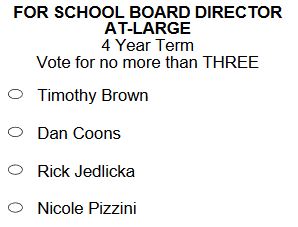
It’s easy to pick three school board candidates from the four running in the Solon Community School District.

I’ll be voting for Rick Jedlicka, Nicole Pizzini and Tim Brown.

Nothing against Coons, who served previously on the board.

Pizzini is the only new person running. She’s a known entity in the community and the board needs new people and new ideas in the wake of the long capital expenditure cycle just concluded with the opening of the new Solon Middle School last week. Pizzini is Associate Professor and Chair of the Department of Sociology and Criminal Justice at St. Ambrose University. Her academic experience combined with a clear, well-articulated interest in the district makes her a solid choice for one of our three votes.

Rick Jedlicka, former Solon mayor and current school board member, is well known and respected in the community. Tim Brown has been part of board planning during the recent capital expenditure cycle and re-electing him adds continuity to the next board.

It’s that simple for me.

Also on the ballot is an extension of the current $60,000,000 bonding authority for Kirkwood Community College. This is the second time in six years Kirkwood asked for an extension of the ten-year authority first passed in 2005. It is the only item on the ballot beside the school board candidates. Extending the current $0.25 per $1,000 valuation until 2032 is for me an easy yes.

I plan to vote on election day, leaving open the option of changing my votes based on new information. It’s possible, but doubtful anything would come to light that would change my vote.

My hope is the turnout is much better than in previous elections.

Categories
Kitchen Garden Work Life

Three Cup Day

Bur Oak Acorn

Today will require an extra cup of coffee.

This week is the biannual vendor show at the home, farm and auto supply store. We’ll be short staffed today and tomorrow while associates from Iowa and Wisconsin travel to Dubuque to attend seminars and discuss products and process with our vendors.

If it’s like last year, my work queue will build up and I won’t dig out until Thanksgiving. The days will pass quickly and my aura may be colored in shades of grumpiness.

Coffee helps.

This weekend — Labor Day weekend — is the unofficial end of summer and I’m ready to glean most of the garden leaving only kale and peppers until first frost arrives in October. I secured seed garlic from one of the farms and will plant in September. The garden has been successful, the most successful in memory. It has been encouragement to plan for next year.

Saturday and Sunday I made a large pot of vegetable broth with items mostly from the ice box: kale, collards, chard, celery, three kinds of summer squash, carrots and onions. The resulting product was dark and rich.

I made rice with the broth, poured some in canning jars, and made a big batch of lentil-potato-barley soup for work lunches. I used eight or ten leeks in the soup which made it slightly sweet. Growing leeks creates a wonderful availability for the kitchen.

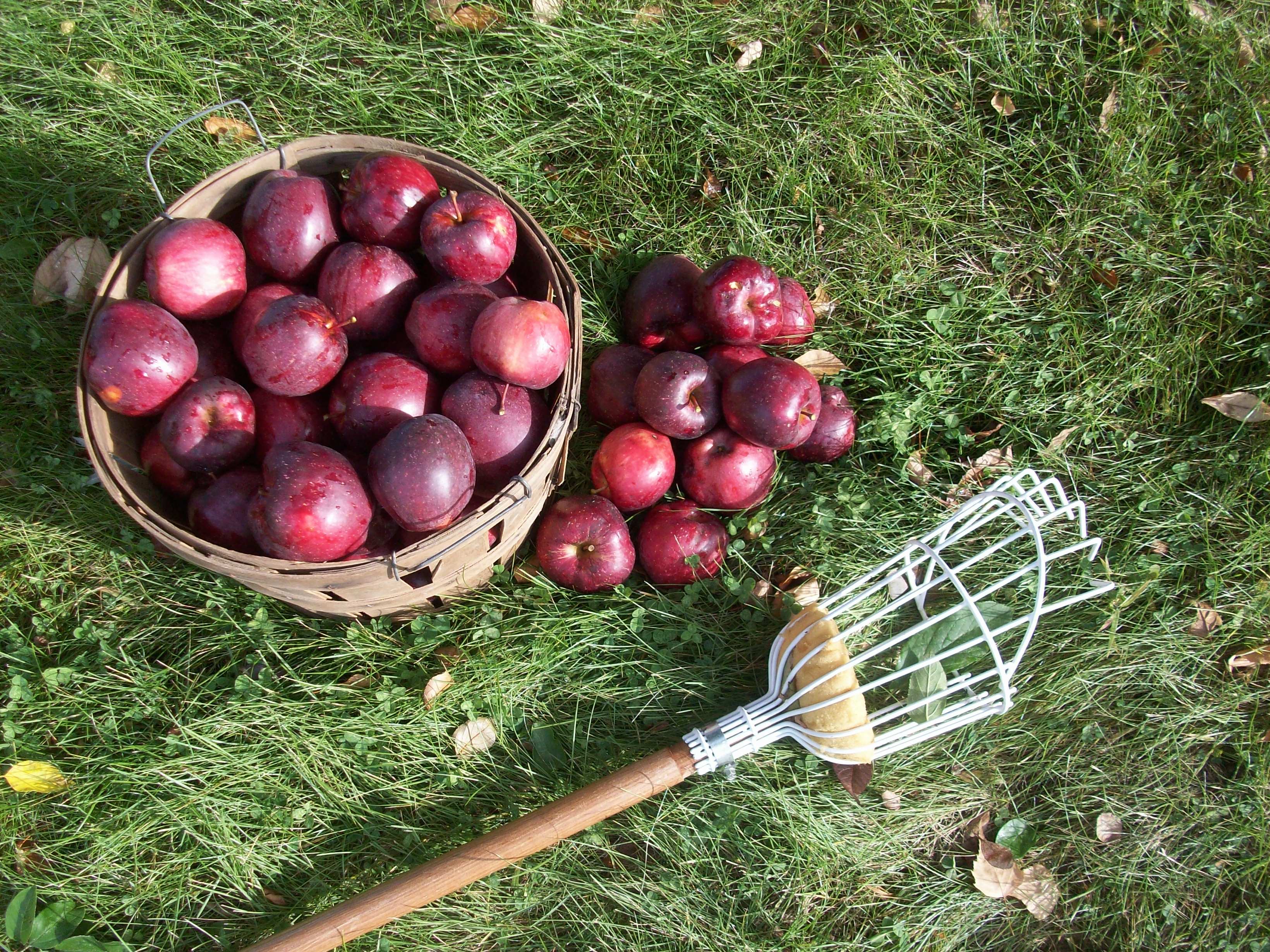
Last night I picked tomatoes, peppers, celery and leeks while the water bath canner came up to temperature on the stove. I ate a Red Delicious apple from the tree. It was slightly sweet and mostly starchy. It is time to begin monitoring the fruit’s progress. The pear tree is close to ripe and will be picked this week.

There is plenty of kitchen work ahead.

So begins another day in the final lap of a working life. I’m heading to the kitchen where I’ll make a second pot of coffee before work. The hot beverage doesn’t resolve our challenges. It makes them more tolerable.

Categories
Living in Society Social Commentary

Low Wage Grind

Gardener’s Breakfast

A co-worker asked if I needed to borrow another water bath canner to survive the season.

This year’s abundance of vegetables has been stunning. There is a lot to preserve including apples, pears, celery, peppers and a couple dozen pints of tomatoes.

I said no.

By the time I get home from a shift — either at the home, farm and auto supply store or the orchard — and start in the kitchen, I’ve found barely enough time to prep seven containers for a water bath batch. Although it seems like a second canner would increase production, the most time-consuming home canning work is done before turning on the stove. At best, we can only capture a part of seasonal abundance in jars. A second canner doesn’t resolve the issues created by low wage work and the time it absorbs in our days.

Canning Soup and Jalapeno Peppers

Being a low wage worker is an economic grind. One knows there will never be enough money to pay for what we need. Financial friction wears us down. Avoiding spending on anything not related to basic survival becomes a primary focus. This may seem negative, and it’s not all good. However, it’s a life with as much potential as any I’ve experienced. That’s not saying a lot for our society.

There is dignity in work whether it is paid or not. Each jar of applesauce put up contributes to our lives. In the twilight of a career as a wage worker life changes. Youthful ambition wears down. Unpaid work becomes more important to sustainability and displaces paid work in our days. There are expenses to be paid and they shift as full retirement approaches. Figuring out how to adjust and what to emphasize in a society wanting participation is challenging. Developing resilience under the weight of social responsibilities becomes key to sustainability.

After what for him is detailed consideration, our president chose perpetual war in Afghanistan as he announced last night. Dealing with constant negative information about the 45th president has become a grind as well. While Obama chose perpetual war, there were redeeming aspects of his presidency, including a sharing of important issues. There was a sense the country was heading is a positive direction, despite his many legislative setbacks. There is none of that with President Trump. We go deeper into the grinder.

A low wage worker withdraws into a small circle of family and friends. In so doing our circle of influence shrinks on its way to irrelevance. What remains is work: low wage jobs, fixing the toilet, cooking breakfast, cleaning the house, and tending the garden. Such activities fill our days and hinder our relevance in political life. At the same time, there is work in society that needs to be done.

To work on resilience, persistence and engagement is as important as anything we do. It sustains our lives in a turbulent world.

Categories
Living in Society Social Commentary

Connections to Virginia

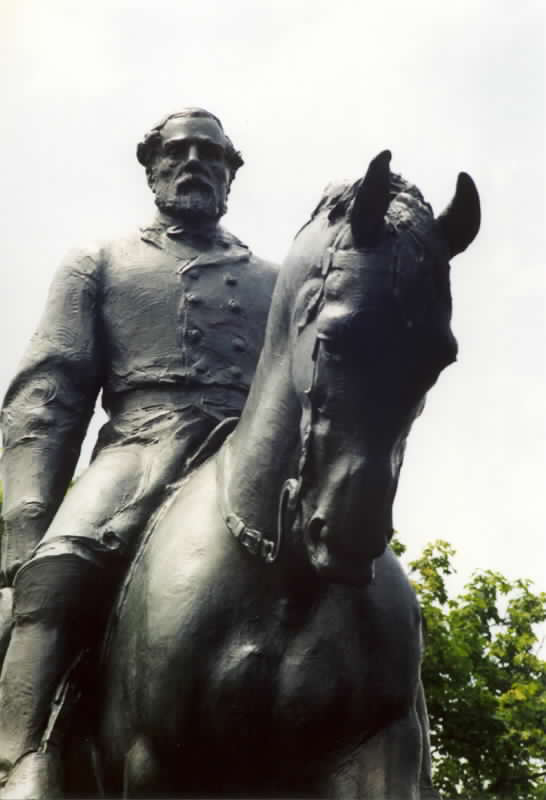
Statue of Robert E. Lee, Charlottesville, Virginia. Photo Credit – Leo Lentill, Wikimedia Commons

I was stationed at Robert E. Lee Barracks in Mainz-Gonsenheim, Germany during my military service as an infantry officer.

It seemed odd at first — that the American kaserne would be named for the commanding general of the Confederate Army of Northern Virginia — but it became background for what could be described as a politicized military presence in which drugs, domestic violence, alcoholism and prostitution — regardless of race or ethnicity — eclipsed such concerns. The post-Vietnam military was a pisser.

A descendant of Virginians, with family roots 100 years before the American Revolution, I came up learning a tolerance for the Confederacy as a way of seeking my own ethnicity. Over time I followed the advice of 1 Corinthians 13:11, King James version, “When I was a child, I spake as a child, I understood as a child, I thought as a child: but when I became a man, I put away childish things.” I now have no patience for those who would whitewash the peculiar institution that was part of antebellum Virginia.

My connections to the Old Dominion, now  Commonwealth, have been numerous. In light of this weekend’s violent confrontation in Charlottesville, one comes to mind.

I met and worked with Virginian Mike Signer who came to Iowa to work on the John Edwards presidential campaign before the 2008 Iowa caucus. Later I worked on his campaign for lieutenant governor, canvassing a Virginia call list from a restaurant on the Iowa City pedmall. He lost that election but went on to become mayor of Charlottesville, Virginia where a statue of Robert E. Lee is the center of controversy that precipitated violence and at least three deaths over the weekend. Here’s his statement on Friday’s events:

I have seen tonight the images of torches on the Grounds of the University of Virginia. When I think of torches, I want to think of the Statue of Liberty. When I think of candelight, I want to think of prayer vigils. Today, in 2017, we are instead seeing a cowardly parade of hatred, bigotry, racism, and intolerance march down the lawns of the architect of our Bill of Rights. Everyone has a right under the First Amendment to express their opinion peaceably, so here’s mine: not only as the Mayor of Charlottesville, but as a UVA faculty member and alumnus, I am beyond disgusted by this unsanctioned and despicable display of visual intimidation on a college campus.

Racism stained our country indelibly. It continues to define us, as evidenced in Charlottesville. There are no “sides” to this conflict just an emerging realization this is not about remembrances of who led the Confederate Army of Northern Virginia during the Civil War. It’s about paying attention to racism in society and taking steps to confront it in our daily lives. That is easier said than done. In Iowa there is plenty of this work to be done.

Categories
Living in Society

Hope is Alive in House District 82

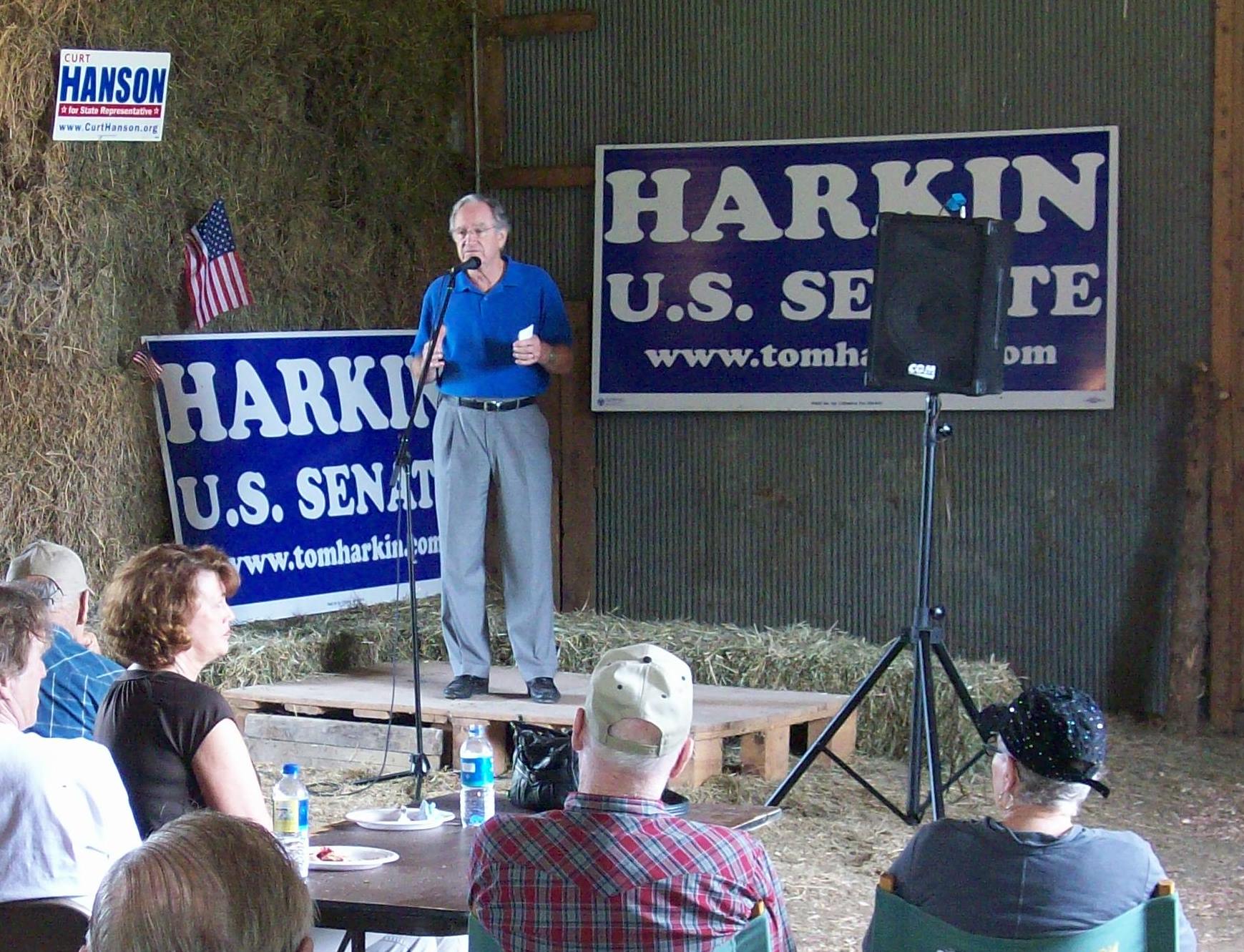
Senator Harkin Speaking at Aug. 2, 2009 Curt Hanson Fundraiser

What seems most important about last night’s Iowa House District 82 special election to replace Curt Hanson is Democrat Phil Miller won in a post-Tom Harkin era.

Iowa no longer has a Democratic U.S. Senator able to travel most counties, recount his local margin of victory to politicians and engage voters. When Harkin visited Dick Schwab’s 2012 house race in Cedar County, his presence didn’t tip the scale in our favor but gave us hope a Democratic candidate could win rural, conservative areas. A case could be made that when Harkin retired so did Democratic hopes for the state. Democrats fell apart, first by losing his U.S. Senate seat, and then by crafting a spotty effort to support Hillary Clinton for president. Given the scale of President Trump’s Iowa win, such hope is needed.

If you want election night analysis, read Bleeding Heartland’s detailed report on the numbers and potential meaning for Democrats by clicking here.

Here’s the crux: “Today’s result is proof that good Democratic candidates can still compete in Iowa’s smaller towns and rural areas where Republicans made huge gains up and down the ticket in 2016,” DesMoinesDem wrote.

It is significant that one of Iowa Republican Party chair Jeff Kaufmann’s stated goals for 2017 is to shore up support among “new Republican voters.” In a July 27 article in the Cedar Rapids Gazette he said of his “new voters,”

I’m worried about them because, in general, what they know is Republicans have control and Republicans aren’t doing what they promised, even though individual congresspeople and senators are doing what they have promised… The people that are less informed about the process, yes, I worry because it contributes to a climate that we’ve given you what you’ve asked for and we haven’t delivered.

I hope the House District 82 election results give Mr. Kaufmann something else closer to home to worry about.

The test for Democrats will be whether they can walk and chew gum at the same time in 2018. It is one thing to concentrate resources on a single race and win, quite another to turn the Iowa house, senate and governor’s office Democratic again. Democrats have done it in Iowa with mixed results. Governor Harold Hughes’ term beginning in 1964 was notable and largely successful. Governor Chet Culver’s 2006 term hangs like an albatross around neck of the Iowa Democratic Party.

Democrats can have a drink to celebrate Miller’s win thanks to Harold Hughes’ revamping Iowa’s alcohol control system and legalization of “liquor-by-the-drink.” This morning after they can hopefully develop momentum toward additional wins in 2018.

Dr. Phil Miller’s win last night provided evidence hope is alive.