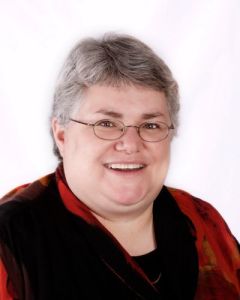
Janelle Rettig announced March 18 she would run for re-election to a third term on the Johnson County Board of Supervisors.
Rettig will face incumbent supervisor Mike Carberry and Democratic Central Committee member Pat Heiden in the June 5 primary election for two board seats.
“In the eight years I have been a supervisor we have a long list of accomplishments,” Rettig said in an email. “We have lowered the countywide levy while undertaking significant projects. Progressive accomplishments and financial responsibility are my driving causes.”
Rettig is a graduate of Knox College who has lived with her spouse, Robin Butler, in Iowa City for over twenty eight years. They are involved with numerous non-profits, are activists, avid bicyclists, and ride a Harley-Davidson motorcycle. They also have a border collie named CJ.
“I think my single best contribution to the board of supervisors has been to focus on financial issues,” Rettig said. “I have led in the creation of a Finance Department, financial policies and transparency.”
While on the board, Rettig used short-term bonding to access Tax Increment Finance districts thereby reducing cost on individual property taxpayers. It allowed the county to take advantage of lower construction costs and get more road projects completed more quickly, she said.
“I spend a lot of time reviewing our financial reports and studying budget requests,” she said. “I often figure out a way to get things done without significant tax increases.”
Rettig is proud of her role on the board.
“We have built six solar projects, increased programs and funding for mental health/disability services and for those living in poverty,” she said. “We have improved our infrastructure by building roads, bridges, trails and paved shoulders, and we have invested in affordable housing — all while creating a finance department, balancing every budget, and lowering the overall county debt. In addition, we have increased sustainability, raised the minimum wage, and implemented a Community ID system.”
“I have been consistent with current land use plan and believe supervisors should follow the plan and not pick winners and losers based on things that are not contained in the plan,” Rettig said. “I have supported a number of amendments to the Unified Development Ordinance that I believe have made our land use plan stronger.”
“The new plan under consideration currently has some items that concern me. I’m afraid that the proposed map and matrix may lead to more political decisions and may lead to more development on higher corn sustainability rated land. I look forward to reviewing the final plan that will be recommended by (the Planning & Zoning Commission) and listening carefully to a public hearing with input from residents.”
“In the past eight years, I have worked every day to reflect the progressive values of the people of Johnson County,” she said. “None of this happens in a vacuum. It takes leadership, innovation, vision, determination, teamwork and sometimes courage.”
“My most rewarding vote was to raise the minimum wage,” Rettig said. “The vote that will have meaning long after I am gone is the vote to save the Sutliff Bridge.”
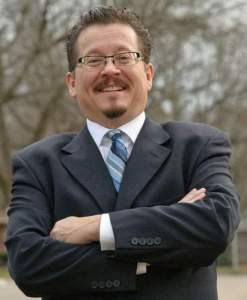
Mike Carberry of Iowa City filed for re-election to the Johnson County Board of Supervisors before last week’s filing deadline.
First elected in 2014, Carberry will face incumbent supervisor Janelle Rettig and Democratic Central Committee member Pat Heiden in the June 5 primary election for two board seats.
Well known in the local, progressive ecosystem, Carberry worked as an environmental lobbyist before his election to the board. As a county supervisor he seeks to apply his talents to local issues from a sustainable perspective — environmentally, economically and with social justice, according to his website.
“I’ve called Iowa City home since 1976,” Carberry said in an interview. “It’s the greatest place to live in the Midwest, but also the most expensive in Iowa. Fighting poverty is a big umbrella under which I’ve done really good work.”
Carberry voted to increase the minimum wage to $10.10 per hour in Johnson County shortly after his first election. During his tenure on the board, the county budgeted about $2 million for the Housing Trust Fund of Johnson County, initiated projects to relieve food insecurity including activities at the former Johnson County Poor Farm, and has identified a need to create a better transportation structure to serve the working poor, he said.
“I want to do everything I can to help fight the war on poverty in Johnson County and hopefully across the state,” Carberry told the Cedar Rapids Gazette. “Hopefully, we can be a leader.”
“The comprehensive plan contains policy goals for many aspects of the community; including, for example, land use, transportation, housing, parks and open space, infrastructure, facilities and economic development,” according to the Johnson County website. Carberry provided an update on the plan’s progress.
He expects the county Planning and Zoning Commission to evaluate and discuss the comprehensive plan at their April 5 working session. Then, on Monday, April 9, the commission will discuss the proposed plan and potentially make a recommendation to the Johnson County Board of Supervisors.
Carberry hopes for an up or down vote on April 9, he said. If they do not approve the plan, he expects the commission to recommend changes. Once the supervisors have a response from Planning and Zoning, they will hold a work session, an informal meeting, and then a formal meeting on the plan.
Carberry said he did not get everything he wanted in the comprehensive plan, attributing that to the political process of compromise. His main interests are addressing urban sprawl, creating smart growth, and encouraging growth from the city limits outward through policy.
“I hope the supervisors’ work on the Comprehensive Plan is finished by the end of April,” he said.
Carberry has weighed in on a host of issues since he first ran for the board of supervisors.
“We’re not done yet,” Carberry said. “We want to continue to make Johnson County the best in the Midwest, and one of the ways to do that is to keep fighting. That’s what I’m going to do.”
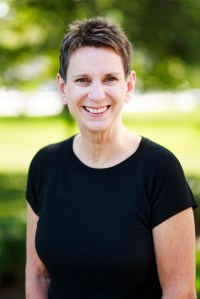
Pat Heiden of Iowa City filed to run for election to the Johnson County Board of Supervisors.
“Johnson County is an exceptional place to live and work,” Heiden said in a press release. “I know our neighbors are best served when we facilitate partnerships, when we collaborate to solve problems, and when all communities and citizens believe they will be heard with respect. I’m running because I know we can do better, and I want to be a part of that effort.”
When the filing period for the June 5 Democratic primary closed yesterday, three candidates had filed for two seats, Heiden and incumbents Mike Carberry and Janelle Rettig.
This is Heiden’s second attempt at election to the board of supervisors, placing fourth in a field of six for three seats during the June 7, 2016 Democratic primary.
“I realized I just wasn’t ready the first time,” she wrote in an email. “I was serious about the race and so were my supporters, but juggling the end of my career at Oaknoll and trying to run for the first time was just too much. This time, I’ve got the time and focus to do it right.”
Heiden announced her second campaign for county supervisor Oct. 3, 2017 and has been organizing ever since. She reached out to mayors and community leaders in the county, and introduced herself at council meetings. She met with voters throughout the county — individually, and in small groups, coffees and listening posts. She attended every board of supervisors meeting and work session in person to get a deeper understanding of both the issues, and the dynamics of decision-making and process.
At the February precinct caucuses, when no one responded when the caucus chair asked for a second person to serve on the Johnson County Democrats central committee, Heiden looked around and said, “why not?”
“I raised my hand and they voted for me,” she said.
Heiden engaged in central committee activities and attended last Saturday’s Johnson County Democrats county convention where she made an impassioned speech to delegates explaining her campaign.
Heiden has lived in Johnson County more than 40 years, and has been involved in numerous community organizations. She served as Executive Director of Oaknoll Retirement Residence for more than 20 years, retiring in September 2016. She expects to bring her skills and experience to the board of supervisors. In order to gain a county-wide perspective, her campaign steering committee includes representatives from all 11 cities in Johnson County.
Key to her appeal is offering a fresh look at county activities. Few issues that come before the board are more complicated and contentious than the land use plan with its intersection between natural resources, agriculture and community development. Heiden is engaged in the board’s decision-making process regarding land use and is hearing feedback on the plan throughout the county.
“When we ask community members to volunteer their expertise and time,” Heiden said, “their recommendations have to be received, if not incorporated, in some meaningful way.”
When she filed her petitions, Heiden had garnered 422 signatures from all parts of Johnson County. She plans to be a candidate for all Johnson County.
Iranian President Mahmoud Ahmadinejad visits the Natanz nuclear enrichment facility April 8, 2008 Photo Credit: Reuters
The 45th president doesn’t like the Iran Deal.
He campaigned against it. He begrudgingly certified Iran’s compliance with it after his inauguration. As additional 90-day certification periods passed, he didn’t. Neither did he move to end it.
With the installation of John Bolton at the National Security Council, and Michael Pompeo as Secretary of State, administration policy regarding Iran is expected to change.
The Iran Deal or Joint Comprehensive Plan of Action Regarding the Islamic Republic of Iran’s Nuclear Program (JCPOA) was the signature foreign policy achievement of President Barack Obama. The United States, along with the United Kingdom, Russia, France, Germany and China, stopped Iran from building a nuclear weapon.
In July 2015, Iran had almost 20,000 centrifuges used to enrich uranium in the cities of Natanz and Fordo, according to BBC News. Iran had been building a heavy-water nuclear facility near the city of Arak. Spent fuel from a heavy-water reactor contains plutonium suitable for a nuclear weapon. Iran agreed to restrict these activities in the JCPOA which brought a robust regimen of monitoring, verification and inspection designed to ensure Iran’s compliance with the deal. Every 90-day certification period, which is peculiar to the United States, international inspectors reported Iran maintains its compliance.
We should keep the Iran Deal. It’s not just me who says so.
“120 of America’s most respected national security leaders want to keep the Iran Deal,” wrote Joe Cirincione, president of the Ploughshares Fund. “Trump, Pompeo and Bolton want to kill it.”
Delegates and alternates arrive in the Liberty High School Commons at 8:10 a.m., March 24, 2018. Photo Credit – Lauren Whitehead
“The metaphor of WYSIWYG, taken from the advent of computer graphical user interface, is an apt model for what I’m doing. The operative function of building an electorate presumes nothing and is rooted in a belief the 2018 general election electorate is not pre-made. It is being formed as we proceed through time and events toward election day. We have to pay attention to what is happening in real time and modify our activities to create a successful process.” ~ February 9, 2018
NORTH LIBERTY — I had planned to spend the three dollars in my wallet on coffee at the Johnson County Democrats convention Saturday, March 24, at Liberty High School.
The arrangements committee selected the breakfast vendor with the largest coffee urns, so I was ready for the tedium and time-killing activities of a political convention with a cup or three of Joe.
I went home with those same three dollars in my wallet. It was one of the better conventions I attended since moving to Big Grove in 1993. There was plenty to keep a person busy with no time for a coffee break.
Heavy snowfall Friday night made the roads passable but dangerous. A significant number of delegates did not brave the snow-packed highways creating seats for the alternate delegates who did. In all, the credentials committee seated 241 of 251 possible delegates. Desire for change in November trumped concern about road conditions.
Senate District 37 candidate Zach Wahls asked for a show of hands of people who were attending their first convention. More than half the delegates responded. Saturday’s convention was another example of the strength of the electorate we are building for November. It’s fine with me that new and younger people are joining the process. I’ll step aside, wear the LBJ for the USA button from my first campaign, and entertain delegates with my stories to avoid becoming irrelevant.
My fave memory from the convention was John Norris’ speech about his relationship with Harold Hughes, Tom Harkin, César Chávez, Paul Wellstone and the Rev. Jesse Jackson. The gubernatorial candidate’s voice was a bit hoarse, but the message was strong. Norris is an Iowan with whom people in the general election can relate.
To win the governorship, Democrats need to win more than Johnson County as our last gubernatorial candidate did in 2014. We need to approach winning 68 counties like Tom Vilsack won in 2002. Norris is laying the groundwork for such a campaign, although that strategy is a bit dicey as primary votes are mostly in urban areas.
The other gubernatorial candidate to speak was Cathy Glasson who is running what she described as an “issues-based campaign.” Despite similarities between all six candidates on issues, her approach poses more liability than asset in the general election. What if voters who haven’t participated in the electorate yet don’t like the way she framed her issues? They could vote for the other female in such a hypothetical match-up.
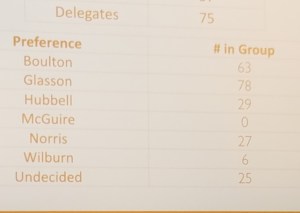
First Alignment March 24, 2018
It was no surprise when a motion was made to form preference groups by gubernatorial candidate. Breaking into preference groups added about two hours to the day.
There were three preference group alignments and those viable after the second selected delegates to the district and state conventions in the third. The image shows delegate counts after the first alignment. It took 37 delegates to maintain viability. After the second alignment there were three viable groups. They elected district and state delegates as follows: Glasson (27), Uncommitted (25) and Boulton (23). Our Norris group joined Hubbell and Uncommitted delegates and sent nine of our delegates to the next level. Hubbell did likewise and Uncommitted took the balance.
The highlight of the first alignment was that after a contentious 2016, Bernie Sanders and Hillary Clinton supporters appeared to agree on something — to rebuke former Iowa Democratic Party chair Andy McGuire for her performance in the run up to that year’s election. She had zero delegates. I’m glad former Iowa City mayor Ross Wilburn had a few delegates. They were sanded off in the alignment woodshed.
In a 2018 oddity, one of the Kucinich delegates from 2008 had become a Hubbell supporter. A sign of the times.
I liked our Norris group. Our oldest delegate was octogenarian and former state senator Jean Lloyd-Jones and our youngest was a high school senior. Gender equity in our delegation to district was important to the group. We sent five women and four men. I am thankful to be going to district and state. I was prepared to argue a case why I should be elected, but we had exactly the number of people interested as we had slots.
Should the field of six gubernatorial candidates fail to produce a clear primary winner June 5 (35% of votes cast), the state convention will decide our nominee. If the nomination goes to convention, it is likely to be one of the four who garnered delegates statewide, Boulton, Glasson, Hubbell or Norris. However, it could be anyone. That’s why it’s important there be a clear primary winner. A contentious nominating process at the state convention would detract from the party’s ability to unite behind the eventual nominee.
Other highlights of the convention include:
State Senator Bob Dvorsky gave his farewell address which ended with passing the basket for State Senate District 25 candidate Tracy Freese who has a special election April 10.
Speeches by three of four candidates for Senate District 37, Eric Dirth, Zach Wahls and Janice Weiner. They are all becoming better speakers. In case you missed it, I’m with Wahls.
Speeches by the three current candidates for the county board of supervisors, Mike Carberry, Pat Heiden and Janelle Rettig. Incumbents Carberry and Rettig are well known, experienced public speakers. Heiden presented herself well with an impassioned speech. Many of my local friends are supporting Heiden. I’m with Rettig and another to be decided after the filing period closes and candidate lists are published by the county auditor.
The star of the show had to be the facility itself. Liberty High School was a project of the somewhat controversial facilities master plan of the Iowa City Community School District board of directors. It is a beautiful facility. If I had gone to such a school, I would not want to leave. We were lucky the school administration allowed us to use their facility.
After the slate of 75 delegate was ratified by the convention, things started winding down. Snow had piled up to about nine inches while we were inside. The roads were mostly cleared by the warmer temperatures and I made it home without incident.
The day made me feel positive not only about myself for being part of the group, but about our prospects in the November general election.
A thick, wet snow blanketed the landscape overnight. Being a lifelong Iowan, driving on snowy roads across the lakes to today’s political convention shouldn’t be an issue if I take it slowly.
I am on the arrangements committee and have to be there at 6 a.m.
My mind is not on that, or the myriad other activities that filled my days since entering retirement a week ago.
After 50 years of work a person needs healing. That’s going to take longer than I thought.
On Monday I dropped my car for repairs in town and walked the three miles home along the Lake Macbride trail. The trail was pretty beat up with deep ruts from construction equipment along the entryway from town. Iowa Department of Natural Resources must be up to something. It looked like hell. Walking home was a mistake.
My plantar fasciitis has been in abeyance but the day after the walk, my heels started to hurt. It was exacerbated by standing to soil block at the farm yesterday, reminding me there is no such thing as “good as new” for a sixty-something.
More than physical ailments I need to heal my mind. When I entered the low-wage workforce back in 2013 it was hard to focus on bigger issues. Perspective was reduced to a few inches beyond my nose. Interaction with newly met people was framed by the idea I didn’t really want to be there. It tainted my perception, hopefully not permanently. It too will take time to heal.
There is a lot to get done during our brief time on earth. Sometimes we need to stop and just breathe. If we can manage that, perhaps our bodies and minds will heal.
Less people are expected to vote during this year’s midterm elections than during a presidential year.
I don’t agree with letting others decide who will represent us in government and encourage Democratic voters to turn out during the June 5 primary. Early voting begins in about five weeks.
I encourage Republicans to vote as well, however, I’m a Democrat.
Races to watch in the Democratic primary are governor, secretary of state, state senator and county supervisors.
Six gubernatorial candidates filed nominating papers for governor. They are Nate Boulton, Cathy Glasson, Fred Hubbell, Andy McGuire, John Norris and Ross Wilburn. Check them out! They each have distinct talents to bring to the governor’s office. To my knowledge, Norris is the only one who held an event in Solon, and that’s who I plan to support.
There are two candidates for secretary of state, Deirdre DeJear and Jim Mowrer.
State Senator Bob Dvorsky is retiring. Four Democrats filed nominating papers to replace him. They are Eric Dirth, Zach Wahls, Janice Weiner and Imad Youssif. All except Youssif held events in Solon. All are expected to hold more. I’m supporting Wahls. Who will you support?
The filing period for county supervisor closes March 28. Presently three Democrats are running: Mike Carberry, Pat Heiden and Janelle Rettig. I’m supporting Janelle Rettig and waiting until after the auditor releases the final candidate list to decide who will get my second vote.
Democracy is participatory. Please vote in the June 5 primary.
~ Published in the March 29, 2018 edition of the Solon Economist.
(Editor’s Note: Jodi Clemens (D-Springdale) will run as a Democrat for state representative in Iowa House District 73. The filing period for candidates ended March 16 without any other Democrats, so Clemens has a clear path to begin a general election campaign. Following is her announcement press release).
Jodi Clemens, a long-time resident of Springdale, announces her campaign for the Iowa House, seeking to represent House District 73, which covers all of Cedar County, the north-east corner of Johnson County, and the city of Wilton in Muscatine County.
Clemens, a Democrat, is running a campaign based on the Iowa values of compassion, respect, fairness, and community. Her values translate to progressive stands on the issues.
For her campaign, Clemens has pledged not to take any money from Political Action Committees (PACs). Instead, all donations come from a grassroots effort that is free from corporate influence. Clemens has seen how huge, unfair tax breaks for out-of-state corporations have contributed to economic injustice in Iowa, as budget woes force more Iowans to face hardships with fewer services that could help them. Clemens has made campaign finance reform a cornerstone of her campaign because money in politics acts as a barrier to our government making progress on all of the other issues.
After working for four years for a nonprofit as a financial advisor and teaching financial literacy classes in local churches for the past decade, Clemens has seen how difficult things have become for so many Iowans. “I have had to look many people in the eye and let them know they will either need to work longer, or live on less in retirement,” says Clemens. “I see firsthand how many people are struggling to make it until the next paycheck.” When elected, Clemens pledges to work to help the state craft a budget that reflects Iowa values, helping those in need instead of turning its back on them.
For Clemens, that means better funding for healthcare, especially for those who suffer from mental illness, because, she says, people who suffer should be treated with compassion.
And that means better funding for Kindergarten through college education, because it is through education that the young people in Iowa will find opportunities to improve their lives.
“Our school budgets have been tight and just got a lot tighter,” Clemens says, adding that student success depends on paying teachers a competitive wage and supporting their right to organize.
Clemens is a small business owner and volunteers in her hometown, where she serves on the Board of Directors of the West Branch Community Development Group, as Vice President of her children’s fine arts advocacy program, and as an active member of her church and community. She also co-founded a local non-partisan Indivisible Iowa group and a 100+ Women Who Care chapter.
“I am working to lead with values and issues,” said Clemens. “Question me, challenge me, help me grow as a person and as a leader.”
(Editor’s Note: This article was written July 3, 2009, shortly after my first retirement. It has been lightly edited to remove misspellings and grammatical errors I can’t bear to promulgate).
It begins by foraging for wild blackberries in Lake Macbride State Park.
Between a twenty five year career in transportation, and Independence Day 2009, gathering berries in the forest seemed a natural and appropriate way to mark my retirement at age 57. I knew that my work life would continue even if my employment for Iowa’s largest transportation firm was over. On this first day of what’s next, I hoped to wander the forest with my bag and gather what blackberries I may, an archetype of my life as an American salary man turned loose.
To say I lacked the commitment of a career in transportation misses the fact that I devoted much of my waking time and personal energy to being a successful transportation manager. At the same time, it was a bargain of time for money with what I now realize as little chance to get ahead. Transportation is not a traditional career as are medicine, the law, retailing, carpentry and plumbing. At the highest levels of transportation’s hierarchy executives are few in number and part of a clearly defined and relatively small social network. It was never my world, nor was there opportunity to make it my world, even if I was successful in delivering the business results my employers expected.
I figured this out late in the game, and it drove me to leave the business, not just recently, but in 1998 and 2003 as well. Finally, after a job as Director of Operations for CRST Logistics, Inc., my team achieved remarkable results, one last time, and I left the business.
Why did I sacrifice so much? I hoped to establish a home, meet the basic needs of our family, support our daughter’s start in life and leave time to enjoy ours. It was, among other things, for the ability to forage for wild blackberries.
And as the sun rises in the security of my partially finished study, I have concerns. I am most concerned that I will use the talents I have been given, the experiences I have had and the meager resources we have been able to accumulate, to contribute to life in society.
This means more than paying taxes and getting along with neighbors. It means considering life from my unique perspective and create an endeavor that brings peace and prosperity to a larger segment of society. The sacrifice we made resulted in a life that is economically better than many families. Our current life is a foundation upon which to build what is next. It has never been about the money or economic gain. It is about fulfilling life’s promise, and the moment I realized this and it sunk in, my so-called career in transportation was destined to end.
To start an autobiography at my age is not unusual. What is different is I want to cover the middle of life, beginning when I was married and age 32. There is another autobiography of the earlier period to be written. If I am lucky, I will get an opportunity to write that part as well.
I sense a pressing urgency to understand how I spent the middle years. If I hope to inform others of the perils of working for wages, this story should be told now, with certainty and the energy of a life lived for others. I want the story out so our daughter can benefit from it. This book will pull in parts of my whole life, but the focus will be living with a family, the meaning of labor, the consequences of delayed gratification and subservience, and the possibilities of living a life as a manager in a large company. It is a story I do not see others aware of or writing today.
My feeling about work is as old as the colonial days in Virginia. I suspect it is derived from the intellectual history passed down in my family through the generations. People indentured themselves to pay for their passage and get a start in the new world. They might indenture themselves for another contract period to pay for the passage of their family. It was a tough bargain and as many as half of the white emigrants are said to have come to the New World as indentured servants. I suspect my ancestors were among these people whose contracts were sold upon arrival in Virginia.
Henry David Thoreau wrote of the trade off we make in taking employment in Walden,
“…men labor under a mistake. The better part of the man is soon ploughed into the soil for compost. By a seeming fate, commonly called necessity, they are employed, as it says in an old book, laying up treasures which moth and rust will corrupt and thieves break through and steal. It is a fools life, as they will find when they get to the end of it, if not before.”
I am lucky to have figured this out while having a life expectancy of another quarter century. As I look through boxes of artifacts and papers I laid up before and during my working life, the papers are yellowing and dusty, diminished in importance. While I do not seek to be like Thoreau, I would learn from his writings.
I have worked for large and small businesses. I was in the military and worked for the University of Iowa. I worked brief periods of my time as an independent contractor. I belonged to a union, voted against unionization and managed union employees. I negotiated union contracts, the modern successor to the indentured servitude of the colonial days. I worked through 25 years in transportation to yield a nest egg insufficient to retire in the traditional meaning of that word. If I had stayed on, until age 65 or 68, I would not then have accumulated enough money upon which I could finish life, work free.
I seek to inform, not complain.
In a varied work life I gained experience in many facets of life, both in and outside my career. Reflections on a thousand meetings and experiences inform how lives devoted to labor can be improved. My hope and intention is that as I consider the detritus of a life in transportation my view will become more informed and I can help others, our daughter particularly, avoid the pitfalls of which Thoreau and others warn us.
On my last day of employment I had parked at a distance from the employee entrance, as usual. As I settled into my blue Chevrolet Colorado, I stopped to look at the building. I sat for a couple of minutes trying to remember entering for the first time.
A woman named Jean King took my application and gave me the Wonderlic test. There was a sign made from a 4 x 8 foot sheet of plywood that said “A Company on the Grow.” I worked most of my 25 years for CRST and saw it grow from a $60 million company to more than $820 million in revenue. I am pleased to have been a part of that.
The growth and success expanded the property, and while the main building was the entire company when I started in 1984, we acquired land from Wiley all the way to Edgewood Road along 16th Avenue. A grocery store was converted to CRST Van Expedited Headquarters and we built a training center for the asset divisions. There are major facilities in Birmingham, Alabama, Carlisle, Pennsylvania, Fontana, California and dozens of agent and sales offices dotted across the country.
What attracted me to the company was that it was owned by Herald Smith’s family and of a size where I could get to know everyone in the company. For most of my time there, I did. On my last day of work, Herald’s son, John called to wish me well.
These were things going through my mind as I sat in my pickup truck getting ready to go home. I started the engine and instead of driving to 16th Avenue to turn right and take Wiley to Edgewood, I exited the parking lot north and drove 12th Avenue east to Edgewood, seeking to have a different view of the drive home. I did not look into the rear view mirror.
Our life has been good by any standard. We have a roof over our head, clothes to wear and food to eat. There is plenty to occupy our time and we have hope that our daughter will experience success. We were able to send her to Cornell College in Mount Vernon and support her through her beginnings after college. I am not complaining about our quality of life, nor would I. We have had a good life, to a large degree because we have lived in the United States and in Iowa for most of our time.
Journal entry from July 2, 2009:
Lake MacBride. It is 20 minutes before I leave for the last day of work at CRST Logistics and I am ready for the change. There will be uncertainty but we have to have courage to get through each day’s challenges. I am not sure how much this means, but hope the new path leads to a brighter day.”
Post on Big Grove Garden July 3, 2009:
“Each year I walk to the state park and search for wild blackberries. They are typically ripe around Independence Day, and after walking to town and searching for them I gathered about a pint. The berries on the south side of the trail were more abundant and on the north, were almost finished. The variation in sunlight seems to matter, although not by much. From the looks of the plants, we are about a week into the season.
After a few years we learn how to look for the plants and some places there are a lot to be picked and others one or two. We build expectations based on remembrance of where the best spots were previously. To write these locations down is unthinkable as the knowledge resides within us, and we don’t want to reveal our best areas to others. This is a natural human behavior.
One of the best places in previous years is replaced with a natural gas substation. The town and the youth recreational complex adjacent to the elementary school continue to encroach upon the wild places. The odor of natural gas came from the pipes, reminding me of West Texas. It was disappointing to see the berry patch gone.
Once I had more than a pint, I looked at other things along the trail. The flowers are in bloom and abundant as home construction peeps into the once isolated trail.
I made it home and made oatmeal topped with a handful of the wild blackberries picked this morning.”
Perhaps the encroachment on the wild blackberries is evidence of the corruption and thievery of which Thoreau wrote.
E-mail to Mike Fouts, President of CRST Logistics, Inc. on July 5, 2009:
Mike:
Please let everyone know how much I appreciated the many goodbyes and best wishes last week.
The cards and gifts were more than a person should expect, and will be useful in my life in Big Grove and beyond. I wore the hat at the Coralville parade on Independence Day and young women wanted to hug me: surprising and happily accepted.
Two bits of news since Thursday are 1). My uncle sold his coffee shop last week, so that idea is out. 2). our daughter is talking about returning to Iowa in 2010, so it looks like we will be staying here for the present.
Thanks again for the thoughtfulness in celebrating my tenure with CRST Logistics. I found CRST Logistics to be, every day, without exception, a great place to work.
Best Regards, Paul
Paul Deaton
Solon, Iowa
I made wild blackberry jam with the day’s findings and we enjoyed it through the Christmas and New Year’s Holidays. What may have been on the periphery of our life became a main event. However, that is another story. Let’s dial back the clock to March of 1984 when we made the decisions that led me to a career in transportation.
March 16 was filing day in Iowa for statewide and legislative candidates. It is a time for candidates to walk the walk and show up at the Secretary of State’s office with enough petition signatures to get on the June 5 primary ballot.
Some made it, some didn’t.
Most surprising to me is former Cedar Rapids mayor Ron Corbett was a last-minute filer. He filed so late the Secretary of State won’t be able to determine his viability until tomorrow. With his substantial financial backing I expected him to have petitions wrapped up earlier. It would be good for Governor Kim Reynolds to have a Republican primary challenger, so fingers crossed for my former colleague at the transportation and logistics company where I spent 25 years.
Six Democratic gubernatorial candidates will be on the primary ballot according to the Secretary of State: Nate Boulton, Cathy Glasson, Fred Hubbell, Andrea McGuire, John Norris and Ross Wilburn.
Lefties in the county seat are all about this year’s union and legislature-backed candidates for governor, Cathy Glasson and Nate Boulton. I’ve been to this rodeo before and in two words can debunk the idea that Johnson County Democrats decide statewide candidates: Patty Judge.
In the 2016 primary for U.S. Senator, Johnson County Democrats backed State Senator Rob Hogg with 4,577 of 8,189 votes cast (56 percent). Three other candidates split the remaining votes: Patty Judge (2,476, 30 percent), Tom Fiegen (524, 6 percent), and Bob Krause (218, 3 percent). Statewide, Judge led the field with 46,322 votes (45 percent) to Hogg’s 37, 801 (37 percent). Total statewide Democratic primary votes cast were 101,991.
In the 2006 primary, when Judge shared the ticket with Chet Culver, a majority of state lawmakers endorsed Mike Blouin who got 4,324 (40 percent) of 10,786 cast in Johnson County, beating Culver-Judge with 2,811 votes (26 percent). Culver-Judge came in third behind Ed Fallon with 3,447 votes (32 percent) in the liberal bastion. Statewide, Culver-Judge won with 58,131 votes (39 percent) compared to Blouin at 34 percent and Fallon at 26 percent. 148,751 Democrats cast a vote in the 2006 primary.
If there is a liberal bubble in Iowa, Johnson County is it.
John Norris in Solon, Iowa March 17, 2018
I’m backing John Norris for governor in the primary for a couple of reasons. He’s the only gubernatorial candidate to host an event in the small town nearest me. I heard him speak for the second time yesterday in Solon.
As Norris admitted, his plan to engage rural and small town Iowans may not be a winning strategy in a primary where Democratic voters are concentrated in urban centers. The flight from rural to cities and out of state is not new and is a key challenge Iowa faces in growing our economy. Norris hopes by focusing his campaign away from population centers his shoe leather and car rubber approach would payoff in the general election. If Norris survives the primary, he would have laid the groundwork to compete statewide with the Republican nominee.
Norris would be ready to govern on inauguration day. As Governor Tom Vilsack’s first chief of staff he has experience in cleaning up a Terry Branstad mess, and that’s where the state finds itself in 2018. He addressed the need to repair the damage Branstad and his protege Reynolds have done since their election in 2010. Democrats taking control of the state legislature is a necessary component of Norris’ strategy and that could take multiple election cycles, he said. Having the knowledge and experience — being ready to govern on day one — is an important aspect of his campaign and why I support him.
Can John Norris get 35 percent of the votes in the primary? He said yesterday his campaign is between a rock and a hard place. He wouldn’t lose the election based on policy, as I believe a majority of Democrats could get behind a Norris primary win. Others have better statewide name recognition, particularly Fred Hubbell and Andy McGuire. According to a Feb. 6 poll by Selzer and Company, Hubbell and Boulton would present the strongest challenges to Reynolds in a head to head race. Where is Norris’ opening?
With six gubernatorial candidates it is possible none of them gets 35 percent of votes cast to win outright. That would take the nominating process to a convention. Because of Norris’ name recognition and long experience in Iowa Democratic politics, the convention could be his path to winning the nomination as a compromise candidate in a potentially heated debate between highest vote-getters in the primary.
Glasson has a “win at the convention strategy” and won 33 percent of delegates to the district and state conventions in Poweshiek County, which held their county convention yesterday. She appears to be the only gubernatorial candidate with such a strategy. In Solon, Norris expressed confidence he could win the primary outright.
A lot depends on primary voter turnout, which I expect to be more like 2006 than 2016, when Democrats won the general election for governor. Johnson County will contribute to, but not drive this effort and that’s where I believe Norris’s campaign is worth supporting.
In other filing news, Democrat Jodi Clemens and Republican Bobby Kaufmann will face off in House District 73. There is a four-way Democratic primary in Senate District 37 with Eric Dirth, Zach Wahls, Janice Weiner and Imad Youssif filing petitions. The winner of the senate primary will run against Libertarian Carl Krambeck unless Republicans hold a nominating convention to get a candidate on the ballot. Kaufmann has said in public Republicans don’t plan to run in Senate District 37, however, that could change. I plan to vote for Clemens and Wahls in the primary.
The last statewide contested race in the Democratic primary is for Secretary of State where perennial candidate Jim Mowrer and Dierdre DeJear filed petitions. I support DeJear.






 Journey Home
You must be logged in to post a comment.