Categories
Sustainability

On Nuclear Defense

In Germany during the Cold War, we had nuclear weapons on our mind. It was expected that should the Soviet Army awaken from the vodka-induced hangover our intelligence reported among soldiers in their border units, they would use nuclear weapons to engage NATO forces at the Fulda Gap, in what we more specifically called the Hofbieber bowl. Those of us in a mechanized infantry unit in the Eighth Infantry Division hoped the balloon wouldn’t go up, and we’d arrive home safe and radiation-free.

Nuclear weapons were part of the tactics of infantry, armor and artillery units stationed in post World War II West Germany. Officers knew where nukes were stored, how they would be deployed, and pulled security missions to protect them. This wouldn’t have been the big bang as when the air force dropped atomic bombs on Hiroshima and Nagasaki. They were smaller, so-called tactical nuclear weapons. None of us had actually seen one go off.

We received training in what to do if we spotted a mushroom cloud on the battlefield of people’s farms, towns and businesses. The short version was to avert our eyes, find a low spot on the ground and cover ourselves as best we could with our poncho to prevent the radioactive fallout from touching our skin and clothing. The idea was to avoid the shock wave as best we could, shake off the radioactive fallout, and continue fighting.

In retrospect, the idea we would go through with it— position and detonate nuclear weapons— could only have existed within a culture of nihilism… and blind following of commanders’ orders. The officers I knew, who were selected for the nuclear mission, would have gone through with it. I’m not sure I would have, and maybe that’s why I wasn’t picked for detonation duty.

When we consider our recent wars in Iraq and Afghanistan, it becomes clear that conventional weapons wreak enough havoc, that nuclear weapons are no longer needed. To cling to them now is a form of nostalgia the world can’t afford, if it ever could.

~ Written for the Nuclear Neighborhoods Project.

Categories
Social Commentary

Story of a Small Town Parade

SOLON— For the first time ever, I watched the entire Solon Beef Days Parade as a spectator. What struck me as different was how a parade tells the story of a community. In this brief photo gallery, I attempted to capture that story as I saw it.

The Legion Color Guard always goes first.
There are shriners wearing peculiar hats...
There are shriners wearing peculiar hats…
... and playing patriotic music.
… and playing patriotic music.
Followed by Our Fire Trucks.
Followed by our fire trucks…
... and those of neighboring towns.
… and those of neighboring towns.
The boy scouts also have a color guard.
We show off our seniors of the year.
We show off our seniors of the year…
... our scholarship winners...
… our scholarship winners…
... our mayor...
… and our mayor.
There are green tractors,
blue tractors,
blue tractors,
red tractors...
red tractors…
... and don't forget that other green tractor.
… and don’t forget that other green tractor.
There were political groups, the Republicans came first...
There were political groups, the Republicans came first…
... the Democrats soon after.
… the Democrats soon after.
Both were friendly and interacted with the crowd.
Congressman Dave Loebsack was there...
Congressman Dave Loebsack was there…
... as was my state senator,,,
… as was my state senator…
... and my state representative.
… and my state representative.
The Reyhons family had an entry...
The Reyhons family had an entry…
... as did Larkey Valley Cattle...
… as did Larkey Valley Cattle…
...and this family's grandpa rocks... literally.
…and this family’s grandpa rocks… literally.
Folks from Morse used sarcasm for their messages...
Folks from Morse used sarcasm for their messages…
...folks from Lisbon threw bags of sauerkraut at us...
…and tutu wearing women from Lisbon threw bags of sauerkraut at us.
Don't forget it's the Beef Days parade...
Don’t forget it’s the Beef Days parade…
... although Mexican cuisine was promoted as well.
… although Mexican cuisine was promoted as well.
The women's club dressed like pirates...
The women’s club dressed like pirates…
Kids wore the same T-shirt and straw hats...
… kids wore the same T-shirt and straw hats…
...and the snowmobile club wore short shorts.
…and the snowmobile club wore short shorts.
Did I mention the orange tractor?
... or the purple one....
… or the purple one….
... or the pink one?
… or the pink one?
These guys were there...
These guys were there…

... and so was channel 9.
… and so was channel 9.
The equestrian entry came last and...
The equestrian entry came last and…
... they were friendly...
… they were friendly…
... and there were a lot of them to end the parade.
… and there were a lot of them to end the parade.

Categories
Social Commentary

Town Festival Weekend

President of Cattlemen's Association
Cattlemen’s Assn.

SOLON— Almost every small town or city has an annual festival and ours is going on this weekend. Solon Beef Days began in 1971 when the fire department, Optimists Club, Jaycees and American Legion got together to re-enact what they referred to as an “Old Time Celebration.” The Johnson County Cattlemen’s Association came in to cook steaks and this local meat product provided a name for the event. Later, the Pork Producers Association got involved and pork burgers are now served: steak dinner is $10; steak sandwich is $5, and pork burger is $3. A bargain for carnivores. Octogenarians walk to the festival to purchase the cheap food and carry it home on trays brought from their kitchens.

Pork Burger Assembly

As a vegetarian and flexitarian household, the association with beef was a turn-off for us when we moved to the area. Nonetheless, we participated by taking our daughter to try the carnival rides when she was young. Later, I got involved in helping the public library serve sandwiches to festival goers. As time passed I came to enjoy being a small part of the festival.

For some, Solon Beef Days is the time of year to let loose, have a few beers in the beer tent and designate a driver to get them home. This year there was a booth to arrange for a ride home for the intoxicated. It wasn’t used much.

Sandwich Booth
Sandwich Booth

The town re-built the bandstand in the center of the old part of town, and there is live music both nights. The hay bale toss on Friday is popular, and the parade on Saturday attracts civic groups and winds its way through town. The parade crosses Highway One to go past the care center where wheel chairs with residents are lined up on the south side of the building. This was a later addition to the route to include everyone in town.

The legion has a food tent, bingo is called on Main Street, there is a street dance, and something for everyone. Whatever money is left after paying the bills is donated to community groups by the Beef Days Committee. I’ve never eaten the steak or pork at the festival, but enjoy socializing with friends, neighbors and people I don’t know on a warm summer evening. In the end, who wouldn’t?

Categories
Work Life

Dealing with Low Wages in Iowa

At Sunset
At Sunset

In adding my congratulations to Mike Owen for his promotion as executive director of the Iowa Policy Project, I also suggest readers check out his latest blog post titled, “We promise: We won’t cook burgers.” It is about the spurious advice of Visa® and McDonald’s®, that their lowly paid workers should become financially sustainable by working a second job. Iowa Policy Project is one of the few Iowa think tanks that has done substantial work studying living wage, low wages, and minimum wage. It is a subject close to my interests, and Mike and his team’s work at Iowa Policy Project have informed some of my thinking on low wage workers. It will be good to have Mike as executive director.

With regard to the Visa® and McDonald’s® suggestion of securing a second job, it seems a bit reactionary to me. Another low wage worker employer, Walmart, has been consistently hammered by progressive writers (see Thomas Stackpole at Mother Jones) for advising their employees on how to leverage the governmental social safety network of energy assistance, SNAP, Medicaid and other programs. The second job suggestion is an alternate version of the Walmart story: we won’t pay a living wage, so employees are on their own to sustain financial viability.

There is more to working a low wage job than pay. There has to be because the cost of living, including health care, transportation, food, shelter, and interest on debt, is more than low wage jobs pay, even two of them. Little would change if the minimum wage were raised to over $10 per hour as some propose. Low wage jobs fall short of a living wage, so people have to adapt, and one of the ways they do is to take advantage of governmental assistance programs. Beside government programs and working additional jobs, what else is there?

Another payday for low paying work is building a social network to help meet basic economic needs— one based in direct human contact, unfiltered by electronic media. A host of services are available because of work relationships in a low wage job. A tattoo artist offers his ink at a discount, people of means offer loans, and gardeners offered to exchange vegetables and baked goods. There is ride-sharing, child care and a network of discovery of ways to escape low paying work for something better. Human society in low wage work places is like a living coral reef, where everyone’s needs can be met at a certain level. These things have little to do with the progressive argument about wages, but they are every bit as important.

The tone deaf suggestions of Visa® and McDonald’s® demonstrate a lack of understanding of how people operate. Namely, if the company articulates the deceit, people may start believing it, maybe they will stay with the company a bit longer, and the cost of employee turnover can be reduced. A cynical view? Not really.

Working two jobs may be a necessity for many, but if we are on our own, as corporations want us to be, life becomes less about the job and more about who we know that can help us when we need a hand. Thanks for the suggestions and financial planning tools corporations, but no thanks, we can get by with a little help from our friends.

~ Written for Blog for Iowa

Categories
Living in Society

It’s a Gatsby Kind of Summer

Larry Hedlund
Larry Hedlund

The story about the termination of Special Agent in Charge Larry Hedlund of the Iowa Division of Criminal Investigation won’t be going away soon. Ryan Foley of the Associated Press picked up the story, which is garnering some national attention. Read Foley’s story here.

The governor’s speeding around Iowa typifies the kind of reckless behavior present in his administration. Maybe Hedlund’s termination, and the governor’s flagrant disregard for public safety shouldn’t be the poster child.

With Director of the Iowa Development Authority Debi Durham’s poor negotiation of the Orascom fertilizer plant deal, her failing to connect the dots between China’s desire for self-sufficiency in corn and soybean production and sales of Iowa commodities to China, and her recent joke about the governor’s speeding while on a European trade mission, perhaps she should have been the one terminated for her negative and disrespectful comments.

On that German Autobahn trip, Governor Branstad and Ms. Durham remind one of Tom and Daisy Buchanan, characters in F. Scott Fitzgerald’s novel “The Great Gatsby.” Fitzgerald wrote, “they were careless people, Tom and Daisy- they smashed up things and creatures and then retreated back into their money, or their vast carelessness, or whatever it was that kept them together, and let other people clean up the mess they had made.”

Special Agent Hedlund appears to have been performing responsibly in this instance, and his wrongful termination lawsuit will be in the news. Taxpayers will likely pay for the administration’s defense.

While it is the state’s right to fire their employees, voters should take the reckless ones to task at the polls in November 2014, beginning with Governor Branstad. He has made his mark on Iowa. Isn’t that enough?

~ Written for Blog for Iowa

Categories
Kitchen Garden

Fermenting a Path

Bacteria at Work
Bacteria at Work

LAKE MACBRIDE— People are surprised that I’m making pickles without vinegar. Truth be told, until this summer, every pickle I have made was with vinegar, and the results were not optimal, with jars of sliced pickles lingering on in the refrigerator— I quit canning them years ago. Using the fermentation process, the results are so good, I may be fermenting a path to addiction. So what’s different?

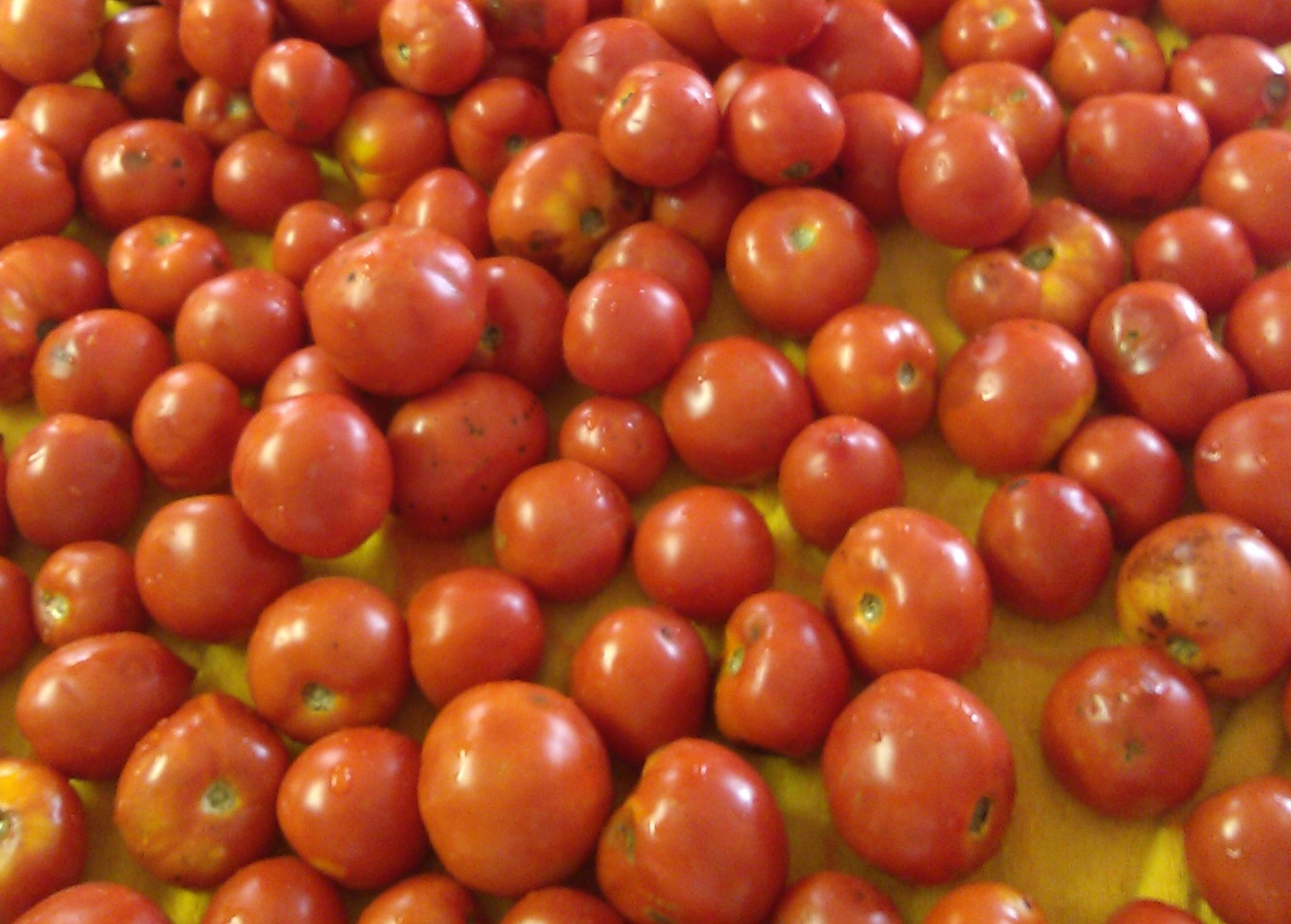
It is the lactic acid created by bacteria action that preserves the cucumbers and provides their distinctive pickle flavor. This instead of the acetic acid of vinegar. Basically, waves of different bacteria become active in the salt brine and transform the cucumbers.

The process is so easy, and the results so good, I needed a bigger crock. If you want to try them, I used a celebrity chef recipe which readers can find here.

Time to skim the scum, if you know what I mean.

Categories
Environment Kitchen Garden

Iowa’s Culture of Climate Change

Harvesting Soybeans
Harvesting Soybeans

LAKE MACBRIDE— David Biello of Slate wrote an opinion piece in Newsday titled, “Why Don’t Farmers Believe in Climate Change,” on July 16. Link to the article here or here, but here’s a spoiler alert: it’s the Farm Bureau. I commented on the article, but my comment was removed because it violated Newsday’s conditions of use. It’s their world. What’s a blogger to do? If you’re reading this, you know the answer.

In the article, Biello wrote, “take, as an example of skepticism, Iowa corn farmer Dave Miller, whose day job is as an economist for the Iowa Farm Bureau. As Miller is happy to explain, it’s not that farmers in Iowa don’t think climate change is happening; it’s that they think it’s always been happening and therefore is unlikely to have much to do with whatever us humans get up to down at ground level. Or, as the National Farm Bureau’s spokesman Mace Thornton puts it: ‘we’re not convinced that the climate change we’re seeing is anthropogenic in origin. We don’t think the science is there to show that in a convincing way.'”

If there is a record drought like last year, large farmers will capitalize the loss over a period of years, plow the crop under and start over next season. For them, it’s just another aspect of dealing with farming as a business. This attitude is consistent with what I experienced when listening to row crop farmers in Iowa.

The idea,  “they think it’s always been happening and therefore is unlikely to have much to do with whatever us humans get up to down at ground level,” is ridiculous. Climate change doesn’t just happen— it happens for a reason. And today, the main reason is carbon pollution from dirty energy like coal, oil and natural gas.

I encourage you to read the article if you are interested in the interface between Iowa farmers, the Farm Bureau and the environment. There is a lot to learn before Iowa makes progress in protecting our environment. Some say the Iowa Farm Bureau runs the state of Iowa. I say it could only do so in a vacuum of action from people whose views are closer to the reality of climate change.

~ Written for Blog for Iowa

Categories
Environment Home Life

Dealing with the Heat

Summer Day
Summer Day

LAKE MACBRIDE— During childhood, our home had no air conditioning. We had four mature trees, two pine and two maple, on the south and west sides of the house. There was an exhaust fan on the upper landing of the staircase that led to our bedrooms on the second floor. During the summer heat, we slept with windows open and the exhaust fan on. When temperatures cooled as night progressed to dawn, our parents turned the fan off. On good days, we woke to the sound of songbirds in the predawn hour. It wasn’t so bad.

During my military service I became a morning person, craving coffee and exercise when I woke. Some of the exercise was provided at 6 a.m. at our battalion commander’s direction. I would dress in my VOLAR (for volunteer army) sweatsuit, pile into my pickup truck and drive past the white asparagus fields and vineyards to the caserne for a several mile run. Ours was an infantry unit, so we worked in whatever weather presented itself— exercise being part of our work. The caserne had no air conditioner either.

We didn’t have central air conditioning in our home until we moved here from Indiana and sold the two window air conditioners we had accumulated. Central air was a luxury we have come to depend upon during the heat spells of Eastern Iowa.

Last summer’s drought was the worst. Continuing days of extreme heat had us penned up in the house, with the air conditioner hum drowning out the exterior world. I have learned to get outside more during the extreme heat, to tend our garden in the morning light, to work under shade trees grown mature from saplings, and to take a break when feeling overheated. Partly, this is adaptation to changing climate, and partly the behavior reflects a need to be useful in life. Both are important.

As the sky turns gray this morning, I’ll finish this post and have first breakfast. There are green beans to pick, garlic to check, and onions to dig, all while the temperature is in the 70s. After that, the perennial question of what to do with the remainder of my life, something wanting an answer despite best efforts to focus on this moment.

According to the weather forecast, there are about three hours before the temperature hits 80 degrees. It’s time to get on the gardening, after some locally prepared food for breakfast. The beginning of another day, presenting just as much opportunity as any day every did. A time for action to improve the sustainability of our life on the Iowa prairie. Part of that is dealing with the Iowa heat.

Categories
Work Life

An Iowa Temp Worker Bill of Rights?

Fairness for Temp WorkersLAKE MACBRIDE— In a strip mall in Cedar Rapids, a temp agency opens at 6 a.m., ready to place workers in temporary jobs. A registered applicant can enter the waiting room, sign in on a clipboard at the counter, and wait for placement in a job in construction, hospitality or warehouse work— often the same day. There is no talk about careers or perquisites, and some days a person gets placed, others not. Every time I entered, someone was waiting for a placement— there seemed to be no shortage of labor. In a society where people need paying work, this is one place they find it.

Managing the bottom line for a large or small company, the cost of human resources stands out as a high percentage of expense. Owners and executives seek to manage these expenses— their argument is they have to to remain viable in the marketplace. They will do what is legal and necessary to optimize the dollars spent on people. One of the ways they do this is to transfer the risk and expense of having employees to other entities, like the companies that employ temp workers.

We hear a lot about outsourcing and off-shoring, but until lately little attention has been paid to temp workers: that group of low-paid people that works in our community, doing office work, construction, hospitality, light manufacturing, property maintenance and more. Large corporations have become masters of outsourcing, and when we ask where have all the jobs gone, some of them went back into the community in the form of subcontractors that use temp workers, and take expense off the bottom line.

Mike Grabell wrote an article in ProPublica titled, “The Expendables: How the Temps Who Power Corporate Giants Are Getting Crushed” which is worth reading. He wrote, “the people […] are not day laborers looking for an odd job from a passing contractor. They are regular employees of temp agencies working in the supply chain of many of America’s largest companies– Walmart, Macy’s, Nike, Frito-Lay. They make our frozen pizzas, sort the recycling from our trash, cut our vegetables and clean our imported fish. They unload clothing and toys made overseas and pack them to fill our store shelves. They are as important to the global economy as shipping containers and Asian garment workers.”

Massachusetts passed a temporary workers right to know law that requires temporary staffing agencies to provide basic information about jobs offered to temporary workers. Essentially, it is a temp worker bill of rights.

Perhaps Iowa should consider a similar law, even if groups like the American Staffing Association and the American Legislative Exchange Council would be expected to fight it.

On the other hand, Iowa is a state where organized labor has struggled to pass any initiative in the legislature, notably the recently failed campaigns for fair share and choice of doctor. This when Democrats, the party that received substantial political contributions from organized labor, controlled both chambers of the legislature and the governor’s mansion.

Temp workers are here to stay in Iowa. The protections they have are the bare minimum provided by the law. Companies push the envelope of the law to keep their bottom line expense of workers very low. For progressives, helping protect temp workers in Iowa should be on our short list of priorities. The situation lies mostly below the radar and is calling for justice.

~ Written for Blog for Iowa.

Categories
Environment

Troll Work on Climate Change

the-climate-reality-project-logoIn response to a writers group opinion piece that appeared in the Iowa City Press Citizen on July 14, 2013. Posted on July 16 via Facebook.

“The Public Policy Institute, housed at Iowa Wesleyan College, and with which Ms. Thornton is affiliated, can accurately be characterized as a home for climate change deniers. On their website it says, ‘…data from the Intergovernmental Panel on Climate Change shows an upward trend in the earth’s temperature over the twentieth century. However, satellite date (sic) compiled by climatologist John Christy shows no such trend. Nor does data provided by readings from weather balloons.’ There are other examples of denial.

The reality is Earth’s temperature is warming and burning the fossil fuels referred to in this article has played and continues to play a substantial role in global warming and climate change. Ms. Thornton’s purpose is to cast doubt on the the public discussion of climate change. In a free society, that is her choice, but the reality is her economic arguments will prove vapid if society cannot adapt to and mitigate the causes of global warming fast enough.”