Categories
Work Life

December Already

U.S. Rep. Dave Loebsack

LAKE MACBRIDE— The stack of holiday requests for money is growing, and this year there is not much extra to spread around, which makes the picking easy. In fact, besides paying annual dues to a couple of national organizations, no other organization will be getting anything. That’s the way it is going this year.

The last of the red delicious apples were used for a family dinner on Sunday, ending the Thanksgiving holiday season cooking with a few extra pounds of weight and a refrigerator full of leftovers. Or, as I posted on twitter, “baking apple crisp for family dinner across town. #localfood is great, but done with cooking in favor of leftovers for a long, long while.” While preparing a menu for our Thanksgiving meal, I realized how much food we have in the house, and it’s a lot, especially if one likes daikon radishes. We won’t have to buy many groceries except milk, lemons and limes between now and New Year’s Day. That frees up time for other things.

What are those other things? A short list includes finalizing a decision about our health and dental insurance during the annual open enrollment period (I’ll post about that when I do), cleaning house with my spouse, decorating for the holidays, and most importantly building a business plan for 2014. If 2013 was a hodgepodge of turbulent activities, I expect next year to be more orderly and sensible. The key aspect of the research and development of a business plan is networking with people to identify opportunities. In practical terms, that means becoming more social, and instead of turning down invitations, accepting them more. The agenda will rapidly become packed.

This also means keeping to my schedule of devoting a few hours each morning to writing. Not only here, but a larger project, the results of which I hope to self publish on Amazon.com. More on that as the plot thickens, literally.

Lastly, I attended an event with our U.S. Congressman Dave Loebsack yesterday. It is something to see the changes in him since he was a college professor challenging a 30-year incumbent, and he got excited and involved every time a person wrote a letter to the editor supporting his campaign, to someone who wants to get re-elected and has to deal with more than 750,000 constituents.

The League of Conservation Voters, that evaluates members of congress on environmental issues, gave Loebsack an 87 percent lifetime score, which means his views are similar to mine when it comes to his voting record. The only higher score in the Iowa delegation is Rep. Bruce Braley at 88 percent. U.S. Senator Tom Harkin is rated at 93 percent in 2012, with a lifetime score of 83 percent. The Republicans in the delegation are scored very low. Loebsack’s 2012 score is 69 percent, which reflects his growing movement to the center based upon having a much different district than he did when we first elected him in 2006.

What that means is on rare occasions like yesterday, when I get one-on-one time with him, I feel a need to briefly and succinctly talk about the need to put a price on carbon. I believe he shares my views, but has to suppress them in a move to the center to get re-elected. Among the many things he said during his remarks yesterday, was that he wanted to get re-elected, and the district has diverse views. I too would like to see him re-elected.

December will soon be gone, but there is a lot of living to do before it ends. Better get to some of that post haste.

Categories
Environment

Holiday Talk about the Environment

Typhoon Haiyan 2013 Photo Credit: EUMETSAT
Typhoon Haiyan

LAKE MACBRIDE— At a holiday gathering, talk was about the billionaire who came to Iowa to meet with people about the possibility of spending some of his/her fortune on environmental advocacy, and not the climate denier type. There had been a successful campaign to identify environmental voters during the recent election in Virginia, so what about Iowa and it’s first in the nation caucuses? I was told about, but not invited to the meeting.

The trouble with this kind of money is non-profits and consultants will fight over it like there is no tomorrow, especially when the prospect is seven figures as this is reputed to be. That’s been the history: a dog-eat-dog contest to woo and sway donors to support one cause or organization over others. There is no time for the parochial concerns of a few non-profit environmental groups or consultants fighting over donations. In my opinion only one concern matters most: climate change is real, it’s happening now, it’s not too late to do something about it, and we should do something about it before it’s too late. We need to stay focused on what’s most important.

My agreement with The Climate Reality Project restricts me from accepting funds for my advocacy, so in any case, I would be out of the fray. It doesn’t make me impartial, just less able to be diverted by advocacy funding and its work-products. While funding an environmental advocacy effort is an important part of an overall effort to solve the climate crisis, there is hardly agreement among Iowa environmental groups about what is the most important legislative objective, let alone consensus. It’s safe to say there won’t ever be consensus.

Some group or groups may secure funds, along with their expectations, deliverables and arc of expenditure. They’ll develop a plan, engage paid and unpaid staff, and set objectives to meet the requirements of the funder. All well and good, but tying the project to the Iowa caucuses would not be as productive as other use of the funds could be. Case in point: what ever happened to the Sensible Priorities of Ben and Jerry, the Vermont ice cream purveyors? There are photographs and memories, but the government continues to spend more money on the military industrial complex than is needed, the Sensible Priorities project notwithstanding. My fear is adding a well funded environmental advocacy group to the Iowa caucus process would be akin to adding another clown car in the parade, and Iowa doesn’t need that.

What would be better is to channel the positive efforts that are emerging on a number of fronts into a concerted, non-partisan effort, something advocacy funding seems unlikely to do.

One should be thankful that groups are working on various aspects of the climate crisis, but in the end, the recent mold of political advocacy needs to be broken and re-invented to be more inclusive. Common ground must be found with the climate deniers, whether we like it or not, and the way to do that is not by matching the Koch brothers and others, dollar for dollar. We’ll see what happens, but the conversation was a lot more interesting than the game on the T.V. screens ever could be. It mattered more as well.

Categories
Social Commentary

Thanksgiving Work

Working the Garden
Working the Garden

LAKE MACBRIDE— It became clear the planned Thanksgiving dinner was not going to happen when the well outage persisted into its third hour. We live in a rural subdivision with a public water system managed by volunteers. They took prompt action when the water stopped around 12:15 p.m., but the contractor lives in Toddville, so it took an hour or so for him to arrive once contacted. After the second hour of no water flow, we decided the gallon jug plus a few on-hand containers of water were not enough to finish preparing the menu in yesterday’s post. We rescheduled the vegetarian feast for Saturday, and I made a pizza requiring only a cup of water for the dough. Life is change and adaptation.

The cause du jour this holiday weekend is retail and restaurant workers called in to work on Thursday so people could shop after Thanksgiving dinner. I don’t get it.

Having lost count of the number of holidays I have had to work, I know what it’s like to sacrifice family time for a job. Working holidays included the only Thanksgiving my mother spent with us since our wedding. Even so, it’s hard to share the sense of moral outrage others express about low wage workers having to work on Thanksgiving. And I plan to continue the off and on annual trek to Farm and Fleet with a friend from high school later today, Black Friday or no. But maybe I do get it.

There is a progressive movement to increase the minimum wage, and selected low wage Thanksgiving workers have been used as a prop by unions and progressive organizations to call attention to the issue.  It’s advocacy 101. To the extent low-wage workers support it, I’m with them. I’m not convinced the vast majority do.

There are complicated reasons why a person would accept a low paying job. It’s always partly about the money, and who couldn’t use more of that? But it’s also about social networking, a sense of self-esteem, and the systemic reliability of the paycheck. The latter is almost never discussed, but it is important.

There is a stark difference between working for a small business and a large corporation with an established compensation program, and adequate cash flow. When a person begins work with a large corporation, there is a detailed and consistent process for generating a paycheck, one that is usually well explained during orientation and training. There are hiccups, but over the long haul, having such a process benefits both the employer and the employee. Working for a small business is different, and given a choice, people often choose to accept low wages and work for a large corporation. What you see is what you get, less subject to personality and its inherent inconsistencies, both of which are often found in small businesses.

That said, U.S. workers have a right to organize and form a union. Why is it that so few (6.6 percent in 2012) private sector workers form a union? Why is it private sector unionization efforts so often fall flat? The simple fact is that for low wage workers, union organizers represent one more thing to deal with in an already complex cultural fabric. Because a union can’t make any promises, there is little reason to join an organizing effort unless one is already disposed to do so. Too, the potential fluidity of lowly paid work is such that rather than deal with the drama of a union organizing effort, a person can easily move on to another position. As I have written previously, unions must become more relevant to low wage workers to have a chance to organize them. This is something they have failed to do, at least in my experience.

As the sun has risen, there is work to do before taking off to meet up with my friend. He’s a union member so I’m sure we won’t cross any picket or protest lines today. We may buy something, but if we do, it will only be something we need. I’m thankful for the working life that put me in this position… and not only on Thanksgiving.

Categories
Kitchen Garden

Thanksgiving Menu 2013

Vegetarian Thanksgiving

Happy Thanksgiving!

Today, among many things, I am thankful for the readers of On Our Own. Whether we have met or not, having an audience is an encouragement that provides a sense of validity when I write. So thank you.

Today is a family cooking day in our house and we prepared a special vegetarian menu that will nourish us today and feed us leftovers for days to come. Our family is scattered around the U.S. and we’ll be thinking of them all as we prepare this meal:

Relish tray of pickled vegetables, Kalamata olives, bell pepper, young carrots
Deviled eggs
Cranberry relish
Lentils with carrot
Wild Rice
Baked beans
Sage dressing
Steamed broccoli
Sweet potatoes
Root vegetable stew
Apple crisp
Iced water

Best wishes for a happy Thanksgiving, and thanks for reading On Our Own.

Categories
Writing

The Season is Over

Farm Landscape
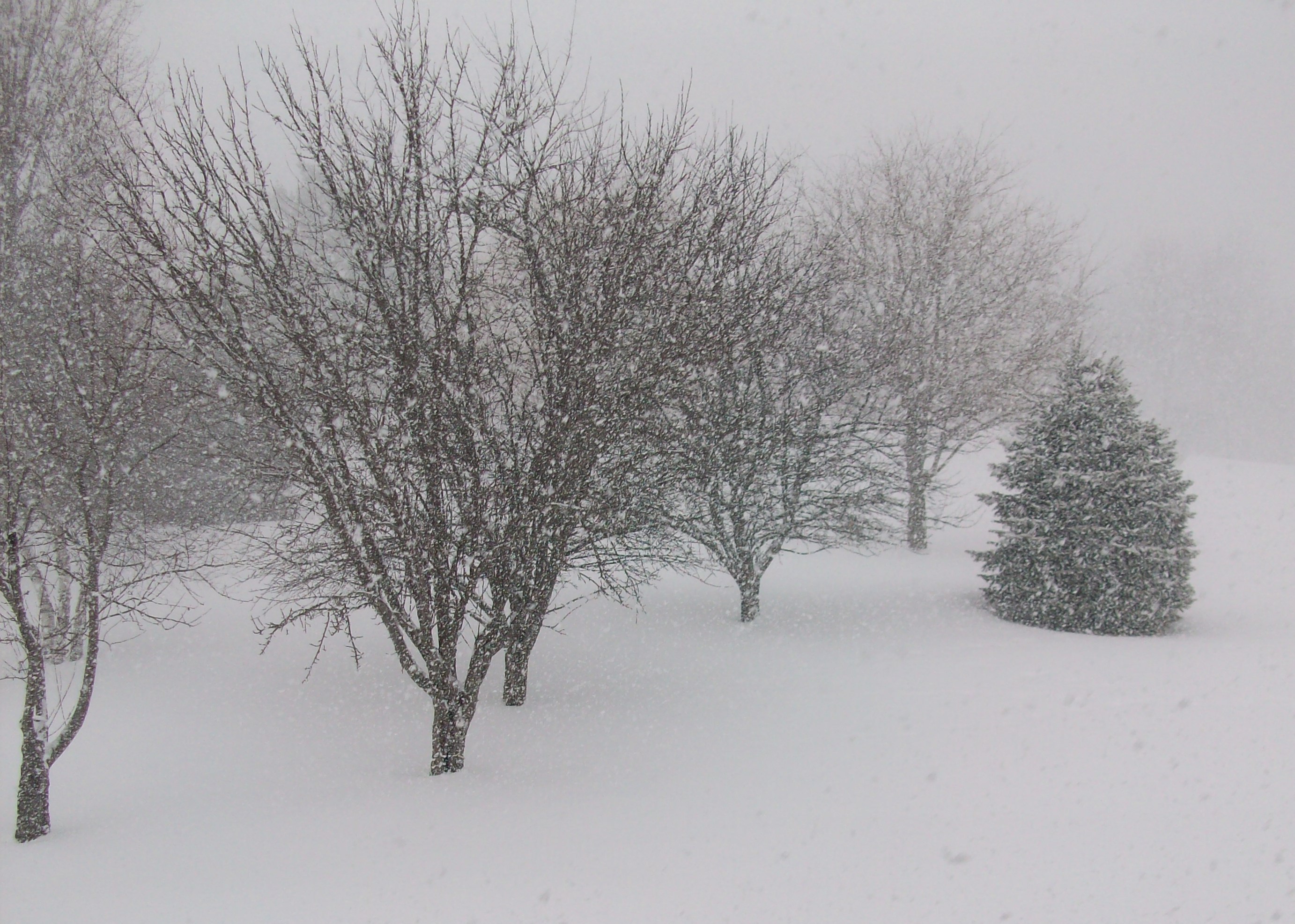
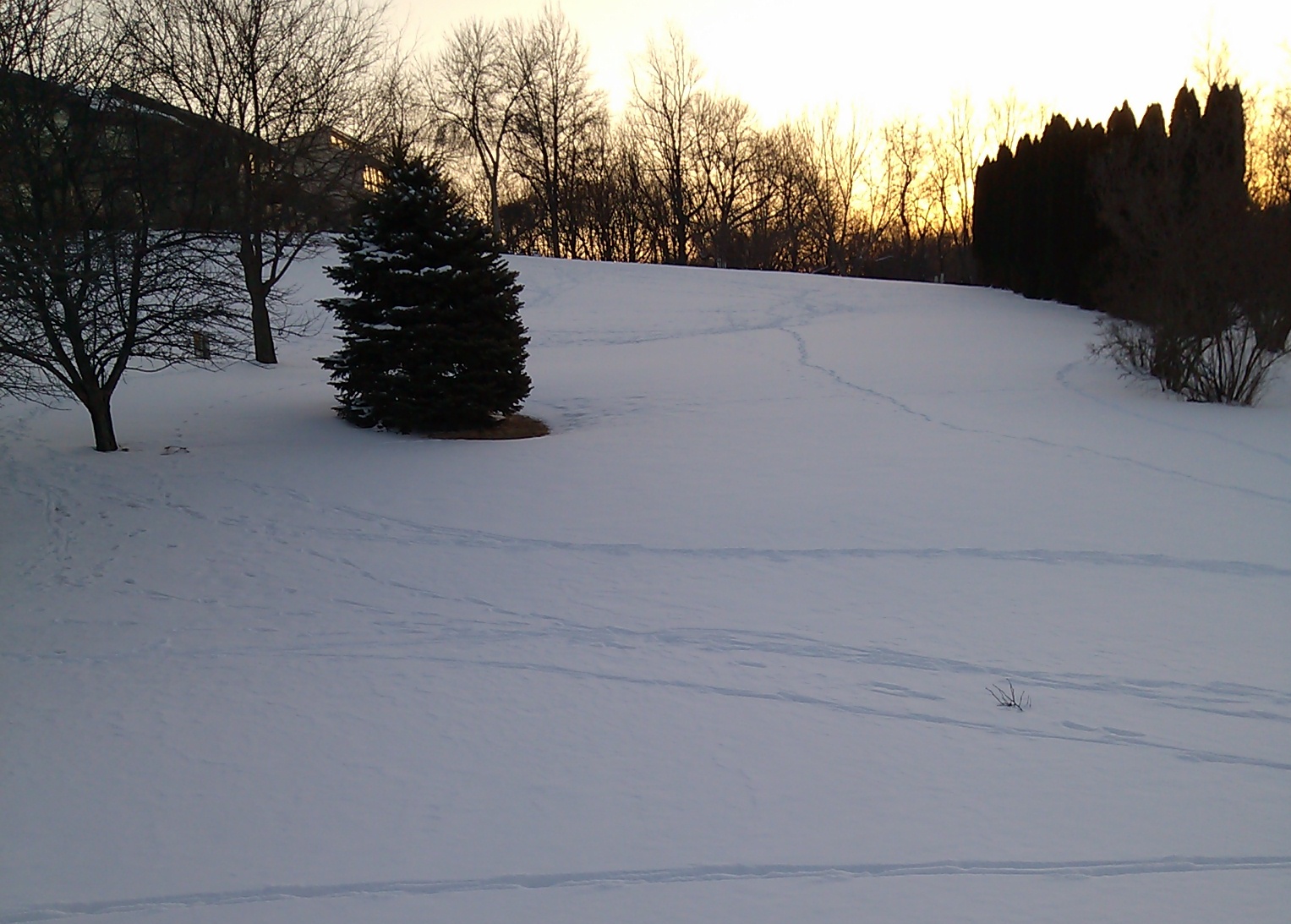
Snowy Landscape

LAKE MACBRIDE— It was pitch dark when I arrived at the packing shed. Driving a 1970s-era Ford Econoline van, the previous three hours had been spent loading vegetables in it and another truck, and delivering them to CSA customers in nearby Iowa City and North Liberty. The wind was cold, but there have been worse, the customers were positive about the final fall share delivery, and the old vehicle served.

Supplementing starlight with my phone’s flashlight app, I found the light switch inside and turned it on to illuminate the area and unload and stack the empty crates and coolers and head home. The CSA season was over.

Proceeding cautiously on the icy gravel road, I made my way to the highway and turned south toward town. An email had reported the community well was broken, so I stopped at the grocery store and bought a gallon of water to use for cooking if needed. Resisting the temptation to purchase a frozen pizza for dinner, thoughts turned to what to make from food at home. The well had been repaired by the time I turned the kitchen faucet on. Dinner was a grilled cheese sandwich, a glass of cow’s milk and some oatmeal-raisin cookies from the store.

Instead of reflecting on the end of seasonal work, or depositing my paychecks, I went right to my queue of movies on Hulu. I started “Bob Dylan and the Band: Down in the Flood” and watched it straight through. I remember listening to copies of the bootlegged Dylan recordings at a friend’s home in high school. Downstairs is my copy of “Music from Big Pink,” purchased the day it arrived at the discount store in 1968. On the computer are tracks from the 2000 re-release of the album… I was enamored of the creative process of that music and that time, and still am. The film called up memories.

Memories are not about the past, but to help us live today… and tomorrow.  I retired around 10:15 p.m. wondering what to do with memories from a time of youth, hope and promise. By morning it was clear. There is nothing to do but go on living.

Thanksgiving and the following weeks have become a time to work on a plan for the coming year— true especially after leaving full-time paid work for a corporation. There is a sense of receding into the landscape— a seduction of the active mind. The season is over, but the living goes on.

While youth has flown like a murder of crows annoyed by a brown fox preening in the sunlight, hope drives us toward new seasons, the uncertainty of which is tempered by experience, and a succession of cold nights like last night. Yes, it’s time to go on living.

Categories
Sustainability

Why Nuclear Abolition Matters

ICAN_Regular_LogoLAKE MACBRIDE— During the Reagan era, there was a general understanding that a nuclear exchange and subsequent war between the U.S. and the Soviet Union would be a disaster for the entire world. What we know today is that even a limited war between nuclear states, like between India and Pakistan, would also cause a global catastrophe. Are we worried? Not really. Should we be? Not necessarily worried, but we should be working diligently toward nuclear abolition, as is most of the rest of the world.

New research about the humanitarian consequences of a nuclear exchange has fueled a growing international movement to abolish nuclear weapons. Unfortunately, this research is not widely known in the U.S., and most people here continue to act as though the danger of nuclear war ended when the Berlin Wall came down. Even now, more than 3,000 nuclear weapons stand ready to launch in less than 15 minutes. Are we mad? No, but we are distracted.

A full scale nuclear war would disrupt the climate in a way that would produce a decade-long nuclear winter, with temperatures around the world dropping an average of 15 degrees F. In this scenario, agriculture and food production would stop, with dire consequences for humanity. Even a smaller nuclear exchange would disrupt agricultural production resulting in wide-spread famine, according to the study.

Whenever one writes about getting together with more than 100 other countries to do something, the pro-life, anti-UN, anti-tax crowd gets vociferous. They assert any infringement on U.S. sovereignty is wrong, and unnecessary. There are sound reasons to support nuclear abolition. Some of them are:

The risk of global famine should states launch a nuclear exchange intentionally or accidentally. As long as nuclear weapons exist, there is a chance we would use them. Preserving life on planet earth is as important as any cause there is.

The diversion of resources that could be spent elsewhere or eliminated. If one feels taxed enough already, avoidance of unnecessary nuclear weapons spending is a way to reduce taxation. Some say as much as $59.2 billion could be cut from the nuclear weapons budget. Do we really need to spend $100 billion on 12 new ballistic missile submarines? Or $55 billion on 100 new nuclear-armed strategic bombers? Or $60 billion to upgrade five nuclear warhead types?

The interconnectedness of life on our blue-green sphere is obvious to some and less so to others. Failure to recognize it could have fatal consequences for us and for everything we hold dear.

My advice is to learn more about nuclear abolition and do what is possible to get involved in the movement. For starters, check out the International Campaign to Abolish Nuclear Weapons at www.icanw.org, or Physicians for Social Responsibility at psr.org. Nuclear abolition matters, and our participation matters more.


Categories
Writing

My Apple Life

Backyard Red Delicious Apples

LAKE MACBRIDE— 2013 has been the best year for local apples since I planted trees. Every tree bore fruit, and around the county, everyone with an apple tree had a good harvest if they wanted to pick them. Yesterday I bought half a bushel of Gold Rush apples from the orchard, the last maturing fruit of the season. Because I work at the orchard during the peak season, I got a discount.

Dolgo Crab Apples
Dolgo Crab Apples

As winter approaches, the work has turned to making chunky applesauce a quart at a time with the ripest fruit. It’s delicious, if you know what I mean. The main uses for the bumper apple crop have been as follows:

Delicious Apples
Delicious Apples

Apple butter has become a staple for the last few years. I made a batch with the earliest apples, then a big batch of fallen apple butter from fruit knocked down by a storm. I also made apple butter from Dolgo Crab and Cortland apples purchased at the orchard. There was also a batch made from a mixture of 9 different varieties picked at the orchard. With what apple butter was leftover from last year, there is more than a two-year supply in the pantry.

Livestock Apples
Livestock Apples

The Sept. 19 storm brought a disappointing end to much of the large apple crop. In addition to apple butter, I made applesauce and apple crisp with fallen apples, and sent a lot of them with a friend who keeps livestock. She returned the favor with fresh eggs from their chicken house. A neighbor had borrowed a cider press and he and his children made about four gallons of apple cider from my fallen fruit. The fruit was all used, but it was a rush to get it done before they spoiled.

Apple Sauce
Apple Sauce

As summer turned to fall, I learned about longer keeping varieties, particularly the Winecrisp and Gold Rush apples. We don’t have the refrigeration capacity to keep them cool, but they are stacked in crates in the coolest part of the house and I’m hoping for crispy apples into winter. Since they are around, it’s likely they will all be eaten before going bad.

Thanksgiving Apple Pie

As December approaches, it will soon be time to prune. I took some photos of my Golden Delicious tree to the orchard where the chief apple officer gave me some pointers on how to salvage the tree. The expectation is that 2014 will be a bust year for home apples, but my four remaining trees have been little pruned, so I have some work to do.

My apple work will go on for a while, but it’s time for closure on a great season. Little by little, gaining an understanding of apples and apple culture has become a part of who I am. I am only just beginning to understand my apple life.

Categories
Home Life

50 Years Later

Fillmore at Locust
Fillmore at Locust

LAKE MACBRIDE— The school crossing guard at Fillmore and Locust told me President Kennedy had been shot on my way back to school. I don’t recall walking the last block, but  upon arriving at the sixth grade classroom, our teacher pulled down the window shades while we waited for news.

In the fifty years since, this memory persisted, with immediacy, and its uncertainty. I’m still don’t understand what it meant or what it means.

The crossing occurred three blocks from where I was born, a block and a half from where my mother had just served lunch, and a couple of hundred feet from the Catholic church where my parents wed, my grandmother had worked, and where I was baptized, confirmed and attended my father’s funeral. A couple of hundred feet ahead was the duplex where as a toddler I visited my maternal grandmother. That neighborhood was at the core of who I was.

I don’t recall much from the rest of sixth grade, after which we attended school in the new building, and experienced the first of many renderings. I was placed in a classroom with the group of kids who were bound for college, and separated from most of my neighborhood friends. In high school we were rent further as the boys were separated from the girls. After high school, we belonged to the world, and college, and I left not knowing I was also leaving Davenport for good. None of it had anything to do with the Kennedy assassination, and I’ve known that all along.

50 years later I attended an event in the county seat where a local author, the owner of an independent bookstore, one of my graduate school professors and someone else spoke about the day Kennedy died. Familiar icons were mentioned, and the bookstore had a table full of JFK books for sale outside the room. That hour provoked this post, and that seems okay. Because without the noon event, I would not likely have thought of President Kennedy at all today, as I had long ago moved on, almost forgetting how simple life was then.

Categories
Home Life Kitchen Garden Work Life

Turkey Wrangling and Friday

Loaves
Loaves

LAKE MACBRIDE— With the Thanksgiving holiday upon us, thoughts turn to turkey in a lot of households. Unlike during most of our vegetarian holidays, I am dealing with 100 locally grown, free range slaughtered birds tomorrow. Along with others, we are taking delivery from a local farm, sorting and weighing, and preparing them for delivery in the CSA shares next week. I’ve never been a dead (or live) turkey wrangler before, so despite the implications, I am looking forward to a new experience.

We see a lot of wild turkeys near our home. Mostly, they browse in the field near the lane to the highway, or are seen flying over the road. For those of us that remember when Iowa turkeys were an endangered species, it is always a happy sight. But enough turkey talk.

If the farm work has been winding down, it comes to a halt after delivering the final shares on Tuesday. We’ll settle up and settle in for winter. That it’s snowing as I write this post is a sign of the time of year. Confronted with the end of year holidays, it’s time to take stock of home life and work life, and make plans. This year’s planning will be as important as in any previous year.

Home life is patterned by habits formed over a lifetime: more indoor work— cooking, cleaning, writing and reading— and the part of work life devoted to research and development— studying opportunities and determining viability. As with most who live an alternative lifestyle, funding cash flow during 2014 will be a pressing issue, although I am not yet willing to sell plasma to do so.

If 2013 was anything, it was an experiment in lowly paid work, first in a warehouse, assembling kits for Whirlpool, and then on a number of farms. What I’ve found is my aging frame can take the work, but there are limits to how the tendons and muscles can tolerate increased physical activity. I am optimistic about performing physical work in more active jobs.

That said, I don’t plan to return to the warehouse, even though they invited me to return when the farm season was finished. The pay was low, and the social networking not good enough to distill further benefit. So what’s next? That’s the question for answering during the next few weeks. There are ideas, but no plans yet. I am thankful for the ability to be in this position as the snow falls and winter approaches.

Categories
Living in Society

Precinct Politics

Se.n Bob Dvorsky
Sen. Bob Dvorsky

LAKE MACBRIDE— The Braley for U.S. Senate campaign came to our political precinct last night, and a small group of friends and neighbors gathered near the lake to hear what the campaign staff had to say. They were looking for help this year to contribute to the effort. No surprise there. The event kicked off the campaign in a way that will begin to get local political activists involved.

What was a surprise is that Braley hired Sarah Benzing. The surprise is that even though the hire is old news and was covered in August, it’s the first many of us that don’t follow politics regularly heard about it. Benzing was Braley’s first chief of staff after winning the 2006 election. More recently, she served as campaign manager in high profile U.S. Senate campaigns for Kirsten Gillibrand of New York, Sherrod Brown of Ohio and Ed Markey of Massachusetts. An old, but more complete biography is here. Braley brought in someone he trusts, but more importantly, he hired a top gun in the political operative world.

Congress is in session, so Representative Braley was in Washington during the event and State Senator Bob Dvorsky spoke briefly on his behalf. The message was that despite a dysfunctional congress, Braley has been able to get some substantial work done to benefit Iowans.

What was missing from the two minute campaign video and the discussion was the Affordable Care Act (ACA). Braley sided with Republicans on the recent house vote to “fix” Obamacare, a bill the White House said would gut the ACA. It will become a political liability if Braley walks back his support for the ACA as a senate candidate. President Obama won re-election in our precinct by four votes, so it seems clear why Braley would try to hedge his bets. But fence straddling on this issue is not becoming of a candidate who asserts he is a progressive politician.

In Big Grove precinct, we gave Senator Tom Harkin 64 percent of the vote during the 2008 election, but also gave Senator Chuck Grassley 62 percent during the 2010 election. It’s no secret that the so-called no-preference voters will decide the 2014 senate race. In this precinct, somewhere between 850 and 1,000 people can be expected to vote in 2014, and that means to win the precinct, if Braley is nominated, he will have a core of 35 percent of the votes, and needs to persuade another 15-16 percent, or roughly 130-150 voters. It can be done, but it will not be a cake walk.

The group gathered last night will support Bruce Braley’s campaign going forward. Whatever he may lack as a candidate is made up by the fact that once the Republican clown car drops off their nominee next year, the race will be depicted as a high-profile duel of the titans. Money is expected to pour into the race, and one can only thank our lucky stars that our household does not turn on the television much any more. Politics is local, so what happens in Big Grove precinct has broader meaning. Maintaining the U.S. Senate majority is high on our list of priorities, and that means working now to elect Bruce Braley.