LAKE MACBRIDE— Memorial Day is past, and summer will officially be here in 26 days. The spring garden patch is beginning to produce, there will soon be spring garlic, but everything else is running way behind. I blocked out some time to finish the initial planting this week. Here’s hoping the weather cooperates, although with Iowa resignation, we’ll accept and deal with whatever comes.
It is stunningly quiet in Big Grove considering a contested primary election is just a week away. Both parties have choices to make, although the Democratic courthouse races have more meaning. There have been a lot of absentee ballots cast in the county, more than usual. Whoever is organizing that effort will likely reap dividends in a low turnout election. Since I have a filled dance card for the next ten days, we’ll wait and see what happens.
Like a smoldering ember waiting for fuel, in the ashes is consideration of another pivot point for this life. The busy-ness suppresses it, but nonetheless, it is there. There is more to come on that.
LAKE MACBRIDE— Trish Nelson will be taking the summer off from editing Blog for Iowa, and I’ll be filling in. There is a small stipend, and the work will give me a chance to develop ideas around the 2014 midterm elections, and on other topics.
With the retreat of so many people to no preference voter registration, to say that party affiliation matters a lot misses the point. In my statehouse district, the Iowa Secretary of State May report showed 19,802 active voters, of which 6,275 are registered Democratic, 5,666 Republican, and 7,576 No Party. The Democratic edge is largely irrelevant with so many no party registrants.
Don’t get me wrong, there is a devoted corps of died in the wool Democrats and Republicans. They just make up a minority of the electorate. In my experience, the further down the ticket, the less party affiliation matters, and the more the personality and policies of candidates come into the foreground. This summer will be a time to explore the meaning of this in light of the Nov. 4 general election campaign. It should be fun and interesting. My posts can be seen at this link.
The other new summer job is a woodcutting project in nearby Cedar County. The work has flexible hours, and will add some needed income to the household budget.
Meanwhile, the farm, newspaper and warehouse work will form a base of income upon which I can build. One thing seems certain, with all of the gardening and my share from the CSA, there will be no shortage of good quality food for our pantry and table.
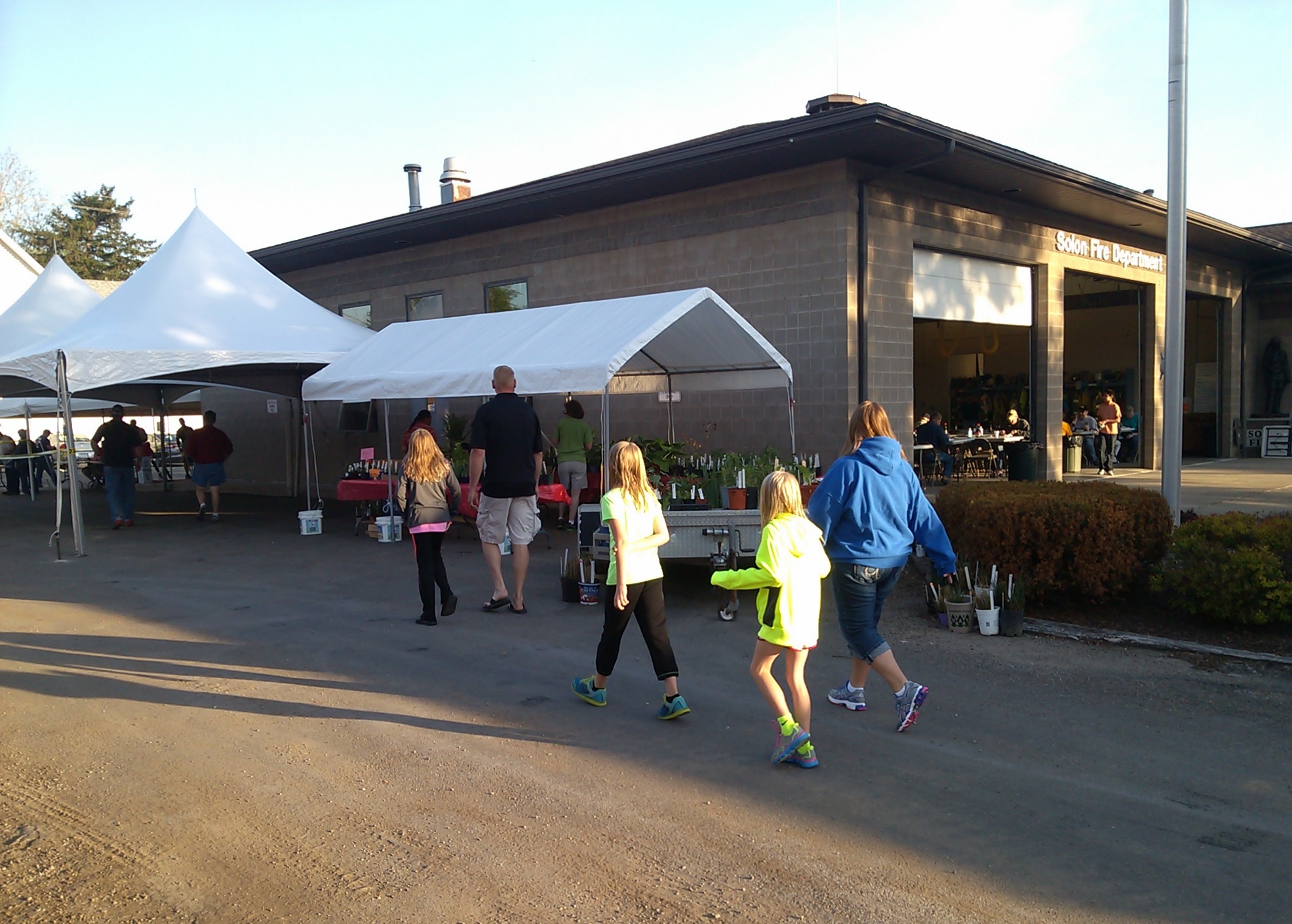
BIG GROVE TOWNSHIP— Memorial Day weekend is a big one for the township trustees, in that we help manage the fire station, where the annual firefighters breakfast took place this morning, and the cemetery, where the American Legion will hold a ceremony tomorrow. Our work is on display in both places. I never thought much about the connection until I became a trustee.
Our garden has usually been planted by now. This year, it is about 50 percent finished, mostly because of the late start and a work schedule that makes it impossible to get into the soil and get it done directly. We’ve had radishes, chives, spring garlic, spinach and lettuce already.
The primary elections are being held next week— another marker in the political cycle. I spent a lot of my morning proof reading articles about political candidates for this week’s newspaper, the last edition before the election. My article about the city council meeting and a pair of articles about the Democratic House District 73 candidates, are to be published.
I plan to vote at the polls in order to see how the last days of the campaign develop. A last minute development could change a vote or two, but I doubt it. The real political work won’t start until the end of summer, unless one is a candidate. I accept the popular wisdom that this weekend is the unofficial start of summer.
Supper tonight was asparagus, Yukon Gold potatoes and a veggie burger. Fit food as the weekend unfolds. Tomorrow, if I am lucky, I won’t leave the township.
LAKE MACBRIDE— I planted Acer and Beefsteak tomatoes today, commonly referred to as slicers. Also harvested some radishes for dinner. It was about 2-1/2 hours all-told. The first tomato seedlings seem to be surviving, although they haven’t grown much. There is one more variety of tomato to plant, the Best Boy.
LAKE MACBRIDE— Leadership on what matters most for our future will come from outside the United States. It’s not that Americans are bad people— for the most part, we aren’t. However, many of us have mistaken the advancement of bad ideas as the right ideas, and there is a difference.
The most recent example was last week’s vote on an amendment to the National Defense Authorization Act (NDAA). The NDAA is one of the few pieces of legislation that still works through the legislative process the way most of them did back when Congress did more legislative work. Rep. David McKinley (R-WV) offered an amendment which would “prevent the White House from sending funds to the U.S. Global Change Research Program National Climate Assessment, the Intergovernmental Panel on Climate Change’s Fifth Assessment Report, the United Nation’s Agenda 21 sustainable development plan, or the May 2013 Technical Update of the Social Cost of Carbon for Regulatory Impact Analysis Under Executive Order 12866.” McKinley questions the validity of climate science research generally, but, according to his website, also argued that reducing the use of coal wasn’t worth the harm it would do to the economy. The amendment passed the House, and is expected to advance to the Senate.
I understand coal country better than most mid-westerners. My family tree has long roots in Appalachia, predating the discovery of coal in Boone County, West Virginia by John Peter Salley in 1742. My career in transportation and logistics took me to Boone County and I learned about its dependence on coal. When the Coal Valley News announced our truck driving school, it was front page news, next to a story about United Mine Worker layoffs in the county seat.
Meeting with businesses, the governor’s office, the school board, local residents and others, I got to know the issues around coal. People didn’t like the mine owners and operators, but were dependent upon them. If life has changed from company-owned coal camps for most, coal camps still exist along with poverty and an extreme dependence on coal to extract a life. The question, “what are we supposed to do without coal?” resonates there if answers don’t.
There is no greater good in McKinley’s legislative work, and there is little point in arguing with climate deniers like him. The preponderance of evidence is that climate change is real, it is happening now, and its effects are causing harm. As the business community wakes up, we are increasingly able to place a dollar figure on the social and economic costs of global warming and related climate change. Economics will drive action to mitigate the causes of climate change, as making a profit remains paramount for businesses. Like it or not, West Virginia, part of mitigation of global warming means drastic reductions in the amount of coal used across the globe.
At the same time, bad ideas like McKinley’s have enough support to advance, making the U.S. Congress less relevant in addressing the most important issue of our time. That’s why I say leadership on climate change, as well as on nuclear abolition and other threats to life as we know it, will come from outside our country. For whatever reason, too many Americans embrace bad ideas to sustain the political will for positive change.
What I don’t get about West Virginia and coal country is that while there is a church in almost every neighborhood, another argument should resonate equally with self-serving economic interests, but doesn’t.
If God is the author of creation and wants humans to do anything, high on the list would be to care for creation. We have not upheld that responsibility even though it transcends politics. Instead, people like McKinley look to mammon for their inspiration, forsaking all of us in the process.
Belief in God is not the same usage as belief in climate change, because the efficacy of the harm done to humans by climate change will out regardless of what people believe or don’t believe. Like many concerned citizens I feel we must wake up to the threat to human health posed by climate change before it’s too late. If the U.S. won’t lead, then others will, because taking action won’t wait for U.S. politicians to get on board with the obvious.
LAKE MACBRIDE— Another morning in the garden spading soil. During rest breaks I made political phone calls to get caught up on campaign activity. Standing near earthworms dug up in the dark, rich loam was a reminder of our ultimate destiny. Life is short so we have to live while we can. Too bad political talk doesn’t produce any actual manure because I could have used some.
LAKE MACBRIDE— The tomato seedlings weathered the afternoon sun and overnight rain, and each cage has at least one survivor from the transplanting. The next threat is bugs that chew on the young stems. I’m ready with extra seedlings should some be stricken.
The plot of spring vegetables looks nice after yesterday’s hoeing. Dark wet soil between bursts of green. The carrots did not germinate. It won’t be long before the radishes are ready to harvest. The ground is too wet to work in the garden this morning.
Mike Carberry, Diane Dunlap, Lisa Green-Douglass and Janelle Rettig
The local Sierra Club, Iowa City Climate Advocates, 100 Grannies for a Livable Future and my organization, Iowa Physicians for Social Responsibility, hosted a county supervisor forum at the Iowa City Public Library last night. Since we were a co-sponsor I felt obligated to attend.
Martha Norbeck moderated, and the way she crammed three or four questions into a single one gave the candidates license to answer how they would around the topics. I would have picked other questions, but was not in charge of that.
The forum went like this.
I’m supporting Carberry and Rettig because I know them best, their strengths and weaknesses, and believe they will work to do well as supervisors. The other two would likely work hard if elected, but I don’t know them at all, and picking a candidate is far from being a logical process on a level playing field.
Only two weeks until the Democratic primary, which in Johnson County has been the election for local races. The lone Republican supervisor, John Etheredge, is expected to be sanded off in the Democratic wood shop that is this county’s general election. For the time being, I’m planning to vote at the polls, but get back to gardening as soon as the ground dries, and there is a break in my outside work schedule.
LAKE MACBRIDE— We agreed I could skip soil blocking at the CSA this week. There is a lot of planting to do on the farm, but the summer help has arrived, and the greenhouse needs emptying into the high tunnel and fields before planting begins again in earnest. I spent a seven hour shift in my own garden.
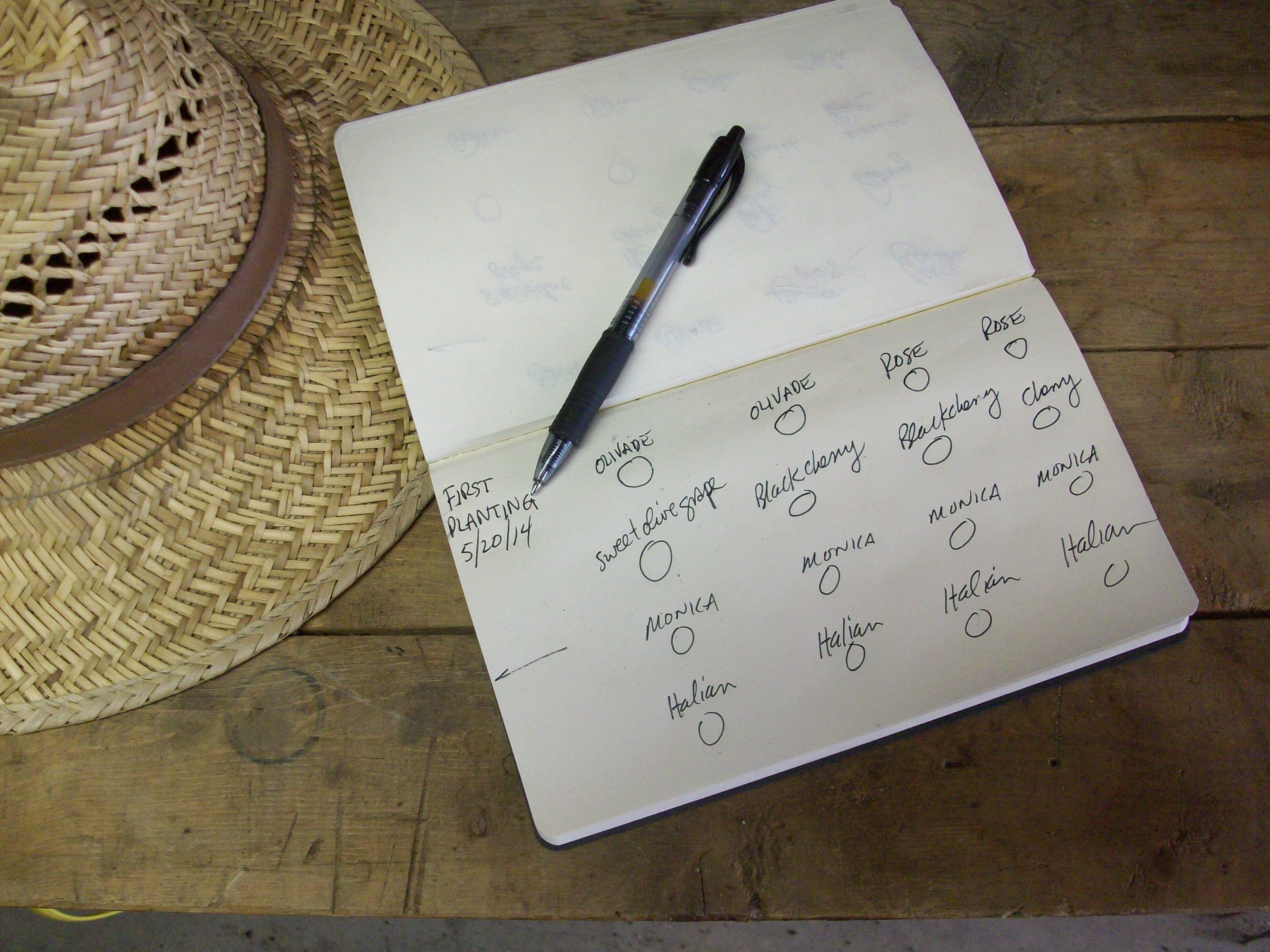
First task was planting tomatoes. I finalized a plan and planted the seedlings according to this plan.
Final Planting Schematic
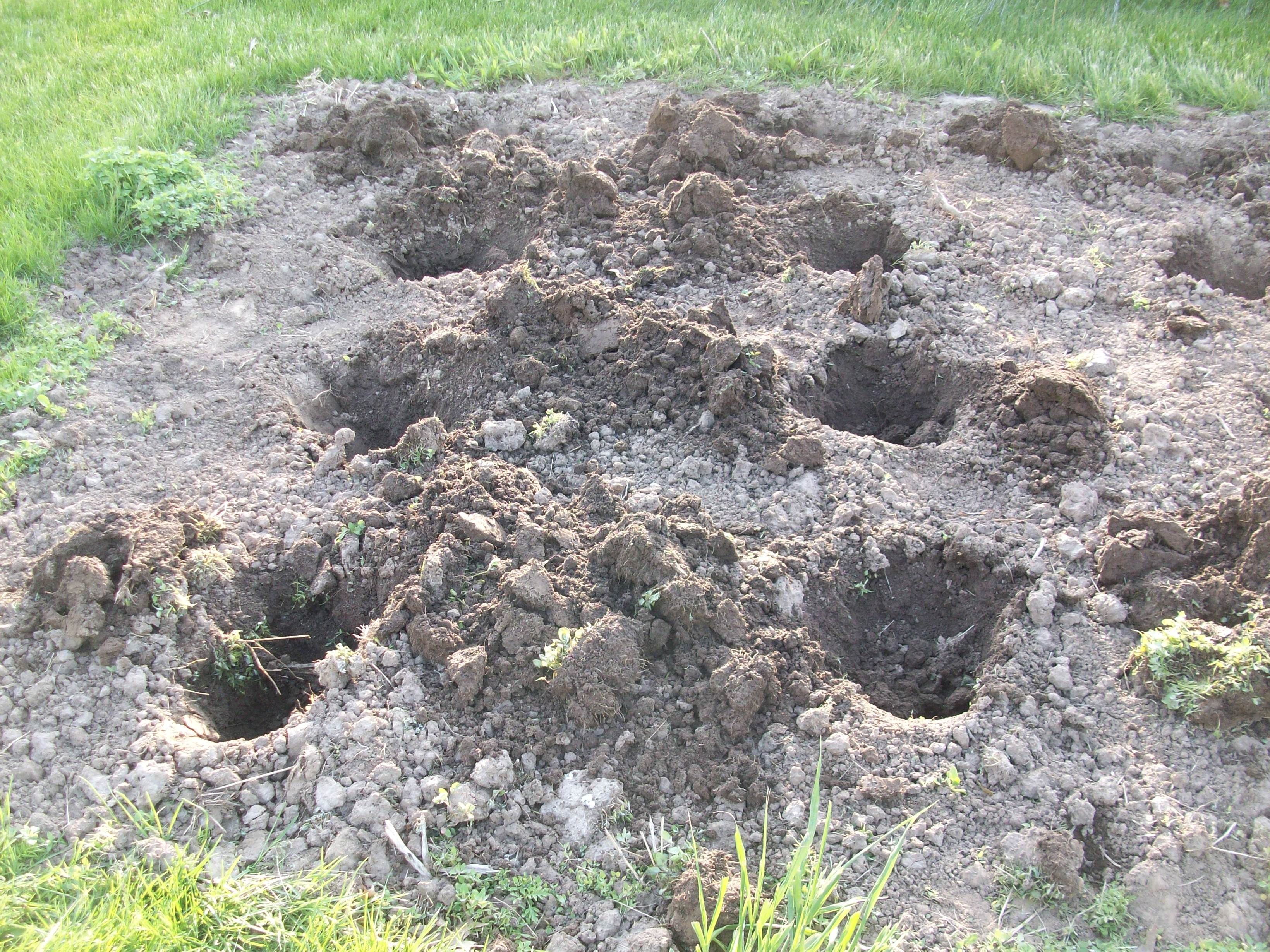
It began by digging holes for the seedlings. They looked like this.
Tomato Holes
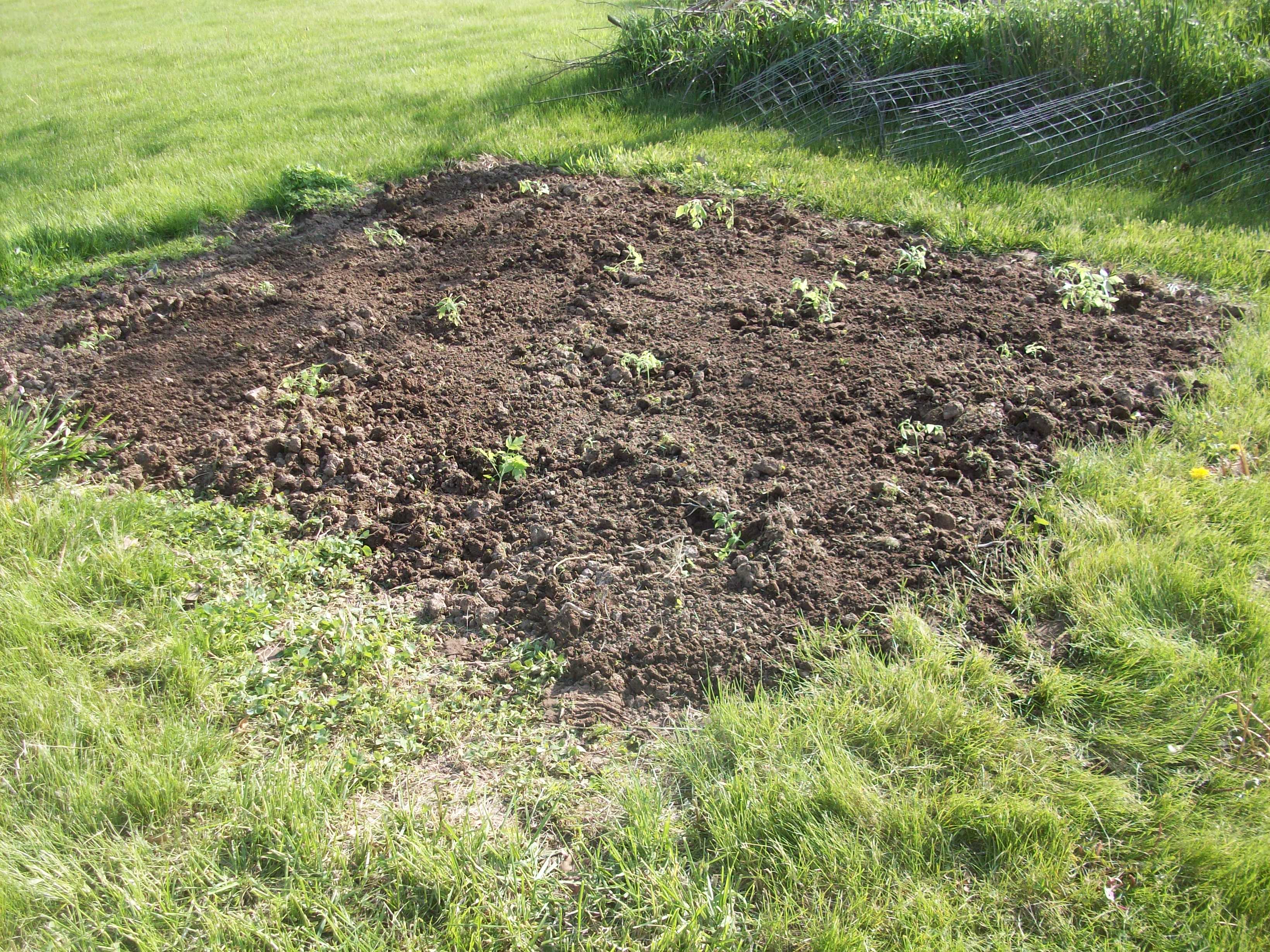
After a lot of work, delicately trying to plant the tomatoes without damage, the plot looked like this. I left a small strip for herbs on the north end.
Tomato Patch
I watered, staked and caged them before moving on the next plot. I transplanted the remainders in case I need them to replace failed plants.
Surplus Seedlings
I found a couple of cloves of garlic in a ditch and planted them last summer, and they came up. Because I have a supply of garlic chives, I trim off the green leaves, compost them, and use the thicker part of the plant in cooking. The leaves are definitely edible, and I would slice and mince them finely and use the same way you use chives for a very mild garlic flavor.
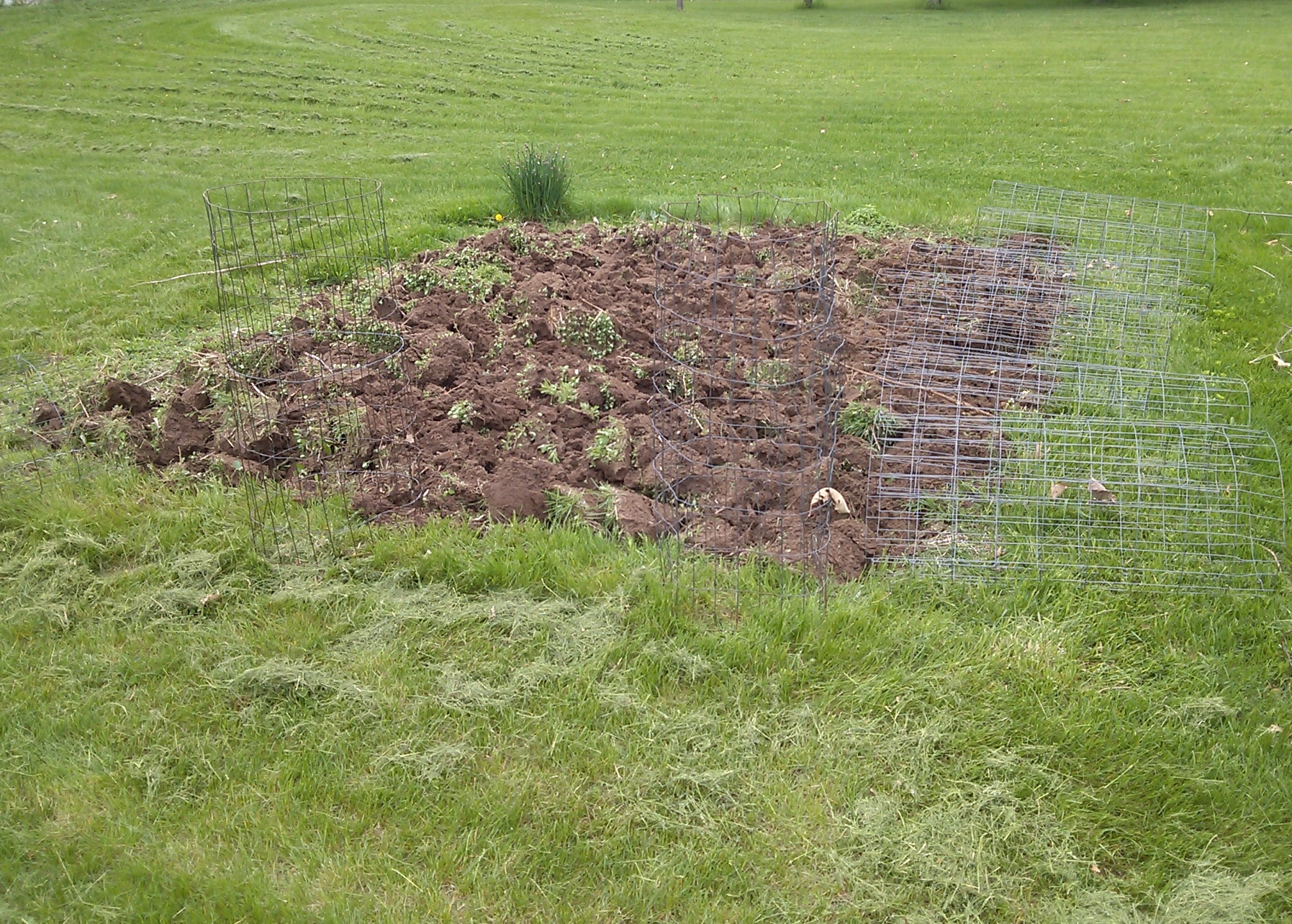
The plot had been left as it was at the end of the season, so there was a lot of work to be done. I removed all the fencing, the aforementioned spring garlic, and brought the John Deere up from the garage to mow it short. I dug a bit, but the day was getting late, and I stopped at about five spade rows.
Spring Garlic
It was a busy day and a lot of work. Seven hours was about all I could take before heading inside for a shower. It was a constructive day in the garden.
LAKE MACBRIDE— Farmers are back in the fields after a wet spell. According to today’s hourly forecast, there is a window for planting that lasts until 2 p.m. when scattered thunderstorms are expected.
Suddenly the house is full of greens and soup vegetables, mostly from the CSA— there is plenty to eat. But if planting isn’t done soon, there will be only a slight garden harvest.
After proof reading six late breaking stories for the newspaper, and making soup from last night’s asparagus steaming water and bits of asparagus ends, the rest of the day is mine for the garden.
Turn off the Internet and walk into the garden. That’s how today will be spent.








 Journey Home
You must be logged in to post a comment.