My spouse’s trip to her sister’s home extended into a third week. A typical behavior when I’m home alone is going through the pantry to see what new ideas I can experiment with while my mate is gone. I found we have a LOT of quinoa. Some I bought on discount at the home, farm and auto supply company before the pandemic, and the two boxes came from mail order. I decided to cook a quart of it in vegetable broth and see where things went.
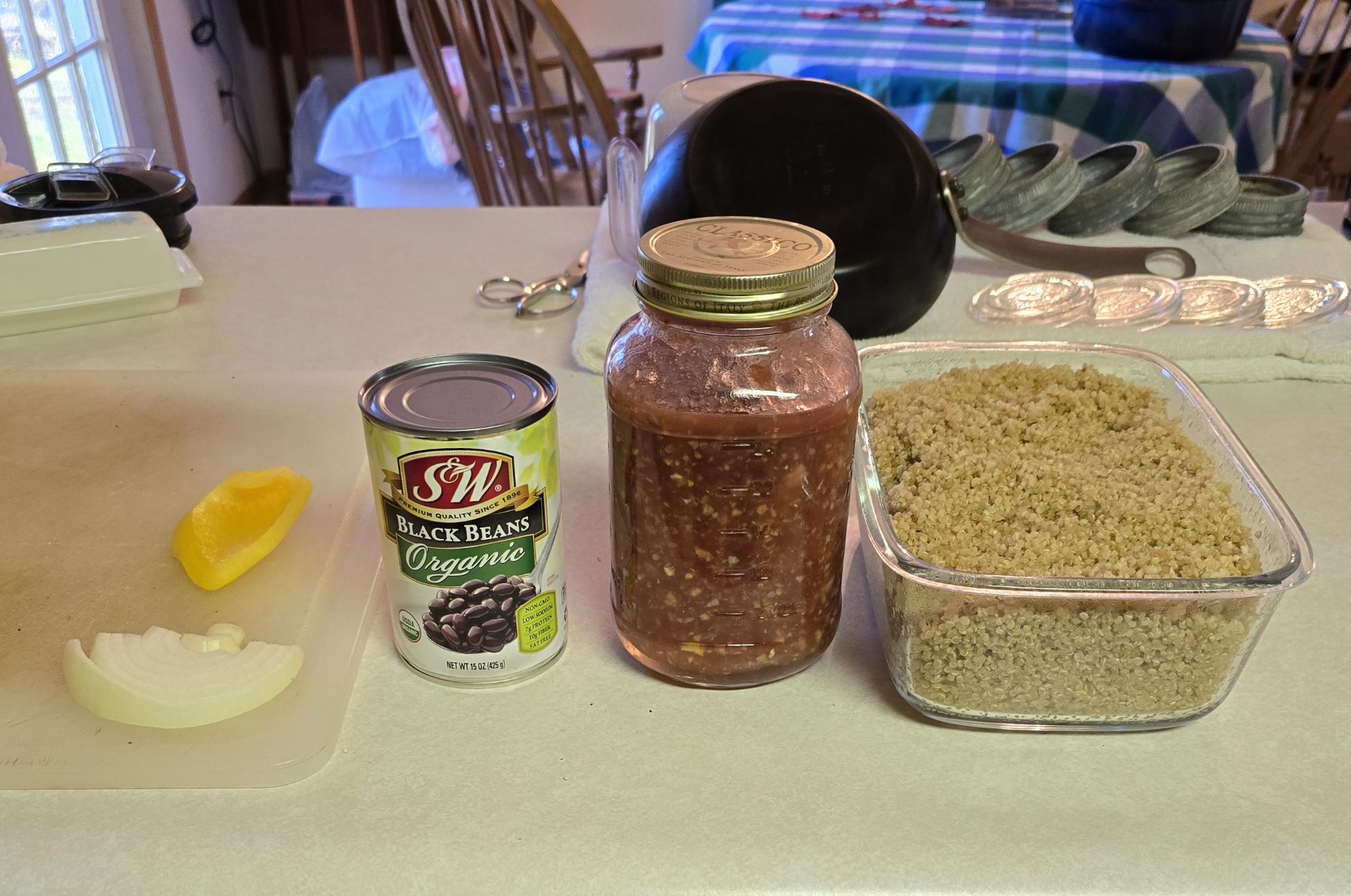
Quinoa bowl ingredients, including less than half the prepared quinoa.
I discovered a quart of uncooked quinoa makes a GIGANTIC amount of cooked. I tried some after cooking the batch and found it quite good by itself. It’s a nice change from other grains. I did research about using it and came upon the quinoa bowl. There will be a lot of those during the next week to ten days.
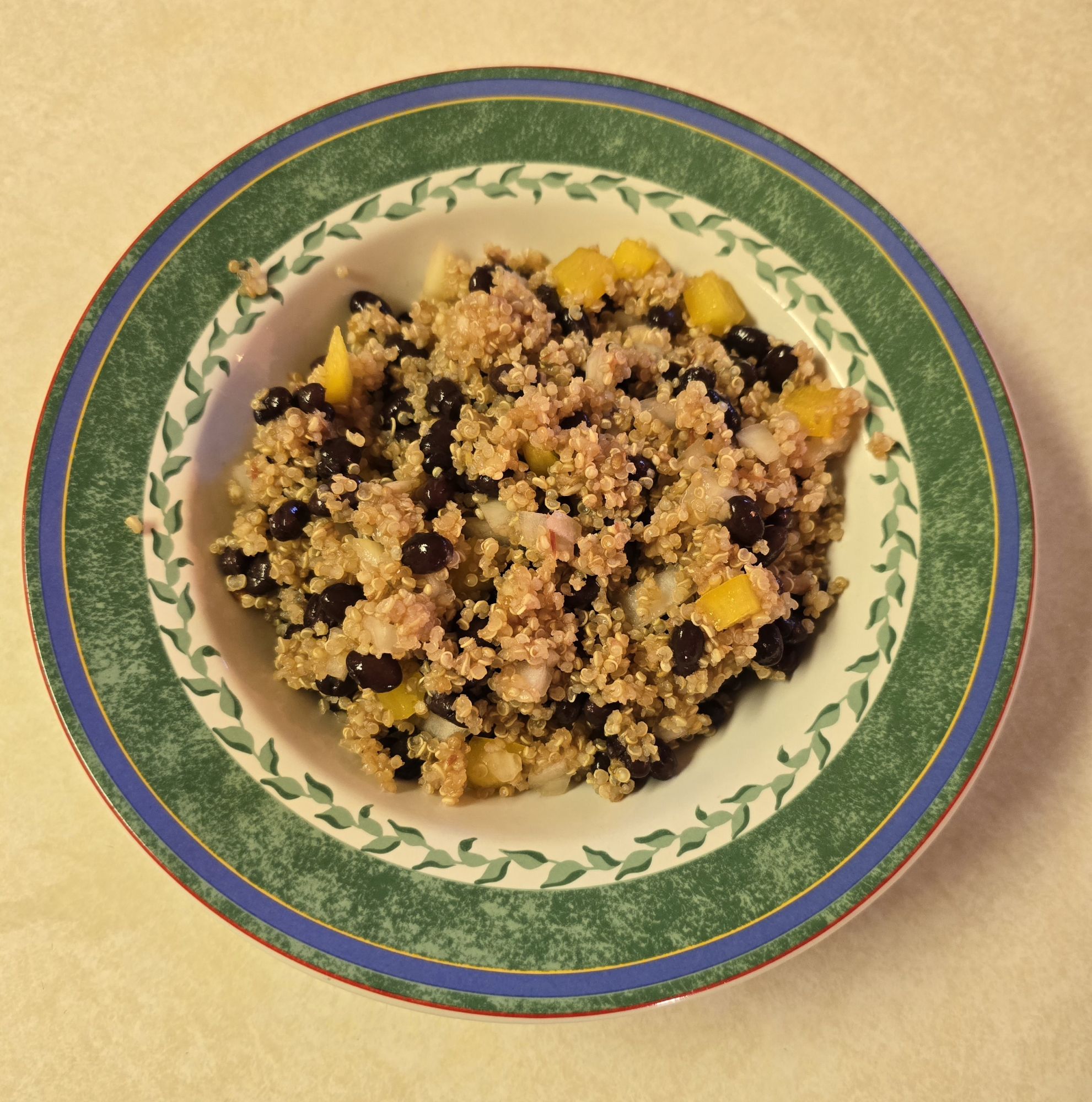
The premise is basic: use a base of cooked quinoa and mix it with other things. First up was a Mexican-style quinoa bowl. I used quinoa, canned black beans, homemade salsa, onion, and bell pepper. The vegetables were raw, and everything else cold. I put the ingredients in a bowl and mixed, and voilà: dinner is served. It hardly made a dent in the quinoa. As far as taste goes, I rate it 8 of 10.
Quinoa bowl.
These are going to be quick, simple, inexpensive, and tasty meals. Now the search for other inspiration begins.
My way of cooking macaroni and cheese changed. After some unsatisfying experiments with making it vegan, I now use cheese and butter when I am home alone for dinner. It is on the menu only one or two times per year, so I want it to be satisfying and memorable when I prepare it. I took inspiration for my most recent iteration from Massimo Bottura’s Kitchen Quarantine series during the coronavirus pandemic. Bottura layered the ingredients in a baking dish and I had an Aha! moment.
I have been a mixer. That is, the sauce, noodles, and other ingredients are placed in a bowl and mixed together, then moved to a baking dish and topped with something before baking. Bottura taught me to layer instead, which had never occurred to me. It could be life-changing. Here is what I did.
I preheated the oven to 350 degrees Fahrenheit and greased a baking dish. Next I made a béchamel sauce with four tablespoons each of butter and flour. These two ingredients make a roux, which is cooked a couple of minutes. Milk is added with constant stirring until medium thickness, or it coats the back of a spoon. I embellished the simple sauce by grating some nutmeg into it.
Boiled pasta was ready to go. Either cook it for the dish, or use leftovers. This time, I emptied partial containers of different kinds of dry pasta until I had two cups and cooked until al dente. My thinking is the pasta should be similarly sized, yet that is a personal preference. There are no rules.
Get the cheese ready. This can be anything the cook wants. I like a sharp cheese and used four ounces of white extra sharp cheddar, half a cup of feta, and four tablespoons of grated Parmesan. I had thought to use Gruyère and bought four ounces made in Wisconsin for the project, but it didn’t pass the taste test. If it were Swiss Gruyère, it would.
Next is the layering. A thin layer of sauce on the bottom of the baking dish to cover. Next the pasta spread evenly. Distribute the chunks of feta evenly, followed by the cheddar. The rest of the sauce goes on top, and then into the oven for 30 minutes.
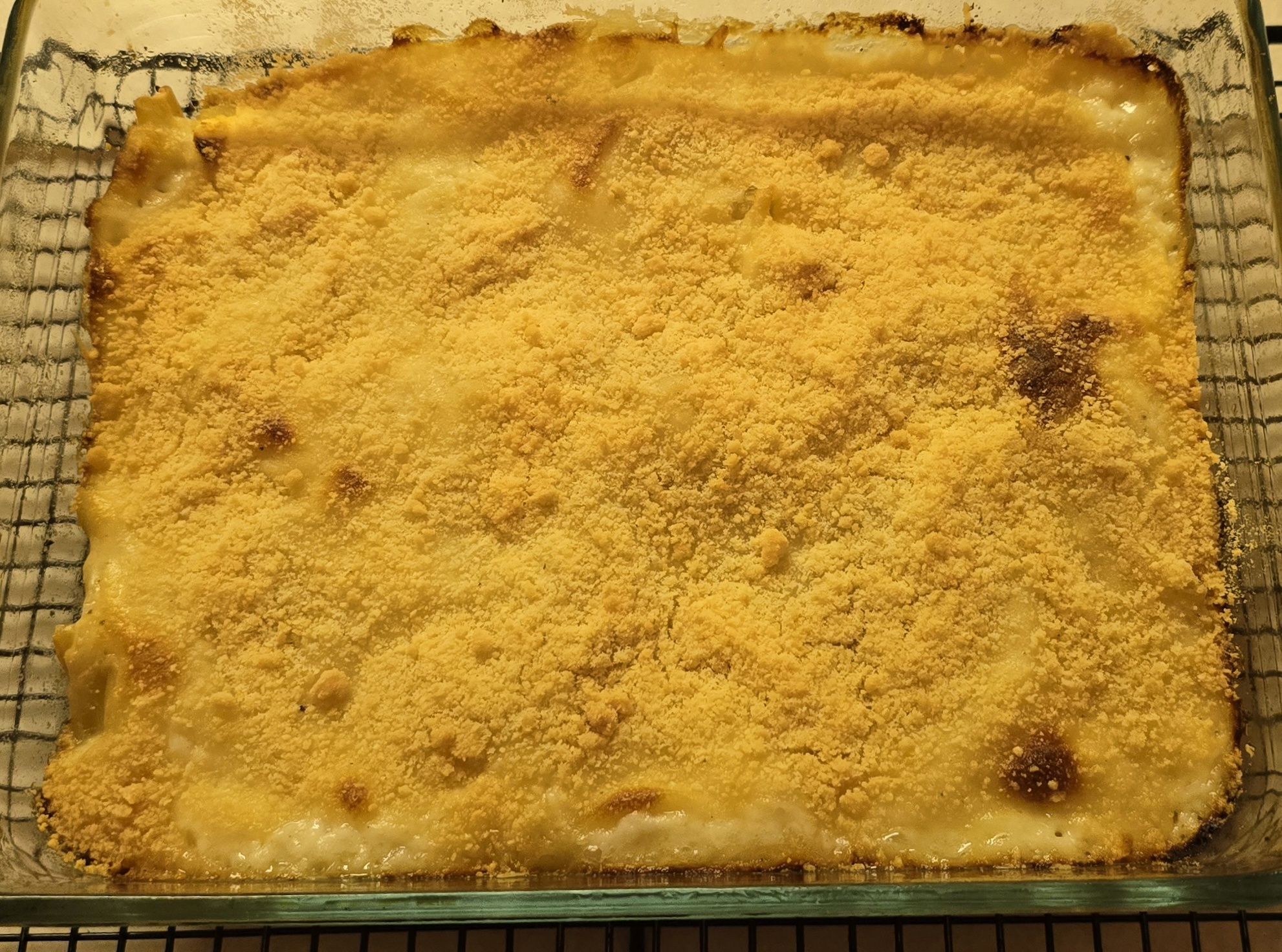
At thirty minutes see where we are. I pulled the dish out and sprinkled the Parmesan on top. I turned the oven up to 400 degrees and let it bake until the crust began to turn brown. The result is in the photograph. Based on the taste, I am now a layer guy.
Mac and cheese is an old dish. In Medieval times it was pasta layered with cheese and baked, not unlike what I did. In the 18th and 19th Centuries, English and European cooks began using a béchamel sauce mixed with cheese (a.k.a. Mornay sauce), and mixing it with the pasta before baking. Let’s not even talk about those Kraft mac and cheese boxes that originated in the 1930s (Mixers, not baked).
My native impulses had me arrive at a rustic-style product that was the antithesis of processed food. If I learned anything by being a part of the local food movement, it is that this kind of dish is what I want.
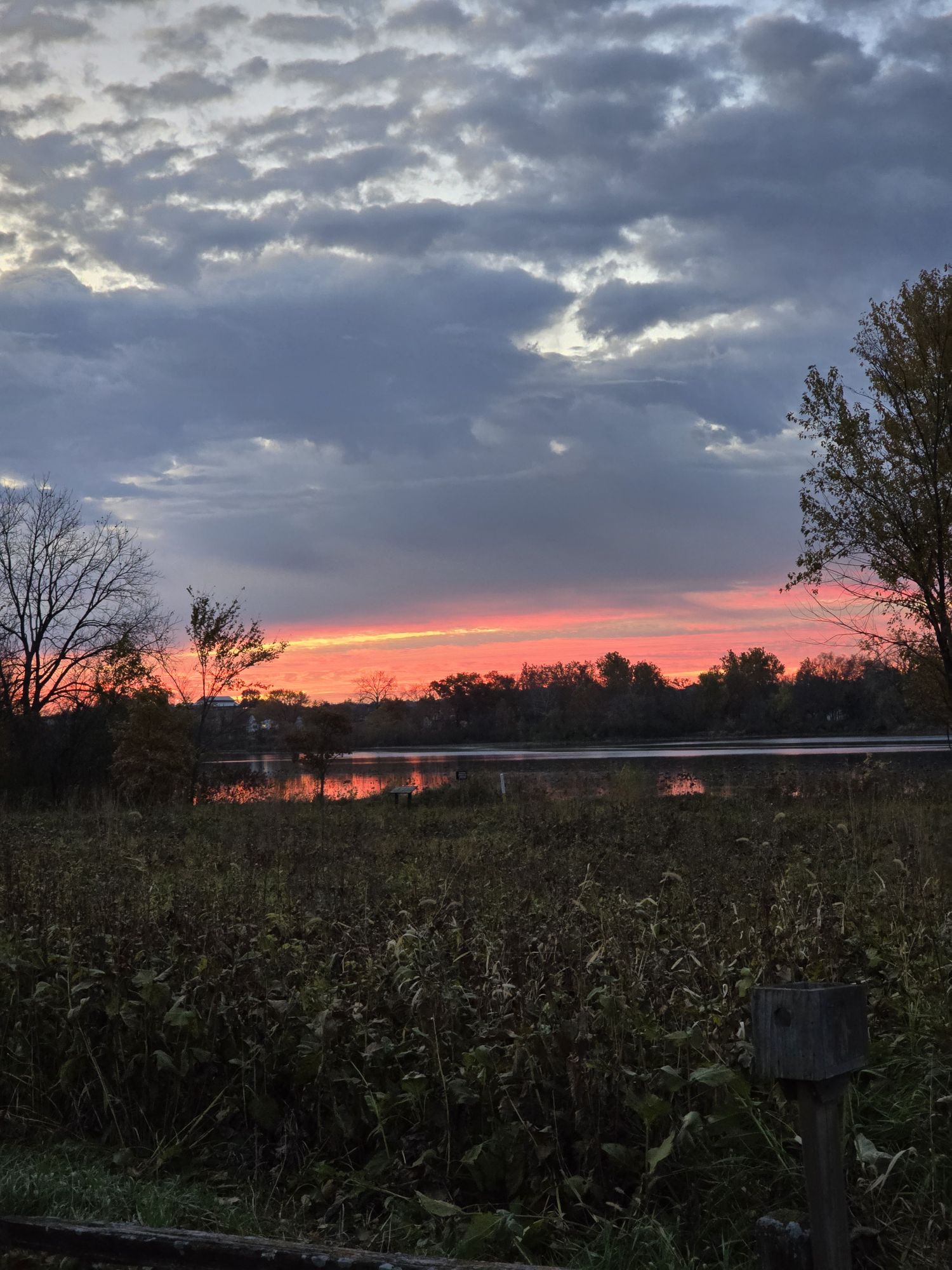
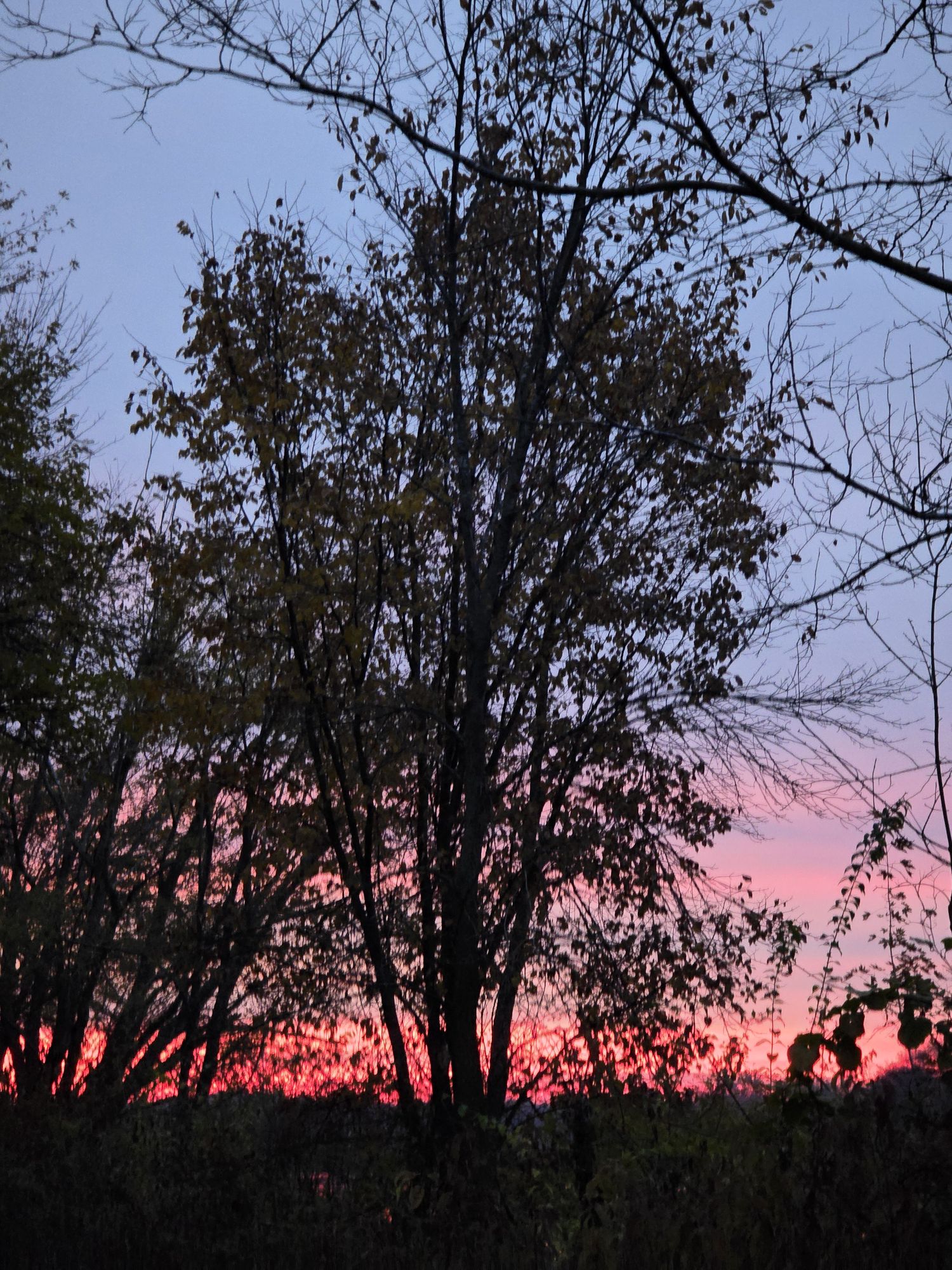
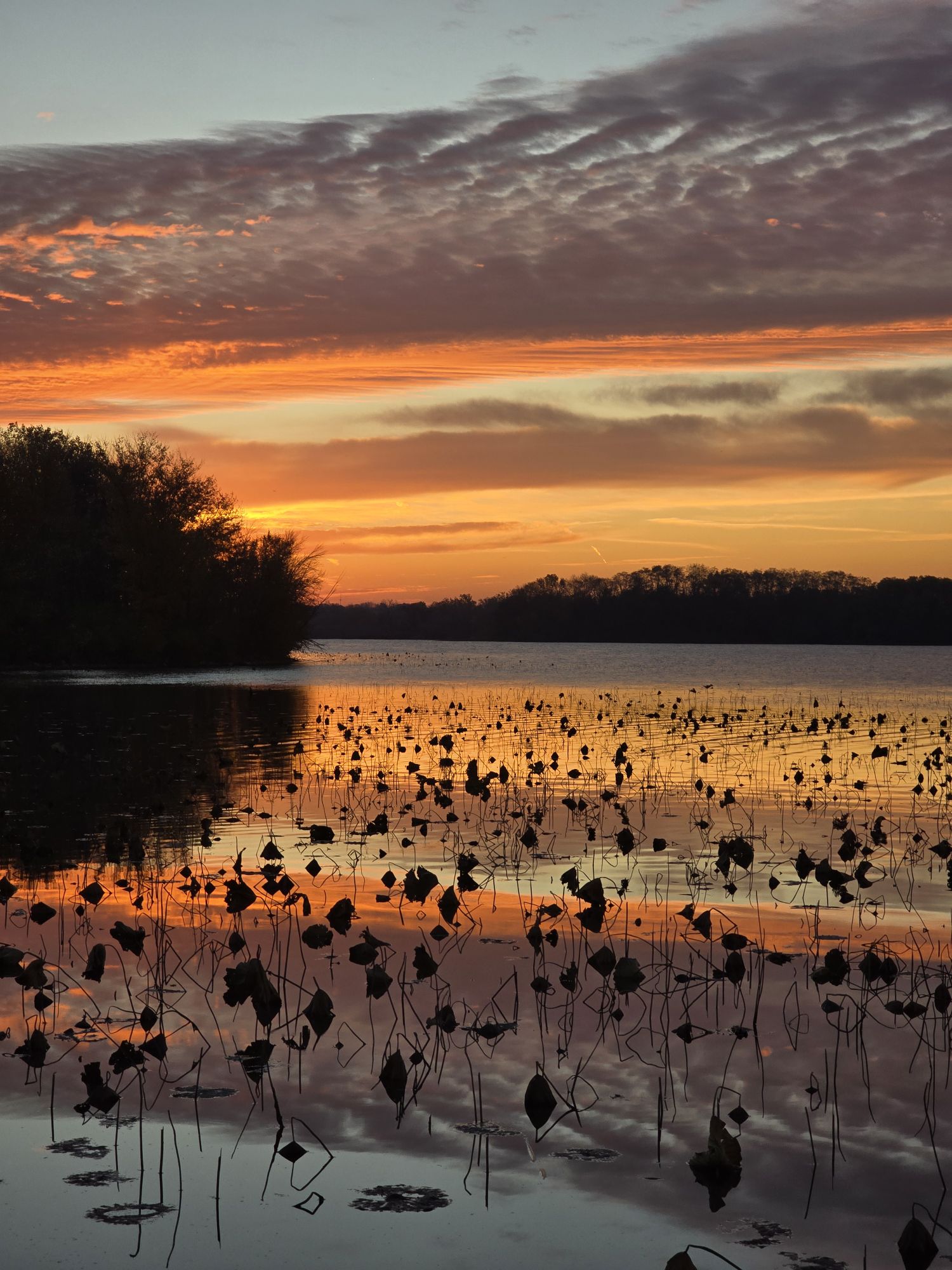
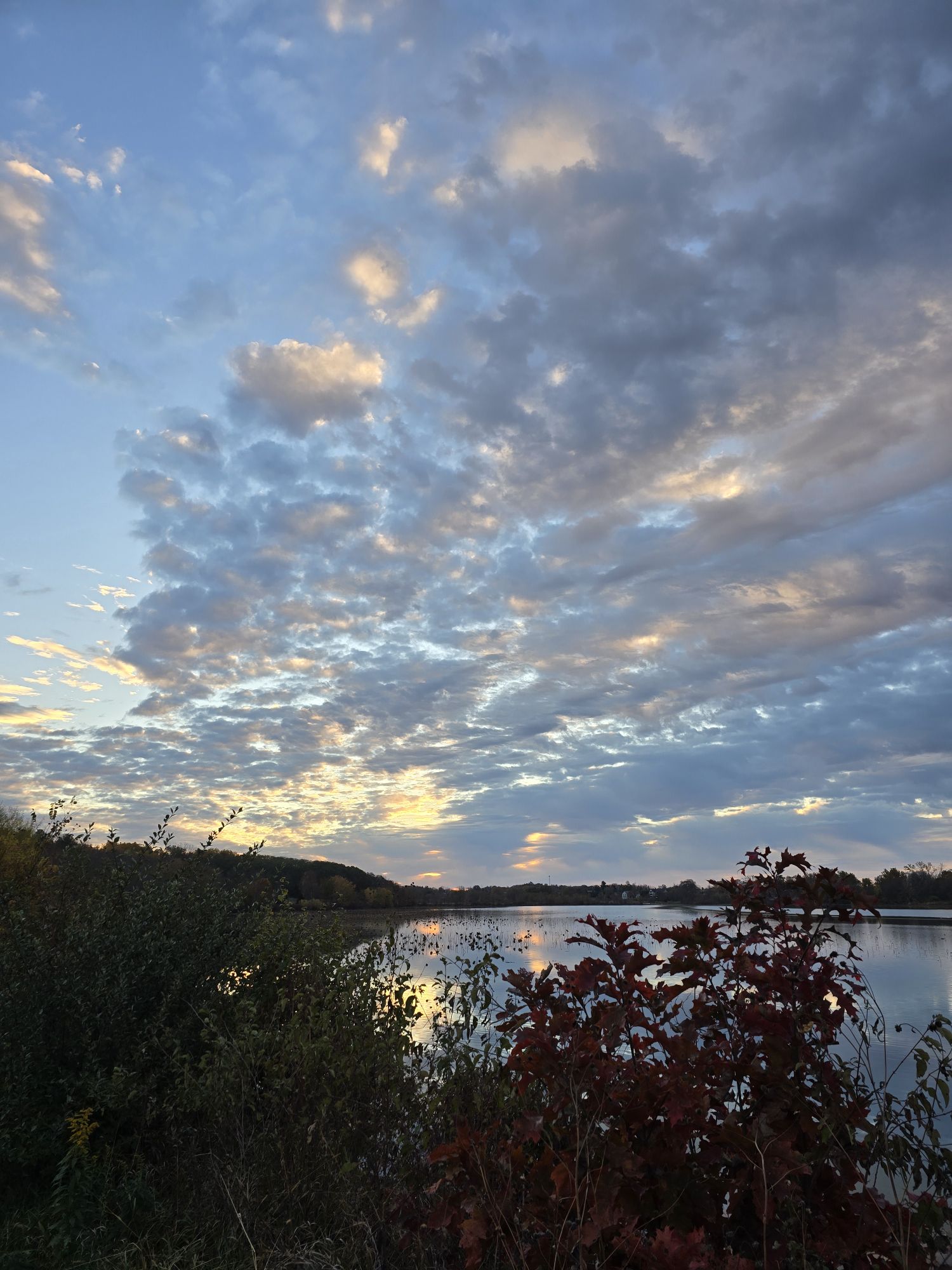
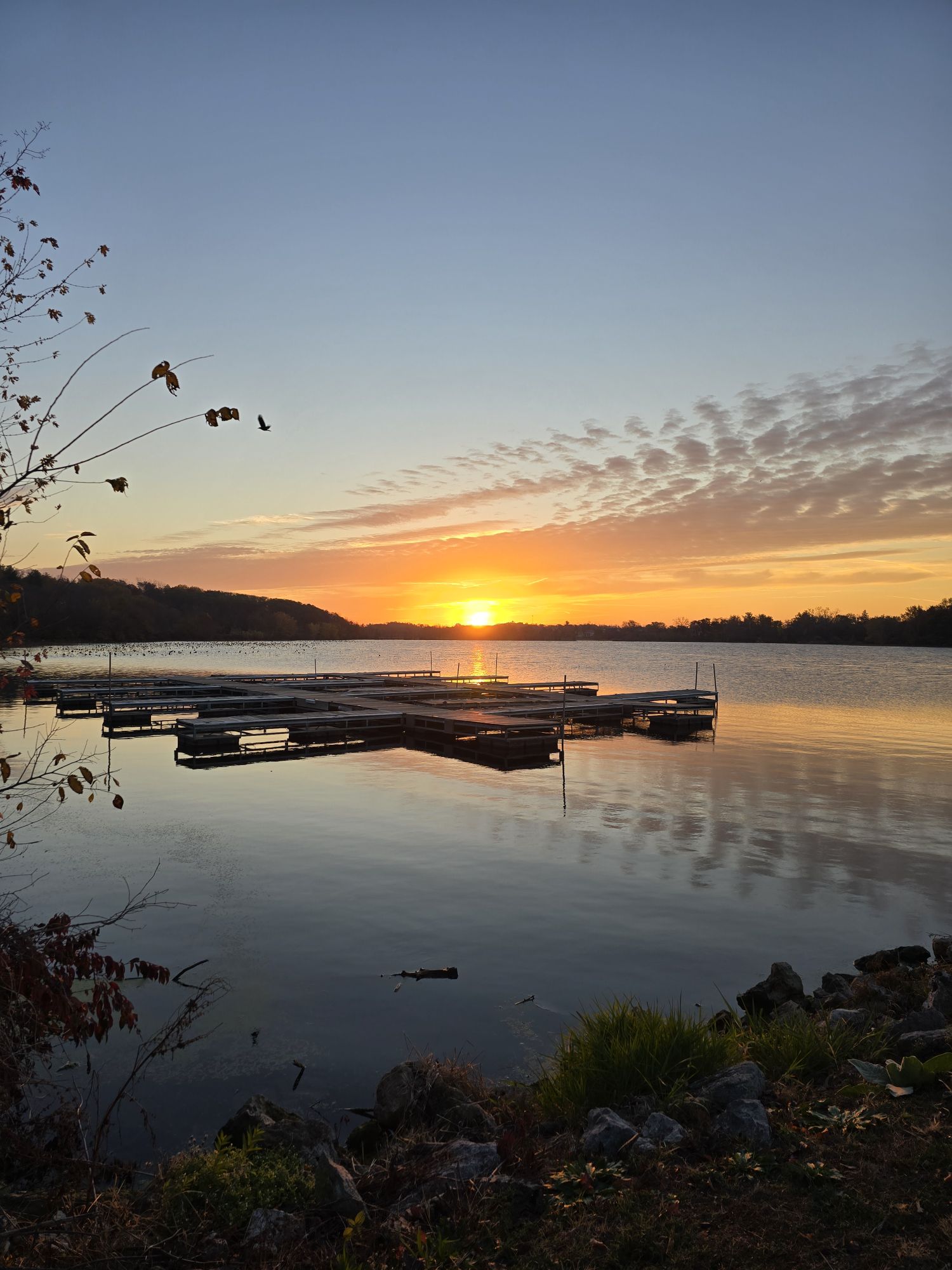
I walk for 30 minutes on the state park trail almost every day I’m home. The timing is about 20 minutes before sunrise so I can view the transition in the sky. I don’t think I will ever tire of seeing a sunrise.
Sunrise on the state park trail.Sunrise on the state park trail.Sunrise on the state park trail.Sunrise on the state park trail.Sunrise on the state park trail.Sunrise on the state park trail.Sunrise on the state park trail.
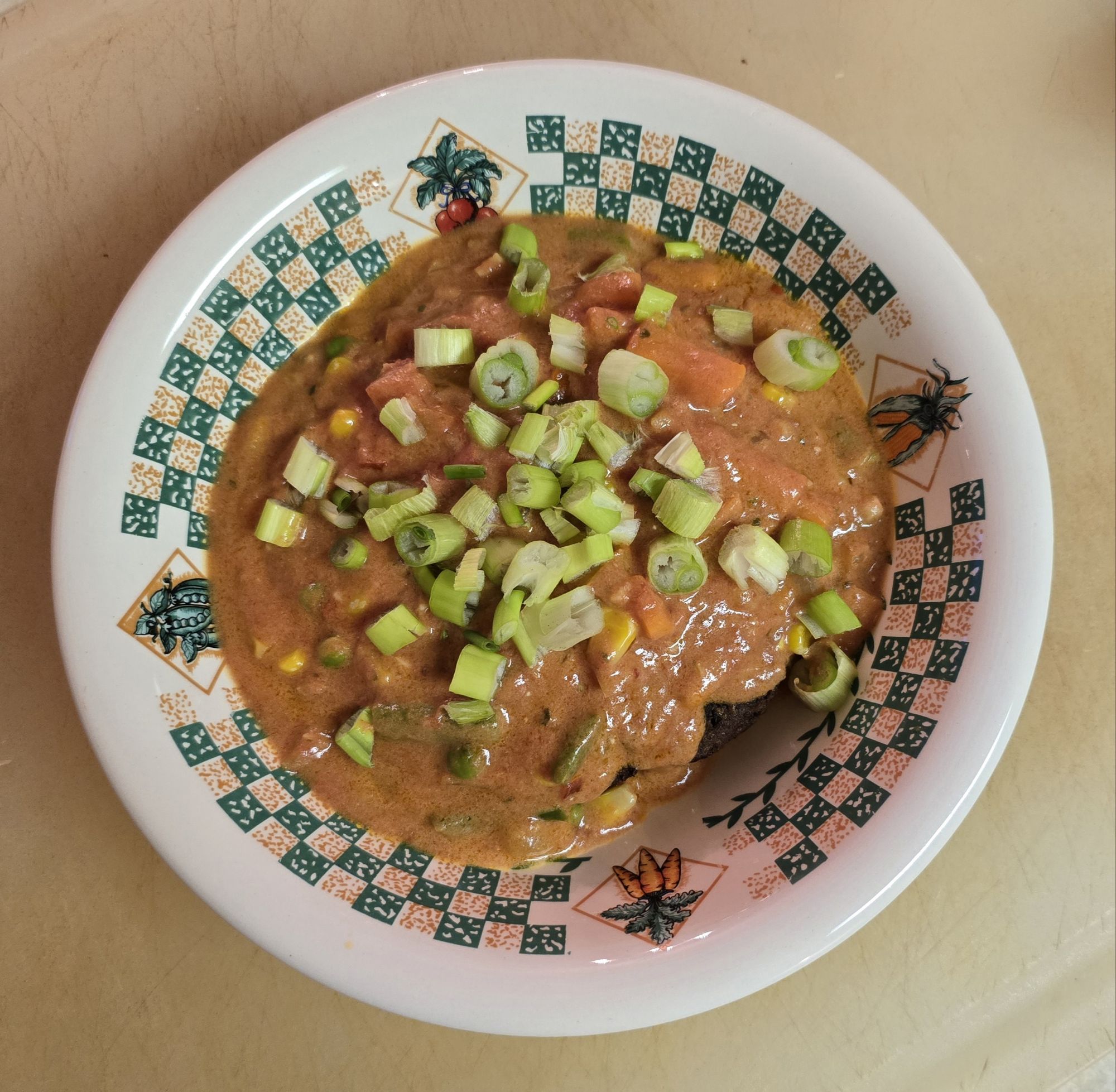
It began with opening the refrigerator and looking inside. I felt like cooking dinner for myself on Thursday night, yet wanted something different. I had a vague idea about cooking a frozen black bean burger and putting a sauce on it. I saw the half-used jar of tomato purée and a couple of tablespoons of sour cream on the top shelf. There was a partly used onion and bell pepper. Our kitchen always has plenty of garlic. I had just ground some cayenne peppers in the green state right before first frost. “I can make a dish out of that,” I said to myself.
Next came the mixing. I poured about a cup of tomatoes into a measuring cup, then scraped the remaining sour cream out of the container and added it. As the kids say, “Mixy, mixy.” It seemed too thin so I got out a jar of vegetable broth with miso paste and arrowroot dissolved in it, shook it up and added about a half cup. Finally, I added a scant teaspoon of cayenne pepper flakes and gave it a final stir.
I got out two frying pans, the smaller for the black bean burger and the larger for the sauce. Coating the bottom of each with extra virgin olive oil, I put the heat on. It takes about 10 minutes to cook the burger so I got the sauce going by sauteing the onion, bell pepper, and a diced jalapeño pepper until softened. Garlic next and as it cooked, it didn’t look like enough vegetables. I got a bag of mixed vegetables from the freezer and added a generous handful. I cooked the veg until everything was heated through and done. I added some powdered cayenne pepper to make sure the heat was at the right level.
Once the vegetables were ready, I poured on the sauce and cooked long enough to heat it through and let the arrowroot do its thickening work. There was some reduction yet that wasn’t the main feature of my cookery. I tasted it, and adjusted seasoning.
To serve, I put a spoonful of sauce on the bottom of a small bowl with the burger on top. I poured the rest of the sauce over it and garnished with sliced green onions. Not too much heat, and the plate stayed warm until it was eaten. This is what no-recipe cooking can look like.
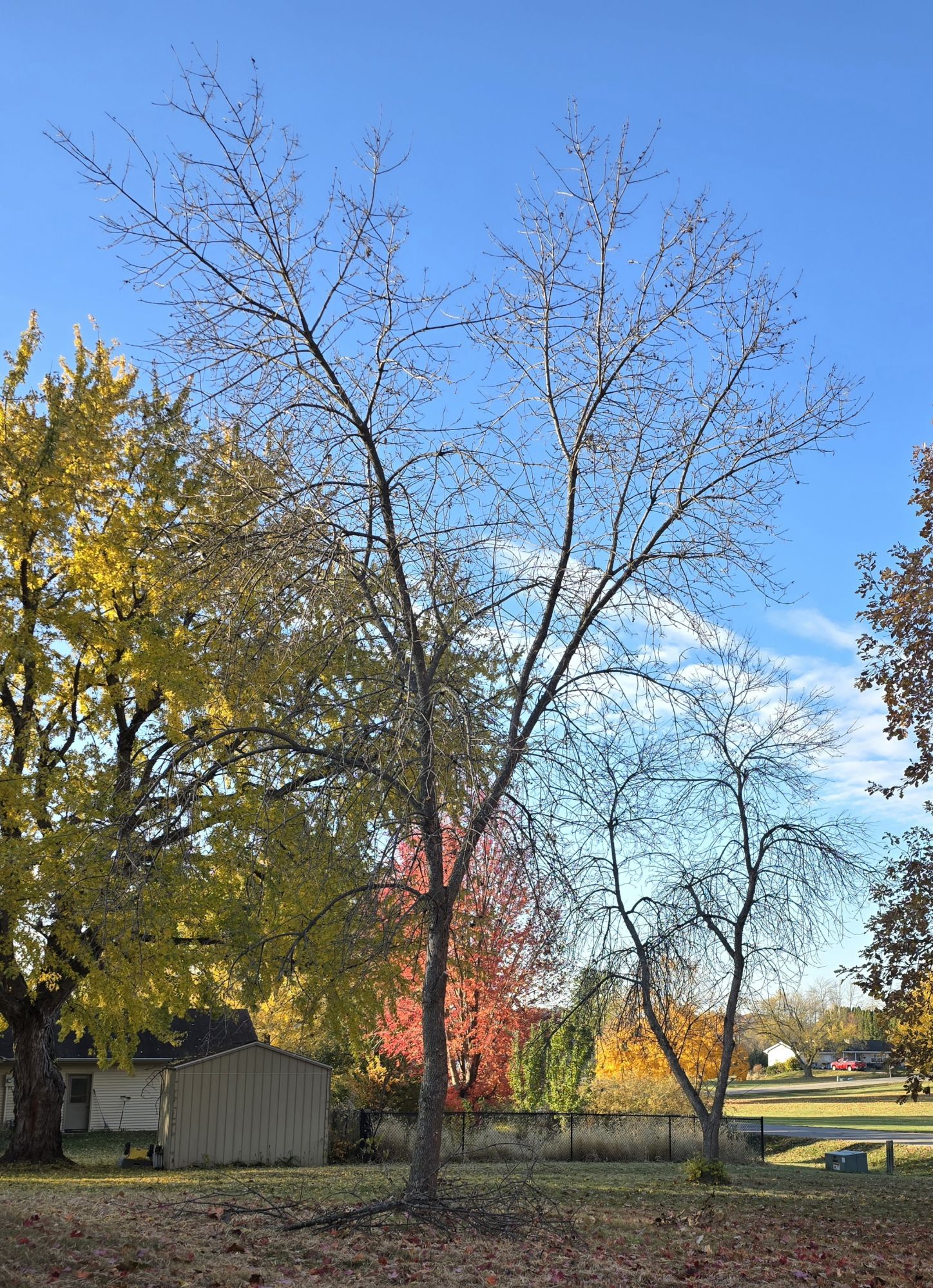
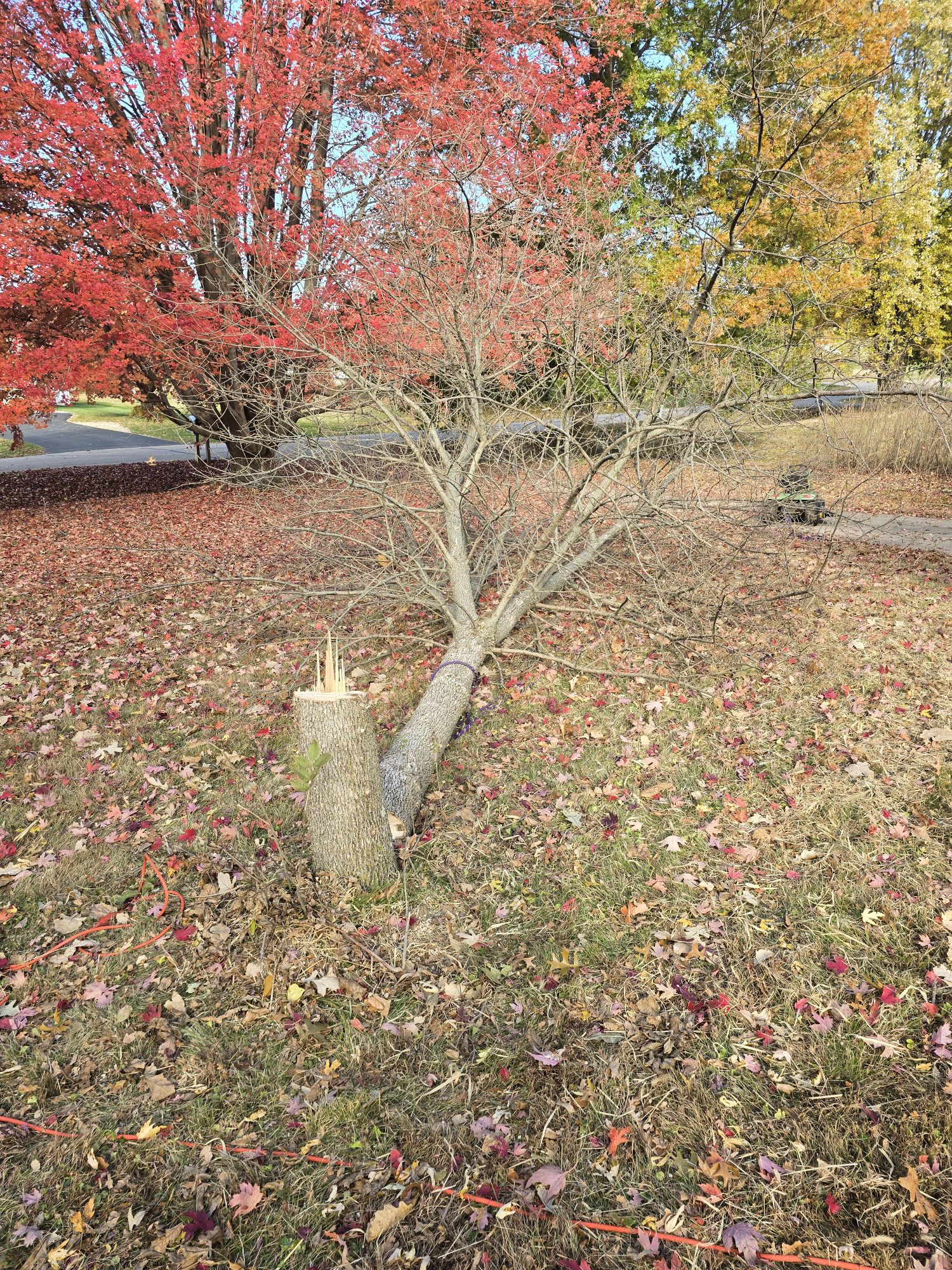
If I’d have known the Emerald Ash Borer would take out our two ash trees, I would not have planted them. Yesterday I described the process of removing them.
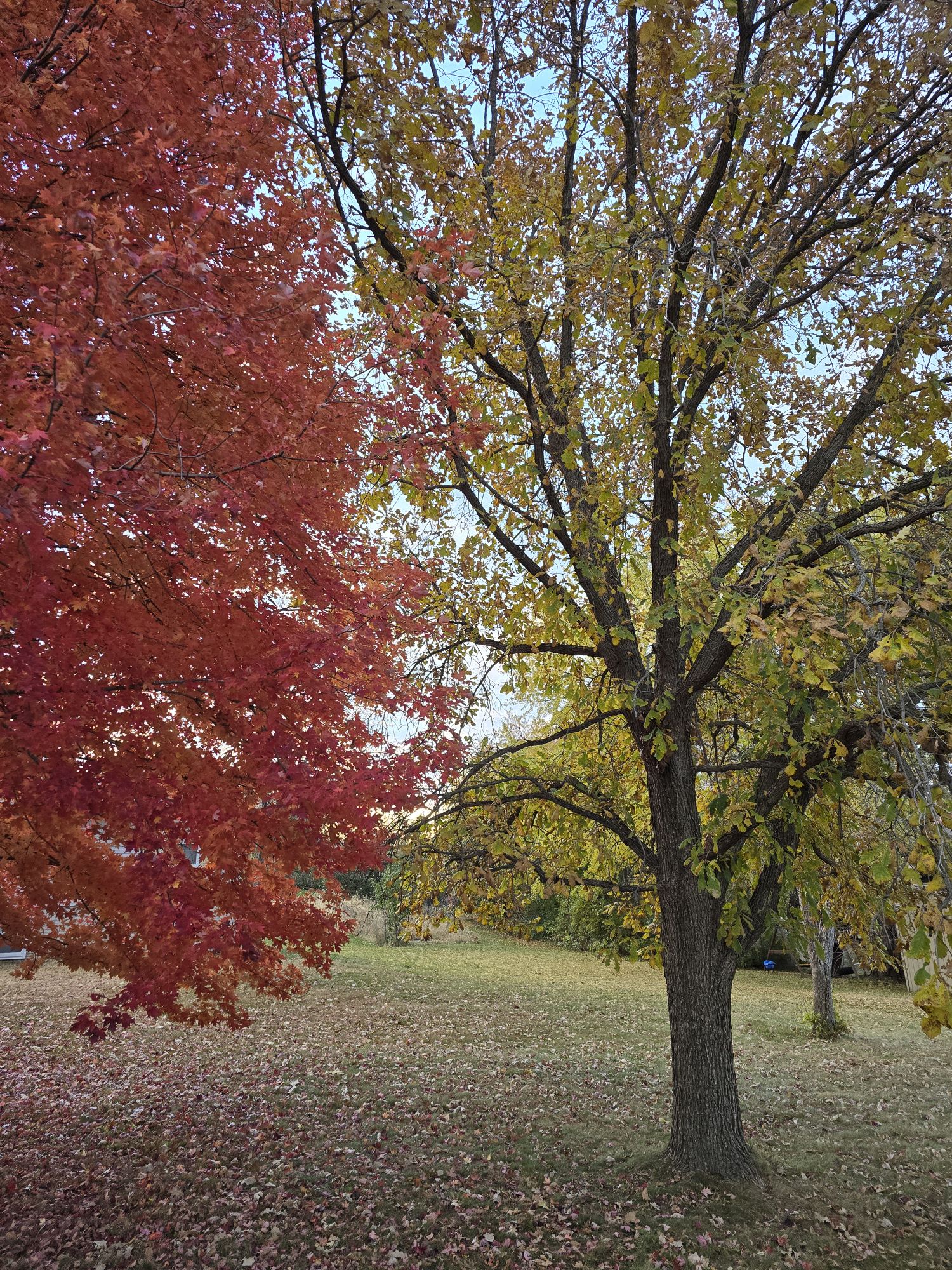
The sparrows didn’t notice they had been felled. They continued to perch as a flock on the leafless branches. I saw a squirrel checking out the base of one stump. They nest in the Autumn Blaze maple tree and used the dead branches as a bridge to get to the large tree in our neighbor’s yard (On the left in the photo). They would start from the nest, walk across the tall branches to the Bur Oak, to the dead branches of the ash, and then to the neighbor’s tall tree, all without touching the ground. I created a gap in this pathway. The squirrel did not indicate any thoughts on the matter.
Now begins the real work. Anyone can fell a tree: cut, cut, cut… TIMBER! Now is the time for good people to take our saws and make it into firewood and brush. If I had a chipper-shredder, I would make mulch from the brush. For the number of times per year I would use a chipper, the expense is not worth the reward. I got my safety glasses out, filled the oil reservoir, tightened the bar, and ventured out to work after donning my steel-toed boots.
Despite the lack of rain, this has been one of the best autumns I remember. It is a pleasure each time I step outdoors and take it all in. With everything going on in the world, we need that type of solace.
Autumn is the time to get the chainsaw out and clear dead trees from the property. A neighbor and I felled two ash trees killed by the Emerald Ash Borer. The occasion gave me a chance to wear the steel-toed shoes I got to work in a Kentucky steel mill back in the day. They even have metatarsal protection.
Steel-toed shoes with metatarsal protection.
I took the first tree down by myself. It took some time to determine where I wanted it to fall. I made a notch cut in that direction. It is important to take the time because as the old saw goes, measure twice and cut once. I made the felling cut and the bar and chain of the chainsaw got stuck. I must have done something wrong.
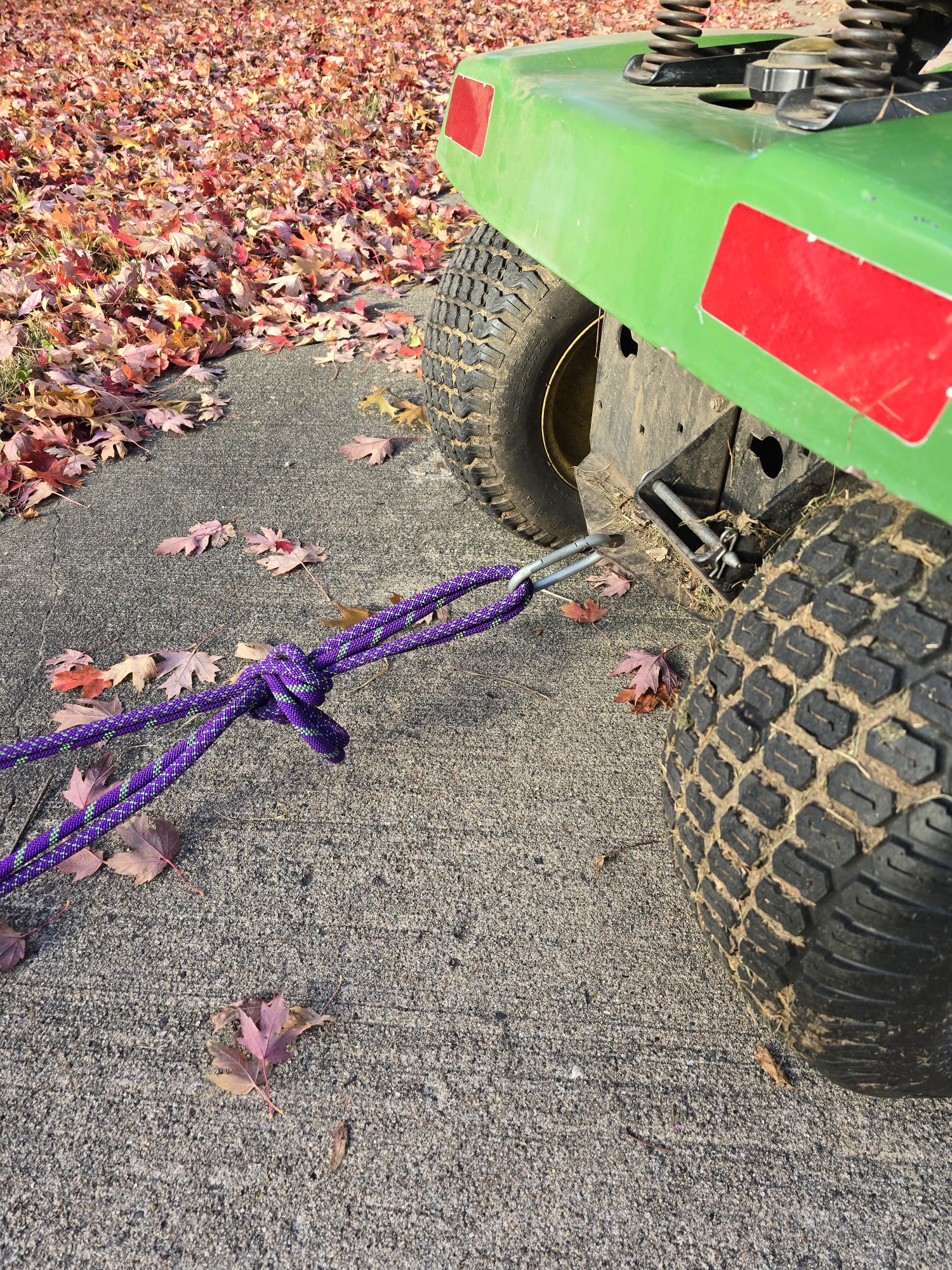
Hitch to the yard tractor.
I stopped and disconnected the bar from the motor assembly, and was able to pull it out. Not the chain. No problem. I went to the garage and got out my rappelling rope, tied one end around the tree about 12 feet from the ground, and the other to a carabiner attached to the rear of the yard tractor. I positioned the tractor on the cement driveway so there would be traction and gently tugged the tree until it fell over.
First ash tree felled on Wednesday.
My neighbor arrived and we worked together on the second tree. This one had grown with a yoke separating the two main branches. If I felled the southernmost branch the wrong direction, I might take out the neighbor’s fence. We positioned the yard tractor and tied the rope to the tree about 14 feet above ground. I made the notch cut and then my neighbor got on the yard tractor and put tension on the rope. As I made the felling cut, he increased tension, although he lost traction because of the leaves on the ground. No worries the tree fell in the intended direction.
Two tree stumps.
We felled the other main branch and called it a day.
This was the most difficult part of the operation. Going forward, I plan to spend about an hour a day cutting the trees up. I made a place for a brush pile and will salvage two relatively straight limbs to use to stack firewood outdoors and off the ground. I will burn the brush pile when conditions are suitable, and hope to find a home for the firewood. A lot of neighbors are flush with winter firewood presently.
It will take me a week or two to clean up the yard. That part I can do by myself. Autumn days were made for a fellow and his chainsaw.
2025 was a sleeper election in Big Grove precinct. There were three at-large school board director contests and incumbents were the only candidates on the ballot. There was no known write-in campaign so incumbents won:
Results screen captured from the Johnson County, Iowa auditor’s results page 1:30 a.m. on Nov. 5, 2025
Daniel Coons won his school board election to fill a vacancy:
Results screen captured from the Johnson County, Iowa auditor’s results page 1:30 a.m. on Nov. 5, 2025
There was one Kirkwood Community College Director on the ballot and one candidate.
Results screen captured from the Johnson County, Iowa auditor’s results page 1:30 a.m. on Nov. 5, 2025
On Sept. 26, I wrote about the election in the nearby City of Solon: “Greg Morris seems likely to win one council seat. Through his work with the volunteer fire department he is well known in the community and a constant, positive presence. Incumbents for council have an advantage, but it could be a jump ball for their seats. Will see if any issues arise that make this a race.” Here are the results:
Results screen captured from the Johnson County, Iowa auditor’s results page 1:30 a.m. on Nov. 5, 2025
As expected, Greg Morris was the top vote getter for three positions. The two Democratic incumbents, Lauren Whitehead and Cole Gabriel, lost their elections to newcomers Tim Gordon and Matthew Macke. When the City of Solon has a mind to change things, they do.
It is usually quiet on the state park trail during my morning walk. If someone is coming I hear their footsteps, or if they are on the phone or in a group, their talking voices carry a long distance. It was foggy Sunday morning when I heard young women talking. Before long, I could see headlamps bobbing above the trail. It was plenty light, yet the idea of a headlamp gained prominence over whether or not one was actually needed. I wished them a good morning as they passed me going the other way. They returned the sentiment. Even at dawn there is traffic on the trail.
I leave for the trail 20 minutes before sunrise. It is usually light enough to see and the transition period presents great light for capturing photographs. On Saturday I started walking on the boat dock to get an unobstructed view of sunrise. There was frozen frost on the deck and I slipped and fell on my backside. I let loose my mobile device and feared the worst. When I got up it was just less than halfway over the edge of the dock. I had visions of it plunking in the water, yet not this time. I am one lucky guy.
Last winter I walked the trail almost every morning regardless of ambient temperature and snowfall. I expect to do likewise this year. The state park trail is the perquisite that comes with living here I enjoy most. It also provides an opportunity to work on my photography.
When we moved to Big Grove Township, I took out a map and compass and drew a circle to indicate where we wanted to live after beginning work on the southwest side of Cedar Rapids. Having lived in the city previously, returning there was not a positive option. We looked at potential homes within the circle, including a couple in Williamsburg — a good distance from work. The housing market was tight in 1993, with homes sometimes selling the day they went on the market. We ended up buying the lot where we built our home, and for multiple reasons, it has been a good setting for our lives.
My commute to work was 18 miles or 25 minutes. Why would I live so far from work? I wanted to maintain a separation between work and my family and creative life. Back then, I embraced the automobile culture and that aided my decision. Early on, I learned the importance of a buffer between my two lives.
Until entering the military I had lived in a city or community that either was walkable or had reliable, inexpensive public transportation. In Army basic training and officer candidate school I lived in a barracks with everyone else. When I received my commission, I moved to officer quarters at Fort Benning. I could still walk to classes yet when I arrived in Germany, I would need a vehicle. I bought a yellow pickup truck in Georgia and had the military ship it to Europe.
When I arrived in Mainz in 1976, the kaserne where the troops were stationed was in another city called Mainz-Gonsenheim. Martin Luther King Village, where officers, non-commissioned officers, and their families were housed was too far away to walk to work. Some of my fellow officers who were married did not care to live in military housing at all and picked rentals in other nearby villages. They found separation from the military was good for their family life. It is a lesson that stuck with me.
I have been cognizant of the difference between city and country living for most of my adult life. In many ways, increasingly in the age of internet communications and mobile devices, city vs. country is a false distinction. That is particularly true in Iowa where country folk trade grain internationally and need to stay in touch with markets all over the globe. What is the difference between Wall Street and Martelle? Not as much as people would have us believe.
There is something to be said for the automobile culture that dominates rural areas. As a gardener, I need supplies from multiple vendors, including soil mix near Tipton, and fertilizer near Monticello. Driving to these vendors saves money in terms of a potential dealer mark up on the items. Similarly, if I need groceries, in a vehicle I can bypass the local grocer and drive to a store more suited to my needs. We rely upon having a vehicle in a small, rural subdivision.
Our neighborhood is walkable, if by that one means enjoying the solitude of nature. I’ve been talking a daily walk ever since I could no longer jog on the trail. Even at sunrise I encounter others I know who walk or jog on the trail, so there is a sense of society. Some of those folks have been neighbors since we arrived in Big Grove Township in 1993. Having a nearby state park is not really the meaning of having a walkable community.
In Germany I needed a vehicle to get to work. At the same time, I lived near the main railway station and all of downtown Mainz was within walking distance. When I had free time, I would walk by myself or with a friend all the way down to the thousand-year-old Mainz Cathedral or to the opera house. If I needed groceries yet didn’t want the the American fare at the post exchange, a German grocer was located near the train station. I did not have an intimate relationship with the city, yet I learned to wear proper walking shoes there.
My maternal grandmother lived in downtown Davenport where she could walk to get most things she needed, well into her 80s. She got basic groceries at the Walgreens near her apartment. She continued to work as she aged and there were several work sites near her apartment. Growing up on a farm in rural Minnesota, the family took the horse and wagon to town when they needed something. Otherwise they made do in place, without leaving the property. She brought that farm culture with her to living in a large city.
The draw a circle on a map method of picking a place to live worked out for us. Now that I retired, we live in a quiet, safe place where two or three trips a week to town is sufficient. If I didn’t have a Powerball gambling habit, there would be less trips. I retain the automobile culture, yet inexpensive delivery of almost every commodity needed for living is readily available. Once we cut loose from the vehicles, I found life is even more livable than it is with them. That is important when picking where to live.









 Journey Home
You must be logged in to post a comment.