Categories
Environment Sustainability

Midwest Derecho

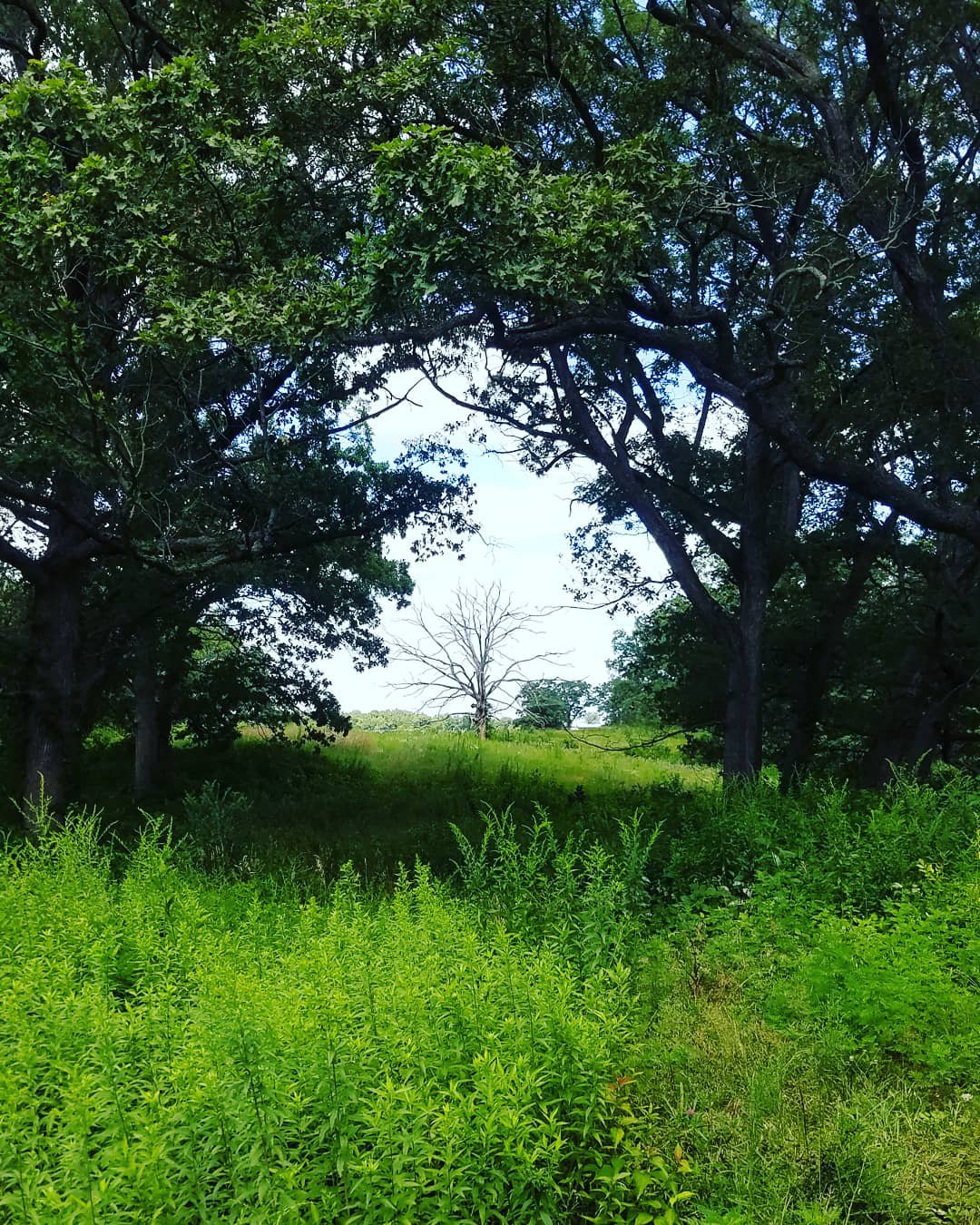
Sunflower survived the derecho, as did we.

Without an anemometer it was difficult to know wind speed during Monday’s derecho. In Cedar Rapids wind speeds approached 100 miles per hour.

The last major storm of straight-line winds in 2013 caused more damage to our property than the derecho. Both were bad.

I watched the storm come in until it got so virulent we headed to our safe place on the lower level. The kitchen clock stopped at 12:34 p.m., Monday, Aug. 10. Electricity was restored at 10:14 a.m., Friday, Aug. 14, the longest outage since we moved here.

The weather system is called a derecho. Amy McKeever’s Aug. 12 article in National Geographic explains:

Derechos may not be as well known as hurricanes or tornadoes, but these rare storms can be just as powerful and destructive. Primarily seen in late spring and summer in the central and eastern United States, derechos produce walls of strong wind that streak across the landscape, leaving hundreds of miles of damage in their wake. On August 10, 2020, a derecho swept across the Midwest from South Dakota to Ohio, traveling 770 miles in 14 hours and knocking out power for more than a million people.

The term derecho—which means “straight ahead” in Spanish—was coined in 1888 by Gustavus Hinrichs, a physics professor at the University of Iowa who sought to distinguish these straight-moving winds from the swirling gusts of a tornado. Though the term disappeared from use shortly afterward, meteorologists at the National Oceanic and Atmospheric Administration (NOAA) resurrected it a hundred years later. It entered the public lexicon in 2012, when one of the most destructive derechos in history swept across roughly 700 miles from Ohio to the mid-Atlantic coast, killing 22 people and causing serious damage in metropolitan areas, including Chicago and Washington, D.C.

NOAA officially defines a derecho as “a widespread, long-lived windstorm that is associated with a band of rapidly moving showers or thunderstorms.” For a swath of storms to be classified as a derecho, it must travel at least 240 miles and move at speeds of at least 58 miles an hour, though the winds are often more powerful. The August 2020 Midwest derecho had winds up to 112 miles an hour.

I have more to say about this storm and the damage it did. Suffice it for now the storm hit hard the trees I’ve grown from saplings. The Pin Oak took the brunt of the wind damage, the windward side losing several of its main branches. The Red Delicious apple tree lost a major limb, the Locust tree blew completely over demolishing the most productive part of the summer garden. Half of the pear crop shook loose from the tree dropping unusable green fruit. Among the wreckage on the ground I found a single Earliblaze apple. I hadn’t noticed we had any apples this year. I ate the apple on the spot. It was delicious (apple joke).

We survived the storm with no damage to our house. I watched the portable greenhouse shake loose four 50-pound buckets of sand, lift into the air, and tumble off into a neighbor’s yard, destroyed. Without electricity I couldn’t can the tomato harvest so I donated 25 pounds to the local food rescue operation.

We are now veterans of two major wind events and developed a process to cope with the aftermath.

Because of the long electricity outage, we became owners of a Craftsman generator which we used to keep the freezer and refrigerator running, as well as to charge devices, run computers, operate a floor fan, and heat water. We plan to keep it.

We had the septic tank pumped for additional capacity in case of an extended electrical outage. The septic service showed up just as electricity was restored.

We hired a U.S. military veteran from Alabama to help cut damaged branches from the Pin Oak. The yard is filled with fallen branches waiting for me to cut them up for firewood or for burning. A big portion of the fallen Locust tree remains on the garden. I’m not sure when I’ll get to that.

I didn’t realize it at the time but the clouds in this photo are the front edge of the derecho blowing in. It will be a while before we recover. We will recover.
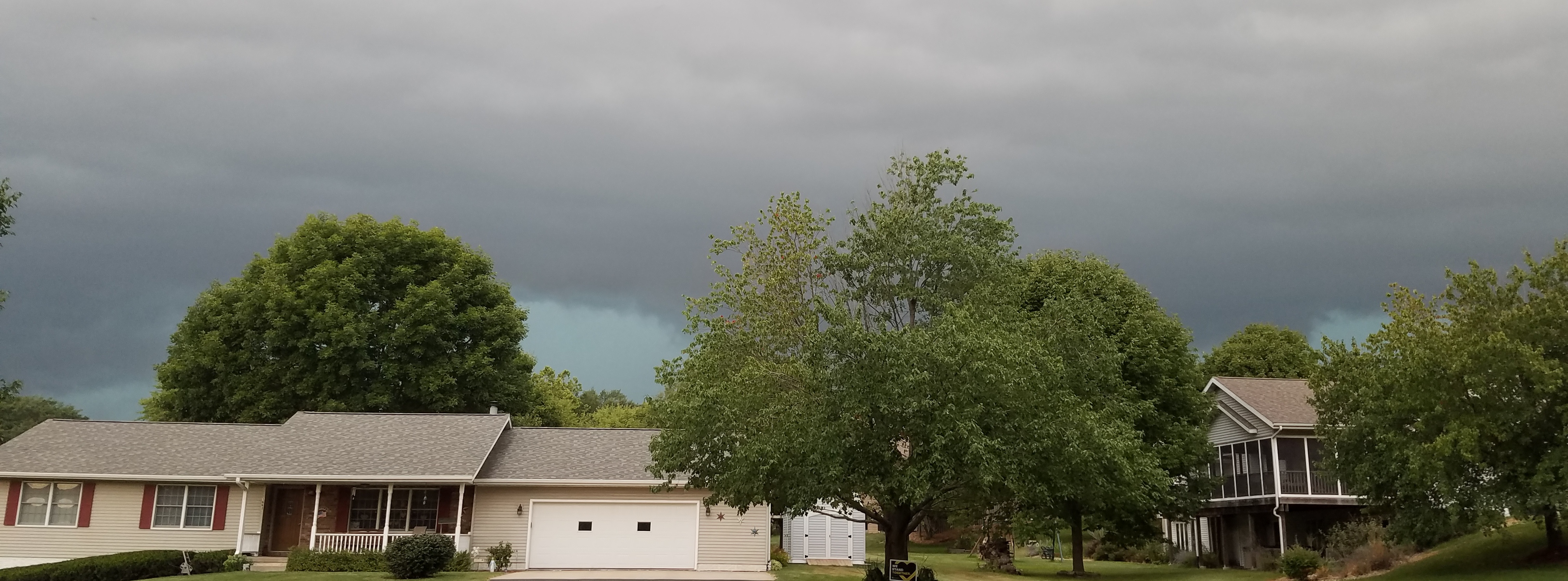
Derecho Approaches Aug. 10, 2020.
Categories
Sustainability

Cleaning Up After A Derecho

Electricity expected in 3-6 days. Chain saw getting a workout. Had to buy a generator. Will be back soon.

In the meanwhile, this sunflower survived the derecho, like us.

Categories
Kitchen Garden

Tomato Season

Tomatoes placed at the end of the driveway for neighbors.

The great tomato give-away begins!

Despite best intentions the garden produced an over-abundance of tomatoes. I posted this image on our neighborhood Facebook page with a description of where to find them. Within a couple of hours most of them were picked up by neighbors.

The food rescue non-profit in the county seat has been invited to pick up more this week. We’re not yet to the point of throwing them at passing vehicles, although check back in a couple of weeks for an update.

This year I will can whole Roma tomatoes because they have more flesh and less moisture. Matching processing to kitchen use has become increasingly important. A quart of drained, canned tomatoes is a good base for pasta sauce, a typical use. Knowing what I need and want in the pantry also contributes to the excess production.

Tomatoes are a money crop for a home gardener. When they begin to ripen it feels like the work that went into the garden is paying off. The first garden I planted in 1983 had a single variety of tomato plants. This year I planted about 20 varieties. The flavor of a fresh, home-grown tomato is something that truly defines a Midwestern summer. We have fresh tomatoes and use them in cooking for every August meal.

It is important to share the bounty. In previous years I canned or froze everything I produced. No longer. Part of the pandemic personality I’m working to develop is that of gardener. By sharing the bounty broadly, it reinforces who I am.

That’s all for this brief post. I’m getting hungry after a 10-hour fast and tomatoes await on the counter.

Categories
Writing

August Dreams

August Dreamscape

We’re well into tomato season in the garden. Not to the point of hurling them at passersby, yet close.

Amish Paste, German Pink, Mortgage Lifter, Black Krim, Speckled Roman, Granadero, Boxcar Willie, Abe Lincoln, Martha Washington and other tomato varieties sound exotic. Each is vying for best of crop and a repeat planting next year.

The hard work of the garden is finished. With temperatures in the 90s, we stay indoors and dream most of each day.

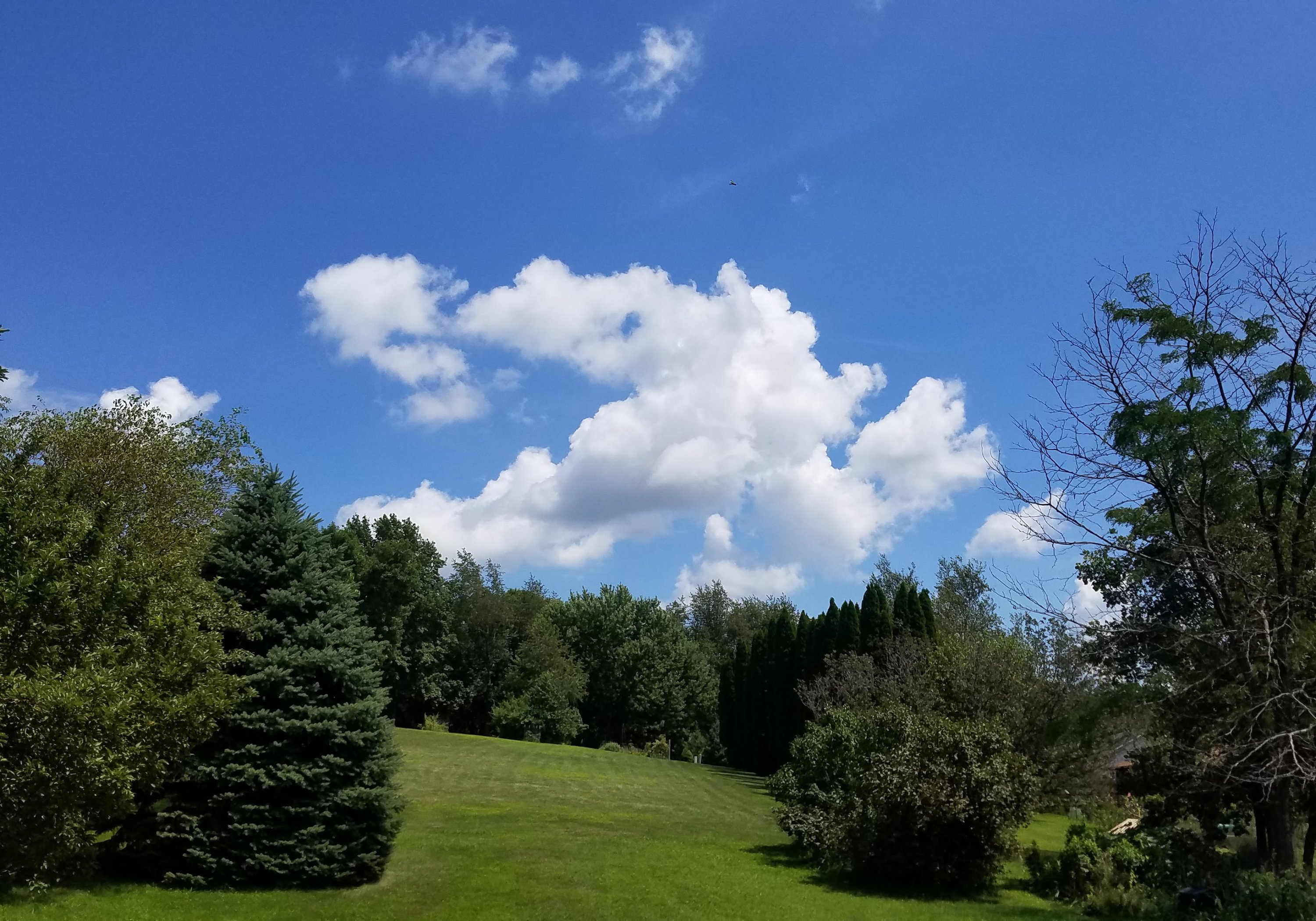
I’ve taken to looking at the sky. It is a reminder of how small humans are, how Earth is a single ecosystem. I could look at clouds all day, at least until a nagging human condition urges me to do something else.

Most of us will get through the coronavirus pandemic. What then? We’ll need August dreams to find out.

Categories
Writing

Pandemic Pivot

Moon at Dawn, Aug. 7, 2020

Iowa has been slow in containing the coronavirus pandemic.

Last night the president said during a press conference the virus will just go away. The Iowa Governor released an “Open Letter to Iowans on COVID-19” earlier in the afternoon, in which she said, “But normal during a pandemic isn’t the same normal as before. COVID-19 is still a reality, and circumstances still demand we do everything within our control to contain and manage it.”

While Kim Reynolds’ response to the pandemic fell short of expectations she’s at least pretending to be a leader. There is plenty about which to criticize her, yet her response is better than that COVID-19 is going to magically disappear.

After declaration of an emergency on March 9, an unwanted retirement on April 28, and Thursday’s approval of a face covering regulation by the county board of supervisors, it seems like the pandemic is only just beginning.

We Americans have been bad at preventing mass infections and deaths related to the coronavirus. This trait of our national character ranks right up there with yeoman farmer, chattel slavery, indentured servitude, genocide of the natives, and exploitation of the environment. It weighs heavy on the scale of justice when we consider the many good things our country does.

Like many, after an initial reaction to the coronavirus I’m reinventing myself for the future and that includes how I write in this space.

Old categories no longer seem relevant. I use the word “category” both as an organizer on this blog, but more generally in life. The top ten categories with the number of posts in parentheses tells a story:

Politics (435)
Local Food (311)
Garden (299)
Home Life (277)
Writing (276)
Environment (247)
Worklife (166)
Social Commentary (149)
Cooking (129)
Farming (83)

Even these ten seem like too many as I pivot through the pandemic.

I created the current blog in December 2008. With tens of millions of bloggers, I felt support for the WordPress platform would be better than Blogger which I began using in November 2007. I didn’t think much about how to organize the writing.

After my July 2009 retirement from transportation and logistics I settled into the pattern that resulted in this categorical breakdown. The adjustment now is to distill these categories. Here is my thinking: I find four categories of life worth living.

I define myself as a writer so the first category is Writing. That includes posts about writing like this one, but also excerpts from other writing I’m working on, including autobiographical work.

My posts about cooking, gardening, farming and local food have been popular. Using an integrated approach, I created a new category to be used going forward: Kitchen Garden. This category is designed to discuss every aspect of putting meals on our home table.

When I post about a political event few others are, it gets a lot of views. Politics is much broader than election and government, and includes most aspects of our lives. For the time being I will use the broader category Life in Society. Some of the previous categories will continue to exist but won’t be used.

Finally, my work with others includes mitigating the existential threats posed by nuclear weapons, climate change and conflicts in the form of war and social injustice. This specialized work merits its own category: Sustainability.

Who knew the pivot point of the coronavirus pandemic would be toward fewer categories? I’m sure it is the first of many adjustments we’ll make going forward.

Categories
Kitchen Garden

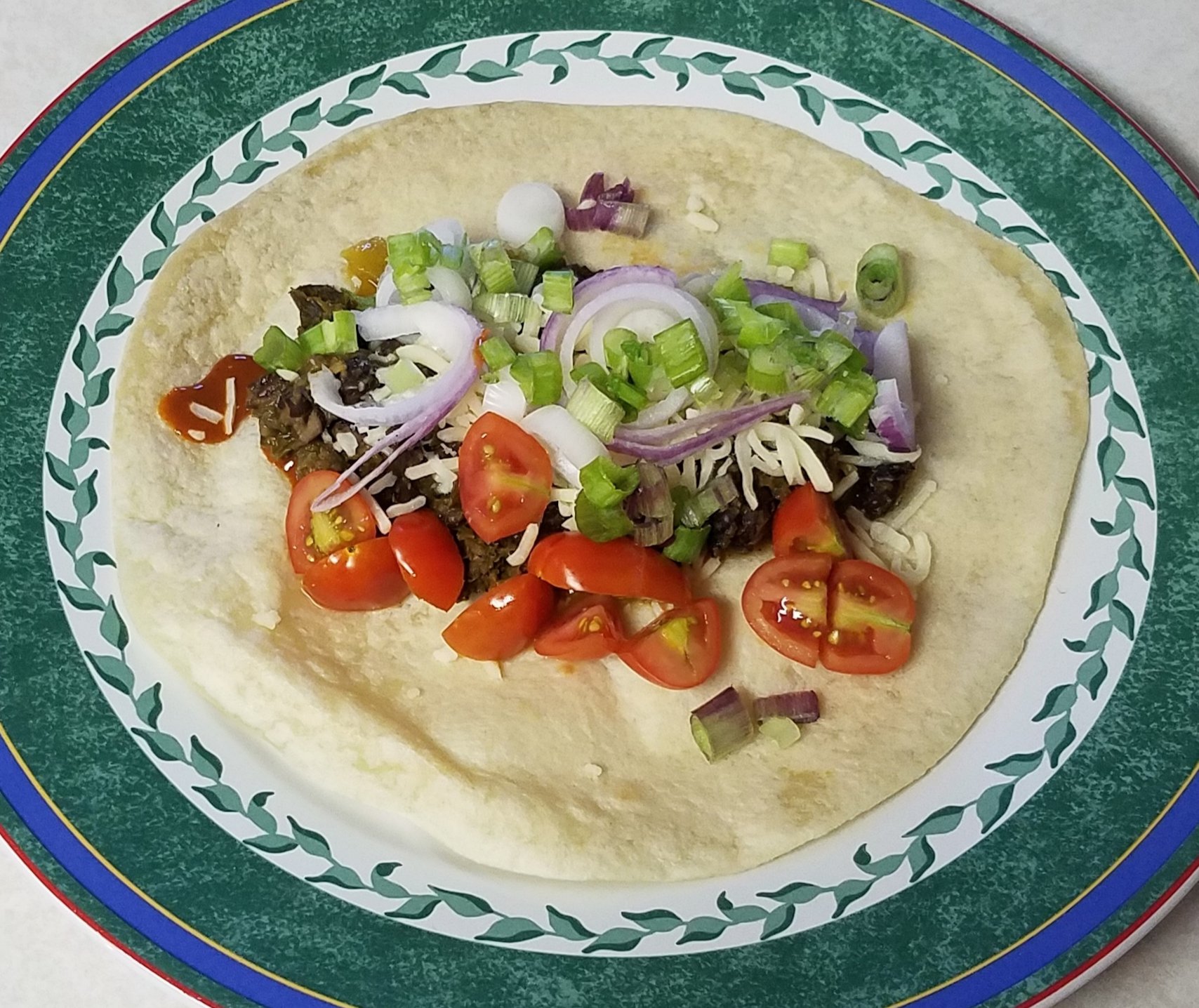
Deconstructing Tacos

Breakfast Taco July 26, 2020.

We own certain culinary dishes.

Learned from a recipe or experience, we repeat the cooking process and evolve it into something we enjoy. Such dishes become our signature home cuisine.

Grandmother had a signature dish: lemon chicken. I watched her make it several times in her apartment and saw how she added the lemon. She wrote the recipe on the back of an envelope for me and later I discovered the lemon went missing. It goes to show the importance of memory and experience in home cooking.

I love a delicious taco. In our household tacos vary from meal to meal. My favorite fillings are either similar to what Mother made, or greens and black beans in chili sauce. Tacos are easy to make yet the origins of the dish are complex. Taco ingredients adjust well to seasonal variation in a kitchen garden.

In 2018 I found a video by Rick Bayless in his Taco Tuesday series. I viewed the video multiple times then repeated every element of the process until learning it. Once learned, improvisations based upon on-hand ingredients and the imagination became possible. This is what cooking a personal cuisine is about. Black beans, kale, chili sauce, a cooking liquid, and toppings on a tortilla are foundational elements to making a delicious taco.

Tortillas

Almost everyone gets help with tortillas. By that I mean we don’t grow our own corn and grind it into masa. I make my own corn tortillas from masa and get uncooked flour tortillas from the wholesale club. There is nothing like a freshly made tortilla.

Black Beans

At some point I hope to grow enough black beans to use my own. In the meanwhile, I buy eight-packs of 15 ounce cans of USDA organic black beans from the wholesale club.

Kale

A person could use any type of greens in a taco: chard, collards, spinach, mustard greens, lambs quarters, arugula, broccoli leaves, beet leaves, kohlrabi leaves or turnip greens. I grow an abundance of kale, preferring Winterbor and Redbor, seeds which I get from Johnny’s Selected Seeds in Winslow, Maine. Kale really makes the dish so that’s my go-to ingredient. Fresh is great yet frozen leaves serve equally well. Tacos provide another outlet for the bushels of kale I produce each year.

Chili Sauce

I’m new to making my own chili sauce. I’ve been using Guajillo and New Mexican dried chilies and have been happy with both. I’ve been growing my own Guajillo chilies yet haven’t mastered the agriculture to produce a dried chili with the consistency of what can be purchased. I hope to master the skill although I’m only in my second year. I made a batch of Guajillo chili sauce on Wednesday with the last of the chilies purchased from Mexico, fresh garlic from the garden, Mexican oregano, black pepper, salt and a pinch of sugar. This sauce holds the dish together.

Cooking Liquid

Our kitchen produces a number of culinary liquids as a byproduct of making something else. I don’t just dump it down the drain. Every time I open a jar of canned tomatoes I strain them to give a head start in preparing tomato sauce. When I make salsa, I also strain excess liquid to prevent it from being too watery. These liquids get mixed into a one liter bottle in the ice box. During preparation, chili sauce is diluted with enough liquid to cook the kale. In the cooking process most of the moisture evaporates leaving another layer of flavor by using my culinary liquids instead of water.

Toppings

I use Mexican-style cheese from the wholesale club to finish making a taco. Tacos get topped with freshly made salsa, green onions, fresh onions, fresh tomatoes, pickled jalapeno peppers, prepared chilies, pickled garlic, finely sliced lettuce, shredded radishes or Hakurei turnips. The tomatillo harvest is coming in so salsa using them is in season. Fresh cilantro is also a go-to ingredient.

Preparation

Beans and greens taco filling is easy to make. Heat a cup of chili sauce in a large frying pan (Recipe for mine is here). Add a cup of water or other cooking liquid that goes with Mexican cuisine and incorporate. Add a bunch of kale that has been de-stemmed and torn into small bits. When the kale wilts, add a drained 15 ounce can of black beans. (Optional: Use a potato masher or the back of a spoon to break up some of the beans and give the taco filling a smooth consistency and texture). Once the kale is thoroughly cooked and incorporated it’s time to assemble tacos!

I’ll make these suggestions: begin with a hot tortilla on a heated serving plate. Put some salsa or hot sauce down first. Add the filling, generous but not too much. We want to be able to hold and eat the taco without everything spilling out. Cheese goes next so it will melt. Add toppings according to what’s in season or available and serve.

Cooking is an experience more than an explanation. We relish choices we make producing each plate of food yet it is not about consumption and the process that created ingredients on hand. Cooking, as much as anything we do, is about living in those moments. When the pandemic is over and we return to our new lives it is important to know who we are. Part of me is making these signature tacos.

Categories
Sustainability

75 Years After Hiroshima

Chia Fen Preserve, Aug. 3, 2020

President Harry Truman did not need to drop the atomic bomb to end World War II.

The first test explosion of an atomic bomb, called Trinity, was conducted by the U.S. Army July 16, 1945, as part of the Manhattan Project on what is now part of White Sands Missile Range.

The day after Trinity, U.S. Secretary of War Henry Stimson flew to Potsdam, Germany where President Harry Truman was meeting with Winston Churchill, Clement Attlee and Joseph Stalin to determine the fate of Germany which had surrendered unconditionally on May 8.

Truman wrote about this meeting with Stimson in his memoir:

“We were not ready to make use of this weapon against the Japanese, although we did not know as yet what effect the new weapon might have, physically or psychologically, when used against the enemy. For that reason the military advised that we go ahead with the existing military plans for the invasion of the Japanese home islands.”

A committee had been established to evaluate use of the atomic bomb once testing was successful. On June 1, 1945 the committee of government officials and scientists made their recommendation, which Truman recounts:

“It was their recommendation that the bomb be used against the enemy as soon as it could be done. They recommended further that it should be used without specific warning and against a target that would clearly show its devastating strength.”

Ultimately Truman made the decision to drop the atomic bomb on Hiroshima and on Aug. 6 the U.S. Air Force delivered it. On Aug. 9 the Air Force bombed Nagasaki. The Japanese surrendered Aug. 10.

Historian Gar Alperovitz, in his book The Decision to Use the Atomic Bomb, asked two well-known questions about Truman’s decision.

“To what degree did (the president) understand that a clarification of the officially stated demand for ‘unconditional surrender’ specifying that Japan could keep its Emperor would be likely to end the war?”

“To what degree did (the president) understand that the force of a Russian declaration of war might itself bring about an early end to the fighting?”

The book based on his research is 847 pages.

The idea that dropping atomic bombs on Hiroshima and Nagasaki saved tens of thousands of allied forces lives by ending the war early is a myth perpetuated by those who would absolve our country from a decision to kill tens of thousands of Japanese children and as many or more other non-combatants. Historian Howard Zinn asked, “Would we have sacrificed as many U.S. children to end the war early?” Obviously we wouldn’t.

A friend, the late Samuel Becker, was in Guam in August 1945 preparing for the invasion of Japan. I recently asked him about the atomic bombings of Hiroshima and Nagasaki. The reaction in Guam was positive he said. U.S. military personnel were in favor of it because they felt it would bring a quick end to what could have been a prolonged, bloody conclusion to World War II. Before he died, Becker changed his mind. With time and reflection he found the notion that the atomic bombings saved many lives was a myth. The Japanese were already in a position to surrender.

Alperovitz said in a recent webinar that, to a person, contemporary military leaders went on the record to say there was no need to use the atomic bombs to end the war early. The war had already been won.

Truth matters and one truth is the atomic bombings of Hiroshima and Nagasaki were unnecessary. Their effects would fuel the Cold War and the idea of mutually assured destruction should they be used. This is crazy talk. Nuclear weapons must be eliminated and the only way to do that, to pierce the wall of our federal government, is citizen action demanding it.

On the 75th anniversary of Hiroshima it’s past time we took action.

~ Written for the Cedar Rapids Gazette and published Aug. 9, 2020. Used with permission of the author.

Categories
Writing

Back to Work

Chia Fen Preserve

It took the cable guy about 15 minutes to get us back on the internet nine days after another cable guy unknowingly cut the cable to our house.

The cable business does not use scientific protocols while conducting operations, apparently.

The technician tested the service from the main line and it was okay. The underground cable to the house was not. The tracked cable laying machine nicked the wire to our house and that of a neighbor. He dropped new cables for both of us and yet another cable guy will return in a week or so to bury it. No excuses now for not working.

No profound revelations from me nor did I experience any epiphanies while using my mobile device to get on line for nine days. It has been a backup plan and it worked better than going completely dark.

I wrote more in my paper journal and a couple of letters and cards. I was also able to write and submit an op-ed piece on the 75th anniversary of the atomic bombing of Hiroshima on June 6 for the Cedar Rapids Gazette (Read it here tomorrow). It’s not often the newspaper contacts me for an op-ed so I figured out a way.

I read more poetry (check out my Reading List), worked in the garden, and bicycled. On Sunday I crashed the bicycle. A few abrasions resulted and sore shoulders. My ego suffered the most damage. I got back in the saddle Monday and reduced my speed from 18 to 12 miles per hour on those downhill slopes on the gravel trail. Now that I’ve had a crash I can stop worrying about having one.

There is a job in fixing the inefficiencies of business. My previous work in transportation and logistics was exactly that. All the same I have little interest in helping the cable guys do their work more efficiently. I’m just glad we have service again and ready to move on to what’s next.

Categories
Living in Society

Leave It All On The Field

Chia Fen Preserve, Aug. 3, 2020.

As Joe Biden and company build an organization to defeat Donald Trump part of its energy comes from active Democrats. That’s to be expected. At the same time, the coalition Biden built is broad and more diverse. It has to be to bring in the votes needed to assure victory. Democratic votes alone won’t win the Nov. 3 election.

Democrats are a distance from being able to claim victory over Trump and his enablers.

The deciding factor may well be that much energy to defeat Trump must come from people with little connection to Democrats. Their allegiance is to something else — not politics — and their activism is energized by how the administration negatively impacts them personally. There are also Republicans unwilling to shed Republican values yet who believe electing Trump was a mistake and he must be removed through the ballot box.

With such a coalition, if the president is re-elected we haven’t worked hard enough. A lot can and will happen before the election. The hurricane of information is just forming to wreck havoc on our political life. To win we have to set aside our personal causes and follow the lead of our candidates. We must give up part of our individualism to work toward a greater good. If Angela Davis is on board with Biden almost any liberal should be too.

What does that mean?

Don’t shed a bucket of liberal tears over the current disaster in governance. Is current policy bad? Yes, it is. Are Republicans corrupt? Yes, some of them are. Can it be fixed? I don’t know and the only path to finding out is to hunker down and elect Democratic candidates from Biden on down the ticket to soil commissioner and dog catcher. Liberal tears are a distraction from the fundamental fact that Democrats, and most Americans, are good people with a desire to improve our common life.

Stay focused. Pick a couple of things you can do to support Democratic candidates. Got a few dollars left over in your bank account after monthly bills are paid? Donate part of it to your favorite candidates. Don’t know who the candidates are? Get a sample ballot from your county auditor and study it. Got friends and relatives? Make sure each of them is registered to vote. Encourage them to vote.

Develop a way of dealing with the noise. There will be a lot of radio, television, internet, and print ads. A lot of friends and neighbors will want to talk about “politics” and repeat awful falsehoods. Listen, consider, and think before reacting. Correct people where you can, tolerate where you must. Engender a sense that we are all in this together because we are.

Deal with the coronavirus. We’re no good to anyone unless we are healthy. The first wave of the pandemic is upon us and there is no easy fix to it. Do all the things health professionals recommend: wear a mask in public, get tested for COVID-19 if you have symptoms or have been with someone diagnosed with the disease, wash hands frequently, sanitize your hands immediately after shopping, and stay home when it’s possible to do so.

Don’t pay attention to the polls. The polls indicate Joe Biden stands a good chance of winning the Electoral College. Act like he is ten points behind and do something to further his electoral prospects. Do what you feel comfortable doing. Then pick something outside your comfort zone and try that too.

Above all else, be part of the solution to the disastrous problems caused by current Republican governance. The opportunity we have today is to elect Joe Biden president. Let’s go do it!

If we can make the change in elected officials then we can talk about the long, hard path to re-inventing America to be better than ever. As they say in sports, leave it all on the field.

~Written for Blog for Iowa

Categories
Home Life Living in Society Social Commentary

Denial, The Coronavirus Is Your Friend

View from the kitchen window

When the U.S. Congress passed the CARES Act there was an unspoken assumption the coronavirus pandemic would be of short duration and gone by now.

Based on this, the Republican president and Republican Iowa governor pushed to “reopen the economy.” As they did we discovered Iowa and the nation were still on the upward slope of a curve of COVID-19 cases. As of Sunday, the Cedar Rapids Gazette reported the seven-day average number of COVID-19 cases in Linn County was the highest since the governor declared the emergency on March 9.

Epidemiologist Dr. Anthony Fauci made the situation clear in an interview with the publication MarketWatch. “We are still in a pretty big first wave (of the pandemic),” he said.

Cedar Rapids-based manufacturer Gary Ficken got a CARES Act small business loan to keep his athletic apparel business afloat, according to the Washington Post. He used the money to hire staff back early in the pandemic only to lay them off again when there was no demand for his products.“It ended up being a bridge to nowhere,” Ficken said.

As some of the benefits of the CARES Act expire, the Republican caucus in the U.S. Senate doesn’t know what they want to do. “Half the Republicans are going to vote no to any phase four package,” Senator Lindsey Graham (R-SC) said on Sunday. “That’s just a fact.” Senate Democrats don’t have to negotiate with Republicans who are a firm no on any new relief bill, so we may as well stick to our guns.

Already the White House floated the idea of a short term extension of some parts of the original CARES Act. In the meanwhile, Treasury Secretary Steve Mnuchin, the main Republican negotiator, is discussing changing the $600 per week federal subsidy of unemployment benefits in the CARES Act to a new formula of 70 percent of earnings. Again, half the Republicans won’t vote for whatever bill he writes. Late Monday, House Speaker Nancy Pelosi described the Republican proposal as “pathetic,” saying “it isn’t serious.” Senate Minority Leader Chuck Schumer called it “totally inadequate.”

It is hard to say with certainty what the federal government should do in the form of relief for the economic downturn caused by the pandemic. The U.S. House passed a stimulus bill in May with which the Senate has done nothing. What needs to happen, and fast, is to stop denying we are in a pandemic. Denial is the coronavirus’ best friend.

If you are already past denial, here’s an informative podcast of In the Bubble with Andy Slavitt. Special guest epidemiologist Larry Brilliant, who helped eradicate smallpox and is hard at work on coronavirus, grades our performance on a scientific, sociological, and political basis. He doesn’t mince words about political leadership or the CDC. “There is a special place in hell for some of the people who are lying about how dangerous this disease is,” Brilliant said in the podcast.

~ Written for Blog for Iowa