Categories
Writing

Better Reading

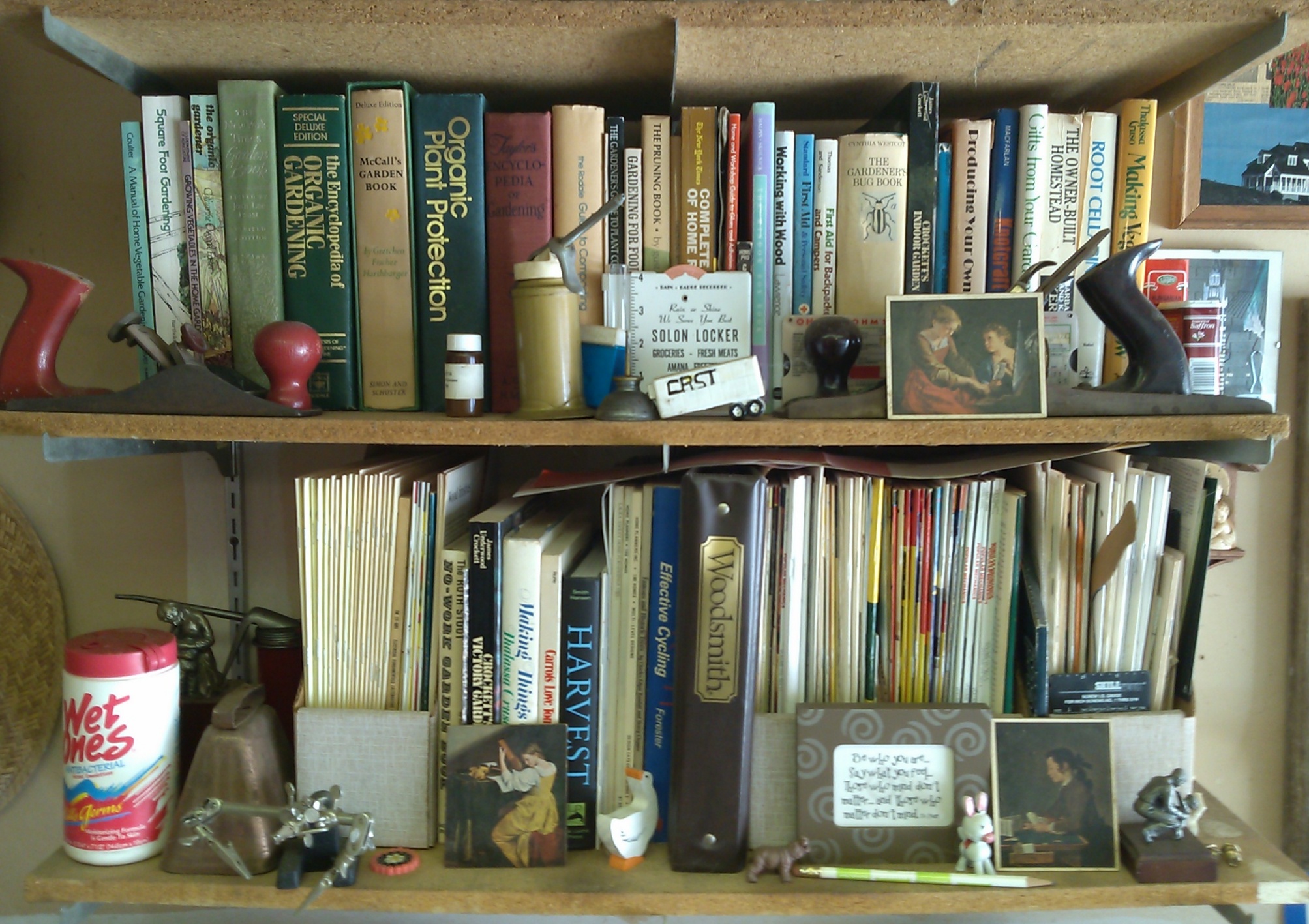
Book Shelf in the garage.

As I finish my seventieth year on planet Earth I’ve been considering why I read and why I should.

Reading has become such a habit it’s unclear I’m approaching it the right way. As Socrates is said to have asserted, an unexamined life is not worth living. I want my remaining days to be worth living and for reading to be part of them.

I’ve become a lazy book reader. I read in bed, in the middle of the night when sleep fails me, and when I wake too early to get up. I read when I can’t fall asleep when I should. I have four subscriptions to newspapers along with several daily newsletters and countless emails. I read articles linked in social media and of course the posts on my pages.

Most of that reading is good, yet the backlog of books to read is growing. There is also a randomness to how I pick books. Unless I’m on a deadline to write a review of an advance copy from a publisher, my choices are somewhat impulsive, based on what a friend said, who wrote the book, or the context in which I heard of it. A retiree has few deadlines and constraints when it comes to reading. There is a sense my impulses on reading have not always been the best for me.

According to my Goodreads tracker, I’ve read 30 of a 36-book goal for 2021. In July I read one book and I’m working on my first in August. I like the Goodreads reading challenge because it gives me a point of focus. I feel good clicking the link to say I finished a book. Whatever I do, I’ll keep using the social media platform.

There is an existential angst to all this although I don’t intend to dwell there long. I need to move from habit to active engagement in reading–I know that. I also need a better strategy for picking what to read and when to read it.

Taming the internet and it’s 24/7 fire hose of words is important. Scrollers gonna scroll, and I am one. It is one thing to get through the feed to find what’s engaging. There is no reason to follow a rabbit hole in real time, every time. When there is a linked article, I could use the application Pocket to save it to read later. If an article is worth reading, it will still be so at a designated time. I already devote some of my morning routine to reading. It should be easy to add saved Pocket articles to the mix at that time.

When I consider reading done this year, the best part was researching my ancestors settling in Minnesota. It resulted in this piece of writing for my autobiography. More of that would be good. As the gardening season commenced, my interest in autobiography waned and I moved on and outdoors. Once the garlic is planted in October, I expect that kind of reading to resume. It is some of the best I do and I want that.

Like many, I read to learn. I’ve been tracking my reading on this site for years. It’s a simple list of books with the most recently read at the top. If one looks through them, there is not a particular theme or concentration. Someone I know will recommend or write a book, and it falls into the reading queue. I have a long reading queue which want organization.

When we consider the gravest threats to our lives during the coming decades, the effects of climate change may be the most challenging. I expect to continue to read books , studies and articles about the environment as a mainstay of my reading.

This blog is about gardening and cooking, creating a “kitchen garden.” When I read about these topics, I’m looking for something specific: how to combat a pest, for instance. The best of what I read is doing the research in my library of cooking and gardening books–finding answers to questions about process. I don’t read many gardening or cooking books cover to cover.

An example of a cooking book I do read cover to cover is Tamar Adler’s An Everlasting Meal: Cooking with Economy and Grace. More than anything, she presents a narrative about cooking that goes beyond a single meal or dish to how we connect them together. I also read Anya von Bremzen’s Mastering the Art of Soviet Cooking: A Memoir of Food and Longing. Again for its narrative more than cooking tips.

The thing I’ve been dodging here is my book reading. How does one get from being a lazy reader to more engaged? The answer is obvious. Set aside prime daytime hours to read, and stick to a schedule. Instead of using reading to fill hours I should be sleeping, make it the main event for at least part of the day. Morning is the best time so adding an hour or two to my daily outline might serve.

The harder part is in book selection, working on the reading queue. It is easier when I’m working on a project like researching my Minnesota ancestors. Like a coal miner, you just follow the vein. I also want to be moved by what I read. I’m thinking of On Earth We’re Briefly Gorgeous by Ocean Vuong. I want things from reading and haven’t given them adequate consideration. All I can see is the growing book stacks waiting to be read and no way out except to spend the time.

Why do I read? To learn, to enjoy, and to be a better human. Why should I read? To retain relevance in a changing world. Without devotion to ideas found in books relevancy can be difficult. So I end where I began, with questions. There are a couple of things I can do for better reading. I can’t wait to get started.

Categories
Kitchen Garden

Gemelli Summer Pasta

Summer pasta made with yellow and orange tomatoes.

I could eat fresh from the garden pasta dishes all summer and hopefully will. At the same time, summer is turning toward fall so we’d best enjoy them while we can.

There have been crates and crates of garden tomatoes this season. I sorted a crate of yellow and orange, cut ripe ones into a dutch oven, and turned on the heat. My process for making tomato sauce is easy.

Cook the cut tomato pieces on the stove top until the skins begin to loosen. Depending on the variety I add a little liquid to the pan so they don’t burn. Carefully put the tomatoes into a perforated funnel to drain. Mine is an old-style farm funnel with a wooden masher. Once they drain, save the liquid if there is an immediate use for it, otherwise discard. (A kitchen can only use so much of it). Finally, process the drained tomatoes with the wooden masher, pushing the pulp through the funnel. This thickens the sauce without cooking it to death on the stove, making a fresher-tasting pasta sauce.

When the day began all I knew was to use some tomatoes for a meal. I found a bag of Gemelli dried pasta in the storage rack and decided that would be dinner.

There are countless variations to making pasta. In addition to pasta noodles prepared according to instructions on the bag, I used orange and yellow tomatoes, onion, garlic, basil and eggplant. Garnishes were cherry tomatoes and fresh parsley. Parmesan cheese is optional, which if left out makes this a vegan dish.

Here is my current process.

In a large skillet sautee onions and diced eggplant in extra virgin olive oil. When the onions begin to turn translucent, add two cloves of minced garlic. Salt and pepper to taste. Stir constantly until everything is cooked.

Add the fresh tomato sauce and incorporate. Add a generous amount of fresh or dried basil and re-season. There is variation in the moisture level of tomato sauce made this way. Cook it to the desired thickness.

When the pasta is done, reserve a third cup of pasta water and drain it. Add the noodles to the sauce along with the pasta water. Mix gently until the pasta is thoroughly coated. Add halved cherry tomatoes and freshly chopped parsley and toss until the tomatoes warm.

Serve with a vegetable side dish like steamed green beans, broccoli or cauliflower.

This was my dinner. I hope readers are also enjoying fresh from the garden pasta this summer!

Categories
Living in Society

One Car Family

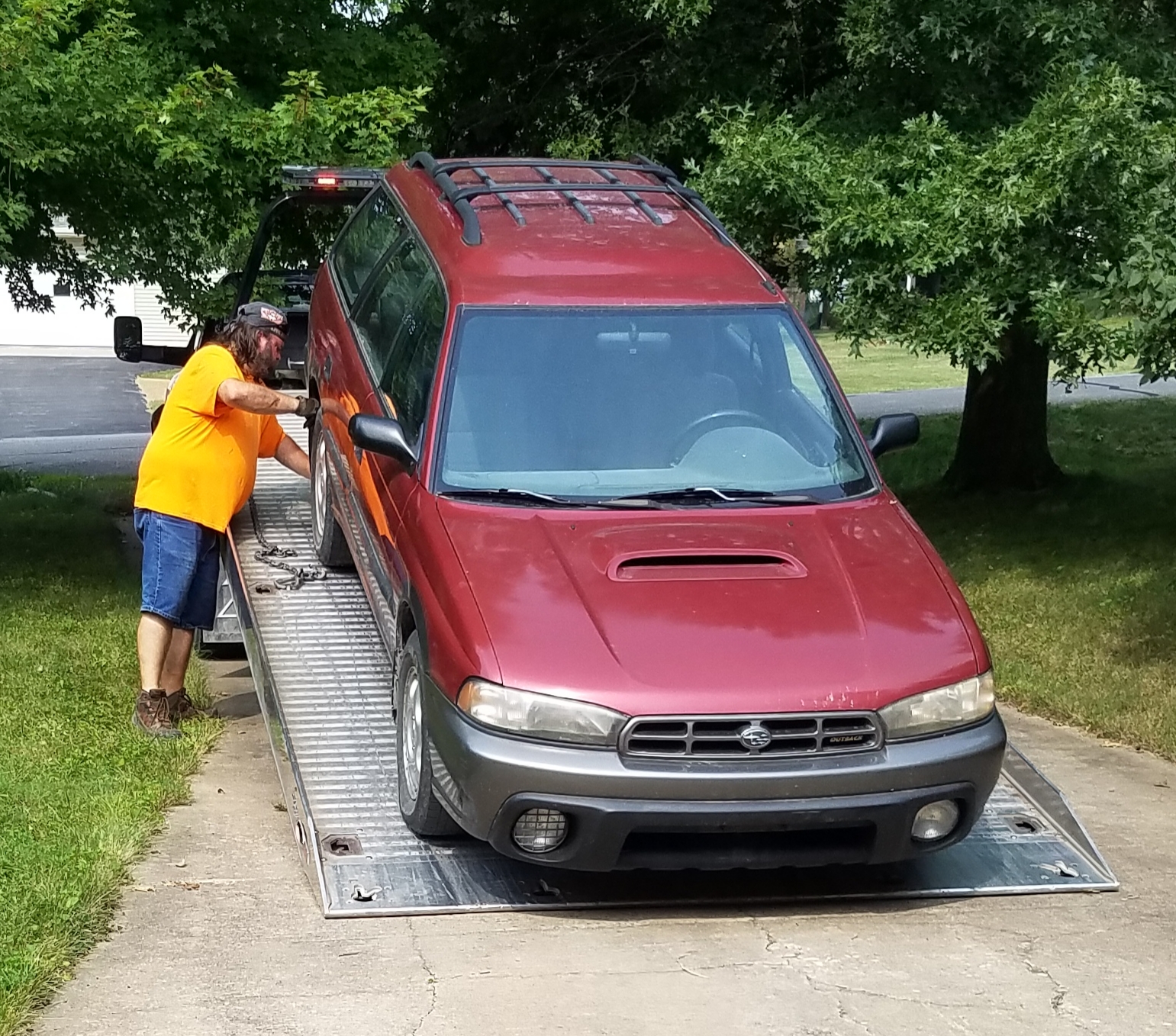
1997 Subaru Legacy Outback on the last day of ownership.

The coronavirus pandemic made a couple of things clear. I didn’t need to work outside home unless I wanted, and we didn’t need two vehicles.

I bought the used 1997 Subaru Legacy Outback in 2013 after I sold my pickup truck to our daughter. These Outbacks have a reputation as reliable and this one demonstrated the accuracy of the moniker. There were issues with the aging vehicle, the most serious of which was an overheating problem. It was repairable to the extent the car became what we call “a beater.” At 218,890 miles, those of us who drive a Subaru know at some point before 300,000 miles, the engine and transmission are going to go. After that the automobile becomes scrap because of a lack of repair parts availability.

The main use of our second car was getting me to work; hauling straw bales, soil mix and fertilizer for the garden; and basic transportation in and around Eastern Iowa. I delivered a few shares for the community supported agriculture project, worked on political campaigns, and generally supported household operations. The car was a work horse.

When it came to getting rid of it, the increased age of the vehicle had me worried about selling it to someone I know. The differential was acting up, the hatchback only sporadically opened, and… it was old. Someone else might want to drive a beater. I didn’t want the responsibility of being the previous owner.

I decided to donate the vehicle to Iowa Public Radio. I had been hearing the advertisements on the air for a while and they take old vehicles:

When you donate a vehicle to benefit Iowa Public Radio, you actually turn your car into the news and music you rely on and love. Donate your vehicle, and we’ll use the proceeds to support your favorite programs like Morning Edition and Talk of Iowa, plus the great variety of music you hear daily on IPR. This gift makes a difference at Iowa Public Radio.

Donating a car is fast, easy and secure. Iowa Public Radio accepts any vehicle – running or not – including cars, trucks, boats, RVs, motorcycles, and more. We work with our public radio colleagues at Charitable Adult Rides & Services (CARS) to ensure that your donation delivers the highest possible revenue to Iowa Public Radio and that your experience is convenient, efficient and even fun.

Iowa Public Radio website.

Public radio was a major part of my weekends for many years. I turned it on in the garage and took my solar powered radio with me out to the garden. I turned it on while preparing Saturday dinner in the kitchen. I recall Garrison Keillor’s “last show” on June 13, 1987. I set the cassette recorder to record the show then took our daughter for a walk. When we returned, the show had run over and I missed the last part. As we know, Keillor came back for a second version of the show. Like him or not, I was a fan.

Public radio doesn’t have the revenue to buy big shows like that any longer. The format is talk-oriented, and the string of Saturday music shows like Mountain Stage and A Prairie Home Companion were replaced by an aging guy and his eclectic record collection.

I feel good about donating the Subaru to Iowa Public Radio. It was the biggest financial donation I made to them. I took the last trip on Monday to deliver garden produce to the community food pantry. The vehicle reliably served its purpose, which is what a person wants from an automobile.

We are a one car family now.

Categories
Living in Society

Get to Work Congresswoman

Woman Writing Letter

Rep. Mariannette Miller-Meeks appears to be dodging constituents in the Second Congressional District.

According to her congressional website she has two constituent offices available: in the District of Columbia and in Ottumwa. That’s not enough. It’s time for the congresswoman to be more accessible by staffing offices where her constituents live.

Ottumwa is Iowa’s 20th ranked city by population. Also in the Second Congressional District are Davenport (third ranked), Iowa City (fifth), Bettendorf (15th), Clinton (18th), and Burlington (19th).

I understand a slow opening while the election was being contested. Yet she won and it’s time to provide more inclusive access. At a minimum she should open an office in the Quad-Cities which is the biggest population center in the district. She should also open one in Iowa City, home of the University of Iowa which is an economic engine for the region.

Miller-Meeks needs to get to work doing the business of Iowans. That is, unless she doesn’t care what constituents who don’t share her politics think.

~ First published in the Little Village on Aug. 10, 2021. After publication, the congresswoman’s website was updated with the location of a Davenport office.

Categories
Environment

IPCC Releases Sixth Assessment Report

Today, the Intergovernmental Panel on Climate Change (IPCC) released their sixth assessment report of the global climate. The news is not good.

Human kind must reduce greenhouse gas emissions, and fast, to avoid the worst effects of the climate crisis, according to the report. On tomorrow’s one-year anniversary of the derecho, Iowa’s latest extreme weather event, the Hawkeye State should pay attention to what scientists have to say. So should we all.

Climate change is affecting every region on earth, in multiple ways.

What does that mean for Iowans and others in the Midwestern states?

  • Increases in drought with continued increases going forward.
  • Projected increase in extreme precipitation.
  • Projected increase in river and pluvial flooding.
  • Projected increases in winter precipitation.

There is a lot of information in the report and rather than summarize it here, I’ll direct readers to the report itself. There are summaries and a wealth of information. It can be viewed and downloaded at this link: https://www.ipcc.ch/report/ar6/wg1/

“If we reduce emissions to net zero by 2050, we can keep temperatures close to 1.5C,” wrote Dr ValĂ©rie Masson-Delmotte, co-chair of the IPCC. Achieving that would help prevent climate change’s worst effects.

For headlines from the report, click here.

~ IPCC is the international body created in 1988 by the World Meteorological Organization (WMO) and the United Nations Environment Program (UNEP) for assessing the science related to climate change.

Categories
Environment Sustainability

Now or Never on Climate

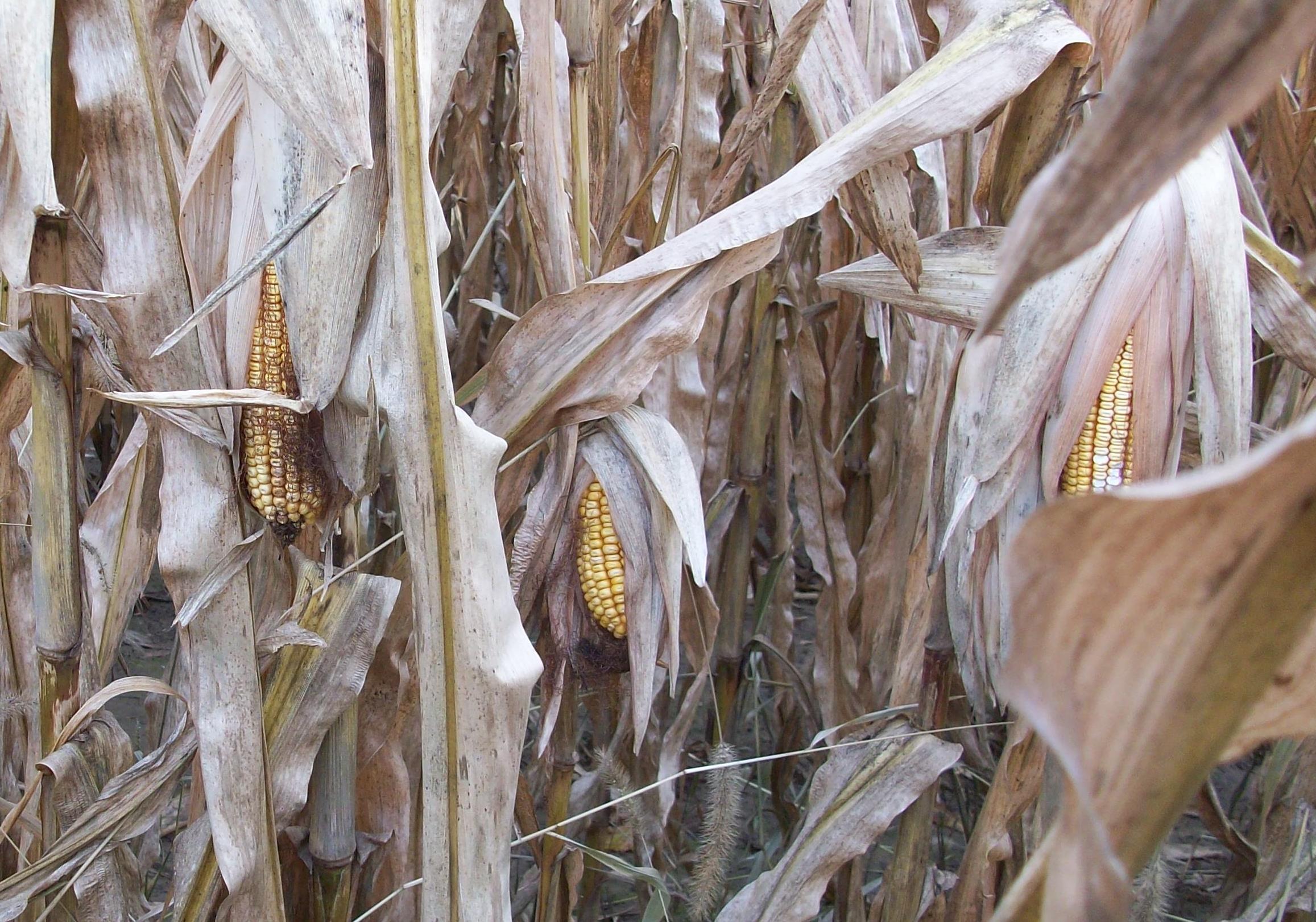
Field Corn

Nothing better illustrates what’s at stake in mitigating the worst effects of climate change than the debate between eliminating internal combustion cars, trucks and SUVs, and Iowa’s corn ethanol business which produces automotive fuel. Simply put, we must curtail greenhouse gas emissions to avert the worst effects of global warming. That means reducing, then eliminating, internal combustion engines in automotive transportation.

Last week’s events brought the debate into focus.

On Thursday, Aug. 5, President Biden signed an executive order intended to strengthen America’s leadership in clean cars and trucks. Biden set a goal “that 50 percent of all new passenger cars and light trucks sold in 2030 be zero-emission vehicles, including battery electric, plug-in hybrid electric, or fuel cell electric vehicles.” Biden also addressed tightening emissions standards, improving fuel economy, and fuel efficiency and emissions reductions for heavy duty trucks. If acted on, this executive order is a substantial government effort to reduce the number of polluting vehicles on American roads, a major source of greenhouse gas emissions. The folks at The Climate Reality Project reflect my view, “Now we are moving in the right direction.”

Not so fast, said Iowa Governor Kim Reynolds, whose state devotes significant corn acreage to producing ethanol for automotive use. She apparently heard this executive order was coming and had the following statement ready to go the same afternoon.

President Biden’s short-sighted stance on electric vehicles is undermining Iowa’s renewable fuel industry while simultaneously jeopardizing America’s energy independence. This announcement follows the Biden Administration’s failure to support renewable fuels in the infrastructure package currently being negotiated in Congress. It’s a harmful pattern that must be reversed.

With the policies we see coming out of Washington, it’s never been more important that Iowa fights for renewable fuels like ethanol and biodiesel while looking for new ways to invest in the high-quality products we produce right here, right now in our state.

Press release from the Office of the Iowa Governor via email, Aug. 5, 2021.

I couldn’t disagree more with Governor Reynolds. 53 percent of Iowa’s corn crop goes to ethanol production, according to Iowa Corn. A third of that makes a livestock feed co-product and the rest into ethanol fuel. One did not need to be a psychic to predict farmers were not going to like it when passenger cars, SUVs and light trucks all go electric, likely in my lifetime. The better action for the governor–than propping up the internal combustion engine in automobiles and light trucks–is determining the future use of those corn acres once ethanol is no longer needed as a fuel.

Either we have the political will to address the climate crisis or we don’t. It seems clear President Biden is willing to take bold action to address global warming, as evidenced by his direction on electrifying cars and light trucks. While some in the environmental movement say he is not bold enough, last week’s executive order would never have been signed by a Republican president. Governor Reynolds’ pushback was predictable and an argument for maintaining a status quo that has not been good for Iowa in terms of soil depletion, air quality, water quality, crop diversity, and economic and environmental sustainability.

As this plays out in coming weeks and months, the dynamic between the White House and Iowa’s Republican governor will be important to watch. What shall we do to address the climate crisis? According to President Biden we can and must do something. Moving toward electric transportation vehicles is a positive step, even though farmers will have to adjust. We have to do more to address the climate crisis.

Despite the debate and inevitable conflict, the country has to adjust to our future needs. The debate between government and farmers is not new. It has never been more important as the future livability of our planet is at stake. It’s now or never on climate.

Categories
Kitchen Garden

Iowa Sweet Corn

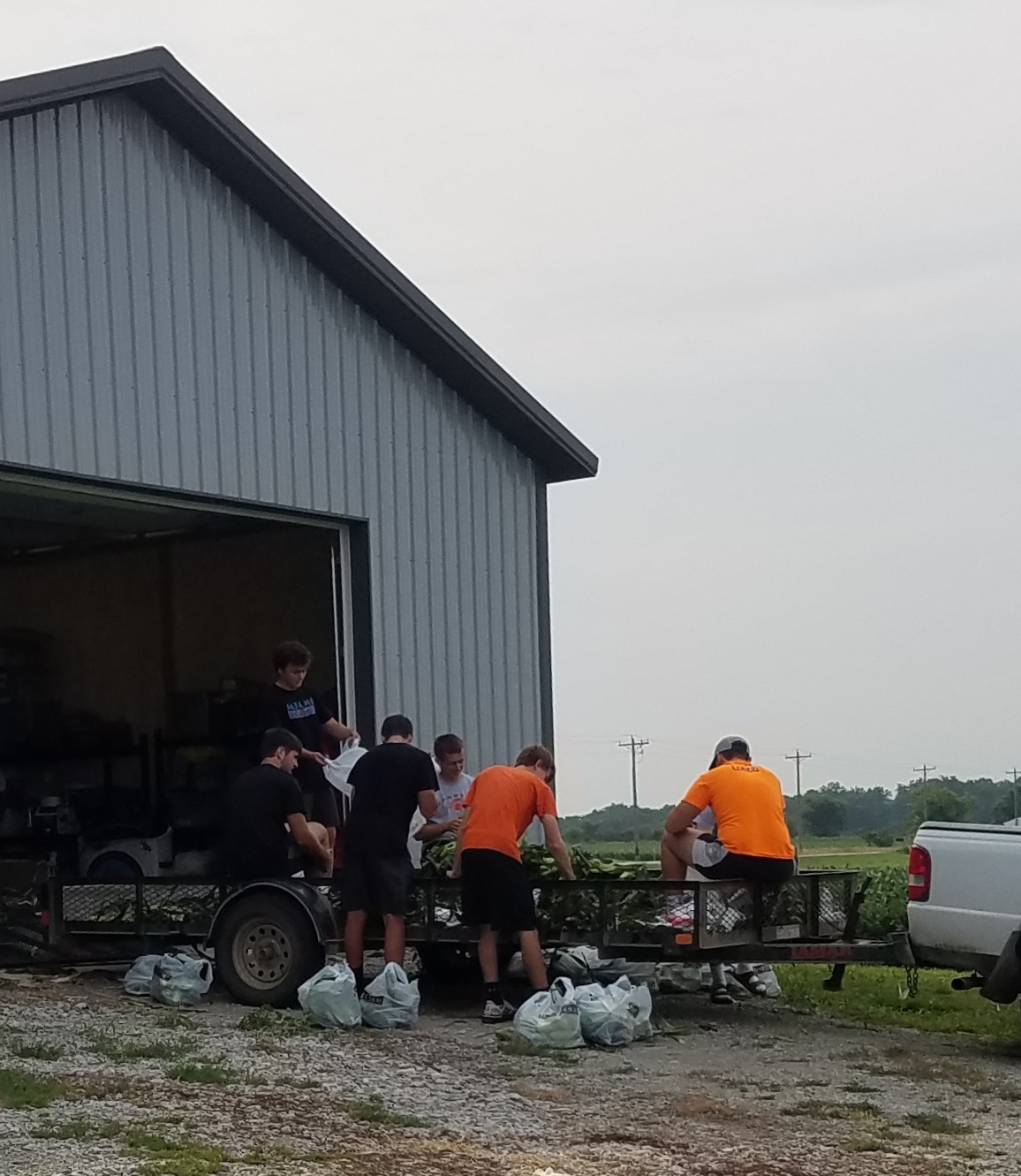
Young men bagging freshly-picked sweet corn at Rebal’s Sweet Corn farm stand.

The decision to buy sweetcorn and not grow it was easy. It takes a lot of garden space and my results haven’t been as consistent as one can buy at a farm stand. The farm stand where we’ve been buying sweet corn is closing after this season.

This will be our last year of selling sweet corn. Yes, the rumors are correct. After 35 years of business, we’re decided to bring it to an end. We’ve loved meeting all of you, and hopefully have provided the best sweet we possibly could. But it’s time for us to make a few changes in life. We’ve appreciated your business over the years, and all the wonderful comments you’ve given us. Wow! This is a hard post to write! Thank you all so much for your business, and we hope to see you one last time before the season ends and Rebal’s Sweet Corn comes to a final close.

Rebal’s Sweet Corn Facebook page.

They had corn on Friday so I bought ten dozen ears to freeze and eat fresh on the cob, on pizzas, and in leek and potato soup. Next year I’ll have to find a new grower but I don’t see re-visiting my decision to outsource this crop.

Leveraging the work of others is an important part of managing a kitchen garden. Rebal’s Sweet Corn fits into my local food paradigm of knowing the face of the farmer. We will miss them when they move on.

Categories
Sustainability

Cranes for Our Future

Paper Cranes

Friday is the 76th anniversary of the atomic bombing of Hiroshima, Japan. Monday is the anniversary of Nagasaki. The world little realized the devastation caused by President Harry Truman’s decision to detonate those bombs.

In response to the anniversary, the Nuclear Threat Initiative organized a global project to make paper cranes and post them on social media with the hashtag #CranesForOurFuture. The idea is an affirmation of hope and a unified statement that a world without nuclear weapons is possible on what should be this weekend of peace.

I hope you will join us in this project.

For more information about how to participate, paper crane folding and social sharing instructions, including a video and printable template prepared by Hiroshima Prefecture, click on the link: https://www.CranesForOurFuture.org/Fold

Categories
Kitchen Garden

Trouble with Tomatillos

Tomatillo harvest on Aug. 4, 2021

This year four tomatillo plants are producing an abundance of the fruit. Due to a paucity of recipes so many are not a good fit for our kitchen garden.

Mainly I used tomatillos in salsa to provide texture and their green color. I also slice or dice them to add to stir fry. Because there are so many, I will freeze what I can’t use fresh and see how that works in the coming months. In years past, the plants did not produce so many fruits. Next year I’ll reduce the number of plants.

I asked for recipe ideas on social media and the responses were honest yet not viable.

A common pairing is with the meat of hogs or chickens. As a vegetarian household, that’s not an option.

Another idea is to mix them with avocados and other ingredients for guacamole. This one winds me up because I’m in the camp of people who believe the rise in popularity of avocados also drives deforestation. How bad is the rapidly expanded avocado business?

The short answer is that avocado farming is causing deforestation, destroying ecosystems, funding drug cartels, and contributing to climate change. In Michoacán, Mexico, the biggest avocado producing region in the world, farmers are illegally razing pine forests in order to plant lucrative avocado trees. The native pine trees make up an irreplaceable habitat to indigenous species, including the iconic monarch butterfly.

Ethical Unicorn, Sept. 23, 2018.

Young people look at me askance when I say I won’t eat avocados because of deforestation resulting from their popularity. Nonetheless, I’m pretty firm in that view and have been weathered by askance looks over the course of many years. No guacamole or avocado toast for me.

The reality is there is already too much to do in the kitchen with hundreds of tomatoes lined up for processing. I put the tomatillos from the photo on a baking sheet and stuck them in the chest freezer to get them out of the way. When frozen, I’ll put them in a zip top bag until I’m ready to use some. There are many dozens of them remaining on the vines to be used fresh or given away.

We have two Mexican restaurants in the area and they have taken excess jalapeno peppers before. We’ll see what I harvest and maybe stop by one of them to present tomatillos as a gift. At least they won’t go to waste.

Categories
Kitchen Garden

August is for Onions

Four main onion varieties in 2021.

The onion harvest is in, sorted, cured and stored. There will be plenty of onions through winter and beyond.

The main lessons this year were to plant multiple varieties, keep them weeded and watered, and allow enough garden space to produce an abundance. The best results were from the starts purchased from Johnny’s Selected Seeds. I started my own from seed on Jan. 20, yet that wasn’t early enough. The fruit produced was smaller than the ones from the seed supplier, which are pictured above.

Onions started from seed, Rossa di Milano and Calibri Yellow, were small yet usable. I peeled, sliced and froze the yellow ones. They will be used mostly for winter soup. The small red onions are first to use for fresh eating in tacos and salsa, and sliced on sandwiches. Even though they are small, the flavor is outstanding. Every onion grown will find a home.

For the second year I produced a row of shallots, started from seed. They came out great. Shallots are long keepers and popular as gifts. If anything, I’ll plan to grow more shallots in 2022 and already bought the seeds.

I selected varieties mostly for storage qualities. I have had good luck storing Patterson, Ailsa Craig and Redwing, so they are repeats this year. Sierra Blanca is an experiment in white onions. All four varieties met growing expectations.

A bowl of onions is the heart of a kitchen. Growing one’s own onions is even better. There are four crates of onions in storage so our household is ready for cooking in the coming months.