At the junior high school track meet on April 13, 2022.
I woke to the sound of rain falling on the roof. The furnace was off with its quiet mechanicals accentuating the gentle sound. After a restless Monday night, I slept straight through to Wednesday.
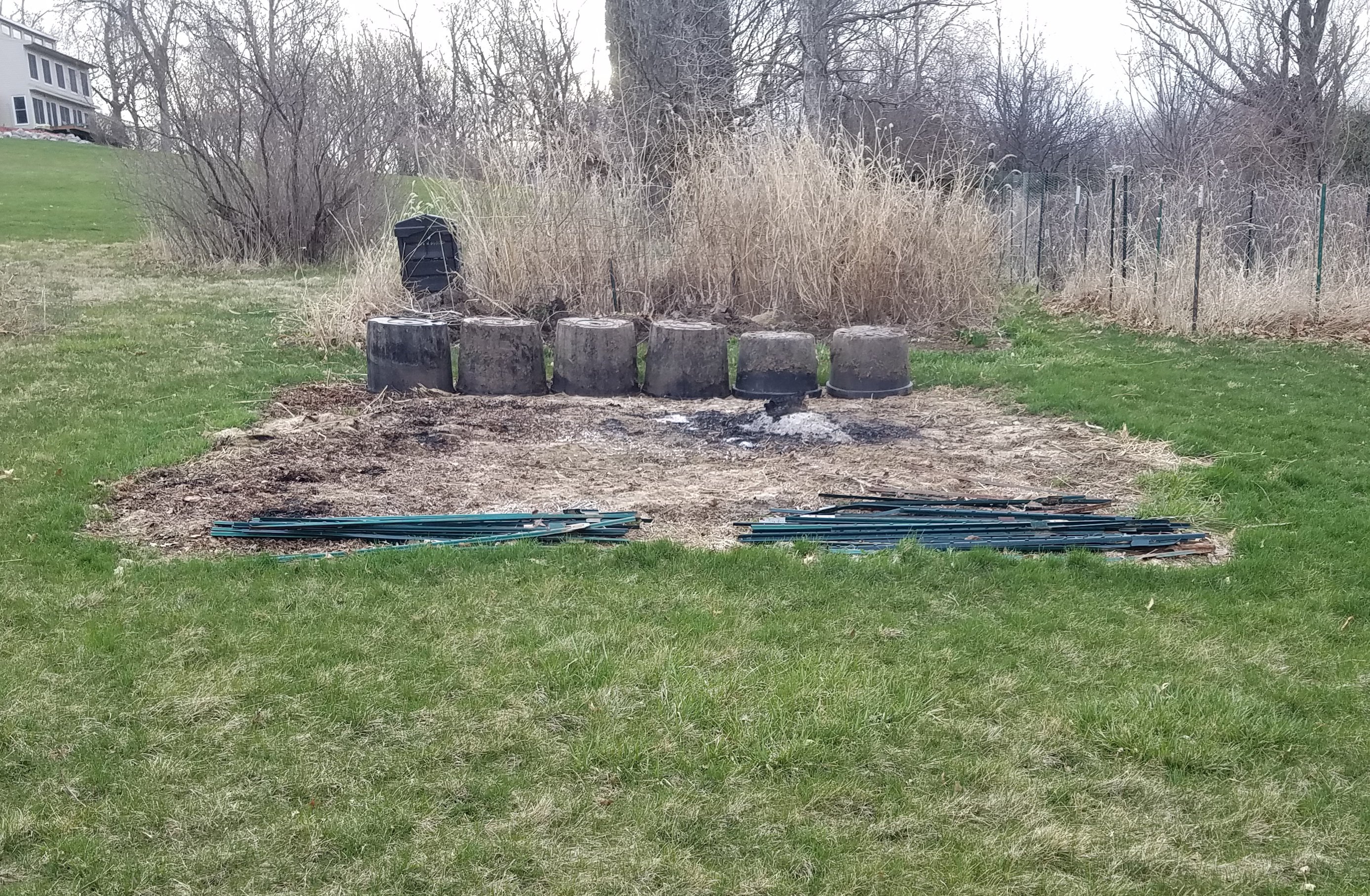
Weather was sub-optimal for gardening yesterday. Wind gusts up to 45 miles per hour drove me to abandon tear-down of the garden plot planned for cruciferous vegetables, peas and greens. I managed to move the kitchen composter to a new location and tear down weed infested fencing. A lot of work remains.
This plot was the first dug after moving to Big Grove in 1993. I remember that initial work like it was yesterday. Our lot is 0.62 acres and I envisioned a big garden even if my work in transportation kept me away from the daily work of planting, weeding and managing crops. I became a better gardener by sticking with it. The plot became filled with sunken potato tubs, two composters, and pallets of miscellaneous stakes and other essential garden junk. It was a hodge-podge. I plan to clear all of it to gain planting space. I don’t know to where I’ll move the garden composter yet.
In late afternoon I drove to town and met with our candidate for state house, Elle Wyant. Her seventh grader was participating in a track meet at the high school. It provided an opportunity to talk about politics.We had more in common than I knew.
I don’t understand track and field. There were 400 people at the stadium, mostly milling about between events from what I could determine. It is the stuff of modern society: boring most of the time, injected with deep engagement in brief flashes. How did we come to that as a way to live?
Sunday’s high winds, with gusts up to 45 miles per hour, did their job. The wet soil turned over on Saturday has dried enough to till. Today’s list includes plant a row of early vegetables to be protected by row cover, dig a spot for the tubs in the photo, and continue the deconstruction of last year’s garden plots with an eye toward planting more early vegetables. Garlic is up. I chose the plot for tomatoes. Much planning remains.
I’d like to move the seedlings back into the greenhouse. The forecast later in the week is for ambient temperatures to fall below freezing again. I’ll think about that as I’m tilling the first row. I’m scheduling a five-hour shift, planning to use it all.
The main news since my last writing post is the 1950 U.S. Census was released. In it I found new information and as a result, need to re-write the chapter about Davenport in 1951. This is a positive development. The census provided the first specific evidence of family members living in Rock Island, something I’ve known, but with little detail. I found my Uncle Gene also lived there, separate from his father, working at a dairy where he “helps with milk.” He was seventeen years old. The census also clarified the status of the home to which I was brought from the hospital after being born. My grandmother was head of household with the three children from her second husband living with her. There is a lot to track down and the new census release makes it easier than it was. It also confirmed some things I knew with another, definitive source.
I scanned the 313 pages of double spaced manuscript. Boy, there is a lot more writing, editing, and proof reading to do! Some things seem solid. The outline I created this year will continue to serve as a coat rack upon which to hang things I write or discover. That will be followed by a re-write using the new information. The work I did before the coronavirus pandemic does not fit neatly into the new outline structure and needs a major re-write. Likewise there is much to accomplish to write through the period of time before I kept a journal, got married, and started working in transportation. Depending on my choices, there could be two volumes. The first through the birth of our daughter, the second covering everything else through the coronavirus pandemic. Reducing it down, last winter was a period of progress.
The unavoidable task ahead is going through all of my past writing and paper archives to distill something usable. Thus far, the writing has been fun adventures of me sitting in front of a computer screen making up the story. Once I tackle the physical record, writing will be real work. I’m looking forward to writing the whole thing so it may be time to put it in low gear and start climbing that hill.
Right now, all I can think about is getting to my shift in the garden.
Congresswoman Mariannette Miller-Meeks’ recent statement about common sense would make sense if she demonstrated it in her votes.
She said she was “fighting for Iowan common sense values.” Instead of common sense, Miller-Meeks adopted right-wing policies of her Washington, D.C. colleagues.
The lack of common sense shows in her no votes on the American Rescue Plan Act, Build Back Better Act, Invest in America Act, Infrastructure and Jobs Act, and on raising the minimum wage. The votes are a total disconnect from Iowans she represents.
If Miller-Meeks is interested in common sense, here are a few suggestions:
Tax the rich. Folks who have money to spare are able to contribute to reducing the deficit and paying down our national debt. The tax reductions of Republican administrations made no sense. Our history has been to tax the rich at a much higher rate than we do now. Corporations should be taxed as well.
Public funding of Congressional campaigns. Corporations are not people. Take the money out of politics by passing legislation to do so. It’s common sense that corporations and their lobbyists should not be able to buy elections.
Audit Defense Department Spending. The 117th Congress passed an annual defense budget valued at over $768 billion. Isn’t it time we looked to see how effectively the Pentagon is managing one of the biggest budget line items? Why haven’t we already taken this commonsense accountability step?
Eliminate nuclear weapons. Nuclear weapons can never be used without dramatically altering life on Earth. They could literally end life as we know it on Earth. It makes no sense to spend money on nuclear weapons that should never be used.
Stop polluting. Earth has limited capacity to absorb the detritus of civilization. School children are taught to reduce, reuse and recycle. Our national policy should be to do the same and scale it up. It is common sense.
There are plenty of additional suggestions. Miller-Meeks’ votes demonstrate a different meaning of “common sense.” It’s not the commonsense approach we need. I will vote for Christina Bohannan for Congress this November. You should too.
~ An edited version of this post was submitted to several newspapers and was first published by The Little Village on April 12, 2022.
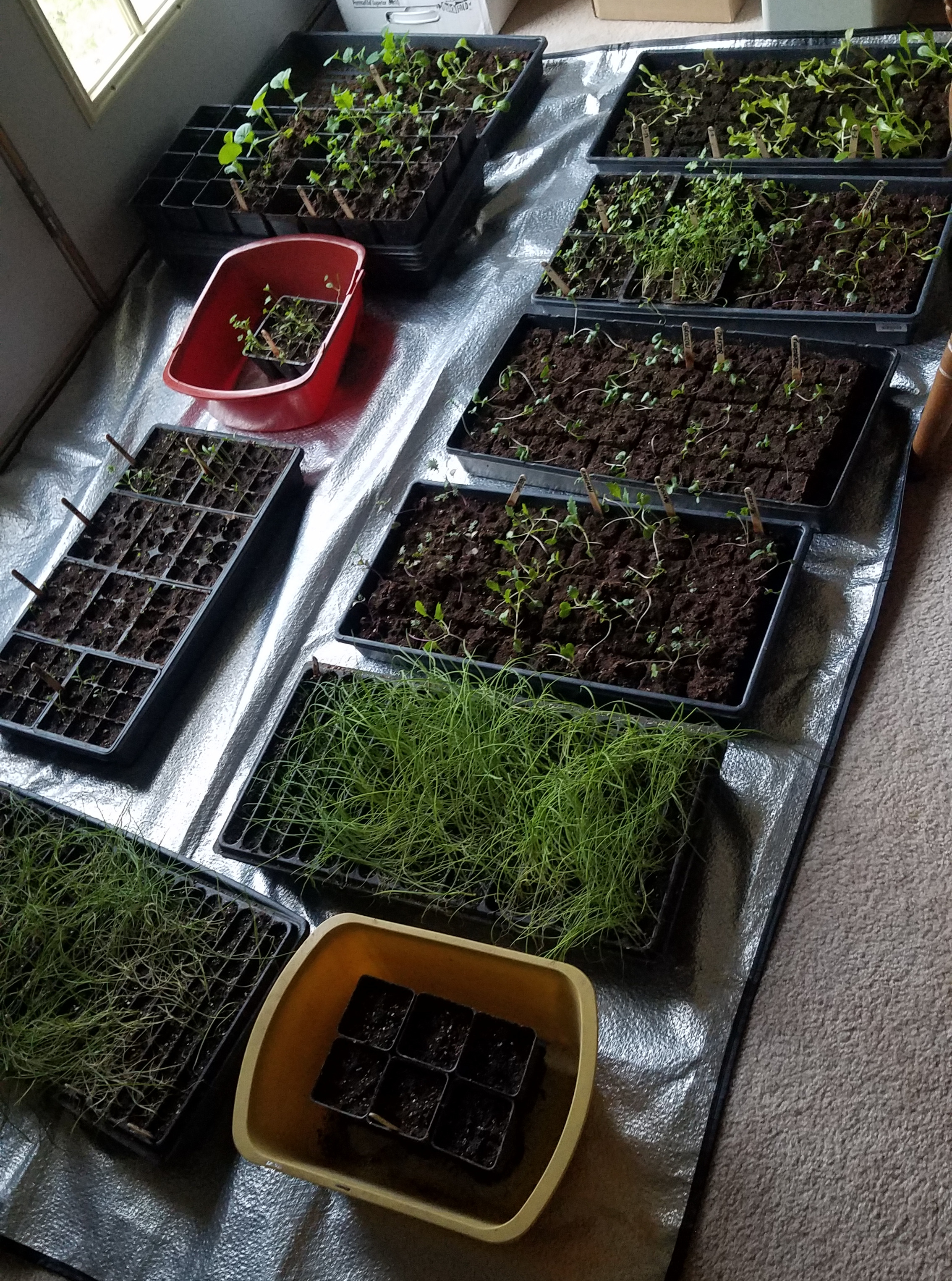
Seedlings back inside the house while it has been cold.
Ambient temperatures are expected to rise by 20 degrees during the next two hours. Winds are down and skies clear. It is time to turn the first spade in the garden.
This is the latest I’ve begun gardening and there is a long to-do list. Once indoors chores are finished, I’ll get after it.
If the ground is frost-free the order of business is set up the first plot with row cover and plant seeds and seedlings for early harvest. Once that is finished, preparation for potato planting is next. I’m keeping the buried containers, although moving them. Also on the list is transplanting kale and other leafy greens to a bigger pot to help them grow before going into the ground closer to last frost. Any tear-down of fences and ground cloth from last year’s garden will be a bonus. I scheduled a five-hour shift and hope to work all of it.
Society is getting busy again. As the coronavirus pandemic appears to be normalized, my hope is people can be reasonable in preventing the spread of infectious disease. COVID-19 vaccination should be rolled into vaccine schedules that already govern our health.
Spring has sprung and people are anxious to get busy doing things they couldn’t during the pandemic.
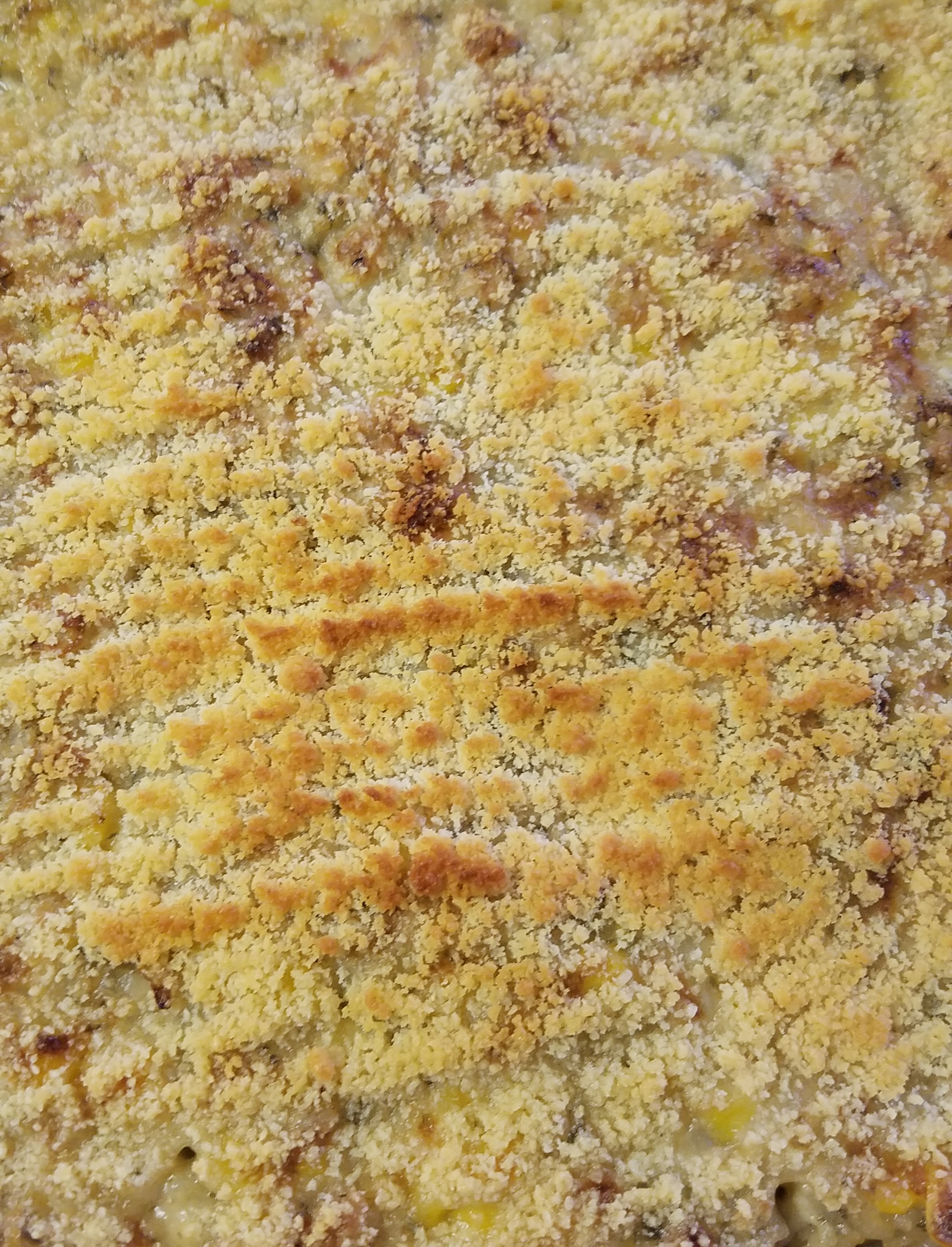
Dinner on April 6, 2022: Casserole with eggs, onions, celery, garlic, Parmesan, thyme and leftover rice, served with peas and carrots.
On Wednesday I loaded the automobile with obsolete and not working electronics to recycle at the county landfill. Three televisions, a wall-mount telephone, a non-working videocassette player, a laptop computer, and miscellaneous small items fell into bins there after I paid a $66 fee. There were also two computer towers, one of which was the one my spouse bought in 1996 when we dialed up the internet for the first time as a family. The other was a locally made machine built in the last millennium. I scrubbed the hard drives clean before recycling them.
Last week I took three big bags of clothing to Goodwill. One was scraps for recycling. The other two could be tagged and resold. I didn’t ask for a receipt. It felt good to be rid of some of the detritus of a modern life in Iowa. There will be more purging of unused stuff from our home this year.
Temperatures returned to near freezing so I have to bring seedlings indoors again. I don’t know what’s up with the lingering cold, rain and snow making it impossible to get into the garden. My onion starts are to arrive next week and I haven’t turned a spade in the garden yet. I find other things to do yet there is a certain stress lingering in the background because of the delayed season.
My impression of the political scene after candidates filed to get on the ballot is Democrats are teed up to take a shellacking in November. We have good people running for office yet there is a distinct lack of enthusiasm for politics. Likewise, a certain laziness permeates recent events in which I participated. I’m not seeing any fire in the belly to win an election among regular Democrats like me. Republicans in control of the state legislature and governor’s office are driving the narrative and making their points. They are highly motivated to tear down the long-standing culture of the state and replace it with something I don’t recognize. Democrats have been forced to play defense.
At a Zoom political event last night, I changed my political donation strategy while listening to Christina Bohannan and Elle Wyant speak. I budgeted $100 per month in donations and switched them around to candidates I believe will have the best prospects of being elected in November. In the big races, U.S. House, U.S. Senate and governor my $100 per month split three or four ways will be of negligible impact. Even my state senator’s race will be a big money campaign. The only political fund raising phone calls I received this cycle were from Iowa Democratic Party Chair Ross Wilburn, U.S. Senate candidate Michael Franken, and county attorney candidate Rachel Zimmermann Smith. Even with the small number of requests, my $100 per month doesn’t go far. I’ll revisit the strategy after the June 7 primary.
I’ve been keeping the thermostat at 58 degrees while my spouse is away helping her sister. This morning I donned three layers to retain body heat. I have also been making non-vegan vegetarian dishes while she is away. It’s not fancy food, just simple fare in an Iowa life.
Veterans for Peace and PEACE Iowa, along with the University of Iowa Lecture Series, present Kathy Kelly speaking on “Why War is Never the Answer.”
The event is scheduled for 5 p.m. on Tuesday, April 19, 2022 in the Old Capitol Senate Chamber on the University of Iowa Pentacrest.
Kathy Kelly is an American peace activist, pacifist and author, one of the founding members of Voices in the Wilderness. Until the campaign closed in 2020, Kelly was a co-coordinator of Voices for Creative Nonviolence. As part of peace team work in several countries, she has traveled to Iraq twenty-six times, notably remaining in combat zones during the early days of both US–Iraq wars.
Tickets are free to the public; first come, first seated. We hope too see you all there! For more details go to lectures.uiowa.edu.
Open Road on the Lincoln Highway in Iowa, Sept. 8, 2012.
Sunday morning the road was clear and dry with little other traffic. While my spouse slept in the passenger seat, people attended church, and commercial traffic took a break, my mind raced with ideas about what should go next in my life. As we pressed toward our destination, there were no easy answers. The same is true for the return trip. It was a great day for driving and that had to be satisfaction enough.
During her move, my sister-in-law found an extra television and gave it to us. Its age is uncertain yet it is an early flat panel television, at least 12 years old. I brought it home and began configuring it. It will be an improvement over the tube set we had. The reason we keep cable television service is to view the weather in case of severe storms. We can’t pull in a signal with an antenna.
I discovered we have access to 119 channels. Who has time for 119 channels? I quickly learned how to control what shows up with the channel selector. The first hidden was FOX News, followed by religious ones. Next call is to the cable company to see if there is a plan that would cost less while providing access to local weather. Ten years away from television has me hating any time spent with the medium today.
We have three banker’s boxes full of movies on VHS. While connecting our Emerson VHS player to the new television I found it is on the fritz, as in it’s dead. That could be a problem. The movie industry made the last VHS cassette in 2006 and player manufacturers have moved on to other products. Walmart sold them recently, but even that source has dried up. Used and refurbished players are available on line. If I want to spend a couple hundred dollars, new ones are available combined with technology I don’t need like an additional DVD player. The world changed to online streaming and while I don’t like the idea of paying again for the same movie, technological obsolescence may force my hand.
I connected our SONY DVD player to the television and it works like new. The screen quality is good, as is sound. Over two days, to try it out, I viewed the Martin Scorsese picture No Direction Home Bob Dylan. We have a couple dozen movies on DVD, although outside our cult-like ones, like The Matrix, Blade Runner and The Lord of the Rings, I don’t envision watching most of them. I have a copy of Finding Nemo, in the unlikely event we have a person of an appropriate age over for an extended period of time. The movies our daughter watched when young are on VHS.
It is difficult to envision a return to television viewing. The next step is to turn in our tube televisions to the electronics recycling bin at the landfill. There is no going back.
It started to rain about half way home. Not enough to loosen dust on the road, and barely enough to turn on the windshield wipers. We need rain. Televisions, however, remain optional.
Delicious food can be part of a normal life. It seems important to enjoy food we eat as it results in sustaining our lives in a turbulent world. There is little point in living a Dickensian food culture of gruel three times a day when so much food is abundantly available and recipes to prepare it are ubiquitous.
At the same time, as Raj Patel points out in his 2012 book Stuffed and Starved: The Hidden Battle for the World Food System, there are more than a billion people on Earth that don’t have enough to eat each day, and another group of even more that are overweight. Along the way, we became disconnected from the flavor of our food, and its purpose to nourish us. Patel argues that being food insecure and overweight are related conditions caused by the system which delivers our food. I recommend the book.
According to the U.S. Department of Agriculture, roughly 10.5 percent of U.S. households were food insecure for part of 2020, or about 13.8 million of them. This seems like a lot for one of the richest nations on the planet, given the relatively low cost of food calories. Our household has never been food insecure and we spent time and energy creating a food system that works for us. Part of it is growing some of our own food. It also includes shopping for the right things versus for everything. Food insecurity is a real problem, something to which most affected in the U.S. appear to adjust.
Joining a Community Supported Agriculture project was a way to know the face of the farmer and how food on our plate was grown. I joined for these reasons rather than any economic advantage, embrace of organics, or lifestyle change. Most CSA farms donate part of their share to local food banks, yet I never sought this form of generosity.
What is revolutionary about the CSA model is they cut out the middleman in agricultural sales, selling directly to consumers. Crops grown on a CSA farm are, for the most part, not fungible, thus avoiding issues related to the advent of middlemen and processors such as one finds in corn, soybean, dairy, cattle and hog farming. By selling direct to consumers, certain marketplace factors and dynamics can be avoided. CSA farmers secure a premium price for their products and their customers don’t mind that more of the cost of food goes directly to the farmer.
The CSA financial model avoids cyclical, seasonal debt for farm operations. Consumers finance farm operations by paying for a share of production at the beginning of the season. The farmer can avoid taking a loan for seeds, fertilizer and other inputs. Debt avoidance is significant and stands in sharp contrast to how a typical Iowa farmer funds operations.
CSA farmers have a working, if tenuous labor process. Wages are low for permanent workers and offset in some cases by providing food and lodging as part of the arrangement. There is a culture of volunteerism around CSA farms that further reduces labor costs. When I worked at a farm in 2013, my labor was shared with other CSA farms in a complicated process of barter and financial settlement. Most seasons I bartered my labor for a share in the farm, equipment, greenhouse space, or specific types of produce, reducing the farmer’s cash outlay. CSA farmers are creative in controlling and reducing labor costs. They have to be.
This returns me to the idea of delicious food. For the longest time I did not taste what I prepared in the kitchen while making it. I made dishes based on habit, recipes, and what was available in the ice box, pantry and garden. I didn’t give much thought to flavor and that was a mistake.
My outlook is changing. As I more closely integrate my garden with the kitchen flavor has become more important. Each small plate prepared is a multilayered work of creative expression. Some days the food is better than others and I’m beginning to appreciate the variation and what it means. Being part of a CSA brought me from being a consumer to something else, to being a person who relies less on the processing and distribution of food by middlemen. That is the true food system revolution.
Open Letter From Nobel Peace Prize Laureates and Citizens of the World Against War and Nuclear Weapons:
We reject war and nuclear weapons. We call on all our fellow citizens of the world to join us in protecting our planet, home for all of us, from those who threaten to destroy it.
The invasion of Ukraine has created a humanitarian disaster for its people. The entire world is facing the greatest threat in history: a large-scale nuclear war, capable of destroying our civilization and causing vast ecological damage across the Earth.
We call for an immediate ceasefire and the withdrawal of all Russian military forces from Ukraine, and for all possible efforts at dialogue to prevent this ultimate disaster.
We call on Russia and NATO to explicitly renounce any use of nuclear weapons in this conflict, and we call on all countries to support the Treaty on the Prohibition of Nuclear Weapons to ensure that we never again face a similar moment of nuclear danger.
The time to ban and eliminate nuclear weapons is now. It is the only way to guarantee that the inhabitants of the planet will be safe from this existential threat.
It is either the end of nuclear weapons, or the end of us.
We reject governance through imposition and threats, and we advocate for dialogue, coexistence and justice.
A world without nuclear weapons is necessary and possible, and together we will build it. It is urgent that we give peace a chance.
Signatories list of Nobel Peace Prize Laureates:
His Holiness The Dalai Lama (1989) International Physicians for the Prevention of Nuclear War (1985) International Campaign to Abolish Nuclear Weapons (2017) Juan Manuel Santos (2016) Kailash Satyarthi (2014) Leymah Gbowee (2011) Tawakkul Karman (2011) Muhammad Yunus (2006) David Trimble (1998) Jody Williams (1997) Jose Ramos-Horta (1996) Pugwash Conference on Science and World Affairs (1995) Óscar Arias Sánchez (1987) Lech Walesa (1983) American Friends Service Committee (1947) International Peace Bureau (1910)
If you would like to join more than 780,000 other citizens of the world in signing this open letter, which will be presented to the leadership of NATO and Russia, click here.
“Extreme (weather) events are becoming more numerous in every season, so Iowans should anticipate more floods, droughts and heat waves,” Iowa State Climatologist Justin Glisan recently said.
Farmers and gardeners recognize this. What I didn’t realize is a third of the major natural disasters hitting Iowa since 1980 have occurred in the last five years. Tornadoes, derechos, severe thunderstorms, heat waves and drought have become commonplace. While adaptation in small garden plots like mine is possible, the scale of the problem is much bigger than any one person’s experience or ability to cope.
The last few days have been colder that usual. By that, I mean the historical average high has been 52.5 degrees and today the forecast is ten degrees colder than that. There is expected variation year over year, so it’s not time to wig out about extreme weather just yet. All the same, by now I’d have something in the ground besides garlic planted last fall if ambient temperatures were closer to normal. Adaptation serves gardeners as there is a wide range of suitable conditions for growth.
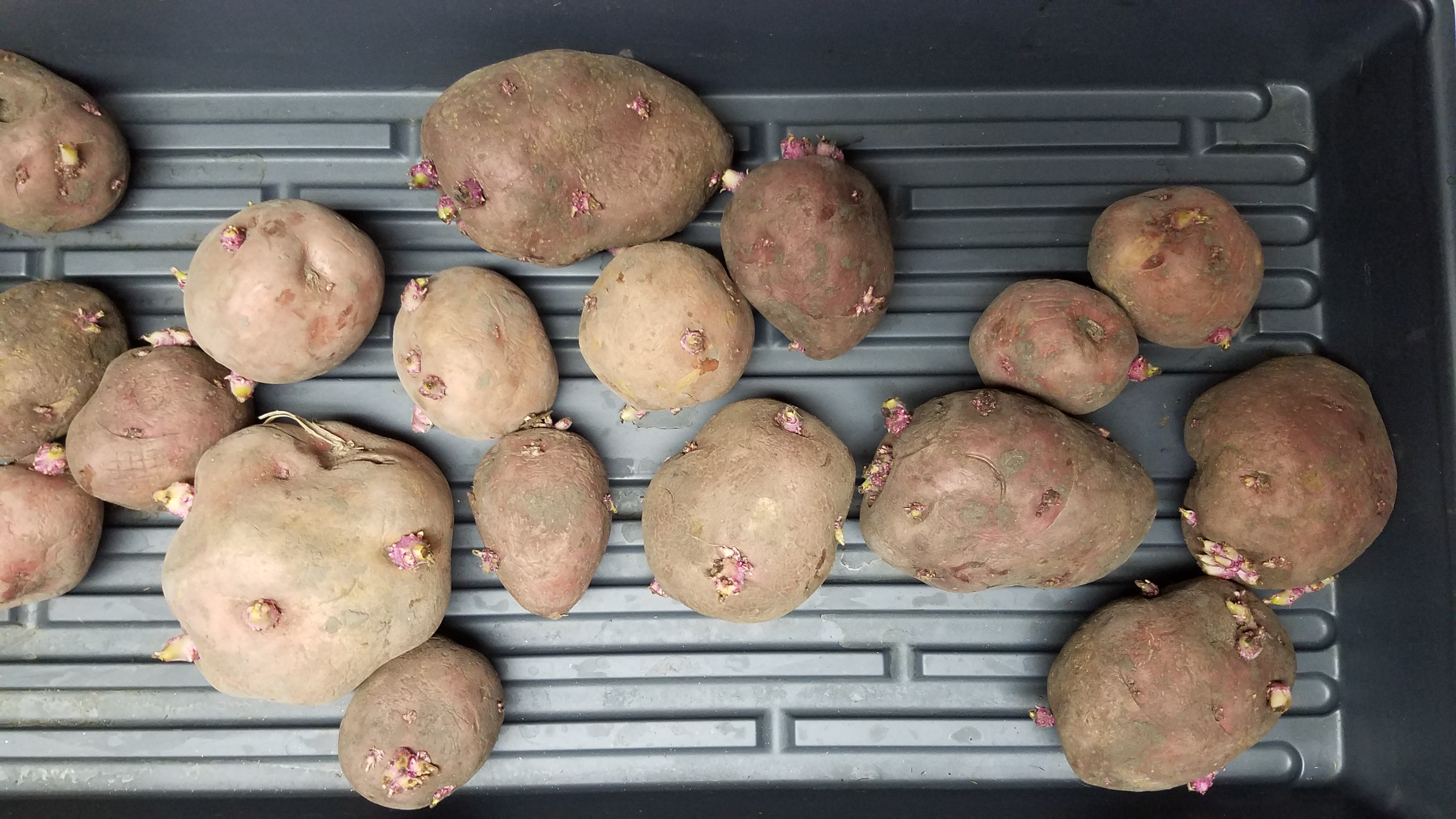
Ten days before Good Friday, I’ll cut seed potatoes for seasoning before planting. I have a notebook of previous gardening years that serves as an indoor planting guide. It is time to start Brussels sprouts, tomatoes, peppers and eggplant, according to last year. Following the agenda is the kind of activity gardeners relish. It creates a sense of understanding that helps us get by in a turbulent society.
When I was working full time, there was no time to work through seasonal climatic variation in the garden. Vegetables either made it or they didn’t. Attention to earning an income in a career blinded me to what was going on around me. We each avoid unpleasantness in order to preserve the secure bubble we create and in which we live most of our lives. This type of insularity is a main reason governments take inadequate action on climate change: people are caught up in their personal world construct. The real world is too ugly to contemplate so we avoid thinking about it and in some cases enable disaster.
Even with climate change and increased frequency of extreme weather events, garden cycles remain. We work through them each year and recognize variations. Producing a harvest is always rewarding. A garden can give us grounding in reality. It’s something sorely needed in this household and in society more broadly. At present, most are oblivious to garden cycles as Earth continues to orbit the sun, grocery stores have food on shelves, and our nest seems protected from the ravages we see on media coming into our devices.
It is easy to turn away from garden cycles, yet we shouldn’t.




 Journey Home
You must be logged in to post a comment.